

Your renewal notice shows up, you open it, and there it is: smog check required at a STAR station. Most drivers immediately do what you'd expect. They search for a STAR station smog check coupon near me, click a few coupon pages, and assume any place with “STAR” in the name or ad will work.
That's where people waste time.
The key rule is simple: STAR isn't a brand you shop for like a chain restaurant coupon. It's a certification tied to station performance, and your vehicle's requirement matters more than the ad headline. If you understand that one point before you leave home, you can avoid the classic bad trip: driving across town with a coupon that doesn't apply to your car, your model year, or your STAR requirement.
Table of Contents
- Your DMV Notice Arrived Decoding the STAR Smog Check Requirement
- Finding and Vetting Smog Check Coupons for STAR Stations
- Reading the Fine Print Is Your Vehicle Eligible for a Coupon
- Your Pre-Test Checklist for a First-Time Pass
- Redeeming Your Coupon and What to Expect at the Smog Station
Your DMV Notice Arrived Decoding the STAR Smog Check Requirement
A lot of confusion starts with the DMV wording. Drivers see “STAR station required” and think they need to find some special national brand that offers a matching discount. That isn't how California's system works.
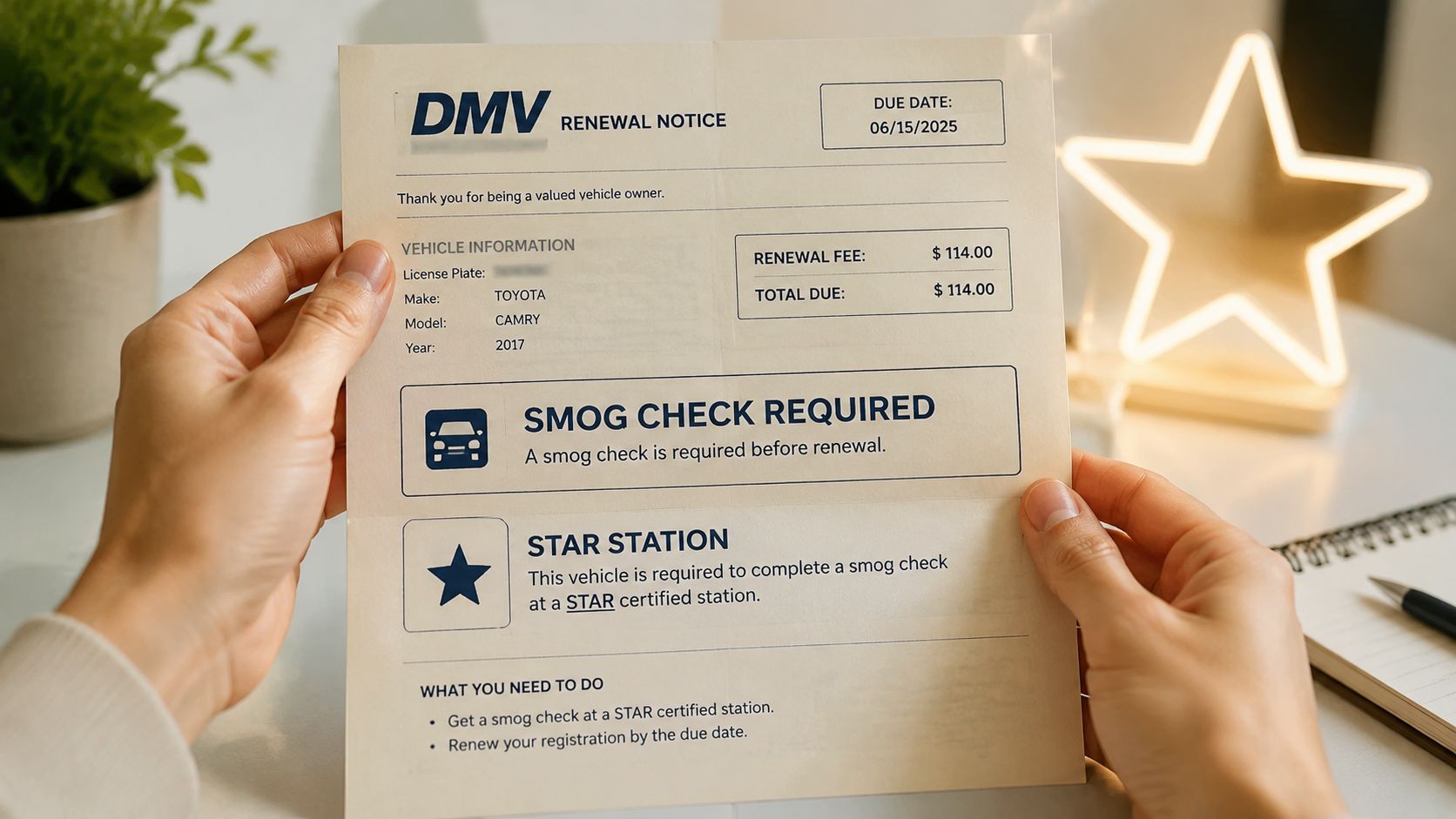
According to California service information on BAR-related services, STAR certification is a Bureau of Automotive Repair assignment based on station performance, not a permanent retail brand you can search for to guarantee a coupon. That one detail explains why so many coupon searches go sideways.
What STAR actually means
A STAR station is a station that meets higher performance standards. California uses the program to direct some vehicles to stations that have stronger testing accuracy and lower failure rates than non-STAR stations. So if your notice says STAR, the safe move is to confirm the station is currently STAR certified and that it can test your specific vehicle type.
If you want a plain-English explanation of the designation itself, this overview of what a smog STAR station is lays it out clearly.
Practical rule: Read your DMV notice first, then look for a coupon. Don't do it in reverse.
Why the misunderstanding costs money
Here's the usual problem. A driver finds a “STAR smog coupon,” assumes that label alone is enough, and heads out. Then one of three things happens:
- The station isn't the right fit for the vehicle on the notice.
- The coupon applies only to certain model years.
- The advertised price leaves out vehicle-type exclusions.
That's why the search phrase STAR station smog check coupon near me is only useful if you treat “near me” as the second filter, not the first. The first filter is whether your notice requires a STAR station and whether the station can process your vehicle without any surprise conditions.
Finding and Vetting Smog Check Coupons for STAR Stations
The fastest way to find a usable coupon is to skip the broad coupon clutter and start with the shop itself. Third-party listing sites can be useful, but they often lead with the headline price and hide the limitations.
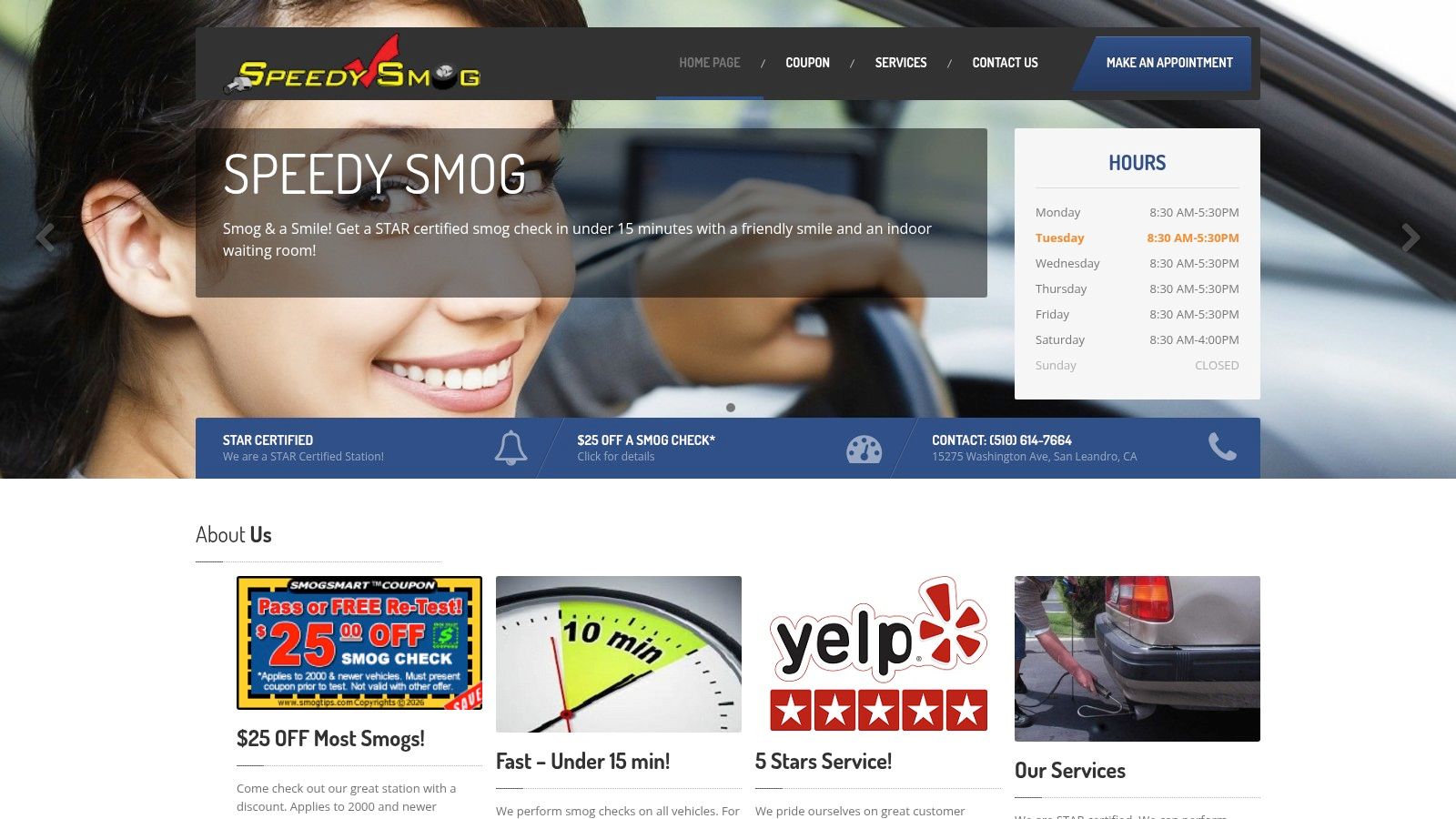
One useful fact to keep in mind: approximately 1.9% of vehicles in California are randomly selected for a STAR-certified smog check, and STAR stations are reserved for stronger testing accuracy and lower failure rates, according to this discussion summarizing the California STAR requirement. That means you're not looking at a marketing label. You're dealing with a compliance requirement.
Where to look first
Start with sources in this order:
The station's official website
You're most likely to see current terms, model-year limits, and whether the coupon is tied to STAR service there.The station's business listing pages
Yelp or map listings can help confirm location, hours, and whether the station still handles your vehicle type.Local mailers or neighborhood ads
These can work, but read every condition before you leave.
One local option drivers often check is Speedy Smog's San Francisco area coupon page. The point isn't to assume any one station is automatically right. It's to look for current terms on the station's own pages instead of relying on scraped coupon directories.
How to vet a coupon before you drive over
Use a short checklist:
- Confirm STAR status: If your DMV notice says STAR, the station must be STAR certified.
- Confirm vehicle fit: Ask whether they test your model year, diesel, hybrid, or truck.
- Confirm coupon limits: Look for phrases like “most vehicles,” “2000 and newer,” or “plus certificate fee.”
- Confirm what you need to bring: Some places accept a phone screen. Others may want the actual coupon shown at check-in.
A good coupon isn't the one with the biggest headline. It's the one that still applies when your keys are on the counter.
A quick video can also help if you want to see how a local shop presents the process:
What usually does not work
The least reliable move is searching for the cheapest advertised number and stopping there. Drivers do this all the time with the phrase STAR station smog check coupon near me, then show up and learn the deal was written for a narrower category of cars than the ad suggested.
That's why the smartest savings move isn't just “find a coupon.” It's find a coupon that survives contact with your actual vehicle.
Reading the Fine Print Is Your Vehicle Eligible for a Coupon
A common scenario for coupon frustration unfolds. The ad looks simple. The car in your driveway is not.
According to this STAR station coupon overview, many STAR coupon offers exclude older vehicles, diesels, or hybrids, and common advertised pricing often applies to 2000 and newer vehicles at $39.75 to $46.75 with coupons, while 1996 to 1999 models can jump to $76.75+. The same source notes that some listings mention $10 to $30 higher fees for certain vehicle types. If you drive an older car or a non-standard vehicle, that fine print matters more than the headline.
The three details to check first
The biggest pricing differences usually come from these factors:
| Vehicle Type | Typical Price w/ Coupon | Common Exclusions / Extra Fees |
|---|---|---|
| 2000 and newer | $39.75 to $46.75 | Often the main category targeted by advertised coupons |
| 1996 to 1999 | $76.75+ | Older vehicles often excluded from low headline pricing |
| Diesel, hybrid, some trucks | Varies | May have extra fees or require a station that handles that vehicle type |
Why coupon headlines can mislead
A coupon ad can be technically true and still be unhelpful. “Smog check coupon” sounds broad, but it may only apply to a narrow set of gas vehicles in a certain model-year range. If you drive a diesel or older car, the lowest advertised number may never have been available to you in the first place.
That doesn't mean the station is doing anything unusual. It means you need to treat smog coupons like airline fares. The first number you see is the starting point, not the guaranteed total.
Watch for this wording: “Most cars,” “test only,” “plus fees,” and any model-year cutoff.
A better way to read an offer
When you're comparing shops, ask these questions in plain language:
- Does this coupon apply to my exact model year?
- Do you test diesels, hybrids, or older vehicles?
- Are there extra charges not shown in the ad?
- Does this work for STAR-required vehicles?
That two-minute call saves more hassle than any broad coupon search. It also keeps you from making a pointless trip with a discount that disappears at the counter.
Your Pre-Test Checklist for a First-Time Pass
Saving money on the coupon is only half the job. The bigger savings often come from avoiding an avoidable fail.
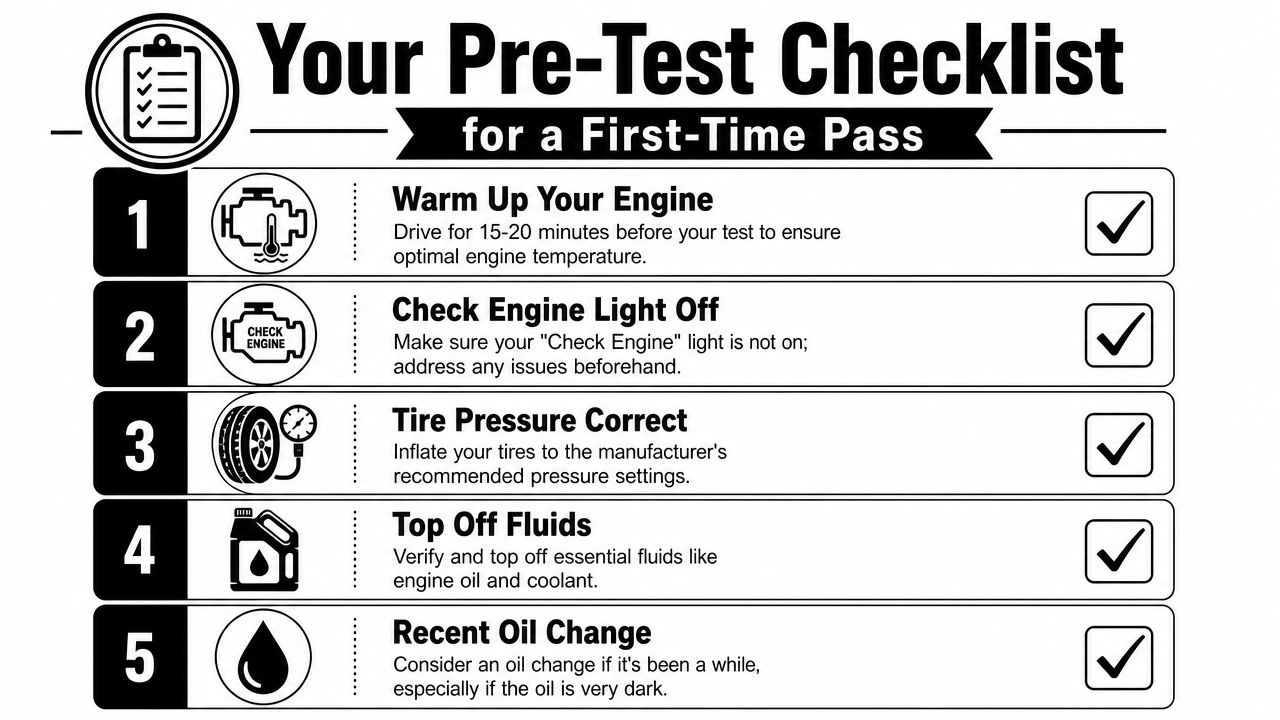
A few basic checks make a real difference before you head to the station. According to the STAR Smog Center FAQ, an illuminated Check Engine or Service Engine Soon light causes an immediate failure, and a loose or damaged fuel cap can also cause failure because of evaporative emissions leaks. The same source recommends driving the car for 15 to 20 minutes before the test so the engine reaches proper operating temperature.
The short checklist that actually matters
Before leaving home, look at these first:
- Check the dashboard: If the Check Engine light is on, deal with that before paying for a test.
- Tighten the gas cap: If it's loose, cracked, or damaged, fix that first.
- Drive the car before the appointment: A short freeway or city drive helps bring the engine up to temperature.
- Open the hood and do a quick visual check: Look for anything obviously disconnected or damaged.
If you want a station-specific prep guide, this page on how to pass a STAR smog test is a useful reference.
Why a warm engine helps
A cold car can give you a rough start to the test process. When the engine reaches normal operating temperature, the emissions system is working under the conditions it was designed for. That's why a quick drive before the test is one of the easiest habits to adopt.
This isn't about gaming the system. It's about showing up with the vehicle in normal running condition instead of rolling in after a short cold start from your driveway.
If you live close to the station, don't leave the house and go straight into the bay. Give the car a real drive first.
Things drivers overlook
Some failures have nothing to do with dramatic engine trouble. People forget the simple stuff.
- A warning light they planned to “deal with later”
- A gas cap that clicks loosely
- A car that's been sitting and hasn't fully warmed up
- Visible under-hood issues they never noticed
A pre-test routine doesn't need to be technical. It just needs to be consistent. If the light is off, the gas cap is tight, and the engine is warm, you've already avoided several common reasons a routine smog visit turns into a repeat visit.
Redeeming Your Coupon and What to Expect at the Smog Station
Once you've found a valid offer and confirmed your vehicle qualifies, the visit itself is usually straightforward. The mistake drivers make here is overcomplicating the final step.
Bring the basics. Have your DMV notice, know whether the coupon is on your phone or printed, and be ready to tell the staff your vehicle year and fuel type if they ask. If the coupon has terms, show it before the test starts, not after the paperwork is already in motion.
What check-in usually looks like
At the counter, the station will typically verify your vehicle information and confirm the type of test required. If your notice says STAR, that's the first thing they need to know. If your car is older, diesel, or hybrid, mention that up front so there's no mismatch between the quoted offer and the actual test.
Some drivers prefer appointments because they want the trip done in one shot. Others are fine with a walk-in if the station handles volume well. Either way, the smoother experience usually comes from calling ahead and confirming two things: your coupon applies and your vehicle type is accepted.
What happens during the visit
A normal smog appointment is mostly a waiting game from the customer side. The station handles the inspection, and you wait in the lobby or designated area until the test is complete. If anything was unclear in the coupon, this is exactly when surprise charges or exclusions tend to show up, which is why the earlier verification matters.
Bring the coupon, mention it early, and say your model year out loud before the inspection begins.
If your vehicle passes, the station sends the certificate electronically to the DMV. That's the end result most drivers care about. You want the inspection completed, recorded properly, and accepted for registration without needing a second trip.
What works better than chasing the absolute lowest ad
The practical goal isn't finding the cheapest-looking number online. It's finding the lowest hassle total cost. That usually means:
- A station that handles your exact vehicle
- A coupon that clearly matches your model year
- A smooth check-in with no argument about the offer
- A vehicle that was prepared before arrival
That's how you turn a search for a STAR station smog check coupon near me into an actual time-saving, money-saving errand instead of a half-day problem.
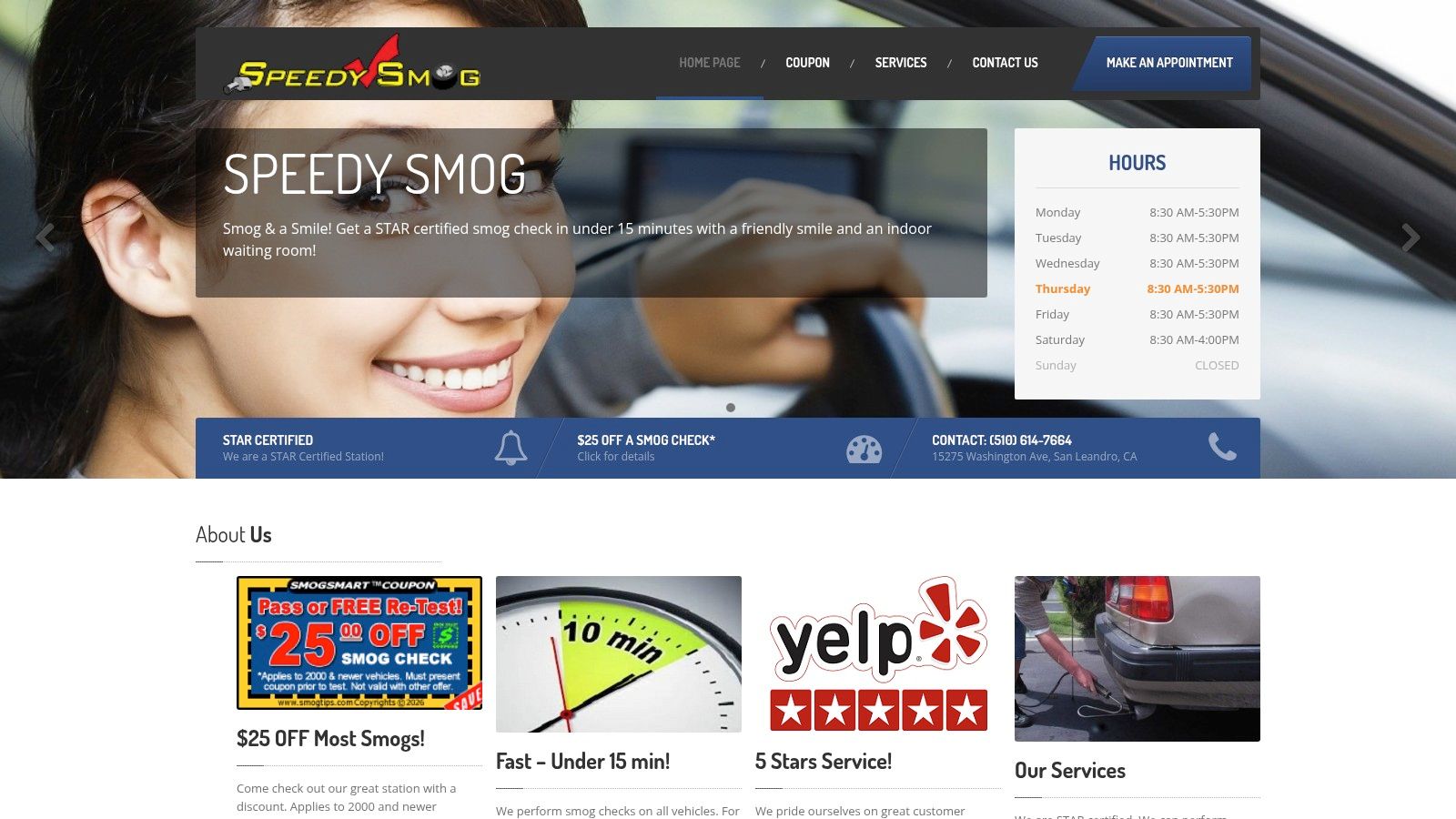
If you need a local STAR-certified option in San Leandro, Speedy Smog handles DMV smog checks for a range of vehicle types and posts coupon information online. Before you go, confirm your vehicle category, bring your DMV notice, and make sure the coupon terms match your car so the visit stays simple.
The envelope shows up, or the registration email lands in your inbox, and one phrase jumps out fast: Smog Certification Required. For a lot of East Bay drivers, that's the moment the questions start. Do you need a test right now? What does the shop do to your car? If something fails, are you stuck?
The good news is that California's emissions testing requirements are usually much simpler than the paperwork makes them sound. Most of the stress comes from not knowing the rules, not knowing what happens during the inspection, or not knowing what to do if a notice says something unfamiliar like STAR Station Required.
If this is your first time dealing with smog, or you just want the quickest path from DMV notice to registration renewal, a little clarity goes a long way. The process is meant to verify that your vehicle isn't putting out excessive pollution, and for most drivers, it's a short stop with a clear result.
Table of Contents
- Your Guide to California Smog Check Rules
- Determining If Your Vehicle Needs a Smog Check
- What Happens During a Smog Inspection
- Why Your DMV Notice Might Say STAR Station Required
- Simple Prep Tips to Help Your Vehicle Pass
- Next Steps After a Failed Emissions Test
Your Guide to California Smog Check Rules
Most drivers don't spend much time thinking about emissions rules until the DMV makes it their problem. That's normal. Smog requirements sit in the background until renewal time, a vehicle sale, or a move from out of state brings them front and center.
California's system can feel local and bureaucratic, but it's part of a much bigger push to clean up vehicle pollution. Around the world, governments have tightened testing methods and emissions limits. China's Stage 6 standards are described as among the world's most stringent, and a 2021 UN regulation created a harmonized method for testing heavy vehicles globally, including lifetime monitoring of pollution levels throughout a vehicle's operating life, as described by Automotive IQ's overview of global emissions regulations.
That global context matters because it explains the basic “why.” Smog checks aren't just a DMV hoop. They're one way states make sure vehicles still operate cleanly after years on the road.
What California drivers usually need to know
For most East Bay drivers, the practical questions are much smaller:
- Do I need a smog check now
- What kind of station does my notice require
- What happens during the inspection
- What should I do before I show up
- What are my options if my car fails
Practical rule: Start with the DMV notice, but don't stop there. Once you understand the trigger behind that notice, the rest of the process gets much easier.
The smog check itself is usually straightforward. A technician verifies that the emissions system is present and functioning, checks your vehicle's computer where applicable, and submits the result electronically if the vehicle passes. That's why drivers who prepare ahead of time usually have a much smoother experience than drivers who show up with a check engine light on and hope for the best.
Determining If Your Vehicle Needs a Smog Check
A lot of confusion starts with one wrong assumption: that every car needs a smog check every time registration comes up. That isn't how it works. The key question is what event triggered the requirement.
The situations that usually trigger a test
In everyday California driving, three situations commonly lead to a smog requirement:
Registration renewal
Many vehicles are brought in when registration renewal comes due and the DMV requests certification.Transfer of ownership
When a vehicle changes hands, a smog certificate is often part of the process.First California registration for an out of state vehicle
If you recently moved and brought a car with you, the state may require a smog inspection before registration can be completed.
That's the broad picture. Your DMV paperwork is still the deciding document, but understanding the trigger helps you avoid guessing.
California Smog Check Requirements at a Glance 2026
| Situation | Smog Check Required? | Notes |
|---|---|---|
| DMV registration renewal notice says certification is required | Usually yes | Follow the notice instructions and complete the inspection before renewal deadlines |
| You're selling or buying a used vehicle | Often yes | Check the transfer paperwork and current state rules for the vehicle involved |
| You moved to California with a vehicle from another state | Often yes | Initial California registration commonly triggers the requirement |
| Your vehicle is newer or falls into an exempt category | Sometimes no | Exemptions exist, so verify before scheduling |
| Your notice says STAR Station Required | Yes, at a qualifying station | The test requirement is real, but the process is still a standard smog inspection |
Drivers also get tripped up by timing. They remember a prior test and assume they're covered, or they hear a friend mention an exemption and apply it to the wrong vehicle. If you want a quick refresher on recurring requirements, this short guide on whether a smog check is needed every year helps clear up a common misunderstanding.
One easy point that confuses new residents
California generally ties smog obligations to the vehicle's registration address. But if you've moved recently, it's smart to check the exact local rule set instead of assuming your old state handled things the same way.
That matters because some states use commuter rules that many drivers never hear about. In Colorado, for example, vehicles registered outside the Denver metro program area still need inspection if they're driven into the area for work or school 90+ days a year, according to the Colorado AirCare commuter requirement FAQ. California doesn't use that exact framework in the same way, but the lesson is useful: address alone doesn't tell the whole story when you've recently moved, changed registration, or commute across regional boundaries.
If you're new to the East Bay, don't rely on what applied in your last state. Check the California notice, the registration paperwork, and the actual vehicle status.
What Happens During a Smog Inspection
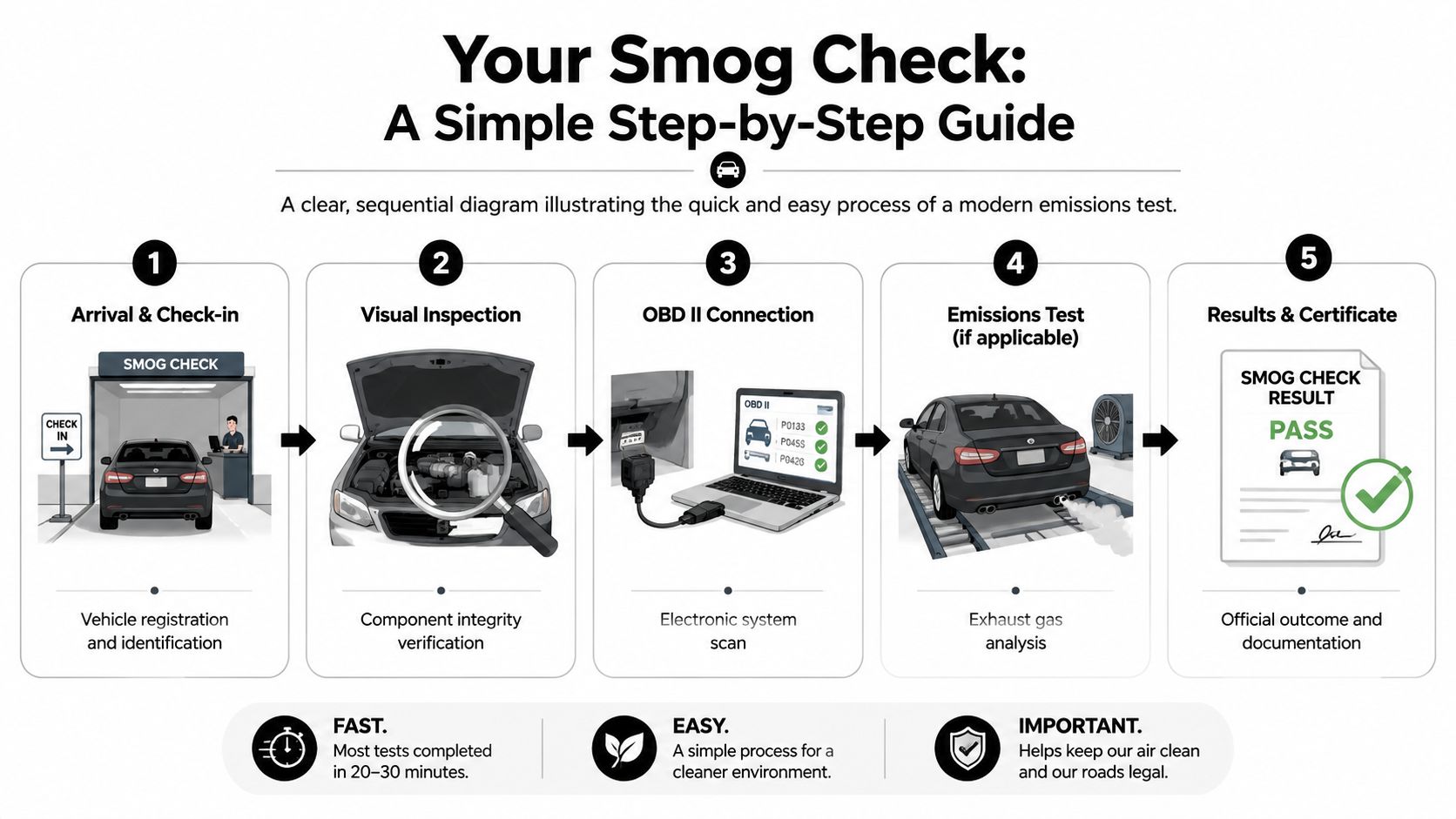
Most first-timers expect something mysterious. In reality, it's a routine inspection with a set order. You pull in, provide the vehicle details, and the technician works through the required checks.
From check in to electronic results
The first part is basic check-in. The shop confirms the vehicle information and matches it to what's needed for the inspection.
Then comes the visual inspection. The technician looks for missing, disconnected, or obviously modified emissions components. If a vehicle left the factory with certain equipment, that equipment generally needs to still be there and appear intact.
After that, many vehicles get an OBD II connection. That means the technician plugs into the car's onboard computer to look for emissions-related trouble codes and monitor status. This is one reason a check engine light is such a big deal. If the car is already reporting an emissions problem, the inspection is unlikely to go your way.
Some vehicles also go through an exhaust emissions measurement procedure. In plain language, the system checks what's coming out of the tailpipe and whether it stays within allowed limits for the test being performed.
What the machine is actually looking for
At idle-style testing, the process can sound technical, but the basics are easy to understand. The engine may be run at a fast-idle speed of 2500 to 3000 rpm and a normal idle speed. In the fast-idle portion, the carbon monoxide limit is 0.2% and the lambda value must stay between 0.97 and 1.03, according to the UK in-service exhaust emission testing standards.
Why does that matter to a driver? Because those numbers give clues about how well the engine is burning fuel and whether the emissions system is doing its job. A poor air-fuel balance, a weak catalytic converter, or another fault can show up in those readings.
Here's the simple version of what the technician wants to see:
- No obvious equipment problems under the hood or underneath
- No active emissions-related computer faults
- Clean enough exhaust output for the applicable test method
A smog inspection isn't trying to “catch” you. It's checking whether the engine, computer, and emissions hardware still work together the way they're supposed to.
For many modern vehicles, the whole process is brief. The final result is typically sent electronically, which helps the registration side move along without extra paperwork from the driver.
Why Your DMV Notice Might Say STAR Station Required
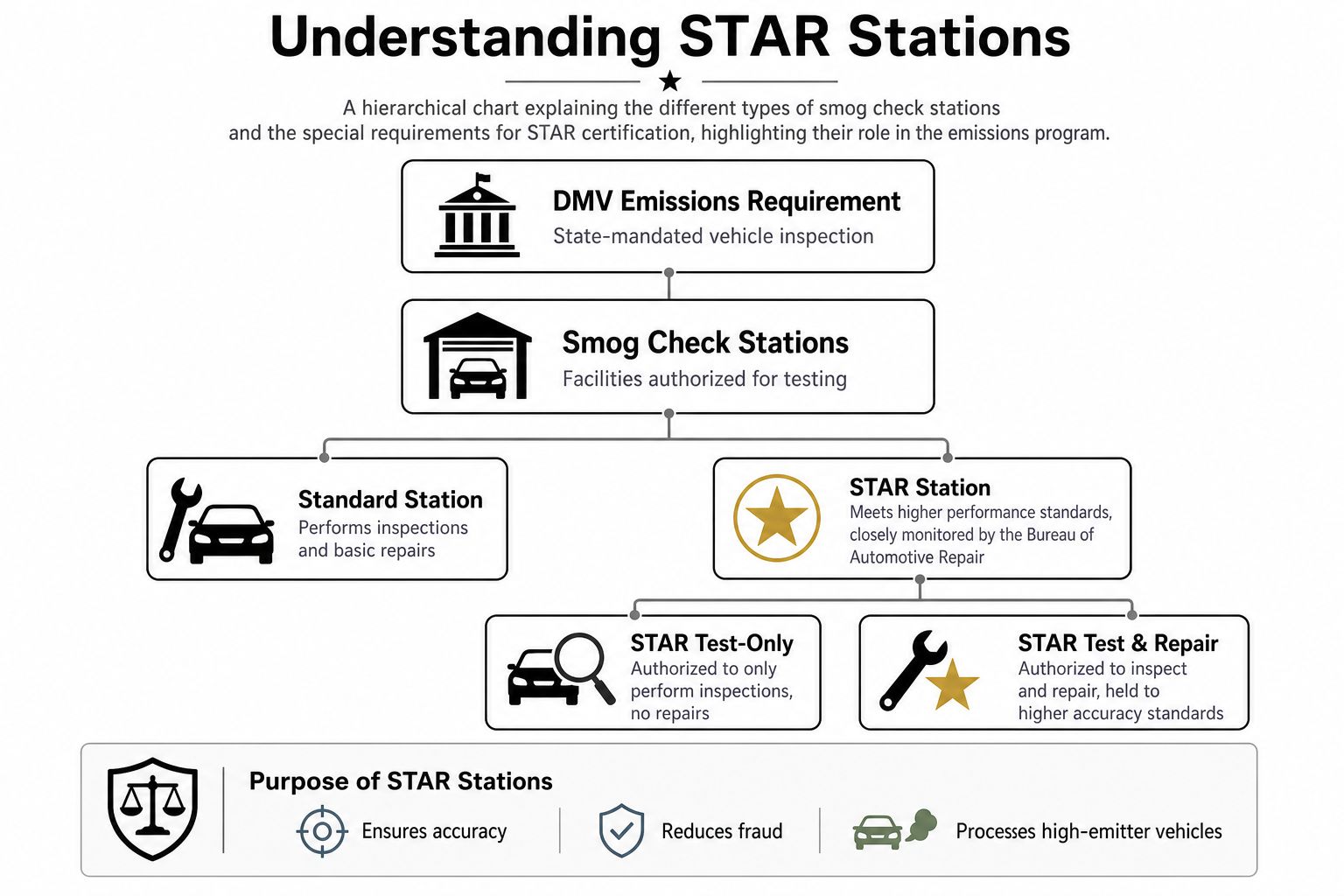
A DMV notice that says STAR Station Required makes some people think their car is in trouble. Usually, it just means the vehicle must be inspected at a station that meets a higher program standard.
What STAR means in plain English
A STAR station is still doing a smog inspection. It isn't a separate kind of emissions law, and it doesn't automatically mean your vehicle is a gross polluter.
The practical difference is station qualification. These stations operate under stricter performance expectations and oversight. That's why the DMV may direct certain vehicles there.
Drivers are often sent to a STAR station for reasons such as:
- Program quality control where some vehicles are selected for closer oversight
- Vehicle profile factors that place certain models or histories into a category needing a STAR inspection
- Specific DMV notice instructions that make station type part of the requirement
Who can handle the inspection
The key is simple. If your notice says STAR, use a STAR-qualified shop. If it doesn't, you may have more options.
If you want the details in plain language, this explainer on what a smog STAR station is breaks down the station types and what each one can do. One local option is Speedy Smog, a STAR Certified station in San Leandro that performs official smog inspections for vehicles that need that designation.
Some drivers also wonder whether hybrids, diesels, or older cars change the equation. They can, but not in the way people expect. The biggest difference is usually procedure, not whether the law applies at all. Certain vehicles require a different testing path or a station equipped and authorized to handle them correctly.
The words “STAR Station Required” don't mean punishment. They mean the DMV wants the inspection completed at a specifically qualified station.
That distinction saves a lot of wasted trips. Drivers often lose time not because the test is hard, but because they went to the wrong place first.
Simple Prep Tips to Help Your Vehicle Pass
There's no magic trick that guarantees a pass. But there are several common mistakes that cause completely avoidable failures.
The avoidable reasons people fail
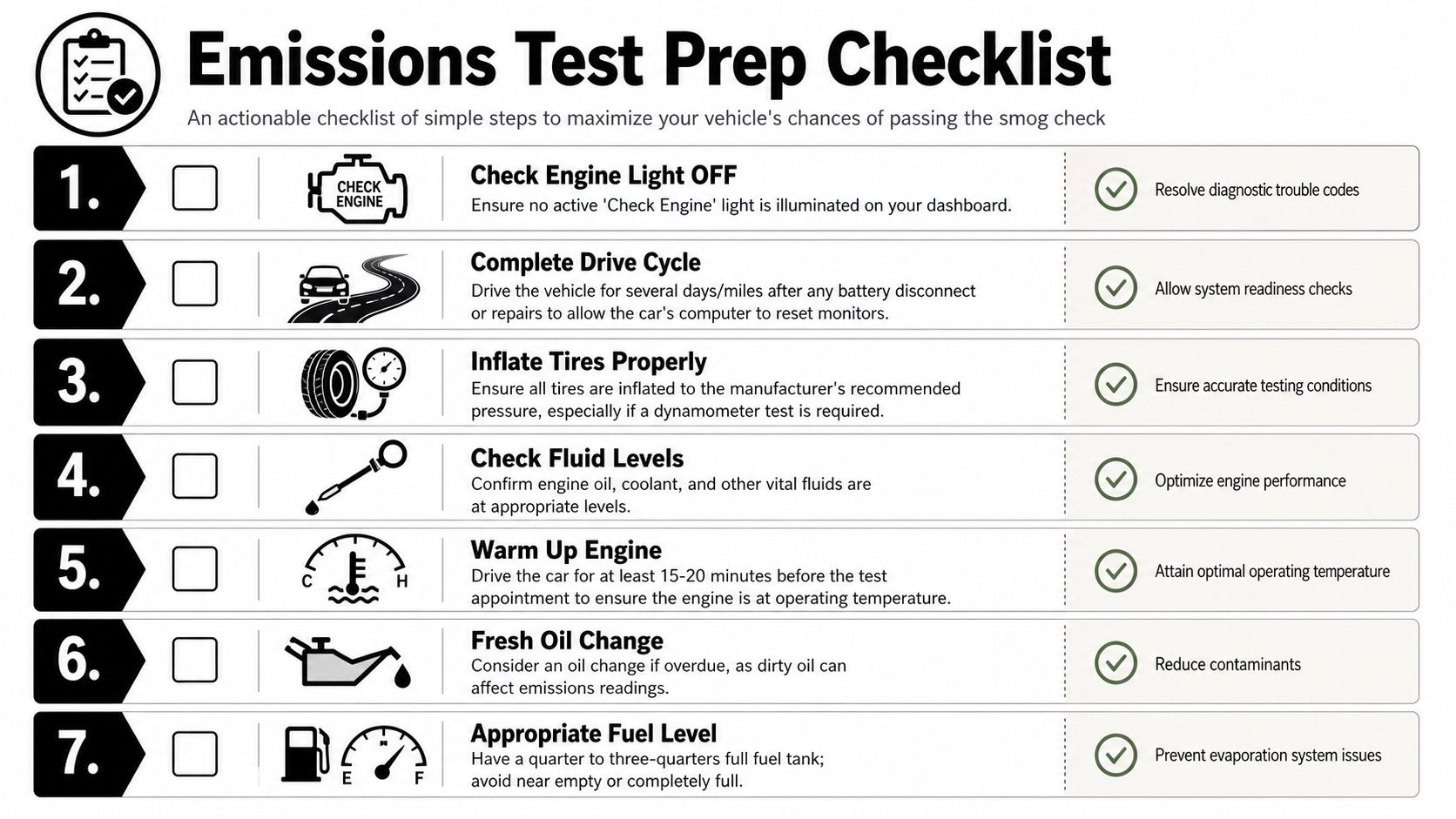
The biggest one is simple: if the check engine light is on, handle that first. Don't spend time or money on a smog inspection before diagnosing it. The light means the vehicle has detected a fault, and emissions-related faults are exactly what the inspection is designed to catch.
Another common problem happens after a battery disconnect or recent repair. The car may run fine, but the onboard monitors may not be ready yet. That can create a failure even when the underlying repair is complete.
A cold engine can also work against you. Cars generally test better when they've been driven long enough to reach normal operating temperature.
A practical pre test checklist
Use this as your pre-appointment routine:
- Look at the dash first. If the check engine light is on, get the cause diagnosed before you book the smog.
- Don't rush in right after battery work. Give the vehicle time to complete its drive cycle and reset readiness monitors.
- Drive the car before the appointment. A normal drive helps warm the engine and emissions components.
- Check basic maintenance. Old oil, neglected tune-up items, and obvious running issues can all hurt your chances.
- Make sure the fuel level is reasonable. Extremely low or completely topped-off fuel levels can create issues for some vehicles.
- Bring the right documents. It keeps the visit moving and avoids easy delays.
If you like a visual reminder, this short video gives a helpful overview before your visit:
One more practical note. Don't treat the smog test as the diagnostic step if your car is already showing symptoms. Rough idle, hard starts, poor fuel economy, or a recent repair history usually mean it's smarter to sort out the mechanical issue first and test second.
Next Steps After a Failed Emissions Test
A failed test feels frustrating, but the report you get is useful. It tells you where to start. The mistake many drivers make is jumping straight into expensive repairs without understanding whether the failure came from a computer monitor issue, a missing component, or a genuine emissions fault.
Read the report before spending money
Start with the Vehicle Inspection Report and read the reason for failure carefully. Then take that report to a qualified repair shop and ask for diagnosis based on the listed issue, not a generic “make it pass” approach.
Your next step usually falls into one of these paths:
- Computer-related issue such as unset readiness monitors after recent battery work or repair
- Emissions system repair involving the catalytic converter, oxygen sensors, evaporative components, or related hardware
- Visual or functional correction where a missing, altered, or malfunctioning component has to be restored
If the failure is minor, the fix may be straightforward. If the car is older and the issue is deeper, you may need to think in terms of repair value, not just repair possibility. For drivers who need another inspection after repairs, a station offering a smog check free retest can make the process easier to manage.
When repairs and waivers get complicated
It is common for people to get bad advice from friends, forums, or random social posts. They hear “just get a waiver” as if it's automatic. It usually isn't.
What matters is documentation, eligibility, and state-specific rules. In some states, drivers must fail twice and show repair bills before a waiver is even considered. The broader takeaway, noted by Illinois Legal Aid's discussion of emissions testing and waiver questions, is that waiver thresholds and repair requirements can be difficult for drivers to evaluate, especially when older vehicles need major work and the financial math isn't obvious.
That same uncertainty shows up anywhere drivers are trying to decide between repairing, retiring, or selling a vehicle. If the repair is modest and the rest of the vehicle is solid, fixing it often makes sense. If the car needs repeated emissions work and has other problems piling up, the right answer may be different.
Don't make the decision based on emotion right after a failed test. Make it after diagnosis, written estimates, and a realistic look at the vehicle's overall condition.
If you need an official California smog inspection for registration, transfer, diesel, hybrid, older vehicle, or a DMV notice that requires a STAR station, Speedy Smog in San Leandro is one local option for East Bay drivers who want a straightforward inspection process without the usual confusion.
The most popular advice around a smog check guaranteed pass is also the most misleading: find a shop that promises a pass and let them “handle it.” That isn't how California smog works. A legitimate inspection doesn't have a shortcut button, and any shop advertising one is selling the wrong idea from the start.
What gets cars through smog is boring compared with the marketing. The check engine light stays off. The readiness monitors are set. The emissions equipment is present and legal. The car is driven enough after a battery disconnect or repair. The station follows the rules instead of trying to game them. If you understand those pieces, you won't need gimmicks.
Table of Contents
- The Truth About a Smog Check Guaranteed Pass
- Decoding Guaranteed Pass Offers and Their Risks
- How to Genuinely Prepare Your Car to Pass the Smog Check
- What to Do If Your Vehicle Fails the Smog Test
- Your Next Steps at a STAR Station like Speedy Smog
- Frequently Asked Questions About California Smog Checks
The Truth About a Smog Check Guaranteed Pass
A real smog check guaranteed pass doesn't exist in California. The test result comes from the vehicle's condition at the time of inspection, not from a promise on a coupon, a sign out front, or a sales pitch over the phone.
That matters because most vehicles don't need tricks in the first place. In California's mandatory biennial program, about 70% of inspected vehicles passed without repairs, and by 2015 the overall failure rate had dropped to 12.06%, according to Los Angeles Times reporting on California smog program data. Most cars pass because they're maintained properly. The ones that fail usually have a real issue that needs attention.
If you want a plain-English refresher on how the process works, this guide on smog check basics in simple terms is a good starting point.
What drivers usually mean by guaranteed pass
Many searching this phrase want one of three things:
- Confidence before renewal: You don't want to pay for a test and get bad news.
- A shortcut around a warning light: The car seems fine, but the dashboard says otherwise.
- Help after recent repairs: You fixed something, replaced a battery, or cleared codes and now you're hoping the car is ready.
Those are normal concerns. The problem is the wording. A shop can inspect accurately, explain what will likely happen, and offer a retest policy. It can't legally or technically guarantee a passing result before the vehicle is tested.
Practical rule: If a shop leads with “guaranteed pass,” ask what they're actually guaranteeing. If the answer gets vague, walk away.
The real guarantee you can create yourself
Drivers do have one form of control. You can prepare the car so it is likely to pass.
That means showing up with the basics handled:
| What matters | Why it matters |
|---|---|
| Check engine light off | An active fault usually stops the process fast |
| Readiness monitors complete | Incomplete monitors can trigger an automatic failure |
| Legal emissions parts installed | Missing or non-approved parts create visual or OBD problems |
| Normal recent driving | A car that has been sitting or just had the battery disconnected often isn't ready |
A trustworthy station gives you an accurate answer. Your preparation is what gives you the closest thing to a guarantee.
Decoding Guaranteed Pass Offers and Their Risks
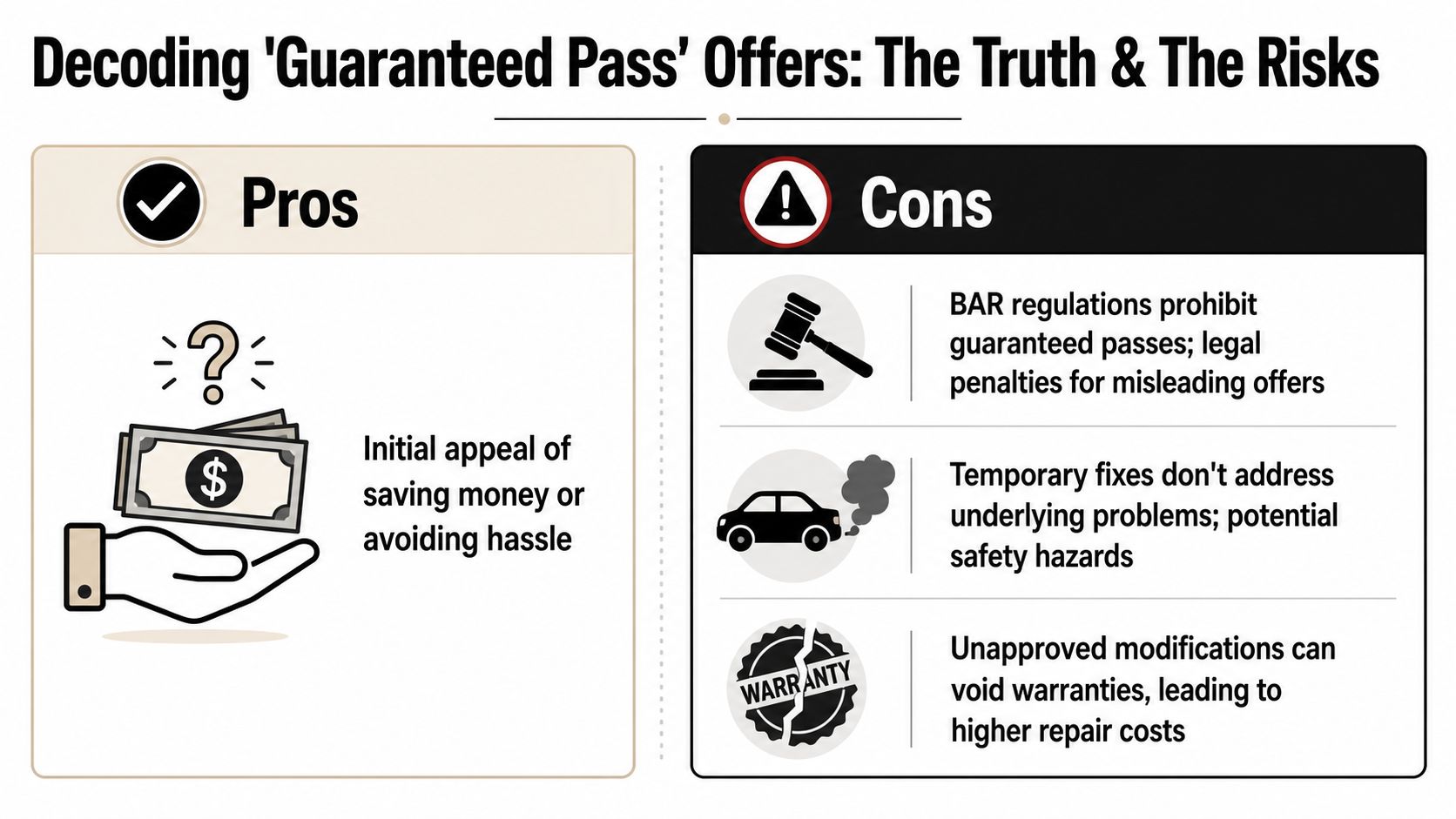
When a shop advertises a guaranteed pass, read it as a warning label, not a benefit. California smog stations don't get to decide outcomes by confidence level. The result comes from the inspection data and the required procedures.
The core issue is legal. The Bureau of Automotive Repair framework doesn't allow an inspector to promise a pass before the test. As noted in this discussion of California smog failure rules and STAR station procedures, the pass or fail decision is based on real-time vehicle data, and STAR stations are held to tighter performance standards.
What these offers usually mean in practice
In the bay, “guaranteed pass” usually turns into one of these:
- A retest offer: The shop may mean it'll retest after repairs.
- A marketing hook: The phrase gets clicks and calls, but it doesn't change the inspection rules.
- A risky workaround: Some operators hint that they know how to “get around” the test. That's where drivers get into trouble.
A free or discounted retest isn't the same thing as a guaranteed certificate. That distinction matters.
Red flags I'd take seriously
The warning signs are usually obvious once you know what to watch for.
- They talk about “making the computer ignore it.” If a shop says it can bypass monitor problems or software issues, that's not preparation. That's non-compliance.
- They shrug off modified tuning. If the vehicle has software or hardware that isn't approved, a casual “you'll be fine” is bad advice.
- They don't ask basic questions. A serious technician wants to know whether the battery was disconnected, whether codes were recently cleared, and whether emissions parts were changed.
- They promise the outcome before seeing the car. No competent inspector can do that truthfully.
A clean result comes from a ready vehicle, not from a creative promise.
Why STAR matters more than a slogan
A STAR-certified station isn't valuable because it fails cars more often or passes them more easily. Its value is accuracy. That's the whole point. The station is expected to follow procedure closely and produce reliable inspections.
That may sound less exciting than a flashy guarantee, but it protects you. If your car passes, you know it passed correctly. If it fails, you know the next step is diagnosis and repair, not guesswork.
The safest mindset is simple. Don't shop for a promised result. Shop for a station that follows the rules and tells you the truth.
How to Genuinely Prepare Your Car to Pass the Smog Check
Preparation is where drivers win or lose. Not at the counter. Not in the lane. Long before that.
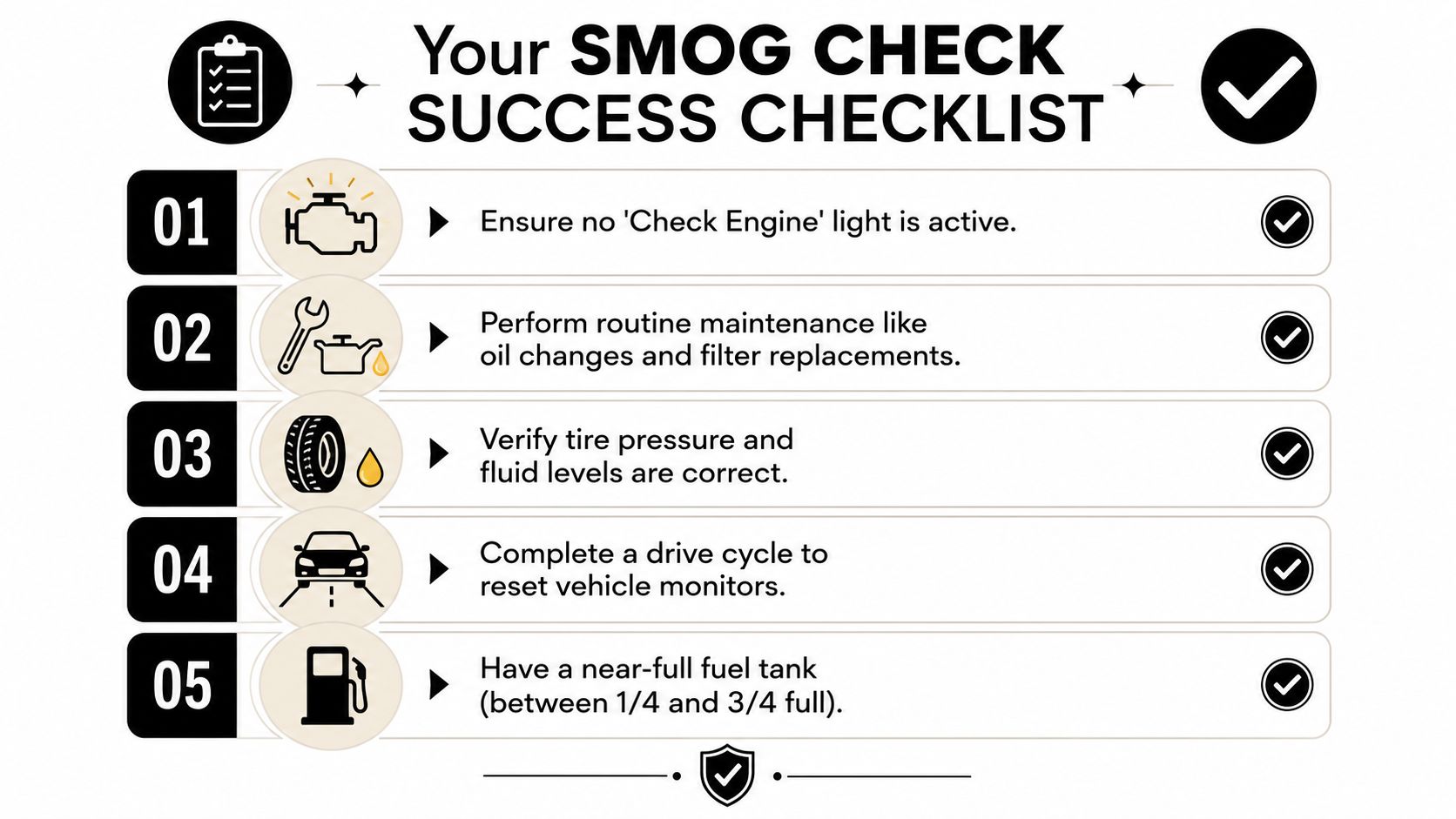
Start with the easy problems first. If the check engine light is on, treat that as a stop sign. Don't assume the car will “still probably pass.” On most modern vehicles, that light means the onboard system has detected a fault tied to emissions or another monitored system.
Use this checklist before your appointment.
Handle the obvious issues first
Routine prep solves more problems than people think.
Check the dashboard
If the check engine light is on, or if it recently turned off after codes were cleared, the car may still not be ready for inspection.
Look for basic maintenance neglect
Old spark plugs, a dirty air filter, and overdue service won't always trigger a failure by themselves, but they can contribute to poor performance and fault codes.
Confirm the fuel cap is secure
A loose or damaged cap can create evaporative system problems on some vehicles.
Drive the car before testing
Don't tow it in cold from the driveway unless there's no other choice. A car that has reached normal operating temperature behaves more predictably during inspection.
For a more detailed breakdown of common failure causes, this page on why vehicles fail smog checks is worth reviewing before you book.
Readiness monitors trip up a lot of drivers
The most misunderstood issue is monitor readiness. A vehicle can run fine, feel fine, and still fail because the onboard system hasn't completed its self-checks.
This happens a lot after a battery replacement, code clearing, or certain repairs. According to the California BAR smog check information, drivers may need to operate the vehicle for 1 to 2 weeks after a battery replacement so the monitors can reset, and monitor readiness has become a major cause of failure.
Here's the short version:
| Situation | What often happens |
|---|---|
| Battery disconnected | Monitors reset to incomplete |
| Trouble codes cleared | Monitors reset again |
| Car driven only on short trips | Some monitors never complete |
| Software modified | The car may fail until restored to legal settings |
Shop-floor advice: If the battery was replaced yesterday, today is usually the wrong day for a smog check.
The fix is usually driving, not magic. The vehicle needs a proper drive cycle, which means a mix of cold start, city driving, steady-speed cruising, and normal shutdowns over time. Exact patterns vary by manufacturer, but the principle doesn't. The computer has to see enough normal operation to finish its tests.
A quick explainer helps here:
Don't ignore modifications
If the car has aftermarket tuning, removed emissions hardware, or parts that aren't approved for that application, don't expect a “friendly” station to smooth it over. That's one of the biggest misunderstandings behind the smog check guaranteed pass idea.
What works instead:
- Restore factory software when needed
- Verify emissions-related parts are legal for California use
- Fix the actual fault before testing
- Give the car enough normal driving time afterward
A simple pre-test routine
The day before your appointment, keep it uncomplicated.
- Drive normally: Give the vehicle a decent trip instead of a quick hop to the store.
- Avoid clearing codes: If you clear a light to make the dash look clean, you may create a monitor problem that's just as bad.
- Check for recent repairs: If work was just completed, confirm the shop didn't leave you at the “not ready” stage.
- Bring the car in as-is: Don't disconnect anything, remove warning bulbs, or try tricks you saw online.
That's how you create the only honest version of a guaranteed pass. You bring in a car that's ready.
What to Do If Your Vehicle Fails the Smog Test
A failed test feels worse than it is. It doesn't mean the car is done, and it doesn't mean you need to panic-buy parts. It means the vehicle needs diagnosis based on the failure information, then a smart decision about repair.
Read the failure for what it is
The first move is simple. Find out whether the car failed because of:
- An active diagnostic issue
- A readiness monitor problem
- A visible emissions equipment issue
- A modification that isn't acceptable
Those are different problems. Treating them like they're all the same wastes time and money.
If the failure came from incomplete readiness, the answer may be more driving after repair or after a recent battery disconnect. If it came from a fault code or an equipment issue, the answer is diagnosis and proper repair.
Use the state help that's available
California has assistance programs for people who qualify. According to the California Senate overview of Smog Check assistance programs, eligible low-income owners can receive up to $500 toward emissions-related repairs, and some may qualify for up to $1,500 if they meet added criteria.
That same program summary also describes replacement assistance for some high-polluting vehicles through fleet modernization options. For some drivers, repairing the current car makes sense. For others, retiring it and moving into a cleaner replacement is the better financial decision.
Don't make the repair decision based only on the first estimate. Make it based on the fault, the car's condition, and whether assistance applies.
The practical next move
If the car fails, use this order:
Get a clear diagnosis
Don't start replacing parts because a friend guessed “it's probably the oxygen sensor.”
Separate emissions repairs from everything else
Some repairs matter directly to the smog result. Others can wait.
Ask whether the vehicle is ready for retest
A repaired car may still need drive time before it's test-ready.
Check eligibility for repair assistance or replacement support
If the budget is tight, this step matters early, not after you've already spent money.
A failed smog check is a repair and compliance problem. It's manageable when you treat it that way.
Your Next Steps at a STAR Station like Speedy Smog
A STAR station is the opposite of the guaranteed-pass gimmick. The promise isn't a predetermined result. The promise is a cleaner process, an accurate inspection, and a result the DMV will accept without drama.
That difference matters most when the vehicle is borderline, older, recently repaired, or carrying the kind of history that makes owners nervous. At a STAR station, the inspection follows stricter expectations for consistency and accuracy. That's what serious drivers should want.
What the visit should feel like
A good STAR-station experience is straightforward.
You pull in. The staff checks the vehicle information, performs the required inspection, explains anything unusual, and submits the result properly. If the car passes, you leave with the certification handled. If it doesn't, you leave knowing why.
That's a much better outcome than hearing vague promises before the test and confusion after it.
Why many drivers choose STAR on purpose
Drivers usually come to a STAR station for one of these reasons:
- They want accuracy: Especially after a previous failure or after repairs.
- They need DMV confidence: They want the inspection handled correctly the first time.
- They drive a vehicle that needs experience: Diesels, hybrids, older cars, and everyday commuter vehicles all bring different quirks.
For a plain-language explanation of what sets these stations apart, see what a STAR smog station is and why it matters.
The real standard to look for
If you remember one thing, make it this: a legitimate shop never sells certainty before the data exists. It sells competence.
That means clean procedures, transparent pricing, technicians who ask the right questions, and enough experience to spot whether your issue is a monitor reset, a warning light, a modification problem, or an actual emissions failure. That's the alternative to the smog check guaranteed pass myth.
Frequently Asked Questions About California Smog Checks
Can any California shop legally guarantee I'll pass?
No. A shop can offer honest prep advice or a retest policy, but it can't legitimately promise a passing result before the inspection.
What's the difference between a STAR station and a regular station?
A STAR station is held to higher performance standards for inspection accuracy. That's why many drivers choose one when they want a reliable, compliant result instead of guesswork.
I changed my battery. Can I test right away?
Usually, that's risky. As covered earlier, a battery disconnect can reset readiness monitors, and the car may need normal driving time before it's ready.
How long is a smog certificate good for?
The certificate is valid for 90 days, according to the California Smog Check program summary in the Senate document cited earlier.
What does a smog check usually cost?
The same Senate summary noted that annual inspection costs averaged $48 in 2015. Actual shop pricing can vary, but the state-mandated certificate fee is handled separately where applicable.
If you want an honest inspection from a STAR-certified team, Speedy Smog offers fast, compliant smog checks in San Leandro for newer cars, older vehicles, diesels, and hybrids. Skip the “guaranteed pass” gimmicks. Bring in a car that's properly prepared, and let a shop that follows the rules give you a clear answer.
You open your DMV renewal notice, see Smog Certification Required, and the first question is usually simple: can I check online whether my car will pass before I drive to a station?
Not exactly.
When people ask how to check smog status, they usually mean one of two different things. They want to see their official smog check history, or they want to know whether the car is ready to pass before the test. Those are not the same thing, and mixing them up is where a lot of frustration starts.
If you handle those two checks the right way, you can avoid wasted trips, avoid an automatic failure for preventable reasons, and get your registration done with a lot less stress.
Table of Contents
- Understanding What Smog Status Really Means
- What You Need Before You Start
- How to Check Your Smog History Online
- Interpreting Your Smog Check Results
- Troubleshooting Common Smog Status Problems
- Your Next Steps for DMV Registration
Understanding What Smog Status Really Means
You get the renewal notice, see the smog requirement, and want to know one thing before you spend time at a station. Is the car going to pass? That is the part many drivers misunderstand.
“Smog status” is not a live pass-or-fail score you can pull from a state website. In practice, there are two things you can check before the test: the vehicle's smog check history and whether its emissions monitors look ready. The actual pass or fail decision happens during the inspection, based on the condition of the car that day.
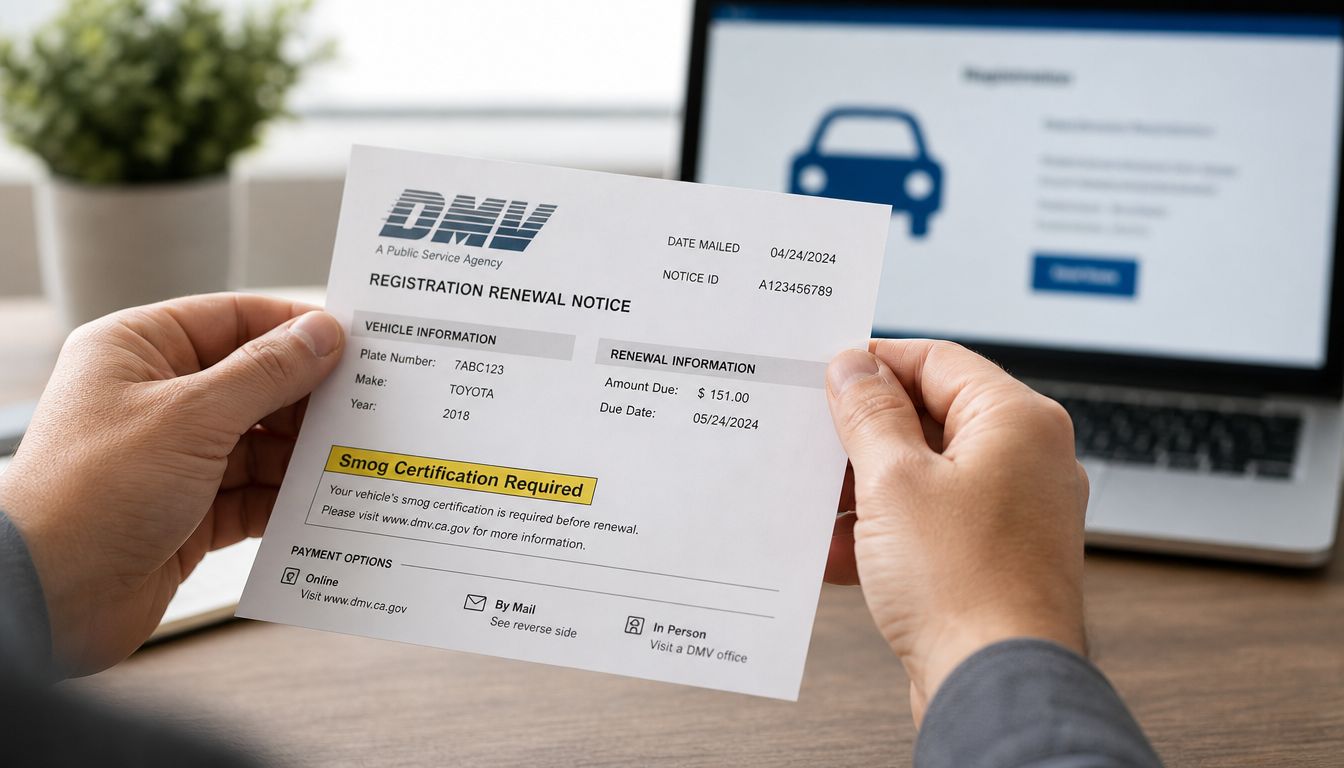
That difference matters because it saves people from a common mistake. Drivers clear a check engine light, drive straight to a test station, and assume the car has a clean “status.” Then the car fails for incomplete readiness monitors before tailpipe emissions even become the issue.
What the DMV notice is really telling you
A DMV notice tells you whether California requires a smog certification for your registration. It does not tell you that the car is pre-approved to pass. It also does not mean every vehicle follows the same rule. Requirements vary by model year, fuel type, county, and whether the notice calls for a specific station type.
Some owners are exempt for a period of time, and some renewals are handled with an abatement fee instead of a physical inspection. Others must test at a STAR station if the notice says so. If your renewal paperwork specifies STAR, go to a STAR station the first time and avoid an extra trip.
Here is the practical way to read it: the notice tells you what DMV needs. Your history tells you what happened last time. Your readiness monitors tell you whether the car is prepared for a valid test today.
Practical rule: Online “smog status” means record history and test-related information. Pass or fail is decided at the station.
I tell customers this every week at Speedy Smog. If you want to avoid paying for a test too early, check the record, make sure the check engine light is off, and confirm the monitors are set before you come in. That is the closest thing to a useful pre-check.
For a plain-English explanation of exemptions, timing, and STAR requirements, see this guide to California smog check rules.
What You Need Before You Start
Checking your history is easy if you have the right identifiers in front of you. Most delays happen because the driver enters one character wrong, uses the wrong vehicle, or grabs an old document.
Keep it simple. Have these ready:
- License plate number: Use the current California plate exactly as it appears on the vehicle registration.
- VIN: The Vehicle Identification Number works as a backup if the plate lookup isn't convenient.
- Registration document: This helps you confirm you're checking the right vehicle and current registration record.
- Insurance card or policy document: Another easy place to confirm the VIN if you don't want to walk out to the car.
Where to find the VIN
The VIN is usually easiest to confirm in one of these places:
- Driver-side dashboard: Look through the windshield at the corner near the dashboard.
- Driver door jamb: Open the door and check the manufacturer label.
- Registration paperwork: The VIN is listed on the vehicle record.
- Insurance paperwork: Most cards or declarations pages include it.
If you're typing a VIN manually, slow down and compare it twice. One wrong character can make it look like the state has no history for your car when the issue is just an entry mistake.
Check the plate first, then verify with the VIN if anything looks off. That saves time and clears up most search errors fast.
How to Check Your Smog History Online
The official history lookup is the part many drivers are looking for when they search how to check smog status. This record won't predict your next result, but it will tell you what the state already has on file.
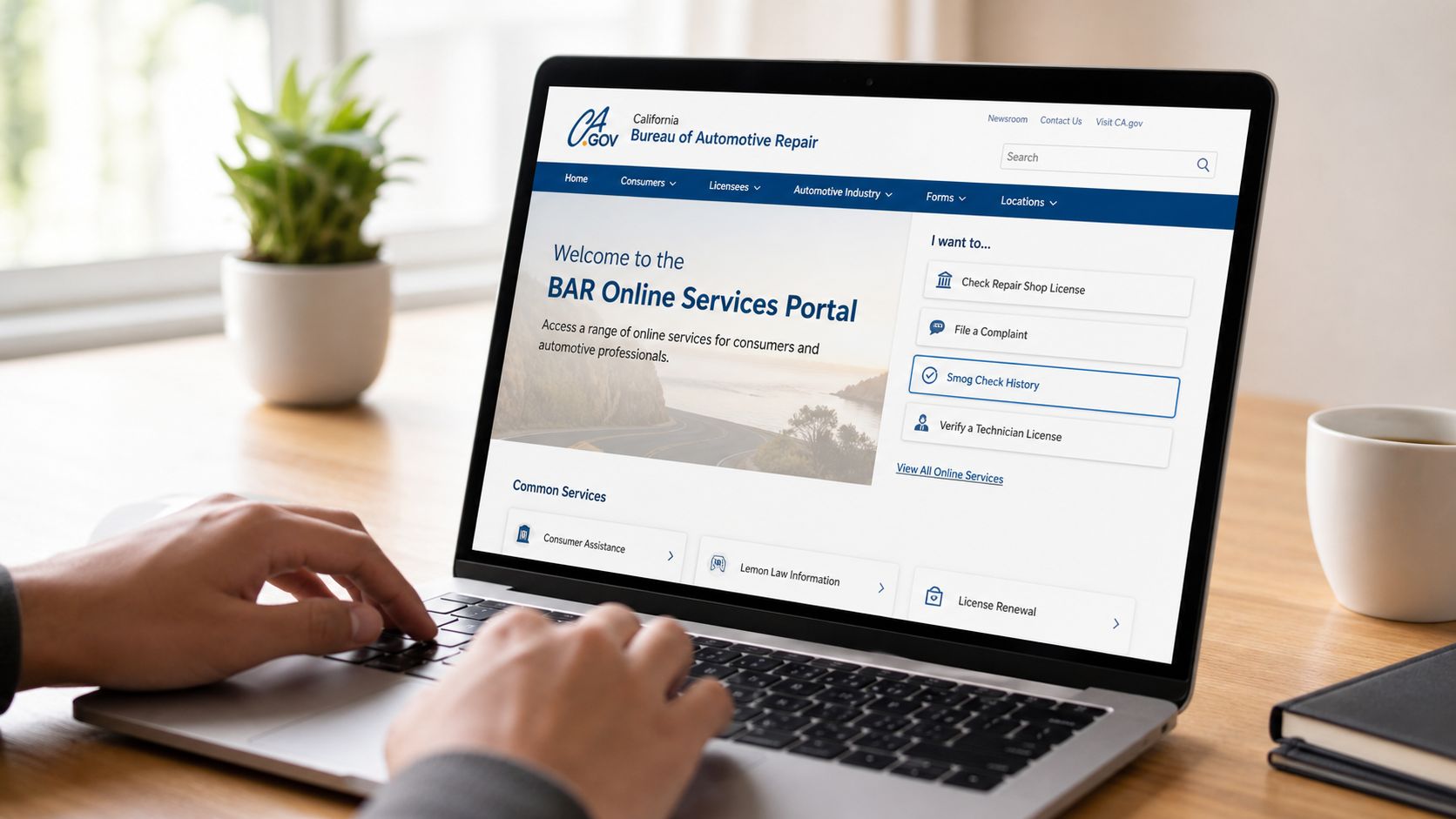
The key fact is straightforward. Vehicle owners can review history for free through the BAR website using a license plate number or VIN, and the tool shows past smog checks with dates and pass/fail results, as described in this guide to the BAR smog check history tool.
Use the official BAR record
Go to the Bureau of Automotive Repair's vehicle history service, not a generic DMV reminder page or third-party search result. You want the state record that tracks prior smog inspections.
Use a laptop or phone, but if you're entering a VIN manually, a full keyboard is easier and cuts down on mistakes.
Enter your plate or VIN carefully
Start with the plate number. It's faster and usually enough. If the result looks wrong, use the VIN to confirm.
A clean routine looks like this:
- Enter the plate exactly as shown on your current California registration.
- Run the search once and review the returned vehicle details.
- Use the VIN if needed when you want a second check or if the plate result doesn't match what you expected.
Small errors create big confusion here. An old plate, a transposed VIN character, or searching from paperwork for a different car in the household can make the record look missing.
Read the history like a registration record
What you're looking for is simple:
- Test dates: When prior inspections were performed
- Outcome: Whether each inspection passed or failed
- Inspection pattern: Whether the car has repeated failures, long gaps, or a recent pass already on file
That history is useful for more than curiosity. If you already passed recently and the record is visible, that gives you confidence before you jump into the registration process. If the record shows a fail, you know not to assume DMV renewal will clear until the vehicle passes.
A quick visual walkthrough helps if you prefer to see the process in action:
The BAR history tool answers, “What happened last time?” It does not answer, “Will I pass tomorrow?”
Interpreting Your Smog Check Results
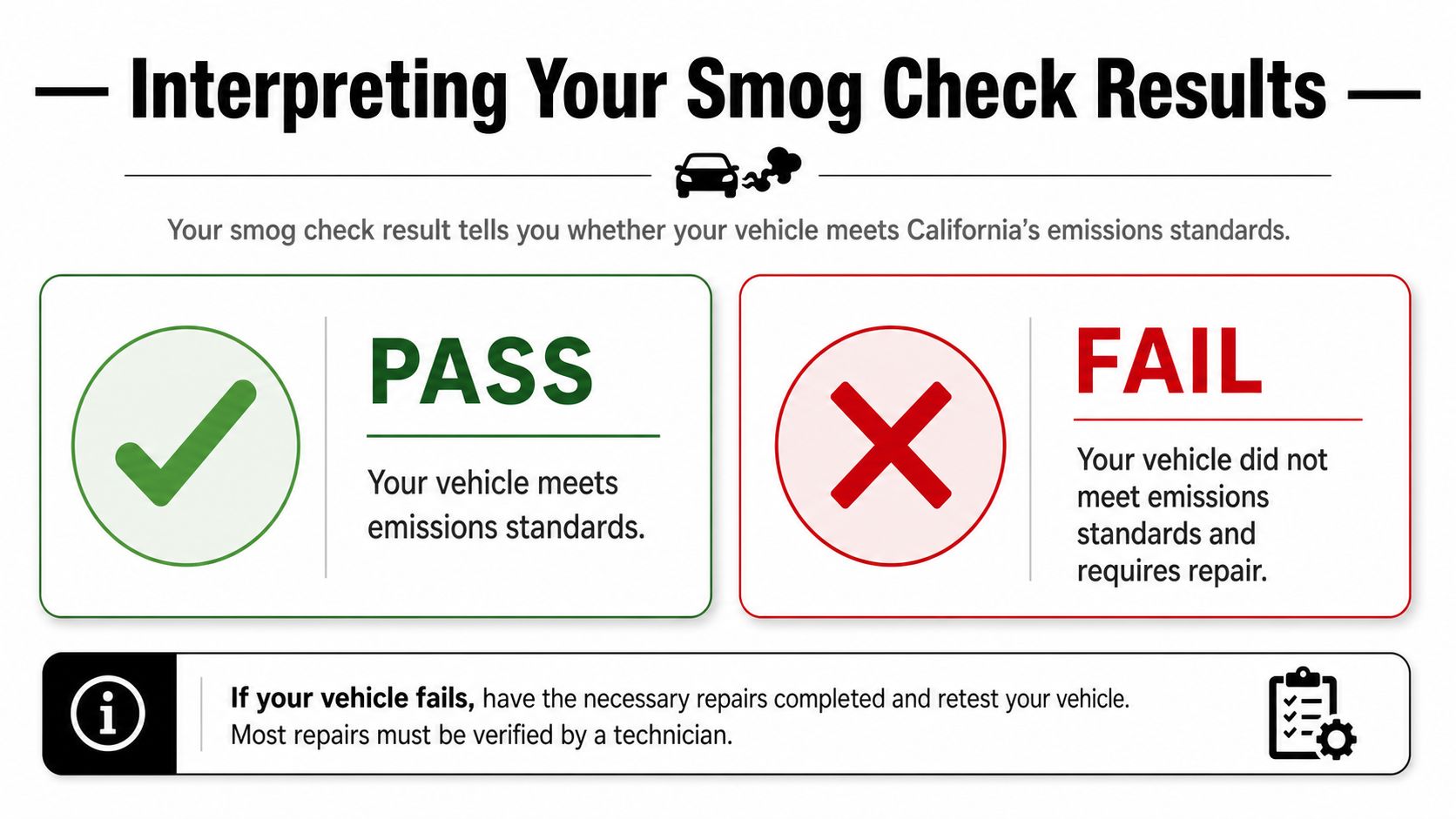
A lot of drivers pull up their record looking for a simple yes or no. The record does not give you a future pass or fail status. It shows what happened on prior tests, and that distinction matters if you want to avoid wasting a trip to the station.
What a pass means
A Pass means the vehicle met the inspection requirements on that test date and the result was sent into the state system. For registration, what matters is whether that passing test lines up with your current renewal cycle.
If you just tested the car, give the system a little time to update. I see this all the time at the shop. A customer tests, checks online right away, and assumes the certificate did not go through. In many cases, the record just has not posted yet.
A recent pass on file is helpful. It does not replace checking your DMV notice for any special requirement tied to that renewal.
What a fail means
A Fail means the vehicle did not meet inspection requirements on that visit. The next step is to read the vehicle inspection report carefully, because the reason for failure changes what you should do next.
Some failures point to an emissions problem. Others happen before tailpipe numbers are the issue, such as an OBD readiness problem or a missing requirement tied to the inspection type. That is why a fail should be read as a diagnosis starting point, not just bad news.
If your renewal notice calls for a STAR station, keep that in mind before you book the retest. Passing at the wrong station type can still slow down registration.
Here is the practical read:
| Result | What it tells you | What you should do |
|---|---|---|
| Pass | The vehicle met inspection requirements on that date | Confirm the pass applies to your current DMV renewal |
| Fail | The vehicle did not meet inspection requirements | Read the inspection report, fix the cause, then retest at the right station if STAR is required |
What station type can tell you
Your history may also show where the inspection was performed. That detail matters if the DMV directed the vehicle to a specific station category.
A STAR station entry tells you the test was done at a station approved for vehicles that need STAR service. If your notice requires STAR, match that requirement before you test. It saves a lot of frustration.
If you want help reading the wording on a report line by line, including what different result labels mean, see this guide to smog test results.
Troubleshooting Common Smog Status Problems
You pull up your record, or you head in for a test, and something does not line up. That does not always mean the car has a major emissions problem. In my bay, the repeat trouble spots are usually much simpler: the wrong vehicle record, a monitor that has not reset, or a warning light that makes the test fail before the inspection really gets going.
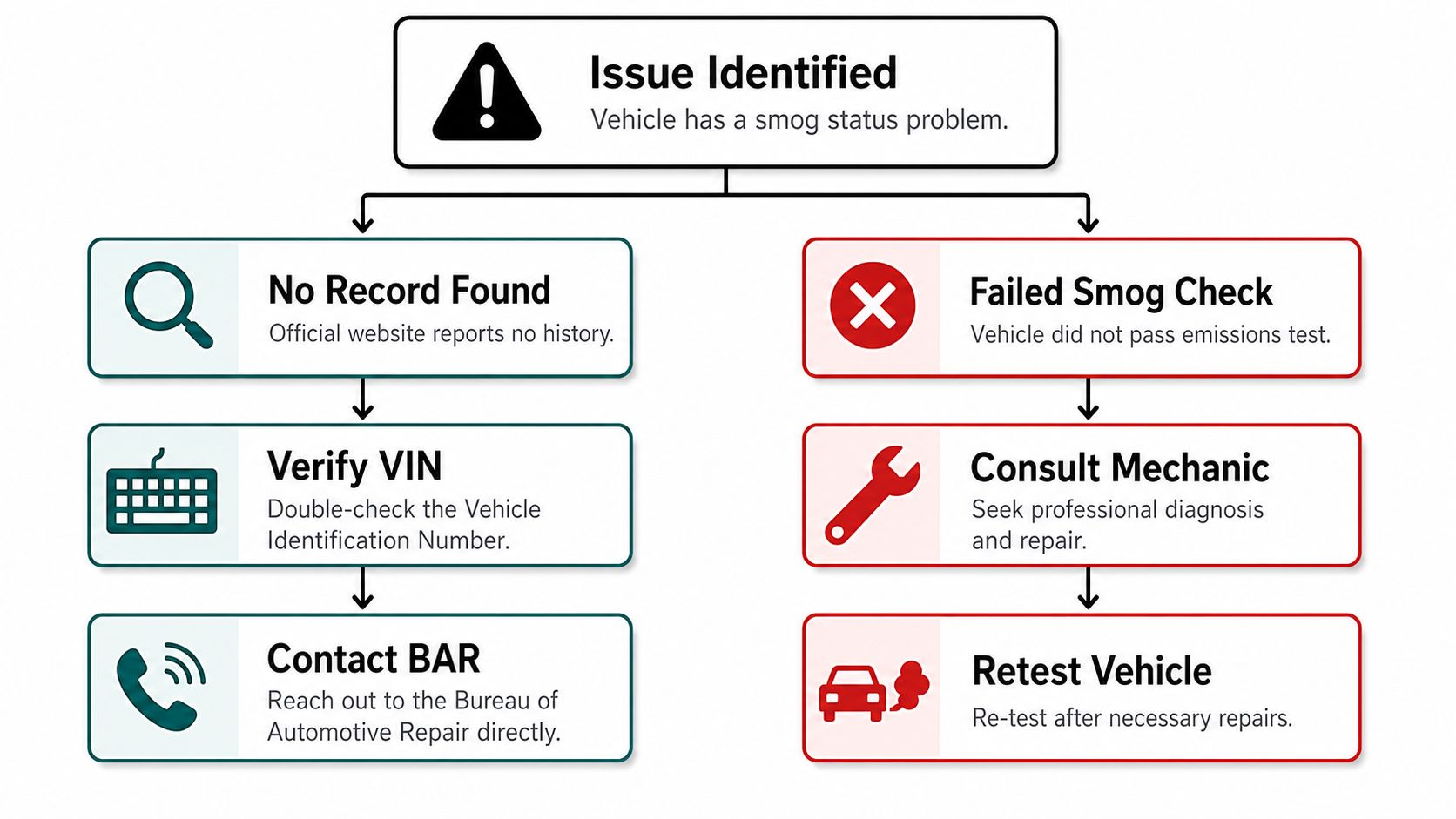
When the site shows no record found
Check the vehicle information first. A bad lookup is often an input problem, not a state database problem.
- Recheck the VIN: One wrong character is enough to return nothing.
- Confirm the plate number: Old registration paperwork can send you to the wrong record.
- Make sure you picked the right vehicle: Families with multiple cars mix this up all the time.
- Try the other search method: If you used the plate first, run the VIN. If you used the VIN first, try the plate.
If the record still does not appear, have your registration in hand and contact BAR or check the DMV side of the process through this registration renewal walkthrough. That helps you separate a smog record issue from a renewal timing issue.
When the car fails before tailpipe emissions matter
This is the part many drivers misunderstand. You cannot check a future pass or fail status ahead of time. What you can check is whether the car is ready to be tested.
For many newer vehicles, the problem is in the OBD-II system. If the check engine light is on, or the readiness monitors are not set, the vehicle can fail even when it seems to drive normally. I see this after battery disconnects, recent repairs, and code clearing.
A car can feel perfectly fine and still be unready for inspection.
A practical pre-test routine
Use this before you spend money on a test:
Start with the check engine light
Turn the car on and look at the dash. If the light stays on with the engine running, fix that first.Check readiness monitors with a scan tool
Even a basic OBD scanner can show whether monitors are ready. This is the closest thing to a useful pre-check, and it is far more helpful than trying to guess your "smog status."Give the car enough drive time after repairs or a battery reset
If codes were cleared or the battery was disconnected, the monitors may go back to not ready. The car usually needs normal driving, sometimes over multiple trips, before those checks complete.Do not clear codes right before the test
Drivers do this hoping to turn off the warning light long enough to pass. What usually happens is the monitors reset, and now the car is still not ready.Retest after you confirm readiness
This saves a wasted trip and a failed inspection fee.
That trade-off matters. Waiting a day or two to confirm monitor status is usually cheaper than paying for a test the car was never ready to pass.
When the problem is the station, not the car
Sometimes the vehicle is fine, but the appointment creates the delay.
If your renewal notice requires a STAR station, go to a STAR station for the retest. If the VIN on the paperwork does not match the car in front of the technician, stop and fix the paperwork first. If the battery was replaced the same morning, hold off and verify readiness before you come in.
Those are the small mistakes that turn a routine smog check into a second visit.
Your Next Steps for DMV Registration
Once you've checked your history and confirmed where things stand, the next move is usually clear.
If your record shows a recent valid pass, complete your DMV renewal and keep your confirmation with your vehicle paperwork. If your DMV notice still requires a current inspection, schedule the test and make sure you use the station type named on the notice.
If your car failed, handle the repair first. If the issue involved readiness monitors, don't rush back immediately after disconnecting the battery, clearing codes, or finishing repairs. Give the vehicle time to complete its drive cycle and verify monitor status before the retest.
A few final checks make the process smoother:
- Review the DMV notice carefully: Look for any STAR station requirement.
- Bring the right vehicle information: Registration details and VIN should match the car you're testing.
- Don't ignore warning lights: A lit check engine light is a stop sign, not a maybe.
- Use history and readiness together: One tells you what the state recorded. The other tells you whether the car is likely prepared for inspection.
If you want a plain-language reference before renewing, this walkthrough of the registration renewal process helps connect the smog side to the DMV side.
If you need a fast, compliant inspection in the East Bay, Speedy Smog in San Leandro is a STAR Certified station that handles most vehicles efficiently, including newer cars, older vehicles, diesels, and hybrids. It's located at 15275 Washington Ave, San Leandro, CA 94579, and typical tests for many 2000 and newer vehicles are completed in about 10 to 15 minutes. If your renewal notice says it's time, stop by for a Smog & a Smile.
You're probably familiar with the feeling. You're inching along East Bay traffic, the car in front of you keeps tapping its brakes, and the air outside looks a little dirtier than it did a few blocks ago. Even with the windows up, a busy commercial corridor can feel heavier than an open stretch of road.
That difference isn't just in your head. In dense city streets, pollution can build up in ways that surprise people. And that's why a smog check matters for more than DMV paperwork. In places like Oakland and San Leandro, emissions compliance is also part of how neighbors reduce the pollution everyone shares.
Table of Contents
- What Is High Street Smog and Why It Matters in the Bay Area
- The Science and Health Impact of Urban Air Pollution
- Californias Smog Check A Key Solution for Cleaner Air
- The Speedy Smog Check Process Explained
- How to Prepare Your Car for a Passing Smog Test
- Your High Street Smog Questions Answered
What Is High Street Smog and Why It Matters in the Bay Area
High street smog is concentrated air pollution that builds up along busy commercial streets where traffic, buildings, and stop-and-go driving all work together. It's not a special kind of California-only smog, and it's not just “bad air” in a general sense. It's the more intense pollution you get when emissions collect in a street environment that doesn't clear out easily.
Why busy streets feel different from open roads
The key idea is the street canyon effect. Think of a narrow road with taller buildings on both sides. Instead of wind moving pollution away, the buildings can disrupt airflow and keep emissions hanging lower and longer.
That's why the same amount of traffic can feel different depending on the street. A wider, more open road gives pollution more room to disperse. A tighter corridor can trap it closer to where people walk, drive, bike, wait for the bus, or stand outside a shop.
Researchers have noted that streets under 20 meters wide with tall buildings can cause irregular, dangerously high spikes in particulate matter because airflow gets trapped according to reporting on street canyon pollution physics.
Practical rule: If a street feels boxed in, has frequent braking, and keeps traffic close to storefronts and sidewalks, it can hold onto pollution more than an open roadway.
Why this matters locally
In the Bay Area, many drivers think mainly about freeway exposure. That matters, but local commercial corridors matter too. A dense block in Oakland or San Leandro can create a concentrated exposure zone even during short trips like school drop-offs, errands, or a commute through downtown.
Often, confusion arises. People assume, “My car is just one car.” But on a crowded corridor, every extra bit of exhaust adds to a shared pocket of pollution. The environment amplifies what would otherwise disperse more quickly.
A smog check doesn't solve every air-quality issue. It does something important, though. It helps identify vehicles emitting more pollution than they should, which is especially relevant in places where the shape of the street can make each vehicle's emissions more harmful to the people nearby.
The Science and Health Impact of Urban Air Pollution
Smog sounds like one thing, but it's really a mix of gases and particles. Some are released directly from vehicles. Others form in the air after those emissions react with sunlight.
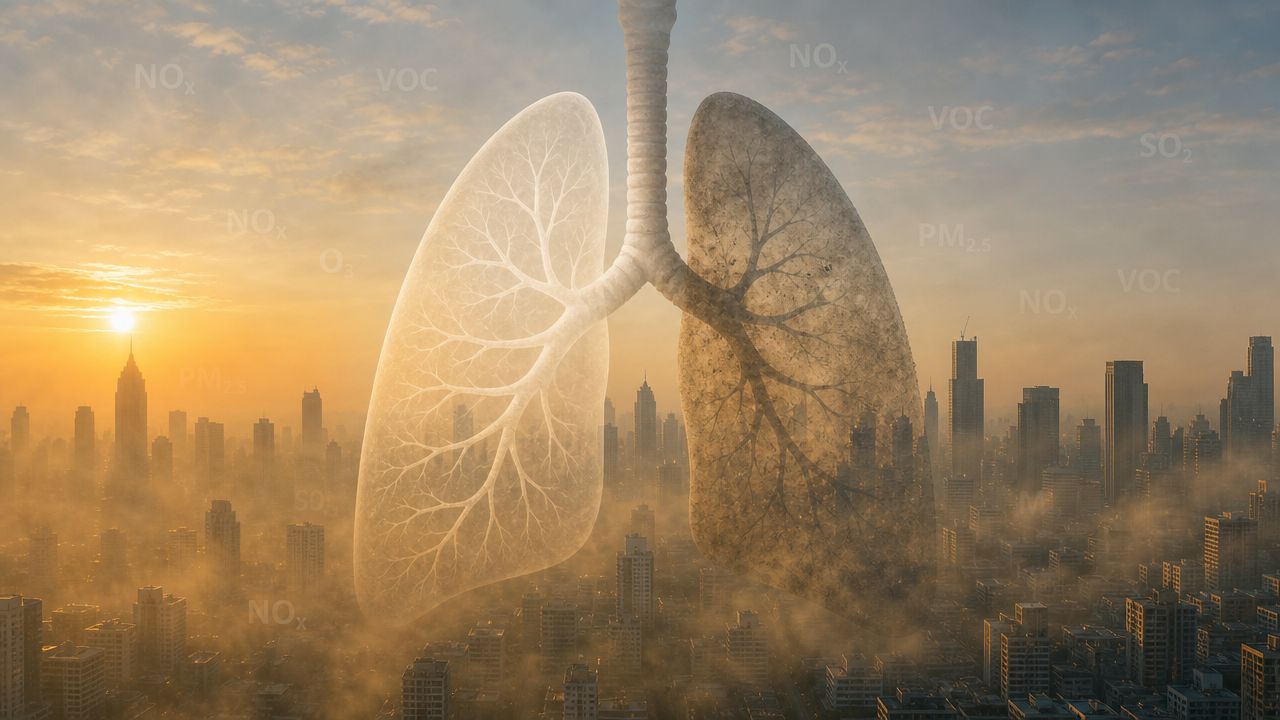
How smog forms
A simple way to think about it is as a harmful recipe. Cars release nitrogen oxides (NOx) and volatile organic compounds (VOCs). Sunlight acts like the heat. The result is ground-level ozone, one of the signature ingredients of photochemical smog.
According to Caltech's explanation of what causes smog, photochemical smog on high streets is primarily driven by NOx and VOCs reacting in sunlight, generating ground-level ozone that typically peaks at 40 to 80 parts per billion in dense urban corridors during summer afternoon hours.
If you want a plain-English breakdown of what comes out of a vehicle and why it matters, this guide on car emissions explained is a helpful companion.
Why the health risks are taken seriously
This isn't only about visible haze. The smallest pollutants are often the most concerning because people can breathe them deep into the lungs. Near-roadway pollution can also include ultrafine particles, black carbon, and other byproducts that aren't obvious from a quick glance outside.
The broader health burden is global. The World Health Organization states that ambient air pollution was responsible for an estimated 4.2 million premature deaths worldwide in 2019, and 99% of the world's population lives in places where WHO air quality guidelines are not met, according to the WHO fact sheet on ambient air quality and health-air-quality-and-health).
Another point often missed is how concentrated roadway pollution can be. The National Academies review notes that ultrafine particles, black carbon, and particle-bound PAHs can be 3 to 10 times more concentrated near roadways than at 500-meter distances, and that fine particulate pollution in the most polluted cities can shorten life expectancy by 1 to 3 years, as summarized in the traffic-related air pollution and health review.
The closer pollution is to where people breathe it, the less “average city air” matters and the more local street conditions matter.
That's why high street smog deserves its own explanation. It turns a general air-pollution issue into a block-by-block community problem.
Californias Smog Check A Key Solution for Cleaner Air
California's Smog Check program exists because tailpipe emissions are a public issue, not just a private maintenance issue. When a vehicle emits more pollution than it should, the effects don't stay in the engine bay. They move into the air everyone else uses.
Why the program exists
The case for emissions control becomes clearer when you look beyond one city or one state. In the United Kingdom, approximately 76% of high streets exceed the World Health Organization's recommended annual limit for nitrogen dioxide, according to reporting on UK high street air pollution. That's a strong reminder that dense commercial corridors often struggle with the same underlying problem.
California's response is practical. The state requires emissions testing for many vehicles because cleaner-running cars help lower the pollution load in the places people live, shop, and commute. The point isn't perfection. The point is removing avoidable excess emissions from the road.
For drivers, that means a smog check is best viewed as a maintenance checkpoint with a public-health benefit. A vehicle that passes is meeting the emissions standard it's supposed to meet. A vehicle that fails may need repair because something in the emissions system isn't working as intended.
What drivers should know about STAR testing
Some vehicles are directed to a STAR Certified station. That doesn't mean your car is in trouble. It means the inspection has to be done at a station that meets higher state performance standards.
Here's the practical distinction:
| Situation | What it usually means for the driver |
|---|---|
| Regular Smog Check need | Your vehicle needs the standard emissions inspection for registration or renewal |
| STAR station requirement | The state requires testing at a station recognized for higher performance standards |
| Failing inspection | Repairs may be needed before the vehicle can be certified |
If you're not sure what your registration notice requires, California-specific guidance on smog check rules and vehicle requirements can help you decode the paperwork before you book an appointment.
A smog check isn't about blaming drivers. It's a system for catching excess emissions before they keep circulating through crowded streets.
The Speedy Smog Check Process Explained
For most drivers, the hardest part of a smog check is uncertainty. People don't know how long it'll take, what the technician is checking, or whether their particular vehicle type changes the process.
What the visit looks like
At Speedy Smog in San Leandro, the process is designed to be straightforward. You arrive, check in, confirm the vehicle details, and the inspection begins. For most 2000 and newer vehicles, tests are typically completed in about 10 to 15 minutes, according to the publisher's business information provided for this article.
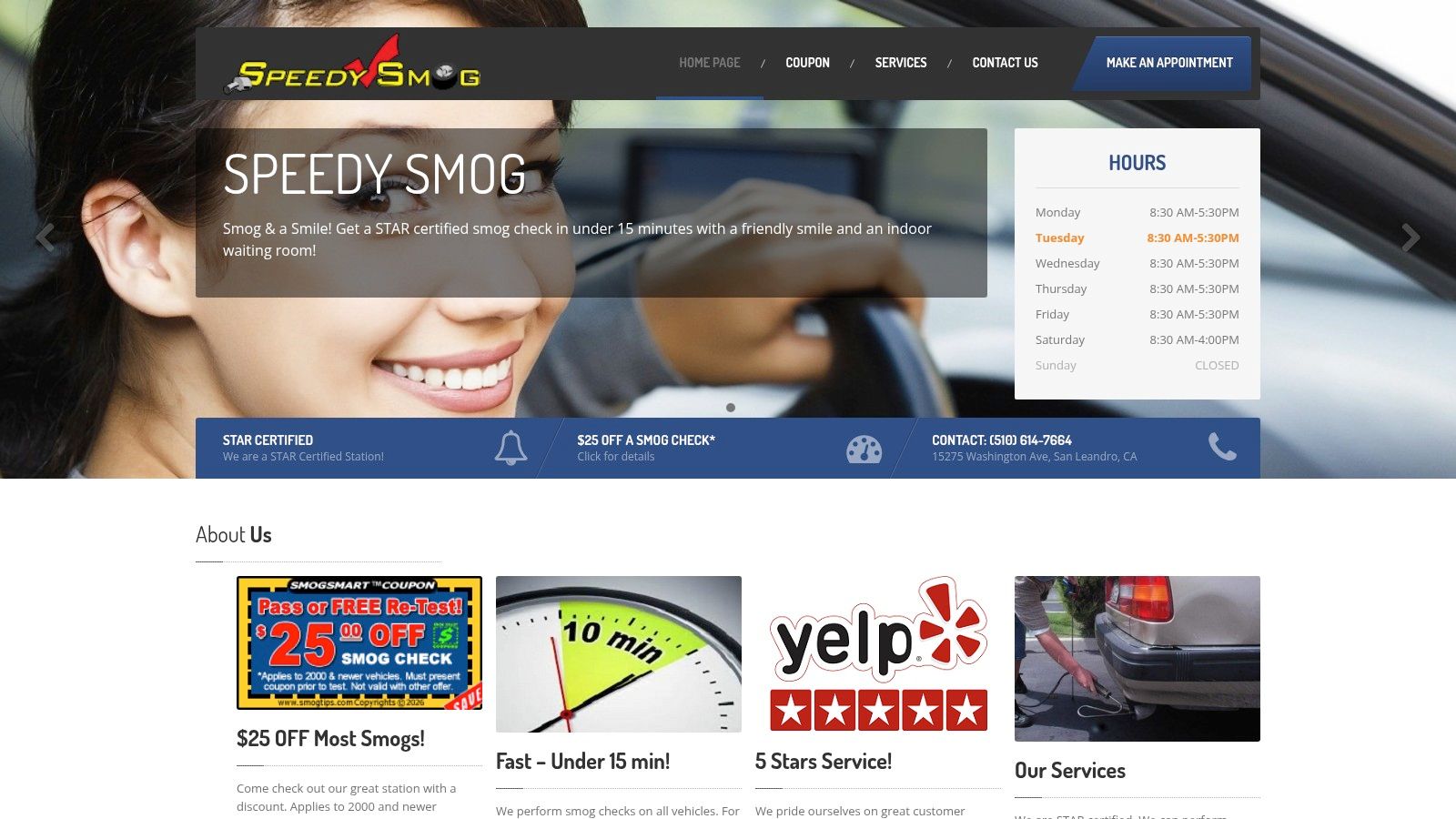
That short turnaround matters if you're squeezing the appointment into a workday, handling a registration deadline, or just trying to avoid spending half your afternoon waiting around. The shop is also set up with a clean indoor waiting room, which makes the stop feel more manageable than the old stereotype of a grimy inspection line.
What happens during the inspection
The exact testing details depend on the vehicle, but the customer experience is simple. The technician verifies what kind of smog inspection your car needs, performs the required emissions-related checks, and then lets you know whether the vehicle passed or if it needs follow-up work before certification.
People often appreciate two things most:
- Clear pricing: You know what the inspection costs without having to guess.
- Fast workflow: The visit is built around getting you in and out quickly when the vehicle is ready.
- Friendly communication: Questions about registration, timing, and next steps get answered in plain language.
That last point matters more than it sounds. Smog compliance can feel technical, especially if the DMV notice mentions STAR requirements or if you drive an older vehicle. A technician who explains the process clearly can lower a lot of stress.
For a quick look at the shop environment and service setup, this short video gives helpful context before you go:
What kinds of vehicles can be tested
One common misconception is that smog testing is mainly for standard late-model gas cars. In reality, Speedy Smog also handles a broader mix of vehicles based on the publisher information provided:
- 2000 and newer vehicles for drivers who want a quick inspection
- 1999 and older vehicles that may have different testing requirements
- Diesels that still need compliant emissions inspection
- Hybrids when certification is required
There are also periodic $25-off coupons for most smogs on newer vehicles, according to the publisher details. That won't apply in every case, but it's worth checking before you visit.
“Smog & a Smile” works because most drivers don't want a lecture. They want a clean process, a fair price, and an accurate result.
The main thing to know is that a smog check doesn't need to become a half-day project. When the vehicle is ready and the station is organized, it can be one of the easier items on your registration list.
How to Prepare Your Car for a Passing Smog Test
A little preparation can improve your chances of passing on the first try. None of these steps are complicated, but each one addresses a common reason a vehicle shows up unready for inspection.
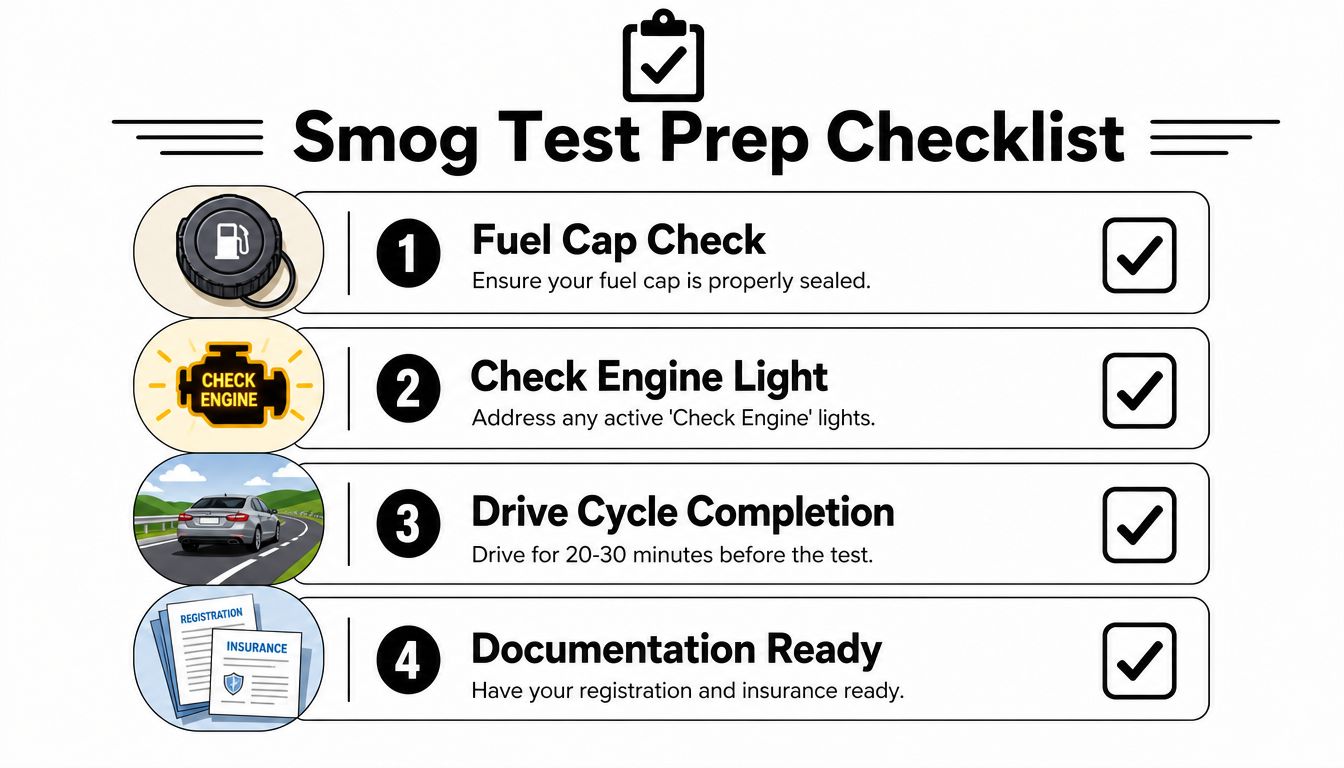
A simple pre-test checklist
Use this as a practical day-of checklist:
Drive the car before the test. A short drive helps warm up the engine and emissions equipment. Many drivers aim for about 20 to 30 minutes of normal driving before the appointment so the system is operating at normal temperature.
Make sure the Check Engine light is off. If it's on, don't ignore it and hope for the best. That light often signals an emissions-related problem, and it can block a passing result.
Tighten the gas cap. A loose or damaged gas cap can create evaporative-emissions issues. It's a small part, but it matters.
Bring your paperwork. Having your registration and insurance ready helps the visit move faster and avoids last-minute scrambling.
If you're wondering whether recent maintenance can affect test timing, this article on whether to get an oil change before a smog check answers a question many drivers have right before booking.
What to avoid right before your appointment
People sometimes overcomplicate smog prep. You usually don't need exotic fuel additives, last-minute tricks, or internet folklore. Stick to the basics.
A few sensible reminders help:
- Don't show up with an active warning light. If the dashboard is telling you something's wrong, take that seriously first.
- Don't skip the warm-up drive. A cold vehicle may not be in its best testing condition.
- Don't wait until the registration deadline. If the vehicle needs repair after a failed test, extra time helps.
Good prep is simple: warm the car up, check for warning lights, secure the gas cap, and bring your documents.
That approach won't fix a broken emissions component, but it will help you avoid preventable issues.
Your High Street Smog Questions Answered
Does passing mean the air around me is safe
No. Passing means your vehicle meets the emissions standard required for certification. It does not mean near-road air is harmless in heavy traffic.
That distinction matters in dense corridors. Research discussed in the near-roadway exposure study notes that ultrafine particulates and black carbon remain at increased levels within 30 meters of heavy traffic even after compliance. So certification is important, but compliance and personal exposure are not the same thing.
What happens if my car fails
A failed result usually means the vehicle needs diagnosis and repair before it can be certified. Common causes can involve sensors, the catalytic converter, evaporative-emissions components, or other emissions-related faults. The next best step is to find out what triggered the failure instead of guessing.
What does STAR Certified mean for me
It means your vehicle must be tested at a station that meets higher state performance standards. For the driver, the practical takeaway is simple. Go to the right kind of station the first time so your inspection counts for DMV purposes.
Is one smog check really meaningful for community air
By itself, one inspection won't erase high street smog. But each properly functioning vehicle adds less pollution to shared streets. In a street canyon environment, that local reduction matters more than many people realize.
If your registration is due and you want a fast, straightforward inspection, Speedy Smog in San Leandro offers STAR Certified testing for a wide range of vehicles, including newer cars, older models, diesels, and hybrids. With typical 10 to 15 minute tests for many 2000 and newer vehicles, a clean waiting room, transparent pricing, and a friendly local approach, it's a convenient option for East Bay drivers who want to get certified and get back on the road.
You walk into a smog station thinking this is just another registration errand. Ten or fifteen minutes later, someone hands you a printout with FAIL on it, and suddenly your whole day changes. Now you're thinking about repair bills, missed time, whether the car is safe to drive, and how many more steps this is going to take.
That reaction is normal. A failed smog check catches a lot of drivers at the worst possible time, usually when registration is already due and the budget is tight. The good news is that a failure report usually points you toward a solvable problem. The bad news is that people often waste money because they guess, replace parts too quickly, or go to the wrong shop first.
A calm approach works better. Read the report carefully. Figure out whether the failure was visual, functional, or emissions-related. Decide whether the issue is simple, diagnostic-heavy, or a sign that the car may not be worth fixing. If cost is a significant obstacle, California does have a repair assistance path for some drivers. Then, once the work is done, prepare properly for the retest so you don't pay twice for the same problem.
Table of Contents
- That Sinking Feeling When Your Car Fails Its Smog Check
- Understanding Your Failed Smog Check Report
- Common Smog Failures and Your Repair Options
- California's Smog Check Repair Assistance Programs
- Choosing a STAR Certified Smog Repair Shop
- Preparing for Your Smog Retest to Pass the First Time
- Smog Check Repair FAQs
That Sinking Feeling When Your Car Fails Its Smog Check
Most drivers don't fail a smog check because they ignored their car on purpose. Usually it's something more ordinary. The check engine light came on last week. The battery was disconnected during another repair. The car has been running a little rough, but still getting to work. Or the vehicle seems perfectly fine, then the test says otherwise.
I've seen the same look a lot. A driver stares at the report and asks the same first question almost every time: "What does this mean?" Right behind that comes the bigger question: "How much is this going to cost me?"
Those are fair questions. Smog failures feel bigger than they are because they hit three nerves at once:
- Money pressure: You weren't planning for an emissions repair.
- Time pressure: Registration doesn't wait.
- Information pressure: The report uses terms the average person doesn't deal with every day.
A failed smog check is a diagnosis starting point, not a final verdict on the car.
Some failures are simple. A loose gas cap, incomplete monitors, or a problem caught early can be straightforward. Others need proper testing because the code or emissions reading is only a clue. That's where people get into trouble. They replace the part named by a code reader, spend money, and still fail again.
The practical path is simpler than it feels in the moment. Start with the Vehicle Inspection Report. Match the type of failure to the likely system involved. Decide whether this is a basic fix, a diagnostic job, or a financial decision. If the repair bill looks tough, look into California assistance before authorizing major work. Then go back for the retest only when the car is ready.
Understanding Your Failed Smog Check Report
The Vehicle Inspection Report, often called the VIR, can look more complicated than it is. If you break it into sections, it starts making sense quickly. The report usually tells you whether the car failed because of something the technician saw, something the car's systems reported, or something that came out of the tailpipe.
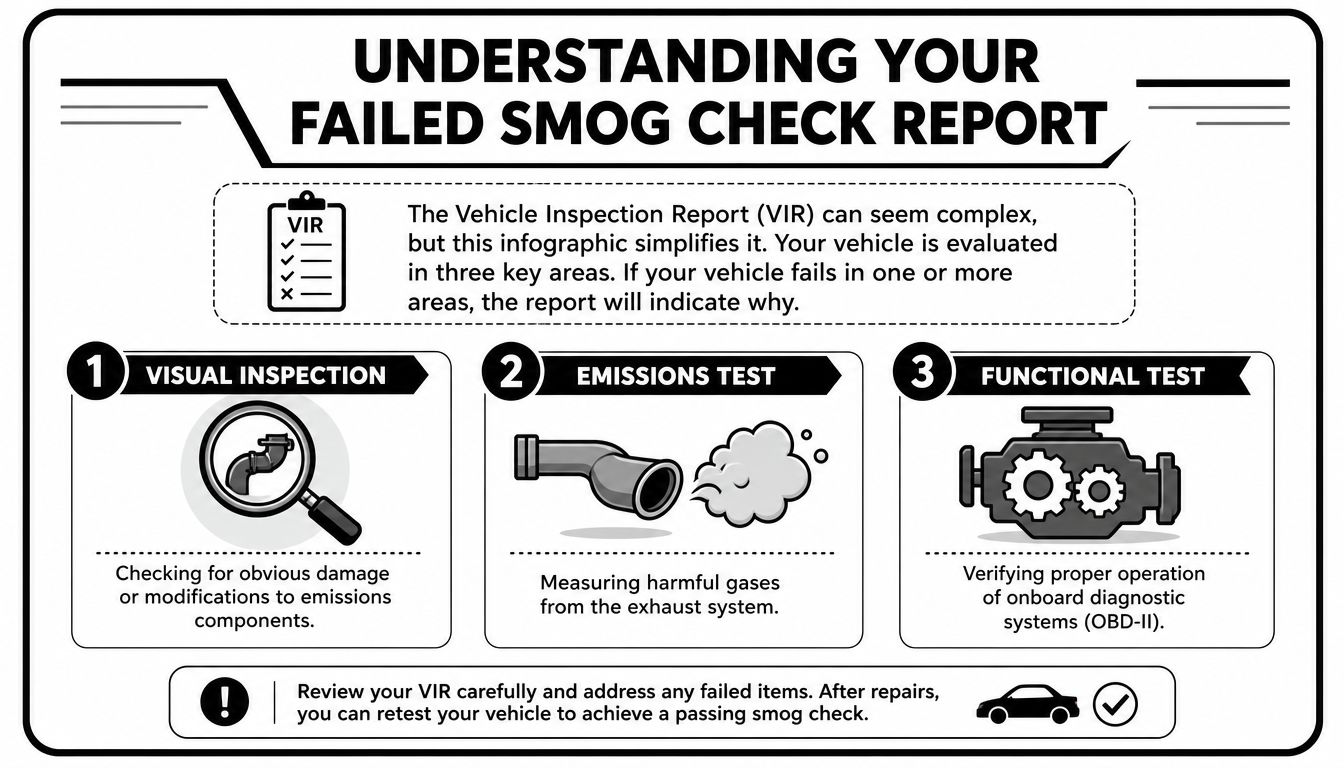
For a more detailed example of how stations present outcomes, this guide to understanding smog test results helps drivers see what they're looking at.
Three places to look first
Visual inspection is exactly what it sounds like. The inspector checks whether required emissions parts are present, appear correct for the vehicle, and haven't been obviously tampered with. Missing hoses, disconnected components, or aftermarket parts that don't belong can trigger a failure even if the car seems to run fine.
Functional tests check whether key emissions-related systems behave properly. Depending on the vehicle and test type, this can include the gas cap, onboard diagnostics, and whether the check engine light is commanded on. If the computer says there's an active emissions problem, the vehicle won't pass just because it sounds okay in the parking lot.
Emissions readings show what the car is producing. Think of this as the results side of the test. The engine and emissions systems may be burning fuel cleanly, or they may be letting too much pollution through.
What the failure language usually means
When drivers see terms like HC, CO, NOx, or EVAP, they often assume they need a part with the same name. That's usually not how diagnosis works.
- Hydrocarbons (HC): Unburned fuel. High HC can point to incomplete combustion, misfires, ignition trouble, vacuum leaks, or engine condition issues.
- Carbon Monoxide (CO): Fuel that burned poorly because the mixture may be too rich. That can happen when the engine is getting too much fuel or not enough air.
- Nitrogen Oxides (NOx): Heat-related emissions. High NOx often points technicians toward combustion temperature control problems, exhaust gas recirculation issues on older systems, or a converter that isn't doing its job.
- EVAP system failure: This usually means the car can't properly contain fuel vapors. A gas cap can be involved, but so can hoses, valves, seals, or leaks elsewhere in the evaporative system.
Practical rule: A fault code or emissions category tells you where to investigate. It doesn't automatically tell you what part to replace.
If your report says the check engine light caused the failure, don't stop at the code description. The code names the condition the computer saw. The actual failed part might be upstream, downstream, electrical, mechanical, or a leak. That's why a clean diagnosis matters more than a quick guess.
Common Smog Failures and Your Repair Options
A lot of failed tests come back to the same handful of causes. In fact, the California Bureau of Automotive Repair says over 70% of smog check failures are attributed to a handful of issues, including malfunctioning oxygen sensors, catalytic converters, and evaporative emission control systems in its smog check FAQ.
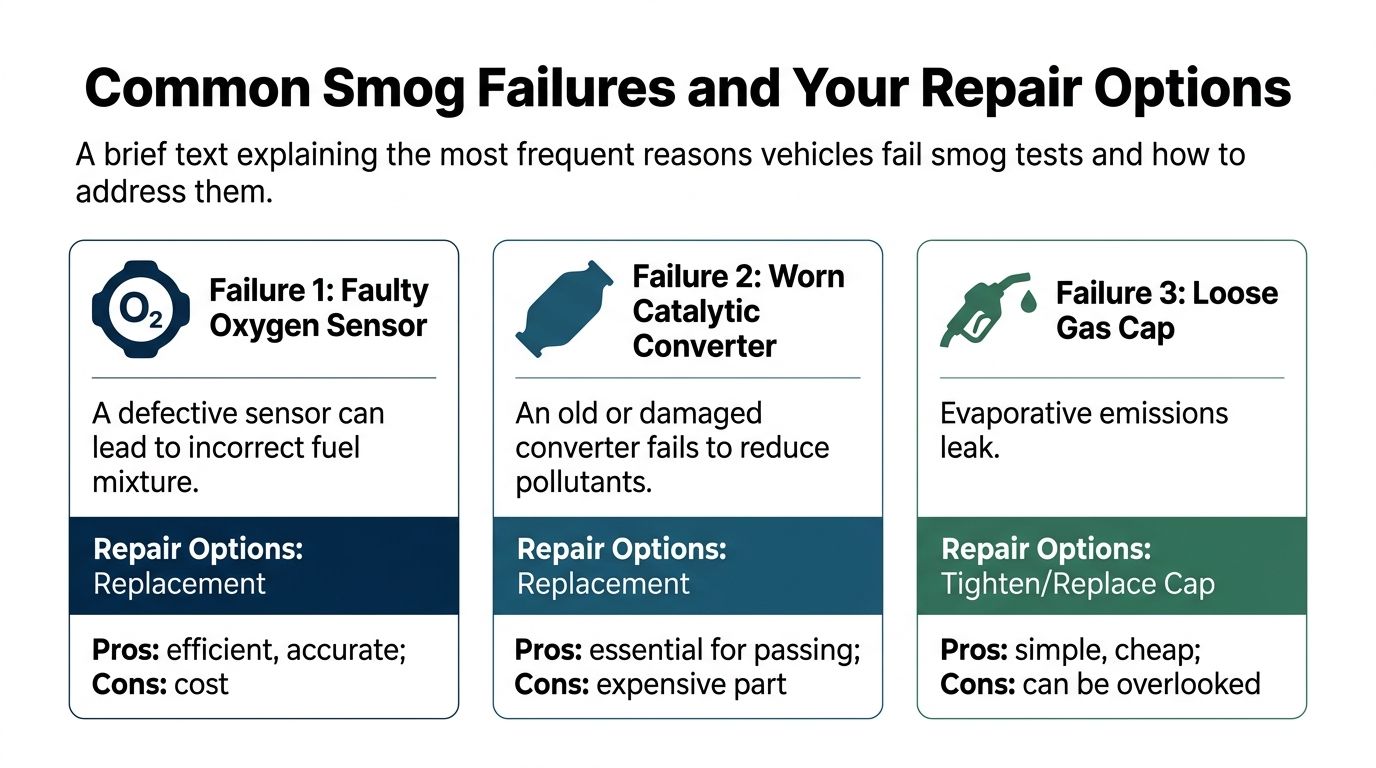
If you want a plain-language breakdown of the patterns behind failed tests, this page on common smog check fail reasons is a useful companion.
The failures technicians see again and again
Oxygen sensor problems are common because these sensors constantly report exhaust conditions to the engine computer. When one gets lazy, contaminated, or electrically faulty, the air-fuel mixture can drift. Sometimes replacement is the right move. Sometimes the sensor is only reporting a different problem, such as a vacuum leak or exhaust leak.
Catalytic converter failure is one of the big ones. The converter cleans up pollutants after combustion. But converters often get blamed for upstream problems they didn't create. If the engine has been running rich, misfiring, or leaking oil into the exhaust, a new converter can fail again unless the root cause is fixed first.
EVAP system faults can range from simple to annoying. A loose, worn, or incorrect gas cap can trigger an EVAP problem. So can a cracked hose, a purge valve issue, or a leak that only shows up under smoke testing. This is one area where guessing tends to waste money.
Check engine light on isn't a part failure by itself. It's the car asking for diagnosis. The key is whether the technician reads data and verifies the fault, or just starts swapping the most common part tied to the code.
Readiness monitors not set catches a lot of people after battery replacement, recent repairs, or code clearing. Nothing may be broken anymore, but the car's computer hasn't completed its self-tests yet.
DIY or professional repair
Some jobs are reasonable for a careful do-it-yourselfer. Others aren't worth the gamble.
- Good DIY candidates: Tightening or replacing a gas cap, correcting an obvious disconnected hose, checking that the battery terminals are secure after recent work, and confirming you haven't recently cleared codes before a retest.
- Borderline DIY jobs: Replacing an accessible oxygen sensor on a vehicle you know well, if you already confirmed that the sensor itself failed and not the wiring or a related engine problem.
- Professional territory: Catalytic converter diagnosis, EVAP leaks, wiring faults, repeated check engine light returns, and any case where the report points to symptoms rather than a clear failed component.
A lot of wasted money comes from confusing a symptom with a cause. A lean code doesn't always mean oxygen sensor. A catalyst code doesn't always mean converter first. A failed EVAP test doesn't always mean gas cap.
If a repair starts with "let's try this part first," slow down and ask what testing confirmed it.
The best repair path is the one that gets verified before parts are installed. That's especially true when you're already paying for a retest and registration is waiting.
California's Smog Check Repair Assistance Programs
For some drivers, the problem isn't understanding the failure. It's paying for the repair. California's main smog check repair assistance path is the Consumer Assistance Program, often called CAP. This program can help eligible vehicle owners either repair the vehicle or retire it if fixing it doesn't make sense.
The repair side matters most when the car is otherwise useful and the owner just needs help getting over the emissions hurdle. The retirement side matters when the vehicle has multiple issues, poor overall condition, or a repair path that doesn't line up with the vehicle's value.
When repair assistance makes sense
If your vehicle failed an official smog inspection and the emissions-related repair cost is the obstacle, CAP is worth looking into before you approve major work. The state program can provide up to $1,200 toward qualifying emissions-related repairs for eligible motorists, as described in the background material provided for this article.
That doesn't mean every failed car qualifies, and it doesn't mean every repair at every shop qualifies. The usual practical steps are:
- Keep your failed test paperwork. Don't lose the report.
- Check eligibility through BAR's CAP process. Eligibility can depend on factors such as household income, vehicle status, and program rules.
- Wait for approval before major emissions repairs if you're trying to use assistance. Work done outside the program path may not count.
- Use an authorized repair facility if the program requires it. Ask the shop directly whether they handle CAP-related repairs.
One mistake I see is drivers fixing the car first, then trying to back into assistance after the fact. If you're counting on help, start there.
Repair help versus retiring the vehicle
Repair assistance is for the owner who wants to keep the car. Vehicle retirement is for the owner who looks at the overall condition and says, "I don't want to keep sinking money into this."
The retirement option can offer $1,500 to retire a vehicle, based on the program details provided in the prompt for this article. That can be the cleaner decision when the car has several unresolved problems, poor reliability, or obvious mechanical wear beyond the smog issue.
A practical way to decide is to ask three questions:
- Is the car solid apart from the smog failure?
- Would I want to keep this vehicle if it passed tomorrow?
- Am I fixing one emissions issue, or stepping into a longer list of repairs?
If you don't trust the car even after a potential pass, retirement may be the smarter path.
California Consumer Assistance Program (CAP) Options
| Feature | Repair Assistance | Vehicle Retirement |
|---|---|---|
| Purpose | Help eligible owners fix emissions-related problems after a failed smog check | Help eligible owners retire a vehicle that isn't worth repairing |
| Best fit | The car is otherwise worth keeping | The car has broader problems or poor long-term value |
| Financial help | Up to $1,200 for qualifying repairs | $1,500 to retire the vehicle |
| Timing concern | Approval should come before major repair decisions when possible | Best considered before spending heavily on diagnostics and parts |
| Shop involvement | Usually requires using the proper participating repair path | Usually involves following the state's retirement process |
Don't choose between repair and retirement based only on emotion. Choose based on the car's condition, your budget, and whether you'd still want the vehicle after it passes.
The smartest move is to treat CAP like a fork in the road, not a last-minute add-on. If your car is a keeper, pursue repair assistance cleanly. If it isn't, don't let sunk cost push you into a bad decision.
Choosing a STAR Certified Smog Repair Shop
The shop you choose after a failure matters almost as much as the actual repair. A weak diagnosis can turn one real problem into a stack of unnecessary parts. A good shop narrows the issue, explains why the car failed, and shows you what needs to happen before the retest.
If you're not clear on the certification side, this explainer on what a smog STAR station is helps sort out the terms.
What to verify before authorizing repairs
Start with the basics. Make sure the shop is properly licensed to perform the repair work you're approving. A testing station and a repair station are not the same thing. Some places inspect only. Others diagnose and repair. If you need state-program repair assistance, ask whether they handle that process specifically.
Then pay attention to how they talk about the problem.
- Good sign: They ask for the VIR, pull codes, inspect the related system, and explain what they still need to test.
- Bad sign: They jump straight to "it's probably the converter" or "these cars always need sensors."
- Good sign: They give a written estimate and separate diagnostic time from repair time.
- Bad sign: They stay vague until the bill is done.
A careful shop doesn't promise a pass before the root cause is confirmed. That's not evasive. That's honest.
What a good shop does differently
The difference usually comes down to process. Good smog repair work is boring in the best way. The technician verifies the complaint, checks the data, tests the system involved, confirms the failed component or condition, and only then recommends parts or repairs.
That's especially important with emissions work because one fault can trigger several symptoms. A vacuum leak can create lean codes. A misfire can damage a converter. A recent battery disconnect can leave monitors incomplete. If the shop doesn't sort cause from effect, you pay for their guessing.
This short video gives a useful visual sense of what drivers should expect from a professional smog station environment and process.
A trustworthy smog repair shop doesn't sell confidence. It sells verification.
Reviews also matter, but read them with a technician's eye. Look for comments about clear explanations, accurate diagnosis, written estimates, and whether the fix held up. Fast service is nice. Honest diagnosis is what saves you money.
Preparing for Your Smog Retest to Pass the First Time
The retest is where people either finish the job cleanly or get tripped up by a preventable detail. Once repairs are done, don't rush straight back unless you're sure the vehicle is ready. A lot of repeat failures happen because the original problem is fixed, but the car's systems haven't completed their checks yet.
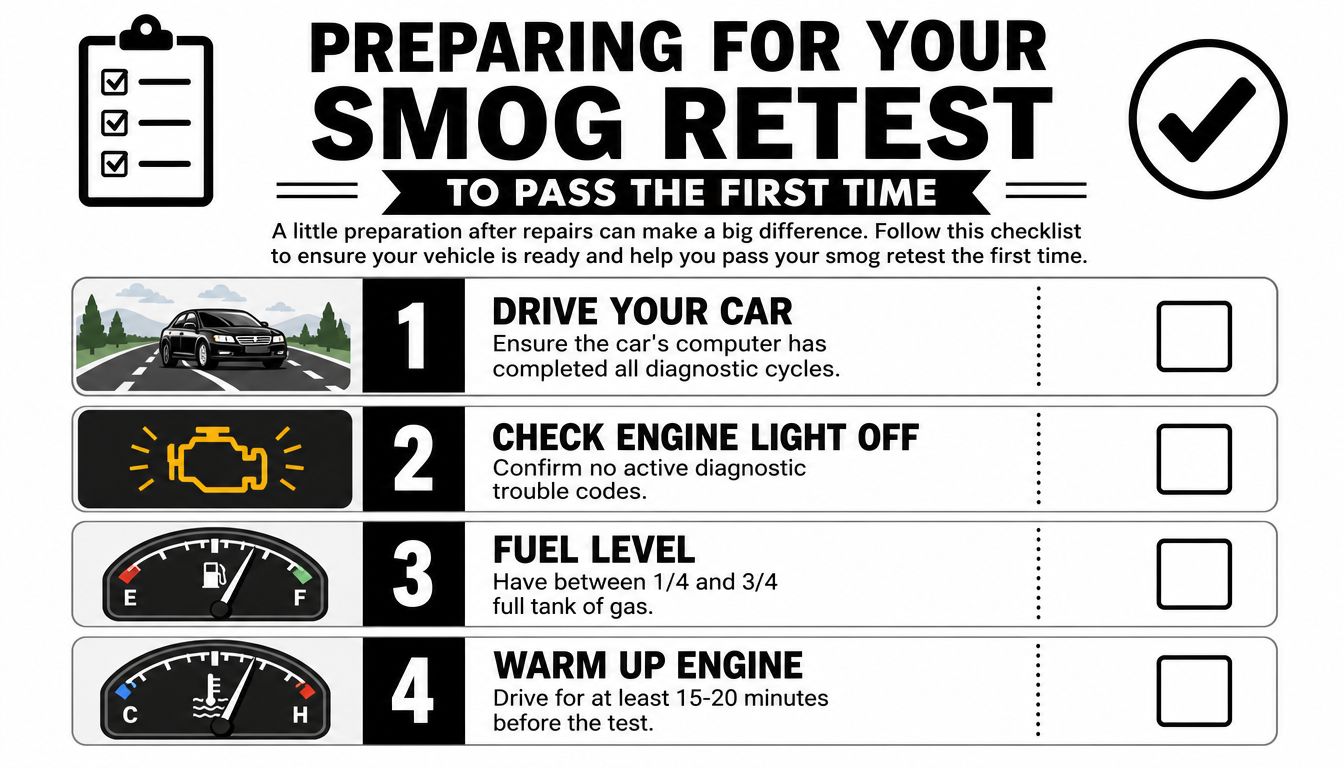
Your pre-retest checklist
Use this like cheap insurance before you head back to the station:
- Drive the car normally after repairs: Many vehicles need a proper drive cycle so the onboard monitors can reset. Short trips around the block often aren't enough.
- Confirm the check engine light stays off: It's not enough for the light to be off at startup if it comes back during driving.
- Keep the fuel level in a normal testing range: Avoid showing up nearly empty or completely full, because some systems are picky about when they run self-checks.
- Warm the vehicle up before the test: A car that has been driven is usually in a better testing state than one that rolled in cold from overnight parking.
- Bring the paperwork from the failed test and the repair invoice: This keeps the retest process smoother and helps if any question comes up.
If a shop cleared codes during repair, ask one direct question before leaving: "Are the monitors ready, or do I need to drive it first?" That's one of the most useful questions in the whole process.
You should also pay attention to the basics. If the battery is weak, if the car has been sitting, or if another warning light appears, don't assume the emissions issue is behind you. One new problem can interrupt readiness or trigger another failure.
The best time for a retest is when the car has been repaired, driven, warmed up, and checked. Not when you're simply hoping it's ready.
Patience here saves a lot of aggravation.
Smog Check Repair FAQs
Do I get a free retest if my car failed?
That depends on the station and the circumstances. Some shops offer retest policies, some don't, and the terms can vary. Ask before you authorize anything or return for another inspection.
What is a repair cost waiver?
It's a California process that may help in certain situations when a vehicle still doesn't pass after qualifying emissions-related repair efforts. Waiver rules are specific, so don't assume regular repair spending automatically qualifies you. Ask a licensed smog repair shop or BAR directly before counting on it.
What if the check engine light comes back after the repair?
Go back to the repair shop as soon as possible and bring your paperwork. Don't clear the code yourself just to get the light off. If the light returned, the root problem may still be present, or a different issue may have appeared during the drive cycle.
Can I sell a car in California if it failed smog?
That gets into transaction-specific rules, and the answer can depend on whether you're dealing with a private-party sale, transfer situation, or another exception. Don't rely on verbal advice from a buyer or seller. Check the current California rules before you sign anything.
Should I replace the part named in the code first?
Usually, no. A code points to a system or condition. It does not guarantee that the named sensor or component is the failed part. That's one of the fastest ways to waste money on smog-related repairs.
Is smog check repair assistance worth the trouble?
If repair cost is the only thing standing between you and registration, yes, it can be. The paperwork is worth it when the vehicle is otherwise worth keeping and you qualify. If the car is near the end of its useful life, retirement may be the cleaner decision.
If you need a fast, friendly place to handle your inspection or retest, Speedy Smog in San Leandro is a solid local option. They offer STAR-certified smog checks, straightforward service, and the kind of clear process stressed drivers appreciate when registration is on the line.
Your DMV renewal notice shows up, and there it is: Smog Certification Required. If you drive a diesel truck, van, or SUV in the East Bay, that line usually leads to the same questions. Does my diesel even need testing? What do they check? Why did my friend's truck fail when it “ran fine”?
That confusion is normal. California's diesel smog check requirements aren't simple, and a lot of bad advice gets passed around in parking lots, online forums, and job sites. Owners hear half a rule, apply it to the wrong vehicle, and end up wasting a trip or getting stuck before registration.
A good diesel smog visit shouldn't feel like guesswork. It helps to know which vehicles are tested, what a technician looks for, and what problems usually cause a failure. Once you know those pieces, the process gets much easier to manage.
Table of Contents
- Your Diesel Smog Check Guide
- Does Your Diesel Need a Smog Check
- What Happens During a Diesel Smog Inspection
- Understanding Diesel Smog Check Exemptions
- Top Reasons Diesel Vehicles Fail Smog Checks
- Your Pre-Test Checklist for a First-Time Pass
- Get Your Diesel Certified at Speedy Smog
Your Diesel Smog Check Guide
Diesel owners usually don't struggle because they ignore the rules. They struggle because the rules are technical, and the details matter. A truck can drive well, start every morning, and still fail a smog inspection because the monitors aren't ready, the software isn't approved, or smoke hangs in the exhaust a little too long.
That's why the smartest approach is practical, not theoretical. Start with three questions:
- Does my diesel fall into the California testing program?
- What does the inspection include?
- Is there anything on my vehicle likely to trigger a failure?
If you answer those before your appointment, you avoid most of the usual headaches.
Practical rule: A diesel smog check is easier when you treat it like a compliance inspection, not just a quick errand.
Owners often focus only on the dashboard. If there's no warning light, they assume they're good. That works sometimes, but not often enough. Diesel testing also looks at emissions equipment, computer readiness, and visible smoke. A truck that “feels fine” can still have a problem where it counts for inspection.
This is especially true in the East Bay, where many diesel vehicles are work trucks, cargo vans, and daily drivers that rack up miles under real conditions. Short trips, recent repairs, battery disconnects, and aftermarket tuning all show up at smog time.
The good news is that most failures follow familiar patterns. Once you know the rules and the common trouble spots, you can usually spot problems before the test does.
Does Your Diesel Need a Smog Check
A lot of East Bay diesel owners call us after the DMV renewal notice shows up and catches them off guard. The fastest way to sort it out is to check two things on the vehicle first: the model year and the Gross Vehicle Weight Rating, or GVWR, on the driver-side door jamb.
For most light-duty diesel owners, the rule is straightforward. In California, diesel vehicles with a 1998 or newer model year and a GVWR under 14,500 pounds are generally part of the biennial Smog Check program. 1997 and older diesel vehicles are generally exempt, according to the California Bureau of Automotive Repair Smog Check program.
That covers many pickups, diesel SUVs, and Sprinter-style vans we see at the shop.
A few situations still catch owners by surprise:
- Registration renewal: If your DMV paperwork asks for a smog certificate, your diesel likely falls into the program.
- First California registration: An out-of-state diesel brought into California may need a smog inspection before it can be registered here.
- Change of ownership: A sale or transfer can trigger a smog requirement, depending on the transaction.
If you want the bigger picture on state testing rules, our guide to California smog check rules for vehicle owners explains where diesel fits in.
California diesel smog check requirements at a glance
| Vehicle Model Year | Gross Vehicle Weight Rating (GVWR) | Smog Check Required? |
|---|---|---|
| 1997 and older | Under 14,500 lbs | No |
| 1998 and newer | Under 14,500 lbs | Yes, every two years for registration renewal |
| 1997 and older | 14,500 lbs and above | Check program status carefully |
| 1998 and newer | 14,500 lbs and above | May fall outside the standard biennial program. Verify exact requirement before assuming exemption |
Where owners get tripped up
The biggest mix-up is using the wrong weight number. Curb weight is not the number that matters here. GVWR is. We see this with work trucks all the time. The truck may not look heavy, but the manufacturer-rated weight on the door label is what determines whether it falls into the standard program.
Another common problem is assuming diesel follows the same pattern as gasoline. Diesel owners often expect a grace period or assume age alone settles the question. That leads to last-minute appointments, registration delays, and avoidable stress.
If you're unsure, check the door jamb label and your registration paperwork before you book the test.
Five minutes spent verifying the model year and GVWR can save you a wasted trip, especially if you drive a diesel work vehicle and cannot afford downtime.
What Happens During a Diesel Smog Inspection
A lot of diesel owners walk in expecting one quick machine test. The actual inspection is more hands-on than that. At the shop, we verify three things: the emissions parts that should be on the vehicle are still there, the onboard computer shows the system is working properly, and the exhaust does not produce excessive visible smoke during the required procedure.
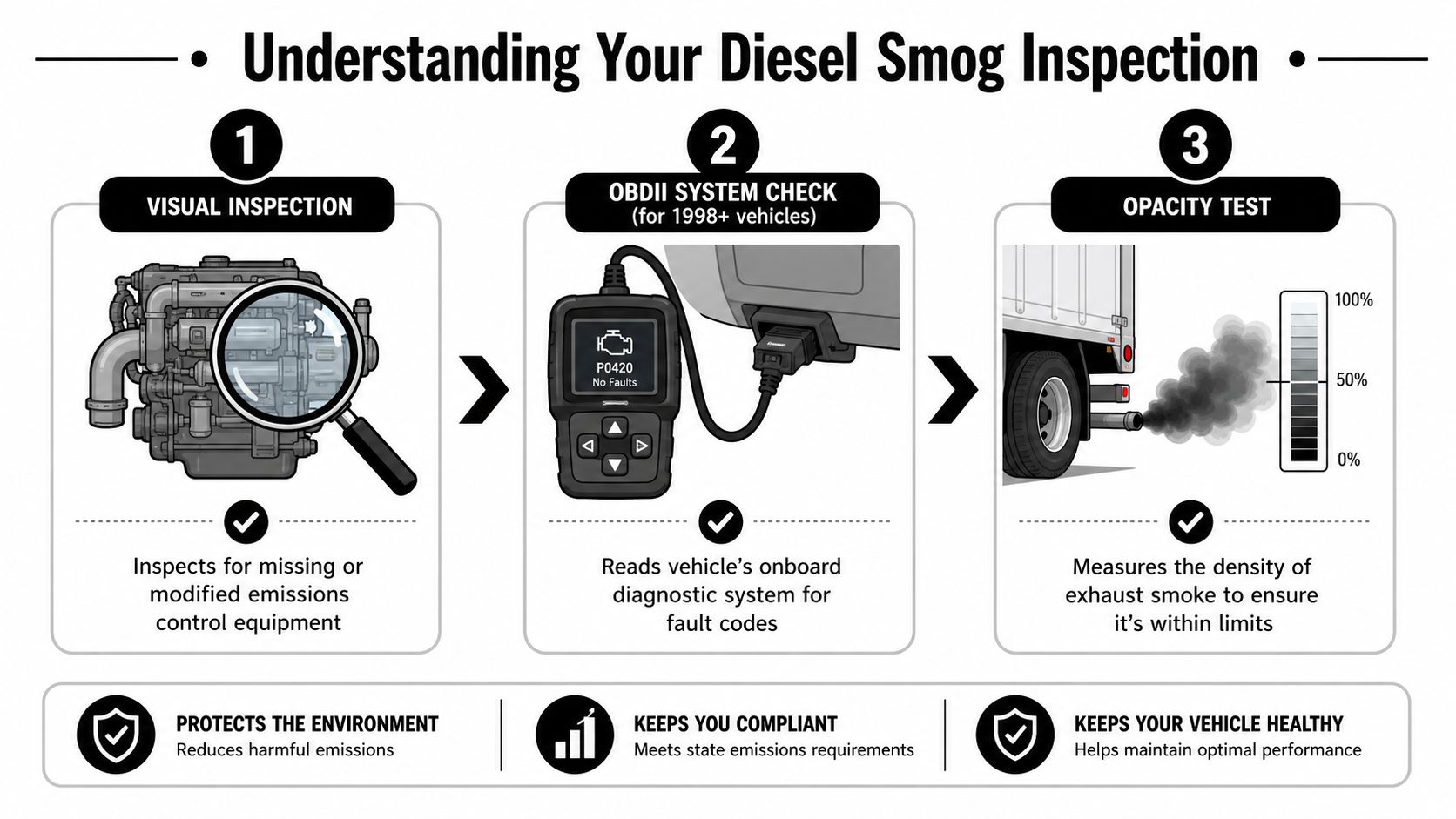
If you want a better sense of what the shop is using during the test, this page on diesel emissions testing equipment and inspection hardware shows the tools behind the process.
Step one is a visual inspection
This is often where problem trucks get flagged first.
The technician checks for missing, modified, or clearly non-compliant emissions components. On diesel vehicles, that usually means looking closely at the DPF, related emissions hardware, and signs that a system has been removed, bypassed, or altered.
We see this with work trucks fairly often. The owner may be focused on how the truck runs, but a visual failure can happen even if the engine feels strong on the road. If the setup does not match what the vehicle is supposed to have, that issue usually shows up right away.
Step two is the computer check
Next comes the onboard diagnostic check. The technician connects to the vehicle, reads fault information, and checks whether the emissions monitors are ready.
This part trips up owners who recently cleared codes, replaced a battery, or disconnected power during repairs. The warning light may be off, but the system can still show incomplete readiness. If the monitors have not finished their self-checks, the vehicle may not pass that day.
For newer light-duty diesels, the readiness rules are tighter than many owners expect. That is why a truck that seems fixed after a repair still needs enough normal driving time before it is ready for inspection.
Step three is the smoke test
The last part is the smoke inspection. In this stage, real-world diesel problems tend to show themselves.
The technician observes the exhaust and performs the required snap acceleration procedure to see whether visible smoke clears within the allowed limit. A diesel that feels acceptable in daily driving can still fail here if it has injector problems, heavy soot buildup, poor maintenance history, or an emissions issue that only shows up when the engine is revved.
From a shop perspective, this is one of the biggest surprises for owners. “It drives fine” does not always mean “it will pass smog.” If your truck has been smoking on cold starts, under throttle, or after long idle time, it is smart to address that before you come in.
Understanding Diesel Smog Check Exemptions
Many owners experience issues when they hear that some diesels are exempt, then stretch that idea farther than the rules allow. A quick assumption can turn into a DMV problem later.
Older diesels are the clearest exemption
The simplest exemption is age. If your diesel is model year 1997 or older, it falls outside the biennial light-duty diesel smog requirement covered earlier.
That's the cleanest exemption because it's based on model year. There's not much interpretation involved. If the vehicle is old enough, it's outside that part of the program.
Weight alone doesn't tell the whole story
The more confusing issue is weight. Many diesel owners believe anything over 14,000 lbs is automatically exempt, but that's not a safe shortcut. As noted in this guide to California diesel smog exemptions and GVWR checks, the right approach is a two-step verification process: confirm the vehicle's GVWR on the manufacturer's door jamb, then cross-reference that with the applicable CARB program requirements.
That matters because not every vehicle outside the standard light-duty smog lane is “free and clear.” Some heavier diesels fall under different compliance programs instead of the familiar biennial test. Owners who assume exemption without checking the exact program can end up with registration issues or compliance confusion.
A practical way to handle this is:
- Check the label first. Use the manufacturer's GVWR, not a guess.
- Match the vehicle's use. Personal, commercial, and specialized use can affect what program applies.
- Verify before renewal time. Waiting until your registration deadline is the worst time to sort this out.
Don't build your plan around “my buddy said heavy diesels are exempt.” Verify the door sticker, then verify the rule that applies to that specific vehicle.
The owners who stay out of trouble are usually the ones who document the vehicle correctly before they ever pull into a test bay.
Top Reasons Diesel Vehicles Fail Smog Checks
A diesel can run strong on the road and still fail in the bay. At Speedy Smog, the repeat problems are pretty consistent. The onboard system is not ready, emissions parts or software do not match California rules, or the vehicle produces visible smoke during inspection.
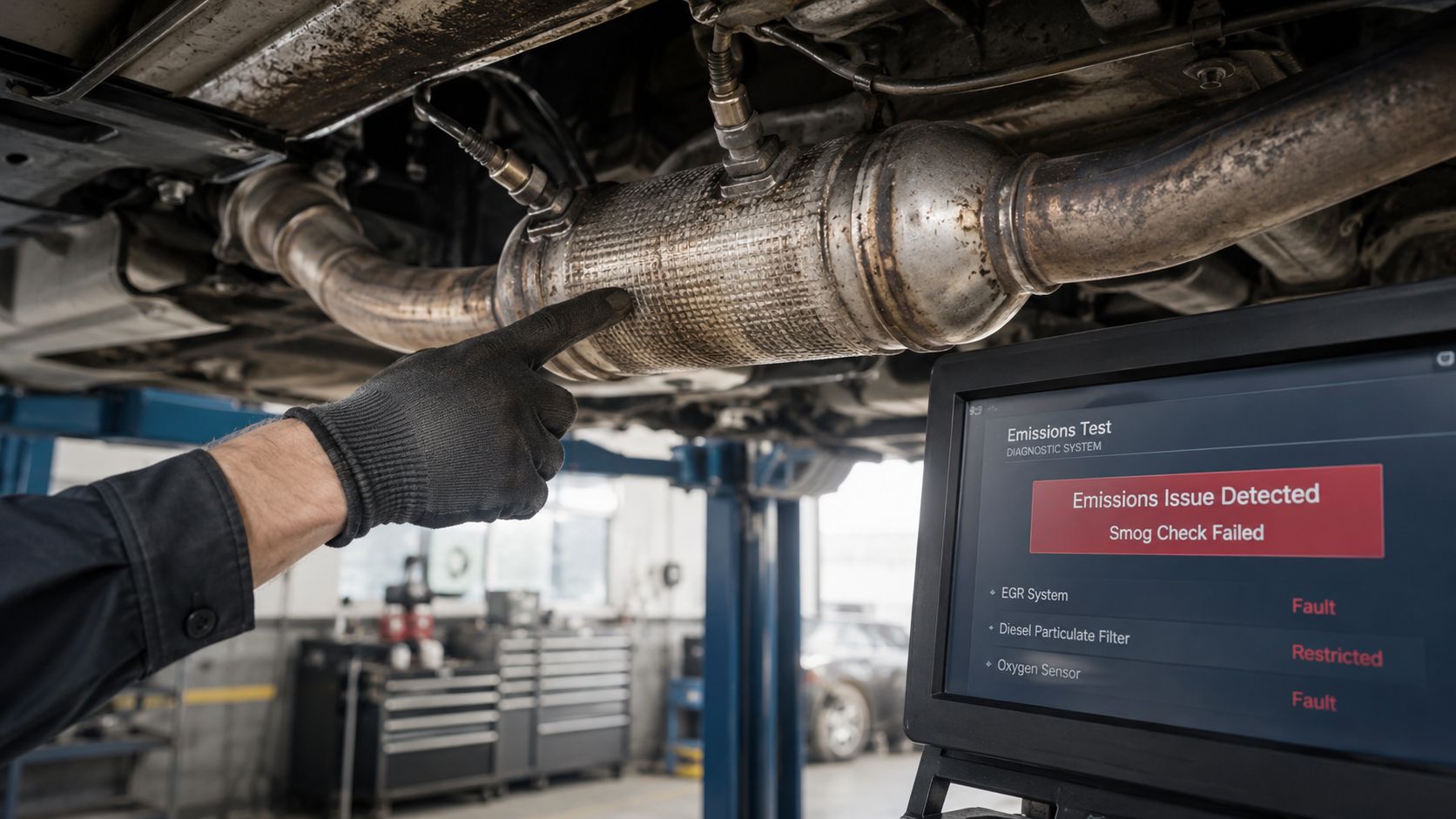
I hear the same comment all the time: “It passed last time.” That history helps, but it does not guarantee the next result. Batteries get disconnected. Repairs interrupt monitor completion. Used trucks show up with tuning or missing hardware that the current owner did not know about. A smog check looks at the vehicle as it sits that day.
Readiness monitors not set
This is one of the easiest failures to prevent, and one of the most common on newer diesels. If codes were recently cleared, the battery was disconnected, or a repair changed how the system operates, the computer may still show monitors as incomplete. In that condition, the inspection may stop before it really starts.
For newer light-duty diesels, the monitor rules are tighter than many owners expect. As noted earlier, model year 2007 and newer light-duty diesel vehicles have very limited allowance for unset monitors. If the wrong monitor is still not ready, the vehicle can fail even with no warning light on.
A quick pre-scan saves a wasted trip. Our diesel smog inspection checklist for California drivers is a good place to start if you want to catch that issue before you head to the shop.
What helps:
- Drive the vehicle normally after repairs. Give the computer time to complete its self-checks.
- Scan for readiness status before the appointment. “No codes” does not mean “ready.”
- Repair the actual fault first. Clearing codes without fixing the cause usually leads right back to the same problem.
What causes trouble:
- Disconnecting the battery right before test day
- Clearing the check engine light and coming straight in
- Assuming the truck is ready because it feels fine
Modified parts and software
Performance work is a big failure point. Owners add a tuner for towing, buy a used diesel with unknown upgrades, or replace parts with something that fits physically but does not meet California requirements. Then the visual inspection or system check catches it.
Diesel software changes are a common example. A tune may improve throttle response or pulling power, but if it is not approved for California use, that benefit does not matter at smog time. The same problem shows up with deleted emissions equipment, altered intake or exhaust components, and replacement parts that are not legal for that application.
A truck can be mechanically healthy and still fail because the emissions configuration is wrong.
This is a good place to pause and see the issue from the owner side:
The practical fix is to return the vehicle to a compliant setup. That is not always cheap, and that is the trade-off. A tune or delete may have made the truck more enjoyable to drive, but it can turn a routine smog visit into a repair project. On used diesels, check for signs of non-stock programming or missing emissions hardware before registration deadlines sneak up on you.
Visible smoke and underlying engine issues
Smoke failures frustrate owners because the truck may still seem usable day to day. It starts, pulls, and drives, but under snap acceleration it hazes enough to create a problem in the test lane.
Visible smoke usually points to a real mechanical issue. Common causes include injector problems, poor combustion, air-path faults, soot buildup, or a DPF-related problem that has not fully triggered a dash warning yet. Deferred maintenance also shows up here.
The smart move is diagnosis. Guessing gets expensive fast on diesel repairs. Check fuel delivery, air intake, boost behavior, engine condition, and emissions components in an orderly way. That approach costs less than replacing parts at random and coming back for a second test.
Your Pre-Test Checklist for a First-Time Pass
The best pre-test routine is boring. That's a good thing. Diesel smog appointments usually go more smoothly when the vehicle arrives warm, complete, and untouched by last-minute resets.
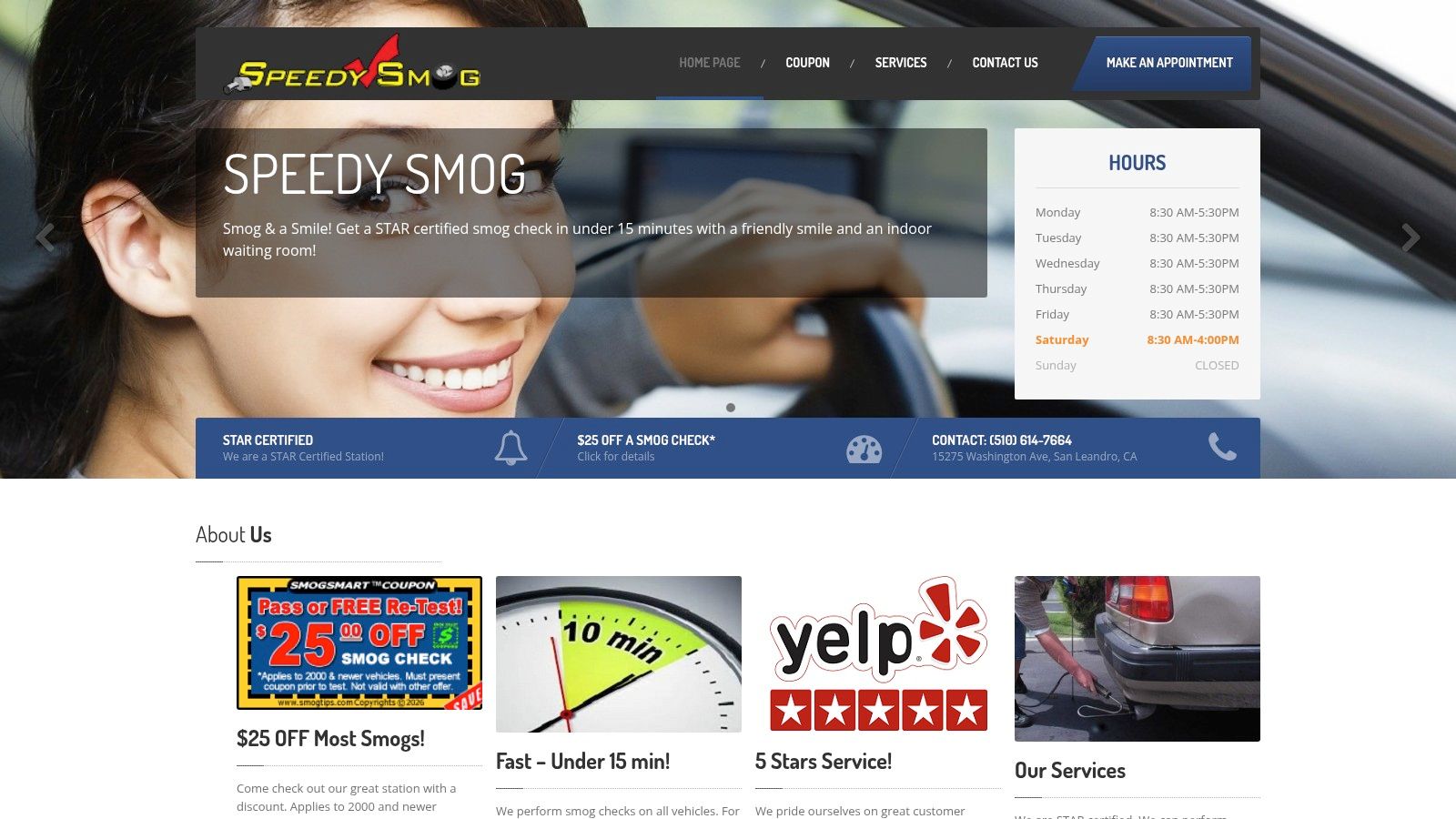
One point catches diesel owners off guard. For light-duty diesel vehicles with a GVWR of 14,000 pounds or less, California requires biennial smog inspections starting with model year 1998, and there is no eight-year model year exemption like the one many gasoline vehicles receive, as summarized in this discussion of California diesel inspection timing and diesel-specific exemptions. In other words, don't assume a newer diesel gets a pass just because it's relatively new.
For a shop-day prep list, this diesel smog inspection checklist for California drivers is a practical reference.
What to do before you leave home
- Drive it long enough to fully warm up. A short freeway run or normal steady driving helps more than idling in the driveway.
- Make sure the battery hasn't been recently disconnected. If it has, the monitors may not be ready yet.
- Use the vehicle normally before the test. Last-minute code clearing is one of the easiest ways to create a “not ready” problem.
- Pay attention to smoke. If you can see unusual exhaust behavior during acceleration, deal with that first.
What to bring and what to avoid
Bring the paperwork that makes the visit simpler. Your DMV notice, registration information, and any recent repair records can help if there's a question about prior work or timing.
Avoid two bad habits. First, don't show up with the fuel level extremely low and hope for the best. Second, don't schedule a smog check immediately after major repairs unless you already know the system is ready.
The easiest diesel smog pass is the one you prepare for the day before, not the one you try to rescue in the parking lot.
Get Your Diesel Certified at Speedy Smog
Diesel smog check requirements feel complicated until you break them into the parts that matter. First, confirm whether your vehicle falls into the testing program. Then make sure the truck is fully ready for inspection, not just driving well. Finally, look hard at the common failure points: readiness monitors, smoke, and non-compliant modifications.
That approach saves time because it deals with the actual reasons diesels fail. It also keeps the process calmer. When owners know what the station is checking, they don't have to treat smog day like a surprise exam.
If you want a smooth visit, choose a shop that understands diesel-specific testing, current California rules, and the details that trip people up. A STAR-certified station with experienced technicians can spot issues clearly, explain what's happening in plain language, and help you get through the inspection without the usual confusion.
If your diesel needs certification in the East Bay, Speedy Smog is a practical place to get it done. The shop is STAR Certified, experienced with diesel inspections, and focused on quick, friendly service for San Leandro, Oakland, and nearby drivers. If you want a straightforward smog visit with people who know California diesel rules, book your test with Speedy Smog.
You walk into a smog shop expecting a quick pass, and instead you leave holding a failed Vehicle Inspection Report and wondering how much this is about to cost. That's usually the moment people start hearing mixed advice. One person says the retest is always free. Another says you have to pay again. Both can be wrong.
The practical answer is that a smog check free retest in California depends on shop policy, your vehicle year, and how fast you handle repairs. The hidden rules matter more than the headline offer. Miss the deadline, go to the wrong station, or assume diagnosis is included, and the “free” part disappears fast.
Table of Contents
- Your Car Failed Its Smog Check Now What
- Understanding Eligibility for a Free Smog Retest
- Your Step-by-Step Guide to Claiming a Free Retest
- How STAR Stations Like Speedy Smog Handle Retests
- Actionable Tips to Pass Your Smog Retest
- What to Do If a Free Retest Is Denied or You Fail Again
Your Car Failed Its Smog Check Now What
You leave the station expecting to finish your registration, then the report comes back with a fail. That moment throws a lot of drivers off, especially when they assume the next step is expensive repairs and another full test fee.
Start with the report, not guesses.
California requires many vehicles from model year 1976 and newer to pass smog as part of registration, so a failed test has to be resolved before the renewal process is complete. The good news is that a failure report usually points you in the right direction. It tells you whether the problem is an OBD trouble code, an incomplete monitor, a visual failure, or tailpipe emissions. Those are not the same problem, and they should not be treated the same way.
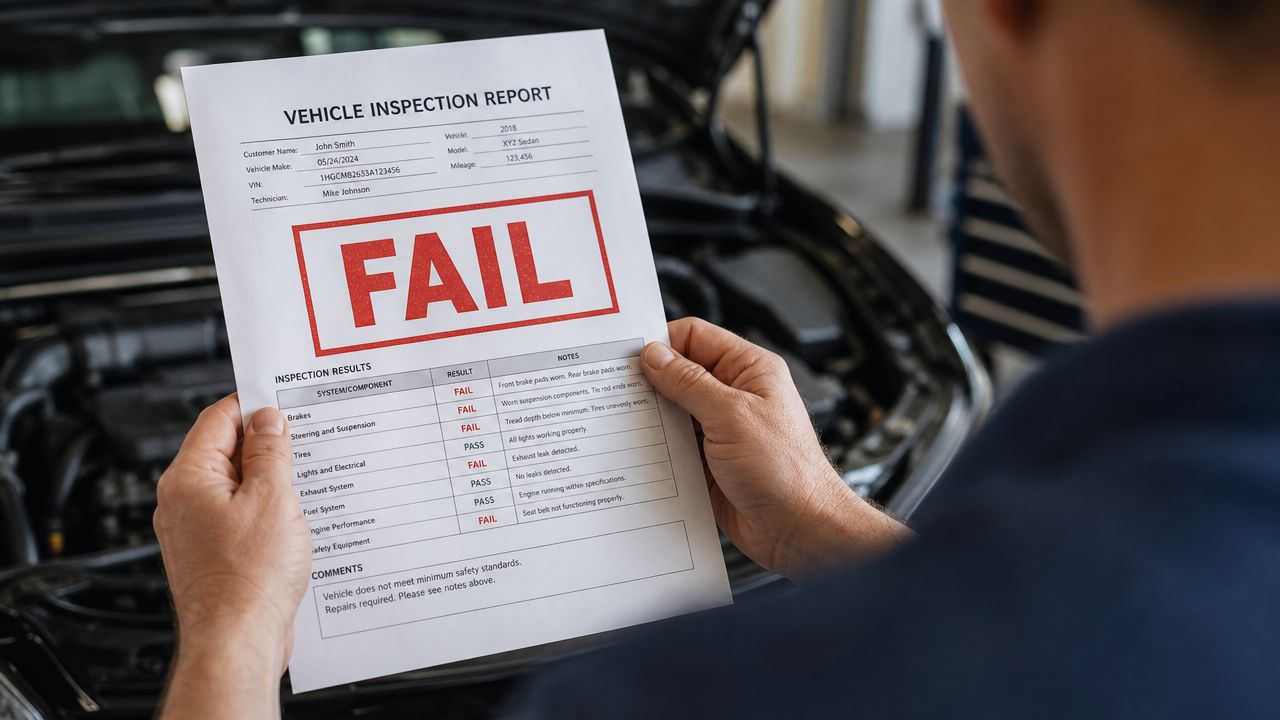
One of the biggest mistakes I see is drivers clearing codes, driving around for a day, and coming back too soon. Then the car fails again for incomplete readiness monitors. Another common mistake is paying for repairs before anyone matches the repair plan to the actual failure on the Vehicle Inspection Report.
If you need help reading the paperwork, this guide on understanding smog test results breaks down what the report is showing.
What matters right away
These three items usually decide whether this turns into a quick fix or a drawn-out headache:
- The exact failure type: Check engine light issues, monitor status problems, visual failures, and high emissions each require a different response.
- Your registration timeline: The DMV due date keeps coming even if the car is still being diagnosed.
- The station's retest terms: Free retest offers often come with limits on time, vehicle year, and what kind of failure qualifies.
Keep the failure report with you and show it to any repair shop. That saves diagnostic time and cuts down on random parts swapping.
The practical approach is simple. Fix the reason the car failed, keep an eye on your registration deadline, and ask about the retest policy before you leave the station. The hidden rules matter. A free retest may only apply within a short window, and some vehicles do not qualify at all.
Understanding Eligibility for a Free Smog Retest
A free retest isn't a California entitlement. It's a shop offer. That single point clears up most of the confusion.
The rule most drivers get wrong
Practical rule: The station decides whether a retest is free. State law doesn't.
That's the key takeaway from Xtreet's explanation of failed smog checks in California. The same source notes that most stations offer one free retest for 2000 and newer vehicles within a 30-day window, while 1999 and older vehicles virtually never get a free retest because those cars usually need more involved testing.
Why the split? It comes down to test type and shop time. Newer vehicles generally use the OBD-II process, which is faster and easier for a station to rerun. Older vehicles often require a more involved procedure, and many shops won't absorb that extra labor for free.
That's why “Do you offer a free retest?” isn't enough. The better question is, “Do you offer a free retest for my model year, and what's the deadline?”
Typical Free Retest Policies by Vehicle Year
| Vehicle Model Year | Common Retest Policy | Reason |
|---|---|---|
| 2000 and newer | Often one free retest within a limited window | These vehicles typically use the easier OBD-II test |
| 1999 and older | Usually no free retest, sometimes a partial discount | These vehicles often require more complex testing such as dyno and tailpipe procedures |
There's another consumer trap here. Shops can advertise “free retest,” but that usually means the retest only. It doesn't mean free diagnosis, free parts, or free repair labor.
Questions worth asking before the first test
Ask these at the counter before authorizing the inspection:
- Is my vehicle year eligible: Don't assume because your neighbor got a free retest that your car qualifies too.
- How long is the retest window: Some stations use a short deadline. Miss it, and you'll likely pay again.
- Do I need to return to the same location: Many policies only apply at the original shop.
- What paperwork do you require: Most stations want the original VIR and the same vehicle back.
A little clarity upfront saves the worst kind of return visit, the one where the car is fixed but the free retest has already expired.
Your Step-by-Step Guide to Claiming a Free Retest
You pick up your failed VIR, get the repair done, come back a few days later, and expect a quick free retest. Then the counter person says the offer expired, or it only applied to certain vehicles, or they need the original paperwork. That is the part drivers do not see coming.
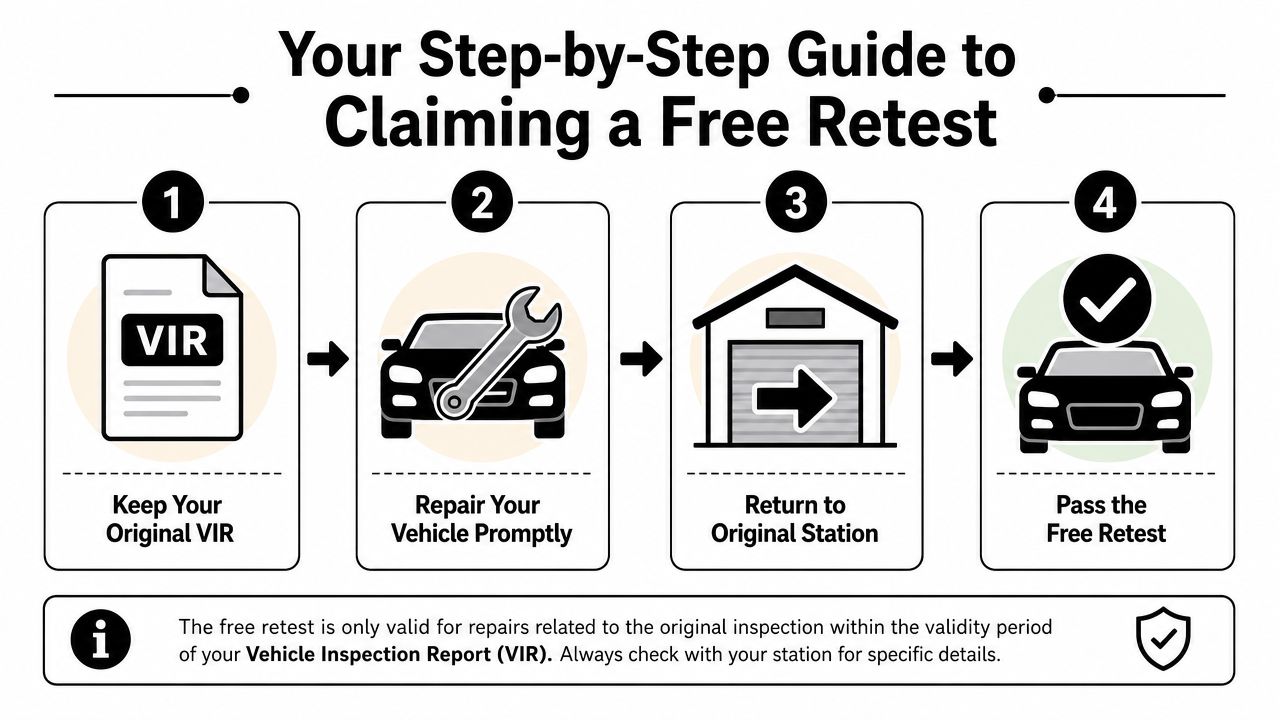
A free retest is usually simple to claim if you follow the shop's rules exactly. The hidden part is that every station sets its own policy, and the clock starts running right after the failed test. As noted earlier, California gives you a limited registration compliance window, and shops are not required to give unlimited retests. That is why I tell customers to treat the retest like a same-paperwork, same-car, same-location transaction.
If you are not sure why station type affects how clearly this process gets handled, read our guide on what a smog STAR station is. A disciplined station usually explains the retest rules before confusion starts.
What to bring back to the station
Bring everything that ties the retest to the original failure.
Your original VIR
This is the record the station uses to pull up the failed inspection. If you show up without it, the visit slows down fast.The same vehicle that failed
The retest is connected to that VIN. If the shop cannot match the car to the original test, the free retest offer can fall apart.Repair invoice or repair notes
Some stations ask for them, some do not. They help clear up what was fixed, especially if the failure involved more than one issue.A clear understanding of the deadline
Some free retest offers are short. Miss that window and you may be paying for another inspection even if the repair itself was done correctly.
What to say at the counter
Keep it direct and get the important answer before the test starts.
Use wording like:
- “I'm back for the free retest. Here's my original failed VIR.”
- “This is the same vehicle, and the repair is complete.”
- “Can you confirm I still qualify under your retest policy before you pull it in?”
That last question saves people money.
At the counter, the two problems I see most often are expired retest windows and missing paperwork. The car may be fixed, but if the shop cannot verify the original failed test under its own policy, the free retest is gone.
How the visit usually goes
A straightforward retest visit follows a predictable order:
- Check in and hand over the VIR
- Station confirms the vehicle and prior failed test
- Technician performs the retest
- If the vehicle passes, the certificate is sent electronically
The process gets messy when the owner waits too long, returns to a different station, or assumes “free retest” also includes diagnosis or repair work. It does not. The retest itself may be free. Everything that got the car ready for that retest usually is not.
How STAR Stations Like Speedy Smog Handle Retests
The station you choose affects more than convenience. It affects how clearly the process is explained, how consistently the test is run, and whether the retest conversation starts with facts or confusion.
Why the station type matters
A STAR station operates under higher performance standards. For drivers, that matters because a careful initial inspection reduces the chance of wasted time and unclear answers. If you want a quick primer on what that means, this page on what a smog STAR station is breaks it down well.
The other reason STAR stations matter is process discipline. Good stations are clear about eligibility, paperwork, and deadlines. That's especially important because the smog certificate is valid for 90 days from issuance, according to STAR Smog Center's California smog FAQ. If a car needs repairs and retesting, timing affects whether registration gets delayed.
What good retest handling looks like
A well-run station doesn't just say “free retest” and leave the rest fuzzy. It should be able to answer these points without hesitation:
- Which vehicles qualify
- How long the retest offer lasts
- Whether the original VIR is required
- What happens if the vehicle still fails
That transparency matters more than marketing language. The best experience is one where the customer knows the rule before the first test, not after the second trip.
Some stations are more customer-friendly with newer vehicles because retesting them is simpler on the equipment side. Older vehicles are a different story. Shops have to balance labor, bay time, and test complexity, which is why free retests are much less common there.
Actionable Tips to Pass Your Smog Retest
A free retest only saves money if the car passes. The smartest move is to treat the failed report like a repair checklist, not a guessing game.
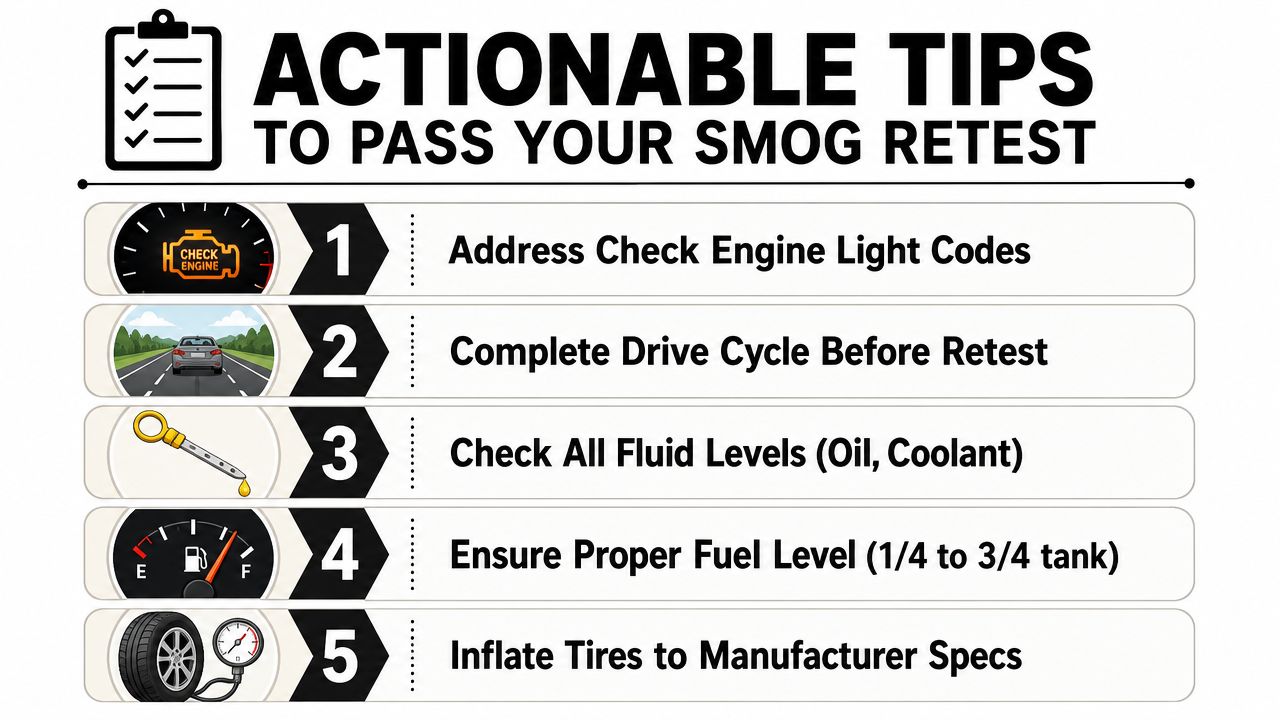
Do the repairs that actually match the failure
Start with the exact failure item on the VIR. If the problem is a check engine light or stored code, the fix is not “clear the code and hope.” The fix is repairing the cause, then making sure the vehicle is ready to test again.
A good quick read before you spend money is this breakdown of common smog check fail reasons. It helps drivers separate likely repair issues from simple readiness or preparation mistakes.
For vehicles that still fail after repairs, the Bureau of Automotive Repair offers the Consumer Assistance Program with up to $1,450 for 1996 and newer models and up to $1,100 for 1976 to 1995 models, with an approval letter and STAR station co-payment required before repairs, as described in this discussion of CAP repair assistance details.
Simple prep that helps on retest day
These are practical driver-level steps that can improve your chances:
- Fix the actual fault first: If the check engine light was involved, don't retest until the underlying problem has been addressed.
- Tighten the gas cap: A loose or poorly sealing cap can create avoidable trouble.
- Drive the car before the retest: Get the engine fully warm before you arrive so the emissions system is operating normally.
- Avoid an immediate retest after battery disconnect or code clearing: The vehicle may not be ready yet.
- Use normal fuel and normal driving: Don't try gimmicks. A properly repaired car is what passes.
For older vehicles, there's one extra point worth knowing. Some stations report better results when pre-1999 vehicles are driven 40 to 100 miles after an engine reset before retesting, based on the technical discussion in the earlier linked CAP source. That helps reduce false failures tied to incomplete readiness.
This video gives a useful visual walkthrough of general retest prep:
Don't spend your free retest on a car that isn't ready. Use the first failure report to verify the fix, then return.
What to Do If a Free Retest Is Denied or You Fail Again
You come back with receipts, the repair is done, and the station says the free retest no longer applies. That usually comes down to one of three things. The shop's time limit expired, the vehicle never qualified under that station's policy, or the retest is being requested after work that took too long to finish.
At a STAR station, drivers often get tripped up. “Free retest” is usually just the test portion. It does not cover diagnosis, parts, labor, or extra time spent chasing an intermittent fault. If the car sat at a repair shop waiting for an oxygen sensor, catalyst, or EVAP part, the retest window may have closed before the car was ready. As noted by Smog N Go's discussion of retest restrictions, if repairs run past the station's 90-day free-retest window, the consumer pays the standard retest fee.
That deadline is a shop policy issue, not a statewide guarantee.
If a station denies the retest, ask for the exact reason and keep it specific. “You're outside the time window” is different from “your vehicle was never included in our free retest offer.” Get the answer in plain language before you spend time arguing. In my experience, clear paperwork solves more of these disputes than frustration does.
If the car fails again, slow the process down and compare both VIRs side by side. Look for whether the same monitor, pollutant, or system failed twice, or whether a new problem showed up after the repair. A repeat failure usually points to an incomplete diagnosis. A different failure can mean the original issue was fixed, but the car still has another emissions problem that was hidden the first time.
Here's the practical next move:
- Match the failure to the repair invoice: If the invoice says the EVAP issue was repaired, but the VIR still shows an EVAP failure, take both documents back to the repair shop.
- Ask what was tested, not just what was replaced: Parts-swapping gets expensive fast. Good shops can explain the diagnostic steps.
- Check whether the car is a referee case: Modified emissions equipment, engine swaps, label problems, and unusual test conflicts often belong with the Smog Check Referee.
- Look into BAR assistance if cost is the problem: CAP may help qualified drivers who are stuck between a failed test and repair bills they cannot absorb.
The expensive mistake is repeating the same loop. Same vague diagnosis, same retest, same failure, same bill.
A second failure is usually a signal to change something. Change the repair approach, change who diagnoses it, or confirm whether the car belongs in the referee system before you pay for another inspection.
If you need a fast, straightforward inspection from a STAR-certified team that explains the retest rules clearly before you start, Speedy Smog is a practical place to book your next smog check in San Leandro.
Your registration renewal notice shows up, you open it, and there it is: Smog Check Required. For a lot of California drivers, that one line creates more stress than it should. People wonder if they need the test before they pay DMV fees, whether the shop sends the results in for them, and why the DMV website sometimes still says incomplete even after a pass.
The good news is the process is usually straightforward once you handle it in the right order. Most problems come from timing mistakes, not from the smog test itself. Drivers wait too long, test too early, or assume a paid renewal means the registration is finished when it isn't.
This guide is built around what works for a smooth smog check registration renewal. It focuses on sequence, deadlines, and the practical details that keep you legal and keep the DMV from kicking your renewal into limbo.
Table of Contents
- Your DMV Renewal Notice Arrived Now What
- Decoding Your DMV Notice When a Smog Check Is Required
- Finding a Great Smog Station and Preparing Your Vehicle
- The Smog Test Process What to Expect at the Station
- After the Test Navigating Pass or Fail Scenarios
- FAQ Smog Checks for Special Situations
Your DMV Renewal Notice Arrived Now What
The envelope shows up, you spot the word “smog,” and the stress usually starts right there. The part that trips drivers up is not the test itself. It is the order of the steps. Get that right, and smog check registration renewal is usually routine.
Start with the notice. Read every line before you pay anything, book anything, or assume you already know what DMV wants. If the notice calls for a smog check, build your plan around the due date and leave yourself a little room for the DMV system to catch up after the test.
Handle timing before you handle the test
Here's the shop-floor version. If your registration deadline is close, pay the DMV renewal fee on time to avoid late penalties, then finish the smog requirement as soon as possible. A lot of drivers assume the payment alone finishes the renewal. It does not. DMV still needs a passing smog result sent electronically before it will complete registration and issue the sticker.
That timing detail matters more than people expect.
A passing result does not always show up in DMV records the minute you leave the station. In real cases, the electronic update can take 24 to 48 hours. That is why waiting until the last day creates avoidable panic, even if the car passes.
Use this order
- Read the renewal notice fully. Confirm whether a smog check is being requested.
- Check the due date right away. That date controls every other decision.
- Pay the renewal fee on time if the deadline is close. That helps you avoid penalties while you finish the smog portion.
- Schedule the test with a little cushion. Give yourself time in case the car needs a retest or the DMV update is not immediate.
- Confirm DMV received the result. If you passed today, give the system a day or two before assuming something went wrong.
If you are not sure whether the notice requirement makes sense for your vehicle, this plain-English guide to California smog check rules can help you sort that out fast.
Treat it as a sequence, not one errand. That is the easiest way to avoid late fees, last-minute surprises, and the “I passed, so why don't I have my sticker yet?” phone call.
Decoding Your DMV Notice When a Smog Check Is Required
The first question isn't where to test. It's whether your vehicle needs a test at all.
California's basic rule is that the biennial smog check requirement applies to gas-powered vehicles that are 8 model years or older and diesel vehicles from 1998 onward weighing 14,000 pounds or less, and the smog certificate is valid for exactly 90 days from the test date according to this California smog requirement summary.
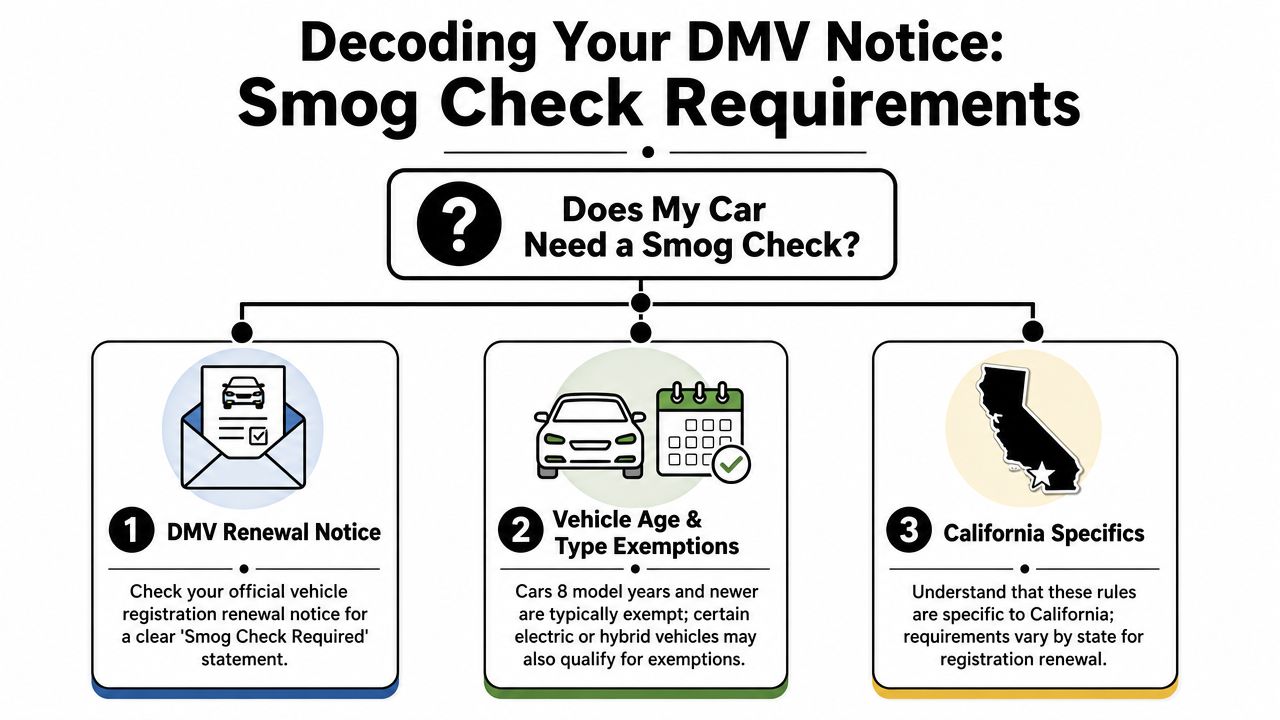
Vehicles that usually need a smog check
If your renewal notice says smog is required, it usually lines up with one of these situations:
- Older gasoline vehicle: Your car has aged into the biennial testing cycle.
- Eligible diesel vehicle: Certain diesel vehicles also fall under California testing rules.
- Ownership transfer: A sale can trigger a smog requirement even when a driver is used to thinking only about renewal cycles.
If you want a plain-English breakdown of eligibility categories, this guide to California smog check rules is a useful reference.
Common exemptions that confuse drivers
A lot of drivers get tripped up because they hear half a rule from a friend and assume it applies to them. California has exemptions, but they're specific.
- Newer gasoline vehicles: Gasoline vehicles less than 8 years old are generally exempt from the biennial smog cycle, though they must pay a smog abatement fee.
- Electric vehicles: These are exempt.
- Motorcycles: These are exempt.
- Pre-1976 classics: Older collector vehicles in that category are exempt from the standard smog program.
The easiest mistake is assuming “newer car” means no smog issue at all. It may mean no biennial inspection, but not that every registration detail disappears.
What a STAR notice means
Some renewal notices specify a STAR station. Drivers often read that like it means their car is in trouble. Usually it just means the DMV requires the inspection to be performed at a station that meets STAR program standards.
That's an administrative requirement, not an accusation. If your notice says STAR, go to a STAR-certified shop and you've handled that part correctly.
If your notice says STAR required, don't overthink it. The important part is choosing the right kind of station the first time.
Finding a Great Smog Station and Preparing Your Vehicle
A smooth smog visit starts before you pull into the bay. The best shops make the process easier, but drivers still help themselves by arriving with a vehicle that's ready to be tested and with the basics already in hand.
The wrong approach is rushing in with a glowing warning light, a cold engine, and no clue whether the shop can perform the kind of inspection your notice requires. That's where a quick checklist pays off.
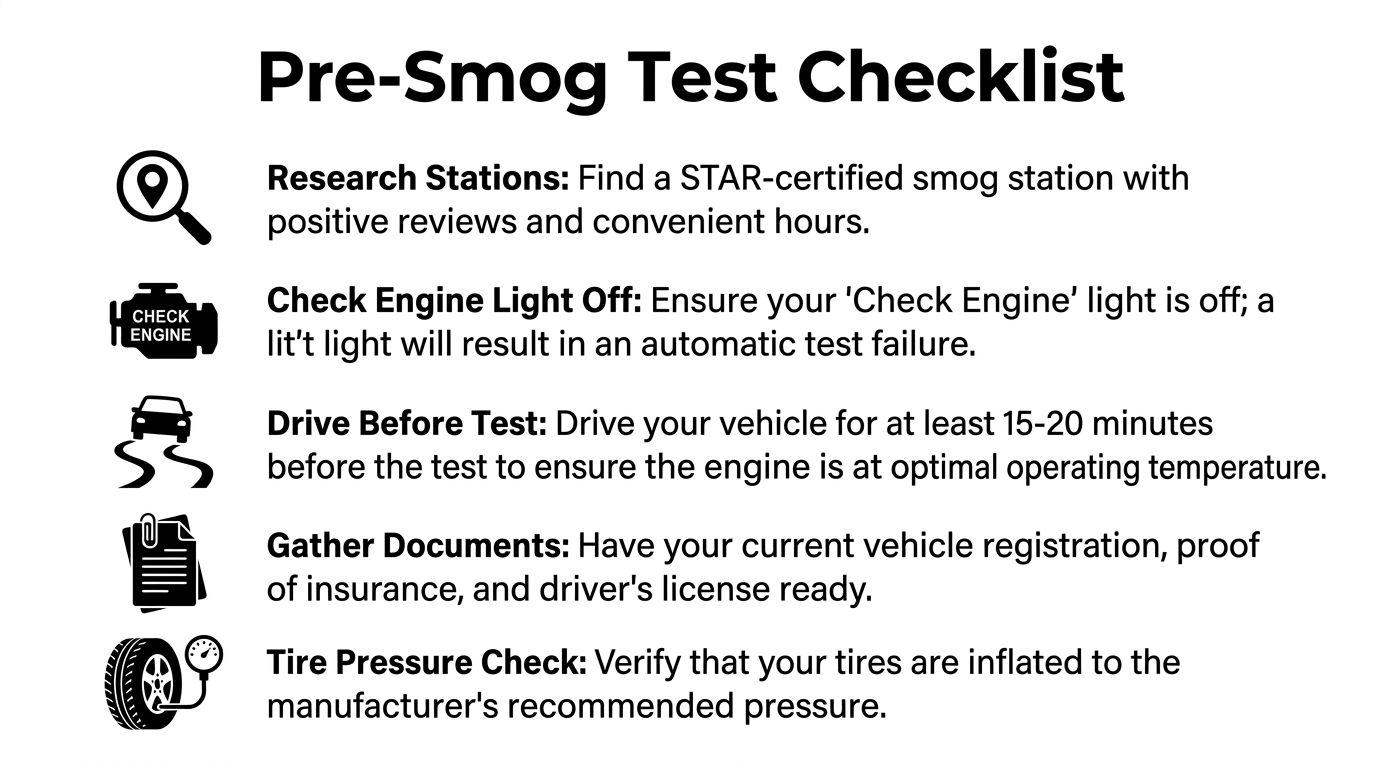
A practical pre-test checklist
Before heading to the station, do these simple things:
- Check the dashboard first. If the Check Engine light is on, don't assume it will “probably pass anyway.” That light usually means you need diagnosis before testing.
- Drive the car first. A warmed-up vehicle tends to make the visit smoother than one that's been sitting all day.
- Bring your paperwork. Having your registration and driver details handy saves time at check-in.
- Choose the right station type. If your notice says STAR required, the station must be able to perform that inspection.
- Look for transparent pricing. Honest shops explain their testing fee clearly instead of surprising you at the counter.
For drivers who want a clear explanation of what makes a station different, this overview of what a smog STAR station is helps separate marketing talk from actual program requirements.
What to look for in the shop itself
Not every station runs the same way. A good shop usually shows it in small details:
| What to check | Why it matters |
|---|---|
| Clean check-in process | Less confusion and fewer delays |
| Clear answers about STAR testing | Helps you avoid a wasted trip |
| Comfortable waiting area | Makes the errand less miserable |
| Straight pricing | Reduces last-minute surprises |
| Efficient workflow | Gets you in and out without chaos |
A fast shop isn't just one that works quickly under the hood. It's one that knows how to move drivers through the paperwork, inspection, and reporting process without creating confusion.
What does not help
Drivers sometimes try shortcuts that don't improve their odds. Showing up at a random station because it's nearby, ignoring a warning light, or waiting until the registration is nearly expired all make the process harder.
The best results usually come from basic discipline. Pick a qualified station, arrive prepared, and leave yourself enough time to solve a problem if the vehicle doesn't pass on the first attempt.
The Smog Test Process What to Expect at the Station
For many people, the most stressful part is the unknown. In reality, the visit is usually routine. You arrive, check in, hand over the vehicle details, and the technician takes it from there.
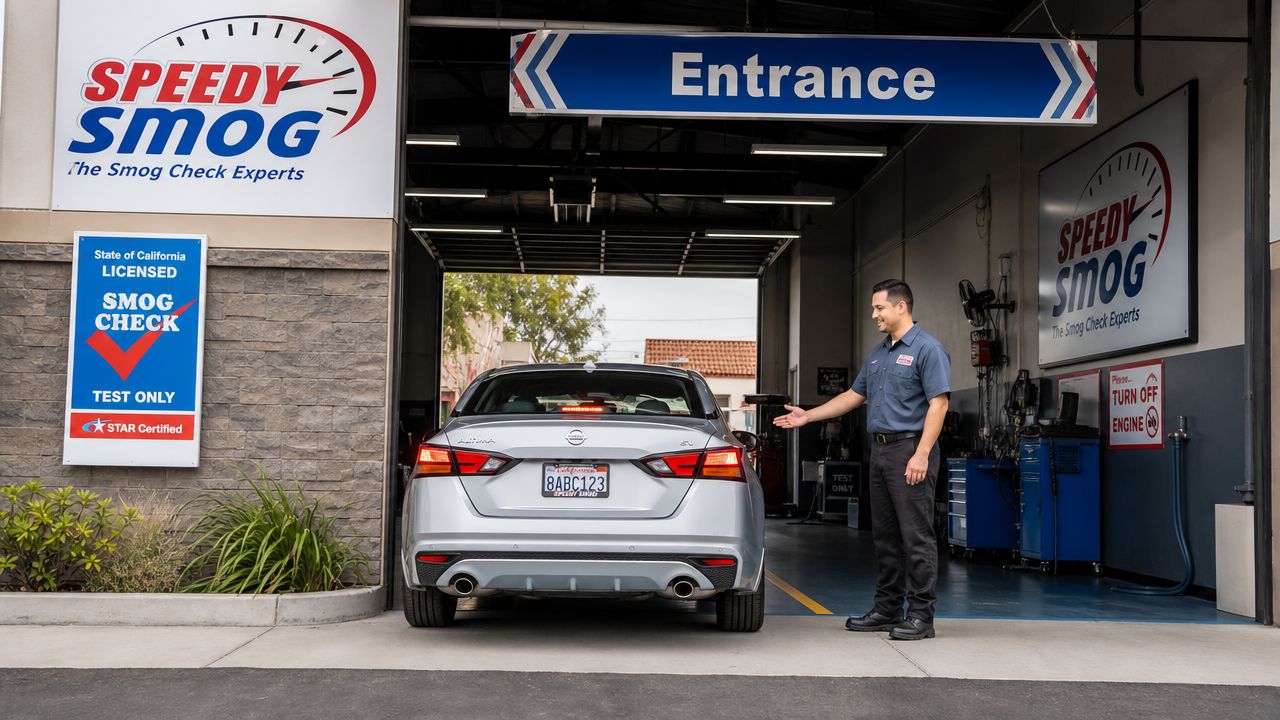
The station then performs the inspection required for your vehicle. Depending on the car, that can include a visual check, functional checks, and emissions-related data review. For most drivers, the experience feels a lot less dramatic than they expected.
What the appointment usually feels like
A well-run station keeps things simple. The technician confirms the vehicle information, explains anything unusual if your notice has special requirements, and gets the test moving. You wait while the inspection is completed.
Some drivers like knowing approximately how long they'll be there before they go. If that's you, this page on how long a smog check takes gives a practical sense of timing.
A smog appointment should feel organized, not mysterious. If the shop can't explain the process clearly, that's usually a bad sign.
What happens after a pass
One of the most important pieces of the smog check registration renewal process happens after the test bay work is done. At a STAR Certified station, the passing result is transmitted electronically to the DMV immediately, and the $8.25 certificate fee is a fixed pass-through charge that shops cannot mark up, as explained in these STAR station FAQ details.
That matters because you do not need to carry a paper certificate from office to office to finish the process. The result goes into the system electronically.
Here's a quick visual overview of the inspection experience:
One shortcut that never works
Some drivers ask if they can get tested outside California when renewal time is tight. For California registration renewal, that doesn't work. An out-of-state smog inspection is not accepted for this purpose.
That's one of those details people often learn the hard way. If California requires a California-recognized result, save yourself the wasted trip and handle it through the proper channel.
After the Test Navigating Pass or Fail Scenarios
You leave the station, the test is over, and the next step depends on one thing. Did the car pass, or did it fail? That sounds straightforward, but timing mistakes in this phase cost drivers the most time and stress.
A pass means you are close. A fail means you need a repair plan. In both cases, the smartest move is to handle the DMV side in the right order instead of assuming everything updates the same day.
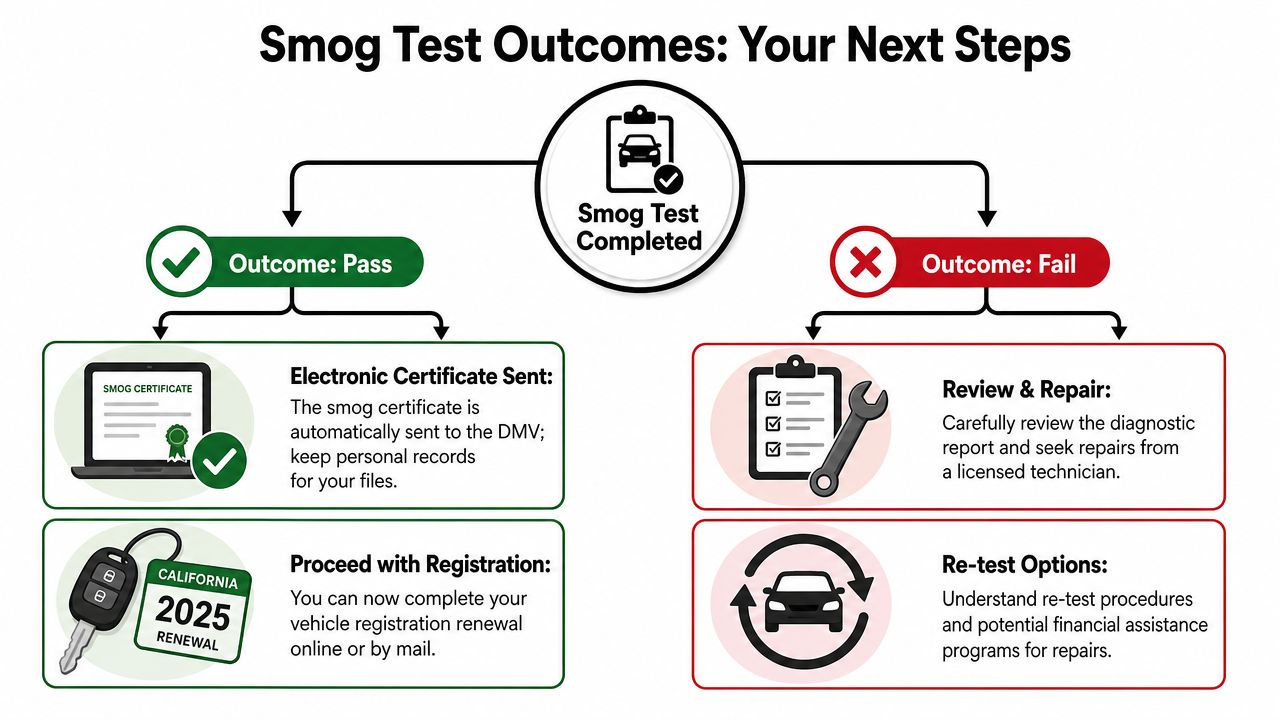
If your vehicle passes
A passing test result gets you through the emissions requirement, but your renewal is not finished until DMV records catch up and your fees are handled. Drivers get tripped up here all the time because the shop sends the result electronically, but the DMV side may not show complete right away.
Use this pass checklist:
- Pay the DMV renewal fee by the due date if you have not already. That helps you avoid late penalties, even if the registration record has not updated yet.
- Wait before assuming there is a problem. A passing smog result often takes about 24 to 48 hours to appear correctly in DMV systems on the customer side.
- Keep the receipt and test paperwork. If there is a delay, that paperwork gives you the test date, station information, and proof that the inspection was completed.
- Check your renewal status after the sync window. If the DMV still does not show the pass after that, then it makes sense to call and ask questions.
That timing matters. I have seen drivers pay attention to the test result but forget the fee deadline, and I have seen the opposite too. They pay DMV right away, then panic a few hours later because the smog still shows as missing. In many cases, the system just has not caught up yet.
If your vehicle fails
A failed test is a repair problem, not a personal failure. The report tells you where to start, and the worst approach is guessing.
Start with the inspection report. Then make decisions in this order:
- Read the failure details carefully. Look at the actual reason for failure before approving repairs.
- Choose a shop that can diagnose emissions faults, not just replace parts. Misfires, monitor issues, EVAP leaks, and catalyst faults can overlap. Random part swapping burns money fast.
- Finish the repair before retesting. If the car needs a drive cycle or monitor reset procedure, make sure that is done too.
- Keep an eye on your registration due date. Even while you sort out repairs, the DMV clock keeps running.
The expensive mistake is rushing into repairs without a diagnosis, then rushing back for a retest before the car is ready.
California also has a Consumer Assistance Program for some motorists dealing with smog-related repair costs. If the repair estimate is getting painful, ask about that option early rather than after you have already spent money.
The timing rule people miss
The practical order is what saves headaches. Pay your DMV renewal fee on time if the deadline is coming up, even if the car has not passed yet. Then finish the smog side. The DMV will not issue the sticker until it receives a passing result, but paying on time can keep you from stacking late penalties on top of repair costs.
There is another timing issue many guides skip. Smog results are not always visible in DMV records the instant you leave the shop. A short delay is normal, and that is why same-day panic calls happen.
The certificate validity window still matters too, as noted earlier. Testing too early can box you in if other renewal steps drag out. Testing too late can leave no room for repairs, monitor resets, or a DMV sync delay. The sweet spot is close enough to your renewal date that the result stays useful, but early enough to fix a problem without a last-minute scramble.
When you still need to drive
If the registration date is closing in and the smog issue is still unresolved, ask the DMV whether you qualify for a Temporary Operating Permit. For some drivers, that buys enough legal driving time to finish repairs, retest properly, and avoid making rushed decisions just to keep the car on the road.
FAQ Smog Checks for Special Situations
My car is out of state during renewal
This catches people by surprise all the time. If the car is outside California when your renewal comes up, an out-of-state emissions test usually does not satisfy California's smog requirement for registration renewal.
The fix is paperwork, and paperwork takes time. Depending on your situation, the DMV may want a statement of facts or another form tied to a temporary exemption. Start that process early, especially if your registration deadline is close. Waiting until the last few days is how a routine exception turns into late fees, extra calls, and a parked car.
My notice says STAR Station Required
A STAR requirement sounds more serious than it usually is. In practice, it means the DMV wants the inspection done at a STAR-certified station.
It does not mean the car already failed in the system. It means you need to choose the right shop the first time.
Call ahead and ask one direct question: "Are you currently licensed as a STAR station, and can you perform my test today?" That 30-second check saves a wasted trip.
I passed, so why does the DMV still show incomplete
This is one of the biggest stress points in renewal season. You pass, you pay, you check your DMV status that night, and it still shows incomplete.
A passing result is sent electronically from the station, but the DMV side does not always update right away. California's Bureau of Automotive Repair explains the 90-day validity window on a passing certificate at California's Bureau of Automotive Repair smog check page. In real shop-to-DMV timing, a short delay before the DMV record catches up is normal.
If you passed today and the DMV website has not updated yet, give it a little time before assuming something went wrong. I tell customers to avoid same-day panic unless the registration deadline is immediate and there is another problem in play, like a name mismatch or unpaid renewal fees.
This is also why timing matters. Test early enough to leave room for a DMV sync delay, but not so early that you burn too much of that 90-day window.
What if I'm selling the car
Sales catch owners off guard more often than renewals do. A car can be fine on its regular registration cycle and still need a smog inspection for transfer.
In California, vehicles 4 years old or older generally need a smog test for a title transfer. Sellers who wait until a buyer is ready to sign often end up scrambling for an appointment, especially if the notice also points them to a STAR station.
Check the requirement before you list the car. It is much easier to sell a car when the smog side is already handled.
If you're in the East Bay and want a clean, straightforward smog visit, Speedy Smog in San Leandro is a practical choice. They're a STAR Certified station with fast service, transparent pricing, and a comfortable waiting area, which makes smog check registration renewal a lot less painful when you just want to get certified and get back on the road.
Your DMV renewal notice shows up, and somewhere in the fine print you see that your diesel needs a smog check. That's usually when the questions start. Do diesels get the same test as gas cars? Will they plug into the computer, test the tailpipe, or both? If your truck runs fine, why does any of this matter?
At the counter, I hear the same concern from East Bay drivers all the time: they don't mind doing the test, they just want to know what's happening to their vehicle and what could hold up their registration. That's fair. Diesel smog checks feel more technical because the equipment is more specialized, and the results can point to problems you won't always notice in everyday driving.
That equipment matters on a big scale, too. In 2024, systems designed specifically for diesel vehicles accounted for 56% of all market installations in the automotive emission test equipment sector, which shows how central diesel testing is to compliance work across the industry, according to Industry Research's automotive emission test equipment market report.
For California drivers, the useful question isn't “What's the whole global market doing?” It's simpler than that. What tool is being used on your vehicle, what is it checking, and what do those results mean for passing your smog check and keeping your DMV registration moving?
Table of Contents
- Your Diesel Smog Notice Arrived What Now
- The Tools of the Trade Key Diesel Testing Equipment
- The Diesel Smog Check Process at a STAR Station
- Why STAR Certification Matters for Your Diesel Test
- Decoding Your Test Results What the Readings Mean
- How to Prepare Your Diesel for an Easy Pass
- Your Partner for a Fast and Compliant Smog Check
Your Diesel Smog Notice Arrived What Now
A lot of diesel owners have the same first reaction: confusion, not panic. The vehicle may be running well, there may be no warning lights on, and then the DMV notice lands anyway. If you haven't dealt with a diesel smog check recently, it's easy to assume it works just like a gas car inspection. It often doesn't.
One customer type I see often is the owner of an older diesel pickup who's convinced the shop will just “plug it in and print a pass.” Another is the owner of a newer diesel SUV who's worried they're heading into a long, expensive diagnostic session. Usually, reality lies somewhere in between. The inspection follows a process, the equipment has a specific purpose, and most of the stress comes from not knowing what each step means.
Why the notice feels more confusing for diesel owners
Diesel testing has more moving parts because diesel emissions problems show up differently. A gas car owner usually thinks in terms of a check engine light or a failed monitor. Diesel owners also have to think about smoke output, visible exhaust behavior, and whether the emissions hardware is present and working as intended.
That's why it helps to think of the smog check as both a compliance test and a health check. The machine isn't just looking for a pass or fail. It's looking for signs that the engine and emissions system are behaving the way California expects them to.
Most diesel smog stress comes from uncertainty, not from the test itself.
What you actually need to know first
Start with three basics:
- Bring the vehicle in warmed up. A cold diesel can give you misleading behavior and rougher results.
- Expect more than one kind of check. The inspection may involve a visual review, a computer check, and for some vehicles, a smoke or opacity measurement.
- Treat the notice like a deadline, not a suggestion. If the test is tied to registration, waiting until the last minute removes your repair options if something fails.
If you understand what the tools are doing, the process stops feeling mysterious. That's the difference between walking into a test lane worried and walking in prepared.
The Tools of the Trade Key Diesel Testing Equipment
Diesel emissions testing equipment works like a doctor's toolkit. One tool looks for symptoms you can see. Another checks what the vehicle reports about itself. Another helps confirm whether the engine behaves properly under load or under a specific test condition. No single tool tells the whole story.
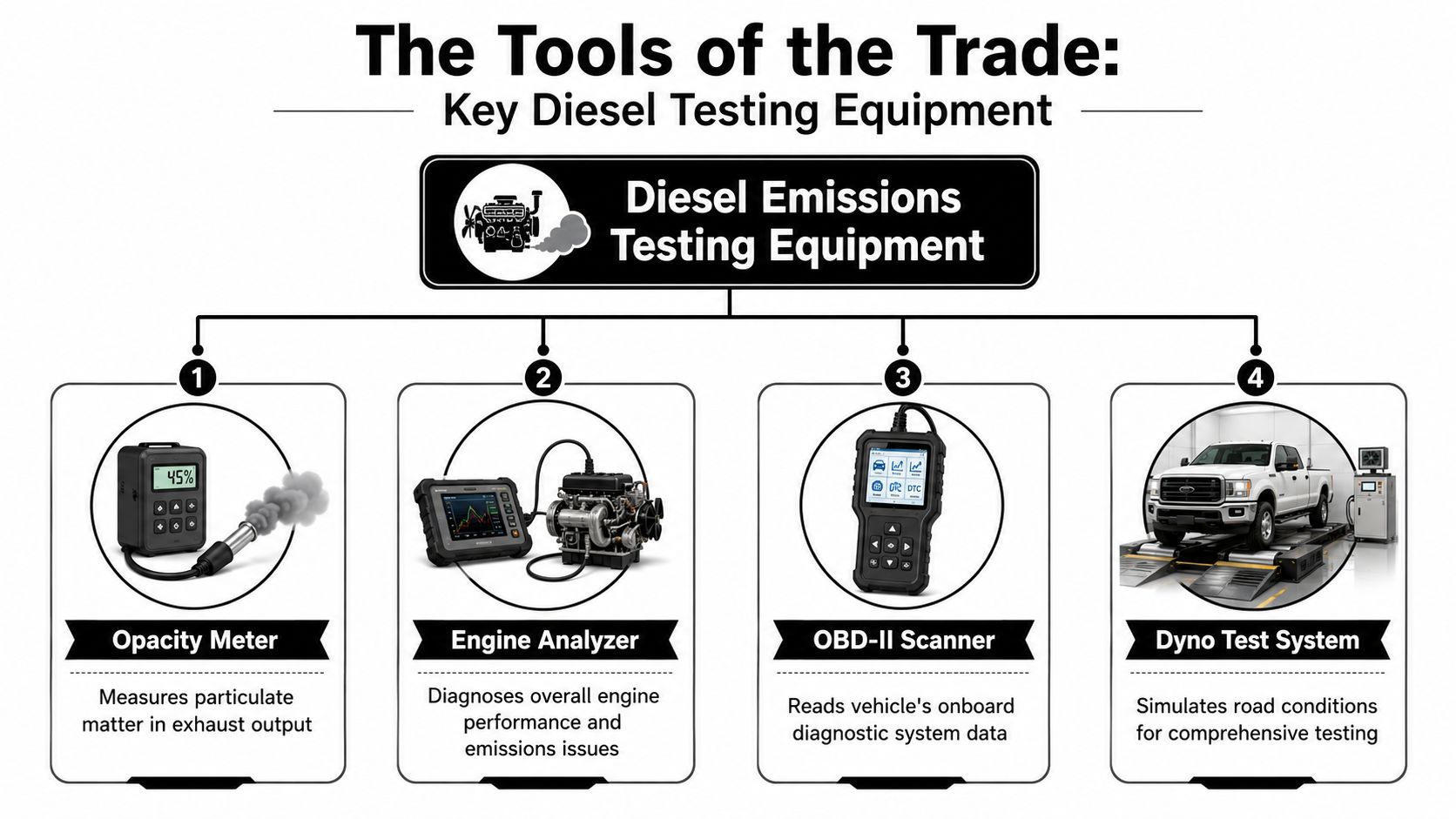
What each tool is actually checking
The opacity meter is the classic diesel-specific tool. It measures visible smoke in the exhaust stream, which gives the technician a direct read on particulate output. That matters because smoke isn't just cosmetic. It's often a clue that combustion is incomplete or that the aftertreatment system isn't doing its job. Opacity meters are also the leading product category in this market, projected to hold 45.00% of total automotive emission test equipment market revenue in 2025, according to Future Market Insights on automotive emission test equipment.
The OBD-II scanner reads the vehicle's onboard diagnostics. That's the electronic side of the inspection. It checks whether the vehicle has stored trouble codes, whether emissions-related systems are reporting faults, and whether the onboard data lines up with a healthy emissions system. For many drivers, this is the part they expect. But on a diesel, it's only one part of the picture.
An engine analyzer helps the technician interpret overall engine behavior. It's less about one pass-fail number and more about connecting symptoms. If a diesel has a rough idle, poor throttle response, or signs of an air-fuel imbalance, that can point toward the reason behind smoke output or fault activity.
A dyno test system is the “stress test” version of the toolkit. It simulates road conditions so the vehicle can be checked under controlled load instead of just sitting still. California procedures vary by vehicle and program requirements, but the idea is simple: some emissions problems show themselves better when the engine has to work.
If you're trying to understand how these systems fit into the state test itself, this overview of a California diesel smog check process gives useful context.
Practical rule: If a diesel owner says, “My truck feels fine, so it should pass,” that's not always enough. Some failures only show up when the tool checks smoke, data, or load in a structured way.
Diesel Smog Check Equipment at a Glance
| Equipment Type | What It Measures | Role in a California Smog Check |
|---|---|---|
| Opacity Meter | Visible exhaust smoke and particulate output | Verifies whether tailpipe smoke stays within the required test standard for applicable diesel vehicles |
| OBD-II Scanner | Emissions-related fault codes and system status | Checks the onboard computer for problems that can trigger a smog failure |
| Engine Analyzer | Overall engine behavior and related performance clues | Helps identify why a vehicle is smoking, idling poorly, or setting faults |
| Dyno Test System | Vehicle behavior under simulated driving load | Used when a test procedure requires controlled operating conditions rather than a simple idle check |
Why the right tool matters
Drivers sometimes ask whether one machine can do it all. It can't. A scanner won't tell you how much smoke is coming out of the tailpipe. An opacity meter won't explain why the computer set a fault. A dyno won't replace a visual inspection.
That's the core value of diesel emissions testing equipment when it's used correctly. Each tool answers a different question, and together they give a reliable picture of whether the vehicle is compliant or whether something needs attention before registration can move forward.
The Diesel Smog Check Process at a STAR Station
At a STAR station, the diesel smog check is structured. It's not a random set of shop opinions, and it's not a mechanic taking a guess based on how the exhaust smells. The sequence matters because each step screens for a different kind of problem.
What happens when your vehicle enters the bay
The first step is usually the visual inspection. The technician checks that the emissions-related components that should be on the vehicle are present and haven't been tampered with. Missing, disconnected, or obviously altered equipment can stop the process fast.
Then comes the electronic inspection for vehicles that use onboard diagnostics as part of the program. The scanner communicates with the vehicle and checks for emissions-related faults and system readiness. If the computer is reporting a problem, the test result reflects that. This is one reason clearing codes right before a smog check usually backfires. The system still needs to show that it has completed the right self-checks.
For some diesels, especially older ones, the key moment is the opacity test, often associated with the Modified Snap Acceleration approach. The technician uses the meter at the tailpipe and measures visible smoke under a defined test procedure rather than relying on guesswork.
If an older diesel smokes only when you get on the throttle, the tailpipe test is where that problem usually shows itself.
If you're not sure why your registration notice points you toward this kind of facility, the explanation of what a smog STAR station is clears up why California routes some vehicles to higher-performing stations.
Why some diesel tests are different from lab testing
Shop testing and development testing are not the same thing. In engineering and regulatory work, advanced diesel emissions measurement can involve Portable Emission Measurement Systems (PEMS) for real-world operation, along with engine dynamometer testing over standardized cycles using Constant Volume Sampling (CVS) for exhaust dilution, as described by DieselNet's overview of emissions measurement methods.
That matters for one reason only to the average driver. Professionals use different tools for different jobs. A laboratory setup can study emissions in extreme detail. A STAR station uses the approved field equipment and procedures that determine whether your vehicle meets the requirement for registration.
What drivers usually notice during the test
From the waiting room, the process can look simple. In the bay, it's methodical.
- The vehicle is identified and checked in. Paperwork and vehicle details have to match.
- The inspection follows the required sequence. Skipping steps isn't how compliant testing works.
- The final result is based on the approved test outcome. Not on a technician's hunch, and not on whether the vehicle “sounds healthy.”
That consistency is what makes the result valid for DMV purposes.
Why STAR Certification Matters for Your Diesel Test
For diesel owners, STAR certification matters because accuracy matters. You don't want a rushed inspection, and you don't want a sloppy one. You want a result the DMV accepts and a process that follows the rules the same way every time.
A STAR station operates under tighter performance expectations than a basic testing site. For the driver, that means the station is expected to maintain a higher level of consistency in how testing is performed and reported. If your registration notice requires a STAR inspection, choosing anything else doesn't help. If it doesn't require one, a STAR station still gives you confidence that the result will fit California's standards.
Why accuracy matters more than speed alone
Fast service is nice. Accurate service is the point.
A diesel smog check can affect your registration timeline, your next repair decision, and your understanding of whether the problem is electronic, mechanical, or both. That's why station quality matters more on diesels than many owners realize. A weak process creates confusion. A disciplined process gives you a result you can trust.
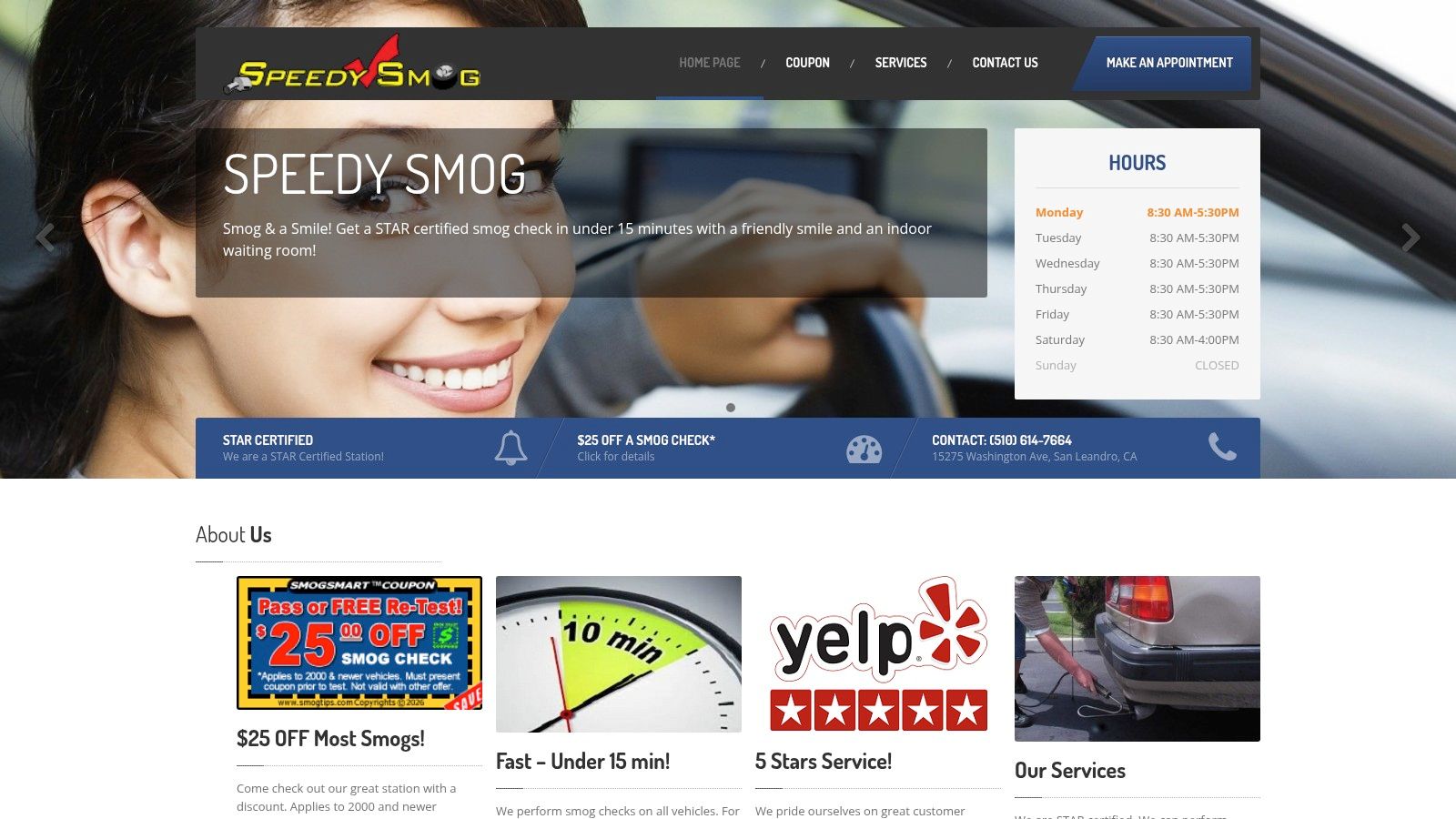
Here's the practical side. Some vehicles are directed to STAR stations. Others aren't. But if you drive a diesel and want the inspection handled by a shop that's used to regulated testing standards, STAR is the safer lane.
A good diesel test doesn't just give you an answer. It gives you an answer that holds up when registration is on the line.
That's why experienced diesel owners tend to care less about flashy promises and more about whether the station follows the process cleanly, uses the right equipment, and submits a result that won't create headaches later.
Decoding Your Test Results What the Readings Mean
A pass is easy to understand. A fail usually isn't. What most drivers want to know is what the machine saw, what that says about the vehicle, and whether they're dealing with a simple repair issue or a bigger emissions problem.
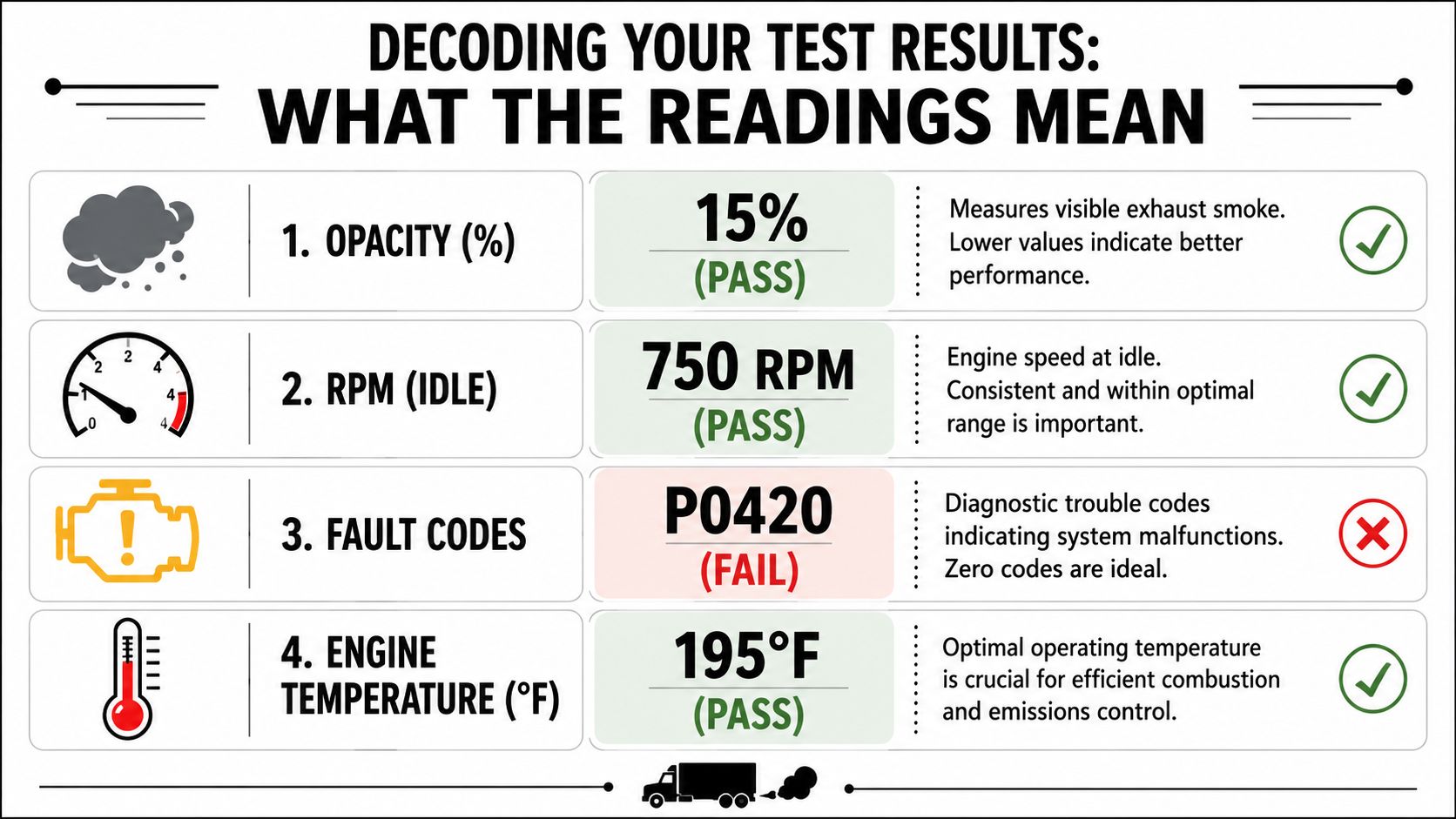
What a smoke reading is telling you
On a diesel, an opacity result is often the clearest real-world clue. If the reading is high, the engine may be producing excess soot, burning fuel poorly, or failing to control particulate output the way it should. In plain English, the tailpipe is showing that combustion and emissions control aren't lining up.
That doesn't mean the cause is always dramatic. A restricted air path, injector issue, turbo problem, or aftertreatment weakness can all show up as smoke behavior. The reading doesn't repair the vehicle. It tells you where to start looking.
What computer data can and cannot prove
Fault codes matter because they tell you the vehicle has detected a problem in an emissions-related system. If the check engine light is on for the wrong reason, that can lead straight to a fail. But code data has limits.
The big misunderstanding with diesels is assuming onboard sensor data can replace a tailpipe measurement. It can't. The clearest statement on this point is that the only way to definitively know a diesel's emissions status, especially for older vehicles, is to measure directly at the tailpipe with an opacity meter, because DPF sensor data alone cannot confirm real-world performance during a Modified Snap Acceleration test, as discussed in this diesel opacity testing video reference.
That's why one vehicle can “look good on the scanner” and still fail when tested properly at the exhaust.
How to read the result like a technician
When I explain results to drivers, I usually translate them this way:
- Clean computer report, clean tailpipe behavior: good sign. The vehicle is usually doing what it should.
- Clean computer report, dirty tailpipe behavior: something mechanical or combustion-related may be slipping past what the onboard system can confirm.
- Fault codes present: the vehicle is telling on itself. Even if it seems to drive normally, the system has identified an emissions issue.
- Intermittent symptoms: these are the frustrating ones. The truck may behave on the way to the shop and act up only under test conditions.
Don't treat a failed reading as a verdict on the whole vehicle. Treat it as evidence. Good diagnosis starts there.
A useful diesel smog result isn't just pass or fail. It narrows the problem so you can make a smarter repair decision.
How to Prepare Your Diesel for an Easy Pass
Most smog failures aren't surprises to the vehicle. They're surprises to the owner. A little prep goes a long way, especially with diesels that spend a lot of time on short trips, sit between uses, or have had recent battery disconnects or repairs.
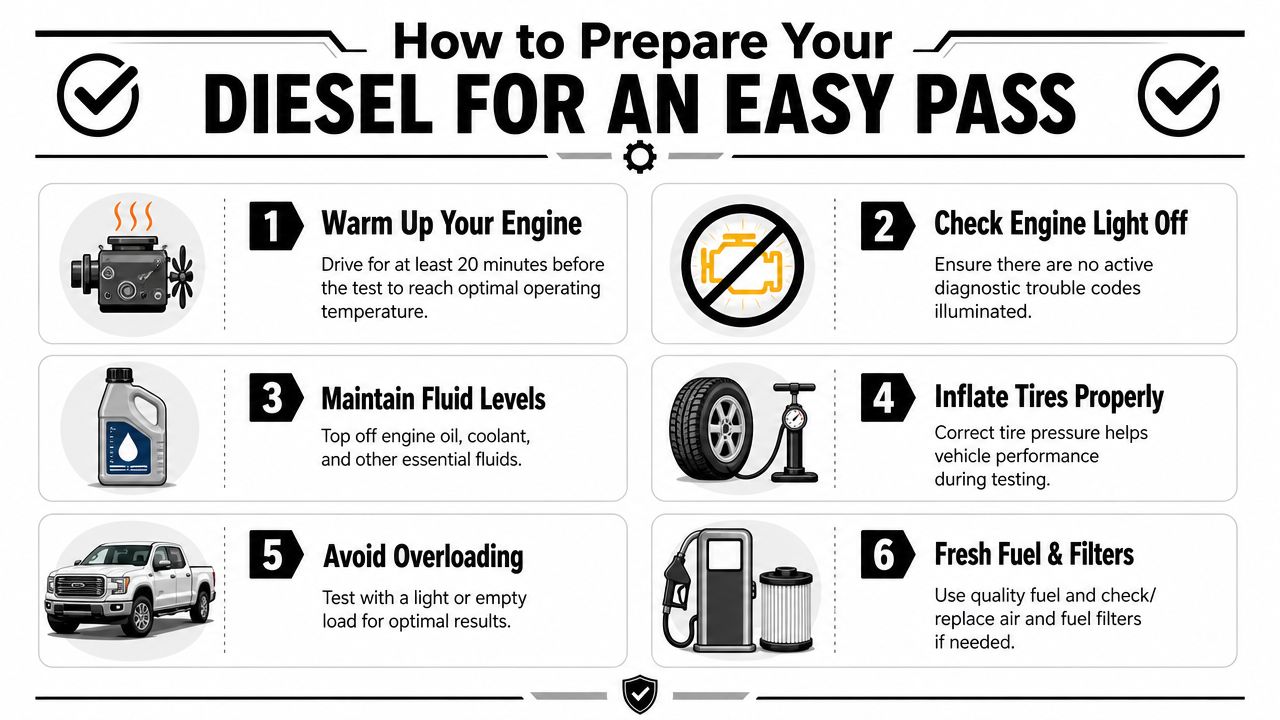
A simple pre-test checklist
Use a basic routine before you head to the station:
- Warm the engine fully. A proper drive before the test helps the engine and emissions system operate normally.
- Make sure the check engine light is off. If the light is on, don't assume the shop can “test around it.”
- Look for obvious under-hood issues. Loose hoses, disconnected sensors, or recent repair leftovers can create avoidable failures.
- Stay current on maintenance. Dirty filters, overdue oil service, and neglected intake issues can hurt diesel combustion quality.
- Avoid last-minute code clearing. If you recently disconnected the battery or reset faults, the system may not be ready for inspection.
For a more shop-focused prep list, this guide to diesel smog check prep in California is worth reviewing before your appointment.
A quick visual walkthrough can help, too:
Why California drivers need to be more proactive
Some diesel owners move here from other states and assume the rules will be similar. They often aren't. States including Illinois, Georgia, and Utah explicitly exempt light-duty diesel vehicles from mandatory emissions testing, as noted by Illinois Air Team's diesel testing FAQ. California drivers face a stricter and more hands-on compliance environment, so preparation matters more.
That difference catches people off guard. A driver may have owned a diesel for years elsewhere without ever thinking about smoke behavior, readiness status, or emissions hardware condition. In California, those details become registration issues.
What doesn't work
A few habits waste time:
- Showing up with a cold engine
- Ignoring a warning light because the vehicle “still drives fine”
- Assuming recent repairs automatically mean test-ready status
- Waiting until the registration deadline to find out if there's a problem
The easiest pass is usually the result of normal maintenance, a warmed-up vehicle, and no unresolved warning signs.
Your Partner for a Fast and Compliant Smog Check
Diesel emissions testing equipment can look intimidating if you only see it from the waiting room. Once you know what the tools are checking, the process makes a lot more sense. One tool reads the vehicle's own diagnostics. Another checks the exhaust directly. The station follows a set sequence so the result is accurate, consistent, and valid for DMV use.
That understanding helps in two ways. First, you're less likely to walk into the test guessing. Second, if the vehicle doesn't pass, you'll have a better sense of what the result is telling you instead of treating it like a mystery printout.
For East Bay diesel owners, the goal is simple: get a compliant inspection, get clear answers, and keep registration moving without drama.
If you need a diesel smog check in San Leandro or the East Bay, Speedy Smog offers STAR-certified testing with the kind of clear, practical service drivers appreciate. Whether you're coming in with a renewal notice, an older diesel that needs proper tailpipe evaluation, or a newer vehicle that needs a clean DMV-compliant inspection, the team can help you get it handled quickly and professionally.