
Smog Check Registration Renewal: A California Driver’s Guide
Your registration renewal notice shows up, you open it, and there it is: Smog Check Required. For a lot of California drivers, that one line creates more stress than it should. People wonder if they need the test before they pay DMV fees, whether the shop sends the results in for them, and why the DMV website sometimes still says incomplete even after a pass.
The good news is the process is usually straightforward once you handle it in the right order. Most problems come from timing mistakes, not from the smog test itself. Drivers wait too long, test too early, or assume a paid renewal means the registration is finished when it isn't.
This guide is built around what works for a smooth smog check registration renewal. It focuses on sequence, deadlines, and the practical details that keep you legal and keep the DMV from kicking your renewal into limbo.
Table of Contents
- Your DMV Renewal Notice Arrived Now What
- Decoding Your DMV Notice When a Smog Check Is Required
- Finding a Great Smog Station and Preparing Your Vehicle
- The Smog Test Process What to Expect at the Station
- After the Test Navigating Pass or Fail Scenarios
- FAQ Smog Checks for Special Situations
Your DMV Renewal Notice Arrived Now What
The envelope shows up, you spot the word “smog,” and the stress usually starts right there. The part that trips drivers up is not the test itself. It is the order of the steps. Get that right, and smog check registration renewal is usually routine.
Start with the notice. Read every line before you pay anything, book anything, or assume you already know what DMV wants. If the notice calls for a smog check, build your plan around the due date and leave yourself a little room for the DMV system to catch up after the test.
Handle timing before you handle the test
Here's the shop-floor version. If your registration deadline is close, pay the DMV renewal fee on time to avoid late penalties, then finish the smog requirement as soon as possible. A lot of drivers assume the payment alone finishes the renewal. It does not. DMV still needs a passing smog result sent electronically before it will complete registration and issue the sticker.
That timing detail matters more than people expect.
A passing result does not always show up in DMV records the minute you leave the station. In real cases, the electronic update can take 24 to 48 hours. That is why waiting until the last day creates avoidable panic, even if the car passes.
Use this order
- Read the renewal notice fully. Confirm whether a smog check is being requested.
- Check the due date right away. That date controls every other decision.
- Pay the renewal fee on time if the deadline is close. That helps you avoid penalties while you finish the smog portion.
- Schedule the test with a little cushion. Give yourself time in case the car needs a retest or the DMV update is not immediate.
- Confirm DMV received the result. If you passed today, give the system a day or two before assuming something went wrong.
If you are not sure whether the notice requirement makes sense for your vehicle, this plain-English guide to California smog check rules can help you sort that out fast.
Treat it as a sequence, not one errand. That is the easiest way to avoid late fees, last-minute surprises, and the “I passed, so why don't I have my sticker yet?” phone call.
Decoding Your DMV Notice When a Smog Check Is Required
The first question isn't where to test. It's whether your vehicle needs a test at all.
California's basic rule is that the biennial smog check requirement applies to gas-powered vehicles that are 8 model years or older and diesel vehicles from 1998 onward weighing 14,000 pounds or less, and the smog certificate is valid for exactly 90 days from the test date according to this California smog requirement summary.
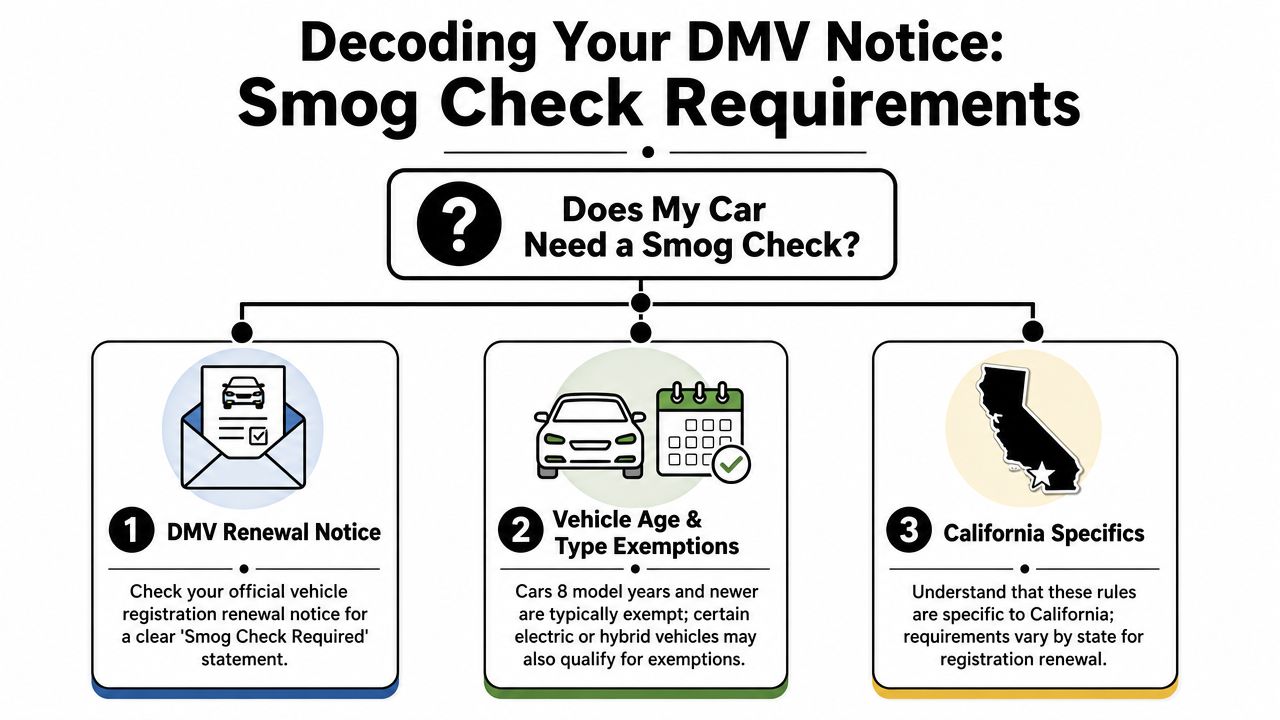
Vehicles that usually need a smog check
If your renewal notice says smog is required, it usually lines up with one of these situations:
- Older gasoline vehicle: Your car has aged into the biennial testing cycle.
- Eligible diesel vehicle: Certain diesel vehicles also fall under California testing rules.
- Ownership transfer: A sale can trigger a smog requirement even when a driver is used to thinking only about renewal cycles.
If you want a plain-English breakdown of eligibility categories, this guide to California smog check rules is a useful reference.
Common exemptions that confuse drivers
A lot of drivers get tripped up because they hear half a rule from a friend and assume it applies to them. California has exemptions, but they're specific.
- Newer gasoline vehicles: Gasoline vehicles less than 8 years old are generally exempt from the biennial smog cycle, though they must pay a smog abatement fee.
- Electric vehicles: These are exempt.
- Motorcycles: These are exempt.
- Pre-1976 classics: Older collector vehicles in that category are exempt from the standard smog program.
The easiest mistake is assuming “newer car” means no smog issue at all. It may mean no biennial inspection, but not that every registration detail disappears.
What a STAR notice means
Some renewal notices specify a STAR station. Drivers often read that like it means their car is in trouble. Usually it just means the DMV requires the inspection to be performed at a station that meets STAR program standards.
That's an administrative requirement, not an accusation. If your notice says STAR, go to a STAR-certified shop and you've handled that part correctly.
If your notice says STAR required, don't overthink it. The important part is choosing the right kind of station the first time.
Finding a Great Smog Station and Preparing Your Vehicle
A smooth smog visit starts before you pull into the bay. The best shops make the process easier, but drivers still help themselves by arriving with a vehicle that's ready to be tested and with the basics already in hand.
The wrong approach is rushing in with a glowing warning light, a cold engine, and no clue whether the shop can perform the kind of inspection your notice requires. That's where a quick checklist pays off.
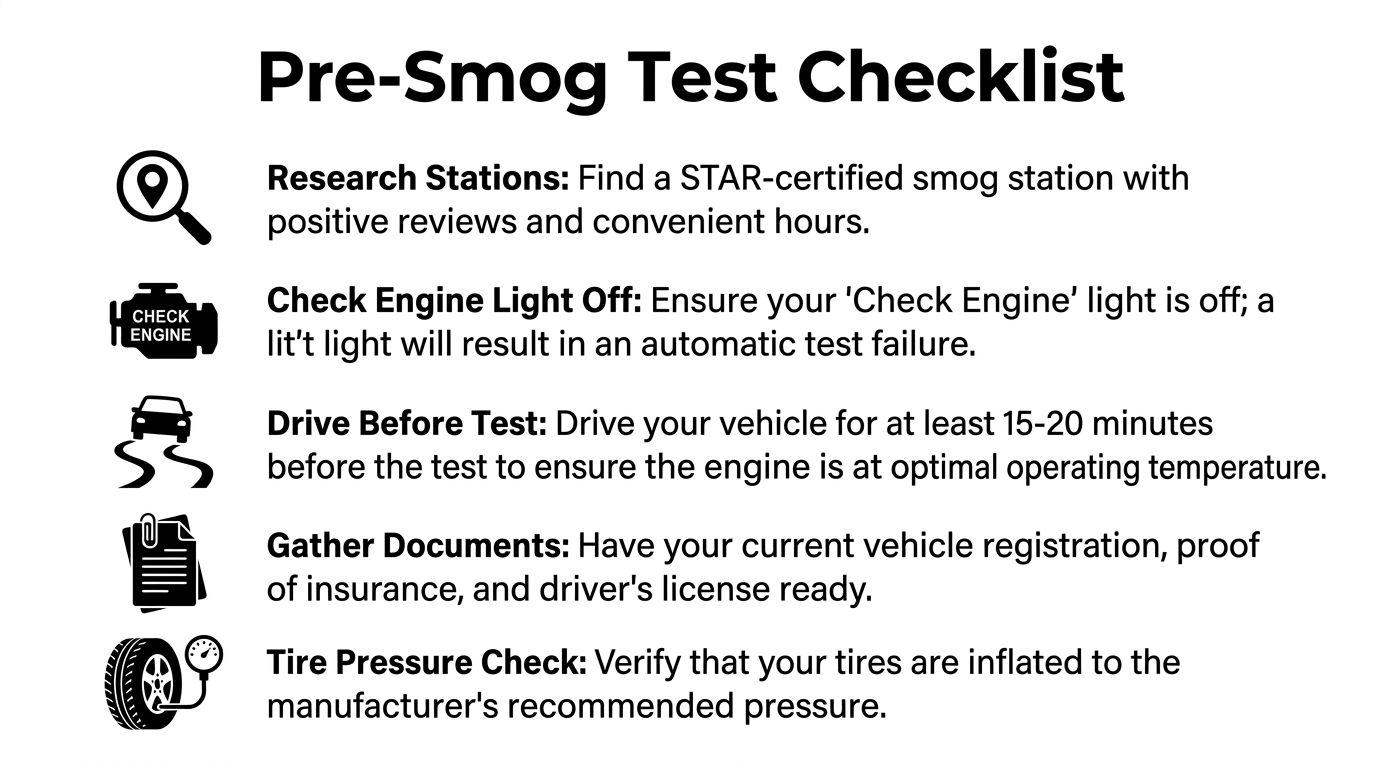
A practical pre-test checklist
Before heading to the station, do these simple things:
- Check the dashboard first. If the Check Engine light is on, don't assume it will “probably pass anyway.” That light usually means you need diagnosis before testing.
- Drive the car first. A warmed-up vehicle tends to make the visit smoother than one that's been sitting all day.
- Bring your paperwork. Having your registration and driver details handy saves time at check-in.
- Choose the right station type. If your notice says STAR required, the station must be able to perform that inspection.
- Look for transparent pricing. Honest shops explain their testing fee clearly instead of surprising you at the counter.
For drivers who want a clear explanation of what makes a station different, this overview of what a smog STAR station is helps separate marketing talk from actual program requirements.
What to look for in the shop itself
Not every station runs the same way. A good shop usually shows it in small details:
| What to check | Why it matters |
|---|---|
| Clean check-in process | Less confusion and fewer delays |
| Clear answers about STAR testing | Helps you avoid a wasted trip |
| Comfortable waiting area | Makes the errand less miserable |
| Straight pricing | Reduces last-minute surprises |
| Efficient workflow | Gets you in and out without chaos |
A fast shop isn't just one that works quickly under the hood. It's one that knows how to move drivers through the paperwork, inspection, and reporting process without creating confusion.
What does not help
Drivers sometimes try shortcuts that don't improve their odds. Showing up at a random station because it's nearby, ignoring a warning light, or waiting until the registration is nearly expired all make the process harder.
The best results usually come from basic discipline. Pick a qualified station, arrive prepared, and leave yourself enough time to solve a problem if the vehicle doesn't pass on the first attempt.
The Smog Test Process What to Expect at the Station
For many people, the most stressful part is the unknown. In reality, the visit is usually routine. You arrive, check in, hand over the vehicle details, and the technician takes it from there.
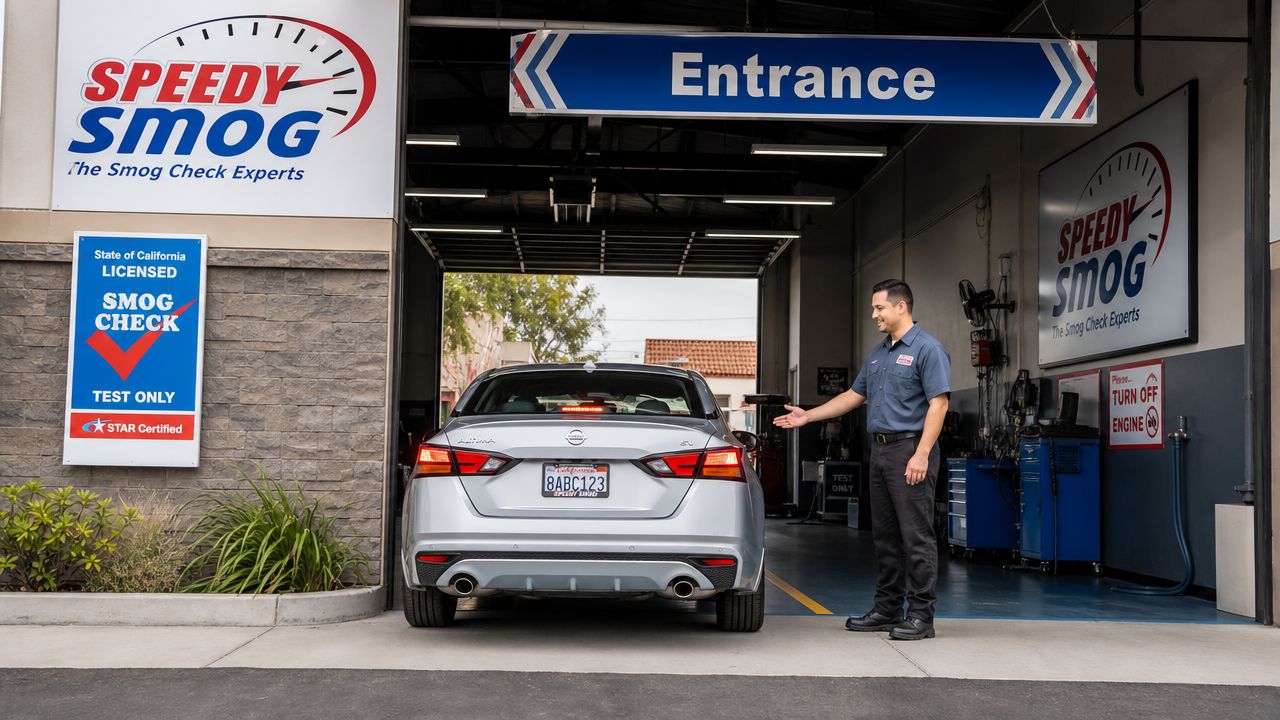
The station then performs the inspection required for your vehicle. Depending on the car, that can include a visual check, functional checks, and emissions-related data review. For most drivers, the experience feels a lot less dramatic than they expected.
What the appointment usually feels like
A well-run station keeps things simple. The technician confirms the vehicle information, explains anything unusual if your notice has special requirements, and gets the test moving. You wait while the inspection is completed.
Some drivers like knowing approximately how long they'll be there before they go. If that's you, this page on how long a smog check takes gives a practical sense of timing.
A smog appointment should feel organized, not mysterious. If the shop can't explain the process clearly, that's usually a bad sign.
What happens after a pass
One of the most important pieces of the smog check registration renewal process happens after the test bay work is done. At a STAR Certified station, the passing result is transmitted electronically to the DMV immediately, and the $8.25 certificate fee is a fixed pass-through charge that shops cannot mark up, as explained in these STAR station FAQ details.
That matters because you do not need to carry a paper certificate from office to office to finish the process. The result goes into the system electronically.
Here's a quick visual overview of the inspection experience:
One shortcut that never works
Some drivers ask if they can get tested outside California when renewal time is tight. For California registration renewal, that doesn't work. An out-of-state smog inspection is not accepted for this purpose.
That's one of those details people often learn the hard way. If California requires a California-recognized result, save yourself the wasted trip and handle it through the proper channel.
After the Test Navigating Pass or Fail Scenarios
You leave the station, the test is over, and the next step depends on one thing. Did the car pass, or did it fail? That sounds straightforward, but timing mistakes in this phase cost drivers the most time and stress.
A pass means you are close. A fail means you need a repair plan. In both cases, the smartest move is to handle the DMV side in the right order instead of assuming everything updates the same day.
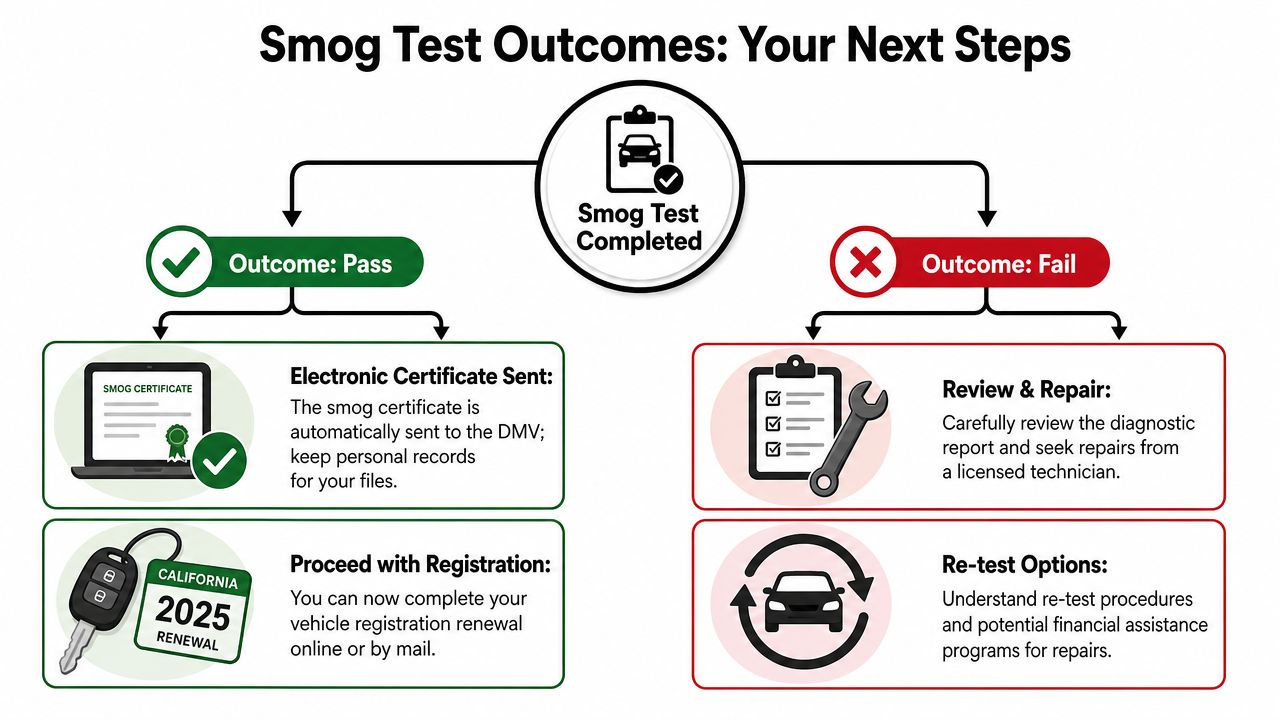
If your vehicle passes
A passing test result gets you through the emissions requirement, but your renewal is not finished until DMV records catch up and your fees are handled. Drivers get tripped up here all the time because the shop sends the result electronically, but the DMV side may not show complete right away.
Use this pass checklist:
- Pay the DMV renewal fee by the due date if you have not already. That helps you avoid late penalties, even if the registration record has not updated yet.
- Wait before assuming there is a problem. A passing smog result often takes about 24 to 48 hours to appear correctly in DMV systems on the customer side.
- Keep the receipt and test paperwork. If there is a delay, that paperwork gives you the test date, station information, and proof that the inspection was completed.
- Check your renewal status after the sync window. If the DMV still does not show the pass after that, then it makes sense to call and ask questions.
That timing matters. I have seen drivers pay attention to the test result but forget the fee deadline, and I have seen the opposite too. They pay DMV right away, then panic a few hours later because the smog still shows as missing. In many cases, the system just has not caught up yet.
If your vehicle fails
A failed test is a repair problem, not a personal failure. The report tells you where to start, and the worst approach is guessing.
Start with the inspection report. Then make decisions in this order:
- Read the failure details carefully. Look at the actual reason for failure before approving repairs.
- Choose a shop that can diagnose emissions faults, not just replace parts. Misfires, monitor issues, EVAP leaks, and catalyst faults can overlap. Random part swapping burns money fast.
- Finish the repair before retesting. If the car needs a drive cycle or monitor reset procedure, make sure that is done too.
- Keep an eye on your registration due date. Even while you sort out repairs, the DMV clock keeps running.
The expensive mistake is rushing into repairs without a diagnosis, then rushing back for a retest before the car is ready.
California also has a Consumer Assistance Program for some motorists dealing with smog-related repair costs. If the repair estimate is getting painful, ask about that option early rather than after you have already spent money.
The timing rule people miss
The practical order is what saves headaches. Pay your DMV renewal fee on time if the deadline is coming up, even if the car has not passed yet. Then finish the smog side. The DMV will not issue the sticker until it receives a passing result, but paying on time can keep you from stacking late penalties on top of repair costs.
There is another timing issue many guides skip. Smog results are not always visible in DMV records the instant you leave the shop. A short delay is normal, and that is why same-day panic calls happen.
The certificate validity window still matters too, as noted earlier. Testing too early can box you in if other renewal steps drag out. Testing too late can leave no room for repairs, monitor resets, or a DMV sync delay. The sweet spot is close enough to your renewal date that the result stays useful, but early enough to fix a problem without a last-minute scramble.
When you still need to drive
If the registration date is closing in and the smog issue is still unresolved, ask the DMV whether you qualify for a Temporary Operating Permit. For some drivers, that buys enough legal driving time to finish repairs, retest properly, and avoid making rushed decisions just to keep the car on the road.
FAQ Smog Checks for Special Situations
My car is out of state during renewal
This catches people by surprise all the time. If the car is outside California when your renewal comes up, an out-of-state emissions test usually does not satisfy California's smog requirement for registration renewal.
The fix is paperwork, and paperwork takes time. Depending on your situation, the DMV may want a statement of facts or another form tied to a temporary exemption. Start that process early, especially if your registration deadline is close. Waiting until the last few days is how a routine exception turns into late fees, extra calls, and a parked car.
My notice says STAR Station Required
A STAR requirement sounds more serious than it usually is. In practice, it means the DMV wants the inspection done at a STAR-certified station.
It does not mean the car already failed in the system. It means you need to choose the right shop the first time.
Call ahead and ask one direct question: "Are you currently licensed as a STAR station, and can you perform my test today?" That 30-second check saves a wasted trip.
I passed, so why does the DMV still show incomplete
This is one of the biggest stress points in renewal season. You pass, you pay, you check your DMV status that night, and it still shows incomplete.
A passing result is sent electronically from the station, but the DMV side does not always update right away. California's Bureau of Automotive Repair explains the 90-day validity window on a passing certificate at California's Bureau of Automotive Repair smog check page. In real shop-to-DMV timing, a short delay before the DMV record catches up is normal.
If you passed today and the DMV website has not updated yet, give it a little time before assuming something went wrong. I tell customers to avoid same-day panic unless the registration deadline is immediate and there is another problem in play, like a name mismatch or unpaid renewal fees.
This is also why timing matters. Test early enough to leave room for a DMV sync delay, but not so early that you burn too much of that 90-day window.
What if I'm selling the car
Sales catch owners off guard more often than renewals do. A car can be fine on its regular registration cycle and still need a smog inspection for transfer.
In California, vehicles 4 years old or older generally need a smog test for a title transfer. Sellers who wait until a buyer is ready to sign often end up scrambling for an appointment, especially if the notice also points them to a STAR station.
Check the requirement before you list the car. It is much easier to sell a car when the smog side is already handled.
If you're in the East Bay and want a clean, straightforward smog visit, Speedy Smog in San Leandro is a practical choice. They're a STAR Certified station with fast service, transparent pricing, and a comfortable waiting area, which makes smog check registration renewal a lot less painful when you just want to get certified and get back on the road.