
CA Registration Renewal Process Your Complete 2026 Guide
That DMV renewal notice usually lands at the worst time. You're sorting mail at the kitchen counter in San Leandro or tossing keys on the table after crawling through East 14th traffic, and there it is. A deadline, a fee that looks higher than you expected, and maybe the words Smog Certification Required staring back at you.
Trouble doesn't arise because the process is impossible. Individuals get tripped up because California's registration renewal process has a lot of small rules, and one missed detail can turn a simple online payment into a branch visit, a delay, or a failed smog attempt. Around the East Bay, I see the same problems over and over. Drivers go for a smog too early, try to renew too fast after the test, miss a hold on the record, or show up unprepared after a battery replacement.
This guide is for Oakland and San Leandro drivers who want the practical version. Not the polished DMV version. The version that tells you what causes headaches, what usually works, and how to avoid wasting half a day on something that should've been straightforward.
Table of Contents
- Don't Panic About That DMV Notice
- Decoding Your Renewal Notice and Preparing Your Documents
- The Smog Check Guide for San Leandro and Oakland Drivers
- Choosing Your Renewal Method Online Mail or In Person
- Understanding Fees and Resolving Registration Holds
- Troubleshooting Common Issues and Final Steps
Don't Panic About That DMV Notice
A lot of drivers open that envelope and assume they've already messed something up. Usually, they haven't. They just haven't decoded the notice yet.
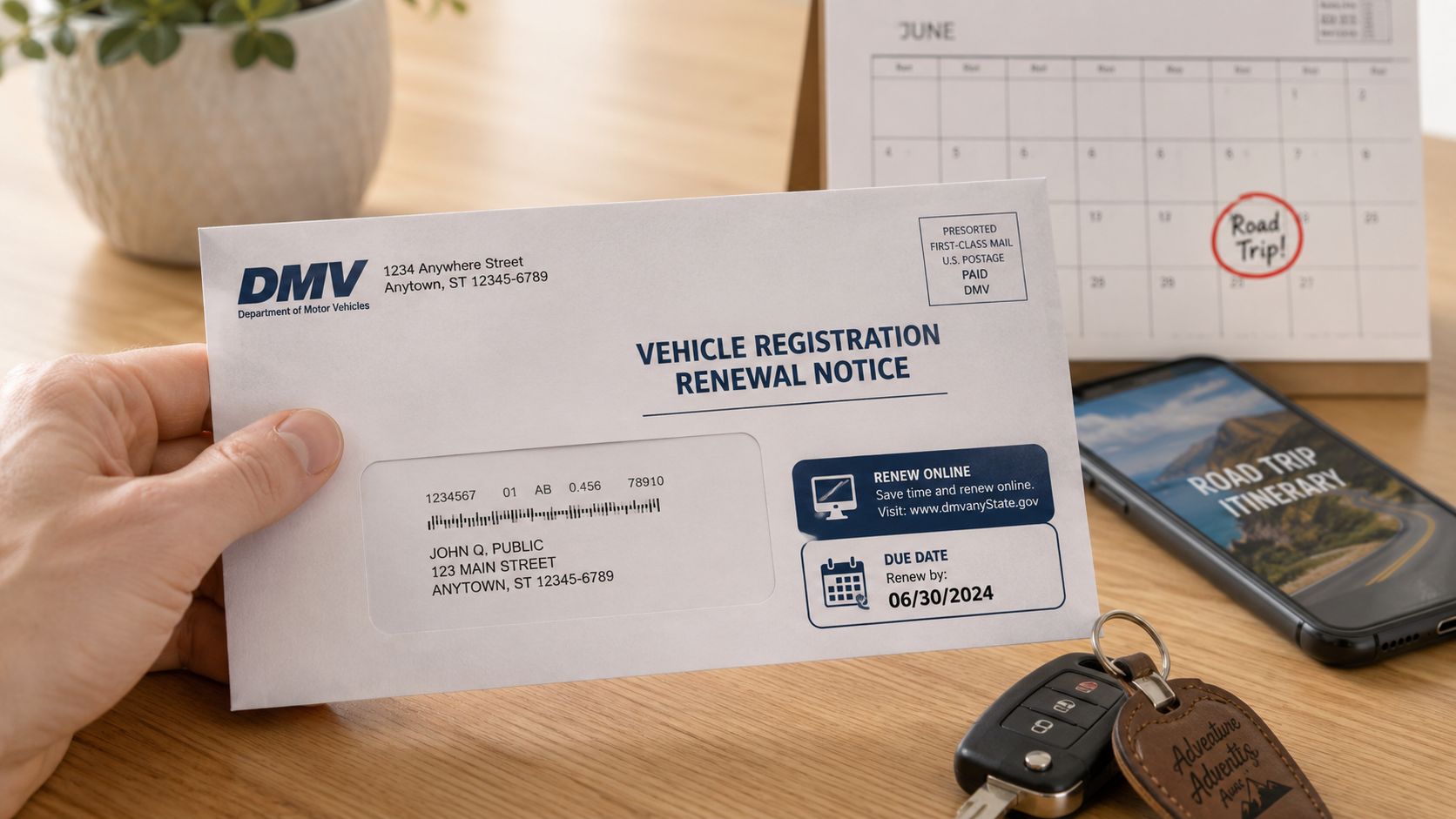
In California, late renewal is common enough that it shouldn't surprise anyone. As of 2013 to 2014, 23% of California drivers renewed late, and 5% of vehicles failed to renew entirely, according to local reporting on California registration delays. A big reason is that some drivers aren't eligible to finish online or by phone because unpaid parking tickets or other delinquencies block the easy options.
That matches what East Bay drivers run into in real life. The notice arrives, they think, "I'll handle this online tonight," and then the DMV system says no. Now it's not a quick errand anymore.
What that envelope usually means
The notice is really just a checklist in disguise. It tells you:
- whether your vehicle needs a smog certification
- when your renewal is due
- how much the state is asking you to pay
- whether something on your record may stop a fast renewal path
If the notice mentions smog, that's your first move. Not your second. Not after you try to pay online. If there's a hold, that has to be dealt with before the registration renewal process will move cleanly.
Local reality: Most renewal stress comes from doing the right steps in the wrong order.
Drivers around San Leandro and Oakland also tend to underestimate timing. A weekday task can spill into the weekend fast if you need emissions testing, insurance verification, or hold resolution. That's why it helps to start with a plain-English read of the notice and use a practical DMV notice guide like this East Bay resource on reading a DMV notice for smog and renewal.
Once you know what the state is asking for, the process gets a lot less mysterious.
Decoding Your Renewal Notice and Preparing Your Documents
The notice itself isn't hard to read once you know where to focus. The problem is that individuals often scan the price first, then skip the lines that govern the process.
What to read first on the notice
Start with the due date. That's the one detail you can't negotiate with. Then look for any wording that tells you a smog certification is required. If you see that, treat the smog check as the gatekeeper for everything else.
After that, look for anything that suggests a problem with eligibility. If your record has an issue, the notice may point you toward a less convenient renewal path. That's where drivers lose time, especially if they assumed online renewal would work automatically.
A simple way to read the notice is this:
- Deadline first. Know how much runway you have.
- Smog requirement second. If it's listed, handle that before payment.
- Fee total third. Important, but not the first thing to solve.
- Restrictions last. Any mention of a hold or special instruction matters.
What to gather before you do anything
Don't overcomplicate this part. Most drivers just need a small stack of basics ready before they start the registration renewal process.
- Your renewal notice: Bring it with you. It contains the details tied to your vehicle record.
- Current proof of insurance: Make sure it's active and matches what the DMV expects from an approved insurer.
- Your driver's license: You may need it for identity verification or in-person handling.
- Your vehicle information: Keep the VIN handy. Some renewal paths require the last five digits.
If you're hoping to renew online, the state also expects a valid insurance record on file and, when applicable, a smog certificate already transmitted to DMV records. Missing one piece is often enough to kick you out of the fast lane.
Bring the renewal notice to the smog station. It reduces mix-ups and gives the technician the exact vehicle details tied to your renewal.
Vehicle prep that saves failed smog attempts
This is the part many people skip, and it costs them.
According to the California Bureau of Automotive Repair smog check guidance, vehicles with modified software need to be restored to manufacturer settings or have California Air Resources Board approval before testing. Non-approved software causes an automatic failure. The same source notes that if your battery was recently disconnected or replaced, you may need to drive the vehicle for 1 to 2 weeks so readiness monitors can reset. It also states that 30% of drivers who fail do so because of incomplete monitor errors rather than true emissions faults.
That tells you something important. A failed smog doesn't always mean your car is dirty or broken in a major way. Sometimes the car isn't ready to be tested yet.
Before you schedule the inspection, check these practical points:
- Battery work happened recently: Give the car enough normal driving time to reset monitor status.
- Software tune or modification installed: Return it to a compliant setup before the test.
- Warning lights on the dash: Don't assume it'll be fine. Have the issue checked first.
- Old paperwork missing: Find your renewal notice before leaving home.
A little prep here is worth more than rushing the appointment.
The Smog Check Guide for San Leandro and Oakland Drivers
For many East Bay drivers, the smog check is the step that decides whether the whole renewal goes smoothly or turns into a chain of delays.
If your notice requires smog, don't treat it like a side errand. Treat it like the hinge point. Until that certification is properly transmitted, your registration renewal process isn't really moving.
Why the smog step controls the whole timeline
California doesn't just want you to pass a test. For renewal purposes, the smog certificate must be electronically transmitted to the DMV, and it's valid for 90 days from issuance, according to this California smog and DMV renewal timing guide. The same source says a common mistake is attempting online payment immediately after the test, even though DMV servers require a 48-hour latency window to update. It adds that ignoring that delay results in a 15% to 20% failure rate for immediate online transactions.
That's one of the most annoying parts of the system because your test can be complete and valid, but the DMV database still isn't ready to recognize it.
For some drivers, the renewal notice will also specify a STAR Certified station. If it does, don't ignore that wording. Use the right type of shop from the start or you'll just create another trip for yourself.
What makes a smooth smog visit
A smooth visit usually comes down to preparation and using a station that handles DMV-related testing all day long. Around San Leandro and Oakland, drivers generally want three things: speed, clear communication, and confidence that the result is transmitted correctly.
The practical checklist is short:
- Bring the renewal notice: It helps the station match the test to the correct vehicle record.
- Make sure the Check Engine light is off: The same renewal timing guide notes that if the light is on, the vehicle will fail automatically.
- Use the station listed type required by your notice: If STAR is required, don't guess.
- Don't plan to pay the DMV immediately after the test: Build in the system update delay.
For East Bay drivers trying to keep this simple, a local resource like this guide to smog check registration renewal in San Leandro can help you line up the sequence correctly before you leave home.
A fast smog appointment only saves time if the car is ready and the DMV record updates cleanly afterward.
One more point that matters locally. A lot of Oakland and San Leandro drivers try to squeeze renewal errands into a lunch break or before school pickup. That can work for the inspection itself. It usually doesn't work if you're expecting the DMV payment portal to recognize the smog result right away.
The delay that catches East Bay drivers
This is the quiet trap in the process. You pass the smog, get back in the car, pull out your phone, log into DMV renewal, and get an error. The natural assumption is that something went wrong at the station. Often, nothing went wrong. The data just hasn't landed in the DMV system yet.
A similar issue shows up outside California too. Boulder County tells drivers to wait 24 hours after an emissions test before renewing online or at a kiosk, stating, “After successfully completing the emissions test, please wait 24 hours for the emissions test to be updated online or at an MV Express kiosk,” as noted in Boulder County's renewal guidance. Different states use different systems, but the practical lesson is the same. Immediate renewal attempts can fail because the update window hasn't closed.
That timing issue is why patience saves more time than rushing.
A short visual walkthrough helps if you like to see the process in action:
When drivers follow the order correctly, the smog step is usually manageable. When they improvise, it becomes the part they complain about for the rest of the week.
Choosing Your Renewal Method Online Mail or In Person
Once the smog requirement is handled and any timing delay has passed, you still have to pick how you'll finish the renewal. This choice is often made based on habit instead of what fits their situation.
Some drivers want the fastest path. Others want a paper trail. Others don't have a choice because a hold or mismatch is forcing them into manual handling. There's no single best method for everyone.
Vehicle Registration Renewal Methods Compared
| Method | Speed | Convenience | Best For |
|---|---|---|---|
| Online | Fast once your record is fully eligible | High | Drivers with no hold, current insurance on file, and a completed DMV update after smog |
| Slower but straightforward | Medium | Drivers who prefer paper records and aren't in a rush | |
| DMV kiosk | Fast when available and eligible | High | Drivers who want a middle ground and like getting materials without waiting for mail |
| In person | Slowest for most people | Low to medium | Drivers with holds, title questions, or record issues that need human review |
How to choose based on your situation
Online is usually the cleanest option when everything lines up. If your insurance is current, your smog is already reflected in DMV records, and there isn't a hold, this is the easiest way to finish the registration renewal process. The catch is that online renewal is unforgiving. If one requirement isn't in place, the system often just rejects the attempt without much nuance.
Mail works better than people think, especially if you don't need the sticker immediately. It's not glamorous, but it gives some drivers peace of mind because they have copies, envelopes, and a more traditional paper trail. The downside is obvious. You're waiting on processing and delivery rather than solving it the same day.
DMV kiosks are often the underrated option. They can be a very good fit for drivers who want something quicker than mail and less involved than a full branch visit. They aren't magic, though. If your DMV record isn't ready, the kiosk won't fix the underlying problem.
In person is the fallback for the tricky cases. If you've got a hold, unresolved notice issue, or something that doesn't match in the record, a branch visit may be unavoidable. Nobody picks this option because it's fun. They pick it because the easier channels won't complete the transaction.
A few decision rules make the choice easier:
- Choose online if: your record is clean and you want the least friction.
- Choose mail if: you value documentation and can wait.
- Choose a kiosk if: you want a quicker physical transaction without a branch line.
- Choose in person if: the system is blocking you and you need someone to review the file.
If you're still trying to decide after the smog step, this local page on DMV smog check near me and registration renewal options gives a practical look at how East Bay drivers usually sequence the process.
If the easy methods keep failing, stop retrying the same thing. That's usually a sign you have an eligibility issue, not a browser issue.
The right method is the one that matches your record, your timing, and your tolerance for waiting.
Understanding Fees and Resolving Registration Holds
The amount due is the part that gets the strongest reaction. A lot of drivers expect a single flat registration price and get irritated when the number looks much higher than they had in mind.
Why the amount can feel all over the map
California registration renewal fees are made up of multiple charges, not one simple fee. According to this breakdown of California registration fee components, renewal fees typically range from $100 to $500 or more. The same source explains that the Vehicle License Fee is approximately 0.65% of the vehicle's current value, and that a base registration fee averages around $60, with a $28 CHP fee, local transportation fees ranging from $10 to $40, plus transportation improvement fees that vary by vehicle age.
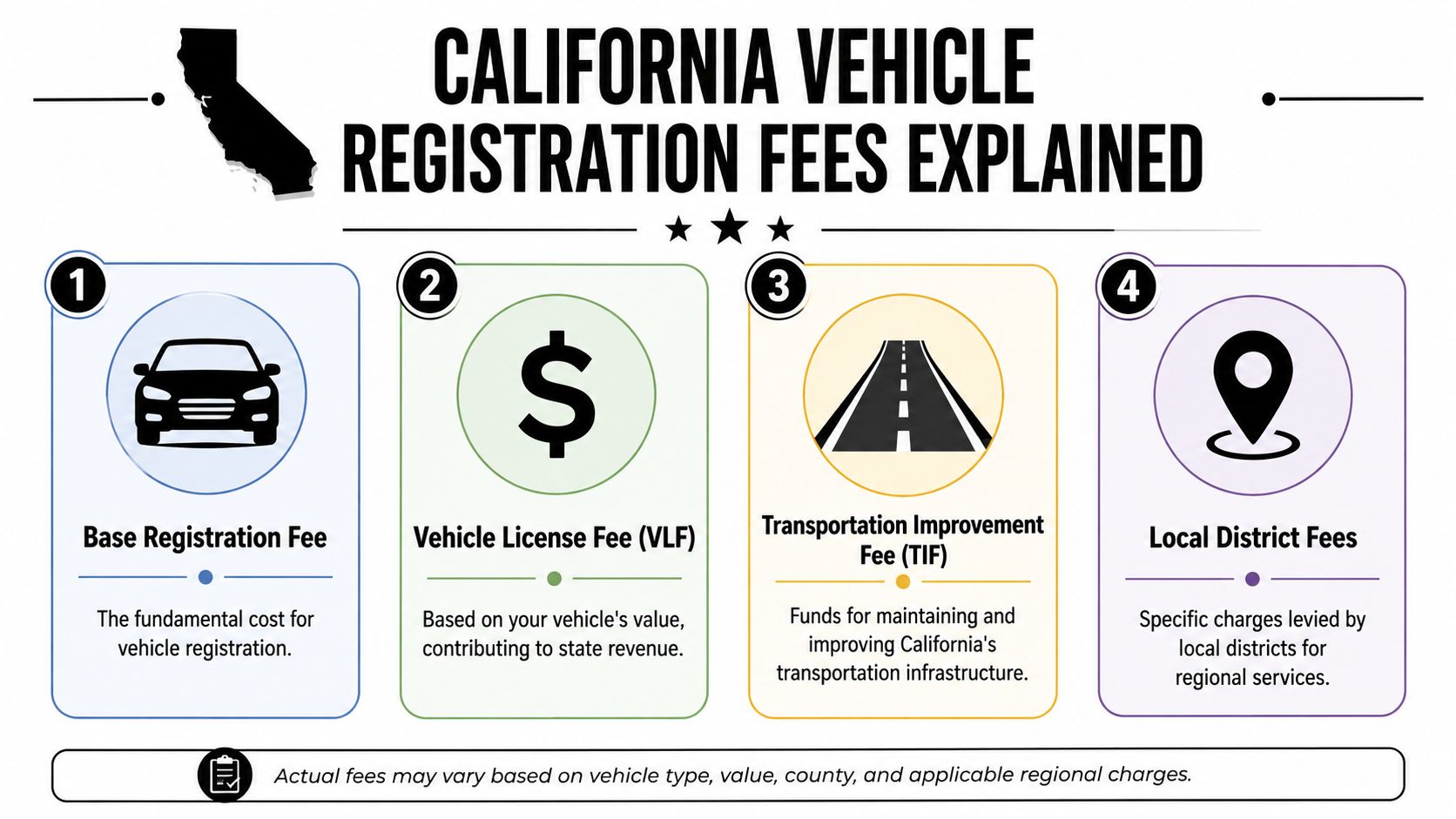
That explains why two neighbors with similar-looking cars can have very different renewal bills. Vehicle value matters. County and local charges matter. The fee total isn't random. It's layered.
What a registration hold usually means
The number on the notice isn't always the main issue. Sometimes the actual problem is a hold tied to the vehicle or owner record. In practical terms, a hold means the DMV isn't ready to let you complete the renewal through the easy channels.
Commonly, a hold points to unresolved obligations such as parking citations, toll matters, or other delinquencies that have to be cleared first. When that happens, drivers often waste time trying the online system again and again, hoping it suddenly works. It usually won't.
Your best move is to identify the agency behind the hold and resolve that issue directly. That may mean paying the underlying balance, obtaining a release, or waiting for the update to post before trying the renewal again.
A few realities help here:
- The DMV usually isn't the root cause: It may be enforcing a block placed by another agency.
- Paying registration alone won't fix it: The hold has to clear.
- In-person handling may be necessary: Not every blocked renewal can be solved online.
Practical rule: If the notice or DMV system points to a hold, solve that first. Every other step is secondary until the block is gone.
One more thing about costs. The Vehicle License Fee functions like a property tax on the vehicle, which is why newer or more valuable vehicles usually cost more to renew. That part frustrates drivers, but once you understand what you're being charged for, the amount becomes easier to verify and less mysterious.
Troubleshooting Common Issues and Final Steps
By this point, most of the hard part is done. The last stretch is usually about clearing small problems without overreacting.
Quick answers for last minute problems
I passed smog and the DMV still won't let me renew online.
Wait and try again later if you tested very recently. System timing is a common issue. If enough time has passed, check whether your record has another restriction.
My notice says smog is required, but I want to renew first and test later.
That usually creates more trouble than it solves. If smog is required for your renewal cycle, handle that item before trying to complete payment.
I replaced my battery and now something feels off in the process.
If the vehicle isn't ready for emissions testing yet, the problem may be monitor status rather than a major mechanical fault. Give the car normal driving time if needed before testing.
The fee seems wrong.
Read the notice carefully and look for the separate fee components rather than assuming it's one flat amount. Value-based and local charges can change the total.
Online keeps failing and I don't know why.
Stop repeating the same attempt if the result doesn't change. Check for record holds, insurance mismatches, or timing issues tied to recent smog transmission.
What do I do after payment goes through?
Keep your confirmation. When your registration card and sticker arrive, put the card in the glove box and affix the sticker correctly to the plate. If you used a kiosk, you may receive materials right away. If you renewed by another method, you'll need to wait for delivery.
The California registration renewal process gets easier once you stop treating it like one transaction and start treating it like a sequence. Read the notice carefully, handle the blockers in order, and don't rush the parts that depend on DMV system updates. That's how you keep a small chore from becoming an all-day East Bay headache.
If your renewal notice says smog is required, Speedy Smog is a solid local choice for East Bay drivers who want the emissions step handled quickly and correctly. As a STAR Certified station in San Leandro, they focus on the part of the registration renewal process that causes the most delays, and they do it with the kind of straightforward service people appreciate when DMV deadlines are hanging over them.