
CA Emissions Testing Requirements: A Complete 2026 Guide
The envelope shows up, or the registration email lands in your inbox, and one phrase jumps out fast: Smog Certification Required. For a lot of East Bay drivers, that's the moment the questions start. Do you need a test right now? What does the shop do to your car? If something fails, are you stuck?
The good news is that California's emissions testing requirements are usually much simpler than the paperwork makes them sound. Most of the stress comes from not knowing the rules, not knowing what happens during the inspection, or not knowing what to do if a notice says something unfamiliar like STAR Station Required.
If this is your first time dealing with smog, or you just want the quickest path from DMV notice to registration renewal, a little clarity goes a long way. The process is meant to verify that your vehicle isn't putting out excessive pollution, and for most drivers, it's a short stop with a clear result.
Table of Contents
- Your Guide to California Smog Check Rules
- Determining If Your Vehicle Needs a Smog Check
- What Happens During a Smog Inspection
- Why Your DMV Notice Might Say STAR Station Required
- Simple Prep Tips to Help Your Vehicle Pass
- Next Steps After a Failed Emissions Test
Your Guide to California Smog Check Rules
Most drivers don't spend much time thinking about emissions rules until the DMV makes it their problem. That's normal. Smog requirements sit in the background until renewal time, a vehicle sale, or a move from out of state brings them front and center.
California's system can feel local and bureaucratic, but it's part of a much bigger push to clean up vehicle pollution. Around the world, governments have tightened testing methods and emissions limits. China's Stage 6 standards are described as among the world's most stringent, and a 2021 UN regulation created a harmonized method for testing heavy vehicles globally, including lifetime monitoring of pollution levels throughout a vehicle's operating life, as described by Automotive IQ's overview of global emissions regulations.
That global context matters because it explains the basic “why.” Smog checks aren't just a DMV hoop. They're one way states make sure vehicles still operate cleanly after years on the road.
What California drivers usually need to know
For most East Bay drivers, the practical questions are much smaller:
- Do I need a smog check now
- What kind of station does my notice require
- What happens during the inspection
- What should I do before I show up
- What are my options if my car fails
Practical rule: Start with the DMV notice, but don't stop there. Once you understand the trigger behind that notice, the rest of the process gets much easier.
The smog check itself is usually straightforward. A technician verifies that the emissions system is present and functioning, checks your vehicle's computer where applicable, and submits the result electronically if the vehicle passes. That's why drivers who prepare ahead of time usually have a much smoother experience than drivers who show up with a check engine light on and hope for the best.
Determining If Your Vehicle Needs a Smog Check
A lot of confusion starts with one wrong assumption: that every car needs a smog check every time registration comes up. That isn't how it works. The key question is what event triggered the requirement.
The situations that usually trigger a test
In everyday California driving, three situations commonly lead to a smog requirement:
Registration renewal
Many vehicles are brought in when registration renewal comes due and the DMV requests certification.Transfer of ownership
When a vehicle changes hands, a smog certificate is often part of the process.First California registration for an out of state vehicle
If you recently moved and brought a car with you, the state may require a smog inspection before registration can be completed.
That's the broad picture. Your DMV paperwork is still the deciding document, but understanding the trigger helps you avoid guessing.
California Smog Check Requirements at a Glance 2026
| Situation | Smog Check Required? | Notes |
|---|---|---|
| DMV registration renewal notice says certification is required | Usually yes | Follow the notice instructions and complete the inspection before renewal deadlines |
| You're selling or buying a used vehicle | Often yes | Check the transfer paperwork and current state rules for the vehicle involved |
| You moved to California with a vehicle from another state | Often yes | Initial California registration commonly triggers the requirement |
| Your vehicle is newer or falls into an exempt category | Sometimes no | Exemptions exist, so verify before scheduling |
| Your notice says STAR Station Required | Yes, at a qualifying station | The test requirement is real, but the process is still a standard smog inspection |
Drivers also get tripped up by timing. They remember a prior test and assume they're covered, or they hear a friend mention an exemption and apply it to the wrong vehicle. If you want a quick refresher on recurring requirements, this short guide on whether a smog check is needed every year helps clear up a common misunderstanding.
One easy point that confuses new residents
California generally ties smog obligations to the vehicle's registration address. But if you've moved recently, it's smart to check the exact local rule set instead of assuming your old state handled things the same way.
That matters because some states use commuter rules that many drivers never hear about. In Colorado, for example, vehicles registered outside the Denver metro program area still need inspection if they're driven into the area for work or school 90+ days a year, according to the Colorado AirCare commuter requirement FAQ. California doesn't use that exact framework in the same way, but the lesson is useful: address alone doesn't tell the whole story when you've recently moved, changed registration, or commute across regional boundaries.
If you're new to the East Bay, don't rely on what applied in your last state. Check the California notice, the registration paperwork, and the actual vehicle status.
What Happens During a Smog Inspection
Most first-timers expect something mysterious. In reality, it's a routine inspection with a set order. You pull in, provide the vehicle details, and the technician works through the required checks.
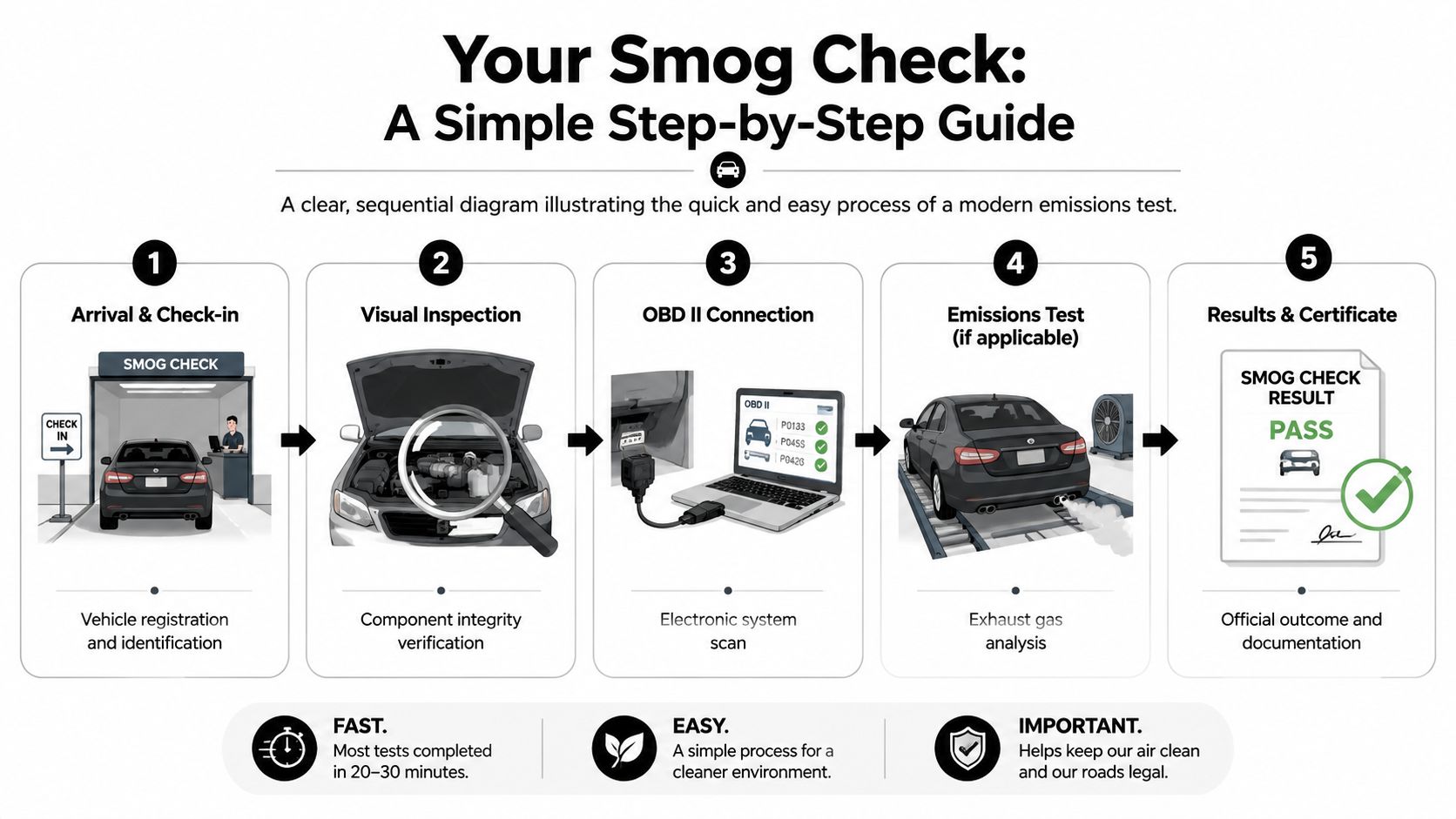
From check in to electronic results
The first part is basic check-in. The shop confirms the vehicle information and matches it to what's needed for the inspection.
Then comes the visual inspection. The technician looks for missing, disconnected, or obviously modified emissions components. If a vehicle left the factory with certain equipment, that equipment generally needs to still be there and appear intact.
After that, many vehicles get an OBD II connection. That means the technician plugs into the car's onboard computer to look for emissions-related trouble codes and monitor status. This is one reason a check engine light is such a big deal. If the car is already reporting an emissions problem, the inspection is unlikely to go your way.
Some vehicles also go through an exhaust emissions measurement procedure. In plain language, the system checks what's coming out of the tailpipe and whether it stays within allowed limits for the test being performed.
What the machine is actually looking for
At idle-style testing, the process can sound technical, but the basics are easy to understand. The engine may be run at a fast-idle speed of 2500 to 3000 rpm and a normal idle speed. In the fast-idle portion, the carbon monoxide limit is 0.2% and the lambda value must stay between 0.97 and 1.03, according to the UK in-service exhaust emission testing standards.
Why does that matter to a driver? Because those numbers give clues about how well the engine is burning fuel and whether the emissions system is doing its job. A poor air-fuel balance, a weak catalytic converter, or another fault can show up in those readings.
Here's the simple version of what the technician wants to see:
- No obvious equipment problems under the hood or underneath
- No active emissions-related computer faults
- Clean enough exhaust output for the applicable test method
A smog inspection isn't trying to “catch” you. It's checking whether the engine, computer, and emissions hardware still work together the way they're supposed to.
For many modern vehicles, the whole process is brief. The final result is typically sent electronically, which helps the registration side move along without extra paperwork from the driver.
Why Your DMV Notice Might Say STAR Station Required
A DMV notice that says STAR Station Required makes some people think their car is in trouble. Usually, it just means the vehicle must be inspected at a station that meets a higher program standard.
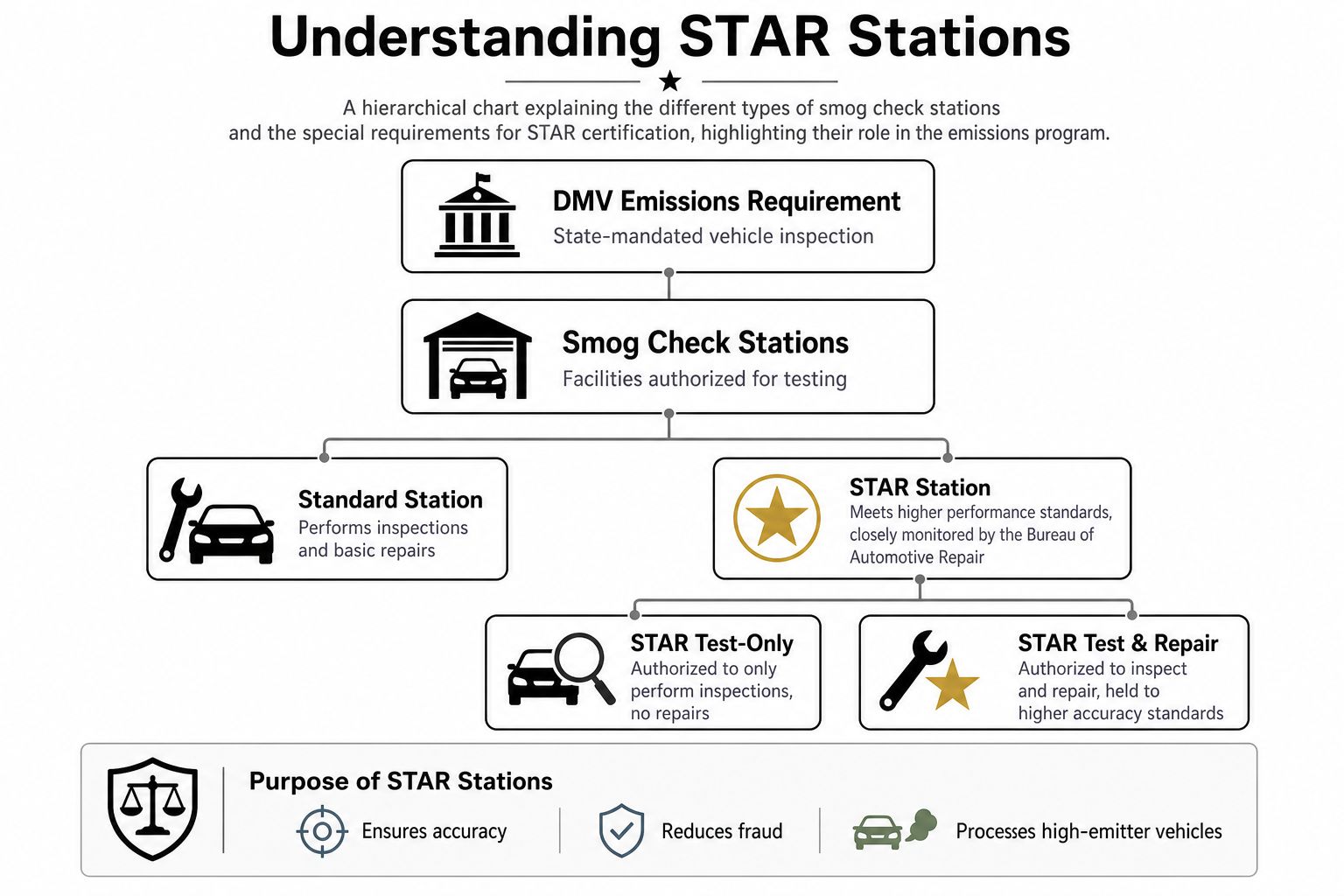
What STAR means in plain English
A STAR station is still doing a smog inspection. It isn't a separate kind of emissions law, and it doesn't automatically mean your vehicle is a gross polluter.
The practical difference is station qualification. These stations operate under stricter performance expectations and oversight. That's why the DMV may direct certain vehicles there.
Drivers are often sent to a STAR station for reasons such as:
- Program quality control where some vehicles are selected for closer oversight
- Vehicle profile factors that place certain models or histories into a category needing a STAR inspection
- Specific DMV notice instructions that make station type part of the requirement
Who can handle the inspection
The key is simple. If your notice says STAR, use a STAR-qualified shop. If it doesn't, you may have more options.
If you want the details in plain language, this explainer on what a smog STAR station is breaks down the station types and what each one can do. One local option is Speedy Smog, a STAR Certified station in San Leandro that performs official smog inspections for vehicles that need that designation.
Some drivers also wonder whether hybrids, diesels, or older cars change the equation. They can, but not in the way people expect. The biggest difference is usually procedure, not whether the law applies at all. Certain vehicles require a different testing path or a station equipped and authorized to handle them correctly.
The words “STAR Station Required” don't mean punishment. They mean the DMV wants the inspection completed at a specifically qualified station.
That distinction saves a lot of wasted trips. Drivers often lose time not because the test is hard, but because they went to the wrong place first.
Simple Prep Tips to Help Your Vehicle Pass
There's no magic trick that guarantees a pass. But there are several common mistakes that cause completely avoidable failures.
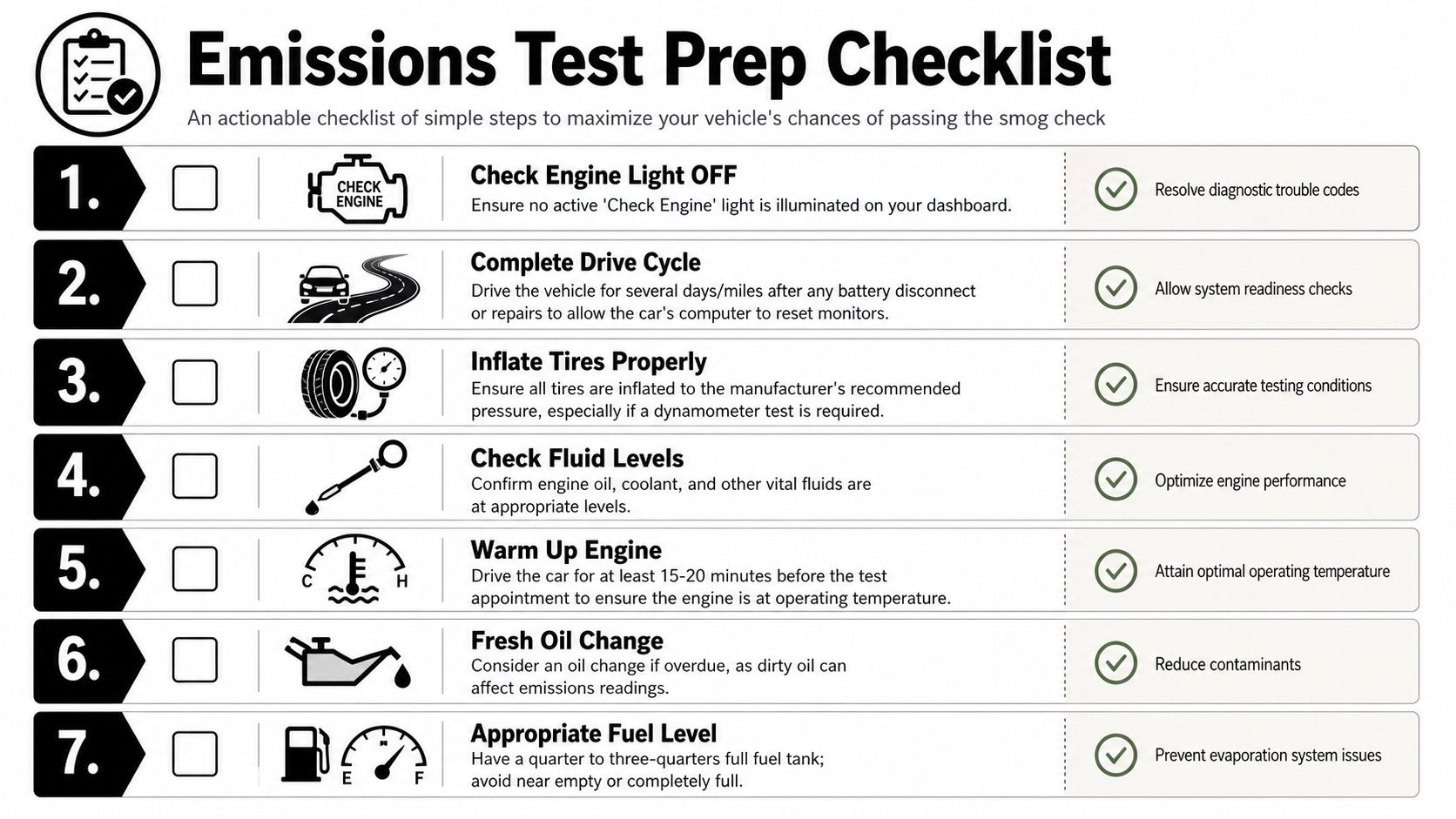
The avoidable reasons people fail
The biggest one is simple: if the check engine light is on, handle that first. Don't spend time or money on a smog inspection before diagnosing it. The light means the vehicle has detected a fault, and emissions-related faults are exactly what the inspection is designed to catch.
Another common problem happens after a battery disconnect or recent repair. The car may run fine, but the onboard monitors may not be ready yet. That can create a failure even when the underlying repair is complete.
A cold engine can also work against you. Cars generally test better when they've been driven long enough to reach normal operating temperature.
A practical pre test checklist
Use this as your pre-appointment routine:
- Look at the dash first. If the check engine light is on, get the cause diagnosed before you book the smog.
- Don't rush in right after battery work. Give the vehicle time to complete its drive cycle and reset readiness monitors.
- Drive the car before the appointment. A normal drive helps warm the engine and emissions components.
- Check basic maintenance. Old oil, neglected tune-up items, and obvious running issues can all hurt your chances.
- Make sure the fuel level is reasonable. Extremely low or completely topped-off fuel levels can create issues for some vehicles.
- Bring the right documents. It keeps the visit moving and avoids easy delays.
If you like a visual reminder, this short video gives a helpful overview before your visit:
One more practical note. Don't treat the smog test as the diagnostic step if your car is already showing symptoms. Rough idle, hard starts, poor fuel economy, or a recent repair history usually mean it's smarter to sort out the mechanical issue first and test second.
Next Steps After a Failed Emissions Test
A failed test feels frustrating, but the report you get is useful. It tells you where to start. The mistake many drivers make is jumping straight into expensive repairs without understanding whether the failure came from a computer monitor issue, a missing component, or a genuine emissions fault.
Read the report before spending money
Start with the Vehicle Inspection Report and read the reason for failure carefully. Then take that report to a qualified repair shop and ask for diagnosis based on the listed issue, not a generic “make it pass” approach.
Your next step usually falls into one of these paths:
- Computer-related issue such as unset readiness monitors after recent battery work or repair
- Emissions system repair involving the catalytic converter, oxygen sensors, evaporative components, or related hardware
- Visual or functional correction where a missing, altered, or malfunctioning component has to be restored
If the failure is minor, the fix may be straightforward. If the car is older and the issue is deeper, you may need to think in terms of repair value, not just repair possibility. For drivers who need another inspection after repairs, a station offering a smog check free retest can make the process easier to manage.
When repairs and waivers get complicated
It is common for people to get bad advice from friends, forums, or random social posts. They hear “just get a waiver” as if it's automatic. It usually isn't.
What matters is documentation, eligibility, and state-specific rules. In some states, drivers must fail twice and show repair bills before a waiver is even considered. The broader takeaway, noted by Illinois Legal Aid's discussion of emissions testing and waiver questions, is that waiver thresholds and repair requirements can be difficult for drivers to evaluate, especially when older vehicles need major work and the financial math isn't obvious.
That same uncertainty shows up anywhere drivers are trying to decide between repairing, retiring, or selling a vehicle. If the repair is modest and the rest of the vehicle is solid, fixing it often makes sense. If the car needs repeated emissions work and has other problems piling up, the right answer may be different.
Don't make the decision based on emotion right after a failed test. Make it after diagnosis, written estimates, and a realistic look at the vehicle's overall condition.
If you need an official California smog inspection for registration, transfer, diesel, hybrid, older vehicle, or a DMV notice that requires a STAR station, Speedy Smog in San Leandro is one local option for East Bay drivers who want a straightforward inspection process without the usual confusion.