

Your renewal notice shows up, you open it, and there it is: smog check required at a STAR station. Most drivers immediately do what you'd expect. They search for a STAR station smog check coupon near me, click a few coupon pages, and assume any place with “STAR” in the name or ad will work.
That's where people waste time.
The key rule is simple: STAR isn't a brand you shop for like a chain restaurant coupon. It's a certification tied to station performance, and your vehicle's requirement matters more than the ad headline. If you understand that one point before you leave home, you can avoid the classic bad trip: driving across town with a coupon that doesn't apply to your car, your model year, or your STAR requirement.
Table of Contents
- Your DMV Notice Arrived Decoding the STAR Smog Check Requirement
- Finding and Vetting Smog Check Coupons for STAR Stations
- Reading the Fine Print Is Your Vehicle Eligible for a Coupon
- Your Pre-Test Checklist for a First-Time Pass
- Redeeming Your Coupon and What to Expect at the Smog Station
Your DMV Notice Arrived Decoding the STAR Smog Check Requirement
A lot of confusion starts with the DMV wording. Drivers see “STAR station required” and think they need to find some special national brand that offers a matching discount. That isn't how California's system works.
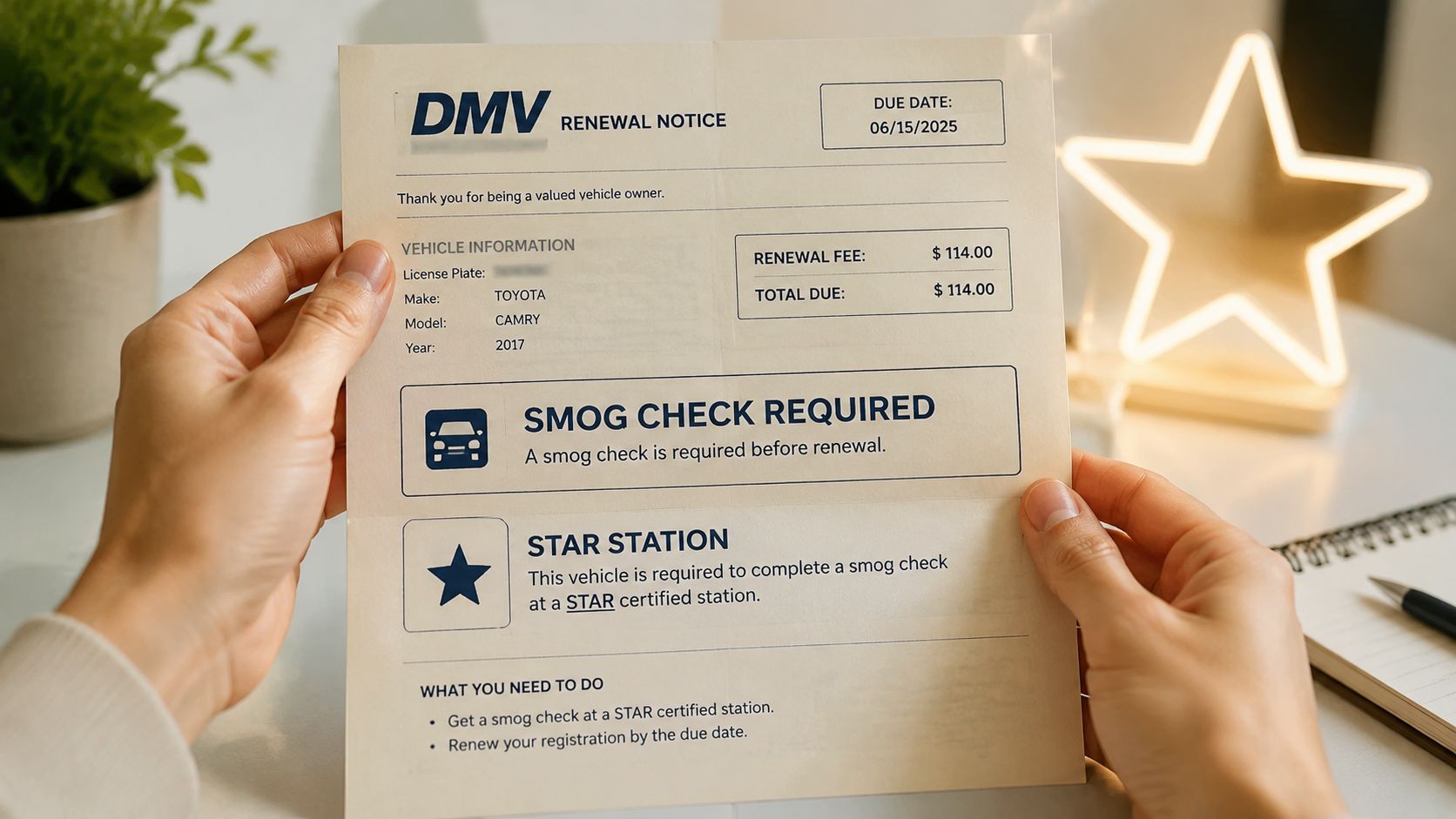
According to California service information on BAR-related services, STAR certification is a Bureau of Automotive Repair assignment based on station performance, not a permanent retail brand you can search for to guarantee a coupon. That one detail explains why so many coupon searches go sideways.
What STAR actually means
A STAR station is a station that meets higher performance standards. California uses the program to direct some vehicles to stations that have stronger testing accuracy and lower failure rates than non-STAR stations. So if your notice says STAR, the safe move is to confirm the station is currently STAR certified and that it can test your specific vehicle type.
If you want a plain-English explanation of the designation itself, this overview of what a smog STAR station is lays it out clearly.
Practical rule: Read your DMV notice first, then look for a coupon. Don't do it in reverse.
Why the misunderstanding costs money
Here's the usual problem. A driver finds a “STAR smog coupon,” assumes that label alone is enough, and heads out. Then one of three things happens:
- The station isn't the right fit for the vehicle on the notice.
- The coupon applies only to certain model years.
- The advertised price leaves out vehicle-type exclusions.
That's why the search phrase STAR station smog check coupon near me is only useful if you treat “near me” as the second filter, not the first. The first filter is whether your notice requires a STAR station and whether the station can process your vehicle without any surprise conditions.
Finding and Vetting Smog Check Coupons for STAR Stations
The fastest way to find a usable coupon is to skip the broad coupon clutter and start with the shop itself. Third-party listing sites can be useful, but they often lead with the headline price and hide the limitations.
One useful fact to keep in mind: approximately 1.9% of vehicles in California are randomly selected for a STAR-certified smog check, and STAR stations are reserved for stronger testing accuracy and lower failure rates, according to this discussion summarizing the California STAR requirement. That means you're not looking at a marketing label. You're dealing with a compliance requirement.
Where to look first
Start with sources in this order:
The station's official website
You're most likely to see current terms, model-year limits, and whether the coupon is tied to STAR service there.The station's business listing pages
Yelp or map listings can help confirm location, hours, and whether the station still handles your vehicle type.Local mailers or neighborhood ads
These can work, but read every condition before you leave.
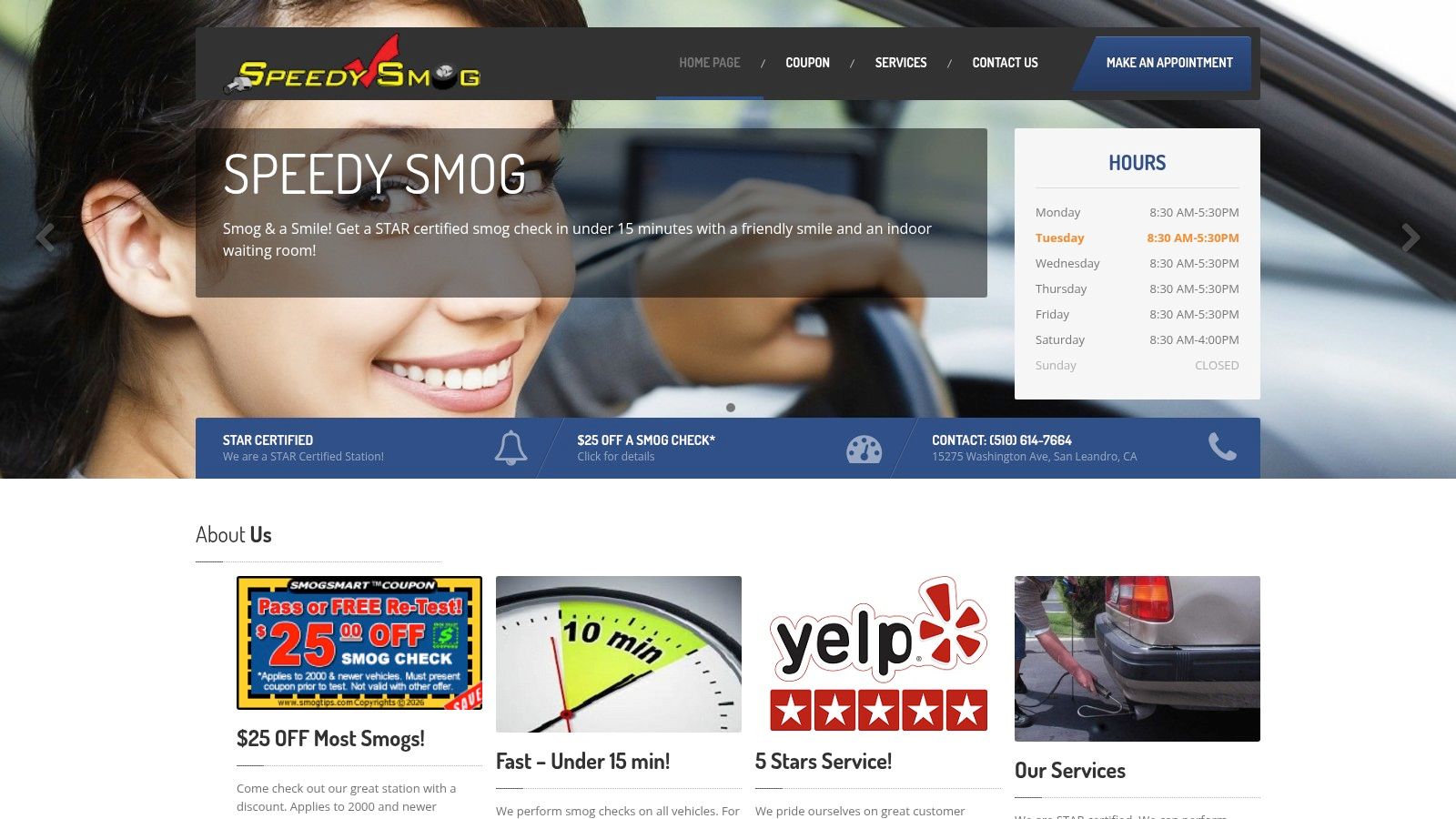
One local option drivers often check is Speedy Smog's San Francisco area coupon page. The point isn't to assume any one station is automatically right. It's to look for current terms on the station's own pages instead of relying on scraped coupon directories.
How to vet a coupon before you drive over
Use a short checklist:
- Confirm STAR status: If your DMV notice says STAR, the station must be STAR certified.
- Confirm vehicle fit: Ask whether they test your model year, diesel, hybrid, or truck.
- Confirm coupon limits: Look for phrases like “most vehicles,” “2000 and newer,” or “plus certificate fee.”
- Confirm what you need to bring: Some places accept a phone screen. Others may want the actual coupon shown at check-in.
A good coupon isn't the one with the biggest headline. It's the one that still applies when your keys are on the counter.
A quick video can also help if you want to see how a local shop presents the process:
What usually does not work
The least reliable move is searching for the cheapest advertised number and stopping there. Drivers do this all the time with the phrase STAR station smog check coupon near me, then show up and learn the deal was written for a narrower category of cars than the ad suggested.
That's why the smartest savings move isn't just “find a coupon.” It's find a coupon that survives contact with your actual vehicle.
Reading the Fine Print Is Your Vehicle Eligible for a Coupon
A common scenario for coupon frustration unfolds. The ad looks simple. The car in your driveway is not.
According to this STAR station coupon overview, many STAR coupon offers exclude older vehicles, diesels, or hybrids, and common advertised pricing often applies to 2000 and newer vehicles at $39.75 to $46.75 with coupons, while 1996 to 1999 models can jump to $76.75+. The same source notes that some listings mention $10 to $30 higher fees for certain vehicle types. If you drive an older car or a non-standard vehicle, that fine print matters more than the headline.
The three details to check first
The biggest pricing differences usually come from these factors:
| Vehicle Type | Typical Price w/ Coupon | Common Exclusions / Extra Fees |
|---|---|---|
| 2000 and newer | $39.75 to $46.75 | Often the main category targeted by advertised coupons |
| 1996 to 1999 | $76.75+ | Older vehicles often excluded from low headline pricing |
| Diesel, hybrid, some trucks | Varies | May have extra fees or require a station that handles that vehicle type |
Why coupon headlines can mislead
A coupon ad can be technically true and still be unhelpful. “Smog check coupon” sounds broad, but it may only apply to a narrow set of gas vehicles in a certain model-year range. If you drive a diesel or older car, the lowest advertised number may never have been available to you in the first place.
That doesn't mean the station is doing anything unusual. It means you need to treat smog coupons like airline fares. The first number you see is the starting point, not the guaranteed total.
Watch for this wording: “Most cars,” “test only,” “plus fees,” and any model-year cutoff.
A better way to read an offer
When you're comparing shops, ask these questions in plain language:
- Does this coupon apply to my exact model year?
- Do you test diesels, hybrids, or older vehicles?
- Are there extra charges not shown in the ad?
- Does this work for STAR-required vehicles?
That two-minute call saves more hassle than any broad coupon search. It also keeps you from making a pointless trip with a discount that disappears at the counter.
Your Pre-Test Checklist for a First-Time Pass
Saving money on the coupon is only half the job. The bigger savings often come from avoiding an avoidable fail.
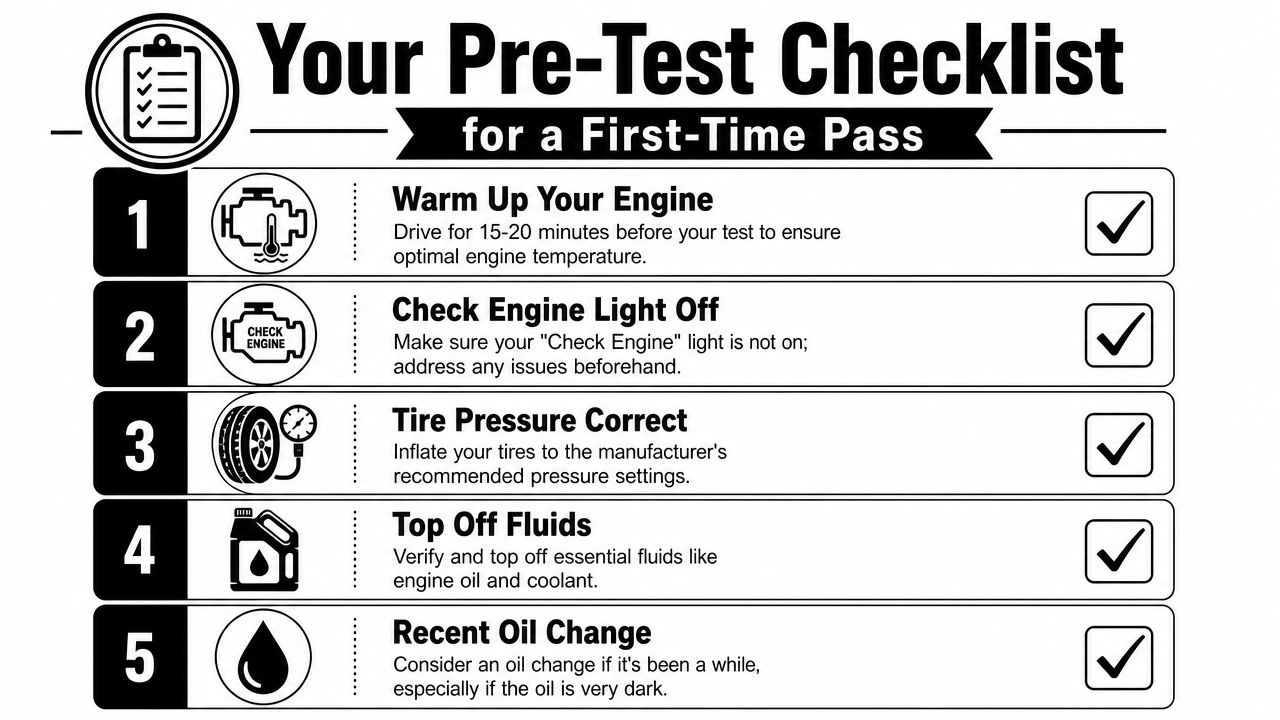
A few basic checks make a real difference before you head to the station. According to the STAR Smog Center FAQ, an illuminated Check Engine or Service Engine Soon light causes an immediate failure, and a loose or damaged fuel cap can also cause failure because of evaporative emissions leaks. The same source recommends driving the car for 15 to 20 minutes before the test so the engine reaches proper operating temperature.
The short checklist that actually matters
Before leaving home, look at these first:
- Check the dashboard: If the Check Engine light is on, deal with that before paying for a test.
- Tighten the gas cap: If it's loose, cracked, or damaged, fix that first.
- Drive the car before the appointment: A short freeway or city drive helps bring the engine up to temperature.
- Open the hood and do a quick visual check: Look for anything obviously disconnected or damaged.
If you want a station-specific prep guide, this page on how to pass a STAR smog test is a useful reference.
Why a warm engine helps
A cold car can give you a rough start to the test process. When the engine reaches normal operating temperature, the emissions system is working under the conditions it was designed for. That's why a quick drive before the test is one of the easiest habits to adopt.
This isn't about gaming the system. It's about showing up with the vehicle in normal running condition instead of rolling in after a short cold start from your driveway.
If you live close to the station, don't leave the house and go straight into the bay. Give the car a real drive first.
Things drivers overlook
Some failures have nothing to do with dramatic engine trouble. People forget the simple stuff.
- A warning light they planned to “deal with later”
- A gas cap that clicks loosely
- A car that's been sitting and hasn't fully warmed up
- Visible under-hood issues they never noticed
A pre-test routine doesn't need to be technical. It just needs to be consistent. If the light is off, the gas cap is tight, and the engine is warm, you've already avoided several common reasons a routine smog visit turns into a repeat visit.
Redeeming Your Coupon and What to Expect at the Smog Station
Once you've found a valid offer and confirmed your vehicle qualifies, the visit itself is usually straightforward. The mistake drivers make here is overcomplicating the final step.
Bring the basics. Have your DMV notice, know whether the coupon is on your phone or printed, and be ready to tell the staff your vehicle year and fuel type if they ask. If the coupon has terms, show it before the test starts, not after the paperwork is already in motion.
What check-in usually looks like
At the counter, the station will typically verify your vehicle information and confirm the type of test required. If your notice says STAR, that's the first thing they need to know. If your car is older, diesel, or hybrid, mention that up front so there's no mismatch between the quoted offer and the actual test.
Some drivers prefer appointments because they want the trip done in one shot. Others are fine with a walk-in if the station handles volume well. Either way, the smoother experience usually comes from calling ahead and confirming two things: your coupon applies and your vehicle type is accepted.
What happens during the visit
A normal smog appointment is mostly a waiting game from the customer side. The station handles the inspection, and you wait in the lobby or designated area until the test is complete. If anything was unclear in the coupon, this is exactly when surprise charges or exclusions tend to show up, which is why the earlier verification matters.
Bring the coupon, mention it early, and say your model year out loud before the inspection begins.
If your vehicle passes, the station sends the certificate electronically to the DMV. That's the end result most drivers care about. You want the inspection completed, recorded properly, and accepted for registration without needing a second trip.
What works better than chasing the absolute lowest ad
The practical goal isn't finding the cheapest-looking number online. It's finding the lowest hassle total cost. That usually means:
- A station that handles your exact vehicle
- A coupon that clearly matches your model year
- A smooth check-in with no argument about the offer
- A vehicle that was prepared before arrival
That's how you turn a search for a STAR station smog check coupon near me into an actual time-saving, money-saving errand instead of a half-day problem.
If you need a local STAR-certified option in San Leandro, Speedy Smog handles DMV smog checks for a range of vehicle types and posts coupon information online. Before you go, confirm your vehicle category, bring your DMV notice, and make sure the coupon terms match your car so the visit stays simple.
With the right coupon, a smog check in the SF Bay Area can cost $40 to $70 instead of the usual $60 to $90 base price. For most newer vehicles, that discounted total usually already includes the mandatory $8.25 state certificate fee.
That matters when the DMV notice lands and you need to get the test done without overpaying, sitting in line forever, or showing up with the wrong coupon for your car. Most drivers don't lose money because smog checks are mysterious. They lose money because they grab the first deal they see, miss the fine print, or arrive unprepared and turn a simple inspection into a retest.
A good Smog Check Coupon San Francisco strategy is simple. Match the coupon to the vehicle, know whether you need a STAR station, and make sure the car is ready before the technician plugs in. That's how locals keep the process cheap, fast, and uneventful.
Table of Contents
- Decoding Smog Check Costs in the Bay Area
- Where to Find Legitimate Smog Check Coupons
- Not All Coupons Are Equal and Why STAR Certification Matters
- Prepare Your Car to Pass on the First Try
- Your Smart Choice in the East Bay Speedy Smog
- Smog Check FAQ for Special Cases
Decoding Smog Check Costs in the Bay Area
That DMV renewal reminder usually triggers the same question first. How much is this going to cost me?
In the Bay Area, a standard smog check usually runs $60 to $90 before discounts, but online coupons and local vouchers often bring the final total down to about $50 to $70, including the certificate fee for most 2000-and-newer vehicles, according to Bay Area Groupon smog listings. In practice, that means full-price shopping is usually the expensive mistake.
What you're actually paying for
A lot of confusion comes from shops advertising one number and then presenting another at the counter. For a standard test, think in two layers:
- Base test price: This is the shop's own charge and it varies.
- Certificate fee: This is the state pass-through fee that gets added when the car passes.
That's why coupon hunting matters. You're not trying to shave off a token amount. You're trying to avoid paying the undiscouted retail rate in one of the most expensive operating markets in the state.
Practical rule: If a shop's advertised deal doesn't make clear whether the total includes the certificate fee, ask before they start.
What works and what doesn't
The cheapest path is usually not “find any coupon.” It's “find the right coupon for the exact vehicle.”
Here's the pattern that works for most drivers:
| Situation | Smart move |
|---|---|
| Newer gasoline car | Check direct shop offers first, then compare with coupon platforms |
| Older vehicle or diesel | Confirm STAR requirement before chasing the lowest ad |
| Busy workday | Pick a high-volume station with a clear online offer |
| Tight budget | Focus on total out-the-door price, not headline discount |
The Bay Area has plenty of deals. The trick isn't finding a coupon. The trick is using one that the shop will honor for your vehicle class.
Where to Find Legitimate Smog Check Coupons
The best coupons usually come from three places. Shop websites, major deal platforms, and old-school local mailers. Each one has its own traps.
Start with the shop itself
A station's own website is often the cleanest place to start because the offer usually matches that location's actual workflow. You can see model-year limits, payment restrictions, and whether the deal applies before or after the certificate fee. For an example of how local stations present online deals, check the current smog check deals page from Speedy Smog.
Here's what that looks like in the wild:
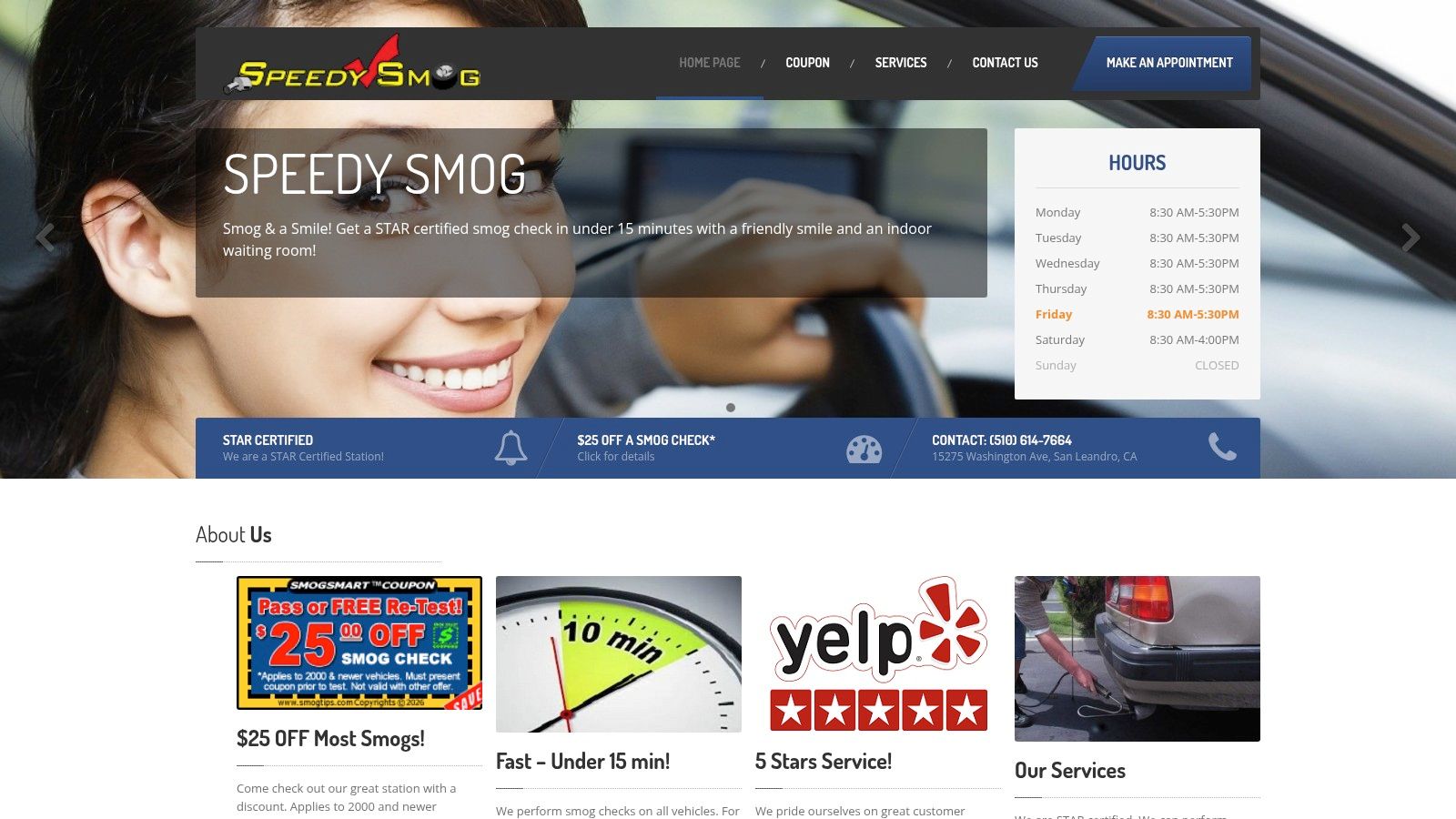
Direct-from-shop coupons tend to be easier to redeem because the shop wrote the terms. That reduces the chance of a front-desk argument over exclusions that were buried on a third-party page.
Use aggregators carefully
Groupon and similar platforms can absolutely save money. They're one reason Bay Area drivers often end up paying less than the posted shop price. But they also reward careful reading.
Look for these details before you buy:
- Vehicle year limits: Many deals apply only to 2000-and-newer vehicles.
- Vehicle type exclusions: Some coupons exclude SUVs, vans, diesels, or larger trucks.
- Appointment rules: A deal may be valid only at certain times or require advance booking.
- Cash-only terms: Some stations offer a lower total if you pay cash and show the coupon first.
Buy the deal only after you've matched it to the car. A cheap coupon for the wrong vehicle is worth nothing at the counter.
Don't ignore mailers and local flyers
Mailers still matter in the Bay Area because some neighborhood stations use them to fill slower hours. They're less flashy than digital deals, but they can be straightforward. The good ones usually spell out the model years covered and whether the certificate fee is extra.
The unwritten rule is simple. If a coupon looks vague, call before driving over. If a shop won't quote a clear out-the-door price tied to the coupon terms, keep looking.
Not All Coupons Are Equal and Why STAR Certification Matters
Most coupon mistakes happen before the car even reaches the bay. The driver assumes all smog coupons are interchangeable. They aren't.
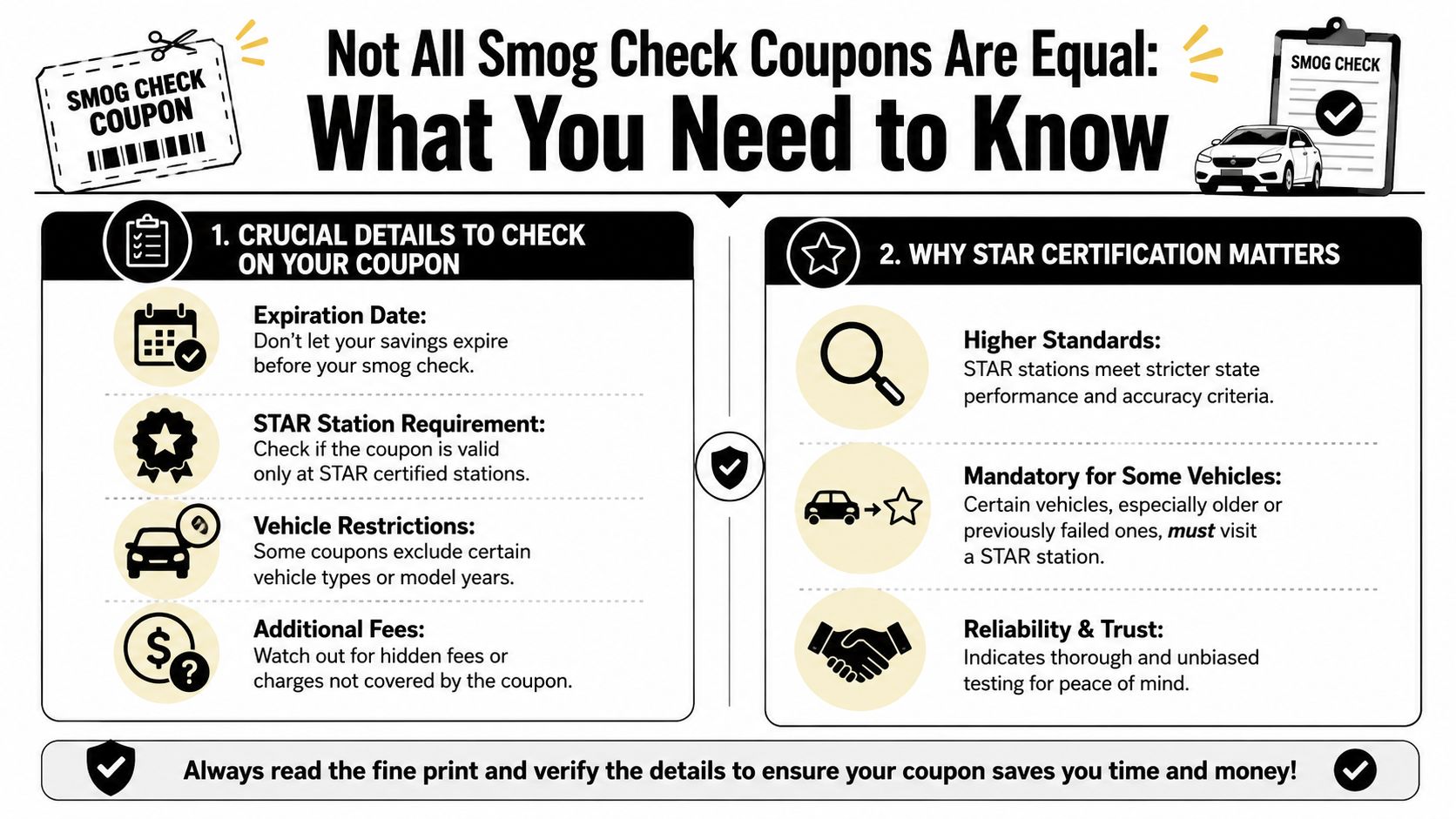
The first question is STAR or regular
If you remember only one screening step, make it this one: Does your car need a STAR station?
STAR-certified coupons are less common than standard coupons in San Francisco, especially for 1999-and-older vehicles, diesels, and high-emitters, as noted by SmogTips' San Francisco station listings. That scarcity is why older-car owners often feel like the cheap deals are always for somebody else.
If you're not sure what a STAR station is, this breakdown of how a smog STAR station works is useful background before you book.
The practical takeaway is that a regular coupon may be a great deal on paper and still be useless for your car. Owners of newer gasoline cars usually have more options. Owners of diesels, older vehicles, or cars flagged for stricter oversight need to screen coupons more carefully.
The fine print that actually changes your bill
A coupon can fail for reasons that have nothing to do with expiration date. The small print often decides whether the deal is real for you.
Watch for these issues:
- Model-year language: “2000 and newer only” is common.
- Vehicle class exclusions: Many low headline-price coupons don't cover SUVs, vans, or larger trucks.
- Fuel type limitations: Diesel and some hybrid-related cases often sit outside the cheapest promos.
- Payment conditions: Some discounts depend on cash payment.
- Pre-test presentation: Some stations won't apply the discount after the inspection has started.
Here's a simple decision filter you can use before you leave home:
| Question | If yes | If no |
|---|---|---|
| Does the DMV notice require STAR? | Shop only for STAR station offers | Standard station offers may work |
| Is the vehicle older or diesel? | Expect fewer coupon options and read exclusions closely | Broader discount pool |
| Does the coupon mention your model year? | Save or print it and bring it in | Keep searching |
| Are the payment terms clear? | Bring the right payment method | Confirm before arrival |
A low advertised price is only a real price if your vehicle qualifies and the shop accepts the coupon under the exact terms shown.
Prepare Your Car to Pass on the First Try
Saving money on the coupon is only half the job. Failing the inspection turns a cheap visit into an expensive one fast.
A modern California smog check for 2000+ vehicles follows a 3-step process: a visual inspection of emissions components, an OBD-II scan for malfunction indicators, and an Idle Test, according to the California Smog Check Program summary.
A quick visual checklist helps before you head out:
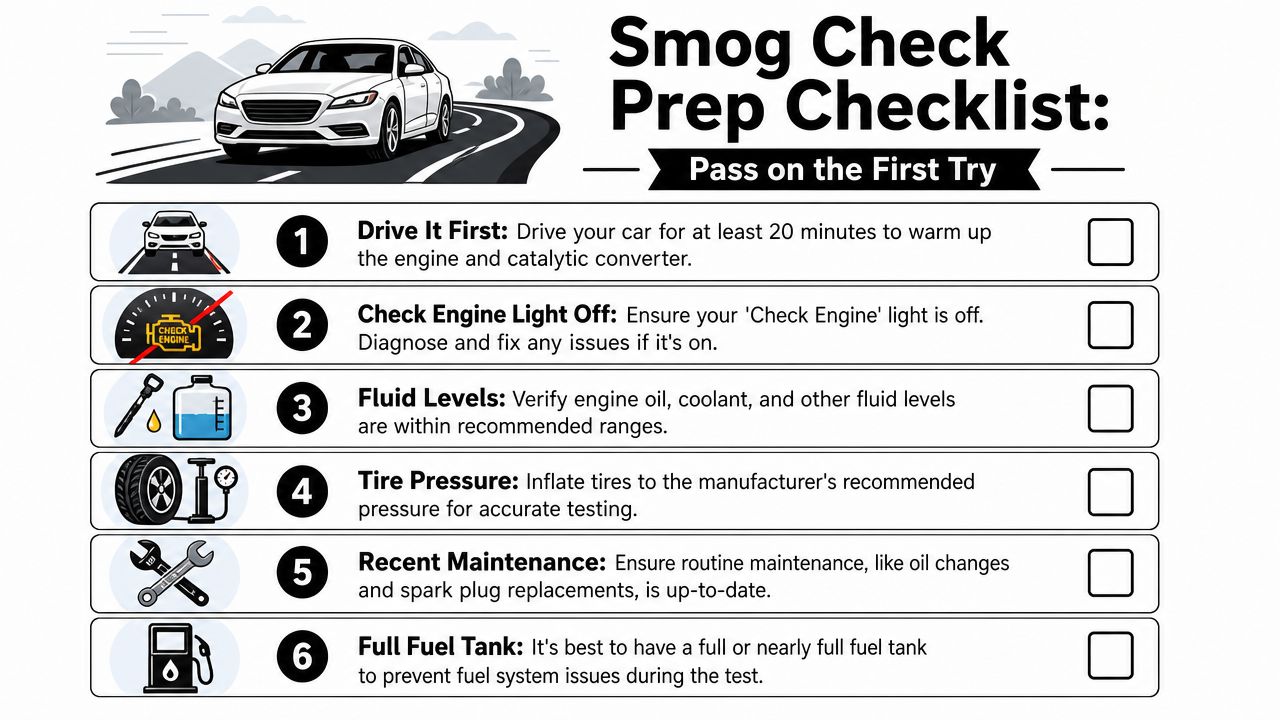
Know what the shop is checking
That three-part process tells you where people usually get tripped up. If the dashboard has a warning light on, if the computer system isn't ready, or if something obvious looks wrong under the hood, the test gets harder than it needs to be.
The easiest way to think about prep is this: arrive with a car that has been driven normally, is fully warmed up, and has no active warning signs. If you've recently had issues, reviewing common smog check fail reasons before your appointment can help you spot a problem early.
A practical pre-test routine
Use a short routine on test day:
- Drive the car first: A normal drive before the visit helps the vehicle reach stable operating condition.
- Make sure the Check Engine light is off: If it's on, don't gamble on the inspection.
- Avoid last-minute battery disconnects: That can reset systems and create readiness problems.
- Bring the coupon before the test starts: Presenting it late often kills the discount.
- Choose a calmer time if possible: Less rush at the station usually means fewer mix-ups and a smoother visit.
The video below gives a helpful visual walkthrough of the process and prep mindset.
Bring your registration notice, your coupon, and the right payment method. The smoothest smog checks usually feel boring, and that's exactly what you want.
Your Smart Choice in the East Bay Speedy Smog
For East Bay drivers, a good station should do three things well. Quote clean prices, handle the vehicle type you own, and move cars through without confusion.
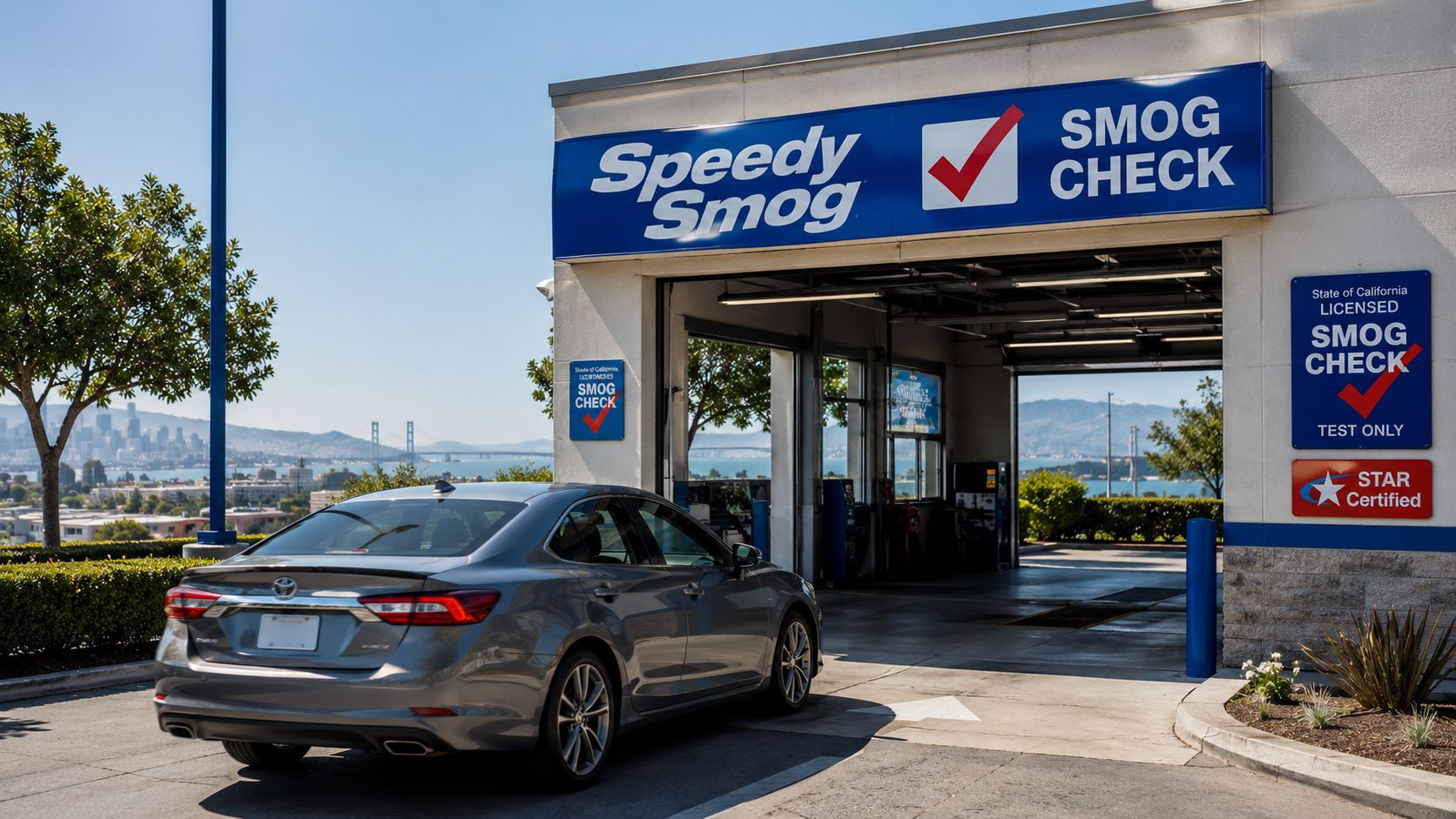
What transparent pricing looks like
A legitimate smog bill has only two real charges: the base test fee and the mandatory $8.25 state certificate fee. Shops can't mark up that certificate charge, which is why STAR Smog Center's FAQ on pricing is a useful benchmark for what transparent billing should look like.
That's the standard worth holding every shop against. If the numbers feel fuzzy, or the offer changes once the car is already in the bay, walk away next time and use a different station.
Why East Bay drivers make the trip
Speedy Smog in San Leandro fits the practical checklist that experienced drivers care about. It's a STAR Certified station, it handles a wide range of vehicles, and it's built around quick inspections rather than drawn-out waiting.
For drivers around San Leandro, Oakland, and nearby East Bay neighborhoods, that combination matters more than flashy advertising. You want a shop that can test the car you have, honor clear pricing, and get you back on the road without making the process harder than it needs to be.
Smog Check FAQ for Special Cases
Some situations need a different playbook.
What if my car is very old
If you own a 1998 or older vehicle and the car is becoming a money pit, there's another option besides chasing repairs and coupons. Starting July 1, 2024, the Bay Area Air Quality Management District launched a program offering $1,500 to Bay Area residents who scrap eligible 1998-and-older vehicles, according to the BAAQMD vehicle replacement announcement.
That won't fit every situation. But if the vehicle's compliance costs are starting to outweigh its usefulness, the scrap incentive is worth looking at before paying for another round of testing and repair.
What if the car fails
First, don't panic. A failure usually means you need to identify the issue, repair it properly, and return for a retest. The expensive mistake is rushing into another test before the underlying problem is fixed.
Ask the station how they handle retests before the first inspection begins. Some shops are more helpful than others about return visits, timing, and what paperwork you should keep.
When does the coupon need to be shown
Before the inspection begins. Not at payment time. Not after the technician has already started.
That single mistake ruins more discounts than people expect. Keep the coupon open on your phone or printed in hand when you pull in, and mention it before anyone touches the car.
If you want a straightforward East Bay option, Speedy Smog in San Leandro is a STAR Certified station that focuses on fast, transparent smog checks with friendly service. It's a strong fit for drivers who want clear pricing, broad vehicle coverage, and a smoother DMV renewal visit without the usual hassle.