
In California, gasoline and hybrid vehicles from model year 1976 and newer generally need a smog check, while 1975 and older vehicles are generally exempt. The DMV renewal notice controls what's required for your vehicle in any given year.
You're holding the renewal notice at the kitchen counter, or you've just bought a used car and the seller says, “It probably doesn't need smog.” That's where confusion starts. The model year gives you the starting point, but the transaction determines the test requirement.
For East Bay drivers, the three situations that matter are registration renewal, ownership transfer, and first California registration. A newer vehicle may skip a routine renewal inspection but still need a test when it comes from another state. An older vehicle may fall inside the program but be treated differently depending on whether you're renewing, selling, or registering it for the first time in California.
Table of Contents
- The Quick Answer Every East Bay Driver Wants
- The 1976 Cutoff and the Big Exceptions
- How the Eight-Year Renewal Exemption Works
- OBD-II Versus the Older Tailpipe Test
- Real Situations That Change the Answer
- What to Do Before You Head to a Smog Shop
- Putting It All Together for Your Next Renewal
The Quick Answer Every East Bay Driver Wants
If you're asking what year cars need smog in California, start with model year 1976. Gasoline, flex-fuel, hybrid, and other qualifying alternative-fuel vehicles from 1976 and newer generally fall under California's Smog Check program. Vehicles from 1975 and older are generally exempt, according to the California Bureau of Automotive Repair's vehicle coverage guidance.
That answer is useful, but it isn't the final answer for your DMV paperwork. Your DMV renewal notice is the authority for what you must do now. It will tell you whether the state wants a smog certificate, a fee during the newer-vehicle exemption period, or another form of compliance.
A 2020 hybrid, for example, is inside the general program because it's newer than the 1976 cutoff. That doesn't mean it needs a smog inspection every time the owner renews registration. Newer vehicles receive an age-based exemption for routine renewal, and the relevant transaction can change the result.
Use this three-question check at the counter:
- Is this a registration renewal? The vehicle's model year and age-based exemption determine when recurring inspections begin.
- Is ownership changing? The change-of-ownership exemption is shorter than the renewal exemption.
- Is this the vehicle's first California registration? An out-of-state vehicle from model year 1976 or newer generally needs a Smog Check for that initial California registration event.
Practical rule: Don't schedule a test based only on the year printed on the title. Read the DMV notice first, then match the test to the transaction.
The rest of the rules make sense once you separate those three situations. The 1976 cutoff tells you whether the vehicle is generally in the program. The renewal and transfer exemptions tell you when a test starts. The registration history tells you whether an exception applies.
The 1976 Cutoff and the Big Exceptions
California's foundational line is simple: 1976 and newer generally means Smog Check territory, while 1975 and older generally means exemption. BAR specifically identifies gasoline and flex-fuel vehicles from model years 1976 through 1999 as generally requiring a Smog Check, with 1975 and older gasoline and flex-fuel vehicles generally exempt. Hybrids and other qualifying fuel types can also fall within the program, so “hybrid” doesn't automatically mean “no smog.”
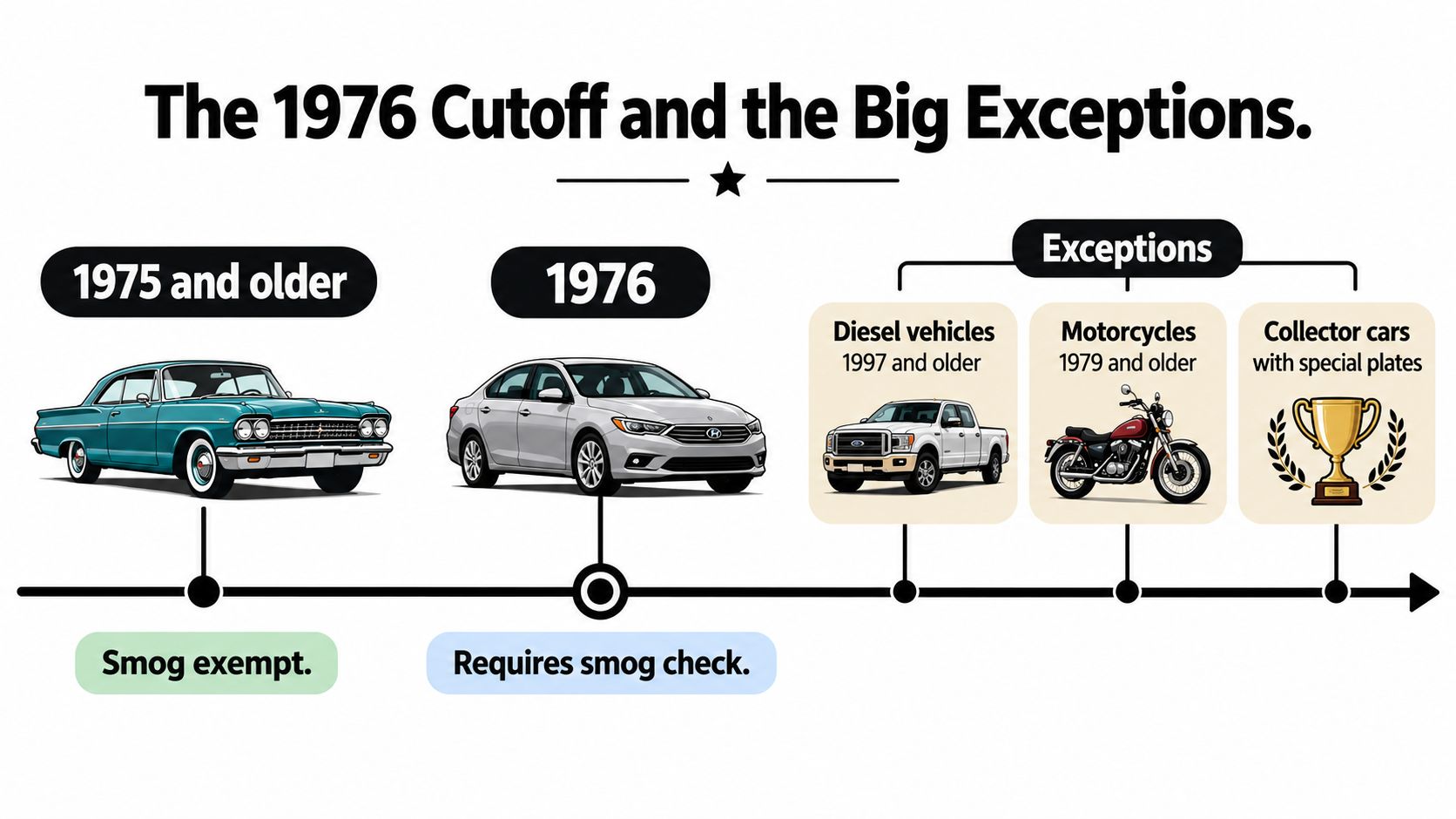
A 1972 Mustang is generally outside the program because it predates the cutoff. An 1985 gasoline sedan is generally inside it, even if it's well maintained and driven only occasionally. The age of the car doesn't move the legal line. Its model year does.
Weight and inspection equipment matter
The standard answer changes when the vehicle falls outside the usual passenger-vehicle category. For 2000-and-newer vehicles with a gross vehicle weight rating of 14,000 pounds or less, California generally uses an OBD-II-based inspection. Vehicles above that weight, or vehicles without the applicable onboard diagnostic system, may follow a different testing path.
That's why I don't give a blanket answer based on the year alone. A heavy vehicle, unusual fuel type, missing diagnostic system, or special registration status can change how the inspection is performed.
The out-of-state exception catches people
BAR states that all out-of-state 1976-and-newer vehicles need a Smog Check for first-time California registration. That requirement can apply even when the vehicle is still within the normal exemption period for a recurring California renewal.
If you've brought a vehicle to San Leandro from Nevada, Oregon, Arizona, or anywhere else, don't assume its previous state inspection carries over. California's first-registration event is its own trigger. For older vehicles, the guidance for smog checks on older cars can help you identify which inspection path may apply.
How the Eight-Year Renewal Exemption Works
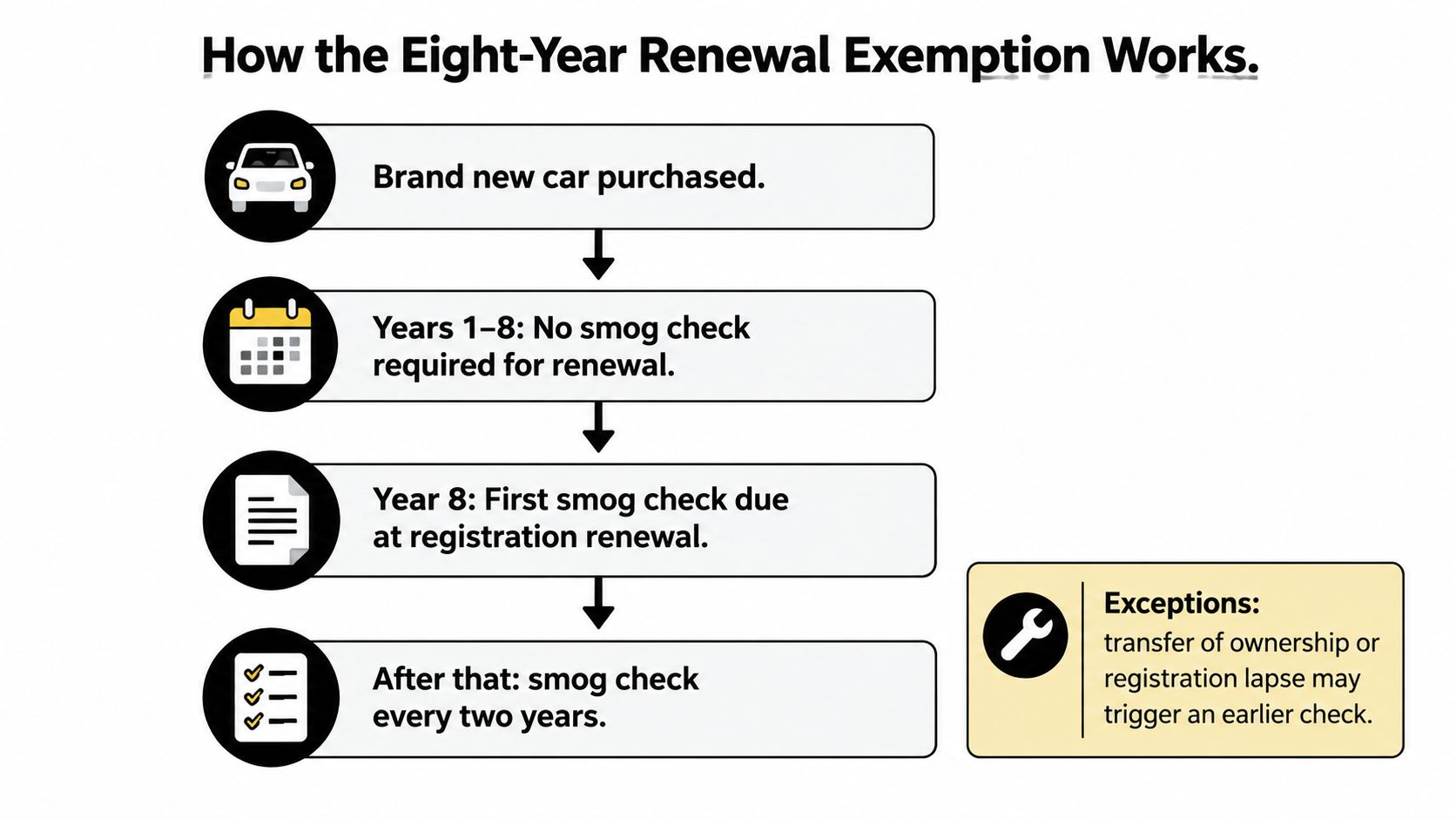
A newer car can be inside California's Smog Check program without needing an inspection at every renewal. For regular registration renewal, BAR says gasoline vehicles eight or fewer model years old are generally exempt from the biennial inspection. During that period, the owner generally pays a smog-abatement fee instead. The BAR renewal exemption guidance explains the practical calculation, add eight to the model year to find the first year a renewal inspection is generally required.
Take a 2020 model-year vehicle. Add eight to the model year, and the first recurring renewal inspection generally arrives in 2028. That's a model-year calculation, not a calculation based on the day you bought the car. The DMV notice still decides what you must complete for the specific renewal.
A 2018 model-year vehicle is already beyond that eight-model-year window. If its registration renewal calls for certification, the owner should plan for a smog inspection rather than assuming the car is still covered by the newer-vehicle exemption.
Renewal and ownership transfer use different clocks
The ownership-transfer rule is shorter. Vehicles four or fewer model years old are generally exempt from the change-of-ownership Smog Check, but the buyer pays a smog-transfer fee instead. BAR's practical method is to add four to the vehicle's model year to identify when that transfer exemption ends.
| Transaction | General age rule | What usually happens |
|---|---|---|
| Registration renewal | Eight or fewer model years old | Smog-abatement fee instead of the routine inspection |
| Ownership transfer | Four or fewer model years old | Smog-transfer fee instead of the transfer inspection |
| Older qualifying vehicle | Beyond the applicable exemption | Certification is generally required for the transaction |
A 2022 vehicle reaches the change-of-ownership threshold in 2026, while a 2018 vehicle is already beyond the four-model-year exemption. Those examples show why a car can avoid a renewal inspection yet still face a different requirement when sold.
For a practical explanation of the newer-car rule, see this guide to a California smog check for new cars. Then look at the paperwork, not just the calendar. An out-of-state vehicle, a registration event, or a transfer can override the assumption that the car is too new to test.
OBD-II Versus the Older Tailpipe Test
The inspection your car receives depends largely on its model year and equipment. California generally uses an OBD-II-based inspection for 2000-and-newer vehicles with a gross vehicle weight rating of 14,000 pounds or less. A technician connects to the vehicle's diagnostic port and checks the emissions computer rather than measuring the exhaust at the tailpipe.
A 1976–1999 gasoline vehicle generally receives the older BAR-97-style tailpipe inspection. That process evaluates emissions coming out of the exhaust, so it measures a different part of the vehicle's emissions system than an OBD-II inspection.
| Model year | Typical test type | What it measures |
|---|---|---|
| 1976–1999 gasoline | BAR-97-style tailpipe test | Exhaust emissions at the tailpipe |
| 2000 and newer, up to 14,000 pounds GVWR | OBD-II-based test | Diagnostic data and emissions-system status |
| Outside the standard category | Different test path may apply | Vehicle-specific emissions requirements |
The failure patterns aren't the same. With an OBD-II test, a lit check-engine light, stored emissions fault, or incomplete readiness information can stop the vehicle from passing. Clearing the battery or a trouble code immediately before testing can also leave the computer without the information it needs to show that its self-checks are complete.
The older test focuses more directly on measured exhaust output. A clean dashboard doesn't guarantee a 1985 vehicle will pass if its actual emissions exceed the applicable limits.
The connector tells the technician what the computer sees. The tailpipe test tells the technician what the engine is actually producing.
Hybrids, diesels, vehicles above 14,000 pounds GVWR, and vehicles without the applicable onboard system can follow different testing rules. Don't choose a shop based only on the assumption that every car receives the same inspection. If you want the technical distinction in one place, review the explanation of OBD versus tailpipe testing.
Real Situations That Change the Answer
An Oakland resident moves back to California with a 2019 SUV purchased and registered in another state. The vehicle may still be within the regular renewal exemption period, but this isn't a routine California renewal. It's the vehicle's first California registration, and an out-of-state 1976-and-newer vehicle generally needs a Smog Check for that event.
That driver should read the DMV registration instructions and schedule the appropriate inspection before assuming the newer vehicle can skip testing. The previous state's inspection history doesn't erase California's first-registration requirement.
A San Leandro driver sells a 2016 sedan to a private buyer. The car is beyond the four-model-year ownership-transfer exemption, so the seller should expect a smog certification requirement for the transfer unless the paperwork or transaction falls under a separate rule. The fact that the vehicle may have passed a previous renewal test doesn't settle the transfer requirement.
That's the distinction people miss at the DMV. The model year sets the default, but the transaction type decides which rule applies.
Three quick counter examples
- A 1972 Mustang: Generally exempt because it's 1975 or older. The owner should still follow the DMV instructions for registration and title paperwork.
- A 2019 out-of-state SUV: Generally requires a Smog Check for first California registration, despite being a newer vehicle.
- A 2016 private-party sedan: Generally beyond the transfer exemption, so certification is generally needed for the ownership change.
The same vehicle can have different requirements at different points in its life. Ask whether you're renewing, transferring, or registering from out of state before asking only what year the vehicle is.
What to Do Before You Head to a Smog Shop
Run through this checklist before driving across the East Bay. It prevents wasted trips and helps the technician identify the right inspection quickly.
- Read the DMV notice. Confirm whether the state wants a renewal inspection, transfer certification, or first-registration test.
- Check the dashboard. A lit check-engine light is a warning sign for an OBD-II vehicle. Have the cause diagnosed before you pay for an inspection.
- Bring the paperwork. Take the renewal notice, registration, title or transfer documents, and any instructions from the DMV.
- Confirm the station type. Some DMV-directed vehicles must use a STAR Certified station. If your notice or vehicle record directs you to STAR, don't use a non-STAR location.
- Ask about preparation. The technician can tell you whether the vehicle needs a particular warm-up or readiness procedure before testing.
Speedy Smog is one San Leandro option for drivers who need a STAR Certified station and inspections for newer vehicles, older vehicles, diesels, or hybrids. Its site also publishes periodic $25-off coupons for most smogs on newer vehicles, so check the current offer before scheduling if your vehicle qualifies.
The practical point is simple: bring the notice and let the paperwork drive the appointment. A shop can inspect the vehicle, but the DMV decides which compliance event you're completing.
Putting It All Together for Your Next Renewal
Remember three anchors. 1976 generally defines which gasoline and qualifying alternative-fuel vehicles are in the Smog Check program. The eight-year renewal exemption and four-model-year transfer exemption determine when newer vehicles generally start needing certification. The transaction, renewal, transfer, or first California registration, determines which rule applies.
Before you book anything, read the DMV renewal notice. That one habit prevents most confusion and keeps you from paying for the wrong type of appointment.
For an East Bay inspection, visit a STAR Certified station such as Speedy Smog in San Leandro, where staff can check the requirement against your paperwork and handle many 2000-and-newer tests efficiently.
Bring your DMV notice to Speedy Smog in San Leandro for a STAR Certified inspection matched to your renewal, transfer, or California registration requirement. The shop handles newer vehicles, older cars, diesels, and hybrids, so you can confirm the correct test before getting back on the road.
East Bay drivers can get their car emissions tested at a California BAR-certified smog check station, and the DMV renewal notice will tell you if a STAR-certified station is required. If you've got that notice in your hand right now, don't guess, use the station type the state tells you to use and save yourself a wasted trip.
That's the answer to where can I get my car emissions tested, and in California the details matter. Go to the wrong shop, show up without the right paperwork, or bring a vehicle that isn't ready, and you'll burn time and money for nothing. I've seen plenty of East Bay drivers come in frustrated because they picked a convenient place instead of the correct one.
Table of Contents
- Who Needs a Smog Check in California
- Understanding STAR Certified vs Standard Smog Stations
- How to Prepare Your Vehicle Before the Test
- What to Expect During Your Smog Check Visit
- Why East Bay Drivers Choose Speedy Smog in San Leandro
- Your Complete Smog Check Action Plan
Who Needs a Smog Check in California
Your DMV renewal notice is the first thing to read, before you check a shop website or head to the nearest station. California requires biennial smog checks for most vehicles in participating counties, plus a smog check at change of ownership and when a vehicle is first registered in California from out of state, as outlined in the official DMV smog check requirements. That puts a lot of East Bay drivers on a deadline sooner than they expect.
Start with the renewal notice
If your notice says you need a smog check, follow it exactly. The notice can also tell you whether a STAR station is required, and that matters because STAR is a compliance tier, not a convenience label. If the notice calls for STAR and you go to a regular station, you can waste an entire trip and still have the same problem.
Practical rule: the DMV notice wins. If it points you to STAR, use STAR. If it doesn't, a certified station that can legally test your vehicle is the right move.
Some drivers do not need a test at all, but only if their vehicle fits an exemption under California's rules. Newer vehicles, electric cars, and motorcycles are commonly handled differently from the standard smog-check crowd, so do not assume every registration renewal means a test. Read the notice, check the vehicle class, and confirm whether you need to do anything before you drive across town.
If you want the state rule summary in one place, use the local guide here: California smog check rules.
Understanding STAR Certified vs Standard Smog Stations
East Bay drivers waste time when they guess at the wrong shop type. California uses test-only, test-and-repair, and STAR-certified stations, and the right choice depends on your vehicle and the DMV notice. If you show up at the wrong category, you still have the same registration problem and you've burned a trip for nothing.
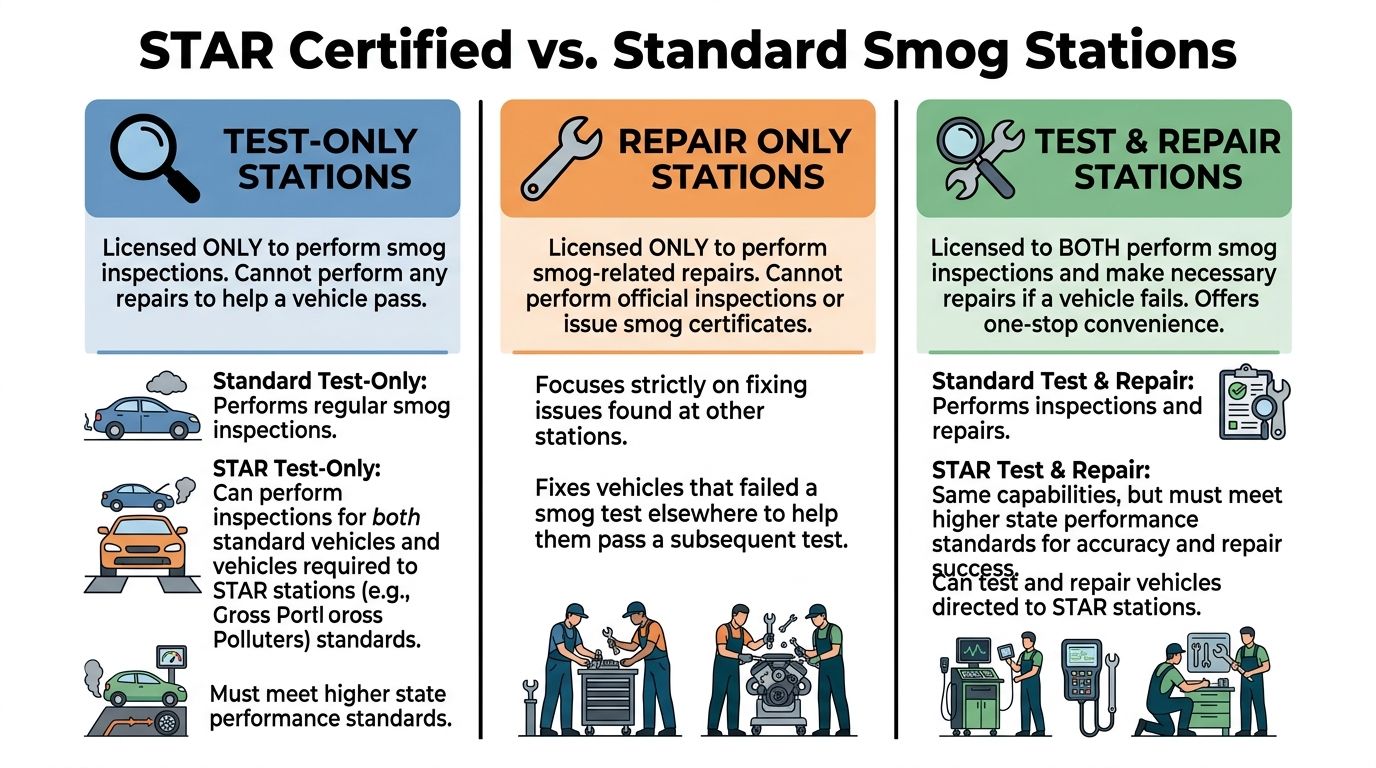
Station Types Explained
A test-only station inspects the vehicle and sends you out with the result. A test-and-repair station can inspect the car and handle repairs, which is useful if the vehicle needs work before it can pass. A STAR-certified station operates under a stricter program inside California's smog system, and the BAR locator shows whether a site is test-only, test-and-repair, or STAR-certified.
The point of STAR is accountability. California puts that tier under tighter oversight, so some vehicles get sent there by rule instead of preference. That is why the DMV notice matters so much. If it calls for STAR, a standard station is the wrong stop.
For a plain-English breakdown of how STAR fits into the local testing setup, use what is a smog STAR station.
Why This Matters in the East Bay
Drivers around the East Bay lose time when they assume every smog shop can handle every case. A shop can be close, fast, and easy to reach, but if it does not match the requirement on your renewal notice, it does not solve the problem. Match the station type before you leave home, and you avoid a second trip, a second wait, and a second fee.
Keep the station category straight, and the rest gets simpler. If your notice points to STAR, go to a STAR station. If it does not, use a certified station that is allowed to test your vehicle, and bring the paperwork the station asks for so the visit stays on track.
How to Prepare Your Vehicle Before the Test
A smog failure is expensive in the dumbest possible way, because many failures start with something small and fixable. Show up with a warm engine, a clean dash, and basic maintenance handled, and you give yourself a much better shot at clearing the test on the first visit. That's the job, not hoping the station will make up for neglect.
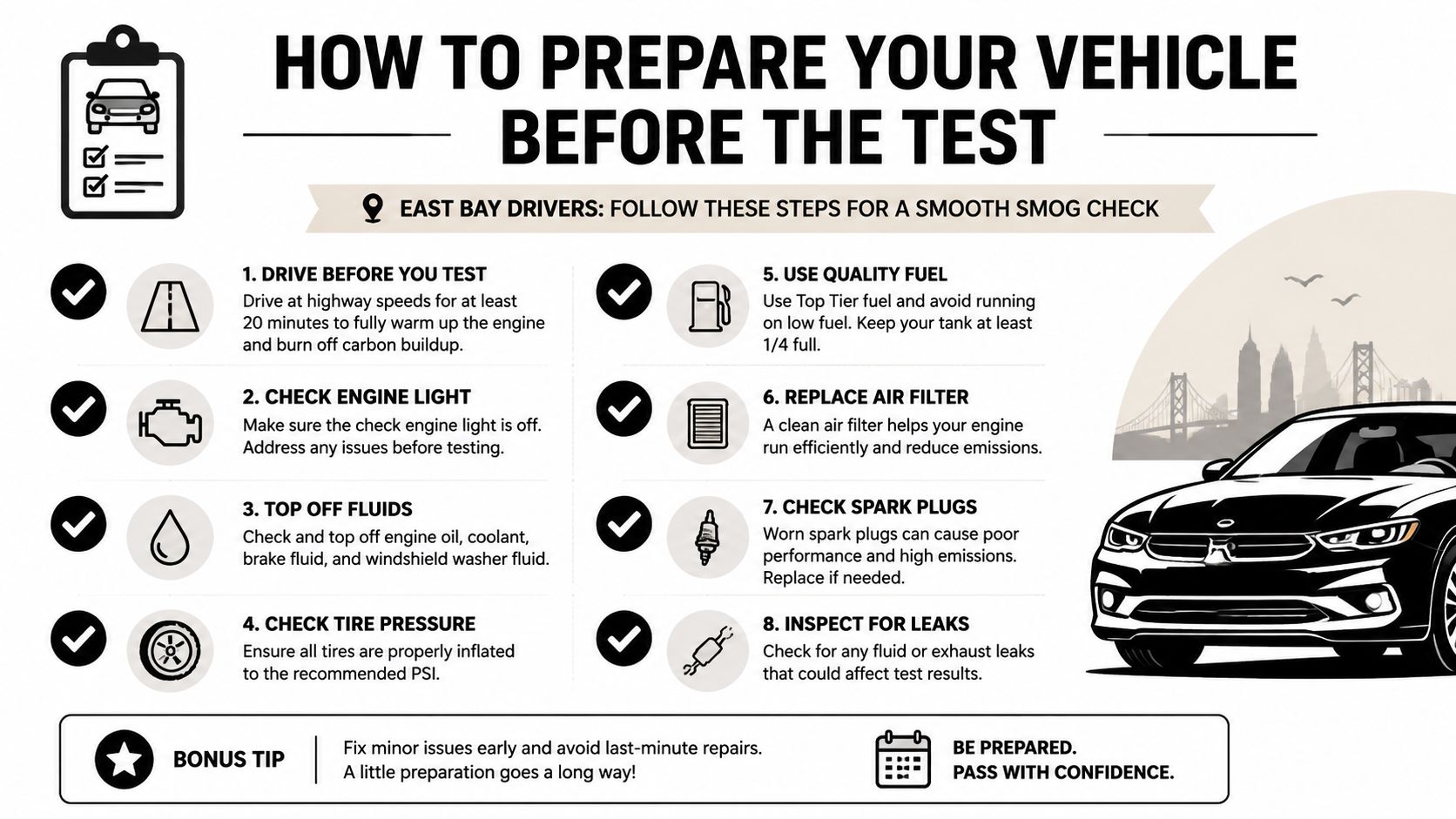
Do the simple stuff first
Drive the car long enough to get it fully warmed up before you arrive. A warm drivetrain and catalytic converter are part of a clean test run, and a vehicle that's been sitting cold all morning is not doing you any favors. If the car has been parked for a while, fresh fuel and a proper warm-up beat rushing straight to the station.
The check engine light has to be off before you walk in. If it's on, fix the underlying issue before you waste a test fee, and if the battery was recently disconnected, give the vehicle time to reset its readiness monitors. A lot of drivers skip that step and then act surprised when the car isn't ready.
Keep the car predictable. Fresh oil, a tight gas cap, and properly inflated tires don't guarantee a pass, but they remove avoidable reasons to fail.
Use this checklist before you leave
- Warm the engine: Drive the car before the test so it's not cold when inspection starts.
- Check the dash: Make sure the check engine light is off.
- Seal the gas cap: A loose cap is a classic avoidable problem.
- Review recent work: If the battery was disconnected, confirm the monitors are ready.
- Top off fluids: Basic maintenance keeps the car from acting up during inspection.
- Inspect tire pressure: Proper inflation helps the vehicle stay stable during the test process.
- Bring fresh fuel if needed: A car that's been sitting benefits from a normal drive cycle first.
If you need help clearing the warning light before you waste a trip, use this local resource: how to clear check engine light.
Here's a quick video walkthrough if you like to see the process before you go.
What to Expect During Your Smog Check Visit
A good smog visit is simple. You arrive with the right paperwork, the technician checks the car, and you leave with the result the DMV needs for registration. If you show up unprepared, you waste time at the counter answering basic questions and risk making a second trip.
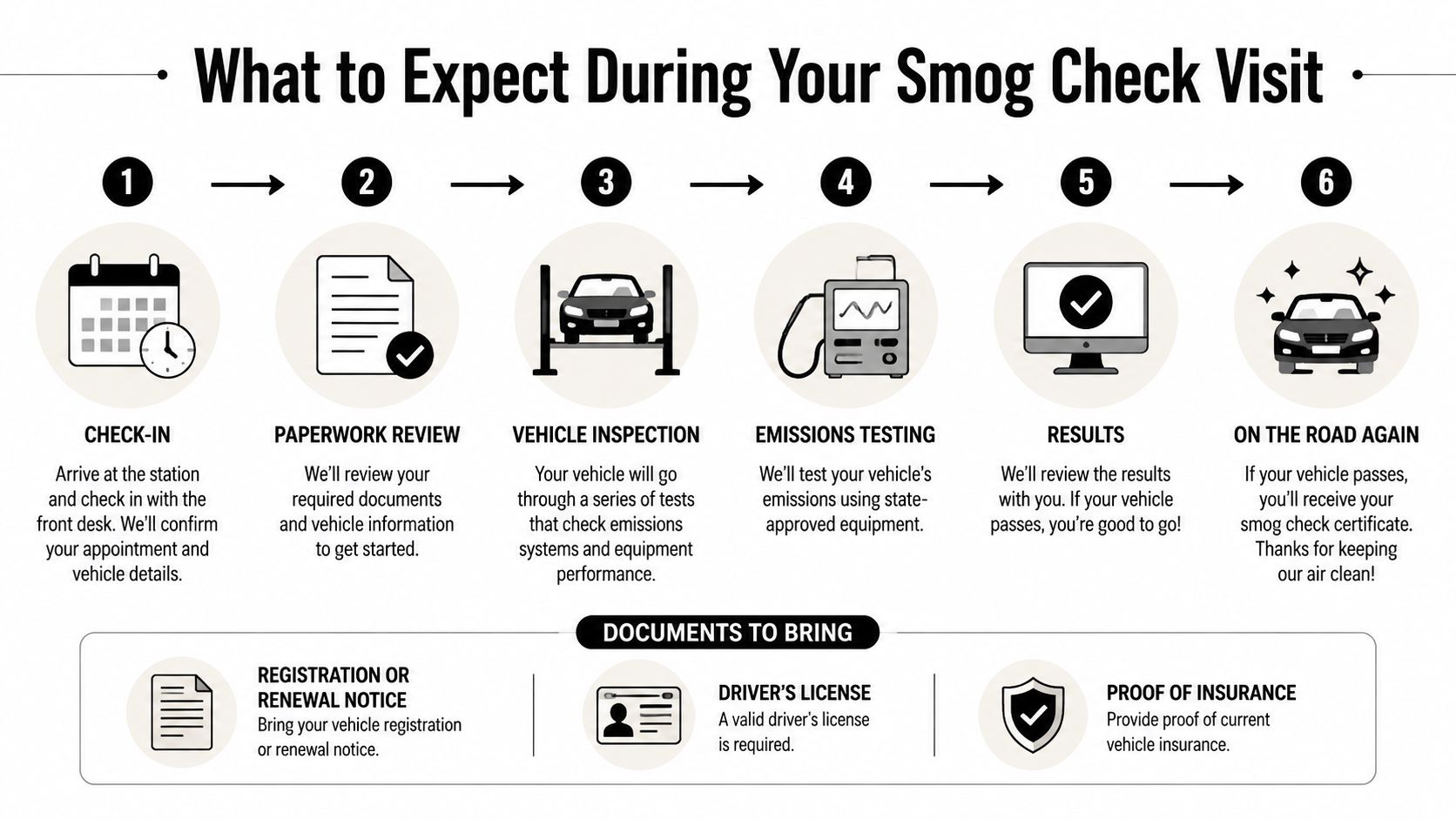
What to bring and why it matters
Bring your registration or renewal notice, driver's license, proof of insurance, and payment. Some stations do not take every payment method, so confirm what the shop accepts before you leave. DMV emissions test guidance That small detail is enough to turn a quick stop into a wasted trip.
The test itself depends on the vehicle. Newer cars usually get an OBD-II scan, while older vehicles may go through a different inspection path. Either way, the station is checking whether the car meets the requirement for registration, not whether it looks clean on the outside.
The visit should feel efficient
The right station keeps the line moving and the instructions clear. In California, use the BAR station locator to find a licensed smog station near you, then call ahead if you want to confirm hours and testing style before you drive over. state station-locator guidance In the East Bay, that matters because the wrong station costs you time, gas, and another errand.
If the counter line is long but the test lane moves fast, that is normal. The real question is whether the station is certified and whether it can issue the result your DMV needs.
After the test, you leave with the result tied to your registration renewal. If the car passes, keep the paperwork until the DMV side is finished. If it fails, the station should tell you what went wrong so you can fix it before retesting.
Why East Bay Drivers Choose Speedy Smog in San Leandro
Speed matters when you're trying to keep a registration from going sideways. A local station that already understands California's requirements is easier to trust than a random place that treats smog checks like an afterthought. Speedy Smog in San Leandro is one of the East Bay options that fits that job because it's a STAR Certified station, it handles a wide range of vehicles, and it's built around fast inspections.
The shop is located at 15275 Washington Ave, San Leandro, 94579, and it works with 2000 and newer vehicles, 1999 and older vehicles, diesels, and hybrids. That matters because a lot of drivers want one place that can handle the car they own, not a station that only likes the newest sedans. For newer vehicles, typical tests are completed in about 10 to 15 minutes, which is exactly the kind of turnaround busy East Bay drivers care about.
Speedy Smog also gives drivers the practical things that reduce friction. The shop is open Monday through Saturday, has a clean indoor waiting room, and offers periodic $25-off coupons for most smogs on newer vehicles. Those details don't change the law, but they do change how painful the day feels.
If you want a station that's focused on speed, certification, and a simple visit, this is the kind of place to put on your list. It's not about hype, it's about getting a legal test done without turning it into a half-day project.
Your Complete Smog Check Action Plan
Your DMV renewal notice tells you what to do first. If it calls for STAR, go straight to a STAR Certified station. If it does not, use the state station locator and choose a certified place that can legally test your vehicle type and fit your schedule. That is the cleanest way to answer where can I get my car emissions tested without wasting time on the wrong shop California BAR station locator.
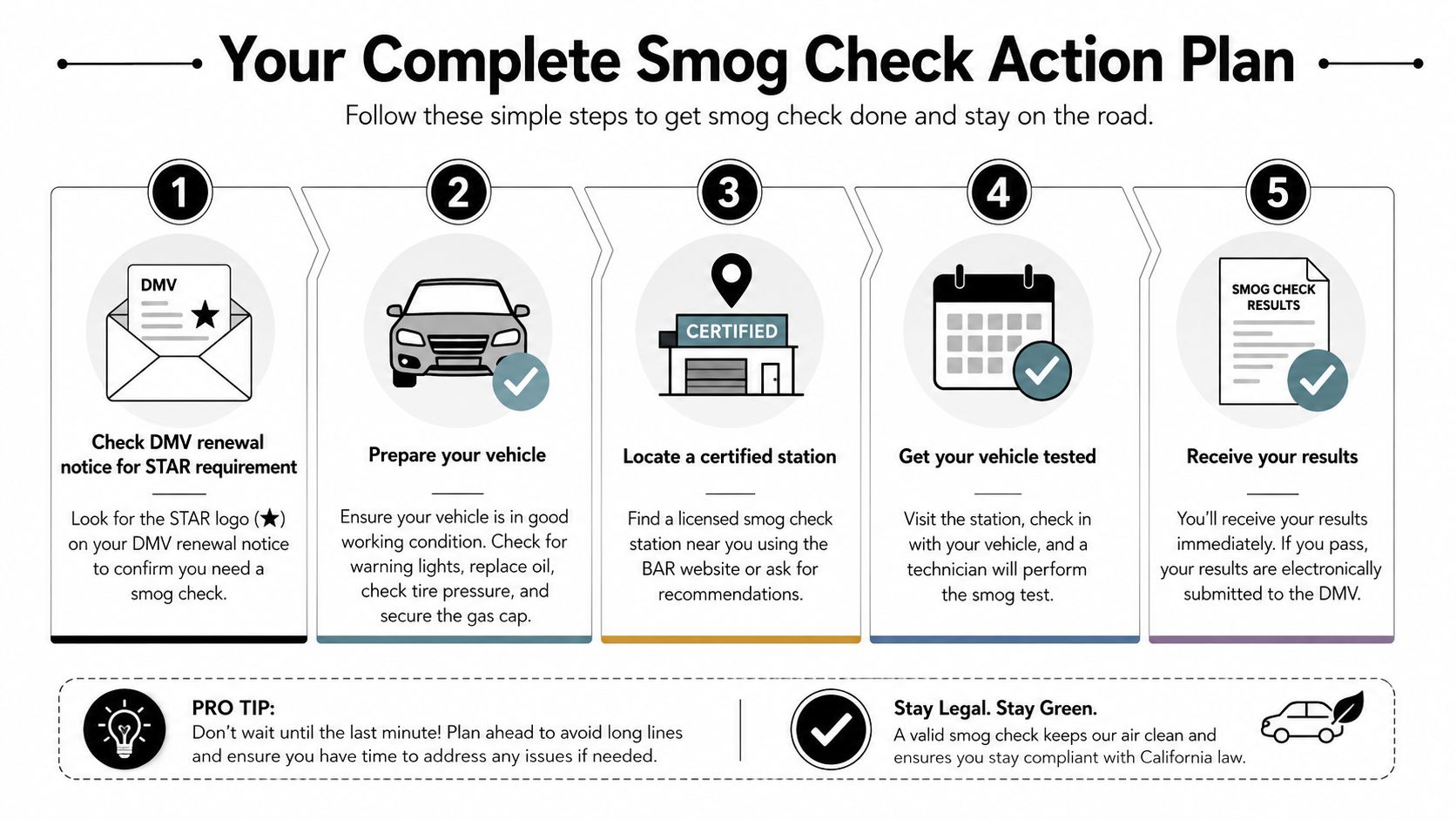
Use this order every time
- Check the notice. Confirm whether your DMV renewal requires a standard smog check or a STAR station.
- Prep the car. Warm it up, check the light on the dash, and deal with obvious maintenance issues before you go.
- Gather documents. Bring your registration or renewal notice, driver's license, proof of insurance, and payment.
- Choose the right station. Pick a certified location that can legally test your vehicle type.
- Get the result. Hold onto the paperwork until your registration issue is closed.
If you want a local station that handles the process efficiently, keep Speedy Smog in San Leandro on your short list. For East Bay drivers, a certified shop that moves quickly and knows the state requirements saves time and avoids extra trips.
Set a reminder for your next smog cycle now, not later. Drivers who avoid registration headaches plan ahead, keep the car ready, and do not wait until the last week to find a station.
You're at the counter, registration renewal notice in one hand, phone in the other, trying to figure out whether that Jefferson Smog coupon is real savings or just a cheap headline. The shop says one price, the fine print hints at certificate fees, and your DMV notice may call for a STAR-certified station anyway. That's the part most drivers miss, and it's where the bill changes.
Table of Contents
- Why East Bay Drivers Search for Smog Coupons
- What a Jefferson Smog Coupon Covers
- Where to Find Legitimate Local Smog Check Discounts
- Comparing Jefferson Area Coupons to Speedy Smog's $25 Off Offer
- Step by Step Guide to Redeeming Your Smog Coupon
- Understanding California Smog Check Requirements and Eligibility
- Practical Tips to Save Money on Your Next East Bay Smog Check
Why East Bay Drivers Search for Smog Coupons
A lot of East Bay drivers are not shopping for fun. They are trying to get registration done without overpaying, and they want the cheapest legal path through a job they cannot skip. That is why coupon searches spike around smog checks, especially when the DMV notice lands and the deadline starts creeping closer.
There is a simple reason coupons get attention. California's smog-check program is a high-volume compliance market, not a niche service, because the state requires biennial smog checks for vehicles manufactured in 1976 or later in participating counties, and sellers of vehicles more than four years old must provide a smog certificate before sale, according to the state framework summarized in the verified data and explained by California's smog check framework. When a service is mandatory and recurring, every driver looks for a discount.
The trap is the headline price
The first number you see is rarely the number you pay. The shop may advertise a low coupon price, then add state certificate charges, electronic transaction fees, and vehicle-specific surcharges at the register.
Practical rule: if the ad does not spell out the total, assume the posted coupon is only the starting point.
That is the right way to think about a Jefferson Smog coupon. It can cut the test price, but it does not erase the state's add-ons or make your vehicle exempt from the rules. If your notice points to a STAR station, a cheap coupon at the wrong kind of shop is not a savings, it is a detour.
What a Jefferson Smog Coupon Covers
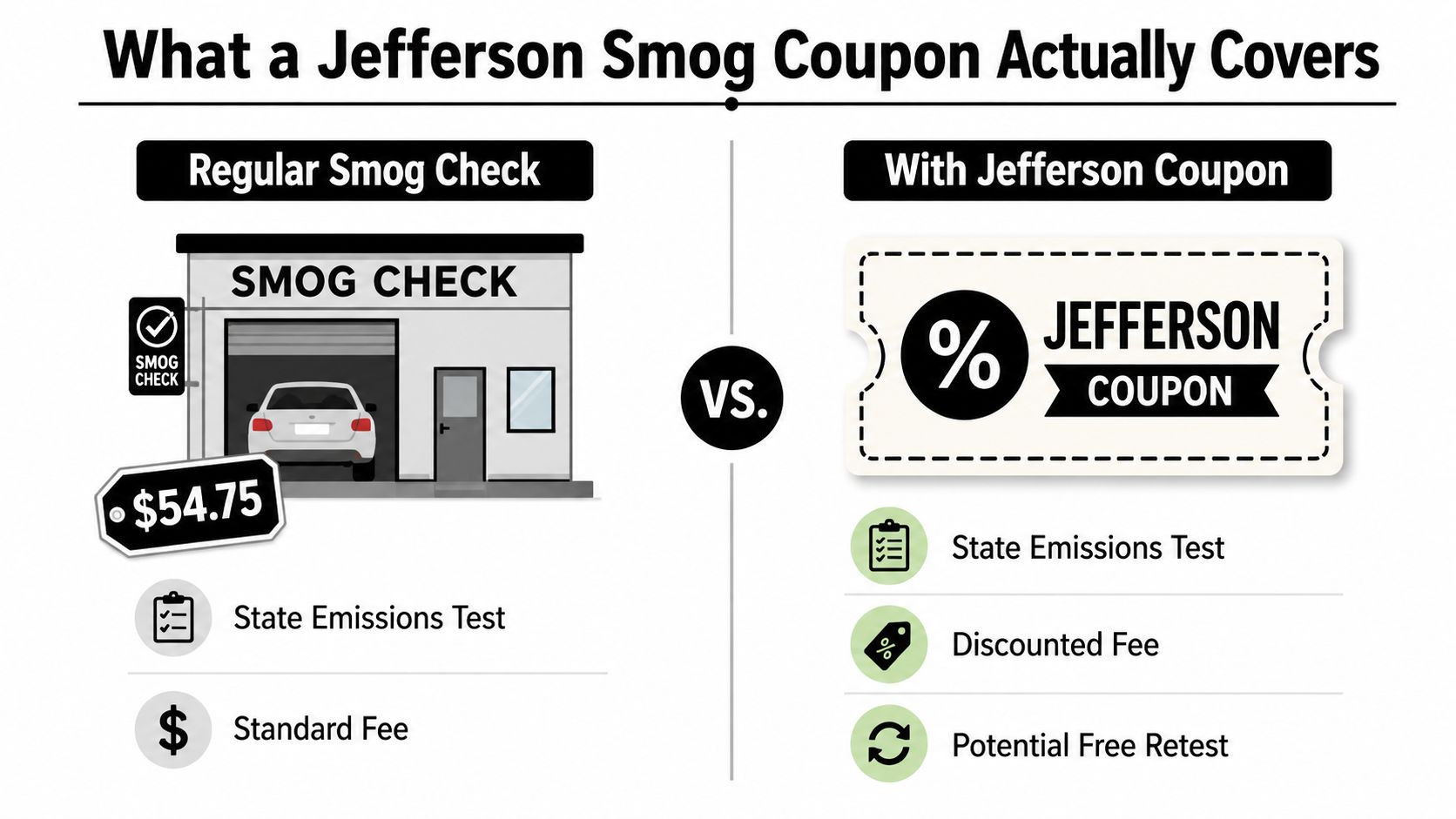
A Jefferson Smog coupon is usually a local discount from a station on or near Jefferson Avenue or Jefferson Street. It is not a special state program, and it does not wipe out the fees California requires. The coupon usually cuts the inspection charge only, while the mandatory add-ons still show up at the register.
The cleanest example in the verified data shows the out-the-door gap. One Jefferson-avenue-related coupon lists a $28.25 base coupon price for most 2000-and-newer vehicles, then adds the certificate and electronic transaction fees to reach $39.50 total, as shown on Kwic Smog's coupon pricing page. That is the point drivers miss, the posted price is the starting number, not the final bill.
Read the coupon like a mechanic, not a shopper
Coupon pages often hide the expensive part in the fine print. That is where drivers get hit with extra charges for diesel, older model years, EVAP, mini-trucks, and heavy-duty vehicles, which is the kind of restriction flagged in the verified data from Smog Check Berkeley.
Ask these questions before you book:
- What is the base test price? Make sure the coupon matches your exact vehicle class.
- What fixed fees get added? Ask about the certificate and any electronic transaction charge.
- Does my car qualify for the offer? Age, fuel type, and weight can change the price.
- Is the station allowed to test my vehicle type? Some coupons look cheap until you learn the shop cannot handle your car.
The final receipt matters most. If a coupon trims a few dollars off the test but the add-ons bring the total right back up, the savings are thin. If your vehicle needs a STAR test, the coupon only matters when the station is eligible to do that work.
Where to Find Legitimate Local Smog Check Discounts
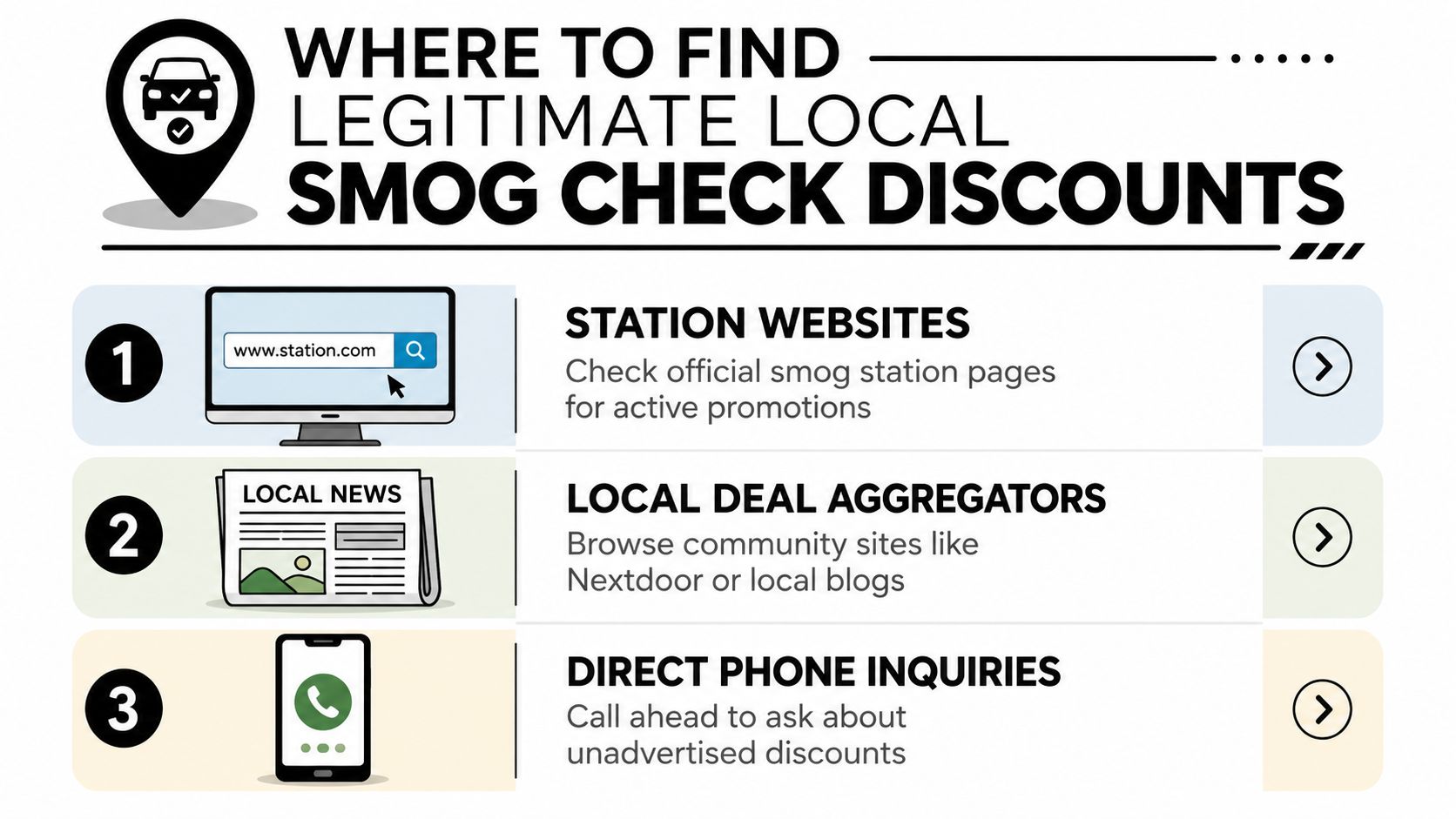
Start with the station's own website. That's where current promotions usually live, and it's the fastest way to see whether the coupon applies to your vehicle type. If the page looks stale, the offer probably is.
Then check local deal aggregators and community listings, because some shops post offers in more than one place. A coupon can look good on a directory page and still be expired by the time you show up, so you need to verify the date and the vehicle restrictions. The internal coupon page at Speedy Smog's coupon offer page is a useful example of how a station can present its discount and qualifying details in one place.
Call the station before you drive over. If the person answering can't confirm the coupon, your vehicle type, and the testing category, don't waste the trip.
What to confirm before you leave
- Current validity: Ask whether the coupon is still active today.
- Vehicle eligibility: Confirm your model year, fuel type, and weight class.
- Test type: Ask whether the station does test-only, test-and-repair, or STAR-certified work.
- Final price: Get the out-the-door number, not just the advertised discount.
That last point matters most. A coupon is only legitimate if it matches your car and the shop can legally complete your DMV-required test. If your renewal notice points to a STAR station, a non-STAR coupon isn't a bargain. It's the wrong service at the wrong counter.
Comparing Jefferson Area Coupons to Speedy Smog's $25 Off Offer
A Jefferson-area coupon can look like the better deal until you add the actual costs. The number on the flyer is only part of the bill. What matters is whether the shop can legally complete the test your DMV notice calls for, what vehicle class you bring in, and what shows up on the receipt after state add-ons and any vehicle-specific charges.
Speedy Smog, at 15275 Washington Ave in San Leandro, is a STAR Certified station, and the shop says typical tests for 2000 and newer vehicles take about 10 to 15 minutes, based on the publisher's description and the linked deal page at Speedy Smog's smog check deals page. That kind of setup matters in the East Bay because a compliant STAR test at the right station usually beats a cheaper coupon that sends you to the wrong counter.
| Feature | Typical Jefferson Area Coupon | Speedy Smog $25-Off Coupon |
|---|---|---|
| Advertised savings | Often a headline discount on the test only | $25 off for qualifying newer vehicles |
| Final cost | Base price plus state add-ons and possible vehicle-specific charges | Discounted inspection price plus required state add-ons |
| STAR certification | Not always guaranteed | STAR Certified |
| Typical vehicle fit | May vary by station and coupon fine print | Valid for 2000 and newer vehicles, per the publisher's offer details |
| Time in shop | Depends on station and line length | Typical tests for newer vehicles in about 10 to 15 minutes |
| Best use case | Drivers who already know the shop meets their DMV requirement | Drivers who need a compliant test with a clear discount |
The real choice is compliant service first, price second
If your DMV notice requires a STAR station, a regular discount at a non-STAR shop does nothing for you. You may save a little up front and still have to pay again at the correct station. That is cheap on paper and expensive at the counter.
Match the coupon to the vehicle and the notice first, then compare the total price. For a newer car that qualifies, a $25-off coupon at a STAR station can be the stronger value because you pay for the right test the first time. For a vehicle with special requirements, check the full charge before you hand over the keys, because the headline discount can shrink once the shop adds the required fees.
Step by Step Guide to Redeeming Your Smog Coupon
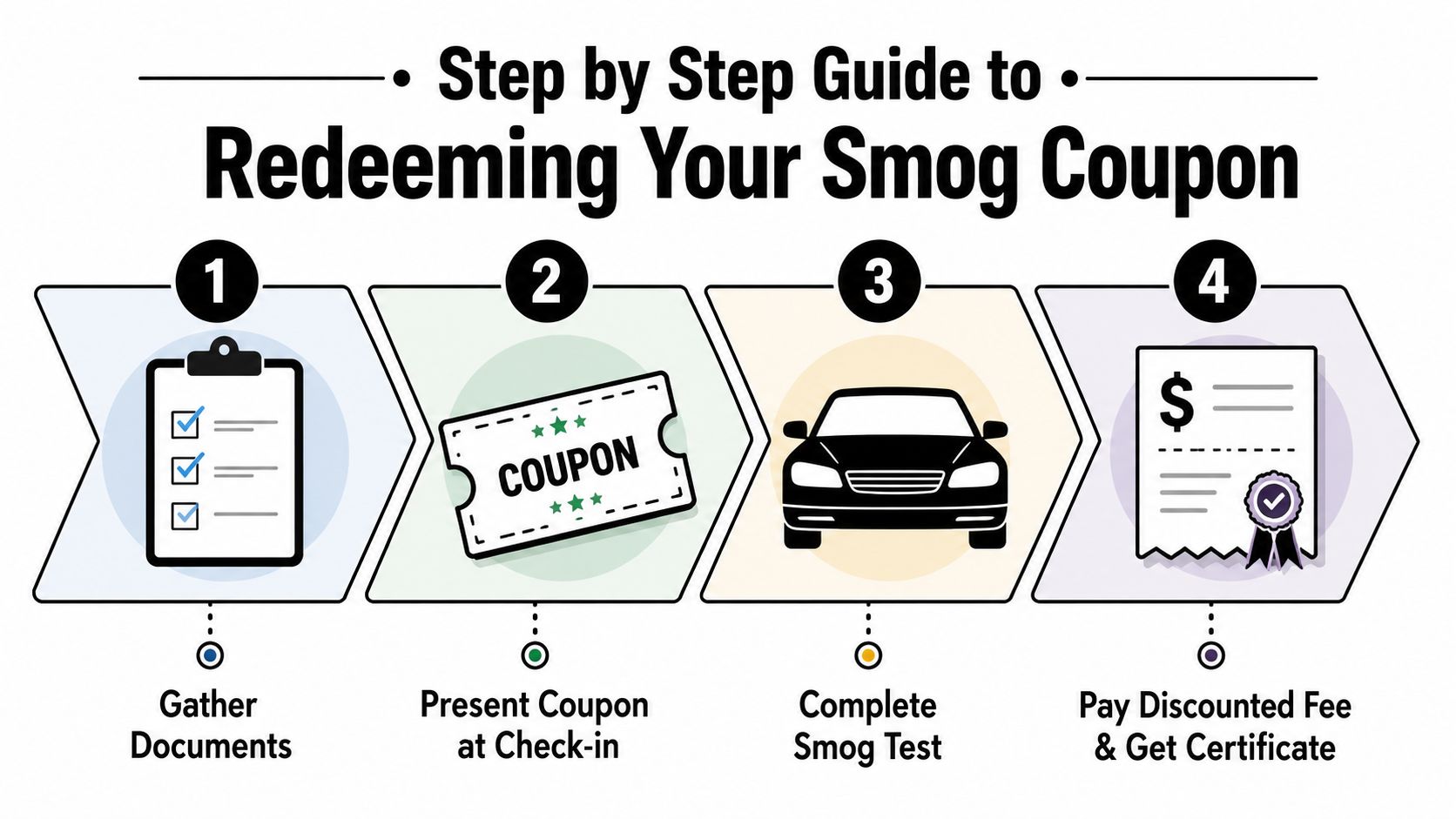
Bring the DMV renewal notice, the coupon, and the vehicle. That sounds basic, but it's where a lot of people lose time, because the station can't process a test if the paperwork or the coupon details don't line up with the car in front of the bay.
At check-in, the shop confirms your vehicle and the offer, then starts the inspection. For many newer gasoline vehicles, the car gets connected through the OBD-II port so the computer can read emissions-related data. Older vehicles may also involve additional sensor-based checks, which is why model year and fuel type change both the process and the price.
The sequence at the station
- Gather documents. Bring the renewal notice and the coupon, and make sure the vehicle is ready.
- Present the coupon at check-in. Ask for the final total before the work starts.
- Complete the smog test. The technician runs the inspection that matches your vehicle.
- Pay the discounted fee and get the certificate. Confirm the state fees and any add-ons before you leave.
If the car fails, don't argue about the coupon first. Figure out why it failed, because retesting without fixing the cause just wastes time. Coupon offers sometimes include a free or discounted retest, but that only helps if the station's policy and your vehicle qualify.
Practical rule: ask about retest terms before the first inspection starts, not after a failure.
That one question saves headaches. It also keeps you from assuming every coupon includes the same service terms, because they don't. The station's actual policy decides whether your second visit costs you more.
Understanding California Smog Check Requirements and Eligibility
A cheap coupon means nothing if the car does not qualify for the test the DMV wants. California's smog rules are what create the coupon market in the first place, because many vehicles manufactured in 1976 or later need biennial smog checks in participating counties, and many ownership transfers also trigger a smog certificate requirement for vehicles more than four years old. For the state-side overview, see California Smog Check Program details. That is the part drivers have to get right before they start chasing a discount.
California also uses test-only and STAR-certified stations to tighten inspection standards for vehicles tied to DMV registration compliance, and AAA's guidance explains how STAR stations fit into that system in its California smog check guidance. If your DMV notice calls for STAR, that requirement wins. A lower advertised price at a non-STAR shop does not help you if the station cannot issue the certificate you need.
The smarter choice is compliance, not the lowest price
The DMV notice tells you more than the coupon page does. Look for wording about STAR-directed testing, ownership transfer rules, or special registration compliance needs. If the notice is hard to read, call the station and ask whether it can handle your exact situation before you drive over.
Use this simple filter:
- Standard renewal: Any eligible station that can legally test your vehicle may work.
- STAR-directed notice: You need a STAR-certified station.
- Ownership transfer: Ask whether the shop can issue the certificate your sale or registration needs.
- Older, diesel, or specialty vehicles: Confirm the shop handles your category before you assume the coupon applies.
The common mistake is treating every smog coupon like it covers the same job. It doesn't. The station, the test type, and the vehicle class all have to match the DMV requirement before the discount means anything. If one piece is off, you are not saving money, you are shopping twice.
Practical Tips to Save Money on Your Next East Bay Smog Check
Use the coupon, but don't worship it. The cheapest ad is not the cheapest visit if your car needs a STAR station or the shop adds fees that wipe out the discount. The better move is to compare the total before you roll in, then book the station that fits your vehicle.
A few simple habits keep the bill down. Drive the car long enough to get it warm before the test, because a warm vehicle is easier to inspect cleanly. Keep your tires properly inflated, make sure the check-engine light is off, and confirm the coupon applies to your model year before you go.
- Avoid rush hours. Shorter lines mean less waiting and less stress.
- Schedule during promotions. Ask the shop if the offer is active that day.
- Check for bundled services. Some stations tie discounts to qualifying vehicles.
- Keep your vehicle maintained. A clean-running car is cheaper to certify than one that fails and comes back twice.
For San Leandro and Oakland drivers who want a STAR Certified station with a fast test for newer vehicles, transparent pricing, and a comfortable waiting room, Speedy Smog is one option to compare against any Jefferson-area coupon. The right decision is the one that matches your DMV notice, your vehicle, and the out-the-door price.
If you want a straight answer on what your car will cost to smog, bring your renewal notice and compare the coupon against the total, not the headline number. Visit Speedy Smog to check current offers, confirm eligibility, and get a compliant test without guessing at the register.
You probably just got the bad news at a STAR station, or you're staring at a DMV renewal notice and wondering if there's a way to keep the car legal without starting from zero. In California, the word waiver gets thrown around like it's a shortcut. It isn't. The California DMV smog check waiver is a post-fail compliance path, and if you understand that upfront, you'll save yourself time, money, and a second trip to the counter.
Table of Contents
- What the California DMV Smog Check Waiver Really Is
- Who Qualifies and What the Income Limits Look Like
- Documents and Repair Receipts You Need Before Applying
- How to Apply Online and In Person Step by Step
- Common Roadblocks That Get Waivers Denied
- Waivers Versus Abatement Fees and Other Alternatives
- East Bay Drivers and the Speedy Smog Workflow
What the California DMV Smog Check Waiver Really Is
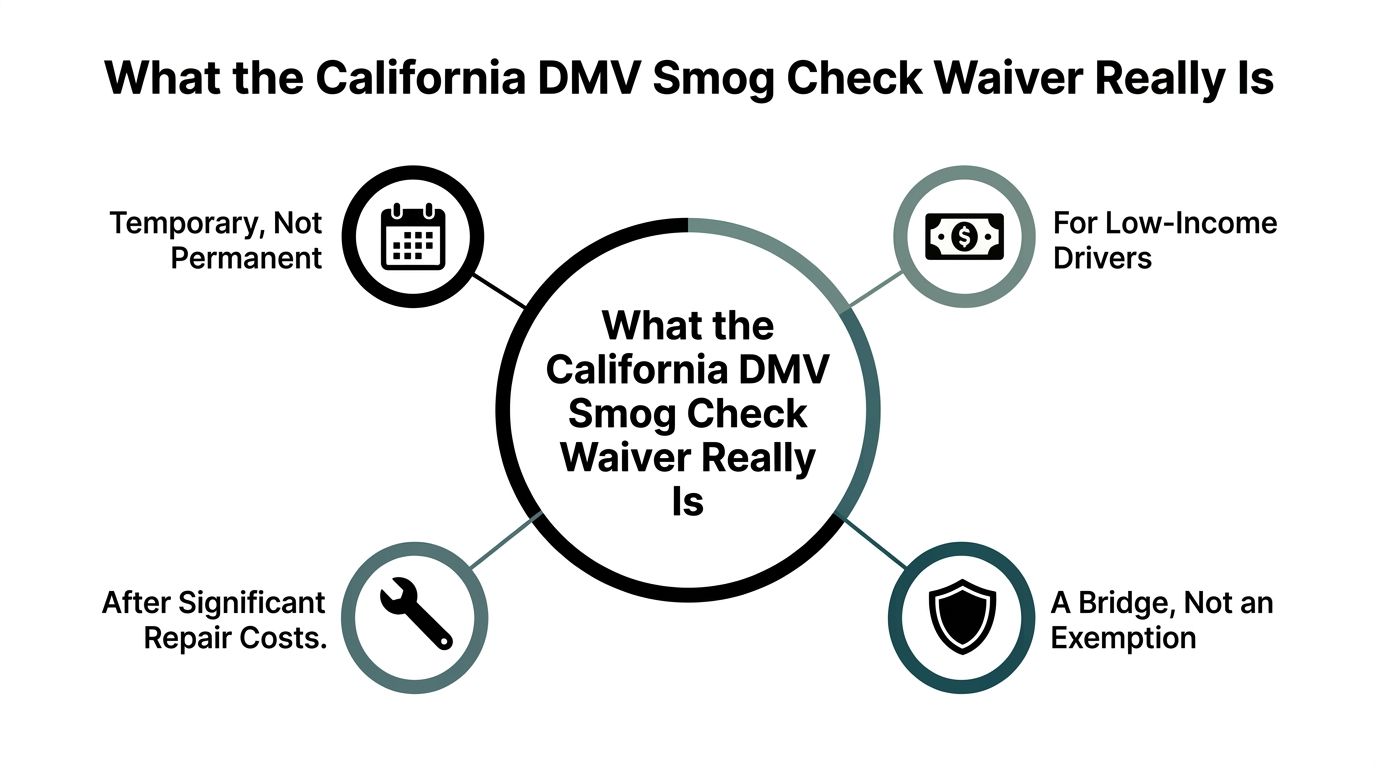
A failed smog slip is where the process starts. Drivers get stuck here because they keep asking whether the waiver is a pass or a skip. The California DMV smog check waiver is a post-fail compliance path for drivers who already failed, already repaired the car, and still cannot get it over the line.
The waiver is the last step, not the first step
California's official guidance ties the waiver to a failed Smog Check and a documented repair sequence, not to a casual request at the DMV. The state factsheet says a low-income vehicle owner at or below 225% of the federal poverty level can still register for two years after a failed test, but only after spending at least $650 on emissions-related repairs, and the same factsheet notes CAP repair help can provide up to $500, with some applicants eligible for up to $1,500 in repair assistance, all tied to the repair path rather than a blanket exemption. California Senate Transportation Committee factsheet
That is why I tell drivers to stop treating it like a permanent DMV waiver. The BAR treats it as a documentation-based exception after the car fails, not a way to skip inspection from the start. If your vehicle has not failed, repaired, and gone through the right sequence, you are not in waiver territory.
If your repair bill is still short of the required threshold, use repair assistance guidance for East Bay drivers before you assume the waiver is off the table.
Hardship exemption and referee direction aren't the same thing
Drivers mix up three different things all the time. A repair cost waiver is for the failed-test, low-income, repair-spent case. A Hardship exemption is a separate relief path. A Referee-directed fix is what happens when the BAR Referee needs to look at the vehicle more closely and decide what the car needs next.
The clean way to handle it is simple, failed test first, repair second, paperwork third, then waiver or referee review if the car still cannot comply.
The BAR's own workflow says to address obvious fail conditions first, including a check-engine light or a recent battery disconnect that can leave readiness monitors incomplete. The certificate, once issued, is valid for 90 days, so do not let a good result sit around while you wait for the next DMV errand. BAR Smog Check guidance
Who Qualifies and What the Income Limits Look Like
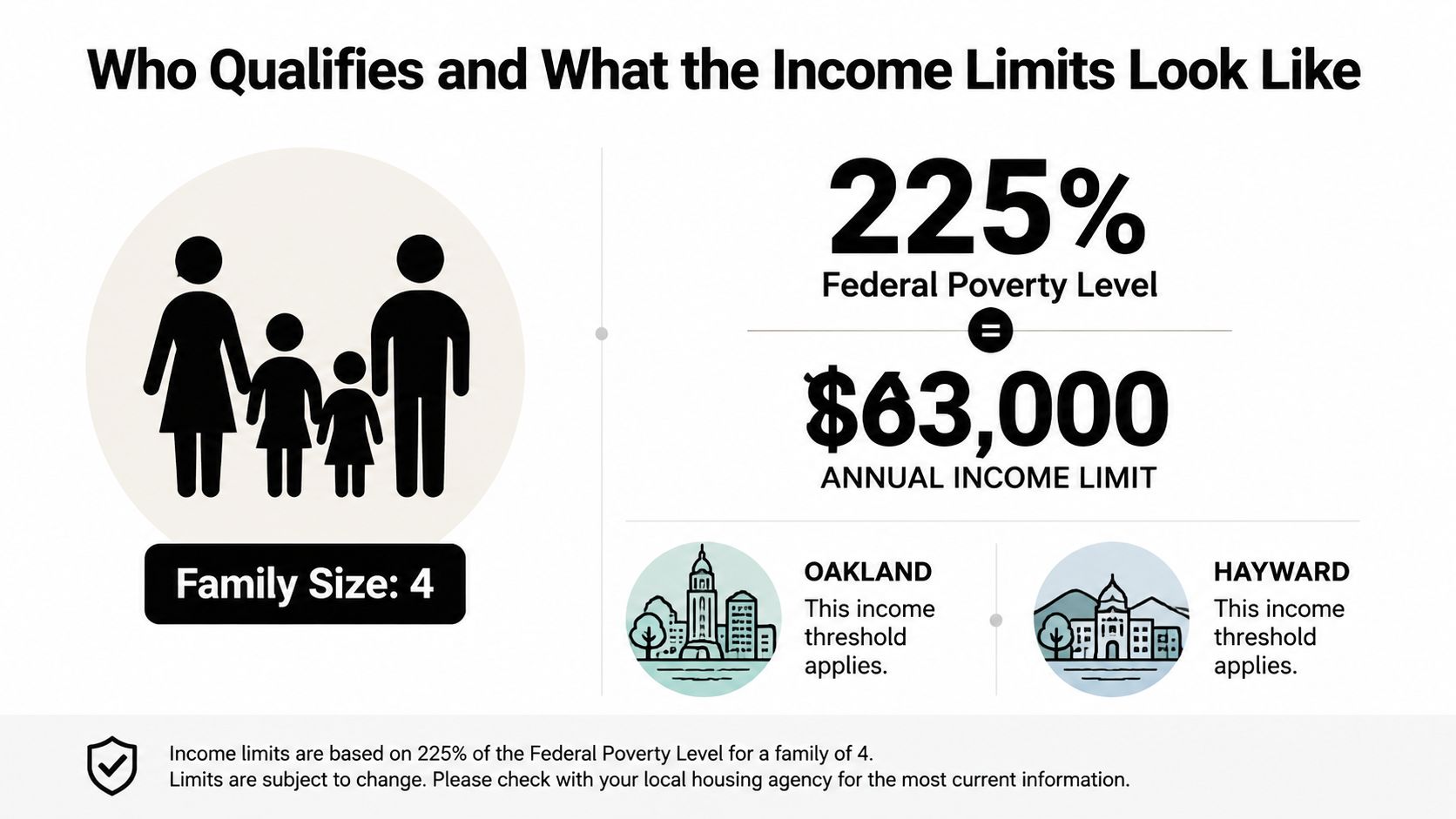
A lot of drivers learn the hard way that the waiver has an income screen, and that screen is strict. The waiver rewards documented repair effort from qualifying households, not casual requests at the DMV. The cutoff is tied to 225% of the federal poverty level, so the question is household income, not whether the car owner feels the repair bill was unfair.
Self-screen before you collect paperwork
For a family of four, the brief shows an annual income example of $63,000 at the 225% federal poverty level threshold. That number gives you a quick reality check before you spend more money on emissions work. If your household is smaller or larger, the income screen changes with the household size, so do not assume you qualify just because your personal paycheck looks modest.
Here is the practical move. If you are close to the ceiling, verify your household size and income first, then decide whether the waiver path is worth the trouble. I see drivers waste money because they fix the car first and ask about eligibility later. If you need a local place to start, use repair assistance guidance for East Bay drivers before you keep chasing repairs.
If you are not sure you are under the limit, verify the household numbers first, then decide whether the waiver path is worth pursuing.
The DMV's age-based exemptions sit next to this rule, and they matter because they are separate from waiver eligibility. Gasoline-powered vehicles 1975 year model or older are exempt, diesel vehicles 1997 and older are exempt, and gasoline-powered vehicles that are less than eight model-years old do not need a smog inspection. Starting January 1, 2019, vehicles under 4 model years old can pay a smog abatement fee instead of getting a smog inspection for the first 8 years they are registered. DMV smog inspection exemptions
For a local look at help with repair costs, see Speedy Smog repair assistance.
Documents and Repair Receipts You Need Before Applying
Missing paperwork is where good cases get derailed. I've seen drivers with a valid repair path get bounced because they showed up with a blurry receipt, a shop invoice that didn't break out the work, or no failed smog printout at all. If you want the waiver to move, show up organized.
Bring the full paper trail, not a pile of fragments
You need the failed Smog Check certificate, itemized repair invoices, proof of income, and vehicle registration. The repair invoices have to show what was fixed, not just that you paid somebody. If the receipt only says “repairs” or bundles everything into one lump total, that's weak documentation and it usually creates questions at the station or at the DMV counter.
Here's what I tell drivers to verify before they leave the shop:
- Failed Smog Slip: Keep the exact failure document from the inspection station.
- Itemized Emissions Receipts: Make sure parts, labor, and the emissions-related diagnosis are separated clearly.
- Proof of Income: Bring the documents needed to show your household fits the income ceiling.
- Registration Paperwork: Bring the current vehicle registration so the renewal file matches the car.
A cash payment without a receipt doesn't help you. A repair at a shop that isn't properly registered for the work can also create problems. And non-emissions repairs don't count toward the waiver threshold, so don't try to pad the total with unrelated work and hope nobody notices.
The BAR's process is built around the failed-test record, then the repairs, then the compliance review. That's why the paperwork has to match the car, the failure, and the specific emissions work that followed. If any one piece is missing, the whole packet gets weaker. For a status check before you go back to the shop, use how to check smog status.
How to Apply Online and In Person Step by Step
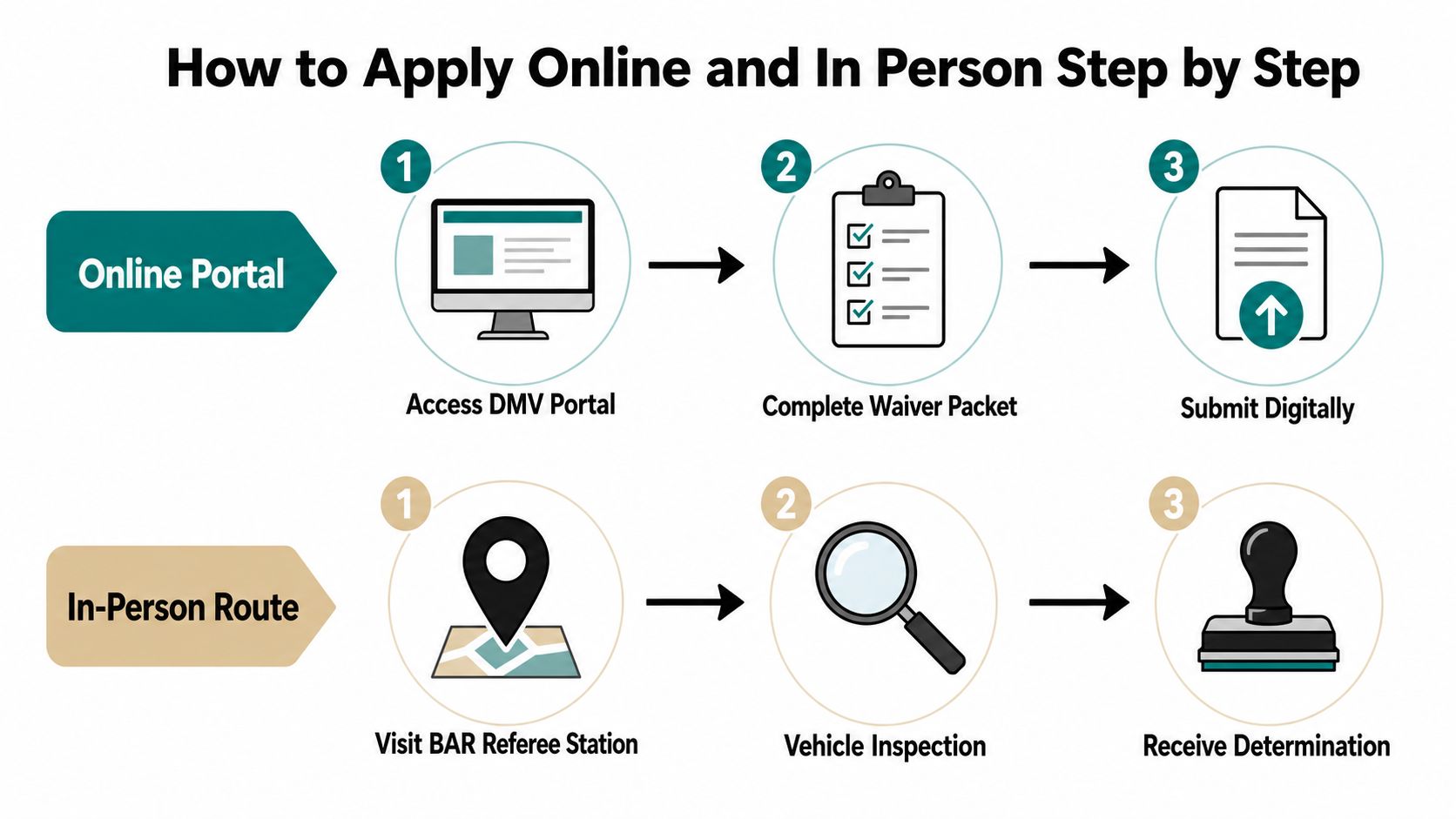
A San Leandro driver with a 2003 Tacoma, a failed smog test, and a stack of repair bills does not need a vague explanation. The waiver process has two real paths, and the one you choose depends on what the file looks like after the repairs. If the paperwork is complete, the DMV online portal is the cleaner route. If the case needs a closer look, the BAR Referee station is the right stop.
Online submission is for clean paperwork
Use the online route only when your packet is tight. Upload the failed smog paperwork, the repair invoices, and the income documents, then wait for the review tied to that renewal cycle. If a valid smog certificate is part of your path, keep the timing in view, because an expired certificate sends you back to the start on the calendar.
I see this most often with drivers who already paid for emissions work and want to finish the job without another shop visit. A San Leandro driver who put money into a catalytic converter and an O2 sensor replacement belongs in this lane if the car still will not pass after those repairs. The spending only helps if it is documented, tied to emissions work, and matched to the failed test.
Referee review is for cases that need a human decision
The BAR Referee step is a different process. It is not a regular smog check with a different label. The Referee reviews the vehicle, the failures, and the repair history, then decides whether the car should go toward a directed fix or a waiver path.
The payoff here is clarity. If the repairs are done but the car still does not comply, the Referee gives the state a final look at the file instead of forcing the owner to guess what to do next.
That matters in the East Bay, where drivers often assume one shop visit should settle everything. It usually does not. The Referee is the point where the paperwork, the repair record, and the vehicle's current condition get checked together, so the compliance path is clear before you waste time chasing the wrong fix.
Common Roadblocks That Get Waivers Denied
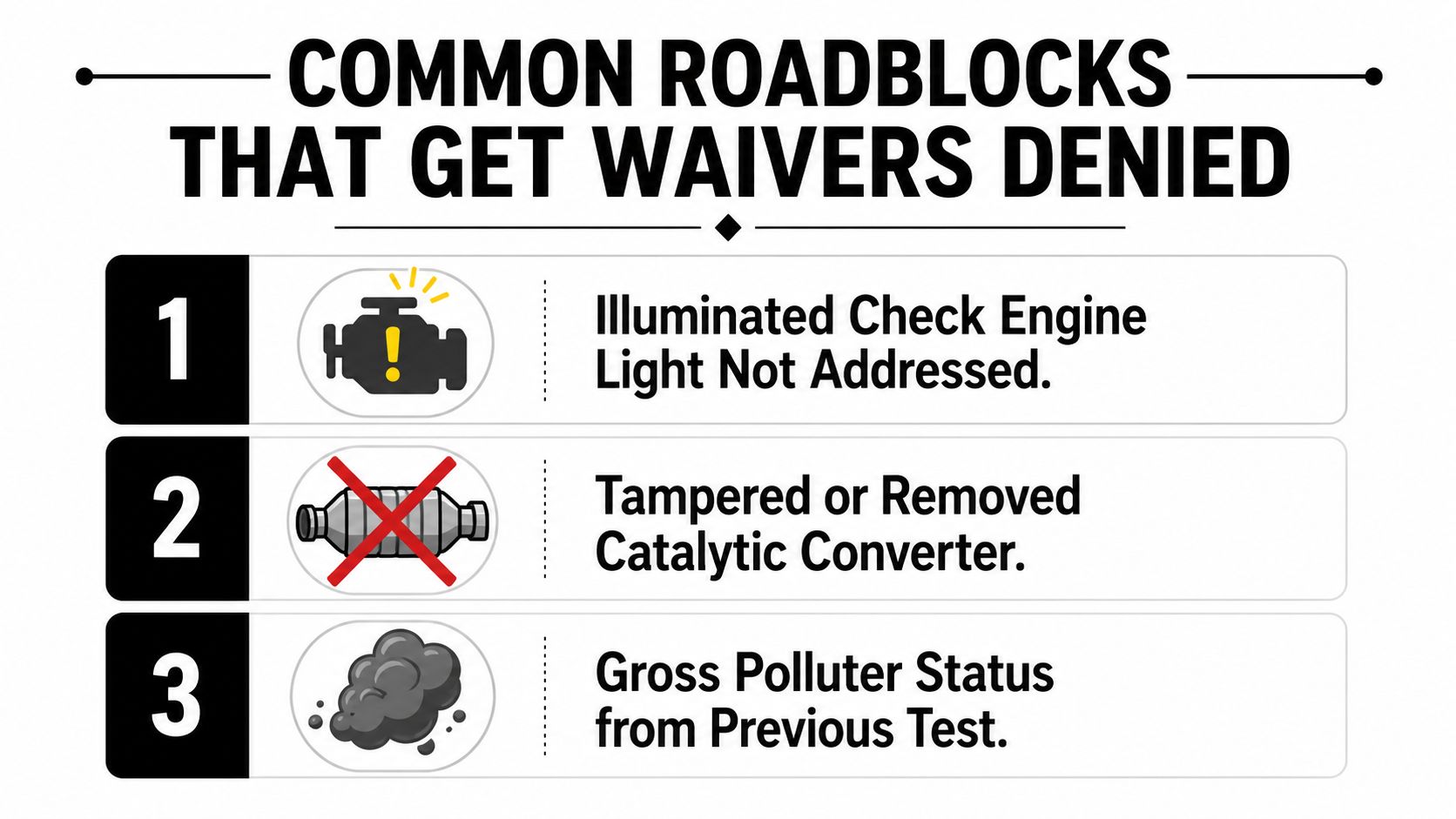
The biggest mistake is assuming the waiver can rescue a car that never finished the compliance workflow. It can't. If the car still has an obvious fail condition, the packet is dead on arrival. BAR doesn't reward guesswork.
The three problems I see over and over
An illuminated check-engine light is a hard stop. The BAR says a vehicle with the light on will not pass, and that alone can sink a waiver packet if the underlying issue wasn't properly addressed. A recent battery disconnect can also leave readiness monitors incomplete, which means the car looks unfinished even if the owner thinks it's repaired.
Tampered emissions equipment is another dealbreaker. If the catalytic converter has been removed or altered, don't expect the waiver to clean that up for you. The state's reference guide also makes clear that a gross polluter vehicle is not the same thing as a normal repair-fail case, and that matters because the waiver isn't meant to paper over serious emissions abuse. BAR Smog Check reference guide
Here's the kitchen-table self-check I'd run before filing:
- Check the MIL first: If the check-engine light is on, fix the cause before you submit anything.
- Review readiness status: If the battery was disconnected recently, make sure the monitors have had time to reset.
- Inspect emissions hardware: Look under the car and verify nothing has been removed, swapped, or tampered with.
- Confirm the failure trail: If there was no proper failed Smog Check, you're not in waiver territory yet.
The state wants a failed test, a real repair attempt, and a vehicle that still can't comply. If any one of those pieces is missing, don't blame the DMV when the answer comes back no. The issue is usually the packet, not the program.
Waivers Versus Abatement Fees and Other Alternatives
The waiver is not always the right answer. Sometimes you're in a relief category that's simpler, cheaper, or automatic. The mistake is forcing every car into the same box when California has separate rules for age, fuel type, and repair assistance.
Choose the path that actually fits the car
A 2022 SUV doesn't belong in the same lane as an old Civic. A 1998 Civic is closer to the normal smog workflow, unless it qualifies under another exemption or a repair-waiver situation. A 2005 diesel truck may sit in a different compliance category because diesel rules are separate from gasoline rules. If you're not sure which lane you're in, the DMV rule page is the place to compare the basic exemption categories first. California smog check rules
| Option | Who It Fits | Out-of-Pocket | Duration |
|---|---|---|---|
| Repair cost waiver | Low-income drivers with a failed Smog Check and qualifying repair spend | At least $650 in emissions-related repairs, per the factsheet | Up to two years for the current renewal cycle |
| Smog abatement fee | Some newer gasoline vehicles under the state's age rule | Fee instead of an inspection | For the first 8 years they're registered |
| Vehicle exemption | 1975 and older gasoline vehicles, 1997 and older diesel vehicles | No smog inspection required | Ongoing under current DMV rules |
| CAP repair assistance | Drivers who qualify for repair help | Up to $500, and some applicants up to $1,500 | Helps pay for repairs, not a blanket exemption |
If your car fits the age exemption, don't overcomplicate it. If it fits the abatement-fee rule, you're not shopping for a waiver. If you're a low-income driver with a failed car and real repair receipts, the waiver or CAP help may be the relevant lane. The key is picking the right lane before you start paying the wrong shop.
East Bay Drivers and the Speedy Smog Workflow
In San Leandro, Oakland, Hayward, and the surrounding East Bay, this process works best when drivers stop treating it like a paperwork mystery and start treating it like a sequence. At a STAR Certified station, the test itself is straightforward, and for 2000 and newer vehicles it's typically a quick visit, around 10 to 15 minutes according to the shop's published workflow. Older vehicles, diesels, and hybrids get handled too, but the point stays the same, get the inspection done cleanly, get the result recorded correctly, and then decide whether you're headed for repairs, the Referee, or a waiver packet.
A good STAR station matters because the first failure has to be documented right. If the car fails, that record is the backbone of everything that follows. If the issue looks like a referee case, the station should point you there instead of pretending every failure can be fixed in the driveway.
Here's the week-ahead plan I give East Bay drivers:
- Get the failure in writing. Don't rely on memory.
- Repair only emissions-related issues first. That's the money that counts.
- Keep every itemized invoice. No shortcuts, no merged receipts.
- Confirm readiness and the check-engine light status. Don't guess.
- If the car still can't pass, decide whether the waiver or Referee path fits.
Speedy Smog in San Leandro is one option for the inspection side of that workflow, and it sends results electronically to the DMV, which keeps the registration side cleaner when the paperwork is lined up. If you have your renewal notice, bring it. That simple habit saves time at the counter and avoids confusion when the file gets matched to the vehicle.
Will the waiver transfer to a new owner? No. The waiver is tied to the current registration and the current compliance cycle, not to a resale promise.
How long does the two-year extension really last? It lasts for the current renewal cycle under the waiver rule, not forever, and it doesn't erase the need to keep the car in compliance going forward.
What if the check-engine light comes on after the waiver is issued? You still have a vehicle problem. The waiver doesn't fix the car, it only bridges the registration side for the allowed period.
Do out-of-state moves reset the process? Not in the way people hope. If you bring the car back into California, you're still dealing with California's smog rules, not a clean slate.
If you want a straight answer on where your car stands, bring the failure paperwork, your repair receipts, and your registration to Speedy Smog. We handle STAR-certified inspections in San Leandro and can tell you whether you're looking at a normal retest, a referee path, or a waiver file that makes sense.
You've got the renewal notice open, the car just passed a smog test, and the DMV site still won't let you move forward. That mismatch frustrates a lot of California drivers because the word smog check gets used for two different things, the inspection itself and the official verification record that the state uses to clear registration. Once you separate those two pieces, the whole process makes a lot more sense, and the paperwork stops feeling like a mystery.
Table of Contents
- Why a Passed Smog Test Is Not the Same as Verified Registration
- What Smog Check Verification Means
- How a Result Moves From the Test Bay to the DMV
- A Driver's Checklist for Confirming a Valid Smog
- Common Reasons a Vehicle Fails Verification
- Why STAR Certification Matters for Your Verification
- Speedy Smog and East Bay Verification in Practice
- Smog Check Verification Wrap-Up and Quick FAQs
Why a Passed Smog Test Is Not the Same as Verified Registration
A driver can leave the station relieved because the car passed the inspection, then open the DMV renewal notice and still see a hold. The confusion comes from mixing up two separate steps. One happens in the inspection bay, where the vehicle is tested. The other happens in the DMV system, where the result has to be visible before registration can move ahead.
A simple example makes the difference clearer. If the station says the car passed but the DMV screen still shows no transmitted result, the problem is a missing record. If the station test itself failed, the DMV hold is reflecting that failure correctly. Those are different situations, even though they can look the same to a first-time driver.
The gap between the lane and the DMV screen
The inspection lane is where the technician checks the vehicle and records the outcome. The DMV screen is where California looks for that outcome before it clears renewal.
That gap is why a receipt alone does not always fix the issue. California's BAR manual explains that stations must enter the test result into the Emissions Inspection System and document failures on the Vehicle Inspection Report and consumer invoice, while the DMV uses the compliance record to confirm whether the vehicle is ready for registration renewal BAR manual. A printed receipt helps the driver, but it is not the same thing as the state record the DMV relies on.
A renewal notice can make the difference feel abstract until you see the wording. A driver may read something like, “Smog check result not received” and assume the car failed. That message points to a missing transmission, not a failed tailpipe test. If the notice instead reflects a failed inspection, the station did its job by sending an accurate result.
Practical rule: If the renewal is blocked, ask whether the station has transmitted and accepted the result in the proper record, not only whether the car passed in the bay.
Why this distinction saves time
Drivers lose time when they return to the station for the wrong reason. More testing will not fix a missing record, and a new record should not overwrite a real failure.
It also changes the questions you ask. “Did I get certified?” can still leave room for confusion. “Was the result entered and accepted?” gets closer to the actual DMV handshake and helps the station look at the right part of the process.
What Smog Check Verification Means
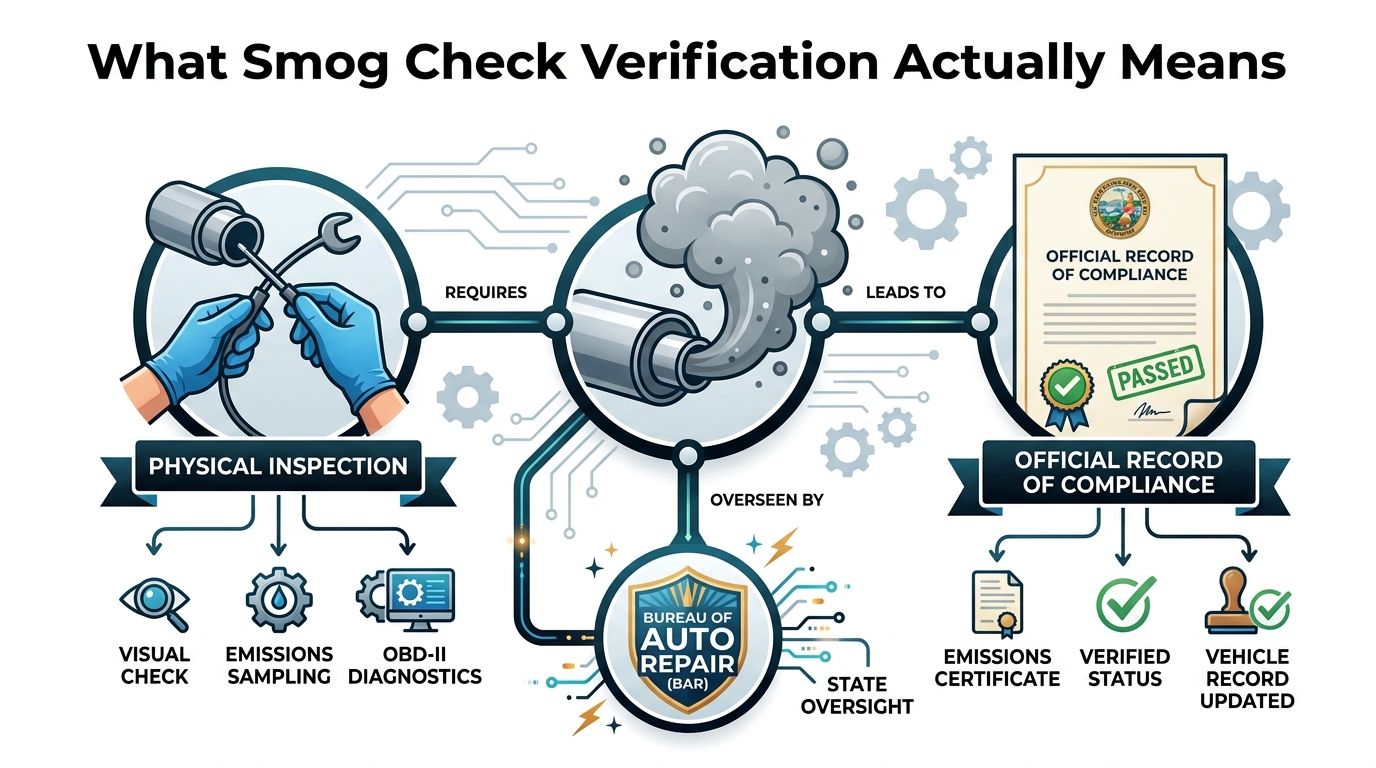
Smog check verification is the official confirmation that a vehicle's emissions result reached the state system and can be used for compliance. The inspection is the hands-on test. Verification is the record that follows the test and shows the result was received.
The three pieces drivers mix up
A direct way to separate the terms is to use the workflow itself. The station inspects the car, the result gets entered into the state system, and the record then supports registration compliance.
Here is the plain-language version:
- Physical inspection: The station checks the vehicle.
- Official record: The result is entered into the state inspection system.
- Compliance document: The certificate or recorded result supports registration.
BAR's guidance makes that sequence important because the station must document the result in the official system and note failures in the required paperwork BAR manual. A printed receipt can help the driver track what happened, but it is not the same thing as the state compliance record.
Why the DMV cares about the record, not just the feeling
The DMV is looking for a result that fits its compliance process. It is not checking whether a driver walked away with paper in hand. That is why some guides blur the line between the inspection and the paperwork, then leave drivers asking for a “certificate” as if it were a store receipt.
California BAR also explains that certificates are ordered through the inspection system or by mail, and some cases require a Referee appointment. If you are trying to confirm whether the state has the result, a station's smog test results page can help you see what was recorded and what still needs attention, including Speedy Smog's smog test results page. The question is not only whether the car passed in the bay, it is whether that result reached the right state record.
How a Result Moves From the Test Bay to the DMV
A smog check starts with the inspection bay, where the station measures the vehicle and records what it finds. For the Visible Smoke Test, BAR requires a 10-second idle exhaust observation, a 10-second crankcase observation, and a BAR Snap Test where the accelerator is rapidly moved from idle to 2,000–3,000 RPM and back to idle Visible Smoke Test procedures. Those fixed steps keep the inspector from relying on a quick glance when smoke is hard to catch.
The paperwork comes next. The station enters the outcome into the EIS, and any failure is documented on the Vehicle Inspection Report and consumer invoice Visible Smoke Test procedures. That paperwork is the station's record of what happened, while the DMV uses the electronic result to decide whether registration can move ahead.
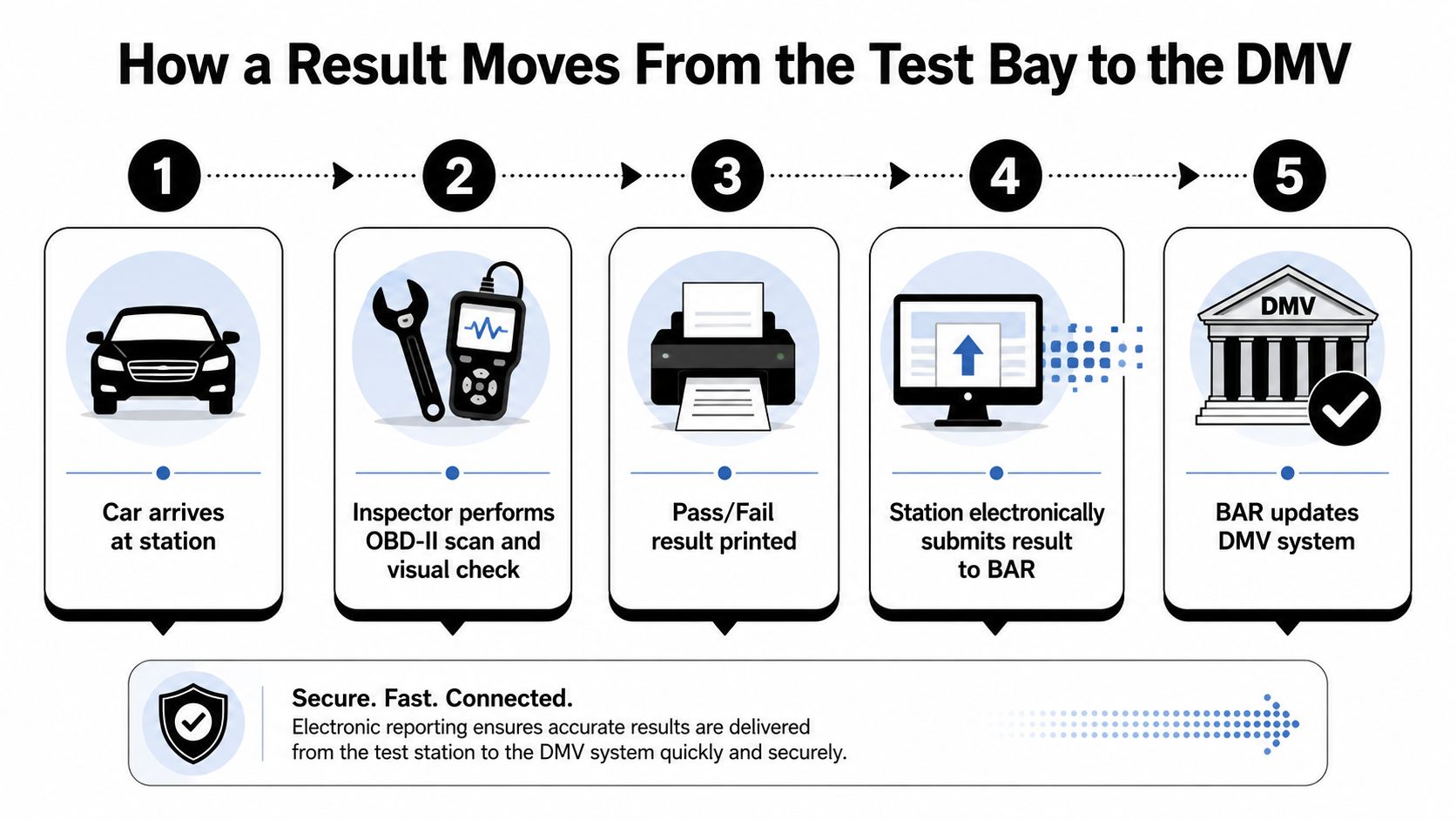
The handoff can feel slow because the driver is often looking at two different things at once, the printed station documents and the state record. A receipt or printout shows what the station did, but it does not clear registration by itself. The DMV-facing record usually appears in the state system within 24 to 48 hours after the station submits it, although the exact timing can vary with the transmission process DMV registration help page. If you want help reading the station printout, Speedy Smog's smog test results page is the kind of station-side page that explains how the result on paper relates to the official record.
What can slow the handoff
A result can be correct in the bay and still not show up right away in the DMV system. That usually points to transmission timing, or to a driver checking the wrong document and waiting for the wrong confirmation.
A helpful station can separate those pieces for you. The inspector's paperwork shows the test outcome and the details tied to the visit. The DMV record is the part that matters for registration, because that is the record the state uses to verify compliance.
Why the order matters
The steps happen in a fixed sequence for a reason. The vehicle is tested first, the result is entered second, and the DMV-facing compliance process follows after that. If you treat the paper receipt as the final step, the process feels incomplete even when the station has already done its part.
The station's paperwork is evidence of the inspection. The DMV record is the entry that lets registration advance.
A Driver's Checklist for Confirming a Valid Smog
A valid smog result starts with the car, but confirmation happens in the paperwork trail. That is where many first-time drivers get tripped up. A vehicle can finish the inspection bay with a passing result and still leave the driver waiting for the DMV record to show up. The physical test and the registration verification are related, yet they are not the same step.
Start with the dashboard. If the check-engine light is on, BAR says the vehicle will not pass BAR smog-check guidance. That warning matters because it saves you from treating a failed inspection like a paperwork problem.
Before you go
A few checks help you confirm that the car is ready for the station and that you are looking for the right kind of proof.
- Confirm the dashboard is clear: A lit check-engine light means the vehicle won't pass BAR smog-check guidance.
- Wait after battery work: If the battery was disconnected or replaced, BAR advises waiting one to two weeks so readiness monitors can reset BAR smog-check guidance.
- Restore approved software: If the vehicle has modified software, BAR says it needs to be restored to manufacturer or CARB-approved settings because non-approved software causes failure BAR smog-check guidance.
The checklist is simple on purpose. Drivers often focus on whether the car “runs fine,” but the smog process looks at whether the car meets the state's rules at the moment of inspection. A clean dashboard, a stable electrical history, and approved software give the station a fair chance to verify the vehicle without surprises.
During the visit
Ask the station what document shows the inspection outcome and what they expect you to keep for your records. That question helps separate the test result from the DMV-facing entry. A receipt can show that you visited the station, but the state cares about the official submission that goes into the inspection system.
If you want a clearer sense of how that status check works from the driver side, our guide on checking your smog status online walks through the basic idea in plain language. It is useful when the paperwork and the online record do not match at first glance.
Save the invoice and the station paperwork together. If a renewal still shows a hold later, those records make it easier to compare what the station produced with what the DMV has on file.
After the test
Check the DMV side of the process, not only the shop copy. If the record is missing, return to the station with the paperwork and ask whether the result was transmitted into the inspection system. If the record appears but renewal still shows a hold, the issue may sit elsewhere in the registration chain, not in the test itself.
For drivers in the East Bay, that distinction matters because the station visit is only one part of the full confirmation process. The result in the bay tells you how the car performed, while the DMV record tells you whether that result has been accepted for registration.
Common Reasons a Vehicle Fails Verification
A car can look fine in the driveway and still get stuck at verification because the problem is not always visible. The failure usually comes from one of three places, mechanical trouble, readiness status, or software status. That is why a vehicle can drive normally and still not produce a valid record for the DMV.
Mechanical problems are only part of the story
A broken emissions component can stop the process, and so can a dashboard warning light. A check-engine light is a clear blocker, because the vehicle cannot complete the process while that light is on. Drivers are often surprised by this, since the car may still feel normal on the road.
Readiness can look fine to a driver and still block the result
Battery changes are a classic example. After a disconnect or replacement, the car may need time to reset readiness monitors before it is eligible for another attempt. BAR advises waiting one to two weeks before retesting, and that is why a car can seem roadworthy while still failing the official process BAR smog-check guidance.
When the issue is readiness, the fix is usually to let the vehicle complete its drive cycles and then have it checked again. A BAR-approved pretest can help a driver learn whether the car is likely to pass before paying for a full inspection, and BAR explains that option in its program materials BAR pretest documentation.
Software matters too
Modified tuning can trigger failure if the vehicle is not returned to manufacturer or CARB-approved settings BAR smog-check guidance. Many drivers focus on parts and sensors, but emissions compliance can also fail because of software the car is running behind the scenes.
That is where diagnosis matters more than guesswork. A shop can look at whether the issue is a bad component, incomplete readiness, or an altered calibration, then point the owner toward repair instead of another blind retest. For drivers trying to sort out that difference, what a smog STAR station does gives helpful context on why the station type can matter during the verification process.
A failed verification does not always mean a major repair. Sometimes it means the car needs the right fix, or more time, before it can be evaluated again.
Why STAR Certification Matters for Your Verification
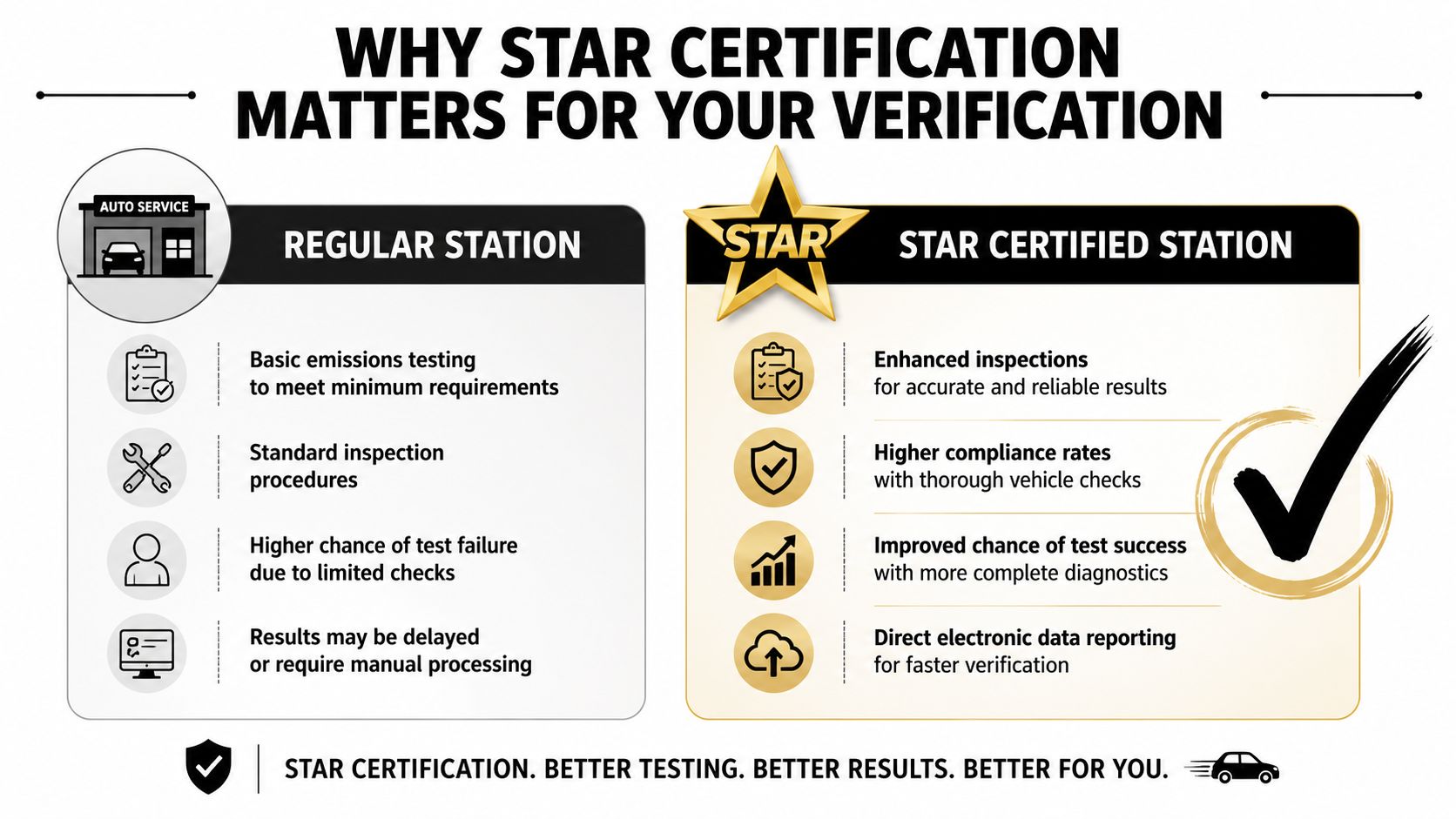
A STAR Certified station is held to higher performance standards than a regular station under California's BAR framework. That matters because verification isn't just about reading a result, it's about trust in the station that creates the record.
What STAR changes for the driver
STAR stations are not a different kind of emissions law. They're a higher-standard testing environment. That extra oversight helps reduce the chances of paperwork mistakes and makes them a stronger choice when a vehicle needs a more careful compliance path.
For drivers, that means less ambiguity. A station with stricter standards is less likely to leave you wondering whether the record was handled correctly. If you want a plain explanation of the station type, the internal overview at what is a smog STAR station is a helpful companion to the formal BAR rules.
Test Only and STAR aren't the same label
People often use those terms interchangeably, but they point to different things. Test Only describes what the station does. STAR describes the performance tier and oversight level. A station can be one, the other, or both.
That difference matters when you're trying to avoid delays. A driver who needs a clean verification trail usually wants a station that is already set up for stricter compliance handling. STAR certification doesn't guarantee the vehicle passes, but it does help the process stay orderly.
Speedy Smog and East Bay Verification in Practice
In San Leandro, Speedy Smog is a STAR Certified station at 15275 Washington Ave, 94579, and it serves 2000 and newer vehicles, 1999 and older vehicles, diesels, and hybrids. For 2000+ vehicles, the shop says typical tests take about 10 to 15 minutes, which is the kind of timeframe East Bay drivers appreciate when they're trying to get back to work or home quickly.
The bigger point is operational, not promotional. A local driver needs a place where the inspection, the record, and the compliance flow all happen without confusion. That's especially helpful for people who have already learned the hard way that a passed test and a verified DMV record are not identical.
What a driver actually notices on site
A clean waiting room, straightforward hours, and clear communication matter because the process can already feel bureaucratic. Speedy Smog says it's open Monday through Saturday, and it offers a $25-off coupon on most smogs for newer vehicles. Those details don't change BAR rules, but they do make the visit easier to plan.
Why local context matters
East Bay drivers often have limited time to sort out a renewal hold. A station that handles different vehicle types, works quickly, and understands California's compliance flow gives drivers one less thing to decode. The practical value is not the brand name, it's the ability to leave with the inspection done and the record handled correctly.
The EPA's historical review of Smog Check shows why these programs exist in the first place, enhanced Smog Check reduced fleet emissions by 17% for hydrocarbons, 28% for carbon monoxide, and 9% for nitrogen oxides, and roadside test failure dropped from 12.4% before Smog Check to 4.29% after, a 65.5% reduction EPA review. That context matters because verification is not just paperwork, it's how California documents that emissions control happened.
Smog Check Verification Wrap-Up and Quick FAQs
The cleanest way to think about this process is simple. The inspection happens first. The verification record gets entered next. The DMV uses that record to decide whether registration can move forward.
If your renewal is still blocked, the first questions should be practical. Was the result entered into the state system? Did you get the right paperwork? Is the vehicle ready to pass, or is a check-engine light or monitor reset still in play?
Quick FAQs
Will a receipt clear my registration?
Not by itself. The state needs the result in the official system, not just a piece of paper.
What if the DMV still shows a hold?
Check whether the station entered the result correctly, then compare that with your paperwork and renewal status.
How do I know a station is STAR certified?
Look for the station's STAR designation and confirm it before you book, especially if your situation is already complicated.
If you're preparing for a renewal, bring your vehicle in when the dashboard is clear, the monitors have had time to reset after battery work, and your software is in approved form. That's the shortest path to making smog check verification feel routine instead of stressful.
A CTA for Speedy Smog.
Your DMV renewal notice shows up, and there it is: Smog Certification Required. If you drive a diesel truck, van, or SUV in the East Bay, that line usually leads to the same questions. Does my diesel even need testing? What do they check? Why did my friend's truck fail when it “ran fine”?
That confusion is normal. California's diesel smog check requirements aren't simple, and a lot of bad advice gets passed around in parking lots, online forums, and job sites. Owners hear half a rule, apply it to the wrong vehicle, and end up wasting a trip or getting stuck before registration.
A good diesel smog visit shouldn't feel like guesswork. It helps to know which vehicles are tested, what a technician looks for, and what problems usually cause a failure. Once you know those pieces, the process gets much easier to manage.
Table of Contents
- Your Diesel Smog Check Guide
- Does Your Diesel Need a Smog Check
- What Happens During a Diesel Smog Inspection
- Understanding Diesel Smog Check Exemptions
- Top Reasons Diesel Vehicles Fail Smog Checks
- Your Pre-Test Checklist for a First-Time Pass
- Get Your Diesel Certified at Speedy Smog
Your Diesel Smog Check Guide
Diesel owners usually don't struggle because they ignore the rules. They struggle because the rules are technical, and the details matter. A truck can drive well, start every morning, and still fail a smog inspection because the monitors aren't ready, the software isn't approved, or smoke hangs in the exhaust a little too long.
That's why the smartest approach is practical, not theoretical. Start with three questions:
- Does my diesel fall into the California testing program?
- What does the inspection include?
- Is there anything on my vehicle likely to trigger a failure?
If you answer those before your appointment, you avoid most of the usual headaches.
Practical rule: A diesel smog check is easier when you treat it like a compliance inspection, not just a quick errand.
Owners often focus only on the dashboard. If there's no warning light, they assume they're good. That works sometimes, but not often enough. Diesel testing also looks at emissions equipment, computer readiness, and visible smoke. A truck that “feels fine” can still have a problem where it counts for inspection.
This is especially true in the East Bay, where many diesel vehicles are work trucks, cargo vans, and daily drivers that rack up miles under real conditions. Short trips, recent repairs, battery disconnects, and aftermarket tuning all show up at smog time.
The good news is that most failures follow familiar patterns. Once you know the rules and the common trouble spots, you can usually spot problems before the test does.
Does Your Diesel Need a Smog Check
A lot of East Bay diesel owners call us after the DMV renewal notice shows up and catches them off guard. The fastest way to sort it out is to check two things on the vehicle first: the model year and the Gross Vehicle Weight Rating, or GVWR, on the driver-side door jamb.
For most light-duty diesel owners, the rule is straightforward. In California, diesel vehicles with a 1998 or newer model year and a GVWR under 14,500 pounds are generally part of the biennial Smog Check program. 1997 and older diesel vehicles are generally exempt, according to the California Bureau of Automotive Repair Smog Check program.
That covers many pickups, diesel SUVs, and Sprinter-style vans we see at the shop.
A few situations still catch owners by surprise:
- Registration renewal: If your DMV paperwork asks for a smog certificate, your diesel likely falls into the program.
- First California registration: An out-of-state diesel brought into California may need a smog inspection before it can be registered here.
- Change of ownership: A sale or transfer can trigger a smog requirement, depending on the transaction.
If you want the bigger picture on state testing rules, our guide to California smog check rules for vehicle owners explains where diesel fits in.
California diesel smog check requirements at a glance
| Vehicle Model Year | Gross Vehicle Weight Rating (GVWR) | Smog Check Required? |
|---|---|---|
| 1997 and older | Under 14,500 lbs | No |
| 1998 and newer | Under 14,500 lbs | Yes, every two years for registration renewal |
| 1997 and older | 14,500 lbs and above | Check program status carefully |
| 1998 and newer | 14,500 lbs and above | May fall outside the standard biennial program. Verify exact requirement before assuming exemption |
Where owners get tripped up
The biggest mix-up is using the wrong weight number. Curb weight is not the number that matters here. GVWR is. We see this with work trucks all the time. The truck may not look heavy, but the manufacturer-rated weight on the door label is what determines whether it falls into the standard program.
Another common problem is assuming diesel follows the same pattern as gasoline. Diesel owners often expect a grace period or assume age alone settles the question. That leads to last-minute appointments, registration delays, and avoidable stress.
If you're unsure, check the door jamb label and your registration paperwork before you book the test.
Five minutes spent verifying the model year and GVWR can save you a wasted trip, especially if you drive a diesel work vehicle and cannot afford downtime.
What Happens During a Diesel Smog Inspection
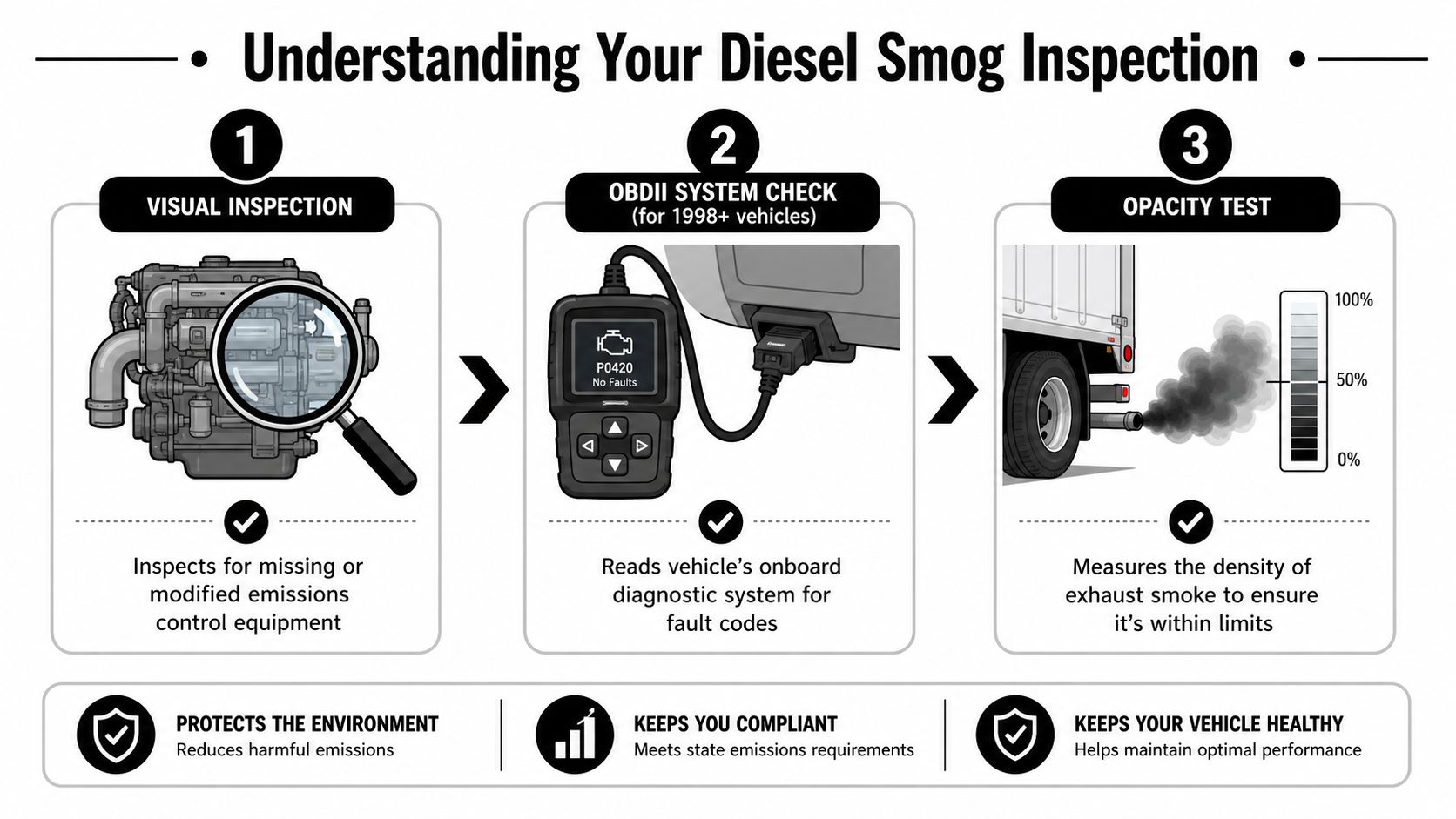
A lot of diesel owners walk in expecting one quick machine test. The actual inspection is more hands-on than that. At the shop, we verify three things: the emissions parts that should be on the vehicle are still there, the onboard computer shows the system is working properly, and the exhaust does not produce excessive visible smoke during the required procedure.
If you want a better sense of what the shop is using during the test, this page on diesel emissions testing equipment and inspection hardware shows the tools behind the process.
Step one is a visual inspection
This is often where problem trucks get flagged first.
The technician checks for missing, modified, or clearly non-compliant emissions components. On diesel vehicles, that usually means looking closely at the DPF, related emissions hardware, and signs that a system has been removed, bypassed, or altered.
We see this with work trucks fairly often. The owner may be focused on how the truck runs, but a visual failure can happen even if the engine feels strong on the road. If the setup does not match what the vehicle is supposed to have, that issue usually shows up right away.
Step two is the computer check
Next comes the onboard diagnostic check. The technician connects to the vehicle, reads fault information, and checks whether the emissions monitors are ready.
This part trips up owners who recently cleared codes, replaced a battery, or disconnected power during repairs. The warning light may be off, but the system can still show incomplete readiness. If the monitors have not finished their self-checks, the vehicle may not pass that day.
For newer light-duty diesels, the readiness rules are tighter than many owners expect. That is why a truck that seems fixed after a repair still needs enough normal driving time before it is ready for inspection.
Step three is the smoke test
The last part is the smoke inspection. In this stage, real-world diesel problems tend to show themselves.
The technician observes the exhaust and performs the required snap acceleration procedure to see whether visible smoke clears within the allowed limit. A diesel that feels acceptable in daily driving can still fail here if it has injector problems, heavy soot buildup, poor maintenance history, or an emissions issue that only shows up when the engine is revved.
From a shop perspective, this is one of the biggest surprises for owners. “It drives fine” does not always mean “it will pass smog.” If your truck has been smoking on cold starts, under throttle, or after long idle time, it is smart to address that before you come in.
Understanding Diesel Smog Check Exemptions
Many owners experience issues when they hear that some diesels are exempt, then stretch that idea farther than the rules allow. A quick assumption can turn into a DMV problem later.
Older diesels are the clearest exemption
The simplest exemption is age. If your diesel is model year 1997 or older, it falls outside the biennial light-duty diesel smog requirement covered earlier.
That's the cleanest exemption because it's based on model year. There's not much interpretation involved. If the vehicle is old enough, it's outside that part of the program.
Weight alone doesn't tell the whole story
The more confusing issue is weight. Many diesel owners believe anything over 14,000 lbs is automatically exempt, but that's not a safe shortcut. As noted in this guide to California diesel smog exemptions and GVWR checks, the right approach is a two-step verification process: confirm the vehicle's GVWR on the manufacturer's door jamb, then cross-reference that with the applicable CARB program requirements.
That matters because not every vehicle outside the standard light-duty smog lane is “free and clear.” Some heavier diesels fall under different compliance programs instead of the familiar biennial test. Owners who assume exemption without checking the exact program can end up with registration issues or compliance confusion.
A practical way to handle this is:
- Check the label first. Use the manufacturer's GVWR, not a guess.
- Match the vehicle's use. Personal, commercial, and specialized use can affect what program applies.
- Verify before renewal time. Waiting until your registration deadline is the worst time to sort this out.
Don't build your plan around “my buddy said heavy diesels are exempt.” Verify the door sticker, then verify the rule that applies to that specific vehicle.
The owners who stay out of trouble are usually the ones who document the vehicle correctly before they ever pull into a test bay.
Top Reasons Diesel Vehicles Fail Smog Checks
A diesel can run strong on the road and still fail in the bay. At Speedy Smog, the repeat problems are pretty consistent. The onboard system is not ready, emissions parts or software do not match California rules, or the vehicle produces visible smoke during inspection.
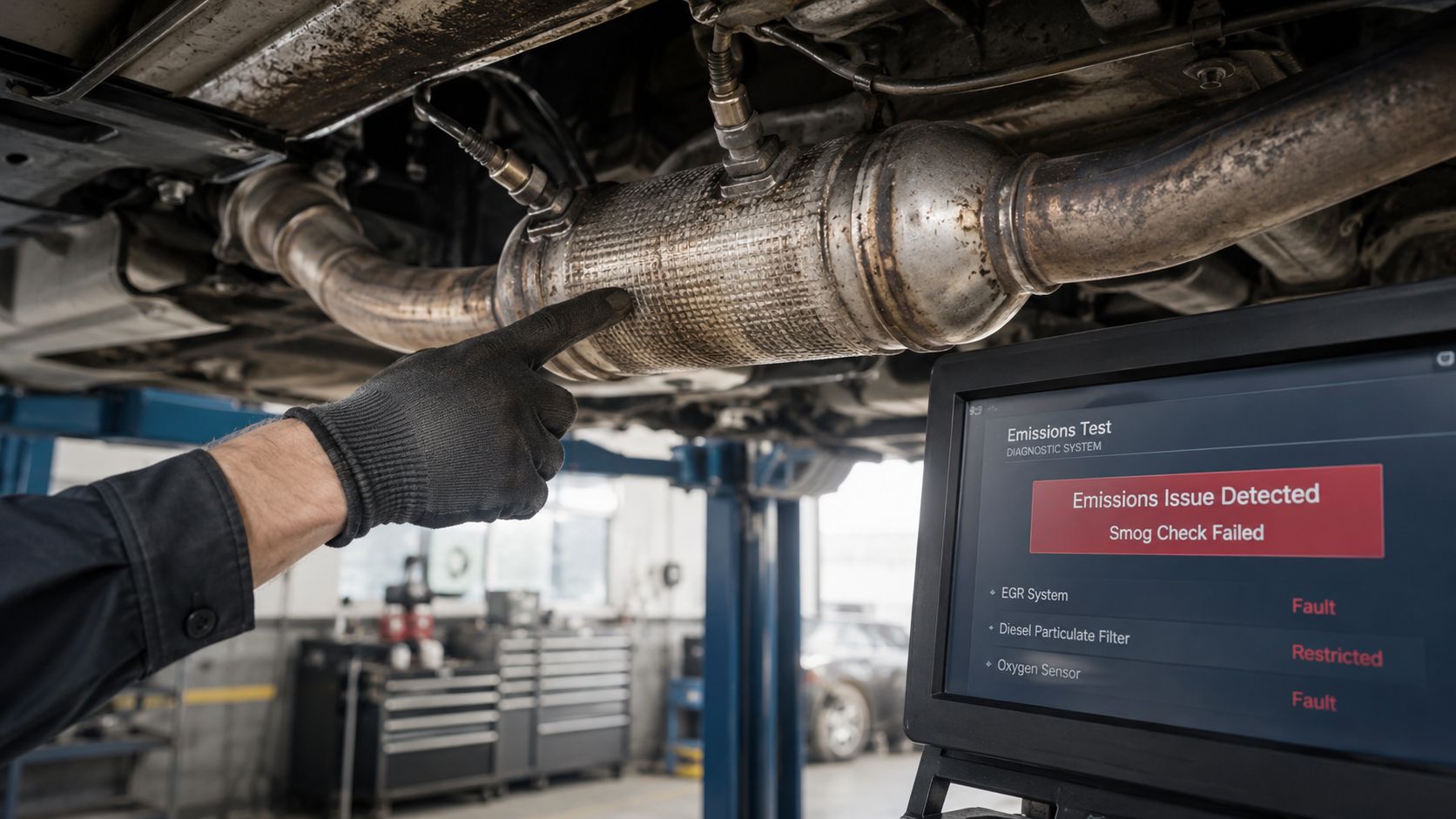
I hear the same comment all the time: “It passed last time.” That history helps, but it does not guarantee the next result. Batteries get disconnected. Repairs interrupt monitor completion. Used trucks show up with tuning or missing hardware that the current owner did not know about. A smog check looks at the vehicle as it sits that day.
Readiness monitors not set
This is one of the easiest failures to prevent, and one of the most common on newer diesels. If codes were recently cleared, the battery was disconnected, or a repair changed how the system operates, the computer may still show monitors as incomplete. In that condition, the inspection may stop before it really starts.
For newer light-duty diesels, the monitor rules are tighter than many owners expect. As noted earlier, model year 2007 and newer light-duty diesel vehicles have very limited allowance for unset monitors. If the wrong monitor is still not ready, the vehicle can fail even with no warning light on.
A quick pre-scan saves a wasted trip. Our diesel smog inspection checklist for California drivers is a good place to start if you want to catch that issue before you head to the shop.
What helps:
- Drive the vehicle normally after repairs. Give the computer time to complete its self-checks.
- Scan for readiness status before the appointment. “No codes” does not mean “ready.”
- Repair the actual fault first. Clearing codes without fixing the cause usually leads right back to the same problem.
What causes trouble:
- Disconnecting the battery right before test day
- Clearing the check engine light and coming straight in
- Assuming the truck is ready because it feels fine
Modified parts and software
Performance work is a big failure point. Owners add a tuner for towing, buy a used diesel with unknown upgrades, or replace parts with something that fits physically but does not meet California requirements. Then the visual inspection or system check catches it.
Diesel software changes are a common example. A tune may improve throttle response or pulling power, but if it is not approved for California use, that benefit does not matter at smog time. The same problem shows up with deleted emissions equipment, altered intake or exhaust components, and replacement parts that are not legal for that application.
A truck can be mechanically healthy and still fail because the emissions configuration is wrong.
This is a good place to pause and see the issue from the owner side:
The practical fix is to return the vehicle to a compliant setup. That is not always cheap, and that is the trade-off. A tune or delete may have made the truck more enjoyable to drive, but it can turn a routine smog visit into a repair project. On used diesels, check for signs of non-stock programming or missing emissions hardware before registration deadlines sneak up on you.
Visible smoke and underlying engine issues
Smoke failures frustrate owners because the truck may still seem usable day to day. It starts, pulls, and drives, but under snap acceleration it hazes enough to create a problem in the test lane.
Visible smoke usually points to a real mechanical issue. Common causes include injector problems, poor combustion, air-path faults, soot buildup, or a DPF-related problem that has not fully triggered a dash warning yet. Deferred maintenance also shows up here.
The smart move is diagnosis. Guessing gets expensive fast on diesel repairs. Check fuel delivery, air intake, boost behavior, engine condition, and emissions components in an orderly way. That approach costs less than replacing parts at random and coming back for a second test.
Your Pre-Test Checklist for a First-Time Pass
The best pre-test routine is boring. That's a good thing. Diesel smog appointments usually go more smoothly when the vehicle arrives warm, complete, and untouched by last-minute resets.
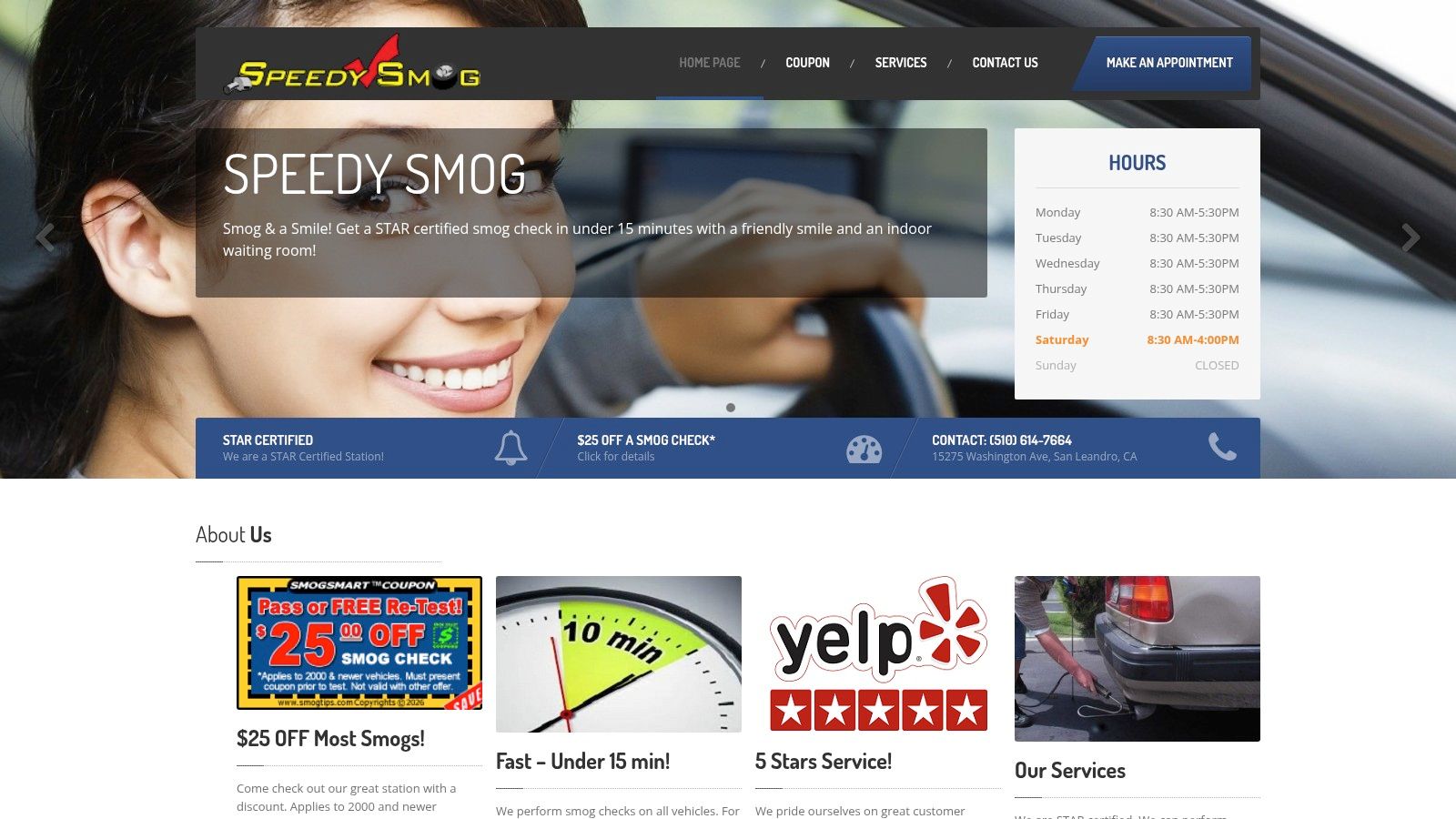
One point catches diesel owners off guard. For light-duty diesel vehicles with a GVWR of 14,000 pounds or less, California requires biennial smog inspections starting with model year 1998, and there is no eight-year model year exemption like the one many gasoline vehicles receive, as summarized in this discussion of California diesel inspection timing and diesel-specific exemptions. In other words, don't assume a newer diesel gets a pass just because it's relatively new.
For a shop-day prep list, this diesel smog inspection checklist for California drivers is a practical reference.
What to do before you leave home
- Drive it long enough to fully warm up. A short freeway run or normal steady driving helps more than idling in the driveway.
- Make sure the battery hasn't been recently disconnected. If it has, the monitors may not be ready yet.
- Use the vehicle normally before the test. Last-minute code clearing is one of the easiest ways to create a “not ready” problem.
- Pay attention to smoke. If you can see unusual exhaust behavior during acceleration, deal with that first.
What to bring and what to avoid
Bring the paperwork that makes the visit simpler. Your DMV notice, registration information, and any recent repair records can help if there's a question about prior work or timing.
Avoid two bad habits. First, don't show up with the fuel level extremely low and hope for the best. Second, don't schedule a smog check immediately after major repairs unless you already know the system is ready.
The easiest diesel smog pass is the one you prepare for the day before, not the one you try to rescue in the parking lot.
Get Your Diesel Certified at Speedy Smog
Diesel smog check requirements feel complicated until you break them into the parts that matter. First, confirm whether your vehicle falls into the testing program. Then make sure the truck is fully ready for inspection, not just driving well. Finally, look hard at the common failure points: readiness monitors, smoke, and non-compliant modifications.
That approach saves time because it deals with the actual reasons diesels fail. It also keeps the process calmer. When owners know what the station is checking, they don't have to treat smog day like a surprise exam.
If you want a smooth visit, choose a shop that understands diesel-specific testing, current California rules, and the details that trip people up. A STAR-certified station with experienced technicians can spot issues clearly, explain what's happening in plain language, and help you get through the inspection without the usual confusion.
If your diesel needs certification in the East Bay, Speedy Smog is a practical place to get it done. The shop is STAR Certified, experienced with diesel inspections, and focused on quick, friendly service for San Leandro, Oakland, and nearby drivers. If you want a straightforward smog visit with people who know California diesel rules, book your test with Speedy Smog.