
You probably just got the bad news at a STAR station, or you're staring at a DMV renewal notice and wondering if there's a way to keep the car legal without starting from zero. In California, the word waiver gets thrown around like it's a shortcut. It isn't. The California DMV smog check waiver is a post-fail compliance path, and if you understand that upfront, you'll save yourself time, money, and a second trip to the counter.
Table of Contents
- What the California DMV Smog Check Waiver Really Is
- Who Qualifies and What the Income Limits Look Like
- Documents and Repair Receipts You Need Before Applying
- How to Apply Online and In Person Step by Step
- Common Roadblocks That Get Waivers Denied
- Waivers Versus Abatement Fees and Other Alternatives
- East Bay Drivers and the Speedy Smog Workflow
What the California DMV Smog Check Waiver Really Is
A failed smog slip is where the process starts. Drivers get stuck here because they keep asking whether the waiver is a pass or a skip. The California DMV smog check waiver is a post-fail compliance path for drivers who already failed, already repaired the car, and still cannot get it over the line.
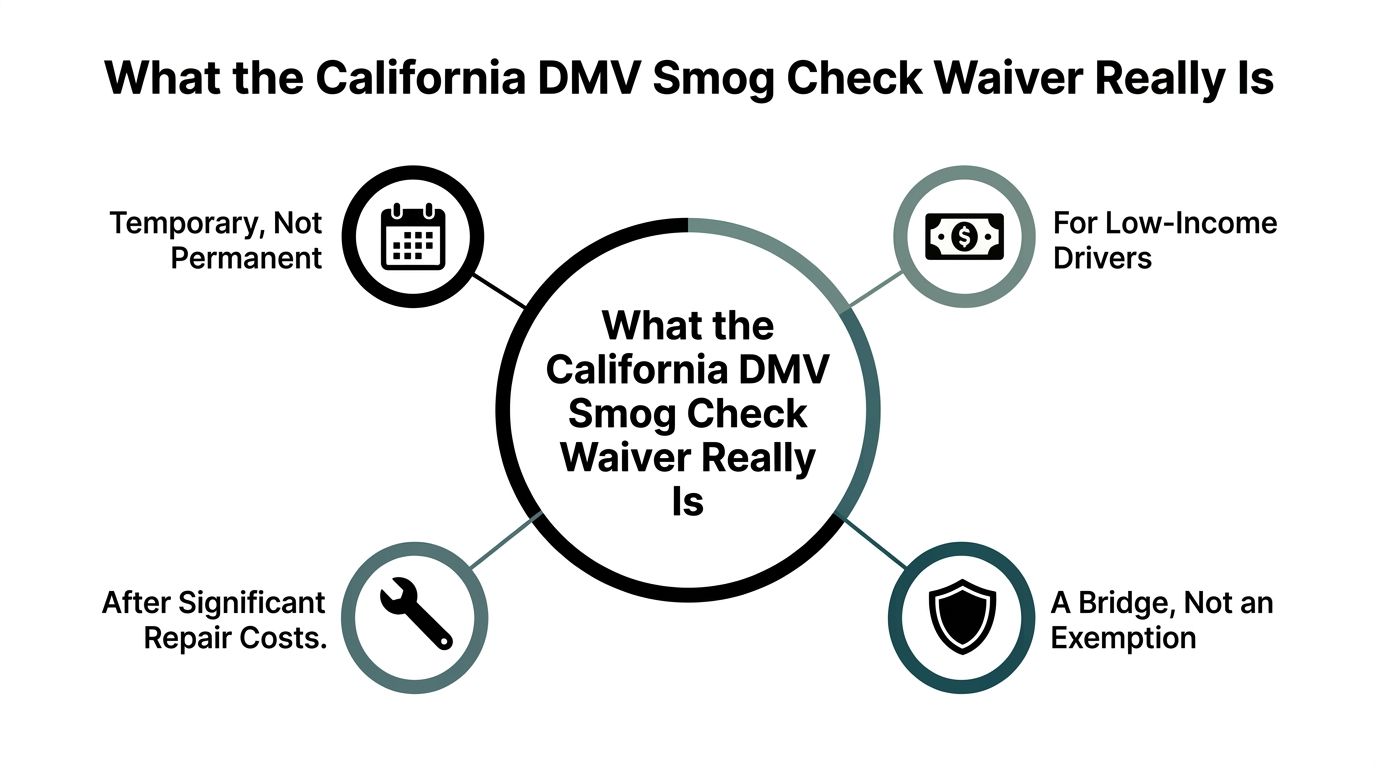
The waiver is the last step, not the first step
California's official guidance ties the waiver to a failed Smog Check and a documented repair sequence, not to a casual request at the DMV. The state factsheet says a low-income vehicle owner at or below 225% of the federal poverty level can still register for two years after a failed test, but only after spending at least $650 on emissions-related repairs, and the same factsheet notes CAP repair help can provide up to $500, with some applicants eligible for up to $1,500 in repair assistance, all tied to the repair path rather than a blanket exemption. California Senate Transportation Committee factsheet
That is why I tell drivers to stop treating it like a permanent DMV waiver. The BAR treats it as a documentation-based exception after the car fails, not a way to skip inspection from the start. If your vehicle has not failed, repaired, and gone through the right sequence, you are not in waiver territory.
If your repair bill is still short of the required threshold, use repair assistance guidance for East Bay drivers before you assume the waiver is off the table.
Hardship exemption and referee direction aren't the same thing
Drivers mix up three different things all the time. A repair cost waiver is for the failed-test, low-income, repair-spent case. A Hardship exemption is a separate relief path. A Referee-directed fix is what happens when the BAR Referee needs to look at the vehicle more closely and decide what the car needs next.
The clean way to handle it is simple, failed test first, repair second, paperwork third, then waiver or referee review if the car still cannot comply.
The BAR's own workflow says to address obvious fail conditions first, including a check-engine light or a recent battery disconnect that can leave readiness monitors incomplete. The certificate, once issued, is valid for 90 days, so do not let a good result sit around while you wait for the next DMV errand. BAR Smog Check guidance
Who Qualifies and What the Income Limits Look Like
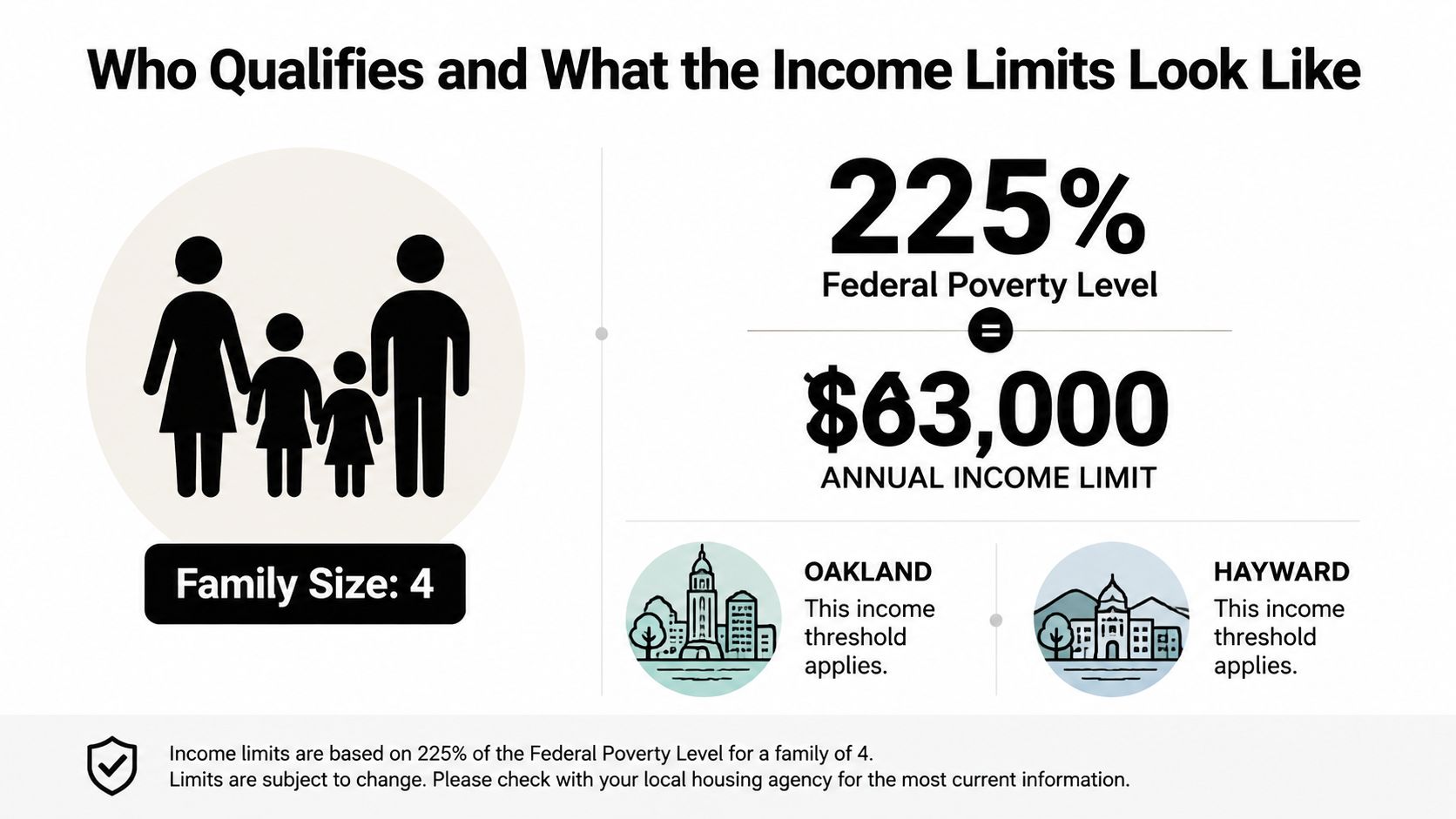
A lot of drivers learn the hard way that the waiver has an income screen, and that screen is strict. The waiver rewards documented repair effort from qualifying households, not casual requests at the DMV. The cutoff is tied to 225% of the federal poverty level, so the question is household income, not whether the car owner feels the repair bill was unfair.
Self-screen before you collect paperwork
For a family of four, the brief shows an annual income example of $63,000 at the 225% federal poverty level threshold. That number gives you a quick reality check before you spend more money on emissions work. If your household is smaller or larger, the income screen changes with the household size, so do not assume you qualify just because your personal paycheck looks modest.
Here is the practical move. If you are close to the ceiling, verify your household size and income first, then decide whether the waiver path is worth the trouble. I see drivers waste money because they fix the car first and ask about eligibility later. If you need a local place to start, use repair assistance guidance for East Bay drivers before you keep chasing repairs.
If you are not sure you are under the limit, verify the household numbers first, then decide whether the waiver path is worth pursuing.
The DMV's age-based exemptions sit next to this rule, and they matter because they are separate from waiver eligibility. Gasoline-powered vehicles 1975 year model or older are exempt, diesel vehicles 1997 and older are exempt, and gasoline-powered vehicles that are less than eight model-years old do not need a smog inspection. Starting January 1, 2019, vehicles under 4 model years old can pay a smog abatement fee instead of getting a smog inspection for the first 8 years they are registered. DMV smog inspection exemptions
For a local look at help with repair costs, see Speedy Smog repair assistance.
Documents and Repair Receipts You Need Before Applying
Missing paperwork is where good cases get derailed. I've seen drivers with a valid repair path get bounced because they showed up with a blurry receipt, a shop invoice that didn't break out the work, or no failed smog printout at all. If you want the waiver to move, show up organized.
Bring the full paper trail, not a pile of fragments
You need the failed Smog Check certificate, itemized repair invoices, proof of income, and vehicle registration. The repair invoices have to show what was fixed, not just that you paid somebody. If the receipt only says “repairs” or bundles everything into one lump total, that's weak documentation and it usually creates questions at the station or at the DMV counter.
Here's what I tell drivers to verify before they leave the shop:
- Failed Smog Slip: Keep the exact failure document from the inspection station.
- Itemized Emissions Receipts: Make sure parts, labor, and the emissions-related diagnosis are separated clearly.
- Proof of Income: Bring the documents needed to show your household fits the income ceiling.
- Registration Paperwork: Bring the current vehicle registration so the renewal file matches the car.
A cash payment without a receipt doesn't help you. A repair at a shop that isn't properly registered for the work can also create problems. And non-emissions repairs don't count toward the waiver threshold, so don't try to pad the total with unrelated work and hope nobody notices.
The BAR's process is built around the failed-test record, then the repairs, then the compliance review. That's why the paperwork has to match the car, the failure, and the specific emissions work that followed. If any one piece is missing, the whole packet gets weaker. For a status check before you go back to the shop, use how to check smog status.
How to Apply Online and In Person Step by Step
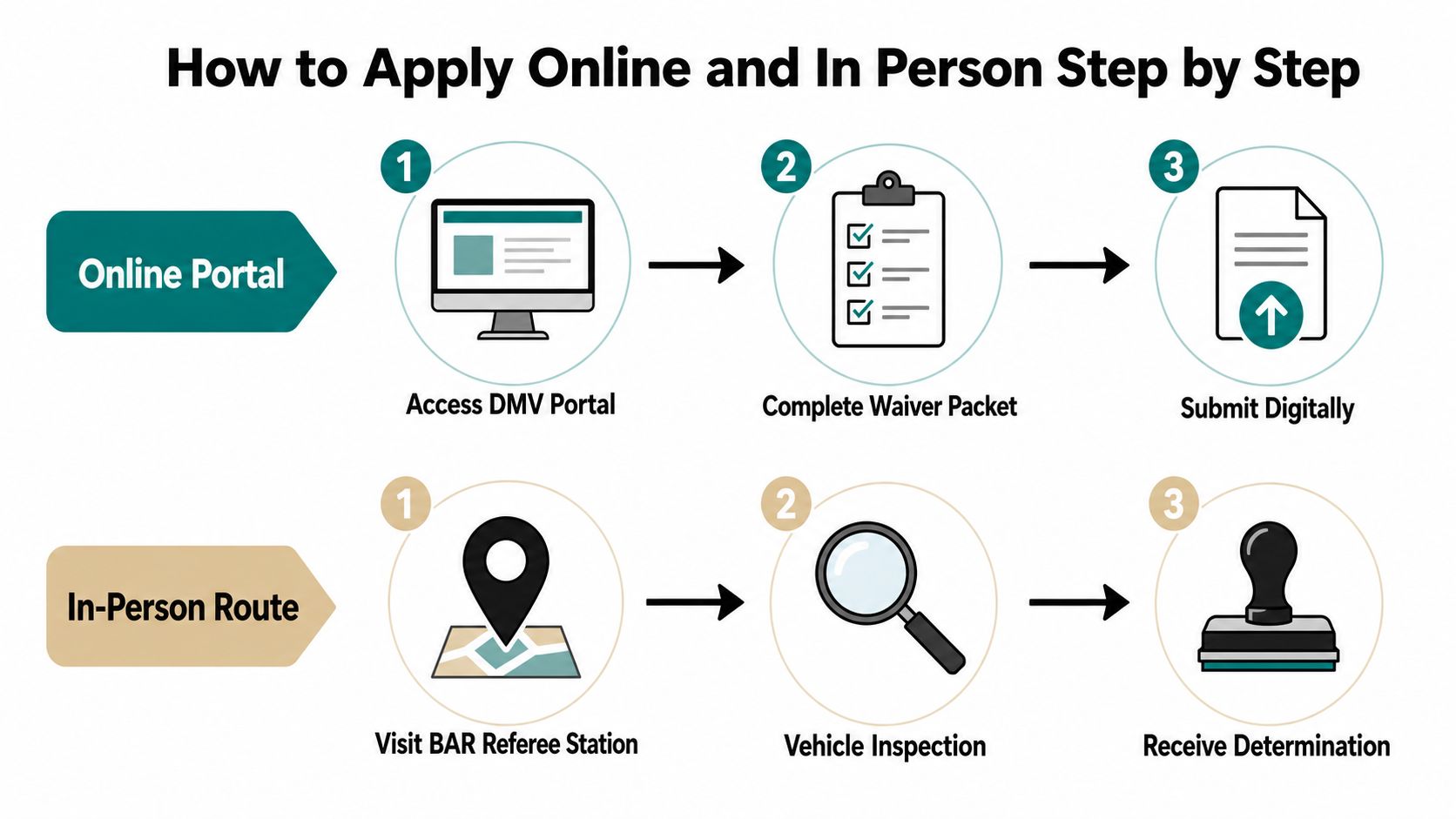
A San Leandro driver with a 2003 Tacoma, a failed smog test, and a stack of repair bills does not need a vague explanation. The waiver process has two real paths, and the one you choose depends on what the file looks like after the repairs. If the paperwork is complete, the DMV online portal is the cleaner route. If the case needs a closer look, the BAR Referee station is the right stop.
Online submission is for clean paperwork
Use the online route only when your packet is tight. Upload the failed smog paperwork, the repair invoices, and the income documents, then wait for the review tied to that renewal cycle. If a valid smog certificate is part of your path, keep the timing in view, because an expired certificate sends you back to the start on the calendar.
I see this most often with drivers who already paid for emissions work and want to finish the job without another shop visit. A San Leandro driver who put money into a catalytic converter and an O2 sensor replacement belongs in this lane if the car still will not pass after those repairs. The spending only helps if it is documented, tied to emissions work, and matched to the failed test.
Referee review is for cases that need a human decision
The BAR Referee step is a different process. It is not a regular smog check with a different label. The Referee reviews the vehicle, the failures, and the repair history, then decides whether the car should go toward a directed fix or a waiver path.
The payoff here is clarity. If the repairs are done but the car still does not comply, the Referee gives the state a final look at the file instead of forcing the owner to guess what to do next.
That matters in the East Bay, where drivers often assume one shop visit should settle everything. It usually does not. The Referee is the point where the paperwork, the repair record, and the vehicle's current condition get checked together, so the compliance path is clear before you waste time chasing the wrong fix.
Common Roadblocks That Get Waivers Denied
The biggest mistake is assuming the waiver can rescue a car that never finished the compliance workflow. It can't. If the car still has an obvious fail condition, the packet is dead on arrival. BAR doesn't reward guesswork.
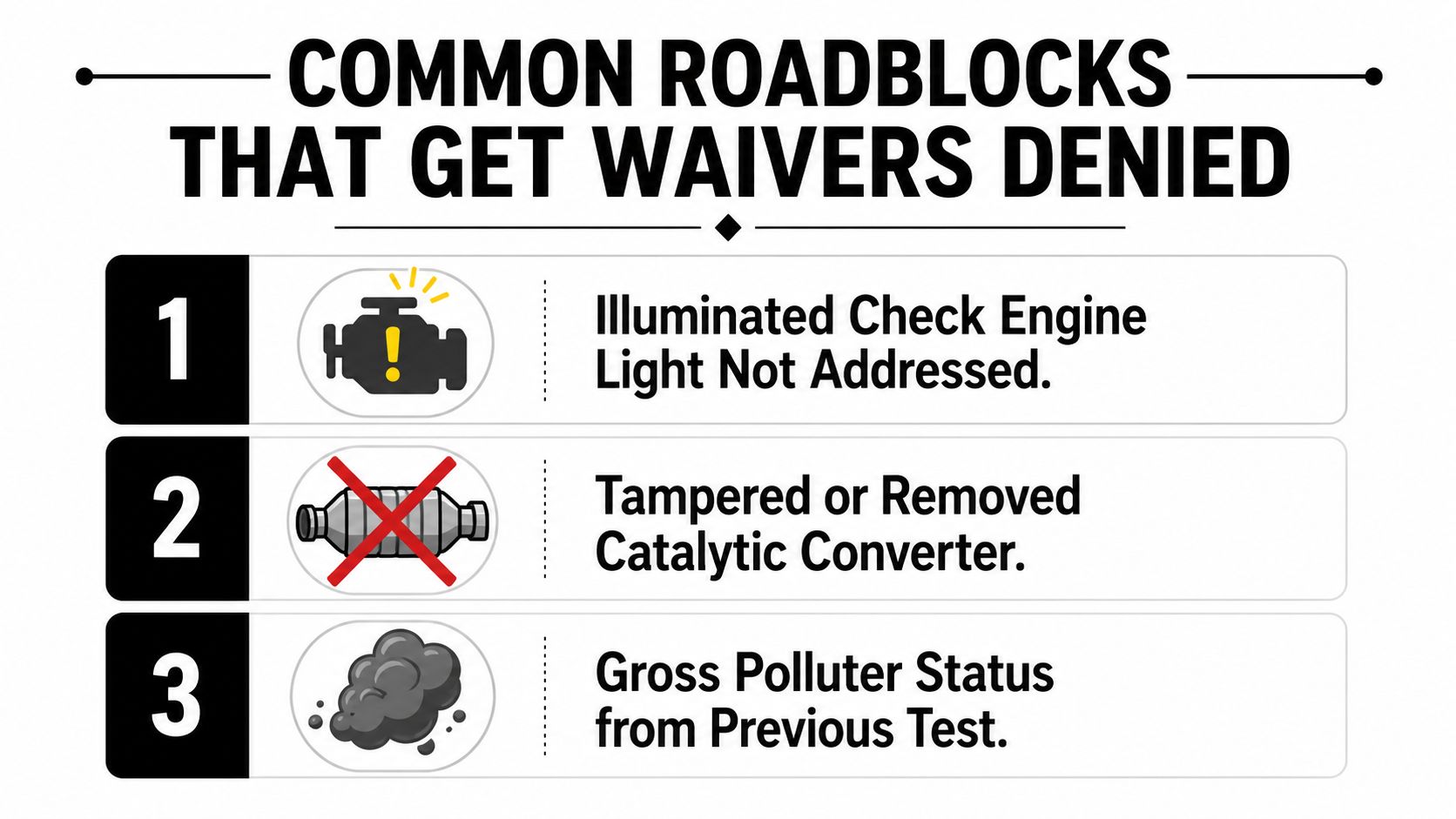
The three problems I see over and over
An illuminated check-engine light is a hard stop. The BAR says a vehicle with the light on will not pass, and that alone can sink a waiver packet if the underlying issue wasn't properly addressed. A recent battery disconnect can also leave readiness monitors incomplete, which means the car looks unfinished even if the owner thinks it's repaired.
Tampered emissions equipment is another dealbreaker. If the catalytic converter has been removed or altered, don't expect the waiver to clean that up for you. The state's reference guide also makes clear that a gross polluter vehicle is not the same thing as a normal repair-fail case, and that matters because the waiver isn't meant to paper over serious emissions abuse. BAR Smog Check reference guide
Here's the kitchen-table self-check I'd run before filing:
- Check the MIL first: If the check-engine light is on, fix the cause before you submit anything.
- Review readiness status: If the battery was disconnected recently, make sure the monitors have had time to reset.
- Inspect emissions hardware: Look under the car and verify nothing has been removed, swapped, or tampered with.
- Confirm the failure trail: If there was no proper failed Smog Check, you're not in waiver territory yet.
The state wants a failed test, a real repair attempt, and a vehicle that still can't comply. If any one of those pieces is missing, don't blame the DMV when the answer comes back no. The issue is usually the packet, not the program.
Waivers Versus Abatement Fees and Other Alternatives
The waiver is not always the right answer. Sometimes you're in a relief category that's simpler, cheaper, or automatic. The mistake is forcing every car into the same box when California has separate rules for age, fuel type, and repair assistance.
Choose the path that actually fits the car
A 2022 SUV doesn't belong in the same lane as an old Civic. A 1998 Civic is closer to the normal smog workflow, unless it qualifies under another exemption or a repair-waiver situation. A 2005 diesel truck may sit in a different compliance category because diesel rules are separate from gasoline rules. If you're not sure which lane you're in, the DMV rule page is the place to compare the basic exemption categories first. California smog check rules
| Option | Who It Fits | Out-of-Pocket | Duration |
|---|---|---|---|
| Repair cost waiver | Low-income drivers with a failed Smog Check and qualifying repair spend | At least $650 in emissions-related repairs, per the factsheet | Up to two years for the current renewal cycle |
| Smog abatement fee | Some newer gasoline vehicles under the state's age rule | Fee instead of an inspection | For the first 8 years they're registered |
| Vehicle exemption | 1975 and older gasoline vehicles, 1997 and older diesel vehicles | No smog inspection required | Ongoing under current DMV rules |
| CAP repair assistance | Drivers who qualify for repair help | Up to $500, and some applicants up to $1,500 | Helps pay for repairs, not a blanket exemption |
If your car fits the age exemption, don't overcomplicate it. If it fits the abatement-fee rule, you're not shopping for a waiver. If you're a low-income driver with a failed car and real repair receipts, the waiver or CAP help may be the relevant lane. The key is picking the right lane before you start paying the wrong shop.
East Bay Drivers and the Speedy Smog Workflow
In San Leandro, Oakland, Hayward, and the surrounding East Bay, this process works best when drivers stop treating it like a paperwork mystery and start treating it like a sequence. At a STAR Certified station, the test itself is straightforward, and for 2000 and newer vehicles it's typically a quick visit, around 10 to 15 minutes according to the shop's published workflow. Older vehicles, diesels, and hybrids get handled too, but the point stays the same, get the inspection done cleanly, get the result recorded correctly, and then decide whether you're headed for repairs, the Referee, or a waiver packet.
A good STAR station matters because the first failure has to be documented right. If the car fails, that record is the backbone of everything that follows. If the issue looks like a referee case, the station should point you there instead of pretending every failure can be fixed in the driveway.
Here's the week-ahead plan I give East Bay drivers:
- Get the failure in writing. Don't rely on memory.
- Repair only emissions-related issues first. That's the money that counts.
- Keep every itemized invoice. No shortcuts, no merged receipts.
- Confirm readiness and the check-engine light status. Don't guess.
- If the car still can't pass, decide whether the waiver or Referee path fits.
Speedy Smog in San Leandro is one option for the inspection side of that workflow, and it sends results electronically to the DMV, which keeps the registration side cleaner when the paperwork is lined up. If you have your renewal notice, bring it. That simple habit saves time at the counter and avoids confusion when the file gets matched to the vehicle.
Will the waiver transfer to a new owner? No. The waiver is tied to the current registration and the current compliance cycle, not to a resale promise.
How long does the two-year extension really last? It lasts for the current renewal cycle under the waiver rule, not forever, and it doesn't erase the need to keep the car in compliance going forward.
What if the check-engine light comes on after the waiver is issued? You still have a vehicle problem. The waiver doesn't fix the car, it only bridges the registration side for the allowed period.
Do out-of-state moves reset the process? Not in the way people hope. If you bring the car back into California, you're still dealing with California's smog rules, not a clean slate.
If you want a straight answer on where your car stands, bring the failure paperwork, your repair receipts, and your registration to Speedy Smog. We handle STAR-certified inspections in San Leandro and can tell you whether you're looking at a normal retest, a referee path, or a waiver file that makes sense.