
How to Check Smog Status: California Guide 2026
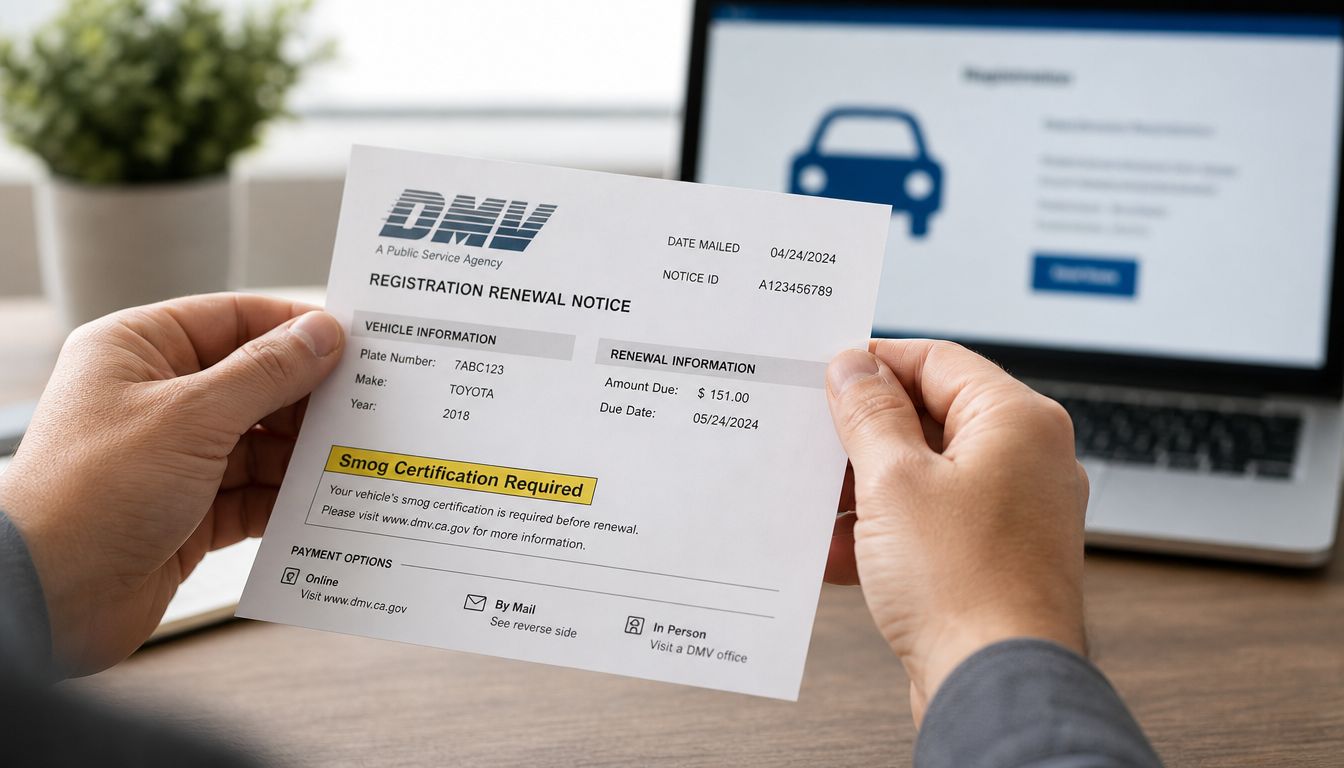
You open your DMV renewal notice, see Smog Certification Required, and the first question is usually simple: can I check online whether my car will pass before I drive to a station?
Not exactly.
When people ask how to check smog status, they usually mean one of two different things. They want to see their official smog check history, or they want to know whether the car is ready to pass before the test. Those are not the same thing, and mixing them up is where a lot of frustration starts.
If you handle those two checks the right way, you can avoid wasted trips, avoid an automatic failure for preventable reasons, and get your registration done with a lot less stress.
Table of Contents
- Understanding What Smog Status Really Means
- What You Need Before You Start
- How to Check Your Smog History Online
- Interpreting Your Smog Check Results
- Troubleshooting Common Smog Status Problems
- Your Next Steps for DMV Registration
Understanding What Smog Status Really Means
You get the renewal notice, see the smog requirement, and want to know one thing before you spend time at a station. Is the car going to pass? That is the part many drivers misunderstand.
“Smog status” is not a live pass-or-fail score you can pull from a state website. In practice, there are two things you can check before the test: the vehicle's smog check history and whether its emissions monitors look ready. The actual pass or fail decision happens during the inspection, based on the condition of the car that day.
That difference matters because it saves people from a common mistake. Drivers clear a check engine light, drive straight to a test station, and assume the car has a clean “status.” Then the car fails for incomplete readiness monitors before tailpipe emissions even become the issue.
What the DMV notice is really telling you
A DMV notice tells you whether California requires a smog certification for your registration. It does not tell you that the car is pre-approved to pass. It also does not mean every vehicle follows the same rule. Requirements vary by model year, fuel type, county, and whether the notice calls for a specific station type.
Some owners are exempt for a period of time, and some renewals are handled with an abatement fee instead of a physical inspection. Others must test at a STAR station if the notice says so. If your renewal paperwork specifies STAR, go to a STAR station the first time and avoid an extra trip.
Here is the practical way to read it: the notice tells you what DMV needs. Your history tells you what happened last time. Your readiness monitors tell you whether the car is prepared for a valid test today.
Practical rule: Online “smog status” means record history and test-related information. Pass or fail is decided at the station.
I tell customers this every week at Speedy Smog. If you want to avoid paying for a test too early, check the record, make sure the check engine light is off, and confirm the monitors are set before you come in. That is the closest thing to a useful pre-check.
For a plain-English explanation of exemptions, timing, and STAR requirements, see this guide to California smog check rules.
What You Need Before You Start
Checking your history is easy if you have the right identifiers in front of you. Most delays happen because the driver enters one character wrong, uses the wrong vehicle, or grabs an old document.
Keep it simple. Have these ready:
- License plate number: Use the current California plate exactly as it appears on the vehicle registration.
- VIN: The Vehicle Identification Number works as a backup if the plate lookup isn't convenient.
- Registration document: This helps you confirm you're checking the right vehicle and current registration record.
- Insurance card or policy document: Another easy place to confirm the VIN if you don't want to walk out to the car.
Where to find the VIN
The VIN is usually easiest to confirm in one of these places:
- Driver-side dashboard: Look through the windshield at the corner near the dashboard.
- Driver door jamb: Open the door and check the manufacturer label.
- Registration paperwork: The VIN is listed on the vehicle record.
- Insurance paperwork: Most cards or declarations pages include it.
If you're typing a VIN manually, slow down and compare it twice. One wrong character can make it look like the state has no history for your car when the issue is just an entry mistake.
Check the plate first, then verify with the VIN if anything looks off. That saves time and clears up most search errors fast.
How to Check Your Smog History Online
The official history lookup is the part many drivers are looking for when they search how to check smog status. This record won't predict your next result, but it will tell you what the state already has on file.
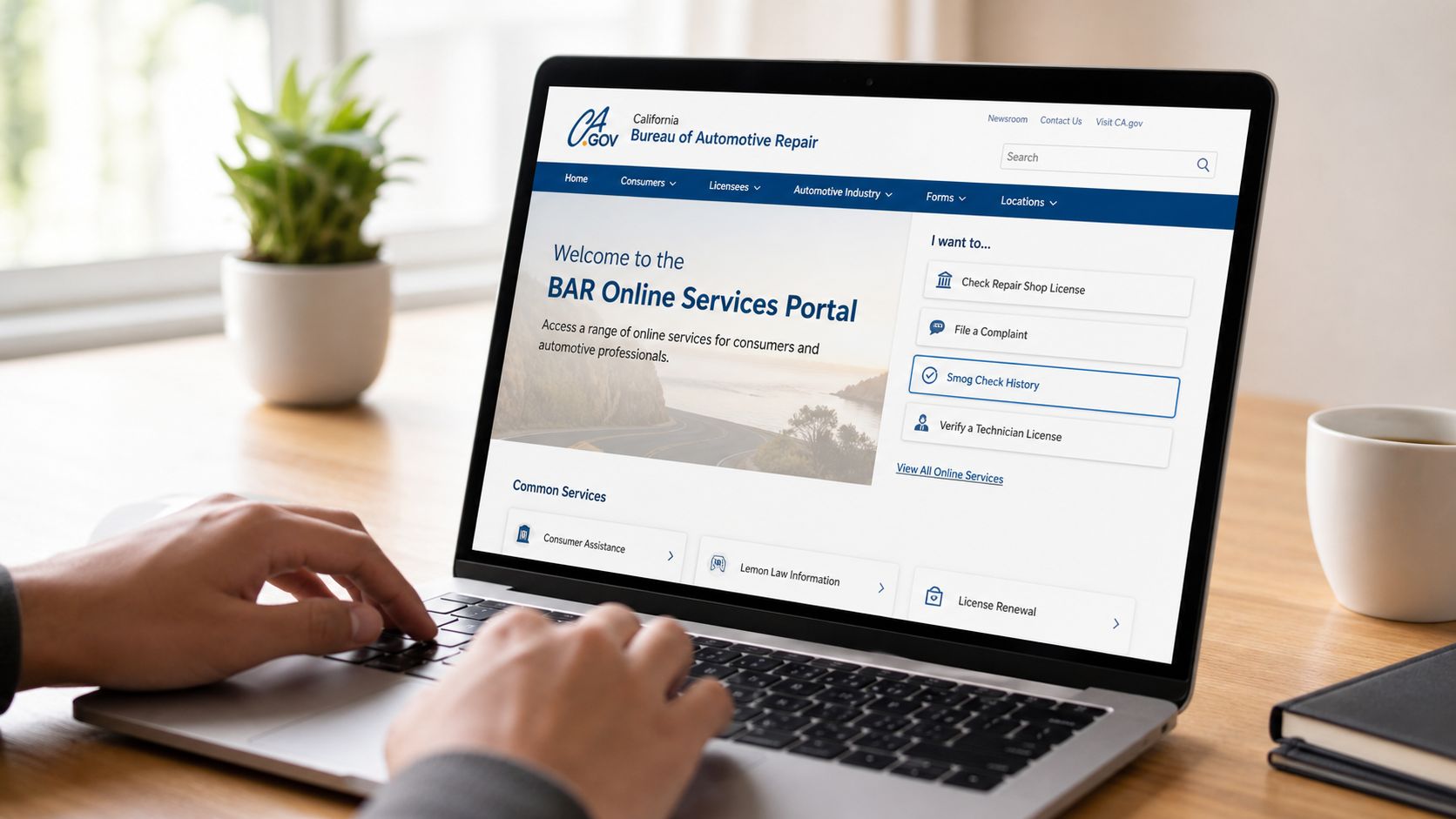
The key fact is straightforward. Vehicle owners can review history for free through the BAR website using a license plate number or VIN, and the tool shows past smog checks with dates and pass/fail results, as described in this guide to the BAR smog check history tool.
Use the official BAR record
Go to the Bureau of Automotive Repair's vehicle history service, not a generic DMV reminder page or third-party search result. You want the state record that tracks prior smog inspections.
Use a laptop or phone, but if you're entering a VIN manually, a full keyboard is easier and cuts down on mistakes.
Enter your plate or VIN carefully
Start with the plate number. It's faster and usually enough. If the result looks wrong, use the VIN to confirm.
A clean routine looks like this:
- Enter the plate exactly as shown on your current California registration.
- Run the search once and review the returned vehicle details.
- Use the VIN if needed when you want a second check or if the plate result doesn't match what you expected.
Small errors create big confusion here. An old plate, a transposed VIN character, or searching from paperwork for a different car in the household can make the record look missing.
Read the history like a registration record
What you're looking for is simple:
- Test dates: When prior inspections were performed
- Outcome: Whether each inspection passed or failed
- Inspection pattern: Whether the car has repeated failures, long gaps, or a recent pass already on file
That history is useful for more than curiosity. If you already passed recently and the record is visible, that gives you confidence before you jump into the registration process. If the record shows a fail, you know not to assume DMV renewal will clear until the vehicle passes.
A quick visual walkthrough helps if you prefer to see the process in action:
The BAR history tool answers, “What happened last time?” It does not answer, “Will I pass tomorrow?”
Interpreting Your Smog Check Results
A lot of drivers pull up their record looking for a simple yes or no. The record does not give you a future pass or fail status. It shows what happened on prior tests, and that distinction matters if you want to avoid wasting a trip to the station.
What a pass means
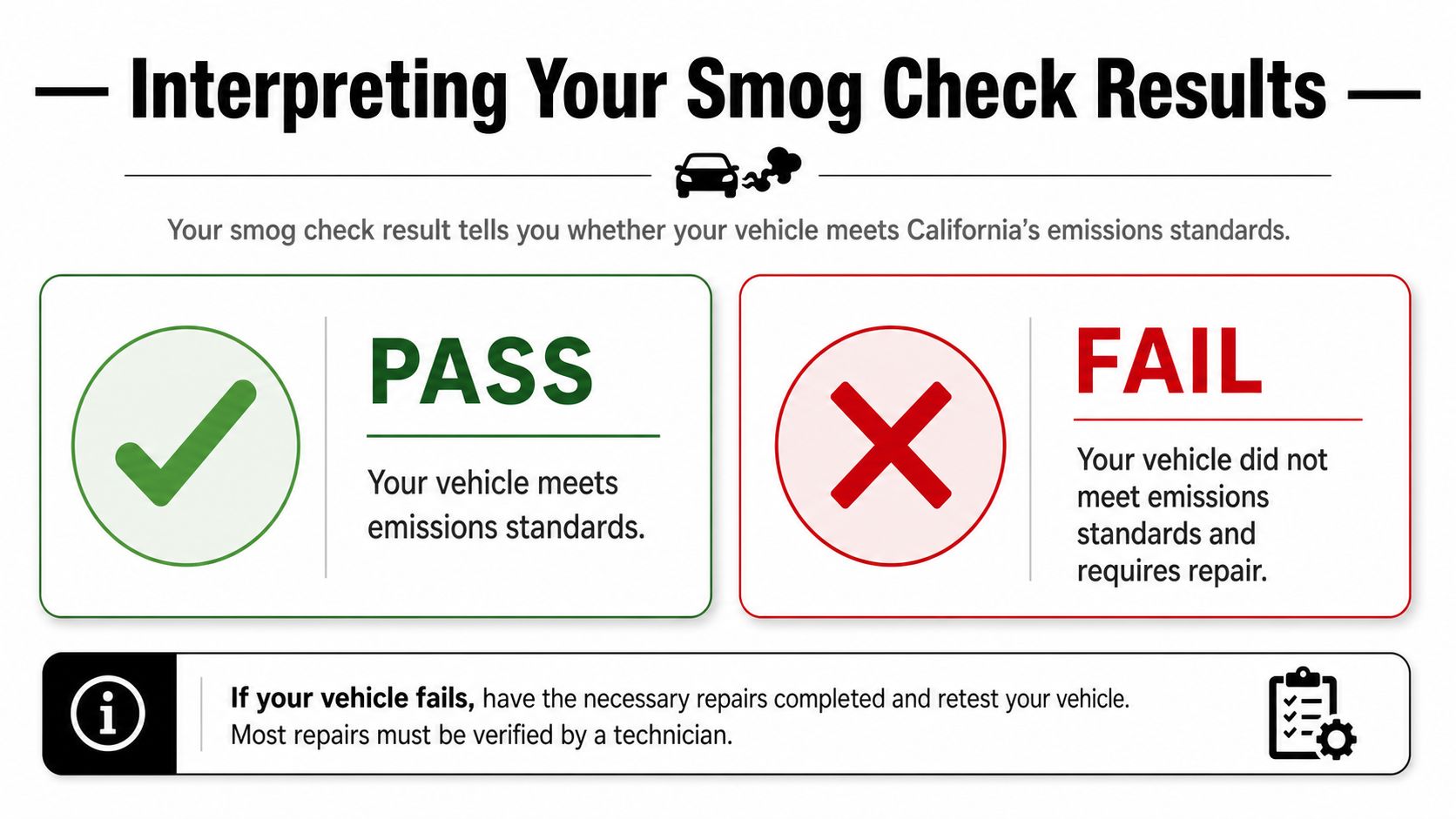
A Pass means the vehicle met the inspection requirements on that test date and the result was sent into the state system. For registration, what matters is whether that passing test lines up with your current renewal cycle.
If you just tested the car, give the system a little time to update. I see this all the time at the shop. A customer tests, checks online right away, and assumes the certificate did not go through. In many cases, the record just has not posted yet.
A recent pass on file is helpful. It does not replace checking your DMV notice for any special requirement tied to that renewal.
What a fail means
A Fail means the vehicle did not meet inspection requirements on that visit. The next step is to read the vehicle inspection report carefully, because the reason for failure changes what you should do next.
Some failures point to an emissions problem. Others happen before tailpipe numbers are the issue, such as an OBD readiness problem or a missing requirement tied to the inspection type. That is why a fail should be read as a diagnosis starting point, not just bad news.
If your renewal notice calls for a STAR station, keep that in mind before you book the retest. Passing at the wrong station type can still slow down registration.
Here is the practical read:
| Result | What it tells you | What you should do |
|---|---|---|
| Pass | The vehicle met inspection requirements on that date | Confirm the pass applies to your current DMV renewal |
| Fail | The vehicle did not meet inspection requirements | Read the inspection report, fix the cause, then retest at the right station if STAR is required |
What station type can tell you
Your history may also show where the inspection was performed. That detail matters if the DMV directed the vehicle to a specific station category.
A STAR station entry tells you the test was done at a station approved for vehicles that need STAR service. If your notice requires STAR, match that requirement before you test. It saves a lot of frustration.
If you want help reading the wording on a report line by line, including what different result labels mean, see this guide to smog test results.
Troubleshooting Common Smog Status Problems
You pull up your record, or you head in for a test, and something does not line up. That does not always mean the car has a major emissions problem. In my bay, the repeat trouble spots are usually much simpler: the wrong vehicle record, a monitor that has not reset, or a warning light that makes the test fail before the inspection really gets going.
When the site shows no record found
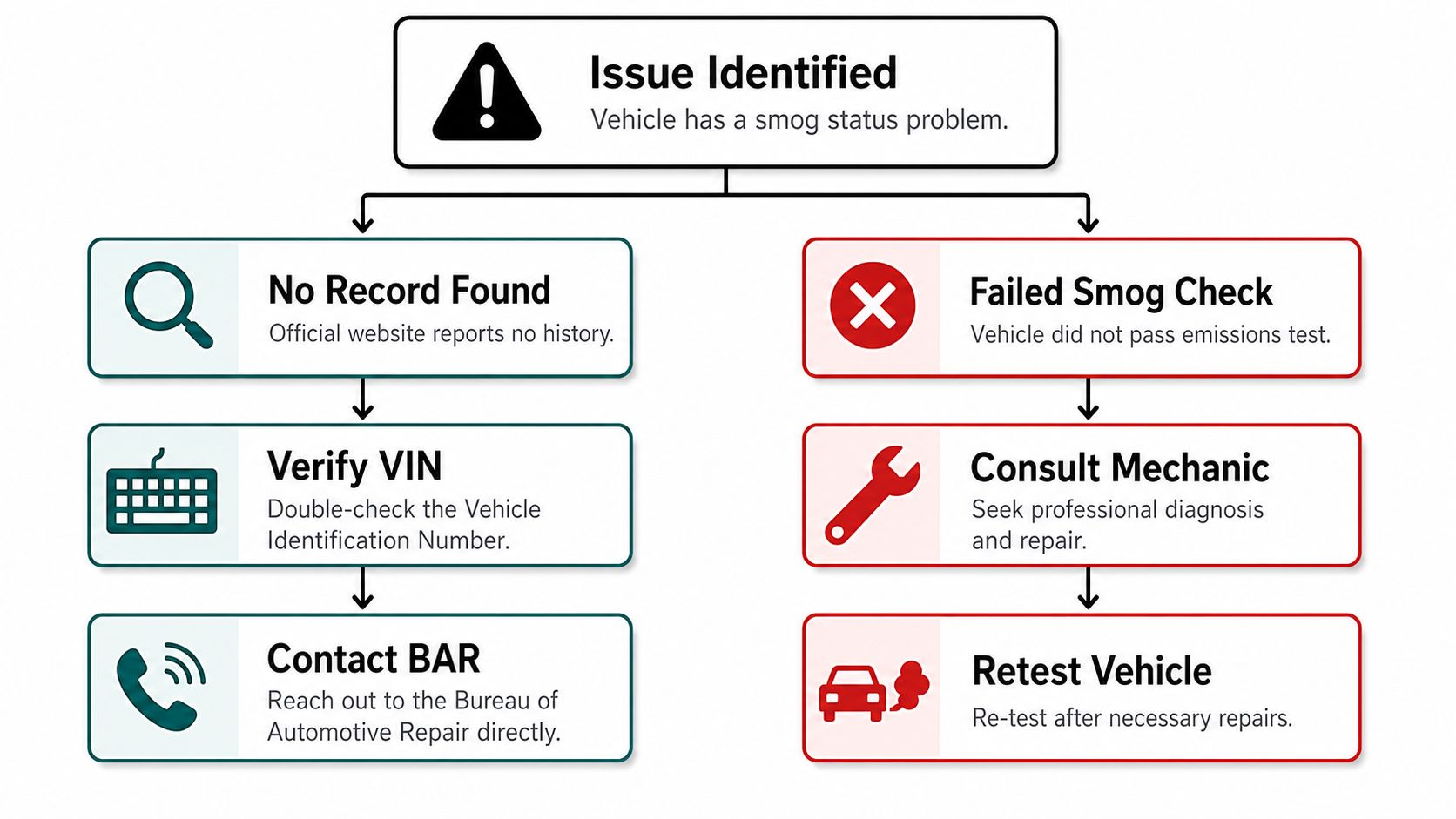
Check the vehicle information first. A bad lookup is often an input problem, not a state database problem.
- Recheck the VIN: One wrong character is enough to return nothing.
- Confirm the plate number: Old registration paperwork can send you to the wrong record.
- Make sure you picked the right vehicle: Families with multiple cars mix this up all the time.
- Try the other search method: If you used the plate first, run the VIN. If you used the VIN first, try the plate.
If the record still does not appear, have your registration in hand and contact BAR or check the DMV side of the process through this registration renewal walkthrough. That helps you separate a smog record issue from a renewal timing issue.
When the car fails before tailpipe emissions matter
This is the part many drivers misunderstand. You cannot check a future pass or fail status ahead of time. What you can check is whether the car is ready to be tested.
For many newer vehicles, the problem is in the OBD-II system. If the check engine light is on, or the readiness monitors are not set, the vehicle can fail even when it seems to drive normally. I see this after battery disconnects, recent repairs, and code clearing.
A car can feel perfectly fine and still be unready for inspection.
A practical pre-test routine
Use this before you spend money on a test:
Start with the check engine light
Turn the car on and look at the dash. If the light stays on with the engine running, fix that first.Check readiness monitors with a scan tool
Even a basic OBD scanner can show whether monitors are ready. This is the closest thing to a useful pre-check, and it is far more helpful than trying to guess your "smog status."Give the car enough drive time after repairs or a battery reset
If codes were cleared or the battery was disconnected, the monitors may go back to not ready. The car usually needs normal driving, sometimes over multiple trips, before those checks complete.Do not clear codes right before the test
Drivers do this hoping to turn off the warning light long enough to pass. What usually happens is the monitors reset, and now the car is still not ready.Retest after you confirm readiness
This saves a wasted trip and a failed inspection fee.
That trade-off matters. Waiting a day or two to confirm monitor status is usually cheaper than paying for a test the car was never ready to pass.
When the problem is the station, not the car
Sometimes the vehicle is fine, but the appointment creates the delay.
If your renewal notice requires a STAR station, go to a STAR station for the retest. If the VIN on the paperwork does not match the car in front of the technician, stop and fix the paperwork first. If the battery was replaced the same morning, hold off and verify readiness before you come in.
Those are the small mistakes that turn a routine smog check into a second visit.
Your Next Steps for DMV Registration
Once you've checked your history and confirmed where things stand, the next move is usually clear.
If your record shows a recent valid pass, complete your DMV renewal and keep your confirmation with your vehicle paperwork. If your DMV notice still requires a current inspection, schedule the test and make sure you use the station type named on the notice.
If your car failed, handle the repair first. If the issue involved readiness monitors, don't rush back immediately after disconnecting the battery, clearing codes, or finishing repairs. Give the vehicle time to complete its drive cycle and verify monitor status before the retest.
A few final checks make the process smoother:
- Review the DMV notice carefully: Look for any STAR station requirement.
- Bring the right vehicle information: Registration details and VIN should match the car you're testing.
- Don't ignore warning lights: A lit check engine light is a stop sign, not a maybe.
- Use history and readiness together: One tells you what the state recorded. The other tells you whether the car is likely prepared for inspection.
If you want a plain-language reference before renewing, this walkthrough of the registration renewal process helps connect the smog side to the DMV side.
If you need a fast, compliant inspection in the East Bay, Speedy Smog in San Leandro is a STAR Certified station that handles most vehicles efficiently, including newer cars, older vehicles, diesels, and hybrids. It's located at 15275 Washington Ave, San Leandro, CA 94579, and typical tests for many 2000 and newer vehicles are completed in about 10 to 15 minutes. If your renewal notice says it's time, stop by for a Smog & a Smile.