
In California, gasoline and hybrid vehicles from model year 1976 and newer generally need a smog check, while 1975 and older vehicles are generally exempt. The DMV renewal notice controls what's required for your vehicle in any given year.
You're holding the renewal notice at the kitchen counter, or you've just bought a used car and the seller says, “It probably doesn't need smog.” That's where confusion starts. The model year gives you the starting point, but the transaction determines the test requirement.
For East Bay drivers, the three situations that matter are registration renewal, ownership transfer, and first California registration. A newer vehicle may skip a routine renewal inspection but still need a test when it comes from another state. An older vehicle may fall inside the program but be treated differently depending on whether you're renewing, selling, or registering it for the first time in California.
Table of Contents
- The Quick Answer Every East Bay Driver Wants
- The 1976 Cutoff and the Big Exceptions
- How the Eight-Year Renewal Exemption Works
- OBD-II Versus the Older Tailpipe Test
- Real Situations That Change the Answer
- What to Do Before You Head to a Smog Shop
- Putting It All Together for Your Next Renewal
The Quick Answer Every East Bay Driver Wants
If you're asking what year cars need smog in California, start with model year 1976. Gasoline, flex-fuel, hybrid, and other qualifying alternative-fuel vehicles from 1976 and newer generally fall under California's Smog Check program. Vehicles from 1975 and older are generally exempt, according to the California Bureau of Automotive Repair's vehicle coverage guidance.
That answer is useful, but it isn't the final answer for your DMV paperwork. Your DMV renewal notice is the authority for what you must do now. It will tell you whether the state wants a smog certificate, a fee during the newer-vehicle exemption period, or another form of compliance.
A 2020 hybrid, for example, is inside the general program because it's newer than the 1976 cutoff. That doesn't mean it needs a smog inspection every time the owner renews registration. Newer vehicles receive an age-based exemption for routine renewal, and the relevant transaction can change the result.
Use this three-question check at the counter:
- Is this a registration renewal? The vehicle's model year and age-based exemption determine when recurring inspections begin.
- Is ownership changing? The change-of-ownership exemption is shorter than the renewal exemption.
- Is this the vehicle's first California registration? An out-of-state vehicle from model year 1976 or newer generally needs a Smog Check for that initial California registration event.
Practical rule: Don't schedule a test based only on the year printed on the title. Read the DMV notice first, then match the test to the transaction.
The rest of the rules make sense once you separate those three situations. The 1976 cutoff tells you whether the vehicle is generally in the program. The renewal and transfer exemptions tell you when a test starts. The registration history tells you whether an exception applies.
The 1976 Cutoff and the Big Exceptions
California's foundational line is simple: 1976 and newer generally means Smog Check territory, while 1975 and older generally means exemption. BAR specifically identifies gasoline and flex-fuel vehicles from model years 1976 through 1999 as generally requiring a Smog Check, with 1975 and older gasoline and flex-fuel vehicles generally exempt. Hybrids and other qualifying fuel types can also fall within the program, so “hybrid” doesn't automatically mean “no smog.”
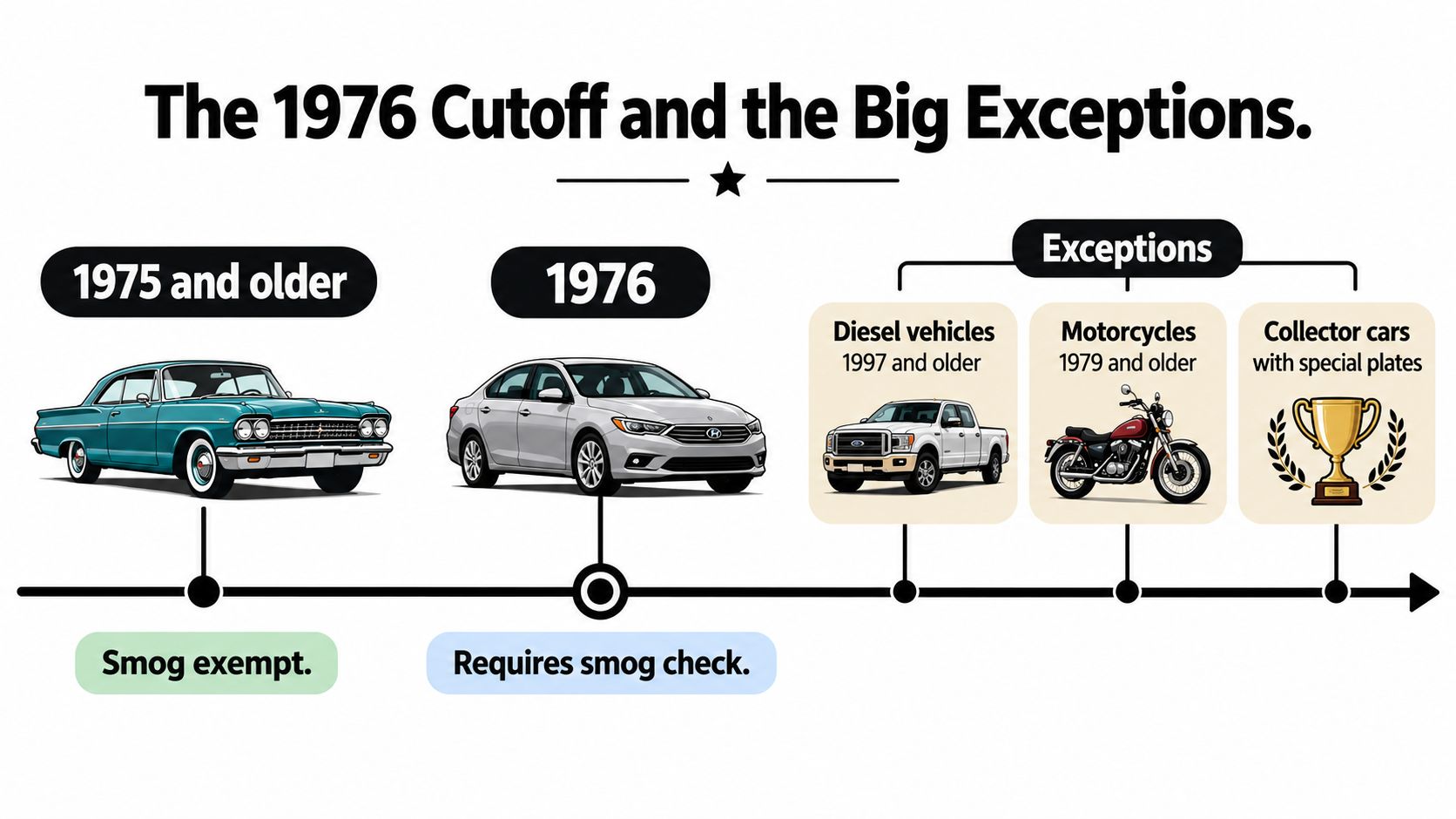
A 1972 Mustang is generally outside the program because it predates the cutoff. An 1985 gasoline sedan is generally inside it, even if it's well maintained and driven only occasionally. The age of the car doesn't move the legal line. Its model year does.
Weight and inspection equipment matter
The standard answer changes when the vehicle falls outside the usual passenger-vehicle category. For 2000-and-newer vehicles with a gross vehicle weight rating of 14,000 pounds or less, California generally uses an OBD-II-based inspection. Vehicles above that weight, or vehicles without the applicable onboard diagnostic system, may follow a different testing path.
That's why I don't give a blanket answer based on the year alone. A heavy vehicle, unusual fuel type, missing diagnostic system, or special registration status can change how the inspection is performed.
The out-of-state exception catches people
BAR states that all out-of-state 1976-and-newer vehicles need a Smog Check for first-time California registration. That requirement can apply even when the vehicle is still within the normal exemption period for a recurring California renewal.
If you've brought a vehicle to San Leandro from Nevada, Oregon, Arizona, or anywhere else, don't assume its previous state inspection carries over. California's first-registration event is its own trigger. For older vehicles, the guidance for smog checks on older cars can help you identify which inspection path may apply.
How the Eight-Year Renewal Exemption Works
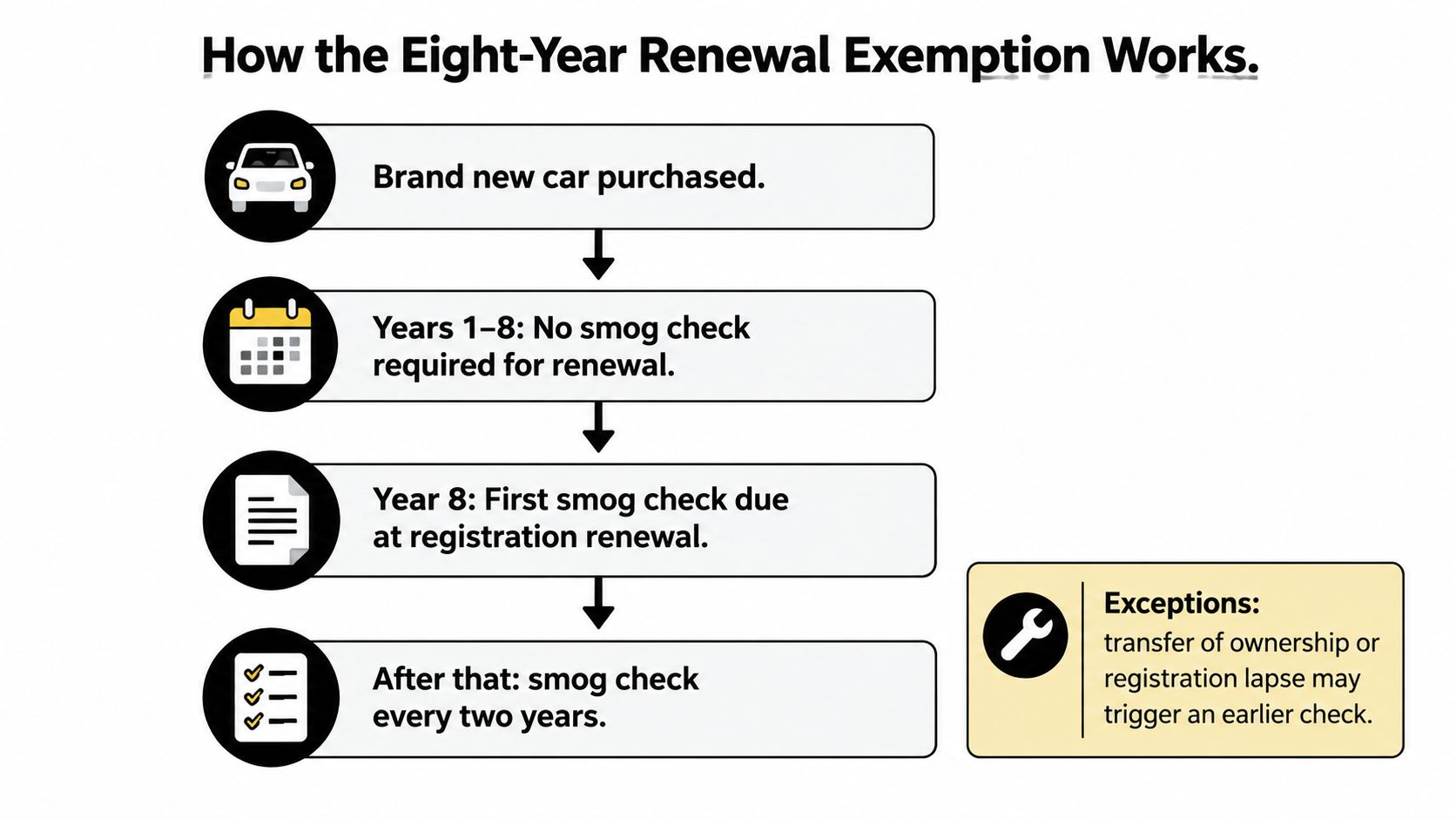
A newer car can be inside California's Smog Check program without needing an inspection at every renewal. For regular registration renewal, BAR says gasoline vehicles eight or fewer model years old are generally exempt from the biennial inspection. During that period, the owner generally pays a smog-abatement fee instead. The BAR renewal exemption guidance explains the practical calculation, add eight to the model year to find the first year a renewal inspection is generally required.
Take a 2020 model-year vehicle. Add eight to the model year, and the first recurring renewal inspection generally arrives in 2028. That's a model-year calculation, not a calculation based on the day you bought the car. The DMV notice still decides what you must complete for the specific renewal.
A 2018 model-year vehicle is already beyond that eight-model-year window. If its registration renewal calls for certification, the owner should plan for a smog inspection rather than assuming the car is still covered by the newer-vehicle exemption.
Renewal and ownership transfer use different clocks
The ownership-transfer rule is shorter. Vehicles four or fewer model years old are generally exempt from the change-of-ownership Smog Check, but the buyer pays a smog-transfer fee instead. BAR's practical method is to add four to the vehicle's model year to identify when that transfer exemption ends.
| Transaction | General age rule | What usually happens |
|---|---|---|
| Registration renewal | Eight or fewer model years old | Smog-abatement fee instead of the routine inspection |
| Ownership transfer | Four or fewer model years old | Smog-transfer fee instead of the transfer inspection |
| Older qualifying vehicle | Beyond the applicable exemption | Certification is generally required for the transaction |
A 2022 vehicle reaches the change-of-ownership threshold in 2026, while a 2018 vehicle is already beyond the four-model-year exemption. Those examples show why a car can avoid a renewal inspection yet still face a different requirement when sold.
For a practical explanation of the newer-car rule, see this guide to a California smog check for new cars. Then look at the paperwork, not just the calendar. An out-of-state vehicle, a registration event, or a transfer can override the assumption that the car is too new to test.
OBD-II Versus the Older Tailpipe Test
The inspection your car receives depends largely on its model year and equipment. California generally uses an OBD-II-based inspection for 2000-and-newer vehicles with a gross vehicle weight rating of 14,000 pounds or less. A technician connects to the vehicle's diagnostic port and checks the emissions computer rather than measuring the exhaust at the tailpipe.
A 1976–1999 gasoline vehicle generally receives the older BAR-97-style tailpipe inspection. That process evaluates emissions coming out of the exhaust, so it measures a different part of the vehicle's emissions system than an OBD-II inspection.
| Model year | Typical test type | What it measures |
|---|---|---|
| 1976–1999 gasoline | BAR-97-style tailpipe test | Exhaust emissions at the tailpipe |
| 2000 and newer, up to 14,000 pounds GVWR | OBD-II-based test | Diagnostic data and emissions-system status |
| Outside the standard category | Different test path may apply | Vehicle-specific emissions requirements |
The failure patterns aren't the same. With an OBD-II test, a lit check-engine light, stored emissions fault, or incomplete readiness information can stop the vehicle from passing. Clearing the battery or a trouble code immediately before testing can also leave the computer without the information it needs to show that its self-checks are complete.
The older test focuses more directly on measured exhaust output. A clean dashboard doesn't guarantee a 1985 vehicle will pass if its actual emissions exceed the applicable limits.
The connector tells the technician what the computer sees. The tailpipe test tells the technician what the engine is actually producing.
Hybrids, diesels, vehicles above 14,000 pounds GVWR, and vehicles without the applicable onboard system can follow different testing rules. Don't choose a shop based only on the assumption that every car receives the same inspection. If you want the technical distinction in one place, review the explanation of OBD versus tailpipe testing.
Real Situations That Change the Answer
An Oakland resident moves back to California with a 2019 SUV purchased and registered in another state. The vehicle may still be within the regular renewal exemption period, but this isn't a routine California renewal. It's the vehicle's first California registration, and an out-of-state 1976-and-newer vehicle generally needs a Smog Check for that event.
That driver should read the DMV registration instructions and schedule the appropriate inspection before assuming the newer vehicle can skip testing. The previous state's inspection history doesn't erase California's first-registration requirement.
A San Leandro driver sells a 2016 sedan to a private buyer. The car is beyond the four-model-year ownership-transfer exemption, so the seller should expect a smog certification requirement for the transfer unless the paperwork or transaction falls under a separate rule. The fact that the vehicle may have passed a previous renewal test doesn't settle the transfer requirement.
That's the distinction people miss at the DMV. The model year sets the default, but the transaction type decides which rule applies.
Three quick counter examples
- A 1972 Mustang: Generally exempt because it's 1975 or older. The owner should still follow the DMV instructions for registration and title paperwork.
- A 2019 out-of-state SUV: Generally requires a Smog Check for first California registration, despite being a newer vehicle.
- A 2016 private-party sedan: Generally beyond the transfer exemption, so certification is generally needed for the ownership change.
The same vehicle can have different requirements at different points in its life. Ask whether you're renewing, transferring, or registering from out of state before asking only what year the vehicle is.
What to Do Before You Head to a Smog Shop
Run through this checklist before driving across the East Bay. It prevents wasted trips and helps the technician identify the right inspection quickly.
- Read the DMV notice. Confirm whether the state wants a renewal inspection, transfer certification, or first-registration test.
- Check the dashboard. A lit check-engine light is a warning sign for an OBD-II vehicle. Have the cause diagnosed before you pay for an inspection.
- Bring the paperwork. Take the renewal notice, registration, title or transfer documents, and any instructions from the DMV.
- Confirm the station type. Some DMV-directed vehicles must use a STAR Certified station. If your notice or vehicle record directs you to STAR, don't use a non-STAR location.
- Ask about preparation. The technician can tell you whether the vehicle needs a particular warm-up or readiness procedure before testing.
Speedy Smog is one San Leandro option for drivers who need a STAR Certified station and inspections for newer vehicles, older vehicles, diesels, or hybrids. Its site also publishes periodic $25-off coupons for most smogs on newer vehicles, so check the current offer before scheduling if your vehicle qualifies.
The practical point is simple: bring the notice and let the paperwork drive the appointment. A shop can inspect the vehicle, but the DMV decides which compliance event you're completing.
Putting It All Together for Your Next Renewal
Remember three anchors. 1976 generally defines which gasoline and qualifying alternative-fuel vehicles are in the Smog Check program. The eight-year renewal exemption and four-model-year transfer exemption determine when newer vehicles generally start needing certification. The transaction, renewal, transfer, or first California registration, determines which rule applies.
Before you book anything, read the DMV renewal notice. That one habit prevents most confusion and keeps you from paying for the wrong type of appointment.
For an East Bay inspection, visit a STAR Certified station such as Speedy Smog in San Leandro, where staff can check the requirement against your paperwork and handle many 2000-and-newer tests efficiently.
Bring your DMV notice to Speedy Smog in San Leandro for a STAR Certified inspection matched to your renewal, transfer, or California registration requirement. The shop handles newer vehicles, older cars, diesels, and hybrids, so you can confirm the correct test before getting back on the road.
You've paid your California registration fees, received the confirmation email, and expect the renewal sticker to be ready. Then the DMV record still says smog certification required. For East Bay drivers, that frustrating situation usually doesn't mean the payment failed. It means the registration record hasn't received a passing emissions result connected to the vehicle identification number, or VIN.
California's DMV smog rules connect three separate steps: the state's emissions inspection, the electronic transmission of the result, and the DMV's decision to release the registration. A renewal payment alone doesn't complete the process when the notice still requires smog certification. The practical questions are simple, but the answers depend on the vehicle's year, fuel type, test path, renewal notice, and station requirements.
Table of Contents
- When the Renewal Stalls at the DMV Counter
- What a California Smog Check Actually Does
- OBD vs Tailpipe vs Diesel: Which Test Your Car Gets
- When California Requires a Smog Check
- Exemptions Most Drivers Get Wrong
- STAR Stations and When You Have to Use One
- The Renewal Bottleneck and How to Clear It
- A Simple Pre-Renewal Checklist for East Bay Drivers
When the Renewal Stalls at the DMV Counter
At a Concord DMV counter, a driver may arrive with a paid renewal receipt and a confirmation email, expecting only the sticker to remain. The clerk checks the registration record and sees that the vehicle still needs a smog result. The clerk isn't looking for proof that the fee was paid. The system is looking for a passing certificate attached to the correct VIN.
That's the part many drivers don't see. The DMV uses the smog result as a registration condition, while the licensed station performs the inspection and sends the outcome electronically. The California DMV's smog inspection guidance explains that paying registration fees doesn't finalize renewal when certification is still required.
Why the renewal barcode matters
Your renewal notice includes a barcode that helps the station identify the correct DMV transaction. When the technician scans or enters that information, the station can transmit the result to the appropriate registration record. The vehicle's VIN remains the central identity check, so a correct license plate alone isn't enough if the VIN was entered incorrectly.
Bring the complete renewal notice to the appointment, not just a phone photo of the payment confirmation. If the notice says STAR, choose a station authorized for that requirement before testing. A standard station may be able to inspect the vehicle, but it might not be authorized to complete a STAR-only transaction.
Practical rule: Payment starts the renewal. A passing, correctly transmitted smog result finishes the part that DMV still has on hold.
If you're already facing this problem, a smog check for registration renewal can help identify whether the issue is the test itself, the station designation, or the electronic record. Ask the technician to confirm the VIN, plate information, and transmission status before you leave.
The rest of the process follows the same sequence: identify whether the vehicle needs testing, determine which inspection applies, select the correct station, complete the test, and verify that DMV receives the result. Once you understand that chain, “smog required” becomes a solvable workflow problem instead of a surprise at the counter.
What a California Smog Check Actually Does
A California Smog Check is an emissions inspection performed by a licensed Smog Check station under the Bureau of Automotive Repair, or BAR. The DMV doesn't perform the mechanical inspection. It uses the result to decide whether the vehicle's registration can move forward.
Think of the inspection as a physical for the vehicle's emissions system. The technician identifies the vehicle, checks relevant emissions equipment, connects to the diagnostic system when applicable, and follows the test procedure assigned to that vehicle. The station then reports a pass or fail electronically.
What the technician is checking
For a newer gasoline vehicle, the technician may connect to the diagnostic port and review data stored by the car's onboard computer. That data can include diagnostic trouble codes, warning-light status, and readiness monitors that show whether the vehicle has completed its emissions self-tests.
Older gasoline vehicles may receive a tailpipe inspection instead. In that case, the equipment measures exhaust gases while the vehicle runs through the specified test conditions. The technician isn't just checking whether the exhaust looks clean. The machine evaluates emissions against the applicable standards.
The program also includes many diesel vehicles. BAR's Smog Check Reference Guide identifies separate requirements for gasoline, hybrid, alternative-fuel, and diesel vehicles, with the inspection path determined by model year, fuel type, and vehicle weight.
Which vehicles are generally involved
Most newer gasoline cars, flex-fuel vehicles, hybrids, and alternative-fuel vehicles fall within the program. Older gasoline vehicles may use the BAR-97 tailpipe system. Diesel vehicles within the applicable weight range follow a separate track, while some vehicles are outside the regular passenger-vehicle process.
The renewal notice is the most useful first check. If it includes a smog certification requirement, treat that notice as your instruction for the current registration event. If no smog line appears, the vehicle isn't being asked for certification in that cycle.
The certificate belongs to the vehicle's VIN, not to the driver who paid for the test. You can't transfer a passing result from one car to another, and a payment record doesn't replace certification for the specific vehicle being renewed.
OBD vs Tailpipe vs Diesel: Which Test Your Car Gets
At a DMV renewal counter, the test type can determine whether your paperwork moves ahead or stops. California uses different inspection paths because vehicles report emissions information in different ways. Newer gasoline vehicles generally use onboard computer data, older gasoline vehicles may require direct exhaust measurement, and diesel vehicles follow their own combination of checks.
The three practical paths
OBD inspection. Most 2000-and-newer gasoline, flex-fuel, hybrid, and alternative-fuel vehicles receive an OBD-based inspection. The technician connects to the diagnostic port and reviews emissions-related data stored by the vehicle. A failure can result from unresolved faults or from required readiness monitors that have not completed.
The Smog Check Manual explains that incomplete readiness monitors can cause a 2000-and-newer gasoline vehicle to fail, with the evaporative-system monitor handled under the stated exception. Clearing a check-engine code immediately before testing may not help. The computer can still show that its self-tests are incomplete.
BAR-97 tailpipe inspection. Most 1999-and-older gasoline vehicles use the BAR-97 system. A probe samples exhaust while the vehicle runs under the required conditions. The technician also completes the related visual and functional portions of the inspection.
Diesel inspection. 1998-and-newer diesel vehicles at or under 14,000 pounds GVWR require Smog Check when they fall within the applicable program scope. The procedure varies by vehicle and weight class and may combine OBD information with emissions or opacity testing. Diesel vehicles above that weight threshold follow a different regulatory path, rather than the regular passenger-vehicle Smog Check process.
A limited group of 2000-and-newer gasoline vehicles cannot use the standard OBD inspection and may be directed to BAR-97 tailpipe testing. The station determines that route from the vehicle information and BAR procedures.
| Vehicle Year | Fuel Type | Test Type |
|---|---|---|
| 2000 and newer | Gasoline, flex-fuel, most hybrids, alternative fuel | OBD-based inspection, unless BAR routes the vehicle to BAR-97 |
| 1999 and older | Gasoline | BAR-97 tailpipe inspection |
| 1998 and newer | Diesel at or under 14,000 pounds GVWR | Separate diesel inspection path |
| Above 14,000 pounds GVWR | Diesel | Different CARB emissions program, not a regular passenger-vehicle Smog Check |
Station choice can matter when the renewal deadline is close. An OBD vehicle needs a station equipped to read its computer data, while an older gasoline vehicle needs BAR-97 equipment and the correct procedure. STAR station requirements may also apply to a particular renewal, so confirm the notice before booking. If you are unsure, review this guide to identifying the right Smog Check before choosing a station.
When California Requires a Smog Check
A Smog Check usually isn't an annual appointment for every California driver. The requirement is tied to registration events, and the renewal notice tells you whether certification is due for the current cycle.
The most common trigger is registration renewal. Other triggers include transferring ownership, registering an out-of-state vehicle in California for the first time, and certain out-of-state title or registration transfers. BAR specifically reports that out-of-state 1976 model-year and newer vehicles registering in California for the first time require Smog Check, subject to the applicable rules and exemptions. That requirement is described in the EPA overview of vehicle inspection and maintenance programs, which places California's program within the broader U.S. emissions inspection framework.
Read the notice, not an old calendar
Drivers often try to calculate the requirement from memory. That can lead to a missed test or an unnecessary appointment. Look for the smog certification line on the current renewal notice. If it appears, complete the inspection before the DMV can finalize the renewal.
A newer vehicle may follow a renewal pattern in which some cycles don't request smog certification, followed by more frequent testing as the vehicle ages. The exact obligation can depend on the notice and the vehicle's registration details, so don't rely on a generic rule when the DMV has already issued a specific instruction.
| Event | Smog Required? | Who Pays |
|---|---|---|
| Registration renewal | If the renewal notice says certification is required | Usually the registered owner |
| Change of ownership | Commonly required under the transfer rules | Typically handled by the seller before transfer |
| First California registration for an out-of-state vehicle | Generally required for in-scope vehicles | Usually the person registering the vehicle |
| Certain out-of-state title transfers | Depends on the transaction and vehicle record | The parties should confirm responsibility with DMV |
For an ownership transfer, the seller commonly provides a passing smog certification before handing over the title. The buyer shouldn't assume that any recent repair invoice or informal promise replaces the required certificate.
Commercial vehicles, diesel vehicles, and vehicles with special registration classifications can follow different schedules or programs. When the notice and the vehicle category don't seem to match, ask the DMV or a BAR-licensed station to verify the record before paying for a test.
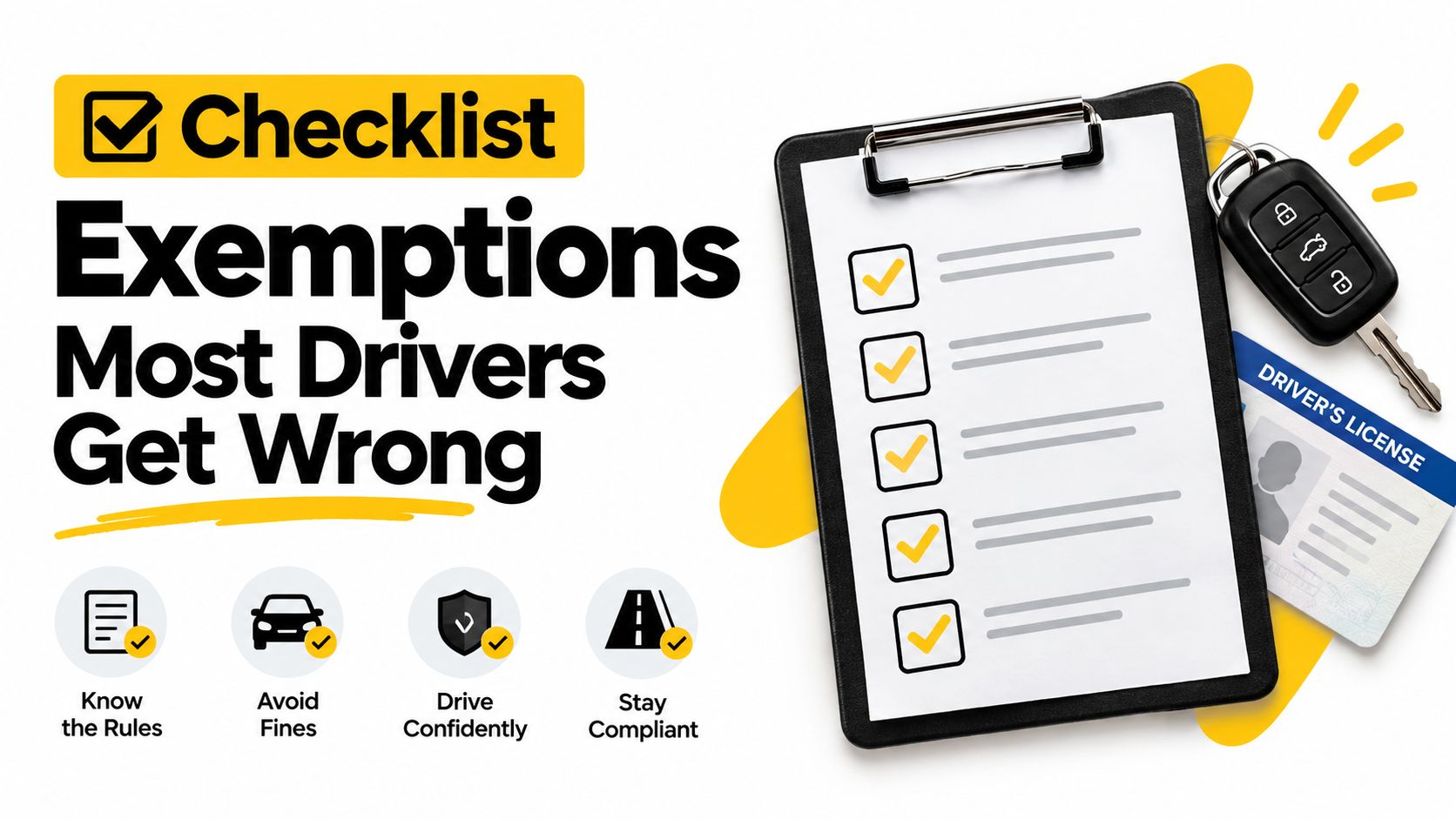
Exemptions Most Drivers Get Wrong
California's exemptions are narrower than many drivers expect. A vehicle's age, fuel type, registration classification, and construction can matter, but popular assumptions often don't remove the requirement.
Common exemption categories include:
- Current model year: A brand-new vehicle can be exempt during its initial registration period under the applicable rules.
- Older gasoline vehicles: Gasoline-engine vehicles from 1975 model year or older fall outside the regular requirement described in the program guidance.
- Electric-only vehicles: Battery-electric vehicles don't produce tailpipe emissions and are treated differently from gasoline hybrids.
- Motorcycles and most trailers: These generally don't receive the same passenger-vehicle Smog Check requirement.
- Special classifications: Specially constructed and historical vehicles may qualify under narrow conditions tied to their registration status.
What doesn't create an exemption
A hybrid isn't automatically exempt. Four-wheel drive doesn't remove the inspection requirement. Paying a higher registration amount doesn't substitute for certification, and a recent repair bill doesn't waive the test.
Diesel vehicles at or above 14,000 pounds GVWR aren't "free from emissions rules." They follow a different emissions track, so a driver needs to distinguish between exemption from the regular DMV Smog Check and compliance with other California emissions requirements.
A formal filing or approval may change the obligation in a specific case. Examples can include a properly filed non-operation status or an economic-hardship extension granted through the appropriate BAR process. Those outcomes depend on documentation and approval, not on a driver's personal belief that testing would be inconvenient or expensive.
The cleanest confirmation is the current renewal notice. If it has no smog certification line, the vehicle isn't being asked for a Smog Check in that cycle. If the line appears, assume the requirement remains until DMV or BAR records show otherwise.
STAR Stations and When You Have to Use One
A STAR station is a Smog Check station authorized by BAR to perform inspections under the STAR program. The key question isn't whether a shop can test cars generally. It's whether that specific station is authorized for the designation printed on your renewal notice.
A standard Smog Check station can handle many ordinary inspections. A vehicle previously flagged for additional scrutiny, referred for directed testing, or assigned a STAR-only requirement may need a station listed in the BAR STAR directory. The notice controls the choice.
Match the station to the notice
Look for wording such as STAR, STAR station, or STAR-only. If the notice gives the standard smog instruction without a STAR designation, a licensed station that performs the required test may be appropriate. If the notice requires STAR, verify the station's current status before making an appointment.
STAR testing can involve closer review of emissions components, tampering indicators, and the vehicle's computer information. A STAR station may be able to complete the required certification directly when the vehicle qualifies for that station's authority, instead of sending the driver elsewhere.
Station-choice rule: Don't choose a shop only because it's close. Choose one whose authorization matches the DMV instruction attached to your vehicle.
The explanation of what a Smog STAR station is can help you distinguish the program designation from ordinary marketing language. Ask the station whether it can complete a STAR-only test for your exact renewal notice before you arrive.
For East Bay drivers, station selection affects timing as much as location. If you test at the wrong type of shop, you may need another appointment, another inspection, or additional document review. Checking the notice first protects the renewal deadline and reduces the chance of leaving with a result DMV can't use for that transaction.
The Renewal Bottleneck and How to Clear It
The normal process is electronic. The technician uses the renewal notice and vehicle information, completes the inspection, and transmits the result to DMV. When the transmission matches the vehicle and transaction, the registration record can update without the driver carrying a paper certificate to a DMV office.
A stalled record usually has a practical cause. The result may still be processing, the technician may have entered a VIN incorrectly, or the station may have used information that didn't match the renewal notice. An old notice with a different barcode can also create confusion.
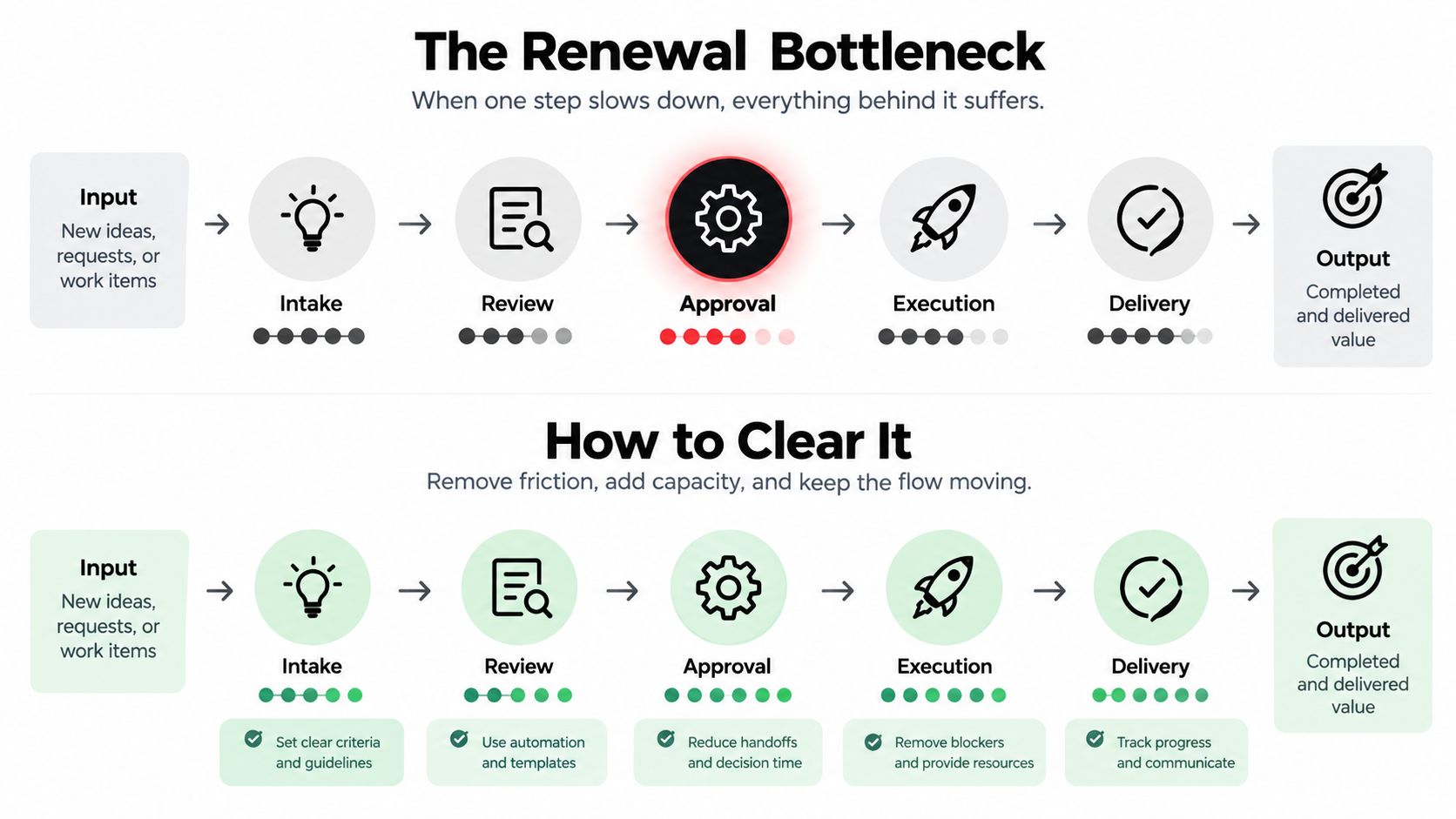
Use this order of checks
- Allow processing time. Give the electronic record time to appear before assuming the test failed.
- Check the registration record online. Use the DMV's available registration or tag-status tools to see whether the smog requirement remains.
- Call the station first. Ask the technician to verify the VIN, license plate, renewal barcode, and transmission confirmation.
- Contact DMV after the station review. If the station confirms correct transmission and the record still hasn't changed, DMV can investigate the registration file.
Don't schedule a second smog test before checking the first result. A repeat inspection won't correct a mismatched VIN or an unprocessed transaction, and it can make the record harder to interpret.
The process is designed to connect the inspection to the DMV file electronically, but drivers still need to provide the right notice and confirm the identifying information. That small preparation step is often what separates a completed renewal from another trip to the counter.
A short visual summary of the workflow appears below.
A Simple Pre-Renewal Checklist for East Bay Drivers
Use the current renewal notice as your starting document, then prepare the vehicle for the inspection path it requires.
- Drive enough mixed conditions: After battery service or emissions repairs, use normal city and highway driving to help the OBD system complete its self-checks. Your technician can tell you whether a specific drive cycle is needed.
- Check warning lights: The check-engine light should be off before testing. Don't erase codes immediately before the appointment, because clearing them can leave monitors incomplete.
- Inspect the gas cap: Make sure it seals correctly and isn't damaged.
- Review the notice: Confirm the vehicle information, renewal deadline, barcode, and any STAR instruction.
- Choose the right station: If the notice says STAR, verify that the station is currently authorized for STAR testing. Bring the full notice to the appointment.
- Allow processing time: Schedule the inspection early enough that an electronic transmission issue can be corrected before the registration deadline.
Don't wait until the last DMV business day if your renewal depends on certification. Early testing gives you time to address an incomplete monitor, a failed inspection, a station mismatch, or a delayed record.
Speedy Smog provides DMV smog checks in San Leandro for newer and older gasoline vehicles, hybrids, and applicable diesel vehicles, with electronic result transmission for registration workflows. Bring your renewal notice and vehicle, confirm whether STAR testing is required, and visit Speedy Smog to arrange the inspection before your DMV deadline.
Gasoline, hybrid, and alternative-fuel vehicles from model year 1976 onward generally need a California Smog Check for registration renewal, while diesel vehicles from model year 1998 onward generally fall under the program. For renewals, the first eight model years are usually exempt, while a change of ownership uses a shorter four-model-year exemption.
You may be dealing with this right after opening a DMV renewal notice. You expected a routine payment, but the notice says a smog certificate is required before registration can move forward. At the station, someone mentions your model year, fuel type, and possibly STAR certification, and suddenly a simple renewal feels like a puzzle.
The confusion makes sense. California doesn't use one universal rule for every vehicle. The answer depends on what powers the vehicle, when it was built, why you're registering it, and whether the DMV has directed you to a particular type of station. A neighbor's exemption may not apply to your hybrid, diesel van, or recently purchased car.
The easiest way to understand the system is to treat it like a decision tree. Start with fuel type, then check the model-year window, then look for a vehicle or transaction exemption. Finally, confirm whether your DMV notice requires a STAR station.
Table of Contents
- Why This Question Trips Up So Many California Drivers
- The Core Rule That Decides If Your Car Needs Testing
- How Model Year and Ownership Change the Answer
- Vehicles and Situations That Skip the Test Entirely
- When the DMV Expects You to Complete the Smog Check
- STAR, Test-Only, and Regular Smog Stations Explained
- A Simple Decision Framework for Your Own Vehicle
- Quick Answers to the Questions That Come Up Next
Why This Question Trips Up So Many California Drivers
A driver in San Leandro can walk into a DMV office expecting to renew registration in a few minutes and discover that the transaction is waiting on an emissions certificate. The clerk may ask for a smog result, mention that the vehicle is outside its new-car exemption, and tell the driver to find a STAR station if the registration record is directed.
That moment creates several understandable questions. Does every car need a test? Does a hybrid count as electric? Does an older diesel follow the same rule as a gasoline sedan? Does the station need to be STAR-certified, or can any licensed shop handle it?
California separates these answers across several layers:
- Fuel type: Gasoline, hybrid, alternative-fuel, diesel, and battery-electric vehicles don't all enter the program through the same gate.
- Model year: The state uses specific model-year cutoffs rather than a vague definition of “old.”
- Transaction type: Renewal and change of ownership use different exemption windows.
- Vehicle class: Motorcycles and electric vehicles are treated differently from ordinary passenger cars.
- Station direction: Some vehicles can use a regular licensed station, while others must go to a STAR facility.
The result is a rule that seems inconsistent until you put the layers in order. A newer gasoline car may be exempt at renewal but still face a different requirement during a transfer. A hybrid may be exempt while it remains inside the new-car window, then enter the regular cycle later. An electric vehicle remains outside the standard Smog Check requirement because it has no internal combustion engine.
A useful way to think about it: California first asks whether your vehicle belongs to a covered category. It then asks whether an age or transaction exemption removes the immediate testing requirement.
That framework is more reliable than comparing your car with a friend's car. Their vehicle may have a different fuel system, model year, registration event, or DMV instruction. Once you identify those four details, the answer becomes much easier to narrow down.
The Core Rule That Decides If Your Car Needs Testing
Start with fuel type, then check the model year. California's main Smog Check program covers gasoline, hybrid, and alternative-fuel vehicles from model year 1976 and newer. Diesel vehicles use a separate cutoff beginning with model year 1998. The California DMV Smog Inspections guidance lists these coverage rules and the vehicle classes that are exempt.
The decision works like two tracks. Gasoline, hybrid, and alternative-fuel vehicles follow one track. Diesel vehicles follow another. After choosing the correct track, you check whether a newer-vehicle exemption applies to the registration event.
| Fuel Type | First Model Year in Program | Testing Path |
|---|---|---|
| Gasoline | 1976 and newer | General Smog Check rules, subject to applicable exemptions |
| Hybrid | 1976 and newer | General Smog Check rules, subject to applicable exemptions |
| Alternative fuel | 1976 and newer | General Smog Check rules, subject to applicable exemptions |
| Diesel | 1998 and newer | Diesel-specific Smog Check path, subject to applicable exemptions |
A 2010 gasoline Honda Civic falls within the covered gasoline range. Its owner then checks whether the vehicle is still inside a renewal exemption or needs an inspection. A 2005 diesel Sprinter belongs on the diesel track because its model year meets the diesel cutoff. Applying the gasoline timeline to it can produce the wrong answer.
A vehicle can therefore be both covered and temporarily exempt. The program cutoff answers, “Does this vehicle category belong in the system?” The age exemption answers, “Does the DMV require a certificate for this transaction now?” At a STAR station such as Speedy Smog, that distinction determines which testing path the technician checks before beginning the inspection.
Electric vehicles and motorcycles follow a separate result. The DMV identifies electric vehicles and motorcycles as exempt vehicle classes regardless of age. A battery-electric Tesla, Chevrolet Bolt, or Rivian does not enter the ordinary gasoline or diesel decision tree. There is no internal-combustion emissions test for these vehicles under the standard Smog Check program.
How Model Year and Ownership Change the Answer
A used 2018 Civic can still be exempt during renewal, while a newer vehicle may face a different rule when its title changes hands. California bases the answer on the vehicle's model year and the transaction, not only on when you bought it or how many miles it has traveled.
For gasoline, hybrid, and alternative-fuel vehicles, the renewal exemption covers the first eight model years. The extension followed a law signed in 2017 and effective January 1, 2019, as explained in SEMA's explanation of the extended California exemption. During model years seven and eight, the owner pays an annual $25 smog abatement fee instead of completing the usual biennial inspection.
For a 2026 renewal, a 2018 Civic is at the edge of that eight-model-year window. A 2022 RAV4 is newer and would generally remain within the renewal exemption. The key is that California counts the vehicle's model year, not the purchase date. At a STAR station such as Speedy Smog, the technician first matches that year to the transaction shown on your registration notice.
Ownership transfer follows a shorter timeline. California applies a four-model-year exemption for gasoline, hybrid, and alternative-fuel vehicles during title transfer. As a result, a car may avoid a renewal test but still need a smog certificate when ownership changes. Renewal and transfer are separate branches of the decision tree.
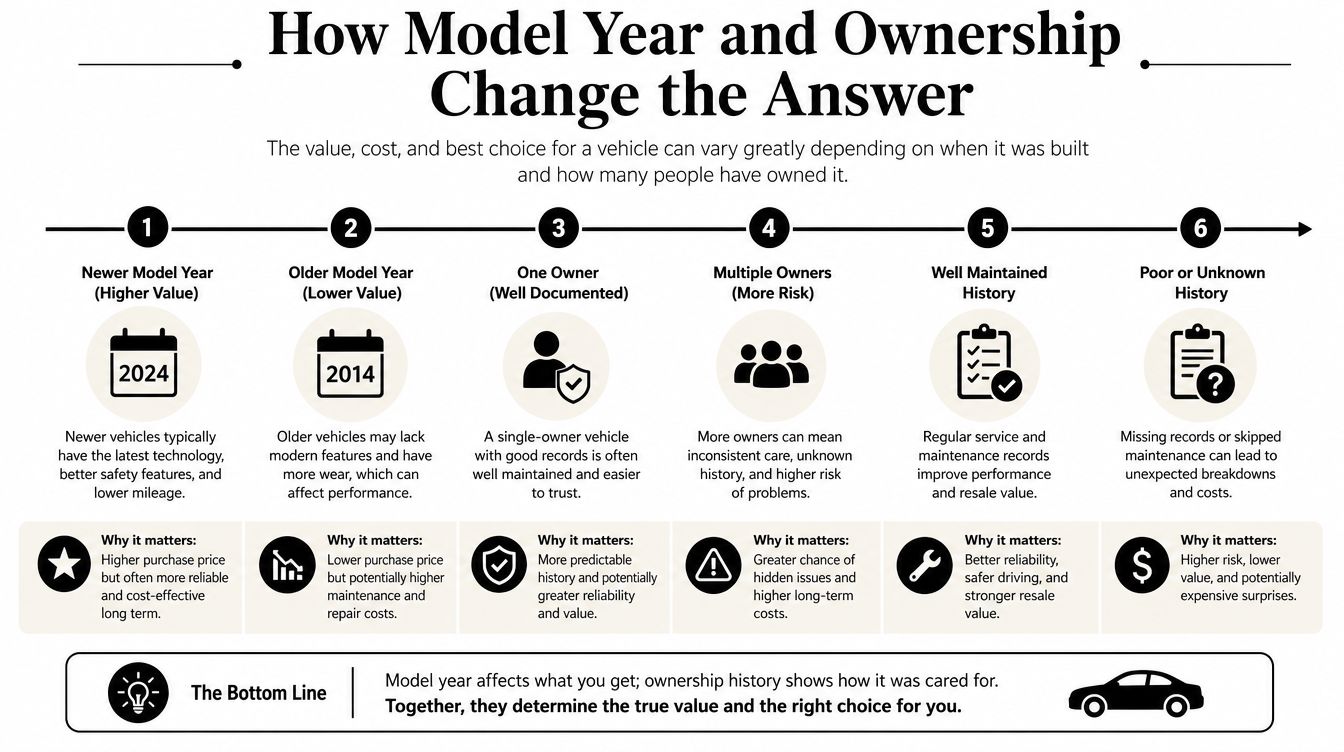
Use the timeline, not the odometer
California's exemption follows vehicle age and emissions-system service time. Catalytic converters, oxygen sensors, and onboard diagnostic systems may continue working properly, but the inspection requirement begins once the vehicle moves beyond the newer-car window. Mileage can guide maintenance, but it does not replace the model-year rule.
Use this sequence:
- Confirm the model year on the registration or title.
- Identify the transaction, renewal or ownership transfer.
- Apply the matching age rule, eight model years for renewal or four for transfer.
- Follow the DMV notice, which controls the immediate requirement.
For a focused explanation of the new-car rule, review California's new-car Smog Check exemption. Bring the registration notice to a licensed station if the model-year count is unclear.
Vehicles and Situations That Skip the Test Entirely
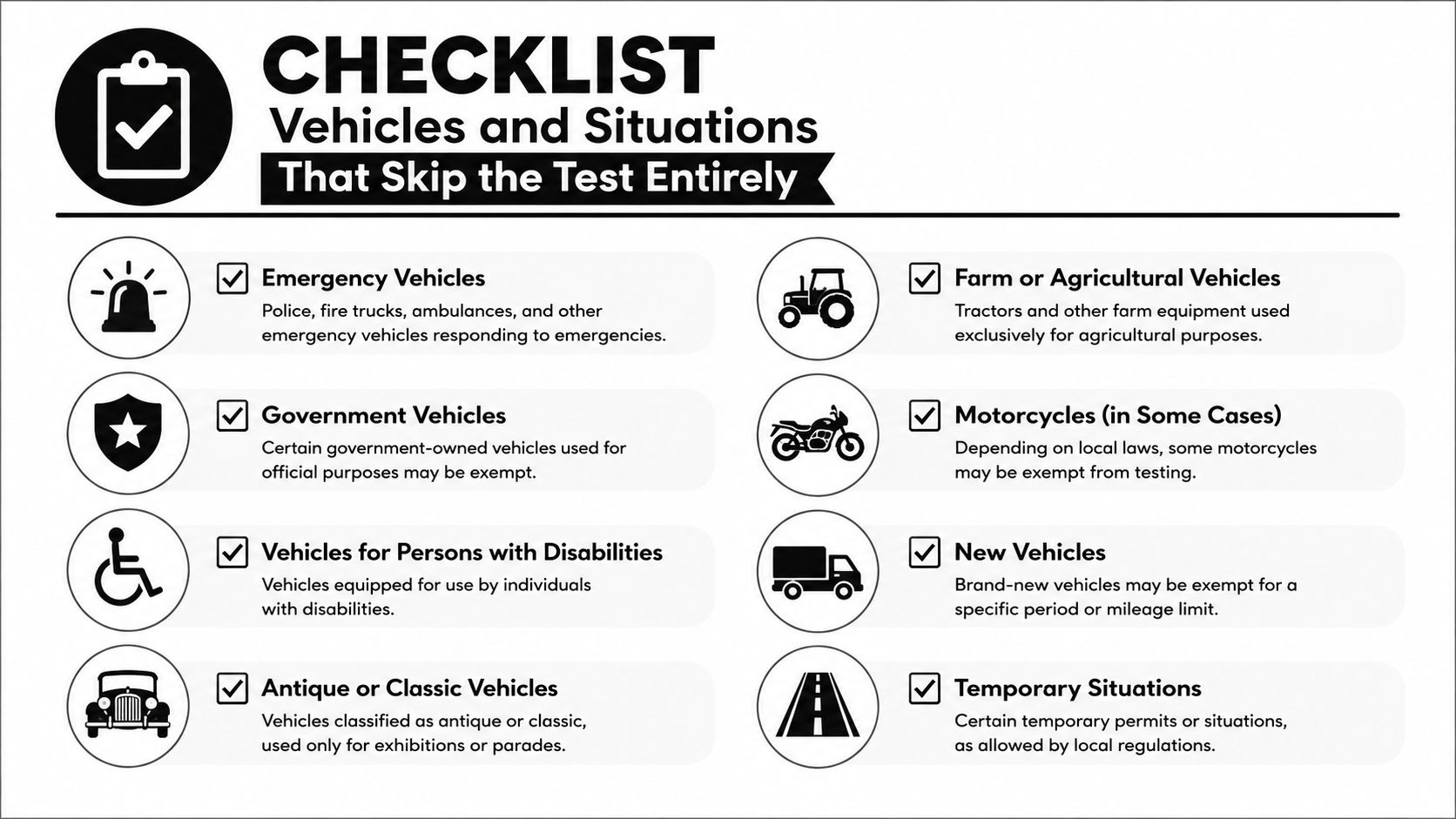
A vehicle can be exempt because of its design, its weight class, or the registration situation. Those categories work like separate branches in a decision tree. Start with the vehicle, then check the paperwork before assuming the DMV record is clear.
Start with the vehicle itself
- Battery-electric vehicle: A vehicle powered only by electricity, such as a Tesla, Chevrolet Bolt, or Rivian, does not receive the ordinary Smog Check.
- Motorcycle: Motorcycles are outside the standard Smog Check program.
- Trailer or specialized equipment: Trailers and certain farm or off-road vehicles may not follow the ordinary passenger-vehicle process.
- Newer vehicle at transfer: A gasoline, hybrid, or alternative-fuel vehicle within the applicable four-model-year ownership exemption may not need a transfer test. That rule concerns the transfer branch, not every registration event.
- Heavy diesel vehicle: A diesel truck above the applicable GVWR threshold follows a separate heavy-duty emissions path instead of the ordinary light-vehicle Smog Check process.
The official Smog Inspections page lists the main vehicle-class rules. A STAR station such as Speedy Smog can inspect an eligible vehicle, but it cannot change the vehicle's classification or decide whether the DMV accepts an exemption.
Then check the registration circumstances
The same car can receive a different answer depending on where it was registered and what transaction is taking place. A vehicle entering California from another state generally needs an inspection for its first California registration, even if the owner assumes its age makes it exempt. Transfers between immediate family members, vehicles previously registered elsewhere, planned non-operation status, and active-duty military assignments outside California can involve different paperwork treatment.
Do not rely on a verbal explanation alone. The DMV may continue showing a pending smog requirement until the correct form, status, or transaction information is recorded. California smog waiver guidance explains when a waiver discussion may apply, while the DMV applies the decision to the registration record.
Paperwork matters: A vehicle can qualify on paper and still generate a DMV block if the exemption was not claimed through the correct process.
When the DMV Expects You to Complete the Smog Check
A renewal notice gives you the clearest starting point. If it lists a Smog Check, the DMV expects a passing result before you complete registration, and the notice also shows the deadline. Waiting until the last few days can create a problem if the vehicle fails, needs repairs, or must be tested at a particular station.
At a station such as Speedy Smog, the result is sent electronically after the inspection. You usually do not need to bring a paper certificate to a DMV office, though keeping the paperwork helps document what happened. The electronic result can support renewal while it is still valid for that transaction.
A workable renewal routine
- Read the notice first. Look for Smog Check and confirm that it is listed as a registration requirement.
- Check the vehicle record. Confirm the model year and fuel type, and see whether the DMV specifies a STAR station.
- Test before the deadline. Leave time for diagnosis, repairs, and a retest if the vehicle does not pass on its first visit.
- Renew after transmission. Once the station submits the result, the DMV system can match it with the vehicle record.
- Act on a failure promptly. A failed inspection means the vehicle needs diagnosis or repair. An expired result is different because the test may no longer be usable for the registration transaction.
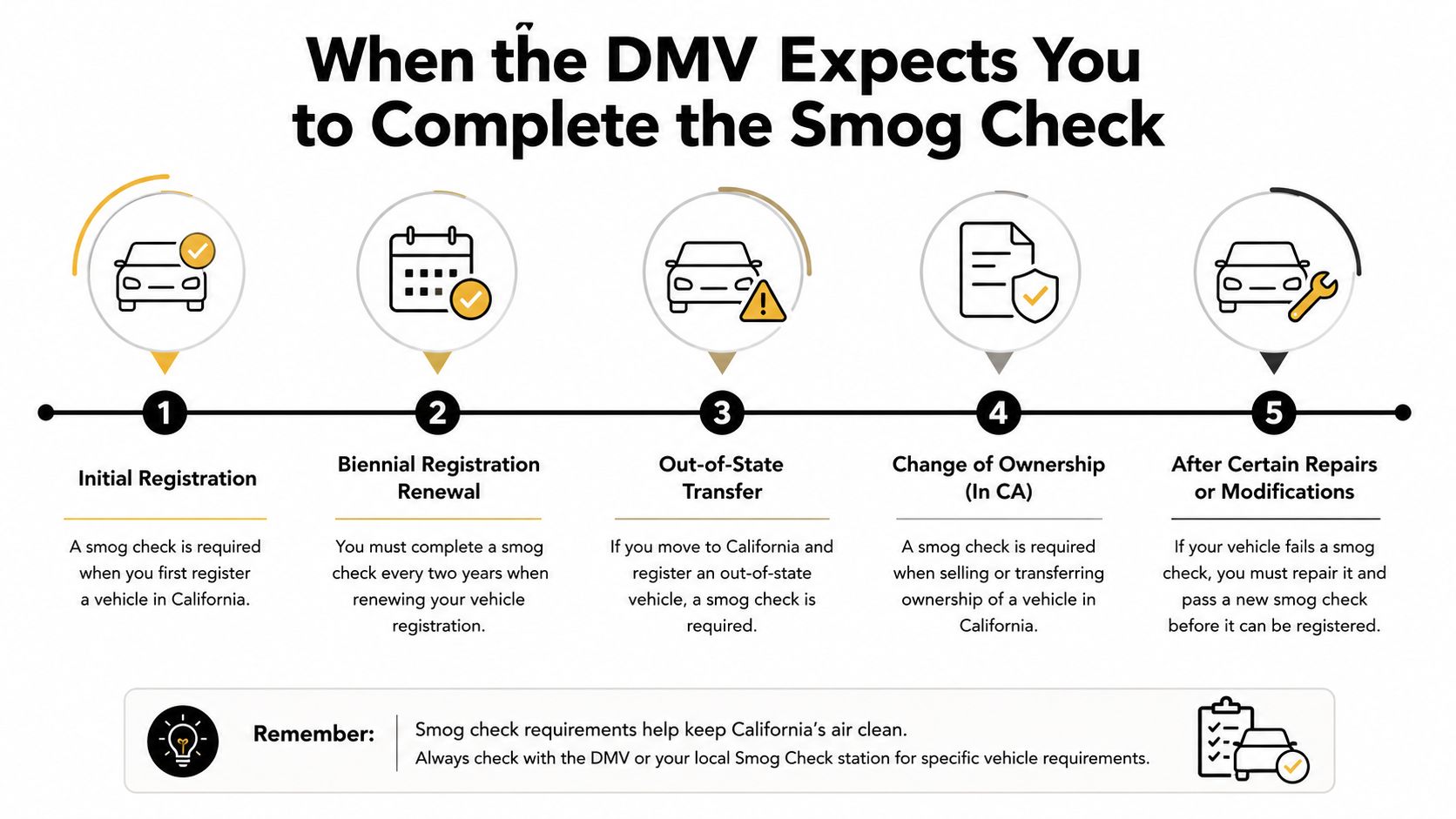
Ownership transfers follow their own timing and paperwork. Before handing over the keys, the seller and buyer should confirm who must provide the certificate and whether the vehicle qualifies for a transfer exemption. A car arriving from another state generally needs a California registration inspection, because the previous state's test may not satisfy California's requirement.
A registration that has already expired needs prompt attention. Continuing to drive while the issue remains open can lead to a registration hold, late fees, and a failed inspection turning a routine renewal into a larger administrative problem.
STAR, Test-Only, and Regular Smog Stations Explained
The station name determines what happens after you arrive. “Regular,” “Test-Only,” and “STAR” describe different testing and repair permissions, not three interchangeable labels.
A regular Smog Check station can generally inspect the vehicle and perform repairs. For example, a 2019 Prius that passes on the first try can leave with a clean certificate, while the technician can discuss emissions-related repairs on the same visit if a problem appears. That avoids taking the test results to another business before deciding what to do.
A Test-Only station performs the inspection but cannot repair the vehicle. If the car fails, you take the results to a repair facility, then return for a retest. This arrangement fits drivers who already have a trusted repair shop or prefer to keep testing separate from repair work.
STAR certification is a higher certification level administered through California's Bureau of Automotive Repair. A STAR business may be Test-Only or repair-capable, so the STAR label alone does not tell you whether repairs are available there. The DMV or BAR may direct certain vehicles, including vehicles identified as high emitters or vehicles with a previous failure, to a STAR station.
| Station Type | Can Test? | Can Repair? | When Required |
|---|---|---|---|
| Regular licensed station | Yes | Often | When the DMV hasn't directed another station type |
| Test-Only station | Yes | No | When a test-only route is allowed or specified |
| STAR Test-Only station | Yes | No | When the record requires STAR and repairs happen elsewhere |
| STAR repair station | Yes | Yes | When STAR is required and you want testing plus repair capability |
STAR is not required for every California driver. Check the renewal notice or vehicle record before booking. If it directs you to STAR, a non-STAR shop may produce a test result that does not satisfy the registration requirement.
For a closer look at the certification distinction, see what a STAR Smog station is. Speedy Smog in San Leandro offers STAR-certified testing, along with services for gasoline, hybrid, and diesel vehicles within its licensed coverage.
A Simple Decision Framework for Your Own Vehicle
You don't need to memorize every DMV phrase. Use four questions, in order, and stop as soon as you find a clear exemption.
One, identify the powertrain
Write down whether the vehicle is gasoline, hybrid, alternative-fuel, diesel, or battery-electric. Plug-in capability doesn't automatically make a vehicle electric for Smog Check purposes. If it has an internal combustion engine, treat it as a hybrid or fuel-powered vehicle and apply the appropriate model-year rule.
Two, apply the age and class screens
For a renewal, compare a covered gasoline, hybrid, or alternative-fuel vehicle with the eight-model-year exemption. For ownership transfer, use the four-model-year exemption. Then check whether the vehicle is an always-exempt class, such as a battery-electric vehicle or motorcycle.
Three, read the DMV direction
The vehicle's registered location and DMV instruction can affect station choice. If the record directs the vehicle to STAR, book with a STAR-certified facility rather than assuming any licensed station will satisfy the requirement. A directed vehicle should follow that instruction for the initial test and any required retest.
Four, bring the useful documents
Take the renewal notice, registration information, and identification needed by the station or DMV. If the vehicle has had emissions repairs, keep the repair invoice and diagnostic information available. These documents won't make a failing vehicle pass, but they help the technician understand what happened and what the DMV expects.
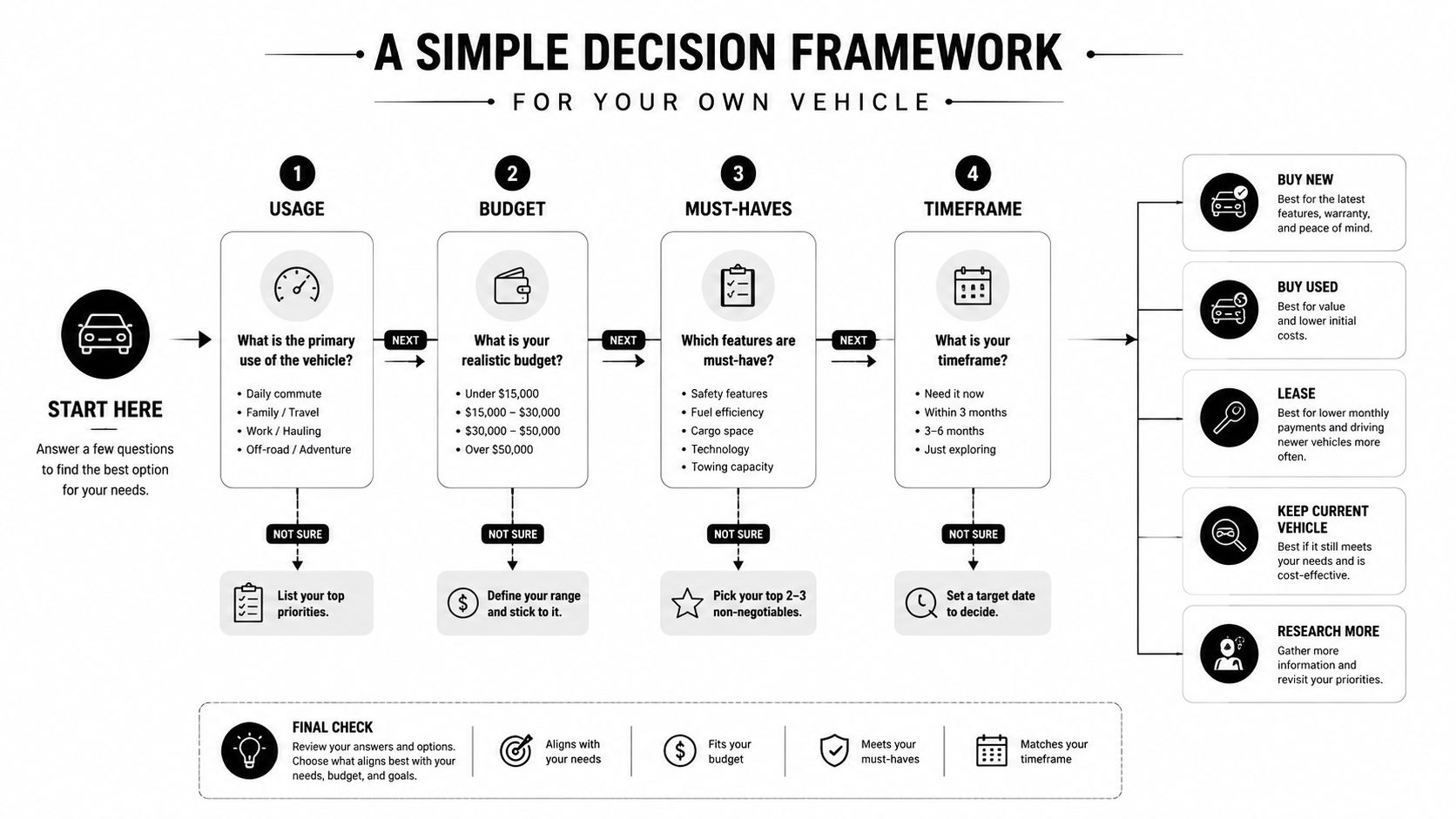
The same sequence works for a 2003 Civic, a 2018 F-150, or a 2021 Prius. The vehicle's badge doesn't decide the answer by itself. Fuel type, model year, registration event, location, and exemption status do.
If you want to see how the process feels at a station, this video offers a visual introduction:
Quick Answers to the Questions That Come Up Next
Does a plug-in hybrid need a Smog Check?
Usually, yes once it moves beyond the applicable renewal exemption. A plug-in hybrid still has an internal combustion engine, so it belongs with hybrid vehicles rather than battery-electric vehicles. A fully electric vehicle has no gasoline or diesel engine and remains exempt from the standard Smog Check requirement.
What happens when I bring a car from another state?
First California registration is a separate event from an ordinary renewal. A vehicle brought from another state can need a California inspection before it receives its first California registration, even if its owner believes the vehicle is still new. Check the vehicle's model year and the transaction type, then follow the DMV notice rather than relying on the prior state's inspection history.
Are heavy diesel trucks tested at an ordinary smog station?
Heavy-duty diesel vehicles follow a different emissions compliance path based on vehicle classification and weight. The station and program requirements can differ from those for a diesel passenger vehicle or light truck, so confirm the vehicle's GVWR and ask for a diesel-qualified inspection location before arriving.
Can a trailer or motorcycle need a Smog Check?
Trailers and motorcycles don't follow the ordinary passenger-car Smog Check process. They may still have registration, safety, equipment, or other compliance obligations, so exemption from Smog Check isn't the same as exemption from every DMV requirement.
Can I retest at another station after a failure?
A vehicle that fails can generally be taken for diagnosis, repair, and retesting. If the DMV or BAR directed the vehicle to STAR, keep the required STAR path in place for both the initial inspection and the retest. Save the failure report because it tells the repair technician which emissions systems need attention.
What if registration has already lapsed?
Act quickly. A long registration lapse can create back fees, penalties, and a blocked renewal, while a failed test adds repair and retest steps. The cleanest approach is to read the current DMV notice, verify the exact requirement, and schedule the appropriate inspection before the problem grows.
The answer to what cars need a Smog Check in California comes down to a manageable sequence. Identify the fuel type, apply the model-year and transaction exemption, check the vehicle-class exceptions, and follow any STAR direction shown by the DMV.
Bring your renewal notice and vehicle information to Speedy Smog in San Leandro for a licensed Smog Check, including STAR-certified testing for vehicles that require it. The shop serves gasoline, hybrid, and diesel vehicles within its approved service range and can help you understand the next step if your vehicle doesn't pass.