
What Smog Check Do I Need and How to Pass Fast
You're looking at a California registration renewal notice, wondering whether your car needs an OBD scan, a tailpipe test, a STAR inspection, or no test at all. The answer isn't based on how many miles you've driven. It starts with fuel type and model year, then shifts to why the DMV is requesting certification, such as renewal, a transfer, or a sale.
I advise drivers to identify the vehicle's test category before booking an appointment. That simple check prevents the most common mistake I see at a busy smog station: arriving with the right paperwork but the wrong assumption about what the car needs.
Table of Contents
- Figure Out What Smog Check You Need Right Now
- How California Decides Your Smog Check by Year and Fuel Type
- OBD Inspection vs BAR-97 Tailpipe Test and What to Expect
- When Renewal Transfer or Sale Changes the Test You Need
- Get Ready to Pass and Avoid the Most Common Fail Reasons
- Book the Right Test Near You and Get Certified Quickly
Figure Out What Smog Check You Need Right Now
A driver in San Leandro may bring in a 2012 sedan for renewal, an Oakland owner may be selling a hybrid, and another customer may have received a DMV notice directing them to a STAR station. Those situations can involve different requirements even when the vehicles appear similar.
Start with the vehicle itself. Find the model year, confirm whether it runs on gasoline, diesel, hybrid, or another approved fuel, and check whether the DMV request is for registration renewal, ownership transfer, sale, or an out-of-state registration change. Mileage helps describe how much the vehicle has been used, but it doesn't determine the basic California inspection pathway.
Practical rule: Don't book a test based only on the renewal notice. Match the vehicle's year and fuel type first.
The second question is whether the vehicle is subject to testing at all. Newer vehicles generally fall under California's smog abatement period, while older gasoline and diesel vehicles can qualify for specific exemptions. If testing applies, the model year usually determines whether the station performs an OBD inspection or a BAR-97 tailpipe inspection.
A STAR requirement adds another layer. If the DMV specifically directs the vehicle to a STAR station, use a station with STAR certification rather than assuming any licensed station will satisfy the request. The technology used during the test still depends mainly on the vehicle's year and fuel type.
For East Bay drivers, Speedy Smog's California eligibility guide can help you check the basic requirement before you arrive. Bring the registration renewal notice if you have it, but let the vehicle details drive the decision.
How California Decides Your Smog Check by Year and Fuel Type
California uses a clear age and powertrain filter. The state's Smog Check Program guidance explains that gasoline, hybrid, and alternative-fuel vehicles generally enter the testing requirement after they are more than eight model years old. Vehicles within that newer period generally pay a smog abatement fee instead of receiving a smog inspection for registration renewal.
The model-year clock matters more than the date you bought the car. A 2020 model-year vehicle first needs a smog check for renewal in 2028, according to the California Bureau of Automotive Repair. You don't move the deadline by purchasing the car later, and driving fewer miles doesn't create a separate testing category.
Use this decision filter:
- Identify the fuel type. Gasoline, hybrid, and alternative-fuel vehicles generally follow the newer-vehicle abatement period before entering the regular testing cycle. Diesel vehicles require separate attention because California applies different age rules.
- Check the model year. If a covered gasoline, hybrid, or alternative-fuel vehicle is eight model years old or newer, it generally pays the abatement fee instead of taking the test. Once it is more than eight model years old, it generally needs certification for registration renewal.
- Look for an older-vehicle exemption. Gasoline-powered vehicles from model year 1975 or older are exempt, while diesel vehicles from model year 1997 or older are exempt under the state program guidance.
- Confirm the DMV reason. Renewal, ownership transfer, sale, and a directed STAR inspection can change what paperwork or station type applies after you determine whether the vehicle is subject to testing.
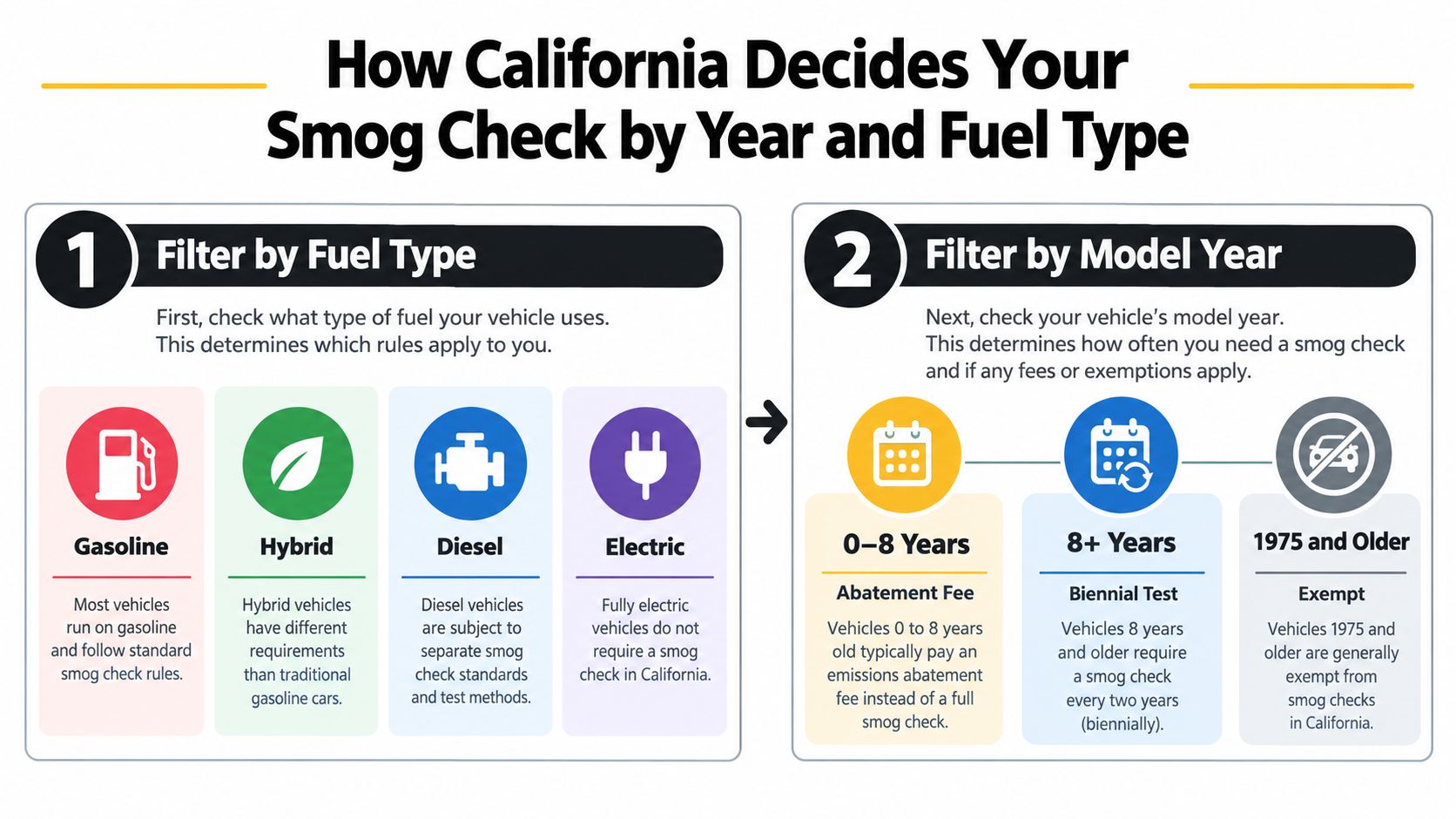
This is why the question “what smog check do I need” can't be answered from mileage alone. A newer hybrid may not need an inspection for renewal, while an older gasoline sedan may need one. An older diesel may fall outside the standard program entirely.
Write down the year and fuel type before you call a station. That two-item check usually tells you whether to ask about an abatement fee, an OBD test, a BAR-97 test, or an exemption review.
OBD Inspection vs BAR-97 Tailpipe Test and What to Expect
The main technical split is straightforward. Most 2000-and-newer vehicles receive an onboard diagnostic inspection, while 1999-and-older vehicles are generally routed to a BAR-97 tailpipe-based inspection, as described in the California Smog Check manual. California can also require visual and functional checks of emissions equipment in addition to the electronic or tailpipe portion.
| Vehicle Group | Test Type | What Is Checked | Typical Time at Station |
|---|---|---|---|
| 2000-and-newer eligible vehicles | OBD inspection | Diagnostic data, warning-lamp status, readiness information, and emissions equipment checks | Usually a short computer-based visit, depending on vehicle condition |
| 1999-and-older vehicles | BAR-97 tailpipe inspection | Tailpipe emissions, visible emissions equipment, and required functional checks | Depends on the vehicle and inspection process |
| Vehicles directed to STAR | Required test pathway at a STAR station | The applicable inspection method for the vehicle, plus required station and program checks | Depends on vehicle type and readiness |
What happens during an OBD inspection
The technician connects approved equipment to the vehicle's diagnostic system and reviews information stored by the car's computers. The inspection isn't a scan for one trouble code. The technician also looks at malfunction indicator lamp behavior, readiness monitors, and emissions-related equipment.
For late-model gasoline vehicles, California replaced the traditional loaded dynamometer tailpipe portion with an OBD-based check. The BAR Smog Check reference guide identifies 2000-and-newer vehicles at 14,000 pounds GVWR and under as using the OBD pathway.
What happens during a BAR-97 inspection
A qualifying older vehicle is evaluated through the BAR-97 tailpipe method rather than the standard late-model OBD route. The technician still checks required emissions components and their function. A vehicle can fail because of a visible emissions problem, not only because of the measured tailpipe result.
If your vehicle is 2000 or newer, read Speedy Smog's STAR Smog Check information before booking when the DMV notice mentions STAR. The station requirement and the vehicle's technical test method are related, but they aren't the same question.
When Renewal Transfer or Sale Changes the Test You Need
The vehicle's year and fuel type identify the likely inspection technology. The transaction reason determines why certification is being requested and whether a particular station designation matters.
For a routine registration renewal, the DMV may require a passing smog result once the vehicle is beyond California's newer-vehicle abatement period. A 2012 gasoline sedan in San Leandro will normally be evaluated through the late-model OBD pathway, provided it falls within the applicable vehicle category. The important point is that renewal is a registration trigger, not a different engine test.
A private sale creates a different situation. If someone in Oakland sells a 2015 hybrid, the buyer and seller shouldn't assume the vehicle's hybrid system makes it exempt forever. California's age-based rules generally bring covered hybrids into testing after the newer-vehicle period, and the sale paperwork can require current smog certification.
The same car can need a different administrative action depending on why the DMV is asking for certification.
Ownership transfers also deserve a careful look. If you're transferring a diesel truck, don't classify it from appearance or engine size alone. Confirm the fuel type, model year, and any applicable vehicle details before deciding whether a standard Smog Check applies.
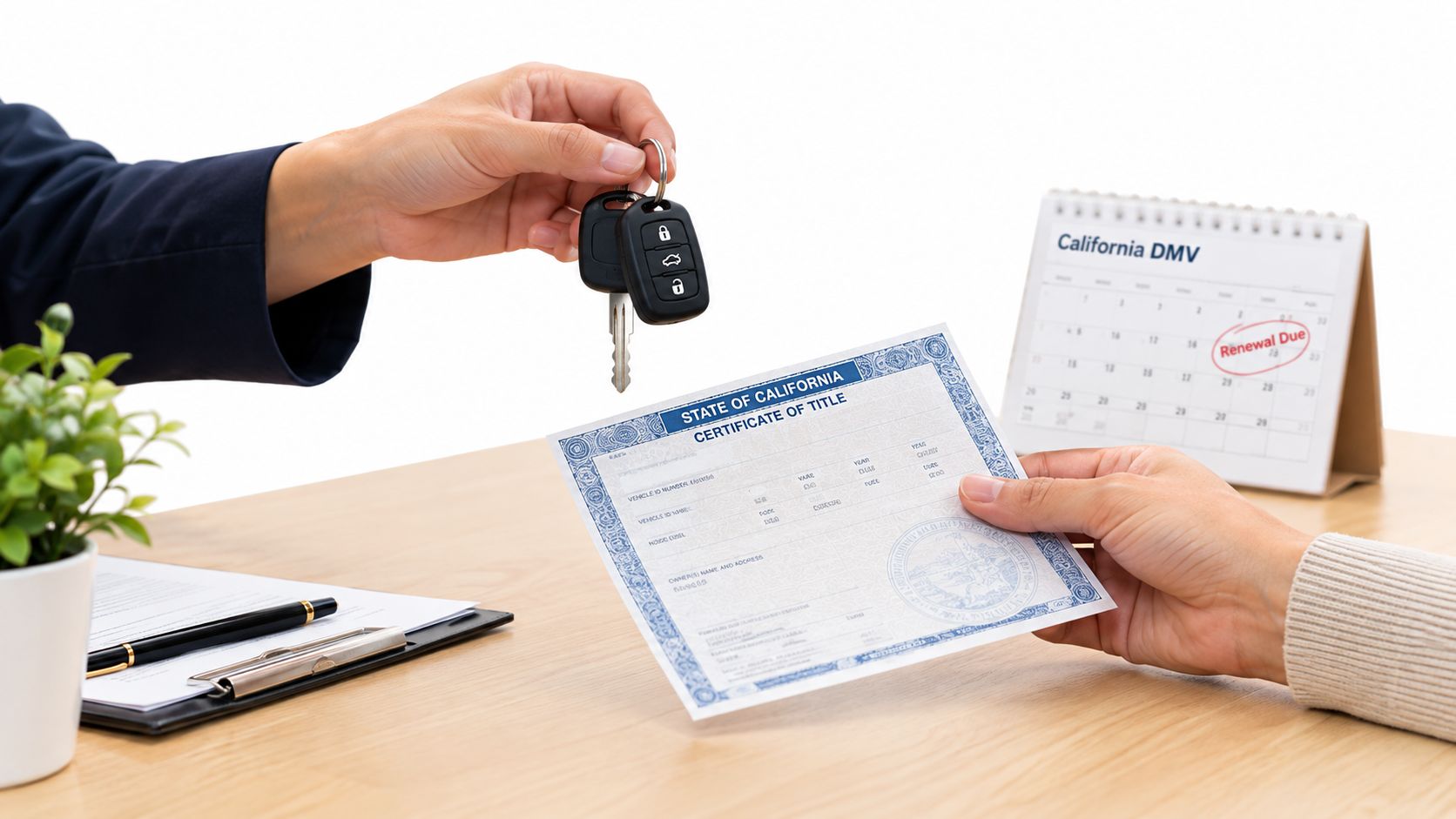
Out-of-state registration changes can also prompt a California inspection. In that case, the reason for testing is the registration change, but the technical pathway still follows the vehicle's California classification. For 2000-and-newer gasoline vehicles at 14,000 pounds GVWR and under, the BAR reference guide identifies the OBD route instead of a loaded dynamometer tailpipe test.
If the DMV directs you to a STAR station, follow that instruction exactly. A STAR-directed test should be performed at a STAR Certified location, even when the vehicle itself receives an OBD inspection rather than a separate “STAR technology” test.
Get Ready to Pass and Avoid the Most Common Fail Reasons
Most avoidable failures begin before the car enters the bay. A warning lamp, incomplete readiness monitor, recently cleared diagnostic memory, or missing emissions equipment can stop an otherwise well-maintained vehicle from passing.
California's BAR OBD guidance highlights MIL behavior and readiness criteria as central failure conditions. The state's rules also tightened on October 1, 2025, when all readiness monitors must be set for a vehicle to pass, with 2000-and-newer gasoline vehicles allowed only the evaporative monitor to remain unset. Check the current status before you pay for an inspection.
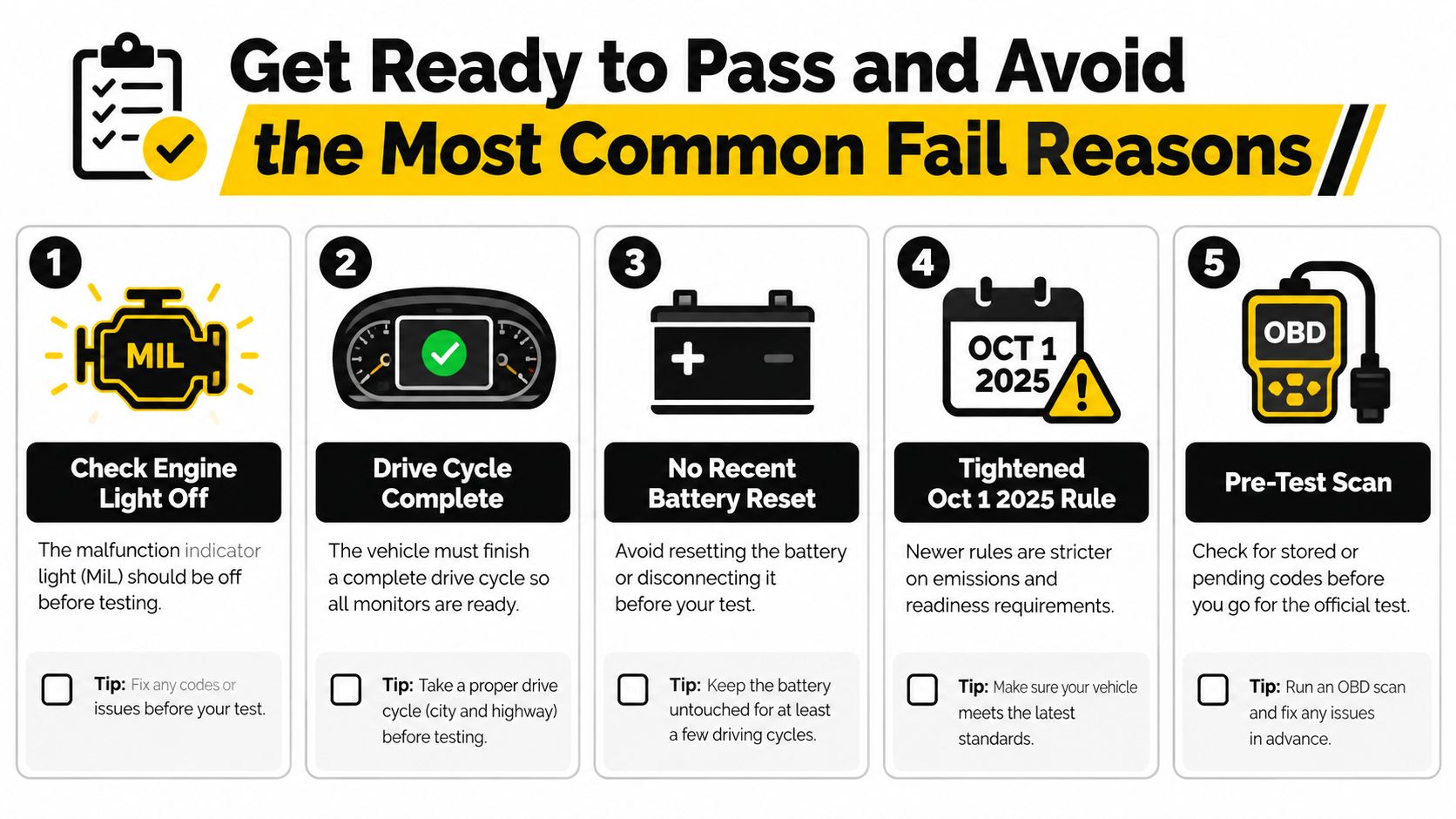
Use this pre-test checklist:
- Check the MIL: The check engine light should not be illuminated. If it came on recently, diagnose the cause instead of just clearing the code.
- Confirm readiness: Have the vehicle scanned for monitor status before the official test. “No codes” doesn't always mean “ready.”
- Avoid a recent battery reset: Disconnecting the battery or clearing codes can erase readiness information and create an automatic failure risk.
- Inspect visible equipment: Make sure the gas cap, catalytic converter, vacuum lines, and other emissions components are present and intact.
- Warm the vehicle normally: Arrive with the engine at normal operating temperature, but don't try to hide a warning light or unresolved fault.
The most common practical mistake is assuming the computer will be ready because the car drives normally. It may not. The BAR OBD test reference explains why warning-lamp behavior and monitor status deserve attention before testing.
For a focused breakdown of preventable problems, review common California smog check fail reasons.
Don't clear a code just before the appointment. That can make the dashboard look better while leaving the vehicle's readiness monitors incomplete. A proper scan gives you a clearer answer and saves a wasted trip.
Book the Right Test Near You and Get Certified Quickly
You can identify the correct starting point with four checks: model year, fuel type, DMV reason, and STAR direction. If the vehicle is covered and 2000 or newer, expect an OBD-based inspection in the applicable category. If it's 1999 or older, ask about the BAR-97 pathway. If the DMV names STAR, choose a STAR Certified station.
Bring your registration renewal notice if available, the vehicle, and any information about recent repairs or battery replacement. If the check engine light has been on, don't book first and diagnose later. Scan the vehicle, address the fault, and verify readiness before the official inspection.
Speedy Smog in San Leandro performs California smog inspections for newer vehicles, older vehicles, diesels, and hybrids, with a typical 10 to 15 minute OBD test for 2000-and-newer vehicles according to the station information provided for this article. The shop is located at 15275 Washington Ave, offers an indoor waiting room, transparent pricing, coupon options, and Monday-through-Saturday service.
Booking advice: Tell the station your model year, fuel type, and whether the DMV requires STAR before you arrive.
That information lets the advisor prepare for the correct inspection rather than making you repeat the visit. It also helps separate a true testing issue from a readiness problem that should be handled before certification.
Visit Speedy Smog with your model year, fuel type, and DMV notice ready, and the team can help match your vehicle to the correct California test. Check readiness before you arrive, then book the appropriate inspection in San Leandro for a faster path to certification.
2 comments
[…] apply to a particular renewal, so confirm the notice before booking. If you are unsure, review this guide to identifying the right Smog Check before choosing a […]
[…] you want a practical year-by-year reference before you book, this guide on what smog check you need helps match the vehicle to the likely inspection […]

DMV Smog Rules in California: A Practical 2026 Guide said: