Smog Check vs Smog Test Explained for California Drivers
In California, Smog Check is the official state program, and smog test is the common name for the inspection itself. For most drivers, they point to the same DMV-required event, but the actual inspection method changes by model year, with 2000 and newer vehicles generally checked through OBD II and 1999 and older vehicles tested with BAR-97 tailpipe equipment.
That's why the wording gets confusing. Your DMV renewal notice may say Smog Check, while a local shop sign says smog test, and both are talking about the same trip you need to make before registration can move forward.
Table of Contents
- Introduction Why Drivers See Two Terms for One Requirement
- What Smog Check and Smog Test Actually Mean in California
- How California Smog Inspections Work Today
- Which Test Your Vehicle Needs Based on Year and Type
- DMV Rules STAR Certification and What Counts for Renewal
- How to Prepare Your Vehicle and Pass the First Time
- Choosing the Right Smog Station in the East Bay
Introduction Why Drivers See Two Terms for One Requirement
A lot of East Bay drivers hit the same moment. You open your renewal notice, see that California wants a smog check, then search online and find shops advertising smog tests. It's easy to wonder whether those are two different services, two different prices, or two separate legal steps.
Usually, they aren't separate at all. The confusion comes from the fact that California uses one term for the regulated system and everyday drivers use another term for the inspection procedure.
A common real-world example
Say you drive a 2008 sedan in San Leandro. Your renewal reminder tells you to complete a smog requirement before DMV can process registration. Then you call a station and the person on the phone says, “Yes, we do smog tests.” That doesn't mean they're offering something different from what the DMV asked for. They're using the common shop-floor phrase for the inspection that satisfies the state program.
The same thing happens with older vehicles. Someone with a 1995 pickup may hear “smog test” and assume it's the same process their neighbor's 2016 hybrid gets. It isn't. Both fall under California's Smog Check system, but the way the vehicle is inspected can be very different.
Practical rule: If your paperwork says you need a Smog Check, you usually don't need to buy one thing from DMV and another thing from a shop. You need the inspection that fits your vehicle and counts for registration.
The fast way to think about it
Use this simple distinction:
| Term | What it usually means | Why it matters |
|---|---|---|
| Smog Check | California's official compliance program | It's tied to DMV registration, station licensing, and state rules |
| Smog test | The actual inspection performed on the vehicle | It's the procedure that generates the pass or fail result |
That difference sounds semantic until you're trying to book the right station. Once you understand the compliance mechanics, the next questions get easier. What kind of test does your car get? Do you need a STAR station? Will your result count automatically for DMV? Those are the questions that save time.
What Smog Check and Smog Test Actually Mean in California
A first-time driver usually hears both terms in the same week. The DMV notice says you need a Smog Check for registration. The shop says they perform smog tests. In California, those phrases point to the same requirement, but they do not do the same job.
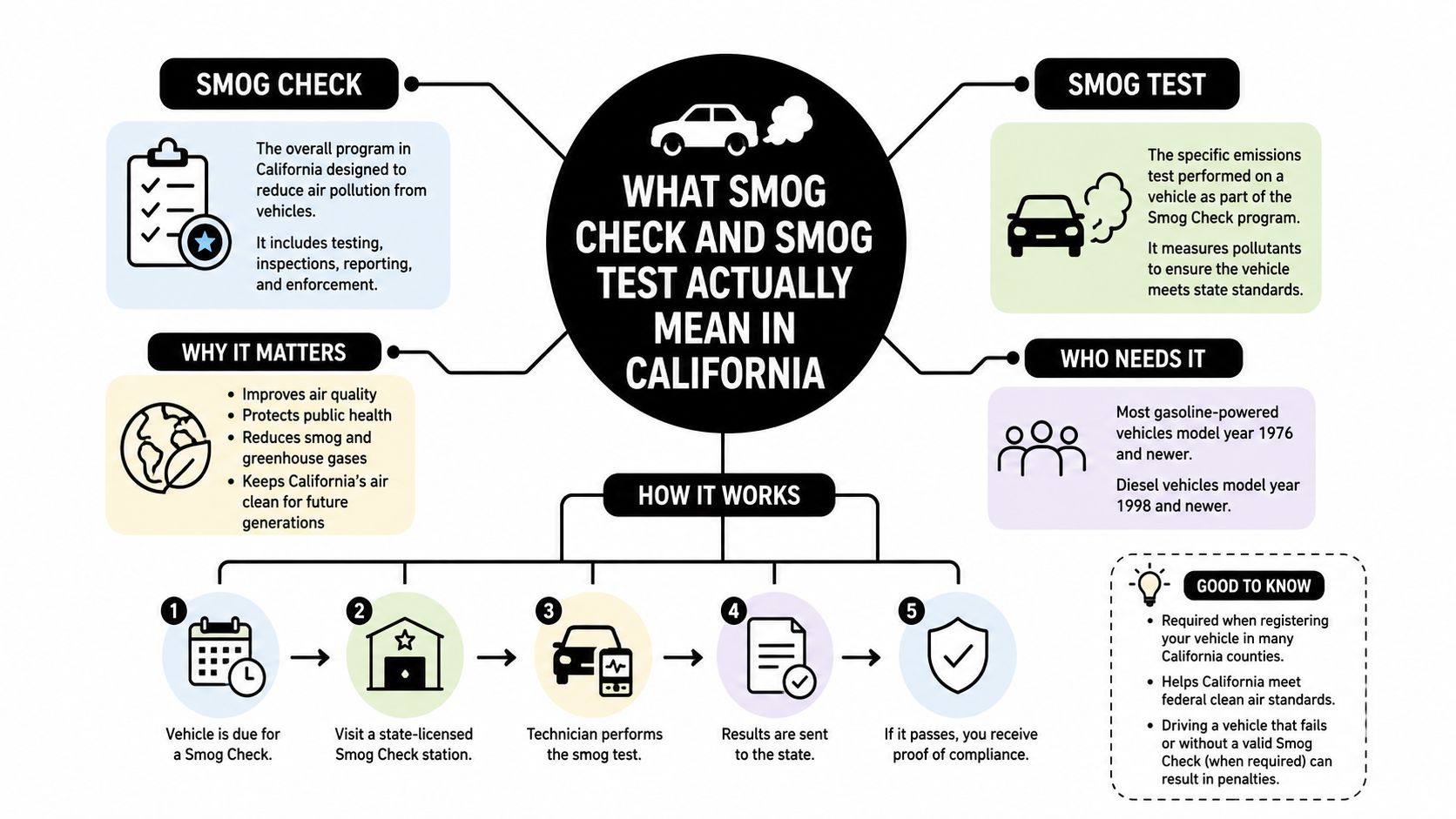
Smog Check is the state program. Smog test is the inspection work done on your vehicle inside that program. The practical difference shows up after the car is inspected. A test result by itself does not satisfy registration. What counts is a result recorded through California's Smog Check system so BAR can issue the electronic record DMV recognizes, as described in the BAR Smog Check Reference Guide.
Why both terms stayed in use
The split in language makes sense once you look at who is using the words.
State agencies use Smog Check because they are talking about rules, station licensing, certificate records, and whether a vehicle has met a registration condition. Shops and drivers often say smog test because they are talking about the appointment in the service bay, the machine hookup, and the pass or fail result for that specific car.
That sounds small, but it answers a common point of confusion. If a shop advertises smog testing, that does not automatically tell you every result will work for your renewal. The result has to be produced under the state program, by a properly licensed station, and transmitted in the way DMV accepts.
What the distinction changes for you
The wording becomes practical instead of academic.
If you ask, “Do I need a smog test?” you are asking about the procedure performed on the vehicle. If you ask, “Do I need a Smog Check?” you are really asking a compliance question: Does my registration require an inspection, what kind of inspection applies to my vehicle, and does this station have authority to submit a result that counts?
A simple way to picture it is a school exam. The test is what the student takes at the desk. The program is the school system that decides who can give the exam, how the score is recorded, and whether the result satisfies the graduation rule. California works the same way. Your car can be inspected, but DMV only cares about the inspection result that enters the Smog Check system correctly.
Plain-language takeaway
Use smog test for the procedure at the station. Use Smog Check for the legal program tied to DMV.
That distinction helps with three decisions drivers make all the time:
- Test type: your vehicle may get a different inspection method depending on year and configuration
- Station choice: some vehicles or notices require a station with specific authorization, such as STAR
- DMV outcome: registration depends on the official transmitted result, not just the fact that your car was looked at
So the question is not which phrase is more correct. The useful question is whether the inspection you book will produce the right record for California compliance.
How California Smog Inspections Work Today
A first-time driver often expects one standard smog appointment. At the station, the process changes once the technician enters the vehicle information. California does not run one single inspection routine for every car. The Smog Check program uses different inspection methods based on the vehicle's model year and emissions setup.
That is the practical difference between the system and the procedure. Smog Check is the state program that sets the rules. The smog test is the specific inspection your car receives under those rules.
According to BAR's current smog inspection overview, newer vehicles are usually inspected through the BAR On-Board Diagnostic Inspection System, while older vehicles may still go through the BAR-97 Emissions Inspection System with direct tailpipe measurement.
California Smog Inspection Methods Compared
| Inspection Type | Vehicles Covered | What Is Measured | Equipment Used |
|---|---|---|---|
| OBD inspection | 2000 and newer vehicles | Electronic diagnostic data related to emissions performance | BAR On-Board Diagnostic Inspection System |
| BAR-97 tailpipe test | 1999 and older vehicles | Direct exhaust emissions at the tailpipe | BAR-97 Emissions Inspection System |
| Visual and functional checks | Applies as part of the inspection process where required | Emissions-related components and system operation | Technician inspection tools and station equipment |
What the technician is actually doing
For a newer vehicle, the inspection usually works like a report-card check from the car's own computer. The technician connects to the onboard diagnostic system and verifies whether the emissions monitors, fault information, and related data meet program requirements. The car can drive normally and still fail if that electronic record shows an emissions problem.
For an older vehicle, the inspection is more like measuring what comes out of the tailpipe in real time. The station uses BAR-97 equipment to sample exhaust emissions directly, along with any required visual or functional checks. The workflow is different because the test is measuring output, not mainly reading stored diagnostic information.
That distinction matters at the counter and at DMV. Two drivers can both ask for a "smog test" and receive different procedures because the Smog Check program assigns the inspection path by vehicle category.
Why one appointment is faster than another
Drivers often compare appointment times and get confused. The reason is usually mechanical, not random.
An OBD-based inspection is often more direct because the system is reading emissions-related data already stored by the vehicle. A BAR-97 inspection takes more setup because the station must perform tailpipe measurement with different equipment and procedures.
So if one car is finished quickly and another takes longer, the station is not changing the rules on the fly. The program is applying a different test method to a different kind of vehicle.
What counts in the end
The key outcome is not that your car was inspected. The key outcome is that the correct inspection method was performed and the result was transmitted in a way California accepts for Smog Check compliance.
That is why the wording matters less than drivers think, and the mechanics matter more. The phrase "smog test" describes the procedure in the bay. "Smog Check" describes the larger compliance system that decides which procedure applies and whether DMV will accept the result.
Which Test Your Vehicle Needs Based on Year and Type
You get a renewal notice, book what sounds like a routine smog appointment, and then the station asks a question that changes everything: what year is the vehicle, and what fuel does it use?
That question matters because California does not sort inspections by the words drivers use. It sorts them by vehicle category. "Smog Check" is the compliance system. The "smog test" is the inspection procedure that system assigns to your car.
For many drivers, the first decision starts with model year and fuel type. A newer gasoline car usually follows one inspection path. An older gasoline car may follow another. Diesel vehicles can fall under different rules, and some registrations also require a STAR station, which affects where the result will count.
If you want a practical year-by-year reference before you book, this guide on what smog check you need helps match the vehicle to the likely inspection path.
Start with the vehicle category
A simple way to sort it is like checking which line you belong in at the airport. Everyone is traveling, but not everyone goes through the same lane.
- 2000 and newer gasoline vehicles: these are usually inspected through an OBD-centered process.
- Pre-2000 gasoline vehicles: these often need a tailpipe-based procedure.
- Diesel vehicles: these can have different program rules, so the station must handle that vehicle type correctly.
- Vehicles marked for STAR: the inspection result must come from the right kind of station, not just any nearby shop.
The practical point is simple. Your vehicle category decides the test method, and sometimes it also decides the station.
Four common examples
A 2005 sedan usually goes down the newer-vehicle path. In plain terms, the inspection often focuses on what the vehicle's onboard system reports. If the check engine light is on or the monitors are not ready, that can affect the outcome even if the car feels fine to drive.
A 1995 truck is a different case. Older gasoline vehicles are more likely to need direct emissions measurement, so the appointment may involve different equipment and a different setup at the station.
A diesel pickup deserves a quick phone call before booking. Some drivers assume every smog location handles diesel the same way. They do not. The right question is whether the station performs the inspection your diesel vehicle needs.
A hybrid can confuse first-time drivers too. Hybrid does not automatically mean exempt or simplified. The category still depends on how California classifies that vehicle for the registration event in front of you.
Why two drivers can have different appointments
Friends often compare notes and wonder why one visit took fifteen minutes and another took much longer. The reason is usually built into the rules, not the shop.
Two people can ask for a "smog test" and receive different procedures because their vehicles fall into different Smog Check categories. One car may be routed through an OBD-based inspection. Another may need a tailpipe procedure. A third may need the same inspection result, but from a STAR-certified station for DMV to accept it.
Simple booking rule: check your model year, fuel type, and any STAR requirement on your DMV notice before choosing a station.
That is where the wording clears up. The debate is not really smog check versus smog test. The issue is which inspection path California assigns, and whether that result will satisfy your registration requirement.
DMV Rules STAR Certification and What Counts for Renewal
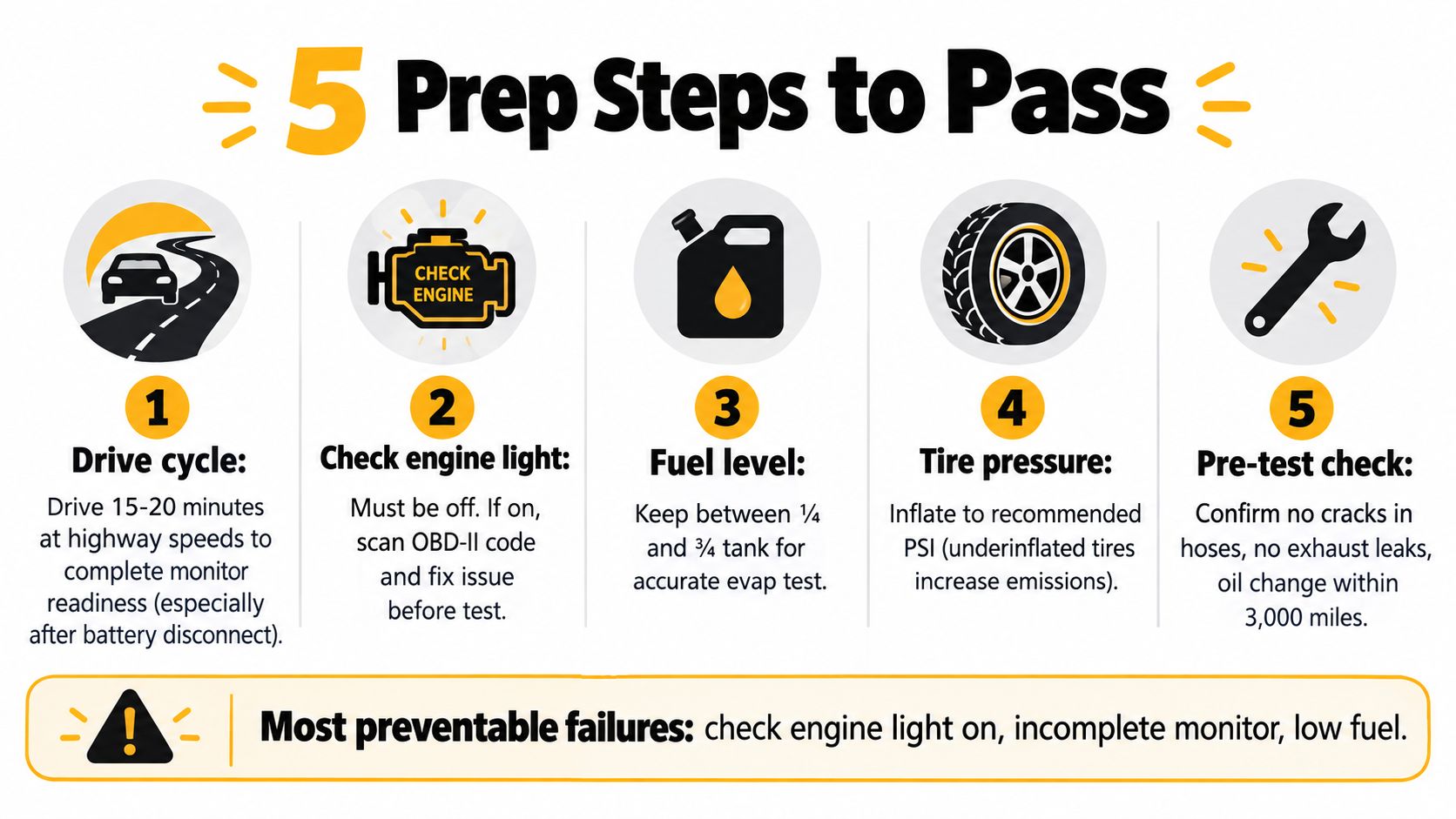
You finish the inspection, the technician hands you a passing result, and you assume the DMV part is done. Then the renewal notice still shows a smog requirement. For first-time drivers, that feels confusing, but the reason is usually simple. California does not just need a vehicle to be tested. California needs the inspection to be completed in the right compliance channel so DMV can accept it for registration.
California treats Smog Check as the full regulatory system tied to registration, station licensing, and eligibility. A smog test is the procedure performed on the vehicle inside that system. That difference matters at renewal time because DMV is checking more than whether your car passed. DMV is checking whether the result came from the right kind of inspection, at the right kind of station, for your vehicle's requirement.
When the result affects your registration
For many California drivers, Smog Check works like a checkpoint built into the registration process. The state may require it for a renewal cycle and for some other registration-related events. In plain terms, the test result only helps you if it is attached to the registration requirement you have.
That is why wording alone does not decide anything. A driver can call it a smog test, an inspection, or a smog check. DMV still looks at the compliance record behind that visit.
Why STAR stations matter
STAR is part of that compliance record. If your DMV notice says a STAR inspection is required, the state is not making a suggestion about where to shop. It is telling you which station category can produce a result that counts for your renewal.
A simple way to picture it is this. Passing at the wrong station can be like bringing the right form to the wrong office. The paperwork may be real, but it does not satisfy the step DMV asked for.
Research discussing California's STAR program explains that STAR stations handle a large share of inspections and play a central role in the state system, especially for vehicles directed into that channel through program rules and DMV requirements, according to this University of Chicago analysis of California STAR station performance. If you want a plain-language explanation before you book, this guide on what a smog STAR station is explains what the designation means in practical terms.
A short explainer can also help if you want to see the process discussed visually.
Test-only versus test-and-repair
Station type can matter too. Some stations only perform inspections. Others can inspect and also repair a vehicle if it does not pass.
That distinction does not usually change whether DMV accepts a valid result. It changes what happens next if the car fails. A test-only station documents the outcome. A test-and-repair station may be able to diagnose and fix the problem before you return for another inspection.
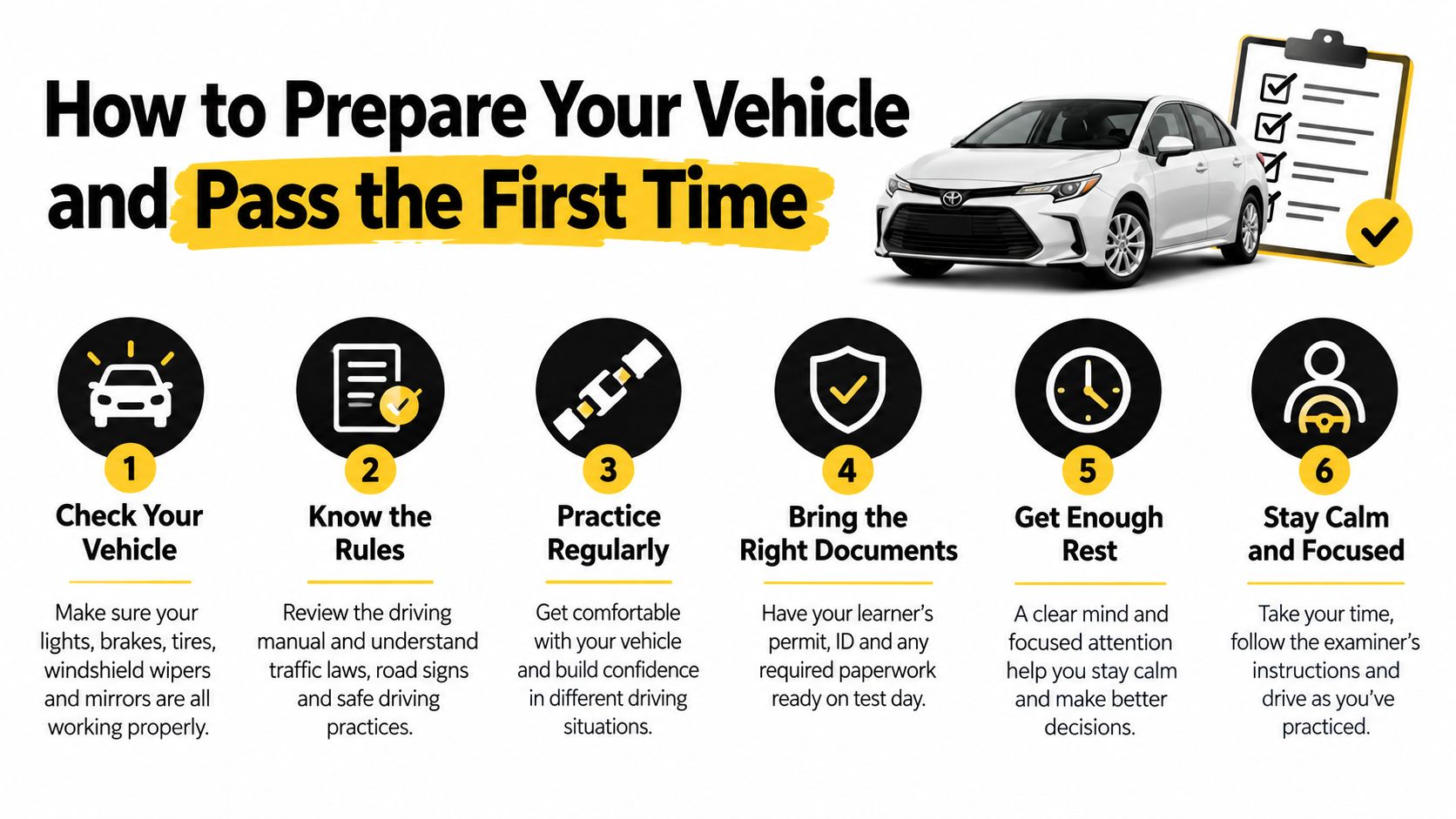
How to Prepare Your Vehicle and Pass the First Time
Preparation depends on the inspection method your vehicle gets. A newer car and an older car can both be due for the same registration event, but the smartest pre-test routine isn't identical.
For newer vehicles with OBD-focused inspections
If your vehicle is in the newer category, think about computer readiness first. If the battery was recently disconnected or repairs were just completed, the onboard system may not yet be ready to report a complete picture.
Check the dashboard before you go. If the check engine light is on, that's a sign to pause and diagnose the issue rather than hoping the station visit will sort it out.
For older vehicles with tailpipe measurement
Older vehicles benefit from basic mechanical awareness before the appointment. If the engine is running rough, there's an exhaust leak, or visible emissions components appear tampered with or damaged, the inspection is more likely to uncover a problem.
A warm vehicle is usually better than a cold one. Drivers often get smoother results when the car has been driven normally beforehand rather than brought in after sitting for a long time.
Preparation is not one generic trick. For newer vehicles, focus on diagnostic readiness. For older vehicles, focus on engine condition, exhaust integrity, and obvious emissions-related issues.
A simple pre-appointment checklist
- Check warning lights: If the check engine light is on, treat that as a repair issue first.
- Drive the vehicle normally beforehand: A vehicle that has been sitting may not be in the best condition for inspection.
- Look for obvious problems: Loose caps, unusual exhaust smell, rough idle, or visible component damage are worth addressing.
- Don't book blindly after recent repairs: Give the vehicle enough normal operation to settle after emissions-related work.
- Match the station to the vehicle: Confirm the shop handles your model year and fuel type.
If you want a practical driver-focused checklist, this page on how to get a car to pass smog gives a straightforward prep rundown.
A failed inspection isn't always about major repairs. Sometimes the problem is simply showing up before the vehicle is ready for the kind of inspection it actually receives.
Choosing the Right Smog Station in the East Bay
The right station depends less on slogans and more on fit. Start with the vehicle, then match the station to the compliance requirement.
If you drive a 2000 or newer vehicle, convenience and workflow matter. These inspections are often straightforward, so many drivers care most about whether the station handles modern OBD-based testing efficiently and sends results properly for DMV use.
If you own a 1999 or older vehicle, experience with BAR-97 testing matters more. The process is more equipment-dependent, so you want a shop that regularly handles older vehicles and doesn't treat them like an exception.
What to look for before you book
A solid East Bay station should make a few things clear:
- Vehicle coverage: confirm they inspect your year and fuel type.
- STAR status: check whether the station can handle your requirement if DMV directs you to STAR.
- Process clarity: the staff should explain whether your vehicle is likely getting an OBD inspection or a tailpipe test.
- DMV compliance handling: ask how the result is processed for registration purposes.
- Waiting experience: this matters more than people think, especially for commuters booking around work.
A practical local example
In San Leandro, Speedy Smog is one example of a STAR-certified station that handles newer vehicles, older vehicles, diesels, and hybrids, which makes it relevant for drivers who need one location capable of matching different Smog Check paths. That matters most when a household has more than one vehicle type and the inspection process isn't the same across them.
The bigger lesson is simple. Don't choose a station just because it uses the phrase “smog test” or “smog check” on a sign. Choose it because it can perform the right inspection, under the right certification rules, for the vehicle and DMV situation you have.
If you need a California-compliant inspection in the East Bay, Speedy Smog provides STAR-certified smog testing for newer vehicles, older vehicles, diesels, and hybrids in San Leandro. If this article helped you sort out the difference between the Smog Check program and the test your car needs, visit Speedy Smog to find a station option that matches your vehicle and registration requirement.