
Smog Check Guaranteed Pass: What’s the Truth?
The most popular advice around a smog check guaranteed pass is also the most misleading: find a shop that promises a pass and let them “handle it.” That isn't how California smog works. A legitimate inspection doesn't have a shortcut button, and any shop advertising one is selling the wrong idea from the start.
What gets cars through smog is boring compared with the marketing. The check engine light stays off. The readiness monitors are set. The emissions equipment is present and legal. The car is driven enough after a battery disconnect or repair. The station follows the rules instead of trying to game them. If you understand those pieces, you won't need gimmicks.
Table of Contents
- The Truth About a Smog Check Guaranteed Pass
- Decoding Guaranteed Pass Offers and Their Risks
- How to Genuinely Prepare Your Car to Pass the Smog Check
- What to Do If Your Vehicle Fails the Smog Test
- Your Next Steps at a STAR Station like Speedy Smog
- Frequently Asked Questions About California Smog Checks
The Truth About a Smog Check Guaranteed Pass
A real smog check guaranteed pass doesn't exist in California. The test result comes from the vehicle's condition at the time of inspection, not from a promise on a coupon, a sign out front, or a sales pitch over the phone.
That matters because most vehicles don't need tricks in the first place. In California's mandatory biennial program, about 70% of inspected vehicles passed without repairs, and by 2015 the overall failure rate had dropped to 12.06%, according to Los Angeles Times reporting on California smog program data. Most cars pass because they're maintained properly. The ones that fail usually have a real issue that needs attention.
If you want a plain-English refresher on how the process works, this guide on smog check basics in simple terms is a good starting point.
What drivers usually mean by guaranteed pass
Many searching this phrase want one of three things:
- Confidence before renewal: You don't want to pay for a test and get bad news.
- A shortcut around a warning light: The car seems fine, but the dashboard says otherwise.
- Help after recent repairs: You fixed something, replaced a battery, or cleared codes and now you're hoping the car is ready.
Those are normal concerns. The problem is the wording. A shop can inspect accurately, explain what will likely happen, and offer a retest policy. It can't legally or technically guarantee a passing result before the vehicle is tested.
Practical rule: If a shop leads with “guaranteed pass,” ask what they're actually guaranteeing. If the answer gets vague, walk away.
The real guarantee you can create yourself
Drivers do have one form of control. You can prepare the car so it is likely to pass.
That means showing up with the basics handled:
| What matters | Why it matters |
|---|---|
| Check engine light off | An active fault usually stops the process fast |
| Readiness monitors complete | Incomplete monitors can trigger an automatic failure |
| Legal emissions parts installed | Missing or non-approved parts create visual or OBD problems |
| Normal recent driving | A car that has been sitting or just had the battery disconnected often isn't ready |
A trustworthy station gives you an accurate answer. Your preparation is what gives you the closest thing to a guarantee.
Decoding Guaranteed Pass Offers and Their Risks
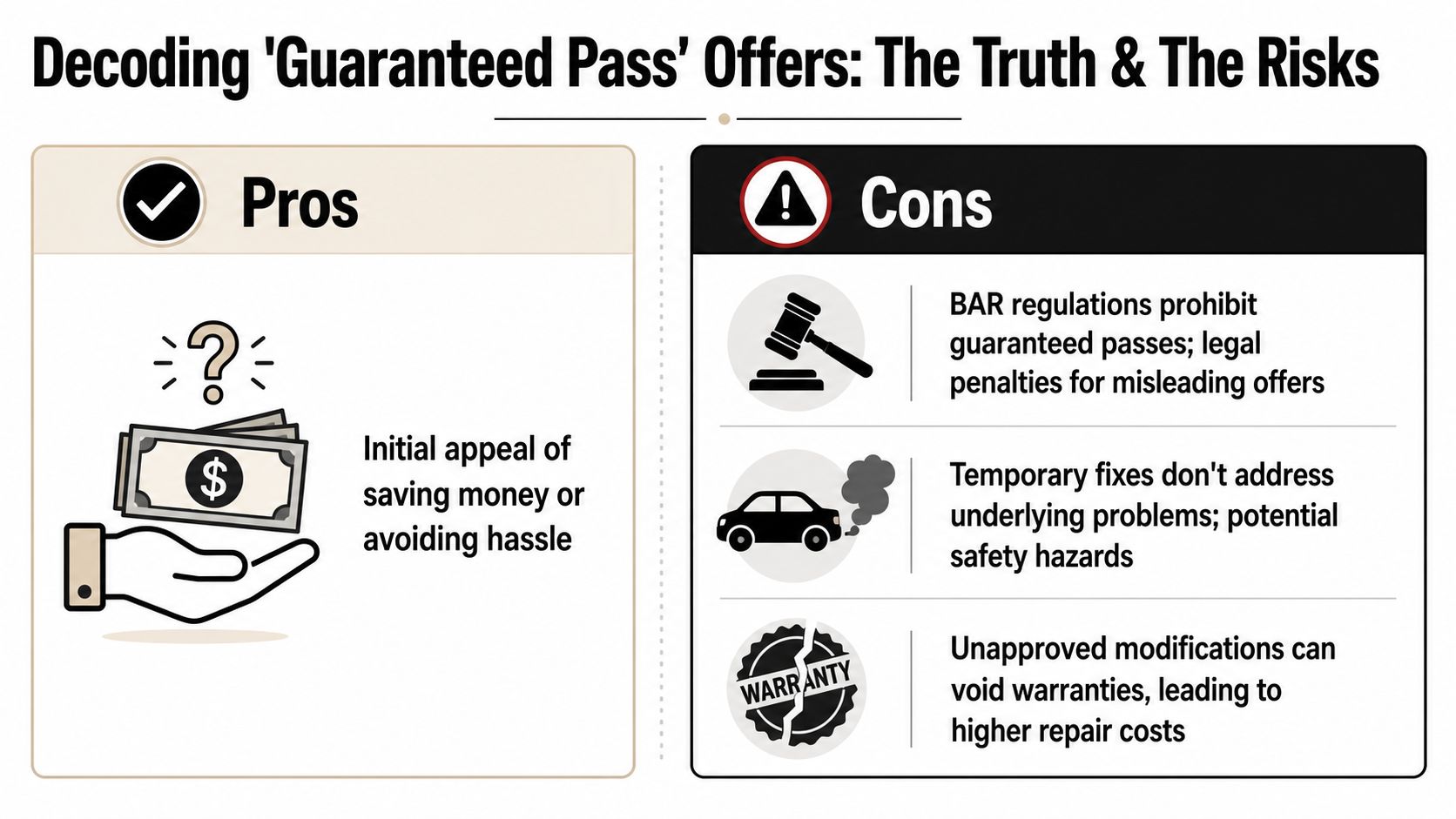
When a shop advertises a guaranteed pass, read it as a warning label, not a benefit. California smog stations don't get to decide outcomes by confidence level. The result comes from the inspection data and the required procedures.
The core issue is legal. The Bureau of Automotive Repair framework doesn't allow an inspector to promise a pass before the test. As noted in this discussion of California smog failure rules and STAR station procedures, the pass or fail decision is based on real-time vehicle data, and STAR stations are held to tighter performance standards.
What these offers usually mean in practice
In the bay, “guaranteed pass” usually turns into one of these:
- A retest offer: The shop may mean it'll retest after repairs.
- A marketing hook: The phrase gets clicks and calls, but it doesn't change the inspection rules.
- A risky workaround: Some operators hint that they know how to “get around” the test. That's where drivers get into trouble.
A free or discounted retest isn't the same thing as a guaranteed certificate. That distinction matters.
Red flags I'd take seriously
The warning signs are usually obvious once you know what to watch for.
- They talk about “making the computer ignore it.” If a shop says it can bypass monitor problems or software issues, that's not preparation. That's non-compliance.
- They shrug off modified tuning. If the vehicle has software or hardware that isn't approved, a casual “you'll be fine” is bad advice.
- They don't ask basic questions. A serious technician wants to know whether the battery was disconnected, whether codes were recently cleared, and whether emissions parts were changed.
- They promise the outcome before seeing the car. No competent inspector can do that truthfully.
A clean result comes from a ready vehicle, not from a creative promise.
Why STAR matters more than a slogan
A STAR-certified station isn't valuable because it fails cars more often or passes them more easily. Its value is accuracy. That's the whole point. The station is expected to follow procedure closely and produce reliable inspections.
That may sound less exciting than a flashy guarantee, but it protects you. If your car passes, you know it passed correctly. If it fails, you know the next step is diagnosis and repair, not guesswork.
The safest mindset is simple. Don't shop for a promised result. Shop for a station that follows the rules and tells you the truth.
How to Genuinely Prepare Your Car to Pass the Smog Check
Preparation is where drivers win or lose. Not at the counter. Not in the lane. Long before that.
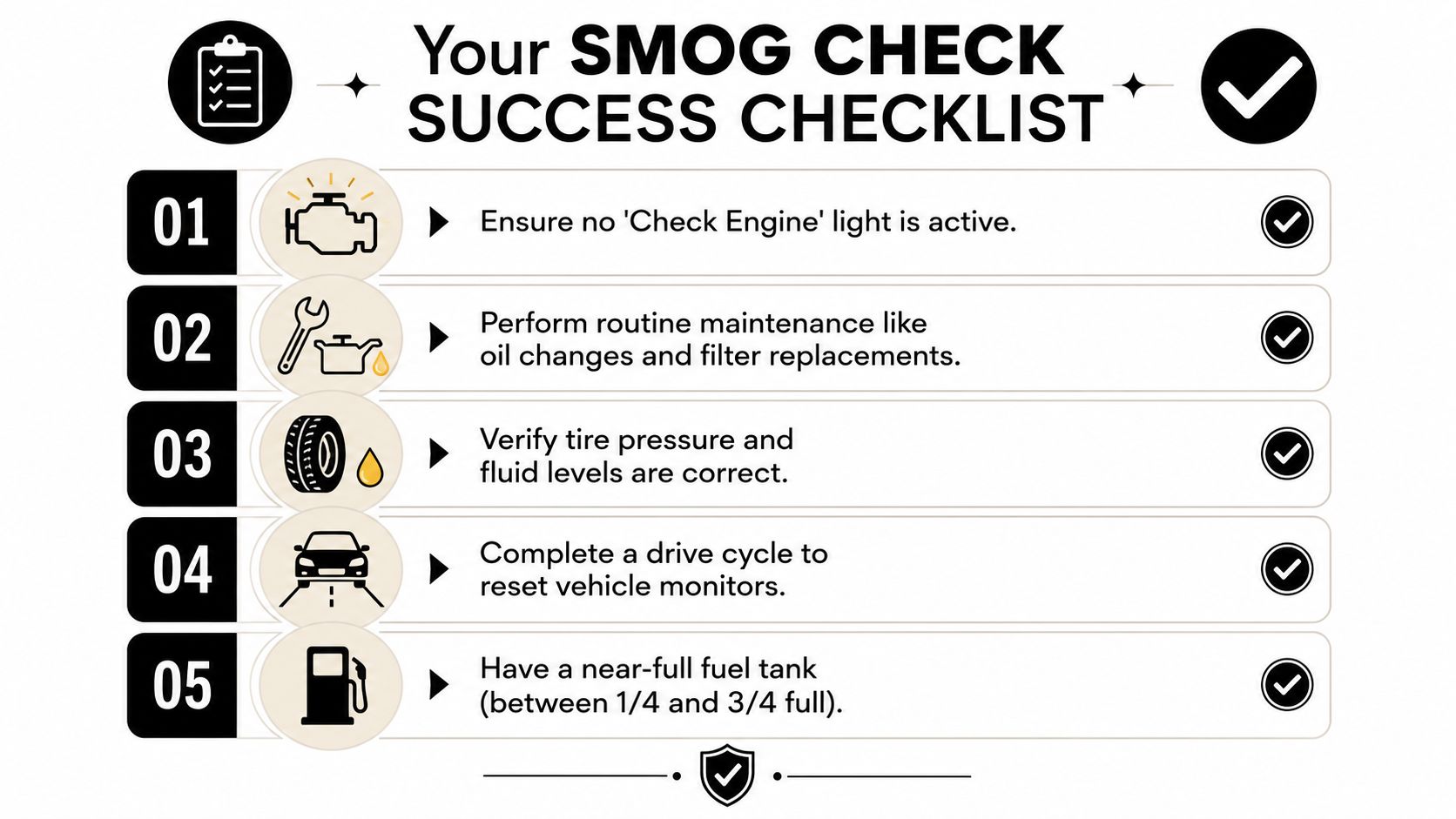
Start with the easy problems first. If the check engine light is on, treat that as a stop sign. Don't assume the car will “still probably pass.” On most modern vehicles, that light means the onboard system has detected a fault tied to emissions or another monitored system.
Use this checklist before your appointment.
Handle the obvious issues first
Routine prep solves more problems than people think.
Check the dashboard
If the check engine light is on, or if it recently turned off after codes were cleared, the car may still not be ready for inspection.
Look for basic maintenance neglect
Old spark plugs, a dirty air filter, and overdue service won't always trigger a failure by themselves, but they can contribute to poor performance and fault codes.
Confirm the fuel cap is secure
A loose or damaged cap can create evaporative system problems on some vehicles.
Drive the car before testing
Don't tow it in cold from the driveway unless there's no other choice. A car that has reached normal operating temperature behaves more predictably during inspection.
For a more detailed breakdown of common failure causes, this page on why vehicles fail smog checks is worth reviewing before you book.
Readiness monitors trip up a lot of drivers
The most misunderstood issue is monitor readiness. A vehicle can run fine, feel fine, and still fail because the onboard system hasn't completed its self-checks.
This happens a lot after a battery replacement, code clearing, or certain repairs. According to the California BAR smog check information, drivers may need to operate the vehicle for 1 to 2 weeks after a battery replacement so the monitors can reset, and monitor readiness has become a major cause of failure.
Here's the short version:
| Situation | What often happens |
|---|---|
| Battery disconnected | Monitors reset to incomplete |
| Trouble codes cleared | Monitors reset again |
| Car driven only on short trips | Some monitors never complete |
| Software modified | The car may fail until restored to legal settings |
Shop-floor advice: If the battery was replaced yesterday, today is usually the wrong day for a smog check.
The fix is usually driving, not magic. The vehicle needs a proper drive cycle, which means a mix of cold start, city driving, steady-speed cruising, and normal shutdowns over time. Exact patterns vary by manufacturer, but the principle doesn't. The computer has to see enough normal operation to finish its tests.
A quick explainer helps here:
Don't ignore modifications
If the car has aftermarket tuning, removed emissions hardware, or parts that aren't approved for that application, don't expect a “friendly” station to smooth it over. That's one of the biggest misunderstandings behind the smog check guaranteed pass idea.
What works instead:
- Restore factory software when needed
- Verify emissions-related parts are legal for California use
- Fix the actual fault before testing
- Give the car enough normal driving time afterward
A simple pre-test routine
The day before your appointment, keep it uncomplicated.
- Drive normally: Give the vehicle a decent trip instead of a quick hop to the store.
- Avoid clearing codes: If you clear a light to make the dash look clean, you may create a monitor problem that's just as bad.
- Check for recent repairs: If work was just completed, confirm the shop didn't leave you at the “not ready” stage.
- Bring the car in as-is: Don't disconnect anything, remove warning bulbs, or try tricks you saw online.
That's how you create the only honest version of a guaranteed pass. You bring in a car that's ready.
What to Do If Your Vehicle Fails the Smog Test
A failed test feels worse than it is. It doesn't mean the car is done, and it doesn't mean you need to panic-buy parts. It means the vehicle needs diagnosis based on the failure information, then a smart decision about repair.
Read the failure for what it is
The first move is simple. Find out whether the car failed because of:
- An active diagnostic issue
- A readiness monitor problem
- A visible emissions equipment issue
- A modification that isn't acceptable
Those are different problems. Treating them like they're all the same wastes time and money.
If the failure came from incomplete readiness, the answer may be more driving after repair or after a recent battery disconnect. If it came from a fault code or an equipment issue, the answer is diagnosis and proper repair.
Use the state help that's available
California has assistance programs for people who qualify. According to the California Senate overview of Smog Check assistance programs, eligible low-income owners can receive up to $500 toward emissions-related repairs, and some may qualify for up to $1,500 if they meet added criteria.
That same program summary also describes replacement assistance for some high-polluting vehicles through fleet modernization options. For some drivers, repairing the current car makes sense. For others, retiring it and moving into a cleaner replacement is the better financial decision.
Don't make the repair decision based only on the first estimate. Make it based on the fault, the car's condition, and whether assistance applies.
The practical next move
If the car fails, use this order:
Get a clear diagnosis
Don't start replacing parts because a friend guessed “it's probably the oxygen sensor.”
Separate emissions repairs from everything else
Some repairs matter directly to the smog result. Others can wait.
Ask whether the vehicle is ready for retest
A repaired car may still need drive time before it's test-ready.
Check eligibility for repair assistance or replacement support
If the budget is tight, this step matters early, not after you've already spent money.
A failed smog check is a repair and compliance problem. It's manageable when you treat it that way.
Your Next Steps at a STAR Station like Speedy Smog
A STAR station is the opposite of the guaranteed-pass gimmick. The promise isn't a predetermined result. The promise is a cleaner process, an accurate inspection, and a result the DMV will accept without drama.
That difference matters most when the vehicle is borderline, older, recently repaired, or carrying the kind of history that makes owners nervous. At a STAR station, the inspection follows stricter expectations for consistency and accuracy. That's what serious drivers should want.
What the visit should feel like
A good STAR-station experience is straightforward.
You pull in. The staff checks the vehicle information, performs the required inspection, explains anything unusual, and submits the result properly. If the car passes, you leave with the certification handled. If it doesn't, you leave knowing why.
That's a much better outcome than hearing vague promises before the test and confusion after it.
Why many drivers choose STAR on purpose
Drivers usually come to a STAR station for one of these reasons:
- They want accuracy: Especially after a previous failure or after repairs.
- They need DMV confidence: They want the inspection handled correctly the first time.
- They drive a vehicle that needs experience: Diesels, hybrids, older cars, and everyday commuter vehicles all bring different quirks.
For a plain-language explanation of what sets these stations apart, see what a STAR smog station is and why it matters.
The real standard to look for
If you remember one thing, make it this: a legitimate shop never sells certainty before the data exists. It sells competence.
That means clean procedures, transparent pricing, technicians who ask the right questions, and enough experience to spot whether your issue is a monitor reset, a warning light, a modification problem, or an actual emissions failure. That's the alternative to the smog check guaranteed pass myth.
Frequently Asked Questions About California Smog Checks
Can any California shop legally guarantee I'll pass?
No. A shop can offer honest prep advice or a retest policy, but it can't legitimately promise a passing result before the inspection.
What's the difference between a STAR station and a regular station?
A STAR station is held to higher performance standards for inspection accuracy. That's why many drivers choose one when they want a reliable, compliant result instead of guesswork.
I changed my battery. Can I test right away?
Usually, that's risky. As covered earlier, a battery disconnect can reset readiness monitors, and the car may need normal driving time before it's ready.
How long is a smog certificate good for?
The certificate is valid for 90 days, according to the California Smog Check program summary in the Senate document cited earlier.
What does a smog check usually cost?
The same Senate summary noted that annual inspection costs averaged $48 in 2015. Actual shop pricing can vary, but the state-mandated certificate fee is handled separately where applicable.
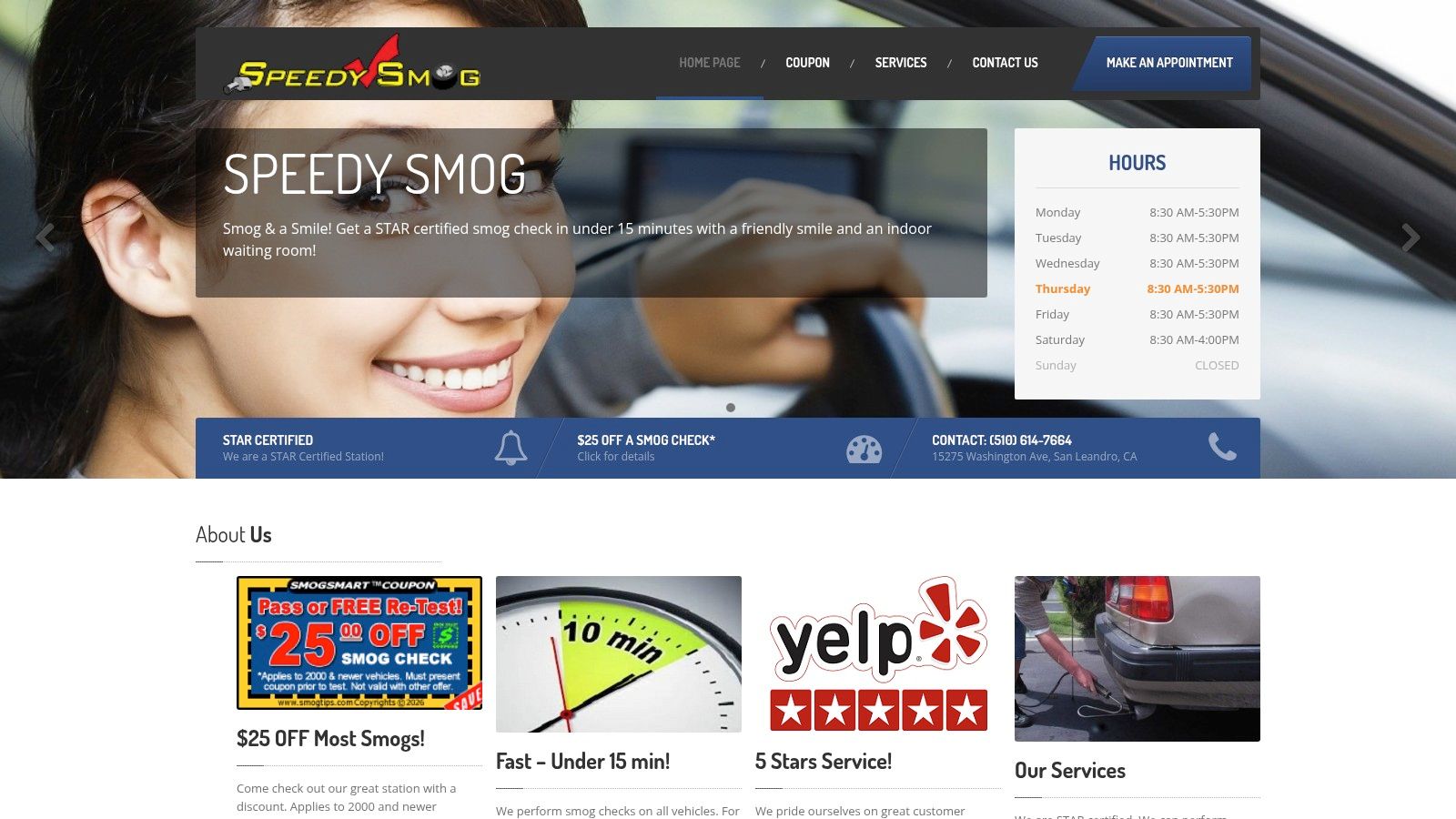
If you want an honest inspection from a STAR-certified team, Speedy Smog offers fast, compliant smog checks in San Leandro for newer cars, older vehicles, diesels, and hybrids. Skip the “guaranteed pass” gimmicks. Bring in a car that's properly prepared, and let a shop that follows the rules give you a clear answer.