
Smog Check Explained Simply
A smog check is a required emissions test that measures the pollutants coming out of your vehicle's exhaust. If you drive in California, you've almost certainly dealt with one — and if you haven't yet, you will. Missing or failing a smog check can prevent you from renewing your vehicle registration, so understanding how it works saves you time and frustration.
This guide covers everything you need to know: what a smog check actually tests, which vehicles need one, how often to get it done, and what happens if your car doesn't pass.
What Is a Smog Check?
A smog check is an official emissions inspection required by the California Department of Motor Vehicles (DMV) to verify that your vehicle isn't releasing excessive air pollutants. The test measures harmful gases produced by your engine — including hydrocarbons, carbon monoxide, and nitrogen oxides — and compares them against state standards.
California's smog check program is administered by the Bureau of Automotive Repair (BAR), which sets the testing standards and certifies the stations allowed to perform inspections.
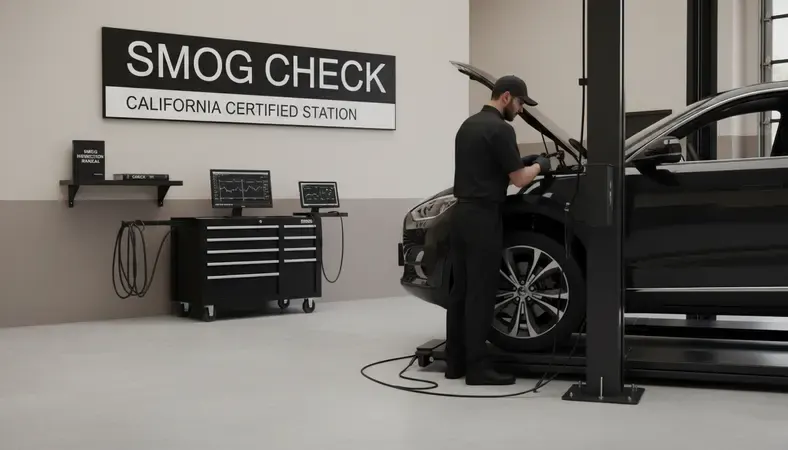
The name "smog check" comes from the visible air pollution — smog — that blanketed cities like Los Angeles for decades. California created the program in 1984 to reduce vehicle-related air pollution, which accounts for a significant portion of the state's greenhouse gas emissions. According to the California Air Resources Board, motor vehicles contribute roughly 80% of smog-forming pollutants in many California regions.
Modern smog checks use an OBD II (On-Board Diagnostics) scanner to read your vehicle's computer directly. This replaced older tailpipe probe tests for most vehicles. The scanner checks whether your engine management system has flagged any emissions-related faults, making the test faster and more accurate than older methods.
Key Insight: A smog check isn't just a bureaucratic hurdle — it's a direct reading of whether your car's emissions systems are functioning correctly. A failure often signals a real mechanical issue worth fixing.
Why Do I Need a Smog Check?
The short answer: California law requires it, and you can't renew your vehicle registration without a passing certificate.
But there's a bigger picture. Vehicle emissions are the largest single source of air pollution in California. The smog check program has helped reduce smog-forming emissions from passenger vehicles by more than 99% compared to uncontrolled vehicles, according to the California Air Resources Board. That's a measurable improvement in air quality that affects public health across the state.
From a practical standpoint, here's what happens if you skip it:
- You cannot renew your vehicle registration
- The DMV will flag your registration as expired
- Driving with an expired registration can result in a citation
- Unresolved smog issues can lower your vehicle's resale value
Beyond compliance, a smog check catches emissions-related problems early. A failing oxygen sensor or a clogged catalytic converter will show up in the smog check before it turns into a larger repair bill.
How Often Do I Need a Smog Check?
Most vehicles in California require a smog check every two years, timed to coincide with registration renewal. The DMV sends a renewal notice that indicates whether a smog check is required for that cycle.
Smog Check Frequency by Vehicle Type
| Vehicle Situation | Smog Check Requirement |
|---|---|
| Vehicles 1–7 years old | Exempt (no smog check required) |
| Vehicles 8+ years old | Every 2 years at renewal |
| Newly purchased used vehicle | Required at time of transfer |
| Vehicles moving into California | Required upon registration |
| Diesel vehicles (1998+) | Every 2 years |
| Hybrid vehicles | Every 2 years (same as gas) |
There's one important exception: brand-new vehicles and vehicles up to seven model years old are exempt from the biennial smog check requirement. However, when you buy a used vehicle — even a recent model — a smog check is typically required to complete the ownership transfer.
If you're moving to California from another state, expect to get a smog check when you register your vehicle here, regardless of whether it passed an inspection in your previous state.
What Vehicles Require a Smog Check?
Not every vehicle on California roads needs a smog check. Here's a clear breakdown of what's required and what's exempt.
Vehicles Required to Get a Smog Check
- Gasoline-powered vehicles model year 1976 and newer
- Diesel-powered vehicles model year 1998 and newer with a Gross Vehicle Weight Rating (GVWR) under 14,000 lbs
- Hybrid vehicles (gasoline-electric)
- Vehicles registered in most California counties (check your county's specific requirements)
Vehicles Exempt from Smog Checks
- Electric vehicles (EVs) — no combustion engine means no emissions to test
- Natural gas vehicles over 14,000 lbs GVWR
- Motorcycles
- Trailers
- Vehicles model year 1975 and older (these are managed under a separate program)
- New vehicles within their first 7 model years
It's worth noting that STAR-certified stations are required for vehicles flagged by the DMV as "directed" — meaning the state has specifically directed that vehicle to a higher-scrutiny station based on its emissions history. Not all smog stations are STAR certified, so if your registration notice says "STAR Station Required," you'll need to find one that qualifies.
How to Prepare Your Vehicle for a Smog Check
Most vehicles pass without any preparation. But if your car is borderline or you want to give it the best chance, a few simple steps can help.
Before You Go
-
Check your Check Engine light: If it's on, your vehicle will almost certainly fail. The OBD II scanner reads active fault codes, and a lit Check Engine light means at least one is present. Get the code read first — many auto parts stores do this free — and address the issue before testing.
-
Drive the vehicle for 20–30 minutes beforehand: Cold engines and incomplete drive cycles can cause the OBD II monitors to show as "not ready," which results in a failure or inconclusive test. Highway driving at steady speeds is ideal for completing readiness monitors.
-
Check your gas cap: A loose or cracked gas cap triggers an evaporative emissions fault. It's one of the most common — and easiest — smog check failures. Make sure it clicks tight when you close it.
-
Make sure tires are properly inflated: Smog check stations perform a brief visual inspection. Proper tire inflation is part of that check at some stations.
-
Don't overfill your gas tank: A full tank can interfere with evaporative emissions testing. Fill to about three-quarters before your appointment.
What You Don't Need to Do
You don't need to change your oil specifically for a smog check — oil condition doesn't directly affect the emissions test. You also don't need to buy any fuel additives or "smog check cleaners." These products rarely make a meaningful difference and aren't worth the cost.
What Happens During a Smog Check Test?
The actual test is straightforward and usually takes 15 minutes or less at a well-run station.
Here's what the technician does:
-
Visual inspection: The technician checks that your vehicle's emissions components are present and visibly intact — including the catalytic converter, fuel cap, and visible vacuum hoses.
-
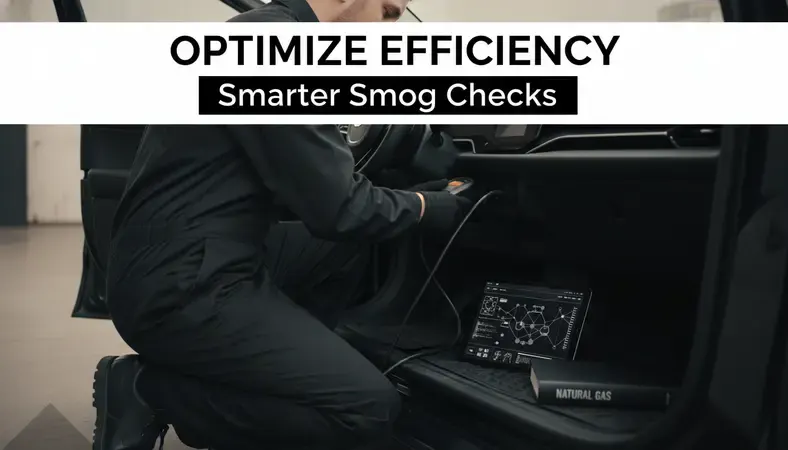
OBD II scan (vehicles 2000 and newer): A diagnostic scanner is plugged into your vehicle's OBD II port, usually located under the dashboard on the driver's side. The scanner reads whether any emissions-related fault codes are active and whether all readiness monitors have completed.
-
Functional inspection: The technician checks that the Check Engine light illuminates when the ignition is turned on (confirming the system works) and goes off when the engine starts.
-
Tailpipe test (older vehicles, 1999 and earlier): Older vehicles without OBD II systems go through a tailpipe probe test, where a sensor is inserted into the exhaust pipe to measure actual emissions output directly.
-
Results and certificate: If your vehicle passes, the station submits the results electronically to the DMV and gives you a certificate. You can then complete your registration renewal. If it fails, you receive a Vehicle Inspection Report explaining which components or readings caused the failure.
The entire process at a STAR-certified station like Speedy Smog typically runs under 15 minutes for most vehicles.
What If My Vehicle Fails the Smog Check?
Failing a smog check isn't the end of the road. Here's what to do next.
Understand Why It Failed
Your Vehicle Inspection Report will specify the reason for failure. Common causes include:
- Active fault codes (Check Engine light): An engine management system fault related to emissions
- Failed readiness monitors: The vehicle's computer hasn't completed its self-diagnostic cycle — often fixed by driving the vehicle through a specific drive cycle
- Failed catalytic converter: The catalytic converter is no longer reducing emissions effectively
- Evaporative emissions system leak: Often a gas cap issue or a cracked hose
- Failed oxygen sensor: Sensors that monitor exhaust composition aren't functioning correctly
Get the Repairs Done
Take your Vehicle Inspection Report to a licensed repair shop. Some smog stations offer repair services; others are test-only. Make sure you understand which type you're dealing with before assuming they'll fix the problem on-site.
The Consumer Assistance Program (CAP)
California offers financial assistance to qualifying low-income vehicle owners who fail a smog check. The Consumer Assistance Program provides repair assistance up to a set dollar amount, or a vehicle retirement option if the vehicle can't be economically repaired. Income limits and eligibility requirements apply.
Retest After Repairs
Once repairs are complete, you'll need to return for a retest. Many smog stations offer a free or reduced-cost retest within a set period after an initial failure — ask about this policy when you drop off your vehicle.
Common Questions About Smog Checks
How long does a smog check take?
A smog check typically takes 15 to 30 minutes at most stations. STAR-certified stations with modern equipment often complete the process in under 15 minutes for vehicles with no issues.
Can I get a smog check at any station, or does it need to be specific?
Most vehicles can go to any licensed smog station. However, if your DMV registration notice says "STAR Station Required," you must use a STAR-certified station. These stations meet higher state standards and are equipped to test vehicles flagged for additional scrutiny.
What happens if I can't afford the repairs after failing?
California's Consumer Assistance Program (CAP) offers repair assistance for income-qualifying vehicle owners. If repairs aren't economically feasible, the program also offers a vehicle retirement option with a cash payment. Contact the Bureau of Automotive Repair to check eligibility.
Does a smog check affect my car's warranty?
No. A smog check is an external state inspection and has no effect on your manufacturer's warranty. However, if a smog-related failure reveals a defect covered under your warranty, that repair may be covered — check with your dealer.
My Check Engine light just turned off. Can I get a smog check now?
Not immediately. When a fault code clears — whether you fixed it or the light turned off on its own — the OBD II readiness monitors reset and need time to complete. You'll typically need to drive the vehicle through a specific cycle (often 100–200 miles of mixed driving) before all monitors are ready. Testing too soon after a reset almost always results in a "not ready" failure.
Do electric vehicles need a smog check in California?
No. Electric vehicles produce zero tailpipe emissions, so they are fully exempt from California's smog check requirement. This applies to all-electric vehicles — hybrids with a gasoline engine still require the biennial smog check.
Wrapping Up
A smog check is a straightforward test once you know what to expect. Keep your Check Engine light off, drive your vehicle regularly, and address any emissions-related repairs promptly — and you'll pass without a problem most of the time.
Book your smog check at Speedy Smog in San Leandro — STAR certified, most vehicles done in under 15 minutes, open 6 days a week. Save $25 on your next visit by calling (510) 614-7664.