
California Smog Check Engine Light: A 2026 Guide
You're driving in the East Bay, the DMV renewal notice is sitting on the counter, and then that orange check engine light comes on. It's the kind of timing that makes a simple errand feel like a deadline you can't ignore. In California, that light isn't just annoying, it's tied directly to whether your car can pass Smog Check.
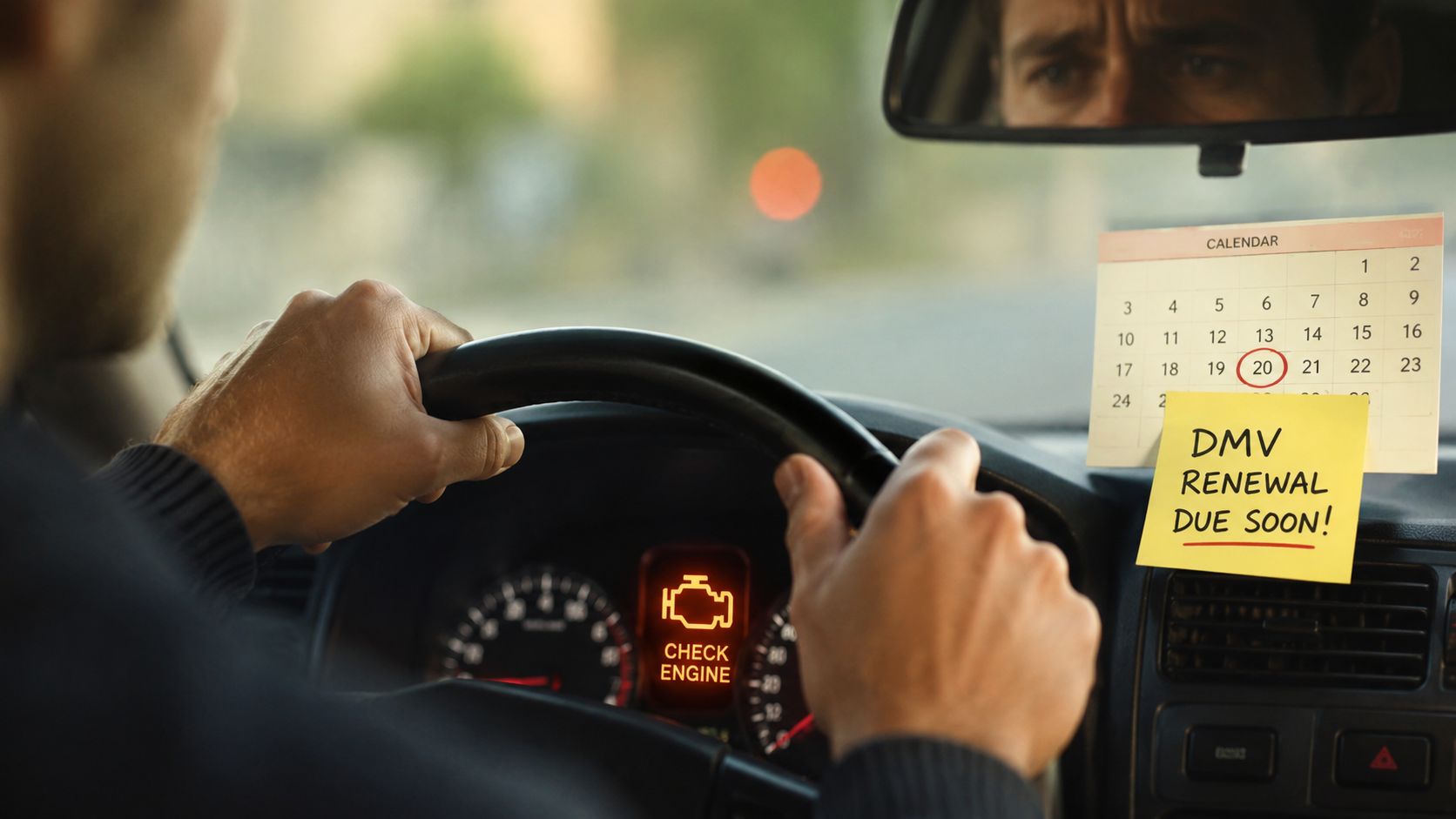
The good news is that this problem is usually manageable if you handle it in the right order. Diagnose the fault, repair it, make sure the light stays off, and then give the car enough time to finish its self-checks before you test. California's Smog Check program is built to catch emissions problems at scale, and the California Air Resources Board says it removes about 400 tons of smog-forming pollutants every day from California's air. California Smog Check program background
Table of Contents
- That Sinking Feeling Your Check Engine Light and the Smog Test
- California Rules Why an Engine Light Guarantees a Fail
- Decoding the Message Reading Your Car's Trouble Codes
- Common Culprits Behind the Check Engine Light
- The Critical Step The Post-Repair Drive Cycle
- When to Visit a STAR Station Like Speedy Smog
That Sinking Feeling Your Check Engine Light and the Smog Test
The timing usually feels personal. A driver notices the check engine light on the commute home, then finds the DMV notice that says the smog certificate is due, and suddenly the whole week turns into calls, guesses, and maybe one too many internet searches. At a STAR-certified station, that combination shows up all the time, and the pattern is familiar enough to be reassuring.
A common mistake is treating the light like a simple warning lamp. In California, it's also a sign that the vehicle is reporting an emissions-related problem, which is exactly what Smog Check is designed to catch. That's why a quick reset or a hopeful drive around the block usually doesn't solve the bigger issue.
The state's program is not small or casual. The California Air Resources Board says the Smog Check program removes about 400 tons of smog-forming pollutants every day from California's air, which explains why the inspection rules stay strict. When a system is supposed to protect air quality at that scale, an illuminated warning light gets taken seriously.
The most useful mindset is simple. Don't treat the light as a mystery to outsmart, treat it as a diagnostic clue that needs to be understood before you show up for the test. That approach saves time, avoids repeat visits, and keeps the repair path clear.
Practical rule: if the light is on now, the inspection problem starts at the repair bay, not at the test lane.
California Rules Why an Engine Light Guarantees a Fail
California's rule is direct. If the check engine light is on, the vehicle has to be repaired before Smog Check, and it will not pass with the light illuminated. The California BAR Smog Check rules make that clear, and there isn't a workaround built into the inspection.
That matters because this rule reaches a wide range of vehicles. California's Smog Check program applies to gasoline, hybrid, and alternative-fuel vehicles model year 1976 and newer, and also to diesel vehicles model year 1998 and newer. So this is not a niche issue for one engine type or one age group, it affects a broad slice of drivers.
Why the state treats the light as a hard fail
The light is tied to the emissions system, not just engine performance. When it comes on, the vehicle's computer is telling you that something in the emissions control path needs attention. The inspection is built to catch exactly that condition, which is why the light itself is enough to stop the test.
If you want the state-level rule in plain English, it's this. A lit malfunction indicator means the car is currently reporting an emissions problem, and California won't certify a car in that condition. That's the same reason drivers often hear that the repair comes first and the test comes second.
For a simple overview of what California drivers should expect at the station, see these California Smog Check rules explained for drivers. The key takeaway is still the same, don't book the test until the light is out and the vehicle is ready to be checked.
A lit warning light isn't a judgment call at the counter. It's a pass-fail condition built into the program.
Decoding the Message Reading Your Car's Trouble Codes
A code reader gives you the first real clue. Most cars use an OBD-II port, which is the small connector the technician or scanner plugs into to read stored trouble codes. Once you know the code, you're no longer guessing, and that changes the whole repair conversation.
There are two practical ways to get those codes. You can buy a basic scanner and read them yourself, or you can go to an auto parts store that offers code reading as a free service. Either way, the point is the same, get the code before anyone starts clearing lights or replacing parts.
Start with the code, not the dashboard light
The dashboard only tells you that the car sees a problem. The code tells you where to look. A P0420 code usually points toward catalyst efficiency concerns, while a P0455 code generally points to a large evaporative emissions leak.
| DTC Code | Common Cause | What It Means |
|---|---|---|
| P0420 | Catalyst system concern | The catalytic converter system may not be working efficiently |
| P0455 | Large EVAP leak | The evaporative emissions system may have a major leak |
| P0300 | Random misfire | The engine is misfiring in more than one cylinder |
| P0171 | Lean fuel condition | The engine may be getting too much air or not enough fuel |
| P0442 | Small EVAP leak | A small leak is affecting fuel vapor control |
A code is not a diagnosis by itself. It points you toward the system that needs inspection, which might be something simple or something that needs a shop's tools and experience. That distinction matters because replacing the wrong part gets expensive fast.
Two ways to use the code without wasting money
If the code points to a loose cap or an obvious hose issue, you may be able to solve it quickly. If it points to an emissions sensor, a catalyst issue, or a recurring misfire, it's smarter to confirm the repair path before you pay for parts. For a step-by-step example of this process, this guide to reading OBD codes is a practical place to start.
The code is the map. The repair is the trip.
Common Culprits Behind the Check Engine Light
Some check engine lights come from problems you can spot with a few minutes under the hood. Others point to parts that need proper diagnosis, because replacing them by guesswork usually doesn't fix the underlying issue. A good triage process keeps you from overspending on the easy stuff and underestimating the hard stuff.
The simple checks drivers can handle first
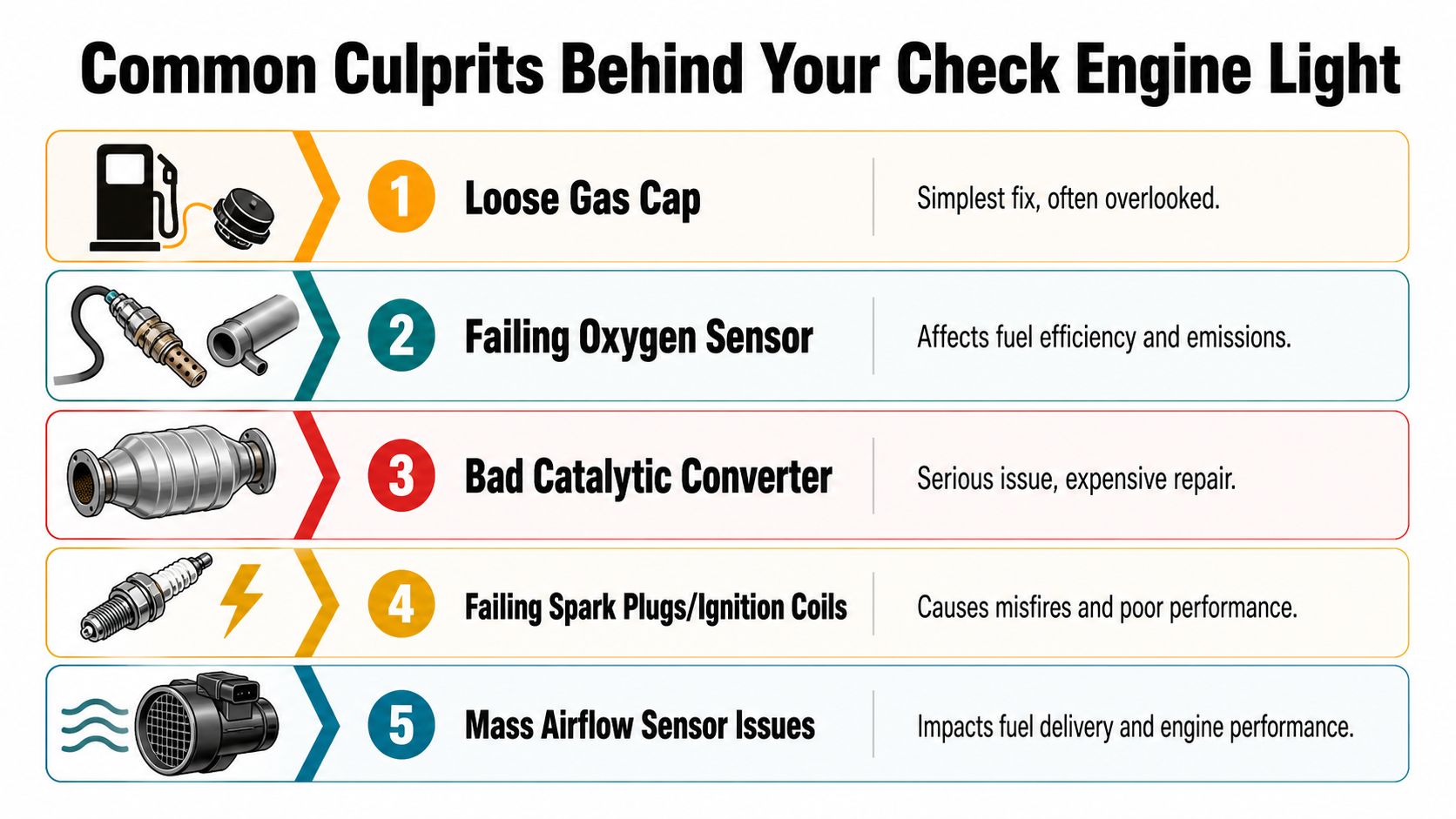
A loose gas cap is the classic quick fix. Tighten it until it clicks, then give the car time to see whether the system clears on its own. That small step can matter because the evaporative emissions system is sensitive to pressure loss.
A code tied to the evap system does not always mean a major repair. Sometimes the problem is a cap that wasn't sealed fully, or a small leak in a hose you can inspect visually. That's the kind of issue worth checking before you spend money on parts.
The problems that usually need a shop
A failing oxygen sensor can affect how the engine manages fuel and emissions. A bad catalytic converter is usually a bigger repair and often points to an upstream problem that needs to be corrected too. A mass airflow sensor issue can throw off air measurement and lead to poor drivability or a recurring light.
Spark plugs and ignition coils are worth attention as well, especially when misfire codes are present. Those parts can create rough running, and a car that misfires won't give you a clean inspection result. The important thing is not to replace parts in isolation when the code points to a deeper fault.
Speedy Smog in San Leandro is one option drivers use when they want the inspection side handled by a STAR Certified station that understands these common failure patterns. That doesn't replace a real repair, but it does help once the vehicle is close and you want the testing done by a station that works under BAR standards.
The practical rule is simple. If the fix is obvious and cheap, handle it first. If the code points to a sensor, catalyst, or misfire path, get the diagnosis right before the retest.
The Critical Step The Post-Repair Drive Cycle
A common pitfall for many drivers is that the light goes off, the repair seems successful, and the car still fails because the computer hasn't finished its internal self-checks yet. Those self-checks are the readiness monitors, and they matter just as much as the lamp itself.
The BAR says that after a battery disconnect or replacement, drivers may need to drive one to two weeks so readiness monitors reset before testing. That's because modern inspections use the vehicle's onboard diagnostics to confirm that emissions-related checks have completed. If the monitors are still not ready, the car can still miss certification even if the dashboard looks calm.
Why clearing the code is not the finish line
A scan tool can erase a code, and a disconnected battery can wipe memory, but neither one proves the repair worked. The computer still needs normal driving time to rerun its tests. That gap between “light is off” and “car is ready” is where many unnecessary return trips happen.
For 2000-and-newer vehicles, this matters especially because BAR says most of these are checked through the onboard diagnostic system rather than tailpipe testing. So the station is looking at what the car knows about itself, not just whether the warning lamp is visible. The repair has to be confirmed by the monitor status.
What the drive cycle really means in practice
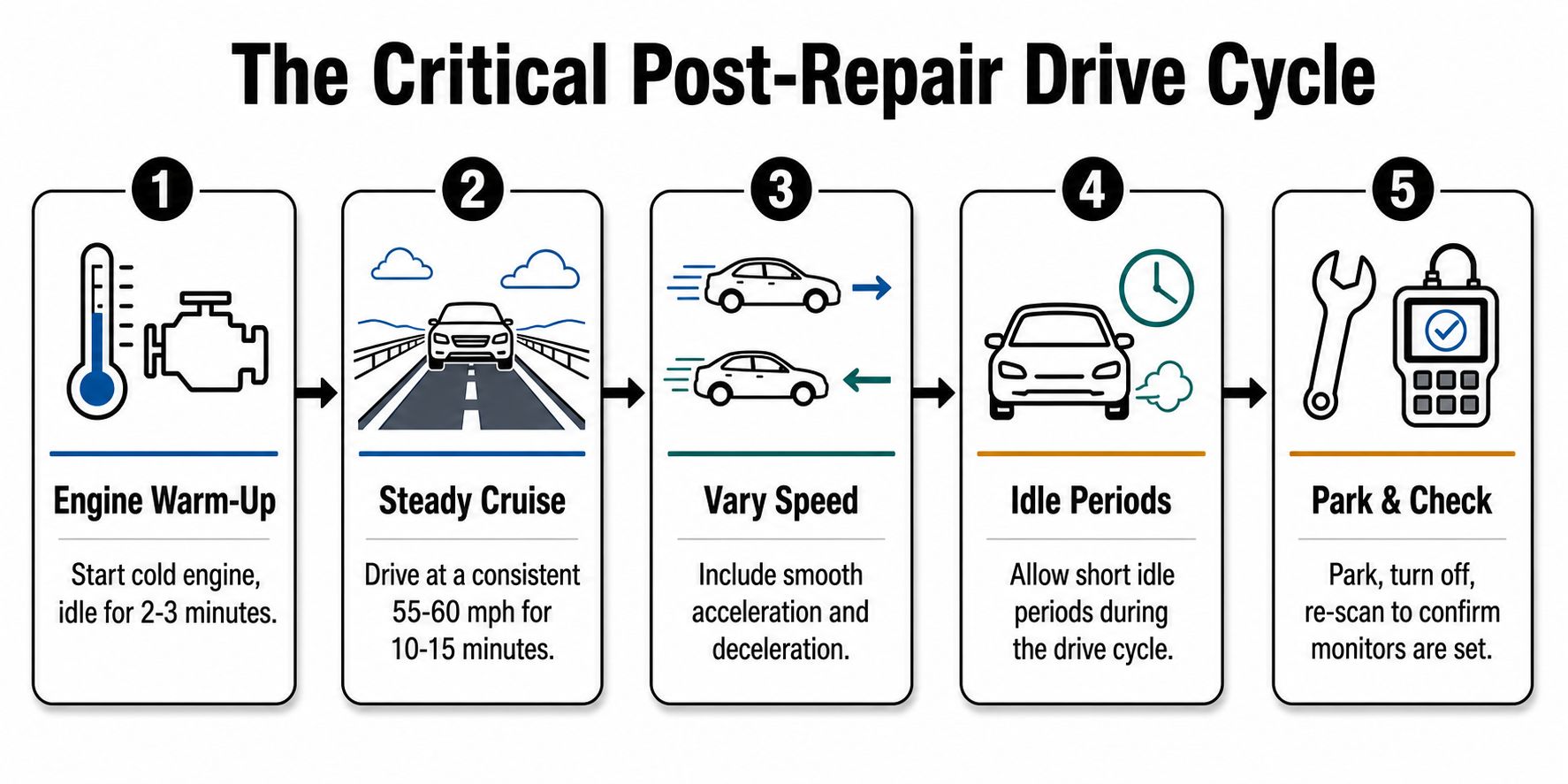
A drive cycle is just a period of normal driving that lets the car complete its self-checks. The exact pattern varies by vehicle, but the goal is steady, mixed driving with enough time for the system to run. Short errands around the corner usually aren't enough.
If you just repaired the car, don't rush the retest. Give it the time the BAR recommends, drive it normally, and confirm the readiness status before you return to the station. That one habit prevents a lot of failed inspections that feel confusing to drivers who already paid for a repair.
Practical rule: no ready monitors, no certificate, even if the light is off.
When to Visit a STAR Station Like Speedy Smog
There's a point where DIY stops being efficient. If the code keeps coming back, if the car has an intermittent problem, or if the monitor status won't set after a repair, a professional inspection lane gives you a cleaner next step. A STAR Certified station is held to higher performance standards set by the BAR, which matters when you want the test handled in a compliant, straightforward way.
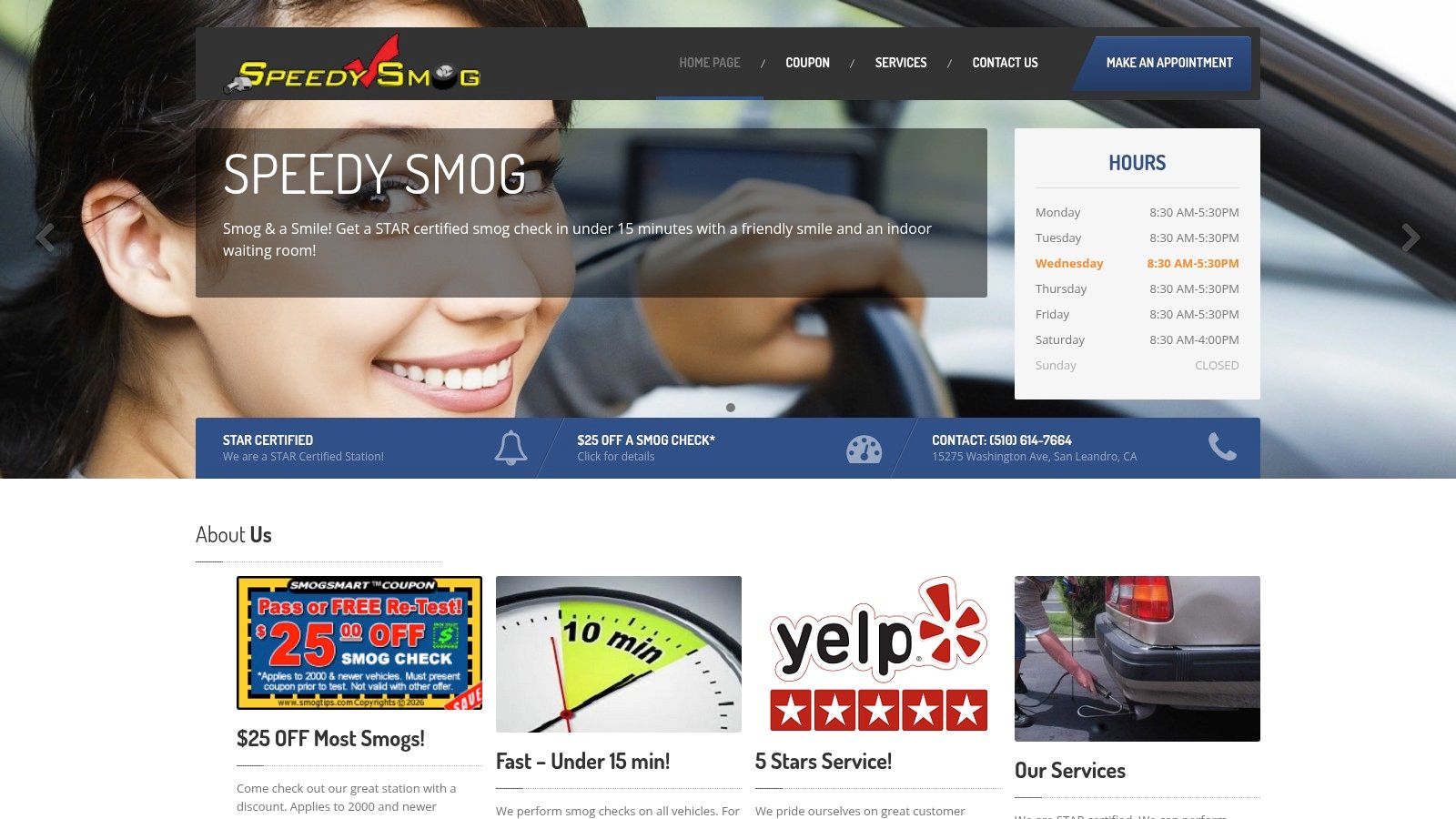
A good station doesn't replace the repair, but it does reduce confusion. The technician can verify whether the light is off, whether the monitors are ready, and whether the vehicle is positioned for a clean test. If you're trying to avoid repeated trips across town, that kind of clarity is worth a lot.
When professional testing makes more sense
- Complex or repeating codes: If the same fault returns after a basic fix, the cause probably goes deeper than the first part you swapped.
- Post-repair uncertainty: If the light is off but you're not sure the monitors are ready, the station can confirm the inspection status before you guess.
- Convenience and compliance: If you want the smog work done by a station that handles the inspection cleanly and explains the result, that's the time to use a certified shop.
For drivers who want a more detailed look at the STAR path, this explanation of how to pass a STAR smog test gives a useful overview. In San Leandro, Speedy Smog is one station that offers the inspection side of that process for drivers who already know the repair situation is under control.
Bring the car in when the light is off, the repair is done, and the monitors have had time to set. That's the cleanest path to certification, and it keeps the whole process from turning into a cycle of failed retests and extra downtime.
A CTA for Speedy Smog.