
California Smog Check Vacaville 2026: Your Guide to Passing
You're staring at a DMV notice, and the line that matters is the one you can't ignore, Smog Check Required. If you drive in Vacaville, that letter usually means one simple thing, your registration renewal or ownership transfer is tied to a California emissions inspection, and the cleanest path is to handle it before the deadline turns into a headache.
A California smog check Vacaville appointment doesn't have to be a gamble. If you know whether your vehicle needs testing, how to pick the right station, and what causes a fast failure, the process becomes routine. The trick is to treat it like a checklist, not a mystery.
Table of Contents
- Navigating Your Vacaville Smog Check Notice
- Understanding California Smog Requirements
- How to Find the Right Smog Station in Vacaville
- Your Pre-Test Checklist to Pass the First Time
- The Smog Check Process Costs and Timelines
- What to Do If Your Vehicle Fails
- FAQs About Vacaville Smog Checks
Navigating Your Vacaville Smog Check Notice
A DMV notice usually means it is time to handle paperwork, not that your car has a hidden problem. California's Smog Check program is tied to registration and ownership records, so Vacaville drivers run into the same statewide process for initial registration, change of ownership, and biennial testing for most covered vehicles California smog check program overview.
For Vacaville drivers, timing matters. If your renewal depends on a passing certificate, you want the station to transmit that result to DMV without any delay, and DMV says the certificate stays valid for 90 days after it is issued. If you are sorting out where to go first, a local directory like smog check stations in San Leandro shows how station listings are typically organized, which can help when you compare options and hours before you book.
What the notice is really asking for
The notice is asking one direct question, does your vehicle meet California emissions rules right now? If the answer is yes, the inspection is usually simple. If the answer is no, find the exact problem before you pay for another test.
Practical rule: treat the notice as a paperwork deadline first, and a repair problem only if your car fails.
Vacaville drivers sometimes assume a local station can bend the rules. It cannot. The station checks the vehicle, then submits the certificate if it passes. If your car is exempt, confirm that before you spend time making an appointment.
A good California smog check Vacaville plan starts with the notice, then moves to eligibility, station selection, and pre-test readiness. That order saves time because it keeps you from paying for a test your vehicle did not need, or showing up with a warning light that will force a failure.
Understanding California Smog Requirements
Vacaville drivers should start with the basics, because a lot of wasted time comes from bringing in a vehicle that was never required to test in the first place. California exempts gasoline vehicles from 1975 and older, diesel vehicles from 1997 and older, natural-gas vehicles over 14,000 lbs. GVWR, electric vehicles, plus motorcycles and trailers in the statewide framework used for Vacaville drivers.
The newer-vehicle rule also catches owners off guard. Vehicles that are less than four model years old can pay a smog abatement fee instead of going through an inspection for the first 8 years of registration, and the current abatement fee for vehicles six model years or newer is $20. If your car falls into that age range, the notice can look like it is asking for a test when the vehicle is handled under a different rule.
Key exemptions to scan first
- Older gasoline cars: 1975 and older are exempt.
- Older diesel vehicles: 1997 and older are exempt.
- Heavy natural-gas vehicles: over 14,000 lbs. GVWR are exempt.
- Electric vehicles: exempt from smog inspection.
- Very new vehicles: less than four model years old may qualify for the abatement fee path instead of testing.
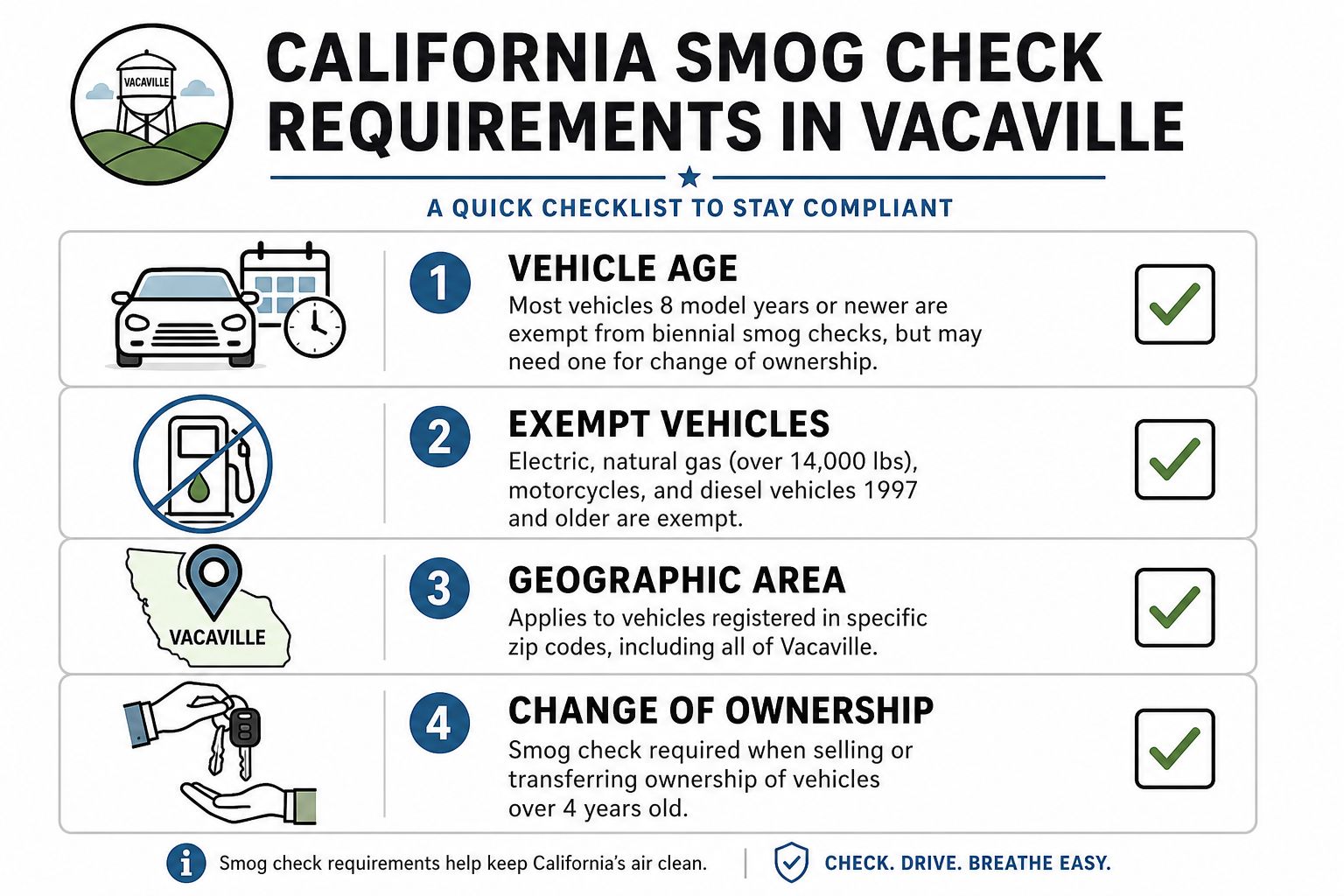
The practical triggers are straightforward. A vehicle can need a smog check at initial registration, at change of ownership, or at the normal biennial renewal interval for most affected vehicles. That is why a car that passed recently can still come back into the program if the title changes hands or the registration cycle calls for it again.
A clean way to check your situation is to compare your notice with the exemption list, then confirm the rules that apply to your vehicle class. If you want a plain-language refresher on the state framework, this guide to California Smog Check rules covers the basics clearly. For Vacaville, the key move is simple, check the notice, check the exemption status, and only book if your vehicle belongs in the program.
How to Find the Right Smog Station in Vacaville
A Vacaville driver can waste a lot of time at the wrong shop. If your DMV paperwork calls for a STAR station, that detail decides where you go, because a regular test-only station cannot satisfy a STAR requirement.
Start with the station type
A standard test station handles many routine inspections. A STAR station is the safer pick when the notice or the vehicle's history points that way. Read the notice first, then use the BAR station locator and match the station type to the requirement before you book.
The other thing I watch is how the shop handles fees and explanations. Inspection prices are set by the station, while the certificate fee is standardized at $8.25. If a place dodges basic pricing questions, that usually means more friction later. For the official rule set, the BAR Smog Check Reference Guide lays out the state basics.
What to ask before you book
- Station type: confirm whether the shop is STAR certified if your notice calls for it.
- Testing scope: ask whether they handle your vehicle type before you drive over.
- Retest policy: ask what happens if the vehicle fails and needs a follow-up visit.
- Communication style: choose a place that can explain the failure code or monitor issue without jargon.
Vacaville drivers should also think about time and location. A shop that understands your notice, answers clearly, and can tell you whether they are the right fit saves a return trip across town. If you want a quick comparison point for how a station presents its services, review Speedy Smog's station page and use it as a model for the kind of clarity you should expect.
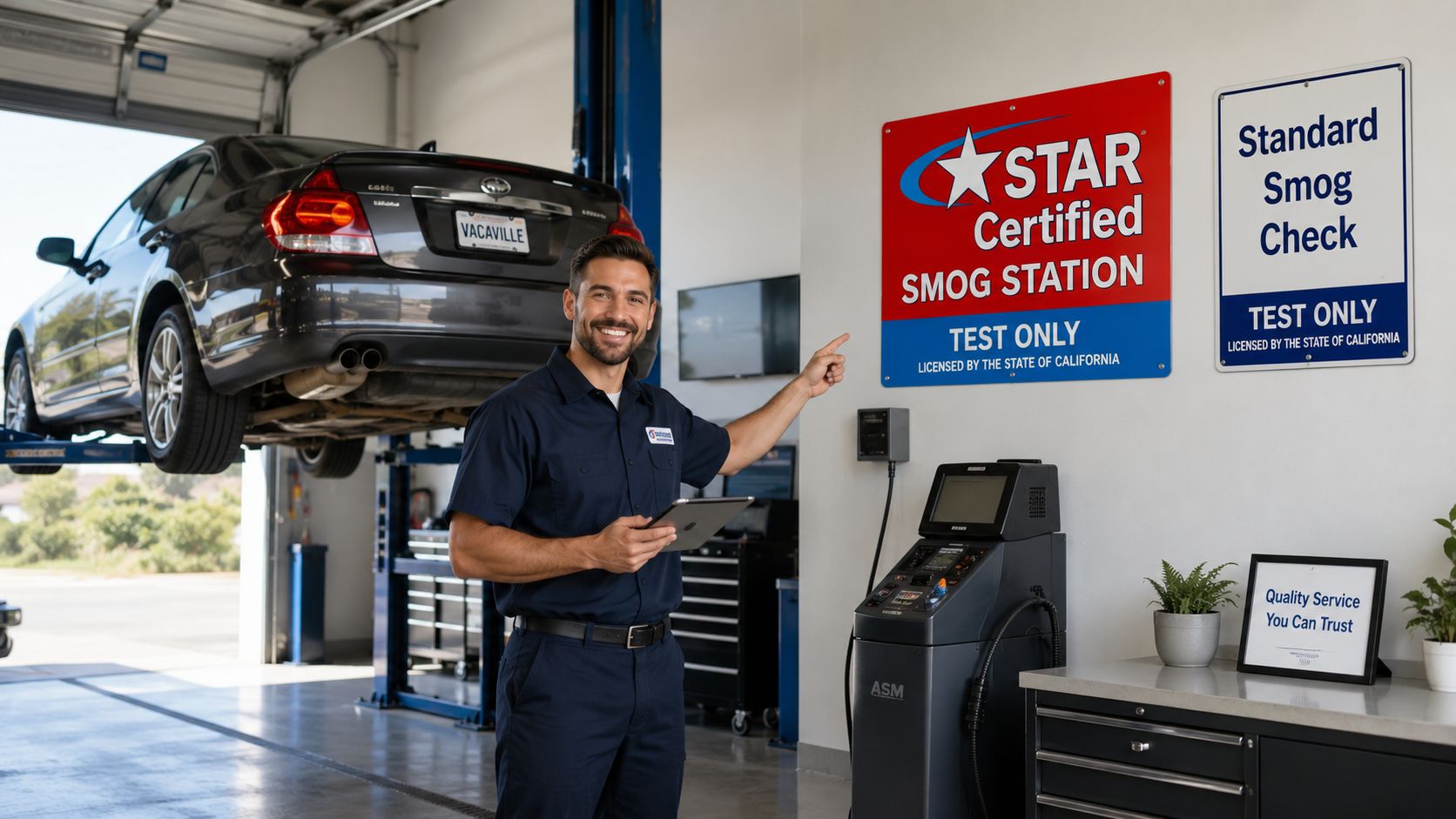
A good station feels organized before you hand over the keys. The best shops are direct about what they can inspect, what they cannot, and what your notice requires. That keeps you from the common mistake of showing up at a clean, professional shop that still is not the right match for your paperwork.
Your Pre-Test Checklist to Pass the First Time
The fastest way to fail is to show up unprepared. BAR says a vehicle will not pass with the check-engine light on, and if the battery was recently disconnected, the car may need a week or two of regular driving for readiness monitors to reset BAR smog check guidance. That's not a minor detail, it's the difference between a certificate and a retest.
Do these checks before you leave home
Start with the dashboard. If the warning lamp is lit, fix the issue before testing. Then make sure the car has had enough normal driving after any battery swap, major repair, or software reset so the internal monitors are ready.
Your smog test is usually won't fail because of the tailpipe first. It fails because the car isn't ready to be tested.
A short warm-up drive helps too. Get the engine fully up to operating temperature so the station isn't testing a cold car that just rolled out of a driveway. That's especially useful if you've only made short local trips around Vacaville.
Before you head out, use this practical checklist:
- Check the dashboard: no illuminated check-engine light.
- Confirm readiness: recent battery disconnects need time and normal driving.
- Bring your DMV notice: the station can use it to verify the exact requirement.
- Look over visible maintenance issues: broken gas caps, loose hoses, or obvious under-hood problems should be handled first.
- Plan the drive: arrive after a normal run, not right after a cold start.
For a deeper step-by-step walkthrough of common failure causes, this how to pass a STAR smog test guide is worth reading before you book. The same logic applies whether you're in Vacaville or anywhere else in California, readiness beats luck every time.
A pretest mindset helps even more than repairs in many cases. If you know the car is clean on the dashboard and fully driven, you're already ahead of most failed appointments. That keeps the test simple instead of turning it into a diagnosis session.
The Smog Check Process Costs and Timelines
A normal inspection usually moves fast. The BAR reference guide says a typical smog inspection takes about 30 minutes, though the exact time depends on the station and the vehicle. If you arrive with a warmed-up car and your paperwork ready, the visit is easy to fit into a lunch break or a short errand run.
What the Technician Checks
The test is more than a tailpipe reading. The technician checks emissions components, reviews onboard diagnostics, and confirms whether the vehicle is reporting correctly. Older vehicles may go through tailpipe measurement, while newer ones rely more on the diagnostic system.
Good habit: if the station offers a pre-inspection, use it when you are unsure about readiness or compliance. It can keep a small issue from turning into a logged failure.
The cost setup is straightforward. Stations set their own inspection prices, and every passing vehicle also pays the standardized $8.25 Smog Check certificate fee. California also limits required emissions-related repairs to $650 for a vehicle to pass a biennial Smog Check, which helps keep repair requests from turning into an open-ended bill.
That cap matters if the inspection turns up a problem. It gives you a clear ceiling to plan around, which is one reason the process feels more structured than ad hoc emissions testing in other places. For Vacaville drivers, that means you can budget the visit with more confidence and less guesswork.
What to Do If Your Vehicle Fails
A failed smog test is frustrating, but it does not end the process. The station should hand you a Vehicle Inspection Report, and that report tells you exactly what did not meet the standard. Read it line by line. A monitor problem, a check-engine light, and a true emissions fault all lead to different repair decisions, and treating them the same wastes time.
Start with the report, not the guesswork
Bring the report back to the technician and ask for a plain-English walkthrough of the failure points. If the issue is mechanical or emissions-related, get it repaired by a qualified professional before you return for a retest. If the failure came from readiness monitors or an illuminated check-engine light, fix the root cause first so you are not paying for a second inspection too soon.
The inspection paperwork also gives you a practical next step if the repair estimate starts climbing. California's repair-cost limit for a biennial pass can keep a stubborn failure from turning into an open-ended bill, as noted earlier. If you think you may qualify for state consumer assistance, ask before you authorize work you may not need.
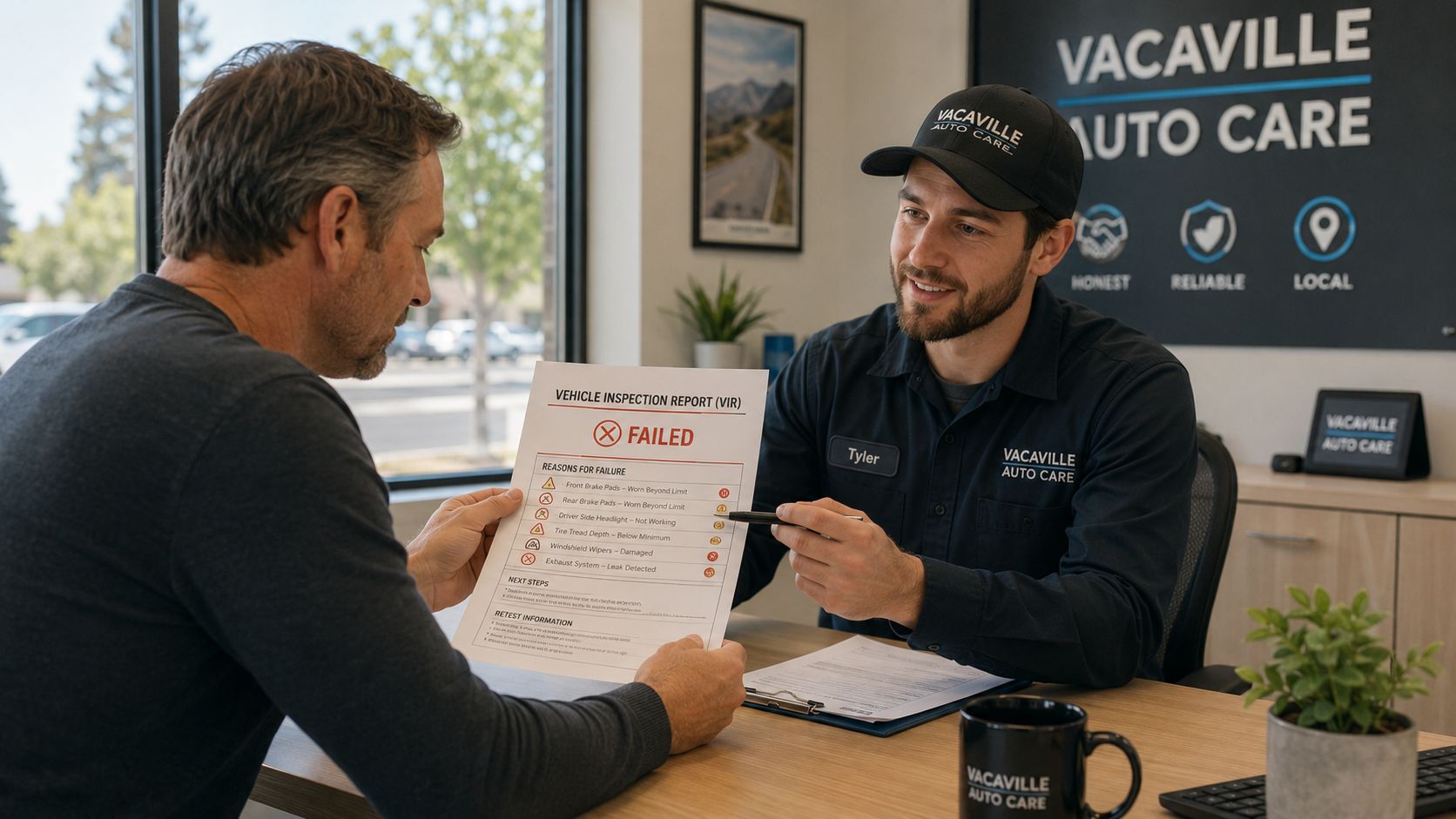
If the repair path looks expensive, keep every document together. Save the inspection report, the repair invoice, and the retest result in one folder. That record makes it easier to track what changed, and it helps another shop review the vehicle without starting from scratch.
FAQs About Vacaville Smog Checks
| Question | Answer |
|---|---|
| Do I need a smog check when I sell my car? | Often yes, because change of ownership is one of the main triggers in California's program. |
| How long is a passing certificate good for? | The DMV says the electronic certificate is valid for 90 days. |
| Can I test first just to see where my car stands? | Yes, and that is a smart move if you are unsure about readiness. A pre-inspection can help you avoid a logged failure before you are ready for the official test. |
Vacaville drivers usually save time by keeping the process simple. Check the notice, confirm your vehicle's status, and choose a station that fits the paperwork instead of assuming every shop can handle every car.
If you are still unsure whether your vehicle qualifies, needs STAR testing, or should wait until the readiness monitors settle, book with a shop that can explain the result before you hand over the keys. For local help and a smooth compliance process, contact Speedy Smog and get your registration moving again.