
Smog Check Mountain View California: 2026 Guide
The DMV notice shows up, the registration deadline is real, and now your car has become one more thing you've got to handle before the paperwork can move. In Mountain View, that usually means a smog check, and if you put it off too long, the inspection starts controlling your week instead of the other way around. The right move is simple, confirm whether your vehicle is in the program, pick a station that can certify it, and get the test done before the renewal turns into a hassle.
Table of Contents
- Why Mountain View Drivers Keep Getting That Renewal Notice
- Which Vehicles Need a Smog Check in California
- Types of Smog Tests You May Be Asked to Take
- What STAR Certification Really Means
- How to Prepare Your Car Before the Test
- What Happens During the Inspection
- Typical Costs Wait Times and How to Choose a Station
- After the Test and Next Steps with the DMV
Why Mountain View Drivers Keep Getting That Renewal Notice
You know the routine. The renewal notice shows up, the registration deadline starts closing in, and one line on the paperwork sends you to a smog station before the DMV finishes the process. That is part of the registration workflow for most qualifying vehicles in California, so the notice feels urgent fast when you are trying to keep the car legal without wasting time on extra trips. The California DMV smog inspection rules spell out how that requirement fits into registration, and the renewal notice is the signal to act on it.
Mountain View drivers feel that pressure in a specific way. This city has plenty of newer cars, and newer vehicles still age into the smog program once they reach the state's first-inspection point. At the same time, many commuters are driving older cars that have already been through the system for years, so the local mix includes both first-time test cases and drivers who handle the same requirement every renewal cycle.
The deadline drives the urgency
Treat smog as a registration requirement, not routine maintenance. It is an administrative gate tied to the DMV, and if you wait until the last minute, there is nothing to bargain over.
Practical rule: if the renewal notice mentions smog, assume the clock is already running.
That is why smart drivers do not ask whether they feel like getting it done this week. They ask which station can certify the car quickly and correctly before the deadline closes in. In Mountain View, that question matters even more because appointment demand tends to rise when renewal mailers go out.
The cleanest way to read the notice is simple. Some vehicles are on the standard biennial track, while others are routed to stricter station requirements based on what the DMV sends. If you want a clearer breakdown of how California smog rules work, start with this California smog check rules guide. Read the notice first, because the paper tells you which lane you are in. Guess wrong, and you are not saving time. You are setting yourself up for a second trip.
Which Vehicles Need a Smog Check in California
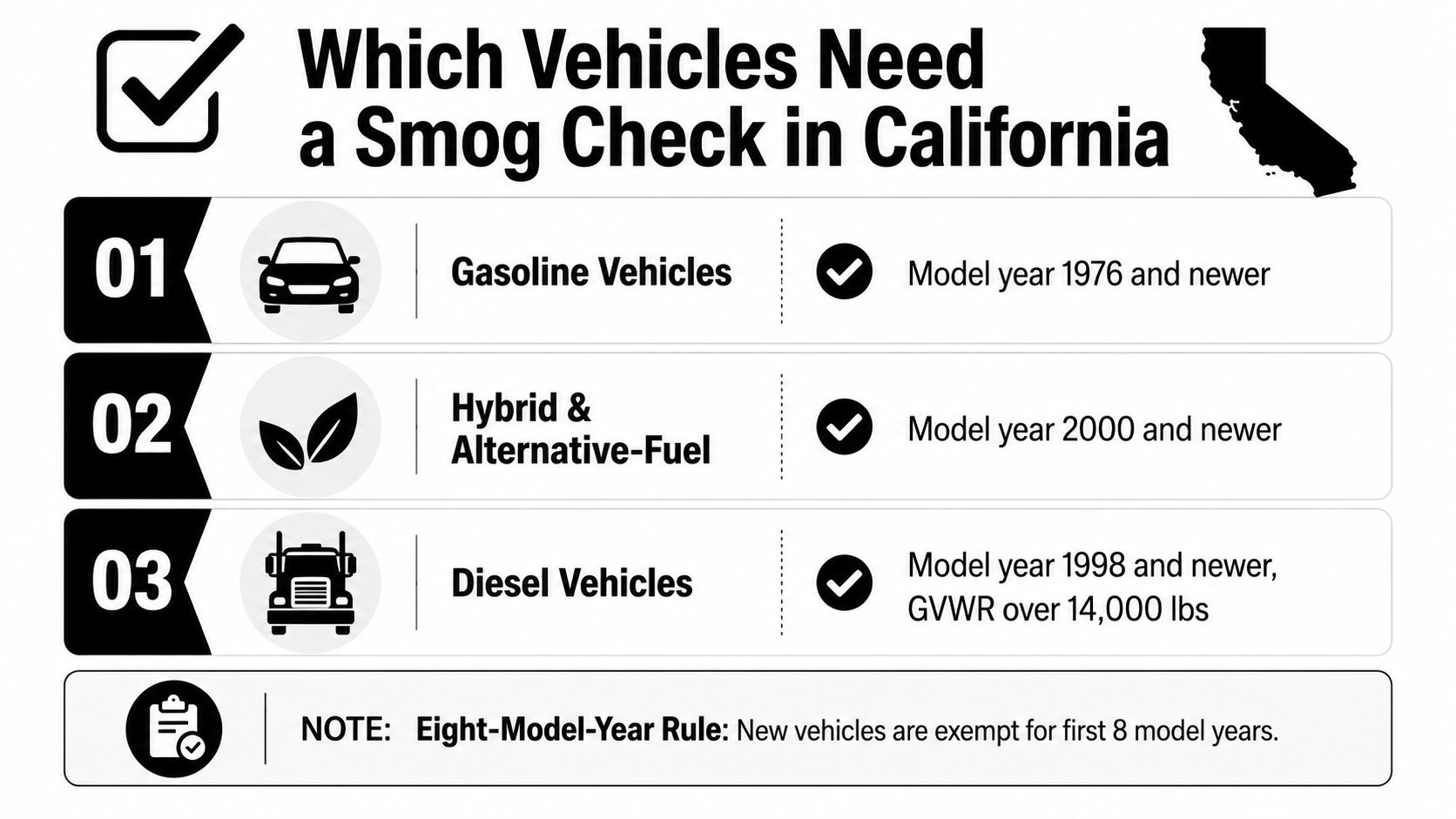
Start with the model year and the fuel type. California requires a smog check for gasoline, hybrid, and alternative-fuel vehicles model year 1976 and newer, and for diesel vehicles model year 1998 and newer. The first inspection for a new vehicle usually comes when it reaches eight model years old, then it returns to the cycle every other year for registration renewal purposes.
For Mountain View drivers, that means the rule reaches well beyond old commuter cars. Newer hybrids can still enter the program once they hit the first-inspection point, and diesel vehicles follow their own schedule under the state rules. If you want the state's plain-language version of those rules, use the California smog check rules guide as a quick reference while you check your notice.
Read the renewal notice first
If your renewal paperwork says the vehicle needs a smog check, follow the paperwork. The DMV uses that certificate as part of the registration process, so the notice is the item that controls the deadline pressure. A car can look perfectly ordinary and still be due for testing because the registration file says so.
That matters when the renewal slips behind schedule. If the DMV still shows smog as part of the transaction, the requirement stays in place until the certificate is filed. Waiting does not cancel it, and guessing based on the vehicle's age or condition only adds another trip.
Mountain View drivers save time by matching the renewal notice to the state requirement before they book a station. A STAR certified shop can handle the same state standard without making you cross town for no reason, which is the cleaner move when the deadline is already in motion.
Types of Smog Tests You May Be Asked to Take
California does not use one inspection path for every vehicle. The station may use the standard diagnostics check for newer cars, or it may add older emissions testing for pre-2000 models, depending on the vehicle and how the program applies to it. The point is simple. The inspector is checking both emissions compliance and vehicle condition, not just plugging in a scanner and sending you on your way.
Newer cars and the onboard diagnostics check
For most 2000-and-newer vehicles, the station's job is to confirm that the onboard emissions system is working properly. That usually means a shop connects a diagnostic scanner under the dash and checks whether the vehicle is presenting as it should. A car can look fine and still fail if the emissions system is not ready or is reporting a problem.
Older cars may get a tailpipe test too
For pre-2000 vehicles, the process can include a tailpipe emissions test along with visual and functional checks. The inspector is not only looking for a warning light. They may also inspect emissions-related parts and measure exhaust output directly.
Why the inspection feels more involved than people expect
The state's fee structure helps set expectations. The station must charge an $8.25 Smog Check certificate fee, must provide an estimate before starting, and the inspection usually takes about 30 minutes. That is a clear sign this is a regulated process, not a quick favor at the counter.
If your DMV notice or the shop says the vehicle needs a more specific test path, follow that instruction exactly. A bad guess about test type is one of the easiest ways to waste time in the bay. If you want to understand how a STAR-certified smog station fits into that same DMV pressure, the state requirements line up with what a qualified station is already set up to handle, and you can compare options with a local STAR station guide.
What STAR Certification Really Means
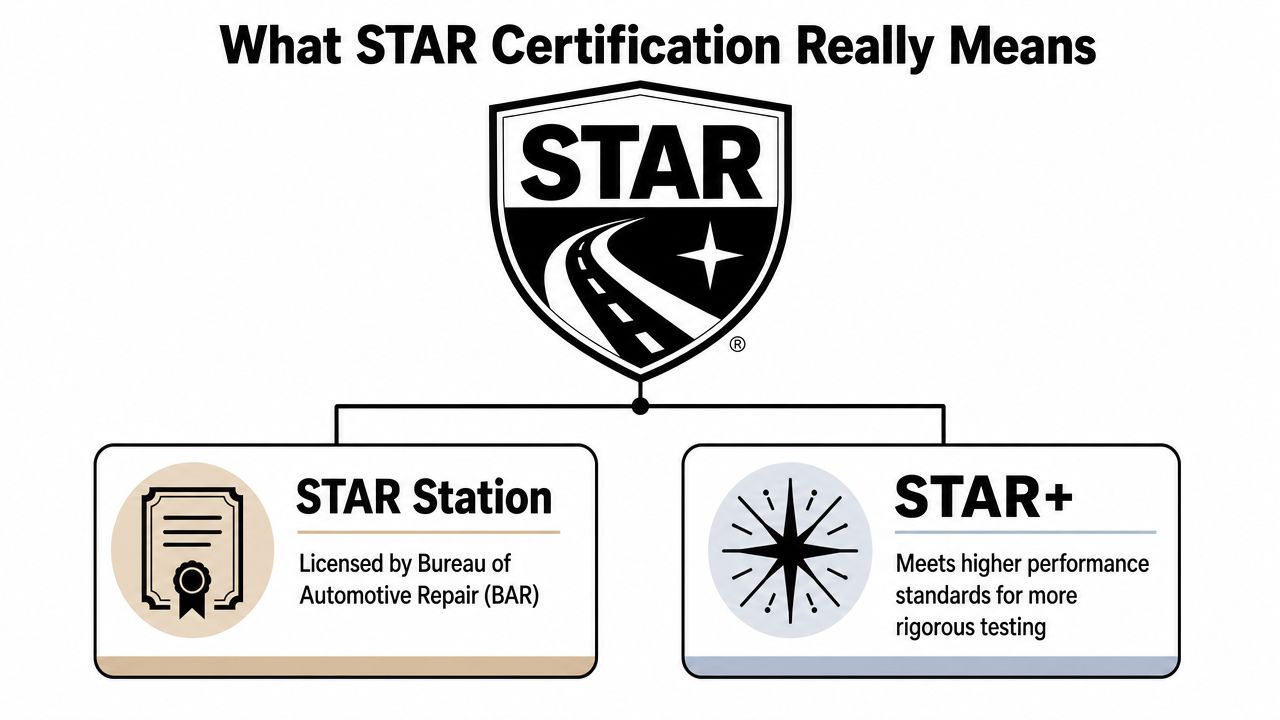
STAR is the state's higher-tier smog check designation. It tells you the station meets Bureau of Automotive Repair standards for certain inspections, and the BAR smog check overview spells out how that program fits into California's emissions rules. If your DMV renewal notice calls for STAR, treat that as the booking requirement. A closer shop that is not STAR-certified will not solve the problem.
A lot of Mountain View drivers lose time with this step. They see a smog check sign and assume any licensed station can handle the renewal. That assumption sends people to the wrong counter, then right back home to reschedule. If the notice points to STAR, use a station that is already approved for that work and skip the detour.
What changes when STAR is required
The test is still a California smog check, but the station tier matters. STAR stations work under stricter state oversight, so the DMV uses them for vehicles that need tighter screening. Show up at the wrong tier and you do not get an exception, you get another trip.
Practical rule: if the notice says STAR, book STAR first.
Mountain View drivers should read the renewal notice like a deadline, not a suggestion. The station tier decides whether the visit clears the DMV requirement or burns another evening in traffic. If your vehicle is directed to STAR, use a station that can handle it the first time, and keep the process simple.
For a plain-English breakdown of station tiers, the STAR station guide is useful when you are comparing where to go next. The goal is straightforward, match the DMV notice to the right station before you leave home.
How to Prepare Your Car Before the Test
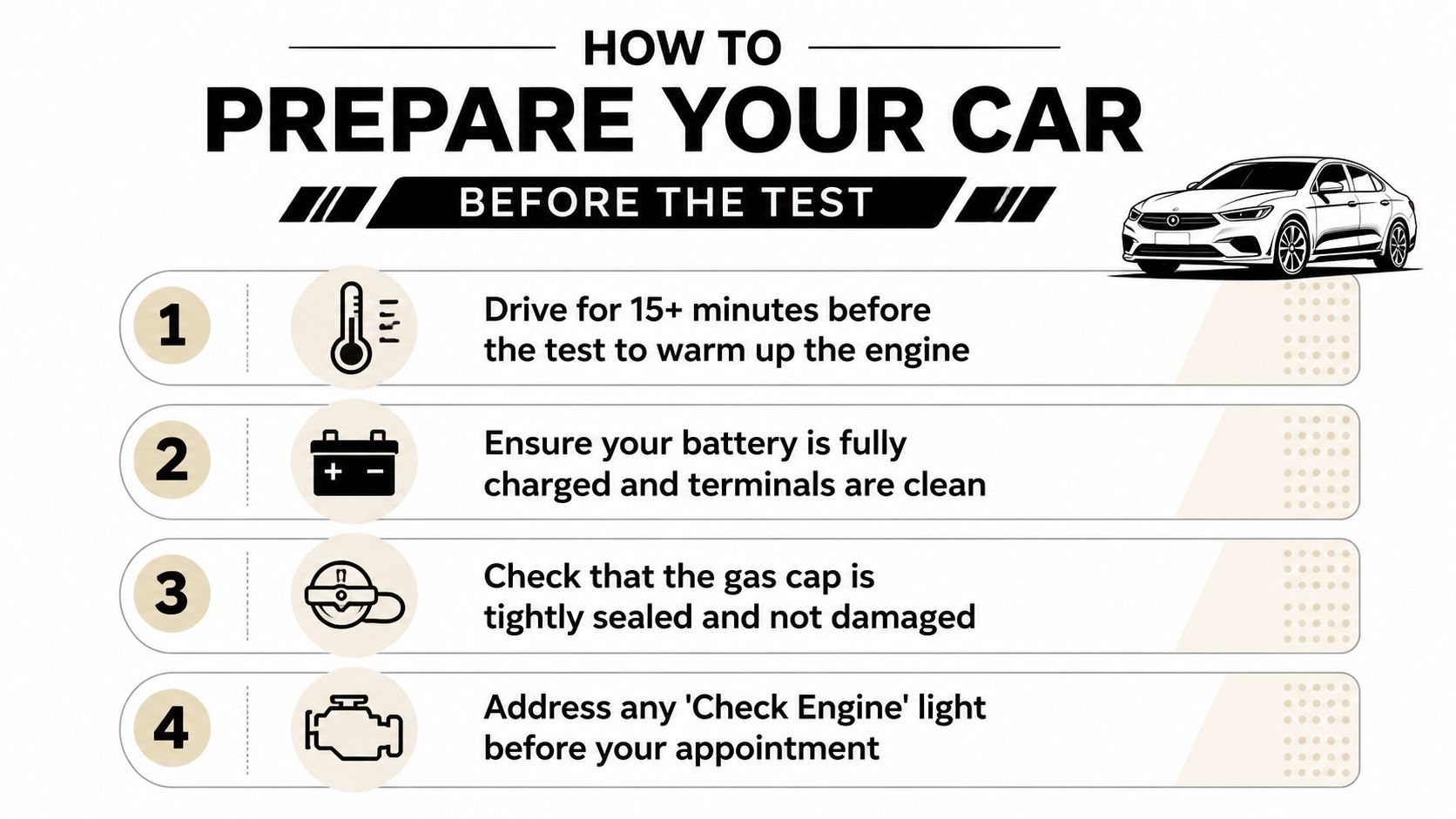
A clean smog visit starts before you pull into the station. The state manual sets the baseline for inspection conditions, so the car should already be in the right state before the inspector takes over. As noted in the preparation section, make sure the vehicle is ready to be tested without avoidable delays, then follow the same baseline conditions required by the state manual (BAR smog check manual). If your DMV renewal deadline is already close, that kind of preparation matters. It keeps you from wasting a slot and gives a STAR-certified station a better chance to get the job done without a second trip across Mountain View.
Get the car ready the right way
Start with the basics. Warm up the engine before you leave, because a cold car is not a good place to begin an emissions test. A vehicle that has been driven enough to reach proper temperature gives the station a cleaner starting point and reduces the odds of a preventable delay.
Check the obvious trouble spots before you book. Make sure the gas cap seals properly, the battery is in good shape, and the Check Engine light has already been addressed. If you recently cleared a code with a scanner, do not treat that as a fix. The car may still need regular driving before the system is ready for inspection.
A quick look under the hood can save the whole visit.
Bring the paperwork that keeps the visit moving
You do not need a stack of documents, but you do need the right ones. Bring the renewal notice, your payment method, and identification if the station requests it. That keeps the counter visit short and avoids last-minute scrambling while your DMV deadline keeps ticking.
Short version: arrive with a warm car, no warning lights, and your renewal paperwork in hand.
The best smog appointments are the ones that stay ordinary. The car goes in, the inspector does the work, and you leave without having to book again because of something you could have checked in a few minutes. That is the standard to aim for, especially when the registration notice is already pressuring you to finish the job on time.
What Happens During the Inspection
The inspection should feel routine if you arrive with a car that is already in decent shape. The station confirms the vehicle, gives you an estimate before any work starts, and then runs the right test for that car's age and emissions setup. Newer vehicles are usually handled through the onboard diagnostics system. Older vehicles can face visual and functional checks, and pre-2000 cars may also go through a tailpipe emissions test.
Inside the bay
Once the car is in the bay, the inspector follows the preparation standards laid out earlier. The point is to start from a stable, safe setup so the result reflects the vehicle itself, not a sloppy staging problem.
If the station spots a safety issue, BAR rules call for the vehicle to be rejected instead of tested. That is the right outcome. A shop should not push ahead with an unsafe car just to finish the appointment.
The visit itself is usually quick, and the process is built to move efficiently. Some cars are in and out fast, while others need a little more attention because of the vehicle type or the condition it arrives in. Either way, this is a normal service stop, not an all-day event.
The best stations keep the process plain and clear. They tell you what they are checking, explain the result in straightforward terms, and let you know whether the certificate is ready for DMV processing. If you leave confused, the station did not do its job well.
Typical Costs Wait Times and How to Choose a Station
For Mountain View drivers, the pressure is the DMV renewal deadline, not the sticker price on the sign. A cheap station means nothing if it sends you away because it cannot test your vehicle or cannot process the inspection the first time. Pick the place that gets the job done and keeps your registration on track.
The price floor is fixed, and the station has to tell you the estimate before it starts work. That keeps the quote honest, but it does not tell you whether the visit will be quick or whether the shop can handle your car without delays.
What to look for beyond the posted price
Start with fit. If you drive a hybrid, diesel, or pre-2000 vehicle, make sure the station handles that type before you leave home. If your renewal notice calls for STAR, book a STAR-capable station and stop wasting time on shops that cannot complete the right test.
Wait time matters just as much as price. The test itself is usually short, but the full trip can drag once you add traffic, line length, and a second visit if something is off. A station with a clean check-in process and steady throughput is the better choice, even if the posted price is a little higher.
If you want a practical backup outside Mountain View, a STAR Certified station like Speedy Smog in San Leandro gives you another path that meets the same state standard without making you hunt around locally. It is built for drivers who want a quick inspection and a clear result, and it works well for most 2000-and-newer vehicles, plus diesels, hybrids, and older cars.
For a simple reminder of how the smog result fits into renewal timing, the smog check registration renewal guide is the right reference.
My recommendation
Skip the station that sounds cheapest but cannot handle your vehicle type or the level of inspection your notice requires. Choose the shop that matches your renewal notice, can process your car quickly, and gives you a straight answer before you commit. That is the station that saves you time and protects the registration deadline.
After the Test and Next Steps with the DMV
Once the station passes the vehicle, the result is submitted into the DMV process, and your registration can move forward without a separate follow-up on your part. If you're renewing online or by mail, the smog result is the piece that clears the way for the rest of the paperwork. If you want a simple reminder of the renewal connection, the smog check registration renewal guide is a practical reference.
If the vehicle fails, don't panic. The next move is to find out whether the issue is simple enough to repair and retest, or whether the car needs a more specialized review. If you're income-qualified, California also has a state-funded repair assistance path, and the repair receipt can matter when you're trying to get back to a retest. For harder cases, a BAR referee station can be the right escalation point.
The right finish line
A failed test is frustrating, but it doesn't mean you're stuck. It means you need the correct next step, and that step depends on what the inspection found. The worst thing you can do is ignore the result and keep waiting on the registration deadline.
Final checklist: confirm the requirement, choose the correct station tier, warm up and inspect the car before you go, then finish the test before the DMV deadline.
That's the whole game. Handle the paperwork first, book the right station second, and stop treating the smog check like a side errand.
A CTA for Speedy Smog.