
You pull into a smog station certain your car will pass. The check-engine light is off, the engine runs smoothly, and you recently replaced the battery. Then the technician plugs into the OBD-II port and tells you the vehicle is not ready. You haven't failed because the car necessarily has an active emissions fault. You may have erased the computer's self-test history and arrived before it finished checking itself again.
That readiness-monitor problem causes a surprising number of unnecessary repeat visits. A successful car emissions test depends on more than a dark dashboard warning light. In California, the vehicle must meet the inspection requirements that apply to its model year and technology, and the result can affect registration when the DMV requires a Smog Check.
Table of Contents
- Why Your Car Emissions Test Matters More Than You Think
- How California Smog Tests Work by Vehicle Type
- The Readiness Monitor Trap That Causes Unexpected Failures
- How to Prepare Your Vehicle Before the Smog Check
- STAR Certified Stations and DMV Requirements
- What Happens After You Pass or Fail
- Getting Your Smog Check Done at Speedy Smog in San Leandro
Why Your Car Emissions Test Matters More Than You Think
A smog check isn't a formality you can safely leave until the last day of registration renewal. The station is checking whether the vehicle's emissions-control systems have reported enough information to support a pass. If the computer shows incomplete self-tests, the technician may be unable to certify the car even when it appears to drive normally.
California's newer gasoline vehicles are evaluated primarily through OBD-II, which means the vehicle's own diagnostic system plays a central role in the inspection. The California Bureau of Automotive Repair's explanation of OBD readiness rules makes the practical issue clear. A car can have no active malfunction indicator light and still fail because required monitors haven't completed.
The appointment you didn't need to repeat
Consider a driver who had a repair performed, cleared the stored trouble code, or disconnected the battery while replacing it. The warning light goes out, so the driver books the test immediately. At the station, the scan shows that the emissions monitors are not ready. The driver now has to leave, complete the required driving conditions, and return for another inspection.
That failed trip can create a registration problem if the renewal deadline is close. It can also mean another appointment, more time away from work, and a second inspection charge depending on the station's policy. The avoidable mistake isn't always a bad catalytic converter or a serious engine problem. Often, it's testing before the vehicle has finished its post-repair drive cycle.
Practical rule: An off check-engine light doesn't prove that your vehicle is ready for inspection.
Treat preparation as part of the test
Read the DMV renewal notice before choosing a station. It tells you whether a smog certification is required and may identify station requirements that affect where you can go. If you've recently had battery work or emissions repairs, ask a technician to check monitor status before scheduling the official inspection.
The right approach is simple. Diagnose first, repair properly, allow the vehicle's monitors to complete, then test. You can't reliably shortcut the computer's self-checks by clearing the light again, and doing so can make the readiness problem worse.
How California Smog Tests Work by Vehicle Type
California doesn't use one identical procedure for every vehicle. The test depends on model year, fuel type, and the vehicle's emissions technology. The old assumption that every car sits on a dynamometer while a probe measures the tailpipe is wrong for many modern vehicles.
For gasoline vehicles from model-year 2000 and newer, the inspection is generally centered on the onboard diagnostic system. California's BAR states that tailpipe testing is no longer required for most of these vehicles. The technician connects a scan tool to the OBD-II port and checks the required emissions information, including warning-light status and readiness.
Gasoline vehicles from 1996 through 1999 receive both an OBD inspection and a tailpipe test under the verified California rules. That combination gives the station two different views of the vehicle, the computer's stored emissions information and the gases measured directly from the exhaust.
The main categories
| Vehicle Category | Test Method | Tailpipe Test Required |
|---|---|---|
| Gasoline, model-year 2000 and newer | Primarily OBD-II inspection | Generally no |
| Gasoline, model-years 1996 through 1999 | OBD inspection plus tailpipe testing | Yes |
| Diesel vehicles | Procedure depends on vehicle details and applicable California requirements | Varies |
| Hybrid vehicles | Vehicle-specific emissions inspection, with OBD-related checks where applicable | Varies |
| Older vehicles | Requirements depend on model year and California program rules | Varies |
Diesel and hybrid inspections deserve special attention because their systems don't fit the simple gasoline-tailpipe model. Diesel vehicles can involve different emissions controls and compliance rules, while hybrids may run their gasoline engine intermittently and use a high-voltage system that changes how the vehicle operates during testing.
Recent program changes reinforce that point. Colorado's 2025 vehicle emissions program update describes self-service kiosks for gasoline-powered and hybrid vehicles along with tighter diesel compliance rules. The European Union also proposed targeted inspection methods for ultrafine particles and NOx in 2025, as reported in the European Commission's vehicle inspection policy materials. These developments show why modern inspections increasingly focus on the vehicle's specific technology rather than applying one universal test.
If you're unsure which category applies, use the California guide to vehicles that need a smog check and confirm the requirement on your DMV notice. Bring the vehicle information and renewal paperwork to the station so the technician can verify the correct inspection path before starting.
The Readiness Monitor Trap That Causes Unexpected Failures
Readiness monitors are emissions-system self-tests stored in the vehicle's computer. Each monitor evaluates a particular operation, such as catalyst performance, oxygen-sensor operation, exhaust-gas recirculation, or evaporative-emissions control. The vehicle must experience the right operating conditions before those tests can run and report a completed result.
Disconnecting the battery or clearing diagnostic trouble codes can reset the monitors to not ready. The same thing can happen after certain repairs when the technician clears the code as part of the repair process. The dashboard may look clean, but the computer's inspection record has been wiped and must be rebuilt through normal driving.
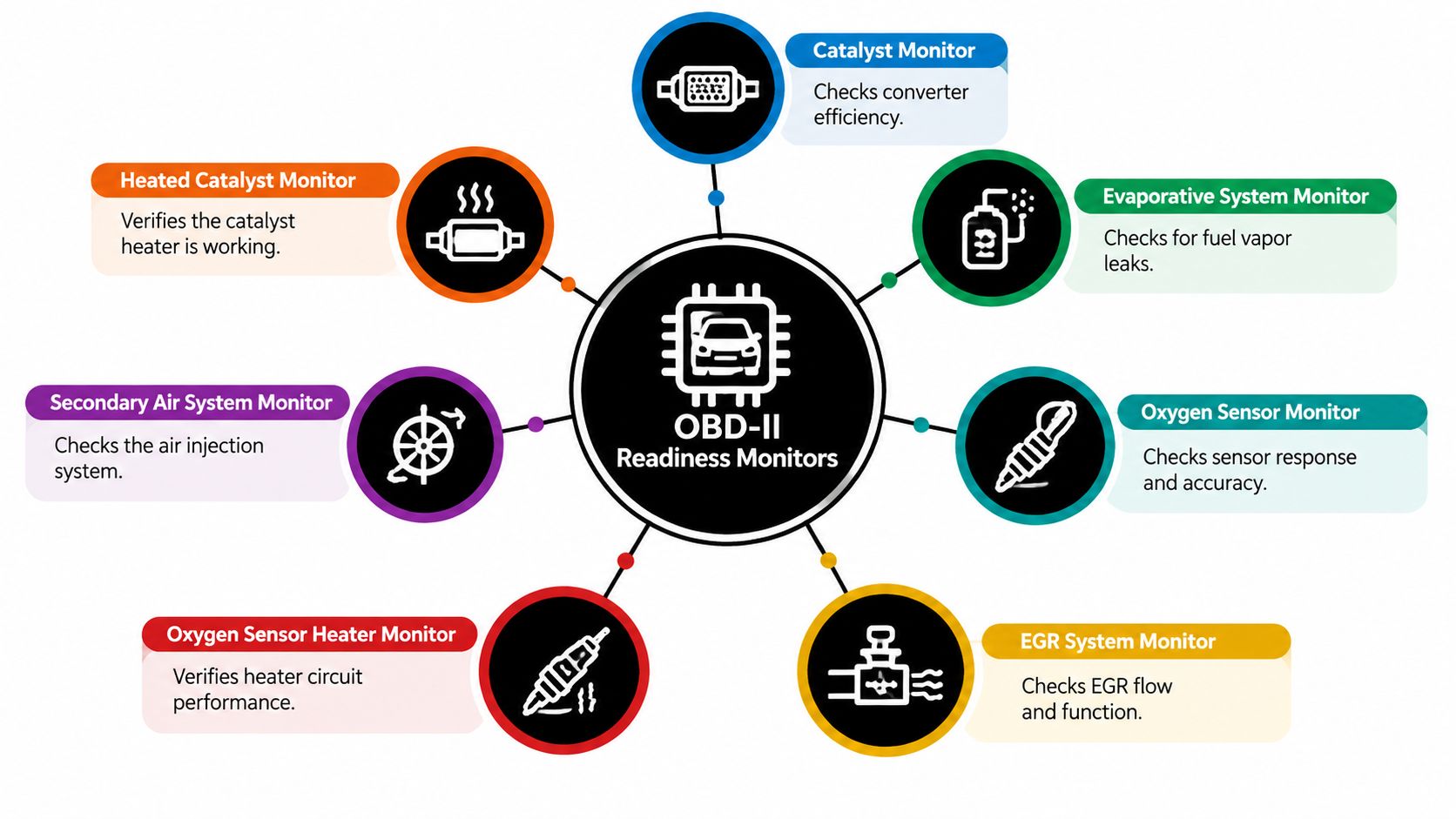
Why a clean dashboard can still fail
Think of the monitors as homework completed by the car's computer. Clearing the codes is like erasing the answers. The warning light may disappear because the computer no longer has a confirmed fault to display, but the inspection still sees unfinished work.
California's BAR explains that some 2000-and-newer gasoline vehicles may have only the evaporative monitor unset under newer readiness rules. Other required monitors must be set. That distinction matters because the allowed status depends on the vehicle and the applicable rule, not on what a driver sees on the dashboard.
The California BAR readiness-monitor regulation guidance should be treated as the controlling reference for the current California requirement. Don't rely on a generic scanner message that says “ready” without understanding which monitors are complete and which remain unset.
Drive time is part of the repair process
The car needs suitable conditions to run its tests. Short trips, unusual driving patterns, or insufficient warm-up may leave a monitor incomplete. CARB's Clean Truck Check OBD testing background notes that some vehicles may require dozens of warm-up cycles, thousands of miles, and hundreds of engine hours before every monitor becomes ready. Those figures apply to the background discussed by CARB and shouldn't be treated as a universal drive-cycle prescription for every passenger vehicle.
If the vehicle refuses to set a monitor after normal driving, stop guessing. A persistent incomplete monitor can point to an underlying emissions-system problem that hasn't triggered a full warning yet. Have a qualified technician check the monitor status and diagnose the system instead of repeatedly clearing codes.
For a practical explanation of the warning-light relationship, review this guide to passing a smog test with a check-engine light issue. The key decision is whether the vehicle needs more drive time or actual diagnosis.
How to Prepare Your Vehicle Before the Smog Check
Preparation starts before the appointment, especially if the car recently had electrical or emissions work. Don't clear codes just to make the dashboard look better. That action can reset readiness and leave the station with no usable inspection result.
Use this checklist as a practical filter:
- Check monitor status: Have a shop or compatible OBD-II scanner verify that the required monitors are ready before the official test.
- Drive normally after repairs: Give the vehicle a mix of city and highway operation so the emissions systems can encounter different conditions. A generic 50 to 100 mile drive may help some vehicles, but it isn't a guaranteed manufacturer-specific cycle, so don't treat that range as a universal rule.
- Avoid a last-minute battery disconnect: Battery work can erase readiness information. Schedule the smog check only after the vehicle has completed the needed self-tests.
- Inspect the gas cap: A loose or damaged cap can allow an evaporative-emissions leak. Tighten it correctly and replace it if the seal is visibly damaged.
- Address warning lights: A lit check-engine light is a direct reason to stop and diagnose before testing. Don't assume an additive or quick reset fixes the underlying problem.
- Arrive with the engine warm: Normal operating temperature helps the inspection proceed smoothly, although warming the car won't repair a fault or complete every monitor by itself.
Be careful with quick fixes
Fuel additives aren't a substitute for diagnosis. Use one only when the product is appropriate for the vehicle and a technician has identified a reason to use it. Random parts replacement is just as wasteful. A dirty air filter, overdue oil service, poor tire pressure, or stale fuel may deserve maintenance, but none of those items should distract you from an incomplete monitor or an active emissions fault.
The best pre-test check is an honest scan. Ask for the exact monitor status, any pending codes, and an explanation of whether the vehicle is ready to test. If the technician tells you to keep driving, ask what condition the monitor needs, such as highway cruising, steady warm-up, or a cold start after the vehicle sits.
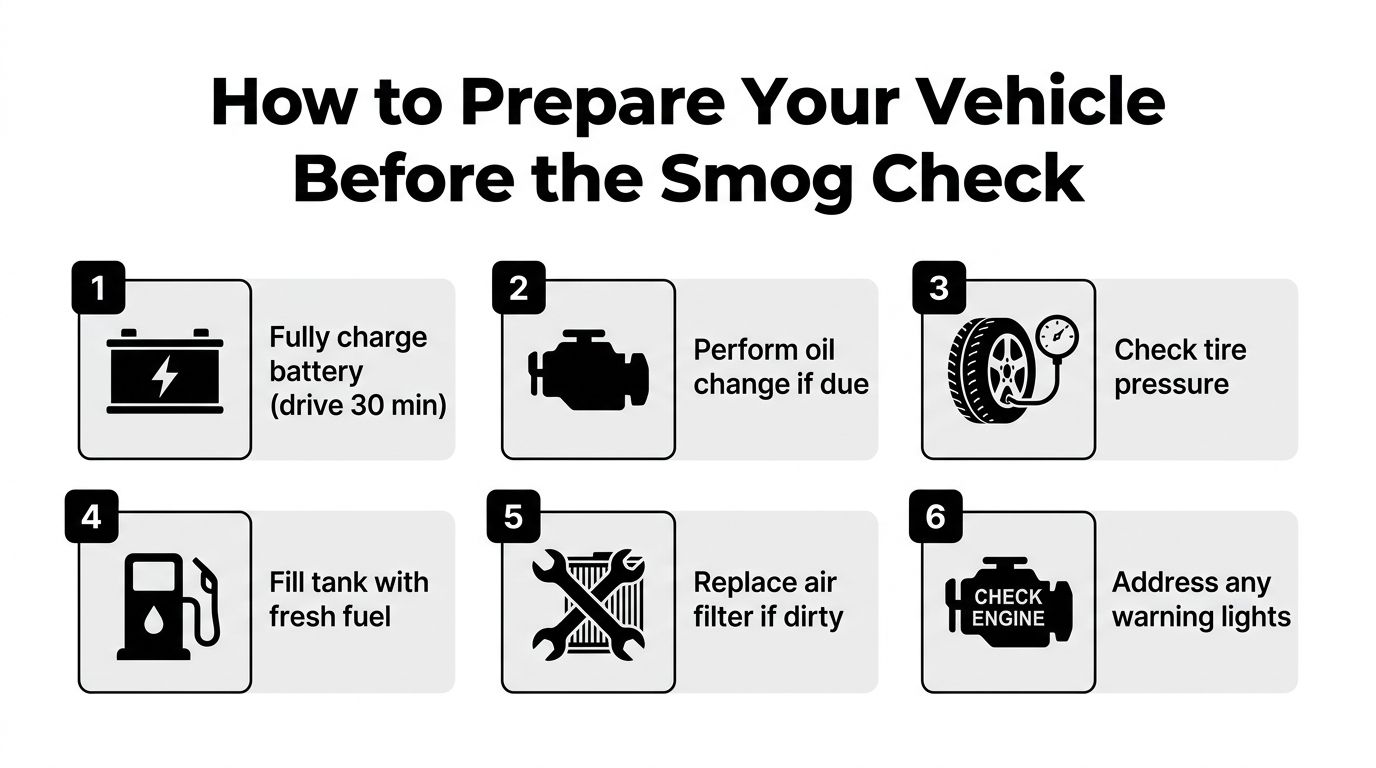
A visual checklist can help you avoid the most common oversights. Keep the appointment flexible enough to allow diagnosis and drive time rather than booking it immediately after a repair.
STAR Certified Stations and DMV Requirements
A STAR-certified station meets additional performance requirements established by California's Bureau of Automotive Repair. That designation matters when the DMV directs you to a STAR facility or when your notice specifies a STAR inspection. In that situation, a non-STAR station may not be able to complete the certification you need.
The station types can be confusing because they don't all provide the same service. A test-only station performs the inspection but doesn't repair the vehicle. A test-and-repair station can inspect and repair vehicles, subject to the program rules that apply to that station. A non-STAR station may perform ordinary inspections when the DMV notice doesn't require STAR certification.
Read the renewal notice before choosing
Don't select a shop solely because it appears first in an online search. Look for wording that identifies a directed vehicle, STAR requirement, or specific inspection condition. If the notice requires STAR, confirm the station's current certification before you arrive.
| Station Type | What It Generally Does | When It Fits |
|---|---|---|
| STAR test-only | Performs qualifying inspections without repair service | When the notice requires STAR and you already have a repair plan |
| STAR test-and-repair | Performs qualifying inspections and may handle repairs | When you want diagnosis and repair at the same facility |
| Non-STAR station | Performs inspections allowed under its certification | When your notice doesn't direct you to STAR |
A station's ability to test a vehicle doesn't automatically mean it can satisfy every DMV instruction. Bring the renewal notice, registration information, and any prior failure report. That paperwork prevents an avoidable mismatch between the required inspection and the service you request.
For East Bay drivers, Speedy Smog's STAR-certified station information explains the certification and location details. The useful question isn't whether STAR sounds better. It's whether your DMV notice requires it and whether the station can perform the exact test assigned to your vehicle.
What Happens After You Pass or Fail
After a pass, the station records the result electronically for the DMV. Keep your receipt or certificate paperwork, then check your registration status if the DMV system doesn't update as expected. If the result doesn't appear, contact the station first and ask them to verify the transmission details before repeating a test.
A failure report is more useful than the word “fail.” It should identify the reason, such as incomplete readiness, an emissions-related code, a warning-light problem, a tailpipe result, or a visible equipment issue. Read that report before authorizing repairs.
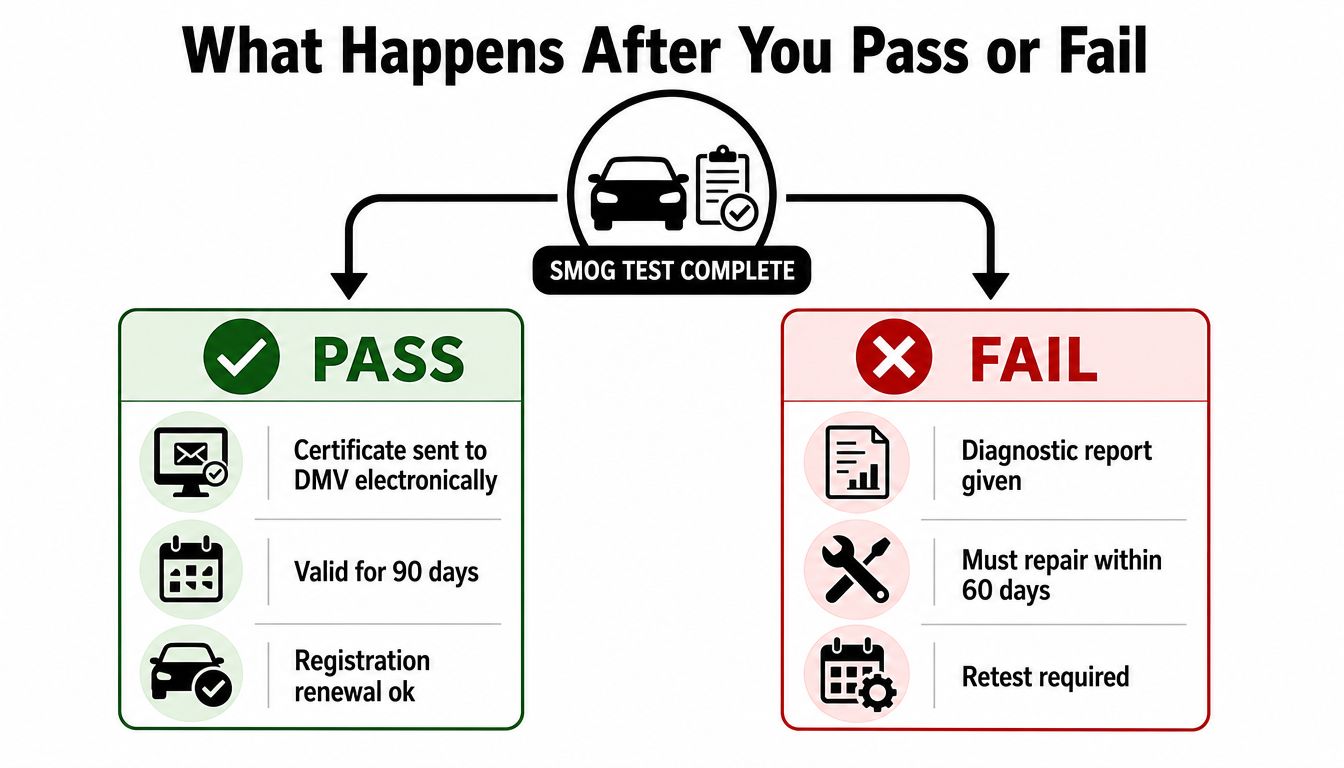
Separate readiness from a real fault
If the only issue is incomplete readiness, the next step may be continued normal driving followed by another readiness check. If the report lists a code or measured emissions problem, you need diagnosis and repair. Don't let anyone sell you a random oxygen sensor, catalytic converter, or fuel-system part without identifying the cause.
Ask the repair facility to answer three questions:
- What exactly caused the failure?
- Was the problem repaired, or was the code merely cleared?
- Are the required monitors ready for retest?
Clearing the code after a genuine repair may be appropriate, but it resets the clock on readiness. The vehicle must then complete its self-tests before returning to the inspection lane.
A failed inspection is a diagnostic starting point, not a parts-shopping list.
Once the repair is complete and the monitors are ready, schedule a retest according to the station's policy and the instructions on your failure paperwork. You may not need to use the original station, but the replacement station must be authorized to perform the required inspection. Ask about retest terms before approving the first test, and check California's Consumer Assistance Program rules if repair costs create a hardship. Eligibility and assistance conditions can change, so use the current official program information rather than relying on informal advice.
Getting Your Smog Check Done at Speedy Smog in San Leandro
East Bay drivers can choose a station based on the vehicle's actual requirements, not just convenience. Speedy Smog is a STAR Certified station at 15275 Washington Ave in San Leandro, and it handles inspections for newer gasoline vehicles, older models, diesels, and hybrids. The shop also transmits smog results electronically to the DMV.
For many 2000-and-newer vehicles, the typical inspection takes about 10 to 15 minutes, as stated in the publisher information. That timing assumes the vehicle is ready to test and no diagnostic issue interrupts the process. If you've recently cleared codes or disconnected the battery, check readiness before you arrive so a quick appointment doesn't turn into a return trip.
The shop offers a clean indoor waiting room and transparent pricing. Periodic $25-off coupons may apply to most smogs on newer vehicles, so check the current offer before scheduling. Its “Smog & a Smile” approach is straightforward, inspect the vehicle correctly, explain the result, and help you understand what to do next.
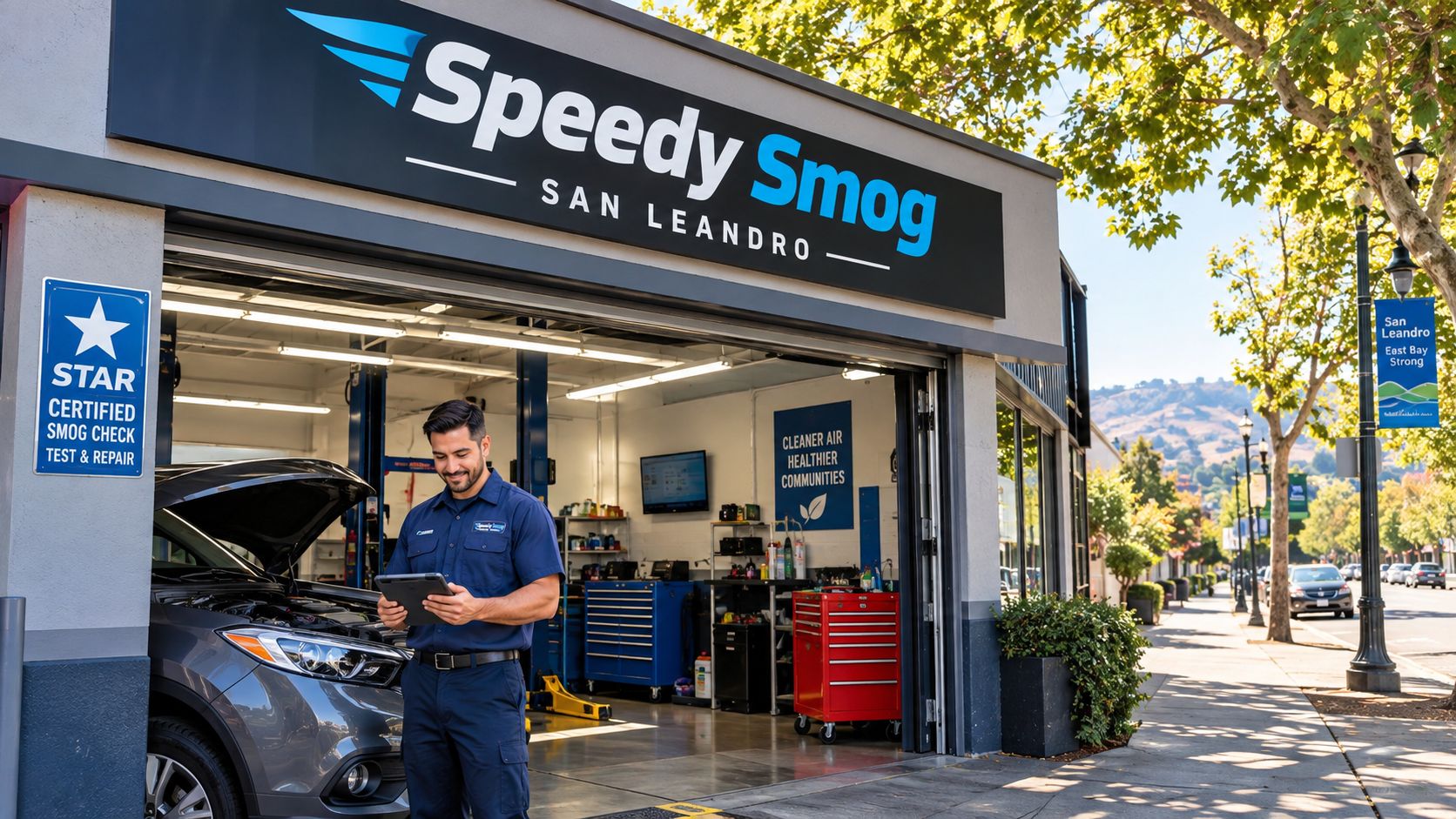
Speedy Smog is open Monday through Saturday at its Washington Avenue location, serving drivers from San Leandro and Oakland who need DMV smog certification or renewal. Bring your DMV notice and mention any recent battery replacement, code clear, or emissions repair before testing.
Speedy Smog provides STAR-certified smog checks for gasoline vehicles, older cars, diesels, and hybrids, with electronic DMV reporting and practical guidance about readiness monitors. Visit Speedy Smog at 15275 Washington Ave in San Leandro, Monday through Saturday, and call or schedule before your appointment if your vehicle recently had repairs or a battery disconnect.
You pull your DMV renewal notice from the mailbox in San Leandro, see “smog check required,” and immediately wonder whether your vehicle needs a test. Maybe it's a newer hybrid. Maybe you recently bought it. Maybe the car passed last time and you assume the same result carries over. Those assumptions can send you to the wrong station or leave your registration unfinished.
California's smog check requirements depend on more than the fact that you own a vehicle. Model year, fuel type, registration location, and the transaction you're completing all matter. The rules also changed in a meaningful way for OBD-equipped vehicles on October 1, 2025, so a car with recently cleared trouble codes may no longer have the tolerance it once had.
This guide gives you the practical framework. Check the transaction first, confirm whether the vehicle is exempt, verify whether a STAR station is required, and scan the OBD readiness monitors before paying for an official inspection. That sequence prevents most avoidable surprises.
Table of Contents
- Why Smog Check Requirements Matter for California Drivers
- Which Vehicles Need a Smog Check and Which Are Exempt
- Understanding STAR Certified Smog Check Stations
- OBD Readiness Monitor Rules and the 2025 Changes
- Special Requirements for Diesel Hybrid and Older Vehicles
- How to Prepare Your Vehicle and What to Expect During Testing
- Getting Certified Quickly at Speedy Smog in San Leandro
Why Smog Check Requirements Matter for California Drivers
A San Leandro driver might receive a renewal notice, check the registration date, and assume the next step is finding the nearest inspection shop. Then the vehicle's model year, fuel type, or registration record changes the answer. A newer vehicle may qualify for a registration exemption but still involve a smog abatement fee, while a recently purchased vehicle may need testing because the transaction is a title transfer rather than a routine renewal.
California's system has never been a single rule applied to every car. The state's modern mandatory program took shape in March 1984, after SB 33 was passed in 1982, with biennial inspections in participating counties and visual, functional, and emissions checks. The program later shifted toward onboard diagnostics, and California adopted an OBD II-focused inspection in 2010 for 2000 model-year and newer vehicles. The California Air Resources Board background helps explain why vehicle emissions compliance has continued to evolve.
The transaction changes the answer
A renewal, an initial California registration, and a change of ownership aren't interchangeable. The same vehicle can be exempt during one DMV transaction and require a certificate during another. Registration location matters too, because California's program applies differently depending on the county and the vehicle's registration circumstances.
That's why a driver who recently bought a car shouldn't rely on the purchase date alone. The vehicle's model year and the type of DMV transaction control the requirement.
Practical rule: Read the DMV notice, identify the transaction, then confirm the vehicle's fuel type and model year before booking a test.
Misunderstanding the rule can block registration, create late-payment problems, or send you to a non-STAR station when the DMV requires a STAR inspection. A failed or invalid visit costs more than the inspection fee. It costs time, and it can force a second trip before the DMV accepts the paperwork.
The safest approach is simple: determine eligibility first, choose the required test type second, and prepare the vehicle before arriving. That process is especially important now that readiness-monitor rules have become stricter.
Which Vehicles Need a Smog Check and Which Are Exempt
Start with the DMV transaction, not the age of the vehicle. California uses different thresholds for renewal, ownership transfer, and initial registration, and a recent purchase doesn't automatically eliminate the need for a smog certificate.
Biennial registration renewal
For ordinary gasoline-powered vehicles, the rolling exemption generally covers vehicles that are eight model years old or newer for registration renewal. Once the vehicle reaches the testing threshold, a smog check is generally required on the state's two-year renewal cycle in covered areas.
For 2026 registrations, the practical cutoff described in current guidance exempts 2018 and newer gasoline vehicles from biennial testing. That exemption is based on model year, not the date you bought the car. A vehicle purchased recently can still require a test if its model year falls outside the exemption.
Gasoline, hybrid, and alternative-fuel vehicles may qualify for the newer-vehicle registration exemption, but owners should check whether the DMV applies a smog abatement fee instead. An electric vehicle doesn't produce tailpipe emissions and is generally exempt from a conventional smog check.
Change of ownership
A title transfer follows a different rule. A vehicle sold or transferred in California generally needs a smog certificate unless it falls within the newer-vehicle exemption for that transaction. Current guidance treats vehicles that are four or fewer model years old differently from older vehicles during a transfer.
The key mistake is assuming that a car's current registration status settles the question. It doesn't. A vehicle that didn't need a test for the seller's renewal may still require documentation when ownership changes, depending on its model year and the transfer details. Check the California DMV smog exemption form when the transaction involves an exemption claim rather than a standard certificate.
Initial California registration
An out-of-state vehicle being registered in California for the first time generally requires a smog check regardless of age. The fact that the car passed inspection in another state doesn't replace California certification. California evaluates the vehicle under its own emissions program and registration rules.
Use this table as a first filter:
| Transaction Type | Smog Check Required? | Key Exemption Rule |
|---|---|---|
| Biennial registration renewal | Usually required after the newer-vehicle exemption ends | Gasoline, hybrid, and alternative-fuel vehicles may be exempt while eight model years old or newer, subject to DMV rules and possible abatement fees |
| Change of ownership | Generally required | Vehicles four or fewer model years old may qualify for the transfer exemption |
| Initial California registration for an out-of-state vehicle | Generally required regardless of age | An out-of-state inspection doesn't replace California certification |
| Electric vehicle registration | Conventional smog check generally not required | Electric vehicles are exempt from conventional emissions testing |
Before making an appointment, write down the vehicle's model year, fuel type, county of registration, and transaction type. Those four details usually reveal whether you need a test, an exemption form, or a different DMV step.
Understanding STAR Certified Smog Check Stations
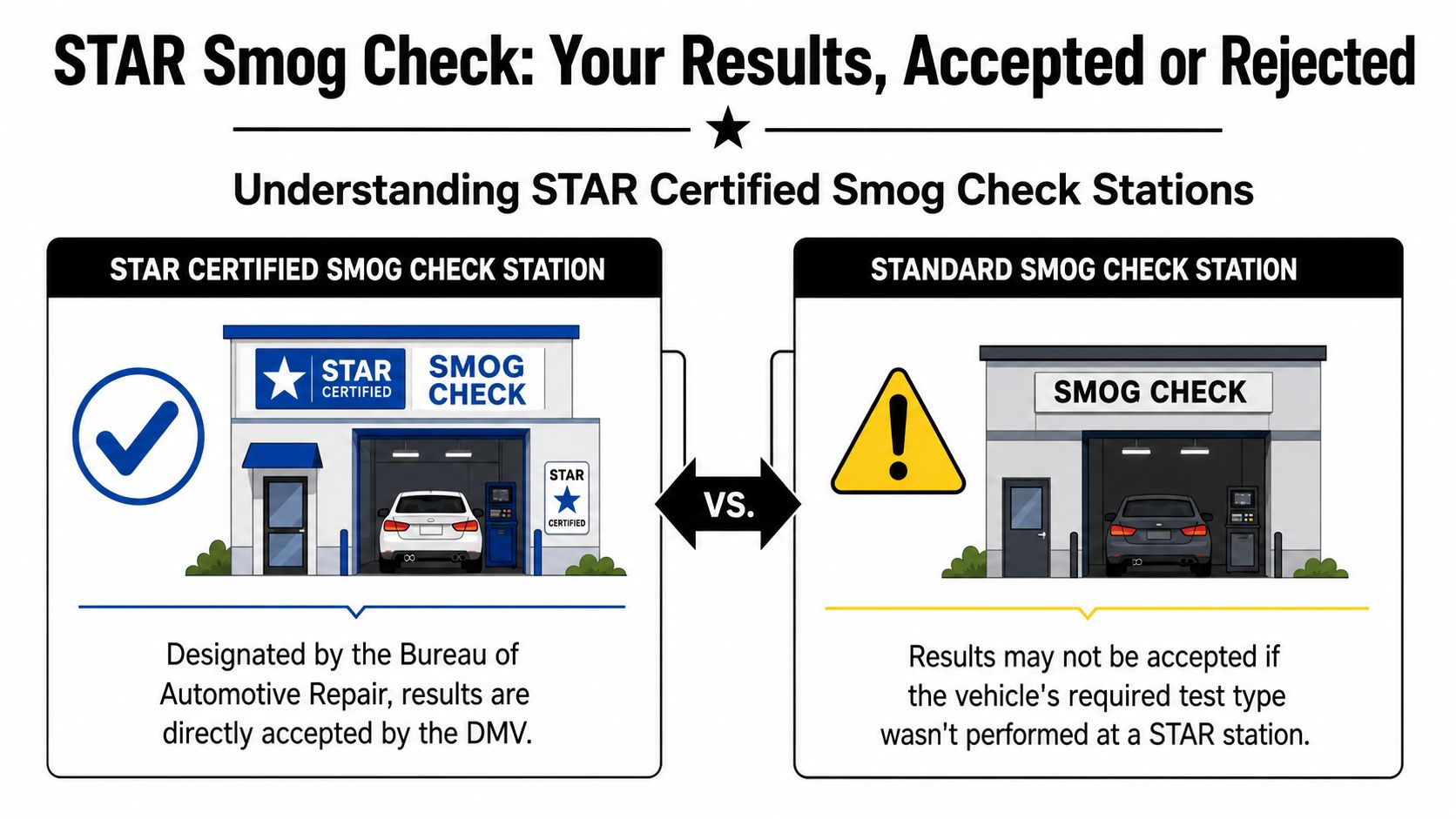
A STAR station isn't just a shop with a different sign. It's a station authorized under California's enhanced inspection program, and the distinction matters when the DMV notice directs you to STAR.
California launched the STAR program on January 1, 2013, replacing the earlier Gold Shield and Test Only structure with higher smog-check standards. The EPA's inspection and maintenance overview places these programs in the broader framework of federal Clean Air Act inspection and maintenance requirements. Federal rules have also evolved, including amendments made in 2015 as part of implementation of the 2008 ozone standards.
When STAR status is mandatory
Some renewal notices require a STAR-certified test. If that instruction appears on your notice, a passing result from a standard non-STAR station may not satisfy the DMV requirement. The problem isn't necessarily that the vehicle was tested incorrectly. The problem is that the station type didn't match the required transaction.
STAR designation reflects performance controls established by the Bureau of Automotive Repair, including station and inspector compliance, equipment standards, and tighter oversight of test accuracy. The designation is useful because it connects the test to the state's required inspection pathway, rather than leaving the driver to interpret whether a result will be accepted.
What East Bay drivers should do
Look at the DMV notice before choosing a location. If it says STAR, use a STAR station. If it doesn't, confirm the required inspection type anyway, especially for an out-of-state registration, ownership transfer, older vehicle, diesel, or vehicle with an emissions-related repair history.
A station such as Speedy Smog's STAR-certified location in San Leandro can submit an eligible result through the correct channel. That doesn't guarantee the vehicle will pass, but it removes one preventable risk: paying for a test that the DMV won't accept because the station designation was wrong.
STAR status also matters when a vehicle is close to the pass threshold. Proper equipment, compliant procedures, and trained inspectors help ensure the recorded result reflects the vehicle's actual condition. Don't treat STAR as a marketing label. Treat it as a requirement when the DMV assigns that test type.
OBD Readiness Monitor Rules and the 2025 Changes
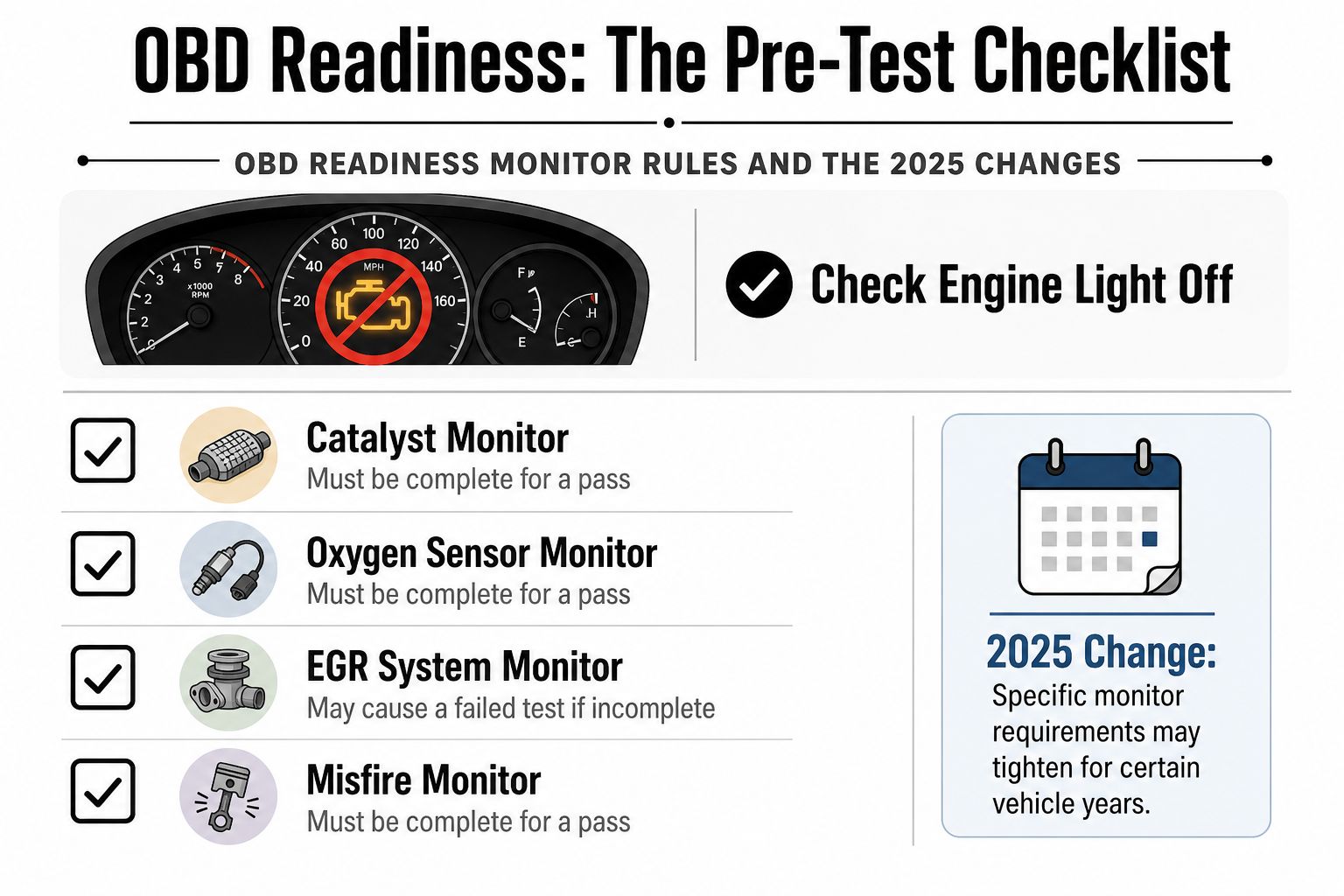
Many modern smog failures happen before the technician performs any tailpipe measurement. The OBD inspection checks the malfunction indicator lamp, readiness indicators, and the vehicle's ability to retrieve fault codes. A vehicle can have no illuminated warning light and still fail because its emissions monitors aren't complete.
For 1996 through 2000 model-year vehicles, more than two incomplete emissions-related readiness monitors causes an OBD II failure. For 2001 and newer vehicles, more than one incomplete monitor causes failure under the earlier rule. These thresholds are defined in California's OBD inspection regulation.
That distinction catches owners who disconnect the battery or clear diagnostic trouble codes just before an appointment. Clearing codes resets monitor status. The check engine light may remain off while the vehicle runs its self-tests, but the monitor screen can still show incomplete.
The October 2025 standard
Effective October 1, 2025, California requires all readiness monitors to be set for a vehicle to pass Smog Check unless the Bureau of Automotive Repair grants an exception for a design-limited case. BAR also states that an OBD-equipped vehicle fails if the MIL doesn't illuminate with the key on and engine off, or if it stays illuminated while the engine runs. The BAR explanation of the new OBD readiness monitor regulations should be your reference for the current standard.
This change makes battery disconnections and recent code clearing more serious. A vehicle that once passed with an incomplete monitor may now fail because the full-readiness requirement applies.
How to prepare the monitors
Don't guess at a drive cycle. The vehicle manufacturer determines the exact conditions, and different monitors may require different combinations of cold starts, steady cruising, acceleration, deceleration, and stop-and-go operation.
Use a practical sequence:
- Don't clear codes before testing. Code clearing or battery disconnection erases useful readiness history.
- Drive normally after repairs. Combine cold-start operation, highway cruising, and city driving rather than idling in the driveway.
- Check the monitor screen. Scan the vehicle before the official inspection and confirm every required monitor shows ready.
- Verify the MIL behavior. The warning lamp must illuminate during the key-on bulb check and turn off when the engine runs, assuming no active fault exists.
- Delay the appointment if monitors remain incomplete. Paying for an official test while the vehicle is visibly not ready is avoidable.
A commute that combines I-880 cruising with local San Leandro stop-and-go driving can help create varied operating conditions, but it isn't a guaranteed manufacturer drive cycle. Have the readiness status scanned before the test.
Special Requirements for Diesel Hybrid and Older Vehicles
Vehicle category determines the inspection path. A newer gasoline sedan, an older gasoline truck, a hybrid, and a diesel pickup don't all receive the same evaluation, so the technician needs accurate vehicle information before starting.
| Vehicle Type | Model Years Tested | Test Method | Key Exemptions |
|---|---|---|---|
| Gasoline vehicles | 1976 and newer when covered by the program | OBD II for later models, tailpipe and visual testing for older models | Gasoline vehicles from 1975 and older are exempt |
| Diesel vehicles | 1998 and newer in applicable categories | OBD or diesel emissions testing based on vehicle configuration, including opacity testing for heavier diesels | Diesel vehicles from 1997 and older are exempt; weight and program category also matter |
| Hybrid vehicles | When they fall outside the applicable newer-vehicle exemption | OBD II and functional emissions inspection | Newer hybrids may qualify for the registration exemption |
| Older gasoline vehicles | 1976 through 1999 when testing is required | ASM or TSI tailpipe testing on a dynamometer, plus visual and functional checks | The newer-vehicle rolling exemption doesn't apply in the same way to these older cars |
Gasoline and older vehicles
Gasoline vehicles from 1976 onward can fall under the program when they aren't exempt by transaction or model year. Later vehicles generally use OBD II, while older gasoline vehicles may require a dynamometer-based tailpipe test, such as ASM or TSI, instead of a simple diagnostic connection.
The state's model-year exemptions shouldn't be confused with a blanket classic-car exemption. California exempts gasoline-powered vehicles that are 1975 model year or older, but a 1980s or 1990s vehicle can still require testing when the transaction and registration conditions call for it. Age alone doesn't create a universal exemption.
Diesel vehicles
Diesel rules depend on model year, vehicle weight, and the applicable emissions program. Diesel-powered vehicles from 1997 model year or older are exempt under the DMV guidance, while newer diesel vehicles can require testing. Heavy diesels may receive a different inspection, including an opacity test, rather than the same procedure used for a light-duty gasoline vehicle.
Bring the vehicle's registration information so the station can identify the applicable weight and fuel category. Don't assume that all diesels are exempt, and don't assume that every diesel receives a standard OBD plug-in test.
Hybrids
Hybrids aren't automatically exempt because they use electric assistance. Once a hybrid falls outside the applicable newer-vehicle exemption, it generally undergoes an OBD and emissions-system inspection. The technician must work around the vehicle's high-voltage systems while checking the emissions controls and diagnostic data.
The right question isn't “Is it a hybrid?” Ask whether its model year and transaction qualify for an exemption, then confirm the station can perform the required inspection.
How to Prepare Your Vehicle and What to Expect During Testing
Preparation starts before you drive to the station. A smog check measures emissions-system operation, not general vehicle quality, so focus on the items that can create a direct inspection failure.
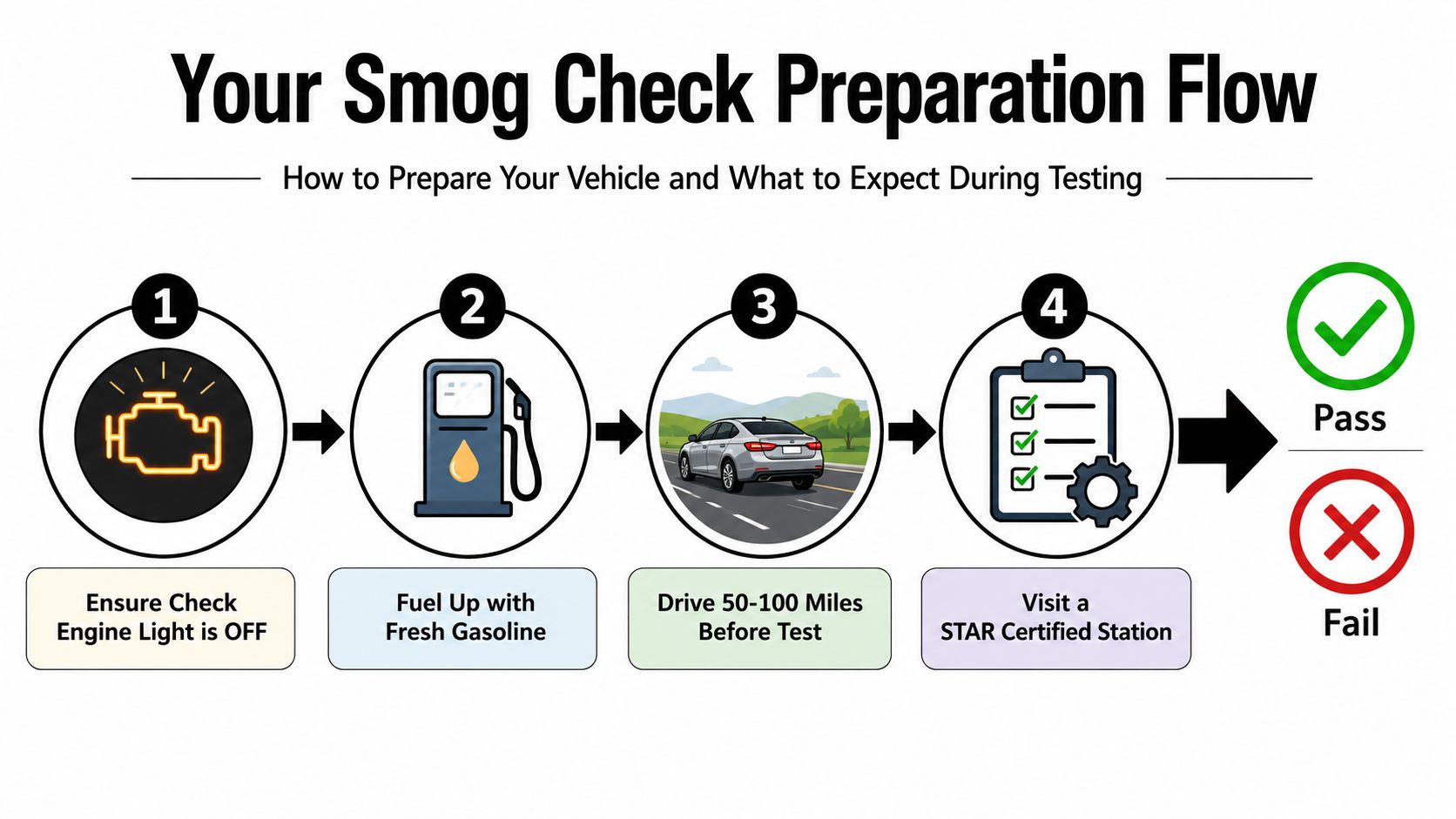
The pre-test checklist
- Check the warning light: The check engine light should be off while the engine runs. If it's illuminated, diagnose the fault before booking the official inspection.
- Protect monitor history: Don't disconnect the battery or clear codes shortly before testing. The vehicle needs time and normal driving to complete its self-checks.
- Bring usable fuel: Arrive with enough fuel for the vehicle to run safely during the inspection. A low fuel level can prevent testing on some vehicles.
- Remove questionable modifications: Non-approved emissions parts, altered exhaust equipment, missing components, or an incorrect gas cap can trigger a visual failure.
- Carry the paperwork: Bring the DMV renewal notice or registration card, payment, and any repair or test documentation relevant to the vehicle.
The exact driving distance needed to complete monitors varies by vehicle, weather, fuel level, and the manufacturer's conditions. Follow the vehicle's drive-cycle guidance rather than relying on a generic mileage promise. A scan showing every monitor ready is more useful than an arbitrary number of miles.
What happens at the station
The technician begins by confirming the vehicle and required test type. The inspection may include a visual review of emissions components and the fuel cap, an OBD II scan for applicable vehicles, or a dynamometer and tailpipe procedure for older models. The station records the result and submits the certification electronically when the inspection passes.
Watch the warning-light behavior carefully. BAR requires the MIL to illuminate during the key-on, engine-off check and remain off once the engine runs. A missing bulb or warning light that stays on isn't a minor dashboard issue. It can produce a direct failure.
Use this short video as a visual overview of the preparation process:
If the vehicle fails
A failure should identify the affected emissions system, monitor, visual component, or diagnostic condition. Don't replace random parts based only on a failed result. Have the report interpreted, repair the confirmed cause, then complete the required retest.
Qualifying owners may be eligible for repair assistance through California's Consumer Assistance Program, but eligibility depends on the program's requirements. Ask the station or review current state guidance before assuming assistance applies.
The most useful service after a failure is a clear explanation of what failed and what needs to happen next. A quick diagnostic scan before the official test can prevent a readiness-related failure and save a second appointment.
Getting Certified Quickly at Speedy Smog in San Leandro
For an East Bay driver, the efficient path is to match the transaction to the correct test, verify readiness, and use a station that can submit the result through the required DMV process. That matters more than selecting the closest location.
Speedy Smog in San Leandro is a STAR-certified station that handles gasoline, diesel, hybrid, older-vehicle, and change-of-ownership inspections. The shop says it can transmit eligible results electronically to the DMV, which reduces paperwork after a passing inspection. Its stated service information also describes typical testing for 2000 and newer vehicles in about 10 to 15 minutes, though the actual time depends on the vehicle and inspection type.
Bring the right information
Take your DMV renewal notice or registration card, the vehicle, and payment. Tell the technician whether you're completing a renewal, an ownership transfer, or an initial California registration. That context helps the station identify the correct test rather than treating every visit as a standard renewal inspection.
If the vehicle has recently had codes cleared, a battery replacement, or emissions repairs, request an OBD readiness check first. A quick scan can reveal incomplete monitors before the official test starts. If the vehicle isn't ready, you can complete the required driving and avoid recording a preventable failure.
Speedy Smog accepts walk-ins according to its published service information and operates Monday through Saturday at its San Leandro location. Confirm current hours and requirements before leaving, especially if your DMV notice specifies STAR testing or a special inspection category.
The recommendation is direct. Don't wait until registration is nearly expired, don't assume a recent purchase means exemption, and don't choose a station without checking whether STAR status is required. Use the rules above to identify the transaction, verify the model year and fuel type, then have the vehicle scanned before certification.
Speedy Smog provides STAR-certified inspections for gasoline, diesel, hybrid, older, and change-of-ownership vehicles in San Leandro, with electronic DMV submission for eligible results. Bring your renewal notice or registration card and ask for a readiness check if the vehicle recently had codes cleared, then visit Speedy Smog to get the correct smog check handled without an avoidable second trip.
You've just left a California smog station, and the technician has handed you a failing report marked gross polluter. Your first thoughts are usually the same: Can I still drive, will the DMV stop my registration, and how much will the repair cost?
Take a breath. This designation is serious, but it isn't a dead end. California gives you a defined path through diagnosis, repair, assistance or retirement decisions, and restricted retesting. The mistake I see most often is treating the result like an ordinary smog failure and sending the vehicle to the first available station.
Table of Contents
- You Got the Gross Polluter Notice Now What
- What Makes a Vehicle a Gross Polluter in California
- How the Gross Polluter Designation Affects Your Registration
- Diagnosing and Repairing Excessive Emissions
- Repair Assistance Programs and Appeal Options
- Choosing a STAR Certified Station for Your Retest
- Your Complete Action Plan From Gross Polluter to Certified
You Got the Gross Polluter Notice Now What
The driver I'll call Maria came into an East Bay shop after receiving a gross polluter result on her aging sedan. She had expected a routine inspection. Instead, she had a failed certificate, a registration deadline approaching, and no clear explanation beyond the two words that scared her.
Her first job wasn't authorizing an expensive repair. It was gathering the paperwork. The report identifies what the vehicle failed, whether the problem came from tailpipe emissions or the onboard diagnostic system, and whether the station directed the vehicle into the gross-polluter process. Keep that document, because the next technician needs the actual test information rather than a verbal summary.
Practical rule: Don't replace parts until someone has explained what the test result points to.
A gross polluter designation doesn't automatically tell you which component failed. It tells you that the emissions result crossed a much stricter regulatory category. The repair may involve an inexpensive ignition or vacuum problem, or it may involve a catalytic converter or another major emissions component. Guessing makes the situation more expensive.
Your immediate plan should be straightforward:
- Read the result carefully: Confirm the vehicle identification, failure codes, measured emissions, and instructions for the next test.
- Check your registration status: A failed or missing certification can prevent the DMV from completing the registration process.
- Avoid casual retesting: Before booking another inspection, ask whether the vehicle must return through a STAR station or another authorized facility.
- Get a diagnostic opinion: Choose a technician who will test the cause instead of selling a standard package of parts.
- Ask about assistance early: Repair assistance may affect which repairs you authorize and how you pay for them.
The California Bureau of Automotive Repair's official Smog Check reference guide explains the special certification rules that apply after a vehicle is identified as a gross polluter. Your car may still be usable for necessary purposes depending on its registration and legal status, but the smog result itself doesn't give you permission to ignore registration requirements. If you're unsure, confirm your status with the DMV or a qualified professional before driving routinely.
What Makes a Vehicle a Gross Polluter in California
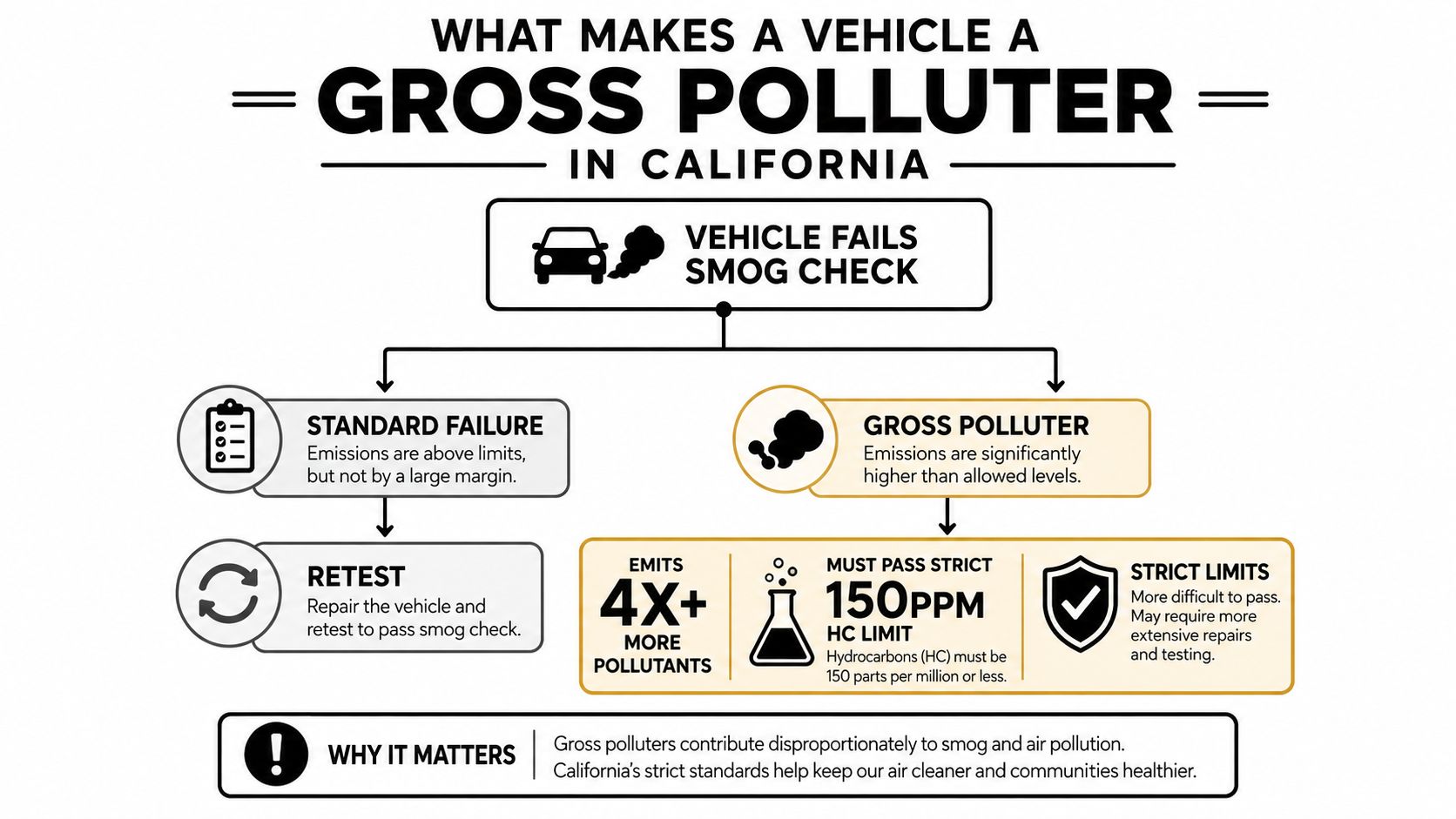
A failed smog test does not automatically make a vehicle a gross polluter. The distinction matters because the repair path, testing requirements, and potential assistance can change after the higher designation.
California classifies a vehicle as a gross polluter when its tailpipe emissions exceed the gross-polluter standards in California Code of Regulations section 3340.42. The BAR reference guide linked earlier explains that the label depends on the measured emissions compared with the limits for that vehicle, not just on receiving a failed result.
A regular failure means the vehicle missed an applicable test requirement. A gross polluter result means it crossed a separate, more severe emissions threshold. Treat those results differently. Do not approve repairs from the word “failed” alone. Ask the technician to show the measured emissions, the applicable limits, and the test data supporting the designation.
Why the vehicle's details matter
The applicable limit depends on the vehicle's specific make, model, and model year. Two vehicles can produce the same measured emissions and receive different results because their standards differ. Give the technician the vehicle identification and complete test report before accepting an estimate.
Historical research on California's gross-polluter definition described eligibility as at least twice the allowed emissions level for the vehicle's specific make, model, and model year. The distinction between an ordinary failure and the separate gross-polluter threshold is documented in this University of California research record.
Use that historical description for context, not as the current testing rule. The current test report and California requirements control. In practice, the designation signals a more severe emissions problem, so insist on diagnosis before replacing parts. Check ignition, fuel, vacuum, oxygen-sensor, and catalytic-converter systems in a logical order, based on the test results. That approach gives you a better chance of finding a repairable cause before paying for major components.
How the Gross Polluter Designation Affects Your Registration
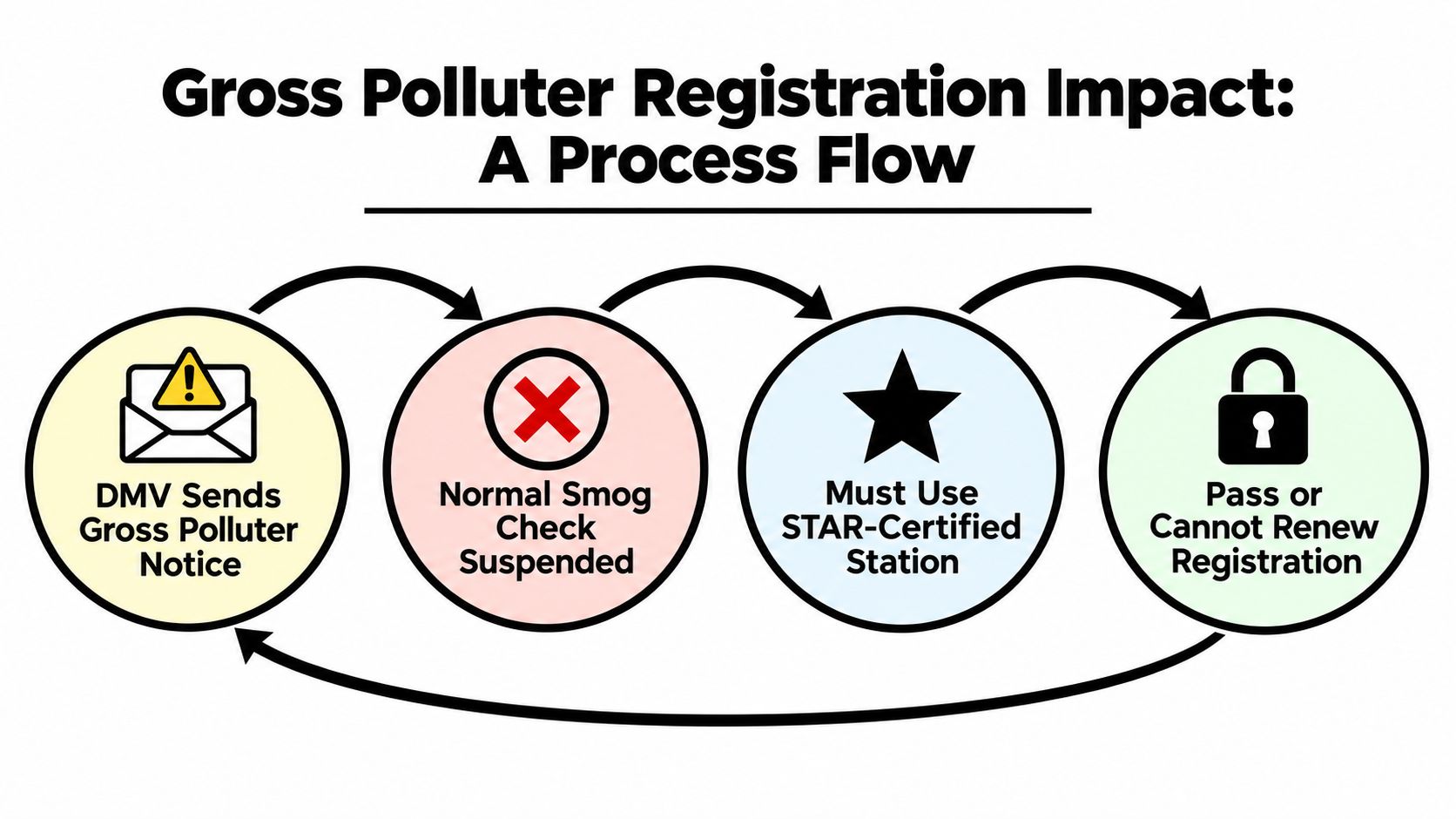
A gross-polluter designation can stop the registration process until the vehicle earns a passing smog certificate. The next step is choosing a facility authorized to handle the required inspection, then confirming that facility before paying for repairs. The current BAR reference guide outlines the applicable testing pathway.
The available options include:
- STAR test-only station: Performs the inspection but does not repair the vehicle.
- STAR test-and-repair station: Can diagnose or repair the vehicle and complete the authorized inspection.
- Referee facility: May be required if the vehicle is directed to the Referee process or needs specialized review.
Choose the facility before authorizing repairs
Call first. Give the station the exact designation, ask whether it handles gross-polluter inspections, and confirm whether it can perform the official certification after repairs. A regular smog station may offer general information, but the wrong facility can leave you paying for another visit and test.
Your existing repair relationship should guide the choice. A test-only station can provide an independent result if you already have a trusted mechanic. A test-and-repair station can keep diagnosis, repairs, and retesting in one workflow. Either way, require a written explanation of the failed test before approving parts.
Protect the registration timeline
The designation does not extend the DMV registration deadline. If the DMV requires a passing certificate and you have not obtained one, registration can remain incomplete. A smog station cannot waive penalties or resolve a separate registration issue.
Before authorizing work, have the technician document:
- The findings on the original test report.
- Repairs supported by diagnostic results.
- Whether the station performs the official retest.
- The documents provided after a passing result.
- Whether a Referee appointment is required.
This record keeps the repair and certification steps connected. It also prevents paying for repairs at one location, then learning that the final inspection must be completed elsewhere.
Diagnosing and Repairing Excessive Emissions
Gross-polluter repairs should begin with evidence. A scan tool, visual inspection, emissions readings, fuel-trim data, ignition checks, and exhaust-system testing can help a technician separate the cause from the symptom. A check engine light or stored code can point toward a system, but it doesn't automatically identify the failed part.
The likely suspects depend on the test pattern and vehicle condition. A worn ignition component can leave fuel partially unburned. A vacuum leak can disturb the air-fuel mixture. A failing oxygen sensor can send inaccurate feedback to the engine computer. A leaking or stuck fuel injector can add too much fuel. A damaged catalytic converter may fail to process pollutants after the engine has already burned the mixture.
What a competent diagnostic visit should include
A technician should explain what was tested and why the recommended repair follows from those results. Ask for scan-tool codes, monitor status, fuel-trim observations, ignition findings, and any evidence from the exhaust system. If the recommendation is a catalytic converter, ask what caused the original failure and whether that cause has been addressed.
learning how to read OBD codes helps. Codes are clues, not verdicts. Replacing an oxygen sensor because the code mentions oxygen-sensor performance can waste money if the actual issue is a vacuum leak, wiring problem, exhaust leak, or mixture problem.
A temporary code reset isn't a repair. It only removes information the next technician needs.
Decide whether to repair or seek another opinion
Get a written estimate that separates diagnostic work, parts, labor, and retest-related services. If the estimate is large, ask for the test results supporting each major component. A second opinion makes sense when the first shop recommends several expensive parts without showing how it reached that conclusion.
Avoid shortcuts such as clearing codes immediately before testing, disconnecting the battery, or installing an unverified used emissions component. Those actions can hide the problem temporarily, leave monitors incomplete, or create another failure. The goal is a stable repair that brings emissions back within the applicable limits, not a vehicle that merely looks clean for a brief inspection.
Repair Assistance Programs and Appeal Options
The right decision depends on the vehicle's condition, your finances, and the quality of the original test information. Don't commit automatically to a major repair, and don't send a repairable car to a dismantler without checking assistance options first.
California's Consumer Assistance Program, commonly called CAP, can help qualifying owners with emissions-related repair costs. The available support depends on program rules, eligibility, funding, and the vehicle's documentation. Start with the Smog Check repair assistance information and verify current requirements directly through the Bureau of Automotive Repair before authorizing work.
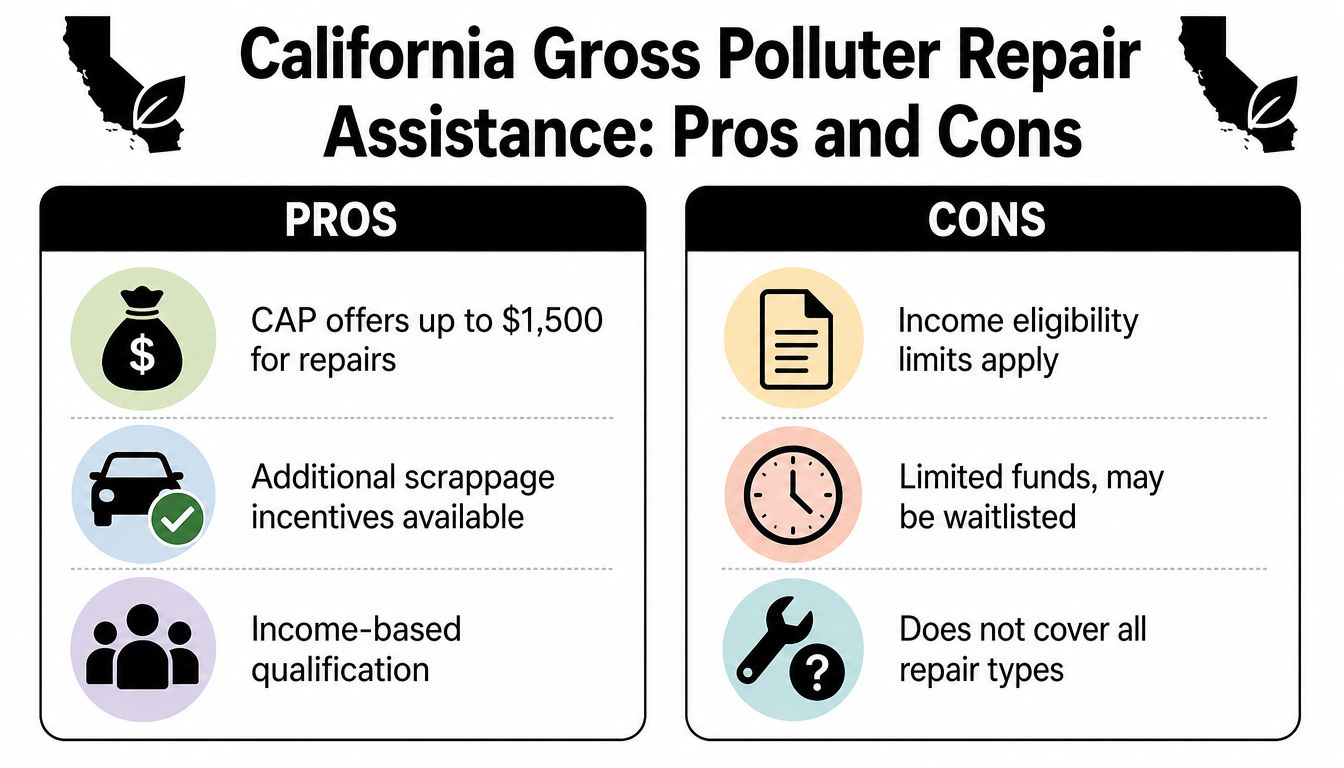
Compare the three practical paths
| Path | Makes sense when | First move |
|---|---|---|
| Repair with assistance | The vehicle is worth keeping and you meet program requirements | Confirm eligibility before repairs begin |
| Retire the vehicle | The repair cost and vehicle condition don't justify continued ownership | Check retirement requirements and available incentives |
| Challenge the result | The test information appears inconsistent or the designation may be incorrect | Preserve the report and request guidance through BAR or the Referee process |
Income eligibility limits and program funding can change. Some repairs may not qualify, and approval isn't automatic. Ask whether the program requires authorization before work starts, because completing repairs first can affect your options.
If you believe the designation was issued in error, don't argue only from how the car feels or drives. Gather the failed inspection report, repair records, maintenance history, and any independent diagnostic findings. Contact the Bureau of Automotive Repair or ask whether a Referee evaluation applies. A challenge needs documentation, patience, and a clear technical reason, not just a disagreement with the result.
Choosing a STAR Certified Station for Your Retest
After repairs, choose the retest location before you finish the repair plan. A STAR-certified station is the practical choice when the vehicle's designation requires STAR testing, because California restricts gross-polluter certification to specified STAR facilities or an applicable Referee facility.
A STAR test-only station can be useful when you want the final inspection separated from the repair shop. A STAR test-and-repair station can be more convenient when the same team will verify repairs and complete the retest. Ask which service the vehicle requires, and don't assume a standard smog appointment will satisfy the DMV.
Prepare the vehicle properly
The check engine light should be off for the right reason, not because someone erased the code. If the battery was disconnected or codes were cleared, the vehicle may need normal driving before its emissions monitors complete. Your technician should tell you whether the monitors are ready and whether another drive cycle is needed.
Arrive with the engine fully warmed through ordinary driving. Check the fuel cap, address obvious warning lights, and bring the failed report plus repair invoices. Don't make last-minute modifications that haven't been tested.
For East Bay owners, Speedy Smog in San Leandro, located at 15275 Washington Ave, is one STAR-certified option. The shop handles inspections for newer and older vehicles, diesels, and hybrids, but call first to confirm the correct gross-polluter workflow and whether your vehicle needs a Referee appointment instead.
The best station is the one that understands the designation, explains the result, and gives you a clear answer about what happens next. That standard matters more than choosing a shop based only on proximity.
Your Complete Action Plan From Gross Polluter to Certified
Use this sequence as your working checklist. Keep every report, estimate, invoice, and approval document in one folder.
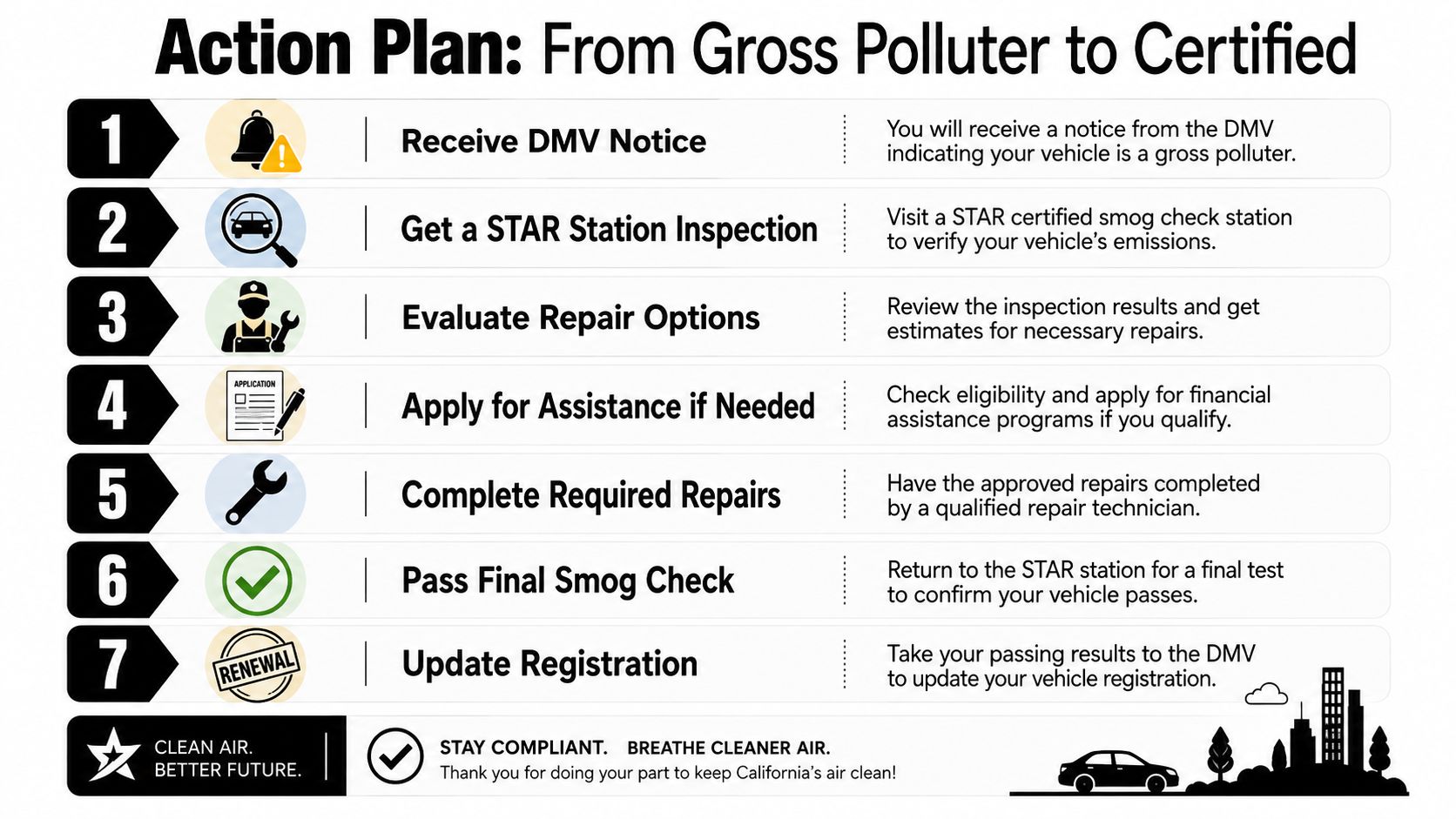
- Save the failed report: Record the designation, codes, measured results, and registration deadline.
- Confirm the testing path: Ask a STAR station or BAR whether your vehicle needs test-only, test-and-repair, or Referee handling.
- Get a documented diagnosis: Require test results before approving major emissions parts.
- Choose the financial path: Compare repair, CAP assistance, retirement, and appeal based on the vehicle's condition.
- Complete root-cause repairs: Fix the underlying engine or emissions problem, not only the stored code.
- Prepare for retesting: Confirm monitors are ready, the warning light is properly off, and the engine is warm.
- Submit the passing certification: Follow the DMV instructions and retain the certificate and repair records.
Don't assume you can drive normally while waiting. Check your registration and any DMV restrictions, and ask the appropriate agency or qualified professional about lawful use. If the retest fails again, stop authorizing random parts. Compare the new report with the original, identify what changed, and return to diagnosis or the Referee process if the results conflict.
The fastest route is usually the most organized route: correct station, accurate diagnosis, approved assistance, proper repair, then retest.
Speedy Smog provides STAR-certified smog inspections in San Leandro for gross-polluter-related workflows, along with testing for newer and older vehicles, diesels, and hybrids. Bring your failed report and ask the team to clarify whether you need a normal retest, a repair pathway, or Referee guidance, then visit Speedy Smog to schedule the next step.
You open the DMV renewal notice expecting the usual reminder, then you see the line that changes the whole errand, STAR certification required. If you're in Oakland, that usually means your regular neighborhood shop might not be the right stop, and now you're trying to figure out whether this is a simple smog check or a special lane with different rules, different timing, and a different bill.
The confusing part is that STAR sounds like a separate emissions test, but it isn't. It's a higher-performance compliance tier inside California's smog system, which means the station has to meet tighter state standards for inspection quality, while the vehicle is still being checked against the same emissions rules it would face anywhere else in the program. If you've never booked one before, the practical question isn't “What does STAR mean?” It's “Which Oakland shop can handle my vehicle, and what will I really pay when I get there?”
Table of Contents
- Why Oakland Drivers Keep Seeing STAR on Their Renewal Notice
- What STAR Certification Actually Means
- Which Oakland Vehicles Get Routed to a STAR Station
- What Happens During the Test at an Oakland STAR Station
- How to Prepare Your Vehicle and Avoid a Failed Visit
- Oakland STAR Stations, Pricing, and Hours Compared
- Speedy Smog as a Convenient Option for Oakland Drivers
Why Oakland Drivers Keep Seeing STAR on Their Renewal Notice
A lot of Oakland drivers first meet STAR the same way. The renewal notice arrives, they glance at the form, and the line about STAR turns a quick DMV errand into a search for a station they've never used. A car that passed at a regular shop last time can still be routed to STAR this cycle, because the decision is coming from California's compliance system, not from the neighborhood around your house.
California's STAR smog program is built around higher-performing stations, and the Bureau of Automotive Repair treats STAR as a higher-performance compliance tier rather than a different emissions standard for the vehicle itself. That distinction matters. Your car isn't being asked to meet a stricter tailpipe target just because it landed at STAR, but the station doing the inspection is expected to operate with tighter quality control and consistency.
For an Oakland driver, that means one simple thing. If the DMV notice says STAR, the usual corner shop can't just step in and substitute. The problem isn't that the other shop is “bad,” it's that the vehicle has been routed into a specific state-managed lane, and the lane choice is already made before you book.
Use this registration-renewal guide if you want to see how the notice connects to the booking step without guessing.
Practical rule: read the renewal notice first, then book the station that matches it. STAR is a compliance designation, not a local marketing label.
The other source of confusion is timing. Many drivers assume STAR means a more complicated test, but the difference is where the car is sent and how closely the station is held to state standards. Once you understand that, the notice stops feeling like a surprise and starts looking like a routing instruction.
What STAR Certification Actually Means
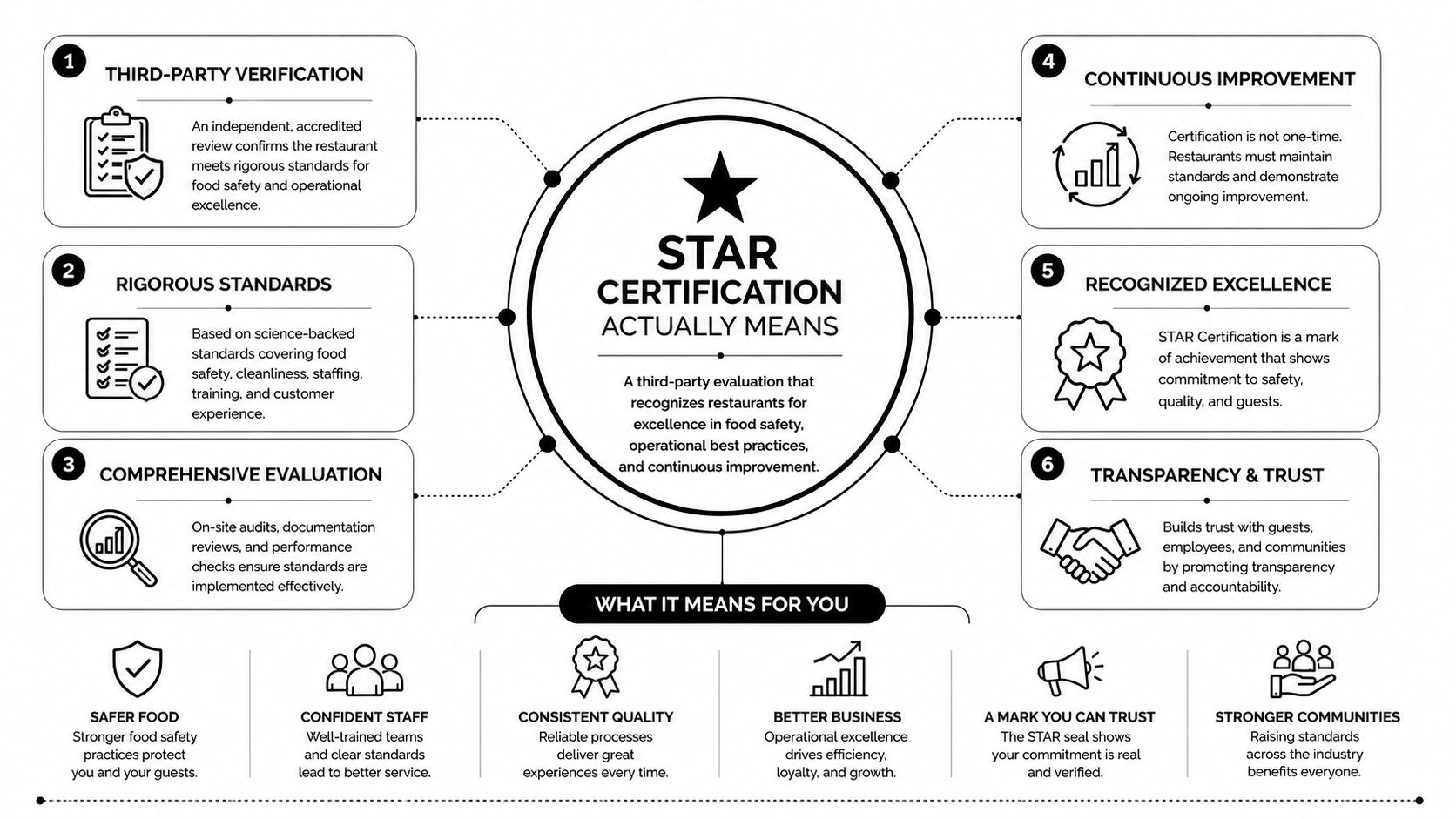
STAR certification is easiest to understand if you forget the acronym and think in service-counter terms. A STAR station is a shop the state trusts to handle inspections with a higher level of oversight, which is why it shows up for vehicles that need extra compliance confidence. It's not a different emissions law for the car, it's a different control level for the station.
That's also why STAR doesn't mean every part of the visit feels the same as every other shop. Some stations are test only, some are test-and-repair, and STAR is the state's way of deciding which stations belong in the stricter lane. For a driver, the useful takeaway is simple. If the DMV notice calls for STAR, you need the certified station type the notice asks for, not just any place with a smog sign out front.
The Bureau of Automotive Repair says the inspection usually takes about 30 minutes and that the station must charge a fixed $8.25 Smog Check certificate fee, while the inspection price itself is not regulated. That's the practical reason Oakland prices can look all over the map even when the certificate part is the same everywhere. A station can quote different labor pricing, but it still has to follow the same state certificate process.
The fee structure is split on purpose. The certificate fee is fixed, but the inspection labor price is set by the station.
See the STAR-station overview if you want the station type explained in plain language before you call around.
For a first-time customer, the confusing part is usually repairs. A regular smog shop may also do repair work, but STAR is about compliance control, not a promise that the car will be fixed there. If your vehicle fails, the next step is usually diagnosis and repair planning, not assuming the test station can be both the tester and the repair solution for every case.
Which Oakland Vehicles Get Routed to a STAR Station
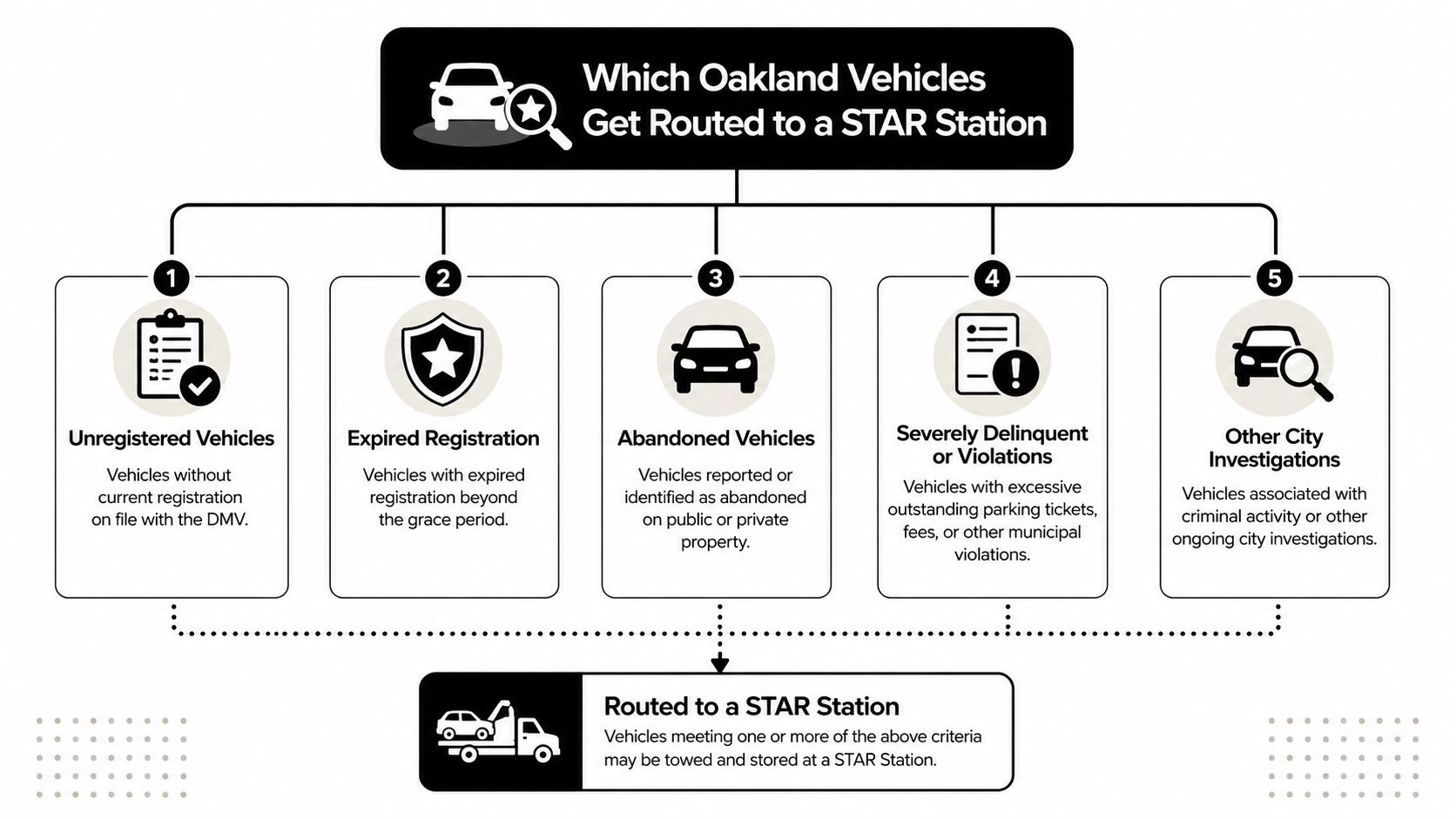
The cleanest way to think about STAR routing is this. The DMV notice tells you whether your car has been selected for the higher-compliance lane, and that notice wins over whatever your last station told you. California's smog manual also notes that some out-of-state 1976 model-year and newer vehicles registering in California for the first time need a Smog Check as part of initial registration, which is one of the situations where Oakland drivers can suddenly find themselves shopping for a compliant station instead of a convenient one. The same manual explains that STAR is about station performance, not a different emissions standard on the car itself.
For the test method, the split is straightforward. 2000-and-newer vehicles are typically checked through OBD-II readiness and MIL status, while 1999-and-older vehicles still require a tailpipe emissions test. BAR also states that a lit check-engine light is a fail condition, so if that lamp is on, the visit is already at risk before the technician plugs anything in.
The practical difference by vehicle age
If you drive a newer car, the test is often more about whether the onboard monitors are ready than about how dirty the exhaust looks at that exact moment. If you drive an older car, the inspection is more hands-on and the tailpipe portion matters directly. That's why a 1999 model and a 2000 model can feel like two different appointments even though they're both called a smog check.
Useful shortcut: if the check-engine light is on, don't treat the appointment as a coin flip. Get the fault read first.
Hybrids and diesels can add another layer of confusion, mostly because drivers hear those words and assume there must be a special STAR-only rule. The safer way to think about it is vehicle-specific routing plus the test method your car falls into. The notice decides the lane, and the vehicle's model year decides how the inspection is performed.
What Happens During the Test at an Oakland STAR Station
Most Oakland drivers want the same answer first, how long does this take, and what do I need in my hand when I walk in. Local Oakland listings show one station advertising service for 2000-and-newer vehicles at $69.75 plus the $8.25 certificate fee, while another Oakland STAR listing shows 895 Yelp reviews and a 4.8-star rating, which tells you the market is built around quick, repeatable visits rather than a long repair-day experience. One local provider also says STAR-certified inspections can be completed in about 15 minutes, which lines up with the short-visit model many drivers expect for newer cars.
The actual visit usually starts with paperwork and a quick confirmation that your vehicle matches the notice. After that, the technician checks the emissions-related items that apply to your model year, then performs the appropriate test path. For a newer vehicle, that often means the OBD-II connection and a check of readiness status. For an older vehicle, the tailpipe portion is still part of the process.
What to bring and what not to expect
Bring the DMV renewal notice, a valid ID, and a way to pay. Don't assume the station can ignore the vehicle class or model year just because you're in a hurry, because the test path is determined by the car, not by the line at the counter.
A STAR station is there to inspect the vehicle against state requirements, not to turn the appointment into a broad repair consultation. If the car fails, the next step is usually figuring out why, then deciding whether a repair visit makes sense before a retest.
Read the pass-the-test checklist if you want a practical pre-visit review without guessing at the obvious problems.
Oakland drivers usually save time by showing up with the car already warm, the notice ready, and the payment method sorted out.
That's also why local convenience matters so much. A fast station is useful only if it handles your vehicle type and the appointment doesn't turn into a second trip. The best-looking price on a website stops being cheap if the car isn't ready or the shop can't inspect it that day.
How to Prepare Your Vehicle and Avoid a Failed Visit
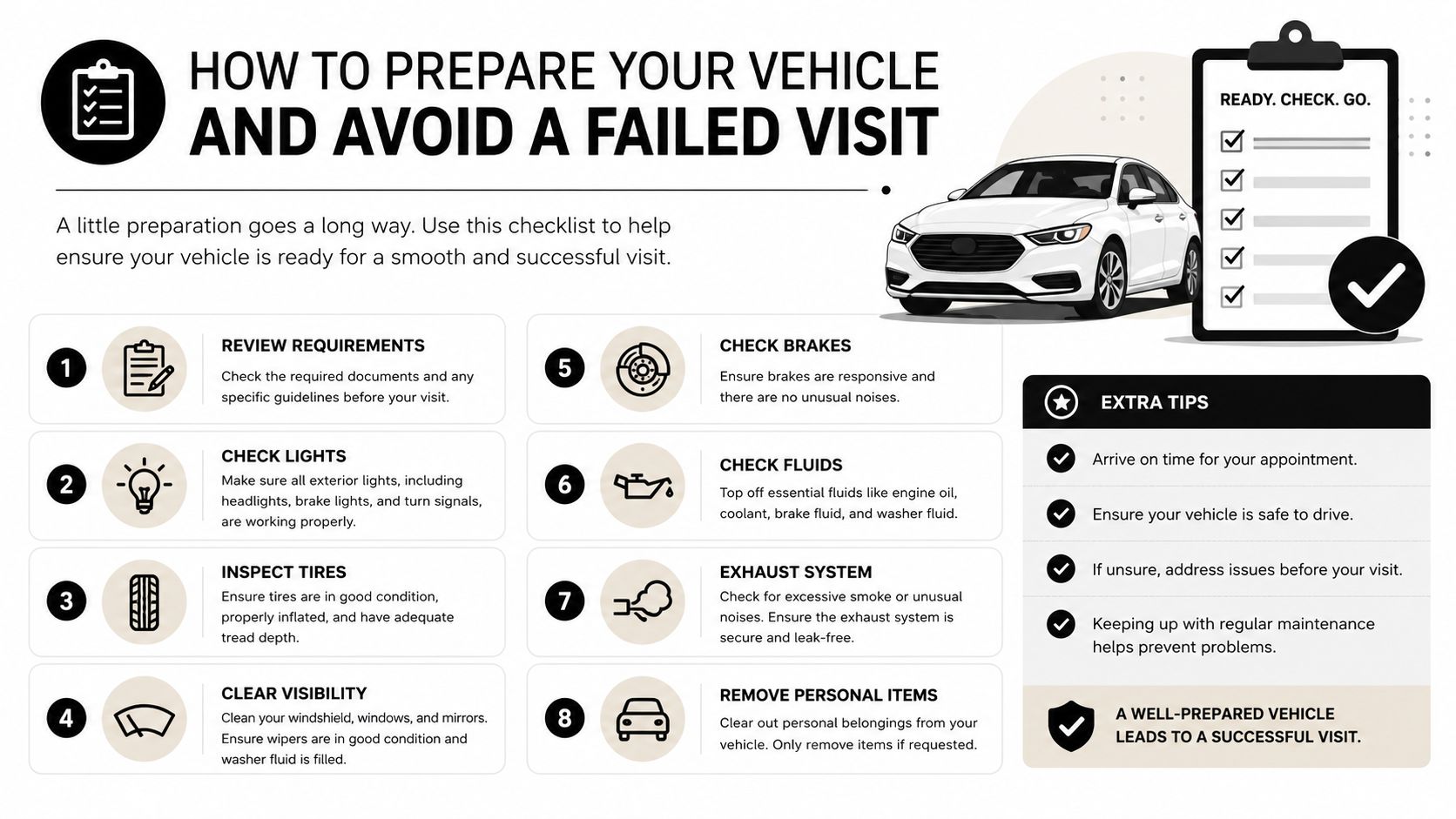
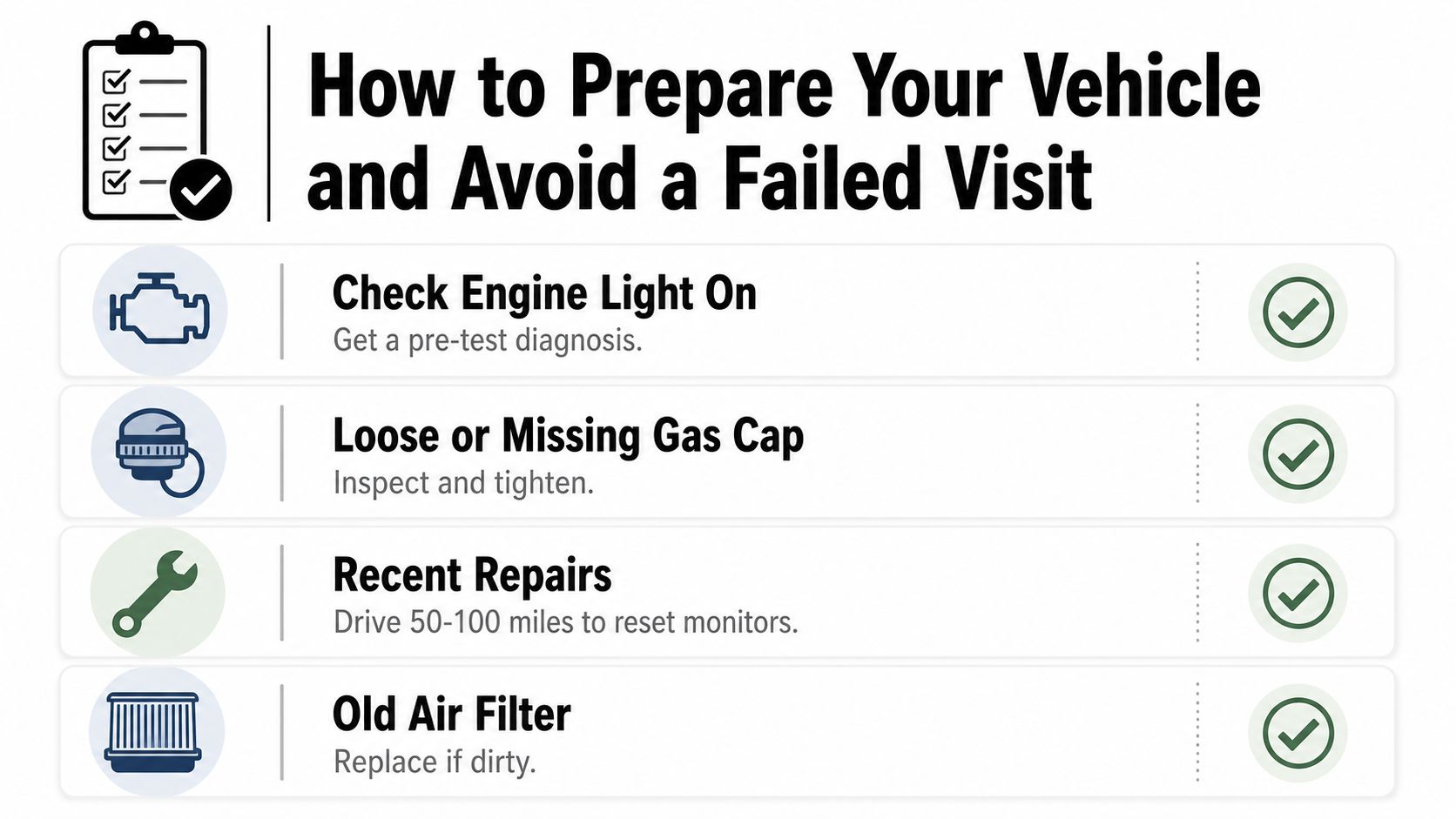
A failed STAR visit usually isn't a mystery when you look at the basics. BAR notes that after battery disconnects or repairs, readiness monitors may need one to two weeks of driving to reset, which is why a pre-test scan for readiness and diagnostic trouble codes is the most efficient way to avoid a wasted trip. If the car was recently serviced, that alone can explain a “not ready” result even when the engine feels fine on the road.
The easy thing to miss is that a car can run normally and still fail the inspection path. A loose gas cap, an unresolved check-engine issue, or incomplete readiness status can send you home without the certificate. That's why a quick under-the-hood check before the appointment matters more than a last-minute wash or vacuum.
Night-before checklist for Oakland drivers
- Check the dash: if the check-engine light is on, get a diagnosis first.
- Tighten the gas cap: a cap that doesn't seal properly can create a fault condition.
- Confirm the notice: make sure the DMV paperwork really calls for STAR.
- Think about recent repairs: if the battery was disconnected, the monitors may still need driving time.
- Warm the vehicle up: don't arrive with a cold engine and expect the best reading.
- Match the car to the test type: older cars, newer cars, diesels, and hybrids don't all go through the same exact path.
A five-minute check the night before can save you from paying for a repeat visit.
When Oakland drivers skip the prep step, they usually discover the problem at the station, not at home. That's the expensive version of learning the process. The smarter version is to treat the appointment like a compliance check, then use the car's own warning signs to decide whether it's ready.
Oakland STAR Stations, Pricing, and Hours Compared
Oakland's smog market is competitive, but the comparison only makes sense if you separate the fixed state fee from the shop's own price. The $8.25 certificate fee is the baseline everywhere, while the inspection price is what changes from one station to the next. That's why one Oakland listing can advertise $69.75 plus the certificate fee, while another shop leans on speed, convenience, or customer ratings instead of a single posted number.
| Station | Advertised Inspection Price | BAR Certificate Fee | Typical Turnaround | Oakland Access |
|---|---|---|---|---|
| Oakland STAR station with a large review base | Not stated in the verified data | $8.25 | Not stated in the verified data | Oakland-based |
| Oakland provider near San Pablo Avenue and 34th Street | $69.75 for 2000-and-newer vehicles | $8.25 | Not stated in the verified data | Near San Pablo Avenue and 34th Street, with access from I-580, I-880, and I-980 |
| Oakland shop advertising fast STAR inspections | Not stated in the verified data | $8.25 | About 15 minutes | Oakland-based |
The practical lesson is that price, speed, and access don't always point to the same station. A shop near the freeway might be better for an after-work run, while a different station may have stronger reviews or easier booking. If your renewal notice is STAR-specific, the right choice is the one that matches both the notice and your schedule.
Local hours matter more than most drivers expect, because some shops are closed on certain days and others are built around same-day traffic. That's why Oakland searches often end up being less about “the cheapest smog check” and more about “the shop that can handle my car today without a second appointment.”
Speedy Smog as a Convenient Option for Oakland Drivers
For Oakland drivers who want a nearby STAR-certified option without adding another long errand, Speedy Smog in San Leandro is set up around quick DMV-style visits. It's a STAR Certified station, it handles 2000-and-newer vehicles in about 10 to 15 minutes, and it also serves 1999-and-older vehicles, diesels, and hybrids, which makes it useful when the renewal notice and the vehicle type don't fit a one-size-fits-all shop. That matters in the East Bay, where the closest station isn't always the station that can process the car you brought.
The convenience piece is more than just speed. The shop is open Monday through Saturday, has a clean indoor waiting room, and emphasizes transparent pricing with periodic $25-off coupons for most newer-vehicle smogs. For a driver coming from Oakland, that can be the difference between a smooth lunch-break stop and a second trip after learning the wrong place couldn't complete the test path.
Why that combination matters
If your notice calls for STAR, the decision isn't only about the posted price. It's about whether the station can handle the right vehicle class, whether the hours fit your day, and whether you can get the certificate without wasting time on a shop that's closed or the wrong test type. Nearby, compliant, and fast is a better combination than “cheap on paper” if the appointment ends with a rebook.
Visit Speedy Smog if you want to book a STAR-certified smog check that lines up with an Oakland renewal notice, the right vehicle type, and a schedule that doesn't leave you stuck making a second trip.
You walk into a smog station thinking this is just another registration errand. Ten or fifteen minutes later, someone hands you a printout with FAIL on it, and suddenly your whole day changes. Now you're thinking about repair bills, missed time, whether the car is safe to drive, and how many more steps this is going to take.
That reaction is normal. A failed smog check catches a lot of drivers at the worst possible time, usually when registration is already due and the budget is tight. The good news is that a failure report usually points you toward a solvable problem. The bad news is that people often waste money because they guess, replace parts too quickly, or go to the wrong shop first.
A calm approach works better. Read the report carefully. Figure out whether the failure was visual, functional, or emissions-related. Decide whether the issue is simple, diagnostic-heavy, or a sign that the car may not be worth fixing. If cost is a significant obstacle, California does have a repair assistance path for some drivers. Then, once the work is done, prepare properly for the retest so you don't pay twice for the same problem.
Table of Contents
- That Sinking Feeling When Your Car Fails Its Smog Check
- Understanding Your Failed Smog Check Report
- Common Smog Failures and Your Repair Options
- California's Smog Check Repair Assistance Programs
- Choosing a STAR Certified Smog Repair Shop
- Preparing for Your Smog Retest to Pass the First Time
- Smog Check Repair FAQs
That Sinking Feeling When Your Car Fails Its Smog Check
Most drivers don't fail a smog check because they ignored their car on purpose. Usually it's something more ordinary. The check engine light came on last week. The battery was disconnected during another repair. The car has been running a little rough, but still getting to work. Or the vehicle seems perfectly fine, then the test says otherwise.
I've seen the same look a lot. A driver stares at the report and asks the same first question almost every time: "What does this mean?" Right behind that comes the bigger question: "How much is this going to cost me?"
Those are fair questions. Smog failures feel bigger than they are because they hit three nerves at once:
- Money pressure: You weren't planning for an emissions repair.
- Time pressure: Registration doesn't wait.
- Information pressure: The report uses terms the average person doesn't deal with every day.
A failed smog check is a diagnosis starting point, not a final verdict on the car.
Some failures are simple. A loose gas cap, incomplete monitors, or a problem caught early can be straightforward. Others need proper testing because the code or emissions reading is only a clue. That's where people get into trouble. They replace the part named by a code reader, spend money, and still fail again.
The practical path is simpler than it feels in the moment. Start with the Vehicle Inspection Report. Match the type of failure to the likely system involved. Decide whether this is a basic fix, a diagnostic job, or a financial decision. If the repair bill looks tough, look into California assistance before authorizing major work. Then go back for the retest only when the car is ready.
Understanding Your Failed Smog Check Report
The Vehicle Inspection Report, often called the VIR, can look more complicated than it is. If you break it into sections, it starts making sense quickly. The report usually tells you whether the car failed because of something the technician saw, something the car's systems reported, or something that came out of the tailpipe.
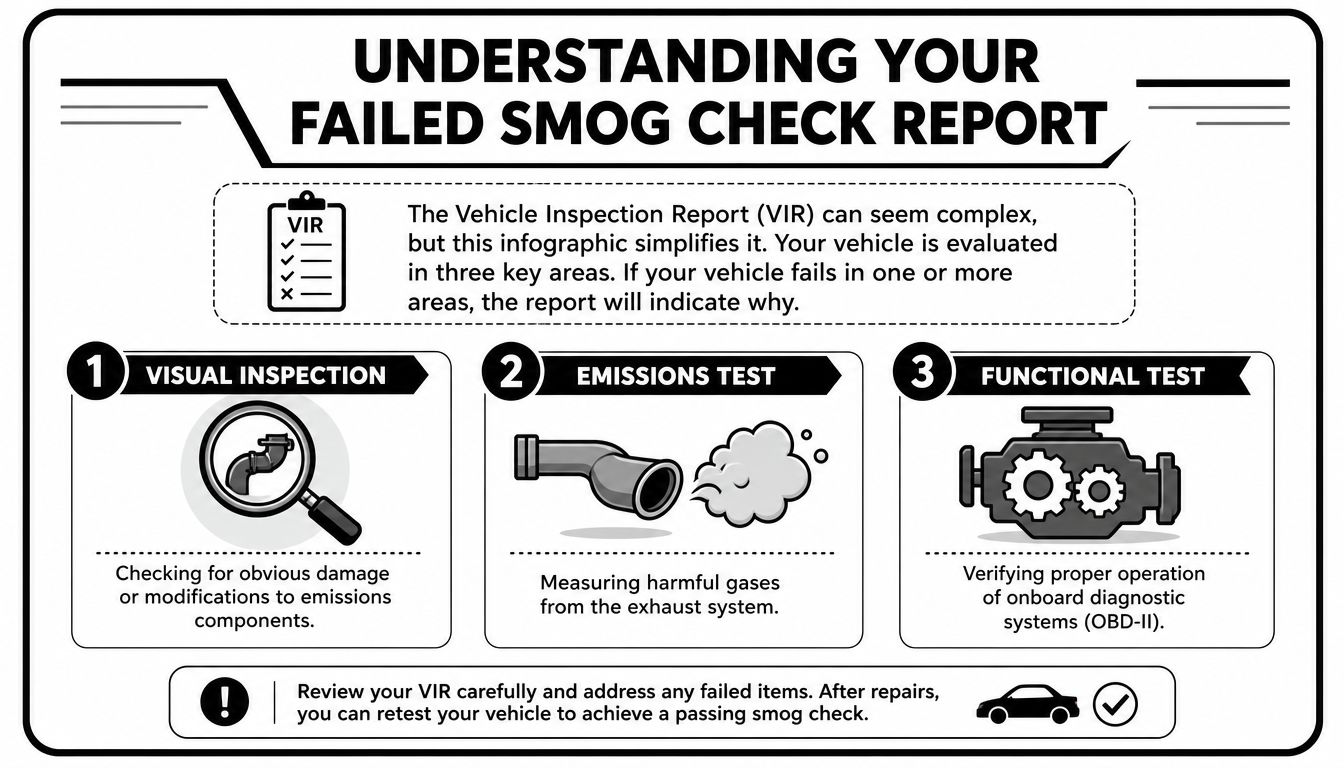
For a more detailed example of how stations present outcomes, this guide to understanding smog test results helps drivers see what they're looking at.
Three places to look first
Visual inspection is exactly what it sounds like. The inspector checks whether required emissions parts are present, appear correct for the vehicle, and haven't been obviously tampered with. Missing hoses, disconnected components, or aftermarket parts that don't belong can trigger a failure even if the car seems to run fine.
Functional tests check whether key emissions-related systems behave properly. Depending on the vehicle and test type, this can include the gas cap, onboard diagnostics, and whether the check engine light is commanded on. If the computer says there's an active emissions problem, the vehicle won't pass just because it sounds okay in the parking lot.
Emissions readings show what the car is producing. Think of this as the results side of the test. The engine and emissions systems may be burning fuel cleanly, or they may be letting too much pollution through.
What the failure language usually means
When drivers see terms like HC, CO, NOx, or EVAP, they often assume they need a part with the same name. That's usually not how diagnosis works.
- Hydrocarbons (HC): Unburned fuel. High HC can point to incomplete combustion, misfires, ignition trouble, vacuum leaks, or engine condition issues.
- Carbon Monoxide (CO): Fuel that burned poorly because the mixture may be too rich. That can happen when the engine is getting too much fuel or not enough air.
- Nitrogen Oxides (NOx): Heat-related emissions. High NOx often points technicians toward combustion temperature control problems, exhaust gas recirculation issues on older systems, or a converter that isn't doing its job.
- EVAP system failure: This usually means the car can't properly contain fuel vapors. A gas cap can be involved, but so can hoses, valves, seals, or leaks elsewhere in the evaporative system.
Practical rule: A fault code or emissions category tells you where to investigate. It doesn't automatically tell you what part to replace.
If your report says the check engine light caused the failure, don't stop at the code description. The code names the condition the computer saw. The actual failed part might be upstream, downstream, electrical, mechanical, or a leak. That's why a clean diagnosis matters more than a quick guess.
Common Smog Failures and Your Repair Options
A lot of failed tests come back to the same handful of causes. In fact, the California Bureau of Automotive Repair says over 70% of smog check failures are attributed to a handful of issues, including malfunctioning oxygen sensors, catalytic converters, and evaporative emission control systems in its smog check FAQ.
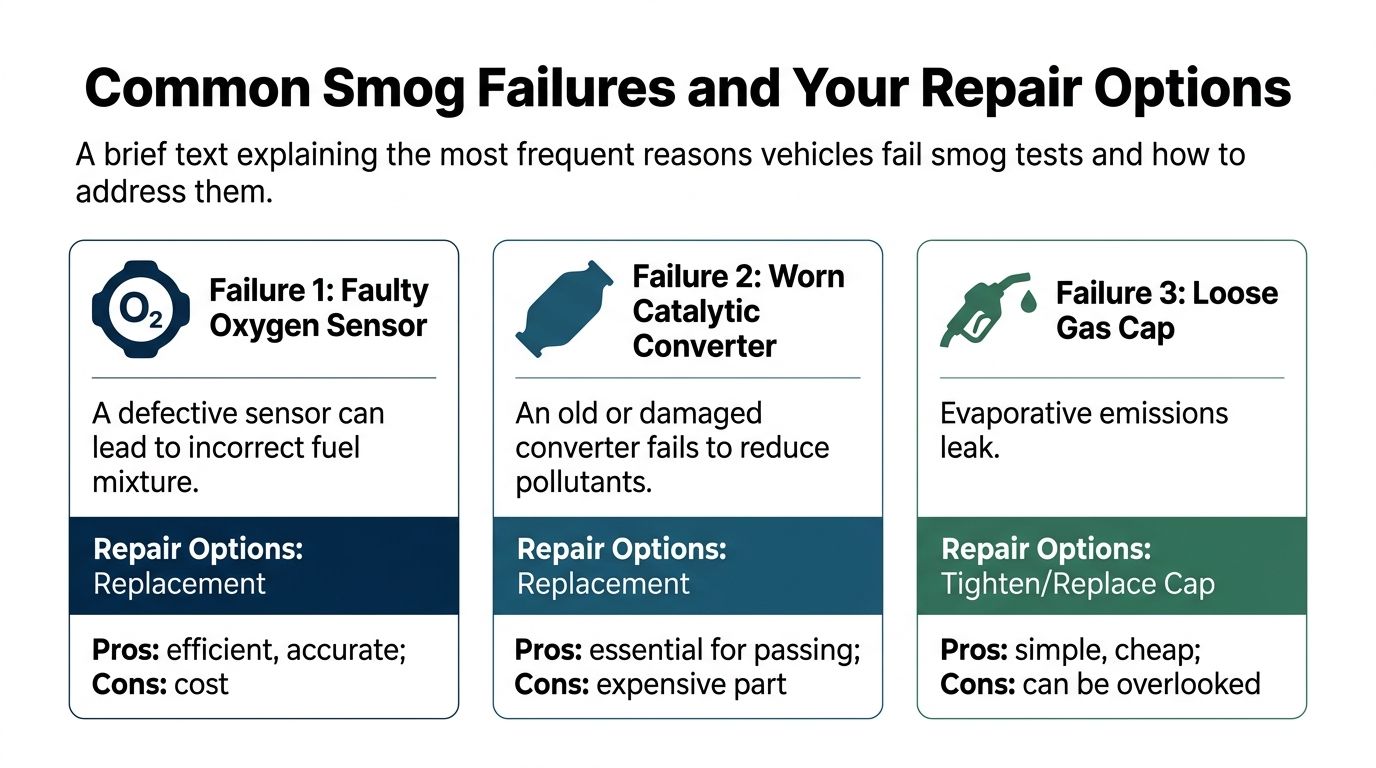
If you want a plain-language breakdown of the patterns behind failed tests, this page on common smog check fail reasons is a useful companion.
The failures technicians see again and again
Oxygen sensor problems are common because these sensors constantly report exhaust conditions to the engine computer. When one gets lazy, contaminated, or electrically faulty, the air-fuel mixture can drift. Sometimes replacement is the right move. Sometimes the sensor is only reporting a different problem, such as a vacuum leak or exhaust leak.
Catalytic converter failure is one of the big ones. The converter cleans up pollutants after combustion. But converters often get blamed for upstream problems they didn't create. If the engine has been running rich, misfiring, or leaking oil into the exhaust, a new converter can fail again unless the root cause is fixed first.
EVAP system faults can range from simple to annoying. A loose, worn, or incorrect gas cap can trigger an EVAP problem. So can a cracked hose, a purge valve issue, or a leak that only shows up under smoke testing. This is one area where guessing tends to waste money.
Check engine light on isn't a part failure by itself. It's the car asking for diagnosis. The key is whether the technician reads data and verifies the fault, or just starts swapping the most common part tied to the code.
Readiness monitors not set catches a lot of people after battery replacement, recent repairs, or code clearing. Nothing may be broken anymore, but the car's computer hasn't completed its self-tests yet.
DIY or professional repair
Some jobs are reasonable for a careful do-it-yourselfer. Others aren't worth the gamble.
- Good DIY candidates: Tightening or replacing a gas cap, correcting an obvious disconnected hose, checking that the battery terminals are secure after recent work, and confirming you haven't recently cleared codes before a retest.
- Borderline DIY jobs: Replacing an accessible oxygen sensor on a vehicle you know well, if you already confirmed that the sensor itself failed and not the wiring or a related engine problem.
- Professional territory: Catalytic converter diagnosis, EVAP leaks, wiring faults, repeated check engine light returns, and any case where the report points to symptoms rather than a clear failed component.
A lot of wasted money comes from confusing a symptom with a cause. A lean code doesn't always mean oxygen sensor. A catalyst code doesn't always mean converter first. A failed EVAP test doesn't always mean gas cap.
If a repair starts with "let's try this part first," slow down and ask what testing confirmed it.
The best repair path is the one that gets verified before parts are installed. That's especially true when you're already paying for a retest and registration is waiting.
California's Smog Check Repair Assistance Programs
For some drivers, the problem isn't understanding the failure. It's paying for the repair. California's main smog check repair assistance path is the Consumer Assistance Program, often called CAP. This program can help eligible vehicle owners either repair the vehicle or retire it if fixing it doesn't make sense.
The repair side matters most when the car is otherwise useful and the owner just needs help getting over the emissions hurdle. The retirement side matters when the vehicle has multiple issues, poor overall condition, or a repair path that doesn't line up with the vehicle's value.
When repair assistance makes sense
If your vehicle failed an official smog inspection and the emissions-related repair cost is the obstacle, CAP is worth looking into before you approve major work. The state program can provide up to $1,200 toward qualifying emissions-related repairs for eligible motorists, as described in the background material provided for this article.
That doesn't mean every failed car qualifies, and it doesn't mean every repair at every shop qualifies. The usual practical steps are:
- Keep your failed test paperwork. Don't lose the report.
- Check eligibility through BAR's CAP process. Eligibility can depend on factors such as household income, vehicle status, and program rules.
- Wait for approval before major emissions repairs if you're trying to use assistance. Work done outside the program path may not count.
- Use an authorized repair facility if the program requires it. Ask the shop directly whether they handle CAP-related repairs.
One mistake I see is drivers fixing the car first, then trying to back into assistance after the fact. If you're counting on help, start there.
Repair help versus retiring the vehicle
Repair assistance is for the owner who wants to keep the car. Vehicle retirement is for the owner who looks at the overall condition and says, "I don't want to keep sinking money into this."
The retirement option can offer $1,500 to retire a vehicle, based on the program details provided in the prompt for this article. That can be the cleaner decision when the car has several unresolved problems, poor reliability, or obvious mechanical wear beyond the smog issue.
A practical way to decide is to ask three questions:
- Is the car solid apart from the smog failure?
- Would I want to keep this vehicle if it passed tomorrow?
- Am I fixing one emissions issue, or stepping into a longer list of repairs?
If you don't trust the car even after a potential pass, retirement may be the smarter path.
California Consumer Assistance Program (CAP) Options
| Feature | Repair Assistance | Vehicle Retirement |
|---|---|---|
| Purpose | Help eligible owners fix emissions-related problems after a failed smog check | Help eligible owners retire a vehicle that isn't worth repairing |
| Best fit | The car is otherwise worth keeping | The car has broader problems or poor long-term value |
| Financial help | Up to $1,200 for qualifying repairs | $1,500 to retire the vehicle |
| Timing concern | Approval should come before major repair decisions when possible | Best considered before spending heavily on diagnostics and parts |
| Shop involvement | Usually requires using the proper participating repair path | Usually involves following the state's retirement process |
Don't choose between repair and retirement based only on emotion. Choose based on the car's condition, your budget, and whether you'd still want the vehicle after it passes.
The smartest move is to treat CAP like a fork in the road, not a last-minute add-on. If your car is a keeper, pursue repair assistance cleanly. If it isn't, don't let sunk cost push you into a bad decision.
Choosing a STAR Certified Smog Repair Shop
The shop you choose after a failure matters almost as much as the actual repair. A weak diagnosis can turn one real problem into a stack of unnecessary parts. A good shop narrows the issue, explains why the car failed, and shows you what needs to happen before the retest.
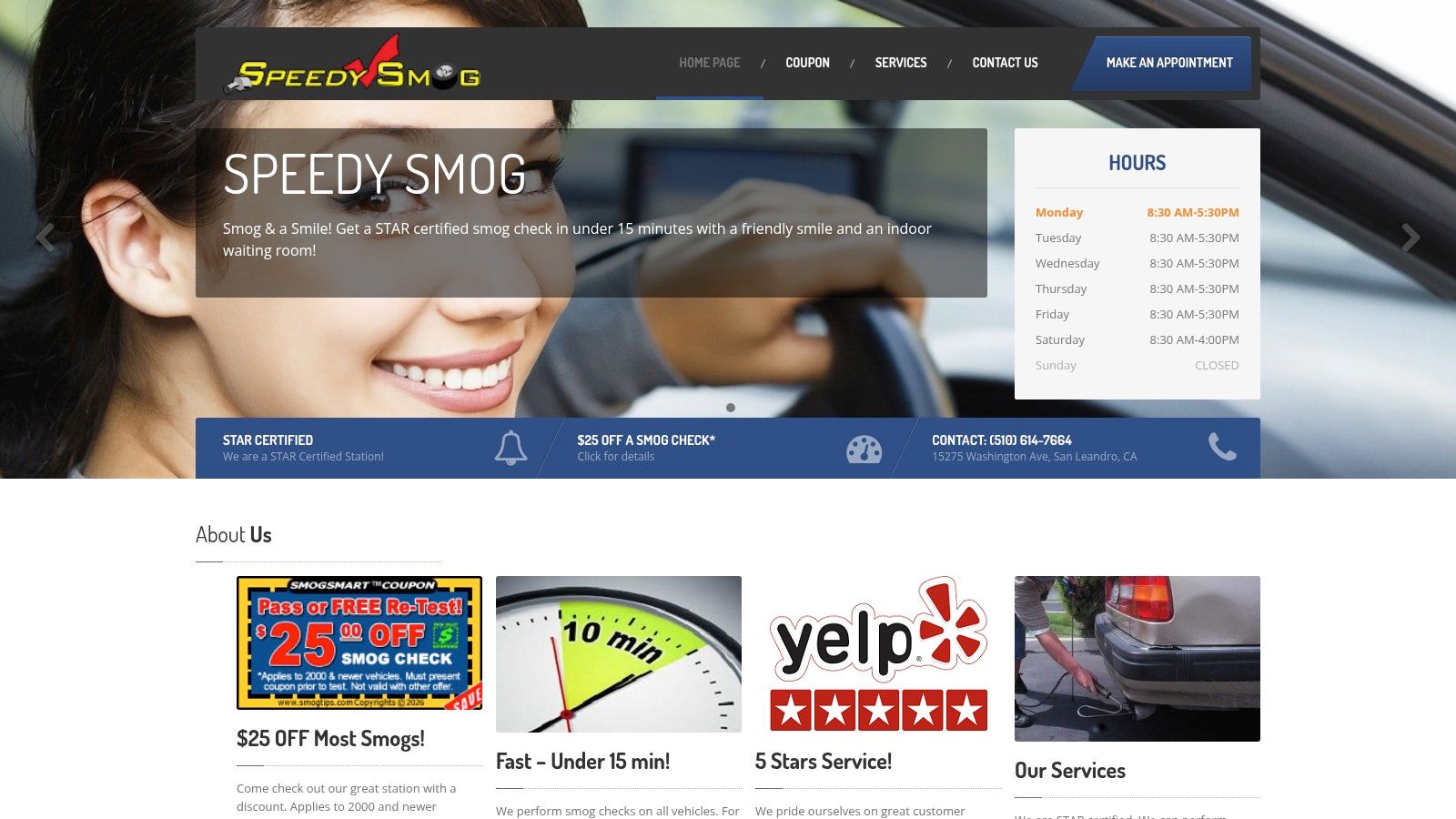
If you're not clear on the certification side, this explainer on what a smog STAR station is helps sort out the terms.
What to verify before authorizing repairs
Start with the basics. Make sure the shop is properly licensed to perform the repair work you're approving. A testing station and a repair station are not the same thing. Some places inspect only. Others diagnose and repair. If you need state-program repair assistance, ask whether they handle that process specifically.
Then pay attention to how they talk about the problem.
- Good sign: They ask for the VIR, pull codes, inspect the related system, and explain what they still need to test.
- Bad sign: They jump straight to "it's probably the converter" or "these cars always need sensors."
- Good sign: They give a written estimate and separate diagnostic time from repair time.
- Bad sign: They stay vague until the bill is done.
A careful shop doesn't promise a pass before the root cause is confirmed. That's not evasive. That's honest.
What a good shop does differently
The difference usually comes down to process. Good smog repair work is boring in the best way. The technician verifies the complaint, checks the data, tests the system involved, confirms the failed component or condition, and only then recommends parts or repairs.
That's especially important with emissions work because one fault can trigger several symptoms. A vacuum leak can create lean codes. A misfire can damage a converter. A recent battery disconnect can leave monitors incomplete. If the shop doesn't sort cause from effect, you pay for their guessing.
This short video gives a useful visual sense of what drivers should expect from a professional smog station environment and process.
A trustworthy smog repair shop doesn't sell confidence. It sells verification.
Reviews also matter, but read them with a technician's eye. Look for comments about clear explanations, accurate diagnosis, written estimates, and whether the fix held up. Fast service is nice. Honest diagnosis is what saves you money.
Preparing for Your Smog Retest to Pass the First Time
The retest is where people either finish the job cleanly or get tripped up by a preventable detail. Once repairs are done, don't rush straight back unless you're sure the vehicle is ready. A lot of repeat failures happen because the original problem is fixed, but the car's systems haven't completed their checks yet.
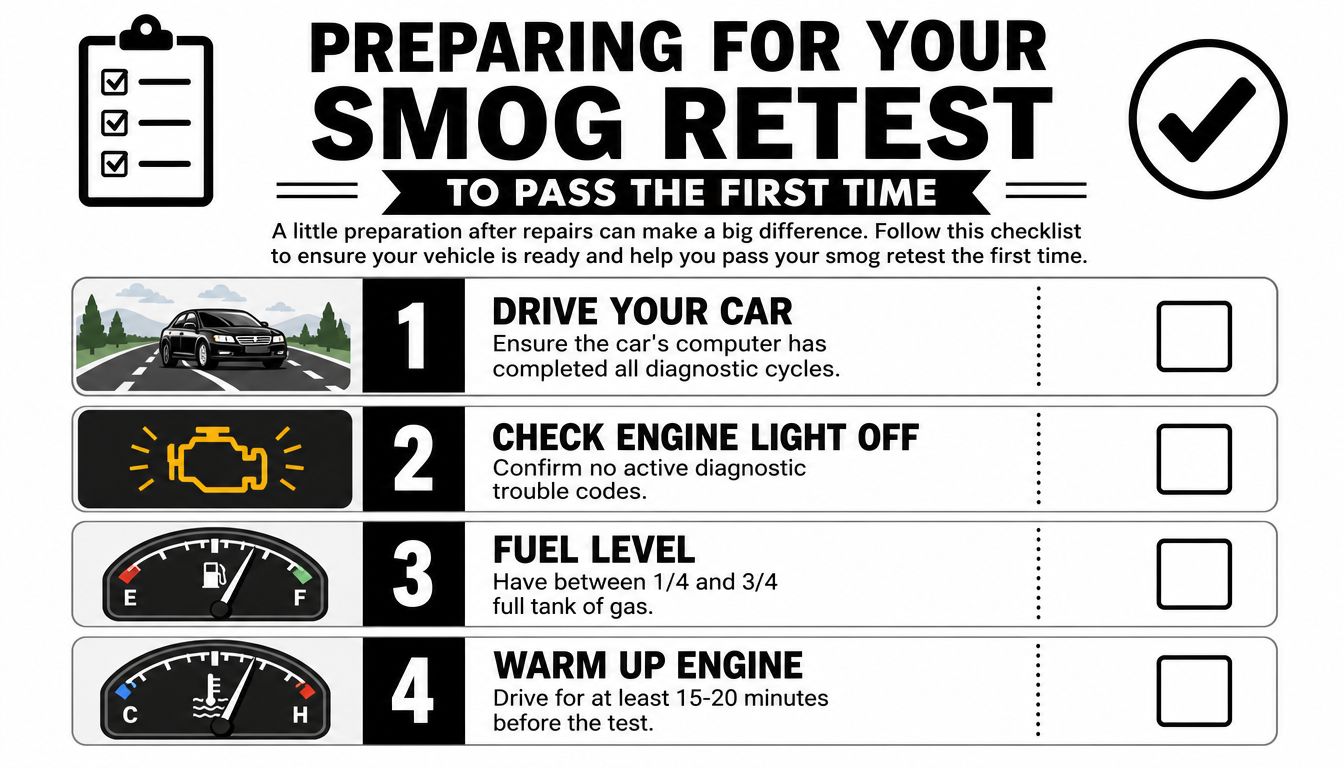
Your pre-retest checklist
Use this like cheap insurance before you head back to the station:
- Drive the car normally after repairs: Many vehicles need a proper drive cycle so the onboard monitors can reset. Short trips around the block often aren't enough.
- Confirm the check engine light stays off: It's not enough for the light to be off at startup if it comes back during driving.
- Keep the fuel level in a normal testing range: Avoid showing up nearly empty or completely full, because some systems are picky about when they run self-checks.
- Warm the vehicle up before the test: A car that has been driven is usually in a better testing state than one that rolled in cold from overnight parking.
- Bring the paperwork from the failed test and the repair invoice: This keeps the retest process smoother and helps if any question comes up.
If a shop cleared codes during repair, ask one direct question before leaving: "Are the monitors ready, or do I need to drive it first?" That's one of the most useful questions in the whole process.
You should also pay attention to the basics. If the battery is weak, if the car has been sitting, or if another warning light appears, don't assume the emissions issue is behind you. One new problem can interrupt readiness or trigger another failure.
The best time for a retest is when the car has been repaired, driven, warmed up, and checked. Not when you're simply hoping it's ready.
Patience here saves a lot of aggravation.
Smog Check Repair FAQs
Do I get a free retest if my car failed?
That depends on the station and the circumstances. Some shops offer retest policies, some don't, and the terms can vary. Ask before you authorize anything or return for another inspection.
What is a repair cost waiver?
It's a California process that may help in certain situations when a vehicle still doesn't pass after qualifying emissions-related repair efforts. Waiver rules are specific, so don't assume regular repair spending automatically qualifies you. Ask a licensed smog repair shop or BAR directly before counting on it.
What if the check engine light comes back after the repair?
Go back to the repair shop as soon as possible and bring your paperwork. Don't clear the code yourself just to get the light off. If the light returned, the root problem may still be present, or a different issue may have appeared during the drive cycle.
Can I sell a car in California if it failed smog?
That gets into transaction-specific rules, and the answer can depend on whether you're dealing with a private-party sale, transfer situation, or another exception. Don't rely on verbal advice from a buyer or seller. Check the current California rules before you sign anything.
Should I replace the part named in the code first?
Usually, no. A code points to a system or condition. It does not guarantee that the named sensor or component is the failed part. That's one of the fastest ways to waste money on smog-related repairs.
Is smog check repair assistance worth the trouble?
If repair cost is the only thing standing between you and registration, yes, it can be. The paperwork is worth it when the vehicle is otherwise worth keeping and you qualify. If the car is near the end of its useful life, retirement may be the cleaner decision.
If you need a fast, friendly place to handle your inspection or retest, Speedy Smog in San Leandro is a solid local option. They offer STAR-certified smog checks, straightforward service, and the kind of clear process stressed drivers appreciate when registration is on the line.

You open your renewal notice after work, hoping it is just a quick payment, and there it is. Smog check required. The next questions are always the same in Walnut Creek. Do you need a STAR station, will the car pass, and can you get it done without losing half your day?
From the shop side, I can tell you where the stress usually comes from. It is rarely the test itself. It is the guesswork before the test. Drivers show up with a check engine light they hoped would not matter, a battery that was disconnected the night before, or an overdue oil leak they did not realize could cause a problem during the visual inspection.
A smog check gets a lot easier once you know what the technician is checking and why certain cars fail for avoidable reasons. That is the difference between a quick pass and an extra trip, extra cost, and more time dealing with DMV deadlines.
California keeps emissions rules in place for a reason, and the background matters, but what helps you today is knowing how to prepare before you pull into the bay. This guide is built for that. It gives Walnut Creek drivers the inside scoop, the why behind the rules, and a practical pre-test checklist that can save time, money, and a return visit.
Table of Contents
- Your Stress-Free Guide to Smog Checks in Walnut Creek
- Understanding California's Smog Check Rules
- The Pre-Test Checklist for a Guaranteed Pass
- The Smog Inspection Process Step-by-Step
- Choosing a STAR Certified Station in the East Bay
- East Bay Driver FAQ Your Smog Check Questions Answered
Your Stress-Free Guide to Smog Checks in Walnut Creek
Vehicle owners don't start searching for a smog check in Walnut Creek because they're curious. They start because the DMV clock is running, the car's due, and they want it handled with the least amount of hassle possible.
That's the right approach. A good smog visit should feel routine. You show up with a vehicle that's ready, the station runs the proper inspection, your certificate gets handled correctly, and you move on with your day. Problems usually show up when drivers wait until the last minute, ignore a warning light, or pick a shop without understanding whether their DMV notice requires STAR service.
Why this feels more confusing than it should
Part of the confusion is that local listings usually focus on address, hours, and maybe a coupon. They don't tell you why one car passes easily while another fails for something the owner could have caught in the driveway.
Practical rule: The easiest smog check is the one you prepare for before the appointment starts.
The other issue is that modern smog inspections aren't all the same. A newer vehicle with a healthy OBD-II system usually moves through the process very differently than an older vehicle with incomplete monitors, aftermarket parts, or recent battery disconnect history.
What actually works for Walnut Creek drivers
The smoothest path is simple:
- Check your DMV notice early. If it calls for STAR, don't guess.
- Look at your dash before you leave home. A lit Check Engine light is a warning, not a suggestion.
- Drive the car first. Warm cars test better than cold ones in everyday practice.
- Leave enough time. If your vehicle is a special case, rushing only makes the day worse.
If you want the inside view on smog check Walnut Creek drivers usually don't get from basic directories, this is it. The goal is a first-pass visit, no wasted trip, and no mystery about what the technician is doing.
Understanding California's Smog Check Rules
A lot of Walnut Creek drivers walk in with the same question: "Why does my neighbor's car breeze through, while mine gets flagged?" In the shop, the answer usually comes down to timing, vehicle age, and whether the DMV is asking for a standard inspection or a STAR inspection.
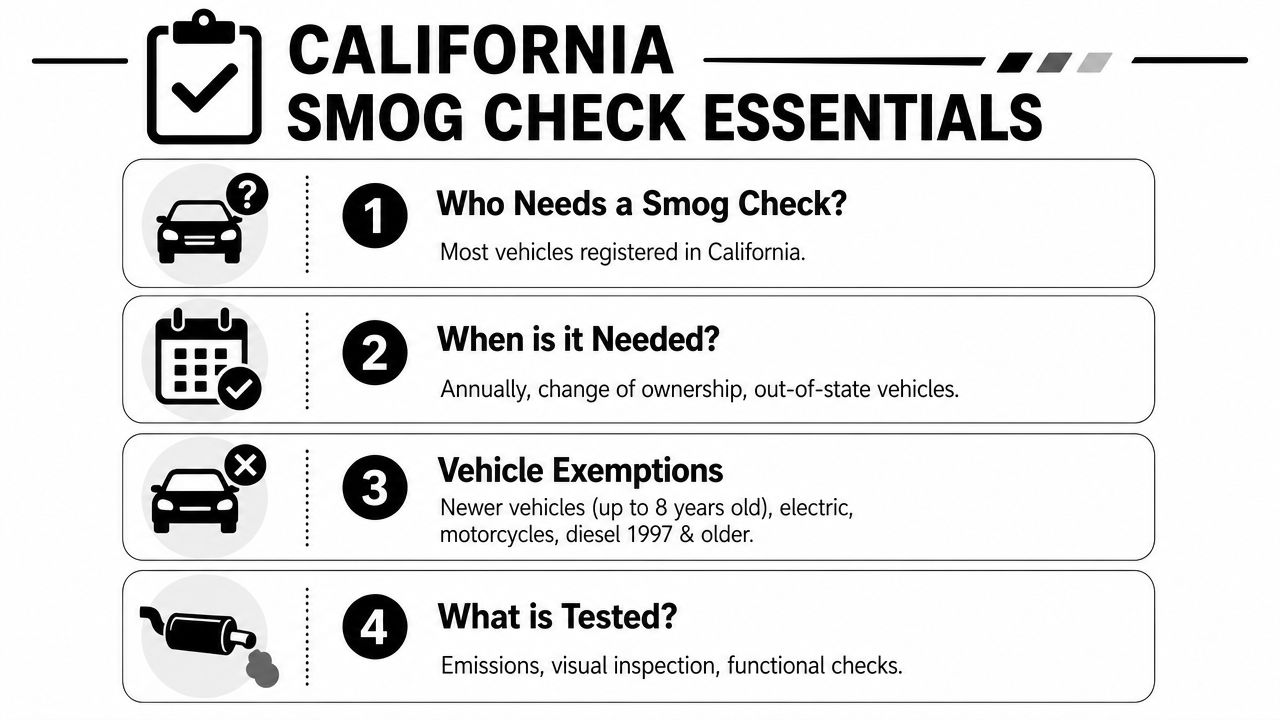
Who usually needs a smog inspection
The rule set is easier to handle once you strip it down to the situations that trigger a test. For most drivers, smog comes up in four places:
- Registration renewal: Many vehicles are tested every two years as part of DMV renewal.
- Change of ownership: A vehicle sale often requires a current smog certificate.
- Out-of-state registration: Cars coming into California usually need to be inspected before registration is completed.
- STAR requirement: Some DMV notices require the vehicle to be tested at a STAR station, not just any smog shop.
Those are the triggers that matter in real life. The details can vary by model year, fuel type, and registration status, which is why it helps to review the current California smog check rules before you book.
What trips people up most often
The first problem is assuming every vehicle gets the same inspection. It doesn't.
A newer car usually goes through an OBD-II check that looks at the vehicle's self-reported emissions status, including trouble codes and readiness monitors. Older vehicles may involve different test procedures, plus visual and functional checks of emissions equipment. That difference matters because a car can drive fine, feel normal, and still fail.
In day-to-day shop work, I see three repeat issues more than anything else. The Check Engine light is on. The battery was disconnected recently, so the readiness monitors are not set. Or the car has an emissions-related part missing, modified, or not approved for the application.
Clearing codes right before a test is one of the fastest ways to waste a trip. The system still has to show that the monitors have completed.
Exemptions cause confusion too. Drivers hear a broad rule from a friend, then assume it applies to their car without checking the registration notice or the vehicle details. That is where people lose time and sometimes pay for a test they were not ready for.
The practical takeaway is simple. Read the DMV notice carefully, verify whether STAR is required, and make sure the car is test-ready before the appointment. That is the difference between a quick pass and an avoidable retest.
The Pre-Test Checklist for a Guaranteed Pass
No technician can guarantee a pass without seeing the car. What you can do is remove the common self-inflicted problems that waste appointments, delay registration, and send people into an unnecessary repair loop.
A clean pre-test routine makes a real difference, especially if you're trying to get your smog check in Walnut Creek done in one visit.
What to check the day before
Start with the dashboard and the basics.
- Check Engine light off: If that light is on, handle the fault before the test. Don't assume it's “just a sensor” unless a proper diagnosis proves it.
- Gas cap tight: A loose or damaged cap can create emissions-system problems, especially on EVAP-related checks.
- Battery recently disconnected: If you changed the battery, cleared codes, or lost power, your readiness monitors may not be set yet.
- Tires properly inflated: This matters more on older-style testing setups and is just good practice anyway.
- Bring your paperwork: Your DMV notice helps avoid mistakes at check-in.
Then warm the vehicle up. A short drive before the appointment helps the engine and emissions equipment reach normal operating condition. In shop practice, a warmed-up car is usually easier to test than one that just came from overnight parking.
What not to do right before the test
Drivers create their own failures in a few predictable ways.
| Habit | Why it causes trouble |
|---|---|
| Clearing codes right before the visit | The monitors often reset to incomplete |
| Letting the car sit for days | A cold vehicle may not be in its best test-ready state |
| Ignoring minor drivability issues | Rough idle, poor starts, or fuel smell can point to emissions faults |
| Installing questionable parts | Missing, modified, or illegal emissions components can trigger failure |
For a deeper look at the patterns that lead to a failed inspection, review these common smog check fail reasons.
Bring the car in the way you actually drive it, not right after a reset, battery swap, or last-minute driveway experiment.
One more practical point. If your car has been sitting, has a recent repair, or has any unresolved warning lights, don't book the inspection as your first step. Book diagnosis or regular repair first. Smog testing is a compliance check, not a tune-up session.
The Smog Inspection Process Step-by-Step
You hand over the keys, glance at the waiting area, and wonder what the technician is doing with your car. Fair question. A smog check follows a set state procedure, and once you know the order, the visit feels a lot less mysterious.
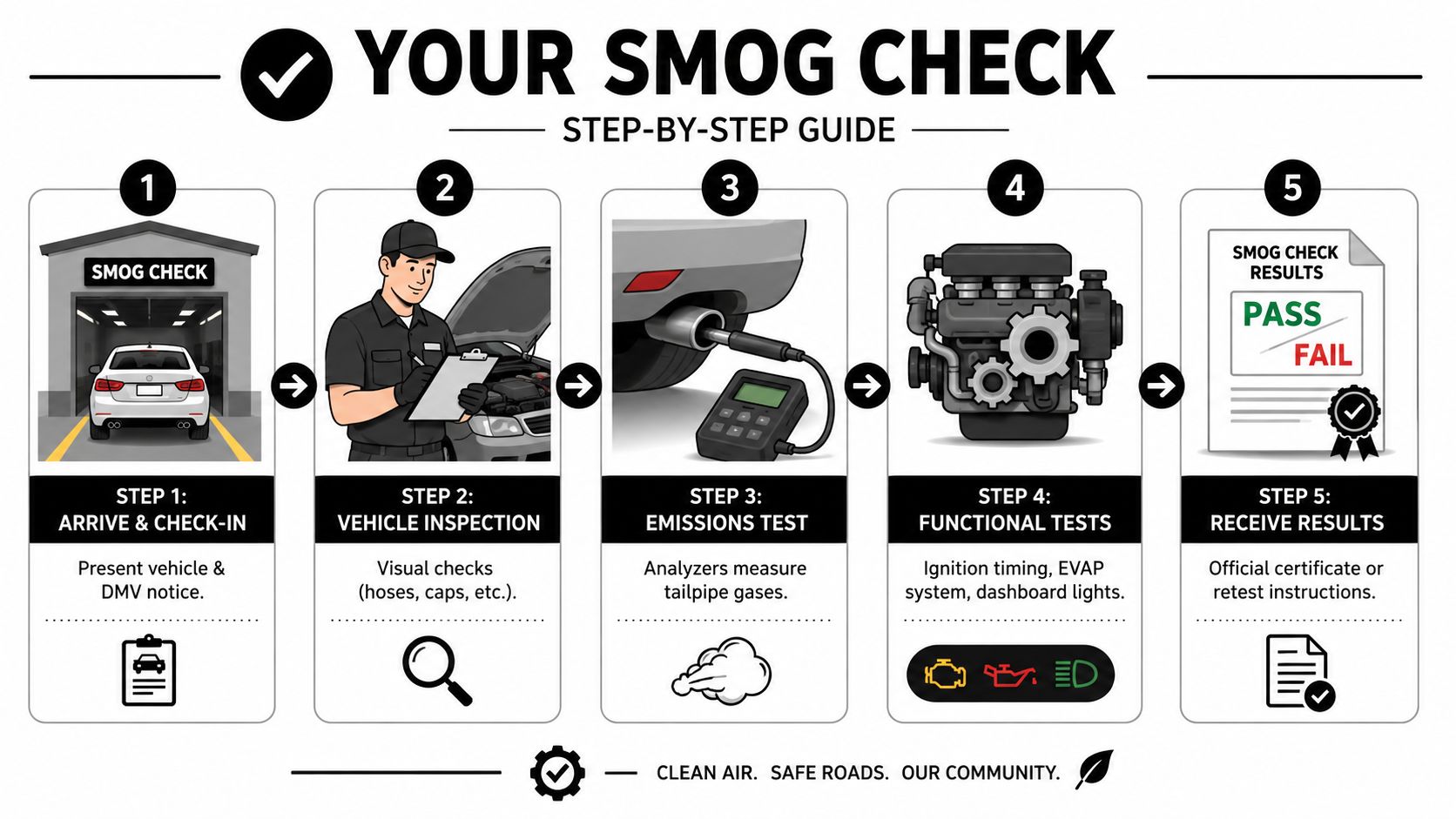
What happens when you arrive
The first few minutes are simple. The station confirms your vehicle information, checks the DMV requirement tied to your registration, and verifies whether your car needs a regular inspection or a STAR inspection. If you are not sure what that designation means, this guide explains what a smog STAR station is.
After check-in, the technician brings the car into the bay and runs the test sequence that matches the vehicle's year, fuel type, and inspection category. The process is organized, and each step has a purpose.
Most inspections break into three parts:
- Visual inspection. The technician checks that required emissions parts are present, connected, and not obviously modified or tampered with.
- Functional inspection. Items such as the malfunction indicator light and other required systems are verified.
- Diagnostic or emissions test. The station performs the test California requires for that vehicle.
Here's a quick visual overview of the flow:
How newer and older vehicles are tested
Newer vehicles are usually the most straightforward. For most gasoline and newer diesel models, the inspection centers on the OBD-II system. The technician checks readiness monitors, looks for stored trouble codes, and confirms the vehicle can report emissions system status the way California requires.
That matters because a car can drive fine and still fail the inspection if the monitors are incomplete or the computer has detected a fault. I see that with recent battery disconnects, code clearing, and rushed last-minute repairs.
Older vehicles can take a little more time. The equipment and procedure may differ, and the inspection depends more on the condition of the car in front of the technician. Age, aftermarket parts, and missing emissions labels can all slow things down, even when the owner has kept up with maintenance.
A late-model car with no warning lights and complete monitors is usually quick. An older vehicle with unknown repair history needs a more careful look.
How long it usually takes
A routine visit is often faster than drivers expect. The exact time depends on the vehicle, the inspection type, and whether anything needs to be verified twice. BAR explains the general process on its California Smog Check information page.
From a shop-floor point of view, the biggest delays are predictable. A car that arrives hot, healthy, and test-ready usually moves through without drama. A car with recent monitor resets, modified parts, paperwork mismatches, or a STAR-only requirement will take longer, and sometimes the delay starts before the test does.
The inside scoop is simple. The inspection itself is not the hard part. Most wasted time comes from vehicles that show up unprepared.
Choosing a STAR Certified Station in the East Bay
You pull up for a smog check, hand over the renewal notice, and then find out the car needed a STAR station all along. I see that mistake more than people expect. It turns a simple errand into a second trip.
If your DMV notice says STAR, book a STAR station first. That requirement is tied to the vehicle record, not the shop's opinion, and a regular station cannot substitute for it.
Why STAR matters
STAR certification tells you the station is approved to inspect vehicles that California has flagged for closer oversight. From the shop side, that usually means tighter process, cleaner paperwork, and fewer avoidable mistakes. For drivers in Walnut Creek and the rest of the East Bay, that matters because the best smog visit is the one you only have to do once.
It also helps to choose a shop that works with your type of vehicle every day. A newer OBD-II car with a STAR requirement is straightforward if the station checks documents carefully and runs an orderly lane. An older car, a diesel, or a vehicle with aftermarket parts often needs a technician who knows what slows inspections down before the test even starts.
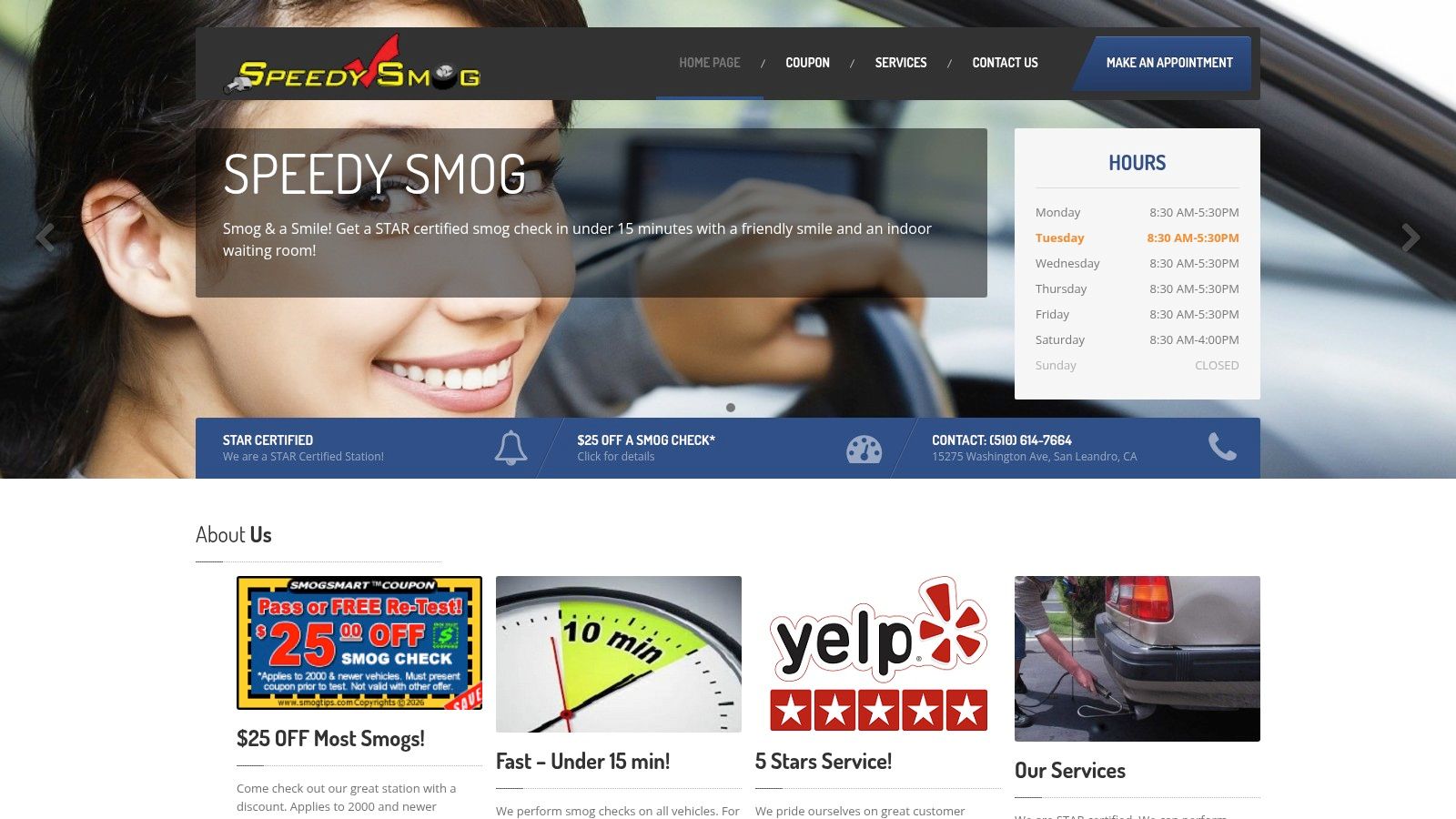
What to look for before you book
A good East Bay station does a few things well:
- Confirms STAR status clearly: If your notice says STAR, the station should say up front that it can perform that inspection.
- Handles your vehicle category regularly: Gas, diesel, hybrid, older model-year vehicles, and problem registrations can all require a slightly different workflow.
- Checks the basics before wasting your time: VIN mismatch, unreadable paperwork, an active warning light, or missing emissions labels can stop the process early.
- Explains the trade-offs: A bargain price is not much of a deal if poor check-in or sloppy verification sends you back for another visit.
- Keeps the lane organized: Clean equipment, a clear intake process, and direct answers usually mean fewer surprises.
If you want a plain-English explanation of the requirement, this guide on what a smog STAR station is covers the difference.
My practical advice is simple. Pick the station for certification, experience, and process. That choice saves more time than chasing the lowest advertised price.
East Bay Driver FAQ Your Smog Check Questions Answered
A lot of failed smog visits are preventable. At the shop, the pattern is pretty clear. Drivers come in with a warning light on, fresh codes erased, or paperwork questions that should have been handled before they booked. A few minutes of prep usually saves a second trip.
What if my car fails
Start with the printout and the exact failure reason. "Failed smog" is not one problem. It could be a stored trouble code, monitors that are not ready, a visible emissions tampering issue, or a test reading outside the allowed range.
The fix depends on the reason. In-shop experience, guessing is what burns the most money. If you know why it failed, you can repair the right item first instead of replacing parts that had nothing to do with the test.
Should I keep my appointment if the check engine light comes on
Reschedule it.
A check engine light usually means the car already sees a fault that can affect emissions. Bringing it in anyway almost always turns into a paid test and a predictable failure. Handle the diagnosis first, then come in once the repair is complete and the system has had time to report correctly.
What if I just moved to California
Plan for smog as part of your registration process if your vehicle requires it. The smoothest move is to bring your registration paperwork, confirm your vehicle details match, and make sure the station can inspect your vehicle category.
This matters more with out-of-state vehicles than drivers expect. Small intake problems can slow everything down before the inspection even begins.
Can I pass right after clearing codes
In our experience, that is the number one reason for a preventable failure.
After codes are cleared, the car's emissions monitors reset to not ready. The vehicle usually needs normal driving under the right conditions before those monitors complete. If you show up too soon, the car may be running fine and still fail because the system has not finished its self-checks.
Is the cheapest listing always the best option
The better value is the station that gets the process right the first time.
Low pricing does not help if the shop misses a paperwork issue, rushes check-in, or leaves you with a failed visit that could have been avoided. A good station saves time by catching obvious problems early, explaining what matters, and keeping the inspection lane moving.
If you want a fast, straightforward smog experience in the East Bay, Speedy Smog is a practical option. They're a STAR Certified station in San Leandro with experience handling newer vehicles, older cars, diesels, and hybrids, and they focus on getting drivers in and out without confusion or runaround.
Most vehicles in California need a smog check every two years for registration renewal, and Fremont prices commonly range from $55 to $90. If your DMV notice says smog certification is required, the fastest way to avoid a wasted trip is to confirm whether your car needs a regular station, a STAR station, or no test at all before you go.
That's usually the problem. Not finding a shop. Finding the right shop for your vehicle, your DMV notice, and your test type.
In Fremont, you'll see plenty of stations advertising fast service, coupons, and “all vehicles.” That sounds helpful until you show up with a title transfer, an older gasoline car, a diesel, or a renewal notice that specifically requires STAR. Then speed matters less than eligibility. The good news is that the process is simple once you sort those basics out.
Table of Contents
- Your Fremont Smog Check Roadmap for 2026
- Do You Actually Need a Smog Check in Fremont
- STAR Station vs Regular Smog Check What Is the Difference
- The Smog Check Process From Arrival to DMV Certificate
- Fremont Smog Check Costs and Tips to Pass the First Time
- What to Do If Your Vehicle Fails the Smog Check
Your Fremont Smog Check Roadmap for 2026
Your registration notice lands in the mailbox, you spot “smog certification required,” and the first real question is not price. It is whether you need a STAR station or a regular smog station. Get that wrong, and you waste a trip before anyone even plugs into the car.
In Fremont, the process goes smoothly when you sort out three things first. Confirm that your vehicle needs a test, confirm whether DMV requires a STAR inspection, and confirm what kind of testing your vehicle is likely to get based on its age and type. That last part matters more than many local guides admit. A late-model gasoline car is usually straightforward. An older vehicle, diesel, hybrid, out-of-state registration, or transfer-related test can change what the station needs to do.
Start with the paperwork, not the coupon.
What matters most before you leave
Use this order so you do not lose time:
- Read the DMV notice carefully. If it calls for STAR, go to a STAR-certified station.
- Match the shop to the vehicle. Some Fremont stations are set up for quick routine tests. Others are better for older or less common cases.
- Budget time based on the car you have. Newer cars are often faster to process. Older cars and special cases can take longer.
Practical rule: A low advertised price does not help if the station cannot perform the test your registration requires.
California runs smog checks through a statewide system of licensed stations and technicians. The Bureau of Automotive Repair's smog program reporting shows how closely the state tracks inspections, outcomes, and station activity. For Fremont drivers, the useful takeaway is simple. There are plenty of shops, but they do not all handle the same mix of vehicles or DMV requirements.
That is the part many drivers miss.
A regular station may be fine for one car and wrong for the next. A STAR station can handle vehicles that DMV has flagged for STAR, and some drivers only find that out after showing up at a non-STAR shop. If you remember one thing before booking a Fremont smog check, remember this: the right station depends on your notice and your vehicle, not just the closest sign on Fremont Boulevard.
Do You Actually Need a Smog Check in Fremont
You buy the tag, head to a smog shop, and then find out your car was exempt or your DMV notice required a different kind of station. That is a common Fremont mistake, and it is easy to avoid if you check the paperwork first.
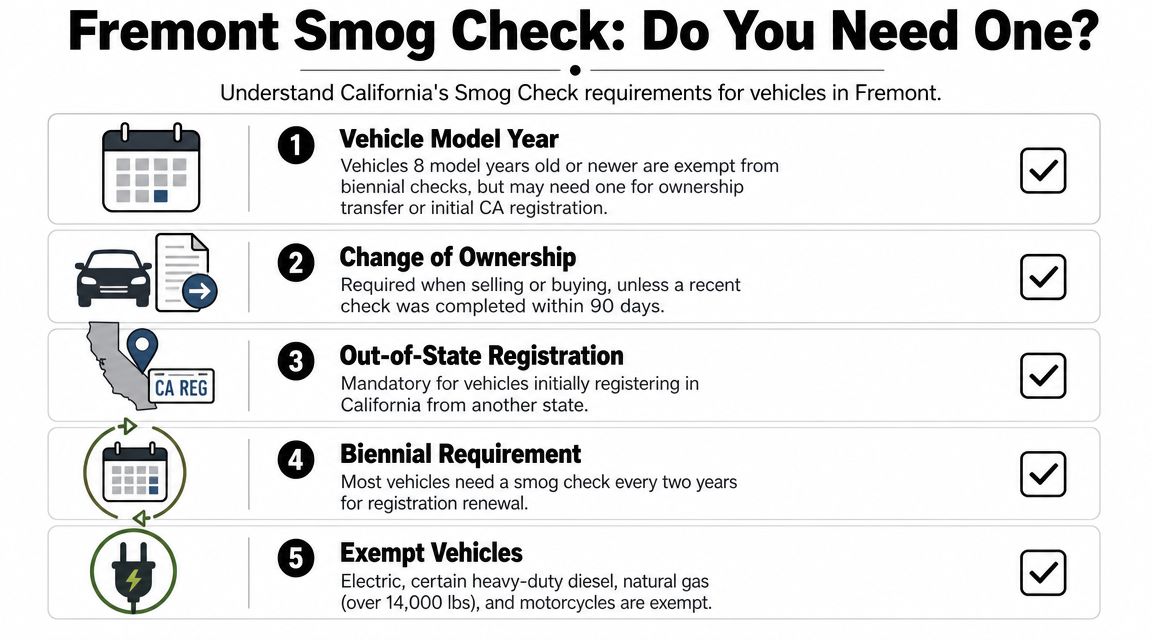
The fastest way to decide
Start with your DMV renewal notice. If it says a smog inspection is required, treat that as your answer. If it says STAR, that detail matters just as much as the test itself because a regular station will not meet the requirement.
Smog checks in Fremont usually come up in a few predictable situations:
- Registration renewal: The most common reason.
- Change of ownership: Many vehicle sales require a current smog certificate.
- First-time California registration: Out-of-state vehicles often need testing before registration can be completed.
- Certain vehicle categories: Diesel, hybrid, RV, and other special cases need closer review.
- Older vehicles with exemption questions: Drivers often guess incorrectly.
A lot of local guides stop at "check if you need a smog." The more useful question is whether your vehicle needs a smog check, and if so, whether the DMV is sending you to a STAR station or allowing a regular one.
Vehicle types that are often exempt
Exemptions depend on the vehicle, fuel type, and model year. According to this Fremont smog eligibility guide, gasoline vehicles from 1975 and older, diesel vehicles from 1997 and older, and all-electric vehicles are exempt from standard smog testing.
That breakdown matters in real life. A 1975 gas vehicle and a 2005 hybrid do not belong in the same bucket, and treating them the same is how people waste an afternoon.
| Vehicle situation | Likely next step |
|---|---|
| Typical DMV renewal vehicle | Check the notice for smog and STAR requirement |
| Gasoline vehicle 1975 or older | Often exempt |
| Diesel vehicle 1997 or older | Often exempt |
| All-electric vehicle | Exempt |
| Motorcycle or trailer | Usually not part of the standard smog program |
If you drive a hybrid, diesel, RV, or an older gasoline vehicle, call ahead before you go. Ask two direct questions. Does this vehicle need a smog check, and if it does, can this station perform the exact test listed on my notice?
That two-minute check can save you the trip, the line, and the repeat visit.
STAR Station vs Regular Smog Check What Is the Difference
A lot of Fremont drivers lose time on smog day for one simple reason. They go to a station that cannot perform the test their DMV notice requires.
A STAR station is a smog station that meets California's higher performance standards. The practical difference is straightforward. If your renewal notice says STAR, you need a STAR-certified station. A regular station cannot complete that requirement, even if it is cheaper or closer.
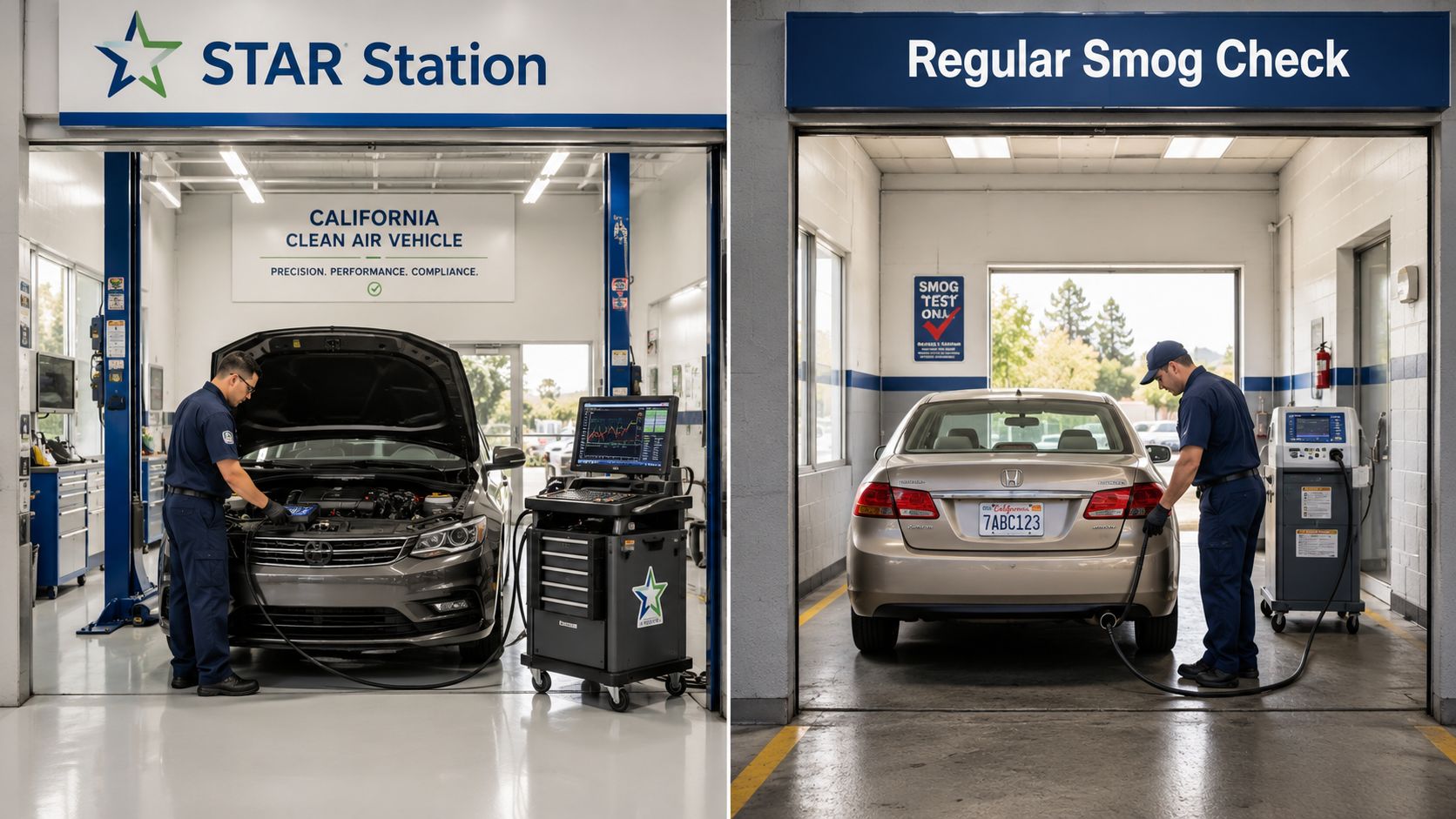
What STAR means
Treat STAR as a DMV routing instruction, not a quality label.
That one detail decides where you can go. It also affects how much time you spend solving the problem. Drivers who miss it often make two trips. First to the wrong shop, then to a STAR station after finding out the hard way.
For many 2000-and-newer vehicles, the test is often faster because it relies on the car's onboard diagnostics system, as explained in this OBD smog testing overview. Older vehicles and less standard cases can take more technician time, especially when the DMV notice requires STAR or the vehicle falls outside the typical commuter-car pattern.
Here's the trade-off:
- Regular station: Works if your paperwork does not require STAR.
- STAR station: Required if the DMV notice says STAR.
- Older, diesel, hybrid, or unusual registration case: Call first and confirm the station handles that exact test type.
Which vehicles and situations should be checked twice
The biggest time-wasters are not always problem cars. They are cars with paperwork or test-type details that drivers assume are standard.
Double-check before leaving home if you have:
- A DMV renewal notice that says STAR
- An older gasoline vehicle
- A diesel
- A hybrid
- An out-of-state registration
- A title transfer situation
If you are in Fremont but open to a nearby East Bay option, one station some drivers use is Speedy Smog in San Leandro, a STAR-certified shop that handles newer vehicles, older vehicles, diesels, and hybrids.
The smart move is simple. Read the notice, confirm whether STAR is required, then call the station and ask if they perform your vehicle's exact test. That two-minute call usually saves more time than price shopping first.
The Smog Check Process From Arrival to DMV Certificate
You pull into a Fremont smog station, hand over your renewal notice, and then find out the shop cannot run your required test. That is the avoidable mistake. Once you are at a station that matches your vehicle and DMV notice, the rest is usually straightforward.
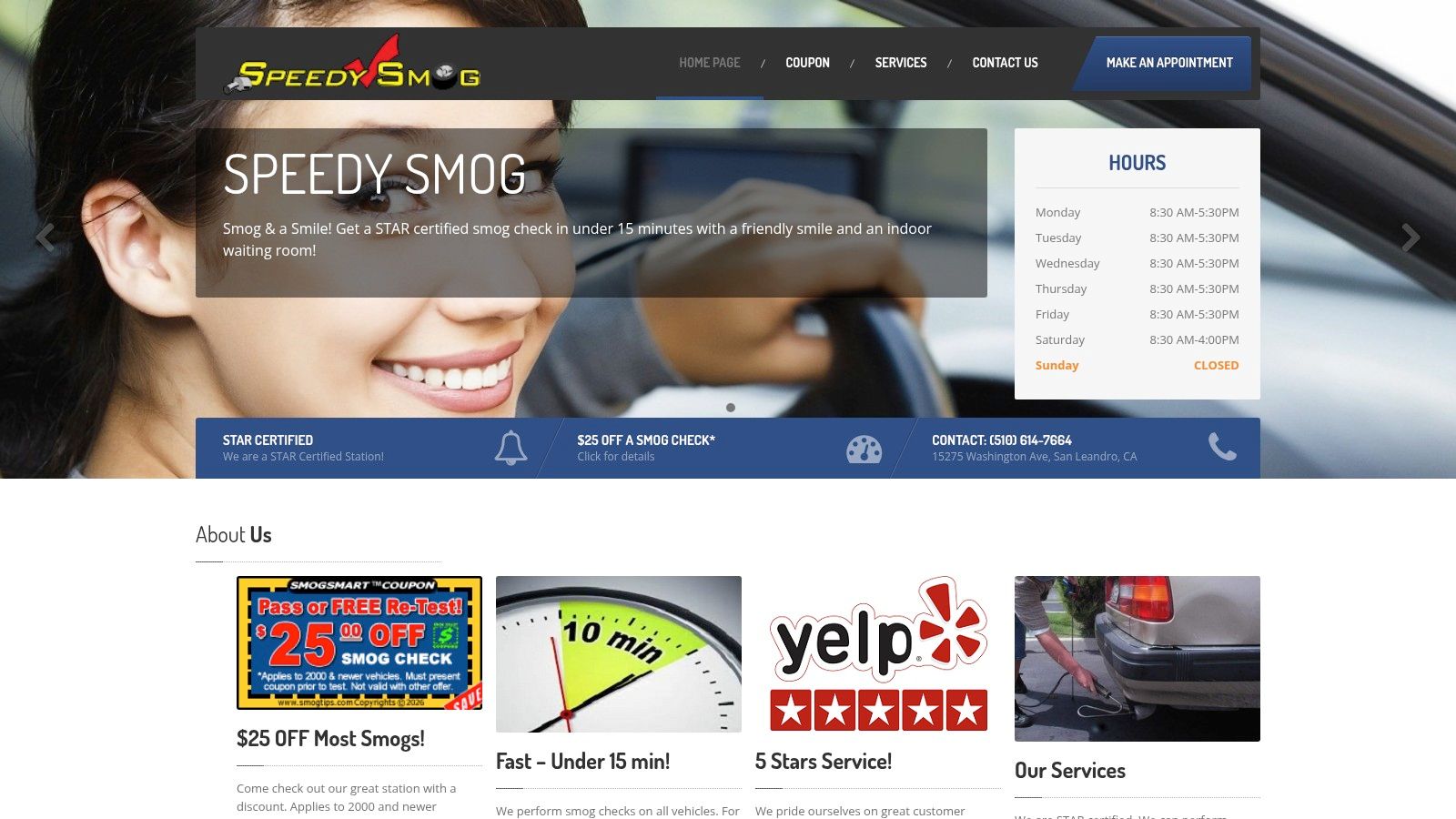
What to bring and what happens first
Bring the documents that help the technician identify the correct test the first time:
- Your DMV renewal notice, especially if it shows a STAR requirement
- Current registration, to confirm the vehicle record
- Driver's license, if the station asks for identification
- Title transfer or out-of-state paperwork, if this is not a routine renewal
At check-in, the station verifies the VIN, plate, model year, and the reason for the inspection. This is the point where STAR versus regular station capability matters in real life. A standard renewal for a newer gasoline car usually moves quickly. A transfer, out-of-state case, diesel, or older vehicle may follow a different inspection path and take longer.
What the technician actually does
For many newer vehicles, the test centers on the onboard diagnostics system. The technician connects the equipment, checks required monitors, confirms the emissions-related systems report correctly, and makes sure there is no disqualifying issue such as an active check engine light.
Older vehicles and less common cases can involve more manual verification and a longer bay time. That is why two drivers can arrive at the same shop at the same time and leave far apart.
A good question at the counter is simple: “Are you set up for my exact vehicle and test type today?”
Here is the usual flow:
Check-in and vehicle verification
The station confirms your paperwork, vehicle details, and the correct inspection category.Smog inspection and testing
The technician runs the test required for that vehicle, not just the test a typical commuter car gets.Results submission
If the vehicle passes, the station submits the result electronically to the state system.
Later in the visit, it helps to know what the electronic side looks like:
What happens after you pass
If the car passes, you usually do not need to carry a paper certificate to DMV. The result is typically transmitted electronically, and that is what clears the way for registration or transfer processing.
Keep your receipt anyway. If there is ever a delay in DMV records updating, the receipt gives you the test date, station information, and vehicle details in one place. That small habit can save a second trip or a long phone call later.
Fremont Smog Check Costs and Tips to Pass the First Time
You save the most money before you pull into the bay.
In Fremont, the posted smog price is only part of the cost. The bigger money saver is choosing a station that can perform your exact test the first time. If your DMV notice requires STAR and you show up at a regular station, the cheap coupon stops being cheap once you add another drive, another wait, and a second appointment.
What Fremont drivers are paying
Fremont shops commonly advertise prices across a fairly wide range, from lower-cost basic tests to higher fees for stations that handle more inspection types or charge extra for certain vehicles. Local listings often show routine inspections for many eligible cars finishing quickly, but that only applies when the vehicle is a straightforward match for that station.
The useful takeaway is simple. Compare price, but verify fit first.
A low advertised rate makes sense for a standard gasoline vehicle that only needs a regular smog check. It is less useful for a STAR-directed renewal, an older vehicle, a diesel, or paperwork situations like a title transfer where the wrong station choice can waste half your afternoon.
How to avoid paying twice
Ask one question before you go: “Can you do my exact vehicle and required test type today?”
That question filters out a lot of bad trips. It matters more than shaving a few dollars off the test fee.
A few habits also improve your odds of passing on the first visit:
- Drive the car long enough to fully warm it up before testing.
- Fix any active check engine light before you book the inspection.
- Do not rush in right after clearing codes or disconnecting the battery.
- Match the shop to the job, especially for STAR notices, diesels, older vehicles, and transfer-related tests.
- Take care of rough running, hard starts, or obvious maintenance problems before your registration deadline gets close.
One practical trade-off comes up all the time. A bargain station can be the right choice for a newer car with a normal renewal and no warning lights. For anything less routine, paying a little more for the right station is often cheaper than repeating the process.
The best first-time pass strategy is boring but effective: bring a warmed-up car, show up with no warning lights, and confirm the station can perform your required test before you leave home.
That STAR versus regular station distinction is where Fremont drivers lose the most time. Get that part right, and the rest of the visit is usually straightforward.
What to Do If Your Vehicle Fails the Smog Check
A failed test is frustrating, but it's not unusual, and it doesn't mean you're stuck. The worst move is guessing at the repair.
Read the failure paperwork first
Start with the inspection report. It tells you why the vehicle didn't pass and gives the repair shop a place to begin. Don't treat it like a generic rejection slip. It's your roadmap.
If the failure reason isn't obvious to you, ask a licensed repair technician to explain it in plain English. You want the cause, not just the symptom.
Fix the cause, then retest
After a failure, the normal path is straightforward:
- Get the issue diagnosed
- Have the emissions-related problem repaired
- Return for a retest
What doesn't work is chasing random parts, clearing codes to try again, or bouncing from shop to shop without a diagnosis. That usually burns more money than a proper repair plan.
If repair cost is the main concern, check whether California's Consumer Assistance Program (CAP) can help with emissions-related repairs for eligible vehicle owners. The key word is eligible, so verify current program requirements before making assumptions.
If your registration deadline is close, move quickly but don't rush into the wrong repair. A focused diagnosis is almost always cheaper than replacing parts based on hunches.
If your DMV notice requires STAR, or your vehicle falls into an older, diesel, hybrid, title-transfer, or out-of-state category, Speedy Smog is one East Bay option for a compliant inspection without the guesswork about station type.
Most vehicles in California need a smog check every two years for registration renewal, and Fremont prices commonly range from $55 to $90. If your DMV notice says smog certification is required, the fastest way to avoid a wasted trip is to confirm whether your car needs a regular station, a STAR station, or no test at all before you go.
That's usually the problem. Not finding a shop. Finding the right shop for your vehicle, your DMV notice, and your test type.
In Fremont, you'll see plenty of stations advertising fast service, coupons, and “all vehicles.” That sounds helpful until you show up with a title transfer, an older gasoline car, a diesel, or a renewal notice that specifically requires STAR. Then speed matters less than eligibility. The good news is that the process is simple once you sort those basics out.
Table of Contents
- Your Fremont Smog Check Roadmap for 2026
- Do You Actually Need a Smog Check in Fremont
- STAR Station vs Regular Smog Check What Is the Difference
- The Smog Check Process From Arrival to DMV Certificate
- Fremont Smog Check Costs and Tips to Pass the First Time
- What to Do If Your Vehicle Fails the Smog Check
Your Fremont Smog Check Roadmap for 2026
Your registration notice lands in the mailbox, you spot “smog certification required,” and the first real question is not price. It is whether you need a STAR station or a regular smog station. Get that wrong, and you waste a trip before anyone even plugs into the car.
In Fremont, the process goes smoothly when you sort out three things first. Confirm that your vehicle needs a test, confirm whether DMV requires a STAR inspection, and confirm what kind of testing your vehicle is likely to get based on its age and type. That last part matters more than many local guides admit. A late-model gasoline car is usually straightforward. An older vehicle, diesel, hybrid, out-of-state registration, or transfer-related test can change what the station needs to do.
Start with the paperwork, not the coupon.
What matters most before you leave
Use this order so you do not lose time:
- Read the DMV notice carefully. If it calls for STAR, go to a STAR-certified station.
- Match the shop to the vehicle. Some Fremont stations are set up for quick routine tests. Others are better for older or less common cases.
- Budget time based on the car you have. Newer cars are often faster to process. Older cars and special cases can take longer.
Practical rule: A low advertised price does not help if the station cannot perform the test your registration requires.
California runs smog checks through a statewide system of licensed stations and technicians. The Bureau of Automotive Repair's smog program reporting shows how closely the state tracks inspections, outcomes, and station activity. For Fremont drivers, the useful takeaway is simple. There are plenty of shops, but they do not all handle the same mix of vehicles or DMV requirements.
That is the part many drivers miss.
A regular station may be fine for one car and wrong for the next. A STAR station can handle vehicles that DMV has flagged for STAR, and some drivers only find that out after showing up at a non-STAR shop. If you remember one thing before booking a Fremont smog check, remember this: the right station depends on your notice and your vehicle, not just the closest sign on Fremont Boulevard.
Do You Actually Need a Smog Check in Fremont
You buy the tag, head to a smog shop, and then find out your car was exempt or your DMV notice required a different kind of station. That is a common Fremont mistake, and it is easy to avoid if you check the paperwork first.
The fastest way to decide
Start with your DMV renewal notice. If it says a smog inspection is required, treat that as your answer. If it says STAR, that detail matters just as much as the test itself because a regular station will not meet the requirement.
Smog checks in Fremont usually come up in a few predictable situations:
- Registration renewal: The most common reason.
- Change of ownership: Many vehicle sales require a current smog certificate.
- First-time California registration: Out-of-state vehicles often need testing before registration can be completed.
- Certain vehicle categories: Diesel, hybrid, RV, and other special cases need closer review.
- Older vehicles with exemption questions: Drivers often guess incorrectly.
A lot of local guides stop at "check if you need a smog." The more useful question is whether your vehicle needs a smog check, and if so, whether the DMV is sending you to a STAR station or allowing a regular one.
Vehicle types that are often exempt
Exemptions depend on the vehicle, fuel type, and model year. According to this Fremont smog eligibility guide, gasoline vehicles from 1975 and older, diesel vehicles from 1997 and older, and all-electric vehicles are exempt from standard smog testing.
That breakdown matters in real life. A 1975 gas vehicle and a 2005 hybrid do not belong in the same bucket, and treating them the same is how people waste an afternoon.
| Vehicle situation | Likely next step |
|---|---|
| Typical DMV renewal vehicle | Check the notice for smog and STAR requirement |
| Gasoline vehicle 1975 or older | Often exempt |
| Diesel vehicle 1997 or older | Often exempt |
| All-electric vehicle | Exempt |
| Motorcycle or trailer | Usually not part of the standard smog program |
If you drive a hybrid, diesel, RV, or an older gasoline vehicle, call ahead before you go. Ask two direct questions. Does this vehicle need a smog check, and if it does, can this station perform the exact test listed on my notice?
That two-minute check can save you the trip, the line, and the repeat visit.
STAR Station vs Regular Smog Check What Is the Difference
A lot of Fremont drivers lose time on smog day for one simple reason. They go to a station that cannot perform the test their DMV notice requires.
A STAR station is a smog station that meets California's higher performance standards. The practical difference is straightforward. If your renewal notice says STAR, you need a STAR-certified station. A regular station cannot complete that requirement, even if it is cheaper or closer.
What STAR means
Treat STAR as a DMV routing instruction, not a quality label.
That one detail decides where you can go. It also affects how much time you spend solving the problem. Drivers who miss it often make two trips. First to the wrong shop, then to a STAR station after finding out the hard way.
For many 2000-and-newer vehicles, the test is often faster because it relies on the car's onboard diagnostics system, as explained in this OBD smog testing overview. Older vehicles and less standard cases can take more technician time, especially when the DMV notice requires STAR or the vehicle falls outside the typical commuter-car pattern.
Here's the trade-off:
- Regular station: Works if your paperwork does not require STAR.
- STAR station: Required if the DMV notice says STAR.
- Older, diesel, hybrid, or unusual registration case: Call first and confirm the station handles that exact test type.
Which vehicles and situations should be checked twice
The biggest time-wasters are not always problem cars. They are cars with paperwork or test-type details that drivers assume are standard.
Double-check before leaving home if you have:
- A DMV renewal notice that says STAR
- An older gasoline vehicle
- A diesel
- A hybrid
- An out-of-state registration
- A title transfer situation
If you are in Fremont but open to a nearby East Bay option, one station some drivers use is Speedy Smog in San Leandro, a STAR-certified shop that handles newer vehicles, older vehicles, diesels, and hybrids.
The smart move is simple. Read the notice, confirm whether STAR is required, then call the station and ask if they perform your vehicle's exact test. That two-minute call usually saves more time than price shopping first.
The Smog Check Process From Arrival to DMV Certificate
You pull into a Fremont smog station, hand over your renewal notice, and then find out the shop cannot run your required test. That is the avoidable mistake. Once you are at a station that matches your vehicle and DMV notice, the rest is usually straightforward.
What to bring and what happens first
Bring the documents that help the technician identify the correct test the first time:
- Your DMV renewal notice, especially if it shows a STAR requirement
- Current registration, to confirm the vehicle record
- Driver's license, if the station asks for identification
- Title transfer or out-of-state paperwork, if this is not a routine renewal
At check-in, the station verifies the VIN, plate, model year, and the reason for the inspection. This is the point where STAR versus regular station capability matters in real life. A standard renewal for a newer gasoline car usually moves quickly. A transfer, out-of-state case, diesel, or older vehicle may follow a different inspection path and take longer.
What the technician actually does
For many newer vehicles, the test centers on the onboard diagnostics system. The technician connects the equipment, checks required monitors, confirms the emissions-related systems report correctly, and makes sure there is no disqualifying issue such as an active check engine light.
Older vehicles and less common cases can involve more manual verification and a longer bay time. That is why two drivers can arrive at the same shop at the same time and leave far apart.
A good question at the counter is simple: “Are you set up for my exact vehicle and test type today?”
Here is the usual flow:
Check-in and vehicle verification
The station confirms your paperwork, vehicle details, and the correct inspection category.Smog inspection and testing
The technician runs the test required for that vehicle, not just the test a typical commuter car gets.Results submission
If the vehicle passes, the station submits the result electronically to the state system.
Later in the visit, it helps to know what the electronic side looks like:
What happens after you pass
If the car passes, you usually do not need to carry a paper certificate to DMV. The result is typically transmitted electronically, and that is what clears the way for registration or transfer processing.
Keep your receipt anyway. If there is ever a delay in DMV records updating, the receipt gives you the test date, station information, and vehicle details in one place. That small habit can save a second trip or a long phone call later.
Fremont Smog Check Costs and Tips to Pass the First Time
You save the most money before you pull into the bay.
In Fremont, the posted smog price is only part of the cost. The bigger money saver is choosing a station that can perform your exact test the first time. If your DMV notice requires STAR and you show up at a regular station, the cheap coupon stops being cheap once you add another drive, another wait, and a second appointment.
What Fremont drivers are paying
Fremont shops commonly advertise prices across a fairly wide range, from lower-cost basic tests to higher fees for stations that handle more inspection types or charge extra for certain vehicles. Local listings often show routine inspections for many eligible cars finishing quickly, but that only applies when the vehicle is a straightforward match for that station.
The useful takeaway is simple. Compare price, but verify fit first.
A low advertised rate makes sense for a standard gasoline vehicle that only needs a regular smog check. It is less useful for a STAR-directed renewal, an older vehicle, a diesel, or paperwork situations like a title transfer where the wrong station choice can waste half your afternoon.
How to avoid paying twice
Ask one question before you go: “Can you do my exact vehicle and required test type today?”
That question filters out a lot of bad trips. It matters more than shaving a few dollars off the test fee.
A few habits also improve your odds of passing on the first visit:
- Drive the car long enough to fully warm it up before testing.
- Fix any active check engine light before you book the inspection.
- Do not rush in right after clearing codes or disconnecting the battery.
- Match the shop to the job, especially for STAR notices, diesels, older vehicles, and transfer-related tests.
- Take care of rough running, hard starts, or obvious maintenance problems before your registration deadline gets close.
One practical trade-off comes up all the time. A bargain station can be the right choice for a newer car with a normal renewal and no warning lights. For anything less routine, paying a little more for the right station is often cheaper than repeating the process.
The best first-time pass strategy is boring but effective: bring a warmed-up car, show up with no warning lights, and confirm the station can perform your required test before you leave home.
That STAR versus regular station distinction is where Fremont drivers lose the most time. Get that part right, and the rest of the visit is usually straightforward.
What to Do If Your Vehicle Fails the Smog Check
A failed test is frustrating, but it's not unusual, and it doesn't mean you're stuck. The worst move is guessing at the repair.
Read the failure paperwork first
Start with the inspection report. It tells you why the vehicle didn't pass and gives the repair shop a place to begin. Don't treat it like a generic rejection slip. It's your roadmap.
If the failure reason isn't obvious to you, ask a licensed repair technician to explain it in plain English. You want the cause, not just the symptom.
Fix the cause, then retest
After a failure, the normal path is straightforward:
- Get the issue diagnosed
- Have the emissions-related problem repaired
- Return for a retest
What doesn't work is chasing random parts, clearing codes to try again, or bouncing from shop to shop without a diagnosis. That usually burns more money than a proper repair plan.
If repair cost is the main concern, check whether California's Consumer Assistance Program (CAP) can help with emissions-related repairs for eligible vehicle owners. The key word is eligible, so verify current program requirements before making assumptions.
If your registration deadline is close, move quickly but don't rush into the wrong repair. A focused diagnosis is almost always cheaper than replacing parts based on hunches.
If your DMV notice requires STAR, or your vehicle falls into an older, diesel, hybrid, title-transfer, or out-of-state category, Speedy Smog is one East Bay option for a compliant inspection without the guesswork about station type.