
Gross Polluter Smog Check: California Repair Guide 2026
You've just left a California smog station, and the technician has handed you a failing report marked gross polluter. Your first thoughts are usually the same: Can I still drive, will the DMV stop my registration, and how much will the repair cost?
Take a breath. This designation is serious, but it isn't a dead end. California gives you a defined path through diagnosis, repair, assistance or retirement decisions, and restricted retesting. The mistake I see most often is treating the result like an ordinary smog failure and sending the vehicle to the first available station.
Table of Contents
- You Got the Gross Polluter Notice Now What
- What Makes a Vehicle a Gross Polluter in California
- How the Gross Polluter Designation Affects Your Registration
- Diagnosing and Repairing Excessive Emissions
- Repair Assistance Programs and Appeal Options
- Choosing a STAR Certified Station for Your Retest
- Your Complete Action Plan From Gross Polluter to Certified
You Got the Gross Polluter Notice Now What
The driver I'll call Maria came into an East Bay shop after receiving a gross polluter result on her aging sedan. She had expected a routine inspection. Instead, she had a failed certificate, a registration deadline approaching, and no clear explanation beyond the two words that scared her.
Her first job wasn't authorizing an expensive repair. It was gathering the paperwork. The report identifies what the vehicle failed, whether the problem came from tailpipe emissions or the onboard diagnostic system, and whether the station directed the vehicle into the gross-polluter process. Keep that document, because the next technician needs the actual test information rather than a verbal summary.
Practical rule: Don't replace parts until someone has explained what the test result points to.
A gross polluter designation doesn't automatically tell you which component failed. It tells you that the emissions result crossed a much stricter regulatory category. The repair may involve an inexpensive ignition or vacuum problem, or it may involve a catalytic converter or another major emissions component. Guessing makes the situation more expensive.
Your immediate plan should be straightforward:
- Read the result carefully: Confirm the vehicle identification, failure codes, measured emissions, and instructions for the next test.
- Check your registration status: A failed or missing certification can prevent the DMV from completing the registration process.
- Avoid casual retesting: Before booking another inspection, ask whether the vehicle must return through a STAR station or another authorized facility.
- Get a diagnostic opinion: Choose a technician who will test the cause instead of selling a standard package of parts.
- Ask about assistance early: Repair assistance may affect which repairs you authorize and how you pay for them.
The California Bureau of Automotive Repair's official Smog Check reference guide explains the special certification rules that apply after a vehicle is identified as a gross polluter. Your car may still be usable for necessary purposes depending on its registration and legal status, but the smog result itself doesn't give you permission to ignore registration requirements. If you're unsure, confirm your status with the DMV or a qualified professional before driving routinely.
What Makes a Vehicle a Gross Polluter in California
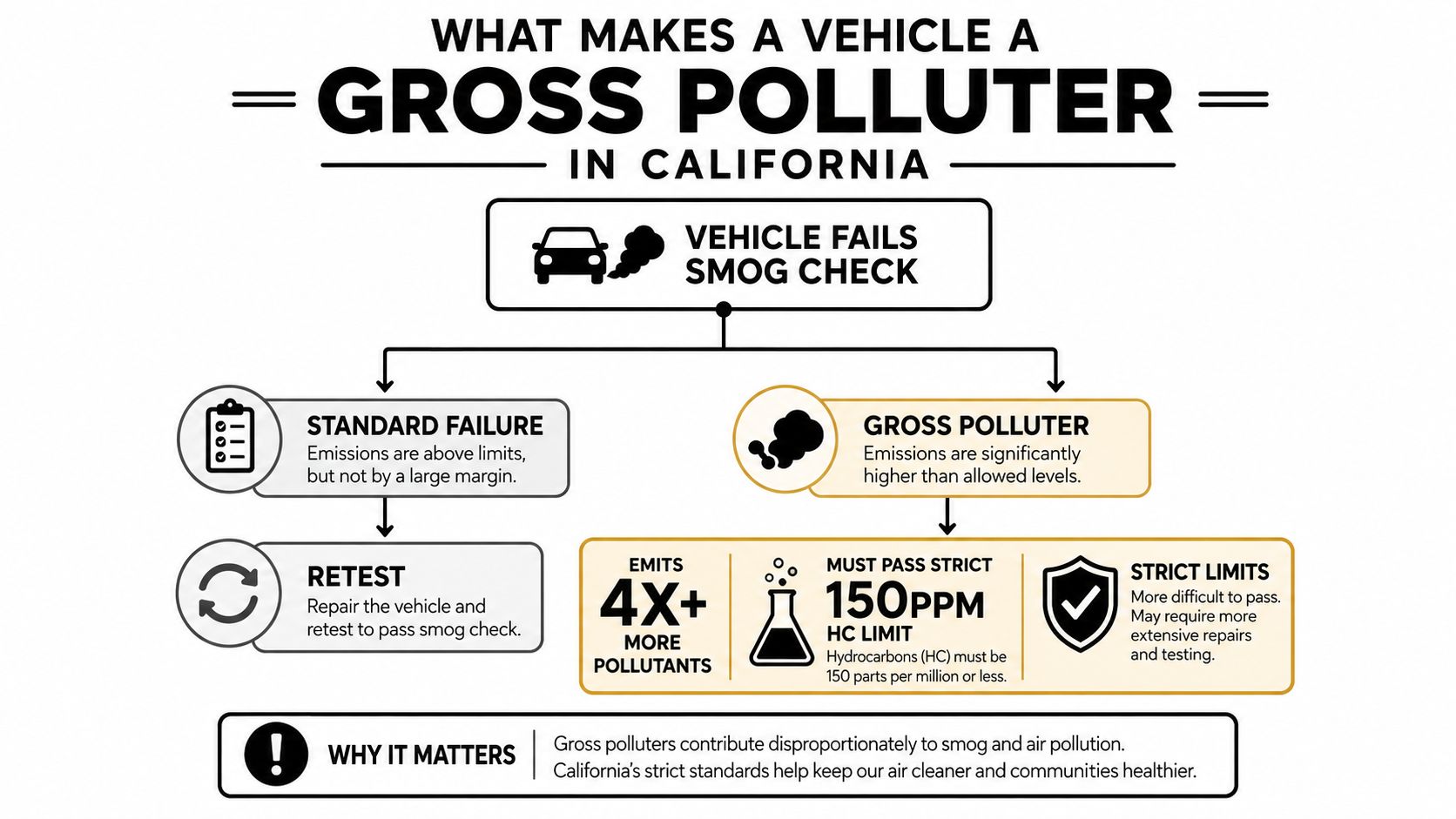
A failed smog test does not automatically make a vehicle a gross polluter. The distinction matters because the repair path, testing requirements, and potential assistance can change after the higher designation.
California classifies a vehicle as a gross polluter when its tailpipe emissions exceed the gross-polluter standards in California Code of Regulations section 3340.42. The BAR reference guide linked earlier explains that the label depends on the measured emissions compared with the limits for that vehicle, not just on receiving a failed result.
A regular failure means the vehicle missed an applicable test requirement. A gross polluter result means it crossed a separate, more severe emissions threshold. Treat those results differently. Do not approve repairs from the word “failed” alone. Ask the technician to show the measured emissions, the applicable limits, and the test data supporting the designation.
Why the vehicle's details matter
The applicable limit depends on the vehicle's specific make, model, and model year. Two vehicles can produce the same measured emissions and receive different results because their standards differ. Give the technician the vehicle identification and complete test report before accepting an estimate.
Historical research on California's gross-polluter definition described eligibility as at least twice the allowed emissions level for the vehicle's specific make, model, and model year. The distinction between an ordinary failure and the separate gross-polluter threshold is documented in this University of California research record.
Use that historical description for context, not as the current testing rule. The current test report and California requirements control. In practice, the designation signals a more severe emissions problem, so insist on diagnosis before replacing parts. Check ignition, fuel, vacuum, oxygen-sensor, and catalytic-converter systems in a logical order, based on the test results. That approach gives you a better chance of finding a repairable cause before paying for major components.
How the Gross Polluter Designation Affects Your Registration
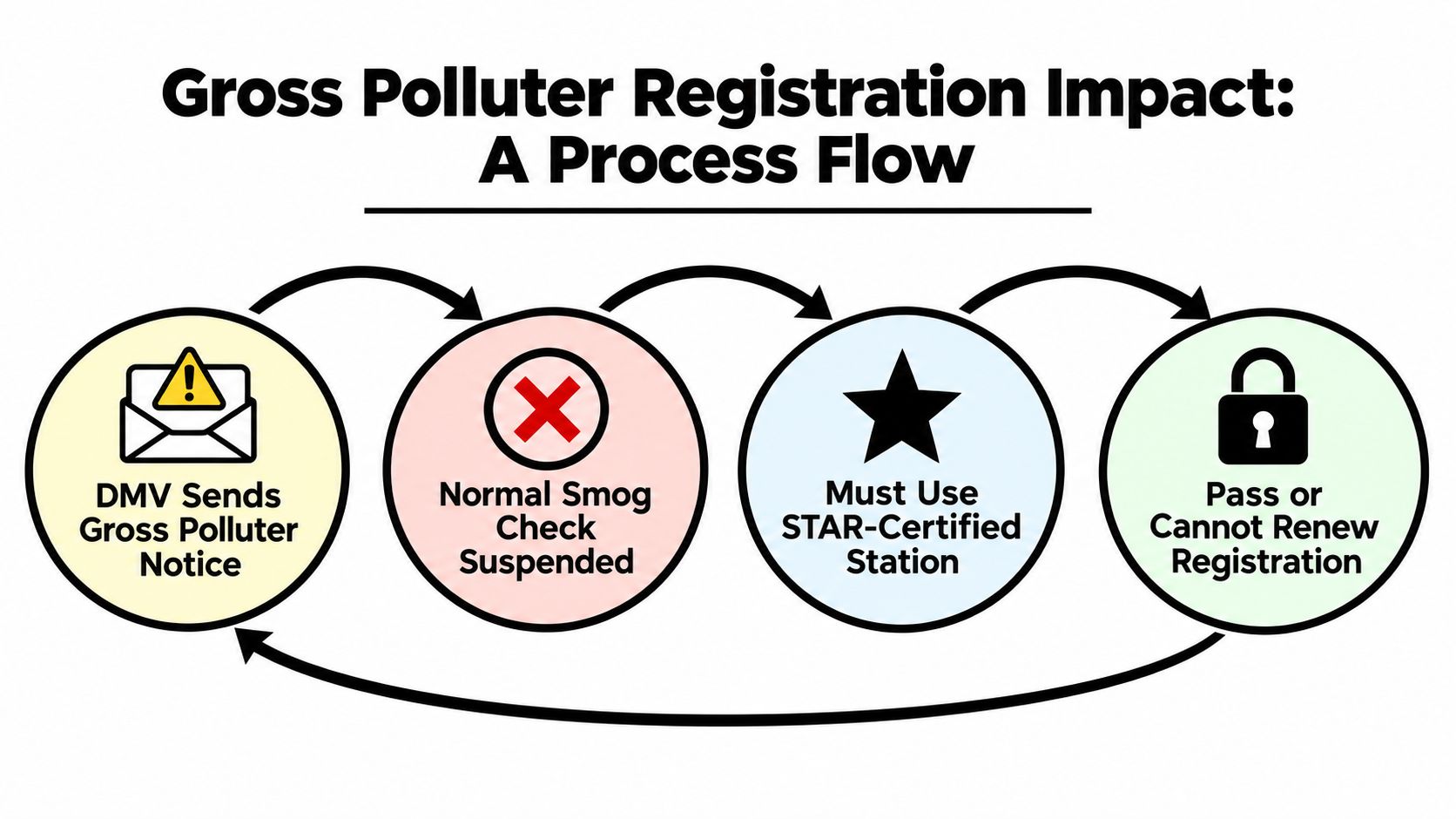
A gross-polluter designation can stop the registration process until the vehicle earns a passing smog certificate. The next step is choosing a facility authorized to handle the required inspection, then confirming that facility before paying for repairs. The current BAR reference guide outlines the applicable testing pathway.
The available options include:
- STAR test-only station: Performs the inspection but does not repair the vehicle.
- STAR test-and-repair station: Can diagnose or repair the vehicle and complete the authorized inspection.
- Referee facility: May be required if the vehicle is directed to the Referee process or needs specialized review.
Choose the facility before authorizing repairs
Call first. Give the station the exact designation, ask whether it handles gross-polluter inspections, and confirm whether it can perform the official certification after repairs. A regular smog station may offer general information, but the wrong facility can leave you paying for another visit and test.
Your existing repair relationship should guide the choice. A test-only station can provide an independent result if you already have a trusted mechanic. A test-and-repair station can keep diagnosis, repairs, and retesting in one workflow. Either way, require a written explanation of the failed test before approving parts.
Protect the registration timeline
The designation does not extend the DMV registration deadline. If the DMV requires a passing certificate and you have not obtained one, registration can remain incomplete. A smog station cannot waive penalties or resolve a separate registration issue.
Before authorizing work, have the technician document:
- The findings on the original test report.
- Repairs supported by diagnostic results.
- Whether the station performs the official retest.
- The documents provided after a passing result.
- Whether a Referee appointment is required.
This record keeps the repair and certification steps connected. It also prevents paying for repairs at one location, then learning that the final inspection must be completed elsewhere.
Diagnosing and Repairing Excessive Emissions
Gross-polluter repairs should begin with evidence. A scan tool, visual inspection, emissions readings, fuel-trim data, ignition checks, and exhaust-system testing can help a technician separate the cause from the symptom. A check engine light or stored code can point toward a system, but it doesn't automatically identify the failed part.
The likely suspects depend on the test pattern and vehicle condition. A worn ignition component can leave fuel partially unburned. A vacuum leak can disturb the air-fuel mixture. A failing oxygen sensor can send inaccurate feedback to the engine computer. A leaking or stuck fuel injector can add too much fuel. A damaged catalytic converter may fail to process pollutants after the engine has already burned the mixture.
What a competent diagnostic visit should include
A technician should explain what was tested and why the recommended repair follows from those results. Ask for scan-tool codes, monitor status, fuel-trim observations, ignition findings, and any evidence from the exhaust system. If the recommendation is a catalytic converter, ask what caused the original failure and whether that cause has been addressed.
learning how to read OBD codes helps. Codes are clues, not verdicts. Replacing an oxygen sensor because the code mentions oxygen-sensor performance can waste money if the actual issue is a vacuum leak, wiring problem, exhaust leak, or mixture problem.
A temporary code reset isn't a repair. It only removes information the next technician needs.
Decide whether to repair or seek another opinion
Get a written estimate that separates diagnostic work, parts, labor, and retest-related services. If the estimate is large, ask for the test results supporting each major component. A second opinion makes sense when the first shop recommends several expensive parts without showing how it reached that conclusion.
Avoid shortcuts such as clearing codes immediately before testing, disconnecting the battery, or installing an unverified used emissions component. Those actions can hide the problem temporarily, leave monitors incomplete, or create another failure. The goal is a stable repair that brings emissions back within the applicable limits, not a vehicle that merely looks clean for a brief inspection.
Repair Assistance Programs and Appeal Options
The right decision depends on the vehicle's condition, your finances, and the quality of the original test information. Don't commit automatically to a major repair, and don't send a repairable car to a dismantler without checking assistance options first.
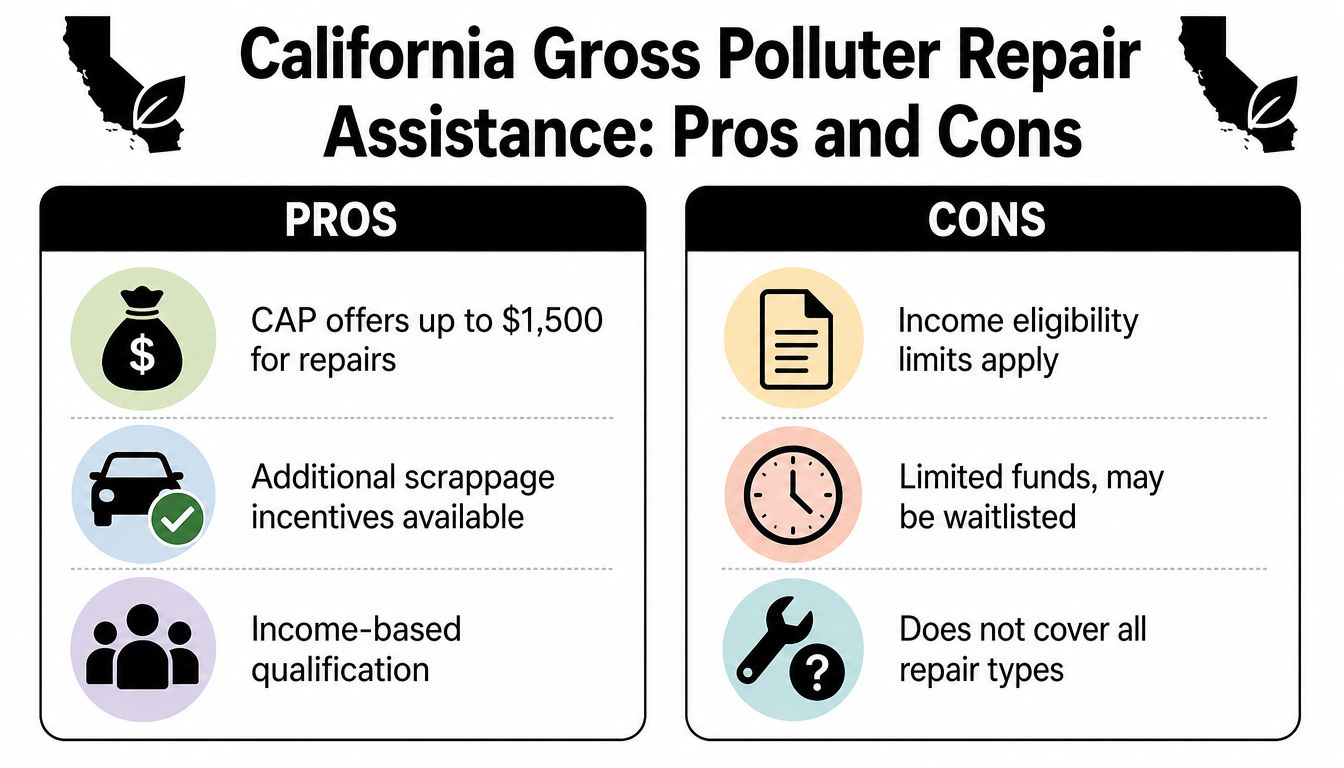
California's Consumer Assistance Program, commonly called CAP, can help qualifying owners with emissions-related repair costs. The available support depends on program rules, eligibility, funding, and the vehicle's documentation. Start with the Smog Check repair assistance information and verify current requirements directly through the Bureau of Automotive Repair before authorizing work.
Compare the three practical paths
| Path | Makes sense when | First move |
|---|---|---|
| Repair with assistance | The vehicle is worth keeping and you meet program requirements | Confirm eligibility before repairs begin |
| Retire the vehicle | The repair cost and vehicle condition don't justify continued ownership | Check retirement requirements and available incentives |
| Challenge the result | The test information appears inconsistent or the designation may be incorrect | Preserve the report and request guidance through BAR or the Referee process |
Income eligibility limits and program funding can change. Some repairs may not qualify, and approval isn't automatic. Ask whether the program requires authorization before work starts, because completing repairs first can affect your options.
If you believe the designation was issued in error, don't argue only from how the car feels or drives. Gather the failed inspection report, repair records, maintenance history, and any independent diagnostic findings. Contact the Bureau of Automotive Repair or ask whether a Referee evaluation applies. A challenge needs documentation, patience, and a clear technical reason, not just a disagreement with the result.
Choosing a STAR Certified Station for Your Retest
After repairs, choose the retest location before you finish the repair plan. A STAR-certified station is the practical choice when the vehicle's designation requires STAR testing, because California restricts gross-polluter certification to specified STAR facilities or an applicable Referee facility.
A STAR test-only station can be useful when you want the final inspection separated from the repair shop. A STAR test-and-repair station can be more convenient when the same team will verify repairs and complete the retest. Ask which service the vehicle requires, and don't assume a standard smog appointment will satisfy the DMV.
Prepare the vehicle properly
The check engine light should be off for the right reason, not because someone erased the code. If the battery was disconnected or codes were cleared, the vehicle may need normal driving before its emissions monitors complete. Your technician should tell you whether the monitors are ready and whether another drive cycle is needed.
Arrive with the engine fully warmed through ordinary driving. Check the fuel cap, address obvious warning lights, and bring the failed report plus repair invoices. Don't make last-minute modifications that haven't been tested.
For East Bay owners, Speedy Smog in San Leandro, located at 15275 Washington Ave, is one STAR-certified option. The shop handles inspections for newer and older vehicles, diesels, and hybrids, but call first to confirm the correct gross-polluter workflow and whether your vehicle needs a Referee appointment instead.
The best station is the one that understands the designation, explains the result, and gives you a clear answer about what happens next. That standard matters more than choosing a shop based only on proximity.
Your Complete Action Plan From Gross Polluter to Certified
Use this sequence as your working checklist. Keep every report, estimate, invoice, and approval document in one folder.
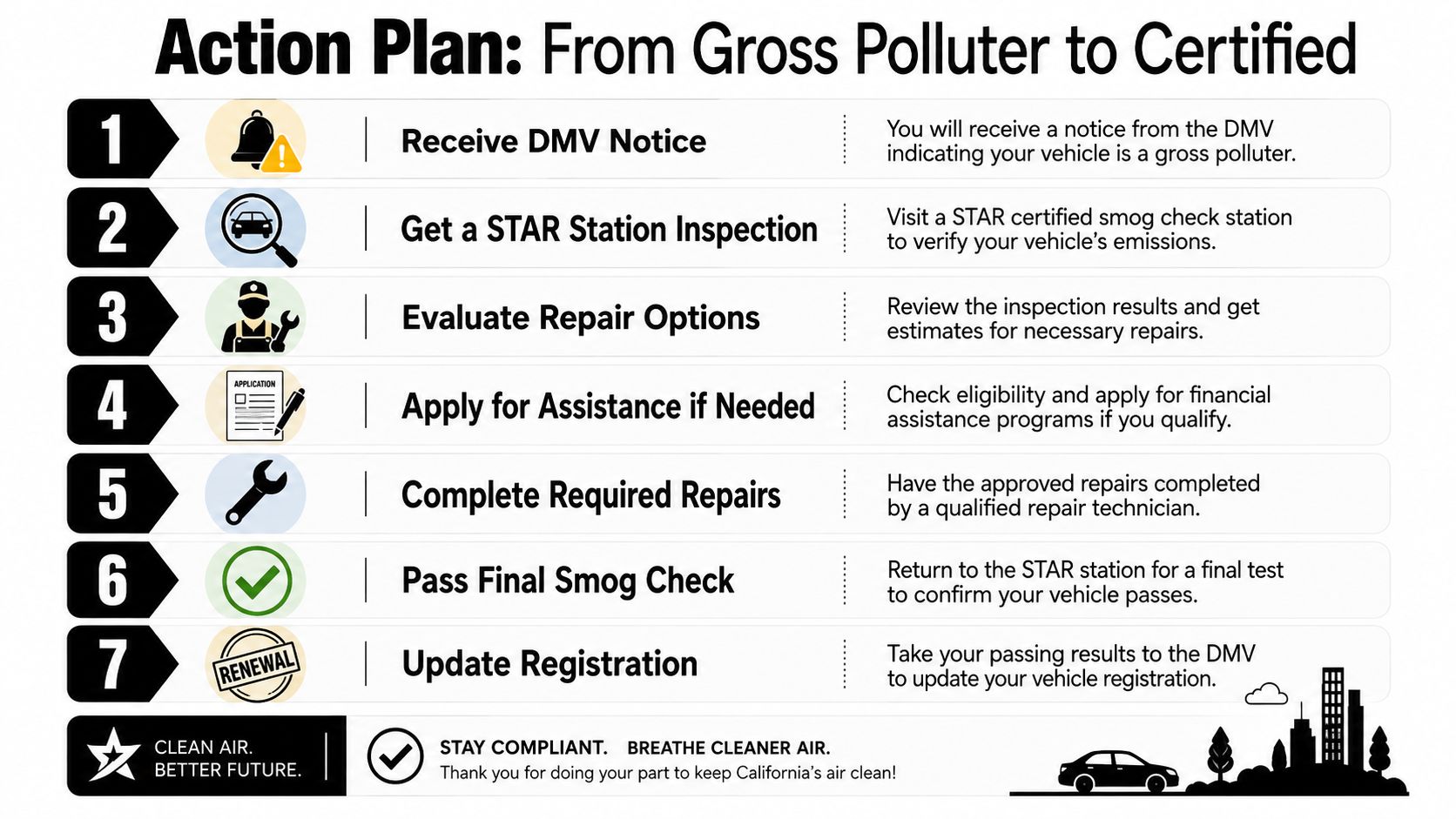
- Save the failed report: Record the designation, codes, measured results, and registration deadline.
- Confirm the testing path: Ask a STAR station or BAR whether your vehicle needs test-only, test-and-repair, or Referee handling.
- Get a documented diagnosis: Require test results before approving major emissions parts.
- Choose the financial path: Compare repair, CAP assistance, retirement, and appeal based on the vehicle's condition.
- Complete root-cause repairs: Fix the underlying engine or emissions problem, not only the stored code.
- Prepare for retesting: Confirm monitors are ready, the warning light is properly off, and the engine is warm.
- Submit the passing certification: Follow the DMV instructions and retain the certificate and repair records.
Don't assume you can drive normally while waiting. Check your registration and any DMV restrictions, and ask the appropriate agency or qualified professional about lawful use. If the retest fails again, stop authorizing random parts. Compare the new report with the original, identify what changed, and return to diagnosis or the Referee process if the results conflict.
The fastest route is usually the most organized route: correct station, accurate diagnosis, approved assistance, proper repair, then retest.
Speedy Smog provides STAR-certified smog inspections in San Leandro for gross-polluter-related workflows, along with testing for newer and older vehicles, diesels, and hybrids. Bring your failed report and ask the team to clarify whether you need a normal retest, a repair pathway, or Referee guidance, then visit Speedy Smog to schedule the next step.