Most Alameda drivers do need a smog check, but for many cars it's a quick 10 to 15 minute stop and the usual local price runs about $39 to $70 before coupons. If you're holding a DMV renewal notice right now, the good news is this is usually a simple errand, not an all-day project.
That moment is familiar. You open the renewal notice, spot the smog requirement, and immediately wonder three things: Do I really need it, how long will it take, and how do I avoid paying twice because something small went wrong? Around Alameda and the East Bay, those are the questions that matter most.
The practical answer is that an Alameda smog check is straightforward once you know the few details that affect your visit. The biggest time-wasters usually aren't the inspection itself. They're showing up at the wrong type of station, coming in too soon after a battery disconnect, or not realizing your DMV notice calls for a STAR station.
This guide is written the way a technician would explain it across the counter. Clear rules, no jargon, and actual trade-offs that help you save time and money.
Table of Contents
- Your Fast Pass to an Alameda Smog Check
- Smog Check Requirements for Alameda Drivers
- Understanding STAR Certified Smog Stations
- What to Expect During Your 15-Minute Smog Test
- How to Avoid a Failed Smog Check
- Choosing a Fast and Affordable Smog Station
Your Fast Pass to an Alameda Smog Check
You open the renewal notice after work, glance at the deadline, and assume half your day is gone. In Alameda, it usually does not work that way. At a busy local shop like Speedy Smog, a straightforward test on a newer, healthy vehicle is often a quick stop if you arrive prepared.
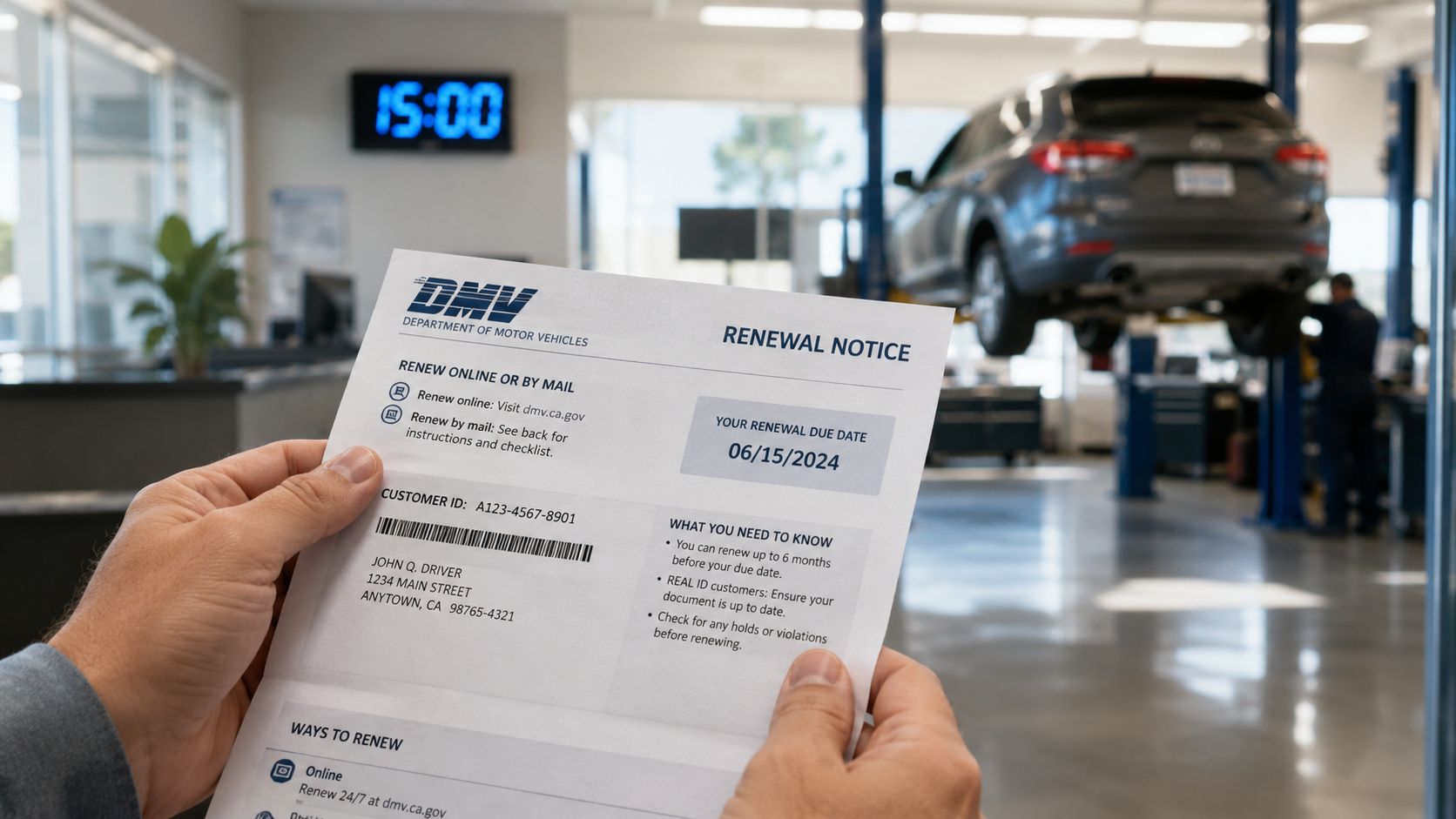
The inspection itself is rarely the part that slows people down. What causes delays is coming in with the wrong station type, a cold engine, missing paperwork, or a car that recently had the battery disconnected. Around Alameda, Oakland, and San Leandro, I see the same pattern all the time. Drivers expect the test to be complicated, but the expensive mistakes usually happen before the car even reaches the bay.
A smoother visit starts with a little prep. Drive the car normally before you come in so it is fully warmed up. Bring your registration or DMV notice. Check whether the notice calls for a standard test or a STAR station, because showing up at the wrong place wastes more time than the inspection ever will.
Practical rule: If your car is running well and no warning lights are on, your best time-saver is simple preparation before you arrive.
The local advantage matters here. A station that knows Alameda traffic patterns, DMV timing, and the common failure points on East Bay commuter cars can usually spot problems early and keep a routine smog check from turning into a second trip.
Smog Check Requirements for Alameda Drivers
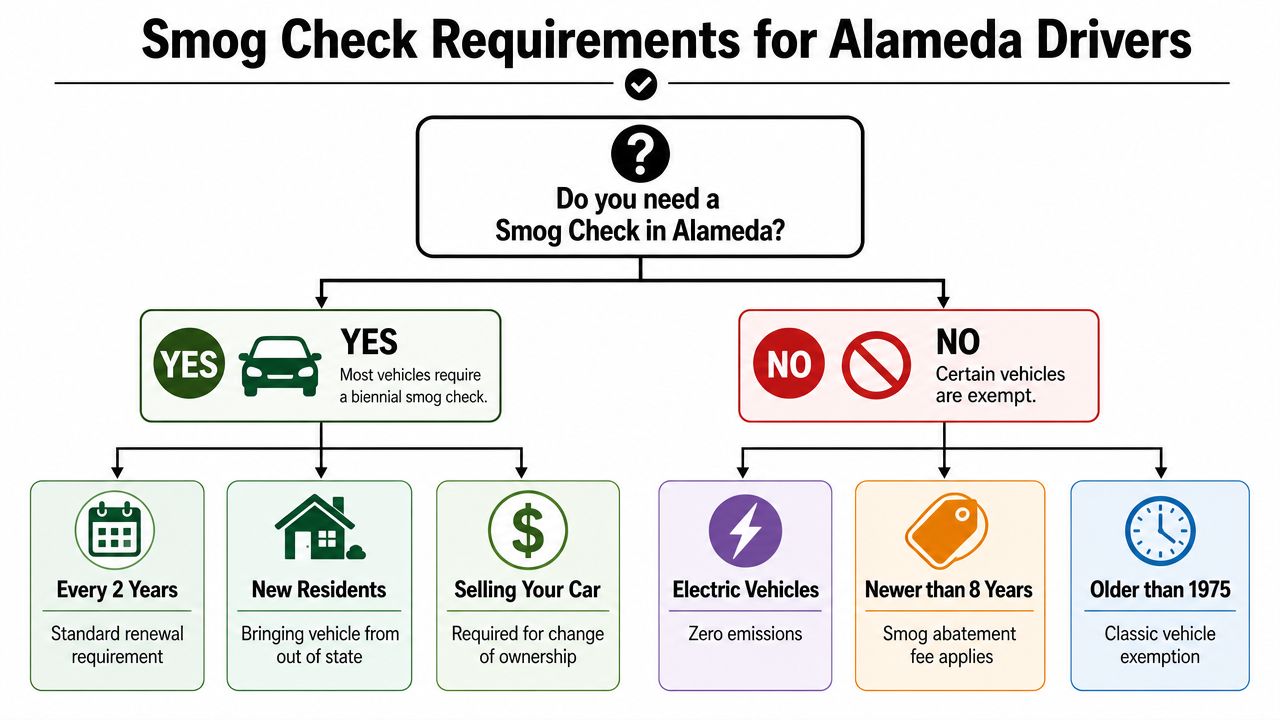
If you're trying to figure out whether you need an Alameda smog check, start with the basic rule. In Alameda County, the California Smog Check Program requires biennial emissions testing for vehicles manufactured in 1976 or later according to the California Smog Check Program overview.
That same program description notes two points many drivers overlook. First, the program removes about 400 tons of smog-forming pollutants from California's air daily. Second, if your renewal requires a test, you must complete it within 90 days of receiving your DMV registration renewal notice.
Who usually needs a test
Most gasoline vehicles from 1976 and newer fall into the program in Alameda County. Hybrid vehicles were added to these requirements starting in April 2015, which caught some owners off guard when that change took effect.
If your renewal notice says a smog certificate is required, assume the clock is running. Waiting until the last minute is where people create their own headaches, especially if the car has a check engine light issue or readiness monitor problem that needs time to resolve.
Who's exempt
Several vehicle types are exempt from the testing requirement listed above:
- Electric vehicles are exempt.
- Trailers are exempt.
- Motorcycles are exempt.
- Gasoline-powered vehicles from 1975 or older are exempt.
- Diesel-powered vehicles manufactured before 1998 are exempt.
Even when a vehicle is exempt from testing, owners still need to keep emissions equipment intact.
The cleanest visit is the one where you confirm your status before you leave home. A two-minute check beats a wasted trip every time.
What the renewal notice really means
A DMV renewal notice isn't just a reminder. It's the instruction that tells you whether your registration can move forward. If your vehicle is flagged for testing and you don't complete the requirement, registration renewal can be blocked.
That's why I always tell neighbors not to treat the notice like junk mail. Read the line that mentions smog certification, then match that requirement to your vehicle type and model year. Once you know that, the rest gets much easier.
Understanding STAR Certified Smog Stations
“STAR Certified” is one of the most confusing phrases on a DMV notice because drivers assume any smog shop can handle any car. That isn't always true.
A STAR Certified station meets a higher performance standard set by the Bureau of Automotive Repair, and that matters because some vehicles are specifically directed to STAR stations. If your notice says STAR, don't improvise. Go to a STAR station.
The reason this has become more important is the expanded High Emitter program. According to this explanation of STAR-only inspection issues and recent BAR data, CARB has expanded the program for specific model years, and 15 to 20% of failed inspections in 2025-2026 were tied to stations attempting to test vehicles that were flagged for STAR-only inspection.
Why drivers get tripped up
The mistake usually looks harmless. A driver picks the closest shop, assumes a smog check is a smog check, and only finds out afterward that the vehicle should have been inspected at a STAR station. That can cost time, another trip, and extra frustration.
If your DMV paperwork mentions STAR, that's the instruction to follow. If you're not sure what that label means, this short guide on what a smog STAR station is gives a simple breakdown.
The practical trade-off
A regular station may seem more convenient if it's nearby. But convenience disappears fast if the inspection doesn't match the vehicle's requirement. For a lot of East Bay drivers, the smartest move is checking the notice first and choosing the right station once, rather than chasing the fastest option and sorting it out later.
If your notice says STAR, the cheapest visit is the one done correctly the first time.
What to Expect During Your 15-Minute Smog Test
You pull up on a lunch break, hand over your registration, and want one answer. How long is this going to take?
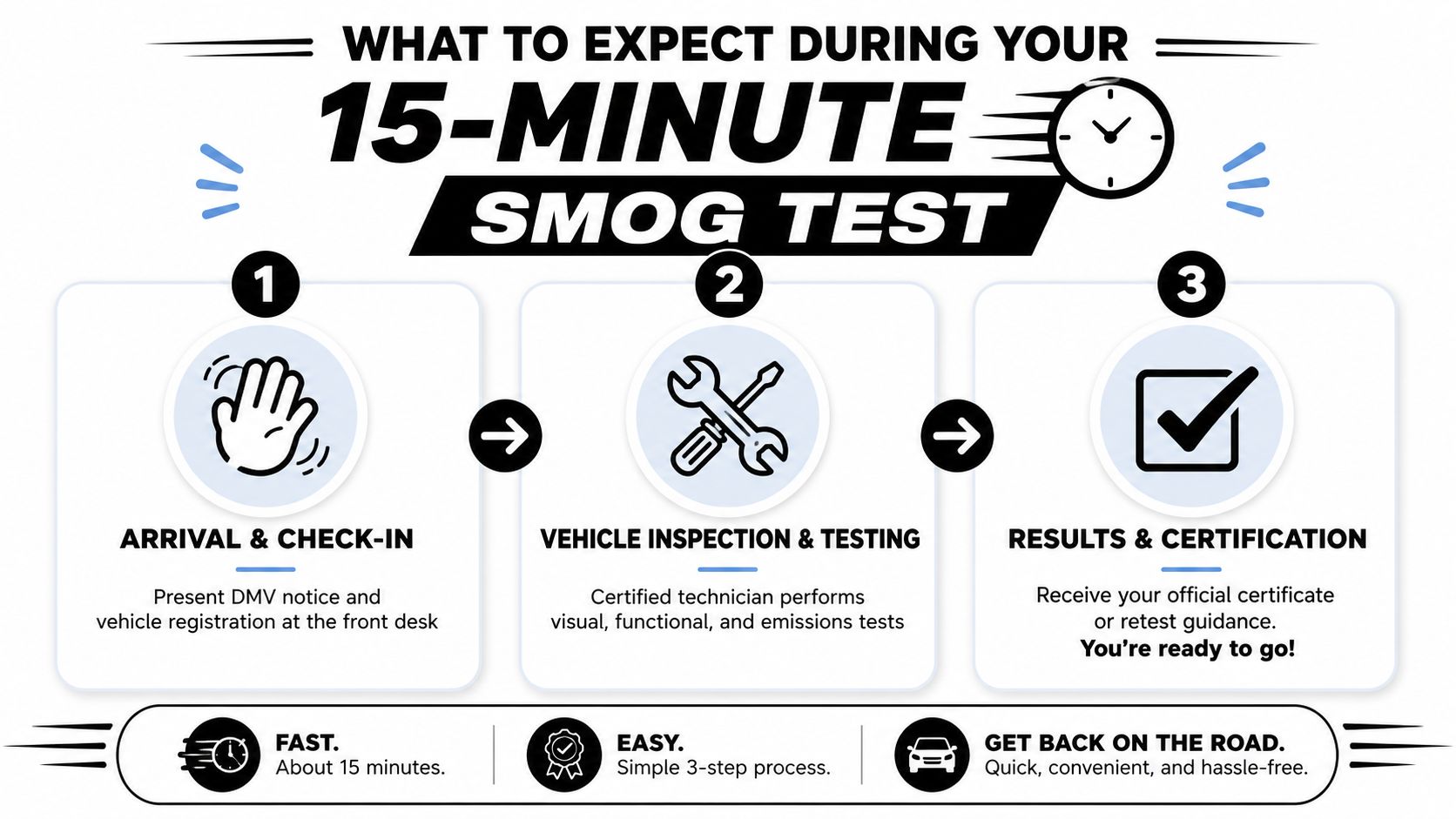
For most 2000-and-newer vehicles in Alameda, the visit is quick if the car is already test-ready. At Speedy Smog, the process is usually simple: verify the vehicle, run the required inspection steps, transmit the result, and get you back on the road. If you want a little more detail before you head in, this guide on how long a smog check takes lays out the timing.
Before you pull in
Bring your DMV renewal notice or current registration if you have it handy. That helps the technician match the car to the right record and avoid small check-in delays.
One practical tip locals appreciate: don't bring the car in cold after it has been parked for days if you can avoid it. A vehicle that has been driven normally is less likely to surprise you with monitor or battery-reset problems. In the East Bay, that simple choice saves people a lot of repeat trips.
During the inspection
The test itself is routine. The technician confirms the VIN and vehicle details, performs the required visual and functional checks, and connects to the onboard diagnostic system for vehicles that use OBD-based testing.
From the customer side, there usually is not much to watch. You check in, the car goes into the bay, and the technician works through the required steps in order. If there is no check engine light issue and the onboard monitors are ready, the appointment often feels uneventful, which is exactly what you want.
This short video gives a helpful visual sense of the process from a customer's point of view.
After the test
If your car passes, the result is usually sent electronically to the DMV. In most cases, you do not need to carry paperwork back and forth.
If it does not pass, the next step depends on the reason. Some failures point to an active repair problem. Others come from timing issues, especially after a battery replacement or a loss of power that reset the system. That is one of the most common trade-offs I explain to East Bay drivers. The fastest appointment is the one you only have to do once.
A smog check should feel straightforward. When you show up with the right paperwork and a car that has been driven normally, it usually is.
How to Avoid a Failed Smog Check
Most preventable failures happen before the car ever enters the bay. That's why a little preparation pays off.
The big one in Alameda is not always what drivers expect. It's not just the check engine light. It's the car that had battery power interrupted, then got tested too soon.
The battery disconnect problem
When a battery is disconnected or power is lost, the vehicle's readiness monitors can reset. According to the BAR smog check guidance, a disconnected battery can require 1 to 2 week of driving to reset monitors, and testing too soon can lead to a failure that triggers a re-test fee.
That's one of the most frustrating smog problems because the car may feel perfectly fine. It starts, runs, and drives normally. But the onboard system still isn't ready for inspection.
Don't rush in for a test right after a battery replacement, jump-start problem, or any repair that interrupted power. Give the car time to complete normal driving cycles.
That trade-off is worth thinking about. A quick appointment sounds efficient, but it isn't efficient if it becomes two appointments.
If you want a broader look at common causes, this page on why vehicles fail smog checks covers the usual trouble spots drivers run into.
Your pre-smog routine
Before any Alameda smog check, I'd keep the prep simple and practical:
- Drive the car normally first: If there was a recent battery disconnect, don't assume the system is ready.
- Watch the check engine light: If it's on, deal with that issue before testing.
- Bring the right paperwork: The station can process the visit more smoothly when your vehicle information is easy to verify.
- Choose the correct station type: If your notice says STAR, go to a STAR station.
- Don't wait until the deadline: A little time cushion helps if the car needs follow-up.
Here's a quick checklist you can use.
| Check Item | Action Required | Why It Matters |
|---|---|---|
| Check engine light | Address the cause before the test | An active warning light can lead to a failed inspection |
| Battery recently disconnected | Drive the vehicle for 1 to 2 week before testing | Readiness monitors may not be set yet |
| DMV notice | Read whether a smog certificate is required and whether STAR is listed | It tells you what type of station you need |
| Registration paperwork | Bring it with you if available | It speeds up check-in and reduces confusion |
| Timing | Don't wait until the last part of your renewal window | You leave room for fixes if something comes up |
A lot of drivers spend more money fixing the consequences of bad timing than they would have spent preparing first.
Choosing a Fast and Affordable Smog Station
You have your renewal notice, you carved out part of your lunch break, and now the main question is simple. Which station gets you in and out without surprise costs or a wasted trip?
Around Alameda and the East Bay, the cheapest posted price is not always the best value. I've seen drivers lose more time by picking the nearest shop without checking whether it handles their vehicle, whether STAR is required, or how the station manages wait times. A low coupon does not help if you show up at the wrong place and have to start over somewhere else.
A good station choice usually comes down to four practical checks:
- Match the station to your DMV notice: If your notice says STAR, use a STAR station.
- Make sure they test your vehicle type: Some shops handle newer gasoline cars quickly but are limited with diesels, hybrids, or older models.
- Ask for the full price before you go: Confirm the test fee, certificate cost if applicable, and whether a coupon applies to your vehicle.
- Ask how the visit works: Walk-ins can be fast at a well-run shop, but a busy station with poor flow can turn a short test into a long wait.
Air quality is one reason California keeps the program strict, especially in dense parts of the East Bay. That is why I tell drivers to focus less on flashy ads and more on whether a station is organized, licensed for the job you need, and honest about pricing.
Here's a look at the kind of station setup many drivers prefer when they want speed and convenience.
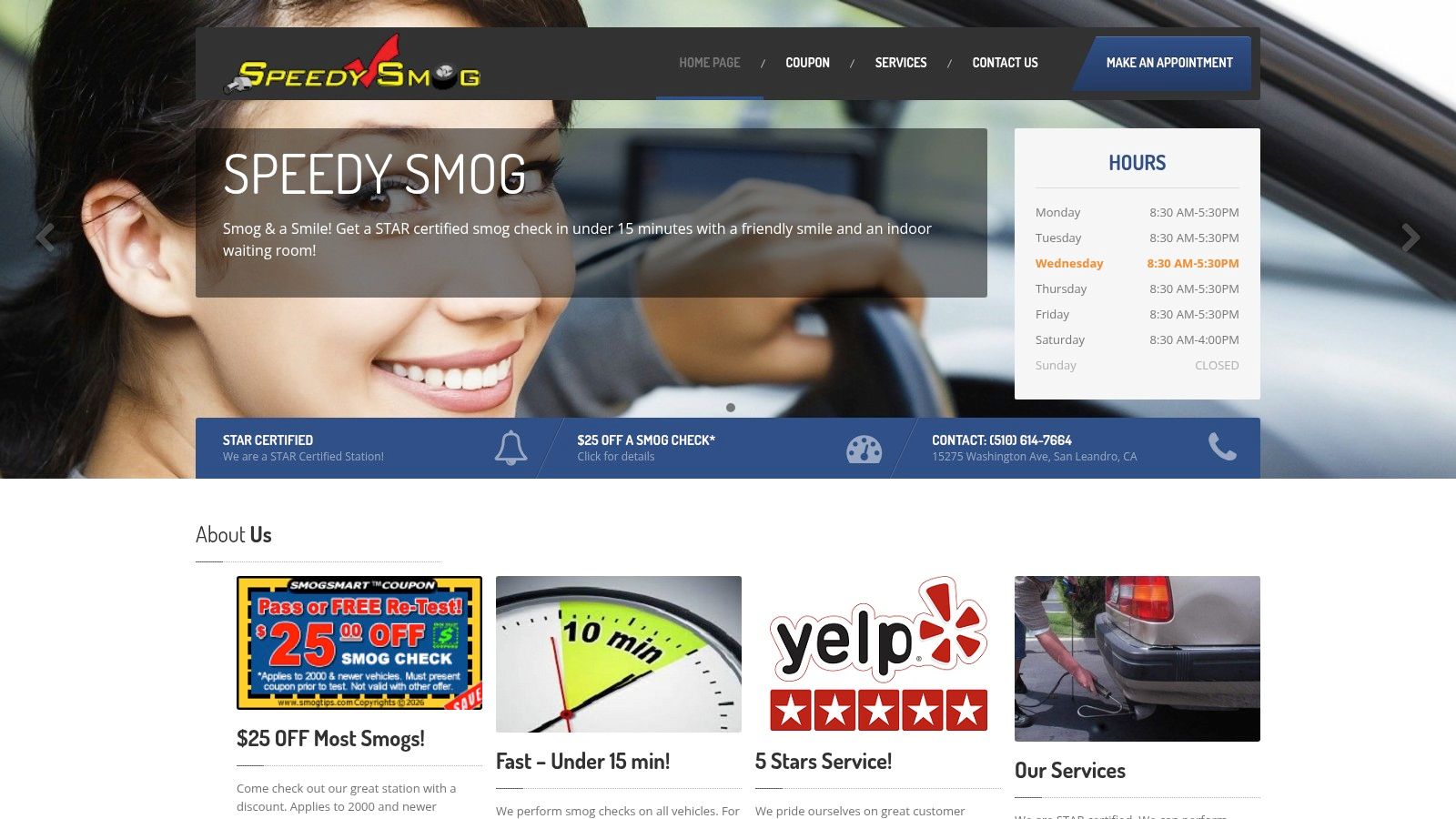
For many Alameda drivers, the best fit is a STAR Certified shop that posts clear pricing, moves cars through efficiently, and has a decent waiting area. That combination usually saves more hassle than chasing the absolute lowest advertised number.
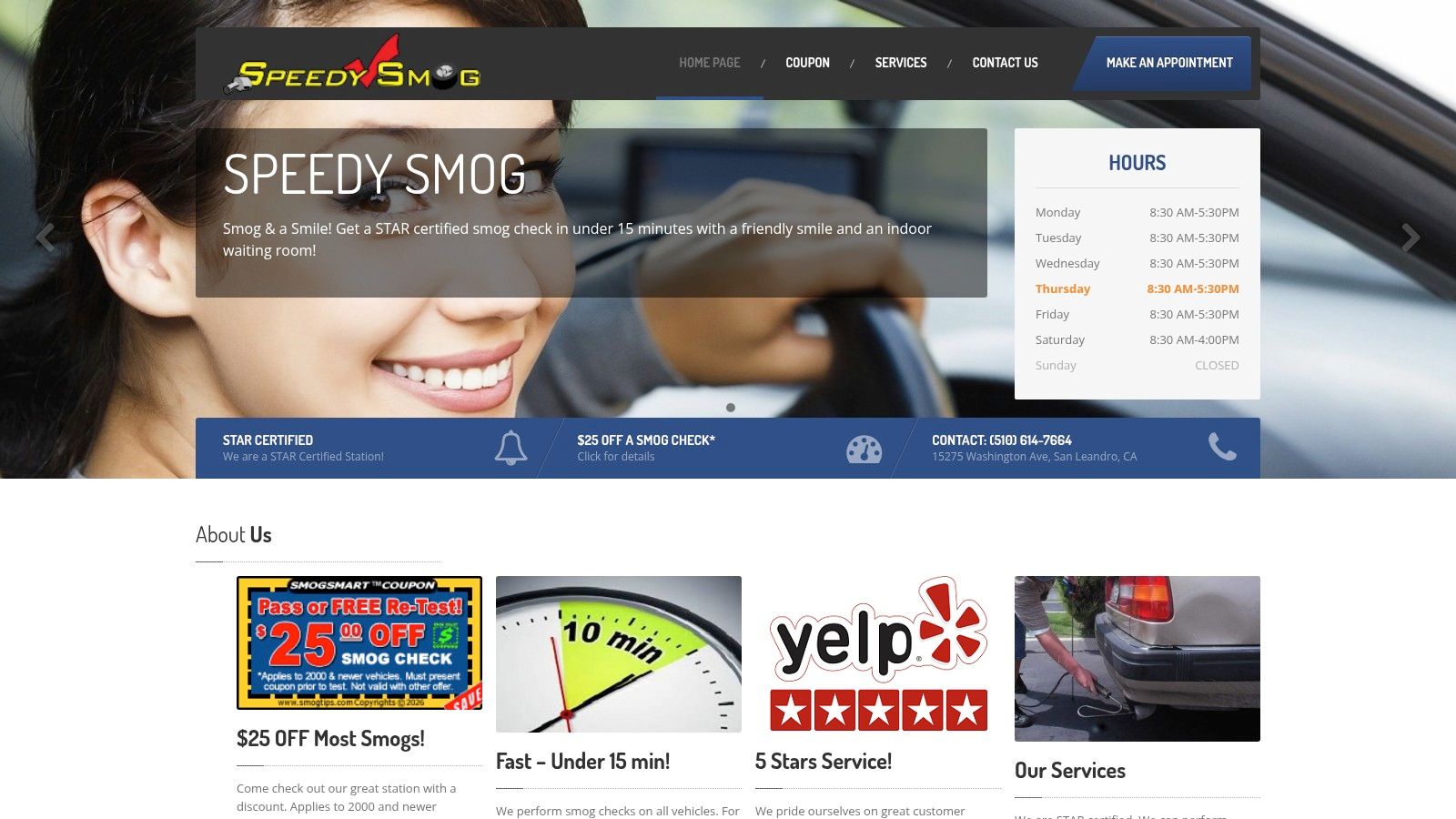
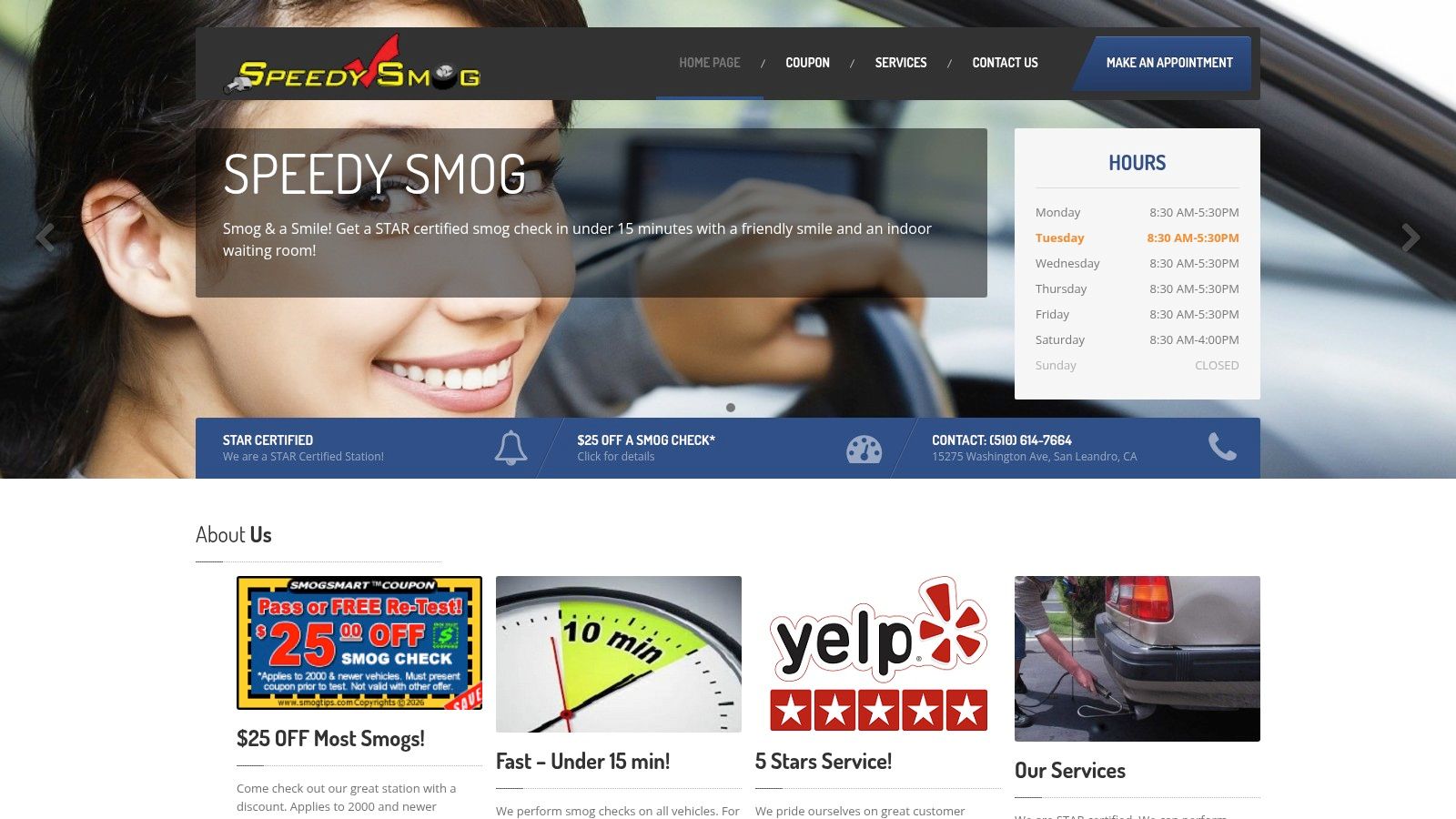
If you need a nearby STAR station, Speedy Smog in San Leandro is built for exactly this kind of visit. They're located at 15275 Washington Ave, San Leandro, CA 94579, open Monday through Saturday, and handle most vehicles including 2000 and newer models, older vehicles, diesels, and hybrids. Typical tests for newer vehicles take about 10 to 15 minutes, and they offer a clean indoor waiting area, straightforward service, and periodic $25-off coupons for most smogs on newer vehicles. Check their website before you go so you can grab the current offer and keep your Alameda smog check quick and affordable.
Your registration notice shows up, and suddenly this becomes today's problem. You don't want a lecture on emissions rules. You want a shop that won't waste your lunch break, won't surprise you on price, and won't create a DMV headache after the test.
If you're looking at 4 Less Smog Check Oakland, that instinct makes sense. It's a familiar Oakland option with a strong public review history, straightforward newer-car pricing, and a location that's easy for a lot of East Bay drivers to reach. But the advertised price is only part of the decision. The smarter question is simpler: Will this shop be fast when you arrive, and is it the right fit for your car?
Use this quick comparison first.
| Shop | Best for | What stands out | Watch for |
|---|---|---|---|
| 4 Less Smog Check Oakland | Oakland drivers with 2000+ vehicles who want a familiar local option | Strong Yelp reputation, Broadway location, coupon on labor for eligible newer vehicles | Older vehicles need separate pricing, peak walk-in surges can change your real wait |
| Other STAR stations nearby | Drivers who need options based on location, older vehicles, diesel, or timing | You may find a better fit for your exact vehicle or route | Not every nearby shop offers the same convenience or workflow |
Table of Contents
- That DMV Notice Just Arrived What Now
- Why STAR Certification Matters for Your Smog Check
- A Close Look at 4 Less Smog Check Oakland
- Comparing 4 Less Smog Check vs Speedy Smog
- Which Smog Station Should You Choose in 2026
- Quick Tips for a First-Time Pass
That DMV Notice Just Arrived What Now
The usual pattern is predictable. You open the DMV notice, see that smog certification is required, and immediately start searching for the closest place with decent reviews and a coupon. That's exactly how many find 4 Less Smog Check Oakland.
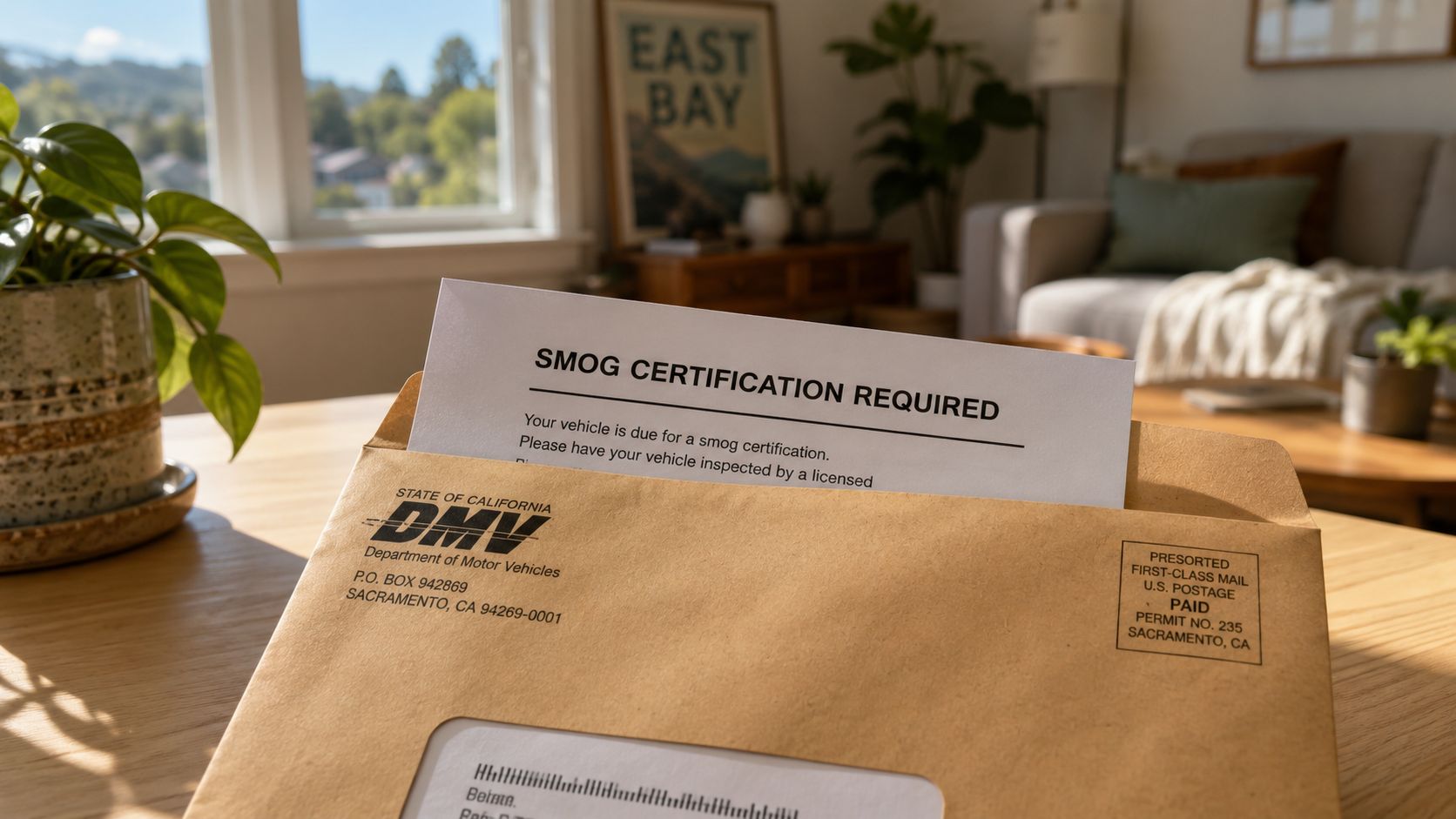
If your car is normal, your timeline is tight, and you just want the paperwork handled, that's a reasonable starting point. If you still need to figure out where to go nearby, this local guide to a DMV smog check near me in the East Bay is a useful shortcut.
What matters most right now is not finding the cheapest number in the biggest font. It's finding a station that fits your car, your location, and your deadline. Those aren't always the same thing.
The three questions that matter first
Before you drive anywhere, answer these:
- What year is your vehicle: If it's 2000 or newer, 4 Less has clearly posted standard pricing for that group. If it's older, you need to ask first.
- Do you need this done today: Same-day convenience matters more than a small advertised discount if your registration deadline is breathing down your neck.
- Are you trying to avoid DMV drama: A fast test means nothing if you end up with confusion about station type or timing.
Go to the right shop once. That beats going to the cheapest shop twice.
A lot of East Bay drivers make the same mistake. They focus on the headline labor price, ignore the certificate fee, ignore cutoff times, and forget that walk-in volume changes by day and by deadline pressure. Then the “quick errand” turns into a schedule problem.
That's why 4 Less gets attention. It checks the basic boxes for a lot of Oakland drivers. But if you want to choose well, you need to look past the sign out front.
Why STAR Certification Matters for Your Smog Check
STAR certification is not decoration. It's the practical difference between a shop that meets a higher compliance bar and one that may not be the right stop for your vehicle or DMV notice.
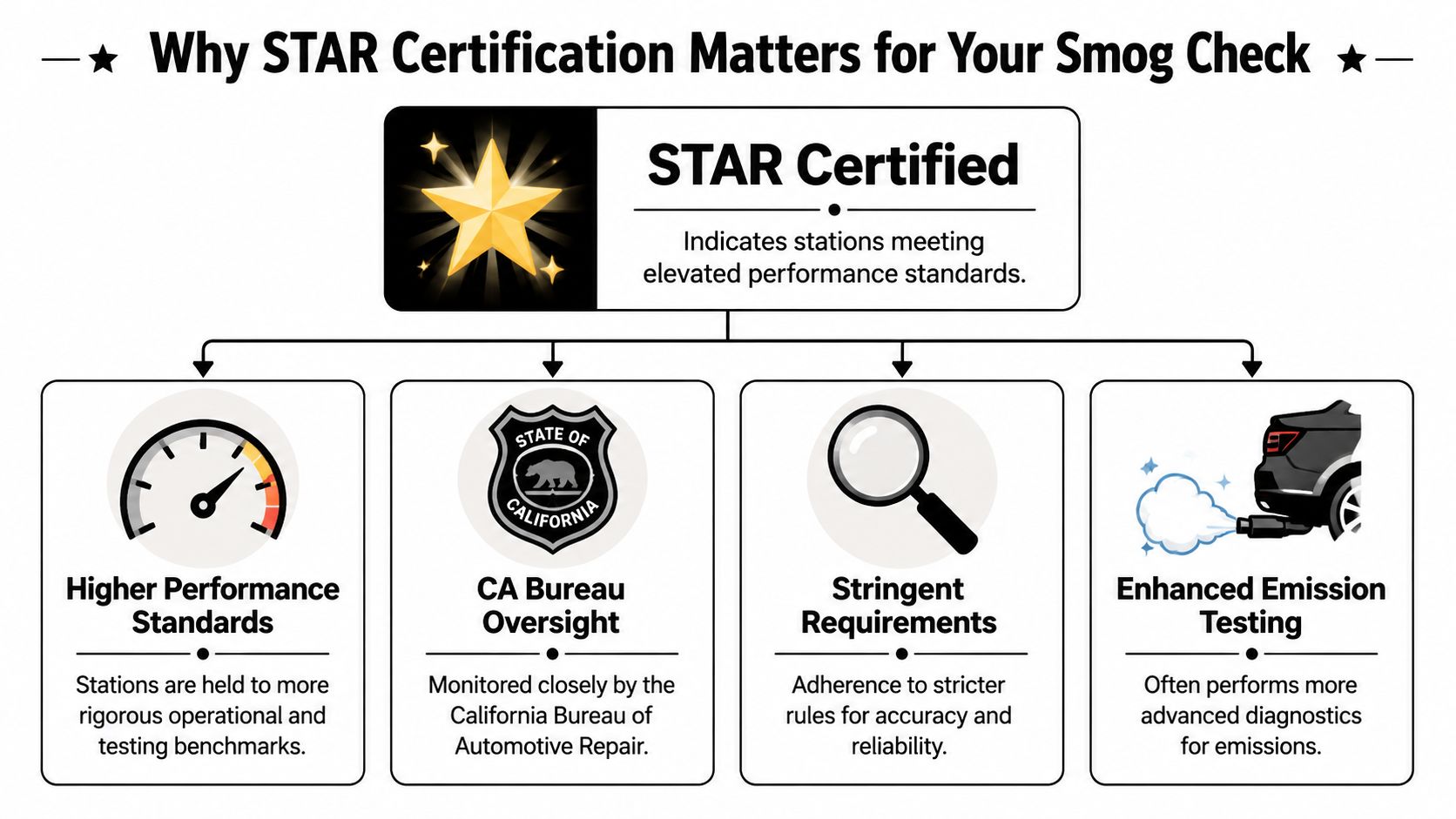
For local drivers who want the short version, this explainer on what a smog STAR station is gives the basic framework. The key takeaway is simple: if your notice points you toward a STAR station, don't get clever and try to work around it.
What STAR changes for you
A STAR station has to meet higher pass-rate thresholds, at or above 90% for vehicles tested at or above 90% of the time, which helps support DMV-recognized accuracy. That matters because the inspection isn't just about getting a sticker or a printout. It's about getting a result that fits the state's compliance system.
That higher bar is one reason many drivers prefer a STAR station even when they aren't strictly thinking about certification categories. They want the cleanest path to registration, not a side quest.
Here's the infographic version in motion if you want a quick visual explanation:
Which vehicles need more caution
Some cars are easy. Some cars are not.
- Older vehicles: Shops explicitly charge an additional fee for model-year 1999 and older vehicles because those tests are more complex.
- Vehicles with prior emissions trouble: If your car has had smog issues before, accuracy matters more than bargain hunting.
- Diesels and specialty cases: Don't assume every station handles every category the same way. Call first.
Practical rule: If your car is older, unusual, or has a history, choose for station fit first and price second.
That's where a lot of drivers lose time. They assume all smog shops are interchangeable. They aren't. For a newer daily driver, the difference may be small. For a pre-2000 vehicle or a more complicated emissions case, the wrong stop can cost you an extra trip.
A Close Look at 4 Less Smog Check Oakland
Your registration notice is due, you have 40 minutes before work, and you do not need a smog shop that turns a quick errand into half your morning. That is the test for 4 Less Smog Check Oakland. Price gets people in the door. Speed, cutoff times, and vehicle fit decide whether the stop was worth it.
4 Less has one clear advantage. It is built for routine smog work in central Oakland, not general repair. For a standard 2000-and-newer gas vehicle, that usually means a faster, more predictable visit than a shop juggling oil changes, brake jobs, and walk-in diagnostics.
What matters before you drive over
The shop sits at 2857 Broadway, Oakland, CA 94611, and the official 4 Less Smog Check Oakland website lists hours of Monday through Saturday, 9:00 AM to 5:00 PM, with a 4:30 PM cutoff for same-day completion.
That cutoff matters more than the headline price. If you show up late, or you hit the lunchtime rush, the cheap coupon stops looking cheap fast.
Public customer feedback is also strong. As noted earlier, the Yelp listing shows a high rating with a large review count. That gives this shop more credibility than a place with one low teaser price and thin customer history.
If you are comparing options by total cost, not just the ad, check current East Bay smog check deals and coupons before you leave home.
The advertised price is only part of the story
For 2000 and newer vehicles, 4 Less publicly posts $49.00 labor plus the $8.25 certificate fee. The listing also mentions a 10% coupon on labor for eligible vehicles when presented at check-in, as noted earlier.
That means your comparison should be based on the actual total, not the labor number by itself. Plenty of drivers glance at the coupon, miss the certificate fee, and assume one shop is cheaper than it really is.
Here is the practical breakdown:
- Best fit: Newer gas vehicles that usually pass without drama
- Less clear fit: 1999 and older vehicles, since pricing requires a separate quote
- Time risk: Late afternoon arrivals, especially if you need same-day completion
- Big advantage: Oakland location is convenient if Broadway is already on your route
4 Less is a good pick if your car is straightforward and you want a known Oakland STAR station with clear posted pricing for newer vehicles. I would not treat it as the automatic best choice for every car. If you drive an older vehicle, a diesel, or anything with past emissions trouble, call first and ask direct questions about price, test type, and expected wait. That two-minute call can save you a wasted trip.
Comparing 4 Less Smog Check vs Speedy Smog
The decision is often made too quickly. Customers compare one coupon to another and stop there. That's not how you should choose a smog station.
The smarter comparison is price, vehicle fit, probable wait, and the likelihood of a smooth DMV-facing result.
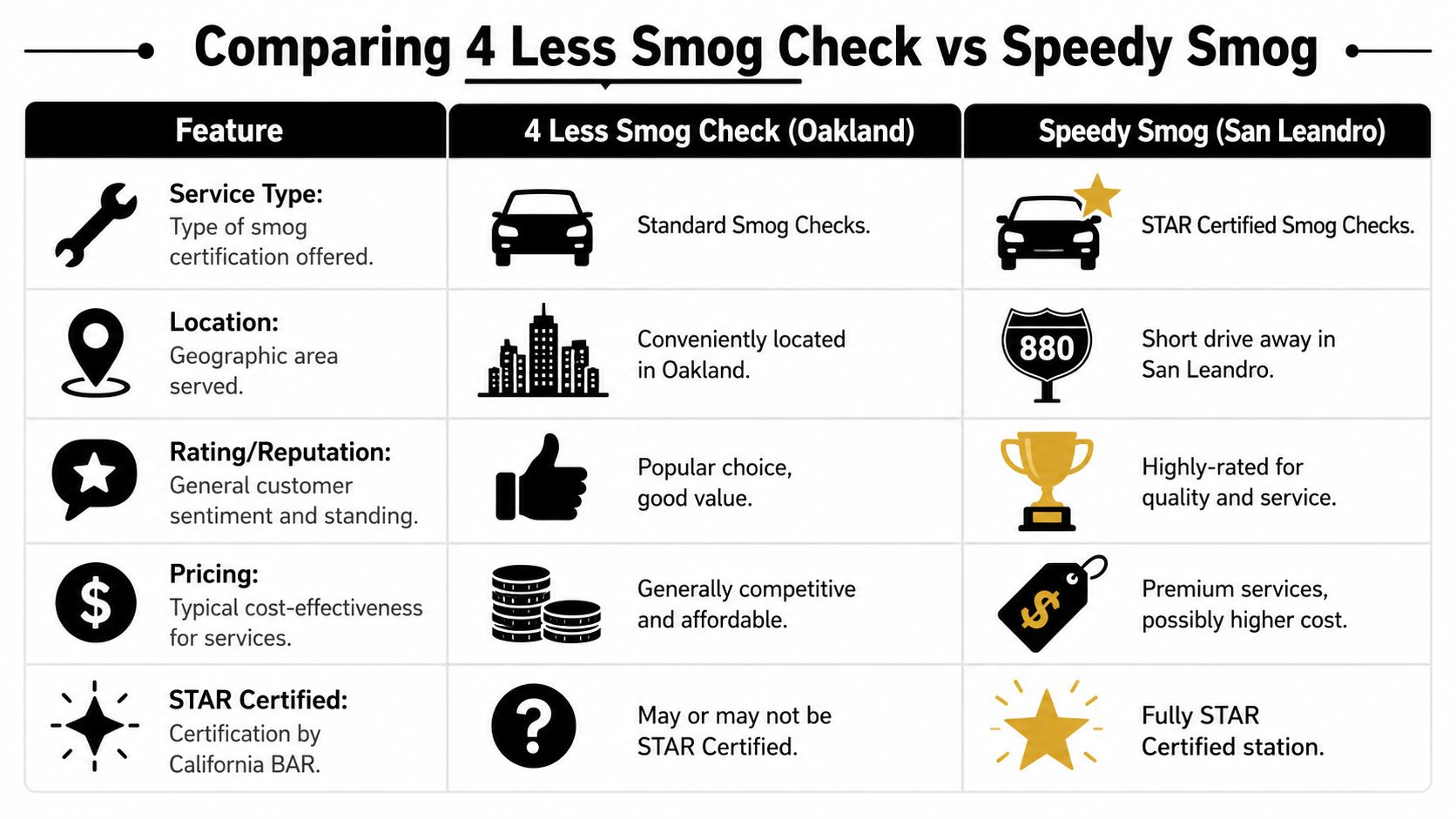
Side by side decision table
| Decision factor | 4 Less Smog Check Oakland | Speedy Smog |
|---|---|---|
| Certification | STAR-certified based on published business information | STAR-certified based on publisher information |
| Best-known fit | Clear standard pricing for 2000+ vehicles | Broad fit for newer vehicles, plus older cars, diesels, and hybrids based on publisher information |
| Location strength | Better for Oakland, Piedmont, and nearby drivers | Better if San Leandro is easier for your route |
| Published speed | Performance data shows a 15-minute average inspection duration for standard vehicles, and that aligns with efficient East Bay STAR-shop timing | Benchmark for efficient STAR shops in the East Bay is 10 to 15 minutes, as noted in the verified performance summary |
| Pricing clarity | Publicly posted newer-car labor price and certificate fee, plus coupon on labor | Coupon-oriented positioning based on publisher information |
| Main caution | Older vehicles require separate price inquiry | Check availability and exact vehicle fit before you go |
The verified performance summary says 4 Less Smog Check Oakland averages 15 minutes for standard vehicles, which aligns with the 10 to 15 minute benchmark for efficient STAR shops in the East Bay. That puts it in the right range for a fast stop when conditions are normal.
My practical take
If your vehicle is a 2000 or newer standard car, this becomes a location and timing decision more than anything else. Pick the station that's easiest to reach without fighting unnecessary traffic, and go when walk-in demand is less likely to pile up.
If your car is older, diesel, hybrid, or more specialized, I wouldn't default to the closest sign on the street. I'd choose the station whose public service positioning makes it clear they routinely handle those categories. That usually saves hassle.
A few decision rules help:
- Choose 4 Less if convenience is local: Oakland drivers often value not having to leave their immediate area.
- Don't overrate the posted coupon: A cheaper labor line means less if the shop isn't the best fit for your car.
- Think in total effort: Drive time, waiting time, and certainty matter as much as the listed price.
There are other East Bay smog stations, of course. But for most drivers, the main decision isn't between ten shops. It's between the familiar nearby option and the station that better matches their car and route.
Which Smog Station Should You Choose in 2026
The best answer depends on your car, your neighborhood, and whether you're solving a routine renewal or a deadline problem.
Best choice by situation
If you drive a 2000+ vehicle and you're near Broadway, 4 Less Smog Check Oakland is the practical local pick. The public pricing is clear for that vehicle group, the reputation is established, and the shop is built for routine smog traffic.
If you drive an older vehicle, don't choose based on the headline newer-car pricing because it doesn't apply to you. Call first, ask about your model year, and make sure the shop's workflow matches the extra complexity.
If your vehicle is diesel or another non-basic case, station fit matters even more. You want a shop that openly handles those vehicles, not one that leaves the details vague until you arrive.
The cheapest advertised option is only the best option when it fits your exact car.
For budget-focused drivers, the right move is to compare the real bill structure. At 4 Less, the labor and certificate fee are separate, and the coupon affects labor only. That's not bad. It's just something to understand before you decide you've found the lowest price.
For people choosing on geography, I'd keep it simple:
- Near Oakland or Piedmont: 4 Less is the obvious first look.
- Closer to San Leandro, Hayward, or along that corridor: A station on your side of the route may be the better use of time.
- On a registration deadline: Choose the place with the best chance of smooth same-day handling, not the place with the flashiest ad.
The wrong way to choose
Don't choose based on one review, one coupon image, or one assumption about wait time. Smog checks are routine until they're not. A cutoff time, an older vehicle, or a crowded walk-in window can change the whole experience.
My opinion is direct. 4 Less Smog Check Oakland is a strong everyday choice for standard newer vehicles in Oakland. It is not automatically the best answer for every car. If your situation is even slightly complicated, verify fit before you leave.
Quick Tips for a First-Time Pass
You do not want to learn this in the parking lot with a registration deadline hanging over you. The easiest way to pass on the first trip is to handle the few things that cause avoidable failures, then show up at a time that does not waste your afternoon.
Start with the car, not the coupon.
- Make sure the Check Engine light is off. If it is on, do not test yet.
- Drive the car first. A warmed-up engine usually gives you a better shot than rolling in after the car has been sitting.
- Bring your registration notice if you have it. It speeds up the counter process.
- If the battery was recently disconnected, wait until the car is ready. Fresh battery work or emissions repairs can reset monitors and turn a quick smog check into a failed trip.
Timing matters more than first-time drivers expect. The official 4 Less Smog Check Oakland website promotes fast service, but the key issue is total time, not just test time. A station can finish the inspection quickly and still cost you an hour if you walk in during a busy registration rush. Then you still have to wait for the DMV side to catch up.
That is why I would not treat a smog check like an errand to squeeze in at the last minute.
A better plan is simple:
- Go earlier in the day if you can. Walk-in traffic is easier to handle before the heavy rush.
- Do not wait until your final registration day. Leave room for the certificate to post and the DMV record to update.
- If your car is older, diesel, or recently repaired, call first. You want to confirm the shop handles your vehicle type and avoid a wasted drive.
The hidden cost is usually time, not the posted price. Ten dollars saved on a coupon means nothing if you lose an hour in line or end up making a second trip because your car was not ready.
If you want the best odds of a one-and-done visit, pick a STAR-certified station, bring a warmed-up car, and avoid peak walk-in hours. That is the practical formula.
If you want a STAR-certified option with fast East Bay service, straightforward help for common vehicle types, and a clean process from arrival to certificate, take a look at Speedy Smog. It's a smart choice for drivers who care about quick turnaround, clear pricing, and getting the job done without a second trip.

You open your renewal notice after work, hoping it is just a quick payment, and there it is. Smog check required. The next questions are always the same in Walnut Creek. Do you need a STAR station, will the car pass, and can you get it done without losing half your day?
From the shop side, I can tell you where the stress usually comes from. It is rarely the test itself. It is the guesswork before the test. Drivers show up with a check engine light they hoped would not matter, a battery that was disconnected the night before, or an overdue oil leak they did not realize could cause a problem during the visual inspection.
A smog check gets a lot easier once you know what the technician is checking and why certain cars fail for avoidable reasons. That is the difference between a quick pass and an extra trip, extra cost, and more time dealing with DMV deadlines.
California keeps emissions rules in place for a reason, and the background matters, but what helps you today is knowing how to prepare before you pull into the bay. This guide is built for that. It gives Walnut Creek drivers the inside scoop, the why behind the rules, and a practical pre-test checklist that can save time, money, and a return visit.
Table of Contents
- Your Stress-Free Guide to Smog Checks in Walnut Creek
- Understanding California's Smog Check Rules
- The Pre-Test Checklist for a Guaranteed Pass
- The Smog Inspection Process Step-by-Step
- Choosing a STAR Certified Station in the East Bay
- East Bay Driver FAQ Your Smog Check Questions Answered
Your Stress-Free Guide to Smog Checks in Walnut Creek
Vehicle owners don't start searching for a smog check in Walnut Creek because they're curious. They start because the DMV clock is running, the car's due, and they want it handled with the least amount of hassle possible.
That's the right approach. A good smog visit should feel routine. You show up with a vehicle that's ready, the station runs the proper inspection, your certificate gets handled correctly, and you move on with your day. Problems usually show up when drivers wait until the last minute, ignore a warning light, or pick a shop without understanding whether their DMV notice requires STAR service.
Why this feels more confusing than it should
Part of the confusion is that local listings usually focus on address, hours, and maybe a coupon. They don't tell you why one car passes easily while another fails for something the owner could have caught in the driveway.
Practical rule: The easiest smog check is the one you prepare for before the appointment starts.
The other issue is that modern smog inspections aren't all the same. A newer vehicle with a healthy OBD-II system usually moves through the process very differently than an older vehicle with incomplete monitors, aftermarket parts, or recent battery disconnect history.
What actually works for Walnut Creek drivers
The smoothest path is simple:
- Check your DMV notice early. If it calls for STAR, don't guess.
- Look at your dash before you leave home. A lit Check Engine light is a warning, not a suggestion.
- Drive the car first. Warm cars test better than cold ones in everyday practice.
- Leave enough time. If your vehicle is a special case, rushing only makes the day worse.
If you want the inside view on smog check Walnut Creek drivers usually don't get from basic directories, this is it. The goal is a first-pass visit, no wasted trip, and no mystery about what the technician is doing.
Understanding California's Smog Check Rules
A lot of Walnut Creek drivers walk in with the same question: "Why does my neighbor's car breeze through, while mine gets flagged?" In the shop, the answer usually comes down to timing, vehicle age, and whether the DMV is asking for a standard inspection or a STAR inspection.
Who usually needs a smog inspection
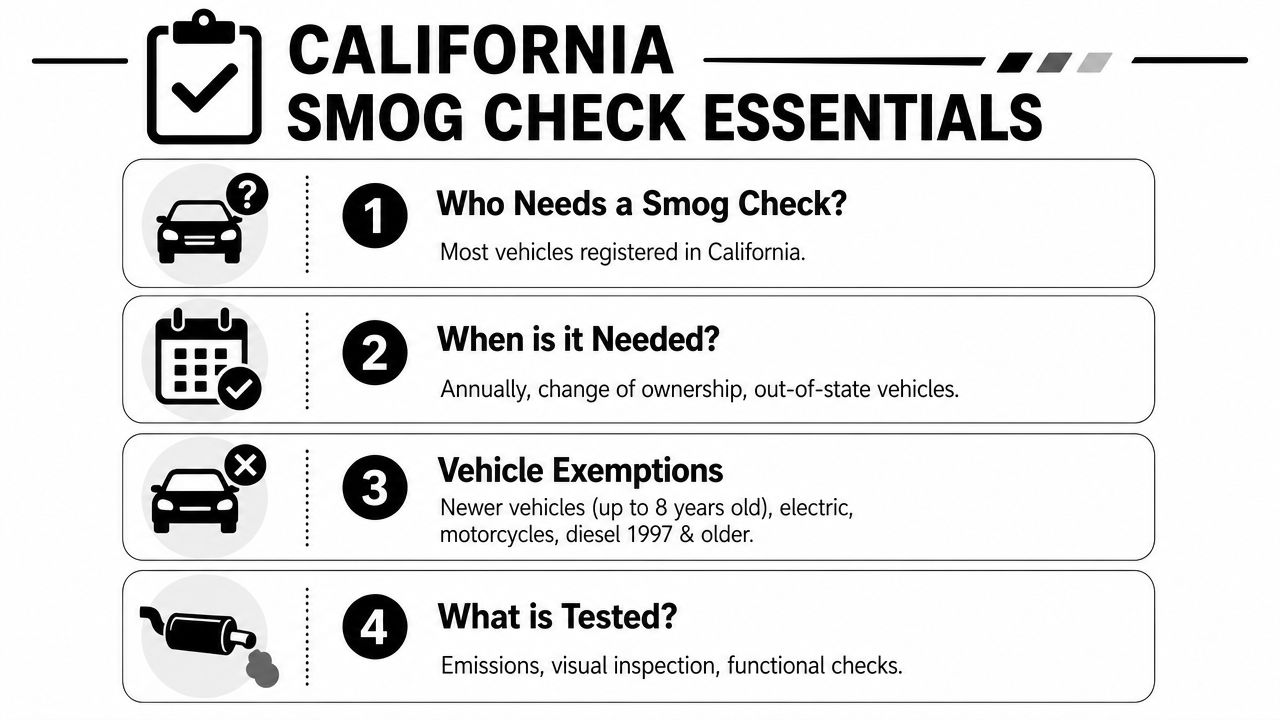
The rule set is easier to handle once you strip it down to the situations that trigger a test. For most drivers, smog comes up in four places:
- Registration renewal: Many vehicles are tested every two years as part of DMV renewal.
- Change of ownership: A vehicle sale often requires a current smog certificate.
- Out-of-state registration: Cars coming into California usually need to be inspected before registration is completed.
- STAR requirement: Some DMV notices require the vehicle to be tested at a STAR station, not just any smog shop.
Those are the triggers that matter in real life. The details can vary by model year, fuel type, and registration status, which is why it helps to review the current California smog check rules before you book.
What trips people up most often
The first problem is assuming every vehicle gets the same inspection. It doesn't.
A newer car usually goes through an OBD-II check that looks at the vehicle's self-reported emissions status, including trouble codes and readiness monitors. Older vehicles may involve different test procedures, plus visual and functional checks of emissions equipment. That difference matters because a car can drive fine, feel normal, and still fail.
In day-to-day shop work, I see three repeat issues more than anything else. The Check Engine light is on. The battery was disconnected recently, so the readiness monitors are not set. Or the car has an emissions-related part missing, modified, or not approved for the application.
Clearing codes right before a test is one of the fastest ways to waste a trip. The system still has to show that the monitors have completed.
Exemptions cause confusion too. Drivers hear a broad rule from a friend, then assume it applies to their car without checking the registration notice or the vehicle details. That is where people lose time and sometimes pay for a test they were not ready for.
The practical takeaway is simple. Read the DMV notice carefully, verify whether STAR is required, and make sure the car is test-ready before the appointment. That is the difference between a quick pass and an avoidable retest.
The Pre-Test Checklist for a Guaranteed Pass
No technician can guarantee a pass without seeing the car. What you can do is remove the common self-inflicted problems that waste appointments, delay registration, and send people into an unnecessary repair loop.
A clean pre-test routine makes a real difference, especially if you're trying to get your smog check in Walnut Creek done in one visit.
What to check the day before
Start with the dashboard and the basics.
- Check Engine light off: If that light is on, handle the fault before the test. Don't assume it's “just a sensor” unless a proper diagnosis proves it.
- Gas cap tight: A loose or damaged cap can create emissions-system problems, especially on EVAP-related checks.
- Battery recently disconnected: If you changed the battery, cleared codes, or lost power, your readiness monitors may not be set yet.
- Tires properly inflated: This matters more on older-style testing setups and is just good practice anyway.
- Bring your paperwork: Your DMV notice helps avoid mistakes at check-in.
Then warm the vehicle up. A short drive before the appointment helps the engine and emissions equipment reach normal operating condition. In shop practice, a warmed-up car is usually easier to test than one that just came from overnight parking.
What not to do right before the test
Drivers create their own failures in a few predictable ways.
| Habit | Why it causes trouble |
|---|---|
| Clearing codes right before the visit | The monitors often reset to incomplete |
| Letting the car sit for days | A cold vehicle may not be in its best test-ready state |
| Ignoring minor drivability issues | Rough idle, poor starts, or fuel smell can point to emissions faults |
| Installing questionable parts | Missing, modified, or illegal emissions components can trigger failure |
For a deeper look at the patterns that lead to a failed inspection, review these common smog check fail reasons.
Bring the car in the way you actually drive it, not right after a reset, battery swap, or last-minute driveway experiment.
One more practical point. If your car has been sitting, has a recent repair, or has any unresolved warning lights, don't book the inspection as your first step. Book diagnosis or regular repair first. Smog testing is a compliance check, not a tune-up session.
The Smog Inspection Process Step-by-Step
You hand over the keys, glance at the waiting area, and wonder what the technician is doing with your car. Fair question. A smog check follows a set state procedure, and once you know the order, the visit feels a lot less mysterious.
What happens when you arrive
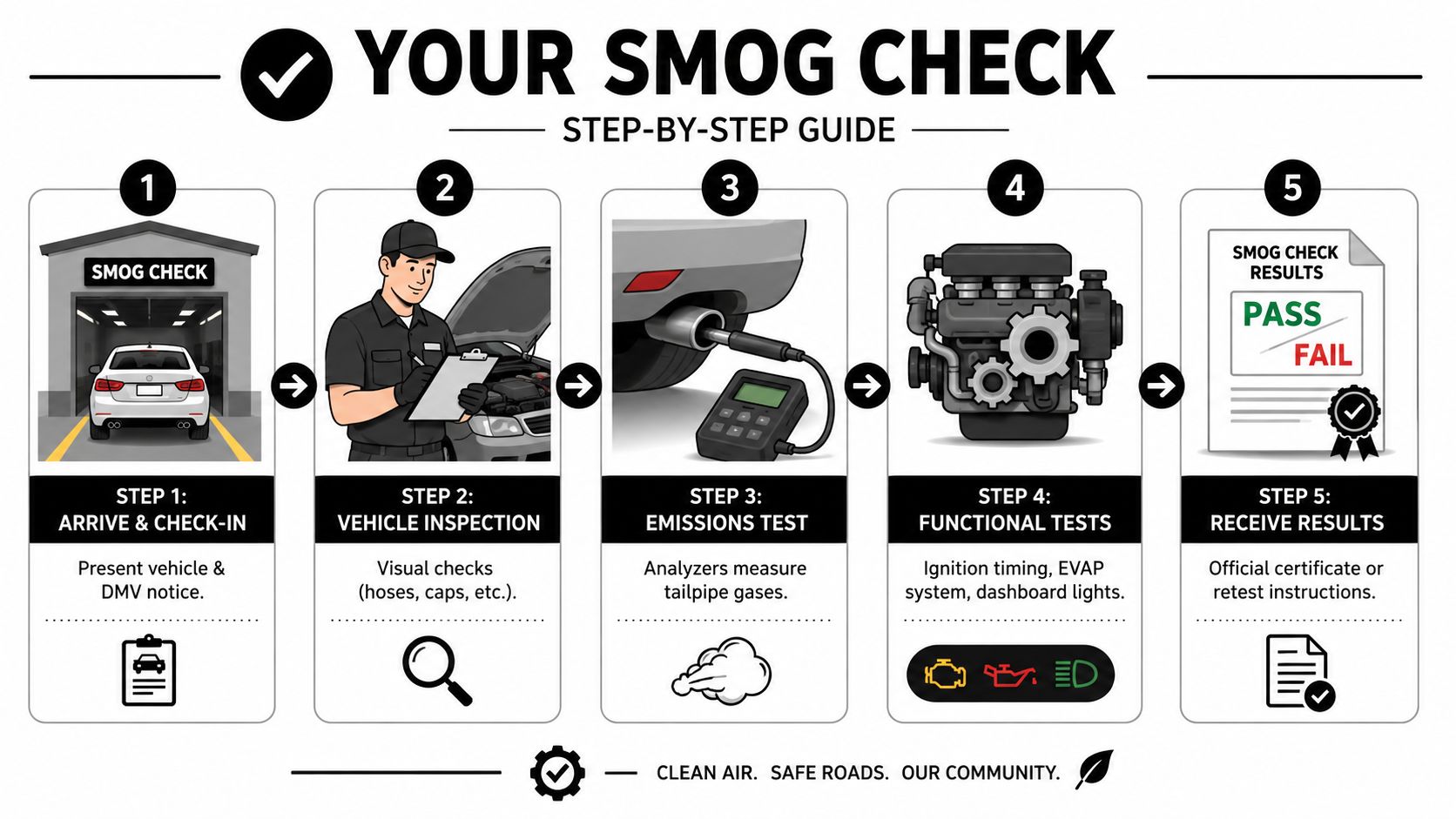
The first few minutes are simple. The station confirms your vehicle information, checks the DMV requirement tied to your registration, and verifies whether your car needs a regular inspection or a STAR inspection. If you are not sure what that designation means, this guide explains what a smog STAR station is.
After check-in, the technician brings the car into the bay and runs the test sequence that matches the vehicle's year, fuel type, and inspection category. The process is organized, and each step has a purpose.
Most inspections break into three parts:
- Visual inspection. The technician checks that required emissions parts are present, connected, and not obviously modified or tampered with.
- Functional inspection. Items such as the malfunction indicator light and other required systems are verified.
- Diagnostic or emissions test. The station performs the test California requires for that vehicle.
Here's a quick visual overview of the flow:
How newer and older vehicles are tested
Newer vehicles are usually the most straightforward. For most gasoline and newer diesel models, the inspection centers on the OBD-II system. The technician checks readiness monitors, looks for stored trouble codes, and confirms the vehicle can report emissions system status the way California requires.
That matters because a car can drive fine and still fail the inspection if the monitors are incomplete or the computer has detected a fault. I see that with recent battery disconnects, code clearing, and rushed last-minute repairs.
Older vehicles can take a little more time. The equipment and procedure may differ, and the inspection depends more on the condition of the car in front of the technician. Age, aftermarket parts, and missing emissions labels can all slow things down, even when the owner has kept up with maintenance.
A late-model car with no warning lights and complete monitors is usually quick. An older vehicle with unknown repair history needs a more careful look.
How long it usually takes
A routine visit is often faster than drivers expect. The exact time depends on the vehicle, the inspection type, and whether anything needs to be verified twice. BAR explains the general process on its California Smog Check information page.
From a shop-floor point of view, the biggest delays are predictable. A car that arrives hot, healthy, and test-ready usually moves through without drama. A car with recent monitor resets, modified parts, paperwork mismatches, or a STAR-only requirement will take longer, and sometimes the delay starts before the test does.
The inside scoop is simple. The inspection itself is not the hard part. Most wasted time comes from vehicles that show up unprepared.
Choosing a STAR Certified Station in the East Bay
You pull up for a smog check, hand over the renewal notice, and then find out the car needed a STAR station all along. I see that mistake more than people expect. It turns a simple errand into a second trip.
If your DMV notice says STAR, book a STAR station first. That requirement is tied to the vehicle record, not the shop's opinion, and a regular station cannot substitute for it.
Why STAR matters
STAR certification tells you the station is approved to inspect vehicles that California has flagged for closer oversight. From the shop side, that usually means tighter process, cleaner paperwork, and fewer avoidable mistakes. For drivers in Walnut Creek and the rest of the East Bay, that matters because the best smog visit is the one you only have to do once.
It also helps to choose a shop that works with your type of vehicle every day. A newer OBD-II car with a STAR requirement is straightforward if the station checks documents carefully and runs an orderly lane. An older car, a diesel, or a vehicle with aftermarket parts often needs a technician who knows what slows inspections down before the test even starts.
What to look for before you book
A good East Bay station does a few things well:
- Confirms STAR status clearly: If your notice says STAR, the station should say up front that it can perform that inspection.
- Handles your vehicle category regularly: Gas, diesel, hybrid, older model-year vehicles, and problem registrations can all require a slightly different workflow.
- Checks the basics before wasting your time: VIN mismatch, unreadable paperwork, an active warning light, or missing emissions labels can stop the process early.
- Explains the trade-offs: A bargain price is not much of a deal if poor check-in or sloppy verification sends you back for another visit.
- Keeps the lane organized: Clean equipment, a clear intake process, and direct answers usually mean fewer surprises.
If you want a plain-English explanation of the requirement, this guide on what a smog STAR station is covers the difference.
My practical advice is simple. Pick the station for certification, experience, and process. That choice saves more time than chasing the lowest advertised price.
East Bay Driver FAQ Your Smog Check Questions Answered
A lot of failed smog visits are preventable. At the shop, the pattern is pretty clear. Drivers come in with a warning light on, fresh codes erased, or paperwork questions that should have been handled before they booked. A few minutes of prep usually saves a second trip.
What if my car fails
Start with the printout and the exact failure reason. "Failed smog" is not one problem. It could be a stored trouble code, monitors that are not ready, a visible emissions tampering issue, or a test reading outside the allowed range.
The fix depends on the reason. In-shop experience, guessing is what burns the most money. If you know why it failed, you can repair the right item first instead of replacing parts that had nothing to do with the test.
Should I keep my appointment if the check engine light comes on
Reschedule it.
A check engine light usually means the car already sees a fault that can affect emissions. Bringing it in anyway almost always turns into a paid test and a predictable failure. Handle the diagnosis first, then come in once the repair is complete and the system has had time to report correctly.
What if I just moved to California
Plan for smog as part of your registration process if your vehicle requires it. The smoothest move is to bring your registration paperwork, confirm your vehicle details match, and make sure the station can inspect your vehicle category.
This matters more with out-of-state vehicles than drivers expect. Small intake problems can slow everything down before the inspection even begins.
Can I pass right after clearing codes
In our experience, that is the number one reason for a preventable failure.
After codes are cleared, the car's emissions monitors reset to not ready. The vehicle usually needs normal driving under the right conditions before those monitors complete. If you show up too soon, the car may be running fine and still fail because the system has not finished its self-checks.
Is the cheapest listing always the best option
The better value is the station that gets the process right the first time.
Low pricing does not help if the shop misses a paperwork issue, rushes check-in, or leaves you with a failed visit that could have been avoided. A good station saves time by catching obvious problems early, explaining what matters, and keeping the inspection lane moving.
If you want a fast, straightforward smog experience in the East Bay, Speedy Smog is a practical option. They're a STAR Certified station in San Leandro with experience handling newer vehicles, older cars, diesels, and hybrids, and they focus on getting drivers in and out without confusion or runaround.