
Star Smog Check Oakland: What Drivers Need to Know
You open the DMV renewal notice expecting the usual reminder, then you see the line that changes the whole errand, STAR certification required. If you're in Oakland, that usually means your regular neighborhood shop might not be the right stop, and now you're trying to figure out whether this is a simple smog check or a special lane with different rules, different timing, and a different bill.
The confusing part is that STAR sounds like a separate emissions test, but it isn't. It's a higher-performance compliance tier inside California's smog system, which means the station has to meet tighter state standards for inspection quality, while the vehicle is still being checked against the same emissions rules it would face anywhere else in the program. If you've never booked one before, the practical question isn't “What does STAR mean?” It's “Which Oakland shop can handle my vehicle, and what will I really pay when I get there?”
Table of Contents
- Why Oakland Drivers Keep Seeing STAR on Their Renewal Notice
- What STAR Certification Actually Means
- Which Oakland Vehicles Get Routed to a STAR Station
- What Happens During the Test at an Oakland STAR Station
- How to Prepare Your Vehicle and Avoid a Failed Visit
- Oakland STAR Stations, Pricing, and Hours Compared
- Speedy Smog as a Convenient Option for Oakland Drivers
Why Oakland Drivers Keep Seeing STAR on Their Renewal Notice
A lot of Oakland drivers first meet STAR the same way. The renewal notice arrives, they glance at the form, and the line about STAR turns a quick DMV errand into a search for a station they've never used. A car that passed at a regular shop last time can still be routed to STAR this cycle, because the decision is coming from California's compliance system, not from the neighborhood around your house.
California's STAR smog program is built around higher-performing stations, and the Bureau of Automotive Repair treats STAR as a higher-performance compliance tier rather than a different emissions standard for the vehicle itself. That distinction matters. Your car isn't being asked to meet a stricter tailpipe target just because it landed at STAR, but the station doing the inspection is expected to operate with tighter quality control and consistency.
For an Oakland driver, that means one simple thing. If the DMV notice says STAR, the usual corner shop can't just step in and substitute. The problem isn't that the other shop is “bad,” it's that the vehicle has been routed into a specific state-managed lane, and the lane choice is already made before you book.
Use this registration-renewal guide if you want to see how the notice connects to the booking step without guessing.
Practical rule: read the renewal notice first, then book the station that matches it. STAR is a compliance designation, not a local marketing label.
The other source of confusion is timing. Many drivers assume STAR means a more complicated test, but the difference is where the car is sent and how closely the station is held to state standards. Once you understand that, the notice stops feeling like a surprise and starts looking like a routing instruction.
What STAR Certification Actually Means
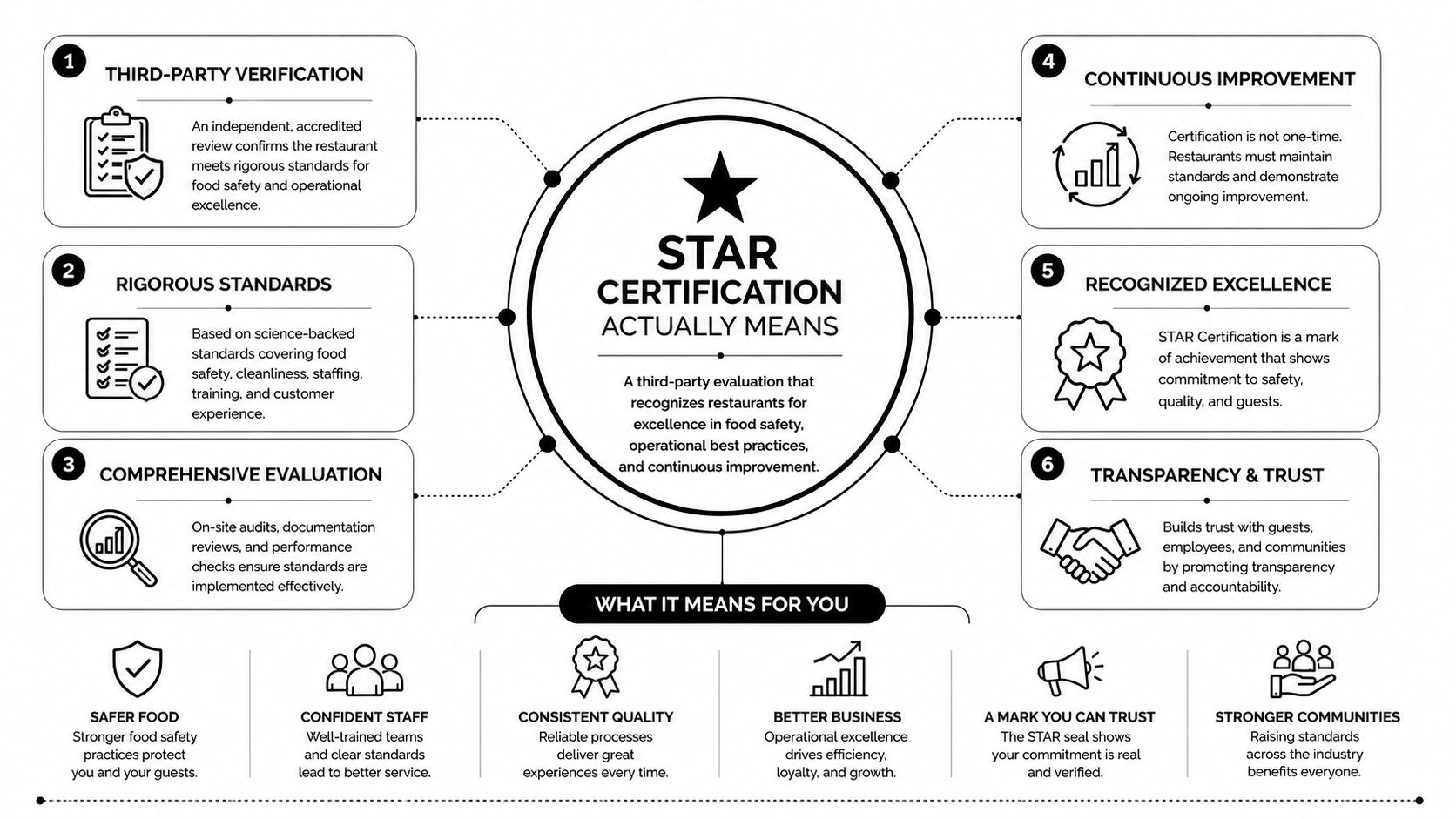
STAR certification is easiest to understand if you forget the acronym and think in service-counter terms. A STAR station is a shop the state trusts to handle inspections with a higher level of oversight, which is why it shows up for vehicles that need extra compliance confidence. It's not a different emissions law for the car, it's a different control level for the station.
That's also why STAR doesn't mean every part of the visit feels the same as every other shop. Some stations are test only, some are test-and-repair, and STAR is the state's way of deciding which stations belong in the stricter lane. For a driver, the useful takeaway is simple. If the DMV notice calls for STAR, you need the certified station type the notice asks for, not just any place with a smog sign out front.
The Bureau of Automotive Repair says the inspection usually takes about 30 minutes and that the station must charge a fixed $8.25 Smog Check certificate fee, while the inspection price itself is not regulated. That's the practical reason Oakland prices can look all over the map even when the certificate part is the same everywhere. A station can quote different labor pricing, but it still has to follow the same state certificate process.
The fee structure is split on purpose. The certificate fee is fixed, but the inspection labor price is set by the station.
See the STAR-station overview if you want the station type explained in plain language before you call around.
For a first-time customer, the confusing part is usually repairs. A regular smog shop may also do repair work, but STAR is about compliance control, not a promise that the car will be fixed there. If your vehicle fails, the next step is usually diagnosis and repair planning, not assuming the test station can be both the tester and the repair solution for every case.
Which Oakland Vehicles Get Routed to a STAR Station
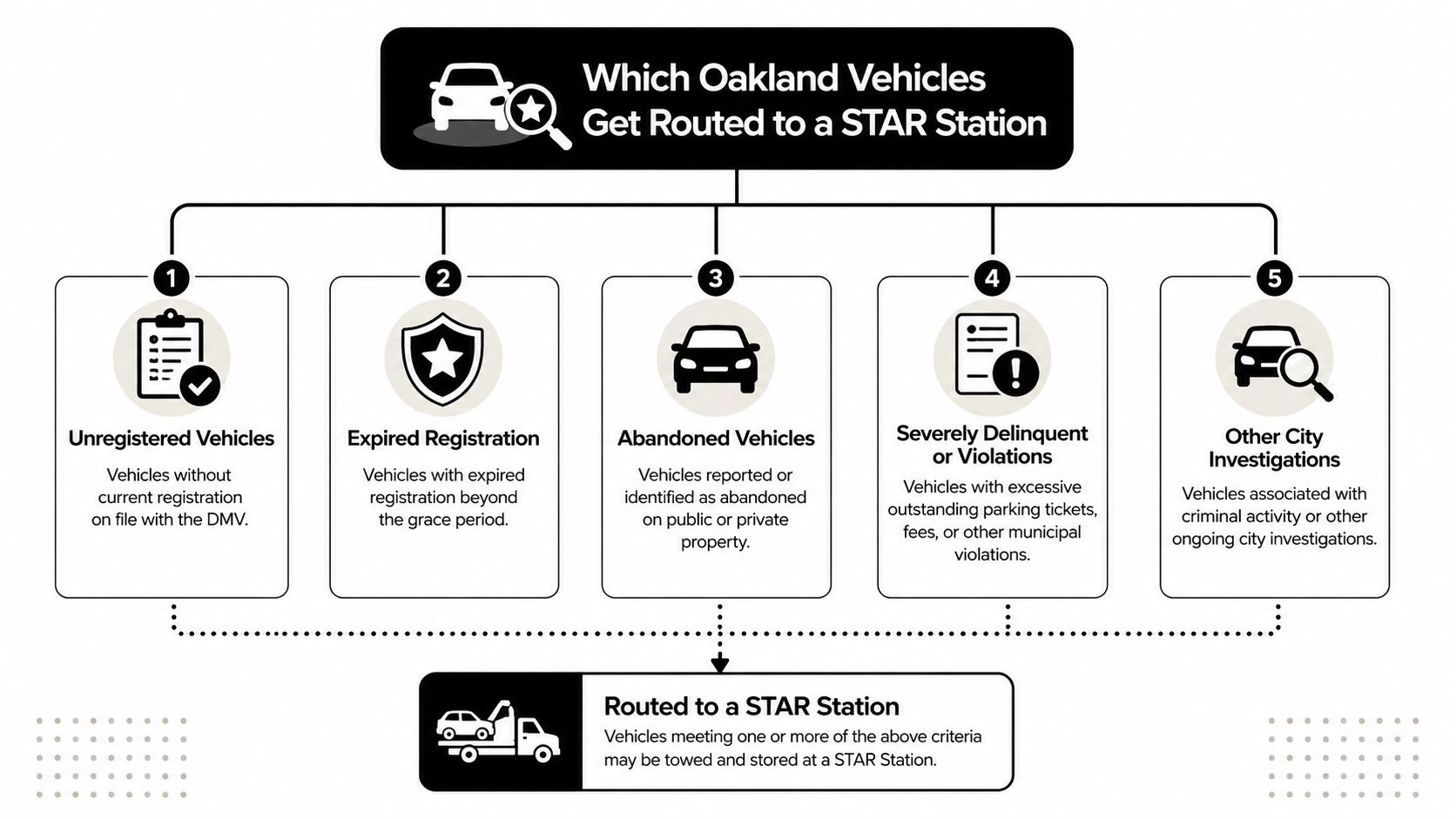
The cleanest way to think about STAR routing is this. The DMV notice tells you whether your car has been selected for the higher-compliance lane, and that notice wins over whatever your last station told you. California's smog manual also notes that some out-of-state 1976 model-year and newer vehicles registering in California for the first time need a Smog Check as part of initial registration, which is one of the situations where Oakland drivers can suddenly find themselves shopping for a compliant station instead of a convenient one. The same manual explains that STAR is about station performance, not a different emissions standard on the car itself.
For the test method, the split is straightforward. 2000-and-newer vehicles are typically checked through OBD-II readiness and MIL status, while 1999-and-older vehicles still require a tailpipe emissions test. BAR also states that a lit check-engine light is a fail condition, so if that lamp is on, the visit is already at risk before the technician plugs anything in.
The practical difference by vehicle age
If you drive a newer car, the test is often more about whether the onboard monitors are ready than about how dirty the exhaust looks at that exact moment. If you drive an older car, the inspection is more hands-on and the tailpipe portion matters directly. That's why a 1999 model and a 2000 model can feel like two different appointments even though they're both called a smog check.
Useful shortcut: if the check-engine light is on, don't treat the appointment as a coin flip. Get the fault read first.
Hybrids and diesels can add another layer of confusion, mostly because drivers hear those words and assume there must be a special STAR-only rule. The safer way to think about it is vehicle-specific routing plus the test method your car falls into. The notice decides the lane, and the vehicle's model year decides how the inspection is performed.
What Happens During the Test at an Oakland STAR Station
Most Oakland drivers want the same answer first, how long does this take, and what do I need in my hand when I walk in. Local Oakland listings show one station advertising service for 2000-and-newer vehicles at $69.75 plus the $8.25 certificate fee, while another Oakland STAR listing shows 895 Yelp reviews and a 4.8-star rating, which tells you the market is built around quick, repeatable visits rather than a long repair-day experience. One local provider also says STAR-certified inspections can be completed in about 15 minutes, which lines up with the short-visit model many drivers expect for newer cars.
The actual visit usually starts with paperwork and a quick confirmation that your vehicle matches the notice. After that, the technician checks the emissions-related items that apply to your model year, then performs the appropriate test path. For a newer vehicle, that often means the OBD-II connection and a check of readiness status. For an older vehicle, the tailpipe portion is still part of the process.
What to bring and what not to expect
Bring the DMV renewal notice, a valid ID, and a way to pay. Don't assume the station can ignore the vehicle class or model year just because you're in a hurry, because the test path is determined by the car, not by the line at the counter.
A STAR station is there to inspect the vehicle against state requirements, not to turn the appointment into a broad repair consultation. If the car fails, the next step is usually figuring out why, then deciding whether a repair visit makes sense before a retest.
Read the pass-the-test checklist if you want a practical pre-visit review without guessing at the obvious problems.
Oakland drivers usually save time by showing up with the car already warm, the notice ready, and the payment method sorted out.
That's also why local convenience matters so much. A fast station is useful only if it handles your vehicle type and the appointment doesn't turn into a second trip. The best-looking price on a website stops being cheap if the car isn't ready or the shop can't inspect it that day.
How to Prepare Your Vehicle and Avoid a Failed Visit
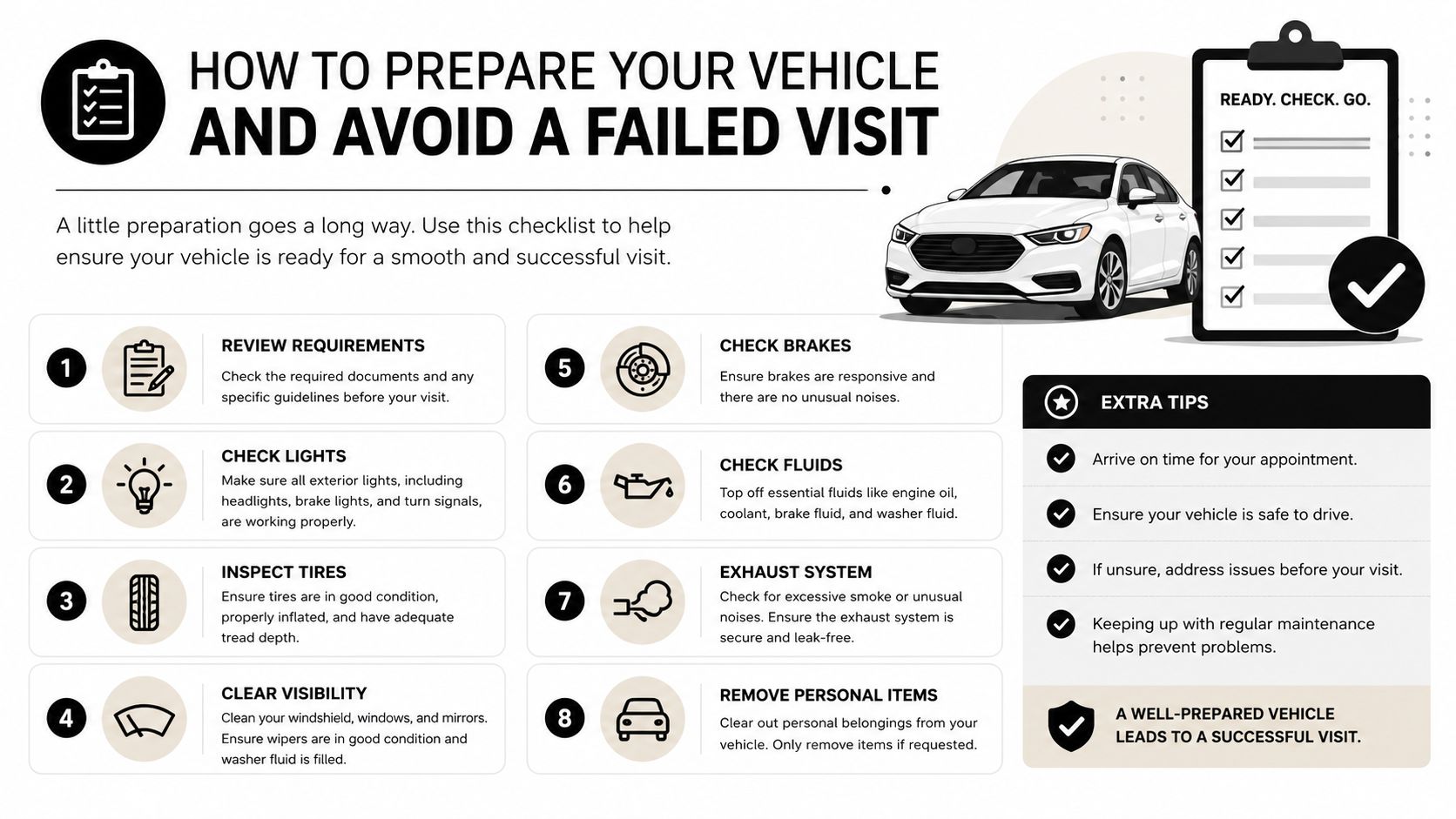
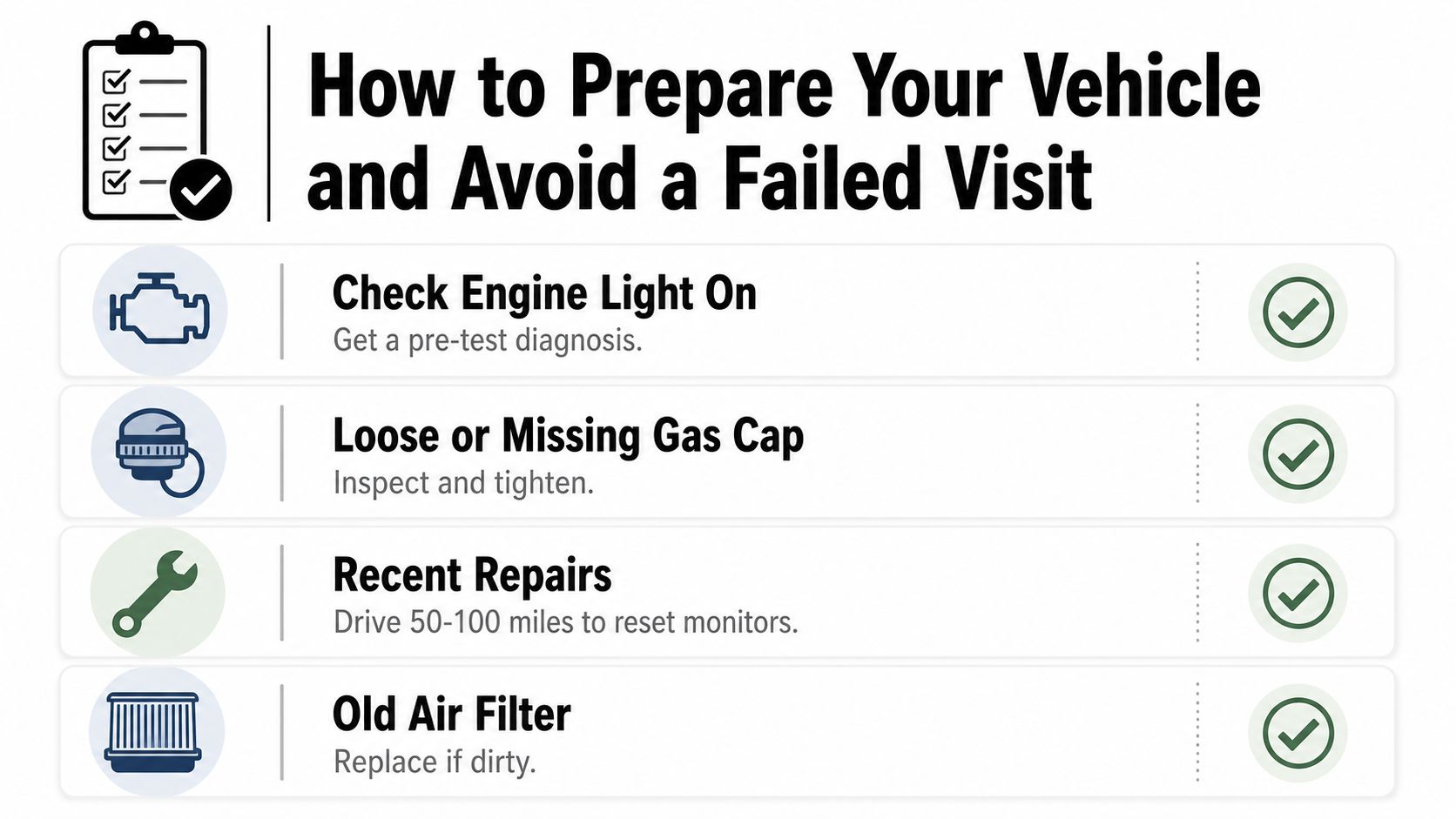
A failed STAR visit usually isn't a mystery when you look at the basics. BAR notes that after battery disconnects or repairs, readiness monitors may need one to two weeks of driving to reset, which is why a pre-test scan for readiness and diagnostic trouble codes is the most efficient way to avoid a wasted trip. If the car was recently serviced, that alone can explain a “not ready” result even when the engine feels fine on the road.
The easy thing to miss is that a car can run normally and still fail the inspection path. A loose gas cap, an unresolved check-engine issue, or incomplete readiness status can send you home without the certificate. That's why a quick under-the-hood check before the appointment matters more than a last-minute wash or vacuum.
Night-before checklist for Oakland drivers
- Check the dash: if the check-engine light is on, get a diagnosis first.
- Tighten the gas cap: a cap that doesn't seal properly can create a fault condition.
- Confirm the notice: make sure the DMV paperwork really calls for STAR.
- Think about recent repairs: if the battery was disconnected, the monitors may still need driving time.
- Warm the vehicle up: don't arrive with a cold engine and expect the best reading.
- Match the car to the test type: older cars, newer cars, diesels, and hybrids don't all go through the same exact path.
A five-minute check the night before can save you from paying for a repeat visit.
When Oakland drivers skip the prep step, they usually discover the problem at the station, not at home. That's the expensive version of learning the process. The smarter version is to treat the appointment like a compliance check, then use the car's own warning signs to decide whether it's ready.
Oakland STAR Stations, Pricing, and Hours Compared
Oakland's smog market is competitive, but the comparison only makes sense if you separate the fixed state fee from the shop's own price. The $8.25 certificate fee is the baseline everywhere, while the inspection price is what changes from one station to the next. That's why one Oakland listing can advertise $69.75 plus the certificate fee, while another shop leans on speed, convenience, or customer ratings instead of a single posted number.
| Station | Advertised Inspection Price | BAR Certificate Fee | Typical Turnaround | Oakland Access |
|---|---|---|---|---|
| Oakland STAR station with a large review base | Not stated in the verified data | $8.25 | Not stated in the verified data | Oakland-based |
| Oakland provider near San Pablo Avenue and 34th Street | $69.75 for 2000-and-newer vehicles | $8.25 | Not stated in the verified data | Near San Pablo Avenue and 34th Street, with access from I-580, I-880, and I-980 |
| Oakland shop advertising fast STAR inspections | Not stated in the verified data | $8.25 | About 15 minutes | Oakland-based |
The practical lesson is that price, speed, and access don't always point to the same station. A shop near the freeway might be better for an after-work run, while a different station may have stronger reviews or easier booking. If your renewal notice is STAR-specific, the right choice is the one that matches both the notice and your schedule.
Local hours matter more than most drivers expect, because some shops are closed on certain days and others are built around same-day traffic. That's why Oakland searches often end up being less about “the cheapest smog check” and more about “the shop that can handle my car today without a second appointment.”
Speedy Smog as a Convenient Option for Oakland Drivers
For Oakland drivers who want a nearby STAR-certified option without adding another long errand, Speedy Smog in San Leandro is set up around quick DMV-style visits. It's a STAR Certified station, it handles 2000-and-newer vehicles in about 10 to 15 minutes, and it also serves 1999-and-older vehicles, diesels, and hybrids, which makes it useful when the renewal notice and the vehicle type don't fit a one-size-fits-all shop. That matters in the East Bay, where the closest station isn't always the station that can process the car you brought.
The convenience piece is more than just speed. The shop is open Monday through Saturday, has a clean indoor waiting room, and emphasizes transparent pricing with periodic $25-off coupons for most newer-vehicle smogs. For a driver coming from Oakland, that can be the difference between a smooth lunch-break stop and a second trip after learning the wrong place couldn't complete the test path.
Why that combination matters
If your notice calls for STAR, the decision isn't only about the posted price. It's about whether the station can handle the right vehicle class, whether the hours fit your day, and whether you can get the certificate without wasting time on a shop that's closed or the wrong test type. Nearby, compliant, and fast is a better combination than “cheap on paper” if the appointment ends with a rebook.
Visit Speedy Smog if you want to book a STAR-certified smog check that lines up with an Oakland renewal notice, the right vehicle type, and a schedule that doesn't leave you stuck making a second trip.