
Your registration deadline is approaching, and the first coupon you find looks like the obvious choice. Then you notice the fine print: it excludes diesel vehicles, older models, a particular brand, retests, or phone-based redemption. California smog check coupons can reduce the inspection cost, but the discount format and eligibility rules matter more than the headline offer. The state certificate fee is still part of the total in many transactions, and stations set their own inspection prices, so a coupon doesn't guarantee the same final bill everywhere. California's Bureau of Automotive Repair explains the state smog-check process and pricing requirements.
The seven options below are organized around the decisions drivers face: a featured San Leandro promotion, transparent online deals, printable and mobile coupons, retest protection, and year-specific eligibility. Before leaving, confirm your vehicle and test type, save or print the offer as required, verify current terms and hours, ask about certificate fees and retests, and bring both the vehicle and coupon to the selected station.
Table of Contents
- 1. Speedy Smog in San Leandro
- 2. EZ Star Smog Oakland for transparent online terms
- 3. Official Smog Check Test Only in Oakland
- 4. Smog Xpress in Richmond for retest protection
- 5. Star Smog Express on 23rd Street
- 6. Express Smog Station for year-specific eligibility
- 7. Smog Check Oakland on High Street
- 7-Station Smog Check Coupon Comparison
- Confirm the Fine Print Before You Drive Over
1. Speedy Smog in San Leandro
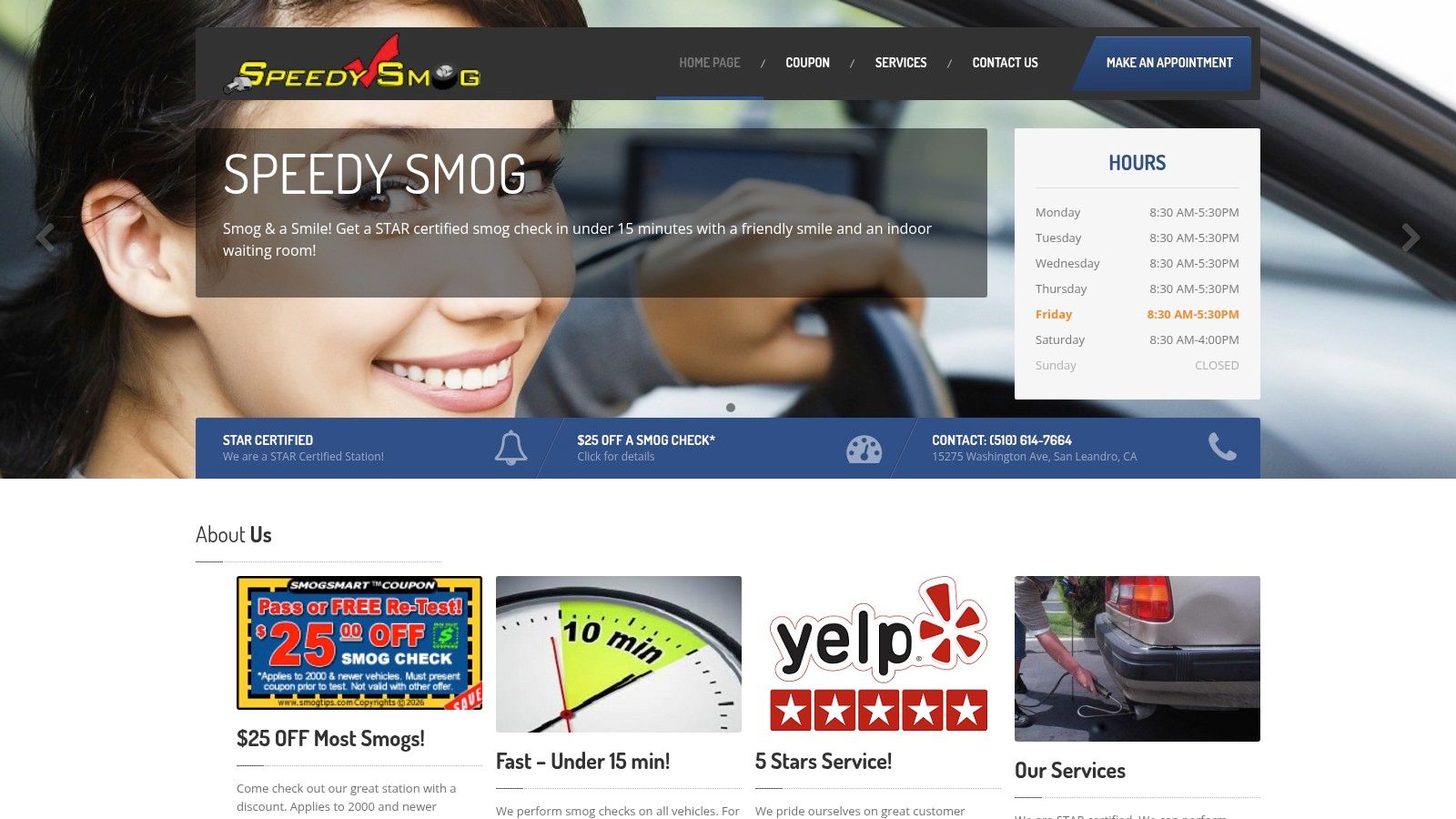
Speedy Smog is the strongest starting point for San Leandro drivers who want a quick STAR-certified inspection and a local coupon to check first. The shop advertises a periodic $25-off promotion for most smogs on 2000 and newer vehicles, but the offer's availability and exact restrictions can change. The station doesn't publish full standard pricing online, so treat the coupon as a discount offer, not a guaranteed final total.
Speedy Smog handles a broad vehicle mix, including newer cars, 1999 and older vehicles, diesels, and hybrids. Its STAR certification means the station meets higher Bureau of Automotive Repair performance standards, and its inspections are accepted for DMV registration. The shop also emphasizes transparent pricing, a clean indoor waiting room, and friendly customer service, which makes it a practical choice when speed and a comfortable visit matter as much as the coupon.
For most 2000-and-newer vehicles, the business says testing typically takes about 10–15 minutes, though the actual visit can vary with vehicle condition, wait time, and paperwork. The location is 15275 Washington Ave in San Leandro, and the shop operates Monday through Saturday. Confirm Speedy Smog's current hours before driving over, especially if your registration deadline is close.
Check these details before arrival
- Vehicle fit: Ask whether the $25 offer applies to your fuel type, model year, and test purpose.
- Final total: Confirm the inspection charge, mandatory certificate fee, and any vehicle-specific add-ons.
- Retest terms: Ask whether a retest is included with the current promotion.
- Availability: Call (510) 614-7664 to verify the offer and hours before you leave.
Speedy Smog is the best local pick when you have a qualifying newer vehicle and value fast, STAR-certified service. It's less suitable as a blind choice if you need a fixed all-in price or have an older, diesel, or unusual vehicle that the coupon may treat differently.
Practical rule: Call before you go. A published discount is useful only when the station confirms that your vehicle qualifies.
2. EZ Star Smog Oakland for transparent online terms
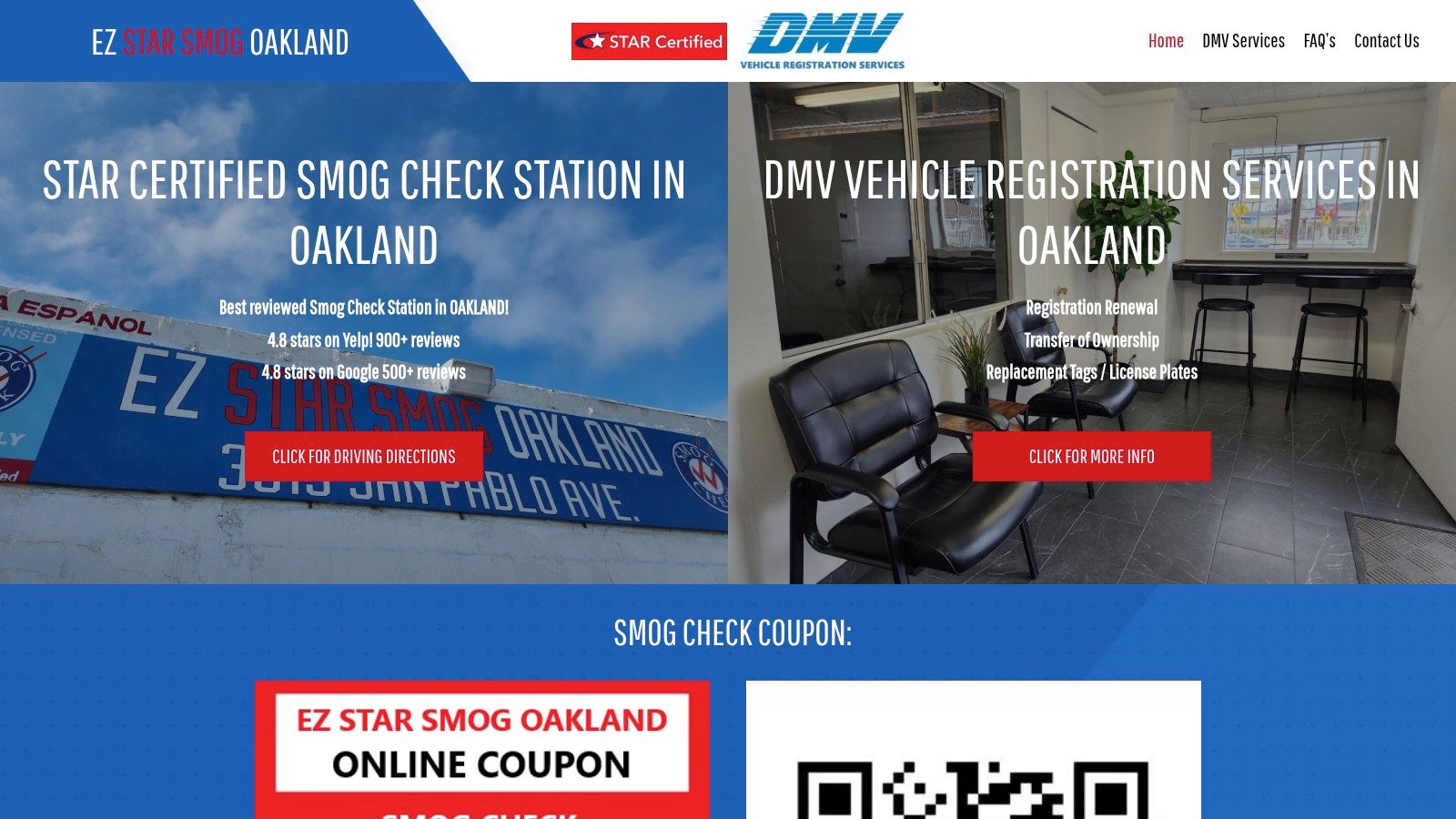
EZ Star Smog Oakland suits drivers who prefer an online promotion with clearly stated restrictions. The offer is aimed at most 2000-and-newer vehicles and is listed as valid through December 31, 2026, according to the station's coupon terms. That long validity window makes it easier to save the offer before a renewal visit, but you still need to verify that the page remains current when you book or walk in.
The main advantage is clarity. The promotion identifies exclusions rather than leaving drivers to discover them at check-in. Diesel vehicles, certain brands, and oversized vehicles are excluded, and the online promotion doesn't include a retest. If your car has a higher chance of needing additional work or a second inspection, that missing retest protection can outweigh the advertised savings.
The Oakland and Emeryville-area location is STAR certified, and no appointment is required at the East Bay station. That combination works well for a standard qualifying vehicle when you want a straightforward visit rather than a complicated booking process. Review the offer at EZ Star Smog Oakland and keep the coupon available on your phone or in printed form if the station's current instructions require it.
Before leaving home, check the vehicle exclusions, ask whether the promotion applies to your specific brand, and confirm the certificate fee and final amount. Don't assume that the stated promotional price includes every charge. California stations must provide an estimate before work begins, and inspection prices aren't regulated statewide, so the offer should be compared with the complete quoted total, not just the promotional line.
3. Official Smog Check Test Only in Oakland
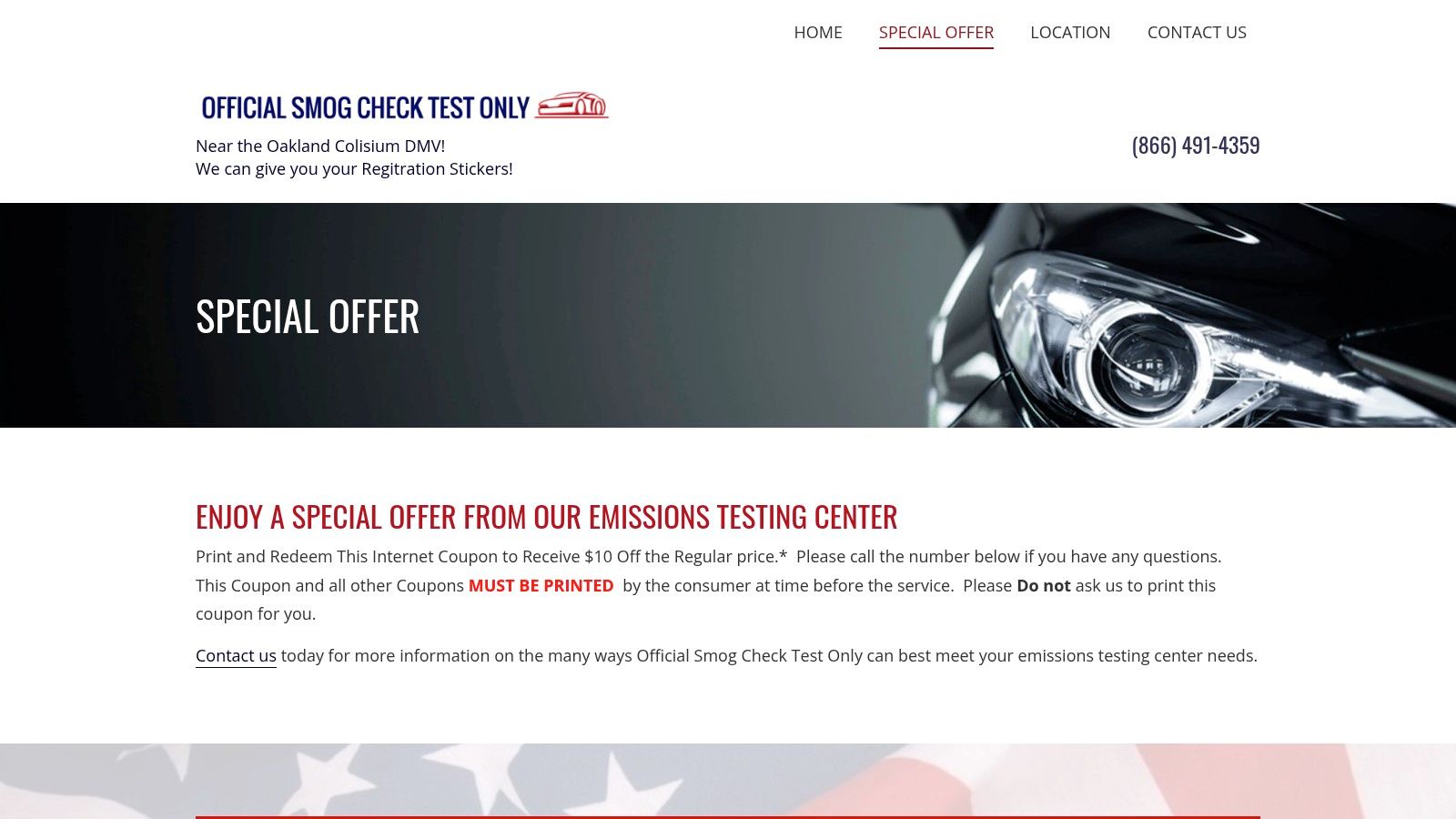
Bring paper if you choose the Official Smog Check Test Only promotion. The Oakland station, located near the Coliseum and I-880, offers $10 off regular-priced vehicles, but the coupon must be printed. Its page lists the $8.25 state certificate fee separately, so compare the complete transaction rather than treating the discount as the final price. The Bureau of Automotive Repair identifies the certificate fee as part of the smog-check transaction.
The offer covers more test types than a narrowly targeted gasoline-vehicle deal. The station lists renewals, change-of-ownership inspections, STAR tests, diesel tests, and other regular tests. That range suits drivers handling a transfer or bringing a diesel vehicle, provided the vehicle falls within the station's applicable category.
Redemption is the deciding factor. A phone display isn't accepted, and a screenshot cannot replace the required paper coupon. Print the current offer before leaving home, then verify that your inspection qualifies and that your vehicle receives the regular discount rather than another price category.
Use this quick check before driving to the station:
- Print the coupon: Carry a physical copy for check-in.
- Confirm eligibility: Ask whether your renewal, transfer, STAR, or diesel test qualifies.
- Add the certificate fee: Include the state charge in your comparison.
- Get the full estimate: Confirm the total before work begins.
Review and print the offer at Official Smog Check Test Only. Choose it for broad test coverage and a separately identified certificate charge. Skip it if you cannot print or need retest protection.
4. Smog Xpress in Richmond for retest protection
Smog Xpress is the clearest choice among these offers if your main concern is what happens after a failed initial inspection. Its Richmond promotion advertises $20 off any smog, any year, plus a free retest. That structure has more practical value than a larger-looking inspection discount when you're worried about paying again after a failure.
The offer is designed for broad vehicle coverage. Smog Xpress identifies support for hybrids, diesels, older vehicles, and out-of-state vehicles, and the business operates two Richmond locations. The San Pablo Avenue site offers extended hours and walk-in service, which helps drivers dealing with a short registration timeline or an unpredictable work schedule.
The restriction is simple but important: one coupon per vehicle, and you must present the offer at check-in. Save it where you can access it immediately, then show it before the inspection begins. If you wait until checkout, the station may not apply it.
Review the current details at Smog Xpress, and compare the complete quote rather than the $20 reduction alone. Speedy Smog's local smog-check deals page is also useful for comparing how other East Bay promotions structure discounts and retests.
A free retest matters most when the vehicle is uncertain. Confirm what the station's retest policy covers before relying on it.
Ask about the certificate fee, any vehicle-type surcharge, the time limit for the retest, and whether repairs must be performed at the station. Those terms determine the true value of the promotion. Smog Xpress is the best fit here for a driver who prioritizes failure-risk protection and flexible Richmond access over a coupon limited to a narrow model-year group.
5. Star Smog Express on 23rd Street
Choose Star Smog Express if you need a mobile coupon and a broad vehicle fit. Its $20-off-any-smog, any-year promotion with a free retest covers renewals, out-of-state inspections, older vehicles, and diesel testing. The station is STAR certified, which matters when your DMV transaction requires a STAR inspection.
The practical advantage is redemption by phone. You can show the coupon on your phone, without printing or carrying paper. Open or save the offer before leaving. Reception may be unreliable, and the station may require the coupon at check-in rather than after testing.
Schedule carefully. The 23rd Street location is closed Sundays, and the coupon is generally limited to one use per vehicle. Do not assume it applies to multiple visits or combines with another offer.
Before driving to Richmond, check four details: whether the location's current hours fit your schedule, whether the coupon loads on your phone, how the free retest is triggered and how long it remains available, and whether the offer covers your vehicle category. Confirm the treatment for older vehicles, diesel testing, and out-of-state inspections directly with the station.
Review the current offer at Star Smog Express. Keep it open at check-in, and ask for the complete quote, including any certificate fee or vehicle-related charge. For comparison, STAR-certified smog check coupons in the East Bay can help you weigh mobile redemption against another station's location, hours, or coupon restrictions.
6. Express Smog Station for year-specific eligibility
Express Smog Station is the best match for drivers who don't want to guess whether a coupon applies to an older vehicle. The Albany and Berkeley-border station separates its printable offers by vehicle year group, including 2000-and-newer vehicles and 1995-and-older vehicles. That organization gives older-car owners a clearer starting point than a generic “most vehicles” promotion.
The coupon amounts aren't displayed directly on the landing page. You need to open the relevant offer and print it to see the details, so review the document before driving over. The final amount also depends on the vehicle and the state certificate fee. A year-specific label helps with eligibility, but it doesn't replace a call to confirm the complete quote.
The station is STAR certified and serves drivers in Albany, Berkeley, El Cerrito, Richmond, and nearby North Oakland areas. It also transmits the certificate electronically to the DMV, which can simplify a renewal visit by reducing paperwork and helping the station submit the result directly.
Use Express Smog Station's coupon page to select the correct year group, open the offer, and print it. Then verify the model year, test purpose, certificate transmission, and any fuel-type restrictions. Bring the printed coupon to the counter, even if the station's current policy has changed to allow digital presentation.
This offer is particularly practical for owners of older vehicles who regularly encounter exclusions on newer-car promotions. It's not the quickest option to evaluate, because the amount is hidden inside the printable coupon, but the year-specific structure reduces one common source of confusion.
7. Smog Check Oakland on High Street
Choose Smog Check Oakland on High Street when mobile redemption and an East Oakland location matter more than a clearly stated discount. The station advertises a coupon-style price and accepts the offer on your phone, so printing is unnecessary. It also promotes approximately 15-minute service, but the line, vehicle, and inspection requirements can change the actual wait.
The shop is STAR certified and provides test-only service. That suits drivers seeking an inspection without repair work. The promotion presents a price rather than one universal discount, so treat it as an offer to verify, not a guaranteed final cost. The amount may depend on the vehicle category.
Before leaving, call if you own an older vehicle or drive a diesel. Confirm that the advertised price applies, ask whether the certificate fee is separate, and check for any added charge tied to a special test type. Mobile redemption saves a print step, but it does not settle eligibility or the final bill.
Use this short phone checklist:
- Coupon price: Ask what the displayed price means for your exact vehicle.
- Vehicle category: Confirm older-model and diesel eligibility.
- Certificate fee: Check whether the state charge is added separately.
- Service timing: Treat the quick-turnaround claim as an estimate, not a reserved appointment.
Review the current offer at Smog Check Oakland before visiting. Select this station if showing a coupon on your phone is the deciding factor. Drivers who want a retest included should compare Smog Xpress, while those seeking a clearly stated fixed discount may find Star Smog Express easier to evaluate.
7-Station Smog Check Coupon Comparison
| Provider | 🔄 Process / Complexity | 💡 Resource requirements & coupon notes | ⚡ Speed / Efficiency | 📊 Expected outcomes & acceptance | ⭐ Key advantages |
|---|---|---|---|---|---|
| Speedy Smog | Walk-in friendly; STAR-certified; Mon–Sat hours (confirm) | Frequent $25-off promo (terms vary); call to confirm pricing/hours | 10–15 minutes for most 2000+ vehicles | STAR-certified; accepted for DMV registration | Very fast service; broad vehicle coverage; high customer service ratings |
| EZ Star Smog Oakland | STAR-certified; no appointment required at East Bay location | Online promotional price valid through 12/31/2026; clear exclusions (diesel, certain brands, oversized) | Generally quick; walk-in friendly | STAR-certified; accepted for DMV when eligible | Transparent, long-valid coupon terms and local presence |
| Official Smog Check Test Only (Oakland) | Test-only station; straightforward check-in | Printable $10-off coupon required (phone display not accepted); state certificate fee disclosed ($8.25) | Efficient test-only workflow | Covers STAR, diesel, renewals; accepted for DMV | Clear fee disclosure and simple printable discount |
| Smog Xpress (Richmond) | Two locations; walk-in and extended hours (San Pablo Ave open 7 days) | $20-off any-year coupon, must present at check-in; one coupon per vehicle | Extended hours and walk-in reduce wait; free retest included | STAR-certified; handles hybrids, diesels, older/out‑of‑state vehicles | Free retest lowers failure risk; multiple locations and extended hours |
| Star Smog Express (Richmond – 23rd St) | STAR-certified; accepts phone-shown coupons; closed Sundays at 23rd St | $20-off any-year coupon; phone display accepted; likely one-use limit | Typical quick smog workflow; phone coupon speeds check-in | STAR-certified; supports renewals, out‑of‑state and diesel tests | Free retest included; coupon convenience via phone display |
| Express Smog Station (Albany/Berkeley) | STAR-certified; year-group coupon workflow; e-transmit to DMV | Printable coupons separated by vehicle year (open to view/print for details) | Efficient with DMV e-transmission | STAR-certified; electronic certificate transmission to DMV | Year-specific coupons for older vehicles; DMV e-transmit convenience |
| Smog Check Oakland (High St @ Valero) | Test-only; mobile-friendly coupon redemption; central location | Phone-displayable coupon accepted; confirm pricing for older/diesel vehicles | Promoted ~15-minute throughput | STAR-certified; test-only service available | Fast claimed throughput and mobile coupon convenience |
Confirm the Fine Print Before You Drive Over
The best California smog check coupon depends on your vehicle and the kind of protection you need. A newer gasoline vehicle may fit Speedy Smog's periodic $25-off promotion, while a diesel, hybrid, older vehicle, or out-of-state vehicle may need a station with broader stated eligibility. A driver worried about failing should prioritize a free retest, while someone who can't print should choose a mobile coupon.
Use this short decision check before leaving:
- Match the vehicle: Confirm the model year, fuel type, brand, size, and whether the offer covers hybrids, diesels, or older vehicles.
- Match the test: Verify renewal, change of ownership, STAR, diesel, out-of-state, or other test-purpose eligibility.
- Check retest protection: Ask whether a retest is included, what conditions apply, and whether the offer is valid for one vehicle only.
- Confirm redemption: Print the coupon when required, or load the mobile offer before arriving if phone display is accepted.
- Ask for the total: Confirm the inspection price, the mandatory $8.25 certificate fee, and any vehicle or administrative add-ons. BAR's smog-check guidance explains that stations must provide an estimate before work begins.
- Verify the visit: Check current availability, hours, location, and coupon expiration details with the station.
- Keep the offer ready: Present it at check-in, not after the inspection.
For San Leandro drivers seeking a fast local visit, Speedy Smog is the clearest recommendation when the periodic $25-off promotion applies to the vehicle. It combines STAR certification, support for newer and older vehicles, diesels, and hybrids, and typical testing of most 2000-and-newer vehicles in about 10–15 minutes. Still, call first. None of these offers should be treated as a guaranteed final price until the station confirms the exact terms for your vehicle.
Speedy Smog offers STAR-certified testing in San Leandro, support for newer and older vehicles, diesels, and hybrids, and periodic $25-off promotions for qualifying newer vehicles. Check the current offer and visit Speedy Smog to confirm eligibility, hours, certificate fees, and retest terms before your DMV deadline.
Gasoline, hybrid, and alternative-fuel vehicles from model year 1976 onward generally need a California Smog Check for registration renewal, while diesel vehicles from model year 1998 onward generally fall under the program. For renewals, the first eight model years are usually exempt, while a change of ownership uses a shorter four-model-year exemption.
You may be dealing with this right after opening a DMV renewal notice. You expected a routine payment, but the notice says a smog certificate is required before registration can move forward. At the station, someone mentions your model year, fuel type, and possibly STAR certification, and suddenly a simple renewal feels like a puzzle.
The confusion makes sense. California doesn't use one universal rule for every vehicle. The answer depends on what powers the vehicle, when it was built, why you're registering it, and whether the DMV has directed you to a particular type of station. A neighbor's exemption may not apply to your hybrid, diesel van, or recently purchased car.
The easiest way to understand the system is to treat it like a decision tree. Start with fuel type, then check the model-year window, then look for a vehicle or transaction exemption. Finally, confirm whether your DMV notice requires a STAR station.
Table of Contents
- Why This Question Trips Up So Many California Drivers
- The Core Rule That Decides If Your Car Needs Testing
- How Model Year and Ownership Change the Answer
- Vehicles and Situations That Skip the Test Entirely
- When the DMV Expects You to Complete the Smog Check
- STAR, Test-Only, and Regular Smog Stations Explained
- A Simple Decision Framework for Your Own Vehicle
- Quick Answers to the Questions That Come Up Next
Why This Question Trips Up So Many California Drivers
A driver in San Leandro can walk into a DMV office expecting to renew registration in a few minutes and discover that the transaction is waiting on an emissions certificate. The clerk may ask for a smog result, mention that the vehicle is outside its new-car exemption, and tell the driver to find a STAR station if the registration record is directed.
That moment creates several understandable questions. Does every car need a test? Does a hybrid count as electric? Does an older diesel follow the same rule as a gasoline sedan? Does the station need to be STAR-certified, or can any licensed shop handle it?
California separates these answers across several layers:
- Fuel type: Gasoline, hybrid, alternative-fuel, diesel, and battery-electric vehicles don't all enter the program through the same gate.
- Model year: The state uses specific model-year cutoffs rather than a vague definition of “old.”
- Transaction type: Renewal and change of ownership use different exemption windows.
- Vehicle class: Motorcycles and electric vehicles are treated differently from ordinary passenger cars.
- Station direction: Some vehicles can use a regular licensed station, while others must go to a STAR facility.
The result is a rule that seems inconsistent until you put the layers in order. A newer gasoline car may be exempt at renewal but still face a different requirement during a transfer. A hybrid may be exempt while it remains inside the new-car window, then enter the regular cycle later. An electric vehicle remains outside the standard Smog Check requirement because it has no internal combustion engine.
A useful way to think about it: California first asks whether your vehicle belongs to a covered category. It then asks whether an age or transaction exemption removes the immediate testing requirement.
That framework is more reliable than comparing your car with a friend's car. Their vehicle may have a different fuel system, model year, registration event, or DMV instruction. Once you identify those four details, the answer becomes much easier to narrow down.
The Core Rule That Decides If Your Car Needs Testing
Start with fuel type, then check the model year. California's main Smog Check program covers gasoline, hybrid, and alternative-fuel vehicles from model year 1976 and newer. Diesel vehicles use a separate cutoff beginning with model year 1998. The California DMV Smog Inspections guidance lists these coverage rules and the vehicle classes that are exempt.
The decision works like two tracks. Gasoline, hybrid, and alternative-fuel vehicles follow one track. Diesel vehicles follow another. After choosing the correct track, you check whether a newer-vehicle exemption applies to the registration event.
| Fuel Type | First Model Year in Program | Testing Path |
|---|---|---|
| Gasoline | 1976 and newer | General Smog Check rules, subject to applicable exemptions |
| Hybrid | 1976 and newer | General Smog Check rules, subject to applicable exemptions |
| Alternative fuel | 1976 and newer | General Smog Check rules, subject to applicable exemptions |
| Diesel | 1998 and newer | Diesel-specific Smog Check path, subject to applicable exemptions |
A 2010 gasoline Honda Civic falls within the covered gasoline range. Its owner then checks whether the vehicle is still inside a renewal exemption or needs an inspection. A 2005 diesel Sprinter belongs on the diesel track because its model year meets the diesel cutoff. Applying the gasoline timeline to it can produce the wrong answer.
A vehicle can therefore be both covered and temporarily exempt. The program cutoff answers, “Does this vehicle category belong in the system?” The age exemption answers, “Does the DMV require a certificate for this transaction now?” At a STAR station such as Speedy Smog, that distinction determines which testing path the technician checks before beginning the inspection.
Electric vehicles and motorcycles follow a separate result. The DMV identifies electric vehicles and motorcycles as exempt vehicle classes regardless of age. A battery-electric Tesla, Chevrolet Bolt, or Rivian does not enter the ordinary gasoline or diesel decision tree. There is no internal-combustion emissions test for these vehicles under the standard Smog Check program.
How Model Year and Ownership Change the Answer
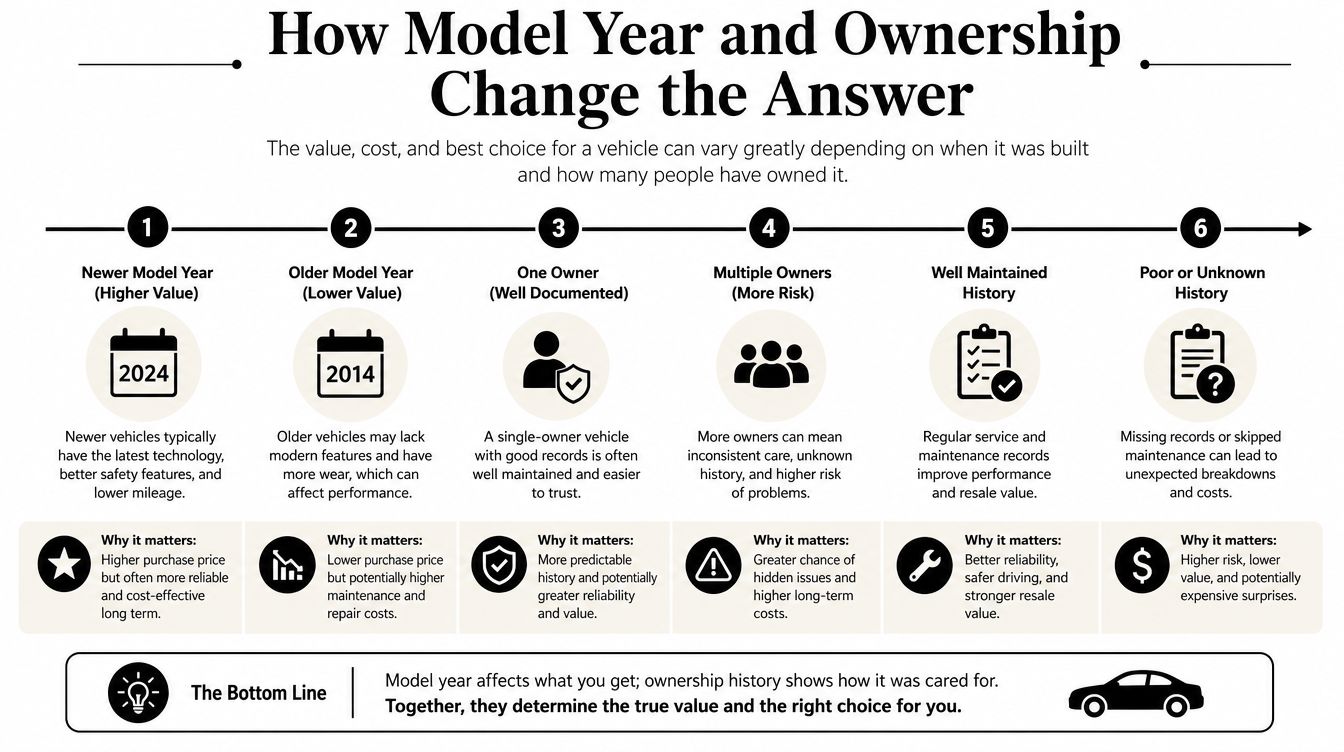
A used 2018 Civic can still be exempt during renewal, while a newer vehicle may face a different rule when its title changes hands. California bases the answer on the vehicle's model year and the transaction, not only on when you bought it or how many miles it has traveled.
For gasoline, hybrid, and alternative-fuel vehicles, the renewal exemption covers the first eight model years. The extension followed a law signed in 2017 and effective January 1, 2019, as explained in SEMA's explanation of the extended California exemption. During model years seven and eight, the owner pays an annual $25 smog abatement fee instead of completing the usual biennial inspection.
For a 2026 renewal, a 2018 Civic is at the edge of that eight-model-year window. A 2022 RAV4 is newer and would generally remain within the renewal exemption. The key is that California counts the vehicle's model year, not the purchase date. At a STAR station such as Speedy Smog, the technician first matches that year to the transaction shown on your registration notice.
Ownership transfer follows a shorter timeline. California applies a four-model-year exemption for gasoline, hybrid, and alternative-fuel vehicles during title transfer. As a result, a car may avoid a renewal test but still need a smog certificate when ownership changes. Renewal and transfer are separate branches of the decision tree.
Use the timeline, not the odometer
California's exemption follows vehicle age and emissions-system service time. Catalytic converters, oxygen sensors, and onboard diagnostic systems may continue working properly, but the inspection requirement begins once the vehicle moves beyond the newer-car window. Mileage can guide maintenance, but it does not replace the model-year rule.
Use this sequence:
- Confirm the model year on the registration or title.
- Identify the transaction, renewal or ownership transfer.
- Apply the matching age rule, eight model years for renewal or four for transfer.
- Follow the DMV notice, which controls the immediate requirement.
For a focused explanation of the new-car rule, review California's new-car Smog Check exemption. Bring the registration notice to a licensed station if the model-year count is unclear.
Vehicles and Situations That Skip the Test Entirely
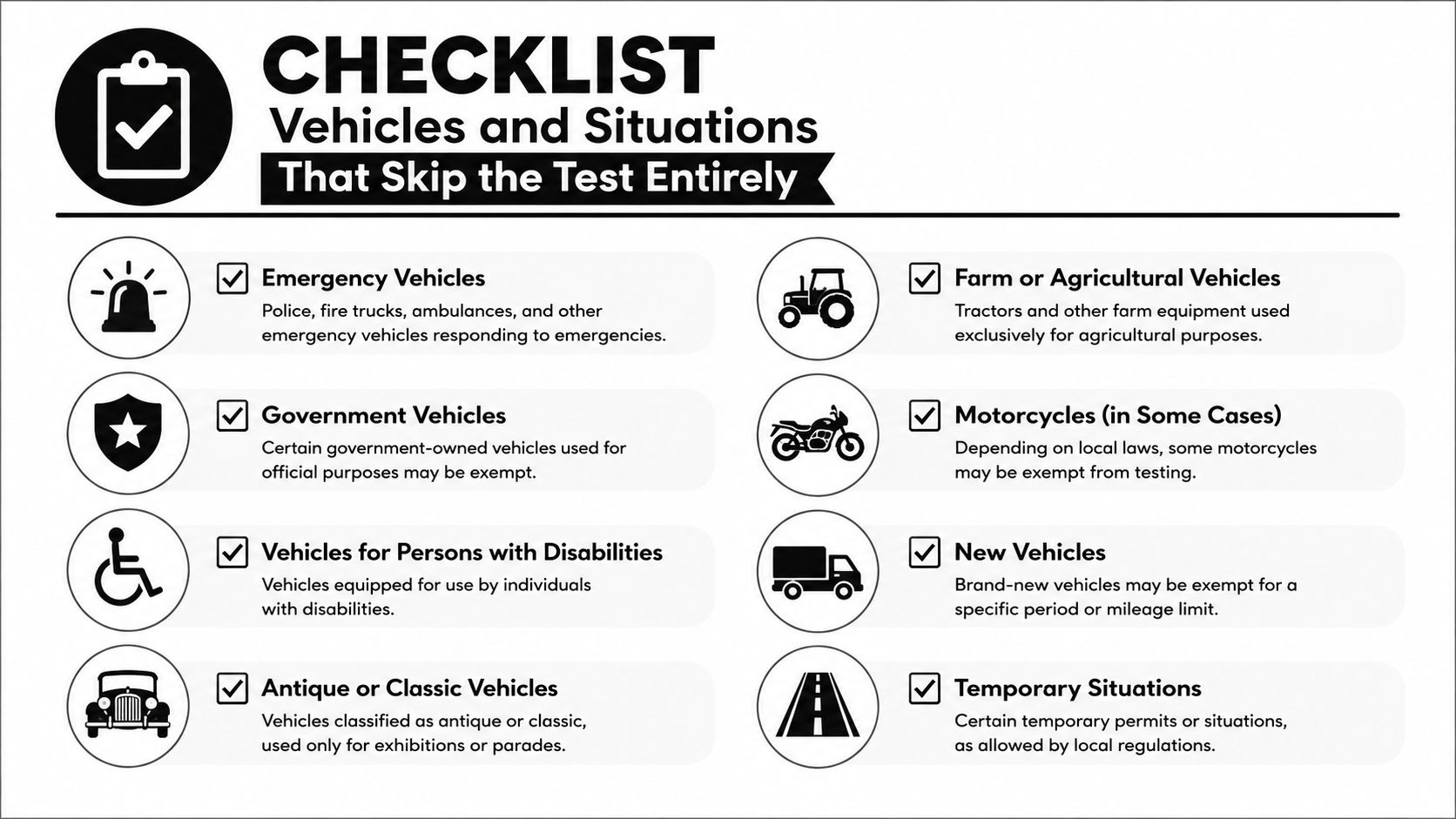
A vehicle can be exempt because of its design, its weight class, or the registration situation. Those categories work like separate branches in a decision tree. Start with the vehicle, then check the paperwork before assuming the DMV record is clear.
Start with the vehicle itself
- Battery-electric vehicle: A vehicle powered only by electricity, such as a Tesla, Chevrolet Bolt, or Rivian, does not receive the ordinary Smog Check.
- Motorcycle: Motorcycles are outside the standard Smog Check program.
- Trailer or specialized equipment: Trailers and certain farm or off-road vehicles may not follow the ordinary passenger-vehicle process.
- Newer vehicle at transfer: A gasoline, hybrid, or alternative-fuel vehicle within the applicable four-model-year ownership exemption may not need a transfer test. That rule concerns the transfer branch, not every registration event.
- Heavy diesel vehicle: A diesel truck above the applicable GVWR threshold follows a separate heavy-duty emissions path instead of the ordinary light-vehicle Smog Check process.
The official Smog Inspections page lists the main vehicle-class rules. A STAR station such as Speedy Smog can inspect an eligible vehicle, but it cannot change the vehicle's classification or decide whether the DMV accepts an exemption.
Then check the registration circumstances
The same car can receive a different answer depending on where it was registered and what transaction is taking place. A vehicle entering California from another state generally needs an inspection for its first California registration, even if the owner assumes its age makes it exempt. Transfers between immediate family members, vehicles previously registered elsewhere, planned non-operation status, and active-duty military assignments outside California can involve different paperwork treatment.
Do not rely on a verbal explanation alone. The DMV may continue showing a pending smog requirement until the correct form, status, or transaction information is recorded. California smog waiver guidance explains when a waiver discussion may apply, while the DMV applies the decision to the registration record.
Paperwork matters: A vehicle can qualify on paper and still generate a DMV block if the exemption was not claimed through the correct process.
When the DMV Expects You to Complete the Smog Check
A renewal notice gives you the clearest starting point. If it lists a Smog Check, the DMV expects a passing result before you complete registration, and the notice also shows the deadline. Waiting until the last few days can create a problem if the vehicle fails, needs repairs, or must be tested at a particular station.
At a station such as Speedy Smog, the result is sent electronically after the inspection. You usually do not need to bring a paper certificate to a DMV office, though keeping the paperwork helps document what happened. The electronic result can support renewal while it is still valid for that transaction.
A workable renewal routine
- Read the notice first. Look for Smog Check and confirm that it is listed as a registration requirement.
- Check the vehicle record. Confirm the model year and fuel type, and see whether the DMV specifies a STAR station.
- Test before the deadline. Leave time for diagnosis, repairs, and a retest if the vehicle does not pass on its first visit.
- Renew after transmission. Once the station submits the result, the DMV system can match it with the vehicle record.
- Act on a failure promptly. A failed inspection means the vehicle needs diagnosis or repair. An expired result is different because the test may no longer be usable for the registration transaction.
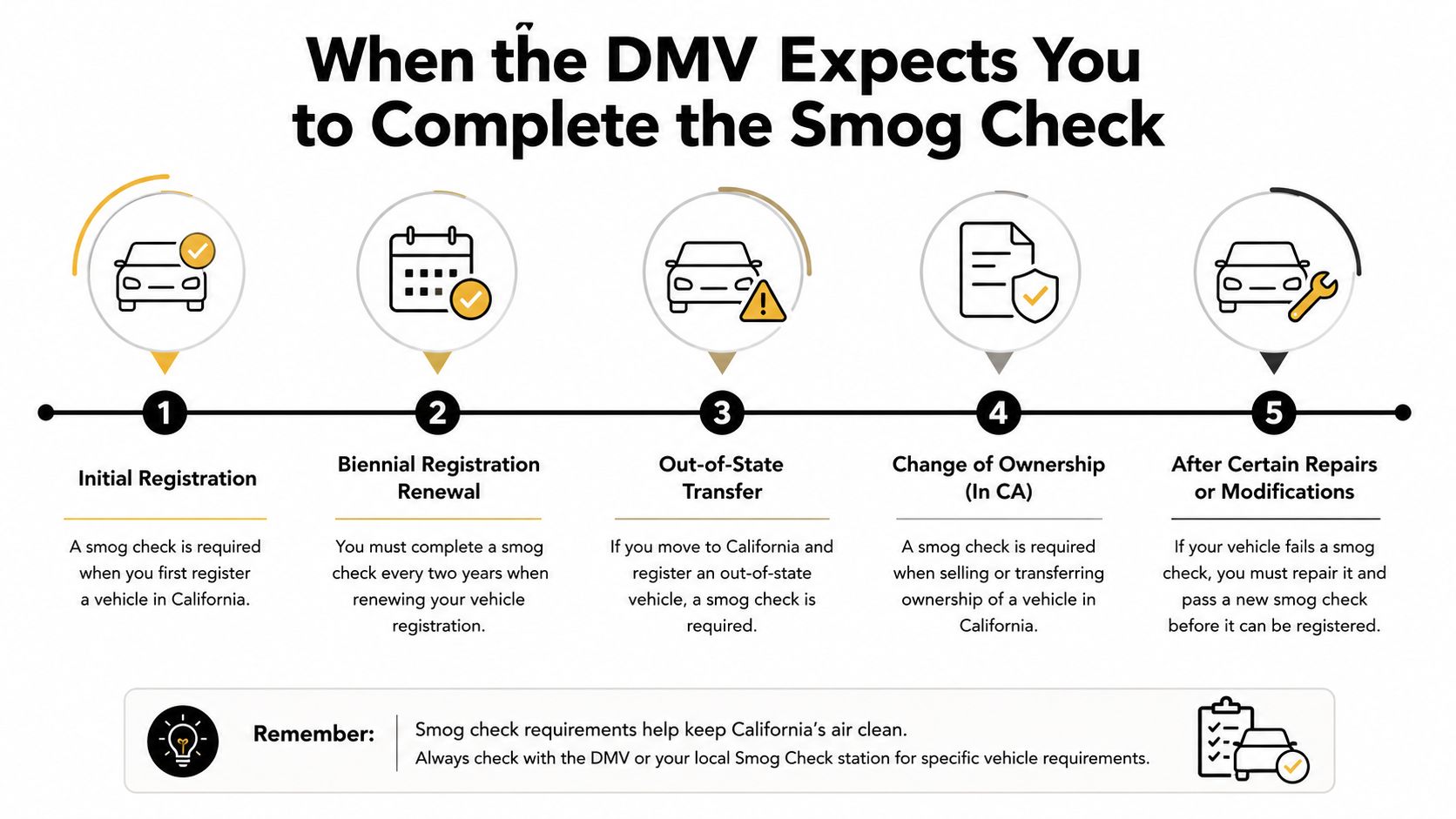
Ownership transfers follow their own timing and paperwork. Before handing over the keys, the seller and buyer should confirm who must provide the certificate and whether the vehicle qualifies for a transfer exemption. A car arriving from another state generally needs a California registration inspection, because the previous state's test may not satisfy California's requirement.
A registration that has already expired needs prompt attention. Continuing to drive while the issue remains open can lead to a registration hold, late fees, and a failed inspection turning a routine renewal into a larger administrative problem.
STAR, Test-Only, and Regular Smog Stations Explained
The station name determines what happens after you arrive. “Regular,” “Test-Only,” and “STAR” describe different testing and repair permissions, not three interchangeable labels.
A regular Smog Check station can generally inspect the vehicle and perform repairs. For example, a 2019 Prius that passes on the first try can leave with a clean certificate, while the technician can discuss emissions-related repairs on the same visit if a problem appears. That avoids taking the test results to another business before deciding what to do.
A Test-Only station performs the inspection but cannot repair the vehicle. If the car fails, you take the results to a repair facility, then return for a retest. This arrangement fits drivers who already have a trusted repair shop or prefer to keep testing separate from repair work.
STAR certification is a higher certification level administered through California's Bureau of Automotive Repair. A STAR business may be Test-Only or repair-capable, so the STAR label alone does not tell you whether repairs are available there. The DMV or BAR may direct certain vehicles, including vehicles identified as high emitters or vehicles with a previous failure, to a STAR station.
| Station Type | Can Test? | Can Repair? | When Required |
|---|---|---|---|
| Regular licensed station | Yes | Often | When the DMV hasn't directed another station type |
| Test-Only station | Yes | No | When a test-only route is allowed or specified |
| STAR Test-Only station | Yes | No | When the record requires STAR and repairs happen elsewhere |
| STAR repair station | Yes | Yes | When STAR is required and you want testing plus repair capability |
STAR is not required for every California driver. Check the renewal notice or vehicle record before booking. If it directs you to STAR, a non-STAR shop may produce a test result that does not satisfy the registration requirement.
For a closer look at the certification distinction, see what a STAR Smog station is. Speedy Smog in San Leandro offers STAR-certified testing, along with services for gasoline, hybrid, and diesel vehicles within its licensed coverage.
A Simple Decision Framework for Your Own Vehicle
You don't need to memorize every DMV phrase. Use four questions, in order, and stop as soon as you find a clear exemption.
One, identify the powertrain
Write down whether the vehicle is gasoline, hybrid, alternative-fuel, diesel, or battery-electric. Plug-in capability doesn't automatically make a vehicle electric for Smog Check purposes. If it has an internal combustion engine, treat it as a hybrid or fuel-powered vehicle and apply the appropriate model-year rule.
Two, apply the age and class screens
For a renewal, compare a covered gasoline, hybrid, or alternative-fuel vehicle with the eight-model-year exemption. For ownership transfer, use the four-model-year exemption. Then check whether the vehicle is an always-exempt class, such as a battery-electric vehicle or motorcycle.
Three, read the DMV direction
The vehicle's registered location and DMV instruction can affect station choice. If the record directs the vehicle to STAR, book with a STAR-certified facility rather than assuming any licensed station will satisfy the requirement. A directed vehicle should follow that instruction for the initial test and any required retest.
Four, bring the useful documents
Take the renewal notice, registration information, and identification needed by the station or DMV. If the vehicle has had emissions repairs, keep the repair invoice and diagnostic information available. These documents won't make a failing vehicle pass, but they help the technician understand what happened and what the DMV expects.
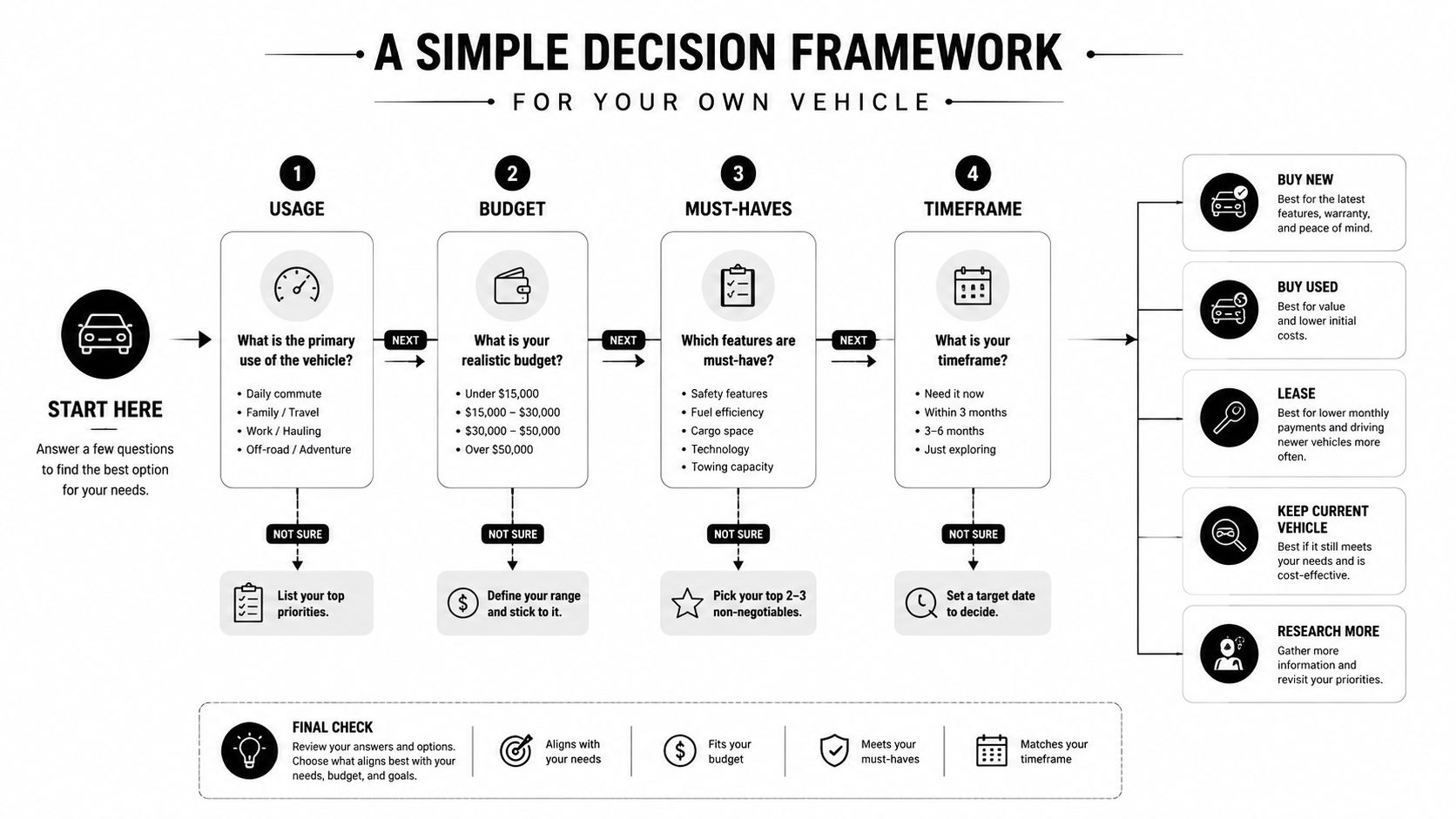
The same sequence works for a 2003 Civic, a 2018 F-150, or a 2021 Prius. The vehicle's badge doesn't decide the answer by itself. Fuel type, model year, registration event, location, and exemption status do.
If you want to see how the process feels at a station, this video offers a visual introduction:
Quick Answers to the Questions That Come Up Next
Does a plug-in hybrid need a Smog Check?
Usually, yes once it moves beyond the applicable renewal exemption. A plug-in hybrid still has an internal combustion engine, so it belongs with hybrid vehicles rather than battery-electric vehicles. A fully electric vehicle has no gasoline or diesel engine and remains exempt from the standard Smog Check requirement.
What happens when I bring a car from another state?
First California registration is a separate event from an ordinary renewal. A vehicle brought from another state can need a California inspection before it receives its first California registration, even if its owner believes the vehicle is still new. Check the vehicle's model year and the transaction type, then follow the DMV notice rather than relying on the prior state's inspection history.
Are heavy diesel trucks tested at an ordinary smog station?
Heavy-duty diesel vehicles follow a different emissions compliance path based on vehicle classification and weight. The station and program requirements can differ from those for a diesel passenger vehicle or light truck, so confirm the vehicle's GVWR and ask for a diesel-qualified inspection location before arriving.
Can a trailer or motorcycle need a Smog Check?
Trailers and motorcycles don't follow the ordinary passenger-car Smog Check process. They may still have registration, safety, equipment, or other compliance obligations, so exemption from Smog Check isn't the same as exemption from every DMV requirement.
Can I retest at another station after a failure?
A vehicle that fails can generally be taken for diagnosis, repair, and retesting. If the DMV or BAR directed the vehicle to STAR, keep the required STAR path in place for both the initial inspection and the retest. Save the failure report because it tells the repair technician which emissions systems need attention.
What if registration has already lapsed?
Act quickly. A long registration lapse can create back fees, penalties, and a blocked renewal, while a failed test adds repair and retest steps. The cleanest approach is to read the current DMV notice, verify the exact requirement, and schedule the appropriate inspection before the problem grows.
The answer to what cars need a Smog Check in California comes down to a manageable sequence. Identify the fuel type, apply the model-year and transaction exemption, check the vehicle-class exceptions, and follow any STAR direction shown by the DMV.
Bring your renewal notice and vehicle information to Speedy Smog in San Leandro for a licensed Smog Check, including STAR-certified testing for vehicles that require it. The shop serves gasoline, hybrid, and diesel vehicles within its approved service range and can help you understand the next step if your vehicle doesn't pass.
Gasoline, hybrid, and alternative-fuel vehicles that are eight model years old or newer are exempt from California's biennial Smog Check, but owners pay a smog abatement fee instead until the first required test. A 2020 model-year vehicle, for example, would first need a renewal Smog Check in 2028.
You've just bought a new car, the DMV renewal notice mentions smog, and now you're wondering whether California expects you to find a test station immediately. I see this confusion constantly at the shop, especially from drivers who assume “new” means “no emissions paperwork.” California's rule is simpler than the notice makes it sound, but the clock is based on the vehicle's model year, not the day you bought it.
That distinction matters when a car changes owners, arrives from another state, or reaches the end of its exemption window. The right calendar date can save you an unnecessary appointment. The wrong assumption can send you to the DMV without the certificate you need.
Table of Contents
- Why New Car Owners Ask About California Smog Checks
- The 8 Model Year Exemption Explained
- First Time Registration Rules for New California Vehicles
- What Happens at a Smog Check for 2000 and Newer Cars
- When You Need a STAR Certified Station Instead
- Common Myths That Trip Up New Car Owners
- Your Quick Checklist Before Your Next Smog Test
Why New Car Owners Ask About California Smog Checks
A driver may buy a 2025 RAV4 Hybrid from a California dealership, enjoy it for months, and then receive a renewal notice that includes smog-related language. The notice doesn't necessarily mean the vehicle needs an immediate inspection. It may reflect the DMV's registration process and the applicable smog abatement fee during the new-car exemption period.
California's emissions program and the DMV registration system work together, but they aren't the same thing. The California Air Resources Board establishes emissions-control requirements, while the DMV uses Smog Check compliance information when processing certain registrations and renewals. The California DMV's Smog Inspections guidance confirms that newer gasoline, hybrid, and alternative-fuel vehicles generally follow an exemption pathway rather than disappearing from the program.
Four situations that create confusion
The question usually comes from one of these situations:
- A renewal notice arrives early: The driver sees “smog” on the notice and assumes a test is due, even though the vehicle may still be inside the exemption window.
- An out-of-state title comes to California: Initial California registration can involve requirements that don't apply to a California dealer sale.
- The paperwork has no obvious smog line: Owners may not know whether the dealer handled the matter or whether they must visit a station.
- A dealer inspection gets confused with a state inspection: A dealer may inspect a vehicle before sale, but that doesn't automatically answer every DMV registration requirement.
Three owner groups ask me about this most often. Recent buyers want to know whether the dealer completed everything. Owners approaching the eight-model-year boundary need a precise first-test year. Buyers of cars that sat on a dealer lot may see a current model year while the registration timeline has already begun.
The practical answer is to separate the questions. First, identify the model year and fuel type. Next, determine whether the registration is a California renewal or an initial California registration. Finally, check whether the DMV issued a directed requirement. That process tells you whether you need a test, a fee, a VIN verification, or just a normal renewal.
The 8 Model Year Exemption Explained
California's current rule gives gasoline, hybrid, and alternative-fuel vehicles eight model years or newer an exemption from the biennial Smog Check required for registration renewal. During that period, the owner pays a smog abatement fee with DMV renewal fees instead of bringing the vehicle to a test station, as described by the Bureau of Automotive Repair's vehicle inspection guidance.
The clock follows the model year printed on the vehicle records. It doesn't restart when you purchase the car, move to another county, or sell it to another California driver. A vehicle keeps the same model-year age throughout its life.
Use the model year, not the purchase date
Take a 2018 model-year vehicle. Under the eight-model-year calculation, it remains exempt through the 2025 renewal cycle and faces its first required test for the 2026 registration year. The owner may have bought it new, used, or from another state. Those purchase details don't change the model-year calculation.
The state extended the exemption from six model years to eight under AB 1274, effective January 1, 2019, and added a $25 annual smog abatement fee during the added exemption period, according to SEMA's explanation of California's new-car exemption change. The fee is the replacement for the inspection during the applicable exemption period. It isn't proof that the vehicle has passed a Smog Check.
Practical rule: If the renewal notice says a test is required, follow the notice. If you believe the notice conflicts with the model-year calculation, resolve it with the DMV before assuming the vehicle is exempt.
The exemption discussed here applies to regular biennial registration renewals. It doesn't erase every possible inspection obligation. A transfer-of-ownership transaction or a directed DMV notice can create a separate requirement. Electric vehicles and diesel vehicles also follow separate rules, so don't apply the gasoline and hybrid timeline blindly to every powertrain.
Find your first required test year
| Model Year | Exempt Through | First Required Test For |
|---|---|---|
| 2018 | 2025 renewal cycle | 2026 registration year |
| 2019 | 2026 renewal cycle | 2027 registration year |
| 2020 | 2027 renewal cycle | 2028 registration year |
| 2021 | 2028 renewal cycle | 2029 registration year |
| 2022 | 2029 renewal cycle | 2030 registration year |
For the broader rules and renewal details, keep the California smog check rules handy. The fastest approach is to write down the model year, add eight, and treat that year as the first renewal year to verify with the DMV. Don't wait until the registration deadline if the notice and your calculation disagree.
First Time Registration Rules for New California Vehicles
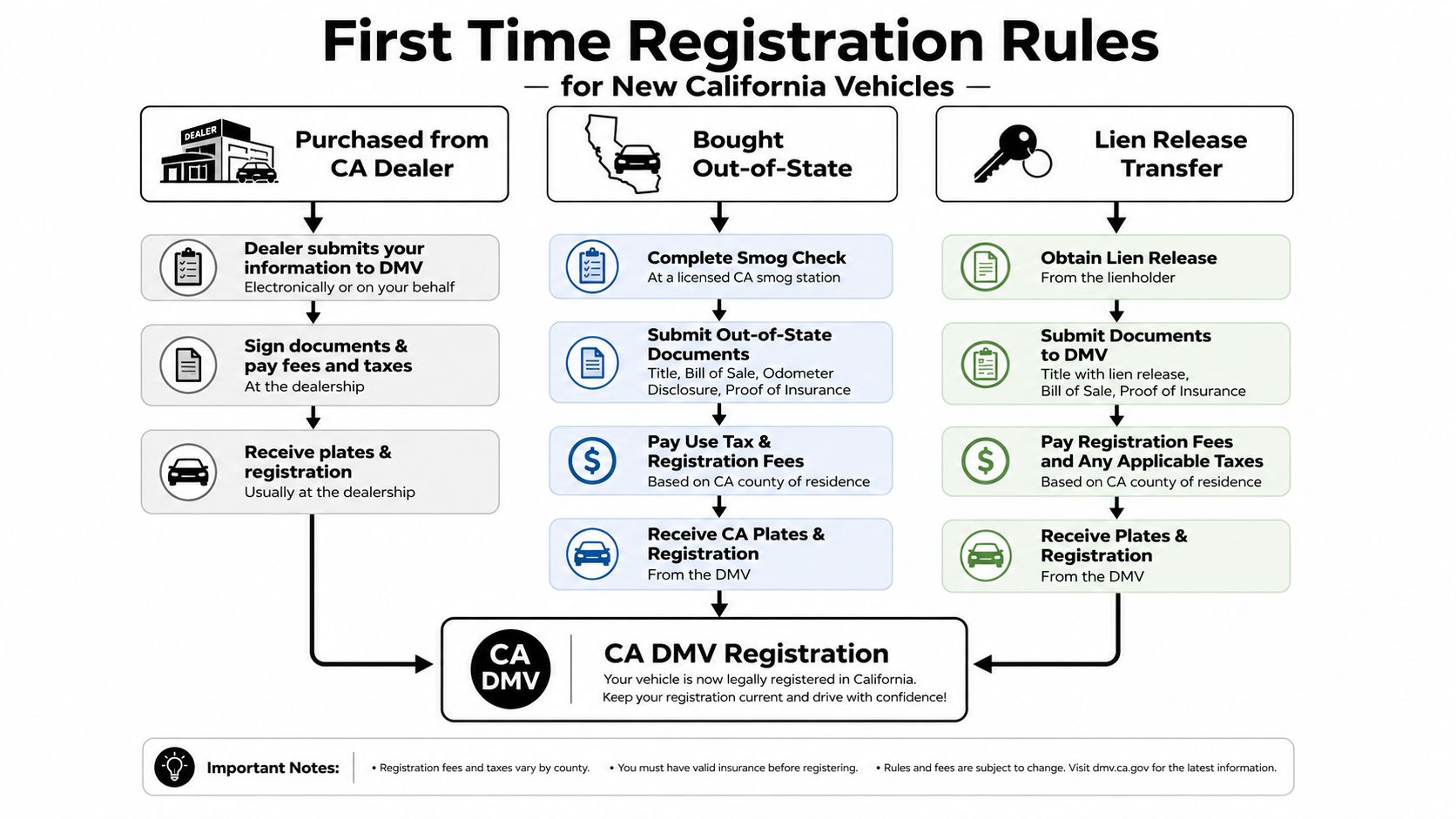
A new vehicle follows a different path depending on where the transaction occurred. A California dealer sale is usually the cleanest case. The dealer submits the initial registration paperwork, and the buyer typically doesn't need to arrange a separate Smog Check for that initial California registration because the vehicle is inside the new-car exemption.
An out-of-state purchase requires more attention. The DMV may need an out-of-state title or equivalent ownership document, a VIN verification, and a smog certificate before completing the California title and registration process for a qualifying gasoline vehicle. A manufacturer's certificate of origin is different from a California title, and neither should be treated as interchangeable with an out-of-state title.
Three paperwork paths
Consider a buyer who brings a recently purchased vehicle from Nevada into California. The buyer may need to complete the VIN verification, obtain the required emissions inspection, and then take the paperwork to the DMV. The inspection station electronically submits a bar-coded certificate that the DMV can use when processing the registration.
A lien release transfer can create its own documentation trail. The owner should follow the DMV's instructions for the title and transfer documents rather than assuming the vehicle's age eliminates every transaction requirement.
Put the inspection in the right order
The common mistake is visiting the DMV first, discovering that a smog certificate is missing, and then making a second trip to a station. For an out-of-state transfer, handle the VIN and emissions requirements before the DMV appointment whenever the DMV directs you to do so.
A California dealer may handle the initial registration, while a private buyer importing a car usually has to coordinate more of the process. The California registration renewal process can help you separate a renewal from an initial registration transaction. Bring the title documents, purchase paperwork, identification, and any DMV notice to the station or DMV so the technician or clerk can identify the exact transaction.
What Happens at a Smog Check for 2000 and Newer Cars
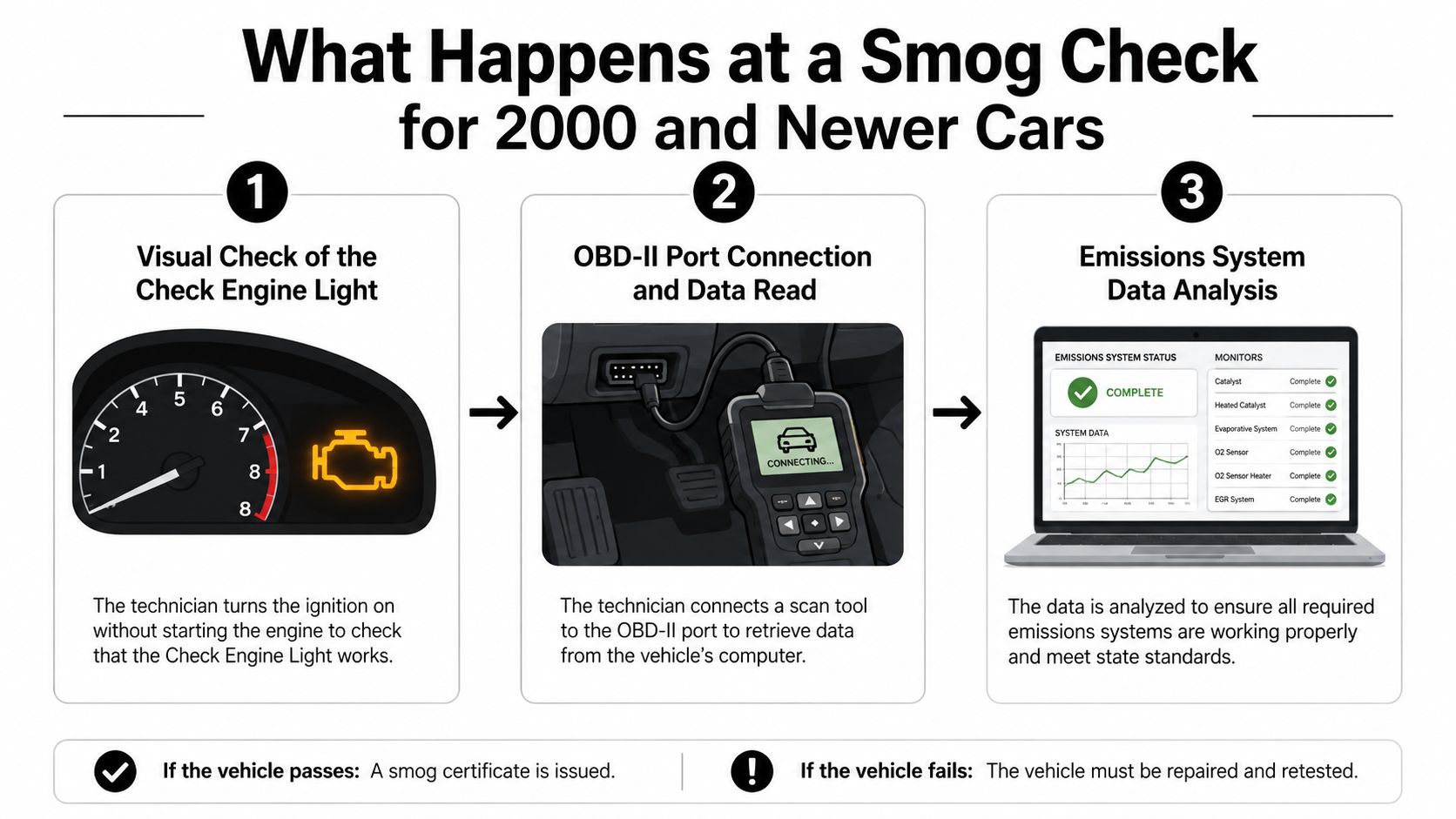
For a 2000-and-newer gasoline vehicle, the inspection is primarily an OBD-II diagnostic check, not the old-style tailpipe routine most drivers picture. The BAR On-Board Diagnostic Inspection System collects data from 2000-and-newer vehicles, according to the BAR Smog Check Manual.
The technician starts by checking the dashboard and the emissions-related warning light. Then the technician connects an approved scan tool to the vehicle's data link connector, generally located under the dashboard. The scan retrieves emissions information from the vehicle's computer rather than relying only on exhaust gas measured at the tailpipe.
The technician reads the emissions computer
The inspection reviews information such as stored diagnostic trouble codes, pending codes, readiness monitor status, and the malfunction indicator lamp status. The vehicle must show that its emissions system has completed the applicable self-checks and that the computer's commanded warning-light status matches what the driver sees.
That's why disconnecting the battery shortly before an appointment can create trouble. The vehicle may run normally while the readiness monitors remain incomplete. A recently repaired vehicle may also need normal driving before its computer can verify that the repair solved the emissions problem.
When a tailpipe test can still appear
The BAR manual identifies limited situations in which a 2000-and-newer gasoline vehicle may still receive a tailpipe test on the BAR-97 analyzer. Examples include a vehicle that lacks OBD-II, exceeds 14,000 pounds GVWR, or has an OBD-II system flagged as problematic. The manual, rather than the vehicle's age alone, determines how the station handles that inspection.
A lit check engine light generally means the vehicle won't pass the emissions inspection. The station gives the owner a failure report, and the owner can choose a qualified repair technician before returning for a retest. Eligible owners may also investigate California's income-based repair assistance, but eligibility depends on the program's requirements.
Watch the inspection flow before you arrive:
When You Need a STAR Certified Station Instead
A regular licensed station can perform authorized inspections within its license scope. A STAR-certified station operates under the Bureau of Automotive Repair's STAR program and handles vehicles that the DMV directs to STAR testing.
The registration notice is the deciding document. If it specifies STAR, book a STAR station. Don't choose a regular station first and hope the DMV will accept the result. A vehicle can also be directed after a previous failure or through the state's high-emitter screening process.
Compare the stations before booking
| Scenario | Regular Station | STAR Station |
|---|---|---|
| Routine renewal without a STAR direction | May perform the inspection if licensed for the vehicle | May also perform it if licensed |
| DMV renewal notice specifies STAR | Not the correct choice | Required destination |
| Vehicle has a directed testing requirement | May not satisfy the direction | Designed for directed inspections |
| New vehicle inside the exemption | No test is normally needed | No STAR test is normally needed |
STAR stations face additional state oversight and inspection requirements. That doesn't mean every new vehicle needs STAR testing. A new gasoline or hybrid vehicle still follows the model-year exemption unless the DMV issues a separate transaction-specific direction.
Read the notice before calling
Look for wording that directs you to a STAR station, especially after a failed renewal inspection or a high-emitter designation. If the notice doesn't direct you to STAR, a licensed station that handles your vehicle's fuel type and model year may be appropriate.
The STAR station explanation from Speedy Smog gives owners a practical overview of the distinction. My recommendation is simple: take a photo of the renewal notice before booking, then show it to the station. That prevents the most avoidable mistake, choosing a shop that can't complete the required transaction.
Common Myths That Trip Up New Car Owners
Myth one: New cars never need a Smog Check. The rule is narrower. Gasoline, hybrid, and alternative-fuel vehicles are exempt from biennial renewal testing only while they remain within the eight-model-year window. The model year controls the clock, not the date on your purchase contract.
Myth two: Hybrid vehicles skip emissions testing permanently. They don't. Hybrids receive the same new-vehicle exemption treatment described in the DMV guidance, then enter the applicable renewal testing schedule after the exemption ends.
Myth three: A new car needs no smog-related paperwork. New owners may not need a test, but they still pay the smog abatement fee during the exemption period. That fee is part of the registration transaction and replaces the inspection for that period.
Myth four: An out-of-state car avoids California testing. Bringing a vehicle into California for initial registration can require a VIN verification and a smog certificate, even when the vehicle is relatively new. The transaction type matters as much as the vehicle's age.
Myth five: Passing once ends the requirement. A pass satisfies that inspection transaction. After the first required test, qualifying vehicles generally return to the biennial renewal schedule, so keep the next registration deadline on your calendar.
The California DMV smog inspection rules are the controlling reference for the exemption and registration connection. If your notice conflicts with an assumption, trust the notice and verify the issue instead of relying on a dealership conversation or an online forum.
Your Quick Checklist Before Your Next Smog Test
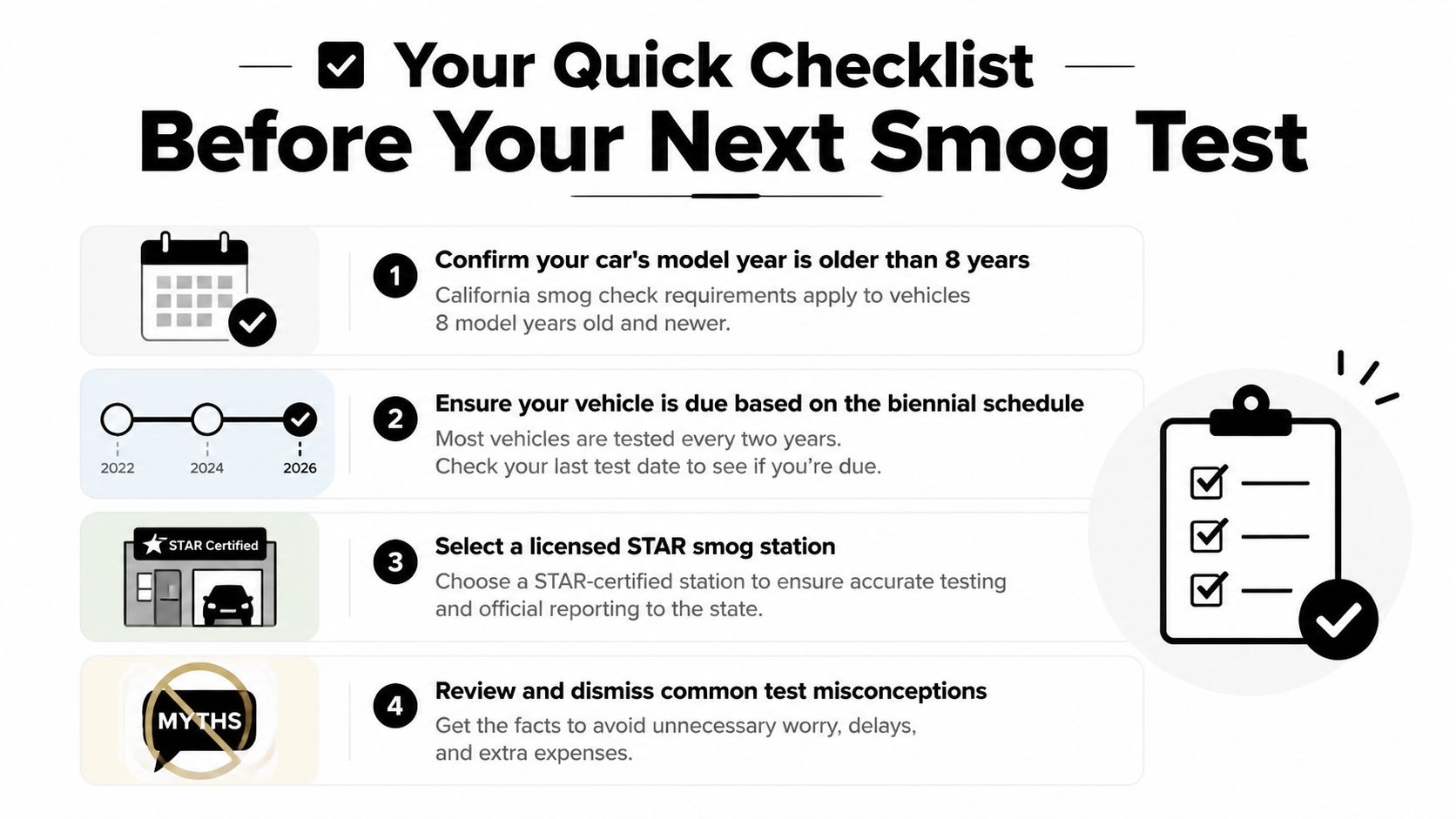
Use this checklist the morning you plan the appointment:
- Pull out the DMV notice. Check whether it calls for a Smog Check, a STAR station, or another registration step.
- Write down the model year. Count the eight-model-year exemption from the model year, not your purchase date.
- Confirm the fuel type. Gasoline and hybrid vehicles follow the timeline covered here. Diesel and electric vehicles require separate rule checks.
- Check the warning light. A check engine light should not be illuminated when you arrive.
- Avoid a last-minute battery disconnect. The OBD system may need driving time to reset its readiness monitors after power loss or emissions repairs.
- Choose the correct station. Use the BAR station finder, and select STAR when the DMV directs you there.
- Bring the transaction documents. Out-of-state transfers may need title paperwork, VIN verification, and a certificate that the DMV can match to the vehicle.
- Allow appointment time. A licensed station can tell you its expected turnaround, but don't schedule the inspection so tightly that a failed test leaves no time for diagnosis.
A passing inspection produces the compliance record needed for the applicable DMV transaction. A failure produces a report identifying the problem, not a reason to keep guessing. Have the vehicle diagnosed, complete the emissions repair, and ask the station about the retest process before authorizing unrelated work.
If you're unsure whether your newer vehicle has reached its first required test year, bring the DMV notice and vehicle information to Speedy Smog. The San Leandro shop handles inspections for newer vehicles, hybrids, and other qualifying vehicles, and can help you choose the correct testing path before you make a wasted DMV trip.
Replacing a catalytic converter is not a smog-check strategy. It's one repair in an emissions system that includes sensors, computer monitors, exhaust plumbing, and the converter itself. I've seen plenty of drivers arrive with a brand-new part and still leave with a failure because the check-engine light was on, the monitors weren't ready, or the replacement converter had the wrong California approval marking.
California checks more than whether a converter is hanging under the car. Inspectors verify the correct equipment, its location, its condition, and the vehicle's emissions-system data. This guide explains what the converter does, how a smog check catalytic converter inspection works, which California rules matter, why replacement jobs fail, and how to decide between diagnosis and another parts purchase.
Table of Contents
- Why a New Catalytic Converter Does Not Guarantee a Pass
- What a Catalytic Converter Actually Does
- How Smog Inspections Evaluate Your Converter
- California Rules Every Driver Should Know
- Common Ways Drivers Still Fail After a Converter Swap
- Pre-Smog Checklist You Can Run in Your Driveway
- Repair Versus Replacement and Where to Get Tested
Why a New Catalytic Converter Does Not Guarantee a Pass
The popular advice is simple: replace the catalytic converter, clear the code, and go get a smog check. That advice is incomplete and can waste your money.
A California inspection evaluates the emissions system as a package. The converter matters, but so do the upstream and downstream oxygen sensors, fuel-control operation, EVAP system, EGR equipment where applicable, engine temperature, exhaust leaks, and the PCM's readiness monitors. A replacement part won't correct a sensor that still reports inefficient catalyst operation, a misfire that damages the new substrate, or a monitor that hasn't completed its required drive conditions.
California inspectors also look at the converter itself. The California Smog Check manual explains that inspectors verify the converter is in the correct location, undamaged, unmodified, and properly approved when it's an aftermarket unit. A converter can be physically present and still fail the visual inspection if the marking can't be validated or the installation doesn't match the vehicle's requirements.
Counter advice: Don't ask only, “Did I replace the converter?” Ask, “Is the whole emissions system ready to be tested?”
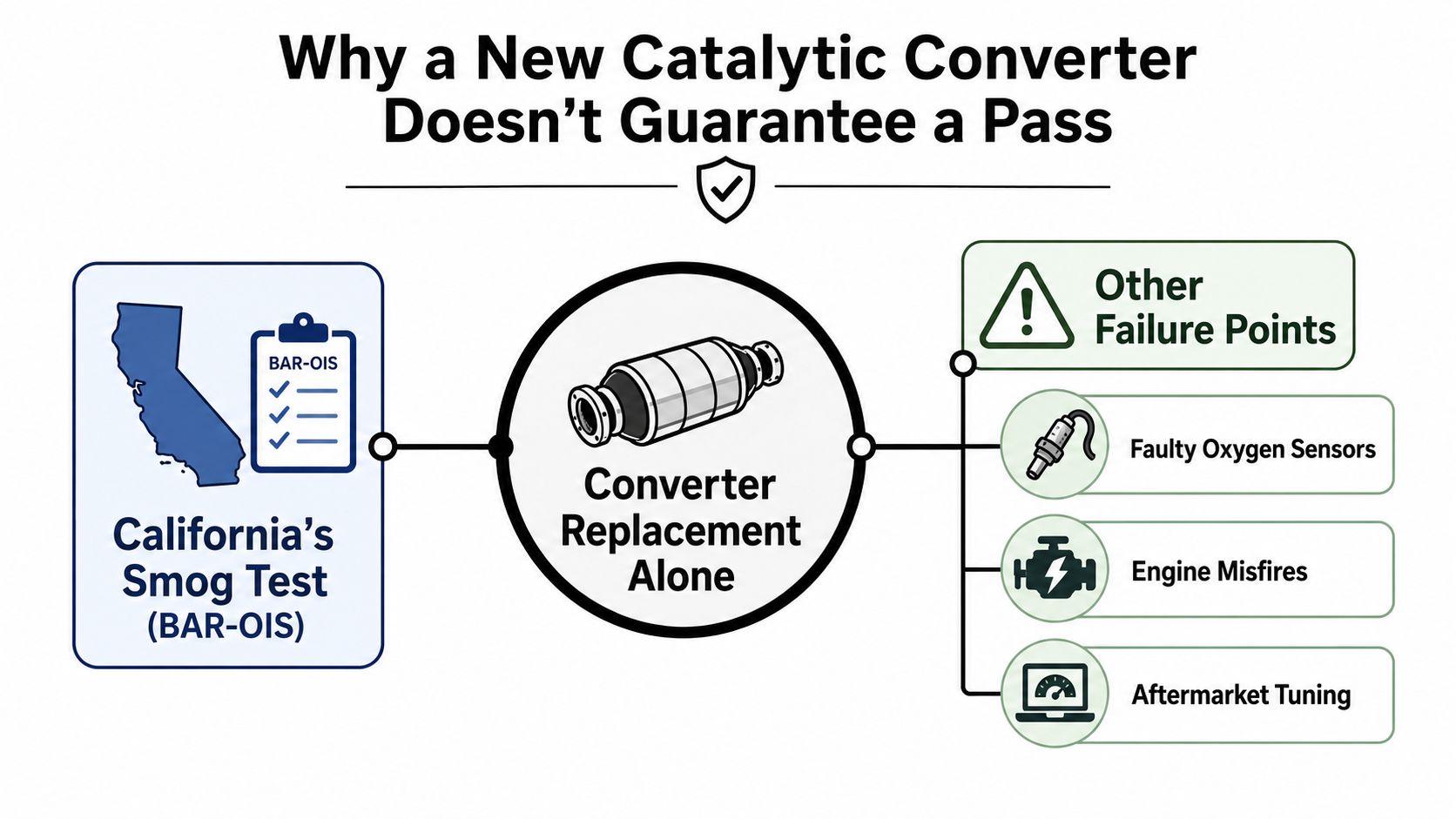
A pending or stored efficiency code, incomplete OBD monitors, an incompatible aftermarket part, or an illuminated check-engine light can stop the test even when the engine seems to run normally. The converter may be new, but the car still has to prove that its sensors and computer can monitor emissions performance.
The right approach is diagnostic. Confirm the code, inspect the exhaust and sensors, verify the replacement part, check readiness, and only then schedule the inspection.
What a Catalytic Converter Actually Does
A gasoline engine produces several pollutants during combustion. Carbon monoxide forms when fuel doesn't burn completely. Hydrocarbons are unburned fuel and combustion byproducts. Nitrogen oxides, commonly called NOx, form when combustion temperatures allow nitrogen and oxygen to combine.
The converter reduces those pollutants before the exhaust reaches the tailpipe. Inside the housing is a ceramic honeycomb or metallic substrate with a high-surface-area coating that contains precious-metal catalysts such as platinum, palladium, and rhodium. The metals promote chemical reactions without being consumed in the process.
A modern three-way converter handles three jobs:
- It oxidizes carbon monoxide into carbon dioxide.
- It oxidizes hydrocarbons into carbon dioxide and water.
- It reduces NOx into nitrogen and oxygen.
Older systems may use separate oxidation and reduction sections, while modern vehicles commonly combine the reactions in one three-way assembly. The converter has to reach operating temperature before those reactions work effectively, which is why cold-start behavior, warm-up, fuel mixture, ignition, and exhaust flow all affect inspection results.
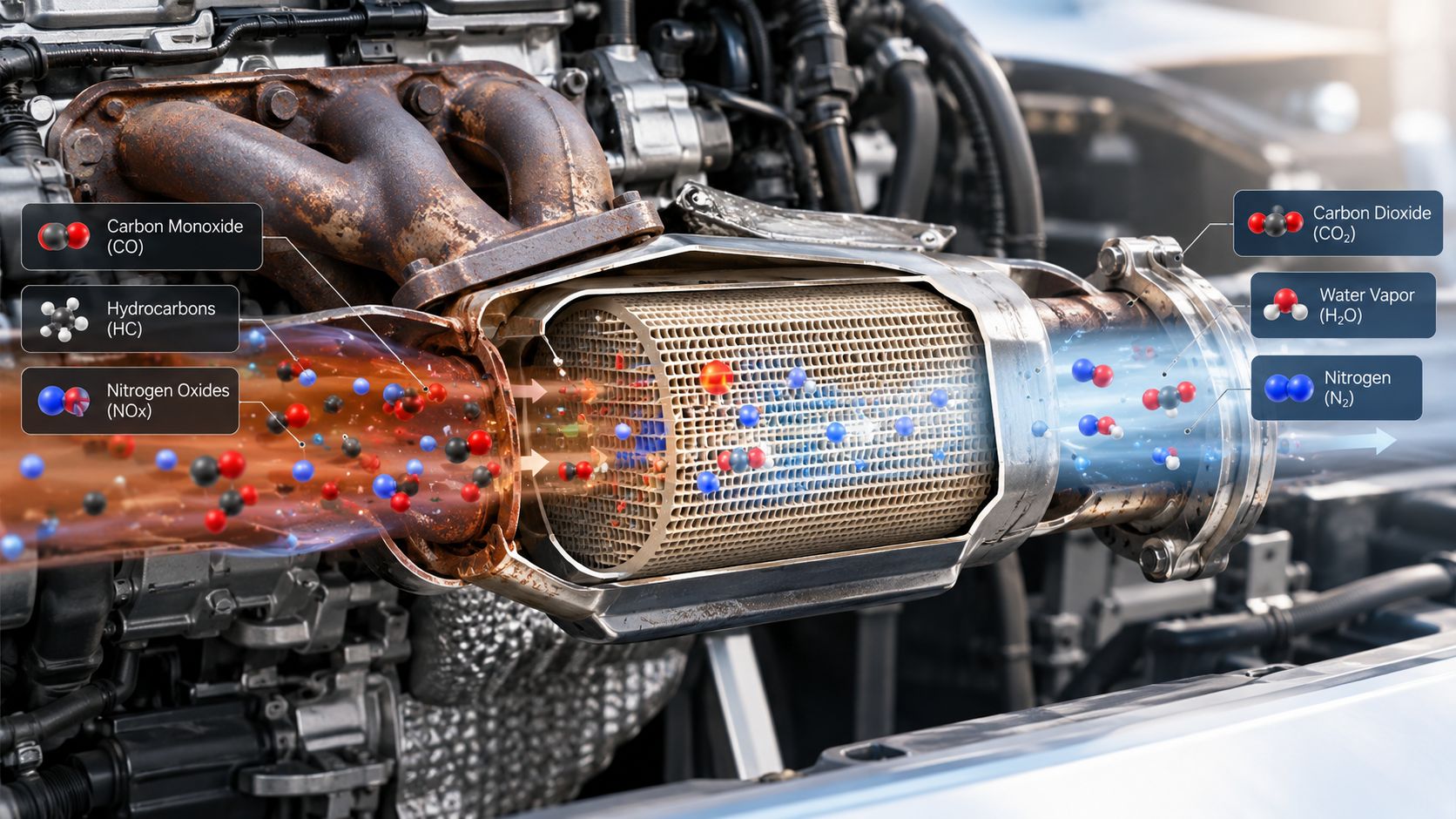
The oxygen sensors provide the computer with information about the exhaust before and after the converter. The upstream sensor helps the PCM adjust the air-fuel mixture. The downstream sensor helps the PCM judge whether the converter is storing oxygen and smoothing out the exhaust signal as it should.
That placement is deliberate. The converter sits in the exhaust path between the engine and muffler, with sensor locations selected to let the PCM compare exhaust behavior on both sides. A technician may use scan data, code information, visual inspection, and emissions measurements to determine whether the unit is doing more than occupying space under the vehicle.
For a plain-language explanation of the component itself, see this guide to how a catalytic converter functions. Understanding the chemistry makes the inspection rules easier to follow. The inspector isn't judging the part by appearance alone. The inspection is looking for evidence that the exhaust-cleanup process still works.
How Smog Inspections Evaluate Your Converter
A new converter can still fail a California smog check. The inspector evaluates the entire emissions system, including the converter's installation, sensor data, fault codes, readiness monitors, and measured exhaust. Presence isn't proof of performance.
Visual inspection checks the hardware
The technician verifies that the required number of converters is installed in the original locations. Each housing should be secure, undamaged, and free of obvious modification, removal, or bypass work.
Aftermarket units receive close attention. California requires an aftermarket converter to carry a valid CARB Executive Order, or EO, number for the specific vehicle application. The California Energy Commission catalytic-converter materials explain that the Smog Check process verifies the correct converter, proper installation, and unmodified condition. Since January 1, 2009, aftermarket converters in California have needed an ARB EO number to pass the catalyst visual inspection.
A missing, unreadable, or mismatched marking can fail the vehicle even when it drives normally. A technician can also reject a converter that is present but mounted in the wrong position.
The computer scan checks stored evidence
For vehicles covered by OBD testing, the station connects a scan tool to the diagnostic connector. The technician checks for an illuminated malfunction indicator, stored emissions codes, pending codes where relevant, and readiness monitor status.
The catalyst monitor matters, but the inspection covers other required monitors too, including EVAP, oxygen-sensor, and EGR systems. Clearing codes before the appointment may remove the immediate fault while leaving monitors incomplete. The vehicle can then fail because the system has not completed its checks.
The downstream oxygen sensor should show behavior consistent with a working converter. A signal that closely imitates the upstream sensor can point to poor oxygen storage or weak conversion. Scan data cannot replace the visual inspection, and a stable sensor reading does not excuse an incorrect or improperly installed converter.
Tailpipe testing measures actual emissions
Older applicable vehicles may receive tailpipe testing in dynamometer modes such as ASM or TSI. The equipment measures HC, CO, and NOx against the vehicle's applicable limits.
EPA materials report that catalytic converters reduce carbon monoxide and hydrocarbons by more than 90%, and NOx by up to 70%. The same material states that, by 1998, converters had cut 20 million tons of CO, 2 million tons of HC, and 1 million tons of NOx in the United States. Those results show why converter performance matters, but a replacement part still has to match the vehicle and work with the rest of the emissions system.
| Inspection Layer | What It Checks on the Converter | Applies To |
|---|---|---|
| Visual and tampering inspection | Presence, location, condition, mounting, and valid EO marking | Vehicles subject to visual equipment checks |
| OBD scan | Catalyst performance data, codes, and readiness monitors | Applicable OBD-equipped vehicles |
| Tailpipe measurement | HC, CO, and NOx output under test conditions | Applicable vehicles receiving tailpipe testing |
California Rules Every Driver Should Know
California's smog rules can fail a vehicle before the tailpipe numbers become the main issue. The station type, converter approval, vehicle category, and inspection format all matter. A new converter does not override any of them.
Start with the station listed for your vehicle. A vehicle directed to a STAR station, including one designated a gross polluter or placed on the DMV no-pass list after a previous failure, must receive certification from a STAR-certified station. A regular test-only location cannot replace that required STAR inspection.
California also restricts replacement converters. A universal unit is not acceptable because it fits the exhaust or produces passing emissions. The aftermarket converter must be approved for the vehicle and carry a verifiable CARB Executive Order number. Inspectors also check the number of converters, their original locations, and signs that someone modified, bypassed, or removed emissions equipment.
Certain vehicles meeting the 8-year and 8,000-mile conditions in California's aftermarket-converter rules may use an EPA-compliant aftermarket unit marked with the appropriate ARB EO number instead of the original-equipment unit. That allowance does not make every replacement legal. The part still must match the vehicle and its application.
Know which vehicles fall outside normal testing
California exempts several categories from routine smog checks:
- 1975 and older vehicles
- Diesel vehicles above 14,000 pounds GVWR
- Motorcycles
- Natural-gas vehicles above 14,000 pounds
- Certain specialty vehicles
Smog requirements commonly appear during registration renewal, a vehicle sale, or a transfer. Qualifying vehicles generally follow a biennial renewal cycle, but the DMV notice determines the obligation for your vehicle.
California began applying OBD-based testing to 1996 through 1999 vehicles in 2025. Those inspections combine scan information with visual emissions-equipment checks instead of relying only on a tailpipe test. Check the California smog-check rules guide if you are unsure whether your vehicle needs a STAR station or which test format applies.
| Vehicle Category | Test Required | Where to Test |
|---|---|---|
| STAR-directed vehicle | STAR inspection and certification | STAR-certified station |
| Applicable OBD-equipped vehicle | OBD scan plus required visual checks | Authorized smog station |
| Applicable older vehicle | Required inspection format, which may include tailpipe testing | Authorized station approved for that vehicle |
| Exempt category | No routine smog certification under the exemption | No smog station required for that exemption |
Read the DMV notice before choosing a shop. Confirm whether it specifies STAR, then tell the technician about recent converter or sensor work before testing starts.
Common Ways Drivers Still Fail After a Converter Swap
A driver replaces the converter, sees no obvious engine problem, and expects a certificate. Then the technician finds one of the following.
The check-engine light stayed on
An illuminated check-engine light means the vehicle fails the emissions inspection. A new converter won't repair a downstream oxygen sensor that keeps reporting inefficient catalyst operation. It also won't solve a misfire, fuel-control problem, EVAP fault, or wiring issue that caused the code in the first place.
Codes such as P0420 or P0430 point toward catalyst efficiency, but they're not a license to replace the part without testing. A leak near a sensor, incorrect sensor installation, damaged wiring, or an engine problem can produce the same kind of complaint.
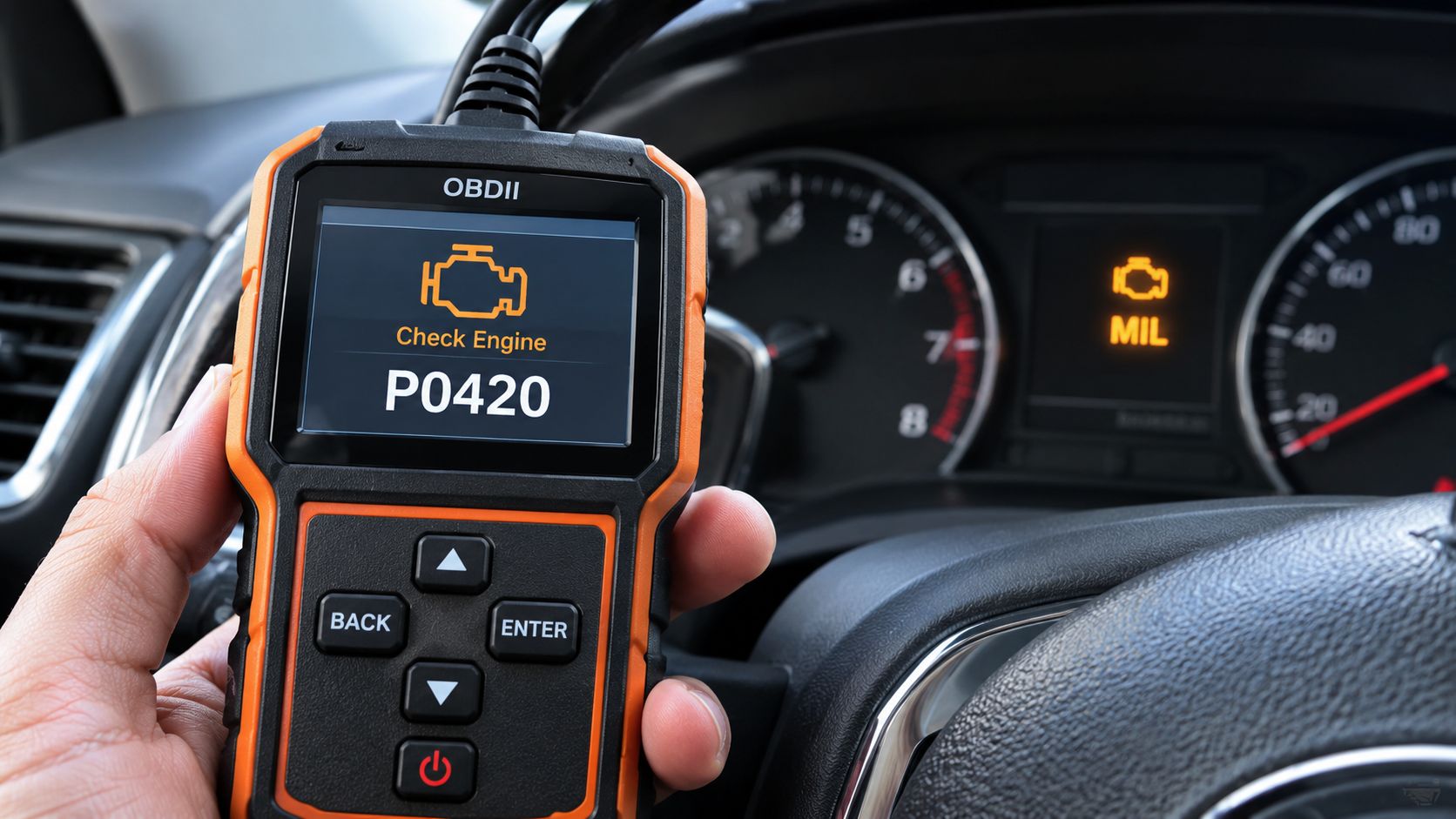
The EO marking is wrong or missing
A replacement converter may fit the pipe perfectly and still be illegal for that application. If the EO number is absent, unreadable, invalid, or assigned to another vehicle family, the visual inspection can fail.
Don't wait until inspection day to discover this. Ask the installer to show you the marking and confirm that the part matches the vehicle's application.
The monitors aren't ready
The PCM needs suitable driving conditions after codes are cleared or parts are replaced. A short trip directly from the repair shop may not complete catalyst, EVAP, oxygen-sensor, or secondary-air monitors.
The car can run smoothly while the inspection remains blocked by incomplete data. Check readiness with an OBD scanner before booking.
The exhaust installation has visible defects
A leaking flange, cracked flex pipe, loose hanger, or missing heat shield can raise safety and emissions concerns. A leak can also pull outside air toward an oxygen sensor and distort the signal used to judge converter operation.
A converter that rattles internally, sits in the wrong location, or shows obvious tampering deserves attention before the test.
The engine condition undermines the new part
A misfire, oil contamination, incorrect fuel mixture, or poor temperature control can overload or poison the catalyst. Replacing the converter without correcting the cause often turns an expensive new part into another failed component.
Stale fuel and a cold exhaust system can also affect test behavior. Arrive with the vehicle operating normally, and tell the technician about recent repairs rather than trying to conceal them.
Pre-Smog Checklist You Can Run in Your Driveway
A new catalytic converter does not make the rest of the emissions system pass automatically. Check the dashboard, monitor status, visible exhaust hardware, and appointment details before paying for an inspection.
Check the dashboard and scan data
If the check-engine light is on, postpone the smog test. Use an OBDII scanner, borrow one from a parts store, or ask a repair shop to check stored and pending codes.
Review readiness status as well. Required monitors should show Ready or Complete, not Not Ready. Disconnecting the battery, clearing a code, or replacing a converter or sensor can reset the monitors. The PCM needs normal driving conditions to complete its checks.
Start the drive cycle with the vehicle warmed up so the converter and oxygen sensors reach operating temperature. Combine ordinary city driving with sustained faster-road driving, then scan the vehicle again before the appointment. Do not rely on a guessed mileage target. The monitor display is the evidence that matters.
For guidance on the warning light, read clearing a check-engine light correctly. Clearing the light without repairing the fault only hides the symptom and can leave the monitors incomplete.
Inspect visible hardware
With the vehicle cool and safely parked, check for rust holes, loose hangers, cracked pipe sections, missing heat shields, and soot around flanges. Never crawl under a vehicle supported only by a jack. If the converter marking is not visible from a safe position, have a technician inspect it.
Confirm that the replacement converter has a legible EO sticker or stamp. Keep the repair invoice and part information with the vehicle records. These documents help verify what was installed if the inspector questions the part.
Prepare for the appointment
Check the fuel level and tire pressure. Bring the DMV renewal notice and payment. Tell the station about any recent converter, oxygen sensor, battery, or engine repair.
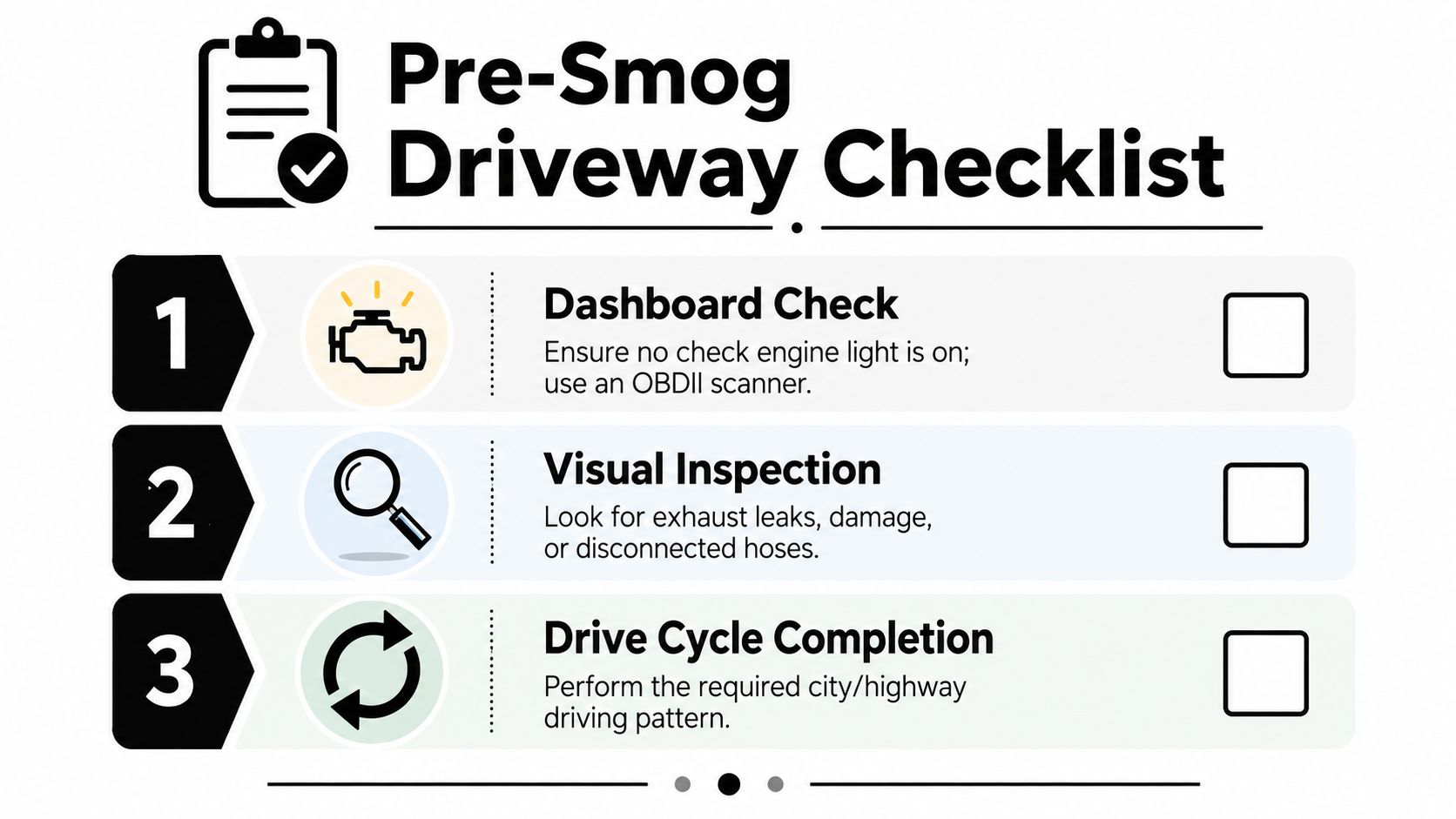
Use this visual walkthrough to organize the basic checks before visiting a station.
Repair Versus Replacement and Where to Get Tested
Confirm the diagnosis before approving a converter replacement. A sensor, exhaust leak, vacuum leak, wiring fault, fuel-control problem, or software issue can trigger a catalyst-efficiency code. Replacing the converter first can leave the underlying fault unresolved and make you pay twice.
Repair is the right choice when the converter remains physically sound and testing identifies a correctable cause. An oxygen sensor, exhaust leak, or calibration problem may restore proper monitoring. Replacement is necessary when the substrate is broken, contaminated by oil, melted after a misfire, physically damaged, or confirmed to have lost conversion capability.
The decision usually follows two practical paths:
| Option | Typical Cost | Timeline | Best When |
|---|---|---|---|
| Sensor, leak, or control-system repair | $150 to $600 | Often same-week | The converter is sound and another fault caused the failure |
| CARB-compliant converter with installation | $1,000 to $2,500 | Several days when parts must be ordered | The converter is damaged, contaminated, or confirmed inefficient |
Treat those figures as planning ranges, not guarantees. Get the diagnosis in writing, and verify that any replacement converter carries the correct California approval for your vehicle. Ask whether the technician checked what caused the original failure, particularly if the old converter melted or broke apart. A new part cannot compensate for an unresolved misfire, fuel-control fault, or sensor problem.
Before booking the test, confirm whether your DMV notice requires a STAR station. A STAR-certified shop can perform the applicable OBD assessment, inspect the converter markings, and transmit a passing certificate electronically. Speedy Smog in San Leandro performs standard and STAR-directed smog checks, including OBDII assessments, so the inspection evaluates the emissions system rather than only confirming that a part was installed.
Bring the repair invoice and part information. Have the readiness monitors, scan data, and EO marking checked before the appointment, especially after recent converter, oxygen-sensor, battery, or engine work. That final review catches problems a brand-new converter cannot fix.
A passing California smog certificate is valid for 90 days from the test date for DMV registration and ownership transfer purposes. Most vehicles also need a new smog check every other year to renew registration.
That's the part drivers miss. They pass the test, set the paperwork aside, and assume they're covered until the next renewal cycle. Then the DMV window turns into a delay, a duplicate fee, or a full re-test.
The trap is simple. The smog result and the registration timeline are not the same thing, and California treats them as two separate clocks. If you know which clock is running, you can avoid a wasted trip and keep the registration moving.
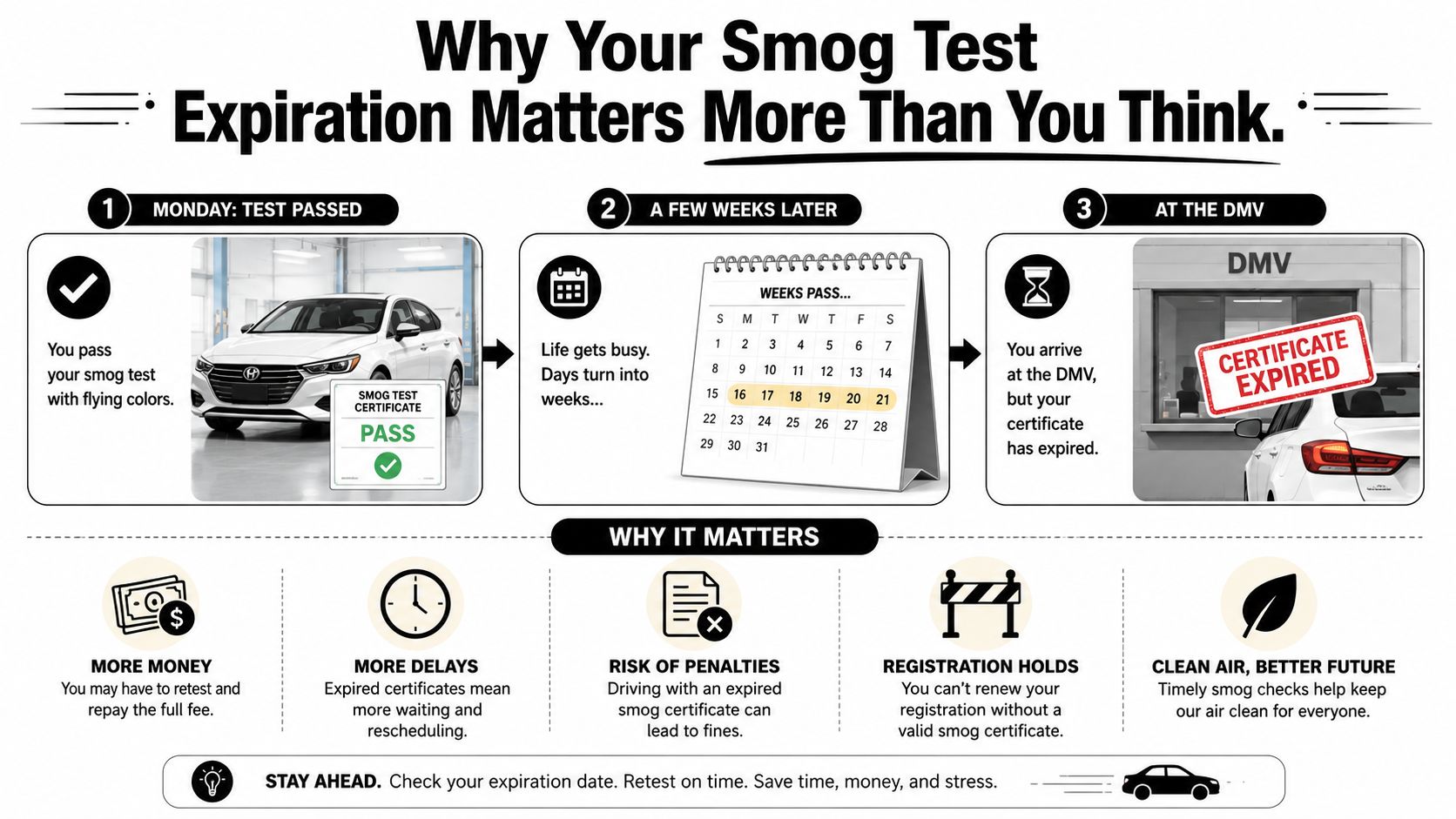
Table of Contents
- Why Your Smog Test Expiration Matters More Than You Think
- California Smog Test Validity Rules Explained
- Exceptions for Sales, Diesels, Hybrids, and Newer Vehicles
- How to Verify Your Electronic Smog Record
- What to Do If Your Smog Certificate Has Expired
- Staying Compliant in a Data-Driven Smog Program
Why Your Smog Test Expiration Matters More Than You Think
A driver passes a smog check on Monday, leaves the station thinking the job is done, then waits a few weeks before handling the DMV paperwork. At the counter, the certificate no longer works for that transaction. Passing the test is one achievement. Keeping it valid for DMV purposes is a separate requirement.
California keeps the timing tight. A passing smog certificate is valid for 90 days from the test date for registration and ownership transfer purposes, and most vehicles must get a smog check every other year to renew registration. That timing comes straight from the DMV and Bureau of Automotive Repair DMV smog inspection guidance.
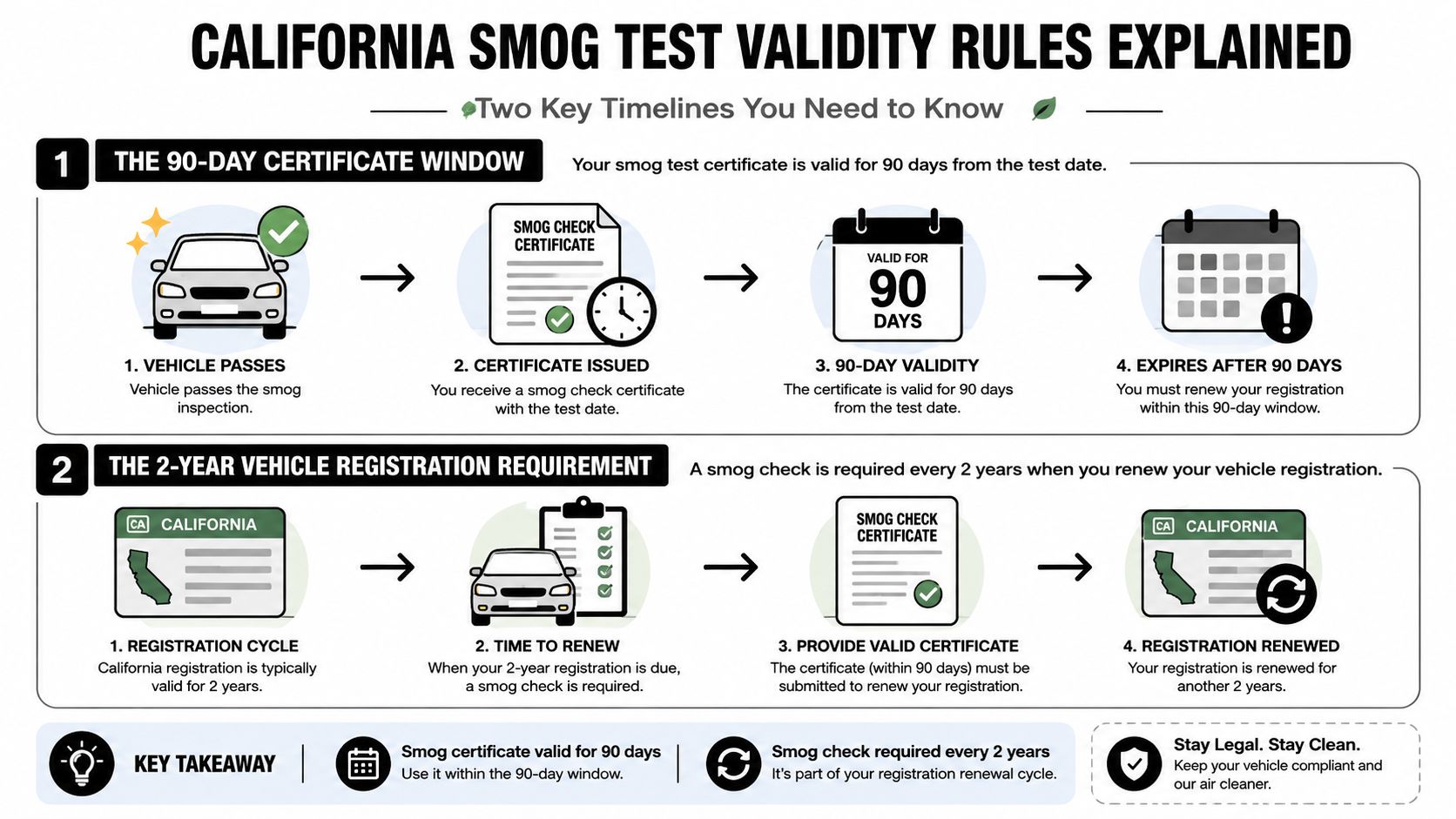
Two clocks run at the same time
The first clock is the 90-day certificate window. That window decides whether the DMV can accept your passing result for the transaction you want to complete. If the paperwork slips past that window, you need another inspection, even if the car already passed.
The second clock is the biennial renewal cycle. BAR says most vehicles need a smog check every other year for registration renewal, which keeps compliance tied to recurring review instead of one old test carrying forward BAR smog check overview.
Practical rule: book the test when you're ready to finish the DMV step, not when you're just starting to think about it.
That timing is where drivers get burned. They treat the certificate like a long-term pass. It is a short-use document tied to a specific registration action, and the 90-day limit is what delays clean drivers who did everything else right.
California Smog Test Validity Rules Explained
California ties smog results to the transaction, not to the date you first got the inspection. A passing result goes straight to DMV electronically and stays usable for 90 days for registration and transfer processing. Once that window closes, the DMV will not treat the old result as current for the paperwork you are trying to finish.
The 90-day window sets the hard limit
Wait too long after a pass, and the certificate stops helping. The state wants a current emissions record at the moment you submit the registration or title work, because the inspection is meant to support that specific filing.
The Bureau of Automotive Repair says station results are transmitted directly to DMV, so the record is part of the official file right away BAR smog check overview. That electronic system does not extend the life of the certificate. It just makes the timing easier for DMV to enforce.
The biennial cycle governs renewal, not certificate reuse
Most vehicles still need a smog check every other year for registration renewal. That rule sets the renewal rhythm, but it does not let you recycle one passing result until the next cycle comes around DMV smog inspection guidance.
Newer vehicles follow separate rules. DMV guidance says vehicles less than 4 model years old can pay a smog abatement fee instead of being inspected for the first 8 years they are registered, and BAR says vehicles 8 model years and newer do not need a biennial smog check, while vehicles 4 model years and newer do not need a change-of-ownership smog check. Those are age-based exemptions, not a shortcut for older cars.
If you want the rules in plain English, the California smog check rules summary tracks the same timing problem drivers run into at the counter.
Keep the filing window tight. The DMV only accepts a result while it is still current, and the 90-day clock is what protects you from a registration delay.
Exceptions for Sales, Diesels, Hybrids, and Newer Vehicles
The mistake drivers make is assuming one passing smog test covers every situation. California treats sales, diesel vehicles, hybrids, and newer cars under different rules, and the timing depends on the transaction, not on how recently someone passed an inspection.
| California Smog Check Exceptions by Vehicle and Transaction Type | Smog Check Required? | Validity Rule or Exemption |
|---|---|---|
| Private-party sale or title transfer | Usually yes | The seller needs a passing certificate within 90 days before the transfer, unless an exemption applies |
| Transfer between qualifying family members | Sometimes no | Some family transfers are exempt under California transfer rules, so the standard sale requirement may not apply |
| Diesel vehicle | Depends on model year and class | Diesel rules are different from gasoline vehicles, and the state uses diesel-specific testing standards, including opacity-based checks for applicable vehicles |
| Hybrid vehicle | Usually yes | Hybrids are not exempt by default, but they follow a modified smog procedure under California rules |
| 8 model years old or newer | No, for biennial renewal | These vehicles do not require a biennial smog check |
| 4 model years old or newer | No, for change of ownership | These vehicles do not require a change-of-ownership smog check |
For a sale or title transfer, time the inspection carefully. Get the test done close enough to the paperwork that the certificate stays valid, but leave room for DMV processing so the transfer does not stall. A passing result that sits too long is useless once the 90-day window closes.
Buyers should check the seller's certificate before they assume the deal is ready to move. A recent pass is not the same thing as a usable pass, especially when the title is changing hands and the DMV has to accept the record.
Diesel owners need to verify the exact requirement before they show up. Diesel rules do not match gasoline rules, and that difference sends a lot of drivers to the wrong station. For a straight local breakdown, diesel smog check requirements is the right reference.
If the title is changing hands, the safest assumption is that the smog clock matters right away.
The newer-vehicle exemptions help, but they are narrow. They apply only when the vehicle and transaction fit the rule. They do not revive an old certificate, and they do not stretch a test past its usable period.
How to Verify Your Electronic Smog Record
A pass is only useful if DMV can see it. California uses an electronic smog record, so the station sends the result into the state system instead of handing you a paper certificate. That makes your job simple. Check that the record showed up before you rely on it for renewal or transfer.
Start with the smog database
Use the smog status lookup with your license plate or VIN to confirm the pass is on file. If it appears, the station submitted it and the record is live. If it does not, do not assume the system will fix itself.
The public lookup at how to check smog status is the quickest way to verify the result. Keep your inspection receipt too, because it gives you proof if the record is missing or entered wrong.
Then check the DMV side
The station can send a clean result and DMV can still lag behind. That delay shows up most often when the smog test and the registration step happen close together. A pass at the station is not the same thing as DMV already accepting it.
Good habit: verify the electronic record before you stand in line for the transaction.
If the record is missing or wrong, call the smog station first and ask them to retransmit. If that does not fix it, bring the receipt to DMV and keep the station in the loop. Catching the problem early keeps a simple paperwork issue from turning into a registration delay.
For the state's own overview of how smog records are handled, see the BAR smog check overview. The key point is straightforward. The result has to exist in the electronic record, and you should confirm it before you count on it.
What to Do If Your Smog Certificate Has Expired
A passed smog check can still miss the DMV cutoff. The certificate only helps if you finish the renewal or transfer while it is still valid, and once that window closes, you need a new inspection.
When the clock runs out after a pass
This is the trap that catches drivers all the time. The car passes, the paperwork sits for a while, and the DMV step happens after the certificate has aged out. At that point, the old result no longer gets you through registration.
Book another smog inspection at a licensed station and use the new result to finish the transaction. Do not wait for the system to sort it out on its own. There is no extension to request and no shortcut that makes an expired certificate usable again.
When a sale falls apart
Private-party transfers create the same problem fast. The buyer and seller may agree on the deal, but by the time title paperwork is ready, the smog certificate can be past 90 days. Then the earlier pass cannot support the transfer, and the vehicle needs a fresh inspection before the DMV can complete the paperwork DMV smog inspection guidance.
If you need a quick retest, go to the station that can turn the car around without delay, especially if the DMV sent you to a STAR station. A STAR-certified shop like Speedy Smog can help you get the retest done, but it does not change the rules.
Don't try to stretch an expired result. You will lose more time arguing with the process than you would spend on a retest.
A few habits keep the problem from coming back:
- Test late in the process: get the inspection only when renewal or sale paperwork is nearly ready.
- Keep the receipt: it helps if the electronic record needs to be traced.
- Check the DMV timing: same-day processing is not guaranteed.
- Plan for a new test if you miss the window: once the certificate expires, you start over.
The mistake is treating the smog test as the finish line. The test is only one step in the registration process, and it only counts if you finish the DMV transaction while the certificate is still usable.
Staying Compliant in a Data-Driven Smog Program
A passing smog test does not protect you if the DMV file is stale. California's system is increasingly electronic, and the state uses program data to check emissions patterns and station performance under California Health and Safety Code section 44024.5. In plain terms, your certificate has to exist in the system, and it has to be timely.
What that means at the counter
The DMV can flag a missing or expired certificate automatically because the result is already in the record. That makes timing discipline more important, not less.
Keep the process tight.
- Confirm submission: make sure the station sent the result electronically.
- Verify DMV receipt: check that the record shows up before you renew.
- Track the 90-day window: finish the DMV step inside that period.
- Watch sale and transfer timing: private-party deals often slip past the usable window.
- Save your receipt digitally: if the record stalls, you have proof.
If the result is not visible, do not assume the paperwork will sort itself out. DMV processing lag creates avoidable delays, especially when a renewal or transfer is already underway.
A station that sends results quickly and accurately is the kind of shop worth keeping. Speedy Smog fits that role without drama. It handles the test and the electronic transmission, which is what keeps you out of registration trouble.
Use the certificate while it is valid, confirm the record, and do not wait on the DMV to catch up.

You open your DMV renewal notice, see the smog requirement, and immediately search for the cheapest test near home. That's a sensible first step, but the lowest advertised price doesn't always equal the lowest out-the-door cost. Your vehicle's model year, fuel type, STAR requirement, readiness status, and the station's retest policy can all change what you pay.
An economy smog check can be a practical way to meet California's registration requirement without paying for unnecessary repair or diagnostic services. The key is knowing what the test includes, what the quoted price leaves out, and how to prepare your car before the technician connects the inspection equipment.
Table of Contents
- What an Economy Smog Check Is
- Economy Versus Regular Smog Checks
- Real Costs Behind a Budget Smog Test
- How OBD II Readiness Decides Pass or Fail
- Prep Steps That Cut Your Re-Test Risk
- Why STAR Certification Matters for Drivers
- Getting Tested at Speedy Smog in San Leandro
- Smog Check Myths and Common Questions
What an Economy Smog Check Is
An economy smog check is a lower-priced California Bureau of Automotive Repair inspection. The price changes, but the legal emissions standard does not. A licensed station follows the BAR procedure for the vehicle, then submits the result electronically so California can record the certification for registration.
Lower pricing usually comes from the station's overhead, labor rate, and limited add-on services. In practical terms, you pay less for the shop's business model, not for a weaker inspection. The station still needs approved, properly calibrated equipment and must complete the checks required for your vehicle.
What the technician checks
The procedure depends on the car's equipment and specifications. A technician may perform:
- Visual inspection: Emissions equipment is checked for missing, disconnected, or altered components.
- Functional checks: Required emissions systems and controls are tested.
- OBD II scan: Most gasoline vehicles from the 2000 model year onward are inspected mainly through the diagnostic connector, as explained in the Bureau of Automotive Repair smog program FAQ.
- Tailpipe testing: Some vehicles still require BAR-97 testing. Examples include vehicles without OBD II, vehicles over 14,000 pounds GVWR, and vehicles with problematic OBD II systems.
California's smog program has operated since 1984. State materials describe it as one of the world's largest vehicle-emissions inspection systems. The program removes about 400 tons of smog-forming pollutants every day, while more than 10 million vehicles are tested each year at more than 5,000 independently owned stations, according to the Bureau of Automotive Repair smog program FAQ.
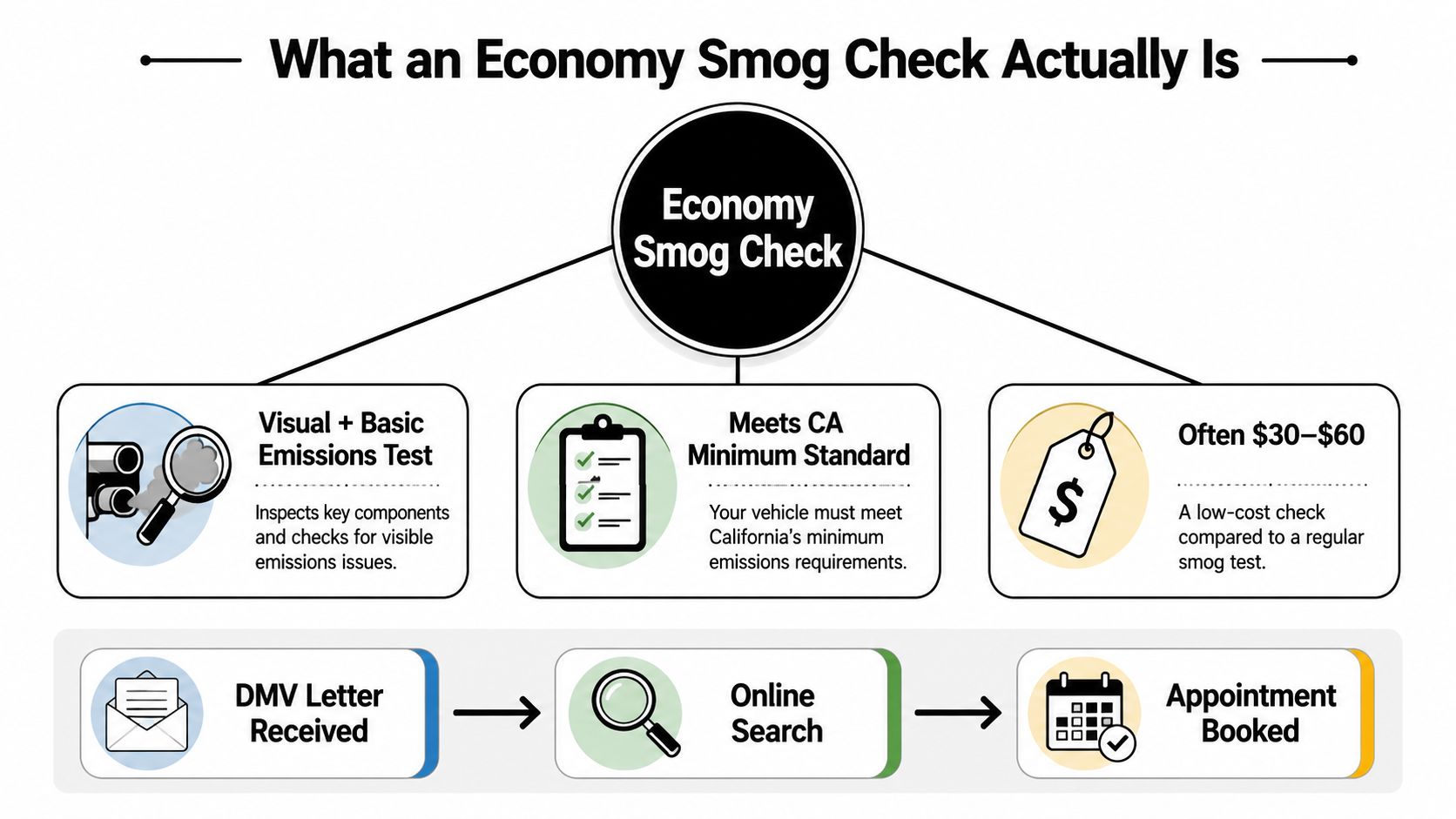
For a first-time customer, the practical takeaway is straightforward: an economy smog check is a lower-cost inspection, not a lower-quality legal certificate. Before booking, ask whether the quote includes the state certificate fee, vehicle-specific surcharges, and a retest. A simple explanation of a California smog inspection can also help you understand what the technician is checking.
Economy Versus Regular Smog Checks
A driver may see two very different prices for the same vehicle inspection. The lower quote does not mean the station can use a shorter legal test. California's rules apply whether you choose an economy-priced station or a shop with a higher advertised rate. Licensed facilities must follow the BAR-approved procedure that matches the vehicle.
The meaningful differences are station type, pricing, eligibility, and the services offered around the inspection. An economy smog check often comes from a Test Only or STAR station focused on inspections. A regular smog check may be performed by a shop that also diagnoses and repairs vehicles. Neither business model changes the emissions limits or the pass and fail requirements.
| Factor | Economy Smog Check | Regular Smog Check |
|---|---|---|
| Inspection procedure | Uses the BAR-required procedure for the vehicle | Uses the BAR-required procedure for the vehicle |
| Equipment standard | Must use approved, properly maintained equipment | Must use approved, properly maintained equipment |
| Typical business model | Inspection-focused, with limited repair or diagnostic services | May combine testing with broader automotive services |
| STAR eligibility | May be STAR certified, but the word “economy” alone doesn't guarantee it | May or may not be STAR certified |
| Price | Lower advertised labor price is common | Labor price varies by shop and vehicle |
| Repair support | May refer failed vehicles elsewhere | May offer diagnosis or repair in-house |
| Directed vehicle acceptance | Must be STAR certified when the DMV requires STAR | A non-STAR station can't certify a STAR-directed vehicle |
Accuracy and pass risk
The price on the sign does not determine test accuracy. Equipment condition, the required procedure, and technician compliance do. A lower price cannot make a failing emissions system pass, while a higher price cannot make a defective system acceptable.
The pass or fail decision is also procedurally the same. An economy station that handles many inspections may check readiness monitors, warning lights, gas caps, and vehicle eligibility efficiently. That experience can reduce delays, but it cannot erase a stored emissions fault or an incomplete monitor.
STAR status is a separate question from price. The BAR STAR certification requirements describe performance measures comparing a station's similar-vehicle failure rate with the industry rate. BAR guidance identifies a 50% of the industry-wide failure rate for similar vehicles threshold among the 2022 STAR changes. A STAR label therefore matters when the DMV directs your vehicle to a STAR station, because you want the lowest advertised price.
Practical rule: Choose the least expensive station that is legally eligible for your vehicle, then confirm exactly what the quote includes.
Ask whether the station can test your vehicle's year, fuel type, and inspection category before booking. Older vehicles and certain directed vehicles may require a specific facility, even when another shop advertises a cheaper economy test.
A budget shop may earn revenue from referrals, parts, or repair services after a failure. That arrangement is not automatically improper, but ask for the inspection price before handing over the keys. If the vehicle fails, request the result and explanation in writing. You are paying for an inspection first, not agreeing in advance to repairs.
Real Costs Behind a Budget Smog Test
The advertised economy price is only one line on the receipt. California's state certificate fee is $8.25, according to consumer guidance summarized by Diamond Certified's California smog check FAQ. The station then adds its own labor charge, and some businesses add an electronic transmission fee or a vehicle-specific surcharge.
That's why two drivers can search for an economy smog check, visit different stations, and receive different totals. Each shop sets its own rate, while the vehicle's inspection category determines how much work the technician must perform.
| Cost Line Item | Typical Range | Notes |
|---|---|---|
| State certificate fee | $8.25 | Added to the station's charge, subject to BAR updates |
| Station inspection charge | Varies | Set by the individual shop and vehicle category |
| Electronic transmission fee | Varies | Some stations add a small processing charge |
| Older-vehicle testing | Higher than newer OBD testing | Older vehicles may require longer tailpipe and dynamometer procedures |
| Diesel or heavy-duty testing | Varies by vehicle | Diesel and heavier vehicles can have a different fee structure |
| Retest | Varies by station | Ask whether a failed vehicle receives a reduced retest price |
Why vehicle type changes the bill
Most gasoline vehicles from 2000 onward use an OBD-focused inspection. Older vehicles can require tailpipe testing, which takes more technician time and uses different equipment. Diesel vehicles, hybrids, and heavier vehicles may also fall into different inspection categories, so a low price advertised for a newer gasoline car may not apply to yours.
The result matters, too. A passing test usually ends with the certificate transmission. A failure may create a second charge, especially if the station doesn't include a free or reduced-price retest. Before booking, ask three direct questions:
- Is the state fee included?
- Does my model year or fuel type carry a surcharge?
- What will I pay if the vehicle fails and returns for a retest?
For a clearer explanation of how stations build the bill, review this smog inspection cost guide. Don't compare only the largest number in a search advertisement. Compare the complete inspection price for your exact vehicle and the policy that applies after a failure.
How OBD II Readiness Decides Pass or Fail
A car can start easily, idle smoothly, and still fail an economy smog check. For most gasoline vehicles from the 2000 model year onward, the technician connects approved equipment to the vehicle's OBD II port. The computer reports whether emissions-related monitors have completed their self-tests and whether active diagnostic trouble codes remain. The inspection measures computer results, not just engine sound or exhaust odor.
Applicable readiness categories include the catalyst, evaporative system, oxygen sensor, misfire, fuel, component, heated catalyst, and secondary air systems. California requires applicable monitors to be ready. For gasoline vehicles from 2000 onward, the evaporative monitor is the stated exception that may remain unset, as noted earlier in the BAR smog check manual.
Why a healthy-feeling car can fail
A vehicle may have no rough idle, hesitation, or warning light while its computer checks are incomplete. Common causes include:
- A recent battery disconnect, which can erase learned data and readiness results.
- A cleared trouble code, even after the repair itself.
- A recent repair that interrupted the normal drive cycle.
- Extended time parked, leaving the vehicle without the conditions needed to run its monitors.
A parts-store scanner can show whether codes are present, but that basic check does not necessarily confirm complete BAR readiness. If the battery was recently replaced or a warning code was cleared, ask the technician to check monitor status before paying for the official inspection. A code reader is like checking one question on a test. Readiness evaluation checks whether the vehicle completed the full set of applicable questions.
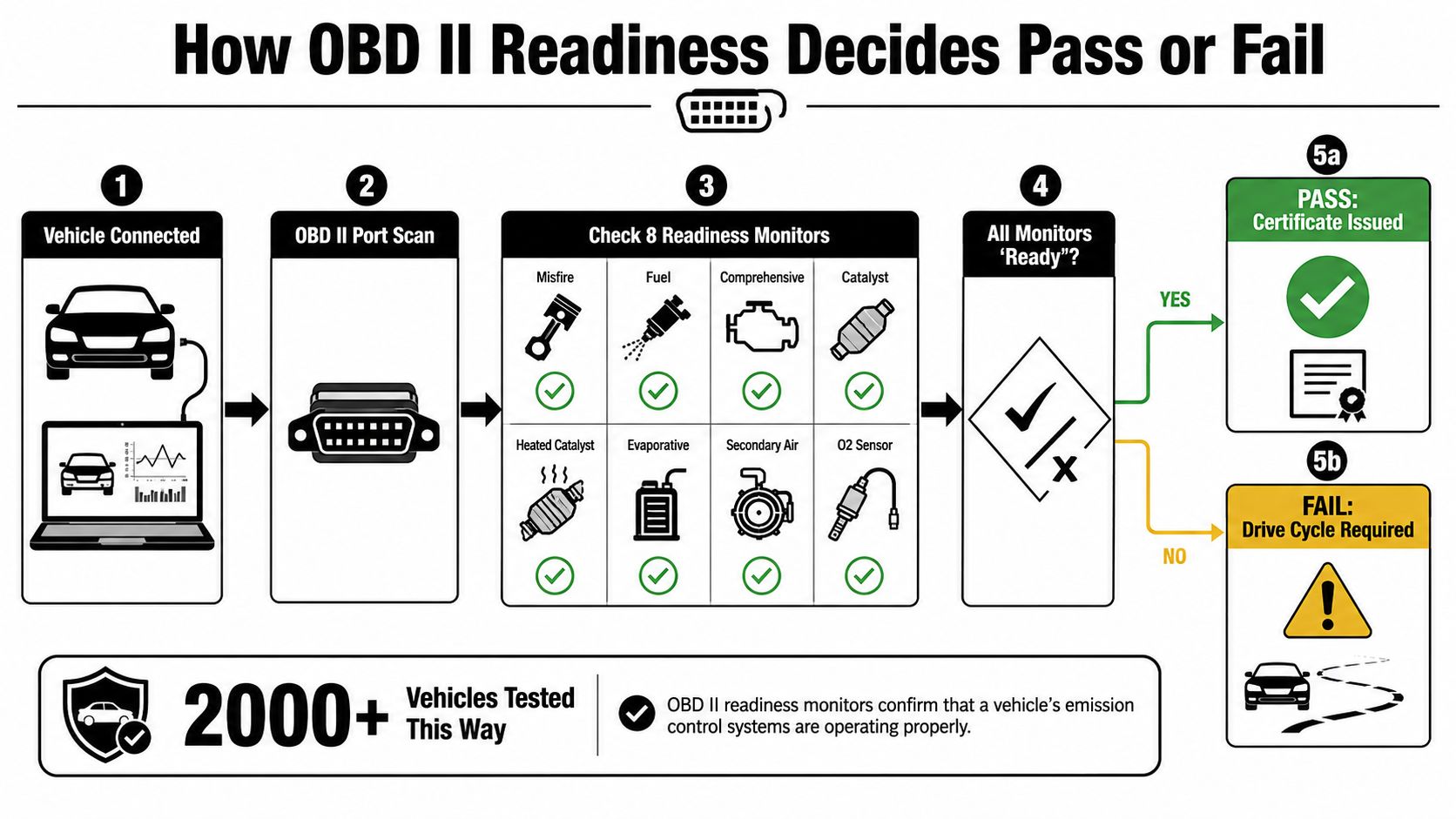
A mixed drive cycle can give the monitors the conditions they need. Use normal city traffic, steady cruising, stops, and highway operation instead of making only short trips. Drivers often use roughly 50 to 100 miles of mixed driving after a repair or battery reset, a range discussed in this guide to driving after a check-engine light. The manufacturer's procedure controls the exact speed, temperature, and operating conditions.
An economy smog check station reads the same readiness information as a regular station. The price doesn't change the software state of your car, so preparation matters more than the storefront label. For a plain-language explanation of diagnostic results, see this guide on how to read OBD codes.
Prep Steps That Cut Your Re-Test Risk
The best savings usually happen before the appointment. A short preparation routine can reveal a problem early, help the monitors complete, and prevent you from paying for an avoidable second inspection.
Use the final 48 hours wisely
Start with the dashboard. An illuminated check-engine light signals an emissions fault and can prevent certification. Don't erase the code just to make the light disappear, because clearing it can also reset readiness monitors and leave the vehicle unable to complete the inspection.
Check the gas cap next. Remove it, inspect the rubber seal for cracking or flattening, and reinstall it until it clicks securely. A weak seal can allow an evaporative leak, and the EVAP monitor may need specific conditions before it reports ready.
A Bluetooth OBD scanner can show readiness status before the appointment. If you use a consumer tool, treat its result as a preparation check rather than a guarantee, because the station still performs the official inspection through its approved equipment.
A practical appointment checklist
- Warm the vehicle: Drive steadily for about 15 to 20 minutes before the appointment so the engine and emissions components reach normal operating temperature.
- Use mixed speeds: Include both city driving and highway cruising during the day before testing. This gives the vehicle more opportunities to run different monitors.
- Check the fuel level: Keep the tank between roughly one-quarter and three-quarters full so the evaporative system has suitable operating conditions.
- Protect monitor status: Avoid disconnecting the battery or clearing codes shortly before testing.
- Assess the battery: A weak battery can lose voltage and reset monitor progress, especially after the vehicle sits overnight.
- Schedule diagnosis first: If the check-engine light is on, pay for diagnosis before paying for certification. The inspection won't repair the fault.
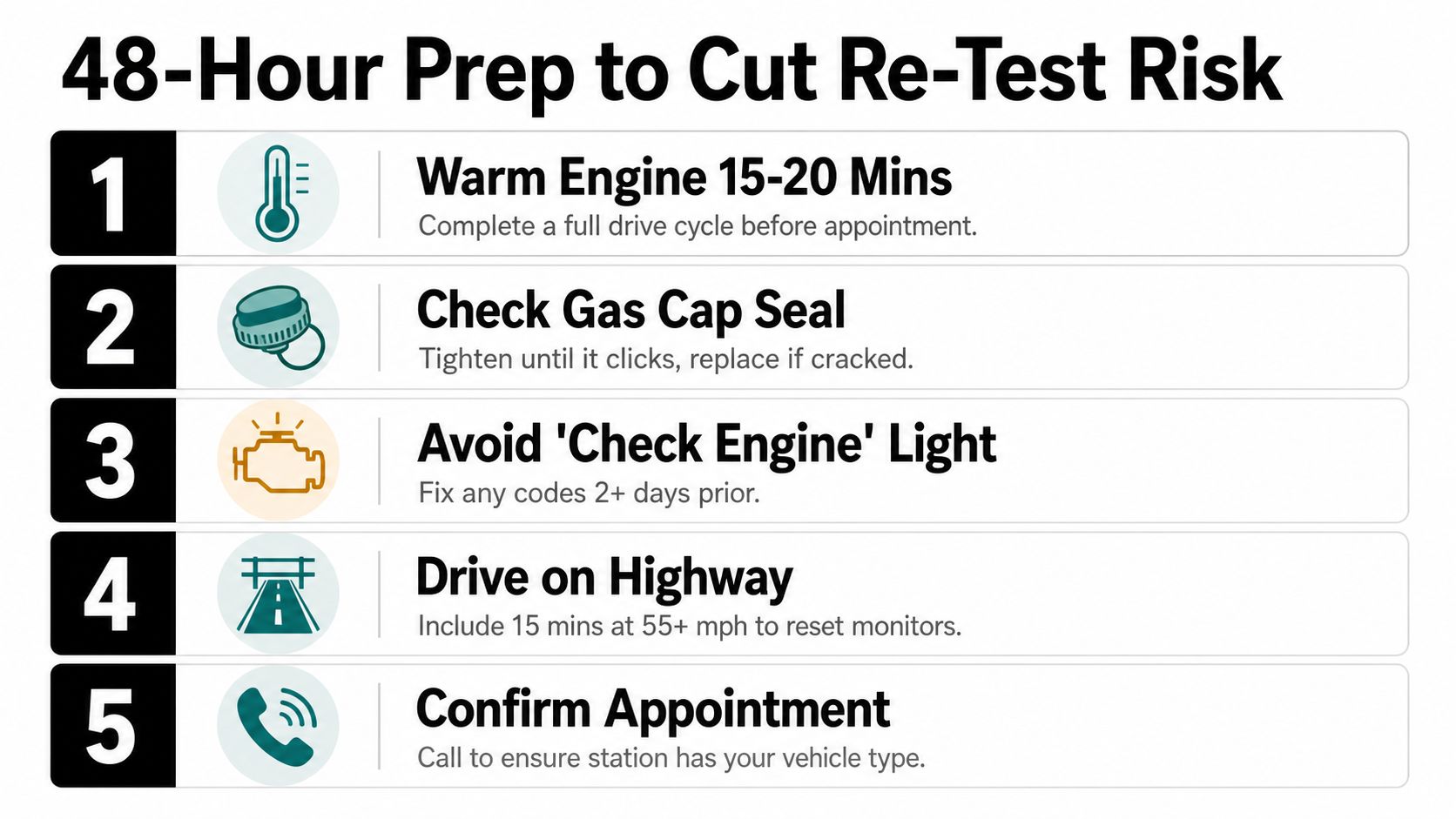
Technician's advice: Don't drive straight from a code-clearing repair to the test lane. Give the car time to complete its self-checks first.
The warm-up drive helps, but it can't fix a failed component. If a monitor refuses to complete after normal mixed driving, the issue may involve a thermostat, EVAP leak, oxygen sensor, catalyst, wiring fault, or another emissions-control problem. Get the status checked instead of repeatedly paying for tests.
Why STAR Certification Matters for Drivers
A STAR certificate is a performance designation administered through the Bureau of Automotive Repair, not just a label used in advertising. BAR reviews station performance through measures such as the Similar Vehicle Failure Rate, Short-Term Measures, Follow-Up Pass Rate, and citation or disciplinary history. The STAR certification guidance explains how the program evaluates participating stations.
The Similar Vehicle Failure Rate compares a station's results with results for similar vehicles statewide. That comparison helps account for the kinds of cars a station services. A facility inspecting many older or problem-prone vehicles is not judged in exactly the same way as one testing mostly newer cars.
Who needs a STAR station
Your DMV notice or vehicle record determines whether your inspection must take place at a STAR station. The requirement can depend on registration circumstances, vehicle characteristics, or location. If your vehicle is directed to STAR and you choose a non-STAR station, the result may not meet the DMV requirement. You could then pay for another inspection at an eligible facility.
| Factor | Standard Station | STAR Certified Station |
|---|---|---|
| BAR license | Licensed to perform qualifying inspections | Licensed and approved under STAR requirements |
| Performance oversight | Subject to standard program rules | Includes additional STAR performance measures |
| Directed vehicle eligibility | May not accept or certify STAR-directed vehicles | Can handle vehicles that require STAR testing |
| Pricing | May offer economy rates | May charge more because of test eligibility and oversight |
| Best fit | Non-directed vehicles that meet ordinary requirements | DMV-directed vehicles and customers seeking STAR eligibility |
The certificate does not guarantee a passing result. Your vehicle must still satisfy the applicable emissions and readiness requirements. STAR matters because it identifies stations eligible for certain directed inspections and subject to additional performance standards.
Before you book: Read the DMV notice for wording that indicates a STAR requirement. If the notice is unclear, ask the station to confirm eligibility before the test begins.
For a non-directed, newer gasoline vehicle, a licensed non-STAR economy station may be a valid lower-cost option. For a directed vehicle, eligibility comes first. Price comes after you confirm that the station can legally perform the required inspection.
Getting Tested at Speedy Smog in San Leandro
Drivers looking for an economy smog check in the East Bay can use a simple booking checklist at Speedy Smog. The station is located at 15275 Washington Ave, San Leandro, California 94579, and it serves most vehicles from 1976 to the present, including newer gasoline cars, older vehicles, diesels, and hybrids.
The shop is open Monday through Saturday. Its website says a smog check doesn't require an appointment, though calling ahead can still help confirm that the station is ready for your vehicle category, especially if you have a diesel, hybrid, older car, or a DMV-directed test.
What to bring and expect
Bring the DMV renewal notice if you have it, your payment method, and the vehicle keys. At the counter, confirm whether your vehicle needs a standard inspection or a STAR test, ask for the complete price, and clarify the retest policy before the technician begins.
For many vehicles from the 2000 model year onward, the inspection takes about 10 to 15 minutes, according to the publisher information supplied for this article. Older, diesel, or unusual vehicle configurations may take longer because the required procedure can involve additional equipment or checks.
Speedy Smog handles both ordinary and STAR-directed inspections at the San Leandro station, which can prevent an eligible driver from having to move the vehicle to another facility. The business also advertises periodic $25-off coupons for most smogs on newer vehicles through its website. Check the current terms before relying on a coupon, since vehicle type and test category can affect eligibility.
The station says results are transmitted electronically to the DMV. If the vehicle fails, ask the counter staff to explain the reason in plain language and confirm the applicable retest terms. The publisher information supplied for this article states that Speedy Smog offers a free retest within a 90-day window after an initial failure, so verify the policy and conditions when you arrive.
Smog Check Myths and Common Questions
Myth: Disconnecting the battery guarantees a clean result.
It doesn't. Disconnecting the battery can clear trouble codes, but it can also reset readiness monitors. The car may need normal mixed driving before the computer is ready for inspection.
Myth: A new battery guarantees a pass.
A new battery can prevent voltage-related problems, but it won't repair an emissions fault, complete unset monitors instantly, or replace missing equipment. The technician still checks the vehicle's reported emissions status.
Myth: Older cars are automatically exempt.
Some categories are exempt, but age alone doesn't cover every vehicle. California's consumer guidance identifies exemptions including gasoline vehicles built before 1976, alternative-fuel vehicles, and motorcycles. Check the actual vehicle category rather than assuming.
Myth: Any station can certify a directed vehicle.
A DMV-directed vehicle may require a STAR station. A non-STAR test can leave you with a result that doesn't meet the registration requirement, so confirm the notice before choosing the lowest advertised price.
Questions drivers ask at the counter
How quickly does the result reach the DMV?
Licensed stations submit results electronically. Ask the station whether the transmission has completed before leaving, especially if your registration deadline is close.
What happens if I miss the smog requirement?
The registration process can remain incomplete until the required certification is recorded. Contact the DMV or review the notice for deadline and renewal instructions rather than assuming a late test is harmless.
Do out-of-state vehicles need a California smog check?
California generally requires an inspection when an out-of-state vehicle receives initial registration in the state. Ownership changes and periodic renewals can also trigger testing, depending on the vehicle and registration circumstances.
Why can a car with no symptoms fail?
OBD testing checks stored faults and readiness data, not only drivability. A car can feel normal while the computer reports an emissions problem or an incomplete monitor.
How do I challenge a questionable result?
Ask the station for the exact failure reason and inspection record. If the issue remains disputed, contact the Bureau of Automotive Repair for guidance on available review or referee options.
Speedy Smog provides economy and STAR smog checks in San Leandro for newer cars, older vehicles, diesels, hybrids, and DMV-directed inspections. Review your vehicle category, bring your renewal notice, and visit Speedy Smog to check current pricing, coupon terms, and testing availability before you head in.
You pull into a San Leandro smog station expecting a technician to rev the engine, measure a cloud of black smoke, and tell you whether the diesel passes. That assumption is understandable, but for many California light-duty diesels, it's incomplete. The most important part of the diesel car emissions test is often the vehicle's computer, not a tailpipe probe.
California inspections focus heavily on OBD-II readiness, diagnostic trouble codes, the malfunction indicator lamp, and visual evidence that emissions equipment is present and intact. A diesel can look clean at idle and still fail because its self-tests haven't completed. It can also pass an emissions-control scan while a mechanical problem remains, so you need to understand what the inspection does and doesn't prove.
Table of Contents
- What Happens During a Diesel Car Emissions Test
- How Diesel Tests Differ from Gasoline Smog Checks
- The Three Test Types Your Diesel May Face
- Why STAR Stations Matter for California Diesels
- Common Reasons Diesels Fail the First Time
- How to Prepare Before You Drive In
- Your Next Step at Speedy Smog in San Leandro
What Happens During a Diesel Car Emissions Test
You'll usually begin by providing the technician with your registration or DMV renewal notice. The inspector verifies the vehicle identity and confirms details that determine the correct test procedure, including the model year, gross vehicle weight rating, fuel type, and exemption status. Don't assume every diesel truck follows the same rules. A light-duty pickup and a heavier commercial vehicle may face different testing requirements.
The technician then positions the vehicle in the bay and performs a walkaround. This can include checking the license plate and vehicle identification information, looking for visible emissions-control equipment, and confirming that nothing obvious has been removed or altered. The inspection isn't only about what comes out of the exhaust. It's also about whether the systems designed to control those emissions are still installed and functioning.
The computer scan comes first for many diesels
For newer light-duty diesels, the technician generally connects approved equipment to the OBD-II port under the dashboard. The scan checks whether the vehicle's emissions monitors have completed their self-tests, whether the check-engine light or malfunction indicator lamp is commanded on, and whether diagnostic trouble codes indicate an emissions fault.
That's why a diesel that “runs fine” can still fail. The engine may start easily, accelerate normally, and produce little visible smoke while the computer reports incomplete testing or a problem with the emissions system.
Practical rule: Never clear codes or disconnect the battery right before an inspection. You may erase the warning, but you can also reset the readiness monitors that the technician needs to see as complete.
The visit commonly includes electronic documentation, visual verification, and submission of the result through California's inspection system for DMV processing. Before arriving, review the shop's diesel emissions testing equipment so you know why the bay may look different from a gasoline testing lane.
What the visit feels like
Plan for a short appointment, but allow extra time if the technician finds an issue or the vehicle needs a directed procedure. Bring your renewal paperwork, registration information, and payment. If you're retesting after a failure, bring the previous report so the technician can see the exact reason for the rejection instead of starting with guesses.
The inspector's job is to follow the procedure assigned to that vehicle. Your job is to arrive with the vehicle intact, the monitors ready, and any recent repair history available.
How Diesel Tests Differ from Gasoline Smog Checks
A gasoline owner may remember a loaded tailpipe test on a dynamometer, with a probe measuring exhaust gases while the vehicle operates under simulated road conditions. Most modern light-duty diesels in California are handled differently. The inspection leans much more heavily on the vehicle's diagnostic system and readiness status.
That difference creates the most common misunderstanding. Owners see the exhaust pipe and expect a smoke measurement. California's procedure may instead focus on whether the diesel has completed the required OBD self-checks and whether its emissions controls report a fault.
| Test Element | Gasoline Vehicle | Diesel Vehicle |
|---|---|---|
| Main compliance screen | Depending on vehicle and model year, may include OBD checks and a tailpipe emissions procedure | Primarily relies on OBD readiness, MIL status, stored faults, and applicable visual checks for many light-duty vehicles |
| Tailpipe measurement | Older or applicable gasoline vehicles may use a loaded tailpipe test | Many light-duty diesels don't receive the same dynamometer tailpipe test |
| Emissions equipment inspection | Visual checks can identify missing or altered components | EGR, DPF, catalysts, intake-related equipment, and tampering concerns can matter |
| Computer readiness | Important on vehicles equipped with OBD-II | Central to the inspection for newer light-duty diesels |
| Heavy vehicle rules | Determined by the vehicle's classification and applicable program | Diesels over 14,000 pounds GVWR can fall under special procedures and shouldn't be treated like passenger cars |
Why visible smoke isn't the whole story
Smoke is easy to understand because you can see it. OBD data is less obvious, but it can reveal a system that hasn't completed its diagnostic routine or has stored a fault that isn't producing dramatic symptoms. A diesel may also have low visible particulate smoke while producing excessive nitrogen oxides if its EGR, SCR, or related aftertreatment system isn't working properly.
European inspection rules illustrate the limitation of smoke-only testing. Under the EU periodic technical inspection framework, the core diesel tailpipe metric is generally smoke opacity, with a limit of about 0.7 m⁻¹ for most modern light-duty diesel cars, while NOx and other gaseous pollutants generally aren't part of the required PTI test, as summarized by DieselNet's EU inspection guidance. That's a smoke screen, not a complete chemical audit.
California's OBD emphasis catches certain faults that a smoke reading can miss, but it doesn't directly measure NOx at the tailpipe. The correct expectation is simple: your diesel inspection checks the systems and indicators California requires, not every pollutant under every driving condition.
The Three Test Types Your Diesel May Face
Your diesel may face one test type or a combination. The technician determines the correct path from the vehicle's model year, weight class, fuel type, and California inspection rules. Don't ask a shop to perform the test exactly as it was done on a different truck. Two diesels parked side by side may not receive the same procedure.
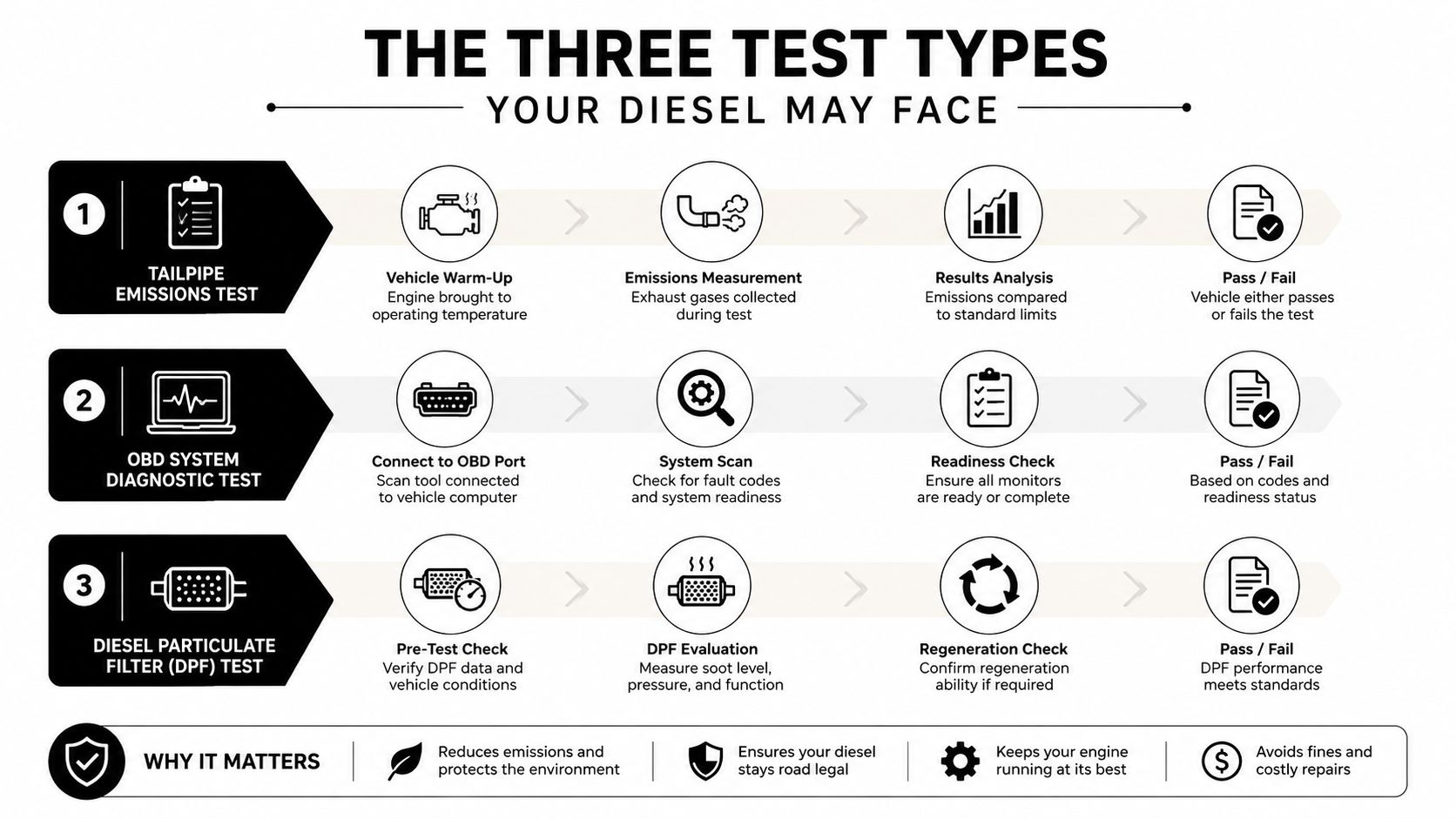
OBD diagnostic testing
For 1998 and newer light-duty diesels, the main inspection typically centers on OBD-II. The technician checks readiness monitors, the malfunction indicator lamp, and emissions-related diagnostic trouble codes. The scan doesn't just ask whether the dashboard light is on. It checks whether the vehicle's computer has completed its required evaluations.
A battery disconnect, code-clearing event, tuner reset, or recent repair can leave monitors incomplete. The vehicle may feel completely normal, but the inspection can't certify it until the required checks have run.
California tightened readiness requirements for newer light-duty diesels in its smog-check program. Since July 2023, 2007-and-newer light-duty diesel vehicles are allowed no more than two unset monitors, specifically the Diesel Particulate Filter and Non-Methane Hydrocarbon Catalyst monitors, according to the California Bureau of Automotive Repair update. Those monitors help verify that key emissions controls have performed their self-tests, but they still don't directly measure NOx output.
Opacity or smoke testing
Older diesels and heavier vehicles may receive a free-acceleration opacity test. The technician uses a smoke meter while the engine is accelerated in a controlled manner. The equipment evaluates exhaust opacity, not the full chemical composition of the exhaust.
This procedure is especially relevant when the vehicle's classification calls for a particulate-smoke check. A diesel with poor combustion, excessive fueling, an intake restriction, or an aftertreatment problem may reveal itself through visible smoke during snap acceleration even if it seems clean during ordinary driving.
Visual inspection
The walkaround can be decisive. The technician may check whether the catalytic converter, EGR equipment, DPF, turbocharger-related plumbing, and other required emissions components are present and connected. Obvious tampering, missing hardware, warning lights, or a defeated emissions system can stop the inspection before a clean-looking smoke result helps you.
The procedure is chosen for the vehicle, not the owner's preference. Bring an intact vehicle and accurate paperwork, and let the certified inspector apply the correct combination.
Why STAR Stations Matter for California Diesels
A STAR station meets additional Bureau of Automotive Repair requirements and can inspect vehicles that regular stations may not be authorized to certify. This matters when the DMV directs your vehicle to a STAR location, when the vehicle falls into a higher-scrutiny category, or when a previous failure affects where you can complete the next inspection.
The direction appears on DMV paperwork. Read that notice before choosing a shop. If it says STAR, a non-STAR station may have to refuse the certification even if its equipment appears capable of scanning your diesel.
What STAR certification changes
STAR shops operate under stricter quality expectations and must maintain the equipment, training, and inspection performance required by BAR. The program also uses a Directed Inspection and Repair fee structure, commonly referred to as a DIR fee, for certain directed vehicles. The exact charge depends on the applicable transaction and should be confirmed with the station before testing.
A STAR inspection doesn't guarantee a pass. It guarantees that an eligible vehicle is being tested by a station authorized to handle that assignment. That distinction protects you from paying for an inspection that can't satisfy the DMV requirement.
| Feature | Regular Station | STAR Station |
|---|---|---|
| Standard eligible vehicles | Can inspect vehicles within its authorization | Can inspect standard vehicles within its authorization |
| DMV-directed STAR vehicle | May need to refuse certification | Can certify when the vehicle and transaction qualify |
| Oversight | Must follow BAR inspection rules | Operates under additional STAR performance requirements |
| Equipment and training | Meets regular program requirements | Maintains requirements for STAR participation |
| Electronic DMV reporting | Used for completed inspections | Used for completed STAR inspections as applicable |
Choose based on the DMV instruction
Check the renewal notice first, then confirm the shop's authorization. You can review what a STAR smog station is before booking. Speedy Smog in San Leandro is a STAR-certified option, but the practical question is always whether your particular vehicle and DMV notice require STAR handling.
A STAR shop can inspect a directed diesel, identify the reason for a failure, and submit the result through the proper channel. It can't waive readiness rules or overlook tampering. Certification changes who may perform the test, not what the vehicle must satisfy.
Common Reasons Diesels Fail the First Time
Most first-visit diesel failures aren't mysterious. They come from a short list of electrical, emissions-control, and maintenance problems that owners often miss because the vehicle still drives normally.
The biggest surprise is incomplete readiness monitors. A battery replacement, a cleared check-engine code, a recent computer reflash, or a tuner reset can erase the data the inspection needs. The dash may be dark, but the scan can still show that the vehicle hasn't completed its self-tests.
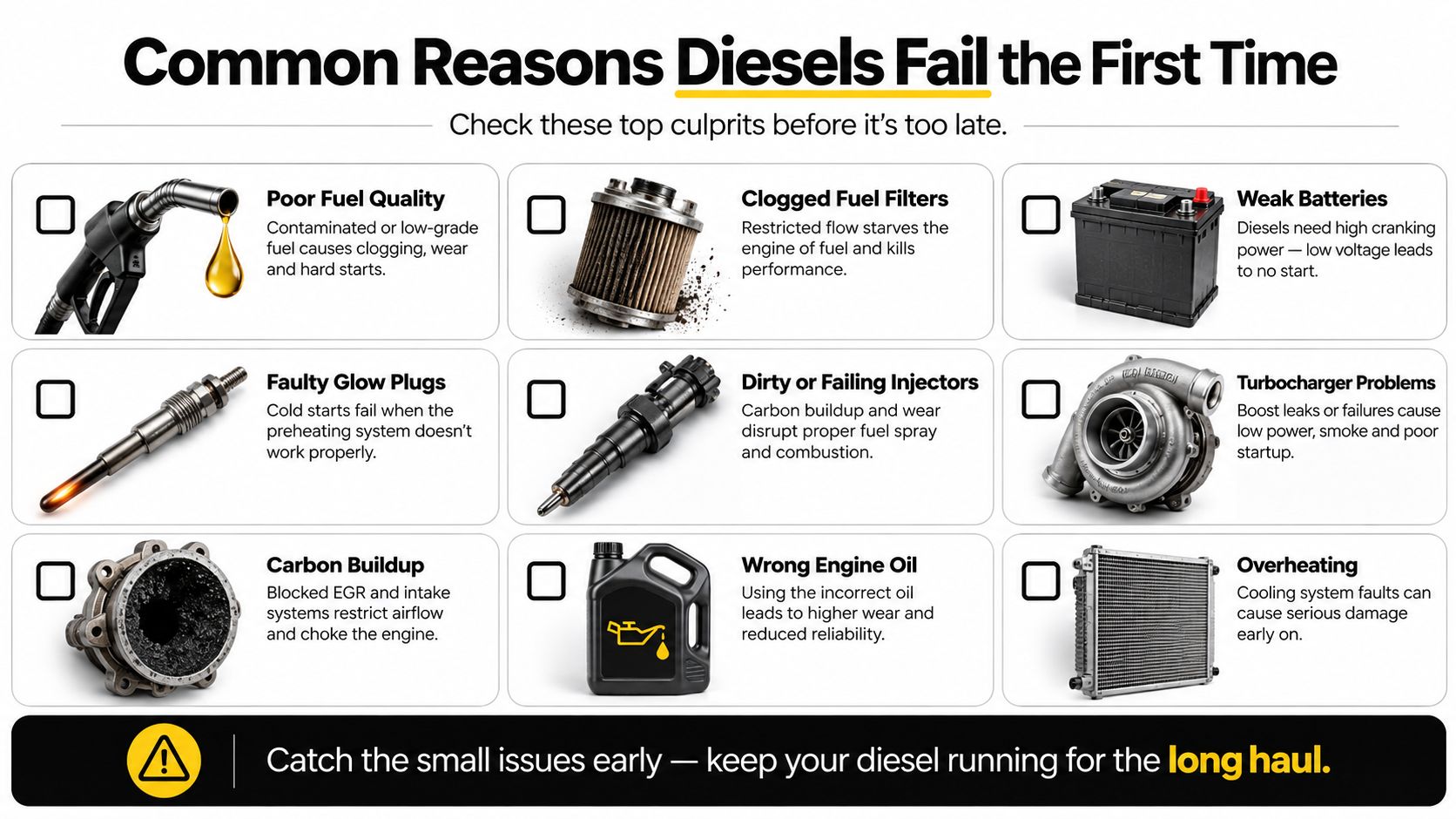
Hardware and tampering failures
A removed DPF, altered EGR system, disconnected sensor, or modified exhaust can fail the visual inspection. Don't expect low smoke to rescue a vehicle with missing emissions hardware. UK inspection guidance reflects the same practical issue. Industry coverage reports that a visible DPF fault, removed filter, or engine-management warning can cause failure even when opacity is otherwise low, as described in this diesel inspection guidance.
The vehicle may also fail because of:
- NOx sensor faults: The engine may run smoothly while the emissions computer records a sensor or aftertreatment problem.
- Glow-plug and cold-start issues: Slow or incomplete cold-start operation can contribute to poor combustion and smoke, especially during a snap-acceleration procedure.
- Turbocharger problems: Worn seals or boost-control faults can produce haze, oil consumption, or abnormal smoke under acceleration.
- Check-engine light faults: An illuminated MIL is not a cosmetic issue. The technician treats it as evidence of an emissions-related problem until diagnosis proves otherwise.
- Intake and EGR buildup: Restricted airflow can upset combustion and trigger faults even when the driver hasn't noticed a major loss of power.
A truck doesn't have to run badly to fail. The computer may detect a problem long before the driver feels it.
Use the failure report as a repair map, not as a suggestion to clear codes and return. A shop's guide to common smog-check failure reasons can help you understand the distinction between a monitor issue, a visual defect, and a mechanical emissions fault.
How to Prepare Before You Drive In
Preparation starts with the vehicle's computer, not the wash bucket. If you've recently disconnected the battery, cleared codes, installed a tune, or completed emissions repairs, give the monitors time to run through their drive cycle. Short trips around San Leandro may not provide the range of speeds, temperatures, and operating conditions required for every self-test.
The night-before checklist
- Scan readiness status: Use a compatible OBD-II scanner to see whether the diesel's monitors are complete. Don't rely only on the dashboard light.
- Check the MIL: Start the engine and confirm the check-engine light performs its normal bulb check, then turns off if no fault is commanded.
- Inspect the fuel cap: Make sure it seals correctly and isn't cracked or loose.
- Look underneath: Check for obvious exhaust leaks, disconnected wiring, loose sensor plugs, or missing aftertreatment parts.
- Review recent work: Tell the technician about battery replacement, code clearing, ECU programming, DPF service, or sensor replacement.
- Bring paperwork: Have your DMV renewal notice, registration, payment, and any previous failure report ready.
Don't disconnect the battery right before the appointment. If a fault is present, clearing it only hides the warning temporarily and may leave the readiness monitors incomplete. A proper repair followed by a complete drive cycle is the reliable route.
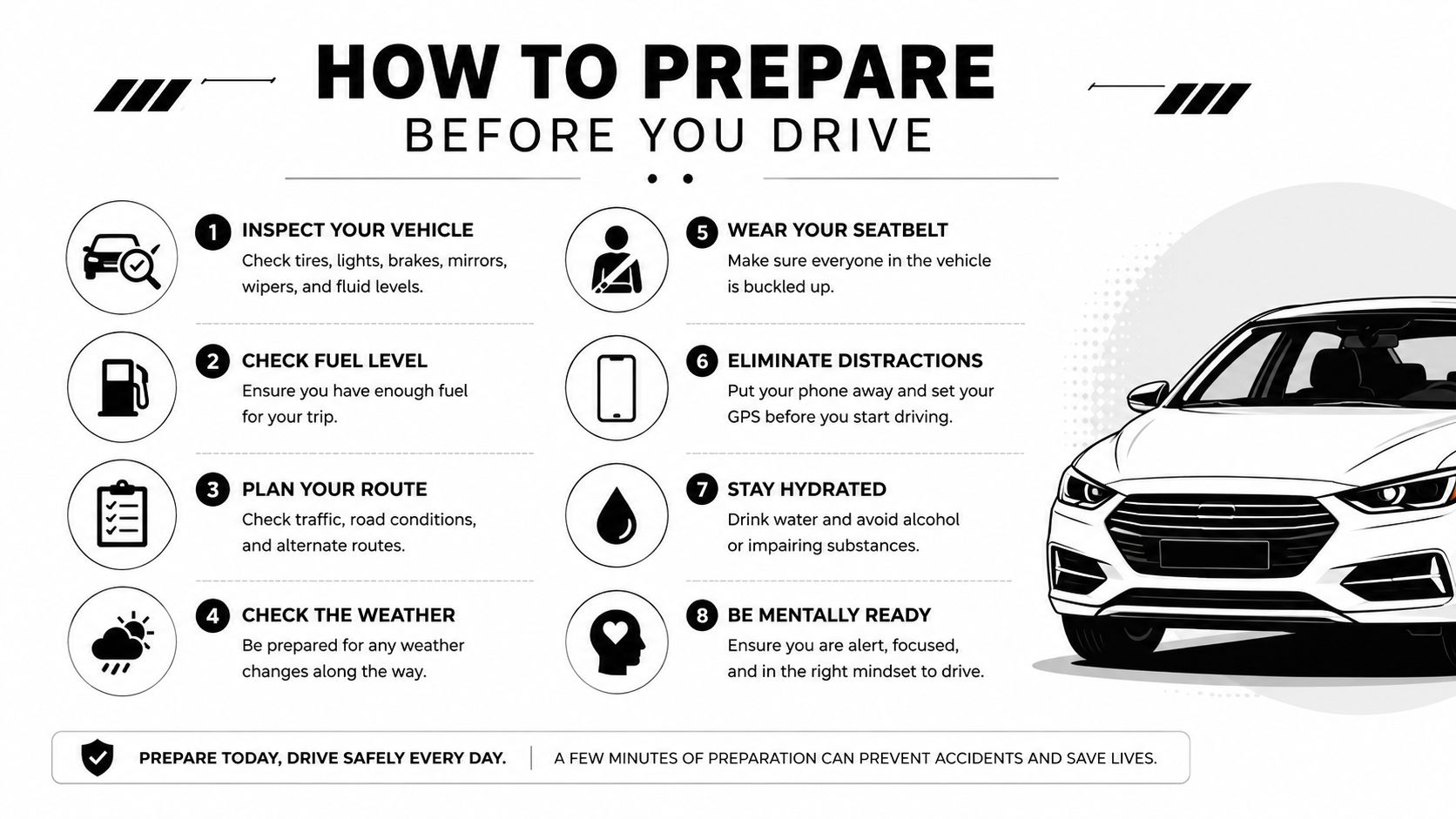
Warm the engine during your normal drive to the shop, but don't abuse the throttle or try to create artificial smoke. The inspector needs a representative, safe vehicle, not a staged performance. If you're unsure whether the monitors are ready, pay for a diagnostic scan before paying for an official inspection.
Here's a visual overview of practical vehicle preparation:
Your Next Step at Speedy Smog in San Leandro
If your diesel is registered in the East Bay, start with the DMV notice and the vehicle's model year and weight information. Call ahead if you're unsure whether the inspection requires STAR authorization, especially if the notice directs you to a STAR station or the vehicle has already failed.
Speedy Smog operates as a STAR-certified station in San Leandro and handles diesel inspections for applicable light-duty vehicles, including diesel pickups, older trucks, and diesel imports such as Volkswagen TDI and BMW models. The shop is located at 15275 Washington Ave, San Leandro, California 94579. Appointments can be arranged by phone or online, and walk-ins are accepted before 4 PM on most weekdays, subject to availability.
Bring the right information
Bring the DMV renewal notice or registration, payment for the inspection and certificate fee, and the previous Smog Check report if you're returning after a failure. Tell the technician whether you've recently replaced the battery, cleared a code, repaired the DPF, or updated the engine computer. Those details can explain incomplete monitors and prevent wasted diagnostic time.
The visit commonly takes about 20 to 30 minutes, though the actual time depends on the vehicle and required procedure. STAR-directed vehicles receive the same one-stop pricing as a regular smog check at the shop, with no added surcharge according to the provided business information. Confirm current hours, eligibility, and pricing before driving over.
A practical visit sequence looks like this:
- Confirm the assignment: Check whether DMV requires a STAR station.
- Check readiness: Verify the diesel's monitors before booking.
- Bring documents: Carry renewal paperwork and any prior failure report.
- Complete the inspection: Let the technician select the required OBD, visual, or opacity procedure.
- Handle the result: If it passes, confirm electronic submission. If it fails, use the report to target the repair.
Call to confirm hours, ask whether your diesel needs STAR certification, and reserve a same-week appointment if your DMV deadline is close. That small amount of planning is more useful than arriving with a warm engine and hoping the tailpipe looks clean.
Speedy Smog provides diesel emissions testing and STAR-certified smog checks for San Leandro and East Bay drivers who need accurate DMV compliance. Visit Speedy Smog to confirm the correct inspection, check availability, and book your appointment before the renewal deadline.

You're staring at a California DMV renewal notice, wondering whether the station down the street will get you certified before your Saturday disappears. The cheapest coupon may look attractive, but it won't help if the shop can't handle your vehicle's test type, your registration requires a STAR inspection, or a battery reset leaves the emissions monitors incomplete.
The best smog check is the right combination of certification, accurate testing, honest pricing, manageable wait time, clear communication, and equipment suited to your car. California's program remains a major compliance system. The Bureau of Automotive Repair recorded 11,275,981 initial tests and 959,667 failures in 2025, an overall initial-test failure rate of 8.51% in its statewide report (California BAR 2025 Smog Check Executive Summary). Picking carefully matters.
Table of Contents
- What Makes a Smog Check the Best Choice
- The Five Criteria That Define Quality
- What Happens During Your Smog Test
- How to Prepare Before You Drive In
- Matching the Station to Your Vehicle Type
- Common Failure Causes and How to Fix Them
- Why Speedy Smog Stands Out in San Leandro
- Your Pre-Test Checklist and Final Answers
What Makes a Smog Check the Best Choice
A good station does more than plug in a scanner and print a certificate. It routes your vehicle through the correct California inspection process, tells you what the quoted fee includes, and handles a failure without turning it into a confusing sales pitch.
I judge a station on five dimensions:
- Certification: Is it STAR certified, and can it handle a directed vehicle if BAR sends you there?
- Actual turnaround: How long does the full visit take, from pulling in to receiving the certificate?
- Transparent pricing: Does the posted price include the certificate transmission fee, or will extra charges appear after the test?
- Customer service: Will someone explain a refusal clearly and tell you what needs attention?
- Vehicle coverage: Does the shop test your year, fuel type, weight class, and required inspection track?
The certificate itself is legally the same DMV product wherever you obtain it. The meaningful differences are speed, accuracy, communication, and problem handling. A low advertised price isn't a bargain if you need a second trip because the shop doesn't support your vehicle or failed to explain that the monitors weren't ready.
California's Smog Check program also has a long air-quality legacy. Research summarized in the state's performance material describes earlier reductions associated with enhanced testing in 1999, including about 97 tons per day of hydrocarbons, 1,690 tons per day of carbon monoxide, and 81 tons per day of nitrogen oxides (California BAR Smog Check Performance Report). That scale is why the inspection is more than a paperwork obstacle.
Practical rule: Choose the station that matches your vehicle first. Compare coupons only after you know the shop can perform the required test.
Carry that rule into any Bay Area station. The right shop for a newer OBD vehicle may not be the right shop for an older gasoline car, diesel truck, or hybrid.
The Five Criteria That Define Quality
Certification comes first
Look for STAR certification when your DMV or BAR notice requires it. STAR stations participate in California's higher-oversight testing program and are the appropriate choice for many directed vehicles. A Gold Shield designation can also matter when you need a station authorized for specific referee-related or test-and-repair functions. Ask the station to verify your requirement instead of guessing from a coupon.
Speed means the complete visit
A shop's advertised test time usually describes the inspection itself, not the time you spend waiting, completing paperwork, or dealing with an unexpected refusal. Ask about the typical pull-in-to-certificate experience, whether walk-ins are accepted, and whether the station has a clear process for transmitting results to the DMV.
Price should be readable
A clean quote answers four questions:
- Posted fee: What is the standard inspection charge?
- Certification charge: Is the electronic certificate transmission fee included?
- Additional diagnosis: Will the shop ask permission before charging for troubleshooting?
- Retest policy: Is a retest included, discounted, or billed separately?
A station that avoids direct answers about price is giving you useful information. Keep looking.
Service shows up during a refusal
A pass is easy for everyone. The test is what happens when the vehicle fails. A responsible technician should provide the refusal information, identify the relevant diagnostic trouble codes or inspection issue, and separate the test result from any optional repair recommendation.
Coverage prevents the wasted trip
Confirm the station handles your vehicle's class. California BAR guidance says 2000-and-newer gasoline and flex-fuel vehicles up to 14,000 pounds generally use OBD-based testing, while many older gasoline vehicles use BAR-97 equipment. Out-of-state vehicles from 1976 and newer may need a Smog Check when first registered in California (California BAR vehicle guidance).
| Criterion | What to Verify | Why It Matters |
|---|---|---|
| STAR certification | Whether your registration requires STAR testing | Prevents an invalid station choice |
| Speed | Full visit time, not only test time | Cuts avoidable waiting |
| Price | Posted fee, certificate charge, diagnosis, retest | Prevents surprise charges |
| Customer service | Clear refusal explanation and paperwork | Helps you repair the actual issue |
| Vehicle coverage | Year, fuel type, weight, and test track | Avoids a wasted appointment |
My scoring order is simple: STAR status first, speed second, vehicle coverage third, followed by price and service. A cheap station that can't perform the required test is no choice at all.
What Happens During Your Smog Test
A professional inspection follows a predictable sequence. You provide the registration information, the technician records the vehicle identification number, and the shop checks basic visual and safety items such as the fuel cap, catalytic converter presence, and obvious fluid leaks.
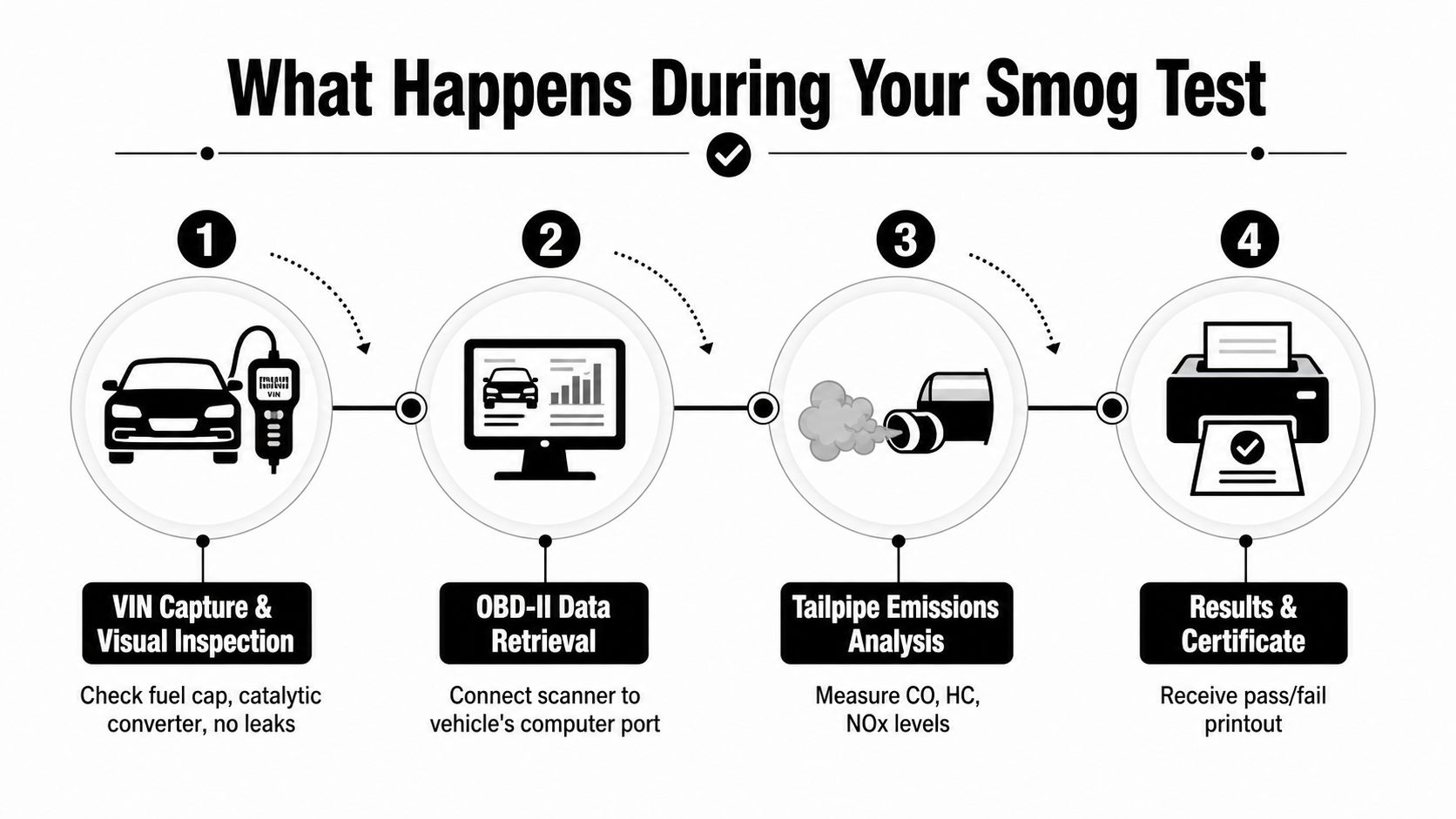
The vehicle determines the route
Newer gasoline vehicles generally follow the OBD-II path. The technician connects the scan tool, checks the malfunction indicator lamp command status, reviews diagnostic information, and verifies that the required emissions monitors have completed.
Older gasoline vehicles may require BAR-97 testing, which uses tailpipe measurements and a dynamometer procedure. Diesels and hybrids need the technician to follow the applicable equipment and procedure for that vehicle, rather than treating every car as a standard OBD scan.
Readiness monitors matter because they show whether the vehicle's onboard emissions self-tests have completed. EPA guidance identifies OBD inspection and maintenance programs as an emissions-inspection method, and California BAR includes readiness review in Smog Check procedures (EPA vehicle emissions inspection and maintenance information).
The result is pass, fail, or a refusal
A passing result is transmitted electronically through the DMV system and the certificate is issued. If the vehicle fails, the station should give you the refusal information and explain what the system found, whether that involves a warning light, trouble code, emissions result, equipment issue, or incomplete monitor.
For a straightforward gasoline vehicle, the inspection itself can be quick, but your total visit depends on the queue, paperwork, vehicle condition, and whether the car follows the OBD or tailpipe route. Before booking, ask the station for its current door-to-door expectation rather than relying on a headline test time.
For a practical breakdown of the appointment timeline, review this guide to how long a smog check takes. The useful question isn't “How fast is your test?” It's “When will I have the result in hand?”
How to Prepare Before You Drive In
Most avoidable delays begin before the car reaches the station. Check the dashboard first. If the check-engine light is on, flashing, or accompanied by rough running, diagnose the fault before paying for an inspection.
Don't disconnect the battery or clear diagnostic codes just before testing. That action can erase readiness information and leave monitors incomplete, even if the warning light stays off. California BAR guidance explains that newer gasoline vehicles generally have specific monitor allowances, while diesel requirements are stricter, so the safest approach is to complete the drive cycle and scan readiness before arriving.
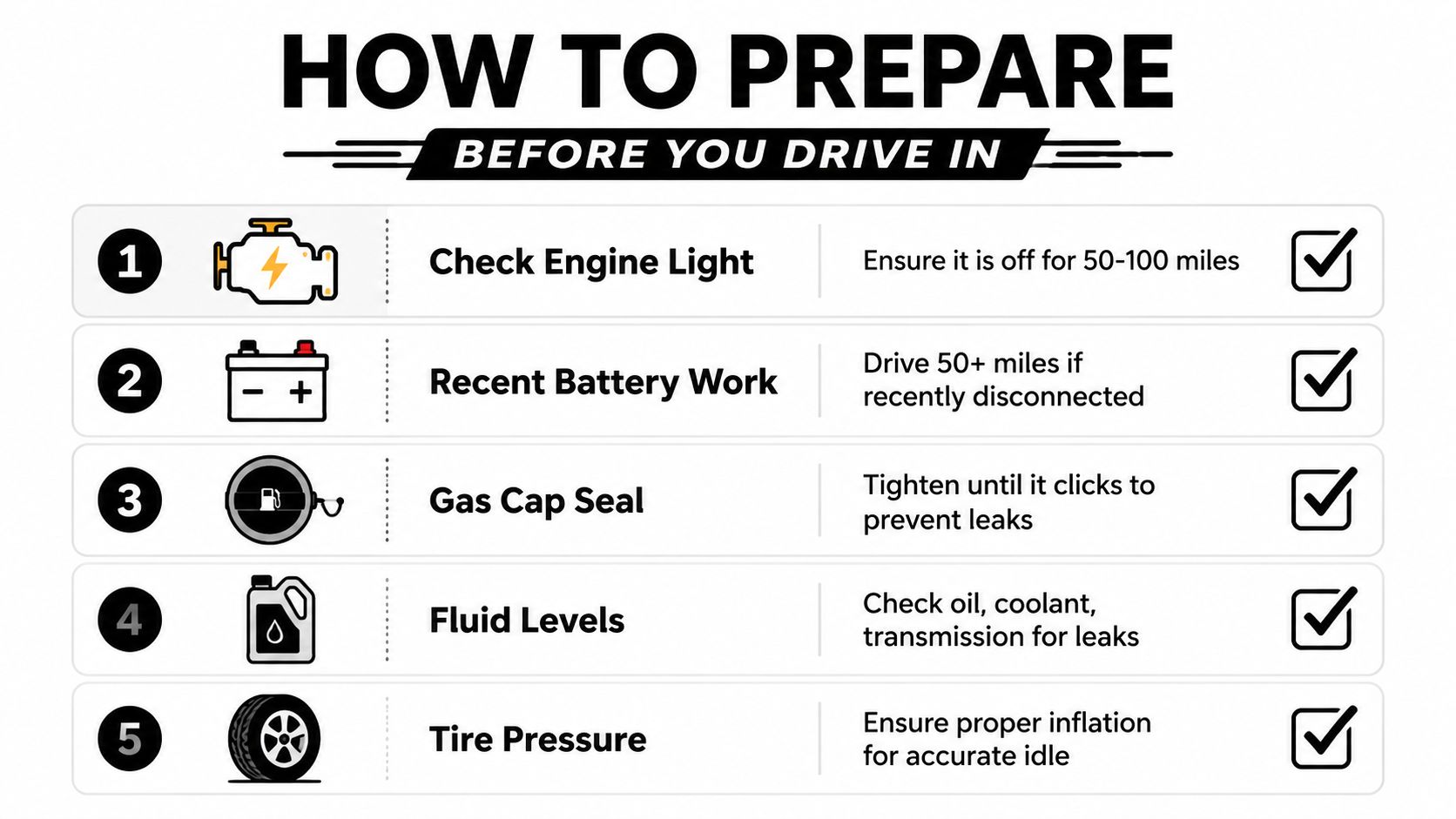
Use this driveway checklist:
- Warm the engine: Drive long enough for the engine and emissions system to reach normal operating temperature. Don't arrive immediately after a cold start.
- Inspect the gas cap: Tighten it until it clicks. Replace a missing, cracked, or damaged cap before testing.
- Look for obvious problems: Check for exhaust leaks, cracked vacuum hoses, fluid leaks, and poor running.
- Review recent work: If the battery was disconnected or codes were cleared, complete the vehicle's normal drive cycle before visiting.
- Bring paperwork: Take the renewal notice, registration, identification, payment, and repair receipts if the car was recently serviced.
Refuel before the appointment if the tank is low, but don't top off immediately beforehand. Excessively filling the tank can complicate evaporative-emissions checks.
If repairs are needed, ask about California repair-assistance eligibility before authorizing expensive work. A station can tell you what the test identified, but you should understand whether the business is recommending diagnosis, repair, or both.
Matching the Station to Your Vehicle Type
The right station depends on the vehicle's emissions path. A generic “all vehicles welcome” claim isn't enough. Call with the VIN, registration, model year, fuel type, and any DMV instruction so the shop can confirm the appointment before you drive over.
| Vehicle type | Usual test track | What to confirm |
|---|---|---|
| 2000-and-newer gasoline or flex-fuel | OBD-based inspection | STAR requirement, vehicle weight, monitor readiness |
| 1999-and-older gasoline | Often BAR-97 equipment and tailpipe testing | Dynamometer availability and exact year eligibility |
| Diesel | Vehicle-specific OBD, smoke, or other applicable procedure | Diesel equipment, weight class, and current rules |
| Hybrid | Emissions test based on its gasoline engine and system requirements | Hybrid experience, warm-up procedure, and high-voltage safety |
Newer gasoline vehicles
Most 2000-and-newer gasoline vehicles use an OBD inspection. The station checks the emissions monitors and diagnostic data through the vehicle's computer. If your registration directs you to a STAR station, a basic test-only location without the required designation won't solve the problem.
Older gasoline vehicles
Many 1999-and-older gasoline vehicles use BAR-97 testing, which is different from a simple scan. Confirm that the station has the equipment, test lane, and authorization for the vehicle before booking.
Diesels and hybrids
Diesel inspections can involve different procedures and equipment. Hybrids still require emissions compliance testing, and the technician needs to understand both the vehicle's engine controls and appropriate high-voltage safety practices.
Vehicle age, fuel type, gross vehicle weight, registration details, and DMV instructions can all change the correct route. Read this explanation of what a STAR smog station is before you compare prices. The phone call is faster than discovering at the counter that the coupon doesn't apply.
Common Failure Causes and How to Fix Them
A failed smog test usually points to a specific emissions or readiness problem. The check-engine light is the clearest warning, but a vehicle can also fail when the light is off if the monitors haven't completed or the measured emissions exceed the applicable limits.
| Failure cause | What it may mean | Practical next step |
|---|---|---|
| Check-engine light | Stored emissions fault, misfire, sensor issue, or converter problem | Scan codes and diagnose the root cause |
| Loose or damaged gas cap | Evaporative-emissions leak | Inspect and replace the cap if needed |
| Incomplete readiness monitors | Battery reset, recent repair, or cleared codes | Complete the required drive cycle and rescan |
| Vacuum leak or cracked hose | Unmetered air, rough running, or abnormal emissions | Inspect hoses and repair the leak |
| Catalytic converter or oxygen-sensor fault | Emissions-control failure or efficiency problem | Test the system before replacing expensive parts |
| Exhaust leak or temperature issue | Air entering the exhaust or engine not reaching normal temperature | Inspect the exhaust and cooling system |
Don't clear the codes before the appointment. That may turn a visible fault into an incomplete-monitor problem, leaving you with another delay instead of a clean result.
If the vehicle runs poorly, has a flashing warning light, or has a known misfire, fix the operating problem first. A loose gas cap or cracked hose may be a straightforward repair, but a catalytic converter or sensor diagnosis should come from test results rather than guesswork.
A cheap part is only cheap if it fixes the cause. Scan first, repair second, retest third.
Keep the refusal printout and every repair receipt. Ask whether the station provides a retest option and whether you may qualify for California assistance. Before returning, confirm that the repair is complete and that the monitors have had time to run again. This guide to common smog check failure reasons can help you interpret the technician's explanation without replacing a proper diagnosis.
Why Speedy Smog Stands Out in San Leandro
For San Leandro drivers, Speedy Smog is a practical option when the station's capabilities match the vehicle and DMV requirement. The business identifies itself as a STAR Certified smog check station and serves common California vehicle categories, including newer OBD vehicles, older gasoline vehicles, diesels, and hybrids.
The shop is located at 15275 Washington Ave, San Leandro, California 94579, with weekday and Saturday availability, which fits the common renewal problem of needing certification outside a standard workday. It's also near I-880 and offers free parking, useful details when you're trying to avoid circling a busy commercial area with a vehicle that may already have a warning light.
Speedy Smog describes a drive-through process and a typical inspection window of about 10 to 15 minutes for many 2000-and-newer vehicles, according to the publisher information provided for this article. That's a test-time claim, not a promise about the entire visit. Queue length, paperwork, vehicle class, and readiness status still affect the appointment.
The shop also presents posted standard and STAR fees, English-speaking service, online pre-check intake, electronic DMV transmission, and emailed certificates as part of its customer process. Those features address the practical quality tests that matter most: knowing the cost, sending the result correctly, and reducing paperwork after a pass.
I'd still call ahead with your registration or VIN, especially for an older vehicle, diesel, hybrid, directed inspection, or out-of-state registration. A station can be a good local fit only when it has the correct authorization and equipment for your specific test.
Your Pre-Test Checklist and Final Answers
Use this list before leaving home:
- Warm-up drive: Bring the vehicle to normal operating temperature.
- Fuel level: Don't arrive nearly empty, and don't top off immediately before testing.
- Gas cap: Tighten it securely and replace it if it's cracked or missing.
- Dash lights: Resolve an illuminated or flashing check-engine light before testing.
- Battery history: Don't test immediately after disconnecting the battery or clearing codes.
- Documents and payment: Bring the renewal notice, registration, identification, repair records, and a card or other accepted payment.
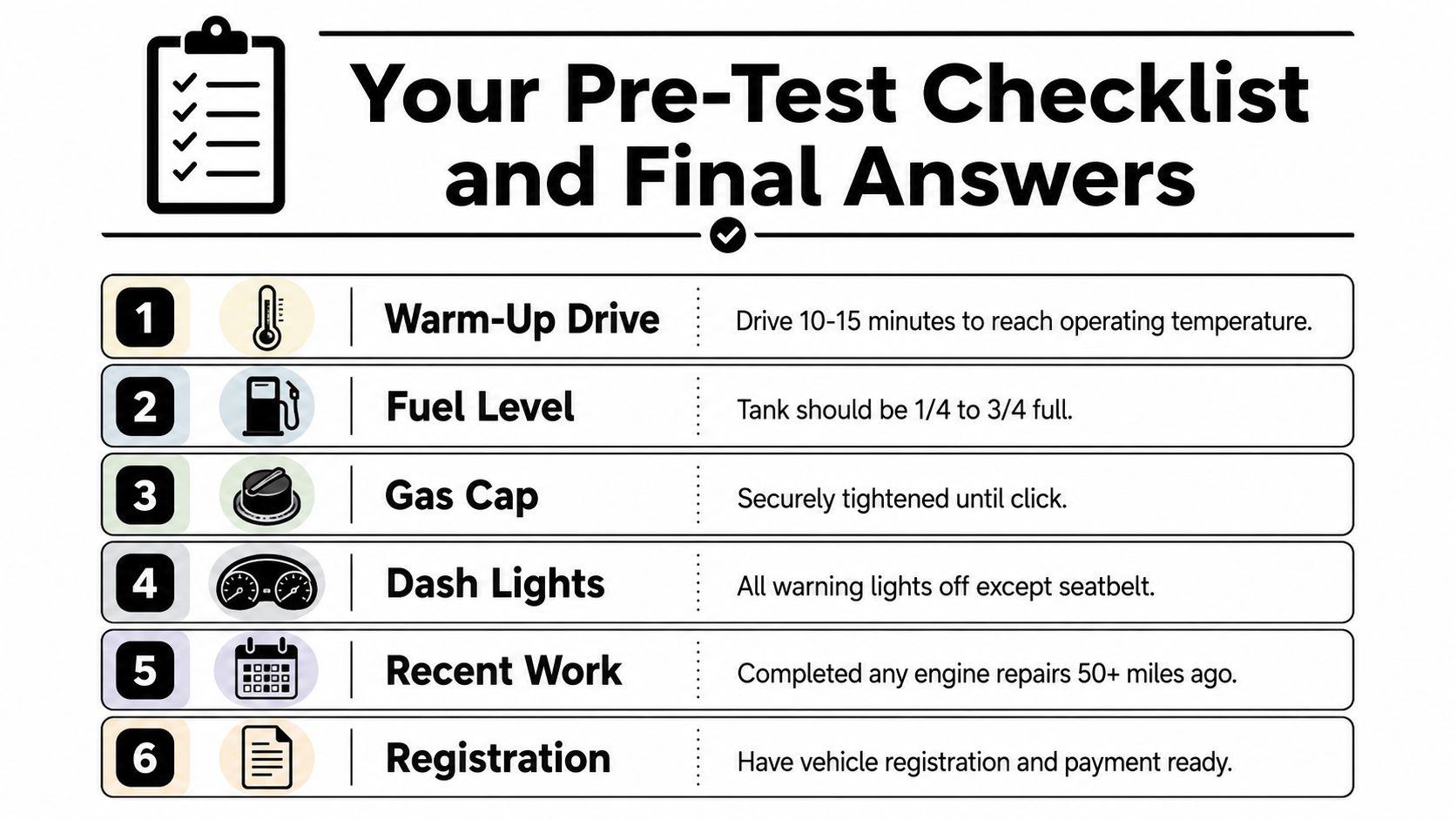
What if I'm transferring an out-of-state vehicle?
California may require a Smog Check for an out-of-state vehicle from 1976 or newer when you first register it in California. Confirm the requirement with the DMV and bring the out-of-state title, registration documents, and any requested ownership paperwork.
What if I lost my certificate?
Ask BAR about its electronic certificate search or contact the station that performed the inspection. The DMV may be able to verify an electronically transmitted result, so don't assume you need to repeat the test before checking the record.
What do I bring after I pass?
Take the renewal notice, current registration information, identification, payment, and any DMV documents tied to the transaction. If the station transmitted the result electronically, tell the DMV that the Smog Check has already been completed.
A STAR-certified station matched to your vehicle class, combined with this checklist, gives you the clearest path to a correct same-day result. Verify the requirement before you leave home, especially if your vehicle is older, diesel, hybrid, or newly arriving from another state.
Speedy Smog handles STAR inspections and common California vehicle classes in San Leandro, with walk-in service, electronic DMV transmission, and a process built around getting the correct test completed efficiently. Check your vehicle details first, then visit Speedy Smog to arrange your inspection.
You've just replaced the battery, cleared an old check-engine code, or finished a repair. The car starts easily, idles smoothly, and feels normal on the road, so you drive straight to the smog station expecting a quick pass. Instead, the inspection fails because the vehicle's onboard tests haven't finished running.
That situation is frustrating because the mechanical repair may have been correct. Learning how to get a car to pass smog starts with a less obvious question: is the vehicle ready for the inspection computer to evaluate it? California drivers need to think about readiness monitors, diagnostic trouble codes, emissions equipment, and inspection timing, not just whether the car drives well.
Table of Contents
- Why a Car That Runs Fine Can Still Fail Smog
- Your Pre-Test Checklist the Week Before the Inspection
- OBD Readiness Monitors: How to Get Them Set Before Smog
- The Most Common Things That Fail a Smog Test
- DIY Fixes Versus When to Bring It to a Shop
- California Drivers and Why a STAR Station Matters
- Test Day Routine and Quick Answers to Common Questions
Why a Car That Runs Fine Can Still Fail Smog
The car starts easily, idles smoothly, and drives normally, yet the inspection computer can still reject it. A battery replacement, cleared code, ECU reflash, or repair that required disconnecting power may erase the diagnostic history, including readiness monitors for the catalytic converter, oxygen sensors, evaporative system, misfire detection, and other emissions controls.
A mechanically sound vehicle can therefore arrive at the station with an incomplete OBD record. California's October 1, 2025 rule requires all supported readiness monitors to be set for a pass. Refer to the California BAR's updated readiness-monitor regulations and the dedicated readiness section for the testing details.
The practical lesson: A smooth-running car isn't automatically a smog-ready car.
California's OBD-II inspection checks whether the vehicle has completed its required self-diagnostics. The scanner may show “not ready” even with no warning light on the dash. A pending fault can interrupt a drive cycle, leaving one or more monitors incomplete.
Clearing the check-engine light right before an appointment usually creates another problem. It hides the visible warning while resetting the evidence the inspection computer needs. Some monitors take specific operating conditions to complete, and one short trip after a repair may not finish them. Check readiness status with a scan tool before scheduling the test.
A vehicle can also fail because the underlying emissions fault remains, even if the engine feels normal. Evaporative leaks, sensor problems, and intermittent misfires may not affect drivability enough for a driver to notice.
New Jersey's 2024 inspection report offers broader maintenance context. It recorded 2,083,621 initial overall emissions inspections, with 1,937,882 passing and 145,739 failing at least one emissions component, according to the New Jersey 2024 annual inspection report. States use different rules, but the practical point holds: intact emissions equipment and a completed diagnostic record give a properly running vehicle a better chance than unresolved faults or a freshly reset computer.
Your Pre-Test Checklist the Week Before the Inspection
A car can feel normal on the drive to the station and still arrive with a preventable problem. Use the week before the appointment to catch basic faults, confirm recent work, and avoid changes that reset the vehicle's diagnostic history.
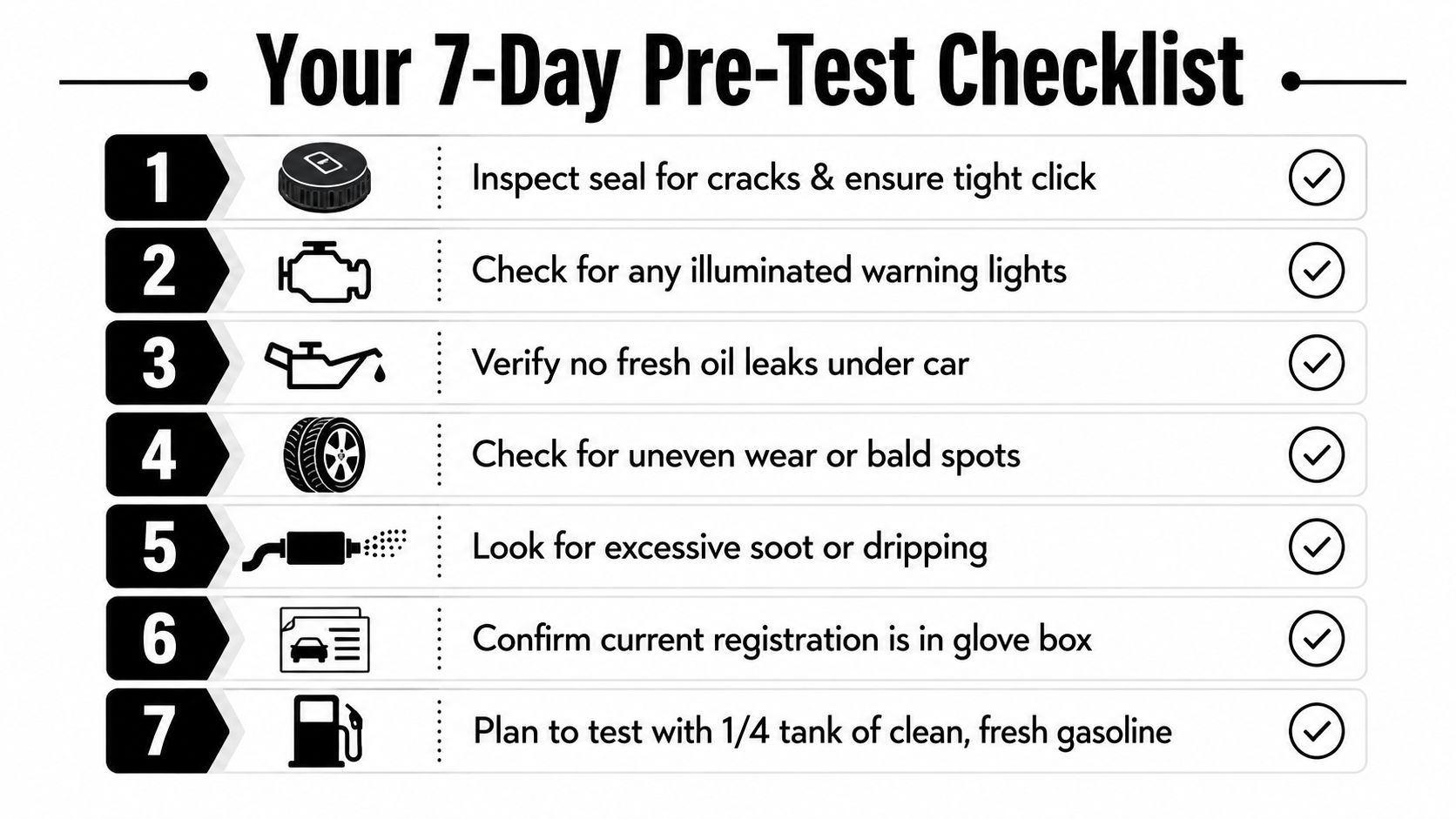
Begin with the dashboard and the basics
Use this walkaround as a practical screening routine:
- Check warning lights: The check-engine light should be off. Investigate any recently extinguished light before booking the inspection.
- Review recent work: Battery replacement, code clearing, ECU programming, or an emissions-sensor replacement can leave readiness status incomplete. Scan the vehicle before scheduling.
- Inspect visible equipment: Look for a missing catalytic converter, disconnected oxygen-sensor wiring, loose intake tubing, or altered emissions components.
- Check tires: Set tire pressure to the manufacturer's specification. Correct inflation helps the vehicle operate under a normal load during applicable dynamometer testing.
- Inspect the fuel level: Keep enough fuel for normal driving without filling the tank to the brim. A moderate level supports evaporative-system checks.
- Look underneath: Address fresh oil leaks, damaged exhaust components, and loose wiring before the appointment.
- Review service timing: If maintenance is due, read whether an oil change before a smog check makes sense for the vehicle's condition and schedule.
Skip fuel additives and premium gasoline as pass strategies. They cannot repair a leaking hose, failed oxygen sensor, weak ignition system, or inefficient catalytic converter. A scan and targeted repair provide more useful information than a product marketed as a quick solution.
Warm the vehicle without trying to outsmart the test
Drive normally during the week and include a sustained highway trip. The engine and exhaust system must reach operating temperature for emissions controls to function as designed, but warming the car does not replace completed monitors or a necessary repair.
A short fifteen-minute highway loop before the appointment can bring the exhaust system up to temperature. It cannot erase an active fault or finish every diagnostic test. Avoid clearing codes, disconnecting the battery, or making last-minute repairs unless you have time to verify the resulting readiness status before the inspection.
OBD Readiness Monitors: How to Get Them Set Before Smog
A mechanically sound car can still fail a California smog inspection when its readiness monitors are incomplete. These software tests run through the vehicle's OBD-II system and evaluate emissions functions such as the catalytic converter, oxygen sensors, evaporative system, exhaust-gas recirculation system, and misfire control. Each monitor needs specific operating conditions before it can report a result.
A monitor does not confirm that a component is installed. It checks whether the vehicle has driven through the temperature, speed, load, and fuel-system conditions required for that diagnostic. California BAR's 2025 to 2026 explanation of new OBD readiness regulations explains how supported monitors must be complete under applicable California rules.
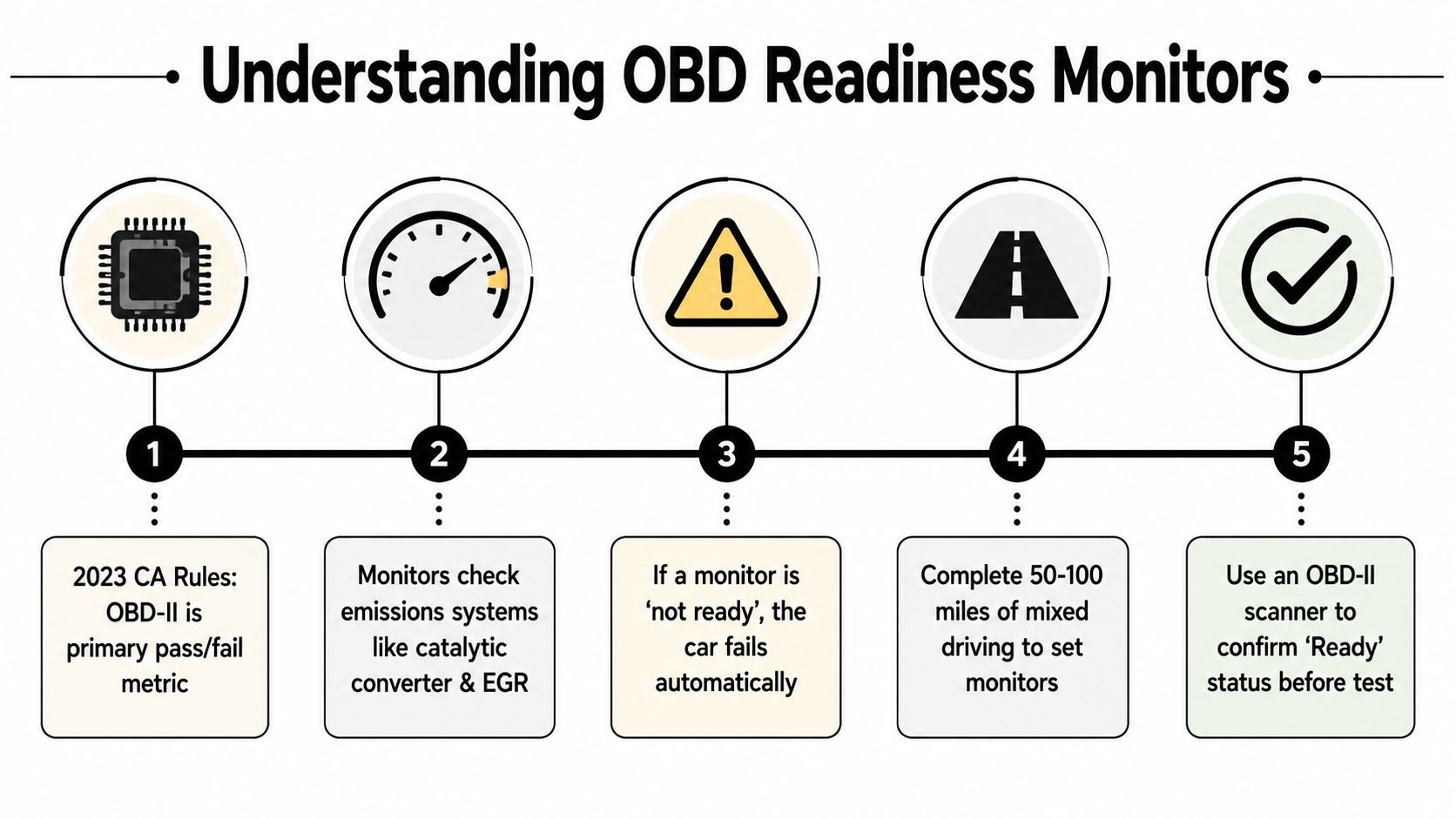
Use mixed driving, not driveway idling
A useful drive cycle combines a cold start, city driving, steady cruising, and controlled deceleration. Start with a cold engine, drive through stop-and-go traffic, then add a sustained highway stretch at a steady speed with gentle throttle and at least one natural slowdown.
A 2004 to 2010 Toyota Camry may need more than one type of trip for the EVAP monitor. City driving helps create the temperature and fuel-system changes it checks, while highway cruising can provide the steady operating conditions needed for other monitors. The exact sequence varies by engine, transmission, ambient temperature, and the monitor that remains incomplete, so use the manufacturer's procedure when available.
Repeat the drive pattern over separate trips. Extended driveway idling cannot reproduce the changing speed, load, and fuel-tank conditions many tests require. Some monitors also need the cycle repeated before they show ready.
Scan before paying for the official test
Check readiness status before arriving at the station. Depending on the vehicle, you may access diagnostic information through its service menu, use a Bluetooth OBD-II adapter with a compatible app, or request a pre-scan from an auto-parts store. The scan should show which monitors are ready, whether stored or pending codes exist, and whether the computer is commanding the check-engine light on.
For a practical guide, see how to read OBD codes. Do not erase codes just to make the dashboard look clear. Clearing codes also resets monitor progress, and a returning fault can prevent the vehicle from passing even after the light initially stays off.
The Most Common Things That Fail a Smog Test
A car can run smoothly and still fail because one emissions system is outside its permitted range. Start with the failure evidence before buying parts. A catalytic converter may be involved, but ignition faults, fuel-control problems, exhaust leaks, sensor wiring, and unauthorized visual changes can produce similar symptoms.
| Failure Cause | Symptom | Quick Check | Typical Repair |
|---|---|---|---|
| Catalytic-converter inefficiency | Emissions stay high after warm-up, or a catalyst-efficiency code appears | Review scan data and test exhaust performance after checking upstream faults | Correct the cause, then replace the converter only when diagnosis supports it |
| Check-engine light or emissions code | Warning light remains on or returns during driving | Scan stored and pending codes without erasing them | Repair the fault, verify the result, and complete required monitors |
| Loose or cracked gas cap | Fuel odor, EVAP code, or no noticeable drivability problem | Inspect the seal and tighten the cap until it clicks | Replace the cap if its seal or locking mechanism is damaged |
| Worn spark plugs or ignition faults | Rough idle, hesitation, misfire, or poor fuel economy | Inspect plugs and review misfire data | Replace worn components and diagnose the underlying cause |
| Dirty MAF sensor or vacuum leak | Lean-running symptoms, unstable idle, or intake noise | Check intake tubing and vacuum hoses, then review live data | Repair the leak or service the sensor using the correct procedure |
| Faulty oxygen sensor | Poor fuel economy, fuel-trim problems, or a recurring sensor code | Compare scan data with wiring condition | Confirm the circuit and mixture issue before replacing the correct sensor |
| EVAP-system fault | Fuel odor, difficult refueling, or an evaporative leak code | Inspect the cap and hoses; use a smoke test for hidden leaks | Repair the leaking hose, purge valve, vent valve, or related component |
These systems affect one another. A misfire can send unburned fuel into the exhaust, while a fuel-control fault can overheat the converter. A small EVAP leak can turn on the warning light even when the engine feels normal. Diagnosis should therefore follow the code, live data, and physical inspection rather than the most expensive suspected part.
Visual inspection can also matter. Missing or visibly altered emissions equipment, disconnected hoses, damaged wiring, or an intake and exhaust configuration that does not match the vehicle's approved setup can create a failure even when drivability is good. Check those items before the appointment, especially after aftermarket work.
Cold-start behavior deserves attention. The catalytic converter and oxygen sensors need heat before they can control and clean exhaust effectively. A normal warm-up drive is preferable to leaving a cold car idling briefly and then entering the station, but warming the vehicle cannot repair a failed component. If the light returns, the monitor stays incomplete, or the exhaust readings remain high, identify the fault before paying for another inspection.
DIY Fixes Versus When to Bring It to a Shop
Use a simple rule: handle inspection and replacement tasks at home when the fault is obvious, accessible, and unlikely to create a new emissions problem. Bring the vehicle to a shop when the repair requires scan-data interpretation, smoke testing, exhaust measurement, programming, lifting equipment, or emissions-component verification.
Reasonable driveway work
A gas-cap replacement is the clearest example. It takes little time, requires no special equipment, and addresses a common EVAP failure point. An air-filter replacement, correct spark-plug service, and inspection of loose intake tubing can also be sensible DIY work when you follow the manufacturer's specifications.
A basic OBD-II scanner is useful for checking codes and monitor status, but it doesn't turn every code into a diagnosis. A code identifies a system or condition that needs investigation. It doesn't always identify the exact failed part.
- Gas cap: Low complexity, low risk, provided you install the correct cap for the vehicle.
- Air filter: Straightforward, but confirm the housing seals correctly so unmetered air doesn't enter.
- Spark plugs: Manageable for an experienced owner, but incorrect gap, torque, or plug type can create a misfire.
- Readiness reset: Don't deliberately disconnect the battery to clear a code. That action can make the inspection less likely to pass by resetting monitors.
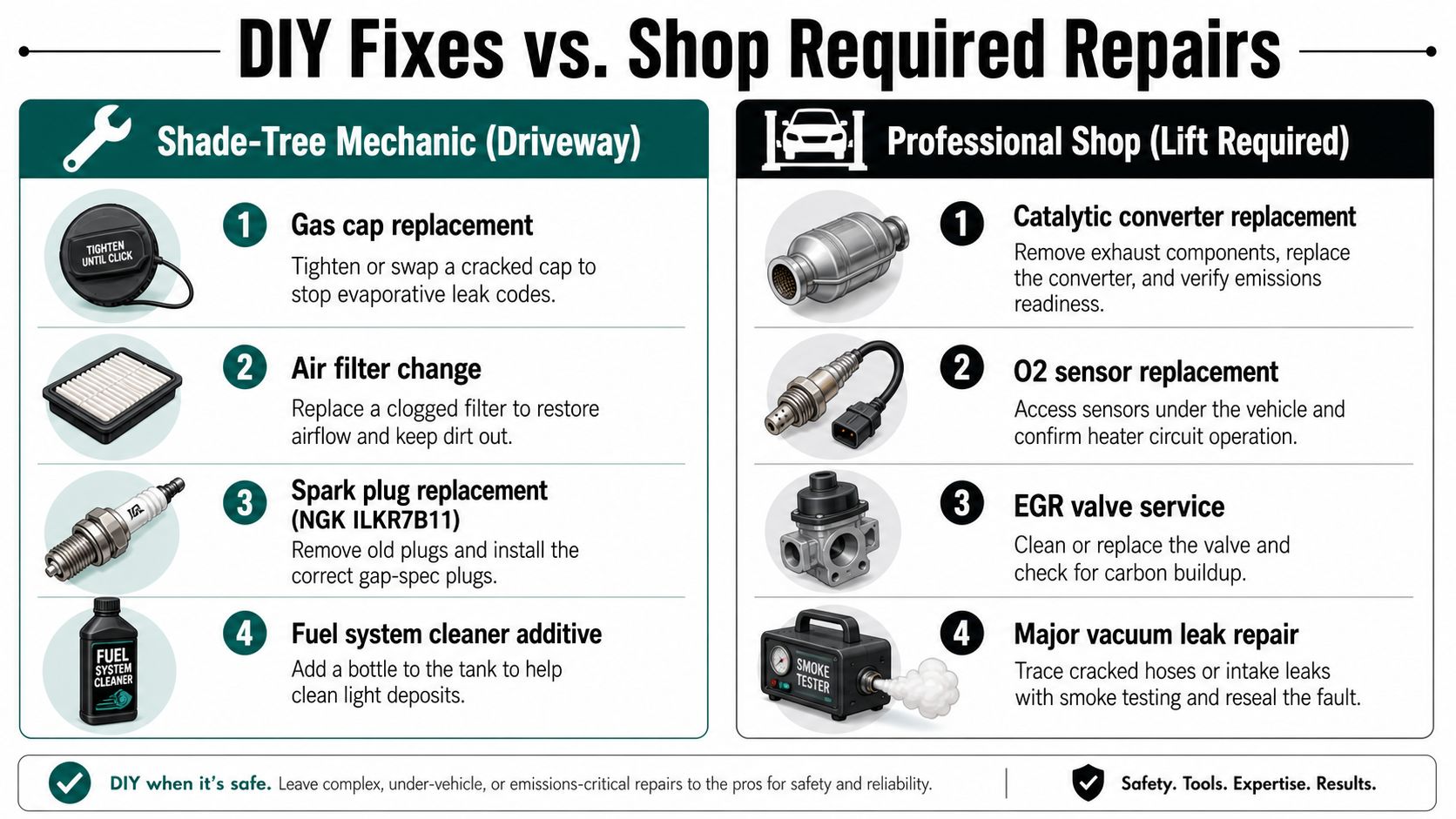
Repairs that need proper equipment
Catalytic-converter replacement, oxygen-sensor diagnosis, timing problems, and EVAP leaks belong in a shop when you don't have the necessary tools and service information. A smoke machine can reveal leaks that visual inspection misses. A scan tool can compare fuel trims, sensor response, misfire counts, and monitor behavior while the engine operates.
A STAR station can also be appropriate when the vehicle needs a directed repair or a referee-related inspection. The cost difference between parts-only work and professional service varies by vehicle and fault, so a technician should confirm the failed system before you authorize an expensive component.
A failed smog result is diagnostic information. Read the failure category and repair the cause instead of replacing parts in the order they appear on a search page.
California Drivers and Why a STAR Station Matters
A STAR Certified station operates under California Bureau of Automotive Repair oversight and follows the state's requirements for testing and applicable directed repairs. That matters when the vehicle has an unusual failure, a prior inspection issue, a visual-compliance concern, or a problem that requires more than a basic pass-or-fail scan.
Not every station handles the same work. Before booking, ask whether the location can test your vehicle's model year, fuel type, hybrid system, diesel configuration, or inspection category. Confirm whether it performs test-and-repair work, whether it can handle a directed repair, and whether a referee appointment is required instead of another ordinary inspection.
California BAR reporting separates inspection outcomes into categories that include overall, emissions, functional, visual, and OBDII failures, as shown in the BAR executive summary and performance report. A car can drive normally and still fail because emissions equipment is missing, a modification isn't approved, or the software state isn't acceptable.
What to ask before you arrive
- Vehicle eligibility: Can the station inspect your specific vehicle type and model year?
- Readiness status: Can the technician check monitors before beginning the official inspection?
- Repair capability: If the car fails, can the station diagnose the failure or must you use another facility?
- Special inspection needs: Does your situation require a directed repair or state referee?
- Documentation: What registration or prior inspection paperwork should you bring?
For East Bay drivers, Speedy Smog's explanation of STAR stations provides a practical overview of the certification and inspection process. The San Leandro shop handles emissions testing for common passenger vehicles as well as older vehicles, diesels, and hybrids, so drivers can confirm suitability before making the trip.
Test Day Routine and Quick Answers to Common Questions
On the day of the appointment, drive the car through fifteen to twenty minutes of mixed operation, including highway driving when practical. Check the dashboard before leaving, confirm the fuel level is within the station's recommended range, and bring registration plus the previous smog certificate if you have it. Turn off unnecessary accessories, remove chargers, and follow the technician's instructions when you arrive.
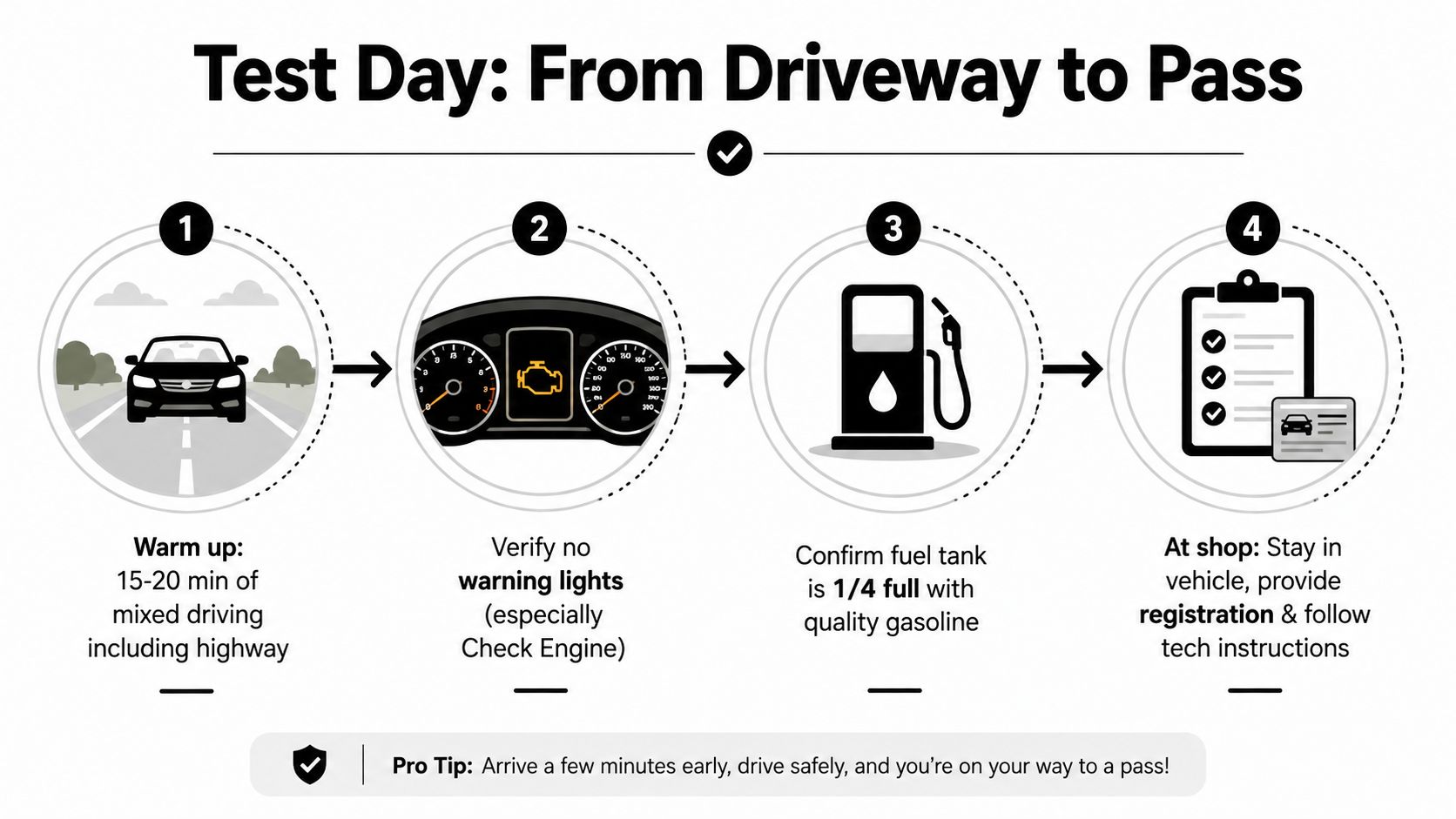
A recent battery disconnect doesn't automatically mean the car will fail forever, but it can reset the monitors. Drive until a scanner confirms the supported monitors are ready. The time required varies by vehicle and monitor, so mileage alone isn't proof of readiness.
Idling in the driveway usually isn't enough because monitors need changing speed, load, temperature, and operating conditions. A directed inspection means the vehicle must follow specific repair or inspection instructions, while a referee may be needed when the vehicle's emissions configuration or prior result requires state review.
For a final reminder, use the California BAR readiness guidance as the controlling reference for applicable monitor requirements rather than relying on generic advice from a parts store or online forum.
If your car has recently had a battery replacement, code clear, repair, or failed inspection, visit Speedy Smog for a California smog inspection and readiness-focused pre-test conversation. Bring the vehicle's failure paperwork or scan information so the technician can help you address the actual compliance issue before you pay for another test.

You're standing at a DMV kiosk with your renewal notice in hand, comparing smog stations that advertise dramatically different prices. One shop promotes a large coupon, another displays a lower base price, and a third says it's STAR certified. The labels make the choice look simple, but they describe different parts of the transaction.
STAR certification isn't a discount tier. It's a voluntary certification overseen by California's Bureau of Automotive Repair, or BAR, for stations that meet enhanced performance and compliance expectations. A coupon is a separate marketing offer that lowers a shop's inspection charge, subject to its terms.
Your real objective is narrower and more practical: find the lowest legal out-the-door cost for a smog certificate the DMV will accept. That means checking whether your vehicle requires a STAR station, confirming that the coupon covers your vehicle type, and adding California's separate certificate fee before comparing offers. The sections below break down exactly how those pieces fit together.
Table of Contents
- A Quick Scenario Before Your Next Smog Test
- What STAR Certification Actually Means
- How STAR Certified Smog Check Coupons Really Work
- Where to Find a Coupon and How to Redeem It
- Matching the Right Offer to Your Vehicle Type
- Verifying Eligibility, Terms, and Your Final Price
- Coupons vs California's Bigger Cost-Relief Programs
- Driving Away With Real Savings
A Quick Scenario Before Your Next Smog Test
Suppose your renewal notice directs you to complete a smog inspection at a STAR station. You search locally and find one coupon with a big advertised discount, another shop with a low test price, and a third station that doesn't mention STAR status at all. Choosing the largest discount first can leave you with a coupon that doesn't apply to your vehicle or a final receipt that's higher than expected.
The first question isn't “How much is the coupon?” It's “What inspection does my DMV notice require?” California's STAR program identifies stations with higher inspection-based standards, and motorists with DMV-directed vehicles may need to use a STAR-certified Test-Only station, STAR-certified Test-and-Repair station, or BAR Referee station. A non-STAR coupon can't replace that requirement. California's BAR Smog Check guidance explains the role of STAR stations and directed vehicles.
Practical rule: A coupon can reduce the shop's price, but it can't change your vehicle's legal inspection pathway.
The second question is whether the offer matches your vehicle. Gasoline cars, older vehicles, diesels, hybrids, trucks, and other categories may have different test procedures, prices, and exclusions. A coupon advertised for standard passenger vehicles might not apply to a diesel truck or an older vehicle requiring a different inspection.
Finally, calculate the total rather than trusting the headline. California requires a separate $8.25 Smog Check certificate fee, and a shop may also apply vehicle-related surcharges. BAR's STAR certification information identifies the certificate fee as an additional charge. Once you account for STAR eligibility, vehicle type, coupon terms, and separate fees, the cheapest legal option becomes much easier to identify.
What STAR Certification Actually Means
STAR is a California certification designation administered by the Bureau of Automotive Repair. It applies to Smog Check stations that meet higher inspection, equipment, performance, and compliance expectations. The designation helps California identify stations equipped and qualified to handle vehicles and testing situations that receive greater regulatory scrutiny.
A STAR station may be Test-Only or Test-and-Repair. The important distinction for a driver is not whether the shop sells repairs. It's whether the station's current certification matches the inspection requirement shown on your DMV notice.
Why some vehicles need STAR
California can direct certain vehicles to STAR stations based on smog history and other information indicating a higher likelihood of failure. If your notice contains a STAR requirement, you can't choose a non-STAR shop because its coupon looks cheaper. The station must be authorized for the directed test, otherwise the inspection won't satisfy the required certification route.
STAR certification also isn't permanent in the casual sense of a badge placed on a storefront. BAR evaluates station performance data quarterly, and the station must continue meeting applicable standards to retain eligibility. Equipment, technician performance, and inspection outcomes all matter. BAR's STAR certification requirements provide the regulatory foundation for that continuing status.
Before you book, use the state's station information and verification tools to confirm the shop's current listing and station type. Then compare the station's accepted vehicle categories with your own vehicle. For a plain-language explanation of the designation, learn what a STAR station means before you start comparing coupons.
Certification comes before the discount
A coupon from a verified STAR station can reduce the inspection charge. It doesn't make a non-STAR station acceptable for a directed vehicle, and it doesn't remove California's certificate charge or other applicable fees.
That distinction prevents the most expensive mistake in coupon shopping. Confirm the legal station requirement first, then judge the offer.
How STAR Certified Smog Check Coupons Really Work
A smog coupon usually changes one line on your receipt, the station's charge for an eligible inspection. It doesn't necessarily cover the certificate fee, extra charges for a particular vehicle, repairs, diagnostic work, or a test that falls outside the coupon's stated category.
Read the offer as a contract between you and the station. Look for the advertised discount, covered service, eligible vehicle, expiration date, and excluded charges. A coupon that says it applies to a standard smog test may not cover a heavy-duty vehicle, diesel, older model, or a DMV-directed visit unless the terms say so.
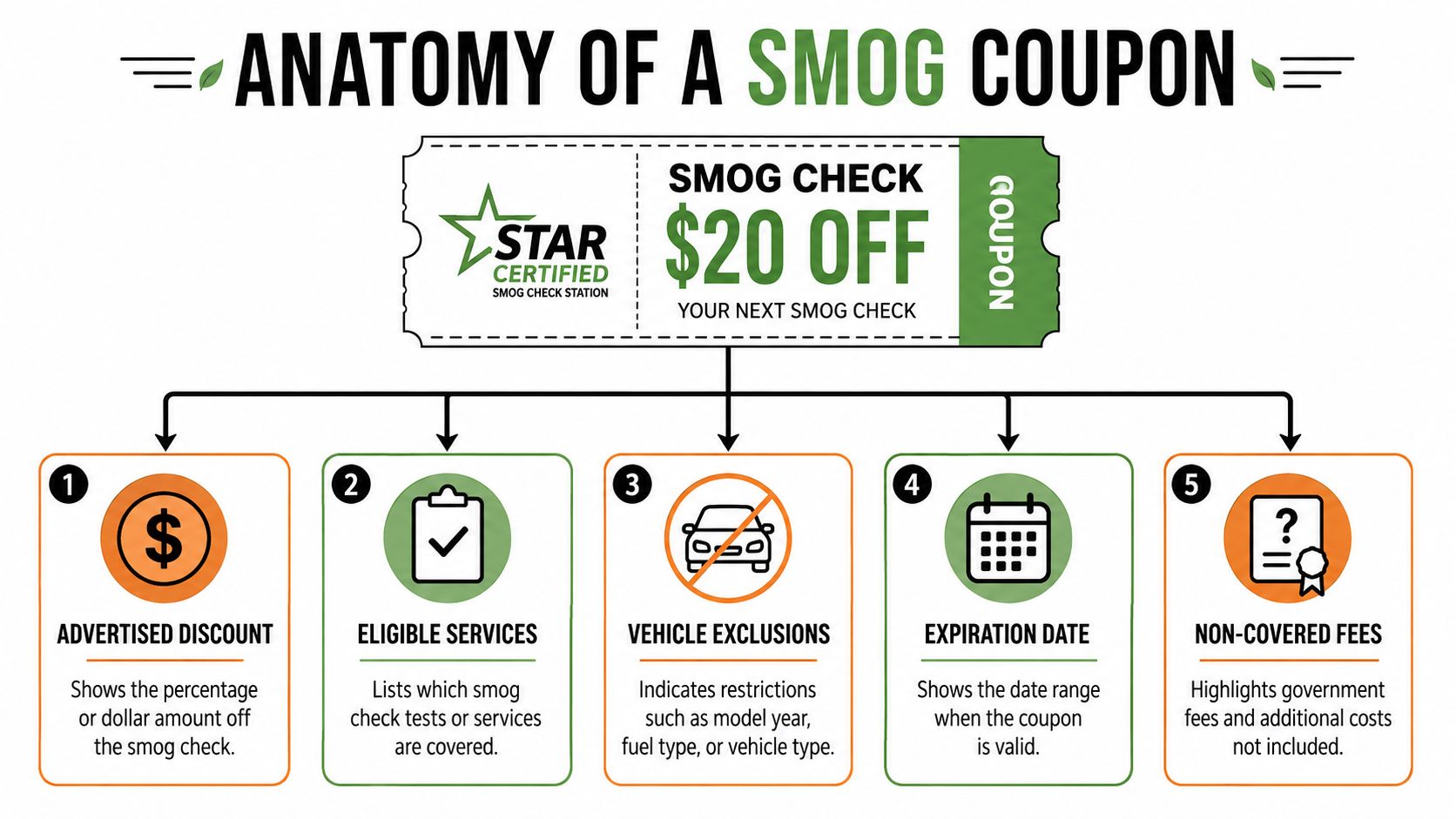
The receipt has more than one price component
California's $8.25 certificate fee is separate from the station's posted inspection price. BAR's certification information confirms that the certificate fee is a state-mandated charge in addition to the station's inspection price. A coupon can reduce the shop portion while leaving that pass-through fee unchanged.
Vehicle-specific charges can also change the total. Coupon terms may exclude or price differently for heavy-duty trucks, diesel vehicles, SUVs, vans, older cars, or other categories. Don't assume the coupon's discount applies to every service the station performs.
The number printed in large type is not your final price. Ask for the test charge, discount, certificate fee, and vehicle surcharge as separate lines.
Compare offers on equal terms
Use this quick comparison before you redeem anything:
- Advertised discount: Identify the exact amount or offer, and confirm whether it applies to the inspection charge.
- Eligible service: Check whether the voucher covers a standard test, a STAR-directed test, a retest, or another service.
- Vehicle exclusions: Look for model-year, fuel-type, truck, diesel, hybrid, or commercial-use restrictions.
- Expiration: Confirm the offer remains valid on the day of your appointment.
- Non-covered fees: Ask about the certificate fee and any surcharge before the technician begins.
Many coupons also limit use to one per vehicle or customer, prohibit combining promotions, or require presentation before service starts. Treat those terms seriously. Showing a coupon at checkout after the test begins can give the station a legitimate reason to reject it.
Where to Find a Coupon and How to Redeem It
Start with a local station's current offer, not a random coupon aggregator. Check the shop's official website, Google Business Profile, or verified promotional email for terms tied to that location. Mailers and coupons printed on repair invoices may also be valid, but confirm them with the station before booking.
For East Bay drivers, use this order:
- Confirm the station first. Check BAR station information to verify that the location currently has the STAR certification and station type required by your DMV notice.
- Review the current offer. Read the station's website and Google Business Profile. Marketplace listings such as Groupon can show discounts, but check restrictions before purchasing.
- Match the vehicle. Provide the model year, fuel type, and whether the DMV notice directs you to a STAR station.
- Request the out-the-door total. Ask for the inspection charge, coupon discount, California certificate fee, and any vehicle surcharge as separate amounts.
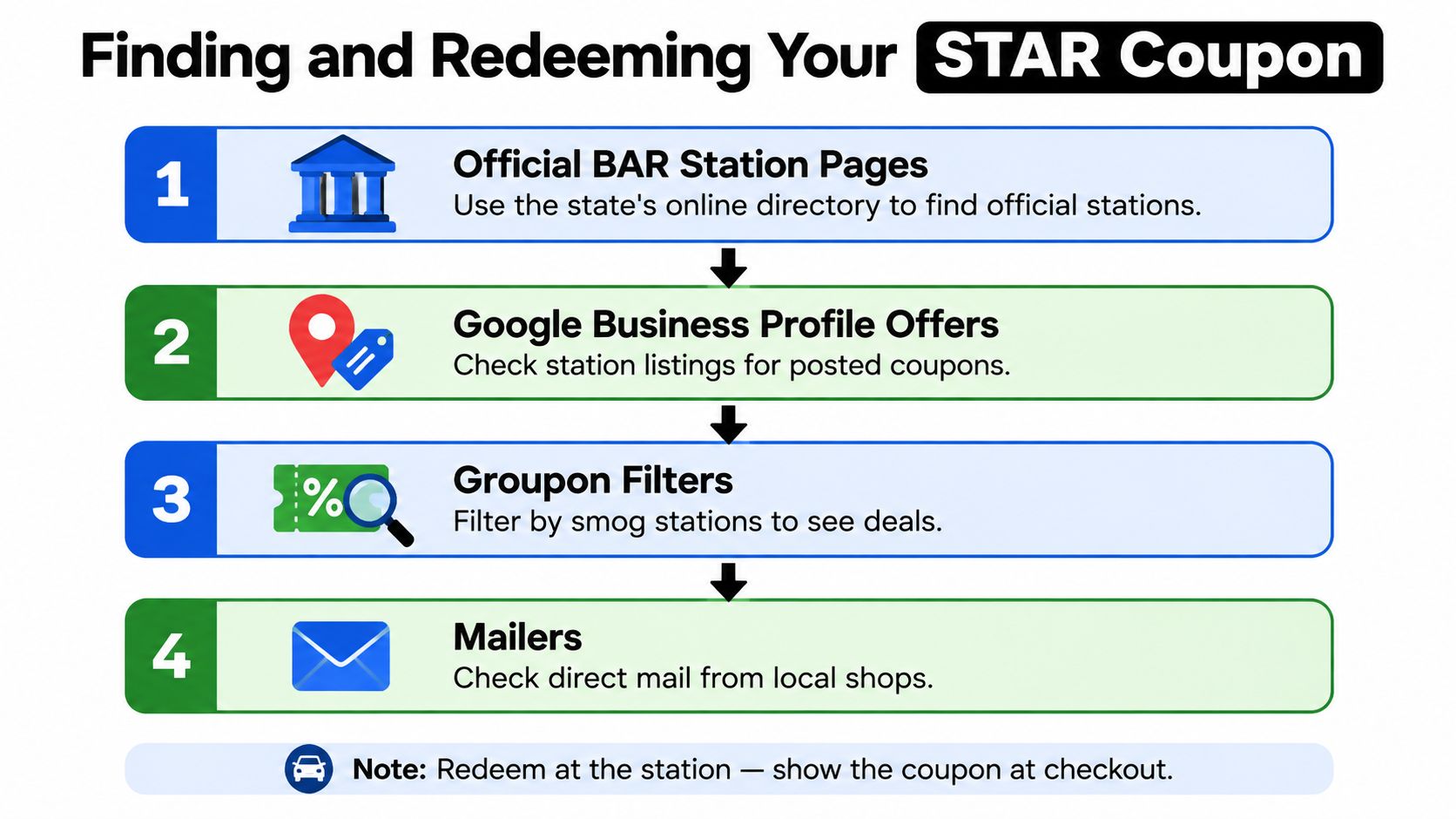
Redeem the offer before testing begins
Show the coupon at check-in, before the technician starts the inspection. Ask which line item receives the discount. In most cases, the offer reduces the qualifying shop charge, while the state certificate fee remains separate.
Speedy Smog's published web special advertises $25 off plus a free retest for 2000 and newer vehicles, subject to its posted terms. That is a specific station offer, not a universal California price or a guarantee that every vehicle qualifies. Review Speedy Smog's smog test coupons for the current conditions before booking.
After payment, request an itemized receipt. If the vehicle passes, ask the station to confirm that the electronic certificate was transmitted to the DMV. Keep the receipt and certificate information with your renewal records, particularly when a registration deadline is approaching.
Matching the Right Offer to Your Vehicle Type
The same coupon doesn't have equal value across every vehicle category. A flat discount can make a meaningful difference on a standard passenger-car inspection, while the final bill for a diesel truck or older vehicle may include a different base charge and additional work.
Use the table below as a decision framework, not as a substitute for a station quote. The brief provides no verified universal base prices by vehicle type, so a responsible comparison must leave those amounts to the shop's current pricing.
Coupon Value vs Total Cost by Vehicle Type
| Vehicle Type | Typical Base Test Price | $25 Coupon Savings | Coupon Eligible? |
|---|---|---|---|
| Gasoline sedan, 1996 and newer | Ask the station for the current vehicle-specific price | Subtract $25 from the qualifying test charge if the offer applies | Often, but confirm the offer terms |
| Older gasoline vehicle | Ask whether the vehicle requires a different inspection procedure | Apply only if older vehicles are included | Must be confirmed before booking |
| Diesel truck | Request the diesel and truck price separately | May apply only to qualifying diesel vehicles or may be excluded | Frequently restricted by coupon terms |
| Hybrid vehicle | Confirm the station's accepted hybrid test category | Apply only if hybrids are covered | Verify with the station |
| Out-of-state registered vehicle | Ask whether the requested service is a California certification path | A California coupon may not apply to the required service | Confirm the certification purpose first |
A standard gasoline sedan is usually the simplest coupon comparison because the offer may be written specifically for that category. Even then, the $8.25 certificate fee remains separate under California's fee structure, as described by BAR's certification guidance.
Don't let the vehicle description surprise you
Older cars can require a different testing approach than newer vehicles. Diesels and heavy-duty trucks may carry separate pricing or exclusions. Hybrids have their own inspection considerations, and an out-of-state registration issue may involve a certification request that doesn't match a routine California renewal test.
Call before you leave. Give the shop the vehicle's model year, fuel type, body style, and the wording on your DMV notice. The right offer is the one that applies to the exact inspection path, not necessarily the coupon with the largest number.
Verifying Eligibility, Terms, and Your Final Price
A coupon should survive a short pre-visit audit. Check the expiration date, station requirement, vehicle restrictions, and service language before you schedule. If the offer says “most smogs” or “passenger vehicles,” ask what that excludes instead of assuming your vehicle fits.
Before the appointment
Confirm these points in writing or by phone:
- Current expiration: Make sure the coupon remains valid on the appointment date.
- STAR requirement: Verify that the station is currently STAR certified if your DMV notice directs a STAR test.
- Customer limits: Look for one-per-customer, one-per-vehicle, new-visitor, or no-combination restrictions.
- Vehicle coverage: Ask specifically about your model year, fuel type, truck classification, and hybrid status.
- Total estimate: Request the inspection charge, coupon reduction, certificate fee, and any surcharge separately.
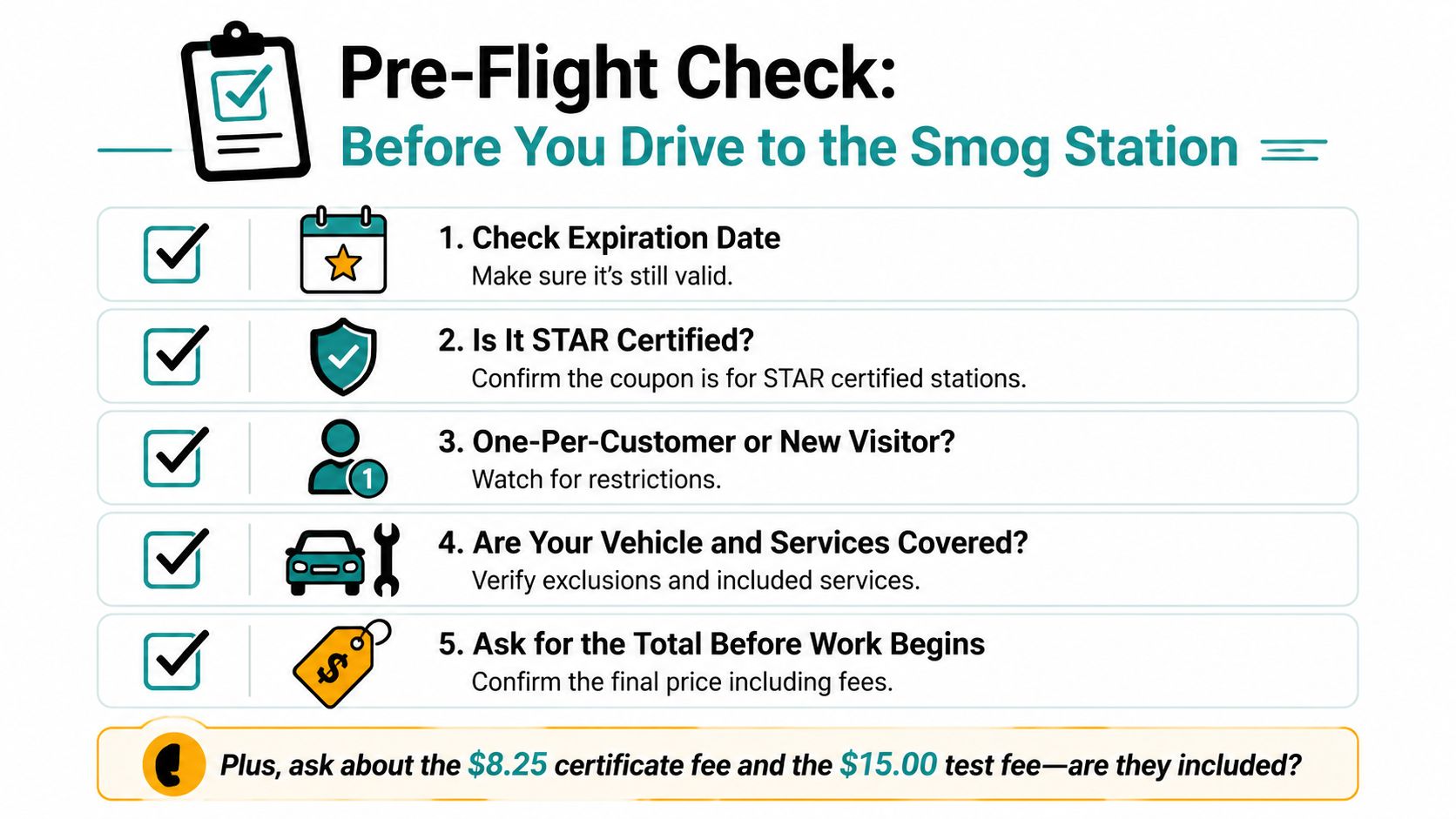
At the station
Show the coupon before the test starts. Ask the technician or service writer to confirm the correct test type in the BAR inspection system and provide a printed estimate before work begins. The estimate should distinguish the test charge from the certificate fee and any vehicle-related addition.
The certificate fee is $8.25, and California's BAR certification page identifies it as a separate state charge. Check the final receipt for a clearly labeled discount line. If the discount is missing, raise the issue before payment rather than trying to correct the receipt later.
Ask one direct question before handing over your keys: “What will my total be after the coupon, including the certificate fee and every vehicle surcharge?”
After the inspection
A passing certificate is transmitted electronically to the DMV, so retain your itemized receipt and any certificate number or transaction information the station provides. California smog certificates are valid for 90 days, according to the consumer guidance in the provided research, so complete the related registration transaction within that window.
If a follow-up notice arrives, compare it with your receipt and contact the station promptly. A rejected coupon usually results from an expired offer, an excluded vehicle, presenting the offer after work begins, or attempting to combine promotions.
For a broader explanation of pricing questions to ask before booking, use Speedy Smog's California smog check pricing guidance once, then verify the final total directly with the station.
Coupons vs California's Bigger Cost-Relief Programs
A retail coupon helps with the front-end inspection charge. It isn't the same type of assistance as California's Consumer Assistance Program, or CAP, which addresses the more expensive problem that follows a failed Smog Check.
Effective January 1, 2025, California increased CAP repair assistance to up to $1,450 for income-eligible consumers with 1996-and-newer vehicles and up to $1,100 for income-eligible consumers with 1995-and-older vehicles. Vehicle-retirement assistance increased to up to $2,000 for income-eligible consumers and up to $1,350 for consumers without income eligibility. The provided California smog assistance reference describes CAP as help for eligible motorists repairing emissions-related failures.
Coupon Savings vs State Cost-Relief Programs
| Program | Typical Savings | Best For | Key Eligibility |
|---|---|---|---|
| STAR-certified shop coupon | Shop-specific discount on a qualifying inspection | Reducing the immediate test charge | Vehicle, service, station, and coupon terms |
| CAP repair assistance | Up to $1,450 or up to $1,100, depending on vehicle year and income eligibility | Repairing an emissions-related failure | Income eligibility and California program requirements |
| Vehicle retirement assistance | Up to $2,000 or up to $1,350, depending on eligibility | Retiring a vehicle instead of repairing it | Program, vehicle, and income requirements |
The distinction matters. A coupon may save a modest amount before the test, while CAP can provide a substantially larger documented offset after an eligible failure. Don't treat a coupon as a replacement for state assistance, and don't assume a failed test automatically qualifies you for CAP.
Check the current CAP application rules before authorizing major emissions repairs or deciding to retire the vehicle. The state program, not the shop coupon, determines eligibility and approved assistance.
Driving Away With Real Savings
A good smog coupon is useful only when it survives the full transaction. Before booking, confirm whether your DMV notice requires a STAR station, identify your vehicle category, obtain a current offer from the shop's website or promotional email, and ask for the complete price including California's $8.25 certificate fee.
For a standard gasoline vehicle that qualifies under the posted terms, Speedy Smog's $25-off offer can reduce the shop's inspection charge. Heavier trucks, diesels, hybrids, and older vehicles may follow different pricing or exclusions, so don't assume the same promotion applies without checking.
Keep the decision practical:
- Verify the station's current STAR status.
- Match the coupon to the exact vehicle and test type.
- Present the offer before testing starts.
- Review the itemized receipt.
- Keep the certificate number and renewal records.
If the DMV directs your vehicle to STAR, compliance comes first. Once you've confirmed the correct station, compare the final price, not just the discount headline. East Bay drivers can call the San Leandro station before visiting to confirm coupon acceptance, vehicle eligibility, and appointment availability.
Speedy Smog provides STAR-certified smog inspections in San Leandro, including coupon options for qualifying vehicles and guidance on fees and vehicle-specific requirements. Visit Speedy Smog to check the current offer, confirm your vehicle's eligibility, and arrange your inspection.