
Smog Inspection Cost: A Complete Guide for 2026
The statewide average smog inspection cost is $67.20 in California. In the East Bay, most drivers should expect roughly $30 to $90 before the mandatory $8.25 certificate fee gets added.
A lot of drivers only find out what they'll pay when they're already standing at the counter with a renewal notice in hand. That's where the surprise comes from, not the test itself. The quote on the phone is usually the inspection fee, but the final receipt can look different once the certificate fee, vehicle type, and station type are all part of the bill.
Table of Contents
- What a Smog Inspection Actually Costs in California
- How Station Type Shapes the Price You Pay
- Vehicle Class and Inspection Path
- Sample East Bay Receipts and What the Numbers Mean
- How to Avoid Paying for a Retest
- STAR Certification and Why It Matters for DMV Registration
- Putting It All Together Before You Book
- Smog Inspection Pricing Questions East Bay Drivers Ask
What a Smog Inspection Actually Costs in California
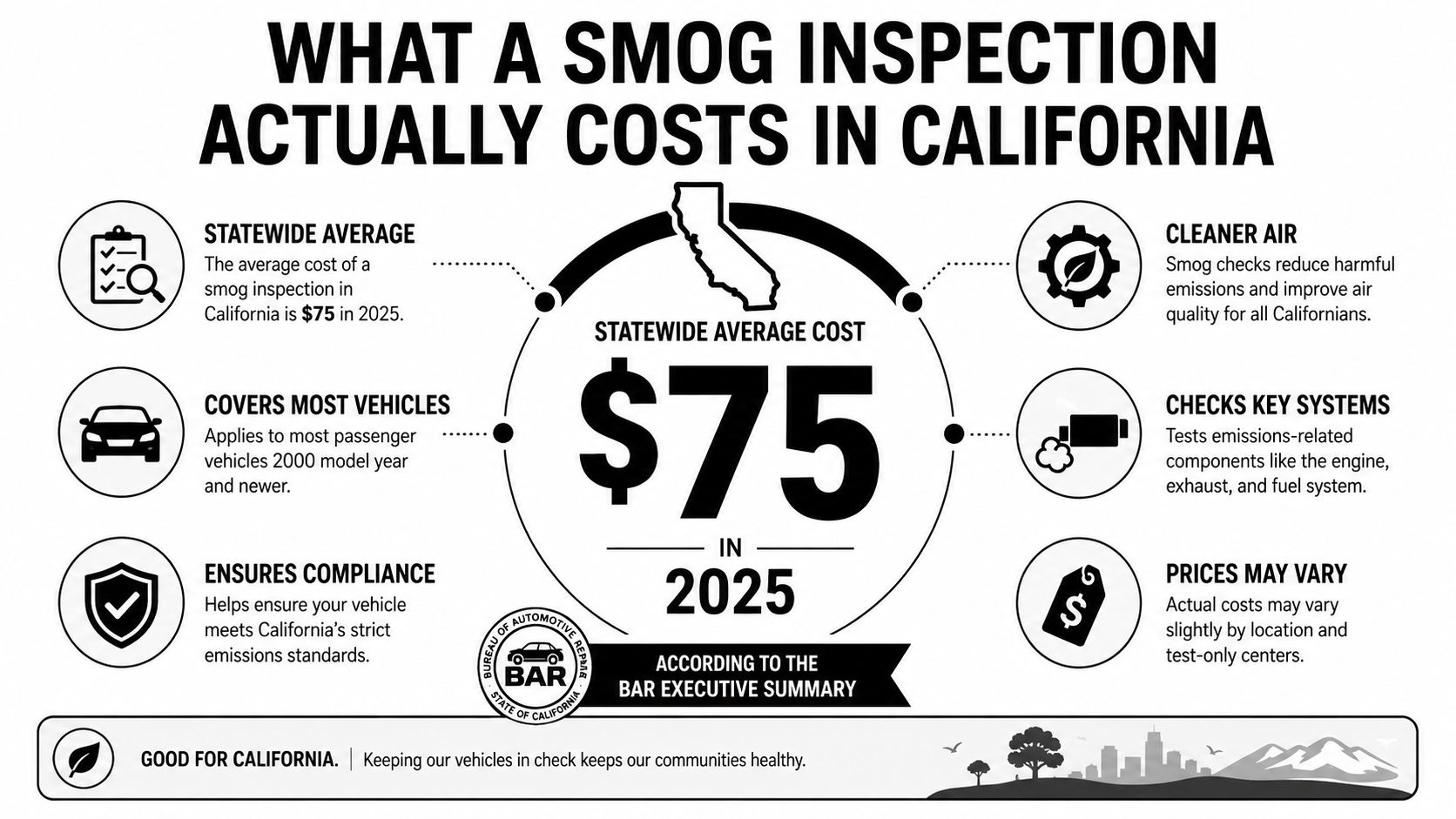
A driver in San Leandro opens a DMV renewal notice, checks the date, and asks the same question almost everyone asks, what is this going to cost me? The cleanest statewide answer is $67.20, California's overall average inspection cost across all initial tests in the 2025 BAR Smog Check Executive Summary Report. That figure comes from 11,213,580 initial tests statewide, including 10,408,947 OIS inspections and 804,633 BAR-97 inspections (BAR 2025 Smog Check Executive Summary Report).
That average helps, but it does not set the price you will pay at a shop in the East Bay. In day-to-day shop traffic, the usual passenger-car quote sits around $30 to $90 before the certificate fee, because California doesn't regulate the station's smog inspection price. The station sets the labor charge, then the state adds the certificate fee when the vehicle passes, so the amount on the counter can be different from the number you heard on the phone (California BAR smog check guidance).
Practical rule: if a quote sounds unusually low, ask whether it covers the inspection only or the inspection plus the certificate fee. That difference separates a fair quote from a misleading one.
The number that matters most to a driver is the out-the-door total, not the sticker price. A shop may advertise one fee, but the final receipt still has to account for the mandatory state certificate charge when applicable. If you want a local price check, start with East Bay emissions testing prices near me, then confirm what is included before you book.
How Station Type Shapes the Price You Pay
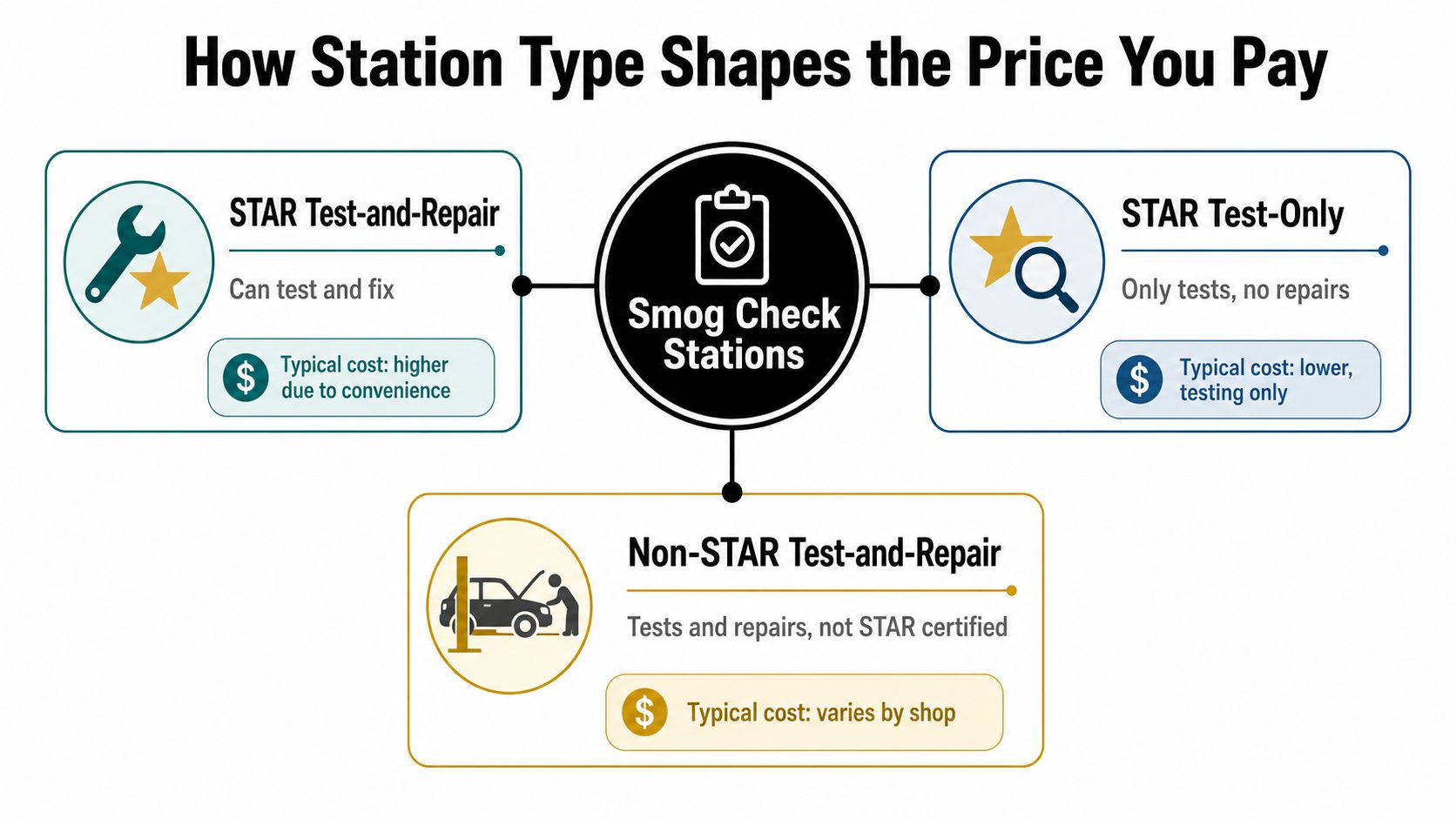
A driver in San Leandro can call three nearby smog stations and get three different quotes for what looks like the same service. That spread usually comes from station type, not from a mystery fee. California stations generally fall into STAR Test-and-Repair, STAR Test-Only, and Non-STAR Test-and-Repair, and the 2025 BAR summary shows statewide average inspection costs of $69.22 at STAR Test-and-Repair stations, $60.85 at STAR Test-Only stations, and $72.64 at Non-STAR Test-and-Repair stations (BAR 2025 Smog Check Executive Summary Report).
In the East Bay, that matters because the quote you hear often reflects how the shop is allowed to operate, how busy its lane is, and whether it can handle both testing and repair work. STAR Test-Only stations handled 6,408,489 initial tests, which helps explain why that price point shows up so often when drivers compare shops (BAR 2025 Smog Check Executive Summary Report). If you spend much time at a local counter, you see the same pattern: the station type shapes the number before any car-specific issue even enters the picture.
Why the same test costs different amounts
STAR stations carry more oversight, so they usually build tighter procedures into the way they run the lane. That can raise overhead, and overhead shows up in the quote. Test-only stations do not perform repairs, so their workflow is narrower, while repair-capable stations have to balance inspection work with the realities of the repair side, parts ordering, and bay turnover. A shop that can inspect and fix the car may price the visit differently from one that only tests vehicles and sends everyone else elsewhere.
The practical difference shows up at the counter. A test-only station may move faster because it is set up for one job, while a repair-capable shop may quote higher if it carries more staffing or equipment costs. Some drivers prefer a STAR station because their renewal notice requires it. Others choose one because they want fewer surprises if the vehicle has a problem and needs a second look. The cheaper quote is not the better deal if the shop cannot legally certify the car you brought in.
The bottom line is straightforward. Station type changes price because it changes the shop's obligations, equipment, and customer mix. That is why two honest, licensed stations in the same part of the East Bay can give different receipts for a similar inspection.
Vehicle Class and Inspection Path
A 2004 Camry, a 1997 pickup, a diesel truck, and a hybrid can all sit in the same lot, but they will not all leave with the same receipt. The inspection path drives the price. California pricing examples put 2000 and newer cars and SUVs at about $59.75, 1996 to 1999 vehicles at about $79.75, and 1995 and older at about $99.75, with larger vans, trucks, RVs, and heavy-duty diesel checks priced higher, sometimes $99.75 to $300 depending on gross vehicle weight and model year (Smog N Tag pricing).
What changes under the hood
Newer gasoline vehicles usually go through the OBD-based inspection flow, which is faster and less labor-heavy. Older vehicles often need a different emissions pathway, and that means more time, more setup, and a greater chance that the station will need a specialist lane or extra equipment. Vehicle age shows up in the quote for a simple reason, the station spends more time getting the right test done.
Practical rule: the older or more specialized the vehicle, the more the station is paying in time and setup, and that cost gets built into the quote.
Hybrids can still require a smog check once they are past the exemption period, and diesel vehicles often need specialized handling that not every shop can do cleanly. Some California stations also include a free retest for 2000 and newer vehicles, which lowers the total bill if the first visit does not go smoothly.
| Typical Inspection Pricing by Vehicle Class | Inspection Pathway | Typical Price Range |
|---|---|---|
| 2000 and newer cars, SUVs | OBD-based inspection | About $59.75 |
| 1996 to 1999 vehicles | Older-vehicle emissions path | About $79.75 |
| 1995 and older vehicles | More labor-intensive emissions path | About $99.75 |
| Larger vans, trucks, RVs, heavy-duty diesel | Specialized inspection setup | About $99.75 to $300 |
That table is the part many drivers need most. The vehicle itself drives the inspection path, and the inspection path drives the cost. In the East Bay, that means a clean-running sedan can be a straightforward visit at one station, while a heavier truck or diesel pickup may push you toward a shop with the right lane, the right tools, and a higher quote. If you know your model year and fuel type, you already know more about the final bill than many drivers do when they start calling around.
Sample East Bay Receipts and What the Numbers Mean
A real shop receipt is never just the inspection line. It's the inspection fee, the state certificate fee, and sometimes a small transmission fee if the station uses EFT processing. That's why a quote that looks cheap can still land closer to the actual average once everything gets added together.
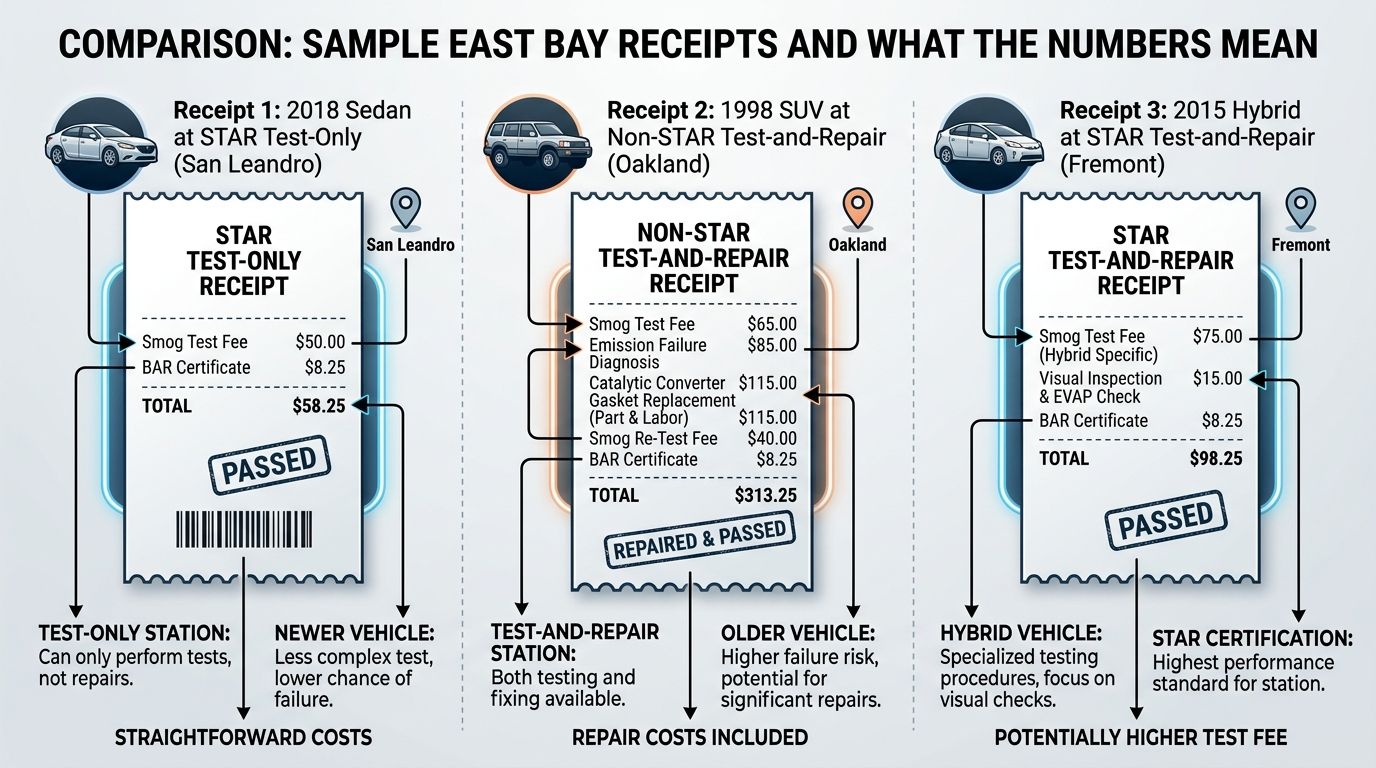
Three common East Bay examples
A 2018 sedan at a STAR Test-Only station in San Leandro usually lands near the lower end of the local range if the car is ready to go. A 1998 light truck at a STAR Test-and-Repair shop usually costs more because the inspection path is less straightforward. A diesel pickup routed to a specialist station tends to be the highest of the three, since the test setup is more demanding and fewer stations can handle it efficiently.
A low base price only matters if the shop can certify your exact vehicle the first time.
That's the part drivers miss when they shop only on the advertised fee. A coupon can help, and East Bay shops do run periodic discounts, but the final math still depends on the vehicle category and whether the station can complete the job without extra hassle. I've seen drivers focus on a smaller posted price, then end up paying more once they've driven to a shop that wasn't a fit for their vehicle.
If you want to compare a quote against a real local station structure, look at the posted inspection and coupon details before you leave home. The important question isn't “What does the sign say?” It's “What will I hand over after the inspection, certificate, and any processing fees are included?”
How to Avoid Paying for a Retest
A smog bill usually gets painful after the first visit, not before it. A failed inspection means another appointment, more time out of your day, and sometimes a retest charge that wipes out the savings from a cheap first quote. The smartest way to protect your wallet is to treat the visit like a checklist, because the cheapest posted price is not always the cheapest final receipt.
The night-before routine that saves money
Start with the basics. Make sure the check-engine light is off, drive the car long enough for the monitors to settle, and do not disconnect the battery right before your appointment. A reset right before the test can create a failed first visit even when the car feels normal on the road.
- Check the dashboard first: If the warning light is on, do not assume the station can work around it.
- Take a normal drive: A steady drive before the appointment helps the car reach a better testing state.
- Skip last-minute battery resets: Clearing codes too close to the test can create readiness issues.
- Inspect simple wear items: A loose gas cap or obvious maintenance problem can turn into a second visit.
I tell drivers the same thing I tell customers at the counter in San Leandro. If the car is borderline, the retest policy matters almost as much as the inspection price. One station may include a return visit, while another charges again, and that difference can matter more than a small discount on the front end.
A retest fee can erase the benefit of a bargain inspection very quickly, especially if the first visit fails for something small that could have been handled the night before. That is why a cheap sticker price should never be the only number you look at.
If you want to see how one local shop handles repeat visits, review the policy on free retest terms in San Leandro. A policy like that does not change the test result, but it can change how much you pay if the car does not pass on the first try.
STAR Certification and Why It Matters for DMV Registration
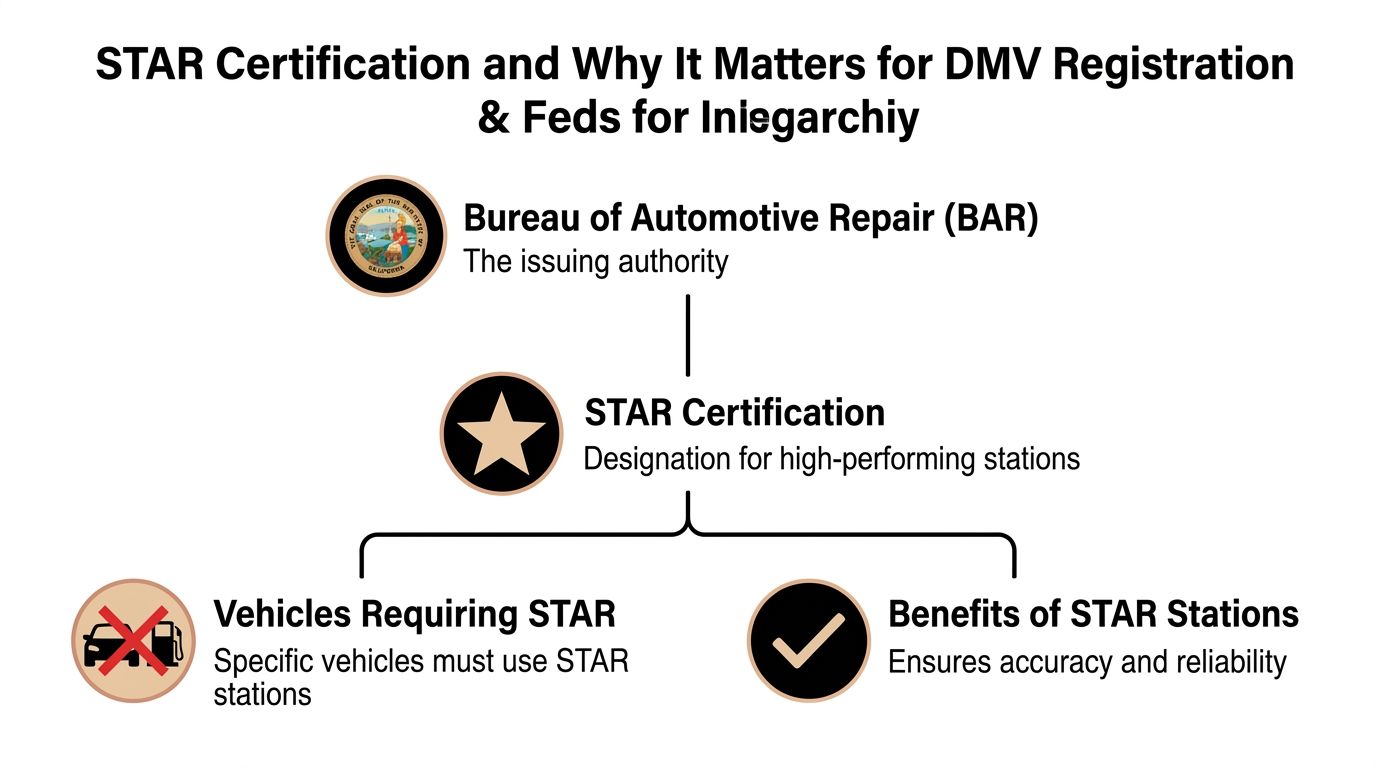
STAR certification is the state's higher-standard lane for smog inspection work. It's tied to the Bureau of Automotive Repair, and the designation exists because not every vehicle should be tested at just any station. Some DMV renewal notices direct drivers to STAR, and when that happens, the station choice is no longer optional.
Why the label affects your bill
A STAR station has to meet stricter performance expectations, and that changes the compliance side of the business. Drivers who are directed to STAR can't choose a cheaper non-STAR shop and call it good, because the right station type is part of the registration requirement. That means cost shopping has to start with eligibility, not price.
The practical piece is straightforward. If the DMV paperwork says STAR, your cheapest legal option might still be a STAR station that is a little more expensive than a non-STAR alternative. If the paperwork doesn't require STAR, you still might choose a STAR station for convenience, but that's a preference, not a regulatory need.
For a plain-English breakdown of the station designation, see what a STAR station means in San Leandro. Once you understand the label, the pricing conversation gets a lot cleaner, because you stop comparing shops that don't all have the same authority to certify your vehicle.
Putting It All Together Before You Book
The smartest way to judge a smog quote is to stack the variables in the right order. First, identify the vehicle year and fuel type. Next, check whether the DMV notice directs you to STAR. Then ask about the retest policy and confirm the quote includes the station fee, the certificate fee, and any processing charge.
A driver with a newer gasoline car usually has the easiest path. An older vehicle, diesel, hybrid, or STAR-directed vehicle can still be handled cleanly, but the quote has to match the actual inspection path. That's why two East Bay drivers can get different answers on the same morning and both be hearing a fair price.
Best habit: ask the shop what the final out-the-door total is before you drive over.
Speedy Smog in San Leandro is one option for drivers who want a STAR-certified station that handles a range of vehicle types and explains the receipt clearly. Before you book your next test, compare the quote, the retest policy, and the certificate fee so you know what you're really paying for.
Smog Inspection Pricing Questions East Bay Drivers Ask
Coupons come up first because everybody wants to know whether a discount sticks. They usually do when the vehicle qualifies and the shop is running the promotion, but the coupon should never be the only reason you choose a station. If the shop can't test your vehicle type, the discount doesn't matter.
The certificate fee is a different story. It's mandatory when applicable, so it isn't something a station can casually waive just because the customer asks. If you're budgeting for the visit, treat that fee as part of the total, not an optional add-on.
Out-of-state vehicles and unusual inspection cases often cost more because they create extra work for the station and sometimes require a different testing path. Hybrids are not automatically cheap either, they're priced by the same practical factors as everything else, especially vehicle year and the inspection method required. The cleanest rule is still the simplest one, ask whether the shop can certify your exact vehicle before you leave home.
If you want a clear quote before you drive across the bridge or sit in a waiting room, Speedy Smog can help you match your vehicle, station type, and certificate fee to a real out-the-door total. Bring your renewal notice, ask about the retest policy, and you'll walk in with a much better idea of what the receipt should look like.