
You're staring at a DMV renewal notice, and the first question isn't where to go, it's whether your vehicle even needs a test. That's the part most drivers in Tracy get stuck on, because the answer depends on the model year, the fuel type, and whether you're dealing with a renewal, an ownership transfer, or a new California registration.
Table of Contents
- Do You Actually Need a Smog Check in Tracy
- How California Smog Rules Apply to Tracy Vehicles
- Preparing Your Car Before the Test
- Why STAR Certification Matters in Tracy
- Typical Costs and Time for a Tracy Smog Check
- What Happens During the Inspection
- What to Do After a Failed Smog Test
- Your Tracy Smog Check Action Plan
Do You Actually Need a Smog Check in Tracy
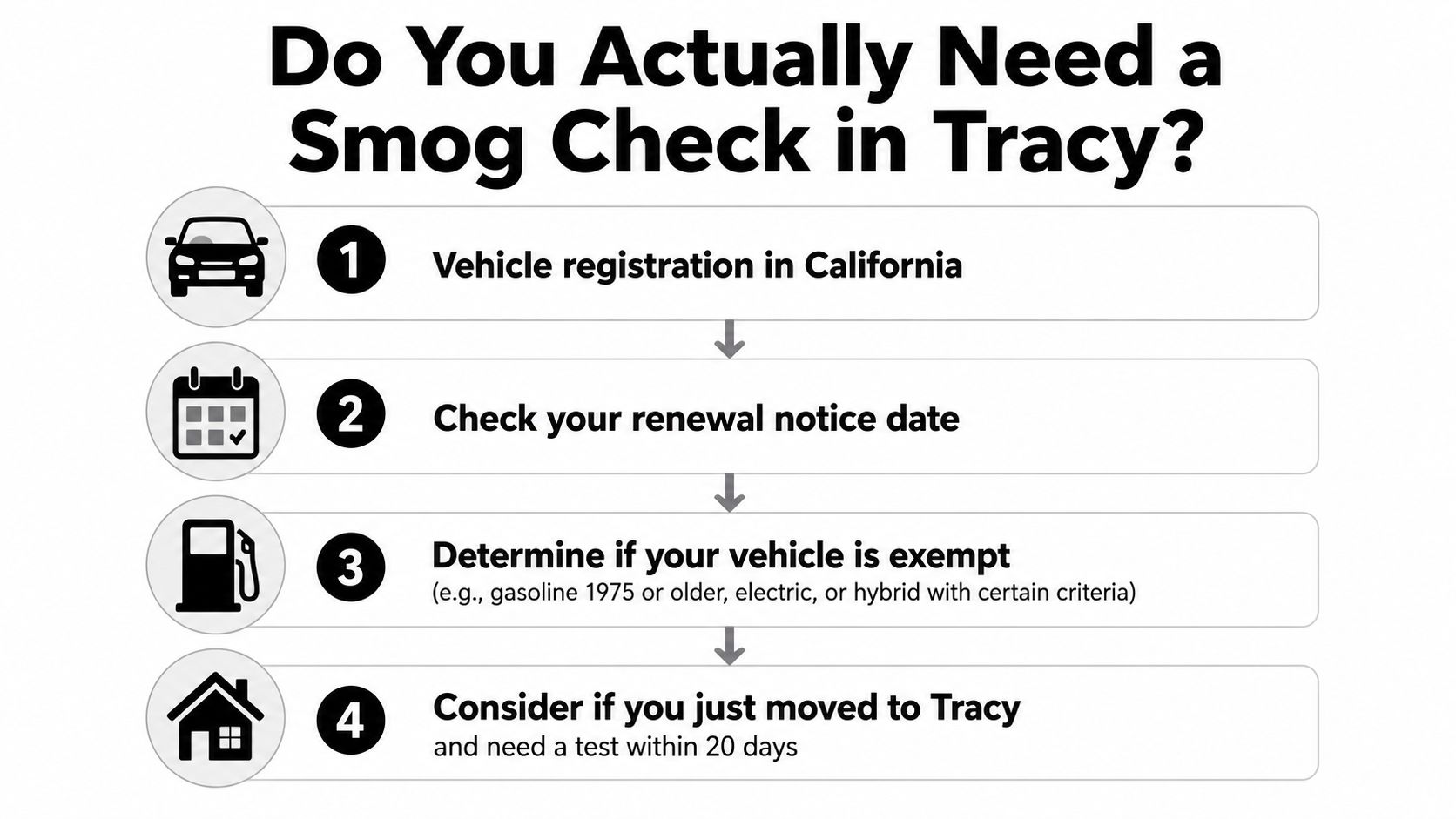
A lot of people type smog check Tracy CA into search because they assume they need to book immediately. Often, they don't. The first step is checking whether your car is exempt, because California's rules are driven by vehicle details, not by the city name on the map, and the DMV says gasoline vehicles under eight model years old are generally exempt from the biennial smog requirement, with some vehicles also paying a smog abatement fee during the first 8 years if the vehicle is less than 4 model years old. California DMV smog inspection guidance
Start with three quick checks
Use this order, because it cuts through the confusion fast.
- Model year. If your gasoline car is under the DMV's exemption age, you may not need a test for renewal.
- Fuel type. Electric vehicles are exempt, and BAR also notes exemptions for some hybrids, diesel vehicles, trailers, motorcycles, and certain older gasoline cars.
- Registration event. A smog check can still be required when a vehicle changes ownership or is first registered in California, even if the driver wasn't thinking about a test before the paperwork started.
That last point is where many first-time Tracy drivers get surprised. A renewal notice, a title transfer, or an out-of-state move can trigger the test even when the driver thought the car was due for normal yearly paperwork. The registration event matters because California's program is tied to compliance at the DMV, not just a calendar reminder.
Know what the city changes, and what it doesn't
Tracy itself doesn't create a separate smog rulebook. California's statewide system does the regulating, and Tracy sits inside that framework because the state program has been in place since March 1984, when the first Smog Check program started after SB 33 passed in 1982. California Smog Check Program background
Practical rule: if you're unsure, look at your registration trigger first, then your model year and fuel type. That order usually answers the question before you spend money on a test you didn't need.
That's the cleanest way to avoid wasted time. If your vehicle is exempt, you're done. If it isn't, the next step is figuring out which inspection path your car falls into.
How California Smog Rules Apply to Tracy Vehicles
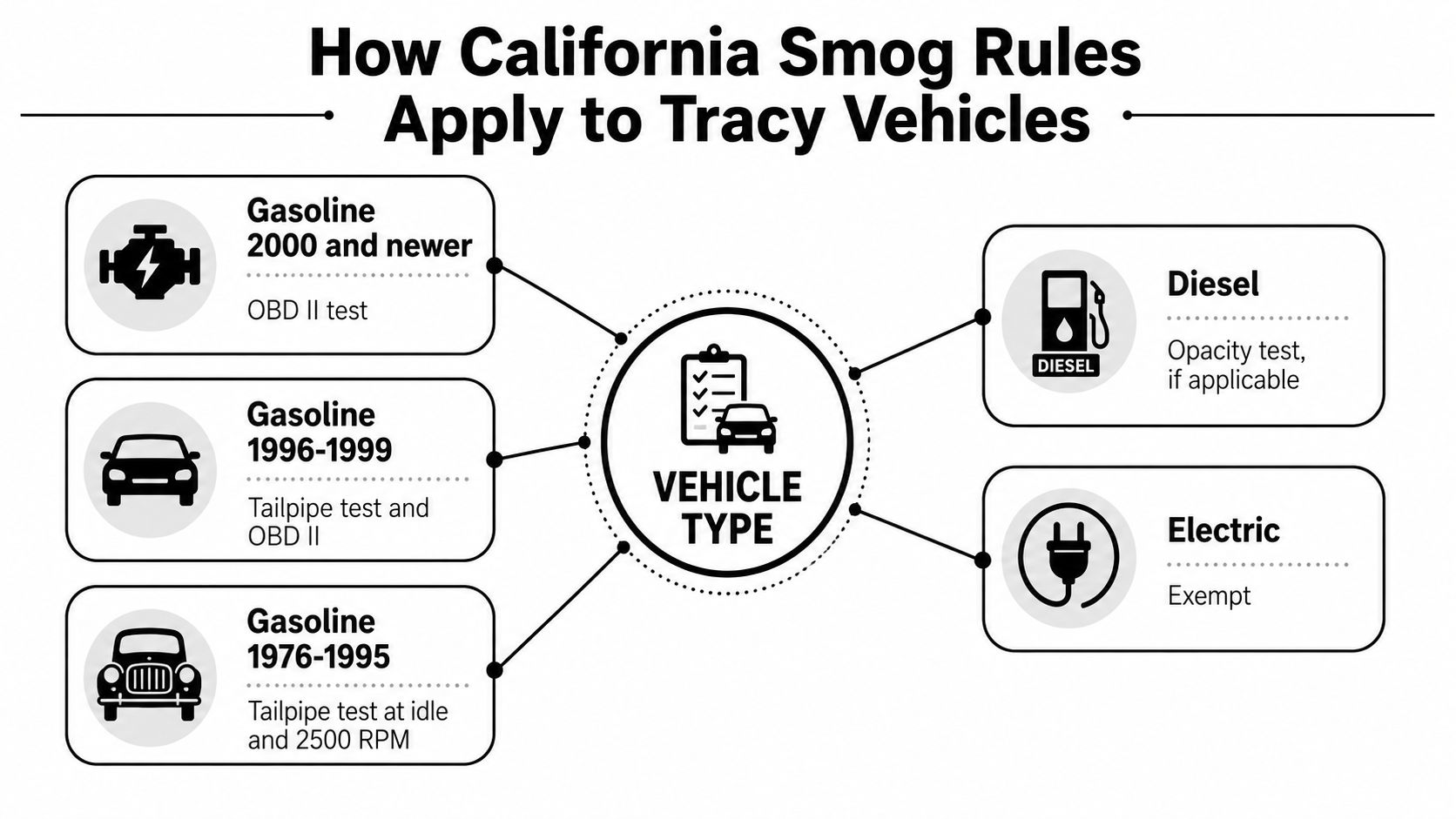
A Tracy driver usually asks the exemption question first, and that is the right place to start. Once that is clear, the next step is figuring out what kind of test the vehicle falls under. In California, that depends more on model year and fuel class than on Tracy geography. BAR says gasoline, hybrid, and alternative-fuel vehicles are generally subject to Smog Check from model year 1976 onward, while diesel vehicles are subject from model year 1998 onward. For the state's basic rule summary, see the BAR Smog Check rules.
Vehicle category shapes the test path
A 2019 gasoline sedan in Tracy usually goes through the modern OBD-based path. A 1999 gasoline truck may still be sent through a more hands-on inspection flow if its setup calls for it. A 2003 diesel pickup is handled under diesel rules, not the same process as a typical gas car. A 1995 classic gasoline car sits in a different lane because older gasoline vehicles can be treated differently from newer cars.
That is why two neighbors can both need a “smog check” and still face different inspections. The shop is not guessing. The model year, fuel type, and compliance equipment on the vehicle decide the route, much like different keys opening different doors in the same building.
A few plain-English examples
- 2021 hybrid. Usually fits the modern compliance pathway and is commonly checked through the vehicle's onboard system.
- 2004 diesel. Subject to diesel-side rules and may need a station that is set up for that work.
- 1995 gasoline car. Falls outside the newer OBD-only pattern and may require a different inspection method.
- Older gasoline vehicle with missing OBDII equipment. BAR notes that certain edge cases can still require a BAR-97 tailpipe test if the vehicle lacks OBD-II or has a problematic OBDII system.
That distinction matters because the test method changes the failure points. With an OBD-based test, readiness monitors and the malfunction indicator light matter most. With a tailpipe test, exhaust measurement becomes the center of the decision.
If you want a broader rule summary alongside the state guidance, this California smog check rules overview helps match your car type to the right inspection lane.
Preparing Your Car Before the Test
The easiest smog failures are the ones you can avoid before you ever pull into the bay. A car that's mechanically healthy can still stumble if it's cold, the monitors haven't run, or the dashboard light is on. That's why a little prep often matters more than the appointment itself.
Do the basics before you leave home
Start with a 10 to 15 minute warm-up drive right before the test. A warmed engine gives the inspection equipment a more accurate picture of how the car is operating, especially on vehicles that will be checked through the OBD path. Then look at the dashboard. If the check-engine light is on, the vehicle is very likely to fail the OBD side of the inspection until the fault is addressed.
If you clear codes right before a test, you can create a different problem. The monitors may not be ready yet, and the car can fail for incomplete readiness even if the light stays off.
Bring the paperwork too. The station will want the registration information, and if you're doing a renewal or transfer, having the notice and payment ready saves time at check-in. Don't forget the gas cap. A loose or damaged seal can create problems during the visual and functional parts of the inspection.
Don't skip the condition check
Tire condition matters more on some older test paths, especially if the vehicle is going onto equipment that requires safe movement or a dyno-style setup. If a tire is visibly damaged or severely underinflated, fix that before the appointment. It's a simple safety issue, but it can also slow the inspection down.
For a deeper maintenance habit that pairs well with the pre-test routine, this oil change before smog check guide is a useful reference.
Avoid the false fix
A cheap scan tool can erase a light, but it can't repair the reason it turned on. That's why the smartest approach is to prepare the car, not to trick the system. If a warning light was recently on, make sure you've driven enough for the vehicle to complete its self-checks before heading in.
Why STAR Certification Matters in Tracy
A lot of drivers ask the exemption question first, because that answer decides whether they need to shop around at all. If your vehicle is exempt, a STAR label does not change that. If your DMV notice points you to a test, STAR certification can matter a great deal, because it tells you the station is set up for more demanding inspection cases and the licensing rules that go with them.
STAR certification is a station capability standard. BAR requires STAR stations to have the inspection equipment needed to inspect all vehicle types, including directed vehicles, and to have the appropriate licensed inspector or repair technician present during all hours of operation. BAR Smog Check manual
What STAR stations can do that basic stations may not
A basic test-only shop can be fine for a straightforward, eligible vehicle. A STAR-certified station is the safer choice when your vehicle is more complicated, when a DMV notice directs you there, or when you want a station that is set up for a wider range of inspection needs. BAR also says STAR stations must maintain work areas that are approved, clean, orderly, and generally enclosed within a building, which helps keep the inspection environment controlled.
That matters for Tracy drivers because the wrong station can turn a routine visit into a wasted trip. If your vehicle is a directed case, a heavy-duty exception, or another special category, a station without the right equipment may have to turn you away. In the same way a mechanic needs the right lift for the right vehicle, the station type has to match the test type.
Basic test-only versus STAR
| Station type | What it usually means | Best fit |
|---|---|---|
| Basic test-only station | Handles standard inspections for common vehicles | Straightforward renewals on eligible vehicles |
| STAR-certified station | Meets higher equipment and staffing standards | Directed vehicles, broader inspection needs, and more complex compliance cases |
A STAR station is not automatically the right answer for every driver. If your car is a normal, eligible vehicle and your DMV notice does not direct you elsewhere, a basic station may be enough. If you are unsure, choose the station that can complete your exact inspection type instead of the one that just has the lowest sign out front.
For a clearer breakdown of the credential itself, this what is a smog STAR station guide explains the difference without the sales pitch.
Typical Costs and Time for a Tracy Smog Check
People usually want two numbers before they book, how long it'll take and what it'll cost. Those answers depend on the vehicle class, the shop type, and whether the quote is for the test alone or for the test plus certificate.
Quick reference by vehicle type
| Vehicle category | Typical test method | Approximate time | Typical price range |
|---|---|---|---|
| 2000 and newer gasoline or hybrid | OBD-based inspection | Fastest route, often a short visit | Lower advertised pricing at many shops |
| 1999 and older gasoline | Tailpipe-based or mixed inspection path | Longer than a simple plug-in test | Usually higher than newer OBD-only vehicles |
| 1998 and newer diesel | Specialized diesel inspection | Varies by station setup | Mid-range compared with standard gas tests |
| Directed re-test at STAR station | Required compliance path for directed vehicles | Depends on the vehicle and findings | Often the highest tier because the station must meet stricter requirements |
Why quotes can look different
One shop may quote a certificate-only fee, while another bundles the inspection and certificate together. That's why two ads for the “same” smog check can look different at first glance. Coupons can also change the math, but they usually apply only to the standard smog fee on eligible newer vehicles, not to every special case.
A short wait doesn't always mean a rushed inspection, either. For a standard modern vehicle, the process can be quick because the station is checking scan data rather than spending time on a more involved test path. Older cars, diesels, and directed vehicles tend to take longer because the inspection itself is more detailed.
Good buyer habit: ask whether the quoted price includes the certificate, and ask whether your vehicle category changes the price before you arrive.
That one question prevents most awkward counter surprises.
What Happens During the Inspection
A lot of drivers in Tracy worry about the same first question before they even book a visit, do I need a smog check, or am I one of the vehicles that qualifies for an exemption. That question matters because it decides whether you should be planning for a standard test, a directed test, or no test at all. Once that part is clear, the inspection itself feels much easier to follow.
At a local station, the process is usually straightforward. You arrive, hand over the paperwork, and the technician confirms the vehicle information before any testing starts. For a late-model car, the visit can feel closer to a careful health check than a major repair event.
The usual sequence at the station
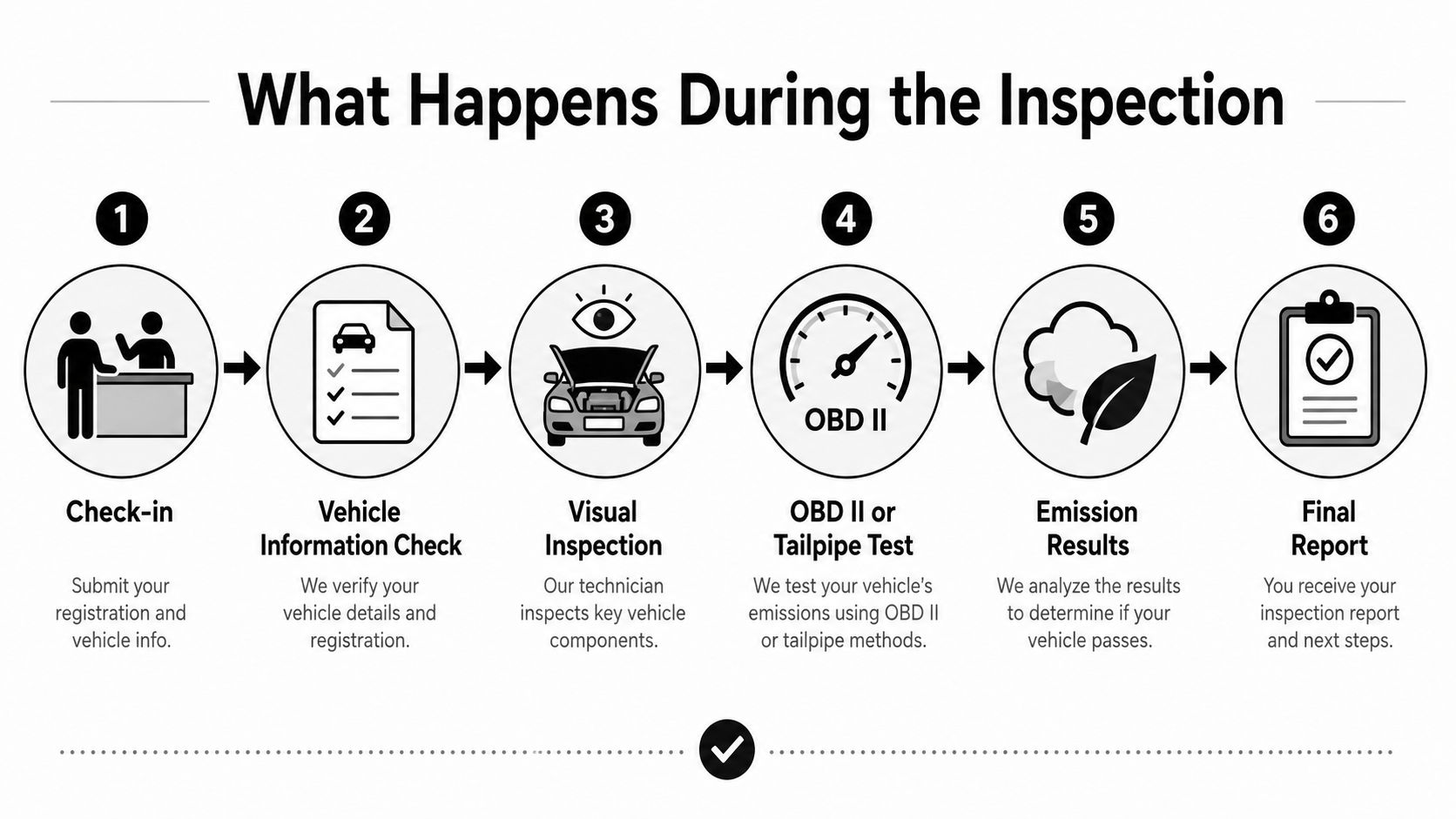
The first step is check-in. The technician verifies the VIN, registration, and the type of inspection required so the right procedure is used from the start. That matters in Tracy because some vehicles are tested under a standard path, while others need a directed process tied to their DMV status.
Then the car moves into the inspection lane and the technician begins the required checks. For a 2000 and newer vehicle, the technician connects an OBD-II scanner and reviews readiness monitors, malfunction indicator light status, and stored trouble codes. If the system still shows unresolved issues, the vehicle can fail even when it drives normally.
Older gasoline vehicles or directed cases may follow a different path. The station may use a BAR-97 tailpipe test, which measures exhaust gases under the proper test conditions. While that happens, the technician also performs the visual and functional inspection of emissions equipment, because the computer side and the hardware side both have to line up.
What they're looking at
- Catalytic converter.
- Gas cap.
- EGR valve.
- Air injection system.
Each part matters because emissions compliance has two sides. The vehicle has to report correctly through its onboard system, and the required equipment has to be present and working. A car can show acceptable tailpipe numbers and still fail if a required emissions part is missing or not operating. The reverse can happen too, which is why the inspection uses more than one method instead of relying on a single sign.
At the end, the station issues the result and transmits the certificate electronically to DMV when the vehicle passes. If your car is part of a STAR or directed case, the result also tells you how to handle the next step, whether that means keeping the paperwork for your records or taking the car to the right follow-up station. The image below shows the process in the same order most drivers experience it. A six-step infographic illustrating the smog inspection process for vehicles, from initial check-in to final report.
What to Do After a Failed Smog Test
A failed test feels expensive in the moment, but the next move matters more than the fail itself. The technician should tell you which part failed, whether it was OBD readiness, a visual inspection, a functional inspection, or tailpipe emissions. Once you know that, you can stop guessing and start fixing the exact issue.
Use the failure reason to choose the repair path
Take a simple example. A 2007 SUV fails because two readiness monitors are incomplete. That is a different problem from a broken catalytic converter or a missing vacuum line. If the failure is just incomplete readiness, the fix may be as simple as driving the car enough for the monitors to finish their checks after the underlying code issue is resolved.
If the car is a STAR-directed vehicle, the repair path gets stricter. Directed cases need the right station setup for the retest certificate, so that affects where you bring the car after the failure. For a standard vehicle, you can choose between the same station and a trusted independent mechanic, depending on what failed.
Be careful with upsells
Ask for the actual diagnostic trouble codes in writing. Don't approve parts just because someone says they “might help.” If a hose passed inspection and the problem was electrical, replacing random emissions parts is money gone without solving the fail.
A few drivers also qualify for repair help or a waiver path if the repair cost hits the applicable cap in California's rules. You should ask the station or DMV what applies to your exact case before you pay for unnecessary work. The key is to document everything, because proof of repair is often part of the retest process.
Retest timing matters
Most drivers aim to return within the retest window so they don't end up paying a full fee again. Keep the old report, keep the repair invoice, and don't rush back until the car is ready. A clean retest is cheaper than repeated guessing.
Your Tracy Smog Check Action Plan
Start with the exemption question. If your vehicle is exempt, stop there and save the trip. If it isn't, match your vehicle to the right station type, then make sure your car is warmed up, your paperwork is ready, and your warning lights are dealt with before you arrive.
Quick checklist
- Confirm the trigger. Renewal, ownership transfer, or first California registration can all matter.
- Match the vehicle. Model year and fuel type decide the inspection path.
- Choose the right station. Use a STAR station when your vehicle category or DMV notice calls for it.
- Prep before leaving. Warm the car, check the dashboard, and bring registration paperwork.
- If you fail, diagnose first. Fix the exact problem, then retest with the correct documents.
Tracy drivers save the most time when they treat smog testing like a compliance step, not a mystery. Once you know whether you need the test, what kind of inspection your vehicle gets, and how to respond if it fails, the whole process gets a lot less stressful.
If you want a station that can handle California smog compliance with clear communication and a straightforward inspection process, visit Speedy Smog. Their STAR-certified setup is built for emissions testing on a wide range of vehicles, so you can book with more confidence and get your DMV paperwork moving without the guesswork.