You're holding a DMV renewal notice and trying to answer one simple question before the deadline sneaks up on you, do you need any smog shop, or do you need a STAR certified smog check test only center? That confusion is common because California uses a few labels that sound similar but mean very different things in practice, and the wrong choice can send you back for another visit. The good news is that the answer usually lives in the notice itself, plus a handful of BAR rules that are easier to understand once you strip away the jargon.
Table of Contents
- Reading Your DMV Renewal Notice Without the Confusion
- What STAR Certification Actually Means in California
- STAR, Test-Only, and Test-and-Repair Explained Side by Side
- Why STAR Test-Only Stations Lead the Market
- What Happens During a Test-Only Smog Visit
- Vehicles That Change the Outcome
- Choosing Speedy Smog in San Leandro
- Common Questions About STAR Test-Only Smog Checks
Reading Your DMV Renewal Notice Without the Confusion
A San Leandro driver opens the mailbox, sees a renewal notice, and immediately hits the same wall a lot of people do. The letter says the vehicle needs a smog check, and maybe it says STAR, maybe it says nothing at all, and now the next question is whether any station will work or whether the car has to go somewhere special.
That's where the language gets slippery. A STAR certified smog check test only center is not just “a smog shop with a fancier sign,” it's a station that meets BAR's higher performance standards and is licensed only to test, not repair. BAR also says the DMV renewal notice tells drivers if they must go to a STAR station, so the notice itself is the first thing to read carefully. DMV renewal and registration help
Practical rule: if the renewal notice says STAR is required, treat that as a routing instruction, not a suggestion.
The four questions most drivers need answered are simple. What does STAR mean, what does test-only mean, do you need both, and what happens if the vehicle doesn't cooperate on test day? Once those pieces click, the rest of the process gets much less stressful.
What STAR Certification Actually Means in California
A regular smog station works like a general clinic. A STAR station is a station that has passed extra audits, uses approved equipment, and is reviewed against performance standards on a regular basis. California's Bureau of Automotive Repair launched the STAR program in January 2013 as part of statewide smog-check reform, and BAR says STAR certification goes to stations that meet specific performance standards and are reviewed on a quarterly basis. California STAR smog-check reform background
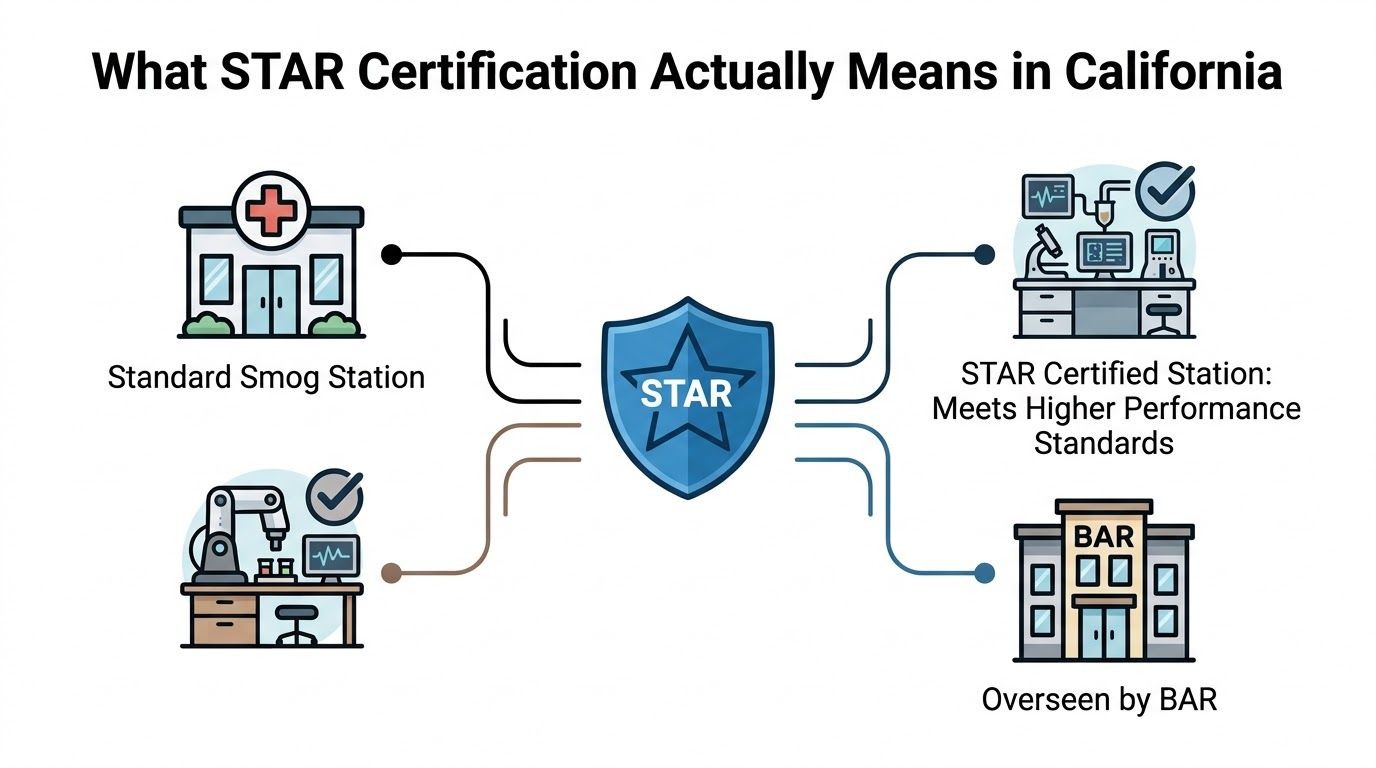
The phrase sounds like a brand name, but it points to a quality tier BAR can measure. BAR says more than two-thirds of California smog check stations are STAR certified, so STAR is not a rare specialty label. It is a common part of the state's inspection network, especially for drivers who need a recognized inspection to finish registration requirements.
The equipment side of the rule
STAR is not only about paperwork and pass rates. BAR's manual says a STAR-certified test-only center has to keep the required inspection equipment for all Smog Check vehicles, including BAR-certified gear like the BAR-97 Emissions Inspection System and the Low Pressure Fuel Evaporative Tester, or LPFET. The same manual says any equipment that needs calibration must pass calibration at least once every 10 calendar days. BAR Smog Check manual
A station cannot reliably inspect vehicles if its tools are not checked and calibrated on a tight schedule.
That detail matters because STAR is about repeatability. If a station uses approved hardware, keeps to a calibration cadence, and stays under BAR review, the inspection result is less likely to depend on guesswork or weak equipment. In plain English, STAR is BAR's way of saying this station has to prove its inspections are consistent.
If you want a plain-language breakdown of how that certification affects your visit, our guide to a STAR smog station walks through the basics without the jargon.
STAR, Test-Only, and Test-and-Repair Explained Side by Side
Drivers often search for “STAR certified smog check test only center” as if that phrase names one single thing. In reality, it combines two separate ideas, and the combination is what solves the actual problem. STAR describes the station's performance status, while test-only describes what the station is allowed to do once your car is on the property.
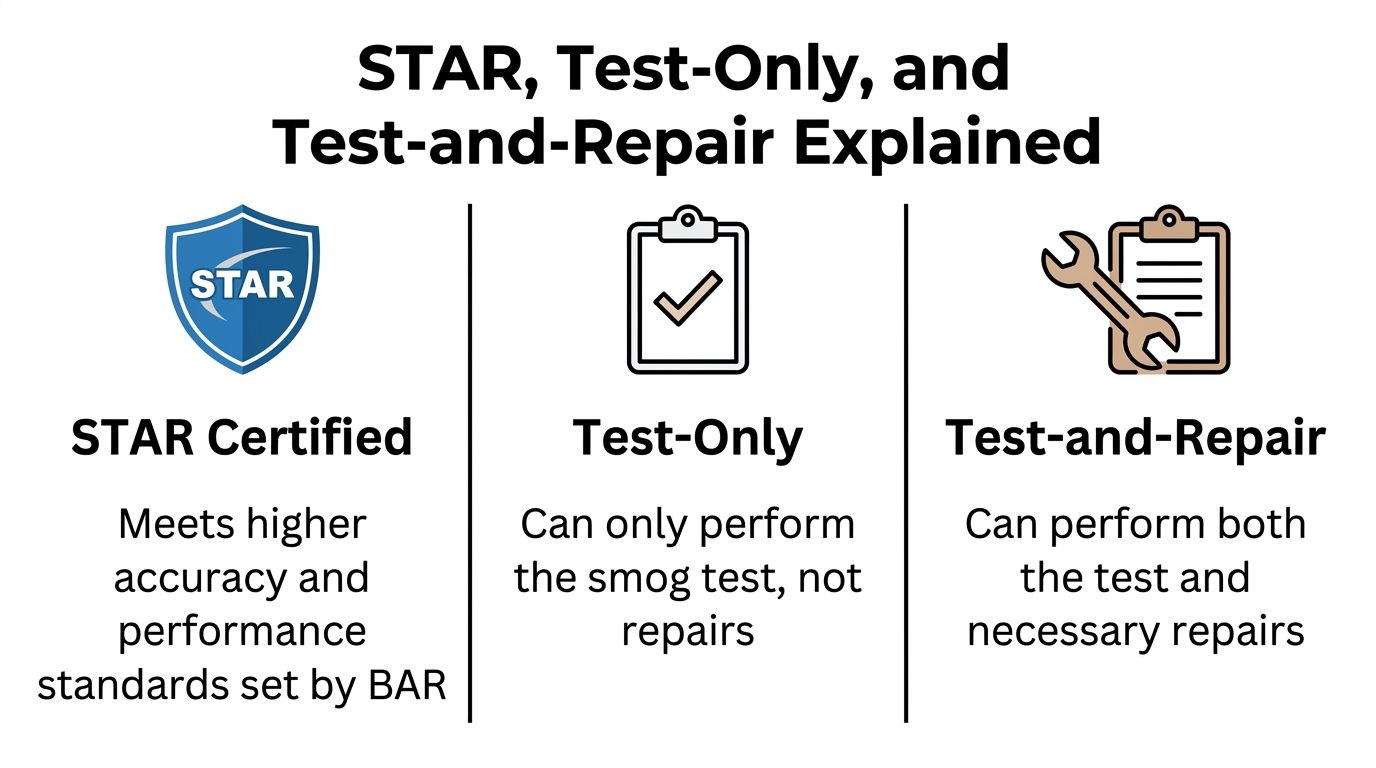
A STAR station meets BAR's higher performance standards and can inspect all vehicles, including vehicles that are directed to a STAR facility because of age, emissions profile, or selection rules. A test-only station is licensed to perform the inspection but not the repair. A test-and-repair station can do both, which sounds convenient until you realize that a test-only site helps keep the inspection and repair decisions separate. BAR STAR overview
Which one do you actually need
That depends on the DMV notice. BAR says the renewal notice tells drivers if they must go to a STAR station, and that's the part people should trust instead of guessing based on a shop sign. If the notice just calls for a regular smog check, a licensed station may be enough. If it calls for STAR, then you need a station that meets that higher standard.
This distinction is the biggest source of confusion because local marketing often blurs the terms. A shop can be test-only without being STAR, and it can be STAR without doing repairs, and those aren't the same thing. Once you separate the labels, the wording on the renewal notice becomes much easier to decode.
Quick mental model: STAR tells you the quality tier, test-only tells you the station's job description.
Why STAR Test-Only Stations Lead the Market
A driver gets the renewal notice, sees “STAR” and “test-only,” and the two labels can feel like they belong to different systems. BAR's reporting shows they often point to the same place in the driver's path. In BAR's 2025 Smog Check Executive Summary Report, STAR Test-Only stations performed 5,916,245 initial OIS tests with an 8.14% failure rate, while STAR Test-and-Repair stations performed 2,766,051 initial OIS tests with an 8.21% failure rate. Across all California smog checks, initial tests totaled 11,275,981 with 959,667 failures, for an 8.51% failure rate, and all tests combined reached 12,200,718 with 1,102,337 failures, for a 9.04% failure rate. BAR 2025 Smog Check Executive Summary Report
That is one reason test-only stations lead so much of the market. They do not sit on the side of the program. They handle a large share of the inspections and issue the certificates drivers need to complete registration compliance. BAR's report says test-only stations issued 5,822,635 certificates, compared with 2,710,210 certificates from test-and-repair stations. For a first-time visitor, that means the place doing only the inspection is often the place that gets the paperwork finished.
What makes STAR meaningful
BAR's STAR rules are built around measurable performance, not shop slogans. The Follow-up Pass Rate score has to be at least 0.40, and the Similar Vehicle Failure Rate must be at least 50% of the industry-wide failure rate for similar vehicles. In the 2021 STAR regulatory text, BAR also required a Fail-to-Pass Rate benchmark of at least 0.40 for licensed technicians in the relevant reporting period. Those are concrete thresholds, the kind a station either meets or does not meet.
That screening is why STAR test-only stations carry extra weight. They have to keep the right equipment, stay within BAR's oversight framework, and maintain performance targets while they test, not repair. For a driver, that means the renewal notice is pointing to a station that has already cleared a higher bar before the car even rolls onto the lot.
What Happens During a Test-Only Smog Visit
The visit usually starts with paperwork, not tools. You pull in, hand over your registration or renewal notice, and the technician checks what kind of vehicle you brought in and what inspection it needs. For a straightforward 2000-and-newer car, the rest often moves quickly because the station connects the diagnostic equipment, reads the vehicle's onboard data, and finishes the inspection workflow without a repair conversation.
For older vehicles, the process can look a little different. BAR says smog checks can include OBD checks for most 2000-and-newer vehicles and tailpipe tests for pre-2000 vehicles, so the test method follows the vehicle, not the other way around. That's one reason a test-only center has to be ready for multiple types of inspections instead of assuming every car behaves the same.
What to bring and what to expect
A clean visit usually means bringing the vehicle, the renewal paperwork, and a payment method. If the car is ready for testing, the visit can stay short, but the bottleneck is often the vehicle's condition, not the counter process. A simple inspection might take about 10 to 15 minutes for a 2000-plus vehicle, but that timing only applies when the car is already prepared for the test workflow.
| Documents and Timing for a Typical Test-Only Visit | What to Bring or Expect | Typical Outcome |
|---|---|---|
| DMV renewal notice or registration | Bring the paper or digital notice so the station can confirm the correct requirement | Helps the technician confirm whether STAR is required |
| Vehicle | The car, truck, diesel, or hybrid that needs the inspection | The test is performed on the actual vehicle |
| Payment | Be ready to pay at the counter | The certificate can be issued after a pass |
| Straightforward 2000-plus vehicle | Expect a short inspection window when the car is ready | Often stays close to the usual 10 to 15 minute workflow |
The key thing people miss is that a quick visit isn't the same as an easy pass. A test-only station can move efficiently, but it still has to check the vehicle thoroughly. If the car isn't ready, the certificate doesn't happen just because the bay is open.
Vehicles That Change the Outcome
A lot of the frustration around smog checks comes from assuming every vehicle is judged the same way. It isn't. BAR says gasoline, hybrid, and alternative-fuel vehicles from model year 1976 and newer are subject to Smog Check requirements, but the actual test path depends on the vehicle's age, engine setup, and readiness status. BAR Smog Check program overview
The vehicle itself can change the test
A 1999 and older vehicle may need a tailpipe-style inspection rather than an onboard diagnostics check. A diesel has its own inspection profile. A hybrid can still need a compliant smog test. Those differences are why a station that sees a wide range of vehicles needs both the right equipment and the right training.
The check-engine light is the biggest red flag. BAR says a vehicle will not pass with the check-engine light on, so that light should be treated as a real test blocker, not a nuisance warning. If the battery was recently disconnected, BAR also says drivers should wait a week or two so readiness monitors can reset before testing. That rule catches a lot of people off guard because the car may drive fine while still being unready for inspection.
If the car got a battery reset, don't assume it's inspection-ready just because it runs normally.
A short pre-visit checklist
- Check the dashboard first: If the check-engine light is on, the vehicle is not ready for a pass.
- Think about the last repair: A recent battery disconnect can leave readiness monitors incomplete.
- Match the vehicle to the right test type: Older models and diesels may not follow the same workflow as newer gas cars.
- Don't rush the visit after a warning light clears: The car may need normal driving time before the inspection makes sense.
The “10-minute smog” pitch can mislead people. The test itself might be quick, but the vehicle can create delays, repeat visits, or repair decisions that stretch the process out. Knowing that before you go saves time, money, and a lot of back-and-forth.
Choosing Speedy Smog in San Leandro
For East Bay drivers who want a local option, Speedy Smog is a STAR Certified station at 15275 Washington Ave, San Leandro, CA 94579. It inspects most vehicles, including 2000 and newer models, 1999 and older vehicles, diesels, and hybrids, and it typically completes tests for 2000-plus vehicles in about 10 to 15 minutes. The shop also lists a clean indoor waiting room, transparent pricing, Monday-through-Saturday hours, and periodic $25-off coupons for most smogs on newer vehicles.
That mix fits the needs of drivers who want one place that handles the common vehicle types without turning the visit into a bigger project than it needs to be. As BAR's rules make clear, a STAR-certified test-only center exists to keep the inspection accurate, recognized, and separate from repair work. Speedy Smog is one local example of that setup in practice. What is a STAR station
If your renewal notice points you toward STAR, the value is mostly in convenience and compliance. You get a station that's set up for the required inspection path, a location that understands the common vehicle categories, and a process that stays focused on getting the certificate issued correctly.
Common Questions About STAR Test-Only Smog Checks
How much does a STAR smog check cost? Pricing varies by vehicle type and station policies, so there isn't one universal number to memorize. The better question is whether the station can inspect your exact vehicle and issue the certificate you need.
How long does the whole visit take? For a ready 2000-plus vehicle, the inspection itself can be quick, but paperwork, diagnostics, and certificate handling still take time. If the car arrives with a check-engine light, incomplete readiness, or an older test type, the visit can stretch.
Can I go to a regular shop instead of a STAR station? If the DMV renewal notice requires STAR, use a STAR station. BAR says the notice tells you when that routing applies, and that instruction matters more than guessing based on convenience.
What if the vehicle fails? A fail usually means the vehicle needs directed repairs or more preparation before retesting. If you're looking for a practical next move after a failed inspection, the guidance in this BAR-focused smog preparation resource can help you think through the common causes without wasting another trip.
Speedy Smog handles STAR Certified smog checks in San Leandro for drivers who need a clear answer, a fast inspection, and a certificate that matches BAR rules. If your renewal notice calls for STAR or you want a test-only station that understands older vehicles, diesels, and hybrids, visit Speedy Smog and book the visit that fits your car.
You open your registration renewal, scan for the amount due, and then see the line that changes your whole errand list: smog certification required. For a lot of Pleasanton drivers, that's the moment the questions start. Is this a routine test? Do you need a STAR station? Will the check engine light sink the whole visit? Can you knock it out fast without bouncing between shops?
That's where most local guides fall short. They list addresses, maybe mention coupons, and leave out the part that matters: how the inspection works, what causes avoidable failures, and why the right station choice can save a wasted trip. If you're searching for smog check Pleasanton CA, the smart move isn't always the closest shop. Sometimes it's the one that handles your vehicle type correctly the first time.
Table of Contents
- Your DMV Notice Says Smog Check Required Now What
- California Smog Rules for Pleasanton Drivers
- STAR Certified Or Regular Smog Station Which Do You Need
- How to Prepare for and Pass Your Smog Check
- Smog Check Options Near Pleasanton And Why We Recommend Speedy Smog
- Get Your Smog Certificate And Get Back On The Road
Your DMV Notice Says Smog Check Required Now What
A common Pleasanton scenario goes like this. Your tags are due soon, you've got work, school pickup, and errands stacked up, and now the DMV wants a smog check before registration can move forward. Most drivers aren't worried about the test itself. They're worried about wasting half a day on something that should've been simple.
The good news is that a smog check usually becomes stressful for predictable reasons. People go in with the check engine light on, they show up right after a battery replacement, or they don't realize their vehicle needs a different type of station than the one down the street. Those are the mistakes that turn a short visit into a repeat visit.
Practical rule: Treat your smog check like a compliance inspection, not a casual oil change stop. A little prep matters.
If you're looking up smog check Pleasanton CA, you probably need answers to three things right away:
- What the state is asking for
- How to avoid an automatic fail
- Where to go so the result counts the first time
For most drivers, the process is manageable once the jargon gets translated into plain English. You don't need to become an emissions expert. You just need to know whether your car is routine or STAR-directed, whether your onboard system is ready, and whether the shop you choose handles your vehicle type well.
That's especially important for newer vehicles, hybrids, and cars with any recent repair history. Those are the vehicles that often look fine to the owner but still trigger issues at inspection time.
California Smog Rules for Pleasanton Drivers
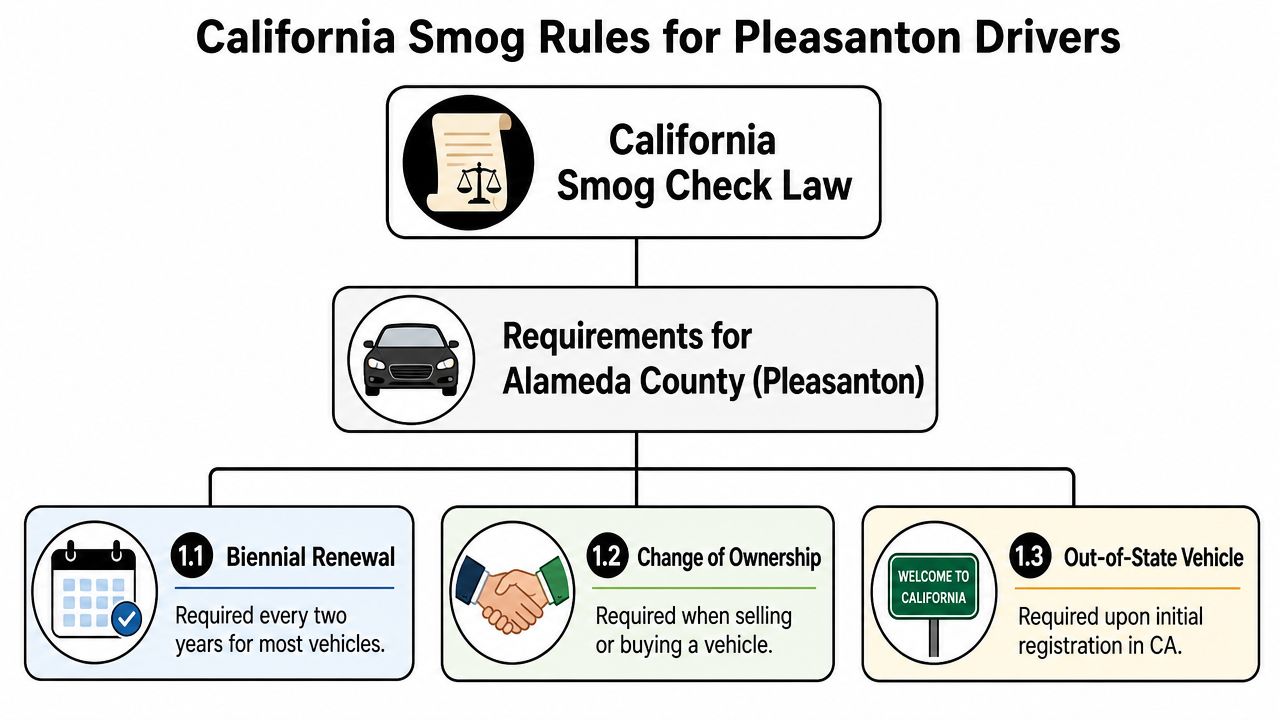
Pleasanton drivers are dealing with California rules, not a special city program. That matters because the test isn't just a local shop preference. It's part of a statewide emissions compliance system tied to registration and certain ownership events.
The program was adopted in 1984 to address significant smog sources from vehicle emissions, and it requires identification and repair of vehicles emitting excess smog-forming pollution, particularly during registration renewal or transfer events, as explained by AAA's overview of California smog requirements.
Why California takes this seriously
Pleasanton sits in the East Bay, where air quality rules aren't abstract policy. Vehicle emissions are one of the things the state actively regulates to keep pollution below required limits. That's why the notice from DMV isn't optional paperwork. It's a compliance step tied directly to whether your registration can move forward.
If you want a plain-English breakdown of the framework, this guide to California smog check rules is a useful companion.
When drivers usually get flagged
In real life, Pleasanton drivers most often run into smog requirements in a few familiar situations:
- Registration renewal: The renewal notice tells you a smog check is required before the DMV completes the process.
- Vehicle transfer: A change in ownership often triggers the need for a valid inspection.
- California entry: If a vehicle is being registered in California, emissions compliance becomes part of that first-state process.
What works is checking the DMV notice early and handling the inspection before the deadline gets close. What doesn't work is assuming every vehicle follows the same path. Some cars move through a standard inspection smoothly. Others are flagged for stricter station requirements, and that distinction catches people off guard.
Drivers usually get into trouble when they treat smog as a last-minute errand instead of a registration requirement with technical rules attached.
That's why a simple search for smog check Pleasanton CA should lead to more than a list of nearby addresses. The smarter question is whether the station you choose matches what your vehicle needs.
STAR Certified Or Regular Smog Station Which Do You Need
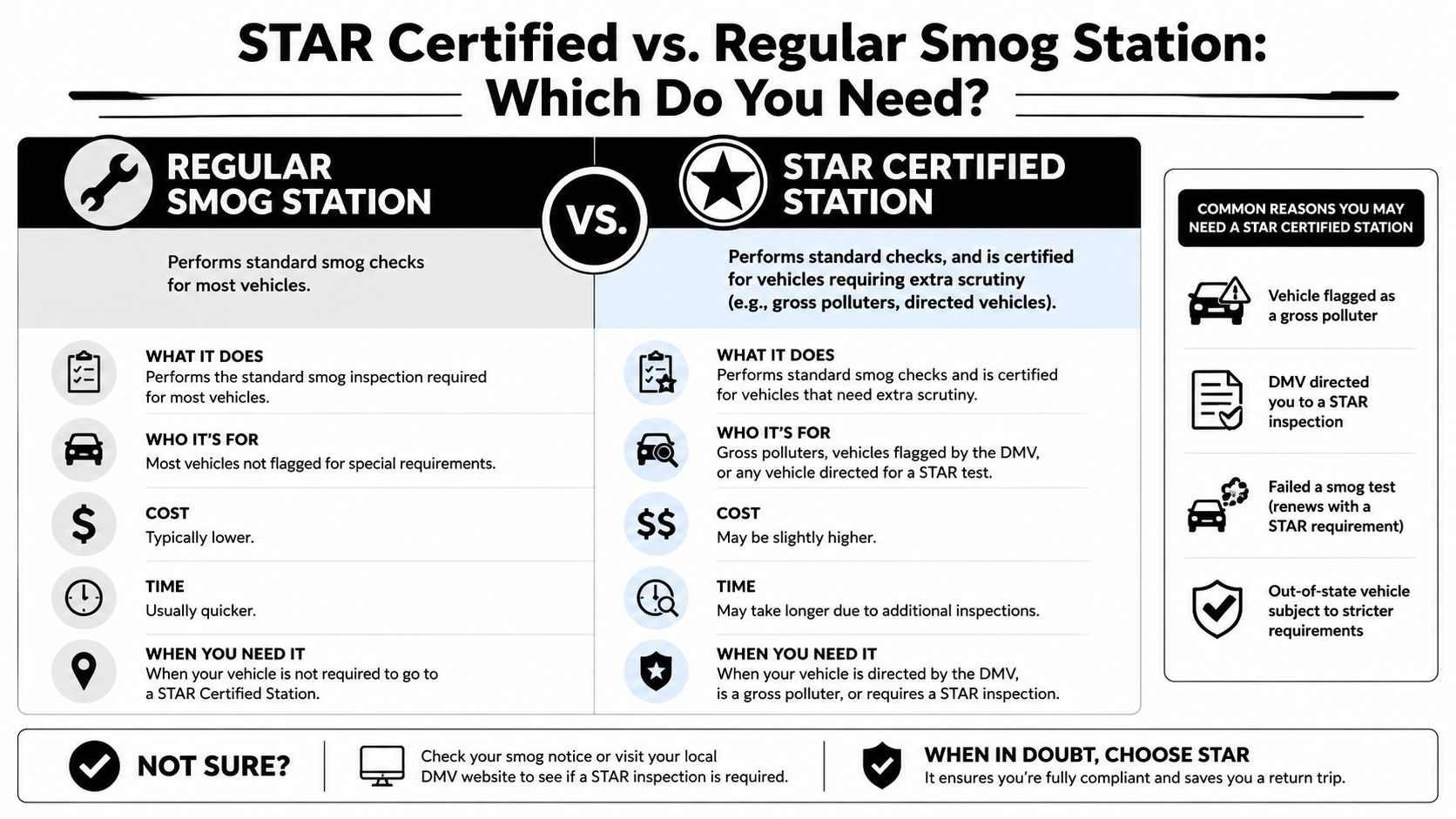
Many drivers lose time assuming a smog station is a smog station. It isn't. California separates standard testing from STAR Certified testing, and that difference matters if your DMV paperwork directs you to a STAR location.
The STAR Certified designation identifies facilities audited by the Bureau of Automotive Repair that demonstrate superior accuracy in detecting emissions failures, and STAR stations are specifically required for vehicles identified by the DMV as high emitters or those with a history of failed inspections, according to this California STAR station guide. That same source notes the cost for this inspection in California ranges from $30 to $70.
What STAR actually means
A STAR station isn't just using a nicer sign. It's a facility held to a higher performance standard. That's the practical takeaway for drivers. If your DMV notice directs you to STAR and you go somewhere else, you haven't saved time. You've started over.
Here's the simplest comparison:
| Station type | Best for | Risk if you choose wrong |
|---|---|---|
| Regular smog station | Vehicles not specifically directed to STAR | You may still need to retest elsewhere if your vehicle requires STAR |
| STAR Certified station | Standard vehicles and vehicles specifically directed by DMV to STAR | Lower risk of choosing a station your paperwork won't accept |
A useful explainer on what a smog STAR station is can help if that notice language feels vague.
A quick way to decide
Use this decision logic:
- Your DMV notice says STAR required: Go to a STAR station. No debate.
- Your vehicle has a history of emissions trouble: A STAR station is usually the smarter call.
- You own a newer model or hybrid and want fewer surprises: Specialized testing experience helps.
- You just want the broadest compliance option: Choosing STAR removes one common point of failure.
The trade-off is straightforward. A regular station may be convenient if your vehicle clearly qualifies for routine testing and you know that for sure. A STAR station is often the safer choice when the notice is unclear, the car has prior issues, or you don't want to gamble on whether the inspection will count.
That's why experienced drivers don't just ask who's closest. They ask who can complete the right inspection for their specific vehicle the first time.
How to Prepare for and Pass Your Smog Check
You get the DMV notice, book a test, drive over from Pleasanton, and expect to be in and out. Then the car fails for a reason that had nothing to do with how it felt on the road. That is the part that frustrates drivers most. Smog failures often come from readiness status, warning lights, or emissions equipment issues that show up only during inspection.
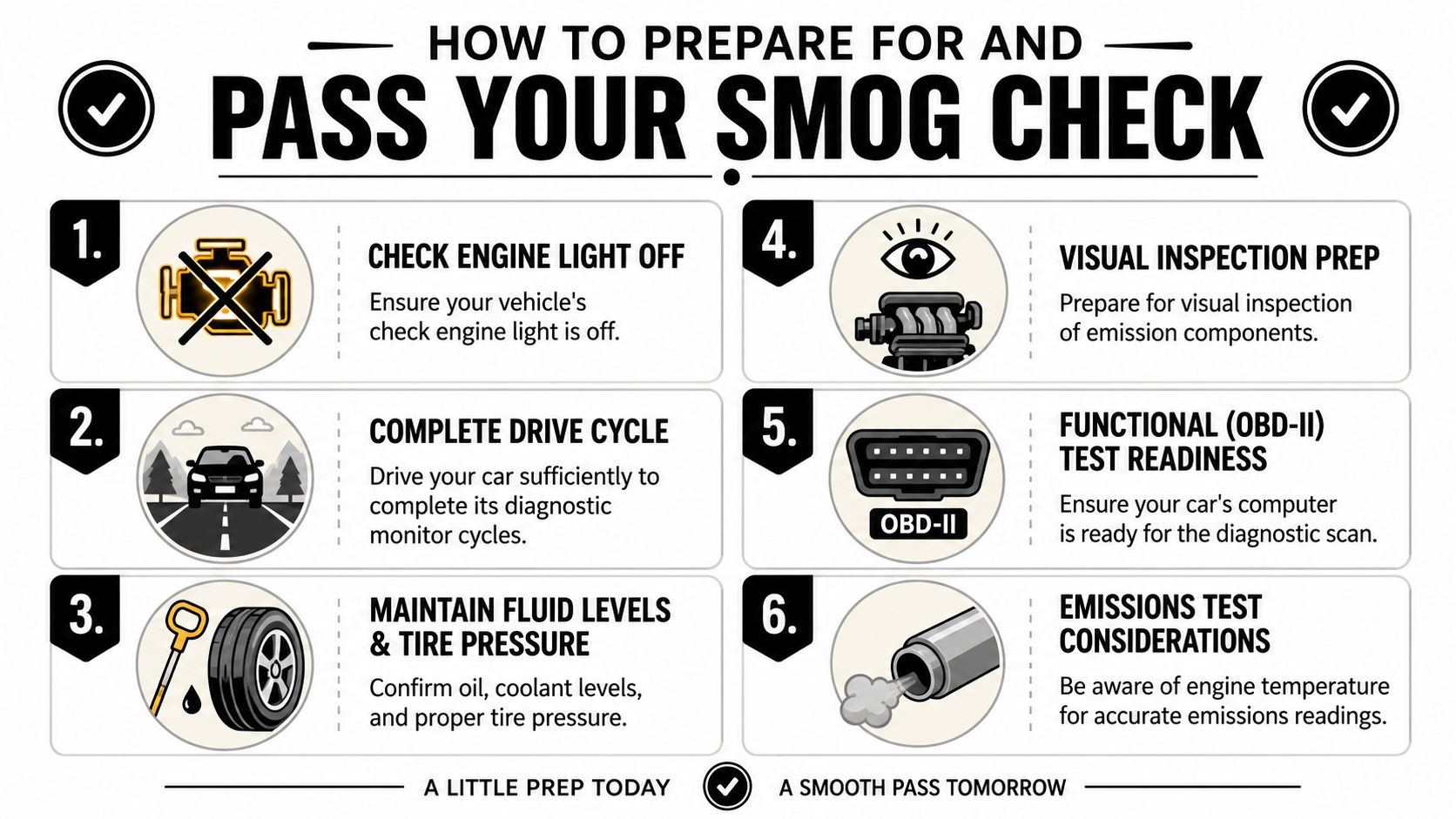
A California smog check usually includes three parts: a visual inspection of emissions-related components, a functional inspection of the OBD-II system, and an emissions measurement. If the check engine light is on or an OBD-II readiness monitor is not set, the vehicle fails, as explained in Geotab's California smog check guide.
What the inspector is looking for
The visual check covers parts such as the catalytic converter, EGR valve, and fuel cap. The functional check confirms the onboard computer is ready to report valid emissions data. The emissions portion measures pollutants such as Hydrocarbons (HC), Carbon Monoxide (CO), and Nitrogen Oxides (NOx), according to that same source.
This catches a lot of people off guard. A car can drive fine and still fail.
I see this all the time with newer vehicles and cars that recently had battery work. The owner fixed one problem, cleared a code, or disconnected power, then shows up before the readiness monitors have completed their drive cycle. Geotab notes that after battery replacement, vehicles may need normal driving time before all monitors reset.
What helps before the appointment
A little prep saves a lot of hassle, especially if you want one trip instead of two.
- Drive the car long enough to fully warm it up: A cold engine is not ideal for testing.
- Check for warning lights before you leave home: If the check engine light is on, deal with that first.
- Do not disconnect the battery right before the test: That often resets monitors and creates an automatic problem.
- Ask whether the shop offers a pre-inspection: If something looks questionable, it is better to catch it before the official test starts.
- If the vehicle has tuned or modified software: Put it back to manufacturer settings or a CARB-approved version before testing, because BAR states modified software can trigger a failure.
If you want a practical list of common smog check fail reasons, review that before booking the test.
For Pleasanton drivers, this is one reason a short drive to a specialized STAR station can make sense. Shops that handle these inspections all day are usually better at spotting readiness issues, recent-repair problems, and equipment concerns before you waste time on an official fail.
Later in the process, it helps to see the inspection flow in action:
What does not work
These are the mistakes that cause avoidable failures and repeat visits:
- Clearing codes the day of the test: That often leaves monitors unset.
- Ignoring recent repairs: Battery, alternator, or module work can affect readiness.
- Assuming a newer car will pass automatically: On many late-model vehicles, OBD-II status is the whole story.
- Picking a shop based only on price or distance: If the station is not the right fit for your vehicle, the cheap test gets expensive fast.
The fastest smog check is the one you only have to do once.
Smog Check Options Near Pleasanton And Why We Recommend Speedy Smog
Pleasanton has smog check options, and for some drivers a nearby location will work fine. But convenience on a map isn't the same as the best choice for compliance, speed, or technical fit.
That matters more than many drivers realize. Local listings often blur the line between standard testing and STAR-directed testing, and that creates bad recommendations. The source material provided here notes that Bureau of Automotive Repair data shows STAR stations are held to higher performance standards and are the only authorized sites for STAR-directed vehicles, while many local listings fail to explain that going to a non-STAR station when STAR is required leads to an automatic fail and a retest, as discussed in this Pleasanton smog listing analysis.
The local shop problem most drivers don't spot
A lot of shop pages sound interchangeable. They say they do smog checks, mention a special, and leave out the operational detail that protects the customer. If your vehicle is STAR-directed, a non-STAR stop doesn't just slow you down. It sends you back out for another inspection.
Hybrid owners and owners of newer vehicles should be especially careful. Those vehicles often need a shop that pays attention to the inspection steps rather than rushing the process or oversimplifying what's required.
Why a short drive can be the better move
For East Bay drivers, making a short drive to a specialized STAR station can be the smarter option when you want accuracy, a smoother visit, and fewer compliance surprises. That's especially true if your vehicle is newer, hybrid, diesel, or anything with a recent emissions-related issue in its history.
There's also a practical value issue. A fast, properly handled visit at a specialized station beats a “closer” visit that turns into a retest. Drivers who search smog check Pleasanton CA are usually trying to solve a time problem, not just a distance problem. The best answer is the station that gets the test done correctly and gets your DMV record updated without drama.
If a shop doesn't clearly explain whether it handles STAR-directed vehicles, that's already a warning sign.
Get Your Smog Certificate And Get Back On The Road
You get the test done, the station submits the result electronically, and you can finish your registration without chasing paper forms around town. That is the part Pleasanton drivers want. A clean, one-visit smog check that does not turn into a second errand.
The easiest path is usually simple. Show up with the right station for your vehicle, bring a car that is ready to test, and confirm your DMV notice before the inspection starts. That small bit of prep prevents the problems I see all the time, especially after recent battery disconnects, check engine light repairs, or visits to a shop that was not set up for the vehicle in front of them.
If your car passes, the certificate goes straight into the system and remains usable for your registration for a limited window, as noted earlier. You do not need to babysit the paperwork.
That is one reason a short drive from Pleasanton to a specialized STAR station can make sense. The goal is not just finding the closest shop. The goal is getting the right test, done correctly, once. For drivers with newer vehicles, hybrids, diesels, or STAR-directed notices, that can save time compared with rolling the dice on a generic local option.
If you want a fast, accurate inspection from a STAR-certified team, book with Speedy Smog. They're located at 15275 Washington Ave, San Leandro, CA 94579, open Monday through Saturday, and they specialize in efficient testing for most vehicles, including newer models, older cars, diesels, and hybrids. Many 2000+ vehicles are completed in about 10–15 minutes, and the clean waiting area, transparent pricing, and periodic coupon offers make the short drive worthwhile for East Bay drivers who want to get certified and move on with their day.
A STAR station is a smog check station that meets higher performance standards, and if your DMV renewal notice says STAR is required, you must use one. In California's Enhanced Areas, exactly two percent of vehicles are directed by DMV to STAR-certified stations, so if that language appears on your renewal, it's a normal requirement, not a mistake.
You open your registration notice, skim for the due date, and then see the line that throws everything off: smog check required at a STAR station. A lot of drivers read that and immediately wonder if there's something wrong with the car, if the test is different, or if the whole process is going to take longer and cost more.
Usually, the answer is much simpler than people expect. The notice is mainly telling you where your inspection must be done. If you understand that one point first, the rest gets a lot less stressful.
Table of Contents
- Your DMV Notice Says STAR Station Required Now What
- What Is a STAR Certified Smog Station
- STAR Station vs Regular Smog Check What Is the Difference
- What to Expect During Your Smog Check at Speedy Smog
- How to Prepare Your Vehicle for a Smog Check
- Speedy Smog Hours Pricing and Location in San Leandro
- Frequently Asked Questions About Smog Checks
Your DMV Notice Says STAR Station Required Now What
You open your renewal notice, spot the words “STAR station required,” and the whole thing suddenly feels more complicated than it should. In practice, the message is simple. DMV is telling you where the inspection must be done, not telling you your car is in trouble.
That distinction saves a lot of stress. A STAR requirement is a routing instruction. It works a lot like a specialist referral on the medical side. You still need the same basic service, but you need to get it from the type of shop the state named on your notice.
What that line on the notice actually means
Start with the one question that matters. Does your renewal paperwork say STAR is required?
If the answer is yes, use a STAR-certified station. A regular smog shop may not be able to complete the inspection DMV is asking for, which can waste a trip and put you closer to your registration deadline.
Here is the practical version:
- Go to a STAR-certified shop: Follow the notice exactly.
- Bring the DMV notice if you have it handy: It helps the station confirm the request quickly.
- Leave yourself a little time: If your car needs repairs or a retest, you will not be scrambling at the end.
Simple rule: “STAR required” tells you where to go for the test.
The wording on DMV paperwork can make this sound more serious than it is. Terms like “directed vehicle,” “certified station,” and “Enhanced Area” are just program labels. For the driver, the takeaway is straightforward. Your vehicle needs its smog check done at the right kind of station so the result can be accepted for registration.
If you want a plain-English refresher before you book, this guide to California smog check rules breaks down the state terms without the DMV wording.
The fastest path from notice to certificate
At Speedy Smog, the goal is to make this easy from the moment you get that letter to the moment you drive away. Read the notice, confirm it says STAR, bring the car in, and let the station handle the inspection and electronic certificate if your vehicle passes.
A few small choices can make the visit faster. Bring your paperwork, avoid waiting until the registration due date, and drive the car long enough to warm it up before you arrive. That last step matters because a cold engine is a little like trying to grade a student before the test starts. The car needs to be at normal operating temperature for the system checks to behave the way they should.
The process is usually simpler than drivers expect. The notice tells you the lane to get in. Your job is mostly to show up at the right shop, prepared, and let the test move forward.
What Is a STAR Certified Smog Station
A STAR-certified smog station is a smog check shop that has approval to inspect and certify certain vehicles under tighter state performance standards. A simple way to read that label is this: the state trusts these stations to deliver consistently accurate inspections for cars that are directed into the STAR program.
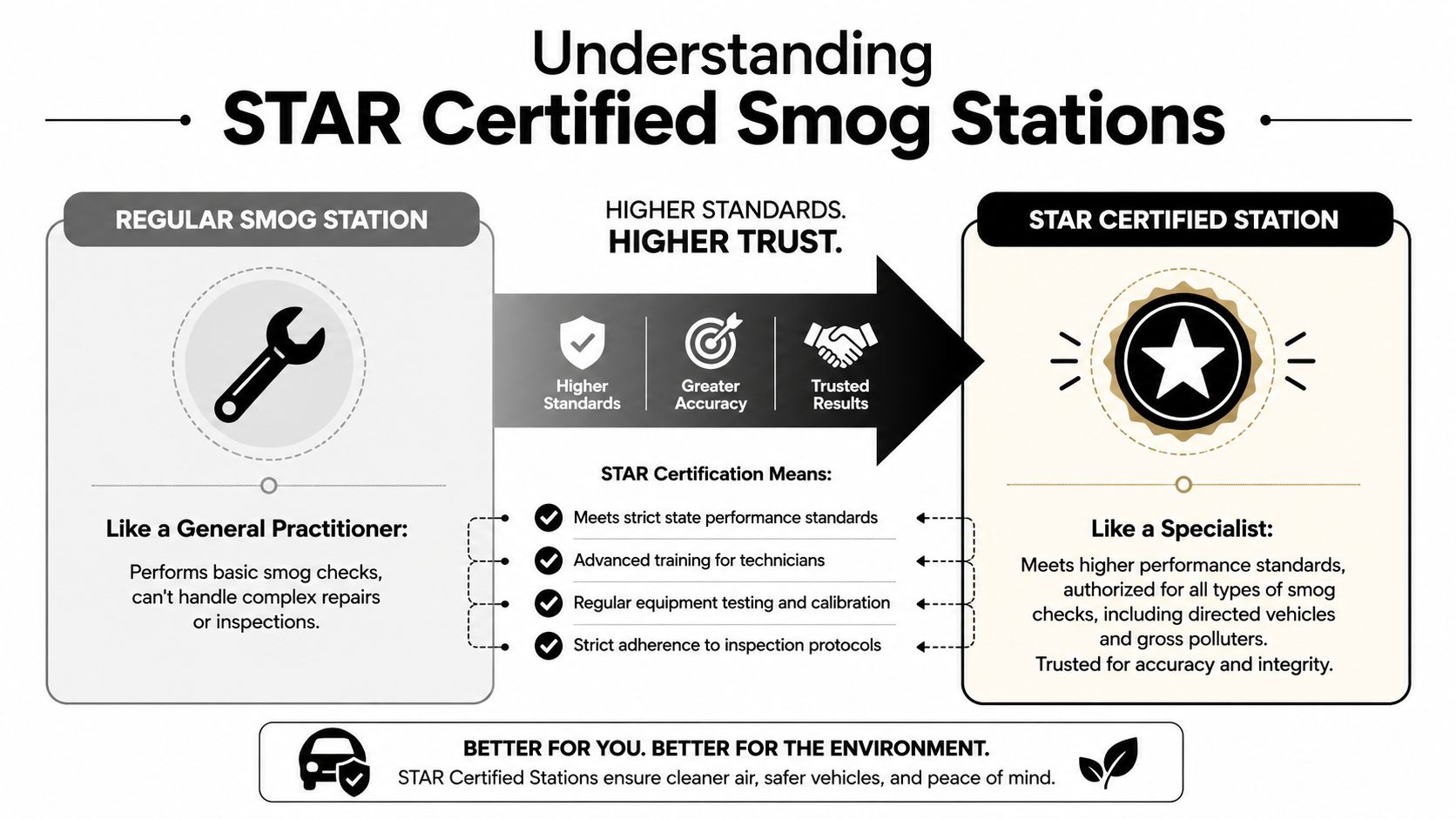
For a driver, the key point is practical. STAR describes the station's approval status, not a different kind of smog test. Many customers hear the word and expect a harsher inspection, special equipment, or a long extra procedure. What usually changes first is the specific testing location required for DMV acceptance.
That can feel confusing because the DMV notice focuses on program labels, not plain language. A better translation is: your car needs to be checked at a shop with current STAR approval. The shop has to qualify for that status and keep meeting the state's standards over time.
What the STAR label means during a real visit
At Speedy Smog, this matters in a very customer-facing way. If your renewal notice says STAR, the shop must be authorized to complete that inspection and send the certificate electronically if your vehicle passes. If you stop at the wrong type of station first, you can lose time, make an extra trip, and still need the same test done again at a STAR location.
Choosing the right station first makes the whole process faster.
Drivers searching for an action smog check STAR station are usually trying to solve three problems at once:
- Meet the DMV requirement without guesswork
- Get in and out quickly
- Leave knowing exactly what happened, whether the car passed or needs follow-up
That is why the customer experience matters as much as the label. A good STAR station does more than run the inspection. It helps you confirm the requirement, explains what the technician is checking in plain English, and keeps the visit moving so you can get back on the road.
For a closer local explanation of the certification itself, see this guide on what a Smog STAR station is.
STAR Station vs Regular Smog Check What Is the Difference
Here's the part most drivers want settled quickly. The physical smog inspection is technically identical at a regular station and a STAR station. The difference is the station's approval status, its performance requirements, and whether it can certify a STAR-directed vehicle.
According to the Sunnyvale STAR facts page, STAR-certified smog stations operate under more stringent BAR standards, the physical test is identical, the station must maintain a high state score to certify STAR-designated vehicles, and some failing vehicle owners may qualify for up to $500 in state-funded repair assistance.
The side by side comparison
| Feature | Regular Smog Station | STAR Certified Station |
|---|---|---|
| Physical inspection procedure | Same basic smog inspection steps | Same basic smog inspection steps |
| BAR performance standard | Standard licensing requirements | More stringent BAR standards |
| Can certify STAR-directed vehicles | Not always | Yes, if the station holds current STAR approval |
| State score requirement | Not the same STAR approval standard | Must maintain a high state score |
| Best use case | Routine vehicles not directed to STAR | Vehicles specifically told by DMV to use STAR |
What this means for you as a customer
If your car was directed to a STAR station, the test itself isn't automatically harsher. The main issue is authorization. You need a shop that can submit the right certification for your renewal requirement.
That's why a regular station and a STAR station may both look similar from the lobby, the bay, and the equipment side. What changes behind the scenes is the station's compliance status with BAR and whether DMV accepts that shop for directed vehicles.
If your notice says STAR, going to a regular station can waste a trip even if the staff is helpful and the shop is fully licensed.
Common misunderstandings
Drivers often mix up three different questions:
- Is my car in trouble? Not necessarily.
- Is the inspection different? The test procedure itself is not the key difference.
- Will I automatically fail at a STAR station? No. A STAR requirement does not equal an automatic failure.
The cleaner way to think about it is this: STAR is a filter on who can certify the test, not proof that your vehicle has already failed something.
If a vehicle doesn't pass, that result can feel frustrating, but the process is still structured. The same Sunnyvale reference notes that some owners may qualify for up to $500 in state-funded repair assistance after a failure, which can help when repairs are needed before retesting.
What to Expect During Your Smog Check at Speedy Smog
For most drivers, the biggest relief comes from knowing what will happen once they pull in. The visit is usually much more routine than people expect, especially if the vehicle is already running normally and there are no warning lights on.
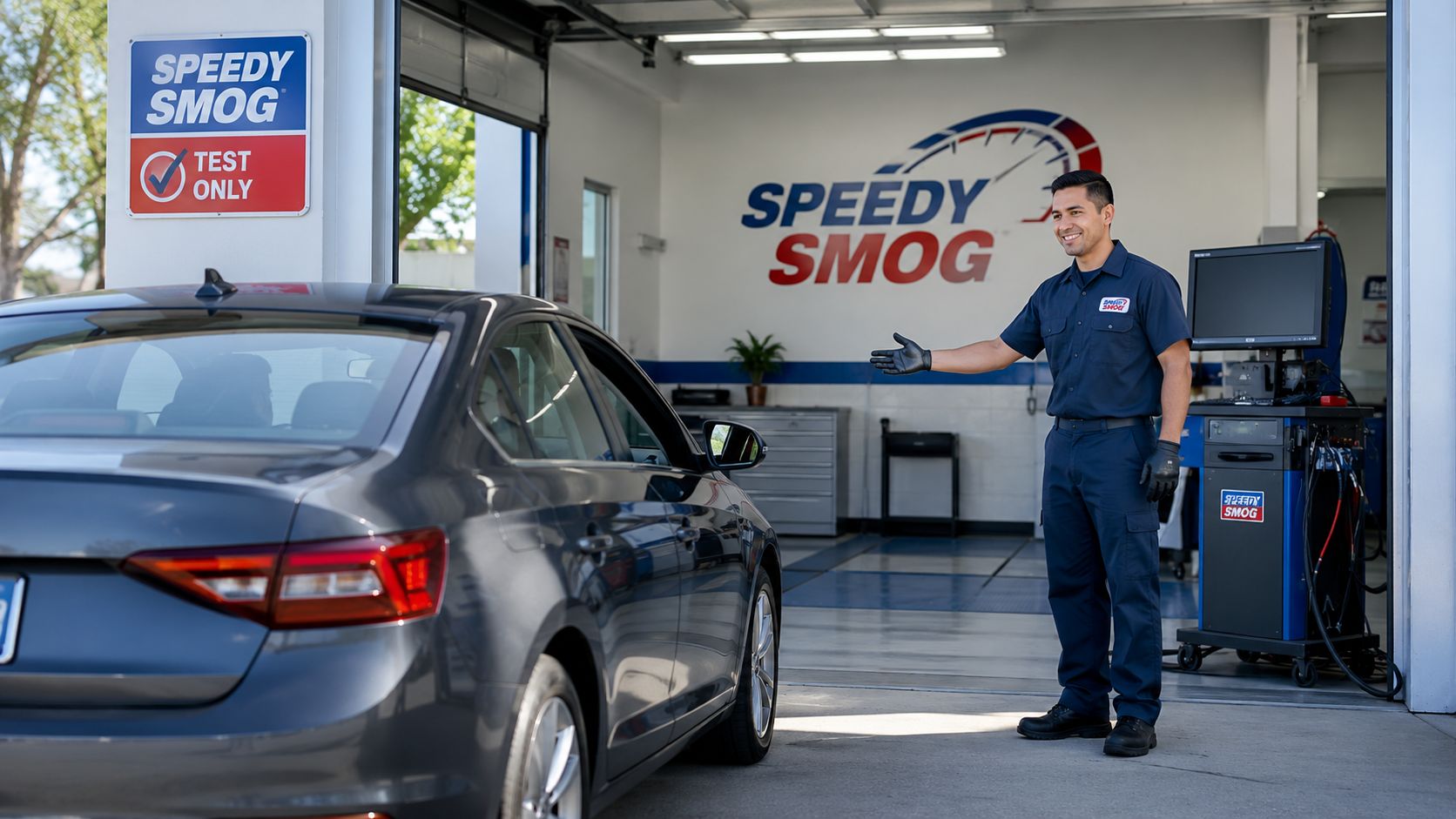
For many 2000 and newer vehicles, the inspection is typically completed in about 10 to 15 minutes, based on the business details provided by the publisher. That quick turnaround is one reason many East Bay drivers look for an action smog check STAR station that keeps the process simple.
When you arrive
Check-in usually starts with the basics. Bring your renewal notice if you have it, and let the staff know whether the DMV specified a STAR station. The technician will confirm the vehicle information and get the inspection started.
While the car is being checked, many customers wait in the indoor lobby. A clean waiting room, straightforward paperwork, and clear communication make a big difference because customers do not want a technical lecture. They just want to know what's happening and whether anything is holding up the certificate.
What the technician checks
A smog inspection isn't one single action. It's a series of checks that work together.
Typical items include:
- Visual inspection: The technician looks for required emissions-related components and obvious issues.
- Functional checks: Items like the gas cap and warning light behavior may be reviewed.
- Computer scan for newer vehicles: On many newer cars, the inspection includes reading the vehicle's onboard diagnostic information.
If you've never seen the process up close, this short video gives a helpful look at what a smog inspection visit can feel like in real life.
How you get your result
If the vehicle passes, the certificate is handled electronically for DMV purposes, and you can move on with registration. That's the outcome everyone wants because it keeps the trip short and uneventful.
If the vehicle doesn't pass, the next step is usually a plain-language explanation of what needs attention. In practice, customers appreciate a station that tells them the issue directly instead of burying it in jargon.
A good smog visit feels organized. You check in, the technician tests the car, you get a clear result, and you know what to do next.
How to Prepare Your Vehicle for a Smog Check
The best prep is simple, and most of it takes only a few minutes. You don't need to be a mechanic to improve your odds of a smooth visit. A little preparation helps the inspection start with the car in normal operating condition.
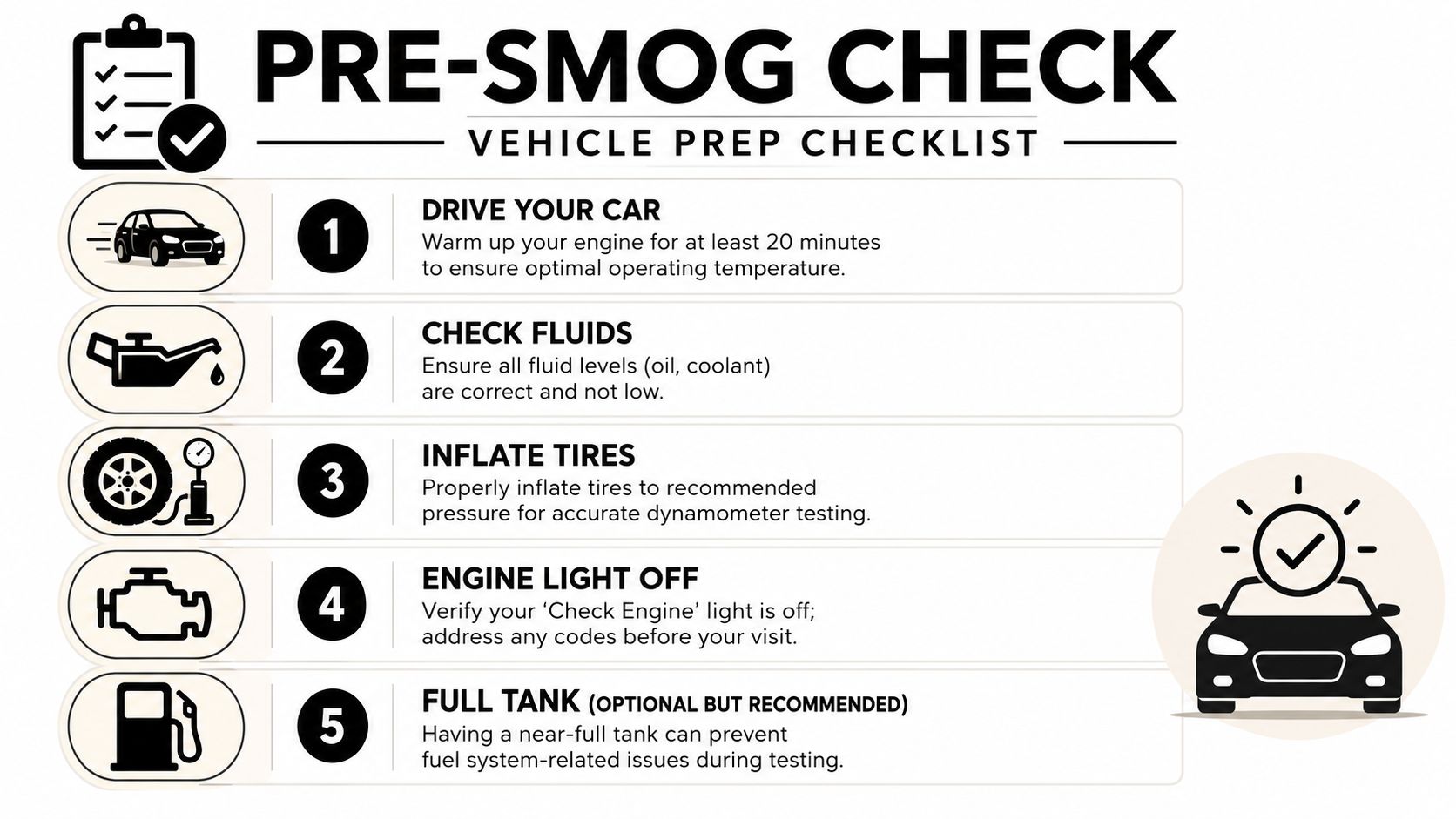
Easy checks before you leave home
Start with the obvious stuff people overlook when they're rushing out the door.
- Drive the car first: Don't bring it in stone cold if you can avoid it. A normal drive before the test helps the vehicle reach operating temperature.
- Make sure the Check Engine light is off: If it's on, don't hope for the best. Get the problem diagnosed first.
- Tighten the gas cap: A loose or damaged cap can create avoidable trouble.
- Look at the tires: Proper inflation helps if the vehicle type requires testing conditions where that matters.
- Avoid a dead battery situation: If the battery was recently disconnected, the car may need normal driving before it's ready for inspection.
What to bring with you
Customers sometimes prepare the vehicle and then forget the paperwork. Keep it easy:
- DMV renewal notice
- Driver's license
- Payment method
That small checklist prevents the most common front-counter delays.
One easy habit: Put your renewal notice in the passenger seat the night before. That way you won't leave it on the kitchen counter.
If you're worried your car has a specific issue, reviewing common smog check fail reasons can help you catch problems before the visit.
Older vehicles, diesels, hybrids, and newer gasoline cars don't all go through the exact same path, but these preparation habits are useful across the board. Warm the car up. Bring the documents. Don't ignore warning lights.
Speedy Smog Hours Pricing and Location in San Leandro
If you're ready to stop searching for an action smog check STAR station and just get it done, the practical details matter most. Speedy Smog is a STAR Certified station located at 15275 Washington Ave, San Leandro, CA 94579.
The shop is open Monday through Saturday, offers transparent pricing, and regularly features a $25-off coupon for most newer vehicle smogs, based on the publisher information provided for this article. For many drivers, that combination of location, straightforward pricing, and quicker service is what makes the trip feel manageable.
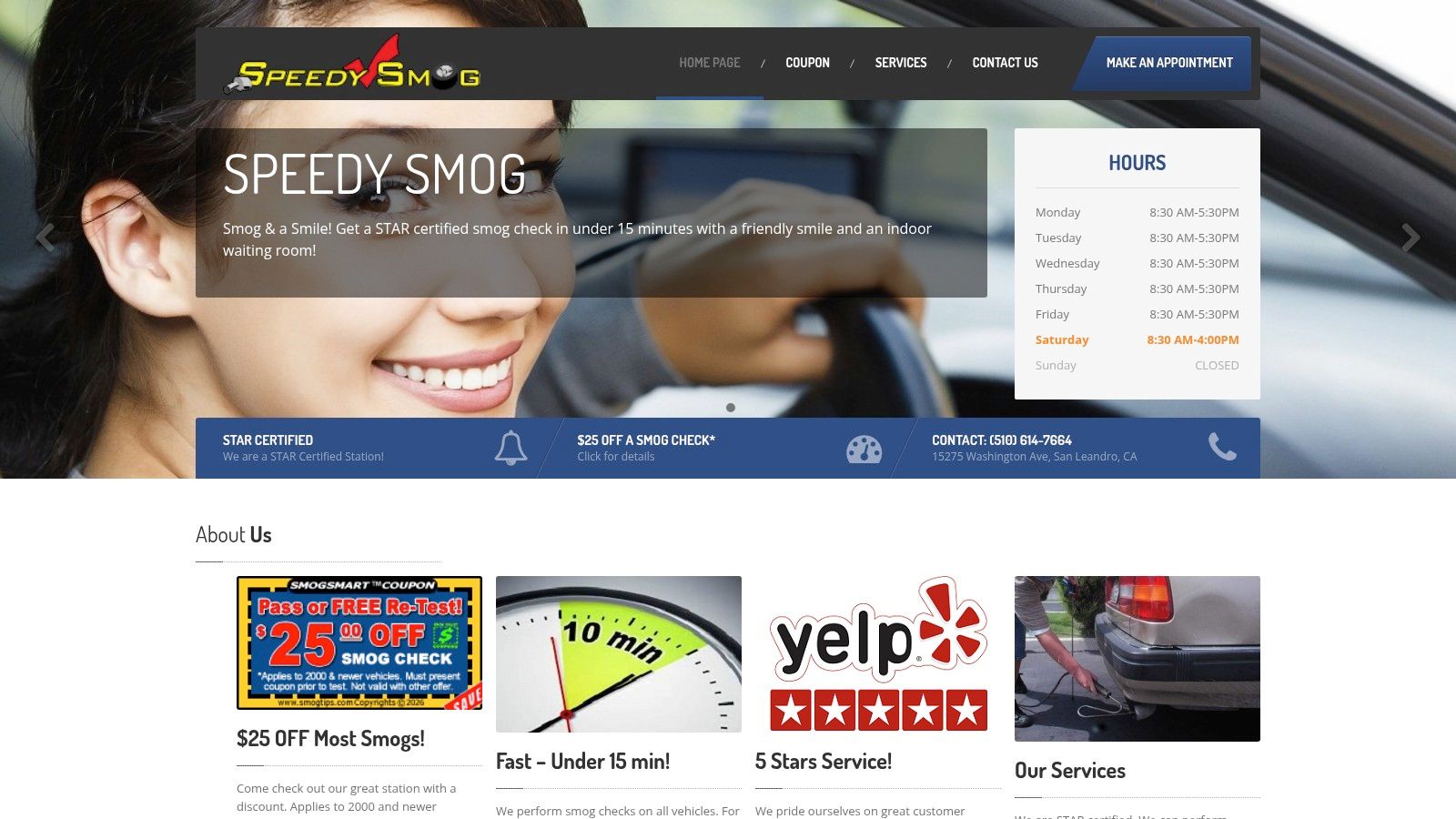
Before you go, it's still smart to call ahead or check the business website for current hours, coupon details, and any vehicle-specific questions.
Frequently Asked Questions About Smog Checks
What happens if my car fails the smog check
You'll be told what part of the inspection caused the failure, and then the car will need repairs before it can pass. Some California motorists may qualify for up to $500 in state-funded financial assistance for repairs, as noted in the earlier STAR comparison section's cited source.
How long is my smog certificate valid
A smog certificate for DMV purposes is generally used within your registration window. If you're close to your deadline, don't wait around after passing. Finish the renewal while everything is current.
Do I need a smog check every year
Many California drivers are used to periodic renewal-related smog requirements, but the exact timing depends on the vehicle and registration situation. Your DMV renewal notice is the document to trust because it tells you whether a smog inspection is required for that cycle.
If my notice says STAR, can I still go to any smog shop
No. If the notice specifically says STAR is required, use a STAR-certified station. That requirement is about using a shop authorized to certify your inspection for DMV under the STAR program.
If you need a fast, straightforward visit in San Leandro, Speedy Smog is a STAR Certified station that helps drivers handle DMV smog requirements without the usual confusion. Bring your renewal notice, arrive with the car warmed up, and the team can help you get tested, certified, and back on the road with less hassle.