A STAR station is a smog check station that meets higher performance standards, and if your DMV renewal notice says STAR is required, you must use one. In California's Enhanced Areas, exactly two percent of vehicles are directed by DMV to STAR-certified stations, so if that language appears on your renewal, it's a normal requirement, not a mistake.
You open your registration notice, skim for the due date, and then see the line that throws everything off: smog check required at a STAR station. A lot of drivers read that and immediately wonder if there's something wrong with the car, if the test is different, or if the whole process is going to take longer and cost more.
Usually, the answer is much simpler than people expect. The notice is mainly telling you where your inspection must be done. If you understand that one point first, the rest gets a lot less stressful.
Table of Contents
- Your DMV Notice Says STAR Station Required Now What
- What Is a STAR Certified Smog Station
- STAR Station vs Regular Smog Check What Is the Difference
- What to Expect During Your Smog Check at Speedy Smog
- How to Prepare Your Vehicle for a Smog Check
- Speedy Smog Hours Pricing and Location in San Leandro
- Frequently Asked Questions About Smog Checks
Your DMV Notice Says STAR Station Required Now What
You open your renewal notice, spot the words “STAR station required,” and the whole thing suddenly feels more complicated than it should. In practice, the message is simple. DMV is telling you where the inspection must be done, not telling you your car is in trouble.
That distinction saves a lot of stress. A STAR requirement is a routing instruction. It works a lot like a specialist referral on the medical side. You still need the same basic service, but you need to get it from the type of shop the state named on your notice.
What that line on the notice actually means
Start with the one question that matters. Does your renewal paperwork say STAR is required?
If the answer is yes, use a STAR-certified station. A regular smog shop may not be able to complete the inspection DMV is asking for, which can waste a trip and put you closer to your registration deadline.
Here is the practical version:
- Go to a STAR-certified shop: Follow the notice exactly.
- Bring the DMV notice if you have it handy: It helps the station confirm the request quickly.
- Leave yourself a little time: If your car needs repairs or a retest, you will not be scrambling at the end.
Simple rule: “STAR required” tells you where to go for the test.
The wording on DMV paperwork can make this sound more serious than it is. Terms like “directed vehicle,” “certified station,” and “Enhanced Area” are just program labels. For the driver, the takeaway is straightforward. Your vehicle needs its smog check done at the right kind of station so the result can be accepted for registration.
If you want a plain-English refresher before you book, this guide to California smog check rules breaks down the state terms without the DMV wording.
The fastest path from notice to certificate
At Speedy Smog, the goal is to make this easy from the moment you get that letter to the moment you drive away. Read the notice, confirm it says STAR, bring the car in, and let the station handle the inspection and electronic certificate if your vehicle passes.
A few small choices can make the visit faster. Bring your paperwork, avoid waiting until the registration due date, and drive the car long enough to warm it up before you arrive. That last step matters because a cold engine is a little like trying to grade a student before the test starts. The car needs to be at normal operating temperature for the system checks to behave the way they should.
The process is usually simpler than drivers expect. The notice tells you the lane to get in. Your job is mostly to show up at the right shop, prepared, and let the test move forward.
What Is a STAR Certified Smog Station
A STAR-certified smog station is a smog check shop that has approval to inspect and certify certain vehicles under tighter state performance standards. A simple way to read that label is this: the state trusts these stations to deliver consistently accurate inspections for cars that are directed into the STAR program.
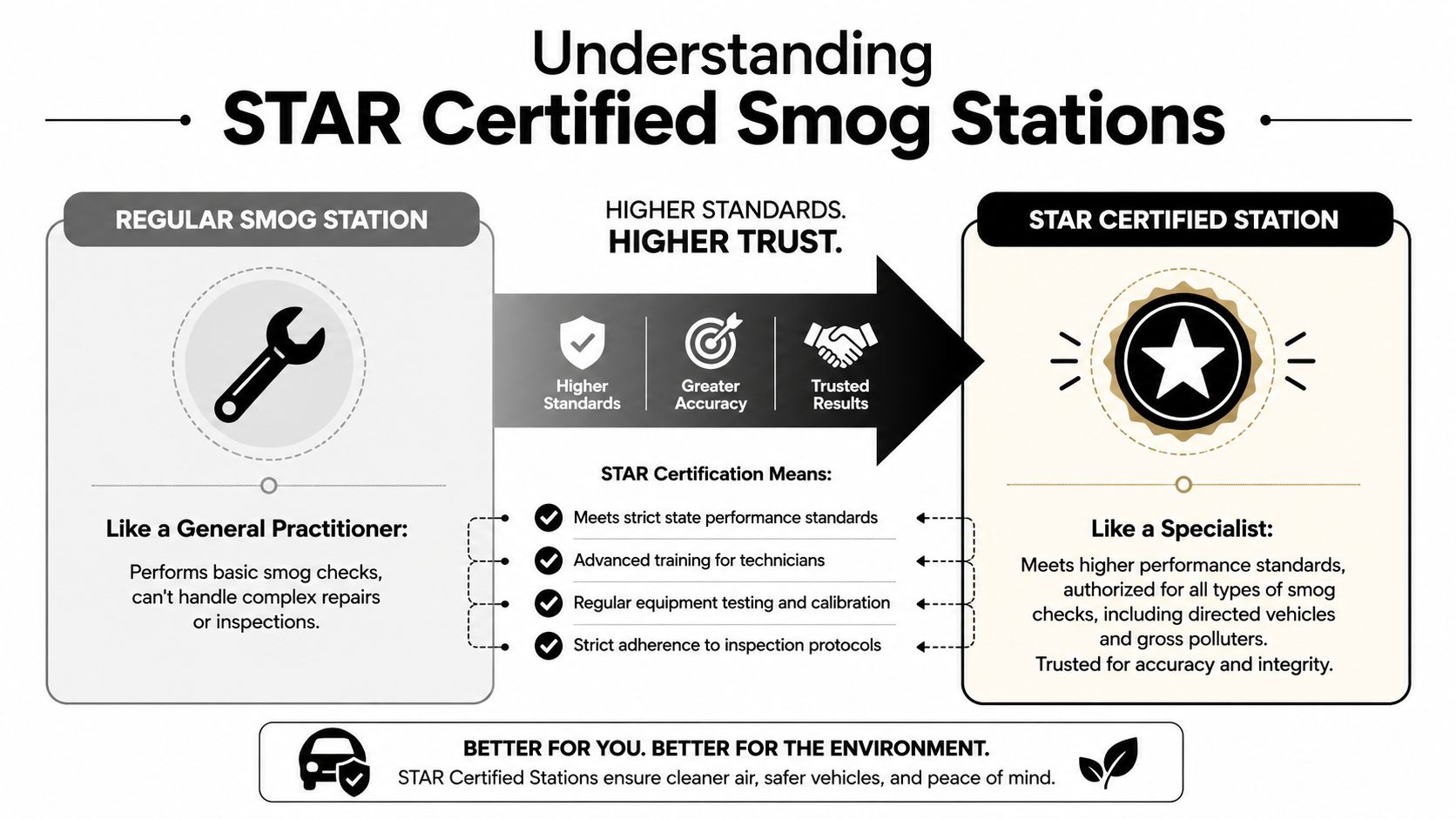
For a driver, the key point is practical. STAR describes the station's approval status, not a different kind of smog test. Many customers hear the word and expect a harsher inspection, special equipment, or a long extra procedure. What usually changes first is the specific testing location required for DMV acceptance.
That can feel confusing because the DMV notice focuses on program labels, not plain language. A better translation is: your car needs to be checked at a shop with current STAR approval. The shop has to qualify for that status and keep meeting the state's standards over time.
What the STAR label means during a real visit
At Speedy Smog, this matters in a very customer-facing way. If your renewal notice says STAR, the shop must be authorized to complete that inspection and send the certificate electronically if your vehicle passes. If you stop at the wrong type of station first, you can lose time, make an extra trip, and still need the same test done again at a STAR location.
Choosing the right station first makes the whole process faster.
Drivers searching for an action smog check STAR station are usually trying to solve three problems at once:
- Meet the DMV requirement without guesswork
- Get in and out quickly
- Leave knowing exactly what happened, whether the car passed or needs follow-up
That is why the customer experience matters as much as the label. A good STAR station does more than run the inspection. It helps you confirm the requirement, explains what the technician is checking in plain English, and keeps the visit moving so you can get back on the road.
For a closer local explanation of the certification itself, see this guide on what a Smog STAR station is.
STAR Station vs Regular Smog Check What Is the Difference
Here's the part most drivers want settled quickly. The physical smog inspection is technically identical at a regular station and a STAR station. The difference is the station's approval status, its performance requirements, and whether it can certify a STAR-directed vehicle.
According to the Sunnyvale STAR facts page, STAR-certified smog stations operate under more stringent BAR standards, the physical test is identical, the station must maintain a high state score to certify STAR-designated vehicles, and some failing vehicle owners may qualify for up to $500 in state-funded repair assistance.
The side by side comparison
| Feature | Regular Smog Station | STAR Certified Station |
|---|---|---|
| Physical inspection procedure | Same basic smog inspection steps | Same basic smog inspection steps |
| BAR performance standard | Standard licensing requirements | More stringent BAR standards |
| Can certify STAR-directed vehicles | Not always | Yes, if the station holds current STAR approval |
| State score requirement | Not the same STAR approval standard | Must maintain a high state score |
| Best use case | Routine vehicles not directed to STAR | Vehicles specifically told by DMV to use STAR |
What this means for you as a customer
If your car was directed to a STAR station, the test itself isn't automatically harsher. The main issue is authorization. You need a shop that can submit the right certification for your renewal requirement.
That's why a regular station and a STAR station may both look similar from the lobby, the bay, and the equipment side. What changes behind the scenes is the station's compliance status with BAR and whether DMV accepts that shop for directed vehicles.
If your notice says STAR, going to a regular station can waste a trip even if the staff is helpful and the shop is fully licensed.
Common misunderstandings
Drivers often mix up three different questions:
- Is my car in trouble? Not necessarily.
- Is the inspection different? The test procedure itself is not the key difference.
- Will I automatically fail at a STAR station? No. A STAR requirement does not equal an automatic failure.
The cleaner way to think about it is this: STAR is a filter on who can certify the test, not proof that your vehicle has already failed something.
If a vehicle doesn't pass, that result can feel frustrating, but the process is still structured. The same Sunnyvale reference notes that some owners may qualify for up to $500 in state-funded repair assistance after a failure, which can help when repairs are needed before retesting.
What to Expect During Your Smog Check at Speedy Smog
For most drivers, the biggest relief comes from knowing what will happen once they pull in. The visit is usually much more routine than people expect, especially if the vehicle is already running normally and there are no warning lights on.
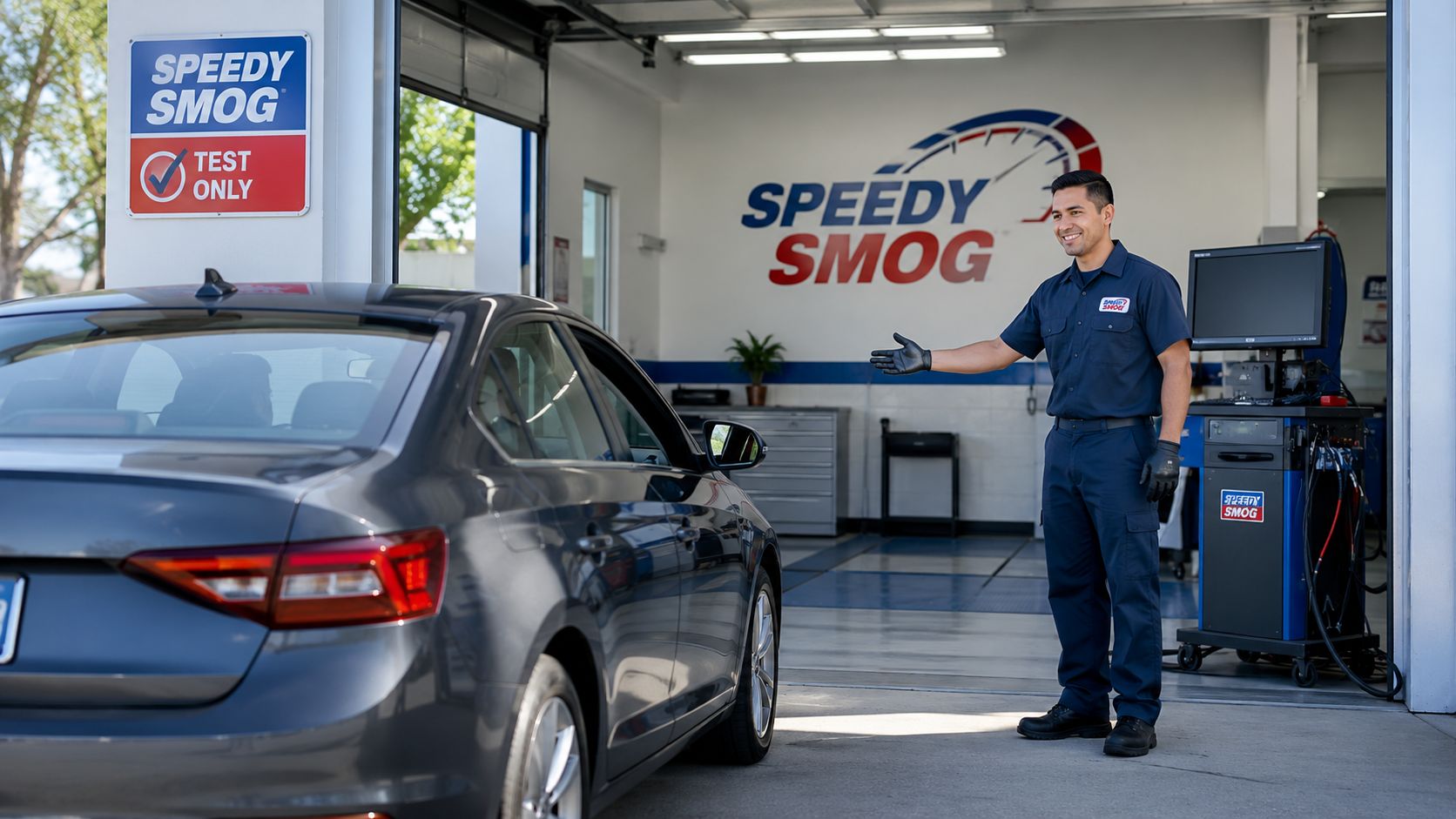
For many 2000 and newer vehicles, the inspection is typically completed in about 10 to 15 minutes, based on the business details provided by the publisher. That quick turnaround is one reason many East Bay drivers look for an action smog check STAR station that keeps the process simple.
When you arrive
Check-in usually starts with the basics. Bring your renewal notice if you have it, and let the staff know whether the DMV specified a STAR station. The technician will confirm the vehicle information and get the inspection started.
While the car is being checked, many customers wait in the indoor lobby. A clean waiting room, straightforward paperwork, and clear communication make a big difference because customers do not want a technical lecture. They just want to know what's happening and whether anything is holding up the certificate.
What the technician checks
A smog inspection isn't one single action. It's a series of checks that work together.
Typical items include:
- Visual inspection: The technician looks for required emissions-related components and obvious issues.
- Functional checks: Items like the gas cap and warning light behavior may be reviewed.
- Computer scan for newer vehicles: On many newer cars, the inspection includes reading the vehicle's onboard diagnostic information.
If you've never seen the process up close, this short video gives a helpful look at what a smog inspection visit can feel like in real life.
How you get your result
If the vehicle passes, the certificate is handled electronically for DMV purposes, and you can move on with registration. That's the outcome everyone wants because it keeps the trip short and uneventful.
If the vehicle doesn't pass, the next step is usually a plain-language explanation of what needs attention. In practice, customers appreciate a station that tells them the issue directly instead of burying it in jargon.
A good smog visit feels organized. You check in, the technician tests the car, you get a clear result, and you know what to do next.
How to Prepare Your Vehicle for a Smog Check
The best prep is simple, and most of it takes only a few minutes. You don't need to be a mechanic to improve your odds of a smooth visit. A little preparation helps the inspection start with the car in normal operating condition.
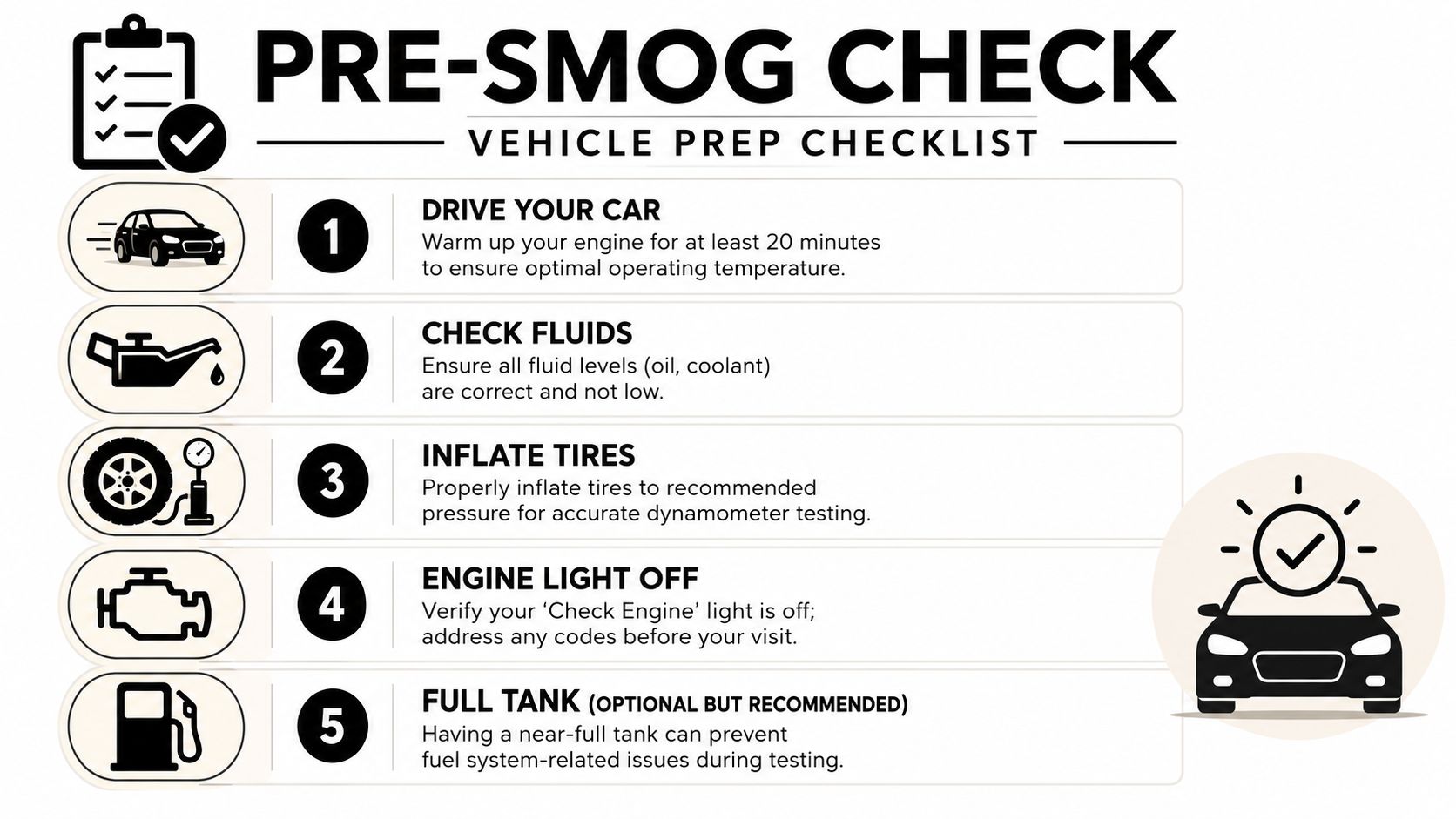
Easy checks before you leave home
Start with the obvious stuff people overlook when they're rushing out the door.
- Drive the car first: Don't bring it in stone cold if you can avoid it. A normal drive before the test helps the vehicle reach operating temperature.
- Make sure the Check Engine light is off: If it's on, don't hope for the best. Get the problem diagnosed first.
- Tighten the gas cap: A loose or damaged cap can create avoidable trouble.
- Look at the tires: Proper inflation helps if the vehicle type requires testing conditions where that matters.
- Avoid a dead battery situation: If the battery was recently disconnected, the car may need normal driving before it's ready for inspection.
What to bring with you
Customers sometimes prepare the vehicle and then forget the paperwork. Keep it easy:
- DMV renewal notice
- Driver's license
- Payment method
That small checklist prevents the most common front-counter delays.
One easy habit: Put your renewal notice in the passenger seat the night before. That way you won't leave it on the kitchen counter.
If you're worried your car has a specific issue, reviewing common smog check fail reasons can help you catch problems before the visit.
Older vehicles, diesels, hybrids, and newer gasoline cars don't all go through the exact same path, but these preparation habits are useful across the board. Warm the car up. Bring the documents. Don't ignore warning lights.
Speedy Smog Hours Pricing and Location in San Leandro
If you're ready to stop searching for an action smog check STAR station and just get it done, the practical details matter most. Speedy Smog is a STAR Certified station located at 15275 Washington Ave, San Leandro, CA 94579.
The shop is open Monday through Saturday, offers transparent pricing, and regularly features a $25-off coupon for most newer vehicle smogs, based on the publisher information provided for this article. For many drivers, that combination of location, straightforward pricing, and quicker service is what makes the trip feel manageable.
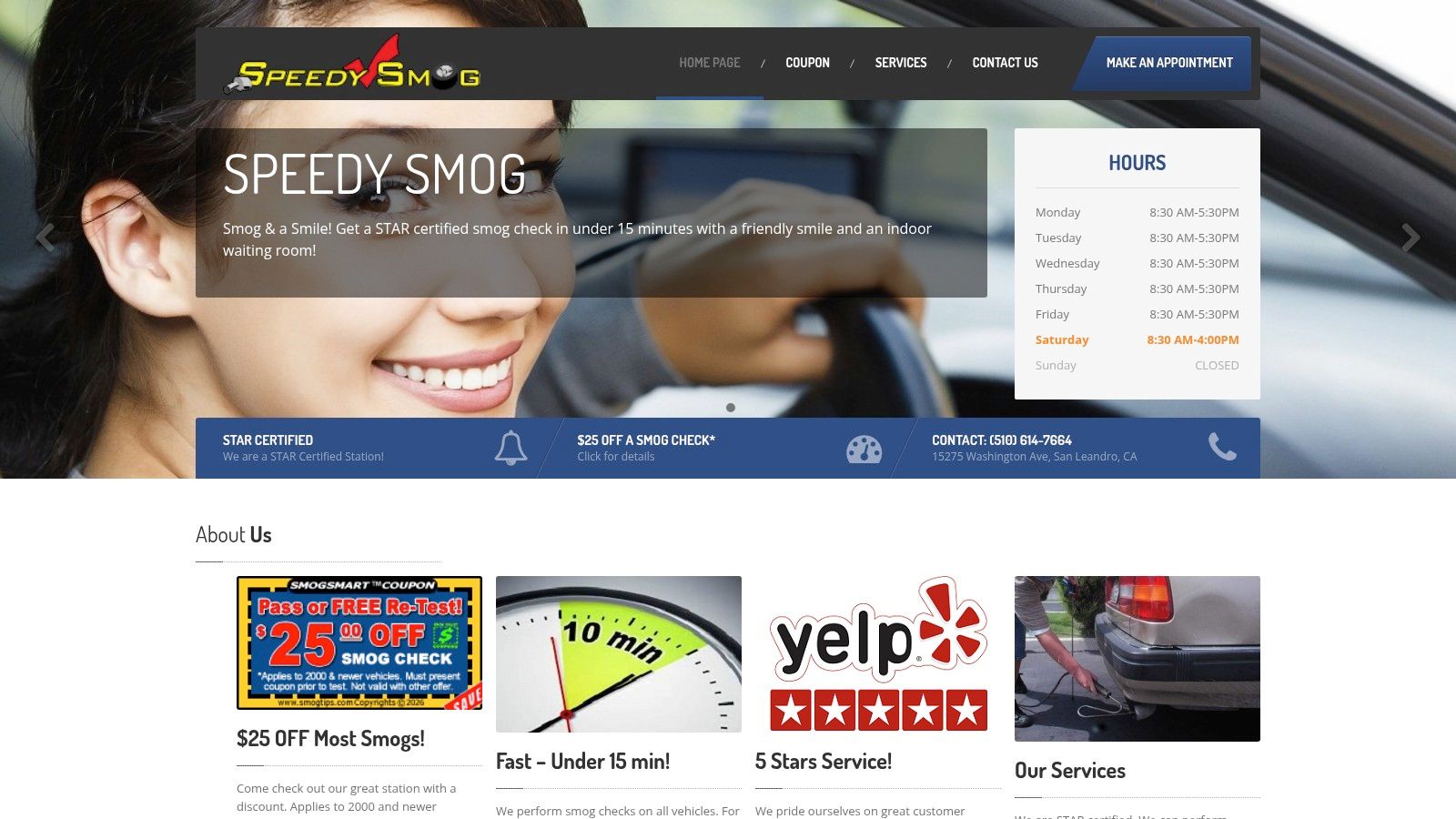
Before you go, it's still smart to call ahead or check the business website for current hours, coupon details, and any vehicle-specific questions.
Frequently Asked Questions About Smog Checks
What happens if my car fails the smog check
You'll be told what part of the inspection caused the failure, and then the car will need repairs before it can pass. Some California motorists may qualify for up to $500 in state-funded financial assistance for repairs, as noted in the earlier STAR comparison section's cited source.
How long is my smog certificate valid
A smog certificate for DMV purposes is generally used within your registration window. If you're close to your deadline, don't wait around after passing. Finish the renewal while everything is current.
Do I need a smog check every year
Many California drivers are used to periodic renewal-related smog requirements, but the exact timing depends on the vehicle and registration situation. Your DMV renewal notice is the document to trust because it tells you whether a smog inspection is required for that cycle.
If my notice says STAR, can I still go to any smog shop
No. If the notice specifically says STAR is required, use a STAR-certified station. That requirement is about using a shop authorized to certify your inspection for DMV under the STAR program.
If you need a fast, straightforward visit in San Leandro, Speedy Smog is a STAR Certified station that helps drivers handle DMV smog requirements without the usual confusion. Bring your renewal notice, arrive with the car warmed up, and the team can help you get tested, certified, and back on the road with less hassle.