You're checking your mailbox, see a DMV renewal notice, and realize your car needs a smog check before you can finish the registration process. The station's equipment may look like a computer, a hose, and a few cables, but that setup is doing far more than sniffing the exhaust. It's identifying the vehicle, checking emissions data, measuring gases when required, and sending a regulated result into California's inspection system.
A smog check machine is best understood as a recurring compliance tool. California's Smog Check Program is biennial, so most covered vehicles are inspected every two years, rather than only when a car is sold or repaired (California Bureau of Automotive Repair). The equipment must therefore produce consistent, defensible results each time a driver returns for renewal.
The confusing part is that California doesn't use one universal machine for every car. A newer vehicle generally receives a computer-focused inspection through BAR-OIS, while an older vehicle may need the exhaust analyzer and dynamometer used by BAR-97. The sensors, software, calibration routines, and technician workflow all change with the vehicle.
This guide breaks down those systems in practical terms. You'll learn what the machine measures, how it determines pass or fail, what a technician does during the inspection, what STAR standards add, and where the equipment has limits.
Table of Contents
- Introduction to Smog Check Machines and Why They Matter
- What a Smog Check Machine Actually Is
- Two Types of Smog Check Machines in California
- What the Machine Measures and How It Decides Pass or Fail
- How Technicians Use the Machine During Your Inspection
- STAR Standards Calibration and Why Machine Quality Matters
- Getting Ready for Your Smog Check and Choosing the Right Station
Introduction to Smog Check Machines and Why They Matter
A DMV renewal notice creates a simple question: can you renew now, or does the vehicle need a passing emissions inspection first? If your car falls under California's Smog Check requirements, the answer depends on obtaining a valid inspection result from an authorized station.
The smog check machine sits at the center of that process. It doesn't decide whether a vehicle is generally “healthy,” and it isn't a substitute for a complete mechanical diagnosis. Instead, it performs the specific emissions checks California requires for the vehicle's model year and configuration, then records the outcome through the state's inspection process.
Practical rule: Treat a smog check as a compliance appointment, not as a complete vehicle health exam.
California built its program around two major inspection paths. The BAR On-Board Diagnostic Inspection System, commonly called BAR-OIS, serves 2000 and newer vehicles. The BAR-97 Emissions Inspection System, or BAR-97, serves 1999 and older vehicles (California Bureau of Automotive Repair). That model-year split explains why one driver may sit in the bay while a technician connects a cable, while another sees the car's drive wheels placed on rollers and a probe inserted into the tailpipe.
The program also has a quality-focused branch called STAR. California created STAR through Assembly Bill 2289 in 2010 to improve inspection quality and help achieve required emissions reductions. STAR stations must maintain equipment capable of testing all vehicles subject to the Smog Check Program (California Bureau of Automotive Repair).
Before arriving, gather the renewal information if you have it and tell the station about warning lights, recent emissions repairs, or a disconnected battery. Those details can affect what the technician sees, especially when the vehicle's onboard diagnostic system hasn't completed its self-checks.
Understanding the machine removes much of the mystery. You'll know which inspection system applies, why the technician follows a particular sequence, and why a reliable result depends on more than the final printed word, “pass.”
What a Smog Check Machine Actually Is
A smog check machine isn't one box with one sensor. It's an integrated inspection system that combines vehicle identification, electronic communication, physical checks, gas measurement where required, software logic, and state reporting.
A useful analogy is a medical checkup. A blood-pressure cuff measures one condition, a blood test measures another, and the clinician combines those observations with your history. The equipment doesn't diagnose every possible illness. It gathers the specific information needed for the appointment.
A smog inspection works in much the same way:
- The technician identifies the vehicle and enters the required information.
- The system communicates with the vehicle's emissions computer when an OBD inspection applies.
- The technician checks emissions-related hardware and signs of tampering.
- The equipment measures tailpipe gases for vehicles requiring that test.
- The software compares the collected information with California's requirements and records the result.
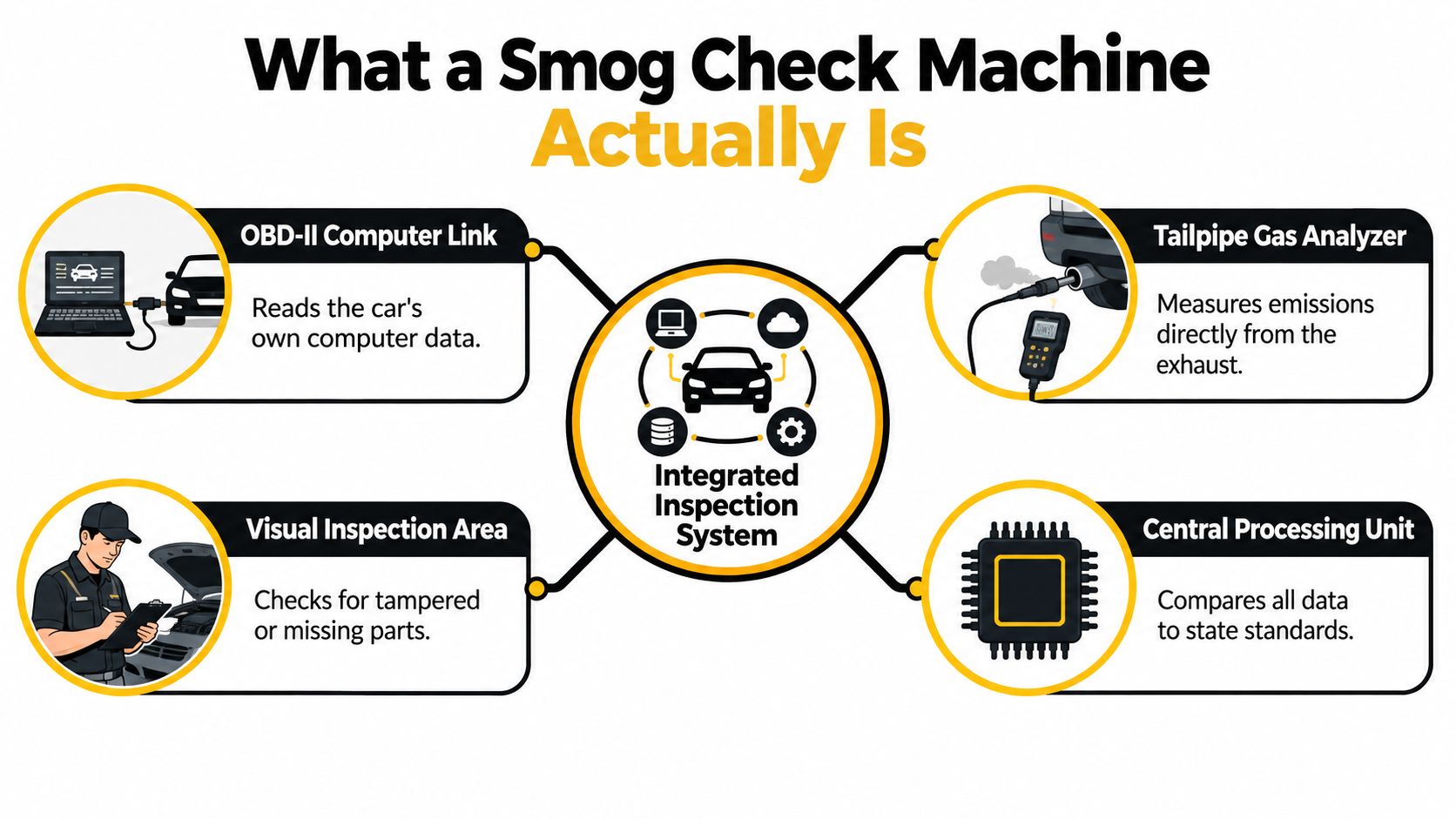
The parts work as one system
The OBD-II connection reads information stored by the vehicle's own emissions-control computer. That computer monitors emissions-related systems and can store diagnostic trouble codes when it detects a problem. The scan gives the inspection system access to data that a tailpipe probe alone can't provide.
A tailpipe analyzer measures gases directly from the exhaust. This is central to the BAR-97 process, where the equipment evaluates pollutants produced while the vehicle operates under specified conditions.
A visual inspection adds another layer. The technician may identify missing, modified, or tampered emissions components that electronic data alone wouldn't prove. The central processing and reporting system then brings the observations together.
The complete platform must be calibrated and operated according to California's rules. That's why the state regulates approved equipment and station procedures, rather than treating any generic exhaust sensor as an acceptable smog check machine.
Two Types of Smog Check Machines in California
A 2001 sedan and a 1998 pickup do not follow the same inspection path. California generally matches the machine to the vehicle's model year and emissions technology. Newer vehicles report much of their emissions information through the onboard computer, while older vehicles are tested by sampling exhaust during operation.
| Feature | BAR-OIS for 2000 and Newer | BAR-97 for 1999 and Older |
|---|---|---|
| Main approach | OBD-focused inspection | Tailpipe emissions inspection |
| Vehicle connection | Electronic link to the vehicle's diagnostic system | Exhaust probe, plus vehicle setup for loaded-mode testing where required |
| Key equipment | BAR On-Board Diagnostic Inspection System | Gas analyzer and chassis dynamometer |
| What it evaluates | Emissions-related computer information and required inspection checks | Direct gas readings under specified operating conditions |
| Typical driver experience | Technician connects to the diagnostic port | Technician positions the vehicle on test equipment and samples exhaust |
BAR-OIS uses the car's own diagnostic information
For a 2000 or newer vehicle, the technician usually connects BAR-OIS equipment to the OBD system. The machine reads emissions-related data, checks stored faults and required monitor status, and combines those results with the rest of the inspection.
The car's computer works like a built-in record keeper. If its sensors detect an emissions problem during driving, the system can store a fault even when the exhaust appears normal while the car sits at idle. An illuminated emissions warning or incomplete diagnostic check can therefore affect the result.
The inspection still includes required vehicle identification and physical checks. BAR-OIS changes where the main emissions evidence comes from. Instead of relying primarily on a universal tailpipe sample, it evaluates information produced by the vehicle's own control systems.
BAR-97 directly measures older vehicle exhaust
For a 1999 or older vehicle, BAR-97 uses a calibrated gas analyzer and a chassis dynamometer for loaded-mode testing. The dynamometer supports the drive wheels on rollers and applies a controlled load, allowing the machine to sample emissions while the vehicle operates under test conditions.
The technician positions an exhaust probe, connects the analyzer, and places the vehicle on the rollers when the procedure requires it. The equipment then records specified gas readings and compares them with the limits assigned to that vehicle. A stationary idle reading alone would not show how the exhaust behaves under the same load.
Diesel vehicles follow a separate inspection path that can rely on smoke opacity testing rather than the BAR-97 gasoline gas analyzer. Confirm that the station is equipped and authorized for the vehicle before booking. This guide to diesel emissions testing equipment explains why diesel inspections require different tools.
The machine's condition also matters. Calibration keeps its measurements within the required operating range, while approved station procedures help ensure the result comes from the correct equipment and test process. That is why two stations may offer different levels of testing capability, especially for older or diesel vehicles.
What the Machine Measures and How It Decides Pass or Fail
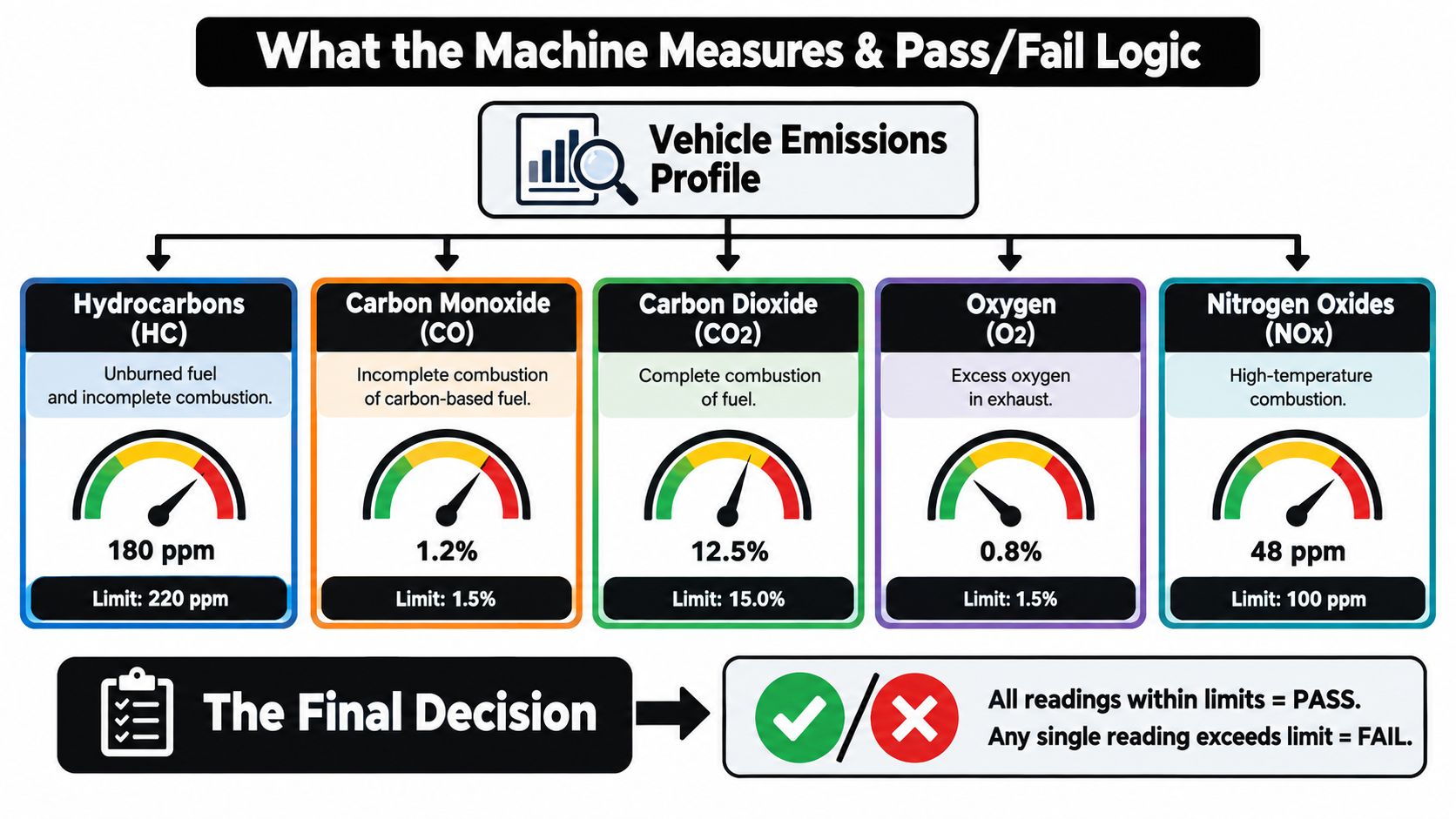
The machine's readings are easier to understand when you treat each pollutant as a clue about combustion and emissions control. Hydrocarbons, or HC, point to unburned fuel. Carbon monoxide, or CO, can indicate incomplete combustion. Carbon dioxide, or CO2, is a combustion product used as part of the measurement picture, while oxygen shows what remains in the exhaust. Nitrogen oxides, or NOx, form under combustion conditions that the emissions system is designed to control.
A BAR-97 system combines several technologies. Its analyzer uses non-dispersive infrared measurement for HC, CO, and CO2, an electrochemical oxygen sensor for O2, and a chassis dynamometer for loaded-mode testing. California regulations require the measured HC, CO, CO2, and NOx values to be compared with table-based cutpoints, and the vehicle passes only when every measured pollutant is at or below the applicable limit (EPA roadside emissions inspection guidance).
Why one pollutant can cause a failure
Suppose an older truck records acceptable CO but excessive HC. That pattern may point toward incomplete combustion, ignition trouble, fuel delivery problems, or an emissions-control issue. A different vehicle could show high NOx while other readings remain within limits, directing the diagnostic conversation toward combustion temperature and NOx-control components.
The machine isn't saying, “replace this exact part.” It's reporting that a measured pollutant exceeded the limit assigned to that vehicle and test condition. A repair technician must then investigate the underlying cause.
The dynamometer matters because loaded-mode testing places the vehicle under controlled demand. Some problems don't appear clearly during an unloaded idle. A vehicle can sound smooth in the bay while producing excess emissions when its engine works harder.
What the report is telling you
A result sheet isn't a general grade for the entire car. It reflects whether the vehicle met the required inspection criteria during the regulated test. For help interpreting the information recorded after testing, use this explanation of smog test results.
The pass logic is strict in a simple way: all applicable readings must remain within their limits. One excessive measurement can produce a failure even when the other gases look acceptable, because the program evaluates each required pollutant rather than averaging the readings into one forgiving score.
How Technicians Use the Machine During Your Inspection
A technician begins by confirming the vehicle information and preparing the inspection record. That step matters because the applicable test depends on the vehicle's identity, model year, fuel type, and required inspection path.
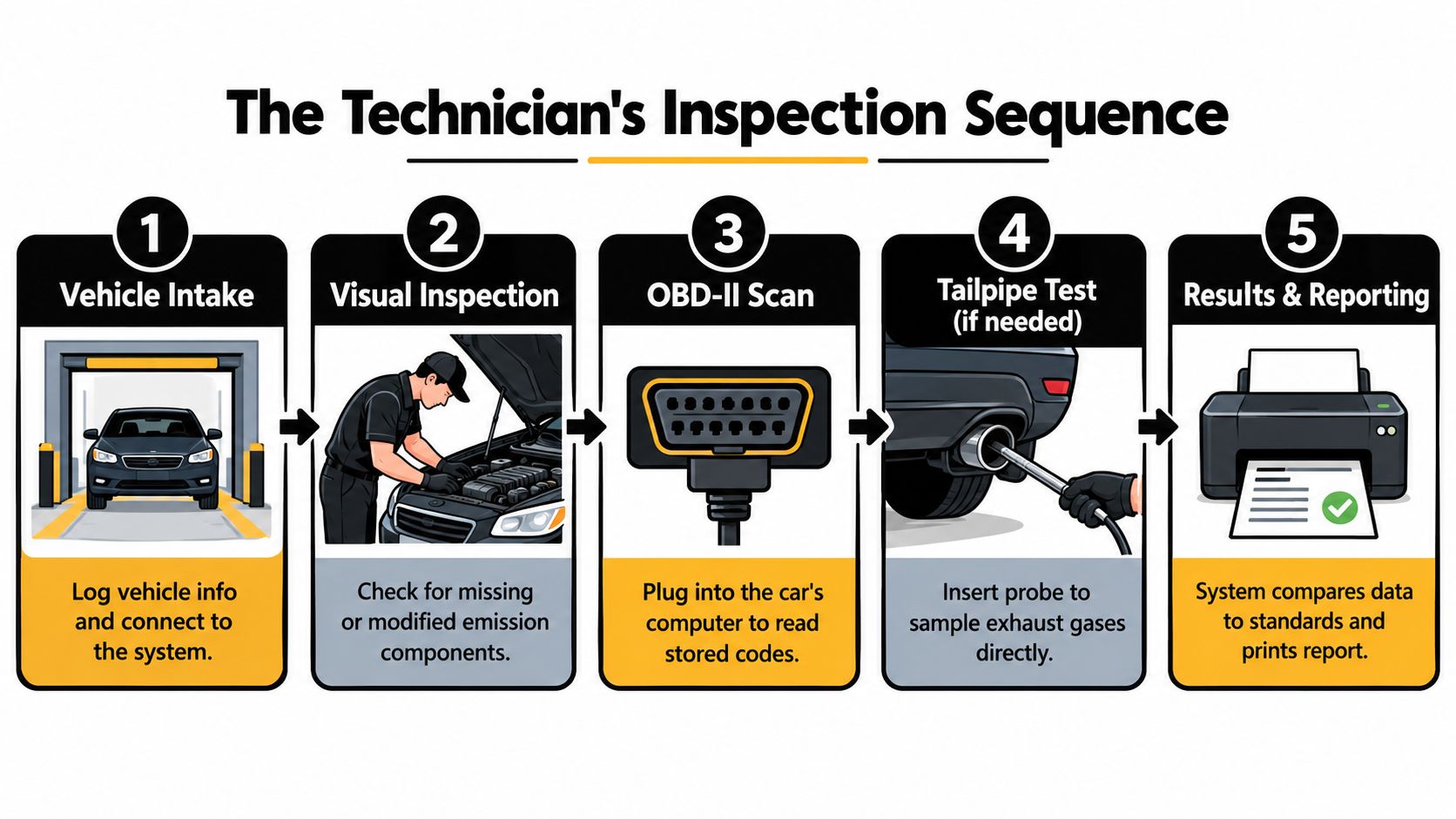
The inspection follows a controlled sequence
First comes the vehicle intake. The technician brings the car into the bay, records the required information, and prepares the machine. Next, the technician performs the visual portion, looking for missing or modified emissions equipment and other conditions that could affect the inspection.
A 2015 sedan will usually follow the BAR-OIS path. The technician connects the approved interface to the diagnostic port, allows the system to read the vehicle's emissions information, and completes the required checks. The machine and technician work together, because the software can read data but can't replace a physical inspection of the car.
A 1995 pickup follows a different path. The technician may position its drive wheels on the dynamometer, place the exhaust probe correctly, and run the required loaded-mode procedure. The analyzer samples the exhaust while the vehicle operates under the test conditions.
The machine provides repeatable measurements, but the technician still controls vehicle setup, connections, safety checks, and correct procedure.
Vehicle design changes the workflow
A hybrid may require special handling because its gasoline engine can stop and restart during the visit. The technician must use the approved procedure for that vehicle rather than treating it like a conventional sedan. A diesel vehicle also needs a station with the appropriate capability and process.
After the electronic scan or gas measurement, the system compares the results with the applicable requirements. The technician reviews the outcome and completes the electronic reporting process.
The visit can feel quick because the software handles much of the data processing, but speed doesn't mean the inspection is casual. Correct vehicle information, a secure connection, stable equipment, and proper test setup all affect the integrity of the result.
For drivers, the practical expectation is straightforward. Keep the vehicle accessible, answer questions about recent repairs, and don't disconnect the battery or clear warning codes immediately before the appointment without understanding how that may affect the vehicle's diagnostic status.
STAR Standards Calibration and Why Machine Quality Matters
A car can be mechanically ready for inspection and still face a problem if the station's equipment is poorly maintained. An analyzer that is out of calibration may report unreliable readings, while a failed data connection can delay a test that otherwise proceeds normally. The machine is one part of the result, and its condition matters.
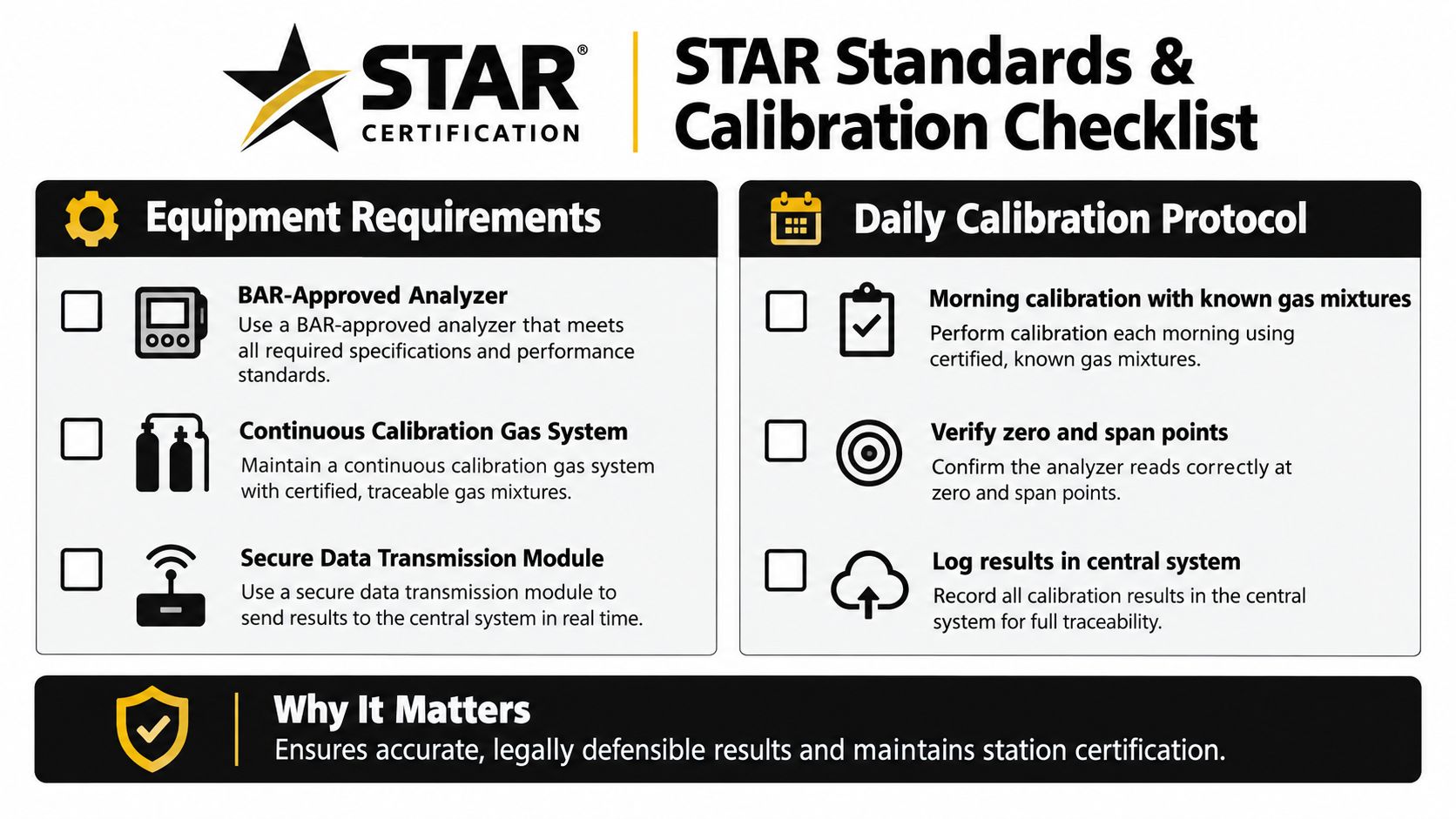
California's STAR program, created by Assembly Bill 2289 in 2010, was designed to improve inspection quality and support required emissions reductions. STAR stations must maintain the equipment needed for the vehicles covered by the Smog Check Program. Drivers can use the California STAR station certification information to confirm a station's authorization and capabilities.
A station that maintains both BAR-OIS and BAR-97 equipment can inspect any model year, while a station with only OBD equipment must turn away pre-2000 vehicles. That directly affects where those drivers can get tested.
Calibration protects measurement accuracy
BAR-97 equipment requires BAR-approved calibration gases from a BAR-certified gas blender. The gas gives the analyzer a known reference. Technicians use it to check whether the instrument responds correctly before trusting its exhaust readings.
Calibration works like checking a kitchen scale with a known weight. If the scale is wrong, every ingredient measured with it is suspect. An emissions analyzer has the same basic problem. A faulty reference check can undermine confidence in the final inspection result.
The station also needs approved analyzers, OBD interfaces, dynamometers where applicable, and data-reporting equipment. Each component supports a different part of the test. A missing or malfunctioning component can stop the process, even if the vehicle itself is ready.
What station quality means for drivers
Before booking, ask whether the station can test the vehicle's model year and configuration. A STAR station should be able to explain whether BAR-OIS or BAR-97 applies and whether its equipment supports the car, truck, hybrid, or diesel being presented.
The machine's quality also defines the meaning of the result. Proper calibration helps ensure that a measured gas value reflects the vehicle rather than an instrument error. It cannot detect every emissions problem, but it can produce a dependable result within the inspection method it is built to perform.
California has maintained formal equipment standards for decades. A 1974 California Bureau of Automotive Repair publication set minimum instrument specifications for participating garages, while federal inspection and maintenance policy later advanced dynamometer-based procedures and other testing methods (EPA inspection and maintenance history).
For a practical explanation of certification, read what a STAR station is.
Getting Ready for Your Smog Check and Choosing the Right Station
Preparation starts with identifying the inspection path. A 2000 or newer vehicle generally uses BAR-OIS, which relies on the vehicle's emissions computer. A 1999 or older vehicle generally uses BAR-97, which measures exhaust gases and may use a dynamometer for loaded-mode testing.
The machine can detect important problems, but it has boundaries. OBD equipment can flag emissions-related faults without directly measuring every real-world driving condition. EPA and California materials describe both false passes and false failures in OBD checks, while California's review found that OBD and tailpipe testing have similar failure rates, with OBD slightly more sensitive at detecting failures (EPA OBD inspection evaluation).
That limitation matters for intermittent, software-related, and aftertreatment problems. A fault that appears only during a particular temperature, load, or driving pattern may not show up during a short inspection. Newer onboard-data models may improve screening for high-NOx vehicles, but today's inspection remains a defined compliance test, not a complete real-world emissions profile.
A short preparation checklist
- Check warning lights: Resolve an illuminated emissions warning before the appointment instead of hoping the machine won't notice it.
- Bring renewal information: Have the DMV notice or vehicle details available so intake can proceed accurately.
- Mention recent repairs: Tell the technician if the battery was disconnected or emissions components were recently serviced.
- Choose compatible equipment: Confirm that the station handles your model year, fuel type, hybrid system, or diesel configuration.
- Ask about STAR authorization: If your notice requires a STAR inspection, verify the station's status before you arrive.
A station's equipment and calibration discipline affect the consistency of the test, while your vehicle's maintenance and diagnostic history affect what the machine finds. Speedy Smog in San Leandro offers STAR Certified inspections for newer and older vehicles, as well as diesel and hybrid vehicles, so East Bay drivers can confirm the appropriate testing path before booking.
Use the machine as a source of evidence, not a mysterious verdict. If the car passes, keep the inspection record for your registration process. If it fails, use the listed result as a starting point for diagnosis, then repair the underlying issue and arrange a retest through an appropriately equipped station.
Visit Speedy Smog in San Leandro for a STAR Certified smog check, with equipment and procedures matched to your vehicle's inspection requirements. Contact the station before your visit to confirm service for your model year, diesel, or hybrid and arrive prepared for a clear, compliant result.