Smog Check Burbank CA: 2026 Guide & Costs
A smog check in Burbank usually takes about 30 minutes, and the station must charge an $8.25 certificate fee. The inspection price itself isn't regulated, so the actual out-the-door cost depends on the shop you choose and whether your vehicle needs extra work before it passes.
If you just got a renewal notice and you're trying to avoid wasting a morning chasing the wrong station, you're in the right place. In Burbank, the smart move is not “find any smog shop.” It's match your car, your DMV notice, and the station type on the first try.
Table of Contents
- The Burbank Smog Check Situation Right Now
- How Burbank Fits Into California's Smog Check Program
- What Happens During the Actual Inspection
- Common Failure Causes and the Cheapest Fixes
- Choosing Between Regular, STAR, and Test-Only Stations
- How to Prep Your Car Before You Book
- Connecting the Smog Certificate to Your DMV Renewal
- Quick Answers Burbank Drivers Ask Before Booking
The Burbank Smog Check Situation Right Now
You open the DMV notice, glance at the due date, and the usual questions hit all at once. Where do I go, what kind of station do I need, and what's this going to cost me?
For a normal visit, plan on about 30 minutes at the station, with the required $8.25 certificate fee added by the shop, plus whatever labor the station charges for the inspection itself. The state doesn't regulate the inspection price, so if you call around Burbank, you'll hear different numbers for the same basic service. That's normal, and it's exactly why drivers get frustrated when they shop by coupon alone instead of checking the station type first. The Bureau of Automotive Repair lays out the fee and timing basics clearly on its smog check page, including the certificate fee and the fact that the inspection price is not regulated. BAR smog check overview
Burbank drivers also have to think like Los Angeles County drivers, not like someone in a quiet inland county with fewer program wrinkles. In this market, the station you pick can matter just as much as the test itself. If your vehicle is directed to a specific station type, the cheapest shop in town is useless if it can't legally process your car.
Practical rule: call the station before you drive over, and ask one question only, “Can you test my exact year and VIN under California's current program rules?” That saves more time than any coupon ever will.
The local reality is simple. If you're trying to keep a registration renewal from turning into a second trip, you need a station that fits your vehicle, not one that just advertises fast service. That mindset keeps the process clean from the start.
How Burbank Fits Into California's Smog Check Program
A Burbank driver does not need a generic California smog explainer first. They need to know how Los Angeles County rules shape the shop they should book, because the wrong station type wastes time fast. California's program applies in participating counties, and the whole system is built around emissions control, not convenience.
That matters in plain terms. California's smog program is a core part of the state's air-quality system, and the rules stay tight because the goal is to cut pollution that comes out of the tailpipe. Vehicles manufactured in 1976 or later generally fall into the biennial, or every-two-years, framework in participating counties, and a vehicle with a check-engine light on will not pass. Burbank drivers live with those rules every time they renew. California Smog Check Program
What “Enhanced” Means for a Burbank Driver
Enhanced means tighter station selection, plain and simple. Some vehicles get routed into specific testing lanes, and that is where drivers get caught booking the wrong place. If your DMV notice points to a certain test type, treat that instruction as the primary one.
The practical choice is not about the shortest drive across town. It is about whether the shop can legally handle your car under the current program rules. A neighbor in a different county may have more casual options, but Burbank-area drivers need a station that fits the vehicle first and the coupon second.
That is also why station choice belongs in your renewal plan. Older cars, cars with emissions history, and cars flagged for a more controlled inspection path should go only to a station that can process them on the first visit. Ask the shop before you leave the driveway, and ask it in plain language, as explained in this California smog check explainer. If the answer is unclear, keep calling until you get a direct yes.
What Happens During the Actual Inspection
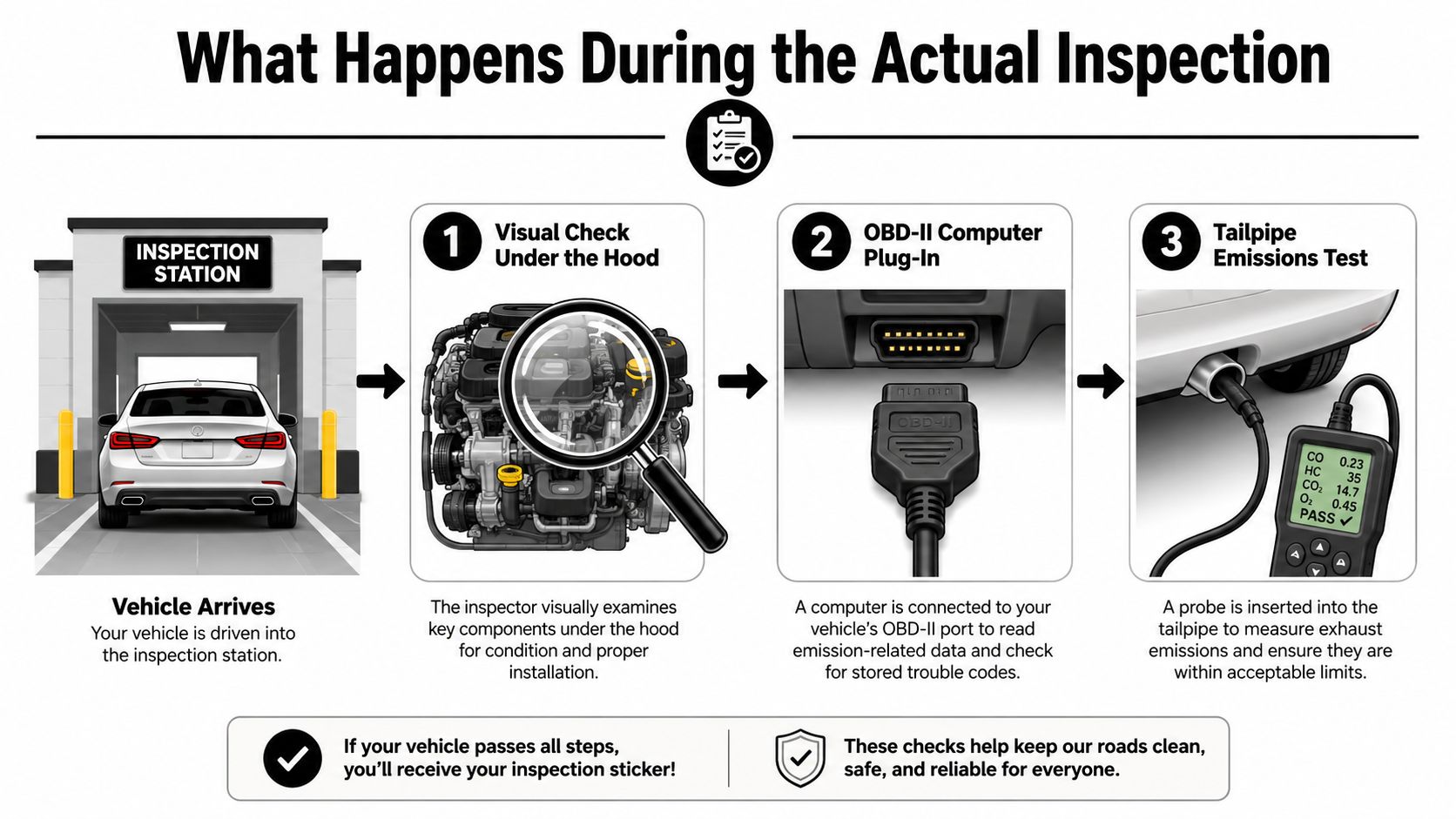
The lane isn't mysterious. The technician checks the car, connects the equipment, and runs the part of the test your vehicle needs. What slows people down is usually not the test itself, it's showing up with a car that wasn't prepared for it.
BAR's inspection procedure starts with the car in the right condition. The vehicle should be at normal operating temperature, in Park or Neutral with the parking brake set, with accessories turned off, and with no unsafe condition like overheating or fluid leaks. The manual also tells inspectors to avoid drafts that could disturb the exhaust plume during testing. In plain English, that means don't roll in cold, don't leave the A/C blasting, and don't expect a clean result if the car is acting up in the lane. BAR inspection manual
What the Technician Actually Checks
For newer vehicles, the inspection leans heavily on the onboard diagnostics. The technician plugs into the vehicle and checks the emissions-related computer data. For older vehicles, the process can include tailpipe measurement, which is why idle quality and airflow matter more than most drivers think.
A clean pass usually comes from a car that's already healthy before it hits the station. A dirty idle, a loose cap, or a dashboard warning can turn a simple visit into a fail in minutes. That's why I tell drivers to stop obsessing over the lane and start obsessing over the car.
Keep the engine warm, turn off unnecessary accessories, and don't argue with the tech about the car's condition. If the vehicle isn't ready, the lane won't fix it.
The inspection itself is straightforward. The trouble starts when drivers arrive assuming the shop can “work around” a problem that the program is designed to catch. It can't.
Common Failure Causes and the Cheapest Fixes
Most failed smogs are not a mystery, and they're not random. They come from a short list of predictable problems, and the cheapest fix is usually the one drivers skip because they want a quick answer instead of a real one.
Start with the warning light
If the check-engine light is on, repair the car before you book the test. That's the first rule, not the last resort. No shop can make a lit dashboard disappear in the lane, and a car that's actively flagging emissions faults is telling you to stop guessing.
The next most common problem is a car that isn't ready yet. Readiness monitors need drive time, not wishful thinking. If the monitors aren't set, the low-cost move is to drive the car through a normal mixed cycle, then come back after the computer has had time to relearn what it needs.
Then there's the gas cap. A cracked seal, a bad fit, or a cap that doesn't tighten correctly can create a failure that looks more serious than it is. Replace the cap if it's obviously worn, and don't overpay for a diagnostic session when a basic part is the obvious culprit.
Older cars bring a different set of headaches. Tailpipe issues, rough idle, and exhaust problems show up more often there, and those are the cases where a cheap tune-up can help, but only if the underlying hardware is sound. If the exhaust system is leaking or the engine is running badly, a test is just a document confirming a problem you already have.
For a deeper list of fail reasons, this smog fail guide is worth reading before you spend money on a retest.
Choosing Between Regular, STAR, and Test-Only Stations
Burbank drivers save real time. If you pick the wrong station tier, you don't just pay the wrong price, you waste the whole trip.
Use the station tier that matches the car
A regular licensed station can handle many routine inspections. A STAR station is a higher-oversight option that can test a wider range of qualifying vehicles. A Test-Only station does exactly that, it tests, but it doesn't repair, which matters when the DMV or the vehicle's profile sends you to a stricter lane.
The key is matching the station to the notice, the VIN, and the vehicle type. If your DMV paperwork points you to a more controlled testing path, don't gamble on a general shop and hope for the best. A Burbank driver who books the wrong tier has already lost.
| Smog Station Tiers in Burbank at a Glance | Who Can Be Tested | Best For | Typical Price Range |
|---|---|---|---|
| Regular Station | Many routine vehicles, when not directed elsewhere | Straightforward renewals and standard compliance checks | Varies by shop |
| STAR Station | Vehicles the program allows at STAR-certified locations | Drivers who want broad eligibility and consistent oversight | Varies by shop |
| Test-Only Station | Vehicles that need testing without repair services | Directed vehicles and DMV-flagged cases | Varies by shop |
A lot of people search for a shop first and ask questions later. That's backwards. Ask whether the station can legally test your exact vehicle, then decide if the price makes sense.
If you want a concise explanation of what a STAR station is, this STAR station guide helps translate the label into practical station choice.
My advice: in an enhanced county market, station eligibility beats convenience. The right tier on the first try is cheaper than a wrong-mileage second visit.
How to Prep Your Car Before You Book
Prep is where smart drivers win. You do a little work up front, and you avoid paying twice for the same problem.
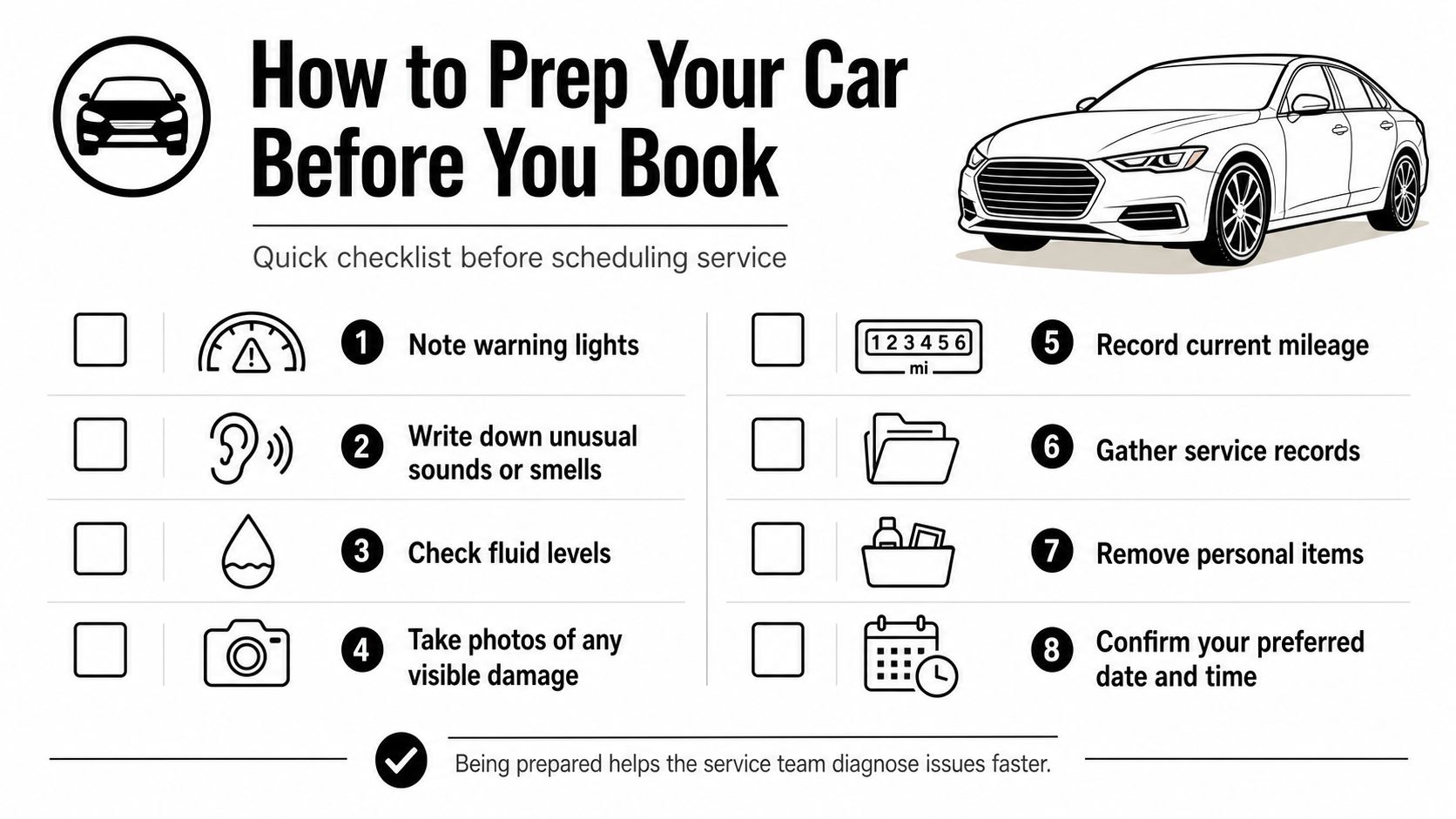
Do the basic checks before you roll in
Take the car on a mixed drive so it reaches normal temperature and the readiness monitors have a chance to settle. Check the gas cap, confirm the check-engine light is off, and make sure the tires are properly inflated so the car sits normally in the lane. Those are basic moves, not fancy tricks.
If you're driving a newer car, ask the shop whether it has any coupon or discount on the inspection portion. The certificate fee is still required, but the shop's labor price can vary. If you're driving an older car, ask whether the lane charges extra for a tailpipe test before you show up. That's the stuff that changes the bill, not the sticker price on the street.
One good prep habit beats a pile of excuses later. Drive the car like you mean to get it tested, not like you're sneaking in at the last minute.
If you're comparing shops, Speedy Smog is one example of a station that performs smog checks for DMV certification, which is the exact service Burbank drivers are shopping for when they need a compliant inspection.
Connecting the Smog Certificate to Your DMV Renewal
The smog certificate is the piece that lets the DMV finish the registration side. Once the car passes, the shop sends the result electronically, and that clears the way for the renewal record to update.
What happens after the pass
Once the vehicle passes, the shop sends the certificate straight to the DMV system. Most drivers never see that part, but it is what keeps the renewal from stalling on paperwork you would otherwise have to chase down. If your renewal notice has not shown up yet, do not use that as a reason to skip the inspection. The certificate still counts, and the registration can still be tied to it.
California renewal notices usually arrive in the normal renewal window before the due date, and the driver should treat the smog result as the document that finishes the rest of the transaction. If the car fails, fix the problem first, then retest at the same station after the repair. If you dispute the result, a BAR smog program overview explains the referee route, which lets you ask for an independent review at a BAR Referee Station.
That referee path is the safety net. It is there for a real disagreement over the result, not for every routine fail. If the problem is obvious, repair the car first and save yourself the time.
The right way to think about the certificate is simple. It is not a trophy, it is a transaction step. Once it is in the system, the DMV side gets much easier.
Quick Answers Burbank Drivers Ask Before Booking
A first-time California title for an imported vehicle usually needs the right emissions paperwork before DMV finishes the registration. If you brought a car back from out of state, expect the smog certificate to be part of the title process.
A vehicle classified as a gross polluter needs real repair work, not a hopeful retest. The label means the car's emissions problem is serious enough that shortcuts won't help.
Hybrid owners ask this all the time. Yes, hybrids can still need a smog check in California depending on the vehicle and registration cycle, so don't assume the battery alone gets you a pass.
If you're unsure whether your exact car needs a standard station, STAR station, or Test-Only site, check the DMV notice first. That notice tells you more than a guess ever will.
If you want a clean, no-drama inspection and you don't want to waste time at the wrong station, bring your DMV notice and choose a shop that can test your exact vehicle correctly. Speedy Smog handles smog inspections for DMV compliance, and it's a solid place to start if you want the job done without guesswork.