Get a Smog Test Rocklin CA: Fast & Easy
A standard smog check for a 2000 or newer vehicle takes about 10 to 15 minutes at a STAR station and runs roughly $60 to $90, plus California's $8.25 state certificate fee. That makes it one of the faster DMV-required steps, but preparation matters because a vehicle with unresolved emissions problems or incomplete readiness monitors can still fail.
You may be searching for smog test Rocklin CA after discovering that registration renewal is waiting on an emissions certificate. The good news is that the appointment itself is usually simple. The stressful part comes when a driver arrives with a recently disconnected battery, an illuminated check engine light, the wrong station, or a vehicle that falls under a rule they didn't know existed.
This guide breaks down the process in plain language, from vehicle exemptions and testing equipment to readiness monitors, failed inspections, and financial assistance. You'll know what to check before booking and what to do if the result isn't what you expected.
Table of Contents
- Why Your Rocklin Smog Check Matters More Than You Think
- How California Smog Checks Actually Work
- Which Vehicles Need a Smog Check and Which Do Not
- Finding a Smog Check Station Near Rocklin
- What to Expect During Your Smog Check Appointment
- When Your Vehicle Fails the Smog Check
- How to Prepare for a Fast and Hassle-Free Smog Check
Why Your Rocklin Smog Check Matters More Than You Think
Maria's car runs smoothly, yet her registration renewal stops at the smog check requirement. At the station, the technician asks whether she recently replaced the battery. Maria is unsure why that matters. Disconnecting power can erase the vehicle's emissions-monitor results, so the car may need time and driving conditions to complete its self-tests before inspection.
That small detail shows why a smog check is more than a quick formality. California connects the inspection to registration compliance, and a passing result gives the state a current record that the vehicle meets applicable emissions requirements. A car can feel normal while its emissions system still has an unresolved fault or incomplete diagnostic information.
California's program has operated for decades. The state adopted its vehicle emissions inspection and maintenance program in 1982 and assigned administration to the Bureau of Automotive Repair in 1984, according to BAR's consumer protection and program history resources. Rocklin drivers are following an established statewide system, not a rule created only for local motorists.
Practical rule: The fastest appointment is the one you prepare for before arriving.
Three questions usually come first: Do I need a test, where should I go, and what happens if I fail? The answers depend on the vehicle's model year, fuel type, registration status, and diagnostic readiness. California's tightened 2025 readiness-monitor rules make that last item especially important. A recently disconnected battery may leave monitors incomplete, even if the check engine light is off.
A station such as Speedy Smog's California smog check resource can explain the general process. Confirm your vehicle's exact requirements before booking, because station eligibility and testing rules can differ by vehicle.
BAR also offers digital tools, including Vehicle Inspection History Lookup. Reviewing prior records can confirm whether a recent test was reported and show whether an earlier failure may still affect your registration. Drivers who cannot afford needed emissions repairs should also look into California's statewide assistance programs before assuming the only option is paying the full repair bill.
How California Smog Checks Actually Work
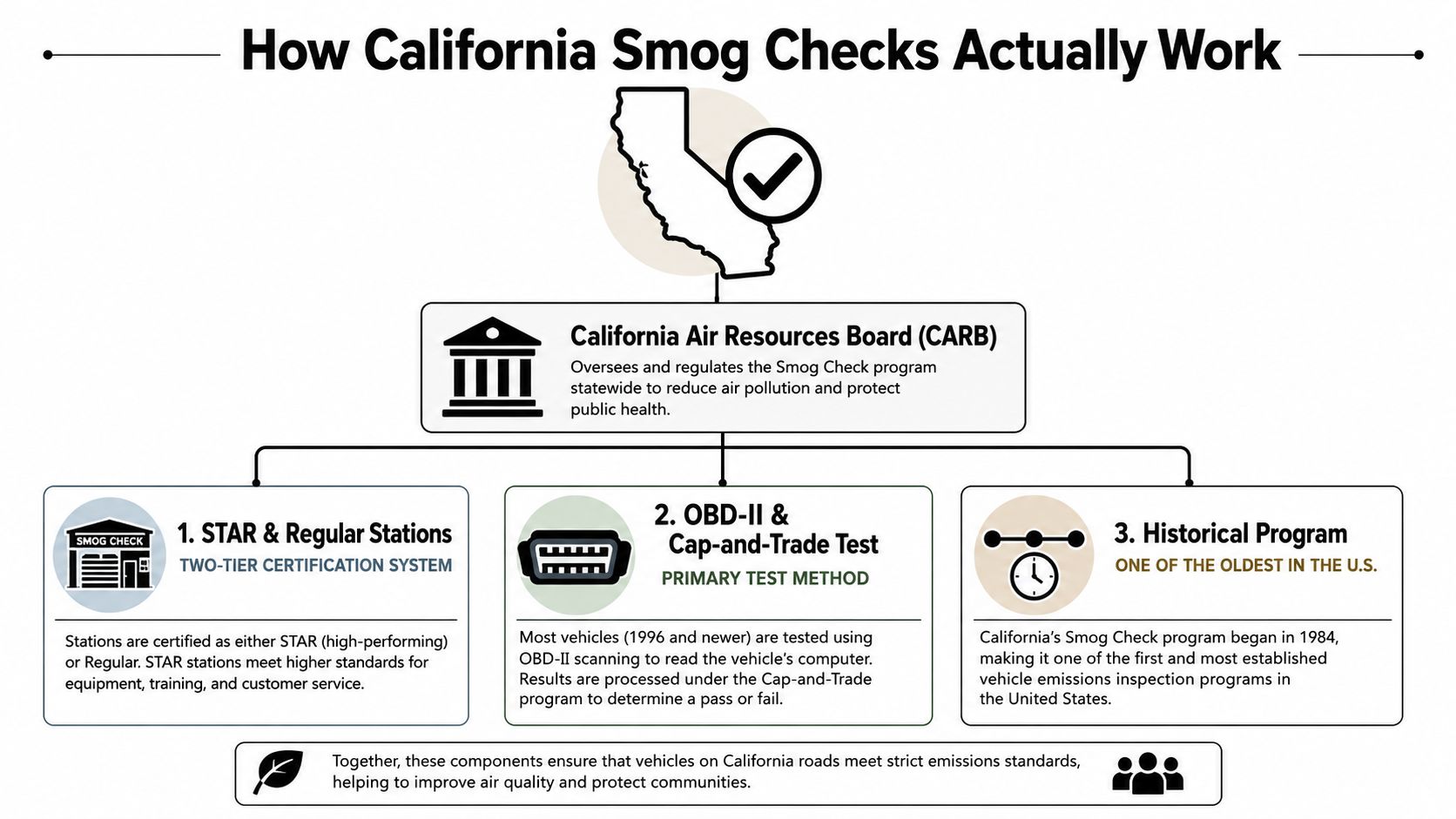
California's inspection method changes with the vehicle. That design matters because an older car may be evaluated through direct tailpipe measurements, while a newer vehicle is generally checked through its onboard diagnostic system.
The state uses the BAR-97 Emissions Inspection System for vehicles from 1999 and older. This equipment measures tailpipe emissions directly. A technician uses the station's approved testing equipment and evaluates the gases leaving the exhaust rather than relying only on electronic information from the vehicle.
Vehicles from 2000 and newer are handled through the BAR-OIS process, which uses the car's onboard diagnostic information. The inspector connects approved equipment to the vehicle's diagnostic port and checks emissions-related data, trouble codes, and readiness status. BAR describes these procedures through its official Smog Check program information.
Why the station type matters
A STAR station is authorized to inspect vehicles under California's Smog Check framework and meets higher performance standards established by BAR. Drivers often look for STAR certification because some vehicles and registration situations require a STAR inspection, while others can use a regular licensed station.
The label doesn't mean every vehicle will pass. It means the station operates within a recognized inspection program and uses approved procedures. You'll still want to confirm that the shop handles your fuel type, model year, and any unusual configuration.
The testing split also explains why appointment times and equipment differ. A technician inspecting a 1999 vehicle may need to perform a tailpipe emissions test, while an inspector working on a 2000 vehicle may focus on OBD data and the vehicle's electronic self-checks. For a broader explanation of California procedures, review this guide to how smog checks work in California.
Which Vehicles Need a Smog Check and Which Do Not
A driver registering a car in Rocklin may ask, “Do I need a smog check?” The answer depends on the vehicle's model year, fuel type, registration situation, and ownership change. Use California's Smog Check requirements as the governing reference, and see our emissions testing requirements guide for a fuller breakdown.
Gasoline and flex-fuel vehicles from 2000 and newer generally receive an OBD II-based inspection. Older gasoline vehicles may require a direct tailpipe test. Diesel vehicles follow separate rules, so applying gasoline assumptions to a diesel can lead to an unexpected result.
| Vehicle Type | Testing Method | Key Rule |
|---|---|---|
| Gasoline or flex-fuel, 2000 and newer | OBD II-based inspection | Evaluated through onboard emissions data and readiness monitors |
| Gasoline vehicles, 1999 and older | BAR-97 tailpipe inspection | Tailpipe emissions are measured directly |
| Diesel, model year 1998 and newer, GVWR 14,000 pounds or less | Diesel Smog Check with OBD-related checks | These vehicles require inspection under BAR rules |
| Diesel, 1998 through 2006 | OBD-related monitor review | Zero incomplete monitors are allowed for the OBD portion |
| Diesel, 2007 and newer | OBD-related monitor review | Up to two incomplete monitors may still pass the OBD portion |
| Vehicles four model years and newer | Exempt from biennial and change-of-ownership Smog Checks | The exemption is based on vehicle age under the applicable rule |
| Out-of-state vehicles, 1976 and newer, registering in California | California inspection when first registered | A Smog Check is required during initial California registration |
The model-year details matter because the same dashboard warning or recent repair can affect vehicles differently. For example, a diesel vehicle with incomplete monitors may not receive the same result as a gasoline vehicle with the same condition.
The readiness-monitor change
Starting October 1, 2025, California's updated rule requires all readiness monitors to be set for a pass, with limited exceptions when a vehicle cannot feasibly meet the requirement. BAR explains the change in its 2025 Smog Check executive summary.
A readiness monitor works like a self-check stored by the vehicle's computer. Disconnecting the battery or completing a recent emissions repair can erase that status, leaving the system unfinished even when the car drives normally. Check readiness before the appointment so you can address an incomplete monitor before the inspection.
Finding a Smog Check Station Near Rocklin
A search for smog test Rocklin CA can return stations across Rocklin and the surrounding Sacramento region. Distance matters, but it shouldn't be your only filter. Start by confirming whether the shop is a STAR station, then ask whether it handles your vehicle's model year and fuel type.
Call before driving over if your vehicle is diesel, hybrid, modified, recently repaired, or being registered in California for the first time. A short conversation can prevent a wasted trip if the station doesn't perform the inspection your vehicle needs.
Questions to ask before booking
- Certification: Is the station STAR certified, and is STAR testing required for your registration situation?
- Vehicle coverage: Does the shop inspect your model year, diesel or hybrid system, and vehicle class?
- Price: Does the quoted price include the state certificate fee, or will that fee be added separately?
- Timing: Is an appointment available, and how does the station handle walk-ins?
- Retest policy: If the vehicle fails, what paperwork and retest options does the station provide?
Look for pricing that's clear before the inspection begins. A reputable station should explain what the test includes without promising a pass in advance. No technician can guarantee a passing result before checking the vehicle.
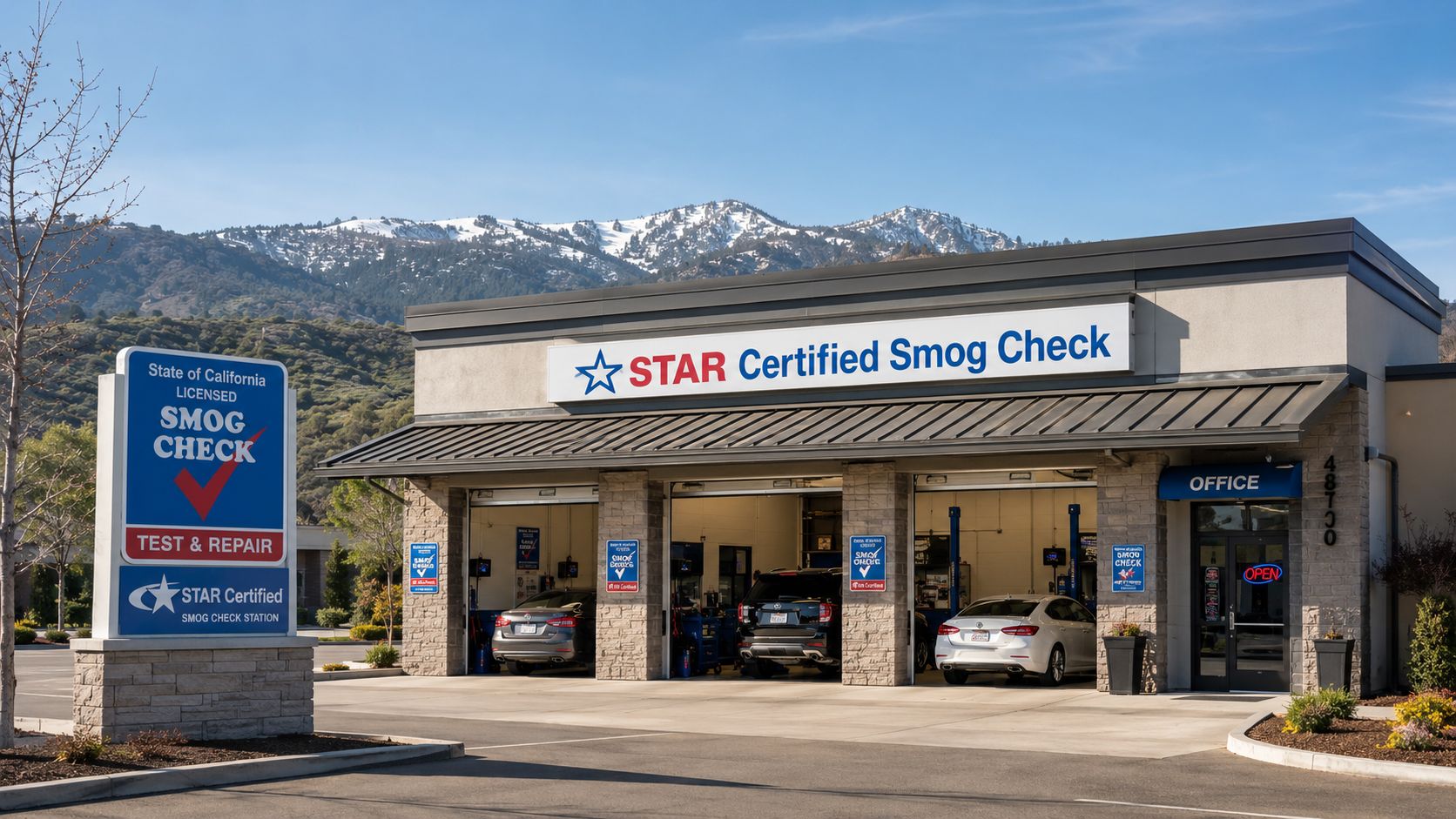
Speedy Smog is one option for drivers who need a STAR Certified inspection in the San Leandro area. The shop handles most vehicles, including 2000 and newer cars, older vehicles, diesels, and hybrids, and offers appointments as well as information about current pricing. Rocklin drivers should weigh the location against other nearby choices and select a station that matches their vehicle and deadline.
What to Expect During Your Smog Check Appointment
If this is your first appointment, the process is more organized than it may seem. Bring the vehicle, keys, registration or renewal notice, and a valid photo ID. For a change-of-ownership transfer, also have the name and address information required for that transaction.
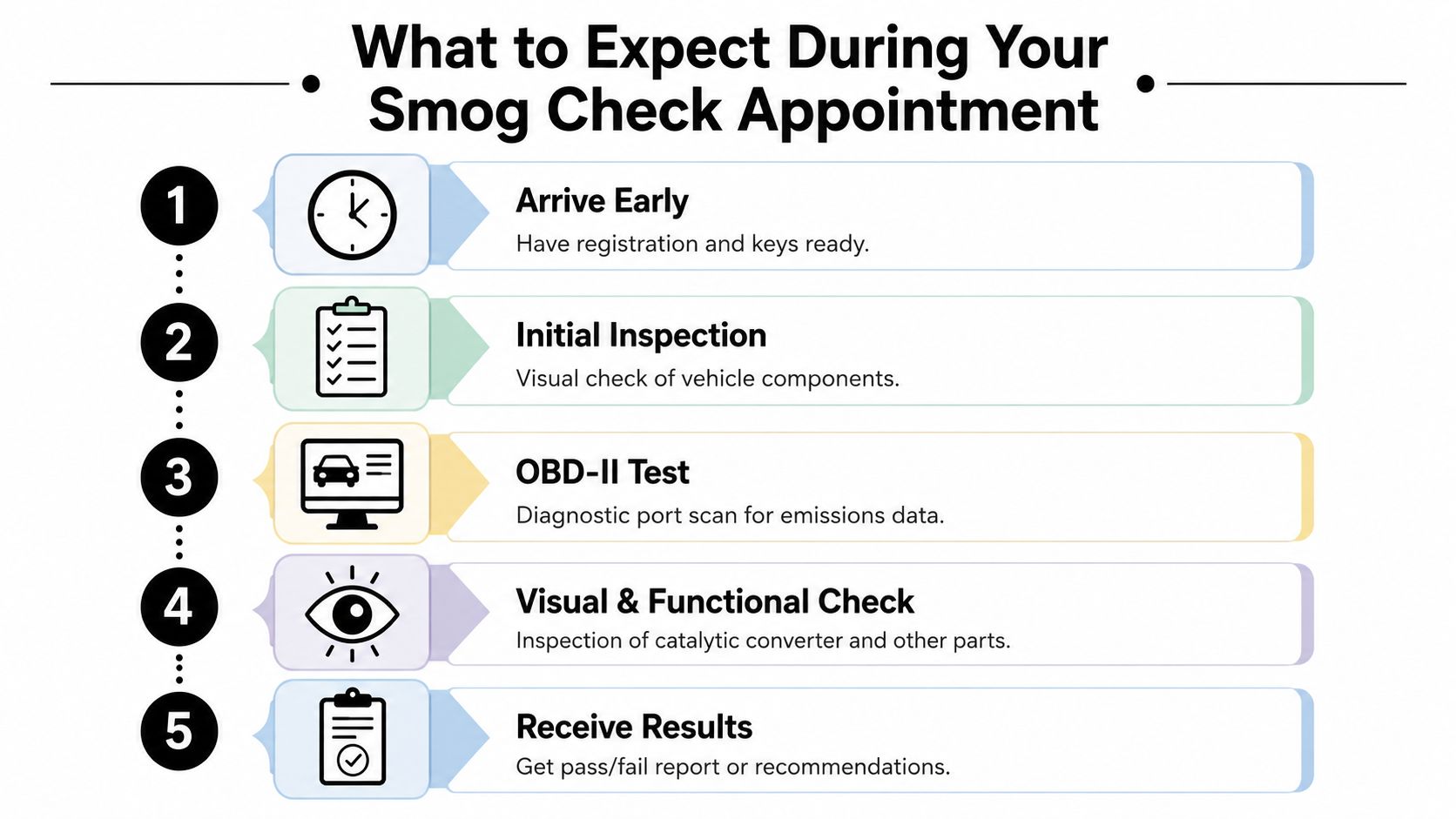
At check-in, the inspector confirms the vehicle and transaction details. On a newer vehicle, the technician connects an approved scanner to the OBD port under the dashboard. The scan reviews diagnostic information and readiness monitors, which show whether the vehicle has completed its built-in emissions self-tests. Those monitors matter because recent battery work, erased codes, or unfinished drive cycles can leave the inspection incomplete even when the car feels normal.
Older vehicles may use BAR-97 equipment with a tailpipe probe. Instead of reading the vehicle's computer, the equipment measures exhaust emissions while the vehicle runs under the conditions required by the inspection procedure. In both cases, the test follows a defined sequence rather than serving as a general repair appointment.
The appointment sequence
- Paperwork review: The station confirms the vehicle and transaction details.
- Visual inspection: The technician checks required emissions components and looks for obvious problems.
- Diagnostic or tailpipe testing: The equipment evaluates electronic emissions data or measures exhaust output, depending on the vehicle.
- Result entry: The inspector records the result in the state system.
- Certificate and report: You receive the result documentation, while the station submits the certificate electronically to the DMV when applicable.
A typical 2000 or newer vehicle takes about 10 to 15 minutes. The final price includes California's $8.25 Smog Check certificate fee, according to BAR's consumer protection information. Ask for the report even after a passing result. It documents the inspection and can clarify future registration questions.
The appointment resembles a structured vehicle scan more than a repair visit. If the result is incomplete or failing, ask which system, component, or readiness monitor caused it. The station may identify the issue, but repair work is a separate decision.
When Your Vehicle Fails the Smog Check
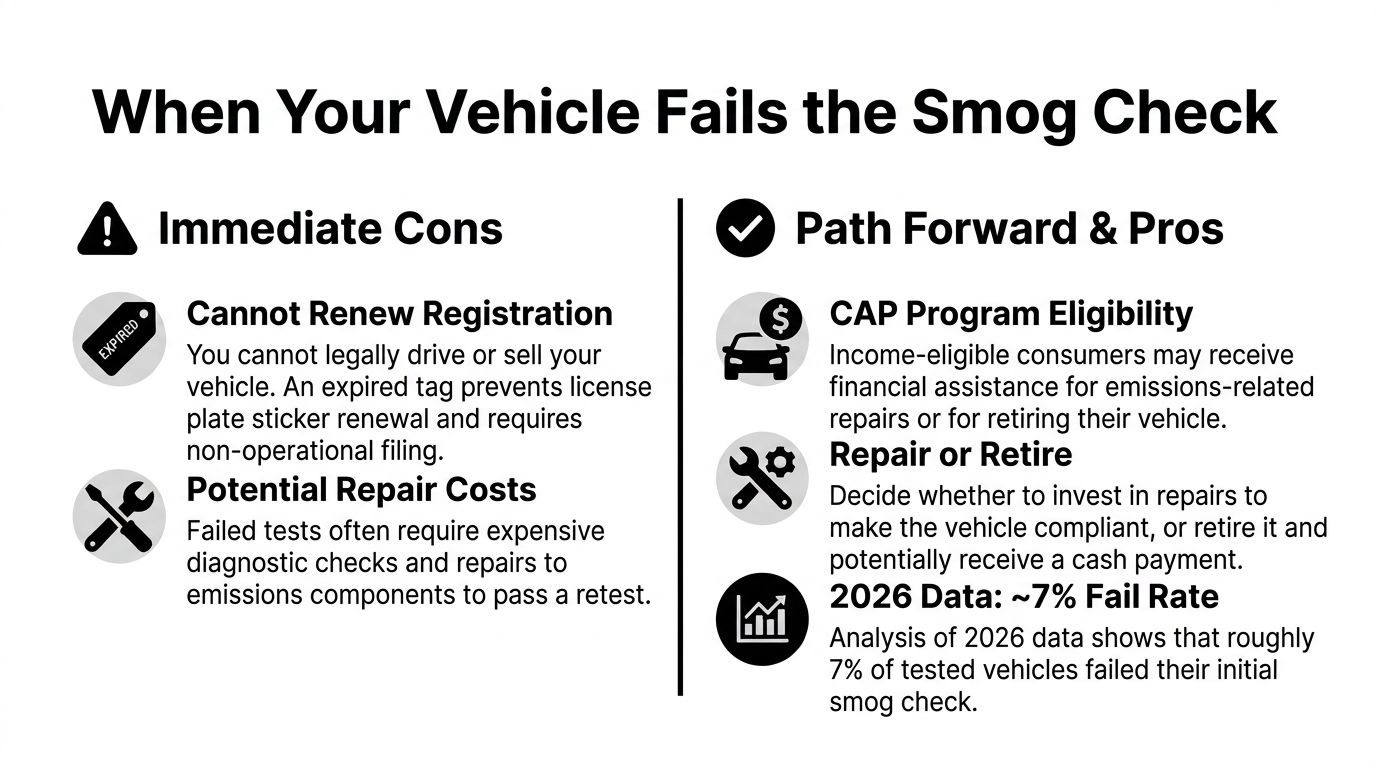
A failed result doesn't automatically mean the vehicle needs a major repair. The report should identify the reason for failure, such as an emissions fault, an illuminated malfunction indicator light, an inspection issue, or incomplete readiness monitors. Read the report before authorizing work.
California BAR's 2026 performance report states that about 1.3 million, or 7%, of 19 million 2000-and-newer vehicles tested during the 2024 through 2025 period failed Smog Check. That statewide result shows why a careful response matters. A failure is not unusual, but the next repair decision should come from the test results rather than guesswork. Review the BAR 2026 Smog Check performance report for the published program data.
What to do after a failure
- Read the failure report: Identify the exact diagnostic code, monitor status, or component problem.
- Ask for diagnosis before parts: An oxygen sensor, catalytic converter, fuel system, or wiring problem can produce related symptoms, so testing should come before replacement.
- Repair the cause: A battery reset may require additional driving before monitors become ready, but driving alone won't fix an active emissions fault.
- Retest after the repair: Bring the vehicle back when the repair is complete and the applicable monitors are ready.
- Check assistance eligibility: California's Consumer Assistance Program may help qualifying owners with emissions-related repairs.
The program can provide up to $1,450 for emissions-related repairs on 1996 and newer vehicles that fail a biennial Smog Check. Vehicles from 1976 through 1995 may qualify for up to $1,100. BAR's Smog Check and Consumer Assistance information states that applicants must meet an income threshold of 225% of the federal poverty level and have a failed biennial inspection.
CAP assistance isn't automatic, and it doesn't apply to every registration situation. Review the eligibility requirements before committing to repairs. If the vehicle can't reasonably be repaired, ask the DMV or BAR about the applicable options for your circumstances rather than ignoring the failed result.
How to Prepare for a Fast and Hassle-Free Smog Check
Preparation starts with the dashboard. If the check engine light is on, have the vehicle diagnosed before scheduling the inspection. Clearing the light without fixing the underlying issue can leave the monitors incomplete, creating another failure rather than solving the problem.
A recently disconnected battery deserves special attention. The vehicle's computer may have lost its stored readiness status, and the monitors need appropriate driving conditions to complete their checks. Don't assume a short trip around the neighborhood is enough. Ask a qualified technician or the station what drive cycle applies to your vehicle, especially after emissions repairs.
A practical pre-visit checklist
- Confirm the requirement: Check your registration notice and vehicle details before choosing a station.
- Verify station coverage: Ask whether the shop inspects your model year, fuel type, hybrid system, or diesel configuration.
- Check warning lights: Resolve an illuminated emissions warning before the official test.
- Review readiness: Have the vehicle's OBD readiness status checked after a battery replacement, jump-start, or emissions repair.
- Bring documents: Take your registration or renewal notice, identification, keys, and any ownership-transfer information.
- Ask about the total price: Confirm whether the quoted amount includes California's certificate fee.
- Schedule intelligently: An appointment can reduce waiting, particularly when many drivers are approaching registration deadlines.
- Avoid last-minute repairs: Don't install parts or clear codes immediately before testing without allowing the vehicle's systems to complete their checks.
Before you leave home: A passing smog check depends on the vehicle's actual emissions condition and computer readiness, not on a quick reset of the dashboard light.
Keep the failure report, repair invoices, and passing certificate copy. Those records make a later DMV question easier to resolve and help the next technician understand what has already been tested.
Speedy Smog provides STAR Certified Smog Check services for newer vehicles, older vehicles, diesels, and hybrids, with typical 2000-and-newer inspections completed in about 10 to 15 minutes. Visit Speedy Smog to review the San Leandro location, confirm your vehicle's testing needs, and schedule an appointment before your registration deadline.