

Your registration renewal is coming up, the DMV notice is sitting on the kitchen counter, and one line jumps out immediately: smog certification required. Most Dublin drivers don't mind the test itself. What causes stress is not knowing whether the car is ready, whether the notice means you need a STAR station, and whether this is going to turn into an afternoon of waiting around for something that should've been simple.
A smog check in Dublin, CA usually goes smoothly when you handle it in the right order. Check the notice, make sure your car is ready for inspection, pick the right station, and avoid the common mistakes that trigger a preventable fail. That's it. The rules are statewide, but the practical reality is local. Dublin drivers are dealing with Bay Area traffic, short errand trips, and busy schedules, so the smartest approach is to keep the process efficient.
Table of Contents
- That DMV Notice Just Arrived What Now
- Understanding California Smog Check Rules in Dublin
- Your Smog Inspection Visit Step by Step
- STAR Stations and Finding a Fast East Bay Option
- Tips to Pass Your Smog Check the First Time
- What to Do If Your Vehicle Fails the Smog Check
That DMV Notice Just Arrived What Now
The first thing to do is slow down and read the notice closely. If the DMV is asking for a smog certification, you don't need to guess what happens next. You need to confirm the vehicle listed, the registration timing, and whether the notice says a standard test is fine or a STAR station is required.
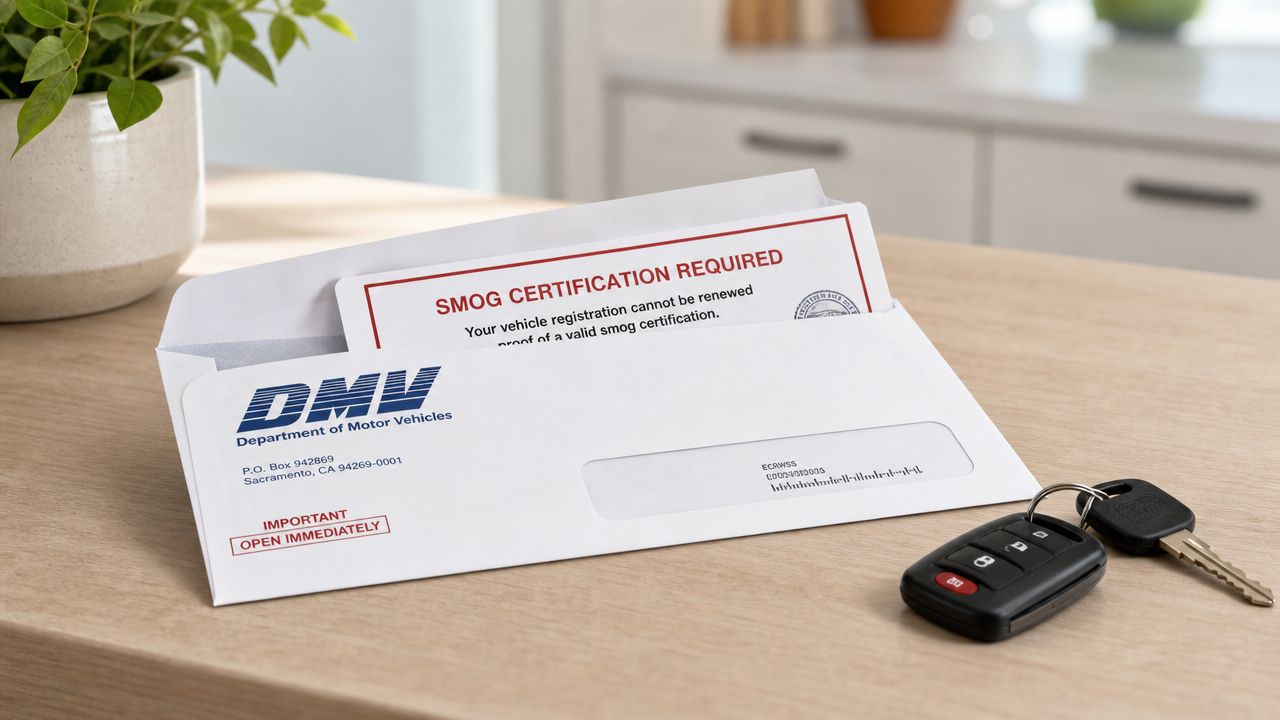
Most drivers make this harder than it needs to be. They either wait until the last minute, or they rush in right after a battery replacement or check-engine light issue and end up failing for a reason that could've been avoided. If your goal is to get through a smog check in Dublin, CA with the least hassle, treat it like a short checklist, not a mystery.
What to do first
- Read the DMV notice carefully. Look for whether the vehicle needs certification now and whether a STAR station is specified.
- Think about the car's recent history. If the battery was disconnected, the check-engine light came on recently, or repairs were just completed, the car may not be ready yet.
- Pick the station based on your notice and schedule. For many drivers, speed and convenience matter as much as location.
- Drive the car normally before the test. A cold car that only does short neighborhood trips often isn't the easiest candidate for same-day testing.
Practical rule: If your check-engine light is on, don't test first and hope for the best. Diagnose that problem first.
A lot of the frustration around smog comes from mixing up DMV paperwork with the inspection itself. The shop handles the inspection. If your vehicle passes, the station sends the certificate electronically. Your job is to arrive with the car in test-ready condition.
That's the main difference between an easy visit and an expensive, annoying one.
Understanding California Smog Check Rules in Dublin
A Dublin driver usually learns the rules the same way. The renewal notice shows up, the car seems to run fine, and the first question is whether a smog check is required this time.
California's program is statewide, but Dublin sits inside the Bay Area air basin, so local drivers feel those rules regularly. The Bay Area Air District history traces regional air pollution control work back to 1955 and notes that California's Smog Check Program began in 1984. That history explains why smog testing is routine here. It has been part of Bay Area vehicle ownership for decades, not a Dublin-only rule.
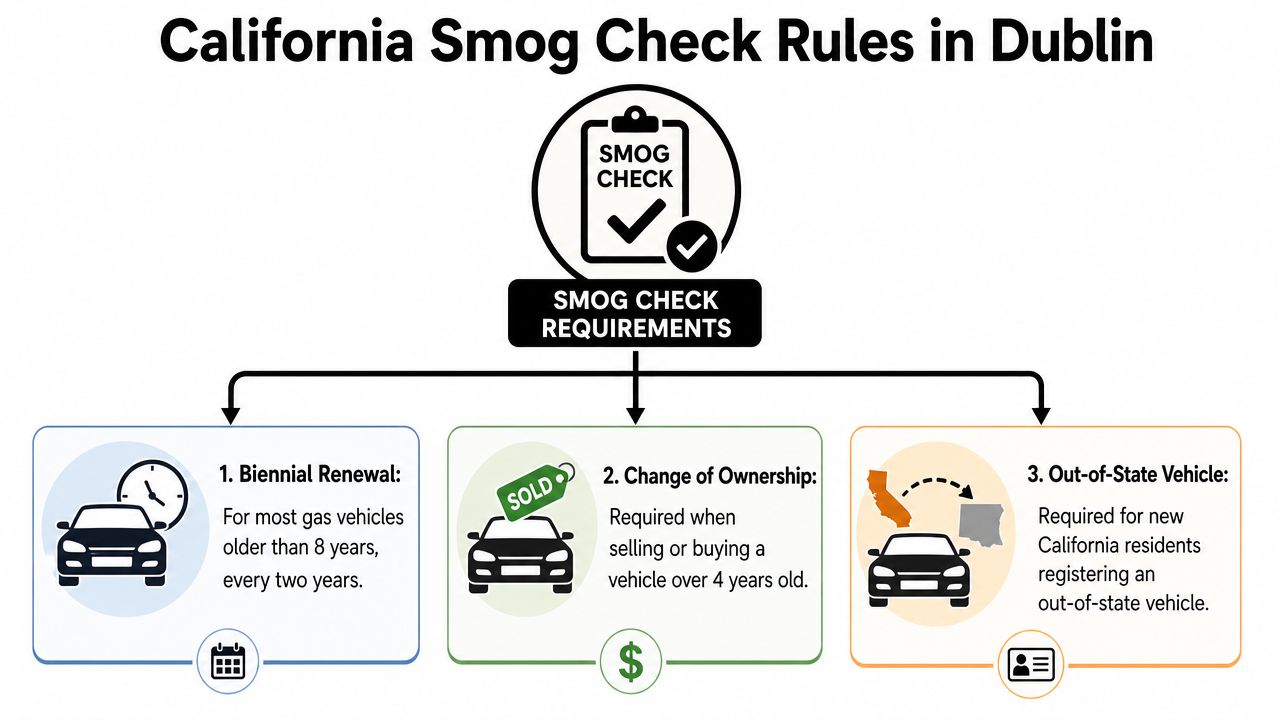
The basic rule is simple. Many gasoline-powered vehicles from model year 1976 and newer need periodic smog certification, while some vehicles are exempt or handled differently. The California Bureau of Automotive Repair Smog Check program page explains the program and the vehicle categories it covers. Electric vehicles do not get smog checks. Motorcycles do not get smog checks. Some newer vehicles may be outside the inspection cycle for a period of time, and diesel vehicles follow their own set of rules under the state program.
For Dublin drivers, smog usually comes up in three situations:
- Registration renewal when the DMV says certification is due
- Vehicle sales or transfers when California requires current certification
- First-time California registration for a vehicle coming from out of state
The key point is local, not theoretical. You do not need to guess based on what a neighbor's car needed last year. The DMV notice and the vehicle record decide whether your car needs testing now, and whether you need a regular station or a STAR station.
That local detail matters because Dublin drivers usually care about time as much as rules. A car owner in West Dublin heading to work, a parent trying to fit this in after school pickup, and a commuter coming off I-580 all need the same thing. Clear requirements and a fast test at the right station. That is why nearby options such as Speedy Smog stand out. The state rules are the same everywhere, but convenience is not.
One trade-off catches people off guard. A car can drive normally and still fail if it is not test-ready under California's inspection standards. I see that after battery disconnects, recent repairs, or a check-engine light that was cleared without fixing the underlying fault. The rules are straightforward once you separate two issues. First, does the DMV require a test now. Second, is the vehicle ready to be inspected.
Your Smog Inspection Visit Step by Step
A good smog visit feels boring in the best way. You arrive, hand over your paperwork, the technician runs the inspection, and if the vehicle passes, the certificate goes to the DMV electronically. The California Bureau of Automotive Repair smog check page says a typical inspection includes a visual check, an OBD or diagnostic evaluation, and a functional analysis. BAR also notes the process usually takes about 30 minutes, and the station transmits the certificate electronically to DMV if the vehicle passes.
What to bring before you leave home
Bring the basics. If you've got them together before you pull out of the driveway, the visit stays quick.
| Item | Why It's Needed |
|---|---|
| DMV renewal notice | Helps confirm that smog certification is being requested for your registration |
| Current vehicle registration | Verifies the vehicle information the station will inspect |
| Valid driver's license | Helps confirm the registered customer or driver information |
| Payment method | Keeps checkout simple once the test is complete |
If you can't find the DMV notice, don't panic. A station can often still test the vehicle with the registration information, but having the notice makes the process smoother and reduces avoidable confusion.
What happens during the inspection
The inspection itself isn't just a tailpipe sniff test. On modern vehicles, the technician typically checks emissions-related components visually, looks at the onboard diagnostic system, and performs a functional review of required systems.
Here's how that usually plays out in real life:
- Check-in at the counter: The station confirms the vehicle, paperwork, and test type.
- Vehicle setup in the bay: The technician begins the inspection procedure and verifies the required identification details.
- Visual inspection: Emissions-related equipment is checked for obvious issues, missing components, or tampering.
- Diagnostic review: The onboard system is scanned for readiness and stored problems.
- Functional checks: The technician verifies required systems as part of the state inspection procedure.
- Pass or fail result: If the vehicle passes, the certificate is sent electronically to DMV.
A lot of people expect the test to focus only on exhaust output. On many vehicles, readiness status and emissions-system integrity matter just as much.
For a driver in Dublin, the practical takeaway is simple. Don't show up assuming a smooth idle means a guaranteed pass. If the car recently had electrical work, battery service, or a warning light problem, that history matters during the inspection.
The easiest visits happen when the car has been driven normally, no warning lights are on, and nothing has recently reset the system monitors.
STAR Stations and Finding a Fast East Bay Option
A STAR notice usually catches Dublin drivers off guard because the wording makes it sound like there is a problem with the car. In practice, it usually means the state wants the inspection done at a station that meets STAR performance standards. If your DMV paperwork says STAR, go to a STAR station the first time and save yourself the repeat trip.
That is the part that matters most. The station type has to match the notice.
For local drivers, the easiest mistake to avoid is choosing based only on distance. A nearby shop is only useful if it can legally perform the test your notice requires and regularly handles your kind of vehicle. That matters more if you drive an older car, a diesel, or a hybrid. Some stations do those every day. Some do not. A quick phone call before you leave Dublin can save an hour.
I tell people to make the choice in this order:
- Read the DMV notice carefully
- Confirm whether STAR is required
- Ask if the station handles your vehicle type
- Then compare wait time, location, and hours
For Dublin drivers willing to head west, Speedy Smog in San Leandro is one practical STAR-certified option the usual local roundups often skip. The publisher's shop information says it handles a broad mix of vehicles, including diesels and hybrids, and it is set up for fast turnaround on many newer vehicles.
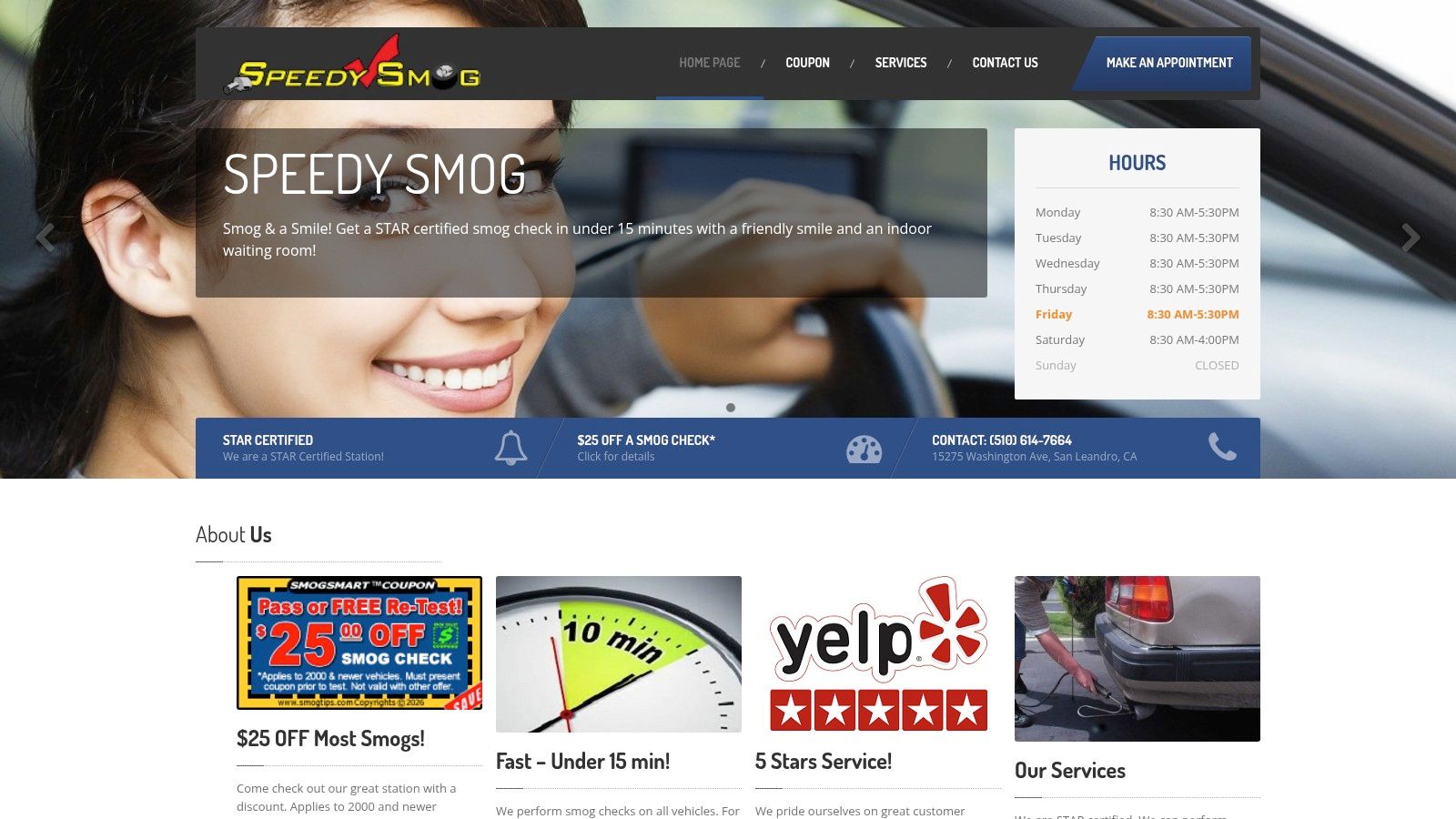
That will not be the best fit for every driver. If you are squeezing in a test between school pickup and work, staying in Dublin may still be the better call. But if your priority is getting in and out quickly at a station that deals with DMV smog inspections all day, a short East Bay drive can be the smarter move.
Use this filter before you book:
- STAR listed on the notice: The station must be STAR-certified.
- Diesel or hybrid: Confirm the shop tests that vehicle category.
- Tight schedule: Ask about same-day availability and normal wait times.
- Need fewer surprises: Choose a station that submits certificates electronically and handles inspection volume regularly.
The right shop is the one that matches your DMV notice, your vehicle, and your day, not just the one closest to your driveway.
Tips to Pass Your Smog Check the First Time
Your renewal deadline is close, the car seems to run fine, and you want this done in one trip. That usually comes down to preparation, not luck. The failures I see most often around Dublin are preventable. The car was driven only on short local errands, the check-engine light was ignored, or the battery was disconnected right before the test and the monitors never reset properly.
For local drivers, the practical goal is simple. Show up with a fully warmed-up vehicle, no warning lights, and enough normal driving on the car for the onboard system to complete its self-checks. Do that, and the odds of a smooth pass go up.
What helps right before the test
Start with the basics that affect the result.
- Drive the car 15 to 20 minutes before the appointment: A warmed-up engine and catalytic converter give the system the conditions it expects during inspection.
- Check the dashboard before you leave: If the check-engine light is on, deal with that first. A car can feel normal and still fail immediately on an emissions fault.
- Make sure the gas cap is tight: On some vehicles, an EVAP-related issue starts with something this simple.
- Avoid last-minute resets: Clearing codes or disconnecting the battery right before a smog check usually creates a readiness problem instead of solving anything.
Shop-floor advice: If someone tells you, “The light is off now, so you're good,” verify that the monitors have actually reset. For smog, that part matters just as much as the warning light itself.
A recent battery replacement can cause the same issue. The repair may be done correctly, but the car still needs normal driving time before the computer is ready for test day.
What hurts your chances
Some patterns lead to repeat failures, especially for drivers who wait until the last week on the DMV notice.
- Testing right after repairs: The fix may be complete, but the vehicle may still show incomplete readiness monitors.
- Ignoring an intermittent warning light: If it comes on and goes off, the fault is still there until proven otherwise.
- Only doing short Dublin trips: Quick drives around town do not always give the system enough time to run its emissions checks.
- Waiting until the deadline: That leaves no room for diagnosis, repair, or a retest if the first visit does not go your way.
One local trade-off is convenience versus readiness. If you use your car mostly for short city driving, it can help to plan the smog check after a longer freeway run rather than after a week of school drop-offs and grocery stops. And if your notice requires STAR, pick a station that can process you quickly so the car stays warm and the visit stays simple. Some Dublin drivers also choose nearby East Bay options such as Speedy Smog when fast scheduling matters more than staying close to home.
The cheapest smog check is still the one you only pay for once.
What to Do If Your Vehicle Fails the Smog Check
A failed result is frustrating, but it's not the end of the road. The technician will give you paperwork showing why the vehicle failed. Read that report carefully before you spend money on parts or repairs. The reason matters. A warning-light issue, a readiness problem, and a component failure are not the same thing.
Read the failure report first
Don't guess. Use the inspection report as your starting point and ask the shop to explain the failure category in plain language if anything is unclear.
A good next move is usually:
- Take the report with you
- Have the vehicle diagnosed properly
- Fix the actual cause, not the symptom
- Return for a retest once the car is ready
If the battery was recently reset or monitors were incomplete, the solution may be more driving and verification, not major parts replacement.
Repair then retest
Choose a qualified repair facility that understands emissions-related diagnosis. If the issue is straightforward, the fix can be simple. If it isn't, the report helps prevent random trial-and-error spending.
California also has a Consumer Assistance Program, often called CAP, that may help eligible vehicle owners with emissions-related repair situations. If cost is a concern, it's worth checking whether you qualify before authorizing bigger repair work.
Once the repair is done, make sure the vehicle is ready for retest. That means no active warning lights and no rushed trip back to the station before the onboard system has completed its checks.
If you want a nearby East Bay option for DMV emissions testing, Speedy Smog offers STAR-certified smog checks in San Leandro for many common vehicle types, including newer models, older vehicles, diesels, and hybrids. For Dublin drivers who care about a quick in-and-out visit and electronic DMV certificate handling, it's a practical choice to keep on your list.
Authored using Outrank tool