
Car registration renewal in California isn't complete until the required smog certification is filed, and the DMV won't finalize the sticker just because you paid the fee. If your smog result is still missing, the renewal can stay stuck even after payment.
That's the part most drivers miss, especially when the notice looks simple and the online form seems to accept the payment. In practice, car registration renewal California is a compliance workflow, not just a checkout page, and the order matters if you want the renewal to clear on time.
Table of Contents
- The Two Parts of California Vehicle Renewal
- Do You Need a Smog Check
- Renewal Options and Timelines
- Finding a Reliable STAR Station
- Smog Check Failure Rates and Planning
- Common Issues and Final Steps
The Two Parts of California Vehicle Renewal
A common failure pattern goes like this. The driver pays online, assumes the job is done, then discovers the renewal is still blocked because the smog record never cleared, a citation is open, or insurance isn't verified.
Payment is not the same as completion
California's DMV says renewal is not finalized until required smog certification is completed, and it also says there's no grace period for annual registration fees, so the payment has to land on or before the expiration date or penalties apply. That makes timing important, but sequencing matters just as much. The right order is simple, confirm the notice calls for smog, finish the inspection, make sure the result is transmitted, then pay the renewal before the deadline. DMV registration fees and renewal processing
Practical rule: If the smog result hasn't cleared, the payment is only half the job.
What usually stalls a renewal
The DMV lists smog certification, unpaid citations, and insurance gaps as barriers to renewal. That means you should treat the notice as a checklist, not an invoice.
The workflow that avoids surprises is straightforward:
- Check the renewal notice first. If it calls for smog, don't pay and hope for the best.
- Complete the test at an authorized station. A passed inspection is what gives DMV the clearance it needs.
- Verify transmission or retention. The record has to be available for DMV processing, not sitting in your glove box.
- Pay before the expiration date. Missing the deadline creates avoidable penalties.
Drivers who handle the steps in that order usually avoid the worst bottleneck, the false sense that a receipt equals a finished renewal.
Do You Need a Smog Check
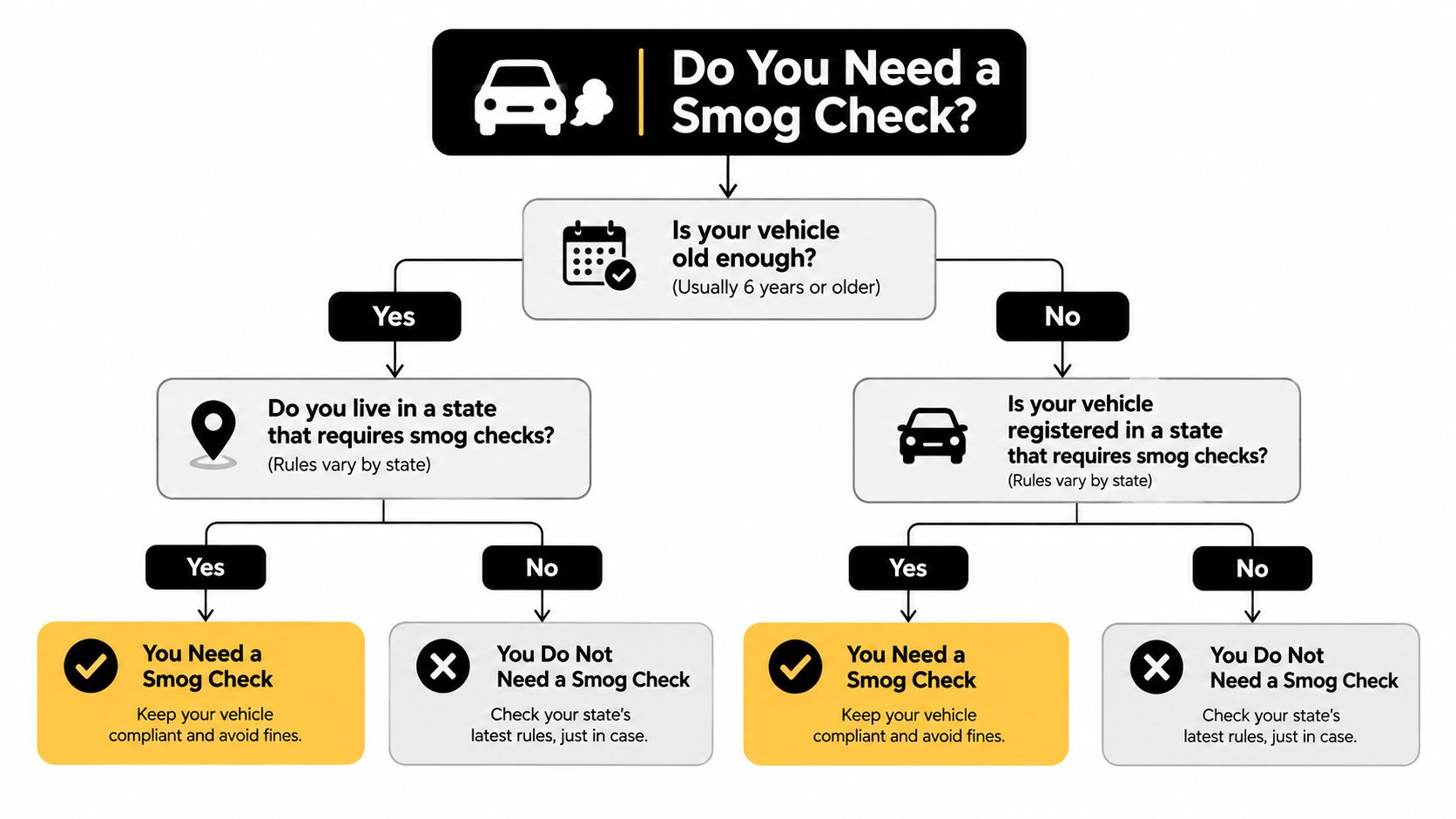
Not every vehicle sits in the same lane. California uses age-based rules, fuel-type rules, and registration timing to decide whether a car needs an inspection, so the fastest way to waste time is to assume everyone gets treated the same.
The exemption paths that matter
Gasoline-powered vehicles that are 1975 model year or older are exempt. Diesel vehicles that are 1997 and older are exempt, and electric vehicles are exempt as well. California also says gasoline-powered vehicles that are less than eight model years old do not need a smog inspection. California DMV smog inspections
That means a lot of newer drivers never need to book a test, while a lot of older daily drivers do. The middle of the fleet is where the compliance burden sits.
Where very new cars fit
California also notes that for vehicles less than four model years old, owners may pay a smog abatement fee instead of getting an inspection for the first 8 years the vehicle is registered. That's a niche path, but it matters if you bought a newer car and are trying to understand why your renewal notice doesn't look like your neighbor's.
If you're not sure which category you fall into, read the registration notice before booking anything. A clear notice saves a trip, and a wrong assumption can cost you a day.
For drivers comparing options, the key distinction is simple. Exempt vehicles can move toward renewal more directly, while inspection-required vehicles need the smog step cleared first. If you're checking a San Leandro or Oakland car, a local station that handles renewal-linked tests can remove some friction, including the process explained at Speedy Smog's registration renewal guide.
Renewal Options and Timelines
Once you know whether the smog requirement applies, choose the renewal method based on your deadline and the condition of your DMV record. Paying the fee starts the transaction, but it does not finish registration if a smog result, hold, or other requirement remains unresolved.
The channel you choose changes the clock
The DMV states that online and phone renewals take about one week, while mail takes about two weeks. A DMV kiosk can process the transaction instantly when every requirement is already satisfied. That timing makes the kiosk the fastest option, while online and phone renewal offer convenience with a short processing wait. California DMV vehicle registration renewal
Online renewal is practical when the record is clear and the expiration date is not pressing. It becomes a poor choice when you are still waiting for a smog result to post or for a hold to clear. The payment may go through while the registration remains incomplete.
The fastest path is the one that matches your actual renewal status.
How to pick the right method
Use the channel that fits both your record and your remaining time:
- Kiosk: Choose this when all requirements are satisfied and you need immediate processing.
- Online: Use it for a clean renewal when a short wait is acceptable.
- Phone: Expect timing similar to online renewal, with no office visit.
- Mail: Use it when convenience matters more than speed. It is a poor fit near expiration.
Check the renewal notice before submitting payment. If it indicates a smog requirement, confirm that the inspection has been completed and transmitted. If the account shows a hold, resolve that issue first. A kiosk cannot bypass a missing smog record or another unresolved requirement.
One practical East Bay habit
East Bay drivers often lose time by paying first and investigating the record afterward. The more reliable sequence is simple: read the notice, confirm the smog status, clear any hold, then submit through the method that fits the deadline.
For the inspection side of that workflow, Speedy Smog's STAR station overview explains how station selection connects with renewal planning. The practical point is to treat registration as a compliance workflow, not just an online payment.
Finding a Reliable STAR Station
A smog station is not just where a test gets plugged in. For renewal work, the station has to do more than inspect the car. The result must be valid, transmitted, and accepted without extra follow-up, or you can still end up stuck even after paying the fees.
Why STAR certification changes the experience
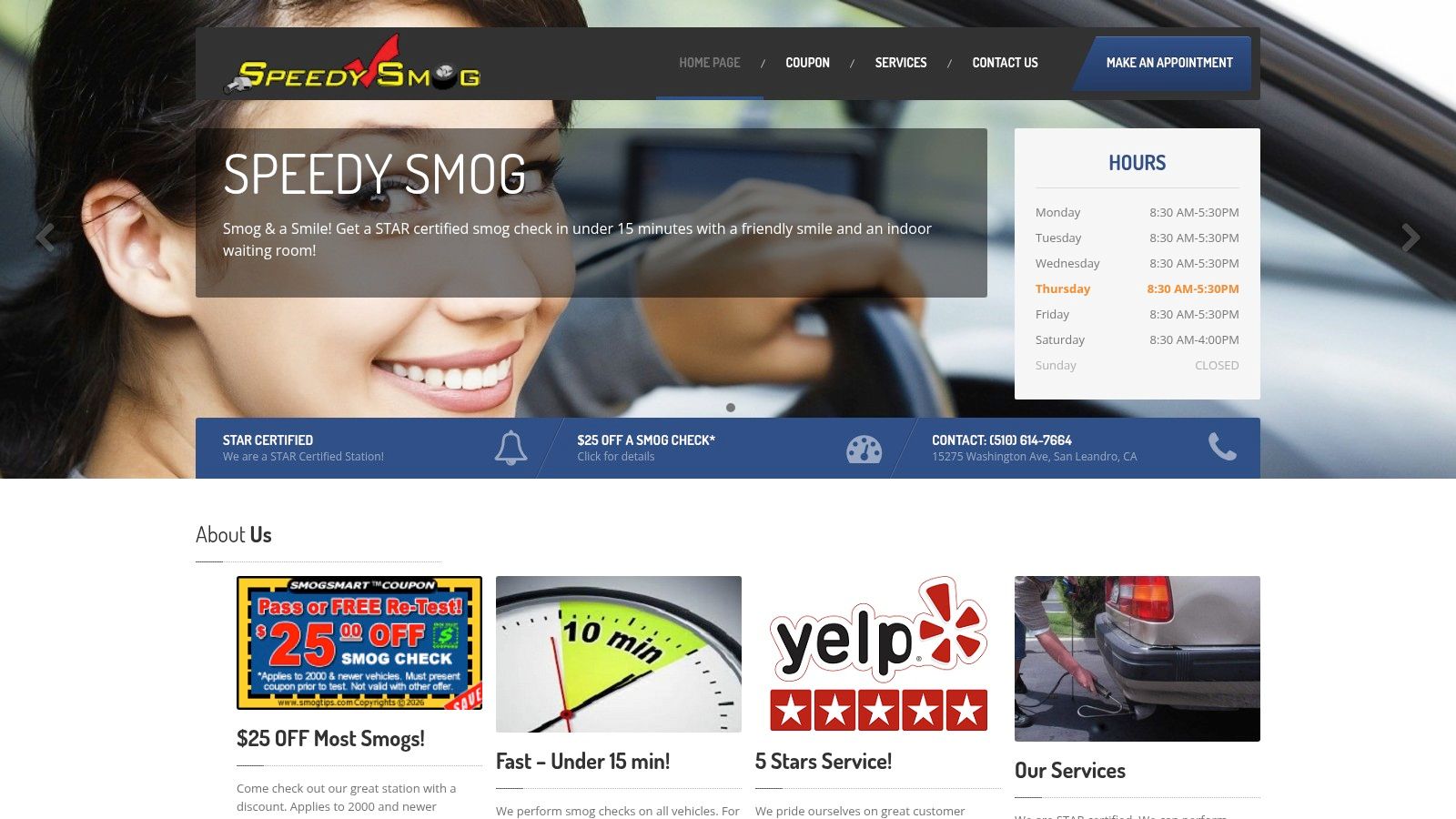
California's BAR sets higher performance standards for STAR Certified stations, which makes them the safer choice when a renewal cannot afford a bad inspection. In San Leandro, Speedy Smog operates as a STAR Certified station at 15275 Washington Ave, and it handles inspections for most vehicles, including 2000 and newer models, 1999 and older vehicles, diesels, and hybrids. Typical tests for newer vehicles are completed in about 10 to 15 minutes. Speedy Smog station information
That speed helps, but predictability matters more. A clean test and proper transmission keep the renewal moving instead of leaving you in DMV limbo with a paid fee and an unfinished record.
What to look for before you drive over
A reliable station should make the process boring in the best way. Clear intake, a clean waiting area, and staff who know which vehicles need which inspection path save time and avoid rework.
Before you go, check a few basics:
- Confirm STAR status. Use it if your renewal notice requires a STAR station.
- Ask about electronic transmission. The result should go to DMV without extra handling.
- Check vehicle fit. Diesel, hybrid, older, and newer cars can have different testing needs.
- Ask about pricing up front. You want the cost explained before the test starts.
The East Bay advantage is simple. You do not need a statewide scavenger hunt for a valid inspection. A nearby station that understands renewal timing can reduce the friction that turns a normal renewal into a delay.
For drivers who want to understand how station type affects the process, what a smog STAR station is gives the practical context.
Why nearby beats “good enough”
A station can be technically valid and still be the wrong choice if it adds delay. If you are trying to beat an expiration deadline, the key question is whether the station gets you through the compliance step fast enough to keep the renewal moving. A clean inspection, prompt transmission, and a simple checkout beat a longer drive to a place that complicates the process.
Smog Check Failure Rates and Planning
Older cars are not just more likely to need a smog check, they are more likely to slow down renewal. That is why planning before the inspection matters. A failed test can stall the whole compliance chain, and the risk rises as the vehicle ages. BAR smog check performance report
What the failure pattern tells you
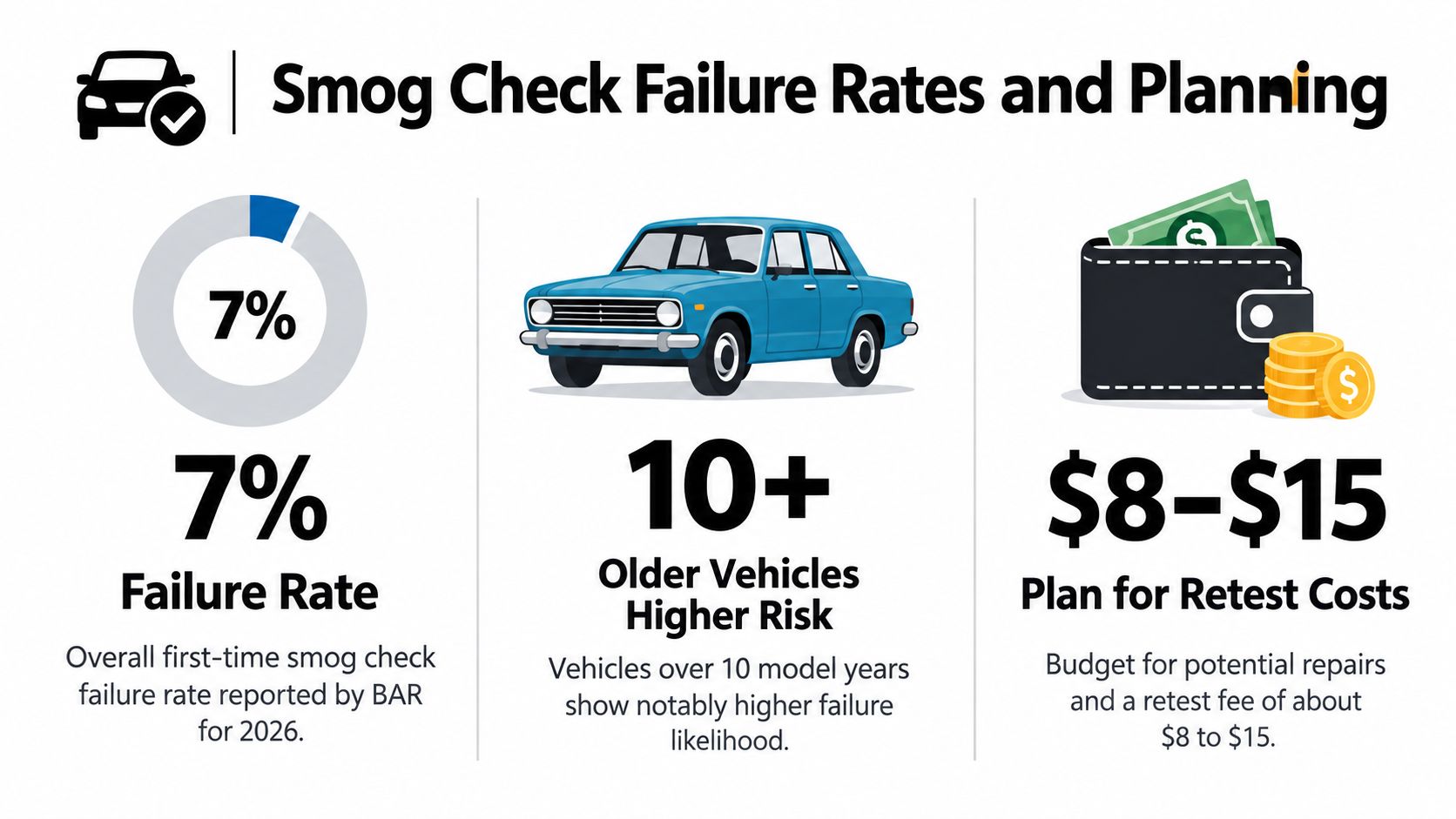
BAR's 2026 performance report says about 1.3 million of 19 million 2000-and-newer vehicles tested in CY 2024-2025 failed Smog Check, roughly 7%, while roadside inspection failure averaged about 14% statewide in 2024-2025. Its 2024 report also shows failure rates rising sharply with age, from about 4% for 8-year-old vehicles to 15% for 23-year-old vehicles.
That age pattern matters. If your car is older, the odds of a delay go up, and your renewal plan should reflect that.
What to do before the test
Preparation will not fix a real emissions problem, but it can keep you from failing for avoidable reasons. Warm the vehicle before inspection, and treat a check engine light as a real fault until diagnostics prove otherwise. If you suspect a problem, verify the repair before you pay for the official test.
A practical pre-test checklist looks like this:
- Warm the car up properly. A cold car can give you a bad read.
- Inspect the dash. A check engine light usually means diagnostics first.
- Verify recent repairs. Do not assume a cleared code means the issue is gone.
- Use the right station. A station that understands your vehicle type reduces avoidable confusion.
For a local breakdown of common failure causes, Speedy Smog's smog fail guide is a useful starting point.
Planning beats panic
Older vehicles should be treated as a project, not a gamble. If you go in expecting a clean pass without checking the basics, you are betting your renewal on luck. If you confirm the obvious issues first, you give yourself a much better shot at getting through the compliance step in one visit.
Common Issues and Final Steps
A renewal can still stall after the smog step is done. The usual blockers are operational. An unpaid citation, an insurance gap, or a missing clearance can keep the file from moving even after you think everything is complete.
What to verify before you submit
If your renewal notice shows a smog requirement but you believe you qualify for an exception, check the vehicle's model year, fuel type, and registration status against the California DMV vehicle registration renewal page before you assume the notice is wrong.
Use this checklist before you submit:
- Smog status is correct. If a test is required, it has been completed and transmitted.
- Citations are clear. Any open violation can stop renewal.
- Insurance is active. A coverage gap can hold the file.
- Payment is on time. California does not give a fee grace period.
- The channel matches the deadline. If time is tight, do not choose a slow method.
California also allows a temporary operating permit for failed-smog cases for a $50 fee, which gives drivers a way to keep the vehicle legally usable while repairs are finished. It is not a free pass. It only buys time to complete the compliance work.
What a finished renewal actually looks like
A finished renewal means the record is clear, not just paid. The notice is satisfied, the smog result is accepted if required, and the DMV can complete the transaction without a hold. That is the standard to use before you assume the sticker is on the way.
For East Bay drivers, the practical move is to separate the payment step from the compliance step. If the account has a hold, or the smog data has not posted yet, paying online does not finish the job. Handle the missing piece first, then confirm the record has cleared.
If you want the inspection side handled without extra friction, Speedy Smog can handle official smog certification for renewal-linked cases and move the result through the process quickly. Visit Speedy Smog to get the smog step handled and keep your car registration renewal on track.