
Your DMV renewal notice is on the kitchen counter, the deadline is getting close, and the obvious plan seems simple: drive to a smog station, pass the test, and renew your registration. That plan can fail before the technician even checks the exhaust, especially if your car recently had a battery replaced, diagnostic codes cleared, or repairs completed.
California vehicle inspection rules depend on why you're dealing with the DMV, not just how old your vehicle is. Renewal, a private-party sale, a dealer purchase, and first registration after moving to California can trigger different requirements. Your fuel type, model year, weight rating, and onboard computer also determine what happens at the station.
Table of Contents
- Deciding If You Need a Smog Check
- Understanding the Testing Protocols
- The Readiness Monitor Trap
- Why STAR Certification Matters
- Recovering From a Failed Inspection
- What to Expect at the Station
- Your Pre-Inspection Compliance Checklist
Deciding If You Need a Smog Check
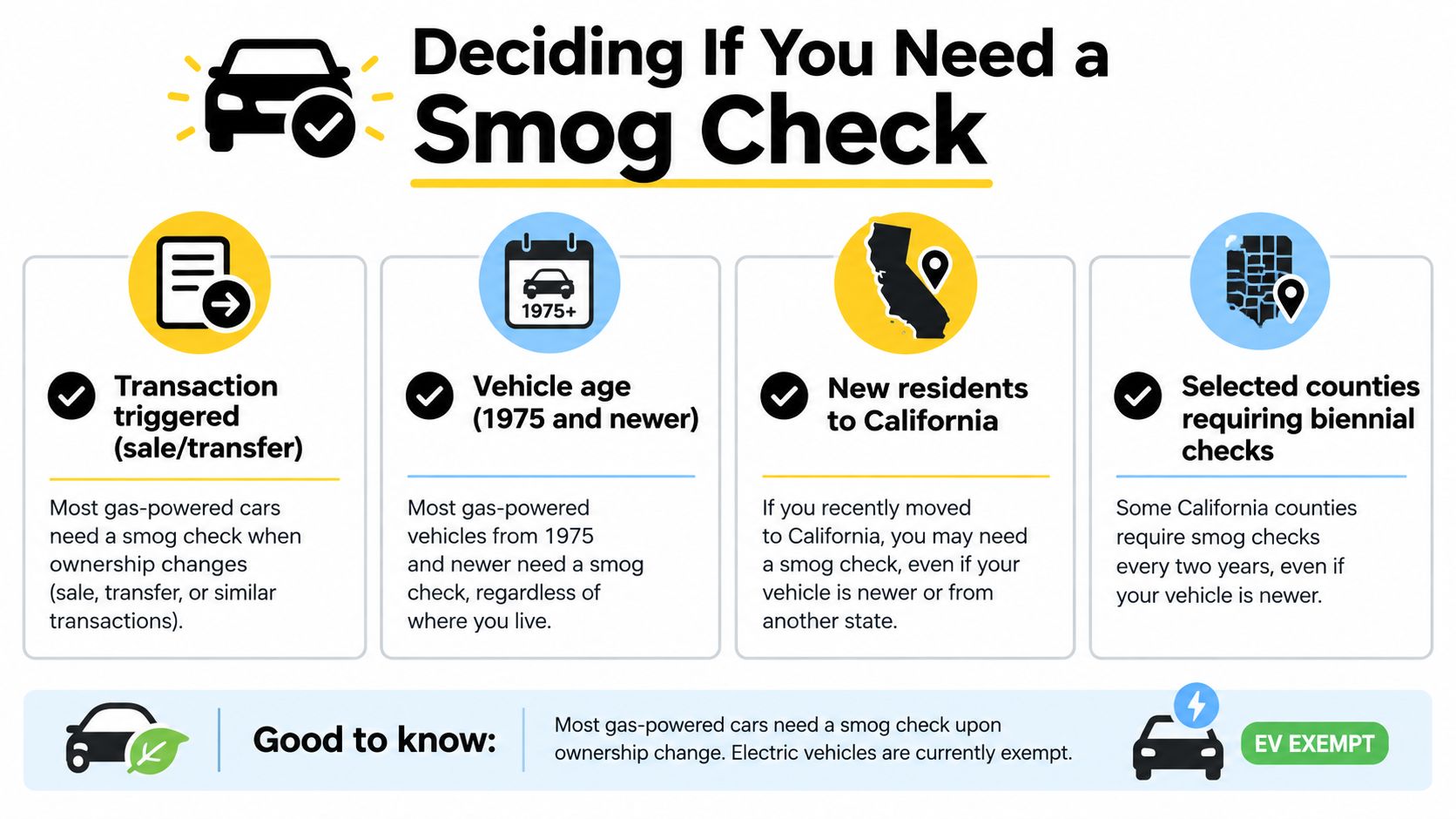
Start with the transaction. If you're renewing registration, California generally requires a smog inspection every two years, unless your vehicle qualifies for an exemption or the newer-vehicle abatement option. Owners of vehicles less than eight model-years old can generally pay a smog-abatement fee instead of obtaining an inspection, as explained by the California Bureau of Automotive Repair's smog check guidance.
Use the transaction first
For registration renewal: Read the DMV notice carefully. If it calls for certification, book the appropriate inspection. If your vehicle is within the newer-vehicle window, check whether paying the abatement fee is the available alternative.
For a private-party sale or transfer: Don't assume the buyer can handle everything later. Most gasoline-powered vehicles that are subject to California's program need current certification when ownership changes. The seller and buyer should confirm the DMV requirements for the specific transaction before signing over the title.
For a dealer purchase: Dealer transactions can follow different certification responsibilities depending on the vehicle's age and recent certification history. Ask the dealer who is responsible for the inspection and whether the certification is already recorded before you make a separate appointment.
For a first California registration: An out-of-state vehicle from model year 1976 or newer generally needs a California inspection when registered in the state for the first time. This catches many new residents off guard because an inspection from another state usually doesn't answer California's certification requirement.
Check the vehicle before booking
Electric vehicles are exempt from the standard smog check because they don't produce tailpipe emissions from an internal combustion engine. Other exemptions include gasoline vehicles from model year 1975 or earlier, diesel vehicles from model year 1997 or earlier, diesel vehicles above 14,000 pounds GVWR, and some natural-gas vehicles.
A gasoline car, hybrid, diesel, or imported vehicle may fall into a less obvious category. If you're unsure, use the vehicle identification information on your registration and confirm the requirement with the DMV or BAR before paying for a test.
Practical rule: Decide whether the transaction requires certification before you decide which station to visit. A renewal appointment and a first California registration aren't interchangeable situations.
Understanding the Testing Protocols
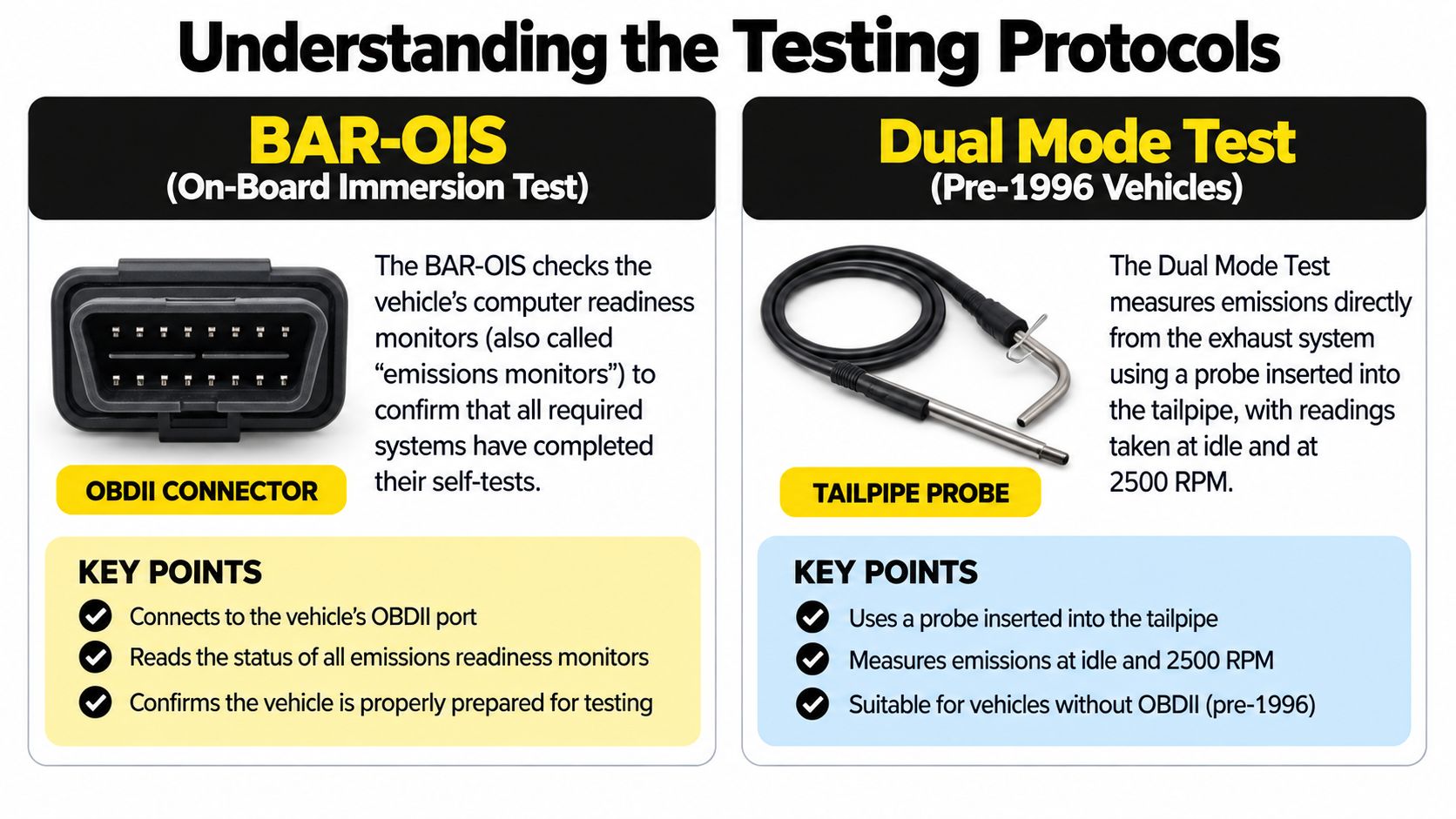
The inspection machine depends on the vehicle's technology. Most gasoline-powered vehicles from model year 2000 onward and hybrids with a GVWR of 14,000 pounds or less are tested through the BAR-OIS, which reads the vehicle's OBD-II system. Vehicles without a compatible OBD-II system, vehicles above 14,000 pounds GVWR, and certain vehicles identified by the Bureau of Automotive Repair require a BAR-97 inspection that can include tailpipe emissions measurement, according to the California Smog Check manual.
BAR-OIS reads the vehicle's computer
Think of BAR-OIS as an electronic health check. The technician connects to the diagnostic port and verifies that the malfunction-indicator lamp behaves correctly, then checks whether the computer reports emissions faults that disqualify the vehicle.
The inspection isn't just asking whether the check-engine light is currently illuminated. The computer also tracks whether its emissions self-tests have completed and whether stored fault information points to a problem. That's why a vehicle can look and drive normally yet still fail.
A newer vehicle isn't automatically an OBD-only case. The station must confirm the vehicle's certification configuration, model year, fuel type, and identifying information before selecting the protocol. A wrong entry or wrong test path can create unnecessary trouble, particularly with hybrids, imported vehicles, specialty configurations, and heavier trucks.
BAR-97 measures the exhaust
BAR-97 works more like taking a sample directly from the tailpipe. Depending on the vehicle, the equipment measures exhaust emissions while the engine operates under the required testing conditions.
This protocol matters to owners of older vehicles and vehicles without compatible OBD-II systems. It also matters to owners of heavy-duty vehicles because gross vehicle weight can change the inspection path even when the vehicle uses modern engine controls.
| Vehicle situation | Likely inspection approach |
|---|---|
| Gasoline vehicle from model year 2000 onward | BAR-OIS using OBD-II |
| Hybrid within the applicable weight limit | BAR-OIS using OBD-II |
| No compatible OBD-II system | BAR-97 |
| Above 14,000 pounds GVWR | BAR-97 |
| Certain vehicles designated by BAR | Confirm the required protocol with the station |
Bring accurate registration and vehicle information. If the car has an aftermarket exhaust, engine swap, or other modification, mention it before testing. The technician needs to know what vehicle configuration is being presented, not guess from appearance.
The Readiness Monitor Trap
A cleared check-engine light doesn't mean the vehicle is ready for inspection. In fact, clearing codes immediately before a test can create a predictable failure because the vehicle's emissions monitors reset to incomplete.
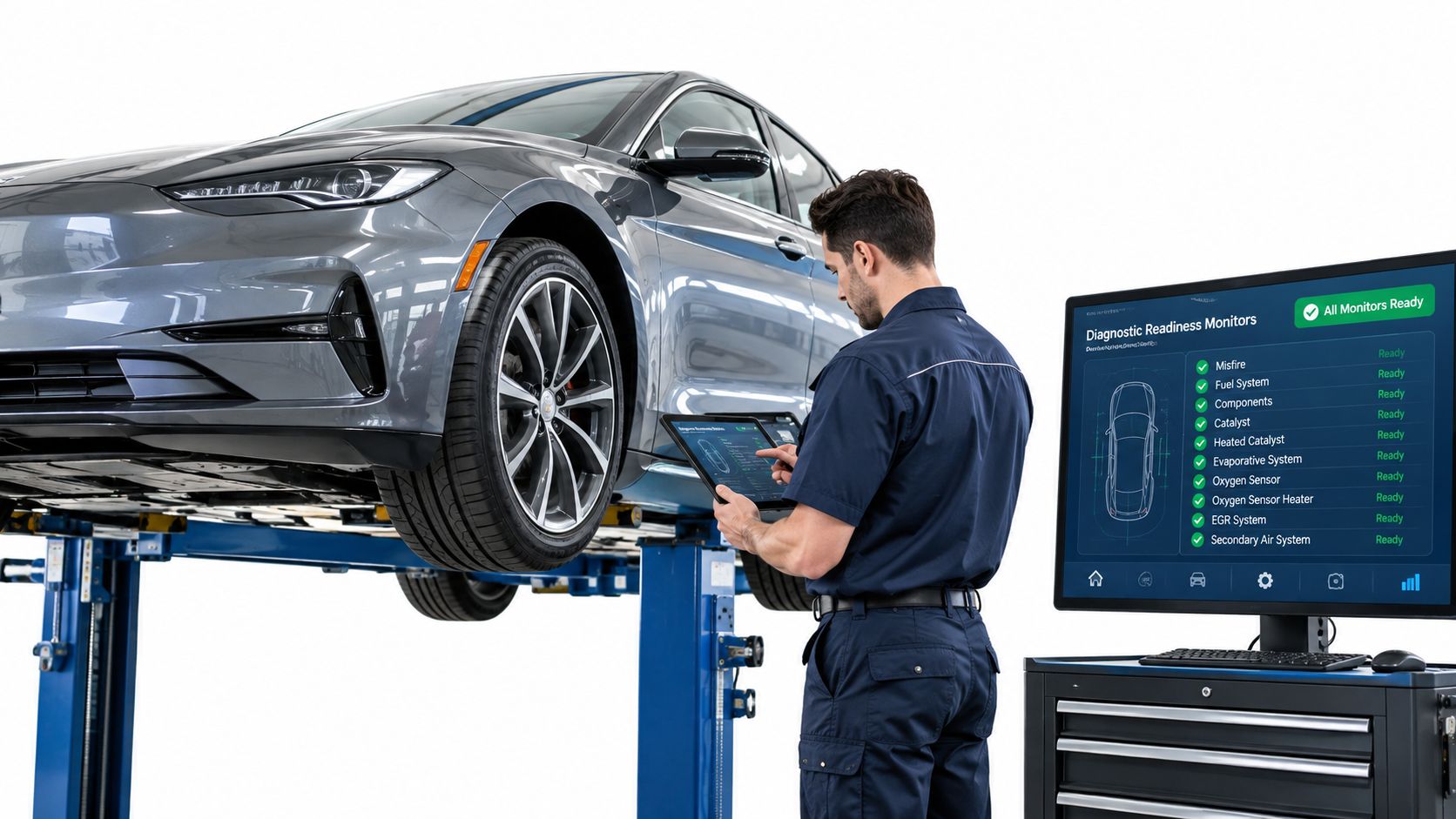
Readiness monitors are self-tests inside the OBD-II system. They evaluate systems such as the catalyst, oxygen sensors, evaporative emissions controls, and EGR-related components. The computer marks each monitor complete only after the car experiences the right operating conditions, which can include cold starts, steady cruising, acceleration, deceleration, and normal stop-and-go driving.
Disconnecting the battery or using a scan tool to erase diagnostic trouble codes wipes out that completion history. The dashboard may show no active warning light, but the inspection computer can still see that required tests haven't finished.
Why the timing matters
Beginning October 1, 2025, California rules require all applicable readiness monitors to be set for a vehicle to pass, according to BAR's explanation of the new OBD readiness monitor regulations. That makes a pre-test scan a smart move after battery work, code clearing, engine repairs, or emissions-system service.
Don't erase a code just to make the dashboard look clean. Diagnose the cause, repair it properly, and then drive the vehicle through an appropriate mixed-use cycle so the monitors can complete. Depending on the repair and the vehicle, allow roughly a week or two when necessary for the monitors to set.
Clearing the light is not a repair. It only removes information, and it can leave the vehicle unready for testing.
A better pre-test sequence
- Scan before the appointment. Check active codes, stored codes, and monitor status with a suitable diagnostic scanner.
- Repair the cause. A warning light connected to an EVAP leak, oxygen-sensor problem, catalyst fault, or another emissions issue needs diagnosis rather than cosmetic code clearing.
- Drive normally after repair. Use a mixed-use cycle that gives the vehicle's monitors the conditions they need.
- Scan again. Confirm the applicable monitors are ready before paying for the inspection.
- Test only when the vehicle is prepared. This avoids wasting an appointment on a car that was never eligible to pass.
For drivers who want help understanding what the test measures, an OBD-II car emissions test can provide useful context before the appointment.
Why STAR Certification Matters
A STAR requirement on your DMV notice isn't a suggestion to shop around casually. It means you need a station authorized to perform the required STAR inspection for that vehicle and transaction.
STAR stations operate under Bureau of Automotive Repair performance requirements that address equipment, testing procedures, and station performance. The practical benefit is straightforward: the station uses approved equipment and follows a monitored process when testing vehicles that need that level of certification.
Older vehicles deserve careful testing
California's statewide program records substantial inspection activity. The 2025 BAR executive summary recorded 11,275,981 initial tests and 12,200,718 total tests, including retests. Initial failures totaled 959,667, an 8.51% initial failure rate, while all-test failures totaled 1,102,337, a 9.04% overall failure rate.
Age changes the risk. In the cited reporting, model-year 1998 vehicles had a 20.42% failure rate, while model-year 2024 vehicles had a 4.39% failure rate, as reported in the BAR inspection summary. Older cars bring more accumulated wear, more repair history, and a greater chance of emissions-system faults. Accurate equipment and correct data entry matter more when the vehicle is already close to the line.
Choose the station based on the notice
A STAR station can be the right choice when:
- The DMV directs you to STAR: Follow the notice instead of booking a standard station.
- The vehicle has failed before: Accurate retesting helps separate a real repair issue from a process or data-entry problem.
- The vehicle is older or unusual: Confirm that the station handles older vehicles, hybrids, diesels, or the relevant inspection protocol.
- The transaction has special requirements: Ask whether the station can electronically transmit the result for the DMV purpose you need.
Read the notice first, then ask the station a direct question: “Is this vehicle and transaction eligible for the STAR test I need?” For a plain-language explanation of the program, review what a STAR smog station is.
Don't select a station only because it advertises a low price. The correct certification and protocol are more important than saving a small amount on a test that won't satisfy the DMV.
Recovering From a Failed Inspection
A failed inspection gives you information. It doesn't authorize random parts replacement, and it doesn't mean the vehicle is permanently barred from registration. Start by keeping every document from the appointment, including the failed inspection report and any diagnostic information the station provides.
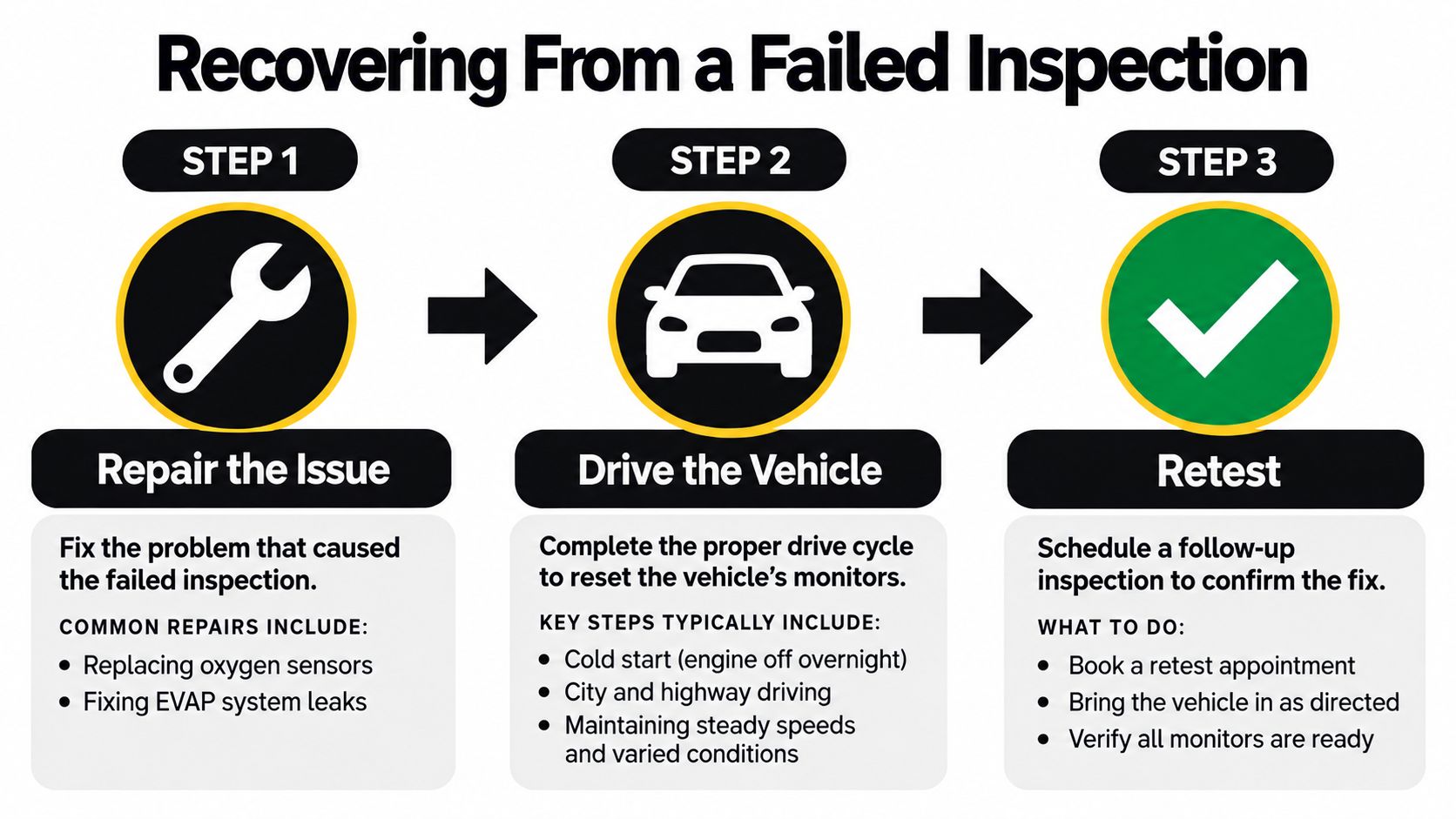
Follow the repair sequence
First, identify the failure category. The report should show whether the problem involved a malfunction indicator, emissions readings, readiness monitors, missing equipment, or another compliance issue. Don't approve repairs based only on a vague statement that the car “needs a tune-up.”
Second, diagnose before replacing parts. A check-engine code identifies a monitored fault, not automatically the failed component. A technician should test the wiring, vacuum system, fuel control, exhaust system, and related components before installing expensive parts.
Third, complete the drive cycle. If repairs or battery disconnection reset monitors, the vehicle may need mixed-use driving before retesting. Returning immediately can produce another failure even after the mechanical issue has been fixed.
Protect your legal driving options
California DMV guidance allows owners whose vehicles fail a biennial smog inspection to seek a Temporary Operating Permit, or TOP. The permit is valid for 60 days and requires registration renewal fees, the failed inspection report, proof of insurance, and a nonrefundable $50 fee, according to the California vehicle inspection information published by BAR.
The TOP matters because a failed inspection can block renewal while you still need to drive to a repair shop, retest location, or referee appointment. Confirm the permit's terms with the DMV and carry the required paperwork rather than assuming the failed report alone gives you unrestricted driving authority.
Keep the failed report, receipts, repair orders, scan results, and retest paperwork together. The paper trail makes the next conversation with a station, DMV office, or referee much easier.
Escalate when the result doesn't make sense
If you believe the inspection process was incorrect, or the vehicle has unusual equipment or modification issues, contact the Bureau of Automotive Repair Referee Program for direction. Don't pay for repeated tests without understanding the failure.
For a practical explanation of repair, permit, and retest steps, review this guide to a failed smog check in California. The right response is controlled diagnosis, not repeated guessing.
What to Expect at the Station
You pull into the bay, hand over the registration information, and answer a few basic questions about the vehicle. The technician confirms the identifying details, checks which inspection protocol applies, and connects the approved equipment if the vehicle uses OBD-II.
At a local East Bay station such as Speedy Smog, the experience is built around a short, focused inspection rather than a general mechanical service appointment. Speedy Smog is located at 15275 Washington Ave in San Leandro and handles newer vehicles, older vehicles, diesels, hybrids, and DMV-directed inspections. The shop also electronically transmits results to the DMV for registration purposes.
Bring the information that prevents delays
Have your DMV renewal notice available if you're renewing registration. Bring the vehicle, its current registration information, and any paperwork connected to a prior failure or special DMV direction.
Tell the technician about recent battery replacement, diagnostic-code clearing, emissions repairs, engine changes, or unusual fuel and weight classifications. Hiding recent work doesn't help. It can lead to a failed readiness check or an incorrect assumption about the test the vehicle needs.
The visit is an inspection, not a repair estimate
For most 2000 and newer vehicles, Speedy Smog states that typical testing is completed in about 10 to 15 minutes, though the actual time depends on the vehicle and inspection requirements. A station may need more time for an older vehicle, a diesel, a heavy vehicle, a DMV-directed test, or a problem with the vehicle's identification or computer connection.
Ask for the total price before the test begins. Transparent stations should explain whether the appointment is a standard inspection, STAR inspection, diesel inspection, or another required service. A clean waiting area and clear communication matter, but the central question remains whether the test is valid for your DMV transaction.
Don't confuse a smog inspection with a complete vehicle safety inspection. The smog test focuses on emissions compliance. If you also need brake, tire, suspension, or general reliability work, arrange that separately so you know exactly what you're paying for.
Your Pre-Inspection Compliance Checklist
The best time to prevent a failed test is before you arrive. Use this checklist based on the transaction, vehicle, and computer status.
Confirm the administrative requirement
- Read the DMV notice: Determine whether you need renewal certification, STAR certification, a transfer-related inspection, or first-registration certification.
- Confirm the vehicle category: Check model year, fuel type, hybrid status, and GVWR.
- Check exemptions and fee options: Electric vehicles and other qualifying vehicles may be exempt, while newer vehicles may qualify for the smog-abatement fee instead of testing.
- Bring supporting paperwork: Keep the renewal notice, registration information, prior failed report, repair records, and proof of insurance available when relevant.
Check the vehicle's readiness
- Look at the dashboard: A check-engine light that stays on needs diagnosis before testing.
- Avoid recent code clearing: Clearing codes can reset readiness monitors and leave the vehicle unable to pass.
- Scan monitor status: Confirm applicable monitors are complete after repairs or battery work.
- Complete normal mixed-use driving: Give the computer enough time and operating conditions to finish its self-tests.
- Check visible basics: Make sure the gas cap is secure and report obvious exhaust or emissions-system damage before the test.
Choose the correct station
- Follow STAR instructions: If the DMV requires STAR, use a station authorized for that requirement.
- Confirm capability: Ask whether the station handles your vehicle's age, fuel type, inspection protocol, and transaction.
- Explain recent work: Battery replacement, code clearing, emissions repairs, and modifications can change the advice you need.
- Plan for failure intelligently: If the vehicle fails, retain the report, diagnose the cause, complete repairs, reset monitors correctly, and retest.
California vehicle inspection is easier when you treat it as a compliance process instead of a quick lottery ticket. Identify the transaction first, verify the inspection path second, and check readiness before you spend money on the test.
Speedy Smog provides STAR Certified smog checks in San Leandro for newer and older vehicles, including hybrids and eligible diesel vehicles, with DMV electronic result transmission. If you're preparing for renewal, a transfer, or first California registration, visit Speedy Smog and confirm the correct inspection before you arrive.