
Auto Emissions Testing: What You Need to Know
Your registration renewal notice arrives in the mail, and there it is — the requirement to get an emissions test before you can renew your plates. If you're not sure what that actually involves, you're not alone. Auto emissions testing confuses a lot of drivers, especially those who've never had to deal with a failed test or an unfamiliar process.
This guide covers exactly what auto emissions testing is, why it's required, what happens during the test, what a failure means for you, and where to get it done fast.
What Is Auto Emissions Testing?
Auto emissions testing is the process of measuring the pollutants your vehicle's engine releases into the air. A certified technician or automated machine checks whether your car produces exhaust gases at levels that fall within legal limits set by your state or local air quality authority.
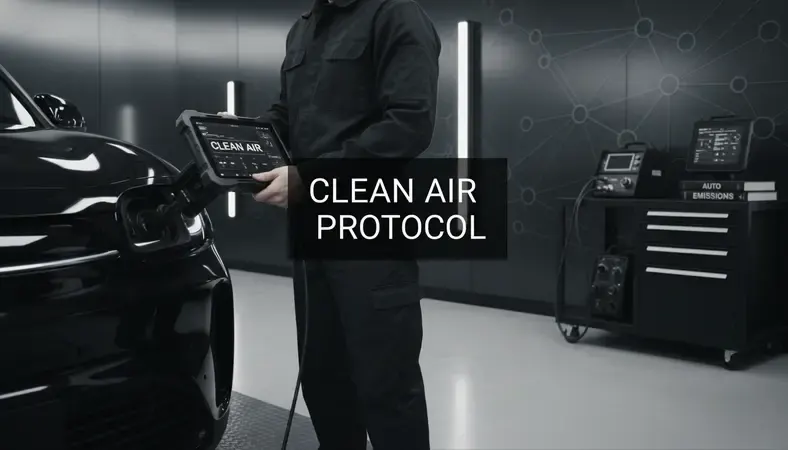
The test checks for gases like hydrocarbons (HC), carbon monoxide (CO), nitrogen oxides (NOx), and particulate matter — all of which contribute to smog and air pollution. Your vehicle passes if its emissions fall within the acceptable range. It fails if they don't.
Auto emissions testing goes by different names depending on where you live. In California, it's commonly called a smog check. In Colorado, the program is called Air Care Colorado. Arizona runs its program through the Arizona Department of Environmental Quality (ADEQ) vehicle emissions testing stations. The test itself is the same concept everywhere — measure what's coming out of your exhaust and compare it to the legal standard.
Why It Matters: The U.S. Environmental Protection Agency estimates that vehicle emissions are a leading source of the air pollutants that form ground-level ozone and smog. Auto emissions testing is one of the primary tools states use to keep those levels in check.
What Does an Emissions Test Actually Measure?
Modern auto emissions testing uses two main methods depending on your vehicle's age and type:
- OBD-II scan: For most vehicles made in 1996 or later, the technician plugs a scanner into your car's onboard diagnostic port (usually located under the dashboard). The system reads your vehicle's own computer data to check whether all emissions-related systems are functioning correctly.
- Tailpipe test: Older vehicles that predate OBD-II systems get a physical test where a probe is inserted into the exhaust pipe to measure the actual gases coming out.
Some states also perform a visual inspection of your vehicle's emissions equipment — checking that the catalytic converter is present and that the gas cap seals properly.
Why Is Emissions Testing Required?
Auto emissions testing is required because vehicle exhaust is one of the largest contributors to air pollution in urban areas. States with serious smog problems — California, Arizona, Colorado, and others — are required under the federal Clean Air Act to maintain programs that reduce vehicle-related pollution.
Without auto emissions testing, there's no reliable way to identify high-polluting vehicles on the road. A car that looks and drives fine can still be producing exhaust emissions five to ten times higher than a properly functioning vehicle. The test catches those vehicles before they keep polluting.
The requirement is also tied to federal funding. States that fail to meet EPA air quality standards risk losing federal highway funding, which creates a strong incentive to enforce auto emissions testing programs seriously.
Which States Require It?
Not every state requires auto emissions testing. Requirements vary significantly depending on local air quality conditions. States like California, Colorado, Arizona, Georgia, Illinois, Maryland, and New York have active programs. Many rural states don't require testing at all.
Even within states that require it, not every county is included. In California, for example, most counties require a smog check, but a few rural counties are exempt. Check your state's DMV or motor vehicle agency website to confirm whether your county requires auto emissions testing.
How Often Do You Need Emissions Testing?
Most states that require auto emissions testing put it on a two-year cycle, tied to your vehicle's registration renewal. Your registration renewal notice will tell you whether an emissions test is required that year.
Common Testing Schedules
| State | Testing Frequency | Vehicles Typically Exempt |
|---|---|---|
| California | Every 2 years | Vehicles 8 years old or newer (model year-based) |
| Colorado (Air Care Colorado) | Every 2 years | Vehicles 7 years old or newer |
| Arizona (ADEQ) | Every 1–2 years | Vehicles under 5 years old |
| Georgia | Annually | Vehicles 25+ years old |
| Illinois | Every 2 years | Vehicles 4 years old or newer |
New vehicles are typically exempt for the first few years. Older vehicles — often those 25 years or older — are sometimes exempt as well because they're considered collector cars and represent a small fraction of total miles driven.
If your registration renewal notice says an emissions test is required, you need to get it done before you can renew your plates. Skipping it means you can't legally register your vehicle.
What Happens During an Emissions Test?
The process is straightforward and usually takes 15 to 30 minutes from start to finish.
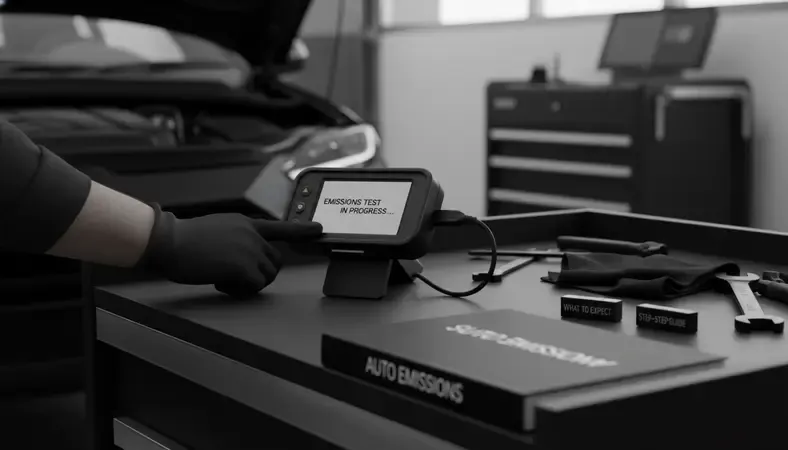
Here's what to expect when you bring your car in for auto emissions testing:
- Check-in: You pull up to the station and hand over your vehicle registration and ID. The technician enters your vehicle information into the system.
- Visual inspection: The technician does a quick visual check — confirming your catalytic converter is present, your gas cap is intact, and no obvious emissions equipment has been tampered with.
- OBD-II scan (most vehicles): The technician connects a scanner to your car's diagnostic port. This reads your vehicle's onboard computer and checks whether any emissions-related fault codes are present. The scanner also confirms that all required system monitors have completed their self-checks.
- Tailpipe test (older vehicles): If your car predates OBD-II systems, a probe is inserted into the exhaust pipe to measure actual gas output directly.
- Results: You get a printed report showing whether your vehicle passed or failed, along with a breakdown of the readings.
The whole process is non-invasive. Nothing is removed from your car, and no repairs are done during the test itself. You're in and out quickly.
What Can Cause a Failure?
A few common issues trigger a failed auto emissions test:
- Check engine light is on: This is the most common failure cause. An active fault code almost always results in a fail, even if the car runs fine.
- System monitors not ready: If your battery was recently disconnected or reset, your car's self-check monitors may not have completed their cycles. This counts as an incomplete test and often results in a fail or a void.
- Catalytic converter failure: A failing catalytic converter causes elevated hydrocarbons and carbon monoxide in the exhaust.
- Oxygen sensor issues: A faulty O2 sensor prevents the engine from managing fuel mixture correctly, leading to higher emissions.
- Evaporative system leaks: A loose or cracked gas cap can cause an EVAP system failure code.
How Much Does Emissions Testing Cost?
Auto emissions testing is deliberately kept affordable because it's a regulatory requirement, not a service people choose voluntarily. Costs vary by state and station type.
In California, the smog check fee is typically between $29 and $80 depending on the station and vehicle type. Some stations offer a lower "test-only" rate. Arizona ADEQ vehicle emissions testing station fees are generally in the $17 to $25 range. Colorado's Air Care Colorado program charges around $25 per test.
Some states offer financial assistance programs for low-income vehicle owners who fail their emissions test. California's Consumer Assistance Program (CAP), for example, provides repair assistance up to $500 or a vehicle retirement option for qualifying vehicles.
What If Your Vehicle Fails the Emissions Test?
A failed auto emissions test doesn't mean your car is totaled or that you're facing a massive repair bill. It means your vehicle has an issue that needs to be fixed before it can be registered.
Here's what happens next:
- Get a diagnosis: Take your car to a qualified mechanic or repair shop. The test report shows which systems failed, giving the mechanic a starting point.
- Complete the repairs: Fix the identified issue. Common repairs include replacing the catalytic converter, fixing oxygen sensors, or addressing a check engine light fault code.
- Re-test: Return to an emissions testing station for a retest. Many stations offer a free or reduced-cost retest if you return within a set timeframe.
- Waiver option: If you've spent a significant amount on repairs (California's threshold is $650 for most vehicles) and still can't pass, you may qualify for a cost waiver that allows you to register despite the failure.
Some national chains like Jiffy Lube offer emissions testing at select locations in states where they're certified. A Jiffy Lube emissions test follows the same state-mandated process as any other certified station — the results are identical regardless of where you go.
The key is not to ignore a failed test. Driving an unregistered vehicle carries fines, and the underlying problem causing the failure typically gets worse over time.
Where to Get Emissions Testing
When you're searching for emissions close to me, you have several options depending on your state:
- State-certified smog check stations: These are the most common option. Look for stations displaying a state certification seal. In California, STAR-certified stations can test and repair any vehicle, including those directed by the DMV.
- Test-only stations: Some states have stations that only perform the test — they don't do repairs. These are useful if you want an unbiased test result before choosing a repair shop.
- Repair stations: These can both test and repair your vehicle, which is convenient if you expect to fail or want to address issues in one visit.
- National chains: Some chains like Jiffy Lube operate certified emissions testing locations in select states.
When choosing a vehicle emissions testing station, look for state certification, honest pricing, and a quick turnaround. You don't need to go back to your car dealer or a specialty shop — any certified station produces the same official result.
Common Questions About Auto Emissions Testing
Does my new car need an emissions test?
Most states exempt new vehicles from auto emissions testing for the first few years. California exempts vehicles that are eight model years old or newer from the biennial smog check requirement. Colorado's Air Care Colorado program exempts vehicles seven model years old and newer. Check your registration renewal notice — it will tell you directly whether your specific vehicle requires testing that year.
Can I drive my car if it fails an emissions test?
Yes, you can still drive your car after a failed auto emissions test — the test itself doesn't immobilize your vehicle. The issue is that you can't renew your registration until you pass. Driving with an expired registration is a ticketable offense in every state, so you'll want to get the problem fixed and retest as soon as possible.
What's the difference between a smog check and an emissions test?
Nothing — they're the same thing. "Smog check" is the term used in California and a few other western states. "Emissions test" or "vehicle emissions testing" is the more generic term used in other states. The Emission Testing Station you visit in Georgia performs the same basic function as a smog check station in California. The name changes by region; the process doesn't.
How do I prepare my car for an emissions test?
A few things help your car perform its best during auto emissions testing. Make sure your check engine light isn't on before you go — if it is, get it diagnosed first. Drive your car for at least 15 to 20 minutes before the test so the engine reaches full operating temperature. If your battery was recently disconnected, drive the car for several days to allow all OBD-II system monitors to complete their cycles. Don't bother with fuel additives or quick-fix products — they rarely affect the outcome.
Is auto emissions testing the same as a vehicle inspection?
Not always. Some states combine emissions testing with a broader vehicle safety inspection that checks brakes, lights, tires, and other safety components. Others keep them separate. In California, the smog check is emissions-only — it doesn't evaluate your brakes or lights. In states like New York, the annual inspection covers both safety and emissions in a single visit. Check your state's requirements to know what's included.
Final Thoughts
Auto emissions testing is a straightforward process once you know what to expect. Pass or fail, it's manageable — and most failures come down to a fixable issue rather than a major mechanical problem.
Get your smog check done at Speedy Smog in San Leandro — STAR certified, most vehicles tested in under 15 minutes, open 6 days a week. Save $25 on your test by calling (510) 614-7664.