
Emissions Inspection: Essential Info for Drivers
Most drivers hear "emissions inspection" and picture an annoying bureaucratic hurdle before renewing their registration. But there's a real reason these tests exist — and knowing what they actually check, why you might fail, and how to prepare can save you time, money, and a lot of frustration.
This guide covers everything you need to know about emissions inspections: what happens during the test, why your car might fail, and exactly what to do if it does.
What Is an Emissions Inspection?
An emissions inspection — sometimes called a smog check, emissions test, or smog test — is a mandatory evaluation of the pollutants your vehicle's engine releases into the air. The test measures how much carbon monoxide (CO), hydrocarbons (HC), nitrogen oxides (NOx), and other exhaust byproducts your car produces.
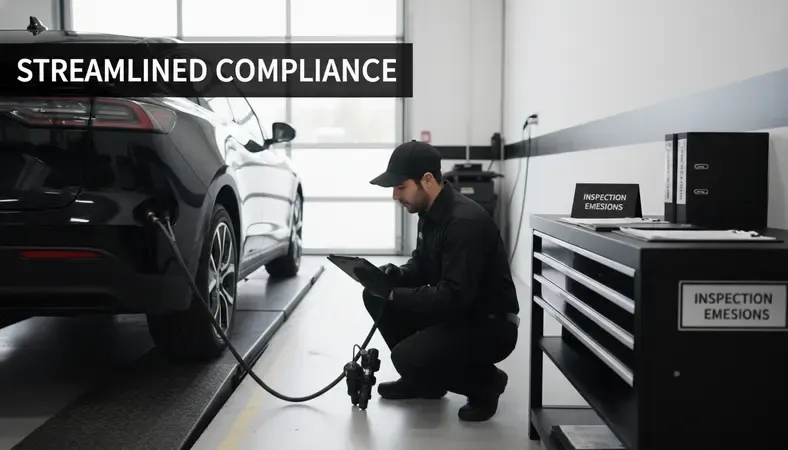
The term "inspection emissions" is also commonly used when searching for this process — it refers to the same thing: a formal check of your vehicle's exhaust output to confirm it meets state-mandated pollution standards.
California, Colorado, Texas, New York, and dozens of other states require regular emissions inspections as a condition of vehicle registration. The specific rules — which vehicles must test, how often, and what the cutoff thresholds are — vary by state and sometimes by county.
Key Insight: An emissions inspection doesn't test your engine's overall health. It tests one specific thing: how much pollution your car produces. A vehicle can pass an emissions test and still have mechanical problems unrelated to exhaust output.
What the test actually measures
Modern emissions tests check three main categories:
- Exhaust gas analysis: Measures the concentration of CO, HC, NOx, and CO₂ coming out of the tailpipe. High levels indicate incomplete combustion or a failing catalytic converter.
- OBD-II scan: For vehicles made after 1996, technicians plug a scanner into your car's onboard diagnostics port. The system reads stored fault codes and checks whether emissions-related monitors have completed their self-tests.
- Visual inspection: Technicians look for obvious tampering — a missing catalytic converter, disconnected vacuum lines, or an aftermarket exhaust that bypasses emissions controls.
Why Are Emissions Inspections Required?
Vehicle exhaust is one of the largest sources of air pollution in the United States. The Environmental Protection Agency estimates that transportation accounts for roughly 29% of total U.S. greenhouse gas emissions — the single largest sector.
Emissions inspections exist because left unchecked, a significant percentage of older or poorly maintained vehicles produce pollution levels far above what modern engine controls allow. Studies have shown that roughly 10% of vehicles on the road produce more than 50% of vehicle-related air pollution. Mandatory testing identifies those vehicles and forces repairs before they can continue operating.
For drivers, the practical consequence is simple: if your car doesn't pass the emissions inspection, you can't renew your registration legally in states that require it.
How Often Do You Need an Emissions Inspection?
The frequency depends entirely on your state and, in some cases, your county.
Emissions inspection frequency by state type
| State Requirement | Typical Schedule | Examples |
|---|---|---|
| Biennial (every 2 years) | At each registration renewal | California, Texas |
| Annual | Every year at renewal | Colorado (Air Care), Virginia |
| On transfer only | When vehicle changes ownership | Some rural counties |
| Initial registration only | Once when first registered | A few states with limited programs |
| No requirement | No statewide mandate | Many rural/midwestern states |
California requires smog checks every two years for most vehicles, starting when the car is more than four years old. Colorado's Air Care Colorado emissions testing program requires annual checks for vehicles in the Denver metro and Front Range areas. Texas requires annual inspections that include an emissions component for vehicles in the larger metro counties.
New vehicles are typically exempt for the first few years. Diesel vehicles, motorcycles, and vehicles older than a certain model year are often subject to different rules. Check your state's DMV website for the exact schedule that applies to your vehicle.
What Happens During an Emissions Test?
The process is straightforward and usually takes less than 15 minutes from start to finish.
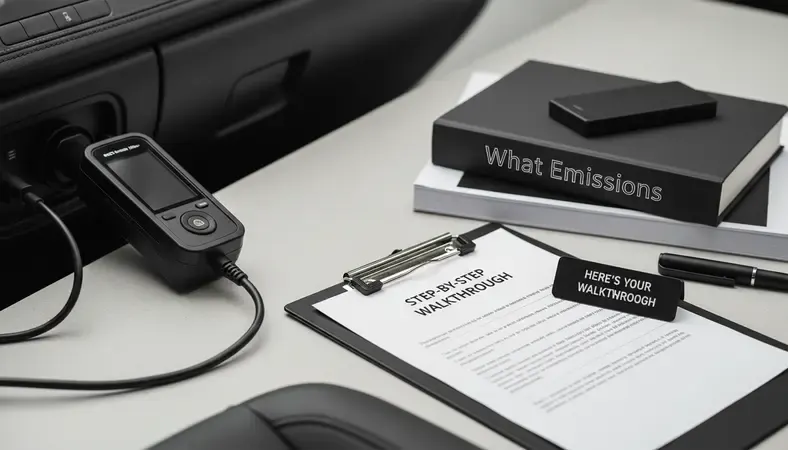
Here's a step-by-step walkthrough of what to expect:
-
Check-in: You pull up to the testing lane and hand over your vehicle registration and ID. The technician logs your vehicle's VIN, make, model, year, and odometer reading.
-
Visual inspection: The technician checks that your gas cap is present and seals properly, that your catalytic converter hasn't been removed, and that there are no obvious modifications to the exhaust system.
-
OBD-II scan (1996 and newer vehicles): A diagnostic cable plugs into the port under your dashboard. The scanner reads your car's computer for active fault codes and checks whether all emissions monitors show "ready." This takes about two minutes.
-
Tailpipe test (older vehicles): For cars made before 1996, a probe is inserted into the exhaust pipe while the engine runs at idle and at higher RPM. The machine measures the actual concentrations of pollutants in the exhaust.
-
Results: You receive a printed report showing pass or fail, the specific readings, and — if you failed — which component or monitor triggered the failure.
The whole process at a station like Speedy Smog typically takes under 15 minutes. You don't need to make an appointment at most stations, though you can Make an Appointment in advance if you prefer a guaranteed time slot.
Common Reasons for Emissions Test Failure
Failing an emissions inspection is more common than most drivers expect. Here are the issues that cause the majority of failures:
-
Check engine light is on: This is the single most common reason for failure. If your OBD-II system has an active fault code, the test fails automatically — regardless of what the code is for. Even a minor issue like a loose gas cap can trigger a code that causes failure.
-
Incomplete OBD-II monitors: After a battery replacement or a recent repair, your car's computer resets all its self-test monitors to "not ready." If too many monitors haven't completed their cycles, the test fails. This is called a "readiness" failure.
-
Failing catalytic converter: The catalytic converter breaks down harmful exhaust gases before they exit the tailpipe. When it degrades, HC and CO levels spike well above the legal limit.
-
Faulty oxygen sensor: O2 sensors tell the engine how to adjust the fuel mixture. A bad sensor causes the engine to run rich (too much fuel), which dramatically increases hydrocarbon emissions.
-
EGR valve problems: The exhaust gas recirculation valve reduces NOx emissions by recirculating a portion of exhaust back into the intake. A stuck or clogged EGR valve causes NOx levels to exceed legal thresholds.
-
Evaporative system leaks: The EVAP system captures fuel vapors before they escape into the atmosphere. A cracked hose, bad purge valve, or loose gas cap can trigger an EVAP monitor failure.
-
Worn spark plugs or ignition issues: Misfires cause unburned fuel to pass through the exhaust system, spiking hydrocarbon readings significantly.
How to Prepare Your Vehicle for an Emissions Inspection
You can't guarantee a pass, but you can dramatically improve your odds with a few straightforward steps before the test.
A week before the test:
- Address any check engine light. Get the fault codes read at an auto parts store (usually free) and repair any known issues. Don't clear the codes without fixing the problem — the light will come back.
- Check your gas cap. Remove it, inspect the rubber seal for cracks, and make sure it clicks tight when reinstalled. A faulty gas cap is one of the cheapest and most common causes of failure.
- Get an oil change if you're overdue. Dirty oil increases hydrocarbon emissions from blow-by gases. Fresh oil keeps combustion cleaner.
The day of the test:
- Drive for at least 20 minutes before arriving. A fully warmed-up engine runs cleaner and more efficiently. Cold engines produce higher emissions during the first few minutes of operation.
- Drive at highway speeds if possible. A 15–20 minute drive that includes some time at 55–60 mph helps complete OBD-II readiness monitors that may be pending.
- Avoid topping off your gas tank. Overfilling can saturate the EVAP canister and trigger an EVAP system failure.
- Don't use fuel additives the day of the test. Some additives temporarily alter combustion in ways that can produce inconsistent results.
If you recently replaced your battery or had major engine work done, drive your car for at least 100–200 miles over several days before testing. This gives the OBD-II monitors time to complete their self-check cycles.
What to Do If Your Vehicle Fails the Emissions Test
A failed emissions inspection isn't the end of the road. Here's how to handle it:
Step 1 — Get the failure report and read it carefully. The report lists exactly which test component failed and what the readings were. This is your diagnostic starting point. An OBD-II monitor failure is a very different repair than a tailpipe HC failure.
Step 2 — Diagnose the root cause. Take the failure report to a trusted mechanic or dealership. If the check engine light triggered the failure, have the specific fault codes read and diagnosed — not just cleared.
Step 3 — Make the necessary repairs. Fix the identified issue. Common repairs that resolve emissions failures include replacing the catalytic converter, replacing O2 sensors, repairing EVAP system leaks, or servicing the EGR valve.
Step 4 — Drive the vehicle to reset monitors. After repairs, drive the vehicle through a mix of city and highway conditions for at least a day or two before retesting. This ensures the OBD-II monitors complete their self-tests and show "ready."
Step 5 — Retest. Return to the emissions station for a retest. Many states offer a free or reduced-cost retest within a set time window after a failure — typically 30 to 60 days.
What about repair cost limits? Most states with mandatory emissions programs have a cost waiver provision. If you spend a minimum threshold on qualifying repairs (often $150–$450 depending on the state) and your vehicle still fails, you may qualify for a waiver that allows registration renewal anyway. California's Bureau of Automotive Repair administers this program and provides detailed guidance on waiver eligibility.
Common Questions About Emissions Inspections
Does an emissions inspection check anything other than exhaust?
The emissions inspection focuses specifically on exhaust-related systems — the catalytic converter, oxygen sensors, EGR valve, EVAP system, and the OBD-II fault code status. It does not check brakes, tires, steering, or other safety components. Some states combine emissions testing with a broader safety inspection, but these are separate evaluations even when done at the same visit.
Can I pass an emissions test with the check engine light on?
No. In virtually every state that uses OBD-II testing, an illuminated check engine light is an automatic failure. The light indicates an active fault code in the vehicle's computer, and the test reads that code directly. The light must be off — and the underlying problem must be fixed — before the vehicle can pass.
How long does an emissions inspection take?
Most emissions tests take between 5 and 20 minutes at the station. If there's no line and your vehicle is a 1996 or newer model, the OBD-II scan portion takes about two minutes. Older vehicles requiring a tailpipe test take slightly longer. Speedy Smog completes most vehicles in under 15 minutes.
What is the difference between an emissions test and a smog check?
They refer to the same process. "Smog check" is the term used primarily in California, where the program is officially called the Smog Check Program. Other states use terms like "emissions test," "emissions inspection," or "vehicle inspection." The underlying process — checking your vehicle's exhaust output against legal standards — is the same regardless of what it's called.
Is an emissions inspection the same in every state?
No. Each state sets its own standards, testing methods, vehicle exemptions, and failure thresholds. California has some of the strictest standards in the country. States like Colorado run their Air Care Colorado emissions testing program specifically in high-pollution metro areas and exempt rural counties entirely. Some states have no statewide emissions requirement at all. Always check your specific state's DMV requirements.
Can I get an emissions test at Jiffy Lube?
Some Jiffy Lube locations in certain states do offer emissions testing. If you're searching for an emissions test at Jiffy Lube, availability varies significantly by location — not every Jiffy Lube is licensed to perform state-mandated emissions inspections. Check your specific location before driving over. In California, only STAR-certified stations are authorized to test certain vehicles, so it's worth confirming certification status regardless of which shop you choose. Jiffy Lube emissions coupon offers may also be available through their website or local mailers if cost is a concern.
Final Thoughts
An emissions inspection is a 15-minute test that keeps your registration current and confirms your car isn't contributing disproportionately to air pollution. Prepare your vehicle, address any check engine light before you go, and warm up the engine on the way there.
Pass your emissions inspection fast at Speedy Smog in San Leandro — STAR certified, most vehicles done in under 15 minutes, open 6 days a week. Call (510) 614-7664 or visit speedysmogchecksanleandro.com to save $25 on your next smog check. Ready to get started? Visit Speedy Smog to learn more.