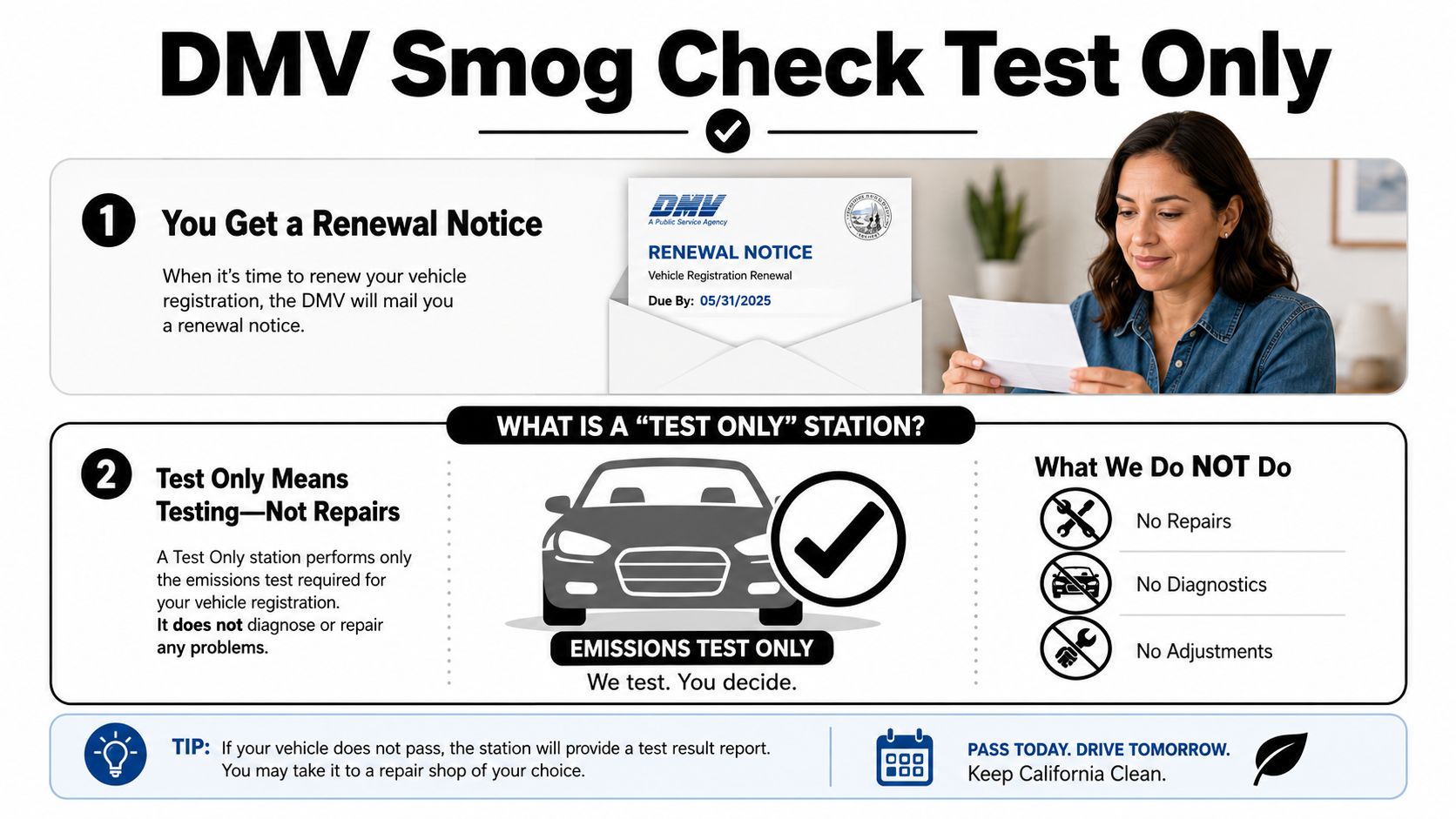
Maria in Hayward has a renewal notice in hand, but registration can't move forward until she visits a test-only smog check station. If you're in the same position, the phrase can sound more complicated than it is. You need an official emissions inspection, but the station you've been directed to may be allowed to test your vehicle and nothing more.
The important part is knowing what happens before, during, and after the inspection. California's system connects smog certification with registration compliance, and the right next step after a failure depends on the result, your DMV instructions, and whether the vehicle must return to a STAR-certified station.
Table of Contents
- What a Test Only Smog Check Actually Means
- Test Only vs Repair Stations vs Star Certified
- What Happens During a Test Only Visit
- How to Prepare Before You Go
- Fees and Timelines You Can Expect
- Common Failure Reasons and What to Do Next
- Choosing a Fast Star Certified Station in San Leandro
- Key Takeaways for a Smooth Smog Check
What a Test Only Smog Check Actually Means
A DMV smog check test only visit is an emissions inspection performed by a licensed California smog station authorized by the Bureau of Automotive Repair, or BAR. The technician measures whether your vehicle meets the applicable emissions requirements, records the result, and sends the certification information electronically for DMV processing. The station's job is to inspect, not repair.
That division is intentional. Think of a test-only station as an examination room. A doctor checks your condition and records the findings, while a separate operating room handles treatment. In the same way, a test-only technician evaluates the emissions system, while a repair facility diagnoses and fixes problems.
California's modern statewide inspection and maintenance program began as a major policy milestone in 1982, when California became the 20th state to adopt a vehicle emissions inspection and maintenance program. BAR began administering the system in 1984, the same year the first Smog Check program was implemented. You can review the DMV's description of the program and its registration connection on the California DMV smog inspection page.
What the technician actually does
For a newer vehicle, the technician generally connects equipment to the vehicle's OBD-II diagnostic port. The inspection also includes visual and functional checks, such as looking for emissions-system tampering and confirming that required warning indicators and components meet the applicable standard.
Older vehicles use a different inspection method. California uses the BAR On-Board Diagnostic Inspection System for 2000-and-newer vehicles, while the BAR-97 Emissions Inspection System measures tailpipe emissions for 1999-and-older vehicles. That technology split affects whether a station can properly serve your vehicle. BAR outlines these inspection systems on its Smog Check program page.
The result is then recorded as a pass or fail. If you pass, the certification can be transmitted to the DMV, allowing the registration process to continue. If you fail, the station should provide documentation showing the inspection result and the information needed for the next step.
Practical rule: A test-only station can tell you whether the vehicle passed. It isn't the place to diagnose the cause or perform the emissions repair.
Test Only vs Repair Stations vs Star Certified
A regular repair station can inspect the vehicle and repair emissions problems, so it may suit a driver who already suspects a fault and wants one business to handle both jobs. A test-only station performs the official inspection but does not repair the vehicle. That separation gives you a test result before you approve any repair work.
STAR certification is a state designation for qualifying test-only and repair stations. It covers added program requirements for equipment, maintenance, and inspection performance. STAR stations must keep BAR-certified equipment in working order and complete required calibrations at least once every 10 calendar days, as specified in California regulation 16 CCR 3392.1.
Match the station to your DMV instruction
| Station type | Can perform the test | Can diagnose or repair emissions problems | May be required for a directed vehicle |
|---|---|---|---|
| Regular repair station | Yes, if properly authorized | Yes | Sometimes, if it has STAR certification |
| Test-only station | Yes | No | Yes, when it is STAR certified and your notice requires it |
| STAR-certified test-only station | Yes | No | Yes, for vehicles directed to a STAR test-only inspection |
The practical decision is simple: follow the station category named on your DMV notice. If the notice directs you to a STAR station, an ordinary station may not satisfy the requirement, even if it is closer.
STAR certification also involves inspection performance. The regulation uses quarterly measures such as Similar Vehicle Failure Rate and requires performance at or above 50% of the industry-wide failure rate for similar vehicles. This standard evaluates the station against program criteria. It does not predict whether your individual vehicle will pass or fail.
Some drivers choose test-only because the DMV sends them there. Others want an independent result before paying for diagnosis or repairs. For a notice requiring a STAR test-only inspection, a location such as this STAR-certified smog check test-only center can match that instruction.
After a failed test, the station type matters. A test-only station documents the failure, but you generally take the vehicle to a repair facility for diagnosis and emissions work. Then check the paperwork and DMV direction before selecting the return station. If STAR certification is required, schedule the re-test at a qualifying STAR location rather than assuming any repair station can complete it.
What Happens During a Test Only Visit
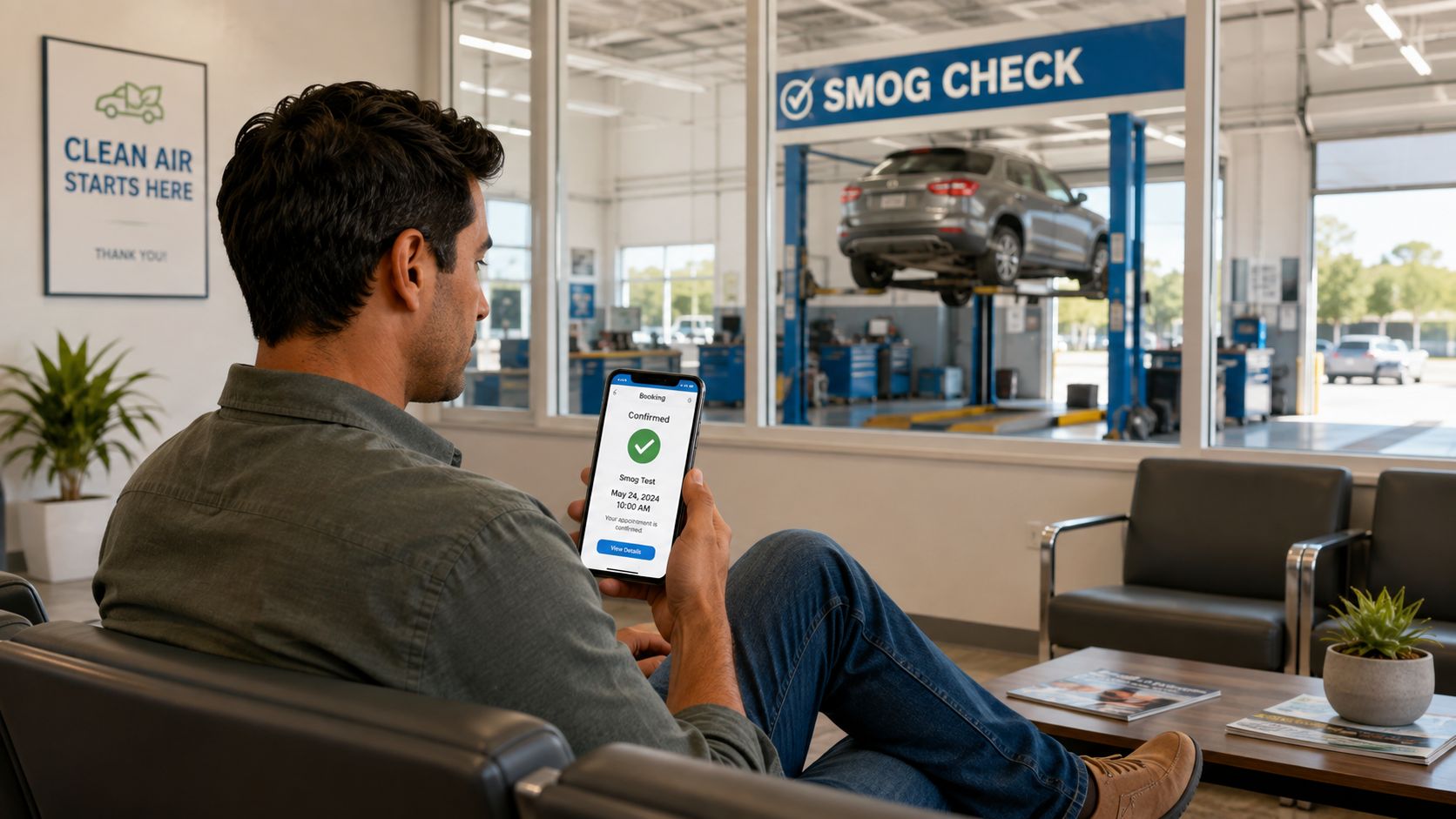
The visit usually feels straightforward when you know the order of events. Start by checking whether the station accepts walk-ins, but calling or booking online can reduce waiting, especially if the shop schedules inspections tightly.
Before the vehicle enters the lane
Bring the document that sent you to the station, such as a renewal notice or DMV letter. Have your registration information available, along with identification and a payment method. If you're returning after repairs, bring the paperwork from the previous inspection or repair visit.
At intake, the technician confirms the vehicle identity, including the VIN, and checks the vehicle's basic inspection condition. They'll look for signs of emissions tampering and review the dashboard. A lit check-engine light is an important warning because it can indicate an emissions-related malfunction that prevents a passing result.
During the inspection
For a qualifying newer vehicle, the technician connects the inspection equipment to the OBD-II port and checks the vehicle's electronic emissions information. The system can show diagnostic trouble codes, communication problems, and readiness information.
For older vehicles, the station uses the BAR-97 equipment to measure tailpipe emissions. The technician may also perform the applicable visual and functional checks, so the inspection isn't just a single reading from the exhaust.
The technician is gathering evidence, not guessing at a repair. A test-only result tells you what the inspection found, but it doesn't replace a diagnosis.
Receiving the result
The technician explains whether the vehicle passed or failed and provides the inspection paperwork. A passing result is transmitted electronically to the DMV, but you should still keep your records until the registration matter is fully resolved.
A failed result should identify the inspection outcome and give you a basis for speaking with a qualified repair shop. Don't approve parts based only on a general failure label. Ask the repair technician to identify the underlying fault and explain what must be corrected before the vehicle returns for another inspection.
How to Prepare Before You Go
A short pre-visit check can prevent a needless trip. You're not trying to repair the emissions system in your driveway. You're making sure the vehicle arrives in a normal operating condition and that you have the documents needed for the inspection.
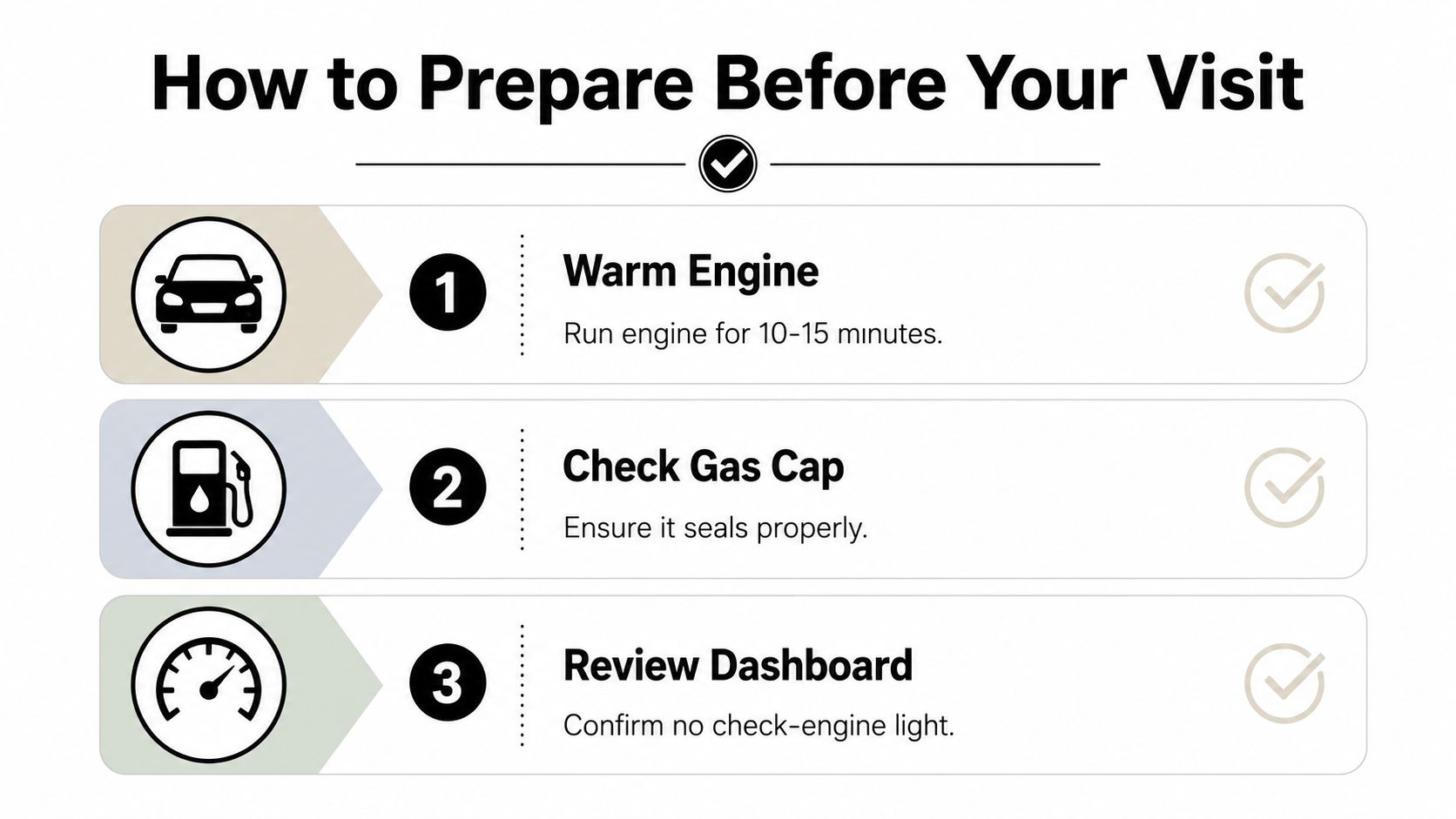
Use this arrival checklist
- Warm the engine: Drive normally before the appointment so the engine and emissions components reach operating temperature. Don't arrive with a cold vehicle if you can avoid it.
- Inspect the gas cap: Remove and reinstall it firmly. A cap that doesn't seal can contribute to an evaporative-emissions problem.
- Review the dashboard: The check-engine light should be off. If it's illuminated, don't assume clearing the light will solve the issue.
- Avoid last-minute code clearing: Disconnecting the battery or erasing diagnostic codes can leave the vehicle's readiness monitors incomplete. The vehicle may need normal driving before the system can complete its checks.
- Gather paperwork: Bring the renewal notice or DMV letter, registration information, identification, payment, and any earlier smog or repair documents.
The OBD system doesn't only look for a light on the dashboard. It also checks whether the vehicle's emissions self-tests have completed. After repairs or a battery disconnect, those monitors may show as “not ready,” so a repair shop should tell you what driving process is needed before the re-test.
Use the video below as a visual reminder of the basic preparation process.
Fees and Timelines You Can Expect
California doesn't use one universal retail price for every station and vehicle. Your total can include the station's inspection charge and state-related charges, while a directed inspection or a vehicle requiring a specialized procedure may be priced differently. Ask for the complete amount before authorizing the test.
The most useful budgeting step is to separate inspection costs from repair costs. A test-only station's charge covers the inspection. If the car fails, diagnosis, parts, labor, and any later inspection are separate decisions. The station shouldn't blur those categories by presenting an inspection as though it includes repair work.
Plan your time realistically
The test itself may be quick when the vehicle is ready and the station has the correct equipment. Waiting time depends on appointments, walk-in traffic, paperwork, and whether the vehicle needs an inspection method for an older model.
Electronic transmission can make the DMV side easier because the certificate information doesn't depend on you carrying a paper certificate to a DMV counter. Still, a successful transmission doesn't always mean every registration issue disappears instantly. If your renewal includes another requirement, you'll need to satisfy that requirement too.
For a closer look at the sequence and timing of a California inspection, review this guide to how long a smog check takes. Before booking, ask three direct questions: What is the full inspection price, how long should I expect to wait, and will the result be transmitted electronically?
Ask before you arrive: Confirm the station can inspect your exact vehicle type and can handle the station designation printed on your DMV notice.
Common Failure Reasons and What to Do Next
A failed test is not a repair diagnosis. It's a signal that the vehicle didn't meet one or more inspection requirements. The next step is to read the Vehicle Inspection Report, identify the failure category, and take that information to a qualified repair facility.
Common causes include:
- Check-engine light: A malfunction indicator can point to an emissions-related diagnostic code. The repair shop needs to retrieve and interpret the code rather than just switch off the light.
- Catalytic converter performance: The converter may not be processing exhaust gases as required, but other faults can sometimes affect related readings.
- Evaporative-emissions leaks: The fuel system may not hold vapors correctly. A gas cap, hose, valve, or other component can be involved.
- Oxygen-sensor problems: Sensor faults can affect the engine computer's emissions controls and trigger diagnostic codes.
- Loose or worn gas cap: A small sealing problem can create a larger inspection issue, particularly when the evaporative system detects a leak.
You can find a broader explanation of common smog check failure reasons before deciding what to authorize.
Follow the decision tree
First, check the paperwork. If the report shows a failed inspection, ask whether the original station offers a qualifying re-test arrangement and what conditions apply. California's consumer guidance explains the limits on what test-only stations may do and addresses the process in its Smog Check consumer FAQ.
Next, determine whether repairs are needed. Take the report to a licensed repair shop that can diagnose emissions faults. Don't replace a catalytic converter, oxygen sensor, or other expensive component solely because its name appears near the failure. Proper testing can identify whether the component itself failed or whether another fault caused the result.
Then, verify the return station. If the DMV directed the vehicle to a STAR station, the follow-up inspection must use the required STAR pathway. A repair shop may perform the repairs, but it won't automatically satisfy a STAR testing requirement unless it has the appropriate certification and authorization.
Finally, ask about special assistance. If reasonable repair efforts don't bring the vehicle into compliance, ask the repairer or BAR about the Smog Check Referee process. The Referee can help address unusual testing problems and cases where the standard process doesn't resolve the inspection issue.
After a failure, don't erase the evidence. Keep the report, diagnostic information, invoices, and repair records. They help the next technician understand what has already been tested.
Choosing a Fast Star Certified Station in San Leandro
A DMV-directed inspection calls for more than choosing the nearest sign that says “smog.” Confirm the station's current STAR certification before you book, particularly if your notice names STAR or directs you to a test-only location.
Ask whether the technicians are licensed through BAR, whether the shop handles your vehicle's inspection technology, and whether results are transmitted electronically. This matters for owners of older vehicles, diesels, hybrids, and vehicles with special DMV instructions because the equipment and process may differ.
Questions worth asking by phone
- Certification: Is the station currently STAR certified, and does that certification apply to the inspection I need?
- Vehicle coverage: Can the station inspect my model, fuel type, and emissions system?
- Turnaround: Is an appointment available, and how long should I plan to wait?
- Paperwork: Will the result be submitted electronically to the DMV?
- Payment: What's included in the quoted inspection price, and are additional charges possible?
- Follow-up: If the vehicle fails, can the staff explain the report and identify the correct re-test path?
A fast appointment shouldn't mean a rushed inspection. STAR requirements include equipment maintenance, calibration, and performance evaluation, so accuracy and speed should work together rather than compete. The station should also explain what it can and can't do. A test-only business that promises to repair the failure on the same visit may not be describing its role clearly.
San Leandro drivers can compare local availability, location, vehicle coverage, and appointment options before choosing a station. The right choice is the one that matches the DMV instruction, has the required certification, uses suitable equipment, and gives you a clear answer about what happens if the result isn't a pass.
Key Takeaways for a Smooth Smog Check
A successful test-only visit starts with the paperwork, not the waiting room. Read the renewal notice or DMV letter carefully and identify whether it requires a standard inspection, a test-only station, or a STAR-certified location. The DMV's registration process depends on receiving the correct certification, so a pass at the wrong station may not solve the original problem.
Prepare the vehicle without trying to disguise a fault. Warm it through ordinary driving, confirm the gas cap seals, and check that the dashboard has no active check-engine warning. If the battery was recently disconnected or diagnostic codes were erased, ask a repair professional whether the readiness monitors have completed before booking the inspection.
Bring your renewal notice, registration information, identification, payment, and any earlier inspection or repair records. Keep the Vehicle Inspection Report if the vehicle fails. It gives the repair shop the starting information it needs and helps you avoid paying for an uninformed parts swap.
The most important post-failure question is simple: Where must the vehicle go next? Some drivers need repairs before returning. Others must return to a STAR-certified station because the DMV directed the vehicle there. Ask the inspecting station to explain the report and confirm the retest conditions before leaving.
For East Bay drivers, Speedy Smog is a STAR-certified station at 15275 Washington Ave, San Leandro, California 94579. It handles emissions inspections for many newer and older vehicles, including diesels and hybrids, and offers Monday-through-Saturday service with electronic DMV submission described by the business.
Speedy Smog provides STAR-certified test-only smog inspections in San Leandro, including electronic transmission of results for DMV registration needs. Check vehicle eligibility, appointment options, and current pricing, then visit Speedy Smog to arrange the inspection.