
You open your DMV renewal notice, glance down, and there it is. Smog certification required. If you drive a hybrid, that line can stop you cold because a lot of owners still assume hybrids are treated like fully electric cars.
They aren't.
That mix-up causes more registration delays than it should. The good news is that a smog check for hybrid vehicles is usually simpler than people expect, faster than a gas-car test, and much less intimidating once you know what the station is checking.
Table of Contents
- Do Hybrids Even Need a Smog Check in California?
- California's Hybrid Smog Check Rules Explained
- The Hybrid Smog Test Process What to Expect
- Common Hybrid Smog Check Failures and How to Pass
- Understanding STAR Certification and Finding a Local Smog Station
- Hybrid Smog Check FAQs
Do Hybrids Even Need a Smog Check in California?
Yes. Most hybrids do need a smog check in California.
The biggest point of confusion is that people lump hybrids in with EVs. That's the mistake. A fully electric vehicle has no gasoline engine to test. A hybrid still has an internal combustion engine, so California treats it as an emissions-regulated vehicle even though the testing method is different.
According to Diamond Certified's California smog check FAQ guide, many owners wrongly believe hybrids are exempt like EVs, but hybrids are required to undergo biennial inspections unless they are 8 model-years or newer. That misunderstanding is exactly why some drivers get surprised by a DMV notice.
Practical rule: If your hybrid burns gasoline, assume you may need a smog check unless your registration paperwork says you're still in an exempt window.
The easiest first step is to trust the DMV notice in your hand. If it says a smog certification is due, treat that as your answer and get it handled before registration turns into a deadline problem.
If you want the broader framework behind that notice, California's rules are easier to follow when they're laid out plainly. A quick read through these California smog check rules helps clear up who's exempt, who isn't, and why hybrids sit in their own category.
A lot of guides stop at “yes” or “no.” That's where owners get stuck. The answer is yes, hybrids are in the program, but the test is more efficient than a conventional gasoline vehicle inspection. That difference matters because many hybrid owners walk in expecting a long, old-school tailpipe test when that's not what happens.
California's Hybrid Smog Check Rules Explained
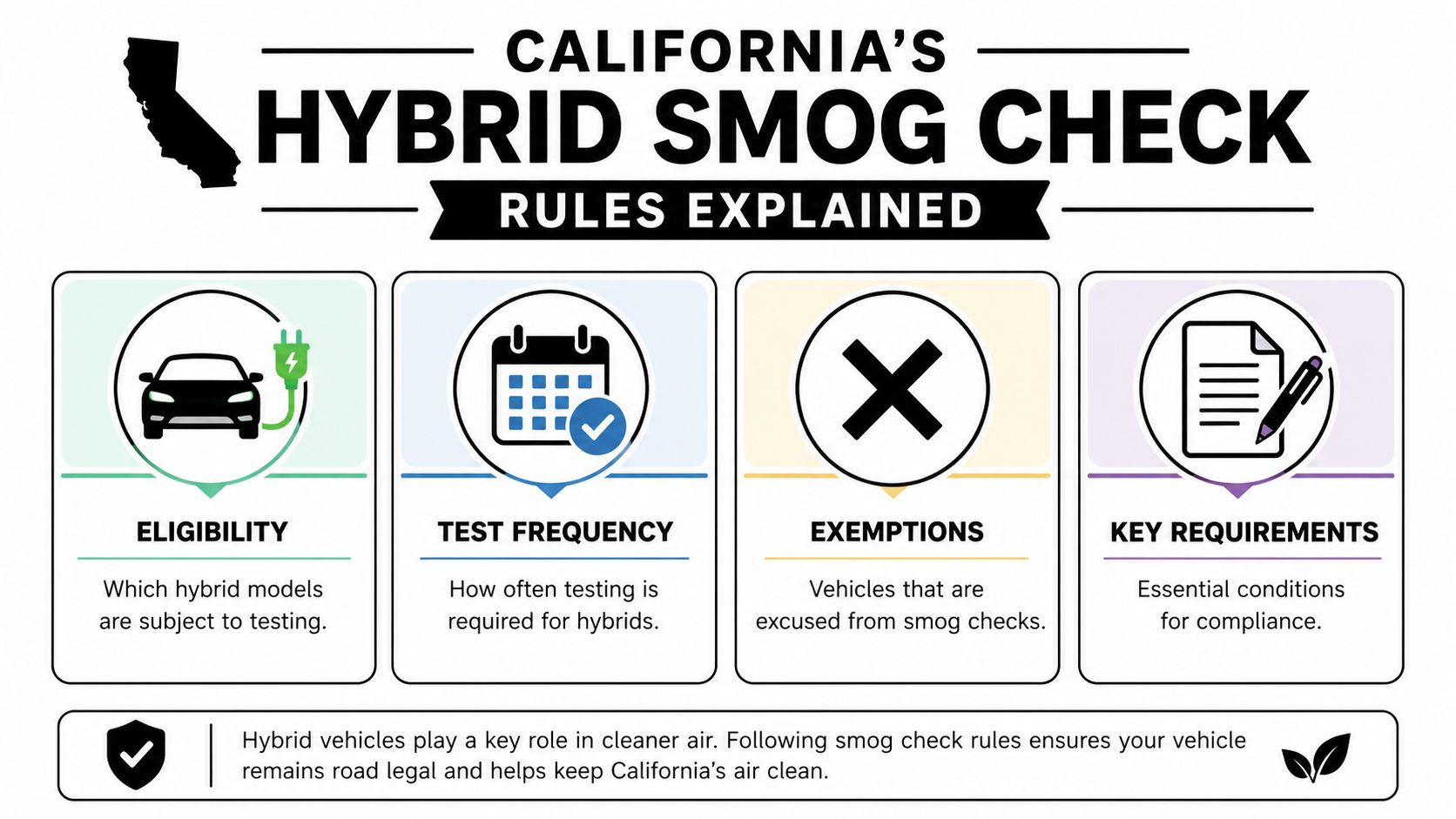
California didn't always test hybrids this way. According to the California Smog Check Program overview, hybrid vehicles officially became subject to smog check requirements in April 2015. That was the point where hybrids were folded into emissions compliance in a formal way.
Which hybrids need testing
Here's the plain-English version:
| Hybrid situation | What usually applies |
|---|---|
| Biennial registration | Hybrids 8 model-years or newer are exempt from the biennial smog check. |
| Newer vehicle registration | Hybrids that are six model-years and newer remain exempt from the biennial requirement and pay a smog abatement fee instead. |
| Change of ownership | Hybrids four model-years or newer are exempt from the smog check at title transfer. Older vehicles need testing for transfer. |
Owners often get tripped up. They hear one exemption and assume it applies to every situation. It doesn't. Registration renewal and vehicle transfer are separate triggers, and the age cutoffs aren't identical in every summary you'll see online.
What matters most for owners
When I explain this at the counter, I keep it simple:
- Renewal notice in hand: Follow what the DMV is asking for.
- Selling or buying a hybrid: Check whether the vehicle is old enough that a transfer smog is required.
- Newer hybrid: Don't assume “new enough” means exempt forever. It just means the exemption window is still open.
If you're unsure which rule applies, look at the reason for the smog requirement first. Is it registration renewal, title transfer, or another DMV action? That usually clears up the confusion fast.
Why the rules feel confusing
Hybrids sit between two worlds. They aren't gas-only cars, and they aren't EVs. California's rules reflect that. The state recognizes the hybrid's design, but it still expects emissions compliance because the gasoline side of the powertrain is still part of the vehicle.
That's why the right question isn't “Are hybrids exempt?” The right question is, “Is my hybrid currently in an exempt category for this specific DMV transaction?”
Once you frame it that way, the rules start making sense.
The Hybrid Smog Test Process What to Expect
You pull into the station expecting a long test, a tailpipe probe, and a lot of waiting. For most hybrids, that is not how it goes.
California's hybrid inspection is usually a short, diagnostics-based visit. As noted earlier from AAA, the process is generally quicker than an older-style gasoline smog test because the inspection centers on the vehicle's onboard systems and emissions equipment rather than a traditional tailpipe procedure.
What happens during the appointment
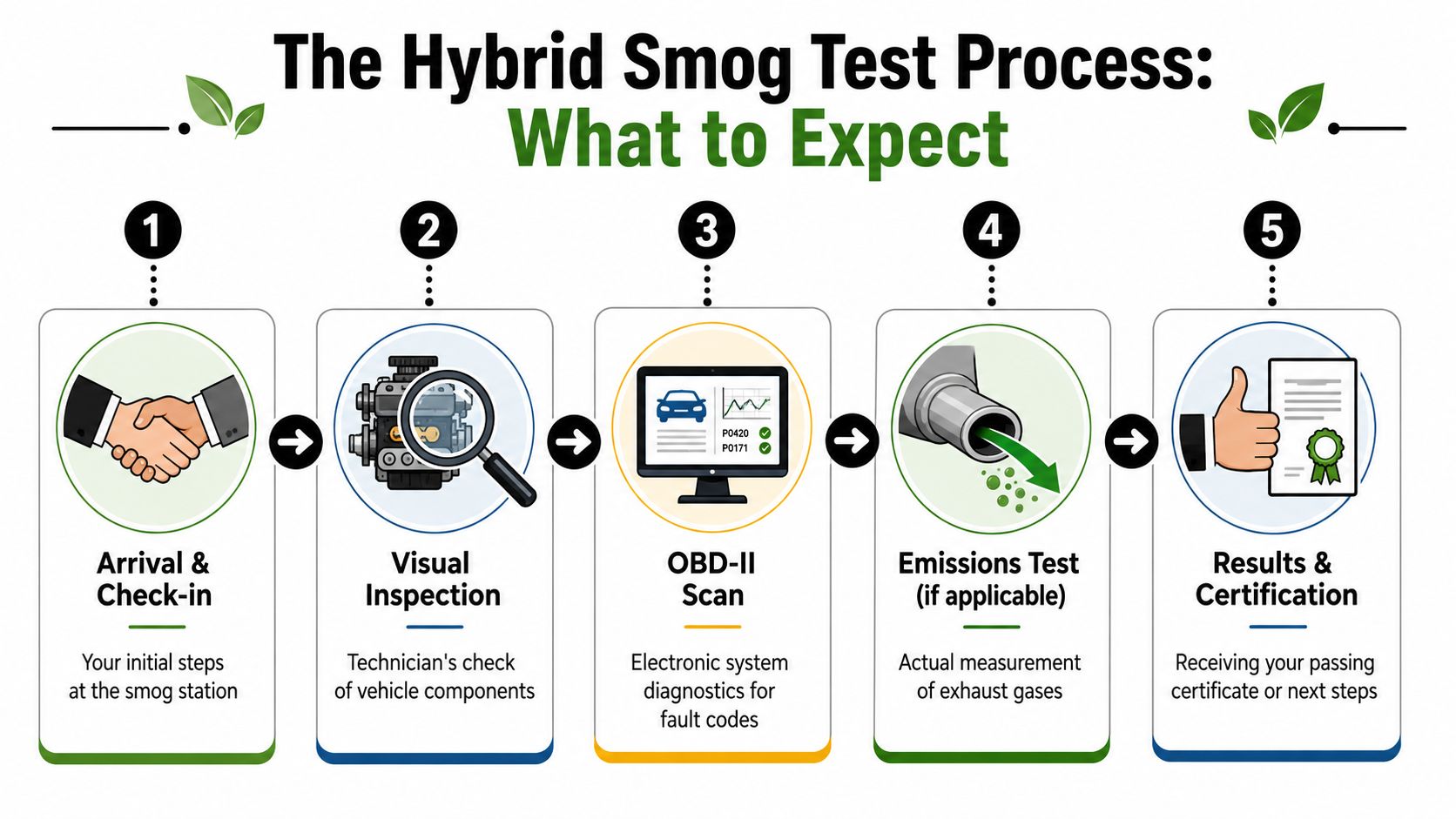
At the shop, the process is straightforward:
Check-in and vehicle verification
The technician confirms the VIN, plate, and basic vehicle information, then starts the inspection in the state system.Visual inspection of emissions equipment
The car is checked for required emissions-related components and obvious tampering. This is one place hybrid owners get surprised, especially if the vehicle has aftermarket parts that were installed without much thought about California compliance.OBD scan and readiness check
The technician connects to the vehicle's onboard diagnostics system to look for stored trouble codes, command status, and readiness monitors. On hybrids, this is the core of the test.Result submission
If the vehicle passes, the certificate is transmitted electronically to the DMV. If it does not, the technician should tell you what stopped the certification so you are not left guessing.
That last part matters. A good station does not just hand over a fail sheet. It explains whether the issue is a warning light, incomplete monitors, or an emissions-related part problem. If you want a clearer picture of the problems that commonly stop certification, review these common smog check fail reasons before your visit.
How the hybrid test differs in practice
Hybrid owners often ask me the same question at the counter: “Are you going to run it like a regular gas car?” In most cases, the answer is no.
The inspection usually focuses on two things. First, whether the required emissions components are present and properly installed. Second, whether the car's computer shows any emissions faults or incomplete self-checks. That is why the appointment often feels simpler than people expect.
The confusion usually comes from hearing mixed advice online. Some drivers assume hybrids are treated like full EVs. Others assume every hybrid gets the same old tailpipe routine as a gas-only car. Neither assumption helps much at the station. What matters is whether the emissions equipment checks out and whether the OBD system is ready to report cleanly.
What to bring and how to avoid a wasted trip
Bring your registration paperwork if you have it, and show up with the car in normal driving condition.
A few practical tips make a difference. Do not disconnect the battery right before the test. Do not clear codes to shut off a warning light and then drive straight to the station. That often leaves the monitors incomplete, which can stop the inspection even if the car seems to be driving fine.
If your hybrid has recent modifications, mention them up front. That saves time, and it can keep you from paying for a test when an emissions-related part is obviously going to be a problem. This is one area where a local smog technician can save you a lot of frustration, because we see the same preventable issues over and over and can usually spot them before they turn into a failed visit.
Common Hybrid Smog Check Failures and How to Pass
A driver comes in with a hybrid that runs fine, no strange noises, no obvious drivability problem, and still fails the smog check. In my experience, the cause is usually simple. The car either has an active fault, the monitors are not ready, or an aftermarket part creates a compliance problem.
The biggest point of confusion is modifications. A hybrid does not fail just because it has aftermarket parts. It fails when an emissions-related part is missing, installed incorrectly, triggers a fault, or lacks the right California approval. That distinction saves people a lot of wasted trips.
What usually causes trouble
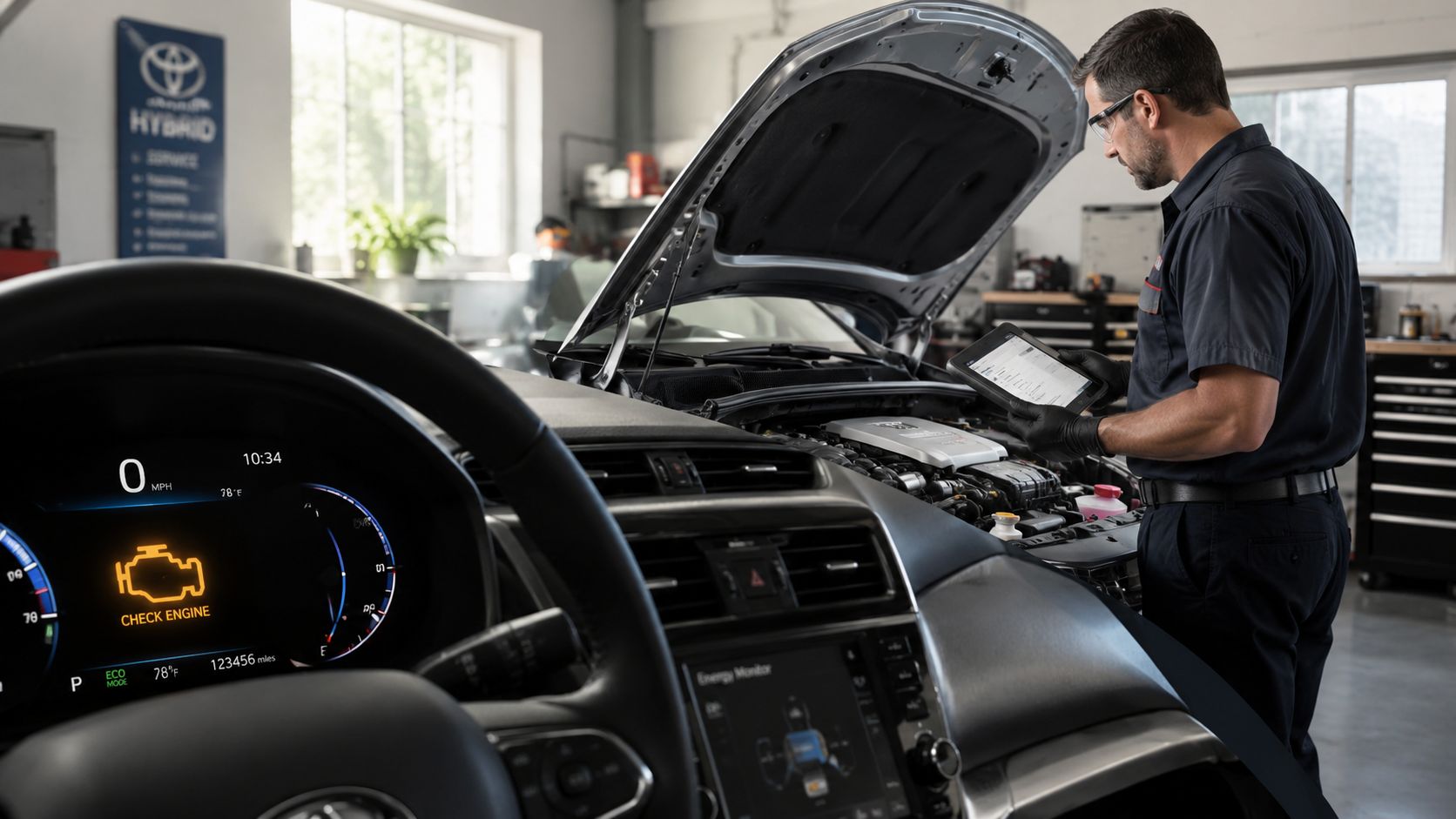
The Check Engine light is still the first thing I look at. If that light is on, the inspection usually stops there because the OBD system is reporting an emissions problem.
Readiness monitors cause a lot of repeat visits. If the 12-volt battery was disconnected, codes were cleared, or recent repair work reset the system, the car may show incomplete monitors. The hybrid can feel perfectly normal and still not be ready for testing.
Aftermarket parts are another common problem, especially intakes, catalytic converters, engine software changes, and other emissions-related components. Some hybrid owners also assume any battery upgrade or plug-in conversion automatically means failure. The issue is whether the change affects emissions compliance or creates a fault in the system. If the part needs CARB approval, it needs to be approved and properly documented.
I also see failures after do-it-yourself repairs. A loose connector, an unplugged sensor, or a cover left off after service can create a problem that the owner never notices until test day.
For a broader look at the issues that stop vehicles from passing, this guide to common smog check fail reasons covers the patterns we see at the station every week.
Hybrid smog failures are usually straightforward. The car is telling you something is wrong, or the emissions setup no longer matches what California requires.
A simple pre-test checklist
Before you schedule a smog check for a hybrid, check these items first:
- Check the dash: Handle any Check Engine light before testing.
- Give the monitors time to reset: If power was disconnected or codes were cleared, drive the vehicle through normal use before coming in.
- Review any modifications: Confirm that emissions-related aftermarket parts are legal for California and installed correctly.
- Look over recent repair work: Make sure hoses, connectors, and covers are back in place.
- Ask before you test: If you are unsure about a modified part, call a local smog station and ask. A quick answer can save you the cost and hassle of a failed visit.
A quick visual check at home helps more than people expect. You are not trying to diagnose the whole car. You are looking for obvious signs that something was recently changed, removed, or left unfinished.
Here's a helpful visual walkthrough of the kind of inspection mindset that matters before test day:
What works and what doesn't
What works is simple. Fix the warning light problem, drive the car enough to complete its self-checks, and verify that any emissions-related parts are California-compliant before you book the test.
What does not work is clearing codes right before the appointment and hoping the system stays quiet long enough to pass. Hybrids are checked through their onboard reporting, so incomplete or inconsistent data gets flagged fast.
If you are unsure whether your hybrid needs a repair, more drive time, or a closer look at an aftermarket part, a local technician who sees California smog failures every day can usually sort that out quickly. That clarity is what a lot of online guides miss. The failure is rarely mysterious. The cause is usually right in front of you.
Understanding STAR Certification and Finding a Local Smog Station
Not every station operates under the same expectations. If your DMV paperwork says you need a STAR station, you need to pay attention to that wording and not just show up anywhere.
When STAR matters
A STAR Certified station meets higher performance standards set by the Bureau of Automotive Repair. For drivers, that mostly means confidence that the inspection process is being handled in a way the state recognizes for the situations where STAR is required.
That doesn't make non-STAR stations “bad.” It just means STAR designation matters when the DMV specifically calls for it, or when you want the extra reassurance that the station is operating at that higher benchmark.
For a straightforward explanation of what that designation means, this guide on what a Smog STAR station is lays it out in simple terms.
What to look for in a station
If you drive a hybrid, I'd focus less on flashy marketing and more on whether the shop feels organized and comfortable handling OBD-based testing cleanly. A good station should be able to answer simple questions without making the process sound mysterious.
A few signs you're in the right place:
- Clear communication: They can explain the hybrid test in plain language.
- Efficient workflow: Check-in, inspection, and certification move without confusion.
- Comfort and convenience: A decent waiting area matters more than people admit.
- No drama about hybrids: The staff should treat your vehicle type as routine, not unusual.
A reliable smog station doesn't just run the test. It helps you understand what the result means and what to do next if there's a problem.
For East Bay drivers, that local factor matters. You want a shop that knows how California compliance works, handles DMV-facing inspections every day, and respects your time.
Hybrid Smog Check FAQs
Do I need to warm up a hybrid before the test
Usually, no. Hybrid smog checks are generally based on the vehicle's onboard diagnostics, so there is no special warm-up routine like people remember from older tailpipe tests.
What matters more is that the car has been driven normally and hasn't had the battery disconnected or codes cleared right before the inspection. If the system monitors are set and no warning lights are on, you're in good shape.
Will a battery upgrade or plug-in charger kit fail smog
A hybrid does not fail just because it has been modified. The question is whether the part affects emissions compliance, triggers a fault, or lacks approval where approval is required.
Owners frequently face challenges. Factory-style replacement parts are usually straightforward. Aftermarket electronics, charger kits, intake parts, and other add-ons can create problems if they interfere with the car's emissions systems or set diagnostic trouble codes. I see more failures tied to the side effects of modifications than to the idea of a hybrid itself.
What happens if my hybrid fails
Start with the reason for the failure. That sounds obvious, but many drivers leave with a printout and still are not sure whether the problem is a check engine fault, incomplete readiness monitors, or an issue related to a recent repair.
Do not clear codes and hope for the best. That often resets the monitors and creates a second problem. A better move is to have the fault diagnosed, complete the repair, and then return for a retest under the station's policy.
How long does the result stay valid
If your hybrid passes, the electronic smog certificate is valid for 90 days. That is usually enough time to finish your DMV registration or title transfer without rushing.
Are hybrids easier to test than gas cars
In many cases, yes. The process is often quicker because the inspection usually centers on the onboard system instead of an older-style tailpipe procedure.
Still, “easier” does not mean automatic. Hybrids fail for real reasons, and the common ones are usually preventable. Check engine lights, unset monitors, and emissions-related aftermarket parts cause far more trouble than the hybrid powertrain itself.
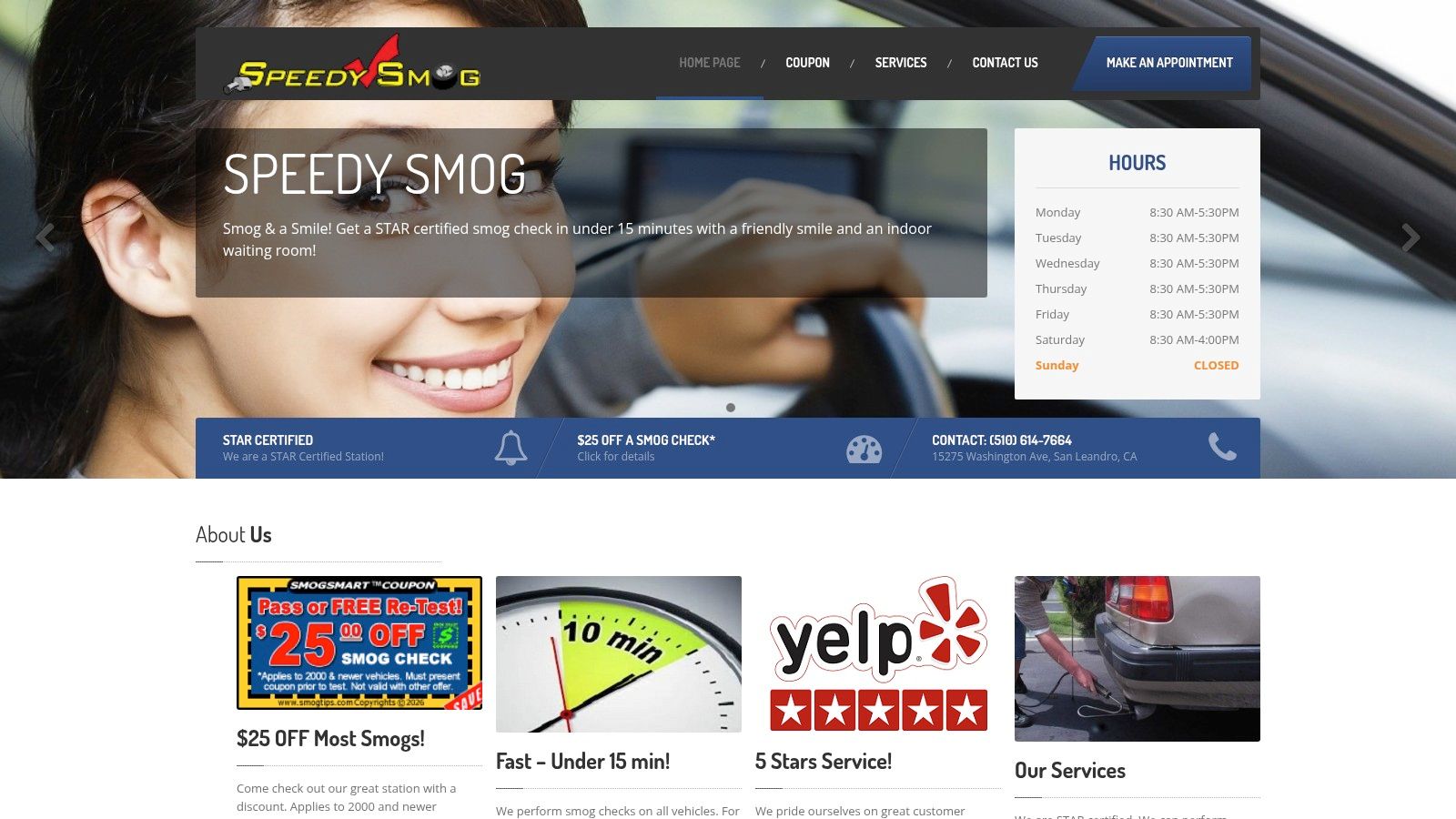
If you need a hybrid smog check in the East Bay, Speedy Smog in San Leandro is a STAR Certified station that makes the process easy. Drivers choose it for fast inspections, a comfortable waiting room, clear pricing, and friendly service that keeps the visit simple from check-in to DMV certification.