
Your DMV renewal notice shows up, and somewhere in the fine print you see that your diesel truck needs attention. That's usually when the questions start. Do I need a regular smog check? Does this fall under Clean Truck Check? Is my pickup treated like a commercial rig? What if the truck is modified, or the check engine light just came on?
That confusion is normal. California diesel rules trip people up because owners often hear one phrase, “smog check for diesel trucks,” when the state treats diesel vehicles under two different systems. If you own a diesel pickup, van, or work truck, the right answer depends less on the word diesel and more on the truck's weight rating and registration class.
Table of Contents
- Why California Diesel Smog Checks Are So Confusing
- Smog Check or Clean Truck Check What Your Diesel Needs
- The Light-Duty Diesel Smog Check Process Step by Step
- Common Reasons Why Diesel Trucks Fail Smog Checks
- How to Prepare Your Diesel Truck for a Flawless Test
- Find a Fast STAR Certified Diesel Smog Check in the East Bay
- Frequently Asked Questions About Diesel Smog Checks
Why California Diesel Smog Checks Are So Confusing
A lot of owners walk in expecting one simple answer. They've got a diesel truck, so they assume there's one diesel inspection rule for everybody. That's where the stress starts.
California doesn't group every diesel truck together. A light-duty diesel pickup can fall under the BAR Smog Check system, while a heavier diesel truck can fall under CARB's Clean Truck Check framework. Those are not the same program, and they don't follow the same inspection rhythm or the same compliance process.
That difference matters most when the truck sits near the line between personal pickup and work truck. A diesel owner might drive a truck that looks like a normal pickup, uses it for daily life, and still wonder whether the state treats it like a passenger vehicle or a heavier commercial unit. The answer usually comes down to the vehicle's listed weight rating, not what it looks like in the driveway.
Practical rule: If you start by checking your truck's GVWR and registration details, you'll avoid most of the confusion that sends owners down the wrong path.
Another reason people get mixed up is that rules have changed over time. California's diesel enforcement has become more specific, especially as onboard diagnostics and modern emissions hardware became standard. That means advice from a friend, an old forum post, or a mechanic who mainly works on older gas vehicles can be incomplete.
Here's the reassuring part. Once you know which side of the line your truck falls on, the process gets much easier to understand. You're no longer guessing whether your diesel pickup needs a station visit for a BAR inspection or whether your heavier truck belongs in CARB's compliance system.
Smog Check or Clean Truck Check What Your Diesel Needs
The biggest mistake owners make is asking, “Is there a smog check for diesel trucks?” as if every diesel is handled the same way. California doesn't work that way. Much like weight classes, the rule changes when the truck crosses a specific threshold.
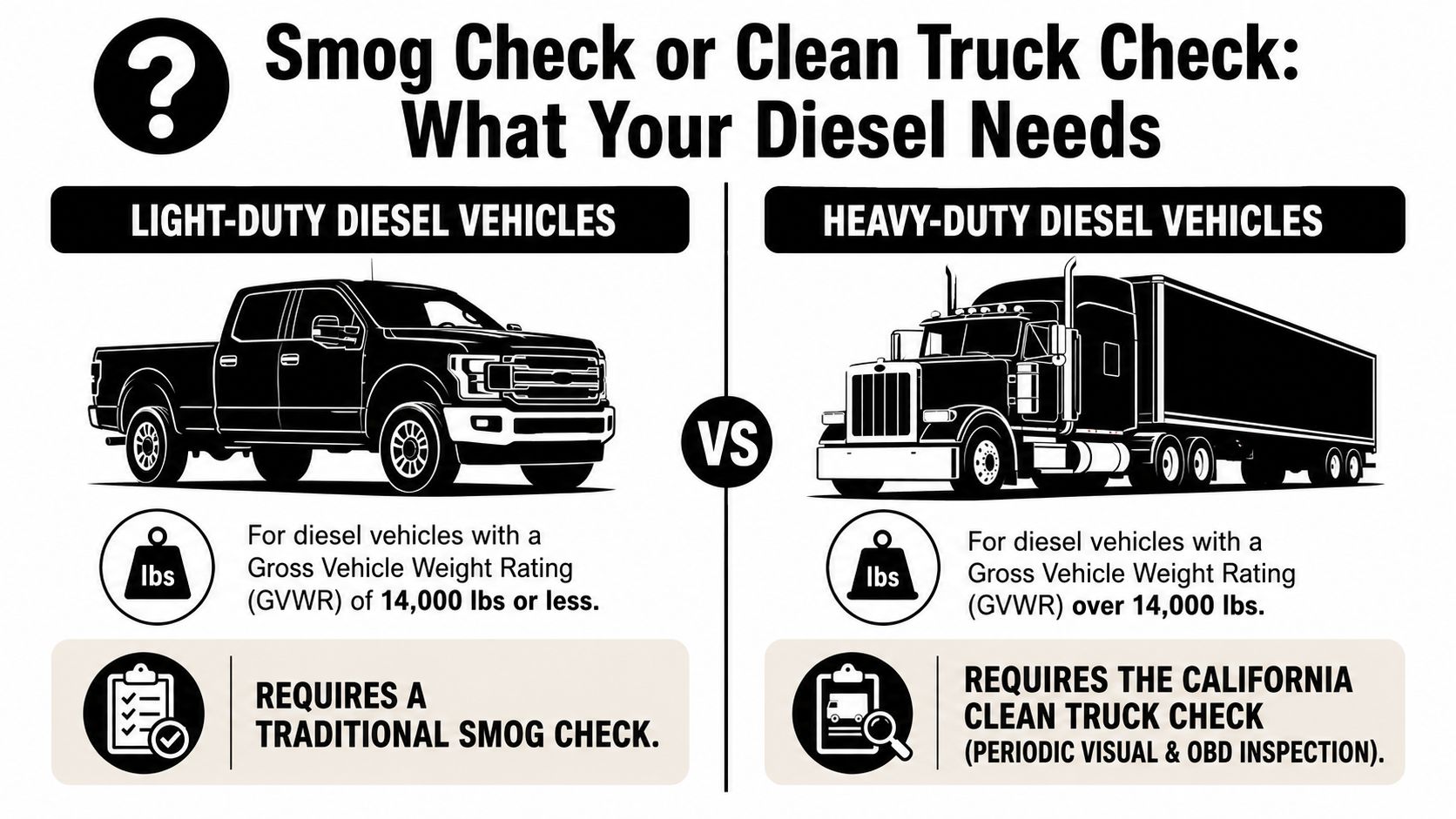
According to BAR and CARB program guidance discussed in this overview, BAR's diesel smog program covers light-duty diesel vehicles 14,000 pounds GVWR and under, while CARB's heavy-duty program applies to diesel vehicles over 14,000 pounds GVWR. That's the dividing line most owners need to know first.
Light-duty diesel vehicles
If your diesel truck is 14,000 pounds GVWR or less, it typically fits into the light-duty side. That's where owners of many diesel pickups, smaller diesel SUVs, and similar vehicles usually land.
For these vehicles, the phrase smog check for diesel trucks usually means a traditional BAR-regulated inspection at a smog station. The technician is looking at emissions-related equipment, onboard diagnostic information, and visible smoke.
Typical clues your truck may fall into this category include:
- Pickup-style use: You drive it like a personal vehicle or light work truck.
- Passenger vehicle process: Your DMV renewal points you toward a smog inspection at a station.
- Modern diesel hardware: The truck has OBD-based emissions monitoring and factory aftertreatment equipment.
Heavy-duty diesel vehicles
If the truck is over 14,000 pounds GVWR, California generally moves it into the heavy-duty compliance world. That's where CARB's Clean Truck Check comes in rather than the ordinary light-duty BAR lane.
That system has a different structure and inspection cadence. It's aimed at medium-duty and heavy-duty diesel vehicles, not just passenger-oriented pickups. For owners, that's important because searching for “diesel smog” can send you to advice that doesn't apply to your truck.
The same fuel type doesn't mean the same inspection system. Diesel is only part of the story. Weight class changes everything.
Where to find your GVWR
If you're unsure which side you're on, check the driver's door jamb label or your registration paperwork. Look specifically for GVWR, which stands for Gross Vehicle Weight Rating. That label tells you the class the truck was built into.
A quick side-by-side view helps:
| Truck category | General California program |
|---|---|
| 14,000 pounds GVWR and under | BAR light-duty diesel smog check |
| Over 14,000 pounds GVWR | CARB heavy-duty Clean Truck Check |
If you remember only one thing, remember this: the right answer starts with GVWR, not guesswork.
The Light-Duty Diesel Smog Check Process Step by Step
If your truck falls into the light-duty lane, the inspection is usually more straightforward than people expect. California expanded diesel smog-check rules in 2010 to include model year 1998 and newer diesel vehicles under 14,001 pounds GVWR, and BAR announced that beginning in July 2023, readiness rules tightened for model year 2007 and newer light-duty diesels by allowing only the Diesel Particulate Filter and Non-Methane Hydrocarbon Catalyst monitors to be unset, as explained in BAR's diesel requirements update.
The vehicles in this lane
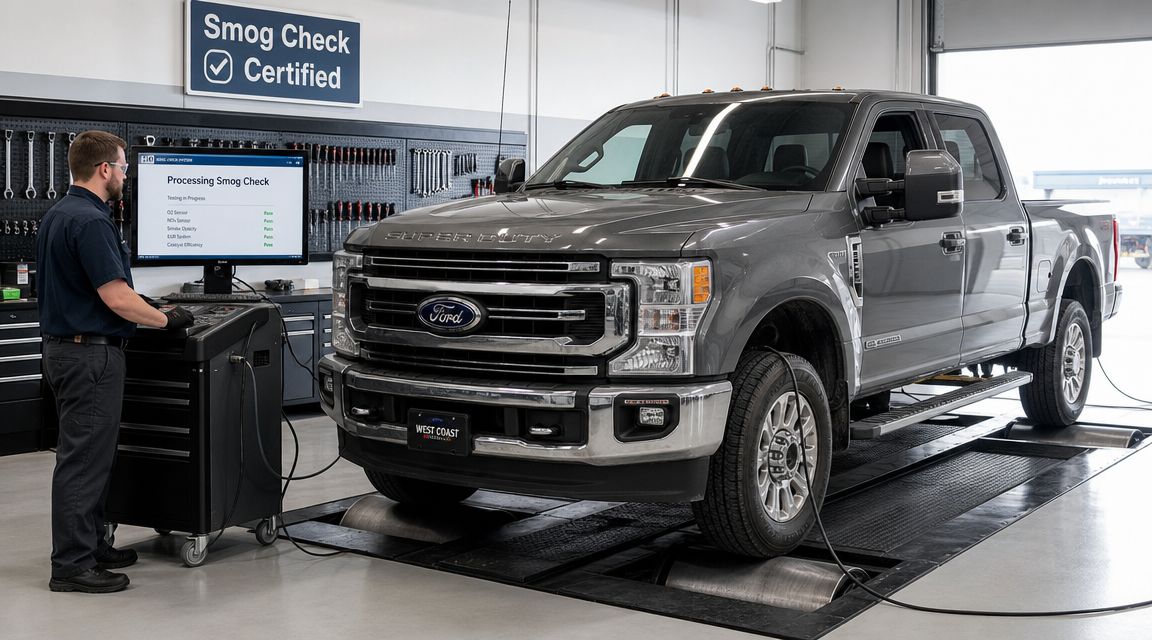
This process usually applies to diesel pickups and similar light-duty diesel vehicles that fit the weight limit above. If your truck belongs here, the inspection is not the same as the heavy-duty Clean Truck Check process discussed earlier.
Owners often worry that the station is going to tear into the truck. That's not what happens. A light-duty diesel smog inspection is a focused emissions compliance check.
What the technician actually checks
The test usually has three practical parts.
- Visual inspection: The technician checks that required emissions components appear to be present and not obviously tampered with. If a truck has missing emissions hardware or obvious non-compliant modifications, that creates trouble right away.
- OBD inspection: The scanner communicates with the truck's onboard computer. The technician looks for stored trouble codes, command status, and readiness information.
- Visible smoke inspection: The truck can't be producing excessive visible smoke from the tailpipe during the test.
That's the part many drivers find reassuring. No mystery. No hidden trick. It's mostly a matter of whether the emissions system is intact, whether the truck's computer reports healthy status, and whether the exhaust is visibly clean enough to pass.
For a visual walkthrough, this short clip helps show what an emissions inspection environment looks like:
Why readiness trips people up
Readiness monitors confuse even careful owners. A truck can run perfectly and still not be ready for inspection if the computer hasn't completed its internal emissions self-checks. This often happens after recent battery disconnects, code clearing, or certain repairs.
For model year 2007 and newer light-duty diesels, BAR's July 2023 change made things stricter. Only the Diesel Particulate Filter and Non-Methane Hydrocarbon Catalyst monitors may be unset under that rule change, as described in the BAR update cited above. In plain language, the truck's computer has less room to say “not ready” and still pass.
If you recently cleared codes or replaced parts, drive the truck normally for a while before testing. A clean dashboard doesn't always mean the readiness status is complete.
That's why some owners fail after repairs even though the original problem is gone. The system may be fixed, but the OBD data isn't ready yet.
Common Reasons Why Diesel Trucks Fail Smog Checks
Most diesel failures fall into a handful of patterns. Some are obvious the moment the truck rolls in. Others catch owners off guard because the truck seems to drive fine.
Illegal emissions changes
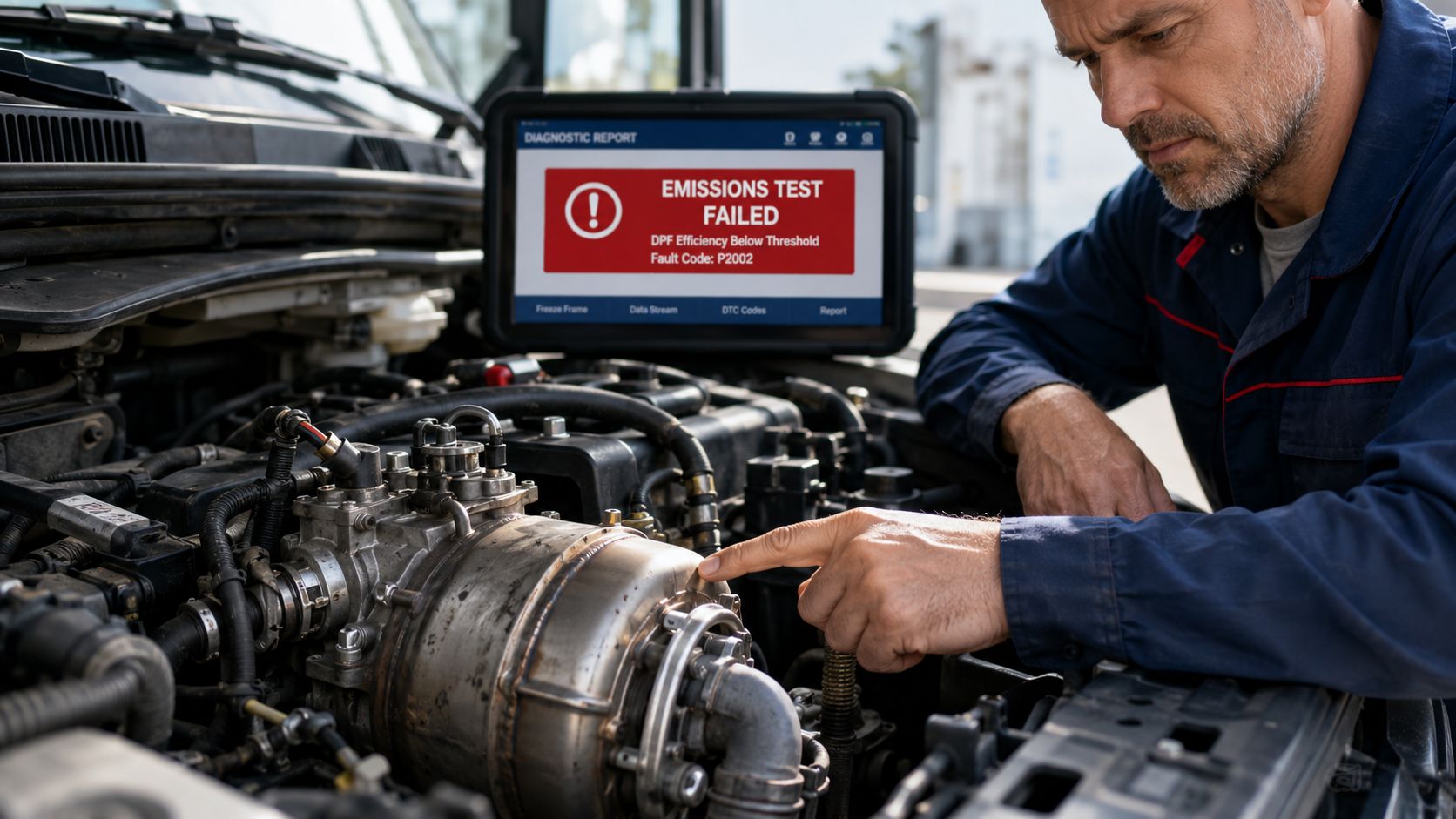
The fastest way to create a smog problem is to remove or alter emissions equipment. On modern diesels, that can include deleted aftertreatment parts, missing sensors, modified exhaust routing, or engine tuning that changes how emissions systems operate.
A truck owner may call it “bulletproofing,” “tuning,” or “cleaning up the engine bay.” The inspection doesn't see it that way if required emissions components are missing or obviously altered.
Common examples include:
- Deleted DPF systems: If the Diesel Particulate Filter is removed, that's a direct problem.
- Tampered EGR or catalyst equipment: Missing or altered parts can trigger a visual failure.
- Aftermarket tuning that affects emissions controls: Even if the truck feels stronger, emissions compliance may be gone.
Computer and warning light problems
The second big category is electronic. If the truck's computer reports an emissions-related fault, the smog result usually won't go your way.
Owners frequently get frustrated. The truck might start well, idle smoothly, and pull hard on the road. But if the check engine light is on, if diagnostic trouble codes are present, or if readiness monitors haven't completed, the computer is telling the station the system isn't ready to certify.
A diesel can feel healthy and still fail. Smog compliance depends on what the emissions system reports, not just how the truck drives.
Smoke and drivability issues
Visible smoke still matters. Excess smoke points to a system that isn't controlling combustion or aftertreatment correctly, and that raises a red flag during inspection.
Smoke problems often show up alongside drivability complaints, such as rough running, injector issues, turbo problems, or sensor faults. Even if the root cause seems mechanical rather than regulatory, it can still lead to a failed smog check because the truck is visibly not operating cleanly.
If you're trying to avoid a failed visit, look at the truck the way a technician would. Is anything missing under the hood or under the truck? Is there a warning light on? Does it smoke when started, revved, or driven warm? Those three questions catch a lot.
How to Prepare Your Diesel Truck for a Flawless Test
A little prep goes a long way. Most diesel smog headaches come from arriving with a truck that had warning signs the owner didn't realize mattered.
A simple pre-test checklist
Run through this before your appointment:
- Fix the check engine light first: If the light is on, don't test yet. Diagnose the fault and repair it.
- Don't clear codes right before the test: That can reset readiness monitors and leave the truck not ready.
- Drive the truck fully warm: A normal drive before the appointment helps the emissions system operate the way it should.
- Look for obvious modification issues: If the truck has deleted or tampered emissions parts, deal with that before testing.
- Bring your DMV paperwork: It helps the station confirm what inspection is needed.
That warm-up drive matters more than many people think. A cold diesel can behave differently than one at operating temperature. Sensors, exhaust treatment, and self-check routines all work better when the truck has been driven normally.
What to expect on test day
Most owners do best when they treat the visit like a routine maintenance stop, not a courtroom appearance. Bring the truck in after a normal drive, make sure the dashboard isn't hiding a warning light, and let the technician know if the battery was recently disconnected or emissions repairs were just completed.
If you've had recent work done, tell the shop what was repaired. That doesn't change the standards, but it helps the technician understand why a monitor may still be incomplete.
A good rule of thumb is simple:
- Repair first
- Drive normally
- Test once the truck is ready
That order saves time, repeat visits, and a lot of aggravation.
Find a Fast STAR Certified Diesel Smog Check in the East Bay
You pull into a smog station with a diesel pickup, and the first question is the one that causes trouble for a lot of owners: is your truck getting a BAR smog check, or does it belong under the CARB Clean Truck Check system? That distinction matters because the right shop can save you from a wasted trip, a wrong appointment, or an answer that applies to a different class of diesel vehicle.
In the East Bay, speed starts with choosing a station that understands that split clearly. A light-duty diesel pickup that needs DMV certification belongs in a very different lane than a heavier commercial truck dealing with CARB compliance. Many online articles blur those together. A good local station should sort that out in a few minutes.
What to look for in a shop
A helpful station usually has three traits.
- STAR certification: If your notice requires a STAR station, that part is simple. The shop needs the proper certification to perform the inspection.
- Regular experience with diesel pickups: Diesel testing has its own check-in questions, equipment, and failure patterns. A station that sees these vehicles often is less likely to treat your truck like a gas SUV or a heavy fleet unit.
- Clear screening before the test: The staff should be able to ask a few basic questions, such as vehicle type and registration use, and point you toward the correct program without guesswork.
If you are in the East Bay, one local option is Speedy Smog in San Leandro. The station is STAR Certified and offers diesel smog testing for passenger diesel vehicles.
A local option in San Leandro
That kind of shop helps for a practical reason. It reduces confusion at the counter. If your diesel pickup needs a BAR inspection, you want a station that can confirm that quickly, process the test correctly, and explain any problem in plain English.
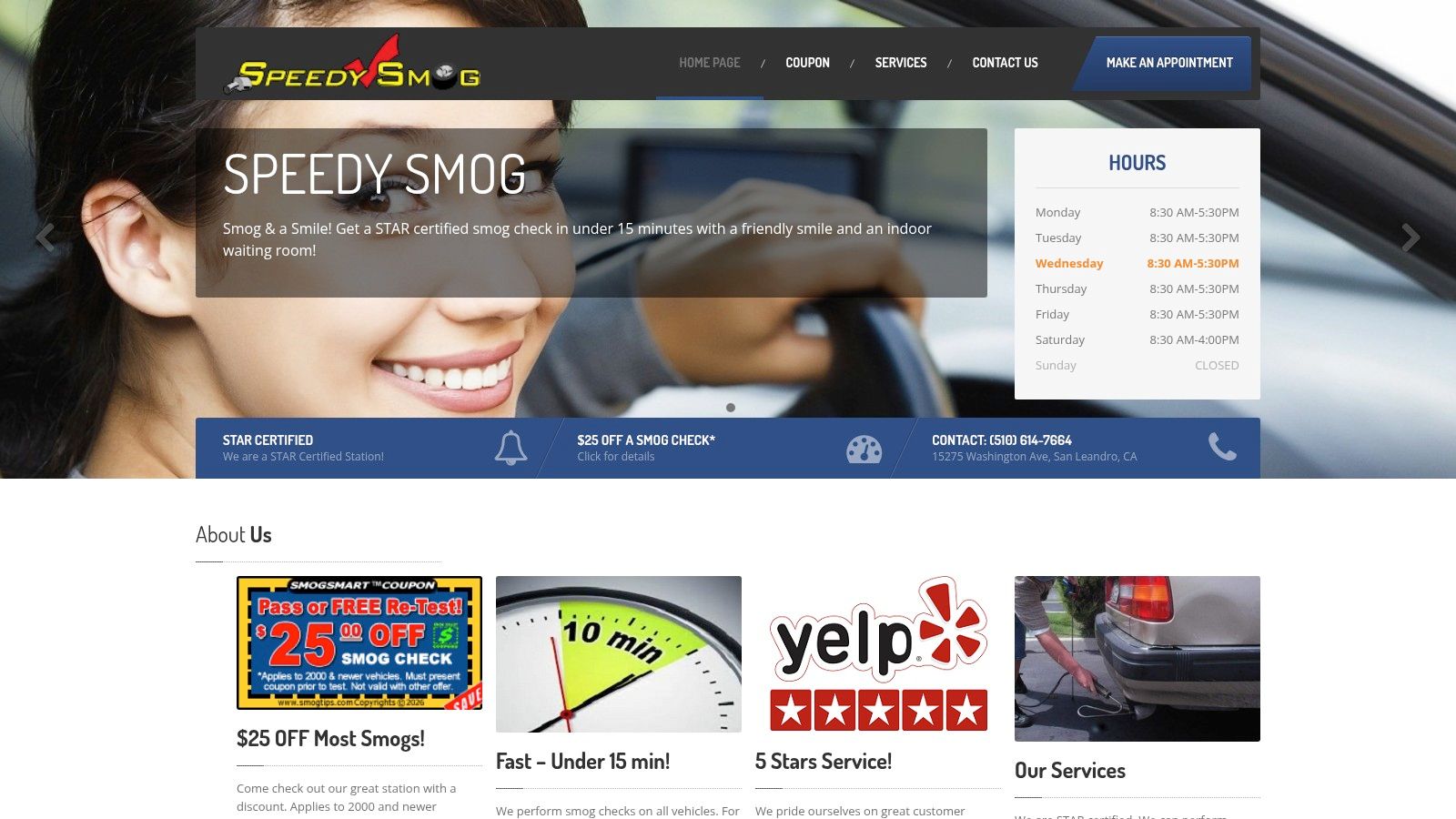
For East Bay owners, that clarity is often a major time-saver. A knowledgeable technician does more than run the machine. They help you avoid mixing up the BAR light-duty smog check with the CARB heavy-duty Clean Truck Check, which is the mistake that sends many truck owners down the wrong path.
Frequently Asked Questions About Diesel Smog Checks
A few questions come up over and over, especially from diesel pickup owners who are trying to sort out renewal notices and repair decisions.
Are new diesel trucks exempt
Some newer vehicles may have temporary model-year-based exemptions at purchase, but owners shouldn't assume every new diesel truck is automatically outside the system. Exemption rules depend on the vehicle and registration situation. The safest move is to check your DMV renewal notice and verify what's required for your specific truck.
If you're unsure, don't rely on a forum answer that treats every diesel the same. The state's diesel categories are too specific for that.
Are any diesel trucks completely exempt
Some older diesels fall outside the light-duty program discussed earlier. On the heavy side, the vehicle may not be in the BAR passenger smog lane at all because it belongs under the separate heavy-duty framework.
For heavy trucks, California approved a rule requiring twice-yearly smog inspections for medium- and heavy-duty trucks and buses, with older heavy-duty vehicles without onboard diagnostics still subject to opacity testing plus a visual inspection twice each year. The same policy also sets a future stage for trucks with onboard diagnostics to be tested four times per year, with data potentially submitted remotely rather than at a station, as reported in this summary of the CARB heavy-duty inspection rule.
That's why “diesel truck exemption” can be a misleading phrase. Some trucks aren't exempt. They're regulated under a different program.
What happens if my truck fails
You'll get a failure result showing the area that didn't meet requirements. From there, the practical path is:
- Read the failure reason carefully: Don't guess whether it was a code issue, readiness issue, visual issue, or smoke issue.
- Repair the actual cause: Clearing lights without fixing the fault usually just delays the problem.
- Drive the truck enough after repairs: If monitors need time to reset, a retest immediately after repairs may still not work.
- Return for a retest when the truck is ready: A good shop can tell you what to verify before you come back.
Failure doesn't mean your truck is doomed. Most failed diesel inspections trace back to a specific repair or compliance issue that can be identified and corrected.
If you're in the East Bay and need a clear answer on a light-duty diesel pickup or passenger diesel vehicle, Speedy Smog is a STAR Certified San Leandro station that performs diesel smog testing and can help you determine whether your truck belongs in the regular BAR process or whether you need to follow a different compliance path.