
Smog Check Union City CA: Your 2026 Guide
That DMV renewal notice lands in the mail, you tear it open, and your eyes go straight to the line that matters: Smog Certification Required. For a lot of Union City drivers, that one line creates the same chain of thoughts. Where should I go, how much is this going to cost, and what happens if my car fails?
The good news is that a smog check in California is routine. The hard part isn't usually the inspection itself. It's the small details that trip people up before they even pull into the bay. In Union City, the biggest headaches tend to be practical ones: showing up with a check engine light on, testing too soon after a battery disconnect, or picking a test-only station without realizing it can't fix anything if the car fails.
For smog check Union City CA, this is the local, plain-English version of what matters.
Table of Contents
- Your Guide to a Hassle-Free Smog Check
- How to Prepare Your Vehicle to Pass the First Time
- Finding the Right Smog Station in Union City
- A Smart Alternative Speedy Smog in San Leandro
- What Happens During the Smog Inspection
- What to Do If Your Vehicle Fails the Smog Check
Your Guide to a Hassle-Free Smog Check
The registration notice shows up, the due date is closer than you thought, and now the job is getting a smog check done without losing half a day or paying for a retest.
In Union City, the test itself is usually quick. The frustrating part is everything around it. Drivers book the wrong type of station, show up right after a battery change, or pay for a test before checking whether the DMV is even asking for one. Those are the mistakes that turn a routine errand into two or three trips.
California requires smog checks for many registration renewals and some ownership transfers. The exact requirement depends on the vehicle and the transaction. Newer gasoline vehicles may not need a physical inspection for renewal, while others do, and the DMV notice is the first thing to verify before you schedule anything.
Practical rule: Read the renewal notice line by line before you book. If the DMV is not asking for a smog inspection, skip the extra errand.
If a test is required, treat it like a timing problem as much as a vehicle problem. A car can run fine and still fail because the monitors are not ready yet, especially after the battery was disconnected or codes were recently cleared. I see that catch people more often than obvious mechanical issues.
Another point that confuses Union City drivers is station type. A Test-Only station is not the same as a shop that can both test and repair, and a STAR requirement on your notice matters. Picking the wrong place first can cost you time even if your car is otherwise ready.
If you want a quick overview of the problems that trip people up before they even get to the bay, this guide to common smog check fail reasons in California is a useful starting point.
The smooth approach is simple. Confirm you need the inspection, make sure the car is ready, and choose a station that matches what your DMV notice requires.
How to Prepare Your Vehicle to Pass the First Time
The easiest smog check is the one you only do once. Most avoidable failures happen before the technician touches the car.
Start with the dashboard
If your Check Engine light is on, stop there and deal with that first. A California smog check includes an OBD-II scan, and vehicles with an active check engine light automatically fail that part of the inspection. One industry guide notes that a California smog check includes a visual inspection, a functional OBD-II scan, and an emissions measurement, and that active check engine lights are a major reason vehicles get rejected during initial testing in Bay Area data, according to this California smog check process guide from Geotab.
A lot of drivers try to outsmart this by clearing the light right before the test. That usually doesn't help. It often creates a second problem, which is the one that catches people in Union City all the time.
The battery disconnect mistake that catches people
If you recently replaced your battery, disconnected it, or had a repair that reset the car's computer, your readiness monitors may not be ready yet. The car can feel perfectly normal and still fail.
BAR guidance cited by a local Union City repair shop says the vehicle must be driven for one to two weeks after a battery replacement or disconnect before testing so the readiness monitors can reset. That's laid out on this Union City smog check preparation page.
This is one of those issues that feels unfair until you understand it. The smog machine isn't only checking whether the engine runs. It's checking whether the onboard system has completed enough self-tests to prove the emissions equipment is working properly.
If you cleared a code yesterday and your dashboard is clean today, that doesn't mean the car is ready for a smog inspection.
For a deeper breakdown of common causes, this guide to why cars fail a smog check is worth reviewing before you book.
A simple pre-test routine
Do these checks the day before your appointment:
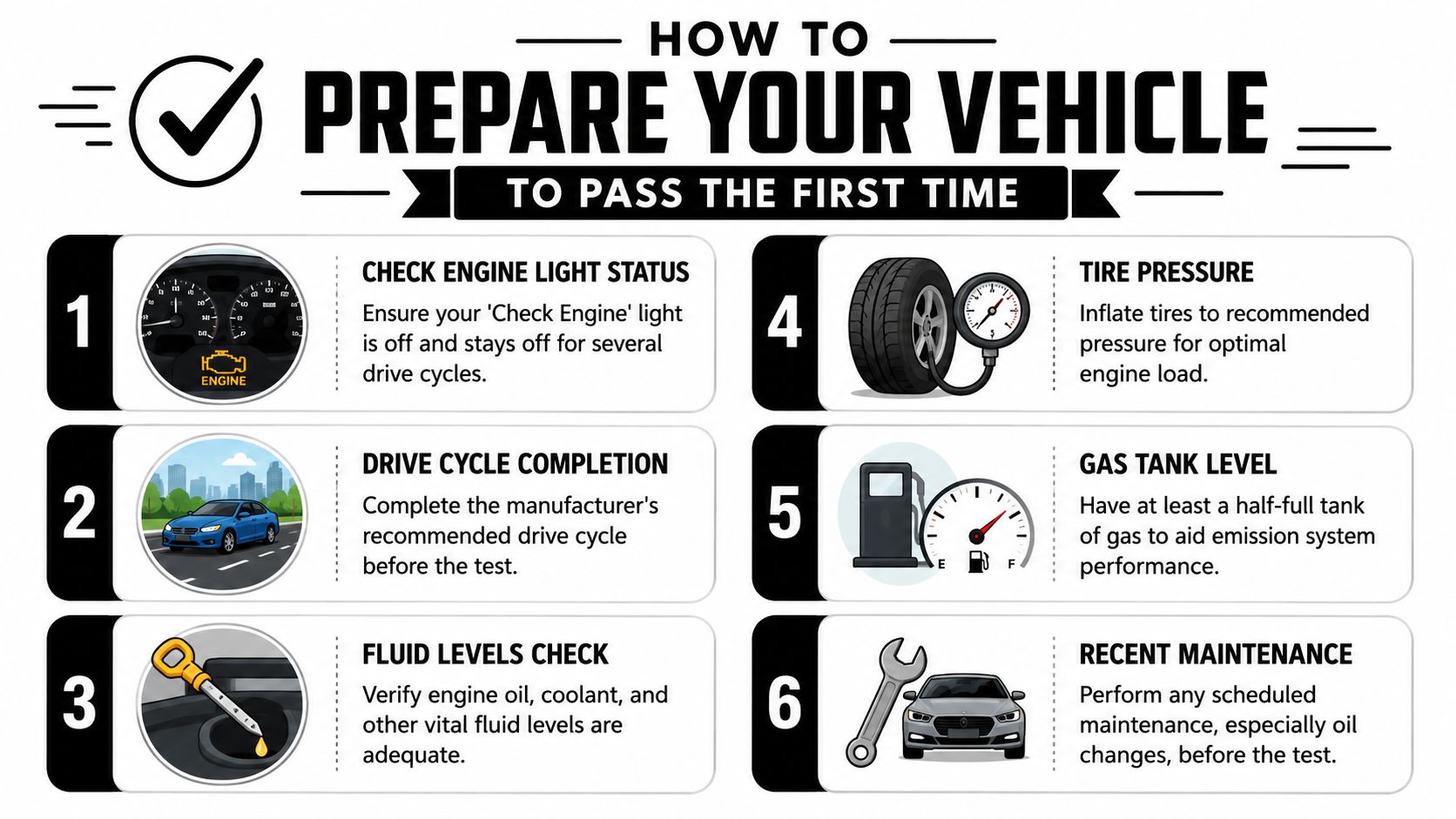
- Check the dash first: No check engine light, no warning you were planning to ignore, and no recent code clearing.
- Think about recent battery work: If the battery was disconnected, wait until the car has had enough regular driving time to complete its monitors.
- Make sure the fuel cap is secure: Loose or damaged caps can lead to emissions-related trouble codes.
- Don't test with unfinished repairs: If a shop told you to come back after driving it a bit, listen to that advice.
- Skip the appointment if the car is acting up: Rough idle, stalling, or poor running usually means something should be diagnosed first.
What works is boring, steady preparation. What doesn't work is rushing in right after a repair, right after a battery swap, or right after turning off a warning light.
Finding the Right Smog Station in Union City
The station you choose matters more than commonly assumed. In Union City, the biggest decision isn't only price or location. It's whether you're walking into a STAR-certified station or a Test-Only station.
STAR stations and test-only stations are not the same
A test-only station does exactly what the name says. It tests. If your vehicle fails, that station can't fix it.
One local listing explains the issue clearly: a Test-Only station like QUIK SMOG UNION CITY cannot repair a failed vehicle, which means the driver has to find a separate BAR-certified repair facility. That extra handoff is a common source of confusion and delay for East Bay drivers, as noted on this Union City Test-Only station explainer.
That distinction matters most if you already suspect your car might not pass. If the vehicle has been running rough, recently had emissions work, or has had codes cleared, the wrong station choice can turn one errand into two.
| Station Type | Can Test Your Vehicle? | Can Repair a Failed Vehicle? |
|---|---|---|
| STAR-certified station | Yes | Some can, depending on the business |
| Test-Only station | Yes | No |
If you're not sure what STAR means, this quick guide on what a STAR station is gives the practical version.
Local details that help you choose faster
Union City does have multiple STAR-certified options. One example is Union City Smog Check at 33365 Mission Blvd, listed as open Monday through Friday from 9:30 AM to 5:00 PM and Saturday from 9:30 AM to 3:00 PM on the Union City smog station directory. The same directory also shows that local smog prices in Union City have been reported in a range from $50.00 to $83.00, which makes shopping around worth the effort because BAR doesn't regulate the inspection price itself.
That directory also highlights a few failure triggers drivers should take seriously before booking. Vehicles with a check engine light on, modified software, or a recently disconnected battery need those issues resolved first because they can fail the inspection.
Local shortcut: If you're comparing stations, ask two questions before you leave home. Are you STAR-certified, and if my car fails, can you repair it here?
That one phone call can save a lot of backtracking.
A Smart Alternative Speedy Smog in San Leandro
Some Union City drivers stay local because it's close. Others care more about getting in, getting tested, and getting out without losing half a day. That's where nearby San Leandro can make sense.
Why some Union City drivers leave town for a smog check
A short drive is often worth it when the station is built for efficiency. For East Bay drivers with newer vehicles, that usually means a cleaner workflow, quicker turnaround, and fewer surprises at the counter.
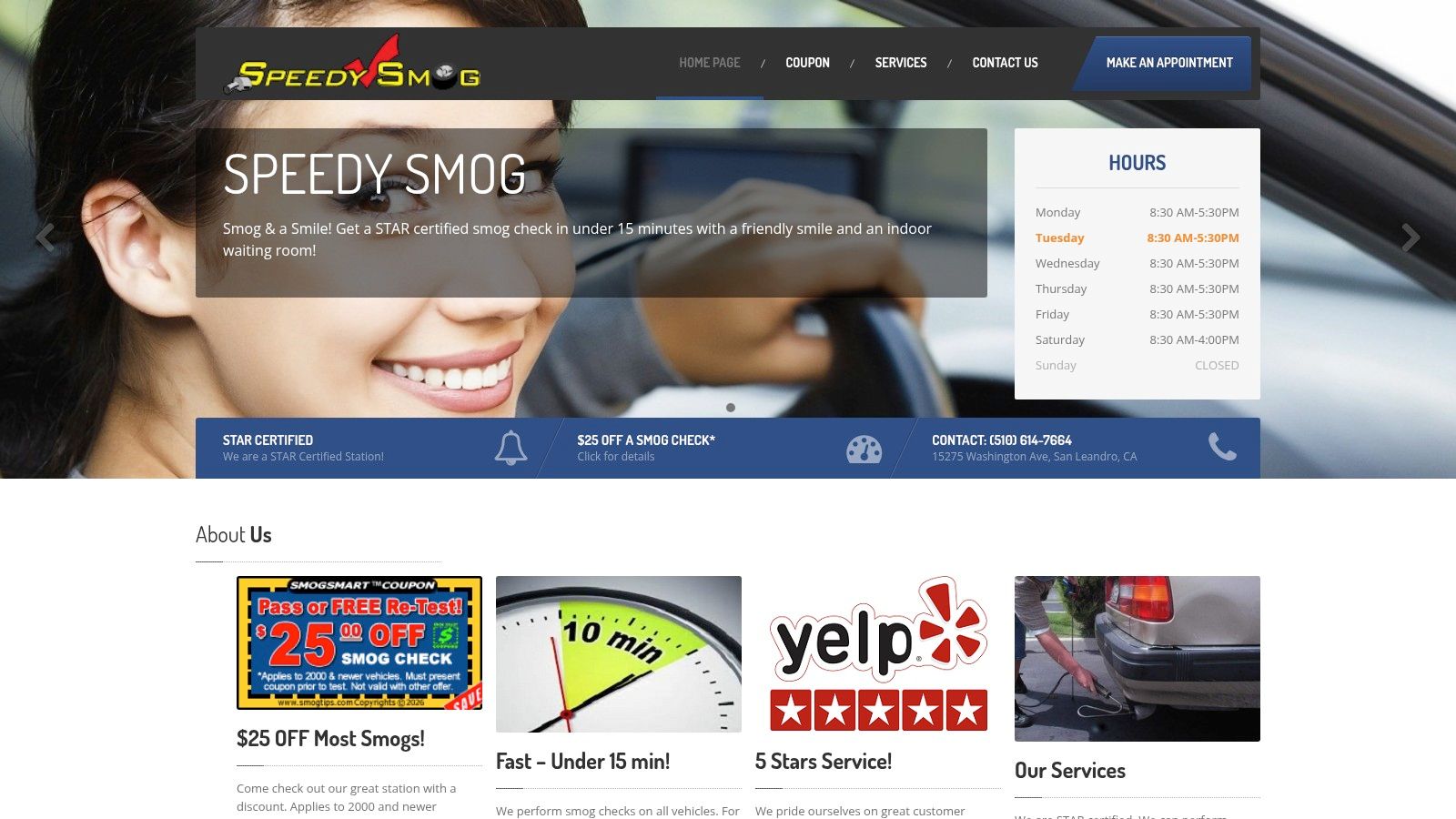
Speedy Smog in San Leandro is a STAR Certified station, and for many drivers that's the draw. It handles the inspection side with the consistency people want when the deadline is a DMV deadline, not a flexible one.
When the short drive makes sense
This option is especially practical if you value a few things:
- Faster routine testing: Most tests on 2000+ vehicles are typically completed in about 10 to 15 minutes, based on the publisher information provided for Speedy Smog.
- A straightforward setup: The shop handles a wide mix of vehicles, including newer models, older vehicles, diesels, and hybrids.
- Less waiting stress: A clean indoor waiting room matters more than people think when you're fitting this into a workday.
- Visible pricing: Transparent pricing and periodic coupons are easier to plan around than vague phone estimates.
There isn't one perfect answer for everyone searching smog check Union City CA. But if your priority is speed, reliability, and a predictable experience, expanding the search radius a bit can be the smarter move.
What Happens During the Smog Inspection
Pull into a Union City smog station with a recently disconnected battery, and the visit can go sideways before the probe or scan tool does much of anything. I see that confusion all the time. Drivers assume the car is "running fine," but the inspection is checking for more than drivability.
California smog checks follow a set process. The technician is looking for missing or altered emissions equipment, trouble codes, and monitor status. On some vehicles, the station also measures tailpipe emissions or smoke opacity, depending on the test method your vehicle falls under.
The three parts of the inspection
Here is what usually happens once the car is checked in:
Visual inspection
The technician checks emissions-related parts that are supposed to be present and properly connected. That can include the catalytic converter, emissions hoses, intake components, fuel cap, and other equipment that matches the vehicle's configuration. If a part is missing, obviously modified, or not legal for street use in California, that alone can cause a failure.OBD-II scan
The shop plugs into the OBD-II port and reads the car's computer. A common issue for many Union City drivers arises after a battery replacement or recently cleared codes. If the readiness monitors are not set, the car may fail even with no check engine light on. That is one of the least understood smog problems, and it wastes a lot of repeat visits.Emissions measurement, when required
Some vehicles are tested through the onboard system, while others may still need an exhaust or smoke test under the applicable procedure. The station uses the method required for that vehicle, not whatever seems quickest.
Most inspections are fairly routine if the car is ready for testing. The part that surprises drivers is that "no symptoms" does not mean "ready to pass."
If you want a clearer read on the paperwork you get afterward, this guide to how smog test results work is useful.
What tends to slow the process down
The inspection itself is standardized. The delays usually come from preventable issues at check-in or during the scan.
A few common ones:
- Readiness monitors not set: Common after a dead battery, battery replacement, or recently cleared codes.
- Wrong station for the situation: Some drivers show up at a Test-Only station expecting repairs or diagnostic help on the spot. Test-Only means inspection only.
- Aftermarket parts with no proper approval: Modified intakes, exhaust components, or catalytic converters can create problems during the visual inspection.
- VIN or paperwork mismatches: Registration details need to line up with the vehicle being tested.
What to bring on test day
Keep it simple and bring the documents that make check-in easier.
- Your DMV renewal notice
- Your vehicle registration
- Your driver's license or photo ID, if the station asks for it
If you are handling a sale or transfer, bring the related paperwork too. Ownership-transfer smog situations can create extra confusion, and having the documents in hand saves time at the counter.
What to Do If Your Vehicle Fails the Smog Check
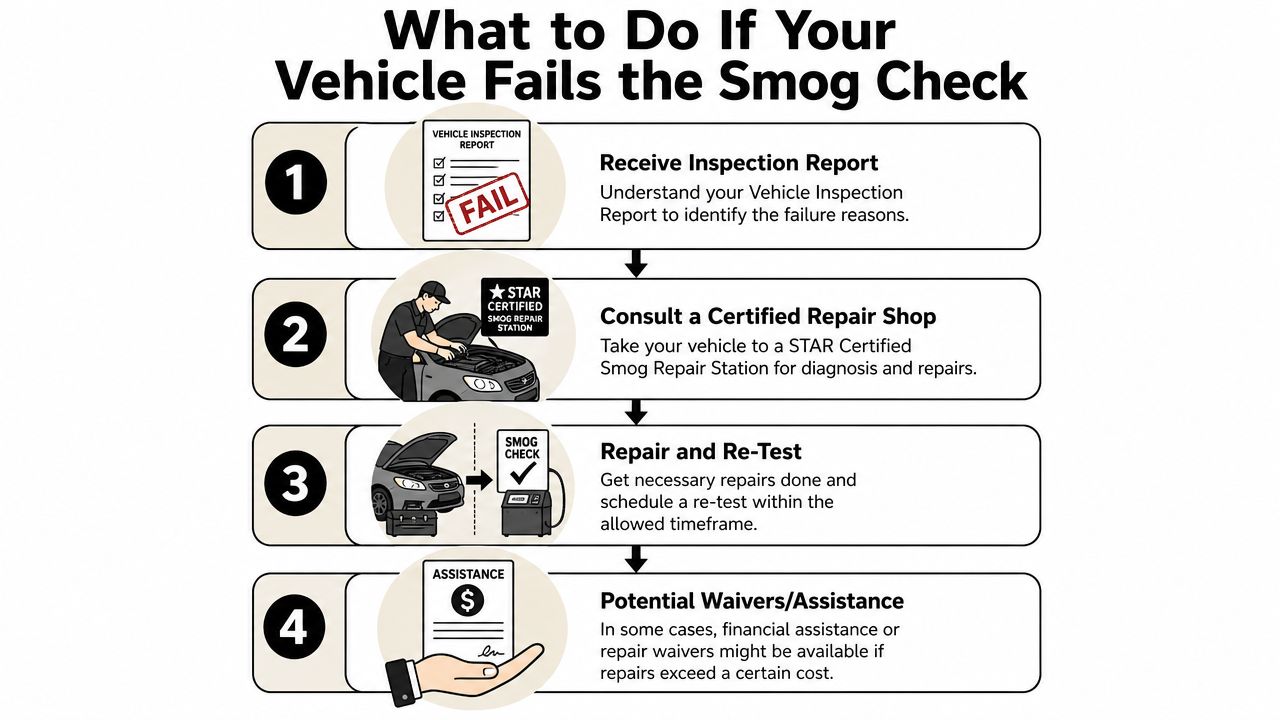
You leave the station expecting a certificate and walk out with a failed Vehicle Inspection Report instead. That moment frustrates a lot of Union City drivers, especially if the car seems to run fine. A failed test is still useful. It points to a specific problem, and the fastest path is to treat that report like a diagnosis, not a random setback.
Read the report before you do anything else
Start with the exact reason for the failure. The report usually makes it clear whether you have an active trouble code, incomplete readiness monitors, a visual inspection problem, or tailpipe-related emissions issues on an older vehicle.
Those failures do not lead to the same repair path.
Readiness monitors are one of the most commonly missed issues after a dead battery, battery replacement, or recently cleared check engine light. Drivers fix the original problem, head straight back for a retest, and fail again because the car has not completed the right drive cycle. That is a Union City-area time waster I see all the time.
Choose the right repair path for the station type
Station type matters after a failure.
If you tested at a shop that also performs repairs, you can usually move straight into diagnosis. If you failed at a Test-Only station, that shop is there to inspect, not troubleshoot or repair. A lot of drivers do not realize that until they are standing at the counter with a fail report in hand.
That distinction affects both time and cost. Test-Only can be a good fit if you just need a clean inspection, but it is less convenient if your car has a check engine light history, recent battery work, or emissions-related modifications.
Keep the fee side simple too. Inspection pricing varies by shop. The certificate fee is added only when the vehicle passes, and some newer gasoline vehicles are exempt from the inspection and pay an abatement fee instead, as noted earlier.
Handle the retest carefully
The worst move after a failure is rushing back the same day without confirming the repair solved the problem.
Use a short checklist:
- Bring the failed report to the repair shop: It saves diagnostic time and keeps the technician focused on the actual failure point.
- Ask whether codes were cleared: If they were, confirm which readiness monitors still need to run before a retest.
- Do not assume a smooth-running car is ready: A car can drive normally and still fail because monitors are incomplete.
- Check modified parts: Aftermarket intake, exhaust, or catalytic converter issues can trigger a second failure even if the original code is gone.
- Keep all paperwork together: It makes retesting and registration deadlines easier to manage.
A quick visual walkthrough can help if this is your first failed test.
Most failed smog checks are fixable. The extra cost usually comes from guessing, clearing codes too early, or retesting before the monitors are ready.
If you'd rather skip the guesswork and use a fast, STAR-certified station nearby, Speedy Smog in San Leandro is a practical option for East Bay drivers. It's built for quick, compliant testing, especially for many 2000 and newer vehicles, and it's a solid choice when you want a clean process, clear pricing, and a smog check that fits into a normal day instead of taking it over.