
Smog Check Oakland CA: What Drivers Need to Know
The DMV envelope arrives, and the whole week suddenly has one extra errand attached to it. If you live in Oakland, that usually means figuring out whether your car needs a Smog Check, where to take it, and whether the notice is pointing you to a regular station or a STAR station. The easiest way to handle it is to treat the test like a small DMV project, not a mystery chore.
Table of Contents
- What Oakland Drivers Should Know Before Booking a Smog Check
- How California's Smog Check Program Works
- DMV Compliance and What Your Renewal Notice Means
- Vehicle Eligibility and How Model Year Changes the Test
- Preparing Your Vehicle the Week Before the Test
- What the Appointment Itself Looks Like
- Turnaround, Results, and What Happens If You Fail
- Putting It All Together for Oakland Drivers
What Oakland Drivers Should Know Before Booking a Smog Check
A smog check Oakland CA search usually starts the same way, with a renewal notice in hand and a deadline in front of you. That notice matters more than the shop sign outside, because it tells you what kind of inspection your vehicle needs and whether the state wants a higher-oversight station.
The fastest way to avoid a wasted trip is to answer five questions before you book. First, is the vehicle due for a Smog Check under California rules. Second, does the renewal notice call for a STAR station. Third, is your vehicle older, newer, diesel, or a hybrid, because that changes the test. Fourth, have you done the basic prep work in the days before the appointment. Fifth, do you know what the visit itself will look like.
Practical rule: the renewal notice is the real starting point, not the first shop result you find online.
That framing saves time because the state treats this as a registration step, not an optional maintenance add-on. For Oakland and East Bay drivers, the whole process is tied to DMV renewal, so the cleanest path is usually to read the notice, match the station type, and then book the right kind of inspection the first time.
How California's Smog Check Program Works
A smog check in California is part of the state's registration system, not a separate errand you handle on its own. The Bureau of Automotive Repair sets the rules for qualifying vehicles, and the inspection usually happens as part of renewal, so the DMV and the test move together. California Smog Check performance report
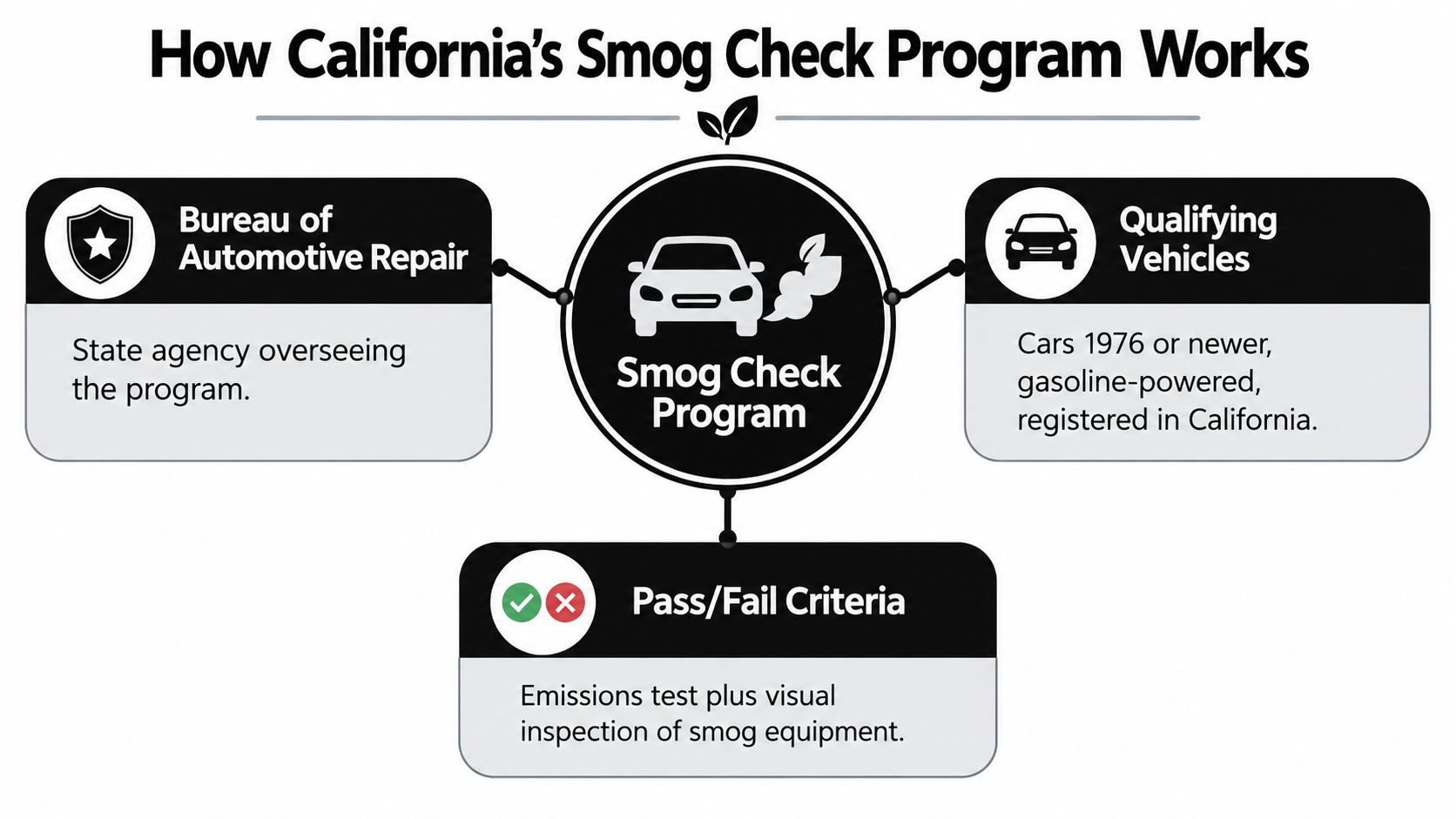
Why STAR exists
STAR certification creates a higher-oversight network for vehicles that need closer review. STAR stations are part of the state's testing framework, not just a marketing label, and California reported that by December 2019 there were 7,902 licensed Smog Check stations statewide, including 3,882 STAR stations, or 49% of the total. During calendar year 2019, roughly 10.3 million initial Smog Check tests were performed statewide, and about 8.4 million, or 82%, were completed by STAR stations, as reported in the same BAR performance report.
For an Oakland driver, the key point is simple. The rules do not change by neighborhood. Whether the car is tested in Oakland, San Leandro, or somewhere else in California, the result feeds into the same state reporting system and is sent to the DMV electronically. If the renewal notice calls for STAR service, the station must be authorized for that category or it cannot finish the certification.
DMV Compliance and What Your Renewal Notice Means
The renewal notice is where the DMV turns a general rule into a specific instruction. If it flags the vehicle for a Smog Check, the notice is telling you that registration renewal depends on a passing certificate, and if it identifies the car as directed or otherwise STAR-required, the wrong station can't complete the certification.
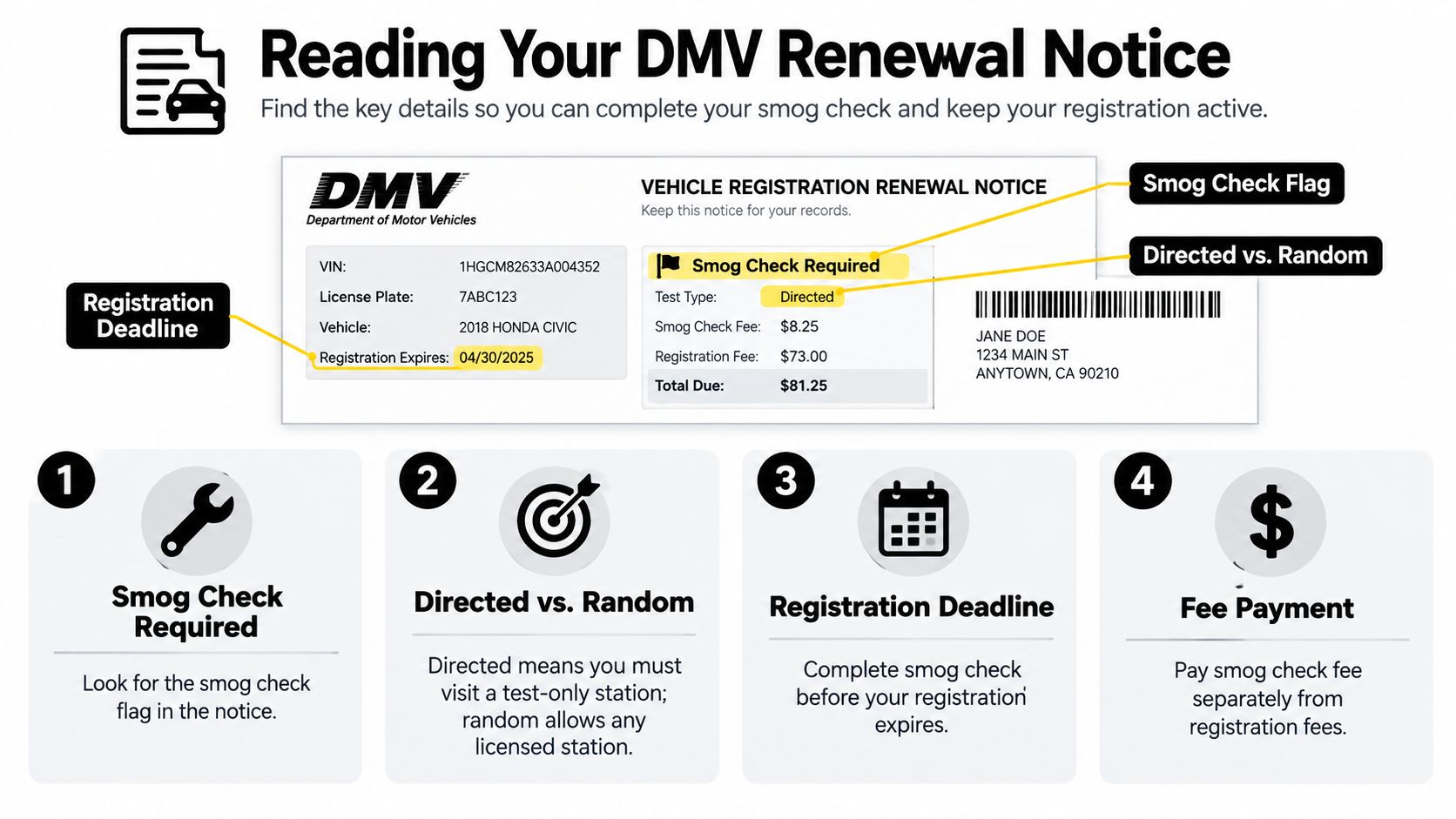
Regular station or STAR station
A STAR station is the one the state authorizes for vehicles that need enhanced oversight, much as a referral sends a patient to a specialist. A regular licensed station can handle many inspections, but STAR programs require these facilities to maintain compliant licenses, required inspection equipment, adequate inspection volume for statistical review, and specific performance measures, including a Similar Vehicle Failure Rate of at least 50% of the industry-wide failure rate for comparable vehicles and a gear-shift incident rate no higher than 2% of certified vehicles. STAR certification requirements
If your notice requires STAR service and you go to a station that isn't STAR-certified, you can lose time without moving the registration forward. That's why the notice deserves a close read before you book. If the wording is confusing, compare it with your registration status and, if needed, ask the station to confirm that the vehicle type on the notice matches its current authorization.
For Oakland-area drivers who want a plain-English walkthrough of renewal timing and station selection, this guide to registration renewal and smog check steps is a useful companion.
Practical rule: the renewal notice decides the station category first, and the appointment time second.
Payment usually follows the test result through DMV's electronic system, so the important thing is not to collect paperwork for its own sake. The important thing is to get the right certificate into the state system so registration can move ahead.
Vehicle Eligibility and How Model Year Changes the Test
Vehicle age changes the inspection path more than most drivers expect. California BAR says most 2000-and-newer gasoline and alternative-fuel vehicles get an OBD-based inspection, while pre-2000 vehicles generally receive a tailpipe emissions test instead. That's why two cars with the same renewal notice can end up going through very different checks.
What the model year tells the inspector
The state's 2025 executive summary shows why age matters. A 2024 vehicle recorded 100,305 initial tests and 4,538 failures, for an 4.52% overall failure rate. A 2010 vehicle recorded 314,125 initial tests and 28,718 failures, for 9.14%. A 2008 vehicle recorded 367,600 initial tests and 34,834 failures, for 9.48%. A 1998 vehicle had 100,885 initial tests and 19,185 failures, for 19.02%. 2025 Smog Check executive summary
| Model Year | Initial Tests | Overall Failures | Overall Failure Rate |
|---|---|---|---|
| 2024 | 100,305 | 4,538 | 4.52% |
| 2010 | 314,125 | 28,718 | 9.14% |
| 2008 | 367,600 | 34,834 | 9.48% |
| 1998 | 100,885 | 19,185 | 19.02% |
That table doesn't mean every older car will fail. It does show the pattern: as vehicles age, inspection risk rises. For drivers who want a practical breakdown of which cars fall into which testing path, this California smog check vehicle guide is a useful reference.
Why OBD readiness matters
For 2000-and-newer vehicles, the test isn't just a quick visual look. The inspector checks diagnostic trouble codes, emissions-system operation, and readiness monitors. BAR advises delaying the test after a battery disconnect or replacement because the monitors may still be incomplete, and it recommends driving the vehicle for roughly one to two weeks under varied conditions before retesting. California Smog Check guidance
A newer car can look fine and still be too early for the test if the monitors haven't set yet.
Preparing Your Vehicle the Week Before the Test
A passing result is often decided before the appointment day arrives. If the check-engine light is on, that's not a paperwork problem, it's a vehicle problem, and clearing the code right before the test doesn't fix the underlying fault. The car may still show incomplete monitors, which can still lead to failure.
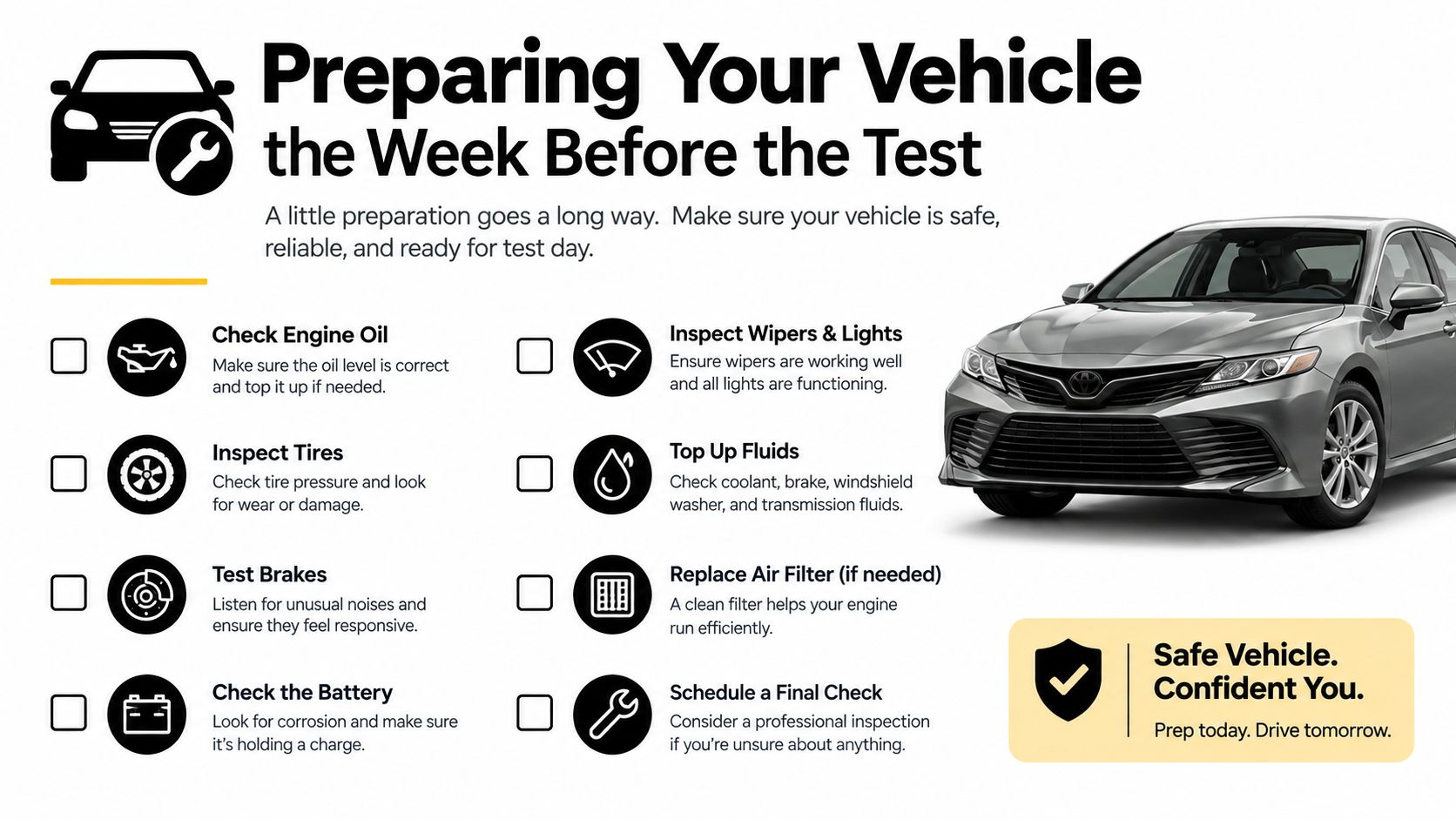
A simple prep routine
Think of readiness monitors like homework the car has to finish. You can't cram them into place five minutes before the test, and a battery disconnect is like erasing the assignment halfway through. The best preparation is boring in the right way.
- Watch the warning lights: If the check-engine light comes on during normal driving, fix the cause before you book the test.
- Drive normally: Mix city streets and steady-speed driving so the monitors can complete.
- Avoid last-minute battery work: A recent disconnect or replacement can leave the monitors incomplete.
- Warm the vehicle up: Arrive with the car at normal operating temperature, not just started a minute before.
- Bring the notice: Have the renewal notice and a payment method ready so nothing slows the check-in.
One more detail matters for Oakland drivers with older cars and diesels. If you've just had repairs, give the car enough time to settle into normal operation before the appointment. A clean run on paper doesn't help if the vehicle's diagnostic system hasn't had time to confirm that everything is working again.
Practical rule: repair first, drive second, test third.
What the Appointment Itself Looks Like
A typical visit feels more like a quick medical intake than a long repair appointment. You arrive, the station confirms the vehicle and paperwork, the inspector takes the car through the required test, and the result gets sent electronically to DMV. For 2000-and-newer vehicles, the test portion is commonly completed in about 10 to 15 minutes, which is why these visits often move faster than drivers expect.
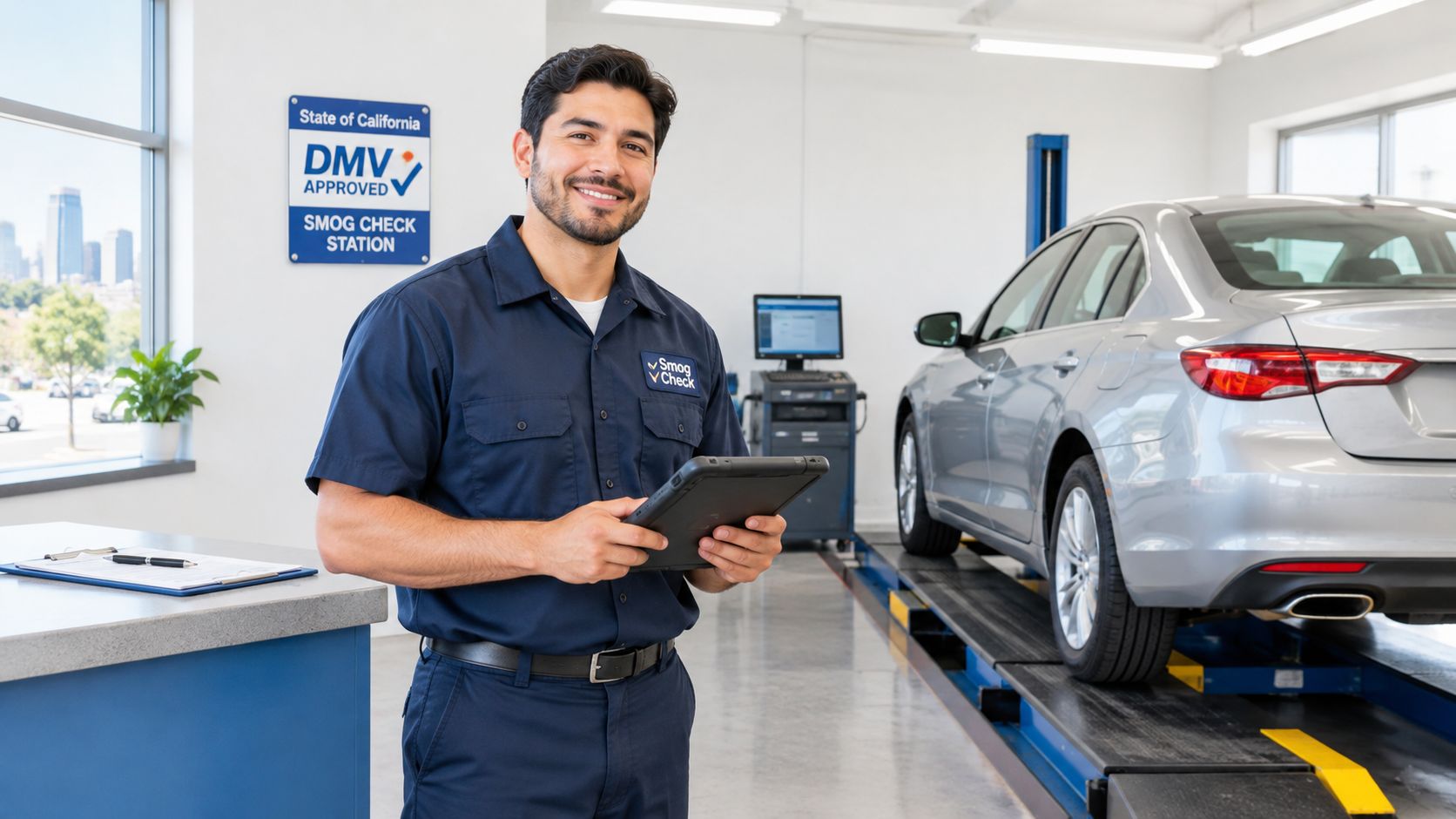
What changes from one vehicle to another
The basic flow is the same, but the inspection time can stretch if the vehicle is older, if the test uses a tailpipe procedure, or if the station is busy. STAR status usually matters to the driver mainly in paperwork and eligibility, not in some dramatic visible difference at the counter. A STAR-certified shop such as Speedy Smog in San Leandro can handle the higher-oversight categories the state requires, including vehicles that need STAR authorization, while still testing many routine Oakland-area vehicles as part of the same DMV process.
The key point is that the station is not handing you a paper certificate to carry around. It's sending the result electronically, which is why the visit can feel short even though the compliance step is important. If the vehicle passes, you're done with the inspection piece. If it doesn't, the station should tell you what blocked approval so you can decide on repairs.
Turnaround, Results, and What Happens If You Fail
A passing result is useful because it clears the DMV hurdle right away. The station transmits the certificate electronically, and that certificate, not a paper receipt, is what helps unblock registration renewal. The old-style handoff of paperwork has mostly been replaced by instant digital reporting.
If the car fails
A failure doesn't end the registration process, it just means the car needs work before it can be certified. The inspection report is the starting point for diagnosis, and the next step is usually repair, then a retest once the vehicle is ready.
If you're trying to keep costs predictable after a repair visit, some stations offer discounts or coupons toward a return visit. One concrete example is the periodic $25-off coupons for newer vehicles mentioned by East Bay shops, which can soften the cost of a second trip after the underlying issue has been fixed. For a closer look at how stations present results and follow-up steps, see this smog test results guide.
The important thing is not to confuse a receipt with a certificate. The receipt shows you paid for the visit. The certificate is what the DMV cares about.
Putting It All Together for Oakland Drivers
The smartest move is to treat the renewal as three small jobs. First, read the DMV notice closely and confirm whether STAR service is required. Second, get the car ready by handling any warning lights, driving enough for monitors to set, and avoiding last-minute battery interruptions. Third, book a station that can legally handle your vehicle type and finish the certificate correctly.
That approach takes the uncertainty out of the process. The state rules decide the test type, the vehicle decides the inspection path, and the renewal notice decides the station category.
If you want a San Leandro station that handles Oakland-area renewals for routine inspections, STAR-required vehicles, diesels, hybrids, and older cars, Speedy Smog is set up for that workflow. Bring the notice, bring the car ready to test, and turn the smog check into one clean DMV task instead of a week of guesswork.
If you need a straightforward East Bay smog check with clear station guidance, Speedy Smog handles the inspection and electronic certificate process in one visit. Their team works with Oakland drivers, STAR-required renewals, and a range of vehicle types, so you can get the DMV step finished without extra back-and-forth.