
How to Pass Emissions Test in California
You're already at the point where the smog appointment is on the calendar, the renewal deadline is creeping closer, and you're trying to figure out whether one more drive around the block will save the day. Most failures I see don't start at the station, they start in the driveway, with a cold engine, a hidden warning light, or a monitor that never finished setting. The good news is that passing an emissions test in California is usually about preparation, not luck.
California's rules are strict for a reason. The EPA says today's vehicles are up to 99% cleaner than those on the road in the early 1970s, which shows how far emissions control has come, but it also means modern inspections are built around whether the vehicle's systems are doing their job. For many drivers, the difference between a pass and a fail comes down to OBD-II readiness, a clean visual inspection, and showing up with the car in the right condition for the test.
Table of Contents
- Pre-Test Checklist Before You Arrive at the Station
- Completing the Drive Cycle and OBD Readiness Monitors
- Visual and Mechanical Items Inspectors Check
- What to Expect on Test Day at a STAR Station
- Common Failure Causes and Realistic Fixes
- What to Do If Your Vehicle Fails the Smog Check
Pre-Test Checklist Before You Arrive at the Station
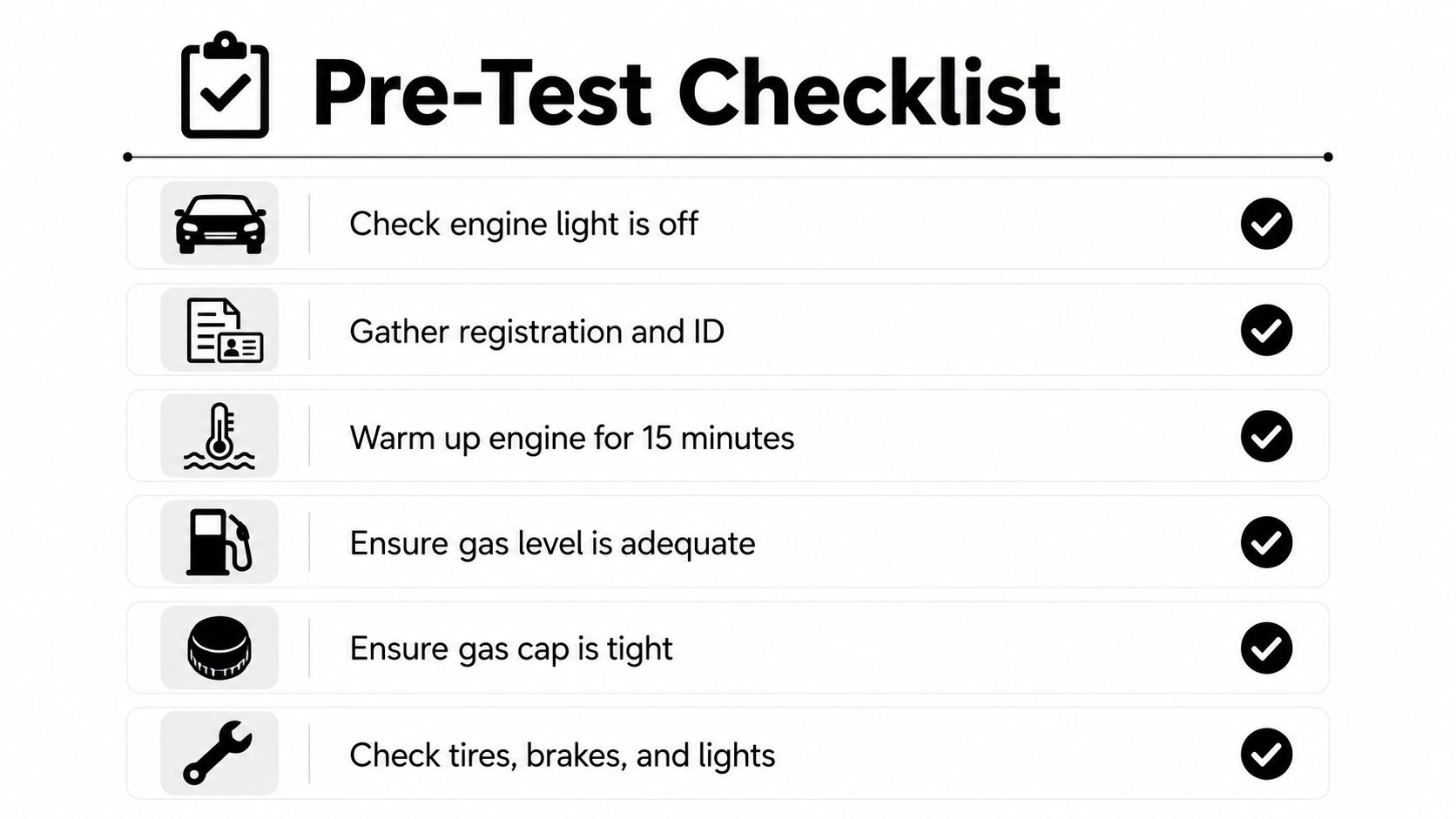
The most common bad appointment I see is the one where the driver rolls in with the engine still cold, the check engine light glowing, and a look that says, “Maybe they won't notice.” They will notice. A lit check engine light is not a detail you can talk your way around, and if the engine computer hasn't finished its emissions checks, the vehicle may not be ready to pass even if it drives fine.
Start with the obvious things
Before you leave home, look at the dashboard with the key on and the engine running. If the check engine light is on, don't assume it'll magically disappear on the way to the station. In OBD-era vehicles, a car can still pass when the light is operating normally but off and all but one monitor is completed under most conditions, but that only helps if the rest of the system is in good shape too.
Practical rule: if the car is alerting you on the dash, treat that as a repair problem first, not a testing problem.
Then check the simple visual items that cause wasted trips. Open the hood and look for loose hoses, wet spots, obvious leaks, or anything that looks disconnected. On California inspections, a car can fail for visual issues even when it runs normally, especially under the state's more detailed Smog Check process, which looks beyond just tailpipe behavior and routine drivability, as the California Smog Check Manual makes clear.
Don't skip paperwork and basic condition checks
Bring what the station needs for DMV processing, and make sure the car is reasonably presentable. A loose gas cap, missing under-hood label, or obvious mechanical issue can slow the inspection or end it early. If the car recently had service, keep a mental note of what changed, because a fresh repair sometimes explains a pending code or a monitor that hasn't reset yet.
If you're the type who likes to prep everything in one shot, it helps to review an oil-change and service checklist before the smog visit, since neglected maintenance often shows up as emissions trouble later. One useful reference is this guide on oil change timing before a smog check.
The short version is simple. No warning lights, no obvious leaks, no missing parts, and a warm, healthy car gives you the best shot at a clean first visit. If any of those pieces are off, fix them before you burn time in the waiting room.
Completing the Drive Cycle and OBD Readiness Monitors
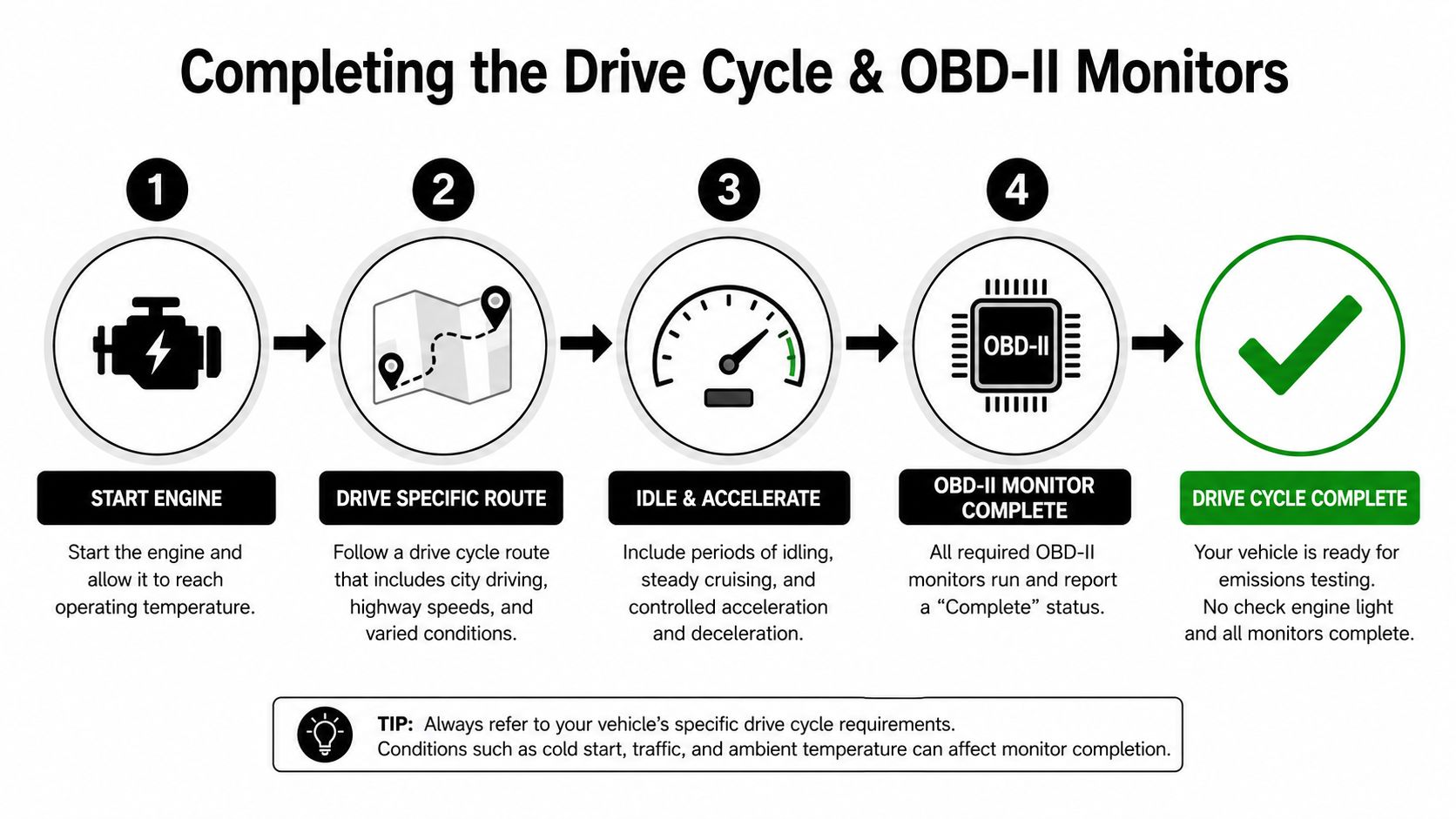
Modern California smog checks lean heavily on what your car's computer says about itself. That's the whole point of OBD-II readiness, the system's way of confirming that emissions monitors have run and passed. For many 2000-and-newer vehicles, the inspection is less about a dramatic tailpipe reading and more about whether the vehicle has completed the checks that prove the emissions system is functioning under real driving conditions.
What the drive cycle is really doing
The typical advice is to complete a full drive cycle of about 30–60 miles (50–100 km) with mixed conditions, because the computer needs enough varied driving to run its emissions monitors. That means some city-style stops, some steady cruising, and enough time for the car to settle into normal operating behavior. Current guidance also points to warming the engine to about 70–105°C (160–220°F), since colder engines can produce more pollutants and may keep monitors from setting. See the practical drive-cycle guidance in the OBD readiness preparation guide.
That's why a short hop to the gas station doesn't count. A monitor that hasn't completed isn't the same thing as a broken car, but it can still stop you from passing.
Fuel level matters more than most drivers think
Keep the fuel tank roughly 25% to 75% full before the test. That range matters because evaporative-emissions checks are sensitive to fuel level, and showing up near empty or completely full can interfere with readiness. The car can be mechanically fine and still fail to set the right monitor if the tank level is off.
Drive it like a real trip, not like a test lap. The computer wants varied conditions, normal temperature, and enough time to finish its checks.
If you've had codes cleared recently, especially after a battery disconnect or repair, give the car time to relearn everything before the appointment. That reset wipes the readiness status, which is one of the fastest ways to turn a potentially easy pass into an automatic delay.
For drivers who want to understand the codes themselves before heading in, a solid starting point is a guide on reading OBD codes. The value there isn't in guessing a fix, it's in knowing whether you're dealing with a simple readiness issue or an actual fault that needs repair.
The practical move is to schedule your drive cycle a few days before the appointment, not the morning of. If the monitors don't finish, you'll know in time to correct course instead of discovering it at the counter.
Visual and Mechanical Items Inspectors Check
A clean dashboard doesn't guarantee a clean result. California inspectors also look at visual and mechanical condition, and that's where a lot of “but the car drives fine” stories fall apart. A vehicle can run smoothly and still fail if the inspector sees missing equipment, leaks, overheating signs, or a modified setup that doesn't match what the car is supposed to have.
The stuff that gets missed in the driveway
One of the first things an inspector pays attention to is whether the emissions hardware is all there. That includes the catalytic converter, related hoses, and any parts that look tampered with, missing, or out of place. If a previous repair shop used a shortcut, or an owner removed something during a modification, the station may flag it even if the car seems happy on the road.
California's inspection manual also makes it clear that inspectors look for obvious safety hazards and visual issues like leaks or overheating. That means a fresh oil film, coolant seepage, or a hose that's hanging by a thread can become a failure point even before anyone digs into the computer data.
Gas caps, exhaust, and aftermarket parts
The gas cap still matters because it affects the evaporative system. A bad seal, missing cap, or cap that doesn't tighten properly can trigger trouble during the inspection process. Exhaust leaks, loose clamps, and cracked hoses are just as annoying, because they can point to a deeper problem or make the emissions system behave unpredictably.
Aftermarket modifications are another trap. A part that looks cleaner or newer isn't automatically compliant. If the car has been altered in a way that changes the emissions equipment layout, the inspector may treat it as a missing-component issue rather than a cosmetic upgrade.
If you hear a rattle, smell fuel, or see a fluid trail, don't gamble on the test. Fix the mechanical issue first, then come back ready.
Older vehicles and modified cars deserve extra attention here because the visual portion matters more when the car has a longer history of repairs, swaps, or nonstandard parts. What fails people most often is not a dramatic breakdown. It's a small oversight, like a cracked hose, a loose clamp, or an evaporative component that never got reinstalled after service.
What to Expect on Test Day at a STAR Station
At a well-run station, test day should feel organized, not mysterious. You bring the documents, hand over the keys, and the technician starts with the required checks for your vehicle type. If your car is one of the vehicles required to use a STAR-certified location, that matters because STAR stations meet higher performance standards set by the Bureau of Automotive Repair.
What the station actually does
For a 2000-and-newer car, the process usually centers on the OBD system, readiness monitors, and visual confirmation that the emissions equipment is in order. Older models, diesels, and hybrids can follow different testing paths, which is why assuming every smog appointment is the same is a mistake. The vehicle may be inspected, plugged in, and checked for compliance items that don't show up on a generic “my car runs fine” readout.
A clean station should also tell you what it needs up front, so you aren't guessing about paperwork or waiting around with an unprepared car. If you're trying to understand why one station is required over another, the basics of what a STAR station is matter more than most drivers realize, especially if registration renewal is on the line.
Time, waiting, and choosing the right place
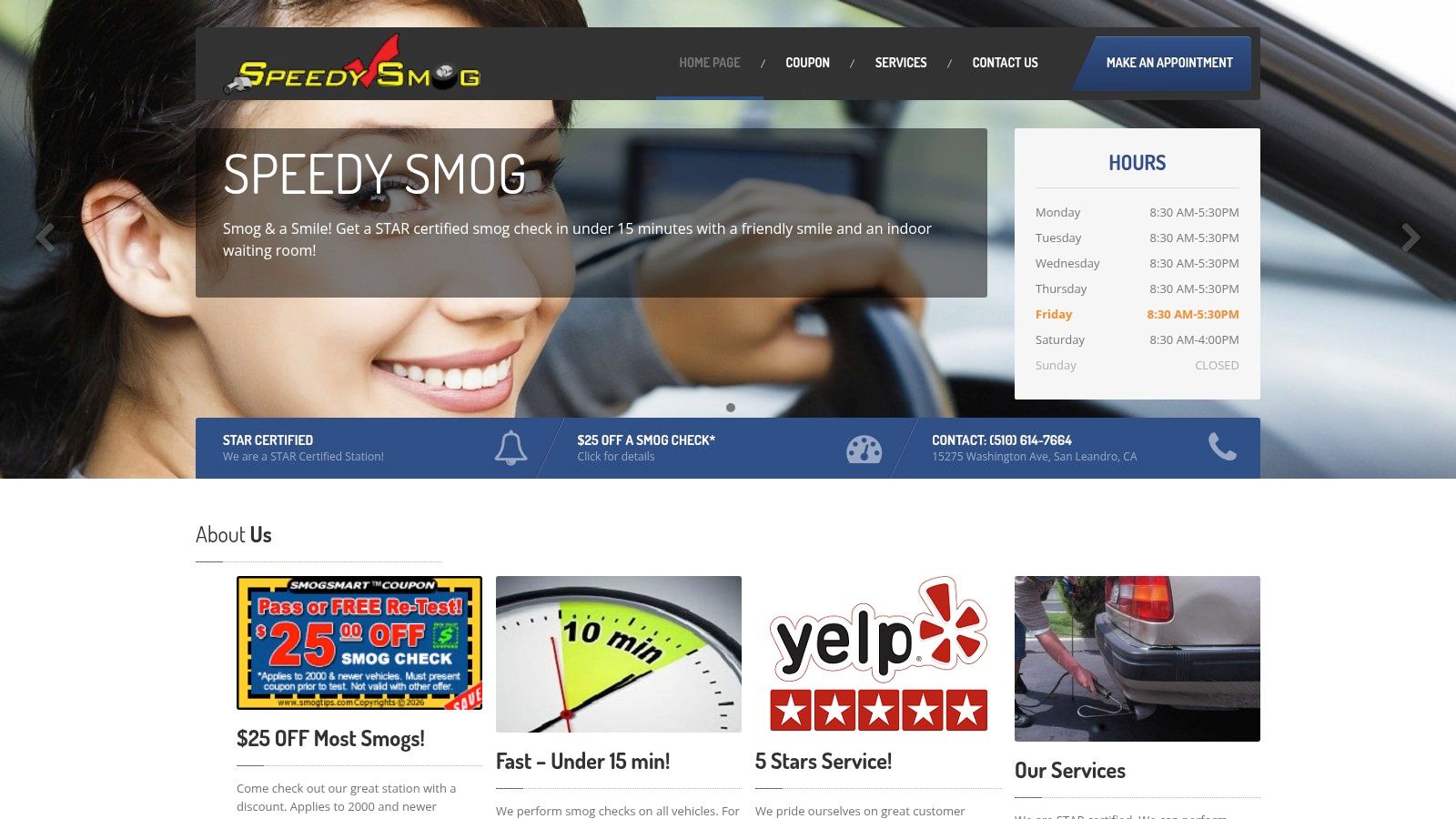
A good smog shop respects your time. Speedy Smog in San Leandro, for example, completes most tests for 2000-and-newer vehicles in about 10 to 15 minutes, and that kind of turnaround is exactly what you want when the goal is to get in, get certified, and get back on the road. The indoor waiting area also matters more than people admit, especially when you're dealing with a second visit or a busy weekday schedule.
One thing I tell drivers is to treat the station choice as part of the test preparation. A place that knows California compliance, handles different vehicle types correctly, and doesn't waste your time makes the whole process easier. You don't need a sales pitch, you need accurate testing and clean paperwork.
If your vehicle is one of the newer models, the practical advantage is speed. If it's older, diesel, or a hybrid, the advantage is finding a station that already knows how to handle those protocols without improvising.
Common Failure Causes and Realistic Fixes
Most failed smog checks come from a handful of repeat offenders. The frustrating part is that many of them look small from the driver's seat, but they're enough to stop the test cold. I see a lot of people hoping for a shortcut, then learning the hard way that emissions systems don't care about last-minute additives, battery tricks, or a dash of optimism.
What usually breaks the pass
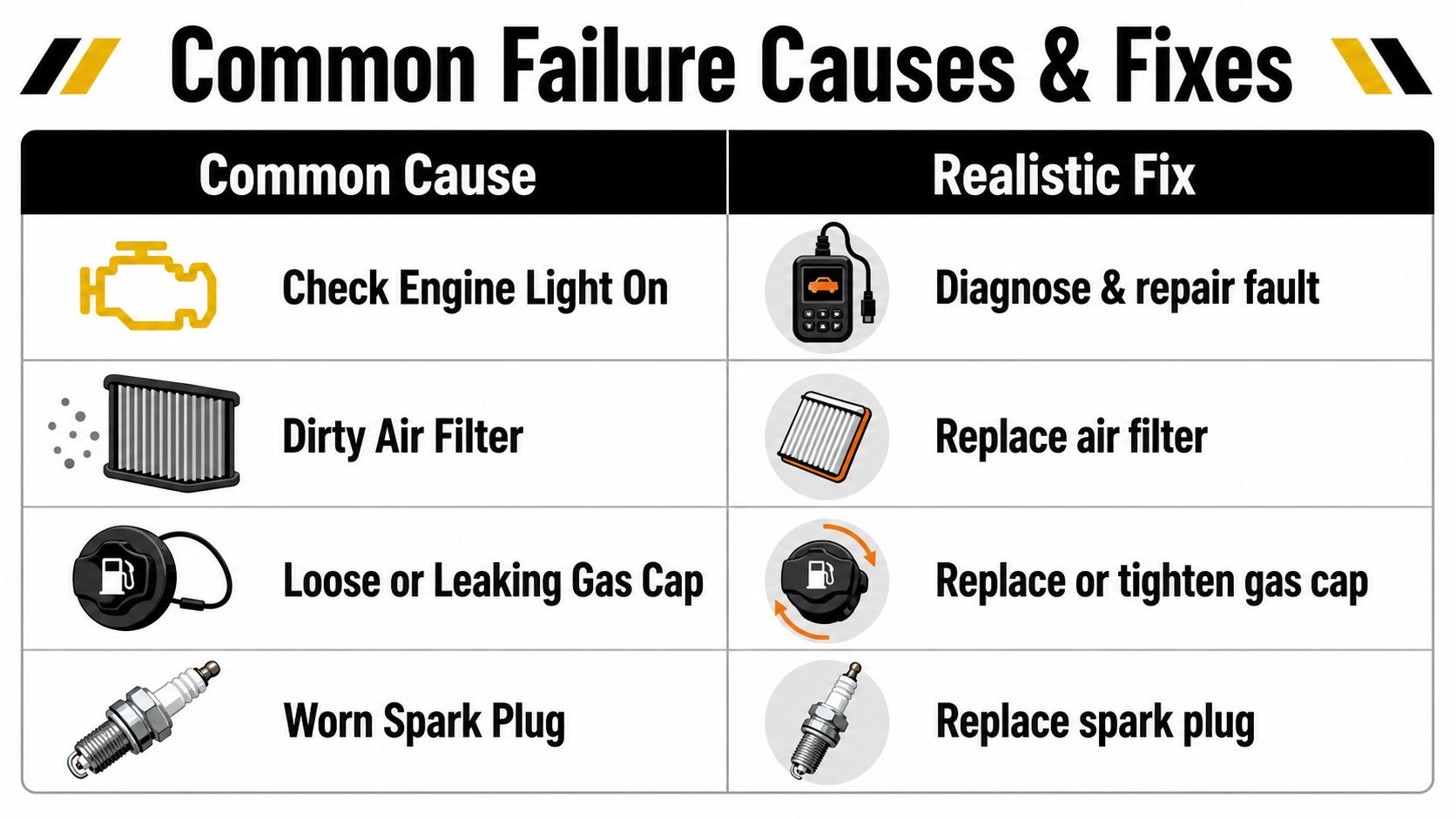
A loose or failing gas cap is an easy one to miss, and it's often one of the first things worth checking because it affects the evaporative system. Worn oxygen sensors and degrading catalytic converters are more serious, because they point to actual emissions-control problems that need diagnosis and repair rather than a quick reset. Vacuum leaks are another classic issue, especially on older vehicles or cars that have had recent work.
Pending diagnostic trouble codes are the sneaky ones. The check engine light might still be off, but the car has already logged a problem that can keep it from passing. That's why a scan tool matters more than a guess.
Disconnecting the battery is not a fix. It clears memory, resets readiness, and often sets you back instead of moving you forward.
What actually works
The honest answer is to repair the fault that triggered the code, then drive the car long enough for the monitors to reset. If the gas cap is bad, replace it. If a sensor is lazy, diagnose it properly instead of throwing parts at the problem. If the catalytic converter is degraded, don't expect a fuel additive to rescue it.
For some drivers, a trusted smog station that also understands the repair path can save a round trip. Speedy Smog is one option that offers smog checks and free retests, which can help when you're working through a repair and need to come back after the vehicle is ready.
The trade-off is time versus guessing. Guessing is cheap for about five minutes, then it becomes expensive.
What to Do If Your Vehicle Fails the Smog Check
A failed result isn't the end of the road, it's a repair roadmap. Start with the Vehicle Inspection Report, because that's the document that tells you whether the problem is readiness, a code, a visual issue, or something deeper. Fixing the wrong item first is how people waste money and miss registration deadlines.
Prioritize the failure, not the noise
If the report points to one clear fault, handle that first. A weak gas cap, a sensor issue, or a vacuum leak should be addressed before you think about anything else. If there are multiple items, a good mechanic will sort them in order of what blocks the pass fastest and what might be secondary damage from the main fault.
California also has a repair cost waiver program for some situations, and the state's rules are the place to look if repairs start to spiral. The key is not to assume a waiver applies automatically. You need to check eligibility against the official requirements and follow the process carefully.
Know your retest and timing options
Many stations offer a free retest policy, which matters if you've already fixed the underlying issue and just need the car checked again. That saves you from starting over at a random shop when the same station can verify the repair. It also helps to retest before the registration deadline gets tight, because waiting too long turns one fix into a paperwork problem.
Get the repair done, drive the car enough to restore readiness, and go back before you start cutting it close on registration.
Special protocols still apply for diesel vehicles, hybrids, and 1999-and-older models, so don't assume the same repair strategy fits every car. Some vehicles need a different inspection path, and some need more patience before they're ready to pass again.
If you want the cleanest route, schedule the repair, confirm the readiness status, and return with a car that's prepared, not just recently reset. That's how you turn a failure into a pass without chasing your tail.
If you want a station that understands California smog rules, handles different vehicle types, and keeps the process moving, visit Speedy Smog in San Leandro. They offer smog checks, free retests, and DMV submission after a passing result, which makes them a practical stop when you need the car certified and the paperwork handled the right way.