
Where Can I Get My Car Emissions Tested? East Bay Tips 2026
East Bay drivers can get their car emissions tested at a California BAR-certified smog check station, and the DMV renewal notice will tell you if a STAR-certified station is required. If you've got that notice in your hand right now, don't guess, use the station type the state tells you to use and save yourself a wasted trip.
That's the answer to where can I get my car emissions tested, and in California the details matter. Go to the wrong shop, show up without the right paperwork, or bring a vehicle that isn't ready, and you'll burn time and money for nothing. I've seen plenty of East Bay drivers come in frustrated because they picked a convenient place instead of the correct one.
Table of Contents
- Who Needs a Smog Check in California
- Understanding STAR Certified vs Standard Smog Stations
- How to Prepare Your Vehicle Before the Test
- What to Expect During Your Smog Check Visit
- Why East Bay Drivers Choose Speedy Smog in San Leandro
- Your Complete Smog Check Action Plan
Who Needs a Smog Check in California
Your DMV renewal notice is the first thing to read, before you check a shop website or head to the nearest station. California requires biennial smog checks for most vehicles in participating counties, plus a smog check at change of ownership and when a vehicle is first registered in California from out of state, as outlined in the official DMV smog check requirements. That puts a lot of East Bay drivers on a deadline sooner than they expect.
Start with the renewal notice
If your notice says you need a smog check, follow it exactly. The notice can also tell you whether a STAR station is required, and that matters because STAR is a compliance tier, not a convenience label. If the notice calls for STAR and you go to a regular station, you can waste an entire trip and still have the same problem.
Practical rule: the DMV notice wins. If it points you to STAR, use STAR. If it doesn't, a certified station that can legally test your vehicle is the right move.
Some drivers do not need a test at all, but only if their vehicle fits an exemption under California's rules. Newer vehicles, electric cars, and motorcycles are commonly handled differently from the standard smog-check crowd, so do not assume every registration renewal means a test. Read the notice, check the vehicle class, and confirm whether you need to do anything before you drive across town.
If you want the state rule summary in one place, use the local guide here: California smog check rules.
Understanding STAR Certified vs Standard Smog Stations
East Bay drivers waste time when they guess at the wrong shop type. California uses test-only, test-and-repair, and STAR-certified stations, and the right choice depends on your vehicle and the DMV notice. If you show up at the wrong category, you still have the same registration problem and you've burned a trip for nothing.
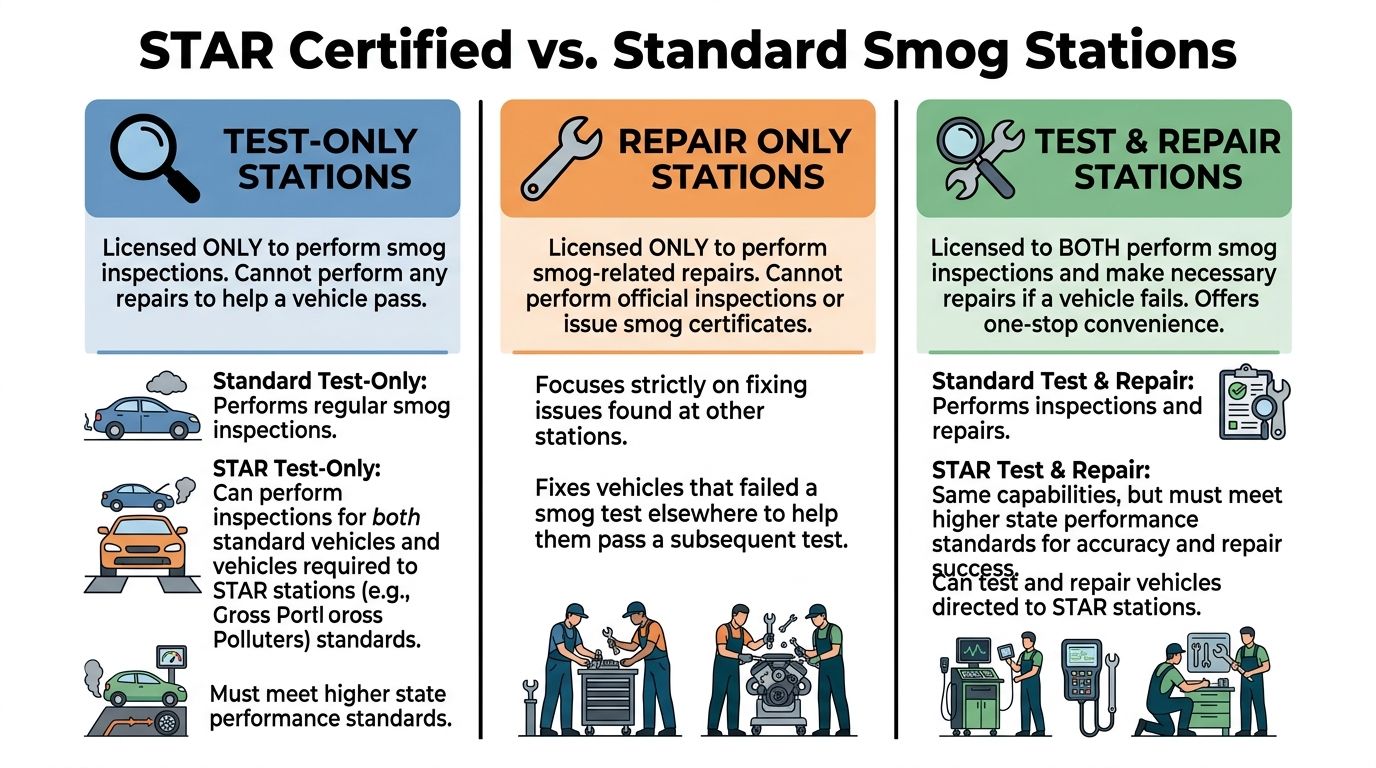
Station Types Explained
A test-only station inspects the vehicle and sends you out with the result. A test-and-repair station can inspect the car and handle repairs, which is useful if the vehicle needs work before it can pass. A STAR-certified station operates under a stricter program inside California's smog system, and the BAR locator shows whether a site is test-only, test-and-repair, or STAR-certified.
The point of STAR is accountability. California puts that tier under tighter oversight, so some vehicles get sent there by rule instead of preference. That is why the DMV notice matters so much. If it calls for STAR, a standard station is the wrong stop.
For a plain-English breakdown of how STAR fits into the local testing setup, use what is a smog STAR station.
Why This Matters in the East Bay
Drivers around the East Bay lose time when they assume every smog shop can handle every case. A shop can be close, fast, and easy to reach, but if it does not match the requirement on your renewal notice, it does not solve the problem. Match the station type before you leave home, and you avoid a second trip, a second wait, and a second fee.
Keep the station category straight, and the rest gets simpler. If your notice points to STAR, go to a STAR station. If it does not, use a certified station that is allowed to test your vehicle, and bring the paperwork the station asks for so the visit stays on track.
How to Prepare Your Vehicle Before the Test
A smog failure is expensive in the dumbest possible way, because many failures start with something small and fixable. Show up with a warm engine, a clean dash, and basic maintenance handled, and you give yourself a much better shot at clearing the test on the first visit. That's the job, not hoping the station will make up for neglect.
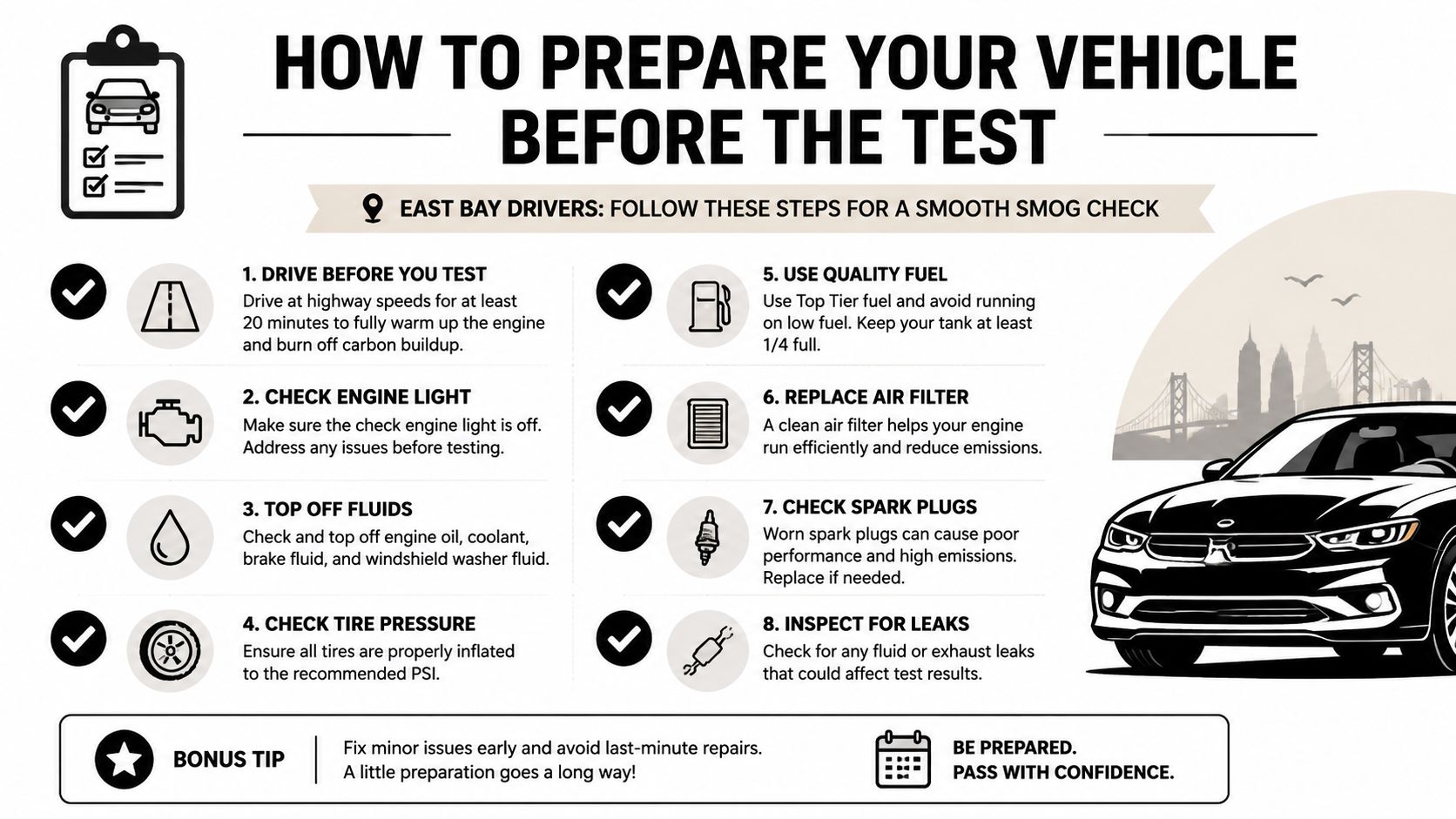
Do the simple stuff first
Drive the car long enough to get it fully warmed up before you arrive. A warm drivetrain and catalytic converter are part of a clean test run, and a vehicle that's been sitting cold all morning is not doing you any favors. If the car has been parked for a while, fresh fuel and a proper warm-up beat rushing straight to the station.
The check engine light has to be off before you walk in. If it's on, fix the underlying issue before you waste a test fee, and if the battery was recently disconnected, give the vehicle time to reset its readiness monitors. A lot of drivers skip that step and then act surprised when the car isn't ready.
Keep the car predictable. Fresh oil, a tight gas cap, and properly inflated tires don't guarantee a pass, but they remove avoidable reasons to fail.
Use this checklist before you leave
- Warm the engine: Drive the car before the test so it's not cold when inspection starts.
- Check the dash: Make sure the check engine light is off.
- Seal the gas cap: A loose cap is a classic avoidable problem.
- Review recent work: If the battery was disconnected, confirm the monitors are ready.
- Top off fluids: Basic maintenance keeps the car from acting up during inspection.
- Inspect tire pressure: Proper inflation helps the vehicle stay stable during the test process.
- Bring fresh fuel if needed: A car that's been sitting benefits from a normal drive cycle first.
If you need help clearing the warning light before you waste a trip, use this local resource: how to clear check engine light.
Here's a quick video walkthrough if you like to see the process before you go.
What to Expect During Your Smog Check Visit
A good smog visit is simple. You arrive with the right paperwork, the technician checks the car, and you leave with the result the DMV needs for registration. If you show up unprepared, you waste time at the counter answering basic questions and risk making a second trip.
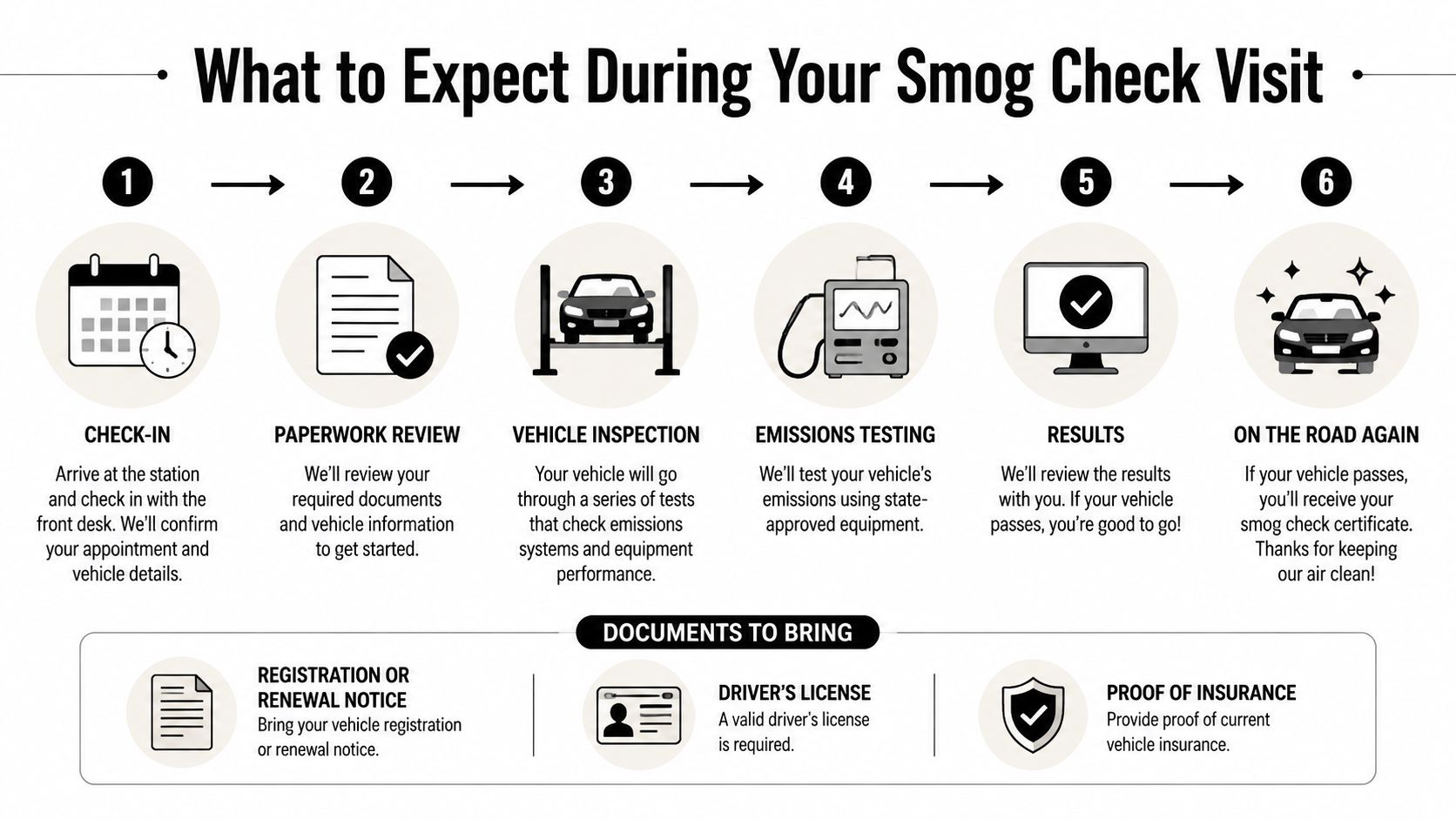
What to bring and why it matters
Bring your registration or renewal notice, driver's license, proof of insurance, and payment. Some stations do not take every payment method, so confirm what the shop accepts before you leave. DMV emissions test guidance That small detail is enough to turn a quick stop into a wasted trip.
The test itself depends on the vehicle. Newer cars usually get an OBD-II scan, while older vehicles may go through a different inspection path. Either way, the station is checking whether the car meets the requirement for registration, not whether it looks clean on the outside.
The visit should feel efficient
The right station keeps the line moving and the instructions clear. In California, use the BAR station locator to find a licensed smog station near you, then call ahead if you want to confirm hours and testing style before you drive over. state station-locator guidance In the East Bay, that matters because the wrong station costs you time, gas, and another errand.
If the counter line is long but the test lane moves fast, that is normal. The real question is whether the station is certified and whether it can issue the result your DMV needs.
After the test, you leave with the result tied to your registration renewal. If the car passes, keep the paperwork until the DMV side is finished. If it fails, the station should tell you what went wrong so you can fix it before retesting.
Why East Bay Drivers Choose Speedy Smog in San Leandro
Speed matters when you're trying to keep a registration from going sideways. A local station that already understands California's requirements is easier to trust than a random place that treats smog checks like an afterthought. Speedy Smog in San Leandro is one of the East Bay options that fits that job because it's a STAR Certified station, it handles a wide range of vehicles, and it's built around fast inspections.
The shop is located at 15275 Washington Ave, San Leandro, 94579, and it works with 2000 and newer vehicles, 1999 and older vehicles, diesels, and hybrids. That matters because a lot of drivers want one place that can handle the car they own, not a station that only likes the newest sedans. For newer vehicles, typical tests are completed in about 10 to 15 minutes, which is exactly the kind of turnaround busy East Bay drivers care about.
Speedy Smog also gives drivers the practical things that reduce friction. The shop is open Monday through Saturday, has a clean indoor waiting room, and offers periodic $25-off coupons for most smogs on newer vehicles. Those details don't change the law, but they do change how painful the day feels.
If you want a station that's focused on speed, certification, and a simple visit, this is the kind of place to put on your list. It's not about hype, it's about getting a legal test done without turning it into a half-day project.
Your Complete Smog Check Action Plan
Your DMV renewal notice tells you what to do first. If it calls for STAR, go straight to a STAR Certified station. If it does not, use the state station locator and choose a certified place that can legally test your vehicle type and fit your schedule. That is the cleanest way to answer where can I get my car emissions tested without wasting time on the wrong shop California BAR station locator.
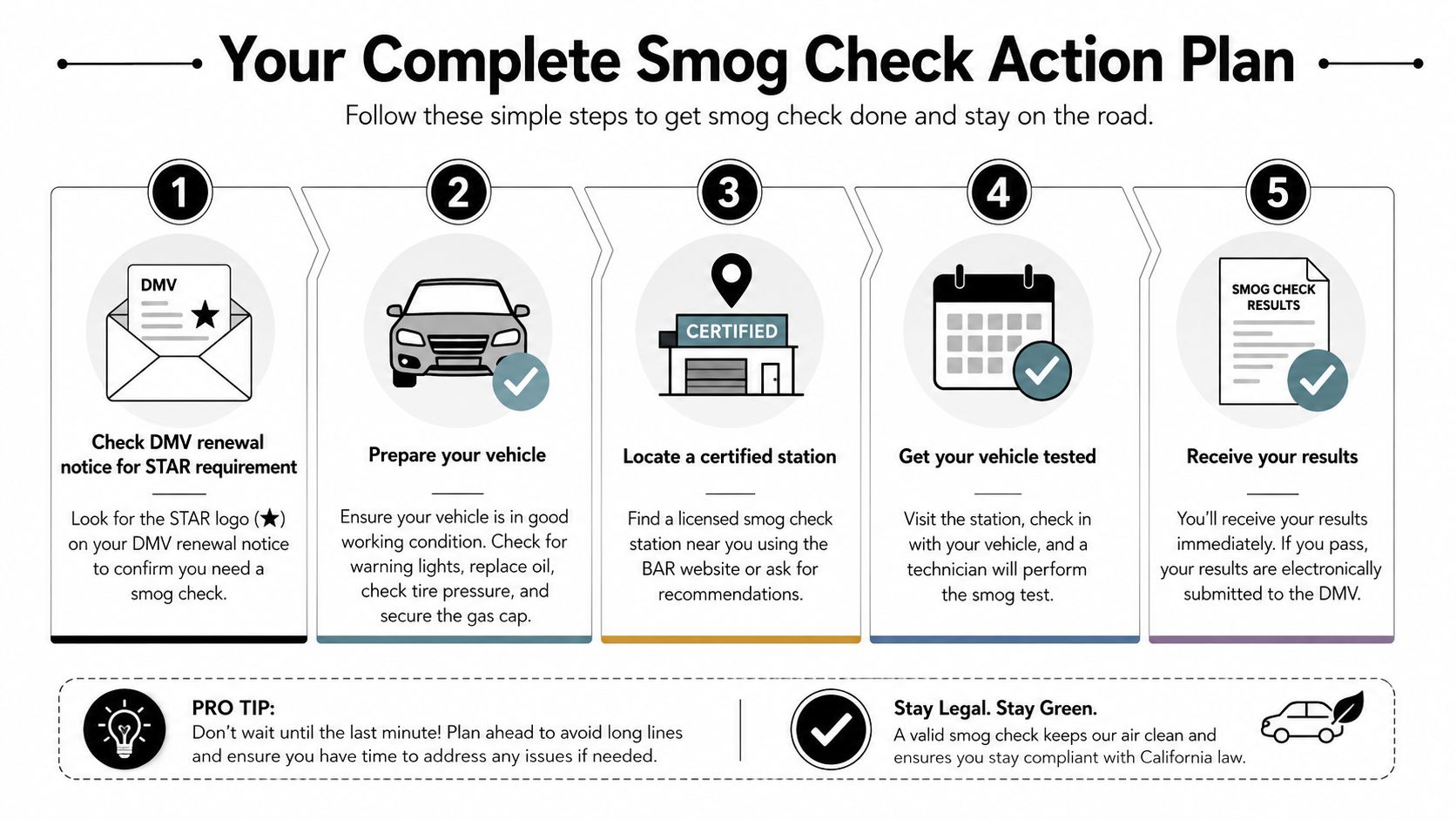
Use this order every time
- Check the notice. Confirm whether your DMV renewal requires a standard smog check or a STAR station.
- Prep the car. Warm it up, check the light on the dash, and deal with obvious maintenance issues before you go.
- Gather documents. Bring your registration or renewal notice, driver's license, proof of insurance, and payment.
- Choose the right station. Pick a certified location that can legally test your vehicle type.
- Get the result. Hold onto the paperwork until your registration issue is closed.
If you want a local station that handles the process efficiently, keep Speedy Smog in San Leandro on your short list. For East Bay drivers, a certified shop that moves quickly and knows the state requirements saves time and avoids extra trips.
Set a reminder for your next smog cycle now, not later. Drivers who avoid registration headaches plan ahead, keep the car ready, and do not wait until the last week to find a station.