
Vehicle Emissions Testing: What You Need to Know
Vehicle emissions testing is a mandatory inspection that measures the pollutants your car releases into the air — and in states like California, passing it is a legal requirement before you can renew your registration. If you've just received a renewal notice or you're buying a used car and aren't sure what to expect, you're in the right place. This guide covers exactly how vehicle emissions testing works, which vehicles need it, what happens if you fail, and how to prepare so you pass the first time.
What Is Vehicle Emissions Testing?
Vehicle emissions testing — sometimes called a smog check or emissions test — is an inspection that measures the exhaust gases your vehicle produces. The goal is to confirm your car isn't releasing pollutants above the legal threshold set by your state's environmental agency.
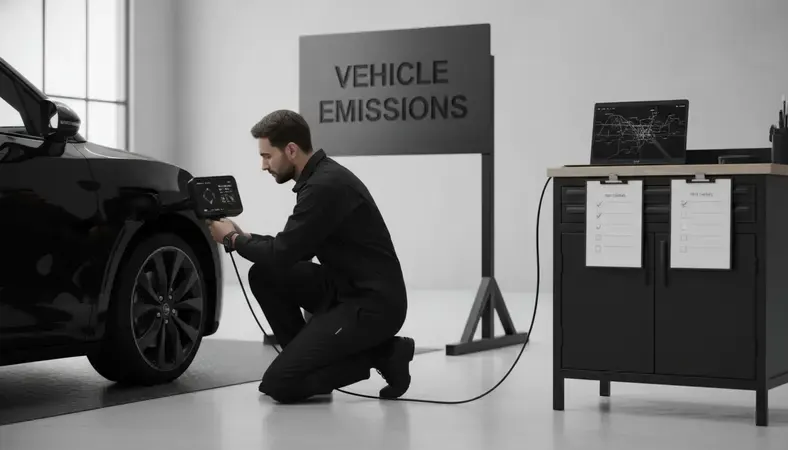
The test checks for harmful gases like hydrocarbons (HC), carbon monoxide (CO), nitrogen oxides (NOx), and particulate matter. These pollutants contribute to smog, ground-level ozone, and respiratory health problems. California's Air Resources Board (CARB) sets some of the strictest vehicle emissions standards in the country, which is why smog checks are such a consistent part of car ownership here.
Vehicle emissions testing isn't a mechanical inspection — it doesn't check your brakes or tires. It's specifically about what comes out of your tailpipe and what your onboard computer reports about your engine's performance. Think of it as a health check for your car's pollution output.
Key Insight: California has required vehicle emissions testing since 1984. The program has helped reduce smog-forming emissions from passenger vehicles by more than 80% compared to pre-program levels, according to the California Bureau of Automotive Repair.
Why Is Emissions Testing Required?
The short answer: air quality. Vehicle exhaust is one of the largest sources of air pollution in urban areas, and without regular vehicle emissions testing, there's no reliable way to identify high-polluting vehicles and get them fixed.
California's Central Valley and greater Los Angeles area regularly appear among the most polluted regions in the United States, according to the American Lung Association's State of the Air report. Vehicle emissions testing is one of the primary tools regulators use to reduce that pollution.
From a legal standpoint, California requires vehicle emissions testing under the Vehicle Code and Health and Safety Code. Failing to comply means you can't legally renew your registration — and driving with an expired registration is a ticketable offense.
Other states have similar programs. Colorado runs the Air Care Colorado emissions program in the Denver metro area. Arizona's ADEQ vehicle emissions testing station network covers Maricopa and Pima counties. The federal Clean Air Act gives states authority to require these programs in areas that don't meet federal air quality standards.
How Does Emissions Testing Work?
The actual vehicle emissions testing process is quick — most inspections take 15 minutes or less. Here's what happens step by step:
-
Check-in: You pull into the testing station and provide your vehicle registration. The technician confirms your vehicle is on the required testing list.
-
OBD-II scan: For most vehicles made after 1996, the technician connects a diagnostic scanner to your car's onboard computer (the OBD-II port, usually located under the dashboard). This reads your vehicle's emissions monitors — essentially the car's self-diagnostic system for pollution-related components.
-
Visual inspection: The technician checks that your catalytic converter is present and that there are no obvious tampering or missing emissions components.
-
Tailpipe test (older vehicles): Vehicles made before 1996 typically undergo a tailpipe test, where a probe is inserted into the exhaust pipe to directly measure pollutant concentrations.
-
Results: If your vehicle's monitors show no faults and emissions levels are within the legal limit, you pass. You receive a certificate, and your registration renewal goes through.
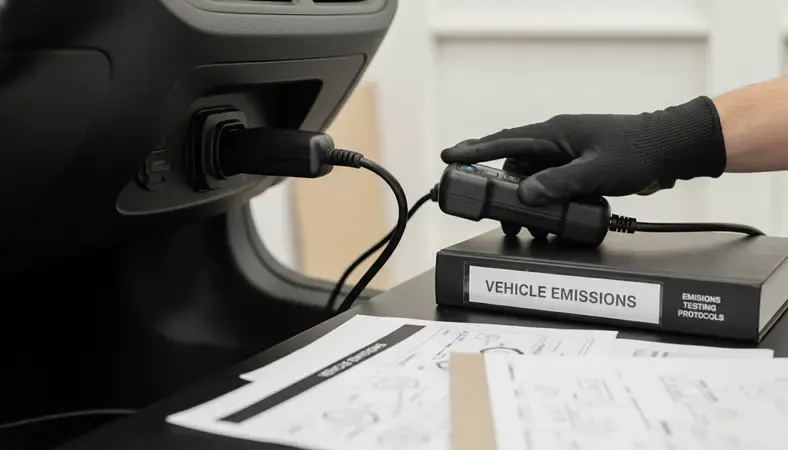
What the OBD-II system actually checks
Your car's onboard computer continuously monitors components like the oxygen sensors, catalytic converter, evaporative emissions system, and exhaust gas recirculation valve. If any of these systems have a fault, the check engine light comes on — and the monitor shows as "not ready" or "failed" during vehicle emissions testing.
A check engine light almost always means an automatic failure, even if the actual emissions output is fine. This is why addressing warning lights before your test matters so much.
How vehicle emissions testing differs by state
Not every state runs emissions testing the same way. Here's a quick comparison:
Emissions Testing Requirements by State
| State | Program Name | Frequency | Who's Exempt |
|---|---|---|---|
| California | Smog Check | Every 2 years | Vehicles 8 years old or newer (in most cases) |
| Colorado | Air Care Colorado | Every 2 years | Vehicles 7 years old or newer |
| Arizona | ADEQ Vehicle Emissions | Every 1–2 years | Vehicles 5 years old or newer |
| Texas | Texas Emissions Program | Annually | Electric vehicles; some rural counties |
| New York | NYS Inspection | Annually | Vehicles under 2 years old |
Requirements vary by county, vehicle age, and fuel type. Always check your state's DMV or environmental agency website for the rules that apply to your specific vehicle.
What Vehicles Need Emissions Testing?
Not every car on the road requires vehicle emissions testing. The rules depend on your state, your county, and your vehicle's age and type.
In California, gasoline-powered vehicles registered in most counties must get a smog check every two years. Vehicles 8 model years old or newer are typically exempt because they're covered under the manufacturer's warranty for emissions components. Diesel vehicles over 14,000 lbs GVWR and electric vehicles are also exempt from the standard smog check program.
Here's a general breakdown of who needs vehicle emissions testing in California:
- Gasoline vehicles more than 8 years old: Required every two years at registration renewal
- Vehicles changing ownership: A smog check is required before a private-party sale can be completed
- Out-of-state vehicles: Required when registering a vehicle from another state in California
- Gross polluters: Vehicles flagged by the state as high-emitters may be required to test more frequently
Electric vehicles, hydrogen fuel cell vehicles, and most motorcycles are exempt from California's smog check program. If your registration renewal notice says "Smog Required," that's your definitive answer — vehicle emissions testing is required for your car this cycle.
How Often Do You Need Emissions Testing?
Most states require vehicle emissions testing every one to two years, tied to your registration renewal cycle. California operates on a biennial (every two years) schedule for most vehicles.
Your registration renewal notice will tell you whether a smog check is required. If it says "Smog Required," you need to complete vehicle emissions testing before your registration can be renewed. If it says "Smog Exempt," your vehicle doesn't need a test this cycle.
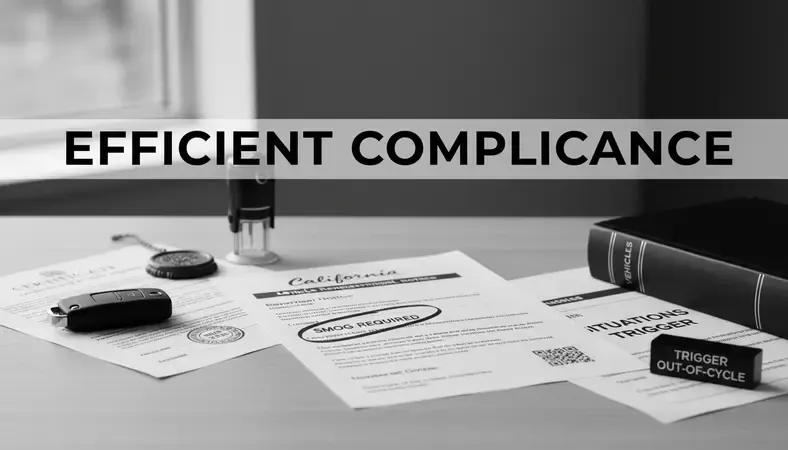
A few situations trigger an out-of-cycle vehicle emissions testing requirement:
- Buying or selling a used vehicle: The seller is responsible for providing a valid smog certificate (no more than 90 days old) at the time of sale in California
- Registering an out-of-state vehicle: Required when bringing a car from another state into California
- Moving into a smog check county: If you move from a non-participating county to one that requires smog checks
If you use a service like Jiffy Lube emissions test locations, many chains offer smog check services in participating states — though availability varies by location. Searching "emissions close to me" is the fastest way to find a nearby STAR-certified station.
What Happens If Your Vehicle Fails Emissions Testing?
Failing vehicle emissions testing doesn't mean your car is permanently off the road. It means something needs to be fixed before you can register your vehicle.
When your car fails, the testing station gives you a Vehicle Inspection Report (VIR) that lists exactly what failed. Common failure reasons include:
- Check engine light on: Any active diagnostic trouble code (DTC) will cause a failure
- Failed OBD-II monitors: Monitors that haven't completed their self-test cycle (often after a battery disconnect or recent repair)
- Catalytic converter failure: One of the most common and expensive failure points
- Evaporative emissions leak: A faulty gas cap can cause this
- Oxygen sensor failure: Affects how the engine manages fuel and emissions
After a failure, you have a few options. You can get the necessary repairs done and return for a retest. In California, the retest fee is waived if you return to the same station within 30 days.
If repairs are too costly, California's Consumer Assistance Program (CAP) offers financial assistance for qualifying low-income vehicle owners. The program can provide up to $1,500 toward repairs or a vehicle retirement payment if your car can't be economically repaired to pass vehicle emissions testing.
Why It Matters: Don't drive your car to "reset" the check engine light before a smog check. Clearing codes without fixing the underlying problem causes the OBD-II monitors to show as "not ready," which is also a failure. The fix needs to actually happen.
How to Prepare Your Vehicle for Emissions Testing
A little preparation goes a long way toward passing vehicle emissions testing on the first try. Here's what to do before you go:
-
Fix the check engine light first. Any active fault code means an automatic failure. Get the code read at an auto parts store (usually free) and address the underlying issue before your test.
-
Drive your car before the test. Take a 15–20 minute highway drive the day before. This warms up the engine fully and allows OBD-II monitors to complete their self-test cycles. Cold starts and short trips leave monitors "not ready."
-
Check your gas cap. A loose or cracked gas cap causes evaporative emissions failures. Tighten it or replace it — a new gas cap costs under $20.
-
Get an oil change if you're overdue. Dirty oil can increase hydrocarbon emissions. Fresh oil helps your engine run cleaner.
-
Check tire pressure. Underinflated tires don't affect emissions directly, but a well-maintained car tends to run more efficiently and produce fewer emissions overall.
-
Don't disconnect your battery recently. A battery disconnect clears all OBD-II monitors, setting them back to "not ready." You'll need to drive the car through several complete drive cycles before the monitors reset — which can take days of normal driving.
If you're unsure whether your vehicle will pass, some stations offer a pre-inspection check. This isn't a formal vehicle emissions test, but it gives you a heads-up on potential issues before you pay for the official test.
Common Questions About Vehicle Emissions Testing
How long does vehicle emissions testing take?
Most vehicle emissions testing inspections take between 10 and 20 minutes. If your vehicle is straightforward and passes on the first scan, you're often in and out in under 15 minutes. STAR-certified stations like Speedy Smog are set up for efficiency — most vehicles are done in under 15 minutes.
Can I get a smog check anywhere, or does it have to be a specific station?
In California, vehicle emissions testing must be performed at a licensed smog check station. For vehicles directed to a STAR station (typically high-emitters or vehicles with a history of failures), you must use a STAR-certified location. You can search for an emission testing station using the Bureau of Automotive Repair's online locator or simply search "emissions close to me" to find nearby options.
What if I just bought a used car and it fails emissions testing?
In California, the seller is legally required to provide a valid smog certificate at the point of sale. If they didn't, the repair responsibility may fall on them depending on your purchase agreement. For private-party sales, always request a current smog certificate before completing the transaction.
Does vehicle emissions testing check anything other than exhaust?
The smog check includes a visual inspection of emissions components (like the catalytic converter and fuel cap) and an OBD-II diagnostic scan. It doesn't check brakes, tires, lights, or other mechanical systems — those are covered under a separate vehicle inspection service in states that require one.
What's the difference between a regular smog station and a STAR station?
STAR stations meet higher performance standards set by the Bureau of Automotive Repair. They're required for vehicles that have failed a smog check before, vehicles with a history of high emissions, and vehicles that the state specifically directs to a STAR station. If your renewal notice says "STAR Required," you can't use a regular smog station for your vehicle emissions testing.
Key Takeaways
Vehicle emissions testing is straightforward when you know what to expect. Fix any check engine lights before you go, drive the car to warm up the monitors, and choose a STAR-certified station for a fast, reliable result.
Pass your smog check fast at Speedy Smog in San Leandro — STAR certified, most vehicles done in under 15 minutes, open 6 days a week. Save $25 on your visit by calling (510) 614-7664. Ready to get started? Visit Speedy Smog to learn more.