
The Bureau of Automotive Repair puts a typical smog check at about 30 minutes, while many 2000-and-newer vehicles at efficient stations are completed in roughly 10 to 15 minutes. The exact time depends on the vehicle and the visit, so the quickest advertised test isn't necessarily the right estimate for your whole appointment.
The familiar advice to “just allow a few minutes” leaves out an important distinction: inspection time and total visit time aren't the same thing. A technician must complete the procedures that apply to your vehicle, and you may also need time for check-in or a queue. You can make a much better estimate by identifying your vehicle's testing pathway before you arrive.
Table of Contents
- The Short Answer for Most Drivers
- What Happens During Each Inspection Stage
- Factors That Stretch or Shorten Your Visit
- How Vehicle Age and Type Change the Timeline
- Choosing a Station That Keeps Your Visit Short
- Practical Steps to Avoid Delays on Test Day
- Planning Your Visit and Taking the Next Step
The Short Answer for Most Drivers
A smog check takes about 30 minutes by the Bureau of Automotive Repair's typical estimate; qualifying newer vehicles may take roughly 10 to 15 minutes to test, while your total visit also depends on eligibility and any wait.
Those figures describe different testing pathways, much like a short route and a longer one to the same destination. A qualifying newer vehicle may need a simpler set of checks. Other vehicles require additional procedures. The estimate for testing does not include time spent waiting for a technician or completing check-in.
Ask What the Estimate Includes
When you call a station, ask whether its estimate means hands-on testing time or arrival-to-departure time. An advertised completion window may not account for vehicles ahead of you. A short test estimate also does not mean required checks are skipped.
Ask these questions to match the estimate to your visit:
- Vehicle eligibility: Does the estimate apply to your model year and fuel type?
- Station availability: Can testing begin when you arrive, or is there a queue?
- Inspection scope: Does your vehicle need procedures beyond the station's usual test for newer vehicles?
- Unexpected findings: What happens if the technician identifies a problem?
Planning rule: Match the testing estimate to your vehicle, then allow separately for the station's current wait.
For an East Bay driver fitting an inspection between errands, that distinction helps set a realistic schedule. If you need to leave by a certain time, tell the station and ask whether it can meet that window. The answer depends on your vehicle's testing pathway and whether a technician is ready when you arrive.
What Happens During Each Inspection Stage
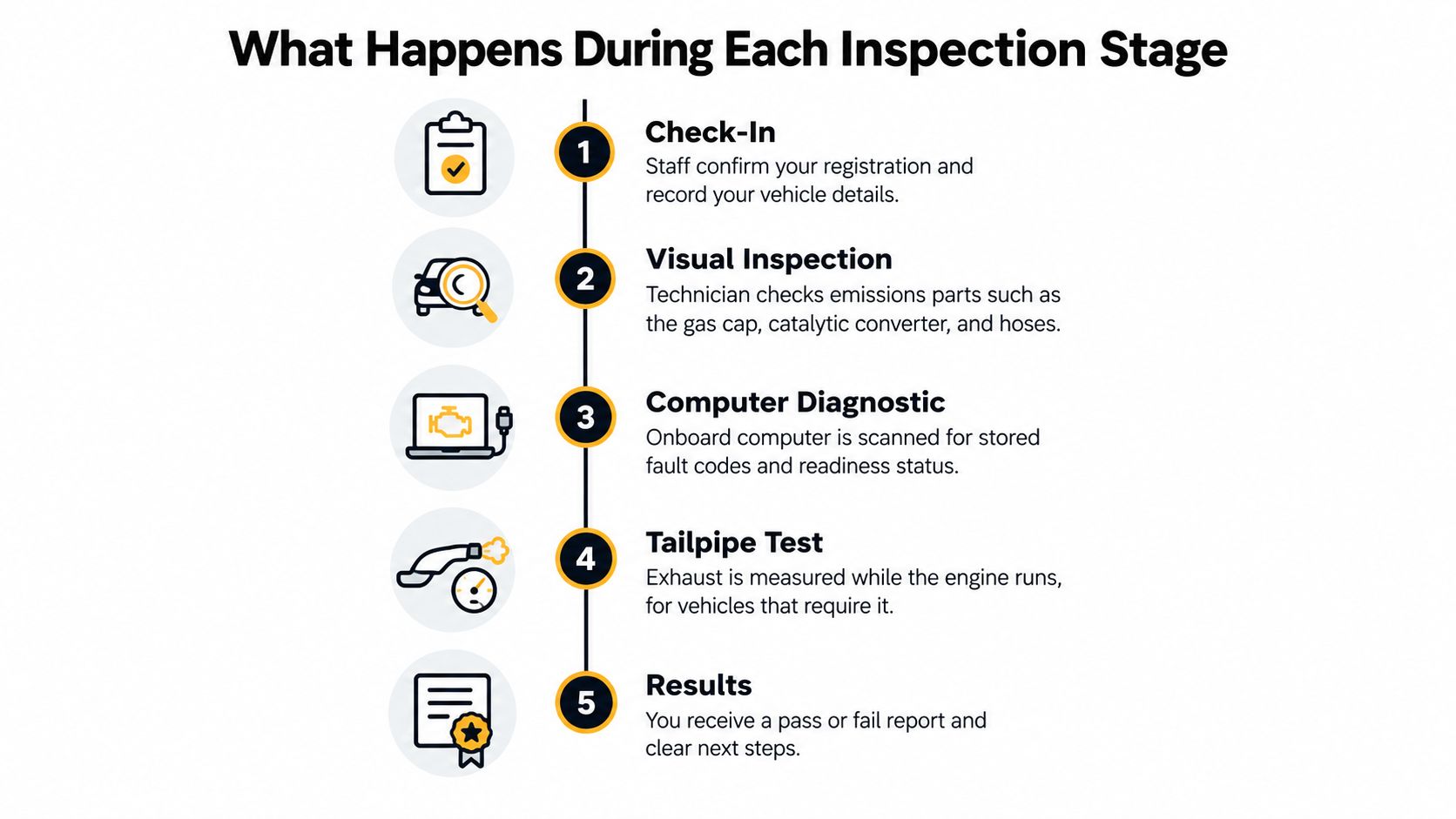
A smog check is a sequence of steps, not one reading. The exact route depends on the vehicle, so some drivers will not need every procedure shown in the diagram.
Check-In and Vehicle Review
First, staff confirm your vehicle details and identify the inspection that applies. Have your registration information ready, and mention recent repairs or concerns at check-in. This gives the technician context before testing begins.
Applicable Visual and Functional Checks
Next, the technician carries out the visual or functional checks required for your vehicle. These checks are separate from reading the vehicle's computer or measuring exhaust. The exact combination depends on the vehicle and applicable test pathway. For a plain-language overview, see what technicians check during a smog inspection.
Computer or Tailpipe Testing
For most gasoline vehicles from model year 2000 onward, the inspection includes an on-board diagnostic system check, or OBD check. The technician connects testing equipment to review emissions-related computer information, including readiness monitors. Other vehicles may follow a pathway that includes tailpipe testing. That can involve preparing the vehicle and observing its exhaust under the required conditions, so it is more than just inserting a probe.
California BAR outlines the smog inspection requirements, including procedures that apply to different vehicles (California BAR Smog Check information). Computer checks, visual and functional checks, and tailpipe procedures serve different purposes. A vehicle receives the checks required for its pathway, not necessarily every type of test.
California's statewide program began in 1984, and inspection methods have changed as vehicle technology has developed. Newer OBD-equipped vehicles can provide emissions information electronically, while older vehicles may require different equipment or procedures (Bay Area Air District history).
Results and Next Steps
At the end, the technician records the outcome and explains what it means. If the vehicle passes, you receive the inspection result. If it does not, ask which part of the test it did not meet and what the next step involves. That conversation is the final stage of the visit, and its length depends on whether you need an explanation or follow-up guidance.
Factors That Stretch or Shorten Your Visit
A car can have a straightforward test and still spend longer at the facility because the technician is finishing another vehicle. Conversely, an empty waiting room doesn't guarantee an immediate finish if your vehicle requires additional procedures. Queue time and technical time need separate allowances.
A useful planning formula is:
Total visit time = check-in + waiting + applicable inspection procedures + discussion of results.
Repairs belong outside that basic estimate. If the vehicle needs diagnosis, repair, and another inspection, you're planning a different process, not merely a slightly slower version of an ordinary passing test.
Factors That Change Smog Check Visit Length
| Factor | Effect on Visit Length | Driver Can Control It |
|---|---|---|
| Station workload | May add a wait before testing starts | Partly, by checking availability |
| Vehicle type | Determines which inspection procedures apply | No, but you can identify it beforehand |
| Required test method | May involve additional equipment and operating steps | No |
| Vehicle condition | Problems may require follow-up beyond the inspection | Partly, through advance diagnosis |
| Repairs and retesting | Add work and potentially another visit | Partly, by addressing known concerns |
| Check-in preparation | Missing information can interrupt intake | Usually |
| Questions about results | May require a longer conversation before departure | Partly, by allowing time for discussion |
The table separates predictable planning factors from things you can't fully control. You can bring the right paperwork and describe your vehicle accurately. You can't reasonably expect the station to shorten a mandated procedure because you have another appointment.
Consider two hypothetical drivers with similar cars. One arrives when a technician is available; the other arrives behind a queue. Even if their actual tests take comparable time, their departure times won't match.
The same distinction applies to a failure. A technician may finish the inspection and explain a failed result without having completed any repair. Ask what the estimate covers so you don't confuse “test finished” with “vehicle repaired and ready to pass.”
How Vehicle Age and Type Change the Timeline
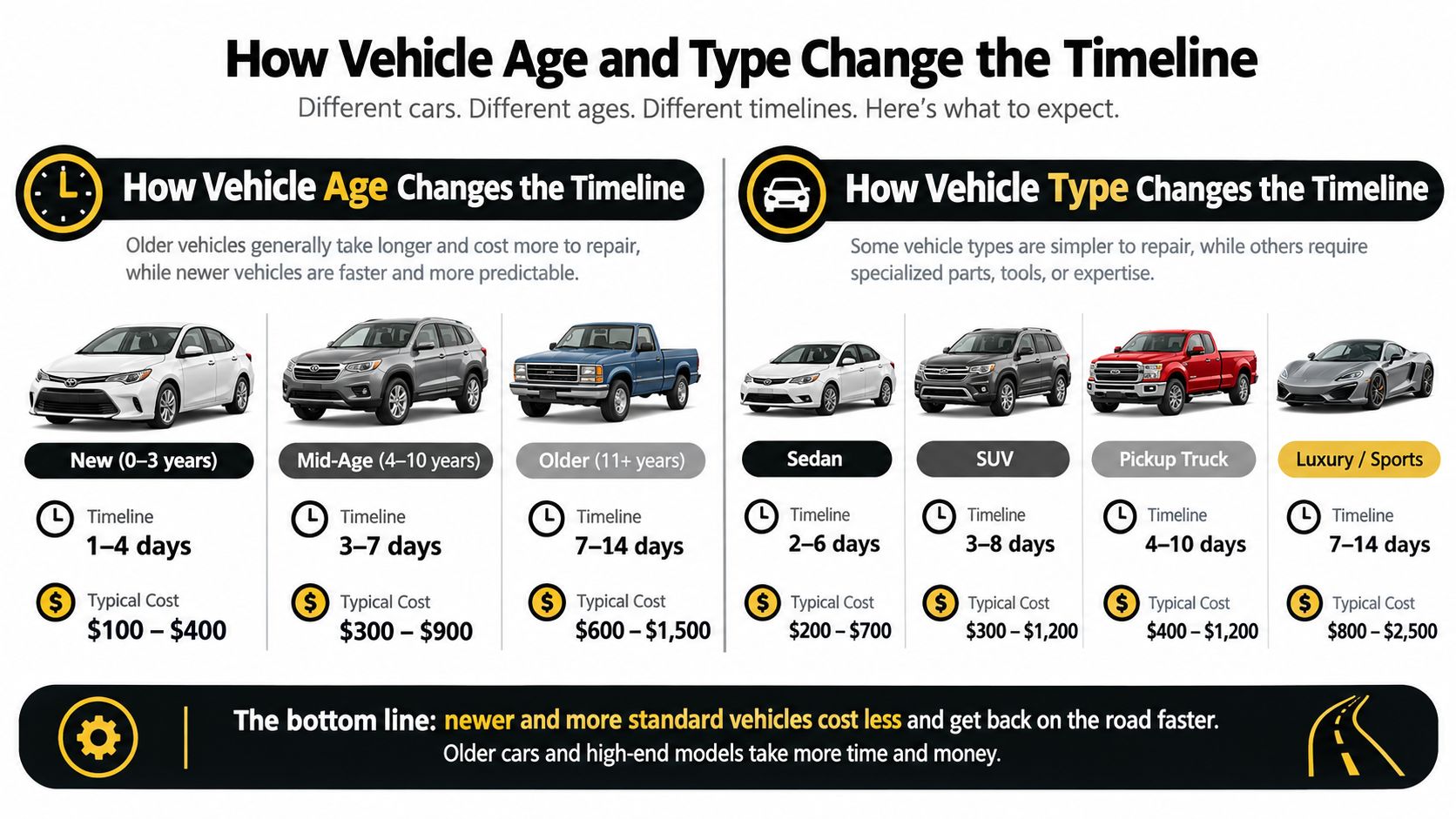
A single advertised average can hide different test procedures. The vehicle's age and powertrain help determine which steps apply, so use them to estimate your own visit rather than assuming every smog check follows the same path.
A Newer Gasoline Car Versus an Older Vehicle
A newer gasoline car that qualifies for the standard computer-based inspection is generally closer to the official benchmark than a vehicle requiring additional checks. It may follow a shorter testing pathway, though the exact visit time still depends on the station's process and wait.
An older gasoline vehicle may need added tailpipe or equipment checks, which can put its inspection beyond that benchmark. Ask the station which test applies to your model year and how much time to allow. An added step means a longer procedure, not necessarily a problem with the car.
Inspection time does not predict the result. A shorter test can still find an issue, and a longer one does not mean the vehicle will fail.
A Diesel Truck Versus a Hybrid
For diesel vehicles, first confirm whether a test is required. California DMV guidance exempts diesel vehicles from the Smog Check program if they are model year 1997 or older, or if their gross vehicle weight rating is over 14,000 pounds. Diesel vehicles outside those exemptions may be subject to testing. The DMV also confirms that hybrids are subject to Smog Check requirements (California DMV vehicle information).
A diesel truck's inspection time depends on the applicable test pathway, so ask the station to confirm the procedure before you book. Share the model year, fuel type, and gross vehicle weight rating. The guide to smog checks for diesel trucks explains what information to have ready.
A hybrid's electric operation does not by itself determine whether an emissions inspection is required. Tell the station it is a hybrid so staff can identify the right inspection and give you a relevant time estimate.
Before booking, gather the details that determine the pathway:
- Model year: Use the vehicle's model year, not the year you bought it.
- Fuel and powertrain type: Specify gasoline, diesel, or hybrid.
- Weight information: Have the gross vehicle weight rating ready if diesel eligibility is in question.
- Inspection request: Check your registration paperwork and describe what it asks you to complete.
Those details help the station match your vehicle to the required test, giving you a more useful estimate than a general average.
Choosing a Station That Keeps Your Visit Short
Compare stations by how clearly they explain the visit, not just how briefly they advertise it. A useful estimate identifies the eligible vehicle, the expected test duration, and any current wait.
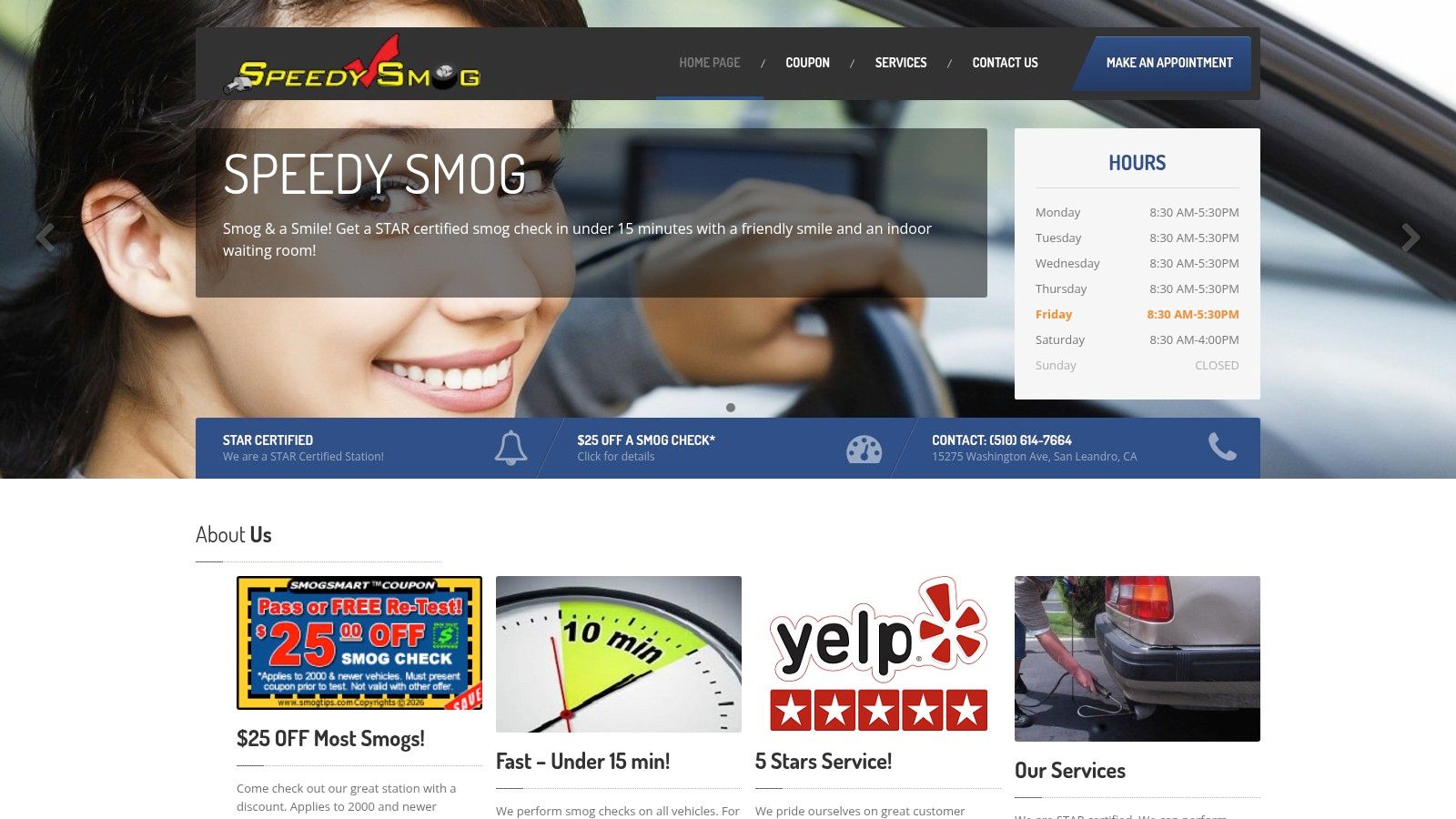
The station information shown below provides a starting point for checking services and visit details.
Compare the Details That Affect Your Appointment
STAR certification, suitable testing equipment, and clear pricing are more useful selection criteria than a speed claim alone. Ask whether the station can handle your particular vehicle and whether any stated price or promotion applies to it.
A comfortable waiting area is another practical consideration. It doesn't change the required test, but it gives you somewhere to wait if the technician is occupied or your vehicle needs a longer procedure.
| What to Compare | A Useful Question |
|---|---|
| Certification | Can you perform the inspection requested for my vehicle? |
| Vehicle coverage | Do you test my model year and powertrain type? |
| Timing | Is that the test duration or the whole visit? |
| Pricing | What does the quoted price include? |
| Promotions | Does the current offer apply to my vehicle? |
| Waiting arrangements | Is there an indoor area if testing can't begin immediately? |
Evaluate the Local Option Without Assuming a Guarantee
The publisher's San Leandro station describes its services as STAR-certified testing for newer and older vehicles, diesels, and hybrids, with transparent pricing and a clean indoor waiting room. Those are useful details to confirm when comparing it with other East Bay stations.
Treat advertised coupons and hours as items to verify before traveling. A promotion may have eligibility conditions, and a station's regular opening hours don't tell you its current workload. Ask for both the applicable price and the likely arrival-to-departure experience.
For another look at the service, the video below provides additional context.
A reliable timing conversation should end with a clear answer about your car, not an unsupported promise that every vehicle will leave equally quickly.
Practical Steps to Avoid Delays on Test Day
Preparation isn't about finding a trick to pass. It's about arriving with the right information and avoiding preventable uncertainty. Use this checklist before setting out, especially if the vehicle has known issues or recent repair work.
- Confirm the inspection pathway. Give the station your model year, fuel type, and any weight information needed to determine diesel eligibility. Ask whether it can perform the required inspection.
- Discuss an illuminated check engine light. If the light is on, arrange diagnosis rather than assuming a quick inspection will resolve the concern. Tell the station about it before requesting a routine appointment.
- Mention recent repairs or battery work. Readiness is part of the computer check described earlier. If you're unsure whether the vehicle is ready, ask for guidance before arriving rather than assuming the absence of a warning light answers everything.
- Allow for normal operating temperature. Where applicable, driving to the station can help the engine warm up. Don't assume that a short drive guarantees readiness or eliminates required testing procedures.
- Bring your documents. Have registration information and relevant repair records available. They give staff useful context without requiring you to remember every detail.
- Ask about a quieter arrival time. Contact the station before leaving if your schedule is tight. Current availability is more informative than guessing which part of the day will be quiet.
- Address known mechanical concerns. An older car with unresolved problems may benefit from diagnosis before inspection. Keep repair planning separate from the inspection appointment.
Arriving prepared won't guarantee a pass, but it helps the technician start with the right information.
For a convenient preparation reference, review what to do before a smog check. If something about your vehicle is unusual, explain it when you contact the station rather than waiting until check-in.
Planning Your Visit and Taking the Next Step
Build your estimate around the applicable inspection plus the conditions at the station. For a qualifying newer gasoline car, ask whether the shorter testing window discussed earlier applies. For an older vehicle, diesel, or hybrid, have staff confirm the pathway before using any advertised average.
Then add the parts that aren't testing: intake, any queue, and time to understand the result. You don't need to assign invented minute values to each item. You need to know whether they're likely to fit around your next commitment.
Leave Room for Uncertainty
Use the broader official benchmark when you don't yet know your vehicle's requirements. Even then, remember that an inspection estimate isn't a guarantee about waiting, diagnosis, or repairs. If you have a firm deadline, tell the station before you travel.
Your next step is simple: gather the vehicle details, confirm eligibility and availability, and ask for an estimate that includes the whole visit. That conversation gives you a more dependable plan than assuming the fastest advertised test applies to every car.
Speedy Smog offers STAR-certified emissions testing in San Leandro for newer and older vehicles, diesels, and hybrids. Visit Speedy Smog to confirm your vehicle's testing requirements, current availability, and expected visit length before heading in.
A typical smog inspection runs about 20 to 30 minutes under California BAR guidance, and the emissions portion on a ready 2000 or newer vehicle can often be finished in about 10 to 15 minutes at an efficient station. If you're staring at a renewal deadline, the key question isn't just how long the bay visit takes, it's whether your car is ready to pass.
Table of Contents
- What Smog Check Time Means for Drivers
- How an Inspection Works in the Bay
- The Biggest Factors That Speed Up or Slow Down Your Visit
- Why a Faster Station Does Not Always Mean Faster Certification
- Pre-Appointment Checklist for the Shortest Possible Wait
- What a STAR Certified Station Brings to the Timeline
- Setting Realistic Expectations for Your Visit
What Smog Check Time Means for Drivers
You pull into the station expecting a quick stop, and that is fair. The mistake is treating every smog check like the same job, because smog check time depends on what the inspector has to do, not just how fast the lane looks.
California's Bureau of Automotive Repair puts a typical inspection at about 30 minutes because the inspector is not only measuring emissions, they are also selecting the correct procedure, checking components visually, running the required functional tests, and recording the result. BAR's STAR guidance also says a full inspection often takes 20 minutes or more, with faster outcomes possible when the inspector knows the vehicle well and the car is straightforward to test. BAR smog check guidance
The honest split between regulation and shop speed
The 20 to 30 minute range is the safe planning number. It covers the whole inspection, not just the machine reading.
The 10 to 15 minute number is the shop workflow goal for a ready newer vehicle, especially when the car shows up with no warning lights, no weird configuration issues, and no extra diagnostic work. That is a real-world speed target, not a promise that every vehicle gets the same treatment. BAR also ties inspection time to vehicle age, fuel type, inspection type, and the condition of emissions-control parts.
Practical rule: plan for the regulatory range, then be pleasantly surprised if your newer vehicle moves through faster.
If you want the cleanest way to think about it, separate the bay visit from the readiness problem. The bay visit is the part you can control on the day, but the readiness monitors can keep a car from being testable for two weeks or more after repairs or battery loss. Most drivers budget for the bay visit and forget that the car may need time before it is even ready to certify.
How an Inspection Works in the Bay
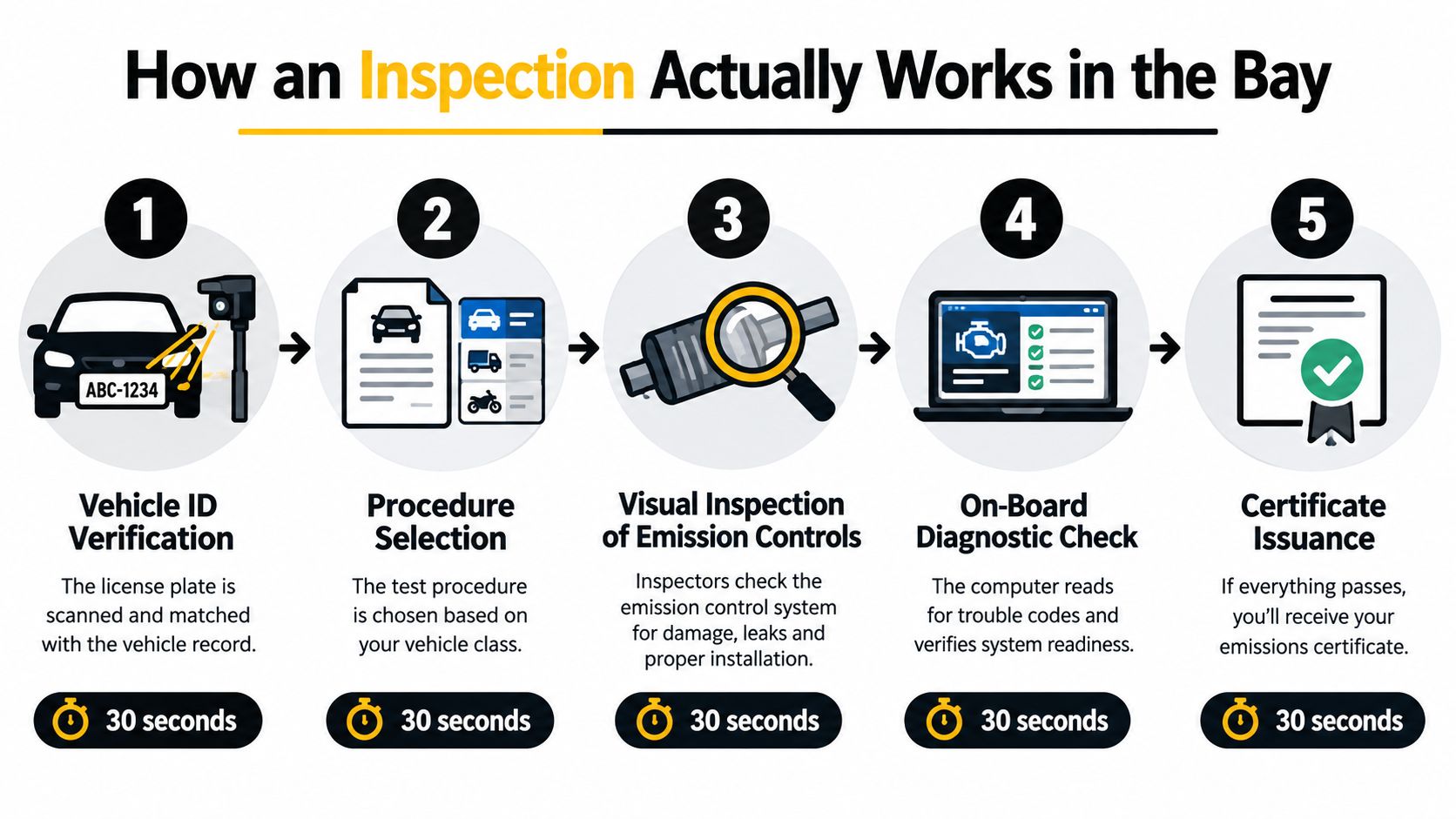
From the waiting room, the bay move looks like one machine reading. In practice, the inspector works through a fixed sequence that cannot be shortened.
What happens before the certificate
First comes vehicle identification and procedure selection. The inspector has to confirm what the car is, because the test changes by model year, fuel type, and equipment.
Then comes the visual inspection. That means checking for required emissions-control parts, confirming they are present, and spotting modifications that change the approved procedure. After that, the inspector runs the functional checks and pulls the required data from the vehicle.
For 2000 and newer gasoline vehicles, the process usually depends heavily on OBD data, including diagnostic trouble codes, malfunction-light status, and readiness monitors. Older vehicles may need direct exhaust measurement and more hands-on verification. The BAR smog check manual also explains that a pre-2000 gasoline vehicle may need a warmed-up tailpipe procedure before the actual test begins. BAR smog check manual
That is why station time varies so much. A newer sedan with everything in order can move quickly through the bay. An older pickup, a diesel, or a vehicle with unusual equipment gives the inspector more to check, more to document, and more chances for delay.
The Biggest Factors That Speed Up or Slow Down Your Visit
Vehicle age drives a lot of the timing. So does fuel type. So does whether the car is stock, modified, or configured in a way that needs a different approved procedure.
BAR's statewide data show why inspectors stay methodical. In the 2025 summary, 11,275,981 initial tests produced 959,667 failures, an initial failure rate of 8.51%. The report also shows that older vehicles fail more often, including 19.45% for 1980 model-year vehicles in the cited initial-test category. BAR STAR FAQ
Typical smog check duration by vehicle type
| Vehicle category | Typical duration | Main reason |
|---|---|---|
| 2000 and newer gasoline | About 10 to 15 minutes | OBD-driven inspection, usually quicker when ready |
| Older gasoline vehicles | Longer than newer cars | More visual and functional checks, sometimes tailpipe work |
| Diesels | Often longer or more variable | Different approved procedure and configuration checks |
| Hybrids or nonstandard setups | Variable | Extra procedure selection and verification |
An illuminated check-engine light is a hard stop, not a small delay. BAR says it means the vehicle will not pass, and modified or non-approved software can also cause failure. That's why a station can't just “run it fast” and hope for the best. The inspector still has to verify the car the right way, or the result won't hold up. BAR smog check manual
For a practical Bay Area example, a station with a quick lane still has to slow down when the car itself demands it. If you want to compare operating style and access, this local smog check hours page is a useful reference point for how shops structure their day.
Why a Faster Station Does Not Always Mean Faster Certification
A clean bay does not fix an unready car. That's the part drivers miss, and it's the part that wastes the most time.
Readiness is the real gatekeeper
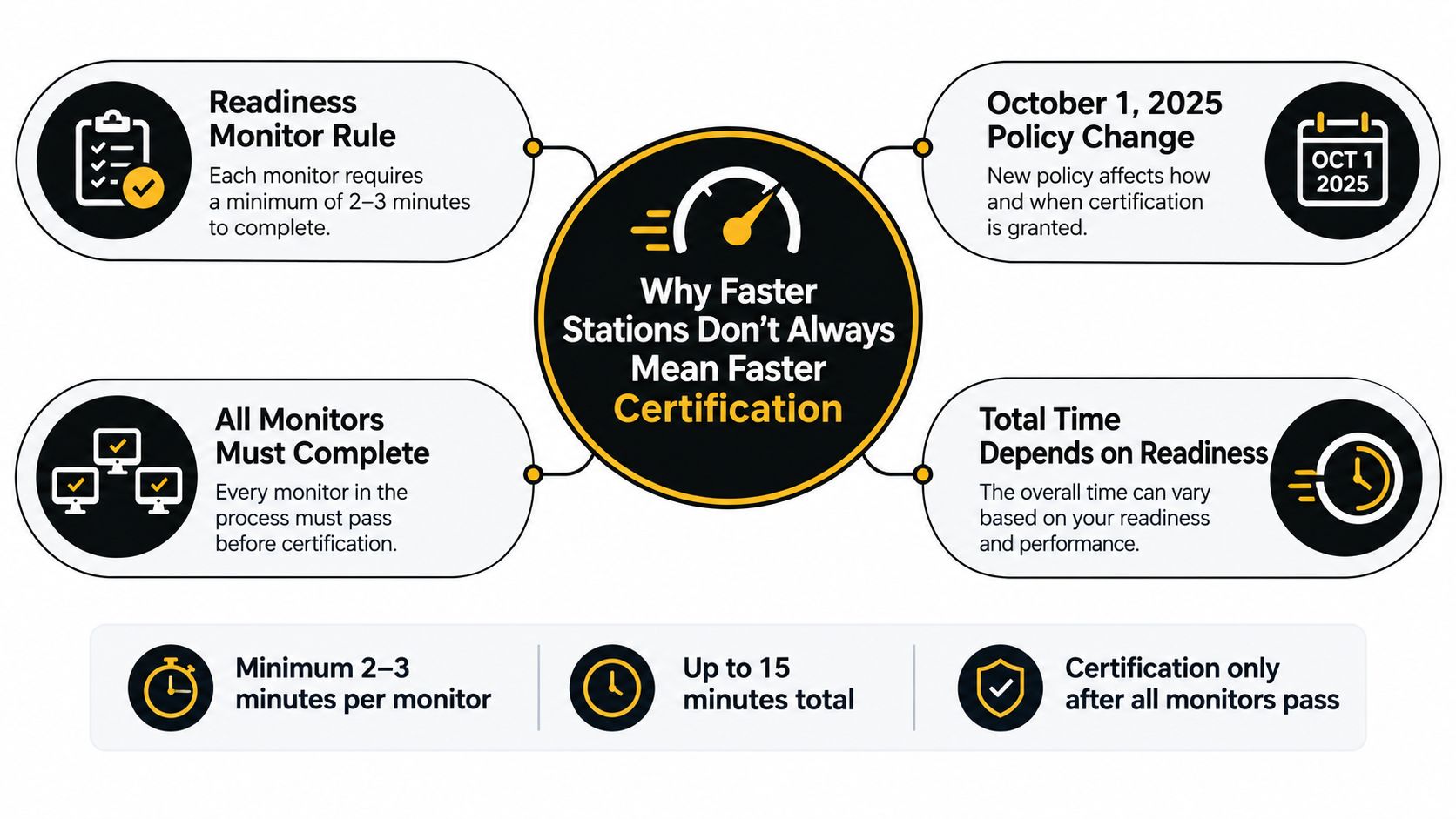
Readiness monitors are the car's own emissions self-tests. They rerun after things like battery disconnection, repair work, or clearing codes, and they need to show as complete before the vehicle can pass. BAR says that beginning October 1, 2025, all monitors that can feasibly be completed must be set before a vehicle can pass inspection. BAR readiness monitor regulations
That change matters because it kills the old shortcut mentality. Clearing the code right before the appointment doesn't make the car ready. It just resets the clock.
BAR says most properly functioning vehicles can set the required monitors within about two weeks, but that depends on the car, the driving pattern, and the monitor involved. So the bottleneck isn't the inspection lane. It's the drive cycle. If the monitors aren't ready, a quick station can't rescue the visit.
A fast station can shorten the bay time. It can't cheat the readiness process.
That's the distinction worth remembering if you need a same-day outcome. The appointment might be short, but certification only happens after the car has done its own part first.
Pre-Appointment Checklist for the Shortest Possible Wait
The night before your appointment is where you win or lose the day. If you show up ready, the visit stays short. If you show up half-prepared, you'll probably pay for it with a repeat trip.
What to do before you leave home
- Confirm renewal needs: Check whether the vehicle requires smog certification for registration or renewal before you head out.
- Watch the dash: If the check-engine light is on, don't expect a pass.
- Leave the battery alone: Don't disconnect it right before testing, because that can reset readiness monitors.
- Drive the car normally: Give it a mix of trips so the monitors can complete on their own.
- Tell the shop the setup: Diesel, hybrid, all-wheel-drive, or other nonstandard configurations should be disclosed up front.
- Warm the engine on older vehicles: Arrive with the car already at normal operating temperature if your vehicle uses a procedure that needs it.
If you're dealing with a recent repair, think in terms of repair, drive cycle, retest. Don't treat the appointment as a one-and-done errand, because the car may need time after the fix before it can certify.
For drivers who want a local shop workflow that handles this cleanly, Speedy Smog is one option in San Leandro that focuses on quick inspections and straightforward service. The value isn't magic, it's knowing the car shows up in the right state and the station doesn't waste time figuring out what it is.
What a STAR Certified Station Brings to the Timeline
Station choice matters because some places are built for speed, and some are built for guesswork. You want the first kind.
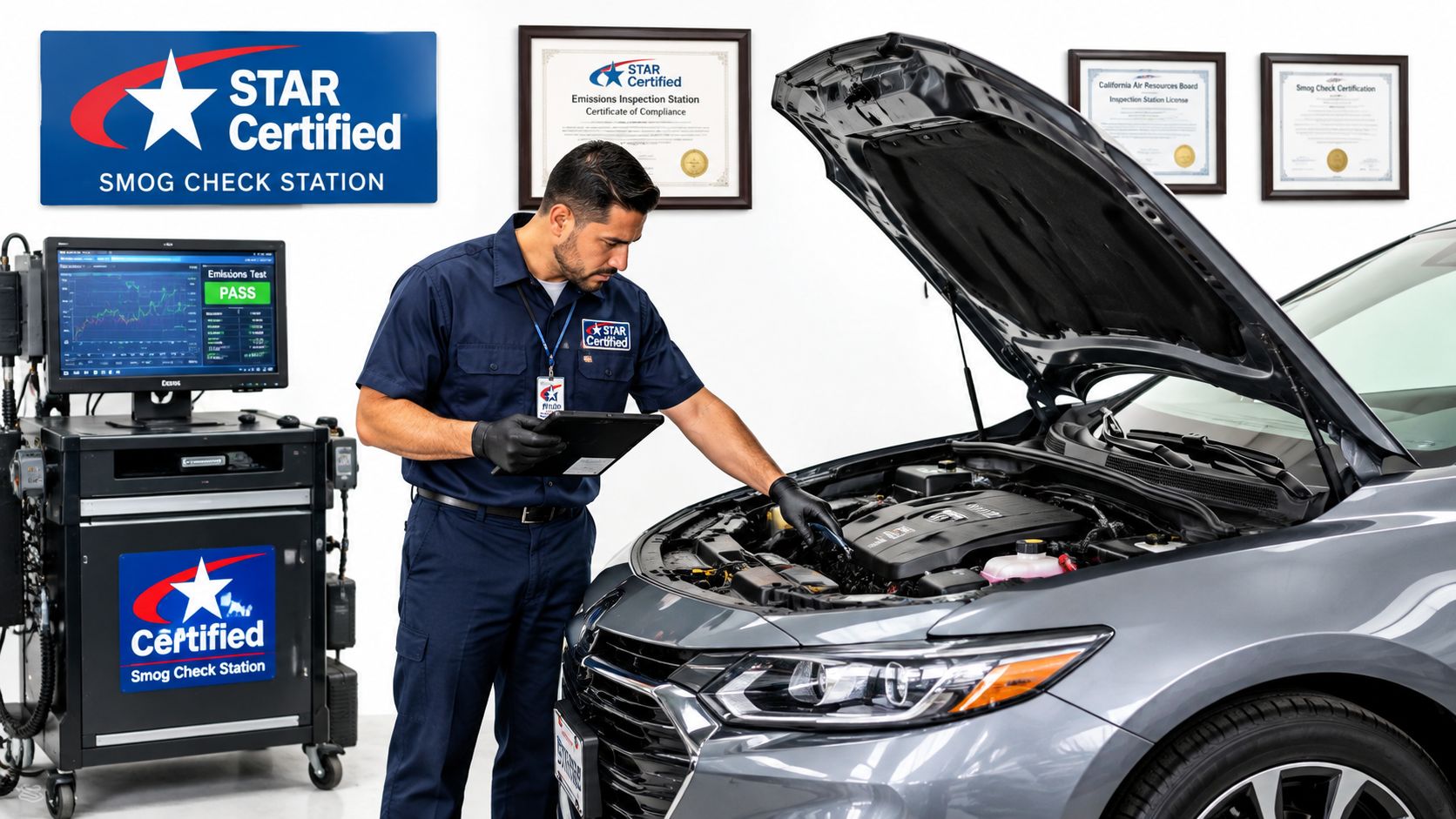
STAR Certified stations meet higher performance standards set by the Bureau of Automotive Repair, and they're allowed to inspect higher-risk vehicles. That usually means better procedure discipline, better equipment, and fewer delays caused by confusion over what test to run. What is a smog STAR station
A good STAR station also keeps the process moving after the test, with electronic result transmission and a workflow designed around compliant inspections rather than improvisation. That matters because slow paperwork can stretch a visit even after the car has passed.
The right station won't just be fast on paper. It'll be fast because it knows what to do with older vehicles, hybrids, diesels, and cars that need a little more attention. That's what cuts repeat visits, and repeat visits are what wreck your day.
Setting Realistic Expectations for Your Visit
A fast visit starts long before you pull into the bay. The timeline is readiness, then inspection, then any retest work, then DMV processing after the result goes out. If the car is not ready, the wait grows before the test even begins.
For a fuller breakdown of station-side timing, see our guide on how long a smog check takes.
That is the part drivers miss. They fixate on the minutes in the stall, then get burned by readiness issues, missing repairs, or a result that sends them back for another round. A station can be quick and still leave you with a longer certification path if the car is not prepared.
If you want the shortest possible visit, show up with the obvious problems handled, the car warmed up, and your paperwork squared away. That is how you get same-day results without turning a simple inspection into a half-day errand.