
For most 2000 and newer vehicles in the East Bay, smog check prices usually land between $40 and $90 out the door once the test, certificate, and small transmission fees are included. If you find a coupon deal, you might see the base test around $29.95, but your final total commonly ends up around $40 to $42 after the required add-ons.
Drivers looking for emissions testing prices near them often do so with a DMV renewal notice sitting on the counter and a deadline they don't want to mess with. I get it. Most drivers aren't confused about whether they need the test. They're confused because one shop advertises a cheap base price, another says STAR, another says certificate extra, and suddenly a simple smog check feels like a pricing game.
It doesn't have to be complicated. The easiest way to avoid overpaying is to understand what you're being charged for, which vehicles cost more, and which questions to ask before you pull into the bay.
Table of Contents
- How Much Is a Smog Check in the East Bay Really
- Decoding Your Smog Check Bill Component by Component
- Why Smog Check Prices Vary So Much
- What STAR Certification Means For You
- Finding the Best Value in the East Bay A Speedy Smog Spotlight
- FAQ Your Next Steps for DMV Compliance
How Much Is a Smog Check in the East Bay Really
That registration notice shows up, and the first question is always the same. What am I going to pay today?
For a standard California smog check on a 2000 and newer vehicle, expect the total in the East Bay to fall somewhere between $40 and $90. That's the practical number most drivers care about. Not the teaser ad. Not the base fee by itself. It's the total after the state-required pieces get added in.
A big reason people get annoyed is simple. Shops often advertise the base test, but your DMV paperwork doesn't care about the base test. You need the complete certification submitted properly, and that means your final bill matters more than the headline price.
Practical rule: Always ask for the out-the-door price, not the advertised smog price.
If you want to compare offers quickly, start with current smog check deals in San Leandro and then confirm whether the posted special already includes the certificate and transmission charge. If it doesn't, the bargain may not be much of a bargain.
A fair price isn't just about the lowest number. It's about clear pricing, correct testing, and getting in and out without wasting half your day. That's the part a lot of generic emissions testing prices near me pages miss. They give you a range, but they don't tell you why your final total changes from one vehicle to the next.
Decoding Your Smog Check Bill Component by Component
You pull into a smog shop because the ad says $29.95. Ten minutes later, the bill is higher than you expected. That usually happens because the sign out front shows only one part of the charge.
A smog bill is usually made up of three pieces, and if you know those pieces ahead of time, you can spot a real deal fast.
Base fee
The base fee is the shop's charge to run the test. For 2000 and newer vehicles in California, private test stations commonly fall in the $30 to $90 range, according to California smog cost data compiled by CostHelper.
This is the part shops use to compete on price. It is also where a cheap-looking ad can fool you.
State certificate and transmission charges
The state certificate fee is fixed. The electronic transmission charge is usually small. You do not have much control over either one, but they still affect your final total.
That is why the only number that matters is the out-the-door price. If a shop gives you only the base fee, you still do not know what you are really paying.
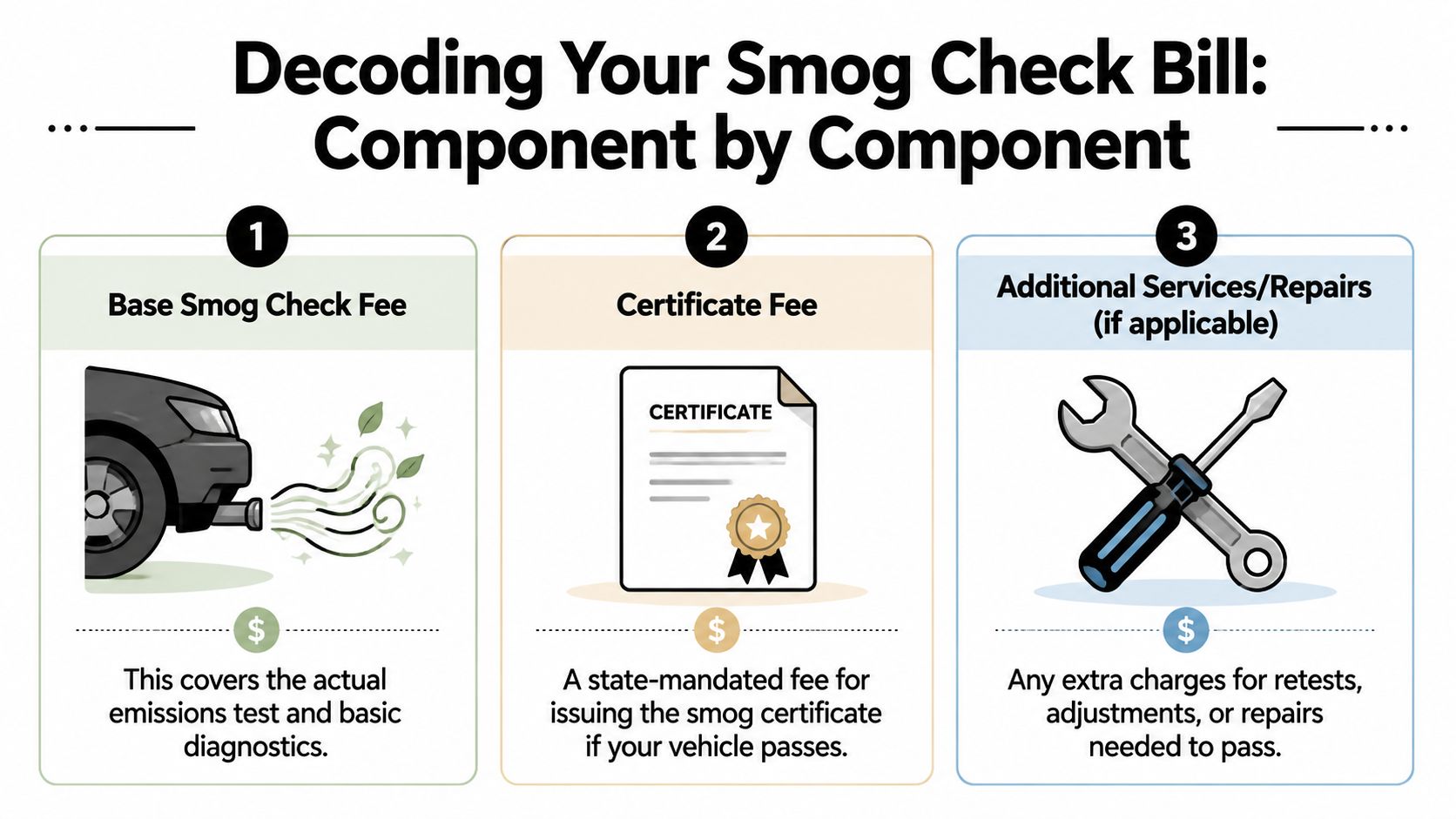
Repairs or retest-related costs
If your car passes, your cost stays simple. If it fails, the bill can jump quickly because now you are paying for diagnosis, repair work, and sometimes a retest.
As noted earlier from the same source, repair costs after a failed smog check can range widely, and even coupon tests often end up higher out the door once the standard add-ons are included. That is exactly why East Bay drivers should ask one direct question before handing over the keys: What is my total if the car passes today?
That question saves time. It also helps you avoid the shops that lead with a teaser price and explain the rest later.
Here is the plain-English breakdown:
- Base fee: The main shop charge, and the only part that usually varies a lot.
- Certificate fee: Set by the state.
- Transmission charge: Small, but still part of the bill.
- Failure-related costs: The expensive part if your vehicle has a problem.
My advice is simple. Compare shops by the full pass price, not the ad price. In the East Bay, a good STAR station should be able to tell you the total clearly, explain any extra charge before the test starts, and get you through the process without surprises.
Why Smog Check Prices Vary So Much
You call one shop and hear a bargain price. Then you call another shop five miles away and the number is much higher. In the East Bay, that usually comes down to your vehicle, the test method, and how honest the shop is about the full bill.
The biggest price drivers
Older vehicles usually cost more to test because the inspection takes more time and can involve a more involved procedure. As noted earlier, pre-2000 vehicles often land near the top of the normal price range for that reason alone.
Vehicle type matters too. Trucks and SUVs often cost more than a basic sedan. Diesel vehicles and oversized vehicles are their own category, and the price jump is real because the testing process is different.
Shop type also changes the quote. Some stations price aggressively to get the phone call, then add the certificate fee and other standard charges later. Others give you the pass price up front. That is the number you should care about.
Estimated Smog Check Costs in the East Bay 2026
| Vehicle Type | Test Requirement | Estimated Total Price |
|---|---|---|
| 2000+ gasoline vehicle | Standard smog test with certificate and typical transmission fee | $40 to $90 |
| 1999 and older vehicle | More complex test process | Often near $100 |
| Truck or SUV | Standard test, often with added vehicle-type charge | Usually above a comparable passenger car |
| Diesel vehicle | Diesel-specific emissions protocol | Higher than a standard gasoline car |
| RV or large vehicle | Large-vehicle testing | Much higher than a standard passenger vehicle |
A cheap quote is not always a cheap smog check.
Another reason prices for emissions testing can feel inconsistent is that many ads lead with the base test fee, not the out-the-door total. If the shop does not clearly tell you whether the certificate and other standard charges are included, you are not comparing real prices.
If your DMV notice requires STAR, that narrows your options and can affect cost. If you are not sure what that requirement means, read this plain-English guide to a STAR smog station in California. It will help you compare the right shops instead of wasting time calling stations that cannot legally complete your test.
My recommendation is simple. Ask three questions before you book. What kind of test does my vehicle need? Is this quote the full pass price? Are there any added charges for my vehicle type? A good East Bay smog shop will answer all three fast and clearly.
What STAR Certification Means For You
If your DMV notice says STAR, don't panic. It doesn't mean your car is being singled out for punishment. It means the inspection has to be done at a station that meets higher performance standards.
Why some STAR stations charge more
California pricing references show that STAR Certified stations often charge slightly higher base fees, with one example listing $59.75 at a STAR station versus $45 at a non-STAR station, while both still provide legally valid certification for DMV registration. That comparison appears in this California emissions testing overview.
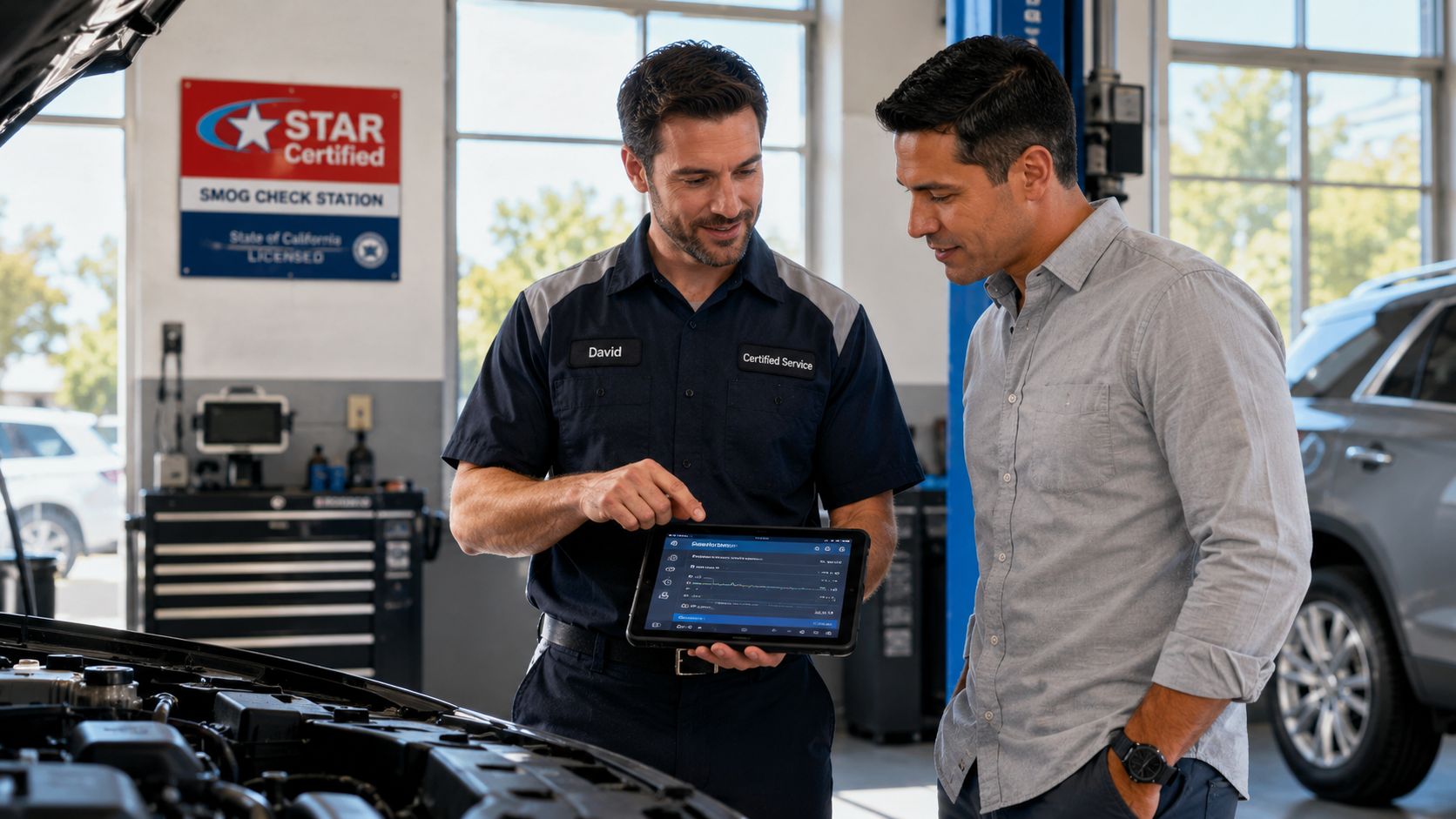
That extra cost isn't magic. It's tied to the station meeting tougher operating standards. In plain English, you're paying for better consistency, better equipment performance, and a shop that stays in line with BAR requirements.
When STAR is the smart choice even if DMV doesn't require it
Even if your renewal notice doesn't require STAR, a STAR station can still be the better move. If a shop keeps its equipment sharp and follows tighter standards, you're less likely to deal with sloppy testing or confusion at the DMV.
If you want a plain-English explanation of how that works, this guide on what a California STAR smog station is lays it out clearly.
My opinion is simple. If the price difference is reasonable, I'd rather test at a shop that takes accuracy seriously. A smog check is cheap compared with chasing a bad result, redoing paperwork, or paying for repairs you may not have needed.
Finding the Best Value in the East Bay A Speedy Smog Spotlight
You pull into a shop because the ad price looks great. Ten minutes later, the total is higher than expected, the certificate fee was extra, and now you're stuck because registration is due. That's the mistake I want you to avoid.
In the East Bay, the best value is the shop that gives you the total up front, gets you in and out fast, and submits everything correctly the first time. Cheap on paper is meaningless if the final bill climbs at checkout.
How to shop smarter before you go
Ask one question before you leave home or book online. What is the out-the-door price for my exact vehicle?
That one question saves time and cuts out the usual nonsense. It tells you right away whether the quoted price includes the certificate, any electronic transmission charge, and whether your car, truck, SUV, or diesel changes the total. A lot of confusion when searching for local emissions testing prices comes from missing those details.
You should also confirm the rules for your vehicle before you show up. If you need a quick refresher on California smog check requirements by vehicle and registration situation, check that first so you book the right station and avoid a wasted trip.
Use this checklist before you head out:
- Confirm your vehicle type: Gas, diesel, hybrid, truck, SUV, or older model.
- Ask for the final total: Get the full price, not the teaser number.
- Check coupon terms: Make sure the discount applies to your vehicle and includes the standard fees.
- Verify your DMV notice: If it says STAR, go to a STAR station.
What a transparent local shop looks like
A good East Bay smog shop is easy to read before you ever arrive. The website shows clear pricing. The coupon terms are straightforward. The person answering the phone gives you a direct answer instead of dancing around the total.
That matters.
Here's an example of the kind of local shop experience drivers look for:
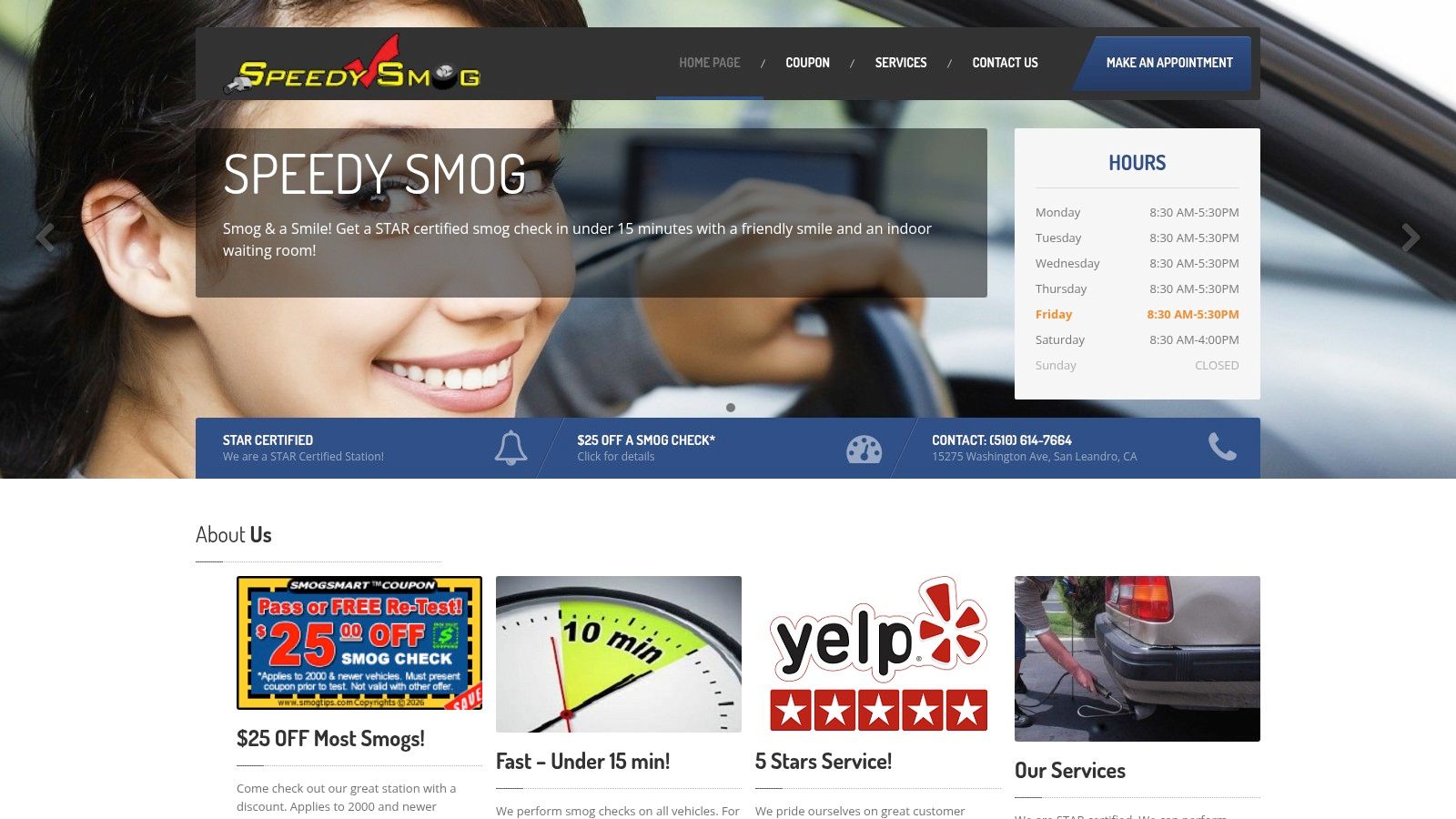
A shop like Speedy Smog stands out because the value is in the full visit, not just the headline price. You want fast service, a clean process, clear answers, and no surprise add-ons at the counter. That is what saves money in real life, because it saves you from repeat trips, checkout arguments, and last-minute DMV stress.
Good value means a correct test, a fair out-the-door price, and no nonsense at checkout.
FAQ Your Next Steps for DMV Compliance
A few questions always come up right before a smog check. Here are the ones that matter most.
What if my car fails
If your car fails, don't start authorizing random repairs. Get a clear diagnosis first. Smog failures can come from several different issues, and the smart move is to fix the actual cause, not guess.
Failure can get expensive. California cost references note repair costs can range widely depending on the issue, and that wide range is exactly why you want a straightforward explanation before any work starts.
One more thing. Don't assume waivers are easy or automatic just because you've heard that from a friend. A New York waiver explanation from SSDGNY says a vehicle can qualify for an emissions waiver there only after at least $450 of emissions-specific repairs have been made and the car still fails. Different states handle waivers differently, but the lesson is universal. Always ask about the actual rules before you count on a waiver saving you.
Do I need a smog check right now
Check your DMV renewal notice first. That's the document that tells you whether your registration cycle requires a smog inspection and whether you need a STAR station.
California also has special rules for newer vehicles. A California smog overview from SuperStation Concord notes that vehicles six or fewer years old may pay an annual $20 abatement fee instead of getting the biennial smog check, though that exemption doesn't apply to certain diesel and special-built vehicles.
If you want the California rules in one place, this page on California smog check rules is a useful starting point.
Your next move
Keep it simple:
- Read your DMV notice carefully. Check whether the vehicle needs a smog this cycle and whether STAR is required.
- Call one local station with your vehicle details. Ask for the total out-the-door price.
- Get it done before the deadline. Smog is annoying when you delay it. It's manageable when you handle it early.
The process isn't nearly as bad as people make it out to be. Most of the frustration comes from unclear pricing and poor communication. Fix those two things, and the whole errand gets easier.
If you want a fast, straightforward smog check in San Leandro, Speedy Smog is a solid local option. They're a STAR Certified station, they work on most vehicle types, and they're known for clear pricing, quick service, and a comfortable waiting area, which is exactly what most East Bay drivers want when DMV time rolls around.