
Emissions Test Station: What Drivers Must Know
California drivers renew their vehicle registration every year — and for most, that means a mandatory stop at an emissions test station before the DMV will process the renewal. If you're not sure what to expect, where to go, or what happens if your car doesn't pass, this guide covers everything you need to know.
What Is an Emissions Test Station?
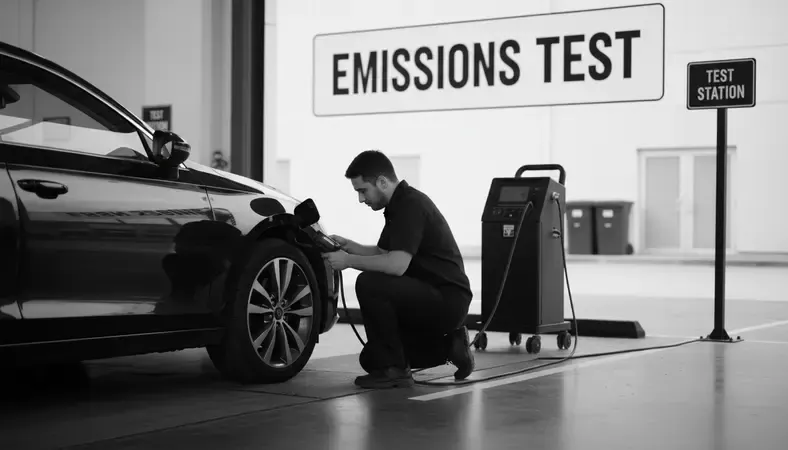
An emissions test station — sometimes called an emission inspection station or smog check station — is a licensed facility that measures the pollutants your vehicle's engine produces. The goal is to confirm your car isn't releasing more hydrocarbons, carbon monoxide, or nitrogen oxides than state law allows.
In California, emissions test stations are licensed and regulated by the Bureau of Automotive Repair (BAR). Not every shop that does oil changes or brake work is authorized to perform smog checks. A legitimate emissions test station must meet specific equipment standards, employ licensed technicians, and report test results directly to the state's database.
There are two main types of stations in California:
- Regular test-and-repair stations: These can both test your vehicle and perform repairs if it fails.
- Test-only stations: These only perform the emissions test — they don't do repairs. Because they have no financial incentive to pass your car, many drivers and consumer advocates consider test-only results more objective.
A third category — the STAR station — matters for certain vehicles. A STAR station for smog is a test-only or test-and-repair facility that has met higher performance standards set by BAR. If your vehicle is flagged by the DMV as requiring a STAR-certified inspection (usually high-emitters or vehicles with a history of failures), you must go to a STAR station specifically. A regular emissions test station won't satisfy the requirement.
Where to Find Emissions Test Stations Near You
Finding emission test locations is straightforward. The California BAR maintains a searchable database at bar.ca.gov where you can enter your zip code and filter by station type — regular, test-only, or STAR-certified.
Your DMV renewal notice will also tell you whether your vehicle requires a STAR station. Check that notice before you book an appointment, because showing up at the wrong type of station means starting over.
A few practical tips for choosing a location:
- Check if STAR certification is required before you go anywhere.
- Look for test-only stations if you want an unbiased result and plan to handle repairs separately.
- Confirm the station tests your vehicle type — some stations are set up only for passenger cars, not diesel vehicles or larger trucks.
If you're in the San Leandro area, Speedy Smog is a STAR-certified emissions test station that handles most vehicles in under 15 minutes. You can make an appointment online at speedysmogchecksanleandro.com or walk in during business hours.
Other states have their own programs. Colorado runs Air Care Colorado, an emissions testing program for the Denver metro area. Oregon operates DEQ test stations through the Oregon Department of Environmental Quality. The process differs by state, but the core concept is the same: your vehicle must meet local emissions standards to stay registered.
What to Expect During an Emissions Test
The test itself is quick. Here's exactly what happens at a typical emissions test station:
-
Check-in: You hand over your vehicle registration and ID. The technician confirms your vehicle information and enters it into the state system.
-
Visual inspection: The technician checks that your catalytic converter is present and that there are no visible signs of tampering with emissions equipment.
-
OBD-II scan: For most vehicles made after 1996, the technician connects a scanner to your car's onboard diagnostic port — usually located under the dashboard. This reads your vehicle's computer for any stored fault codes or "readiness monitors" that haven't completed.
-
Tailpipe test (older vehicles): Vehicles made before 1996 typically go through a tailpipe test, where a probe is inserted into the exhaust pipe to measure actual emissions output directly.
-
Results: The technician prints or digitally transmits the results to the state. You get a copy. If you pass, the station reports the result to the DMV and you can complete your registration renewal. The whole process usually takes 15–30 minutes.
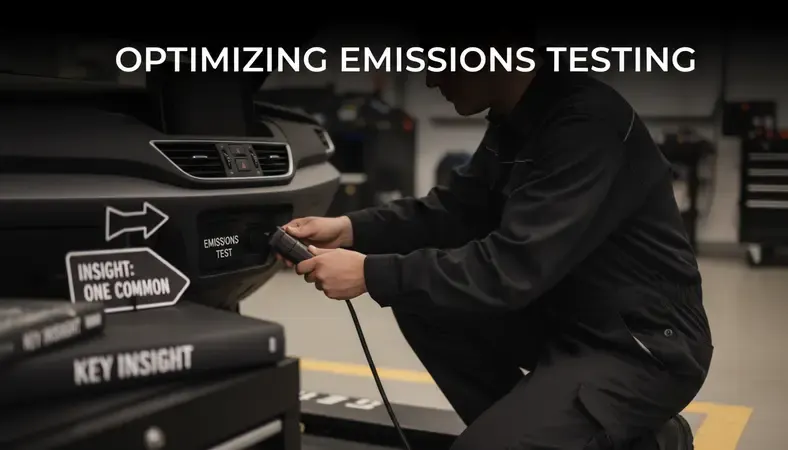
Key Insight: One common reason vehicles fail isn't a mechanical problem — it's incomplete readiness monitors. If you recently disconnected your battery or had a repair done, your car's computer may not have finished running its self-checks. Drive the vehicle for several days before going to an emissions test station to avoid this.
How Often Do You Need an Emissions Test?
In California, most vehicles need a smog check every two years. The DMV will notify you when your registration renewal requires one — it'll be clearly marked on your renewal notice.
There are some exceptions:
- Vehicles 8 years old or newer are currently exempt from biennial smog checks under California's smog abatement program (though this has changed over the years — confirm current rules at dmv.ca.gov).
- Diesel vehicles 1997 and older and gasoline vehicles 1975 and older are also exempt.
- New vehicle purchases trigger a smog check requirement when ownership transfers, regardless of the vehicle's age at the time.
- Moving to California from another state requires a smog check before you can register the vehicle in California.
Smog Check Frequency by Vehicle Situation
| Situation | Smog Check Required? | Frequency |
|---|---|---|
| Standard biennial renewal | Yes (if vehicle is 8+ years old) | Every 2 years |
| Buying a used vehicle | Yes | At time of transfer |
| New vehicle purchase | No | Exempt for first few years |
| Moving to California | Yes | Before initial CA registration |
| Diesel vehicle (pre-1998) | No | Exempt |
| Vehicle 1975 or older | No | Exempt |
Always verify your specific situation with the DMV notice you receive, since exemption rules are updated periodically.
What Vehicles Require Emissions Testing?
The short answer: most gasoline-powered vehicles registered in California that are eight model years or older require a smog check. But there are nuances worth knowing.
Vehicles that require testing:
* Gasoline-powered cars and trucks, model year 1976 and newer, that are 8+ years old
* Diesel-powered vehicles, model year 1998 and newer, under 14,000 lbs GVWR
* Vehicles with out-of-state titles being registered in California for the first time
* Vehicles changing ownership (with some exceptions for very new vehicles)
Vehicles that are exempt:
* Electric vehicles — no combustion engine means no emissions to test
* Hybrid vehicles are tested the same as gasoline vehicles (the combustion engine still produces emissions)
* Motorcycles are currently exempt from California smog checks
* Vehicles with a gross vehicle weight rating over 14,000 lbs have separate testing requirements under a different program
If you drive a hybrid like a Toyota Prius or Honda Accord Hybrid, you still need to visit an emissions test station on the regular schedule. The electric motor doesn't change the testing requirement.
How Much Does an Emissions Test Cost?
In California, the state sets a maximum fee that licensed emissions test stations can charge. As of the most recent BAR guidelines, the maximum smog check fee is $8.25 for the official state certificate — but stations charge their own labor fee on top of that, and total costs typically range from $30 to $60 depending on the station and vehicle type.
A few things that affect cost:
- Vehicle type: Diesel vehicles and larger trucks often cost more to test than standard passenger cars.
- Station type: Test-only stations sometimes charge less than test-and-repair stations.
- Location: Prices vary by region and individual station.
If your vehicle needs a smog check to complete a transfer of ownership, ask the seller who is responsible for the cost — in California, the seller is generally required to provide a valid smog certificate as part of the sale.
What Happens If Your Vehicle Fails an Emissions Test?
Failing an emissions test isn't the end of the road. Here's what happens and what your options are.
You'll get a Vehicle Inspection Report
The emissions test station prints a report showing exactly which tests failed and why. This report is what a repair shop needs to diagnose and fix the problem. Don't throw it away.
Common reasons for failure
- Check engine light is on: An active fault code will almost always cause a failure. The underlying problem must be repaired and the code cleared before retesting.
- Failed catalytic converter: One of the most common and expensive failures. The catalytic converter reduces harmful exhaust gases — when it stops working, emissions spike.
- Incomplete readiness monitors: As mentioned earlier, the OBD-II system must have completed its self-diagnostic cycles. This is a fixable issue that doesn't require any parts.
- EVAP system leaks: The evaporative emissions control system captures fuel vapors. A leak in this system is a frequent cause of failure.
The Consumer Assistance Program (CAP)
California offers financial help to low-income vehicle owners who fail a smog check. The Consumer Assistance Program (CAP), administered by BAR, provides repair assistance of up to $500 for eligible vehicles. If your vehicle can't be economically repaired, CAP also offers a retirement option — a cash payment to retire the vehicle from the road.
Retesting after repairs
Once repairs are complete, you return to any licensed emissions test station for a retest. Some stations offer a free retest within a certain timeframe if you had the repairs done at their facility — ask about this policy before you commit to repairs.
You cannot renew your vehicle registration until the smog check is passed and reported to the DMV. Driving with an expired registration is a ticketable offense, so getting the issue resolved promptly matters.
Common Questions About Emissions Testing
Can I go to any emissions test station, or does it have to be specific?
Most vehicles can go to any licensed emissions test station in California. The exception is vehicles flagged by the DMV as requiring a STAR-certified inspection. Your DMV renewal notice will specify if this applies to your vehicle. If it does, you must use a STAR station — a regular emissions test station won't satisfy the requirement.
How long does a smog check take?
Most smog checks at a modern emissions test station take 15–30 minutes from the time you pull in. If the station is busy or your vehicle requires additional testing steps, it can take longer. Booking an appointment in advance typically means less wait time.
What if I just bought a car and it has a check engine light on?
You should have the check engine light diagnosed and repaired before going to an emissions test station. An active check engine light almost always results in a failure. The repair shop that fixes the issue should clear the code, but your vehicle then needs to be driven for a period of time — typically a few days and several drive cycles — before the OBD-II system's readiness monitors reset. Then you can go for the smog check.
Is a smog check the same thing in every state?
No. Each state runs its own vehicle emissions program, and requirements vary significantly. California has some of the strictest standards in the country. Colorado's Air Care Colorado program covers the Denver metro area but not rural counties. Oregon's DEQ test stations operate differently from California's BAR-licensed system. Some states have no emissions testing at all. If you're moving between states, check the requirements for your destination before assuming your current registration status carries over.
What happens if I miss my smog check deadline?
You won't be able to renew your vehicle registration until you pass a smog check. The DMV will not process your renewal without a valid smog certificate on file. If your registration lapses, you're technically driving an unregistered vehicle — which can result in a fix-it ticket or citation. The smog check itself has no hard deadline separate from your registration renewal, but the registration renewal deadline is the practical deadline.
The Bottom Line
An emissions test station is a straightforward stop — most tests take under 30 minutes and the process is well-defined. Know whether your vehicle needs a STAR station before you go, make sure your check engine light is off, and drive your car normally for a few days before the test if you've had any recent repairs.
Pass your smog check fast at Speedy Smog — STAR certified, most vehicles done in under 15 minutes, open 6 days a week in San Leandro. Save $25 on your visit or call (510) 614-7664 to make an appointment.