
Car Emissions Test: What You Need to Know
A car emissions test — sometimes called a smog check — measures how much pollution your vehicle releases into the air. If your state requires one, you can't renew your registration without passing it. Miss it, and you're driving with an expired registration.
Most car owners run into this requirement every one to two years and aren't sure what to expect. This guide covers exactly what happens during a car emissions test, what it costs, how to prepare, and what to do if your car doesn't pass.
What Is a Car Emissions Test?
A car emissions test is an inspection that measures the pollutants your vehicle's engine produces — primarily hydrocarbons, carbon monoxide, nitrogen oxides, and particulate matter. These gases contribute to air pollution and smog, which is why most states require vehicles to pass a test before registration renewal.
The test itself checks whether your car's emission control systems — the catalytic converter, oxygen sensors, exhaust gas recirculation valve, and onboard diagnostic system — are working correctly. A functioning emission control system keeps those pollutants at or below the legal limit for your vehicle's model year and class.
The term "smog check" is used interchangeably with car emissions test in most states, including California. They refer to the same inspection. If your registration renewal notice says you need a smog check, you need a car emissions test.
What the Test Actually Measures
Modern car emissions tests rely primarily on the OBD-II (On-Board Diagnostics) system built into every vehicle manufactured after 1996. The testing equipment plugs directly into your car's OBD-II port — usually located under the dashboard on the driver's side — and reads the data your car's computer has been logging.
Older vehicles (typically pre-1996) may require a tailpipe test instead, where a probe is inserted into the exhaust pipe to measure emissions directly. Some states use both methods depending on the vehicle's age and type.
Why Do I Need an Emissions Test?
Your state requires a car emissions test because vehicle exhaust is one of the largest contributors to urban air pollution. The Environmental Protection Agency estimates that cars and trucks account for nearly 29% of total U.S. greenhouse gas emissions.
States with serious air quality problems — California, Colorado, Arizona, and several others — enforce stricter emissions programs than states with cleaner air. In California, the Bureau of Automotive Repair oversees the Smog Check program. In Arizona, the ADEQ vehicle emissions testing station network covers the Phoenix and Tucson metro areas. Colorado runs the Air Care Colorado emissions program for the Denver metro and surrounding counties.
The practical reason you need the test: your registration renewal notice will require proof of a passing car emissions test before the DMV processes your renewal. Skip the test, and your registration lapses.
How Often Do I Need an Emissions Test?
The frequency depends on your state and your vehicle.
Typical Testing Schedules
| State | Frequency | Vehicles Required |
|---|---|---|
| California | Every 2 years | Most vehicles 1976 and newer |
| Colorado | Every 2 years | Vehicles in designated counties |
| Arizona | Every 1–2 years | Vehicles in Maricopa & Pima counties |
| Texas | Annually | Vehicles in major metro areas |
| New York | Annually | All registered vehicles |
| Virginia | Annually | All registered vehicles |
California exempts vehicles that are eight model years old or newer and vehicles 1975 and older. New vehicles are typically exempt for the first few years after purchase.
The easiest way to know when you're due: check your registration renewal notice. It will tell you directly whether a car emissions test is required before you can renew.
What Happens During an Emissions Test?
The car emissions test process is straightforward and usually takes under 15 minutes from start to finish. Here's what to expect:
-
Check-in: You pull into the emissions testing station and hand over your vehicle registration and ID. The technician enters your vehicle information into their system.
-
Visual inspection: The technician does a quick visual check — looking at your gas cap, checking that your check engine light isn't on, and confirming your vehicle matches the registration.
-
OBD-II scan: For 1996 and newer vehicles, the technician plugs a scanner into your OBD-II port. The scanner reads your car's diagnostic data in about 60 seconds, checking whether any emission-related fault codes are stored and whether all required system monitors have completed their self-tests.
-
Tailpipe test (older vehicles): Pre-1996 vehicles get a probe inserted into the exhaust pipe. The machine measures actual emissions output against state limits.
-
Results: You receive a printed report showing pass or fail. A passing report is your proof for the DMV. A failing report lists which systems or readings caused the failure.
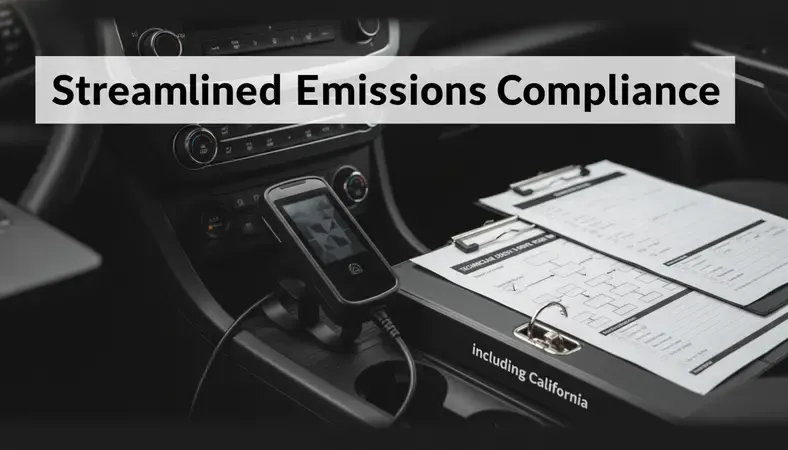
The technician doesn't drive your car or do anything invasive. The whole process is non-destructive — they're reading data your car already has.
What the Check Engine Light Means for Your Test
If your check engine light is on, your car will fail the car emissions test automatically — even if the underlying issue is minor. The check engine light signals that your car's computer has detected a fault code, and emission-related fault codes are an automatic failure in every state with an OBD-II-based program.
Get the light diagnosed and cleared before going in for your car emissions test.
How Much Does an Emissions Test Cost?
Emissions test pricing varies by state and by station type.
- California: Smog checks typically run $29–$60 depending on the station and vehicle type. STAR-certified stations may charge slightly more.
- Colorado (Air Care Colorado emissions): The test fee is set by the state and is typically around $25.
- Arizona (ADEQ vehicle emissions testing station): State-run stations charge around $17. Private stations vary.
- Texas: Typically $14–$25 for the emissions portion of the combined safety and emissions inspection.
- New York: Combined inspection fees are set by the state.
Some national chains like Jiffy Lube offer emissions testing at select locations. A Jiffy Lube emissions test costs roughly $30–$50 depending on location and vehicle type, though availability varies by state and region. Always call ahead to confirm the specific location performs emissions tests — not every Jiffy Lube location offers the service.
Key Insight: In California, if your vehicle fails its smog check, you may qualify for the Consumer Assistance Program (CAP), which provides up to $500 toward repairs or a retirement incentive if the repair cost exceeds what the car is worth.
What If My Car Fails the Emissions Test?
Failing a car emissions test doesn't mean your car is ruined — it means something in your emission control system isn't working correctly. Here's how to handle it:
Common Reasons for Failure
- Check engine light on: An active fault code causes an automatic failure.
- Incomplete OBD-II monitors: If your car's system monitors haven't run their self-tests (common after a battery disconnect or recent repair), the test will show "not ready."
- Catalytic converter failure: A failing cat is one of the most common reasons for a failed car emissions test.
- Oxygen sensor failure: Bad O2 sensors cause the engine to run rich or lean, pushing emissions out of range.
- EGR valve problems: A stuck or failing exhaust gas recirculation valve raises nitrogen oxide levels.
- Faulty gas cap: A loose or cracked gas cap causes evaporative emissions failures.
What to Do After Failing
-
Get a diagnostic scan: If you don't already know why you failed, take the failure report to a mechanic. The report lists the specific fault codes or monitors that caused the failure.
-
Make the required repairs: Address the specific issues listed. Don't guess — fix what the diagnostic scan identifies.
-
Drive the car before retesting: After repairs, drive your car for 100–200 miles on a mix of highway and city roads. This allows the OBD-II monitors to complete their self-tests.
-
Return for a retest: Most states allow one free retest within a set window (typically 30–60 days) after a failure.
How to Prepare Your Car for an Emissions Test
A little preparation makes a real difference. Here's what to do before your car emissions test appointment:
-
Check your check engine light: If it's on, get it diagnosed and repaired first. Don't waste money on a test you'll automatically fail.
-
Get an oil change if you're overdue: Dirty oil increases hydrocarbon emissions. Fresh oil helps your engine run cleaner.
-
Drive 15–20 minutes before the test: Cold engines run richer (more fuel, less complete combustion). Bring the engine up to full operating temperature before arriving. Highway driving is ideal.
-
Check your gas cap: Remove it, inspect the seal, and replace it if it's cracked or doesn't click into place. A bad gas cap costs $15–$30 and is one of the easiest fixes.
-
Don't fill your gas tank right before the test: A full tank can cause evaporative emissions system issues during testing. Keep the tank between one-quarter and three-quarters full.
-
Make sure your tires are properly inflated: Some states require the vehicle to be driven on a dynamometer (a rolling road machine). Correct tire pressure matters for accurate results.
If your car recently had a battery disconnected or a major repair done, drive it for at least a week of normal use before the car emissions test. The OBD-II monitors need time to complete their self-check cycles.
Common Questions About Car Emissions Tests
Can I find emissions testing close to me online?
Yes. Searching "emissions close to me" or "vehicle emissions testing" on Google Maps will show certified stations in your area. In California, the Bureau of Automotive Repair's website lets you search for STAR-certified smog stations by zip code. For Colorado's Air Care Colorado emissions program, the state's website lists all approved testing locations.
Does my new car need a car emissions test?
Most states exempt new vehicles for the first few years. In California, vehicles eight model years old and newer are exempt from the biennial smog check. Check your registration renewal notice — it will tell you explicitly whether your vehicle requires testing this cycle.
What's the difference between a smog check and a car emissions test?
Nothing — they're the same inspection. "Smog check" is the term used in California. "Emissions test" or "vehicle emissions testing" is used in most other states. Both measure your vehicle's exhaust output and OBD-II system status against state standards.
Does Jiffy Lube do emissions tests?
Some Jiffy Lube locations offer emissions testing, but not all. Availability depends on the state and specific location. Call the location directly before driving over. In states like Virginia and Texas, where emissions testing is combined with safety inspections, more shops offer the service. A Jiffy Lube emissions test is a convenient option if one is near you and your state's program allows private stations to certify.
What if I can't afford the repairs after failing a car emissions test?
California's Consumer Assistance Program offers up to $500 in repair assistance for income-eligible vehicle owners. Colorado and Arizona have similar assistance programs. Check your state's DMV or environmental agency website for current eligibility requirements. If repairs would cost more than the car is worth, some states offer a retirement program that pays you to take the vehicle off the road permanently.
How long does a car emissions test take?
Most car emissions tests take 10–20 minutes from the time you pull in to the time you have your results. STAR-certified stations in California and most modern testing facilities have streamlined the process significantly. Speedy Smog in San Leandro completes most vehicles in under 15 minutes.
Conclusion
A car emissions test is a straightforward inspection — get there with a warm engine, no check engine light, and a solid gas cap, and most vehicles pass without issue. If you're due for your smog check in San Leandro, book your test at Speedy Smog — STAR certified, most vehicles done in under 15 minutes, open 6 days a week, and $25 off your service.