
ADEQ Vehicle Emissions Testing: What to Know
If your registration renewal notice mentions emissions testing, you've probably come across the term "ADEQ" — and you may be wondering what it actually means for you and your car.
ADEQ stands for the Arizona Department of Environmental Quality. It's the state agency that oversees vehicle emissions testing programs in Arizona, specifically the program known as the Vehicle Emissions Testing Program (VETP). If you're searching "adeq vehicle emissions testing station" to figure out where to go, what to expect, or whether your car even qualifies, this article covers all of it.
What Is ADEQ Vehicle Emissions Testing?
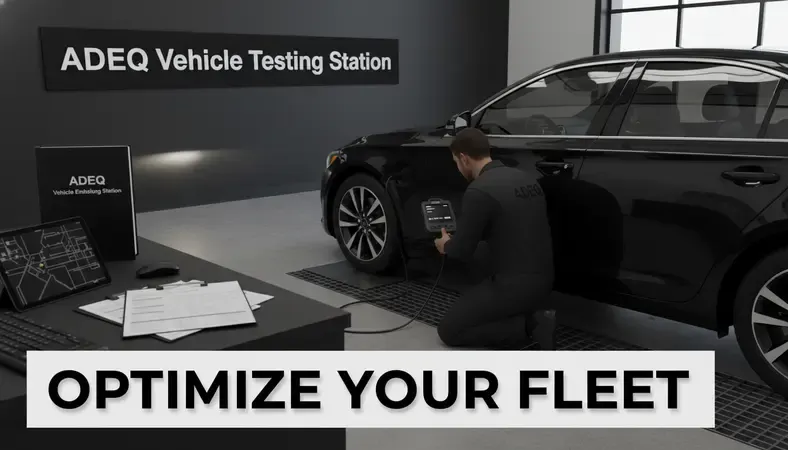
An ADEQ vehicle emissions testing station is a licensed facility authorized by the Arizona Department of Environmental Quality to test how much pollution your vehicle produces. The goal is simple: make sure cars on Arizona roads aren't pumping out excessive exhaust that contributes to smog and air quality problems.
Arizona's Vehicle Emissions Testing Program is one of the most established state-level programs in the country. The Arizona Department of Environmental Quality administers the program under authority granted by the Clean Air Act, which requires certain metropolitan areas with air quality challenges to maintain ongoing vehicle testing programs.
The Maricopa County area — which includes Phoenix and surrounding cities — is the primary zone where ADEQ emissions testing is required. Pima County (Tucson) also has its own emissions program. If you live in either of these areas, you've almost certainly dealt with an adeq vehicle emissions testing station at some point.
The test itself checks whether your vehicle's engine and exhaust system are functioning within legal pollution limits. Older vehicles typically get a tailpipe test where a probe measures exhaust gases directly. Newer vehicles (1996 and later) use an OBD-II scan — a computer diagnostic check that reads your car's onboard emissions data electronically.
Key Insight: Arizona's emissions program exists because the Phoenix metro area has historically struggled to meet federal air quality standards for ozone and particulate matter. Vehicle exhaust is one of the largest contributors, which is why the state requires regular testing.
What Vehicles Need ADEQ Emissions Testing?
Not every vehicle in Arizona needs to visit an adeq vehicle emissions testing station. The requirements depend on where you live, how old your car is, and what type of vehicle it is.
Vehicles that require testing
- Gasoline-powered cars and trucks registered in Maricopa or Pima County, model year 1967 or newer, are generally required to test.
- Diesel vehicles over 8,500 lbs GVWR may have different testing requirements.
- Vehicles registered in affected zip codes — even if you live near the county border, your specific zip code determines whether you're in the testing area.
Vehicles that are exempt
- Brand new vehicles — typically exempt for the first five model years.
- Electric vehicles — no tailpipe emissions means no test required.
- Motorcycles — currently exempt from Arizona's emissions testing program.
- Vehicles registered outside the testing area — if your address is in a rural county not covered by the program, no test is needed.
The easiest way to confirm whether your specific vehicle needs an adeq vehicle emissions testing station visit is to check your registration renewal notice. If testing is required, it will say so directly on the notice.
Where to Find ADEQ Emissions Testing Stations
Finding an adeq vehicle emissions testing station is straightforward. The ADEQ maintains a network of licensed testing stations throughout Maricopa and Pima counties, and you have a few options for locating one.
How to find a station near you
- Visit the official ADEQ website at azdeq.gov and use the station locator tool — it shows every licensed adeq vehicle emissions testing station by zip code.
- Search "emissions close to me" — most mapping apps will surface licensed stations in your area.
- Check your renewal notice — some notices include a list of nearby testing locations.
Types of testing locations
Most adeq vehicle emissions testing stations are privately operated businesses that have been licensed and certified by the state. Some are dedicated emissions-only stations. Others are full-service auto shops, oil change centers, or smog check facilities that are authorized to perform the test alongside other services.
You may have heard of places like Jiffy Lube emissions test locations — Jiffy Lube operates some certified emissions testing sites in Arizona, which is a good example of how the testing network extends beyond dedicated standalone stations. The key is that any location performing an adeq vehicle emissions test must be officially licensed by ADEQ, regardless of whether it's a specialty shop or a multi-service auto center.
Comparison of ADEQ testing station types
Types of ADEQ Emissions Testing Locations
| Station Type | What They Offer | Best For |
|---|---|---|
| Dedicated emissions station | Emissions testing only | Fast turnaround, focused service |
| Full-service auto shop | Testing + repairs if you fail | Convenient if you need repairs |
| Oil change/lube center | Testing + routine maintenance | Combining trips |
| State-run test-only station | Emissions testing only | Consistent, standardized process |
After the test, the station submits your results electronically to the DMV. If you pass, your registration renewal goes through automatically.
How Often Do You Need Emissions Testing?
Arizona requires emissions testing every year for most vehicles. When your vehicle registration is due for renewal, the DMV checks whether a current emissions test is on file. If not, you can't renew your registration until you pass.
The testing cycle is tied to your registration renewal date, so the frequency effectively works out to an annual requirement for most drivers. A few exceptions apply:
- New vehicles may be exempt for the first five model years, meaning you won't need to visit an adeq vehicle emissions testing station until the car is older.
- Vehicles that recently passed — if you sold a car and the new owner registers it, the existing test result may carry over depending on how recently it was done.
The bottom line: assume you need to test every year unless your renewal notice says otherwise.
What to Expect During an Emissions Test
Visiting an adeq vehicle emissions testing station for the first time can feel uncertain if you don't know what happens. The process is actually quick — most tests are done in 15 minutes or less.
Step-by-step: what happens at the station
- Check in: Hand over your vehicle registration and ID. The station logs your vehicle information into the system.
- Drive into the test bay: A technician takes your car into the testing area. You typically wait in a designated area.
- OBD-II scan (1996 and newer): The technician connects a diagnostic scanner to the OBD-II port under your dashboard. The system reads your car's emissions monitors — these are internal checks your car's computer runs automatically.
- Tailpipe test (older vehicles): For pre-1996 vehicles, a probe is inserted into the exhaust pipe to measure carbon monoxide, hydrocarbons, and oxides of nitrogen directly.
- Visual inspection: The technician checks that your gas cap is present and sealing properly, and that no visible modifications have been made to the emissions control system.
- Results: Pass or fail is determined on the spot. You receive a printed report showing the test results.
The whole process moves fast. If your car is in good mechanical shape, there's usually nothing to stress about.
What causes a failure?
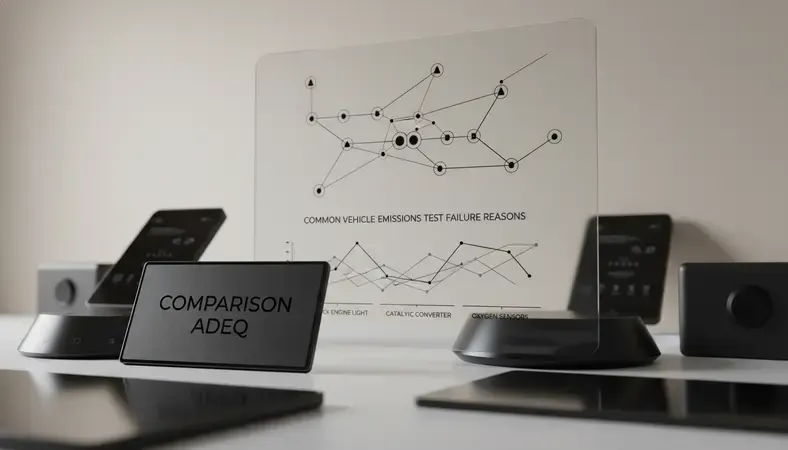
Common reasons a vehicle fails at an adeq vehicle emissions testing station include:
- Check engine light is on — this is an automatic failure for OBD-II tests. If your check engine light is illuminated, get it diagnosed before your test.
- Incomplete OBD-II monitors — if you recently disconnected your battery or had a repair done, your car's internal monitors may not have completed their self-checks yet. Drive the car normally for several days before testing.
- Worn catalytic converter — a failing catalytic converter is one of the most common causes of emissions failures.
- Faulty oxygen sensors — these directly affect how your engine manages fuel and emissions.
ADEQ Emissions Testing Requirements and Standards
Arizona's emissions standards are set by the ADEQ in coordination with federal Environmental Protection Agency requirements. The specific limits vary by vehicle model year and engine type, but the framework is consistent.
OBD-II standards (1996 and newer)
For modern vehicles, the test checks that:
- No diagnostic trouble codes (DTCs) are stored in the vehicle's computer
- The check engine light (malfunction indicator lamp) is off
- All required OBD-II monitors show "complete" status
The OBD-II system is sophisticated. Your car's computer continuously monitors its own emissions systems and flags problems automatically. The adeq vehicle emissions testing station essentially reads what your car already knows about itself.
Tailpipe standards (pre-1996 vehicles)
For older vehicles, the test measures exhaust gas concentrations. The limits are:
- Hydrocarbons (HC): measured in parts per million
- Carbon monoxide (CO): measured as a percentage of exhaust volume
- Oxides of nitrogen (NOx): measured in parts per million (for certain vehicle categories)
The exact cutoff values depend on the vehicle's model year, engine displacement, and whether it was originally equipped with certain emissions control systems.
Gas cap test
All vehicles at an adeq vehicle emissions testing station get a gas cap pressure test. A loose or faulty gas cap allows fuel vapors to evaporate into the atmosphere — this is a cheap fix that causes a surprising number of failures. A new gas cap costs under $20 at any auto parts store.
How Much Does ADEQ Emissions Testing Cost?
The cost of an adeq vehicle emissions testing station visit in Arizona is regulated by the state. As of the most recent ADEQ fee schedule, the maximum test fee is set at a fixed amount per vehicle — typically in the range of $17 to $28 depending on the station and vehicle type.
Stations cannot charge more than the state-approved maximum. Some stations may charge less to attract customers. The fee covers the test itself and the electronic submission of results to the DMV.
If your vehicle fails, you'll need to pay for repairs separately and then return for a retest. Retest fees may be lower than the initial test fee, depending on the station.
One important note: if your vehicle fails and you spend a certain amount on repairs (Arizona has a waiver threshold), you may qualify for a cost waiver that allows your registration to proceed even if the car can't pass. The current repair cost threshold for the waiver program is set by ADEQ — check the official ADEQ website for the current figure, as it's updated periodically.
Common Questions About ADEQ Emissions Testing
Can I choose any adeq vehicle emissions testing station, or do I have to use a specific one?
You can use any licensed adeq vehicle emissions testing station in the testing area. There's no requirement to use a specific station. Results are submitted electronically to the state, so it doesn't matter which licensed location you choose.
What if my check engine light comes on right before my test?
Don't go to the testing station until the light is off and the problem has been repaired. A check engine light is an automatic failure for OBD-II vehicles. Have the code diagnosed at a repair shop first, fix the underlying issue, then schedule your emissions test.
How long is an emissions test result valid?
In Arizona, a passing emissions test result is valid for the registration year it covers. It doesn't carry over to the next year. You'll need a new test each time you renew your registration.
Does vehicle emissions testing in Arizona cover the whole state?
No. The adeq vehicle emissions testing station requirement applies primarily to Maricopa County and Pima County. Vehicles registered in other Arizona counties are generally not required to test. Your registration renewal notice will specify whether testing applies to your vehicle.
What happens if I move into the testing area mid-year?
If you move into Maricopa or Pima County and your vehicle hasn't been tested, you'll need to get an emissions test before your next registration renewal. The requirement kicks in based on where your vehicle is registered, not where you originally bought it.
Is the Jiffy Lube emissions test the same as an ADEQ test?
Yes. When a Jiffy Lube location is licensed as an adeq vehicle emissions testing station, the test they perform follows the exact same ADEQ standards and procedures as any other certified station. The results are submitted to the same state system. The brand of the shop doesn't change the test — the ADEQ certification does.
Wrapping Up
An adeq vehicle emissions testing station visit is a routine part of owning a car in the Phoenix or Tucson area — and when your car is in good shape, it's usually done in under 15 minutes. If your registration renewal is coming up, check your notice for testing requirements and find a licensed station near you.
If you're in the San Leandro area and need a fast, reliable smog check, book your test at Speedy Smog — STAR certified, most vehicles done in under 15 minutes, open 6 days a week, with a $25 savings available when you call (510) 614-7664. Ready to get started? Visit Speedy Smog to learn more.