Smog Check Walnut Creek: Your 2026 Guide to Passing
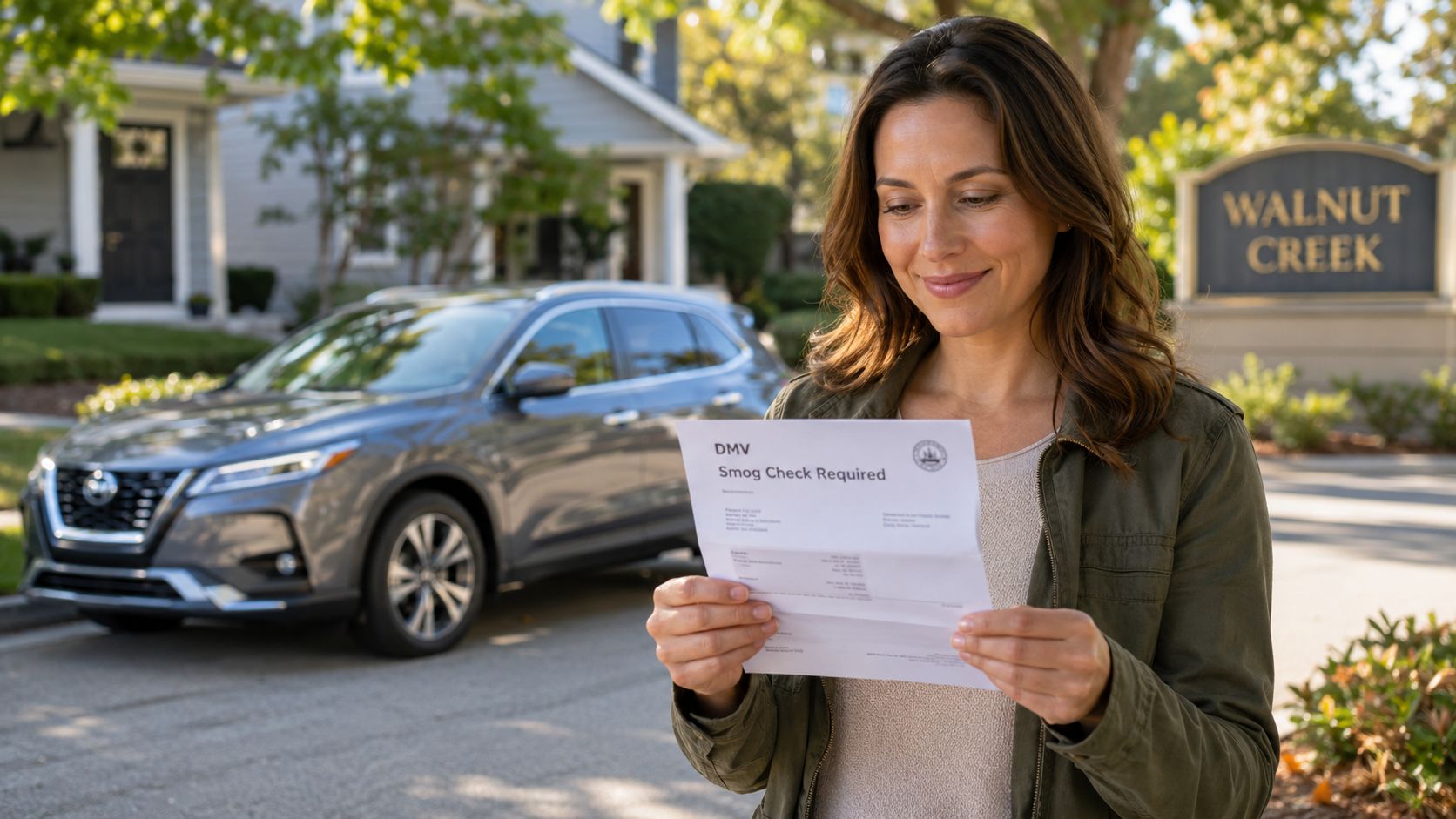
You open your renewal notice after work, hoping it is just a quick payment, and there it is. Smog check required. The next questions are always the same in Walnut Creek. Do you need a STAR station, will the car pass, and can you get it done without losing half your day?
From the shop side, I can tell you where the stress usually comes from. It is rarely the test itself. It is the guesswork before the test. Drivers show up with a check engine light they hoped would not matter, a battery that was disconnected the night before, or an overdue oil leak they did not realize could cause a problem during the visual inspection.
A smog check gets a lot easier once you know what the technician is checking and why certain cars fail for avoidable reasons. That is the difference between a quick pass and an extra trip, extra cost, and more time dealing with DMV deadlines.
California keeps emissions rules in place for a reason, and the background matters, but what helps you today is knowing how to prepare before you pull into the bay. This guide is built for that. It gives Walnut Creek drivers the inside scoop, the why behind the rules, and a practical pre-test checklist that can save time, money, and a return visit.
Table of Contents
- Your Stress-Free Guide to Smog Checks in Walnut Creek
- Understanding California's Smog Check Rules
- The Pre-Test Checklist for a Guaranteed Pass
- The Smog Inspection Process Step-by-Step
- Choosing a STAR Certified Station in the East Bay
- East Bay Driver FAQ Your Smog Check Questions Answered
Your Stress-Free Guide to Smog Checks in Walnut Creek
Vehicle owners don't start searching for a smog check in Walnut Creek because they're curious. They start because the DMV clock is running, the car's due, and they want it handled with the least amount of hassle possible.
That's the right approach. A good smog visit should feel routine. You show up with a vehicle that's ready, the station runs the proper inspection, your certificate gets handled correctly, and you move on with your day. Problems usually show up when drivers wait until the last minute, ignore a warning light, or pick a shop without understanding whether their DMV notice requires STAR service.
Why this feels more confusing than it should
Part of the confusion is that local listings usually focus on address, hours, and maybe a coupon. They don't tell you why one car passes easily while another fails for something the owner could have caught in the driveway.
Practical rule: The easiest smog check is the one you prepare for before the appointment starts.
The other issue is that modern smog inspections aren't all the same. A newer vehicle with a healthy OBD-II system usually moves through the process very differently than an older vehicle with incomplete monitors, aftermarket parts, or recent battery disconnect history.
What actually works for Walnut Creek drivers
The smoothest path is simple:
- Check your DMV notice early. If it calls for STAR, don't guess.
- Look at your dash before you leave home. A lit Check Engine light is a warning, not a suggestion.
- Drive the car first. Warm cars test better than cold ones in everyday practice.
- Leave enough time. If your vehicle is a special case, rushing only makes the day worse.
If you want the inside view on smog check Walnut Creek drivers usually don't get from basic directories, this is it. The goal is a first-pass visit, no wasted trip, and no mystery about what the technician is doing.
Understanding California's Smog Check Rules
A lot of Walnut Creek drivers walk in with the same question: "Why does my neighbor's car breeze through, while mine gets flagged?" In the shop, the answer usually comes down to timing, vehicle age, and whether the DMV is asking for a standard inspection or a STAR inspection.
Who usually needs a smog inspection
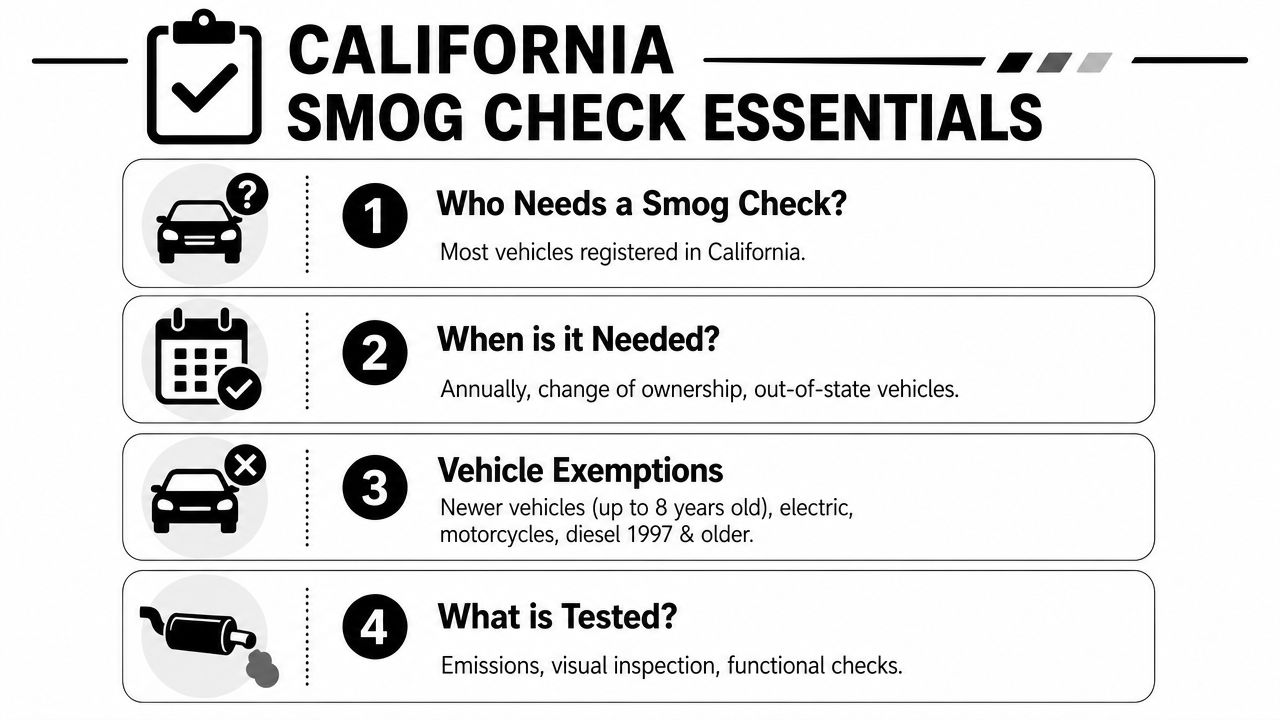
The rule set is easier to handle once you strip it down to the situations that trigger a test. For most drivers, smog comes up in four places:
- Registration renewal: Many vehicles are tested every two years as part of DMV renewal.
- Change of ownership: A vehicle sale often requires a current smog certificate.
- Out-of-state registration: Cars coming into California usually need to be inspected before registration is completed.
- STAR requirement: Some DMV notices require the vehicle to be tested at a STAR station, not just any smog shop.
Those are the triggers that matter in real life. The details can vary by model year, fuel type, and registration status, which is why it helps to review the current California smog check rules before you book.
What trips people up most often
The first problem is assuming every vehicle gets the same inspection. It doesn't.
A newer car usually goes through an OBD-II check that looks at the vehicle's self-reported emissions status, including trouble codes and readiness monitors. Older vehicles may involve different test procedures, plus visual and functional checks of emissions equipment. That difference matters because a car can drive fine, feel normal, and still fail.
In day-to-day shop work, I see three repeat issues more than anything else. The Check Engine light is on. The battery was disconnected recently, so the readiness monitors are not set. Or the car has an emissions-related part missing, modified, or not approved for the application.
Clearing codes right before a test is one of the fastest ways to waste a trip. The system still has to show that the monitors have completed.
Exemptions cause confusion too. Drivers hear a broad rule from a friend, then assume it applies to their car without checking the registration notice or the vehicle details. That is where people lose time and sometimes pay for a test they were not ready for.
The practical takeaway is simple. Read the DMV notice carefully, verify whether STAR is required, and make sure the car is test-ready before the appointment. That is the difference between a quick pass and an avoidable retest.
The Pre-Test Checklist for a Guaranteed Pass
No technician can guarantee a pass without seeing the car. What you can do is remove the common self-inflicted problems that waste appointments, delay registration, and send people into an unnecessary repair loop.
A clean pre-test routine makes a real difference, especially if you're trying to get your smog check in Walnut Creek done in one visit.
What to check the day before
Start with the dashboard and the basics.
- Check Engine light off: If that light is on, handle the fault before the test. Don't assume it's “just a sensor” unless a proper diagnosis proves it.
- Gas cap tight: A loose or damaged cap can create emissions-system problems, especially on EVAP-related checks.
- Battery recently disconnected: If you changed the battery, cleared codes, or lost power, your readiness monitors may not be set yet.
- Tires properly inflated: This matters more on older-style testing setups and is just good practice anyway.
- Bring your paperwork: Your DMV notice helps avoid mistakes at check-in.
Then warm the vehicle up. A short drive before the appointment helps the engine and emissions equipment reach normal operating condition. In shop practice, a warmed-up car is usually easier to test than one that just came from overnight parking.
What not to do right before the test
Drivers create their own failures in a few predictable ways.
| Habit | Why it causes trouble |
|---|---|
| Clearing codes right before the visit | The monitors often reset to incomplete |
| Letting the car sit for days | A cold vehicle may not be in its best test-ready state |
| Ignoring minor drivability issues | Rough idle, poor starts, or fuel smell can point to emissions faults |
| Installing questionable parts | Missing, modified, or illegal emissions components can trigger failure |
For a deeper look at the patterns that lead to a failed inspection, review these common smog check fail reasons.
Bring the car in the way you actually drive it, not right after a reset, battery swap, or last-minute driveway experiment.
One more practical point. If your car has been sitting, has a recent repair, or has any unresolved warning lights, don't book the inspection as your first step. Book diagnosis or regular repair first. Smog testing is a compliance check, not a tune-up session.
The Smog Inspection Process Step-by-Step
You hand over the keys, glance at the waiting area, and wonder what the technician is doing with your car. Fair question. A smog check follows a set state procedure, and once you know the order, the visit feels a lot less mysterious.
What happens when you arrive
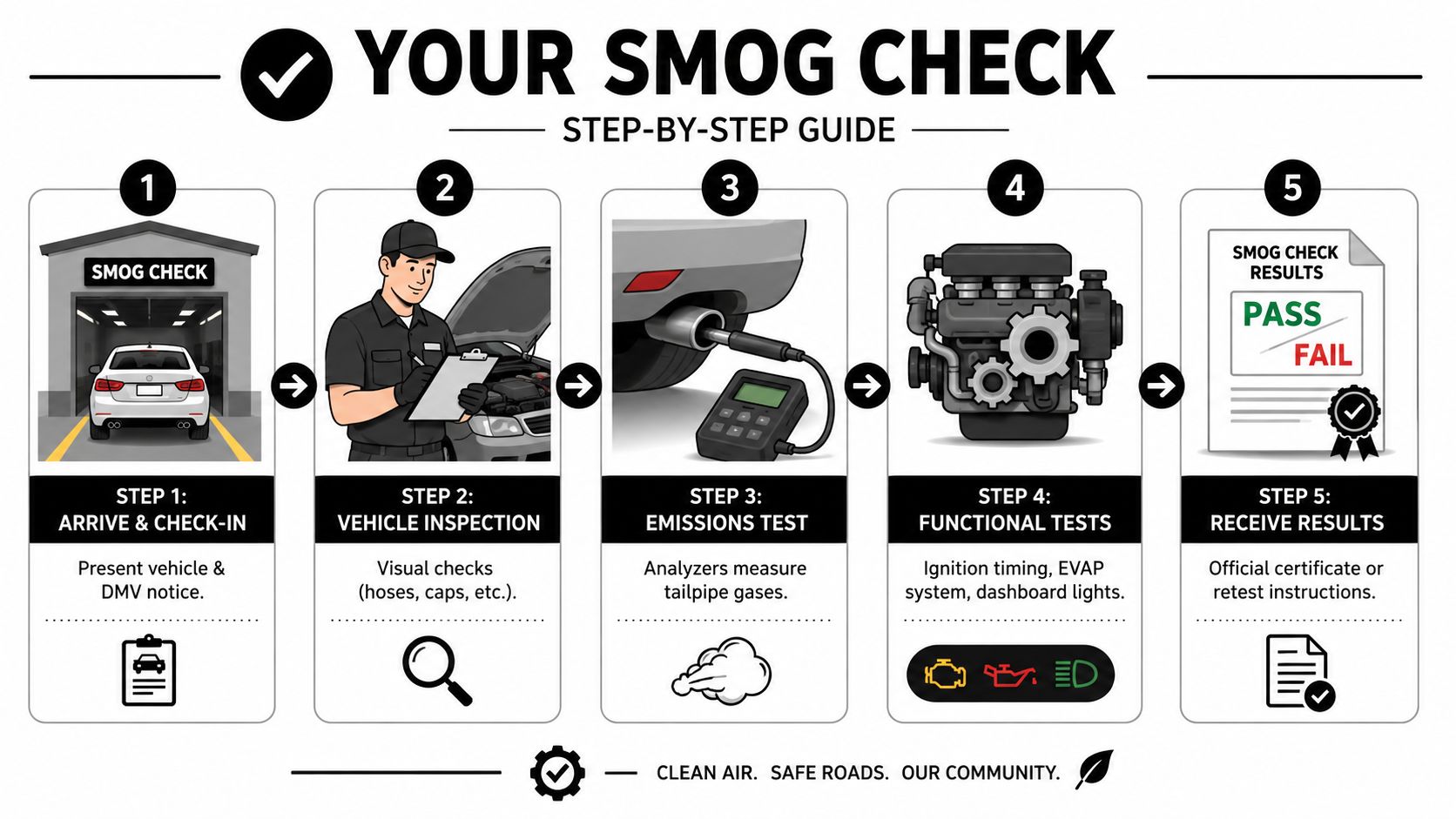
The first few minutes are simple. The station confirms your vehicle information, checks the DMV requirement tied to your registration, and verifies whether your car needs a regular inspection or a STAR inspection. If you are not sure what that designation means, this guide explains what a smog STAR station is.
After check-in, the technician brings the car into the bay and runs the test sequence that matches the vehicle's year, fuel type, and inspection category. The process is organized, and each step has a purpose.
Most inspections break into three parts:
- Visual inspection. The technician checks that required emissions parts are present, connected, and not obviously modified or tampered with.
- Functional inspection. Items such as the malfunction indicator light and other required systems are verified.
- Diagnostic or emissions test. The station performs the test California requires for that vehicle.
Here's a quick visual overview of the flow:
How newer and older vehicles are tested
Newer vehicles are usually the most straightforward. For most gasoline and newer diesel models, the inspection centers on the OBD-II system. The technician checks readiness monitors, looks for stored trouble codes, and confirms the vehicle can report emissions system status the way California requires.
That matters because a car can drive fine and still fail the inspection if the monitors are incomplete or the computer has detected a fault. I see that with recent battery disconnects, code clearing, and rushed last-minute repairs.
Older vehicles can take a little more time. The equipment and procedure may differ, and the inspection depends more on the condition of the car in front of the technician. Age, aftermarket parts, and missing emissions labels can all slow things down, even when the owner has kept up with maintenance.
A late-model car with no warning lights and complete monitors is usually quick. An older vehicle with unknown repair history needs a more careful look.
How long it usually takes
A routine visit is often faster than drivers expect. The exact time depends on the vehicle, the inspection type, and whether anything needs to be verified twice. BAR explains the general process on its California Smog Check information page.
From a shop-floor point of view, the biggest delays are predictable. A car that arrives hot, healthy, and test-ready usually moves through without drama. A car with recent monitor resets, modified parts, paperwork mismatches, or a STAR-only requirement will take longer, and sometimes the delay starts before the test does.
The inside scoop is simple. The inspection itself is not the hard part. Most wasted time comes from vehicles that show up unprepared.
Choosing a STAR Certified Station in the East Bay
You pull up for a smog check, hand over the renewal notice, and then find out the car needed a STAR station all along. I see that mistake more than people expect. It turns a simple errand into a second trip.
If your DMV notice says STAR, book a STAR station first. That requirement is tied to the vehicle record, not the shop's opinion, and a regular station cannot substitute for it.
Why STAR matters
STAR certification tells you the station is approved to inspect vehicles that California has flagged for closer oversight. From the shop side, that usually means tighter process, cleaner paperwork, and fewer avoidable mistakes. For drivers in Walnut Creek and the rest of the East Bay, that matters because the best smog visit is the one you only have to do once.
It also helps to choose a shop that works with your type of vehicle every day. A newer OBD-II car with a STAR requirement is straightforward if the station checks documents carefully and runs an orderly lane. An older car, a diesel, or a vehicle with aftermarket parts often needs a technician who knows what slows inspections down before the test even starts.
What to look for before you book
A good East Bay station does a few things well:
- Confirms STAR status clearly: If your notice says STAR, the station should say up front that it can perform that inspection.
- Handles your vehicle category regularly: Gas, diesel, hybrid, older model-year vehicles, and problem registrations can all require a slightly different workflow.
- Checks the basics before wasting your time: VIN mismatch, unreadable paperwork, an active warning light, or missing emissions labels can stop the process early.
- Explains the trade-offs: A bargain price is not much of a deal if poor check-in or sloppy verification sends you back for another visit.
- Keeps the lane organized: Clean equipment, a clear intake process, and direct answers usually mean fewer surprises.
If you want a plain-English explanation of the requirement, this guide on what a smog STAR station is covers the difference.
My practical advice is simple. Pick the station for certification, experience, and process. That choice saves more time than chasing the lowest advertised price.
East Bay Driver FAQ Your Smog Check Questions Answered
A lot of failed smog visits are preventable. At the shop, the pattern is pretty clear. Drivers come in with a warning light on, fresh codes erased, or paperwork questions that should have been handled before they booked. A few minutes of prep usually saves a second trip.
What if my car fails
Start with the printout and the exact failure reason. "Failed smog" is not one problem. It could be a stored trouble code, monitors that are not ready, a visible emissions tampering issue, or a test reading outside the allowed range.
The fix depends on the reason. In-shop experience, guessing is what burns the most money. If you know why it failed, you can repair the right item first instead of replacing parts that had nothing to do with the test.
Should I keep my appointment if the check engine light comes on
Reschedule it.
A check engine light usually means the car already sees a fault that can affect emissions. Bringing it in anyway almost always turns into a paid test and a predictable failure. Handle the diagnosis first, then come in once the repair is complete and the system has had time to report correctly.
What if I just moved to California
Plan for smog as part of your registration process if your vehicle requires it. The smoothest move is to bring your registration paperwork, confirm your vehicle details match, and make sure the station can inspect your vehicle category.
This matters more with out-of-state vehicles than drivers expect. Small intake problems can slow everything down before the inspection even begins.
Can I pass right after clearing codes
In our experience, that is the number one reason for a preventable failure.
After codes are cleared, the car's emissions monitors reset to not ready. The vehicle usually needs normal driving under the right conditions before those monitors complete. If you show up too soon, the car may be running fine and still fail because the system has not finished its self-checks.
Is the cheapest listing always the best option
The better value is the station that gets the process right the first time.
Low pricing does not help if the shop misses a paperwork issue, rushes check-in, or leaves you with a failed visit that could have been avoided. A good station saves time by catching obvious problems early, explaining what matters, and keeping the inspection lane moving.
If you want a fast, straightforward smog experience in the East Bay, Speedy Smog is a practical option. They're a STAR Certified station in San Leandro with experience handling newer vehicles, older cars, diesels, and hybrids, and they focus on getting drivers in and out without confusion or runaround.