Find Your Closest Emissions Testing Station
Your registration renewal is due, and you need a smog check — fast. The last thing you want is to waste half a day driving to a station that's out of your way, only to wait in a long line.
Finding the closest emissions testing station to you takes about two minutes when you know where to look. This guide covers exactly how to locate one, what to bring, what the test costs, and what happens when you pull in.
Find Emissions Testing Stations Near Me
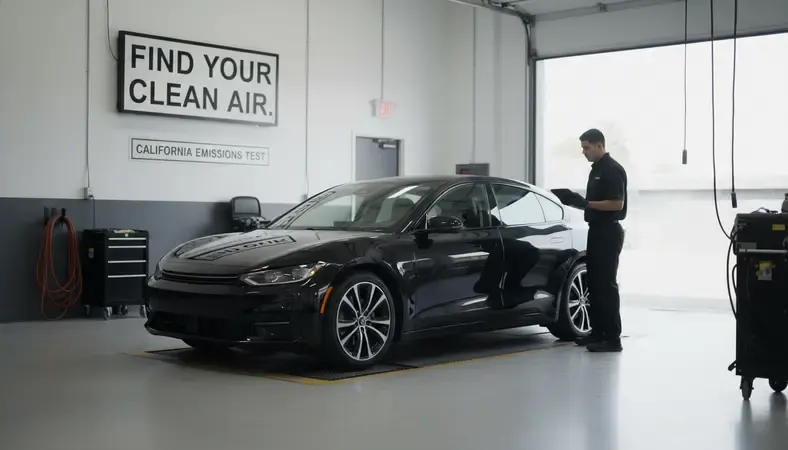
The fastest way to find the closest emissions testing station is through Google Maps. Type "emissions testing near me" or "smog check near me" into the search bar and you'll see a list of stations with distances, hours, ratings, and phone numbers — all in under 30 seconds.
Here are the most reliable methods for locating a closest emissions testing station:
- Google Maps search: Type "smog check near me" or "emissions test near me." Filter results by distance, rating, or hours open.
- California DMV website: California's Bureau of Automotive Repair (BAR) maintains a searchable database of licensed smog check stations. You can search by ZIP code and filter for STAR-certified stations.
- Your registration renewal notice: California DMV renewal notices often list nearby smog stations or direct you to the BAR website.
- Gas stations and auto shops: Many full-service auto shops and dedicated smog stations are located near major intersections. A quick drive down a commercial street often turns up a closest emissions testing station within a mile or two.
Key Insight: In California, only BAR-licensed stations can perform a legally valid smog check. Always confirm the station is licensed before you drive over — an unlicensed test won't satisfy the DMV.
If your vehicle has been flagged as requiring a STAR-certified test (usually older vehicles or those with prior failures), you can't go to just any closest emissions testing station. You need one with STAR certification specifically. The BAR station search lets you filter for this.
How to Locate Your Closest Testing Center
Once you've identified a few candidates for the closest emissions testing station, narrowing down the right one comes down to a few practical factors.
Use the BAR Station Finder
The California Bureau of Automotive Repair's station locator at bar.ca.gov is the most accurate tool for this. Enter your ZIP code, and it returns a list of licensed stations sorted by proximity. Each listing shows:
- Station name and address
- Phone number
- STAR certification status
- Whether the station performs referee inspections
Check Google Reviews Before You Go
Distance isn't everything. A closest emissions testing station that's half a mile away but has 2-star reviews and reports of long wait times may not be worth the convenience. Look for stations with consistent reviews mentioning fast service and honest results.
Confirm Hours Before Driving Over
Call ahead or check Google's listed hours. Many smog stations close earlier than their posted hours on busy days once they've reached capacity. A quick call saves you a wasted trip.
Hours and Locations of Testing Stations
Most smog check stations in the San Leandro and East Bay area operate Monday through Saturday, typically between 8:00 AM and 5:00 PM. Some high-volume stations open as early as 7:30 AM.
Typical Operating Hours
| Day | Typical Hours | Notes |
|---|---|---|
| Monday – Friday | 8:00 AM – 5:00 PM | Busiest midday; arrive early or late |
| Saturday | 8:00 AM – 4:00 PM | Often fills up by early afternoon |
| Sunday | Closed at most stations | Some exceptions — call ahead |
Weekday mornings before 10:00 AM and late afternoons after 3:00 PM tend to be the least crowded times at any closest emissions testing station. If you can time your visit for those windows, you'll typically get in and out faster.
Speedy Smog in San Leandro is open six days a week, which makes it one of the more accessible options for drivers in the area who need a closest emissions testing station without rearranging their schedule.
What to Bring to Your Emissions Test
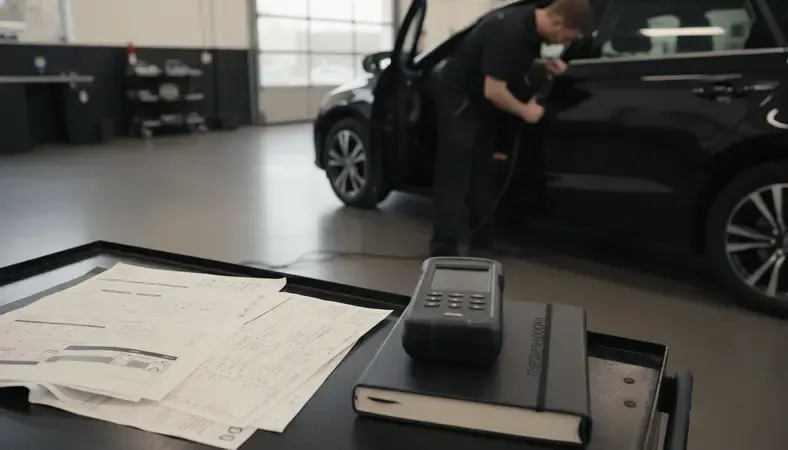
Showing up prepared means you won't get turned away or have to make a second trip. Here's what every closest emissions testing station will need from you:
- Your vehicle: Sounds obvious, but make sure it's been driven for at least 15–20 minutes before arriving. A warm engine produces more accurate emissions readings than a cold one.
- Your vehicle registration or renewal notice: This confirms the test is being run on the correct vehicle and ties the results to your DMV record.
- Payment: Most stations accept cash, debit, and credit cards. Prices vary — see the cost section below.
- Your vehicle identification number (VIN): This is on your registration and on the dashboard near the windshield. The station will verify it.
You do not need an appointment at most smog stations — walk-ins are standard. That said, calling ahead during busy periods (Monday mornings, end-of-month rushes) can save you time.
What Not to Do Before Your Test
A few things can cause a test failure that has nothing to do with your vehicle's actual emissions:
- Don't let the "Check Engine" light come on and then immediately drive to the closest emissions testing station. The light needs to be off and the system needs to complete its readiness monitors — usually after 50–100 miles of normal driving.
- Don't get an oil change right before the test if it resets your OBD-II monitors. Give the car time to complete its self-checks first.
- Don't show up with a nearly empty fuel tank. Some tests require the fuel level to be between ¼ and ¾ full.
How to Schedule an Appointment
Most closest emissions testing stations in California operate on a walk-in basis. You pull in, hand over your keys, and the technician runs the test — no appointment needed.
That said, scheduling an appointment has real advantages:
- Guaranteed wait time: Walk-ins can wait 30–60 minutes during peak periods. An appointment slot means you're next in line when you arrive.
- Avoid peak-day rushes: End-of-month visits spike at every closest emissions testing station because registration renewals cluster around the same dates. Booking ahead sidesteps that.
- Coordination with repairs: If you think your vehicle might fail, scheduling gives you time to get repairs done and then return without a long gap.
To schedule at Speedy Smog, call (510) 614-7664 or visit speedysmogchecksanleandro.com to check availability. Most appointments are confirmed same-day or next-day.
Cost of Emissions Testing
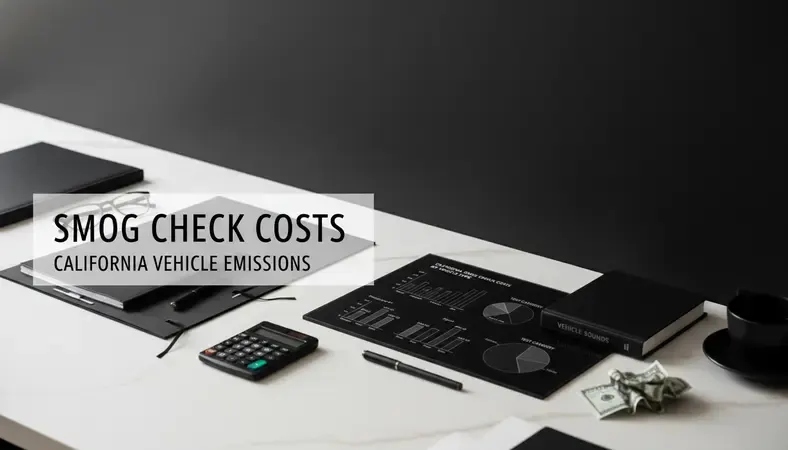
The cost at any closest emissions testing station in California typically falls between $29.95 and $89.95, depending on the station, the type of test required, and whether your vehicle needs a STAR-certified inspection.
California Smog Check Cost Breakdown
| Vehicle Type | Test Type | Typical Cost Range |
|---|---|---|
| 1999 and newer gasoline | OBD-II scan | $29.95 – $59.95 |
| 1995 – 1998 gasoline | Two-speed idle | $39.95 – $69.95 |
| Pre-1976 vehicles | Visual only | Lower cost, varies |
| Diesel vehicles | Visual/opacity | $49.95 – $89.95 |
| STAR-required vehicles | STAR-certified OBD | $49.95 – $79.95 |
A few things affect the final price at any closest emissions testing station:
- STAR certification: STAR-certified tests cost slightly more because of the additional equipment and certification requirements.
- Consumer Assistance Program (CAP): If your vehicle fails and you qualify based on income, California's CAP program can provide up to $500 toward repairs or $1,500 toward a vehicle retirement. Check eligibility at bar.ca.gov/consumer/cap.
- Retest fees: If your vehicle fails and you return within 30 days after repairs, many stations charge a reduced retest fee.
Speedy Smog currently offers a $25 savings — call (510) 614-7664 to confirm current pricing before your visit.
What Happens During the Test
The actual emissions test at any closest emissions testing station takes 10–20 minutes for most vehicles. Here's the sequence:
-
Check-in: The technician takes your registration, confirms your VIN, and logs your vehicle into the BAR reporting system. Every test result is transmitted electronically to the DMV.
-
OBD-II scan (1996 and newer vehicles): The technician plugs a scanner into the diagnostic port under your dashboard. This reads your vehicle's onboard computer for fault codes and checks that all emissions-related systems have completed their self-tests (called "readiness monitors"). If any monitor is incomplete or a fault code is present, the vehicle fails.
-
Visual inspection: The technician checks that your catalytic converter is present, that there are no obvious fuel system leaks, and that the gas cap seals properly.
-
Functional inspection: On some older vehicles, this includes a tailpipe emissions test where actual exhaust gases are measured. On 1996 and newer vehicles, the OBD-II scan replaces this step.
-
Results: Pass or fail is determined immediately. If you pass, the station transmits the results to the DMV electronically — you don't need to mail anything. If you fail, you receive a Vehicle Inspection Report explaining which systems failed and why.
Most vehicles built after 2000 pass on the first visit. According to the California Bureau of Automotive Repair, roughly 85% of vehicles pass their smog check without needing any repairs.
Common Questions About Emissions Testing
How do I know if I need a STAR-certified closest emissions testing station?
Your DMV renewal notice will say "STAR Station Required" if your vehicle needs the higher-level test. This typically applies to vehicles six or more model years old and vehicles that have previously failed a smog check. If your notice doesn't specify STAR, any licensed station will work.
What if I fail at the closest emissions testing station?
A failure isn't the end. You'll receive a Vehicle Inspection Report listing the specific failures. Take that report to a licensed repair shop, get the repairs done, and return to any closest emissions testing station for a retest. If costs are a barrier, California's Consumer Assistance Program may cover a portion of repairs.
Can I use any closest emissions testing station, or does it have to be in my county?
You can use any BAR-licensed smog station in California, regardless of county. The results are transmitted directly to the DMV statewide. There's no requirement to test in the county where your vehicle is registered.
How long does the smog check take?
At a well-run closest emissions testing station, most vehicles are done in 15 minutes or less. Speedy Smog handles most vehicles in under 15 minutes. Older vehicles requiring a two-speed idle test may take slightly longer.
Do electric vehicles need an emissions test?
No. Battery-electric vehicles (BEVs) are exempt from smog check requirements in California. Plug-in hybrid vehicles (PHEVs) are currently subject to the same smog check requirements as gasoline vehicles because they have a combustion engine.
What is the difference between a smog check and an emissions inspection?
These terms refer to the same thing in California. "Smog check" is the colloquial term; "emissions inspection" or "emissions test" is the formal name. Both refer to the California-mandated vehicle emissions testing process required for registration renewal.
The Bottom Line
The closest emissions testing station to you is usually a few minutes away — finding it takes less time than the test itself. Book your smog check at Speedy Smog in San Leandro — STAR certified, most vehicles done in under 15 minutes, open 6 days a week, with $25 in current savings when you call (510) 614-7664. Ready to get started? Visit Speedy Smog to learn more.