
A test-only smog station is a California-licensed facility authorized to perform emissions inspections and issue compliance certificates, but not to repair your vehicle. In California's 2024 data, test-only stations handled 6,133,329 initial tests and issued 5,562,526 certificates, so this isn't a side option, it's a major part of the registration system.
Why build a station that can inspect but not fix? Because the state wants the people measuring the problem to be separate from the people who profit from the repair. That separation is the whole point, and it's what makes the test-only model easier to trust when you're nervous about a smog check.
Table of Contents
- Defining the Test Only Smog Station
- Test Only versus Test and Repair Stations
- The Role of Test Only Stations in California
- Understanding STAR Certification Requirements
- What to Expect at a Local Smog Station
- Making Your Smog Check Decision
Defining the Test Only Smog Station
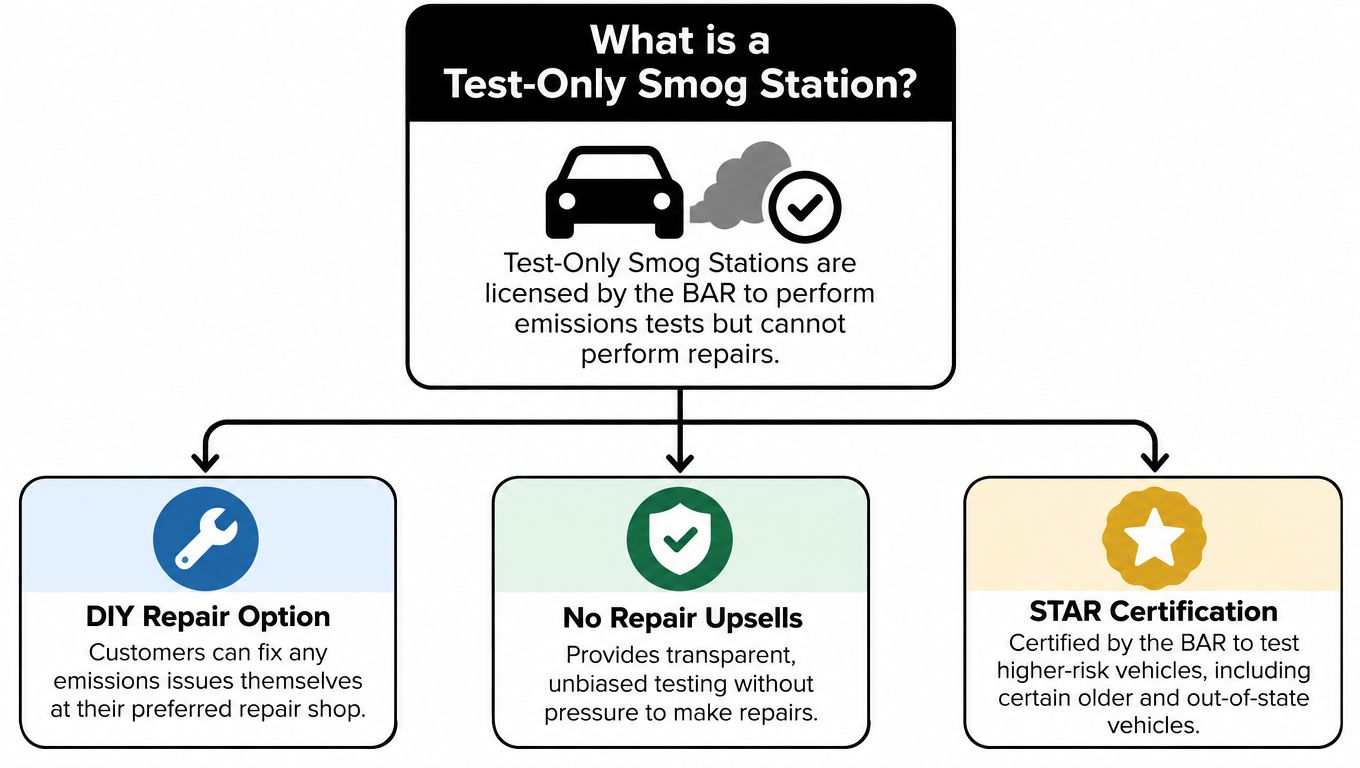
A test-only smog station is exactly what it sounds like, a place that checks your car's emissions status but does not repair the car if it fails. California's Bureau of Automotive Repair licenses these facilities to perform Smog Check inspections and report the result for DMV purposes, while repair work has to happen somewhere else. That split keeps the inspection side independent from the money side.
Why the separation matters
If the same business both fails your car and sells you the fix, the setup can feel like a conflict of interest. California's test-only structure avoids that problem by making the inspection a stand-alone decision. The station collects the data, records the result, and sends it on for registration compliance.
Practical rule: if a shop is test-only, it can tell you whether your vehicle passed or failed, but it can't turn around and diagnose or repair the emissions issue on the same ticket.
That's why the category is useful for drivers who want a cleaner line between judgment and repair. It doesn't make the process harsher, it makes the result more neutral.
For a plain-language comparison of station types, see this STAR station versus test-only guide.
Test Only versus Test and Repair Stations
Why do California drivers see two different station types? The answer is simple. One type checks the car, the other can check and fix it.
A test-only station is limited to inspection work. It records the result and sends that result for DMV compliance, but it does not repair emissions problems on the same visit. A test-and-repair station can perform the inspection and then handle the fix if the vehicle fails.
What happens after a failed test
At a test-only station, a failed result ends the inspection. The station cannot turn the failure into a repair order, so you must take the car to a separate licensed repair shop for diagnosis and repairs, then return for retesting. That separation is the point of the model. The inspection side stays independent from the repair side, which helps prevent the shop from profiting from the outcome it just gave you.
| Station type | Can inspect | Can repair emissions problems | Best fit |
|---|---|---|---|
| Test-only | Yes | No | Drivers who want an independent inspection |
| Test-and-repair | Yes | Yes | Drivers who want testing and repair in one place |
The process is straightforward. Get tested first. If the car fails, repair it elsewhere, then come back for the next inspection step.
A failed result is a signal, not a repair plan. It tells you another technician needs to look under the hood.
For people who like to prepare ahead of time, reviewing this pre-smog checklist can help you avoid avoidable delays.
The Role of Test Only Stations in California
Test-only stations matter because they carry a large share of the state's compliance workload, not because they're a niche convenience. In 2024, they performed 6,133,329 initial tests and issued 5,562,526 certificates, while test-and-repair stations performed 2,941,524 initial tests and issued 2,654,288 certificates (California Legislative Information, HSC division 26 article 2). That means test-only stations handled about 67.6% of all initial tests in the figures provided for that year.
What that scale tells you
Those numbers show that test-only stations aren't an unusual workaround. They're built into the normal path millions of California drivers use to stay registered. When a system uses one station type for most of the initial testing volume, that station type is part of the core infrastructure, not an edge case.
The same state report also shows why the model stays relevant for different vehicle groups. Some cars are directed to STAR stations based on emissions history or other program factors, which means the state is not only checking vehicles, it's routing them through the type of facility it considers appropriate for compliance control.
In practical terms, that helps explain why a test-only station can feel more formal than a general repair shop. The whole setup is closer to an objective checkpoint than to a sales counter.
Understanding STAR Certification Requirements
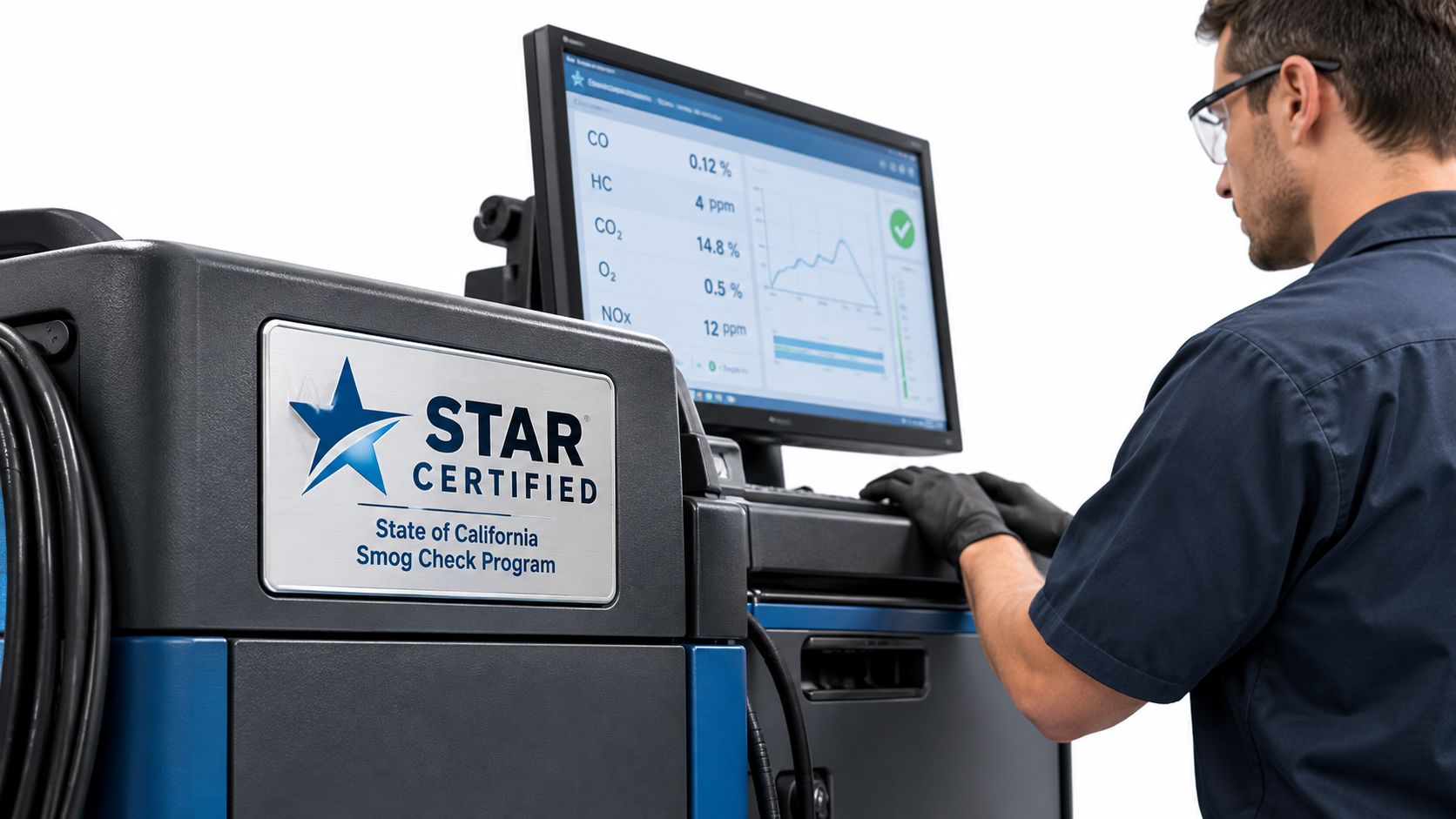
A STAR-certified test-only station is still a test-only station, but it also meets BAR performance controls that go beyond the basic license. Those controls include valid licensing, recordkeeping compliance, enough inspection volume for evaluation, and measured thresholds tied to inspection quality. If your DMV notice says STAR is required, that detail matters.
What BAR is checking
BAR looks at short-term performance indicators such as Similar Vehicle Failure Rate, incorrect gear selection during the Acceleration Simulation Mode test, and Excessive Test Deviation Rate. The published criteria include an incorrect-gear-selection rate no higher than 2% of certified vehicles and an Excessive Test Deviation Rate no greater than one (BAR STAR certification criteria). BAR also uses the Follow-up Pass Rate, with qualifying scores required to meet the stated threshold of 0.40.
These are quality controls, not labels for marketing. They're meant to reduce inaccurate certification and improve consistency when the state sends a driver to a STAR station. That's why STAR is more specific than “a good shop.”
If your renewal notice points you toward STAR, this station guide is worth reviewing before you book.
What to Expect at a Local Smog Station
What happens at a local smog station? Usually, it involves far less stress than drivers expect. A test-only station keeps inspection separate from repair, so the person checking your car is not the same person selling the fix. That separation is the point.
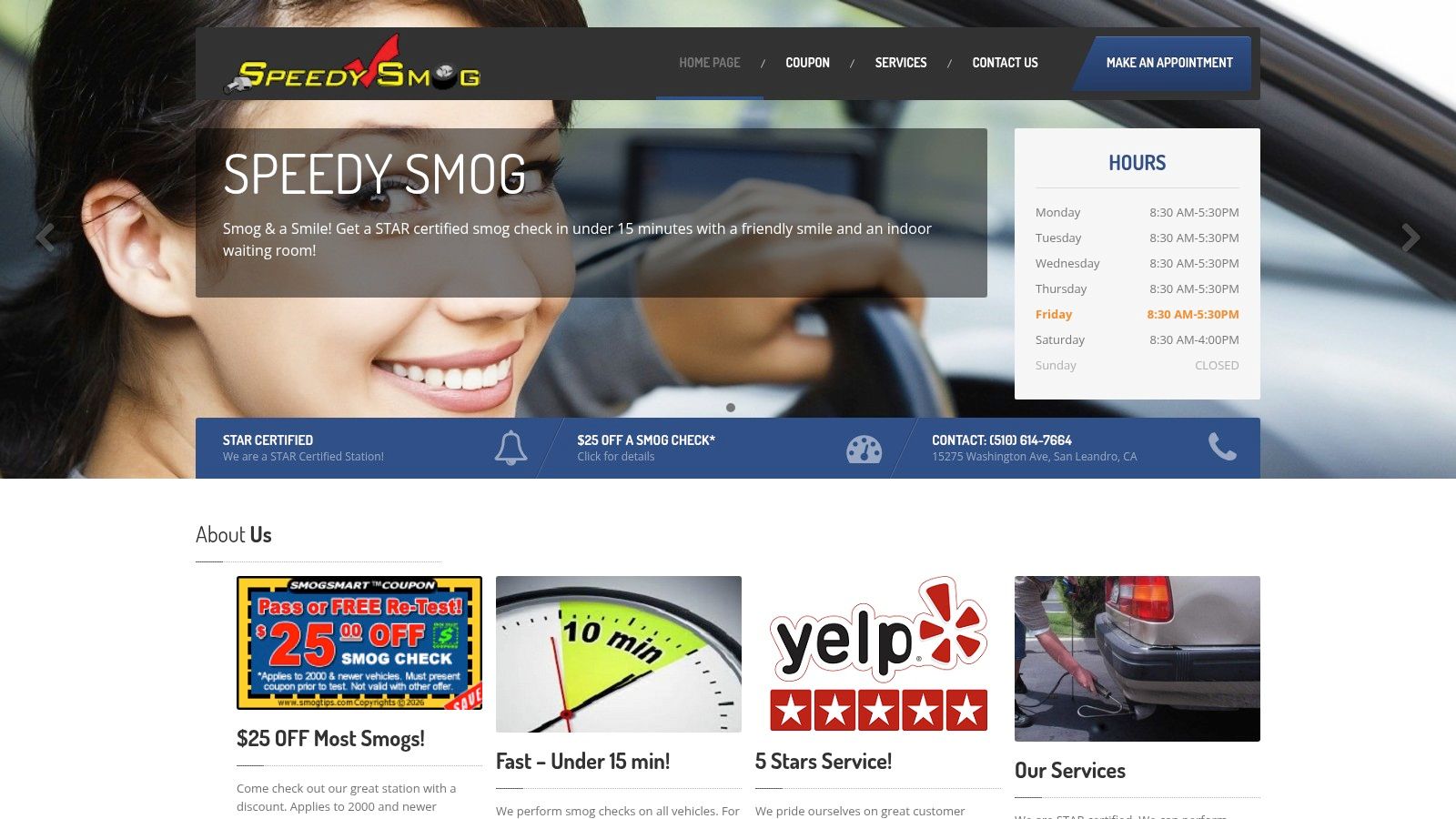
Speedy Smog in San Leandro is a STAR Certified smog check station at 15275 Washington Ave, 94579, and it handles inspections for most vehicles, including 2000 and newer models, 1999 and older vehicles, diesels, and hybrids. For 2000+ vehicles, typical tests take about 10 to 15 minutes.
How the visit usually feels
You pull in, hand over the vehicle information, and wait while the inspector runs the check. If the car passes, the station can send the result to DMV electronically. If it does not, you leave with the result and take the repair step somewhere else.
That split helps remove conflict of interest. The station has no reason to steer you into a repair estimate just to make the failure go away.
For drivers who like to prepare ahead of time, the shop's before-your-visit checklist on the site can help you avoid avoidable delays.
Making Your Smog Check Decision
The simplest way to choose is to look at your DMV notice first. If it requires STAR, you need a STAR-certified station, not just any smog shop. If it doesn't, a standard test-only station can still give you the same separation between inspection and repair that many drivers want.
A practical way to decide
- Read the renewal notice first: the notice tells you whether STAR is required.
- Choose test-only if you want independence: the shop can inspect your car, but it can't profit from fixing the result.
- Choose STAR when the state directs you there: that's the higher-control option for specific vehicles and compliance situations.
- Plan for a possible second stop: if the car fails, you'll need another licensed repair facility before retesting.
Good rule of thumb: the best station is the one that matches your notice and makes the process clear, not the one that promises the most.
A test-only station gives you a clean compliance check. A STAR-certified test-only station adds state performance standards on top of that. Together, they're designed to make the smog process more objective, not more confusing.
If you're in the East Bay and want a straightforward inspection from a STAR-certified test-only station, visit Speedy Smog to see what they offer and plan your visit. They provide emissions testing without repair pressure, which fits the test-only model explained above, and their San Leandro location is built for drivers who want a fast DMV-ready result.