
For many modern vehicles, the actual smog test can be done in 10 to 15 minutes. But if you're asking smog check how long in real life, the total time depends more on wait time, vehicle readiness, and how efficiently the station runs the process.
You've probably got the DMV renewal notice in your hand, glanced at the smog requirement, and immediately wondered how much of your day this is going to eat up. That's the right question. Most drivers focus on the machine test itself, but the primary time drain usually comes from standing in line, showing up with a car that isn't ready, or picking a station that treats every smog check like an all-day event.
If you want the fastest path to a DMV-accepted certificate, think bigger than test time. You want to minimize the whole visit from arrival to departure, and avoid the kind of problems that force you to come back again.
Table of Contents
- That DMV Notice Just Arrived Now What
- Anatomy of a Smog Check What Happens During the Test
- Smog Check Time Breakdown by Vehicle Type
- Common Delays That Turn a Quick Test into a Long Wait
- Tips for Your Fastest Smog Check Ever
- Your Fast Pass to DMV Compliance in San Leandro
That DMV Notice Just Arrived Now What
That renewal notice always lands at the wrong time. You're busy, the registration deadline is coming, and now you need to figure out when to squeeze in a smog check without losing half a day.
Start with one move. Read the notice carefully and confirm you need the inspection now. In California, eligible vehicles generally follow a 2-year smog-check cycle, and gasoline, hybrid, and alternative-fuel vehicles commonly have a major exemption for the first 8 model years, as explained in this overview of California smog-check frequency and exemptions.
What matters most is total visit time
A lot of drivers search smog check how long and expect one clean answer. There isn't one universal answer because your full time investment includes several moving parts:
- Arrival timing: Walk into a busy station and your “quick test” stops being quick.
- Vehicle condition: A car with warning lights, incomplete monitors, or obvious issues can turn into a fail and a second trip.
- Paperwork flow: If the station is disorganized, even a simple inspection feels slow.
- Technician focus: Dedicated smog-only shops usually move more efficiently than places that split attention across multiple services.
Practical rule: Don't judge speed by the testing equipment alone. Judge it by how likely the station is to get you in, test you correctly, and submit the result without delay.
Don't wait until the deadline
Leaving it to the last minute is the most common self-inflicted mistake. If your vehicle passes, great. If it doesn't, you'll want breathing room to deal with repairs or readiness issues without scrambling over your registration date.
A smarter approach is to handle the test early enough that a hiccup won't ruin your week. The goal isn't just to pass. It's to avoid rework, repeat visits, and DMV stress.
That's the definitive answer to smog check how long. The fastest smog check is the one you only have to do once.
Anatomy of a Smog Check What Happens During the Test
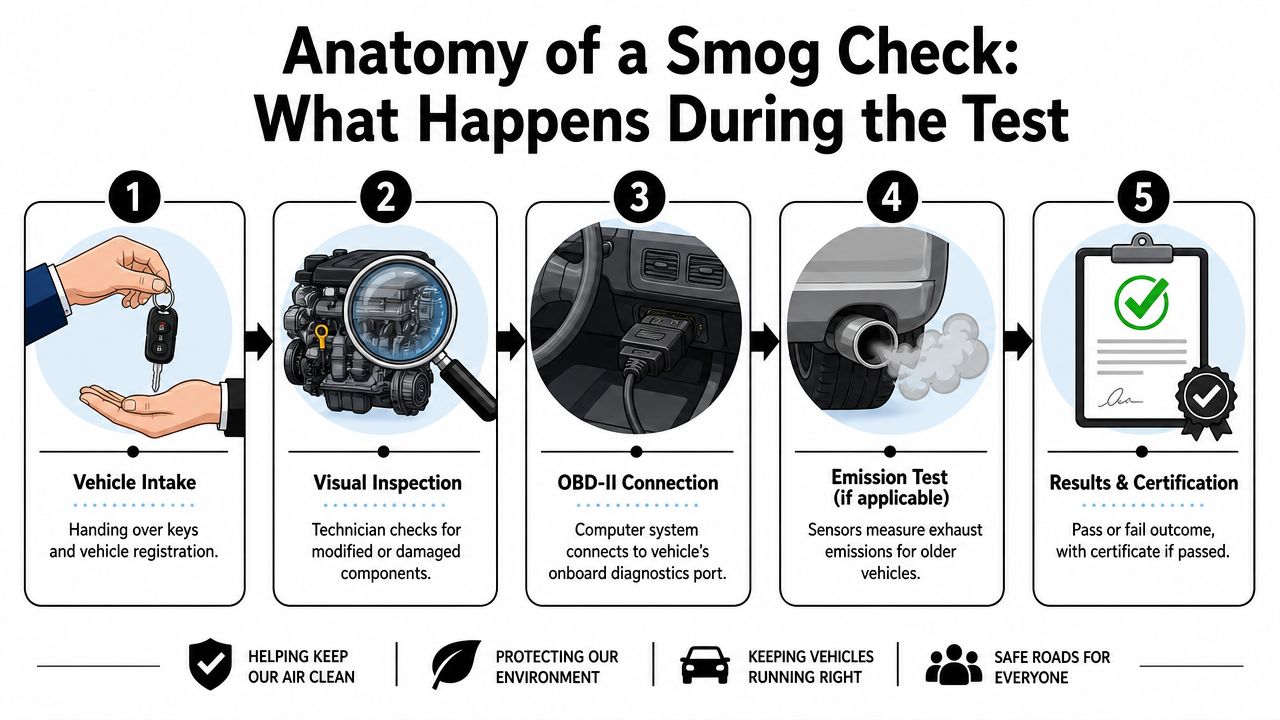
A smog check feels mysterious until you break it into pieces. In practice, it's a short sequence of checks that tells the state whether your emissions system is present, functioning, and reporting correctly.
Intake and visual inspection
First comes the basic intake. The technician checks your vehicle information and gets the car into position for inspection.
Then comes the visual part. Think of this like a quick compliance walk-around under the hood and around the emissions-related components. The technician is looking for missing, disconnected, damaged, or clearly modified parts that affect emissions compliance.
If a car has been altered in a way that conflicts with emissions requirements, that issue can stop the process before the car ever gets to the electronic or exhaust portion of the test.
Computer check or tailpipe test
For many newer vehicles, the key step is the OBD-II scan. That means the technician connects to your car's onboard computer and checks whether the emissions system reports normal status and readiness. It's basically the car answering, “Are my emissions controls working, and have I completed the self-checks I'm supposed to complete?”
Older vehicles may require a more traditional exhaust analysis. That's the part many people think of as the “sniffer” test. It takes more setup and more technician handling than a simple plug-in scan, which is one reason older vehicles usually take longer.
A newer car often moves faster because the technician can read a lot through the diagnostic port instead of running a more involved exhaust procedure.
Final result and certificate handling
Once the inspection steps are complete, the result is finalized and transmitted. If the vehicle passes, the smog certificate is what clears the emissions requirement for registration.
The important thing for you is this: a quick result depends on a car that's ready and a station that knows how to keep the workflow moving. The technology matters, but process matters just as much.
Smog Check Time Breakdown by Vehicle Type
Your total time depends less on the word "smog" and more on what you drive.
For a late-model gasoline car with no warning lights and monitors set, the test portion is often quick. An older vehicle, diesel, or specialty setup usually takes longer because the inspection path is less uniform and needs more technician time. That is why smart scheduling starts with vehicle type, not wishful thinking.
Estimated Smog Check Test Duration by Vehicle Type
| Vehicle Type | Typical Test Time | What's Involved |
|---|---|---|
| 2000 and newer gasoline vehicles | 10 to 15 minutes | Usually a faster OBD-II based inspection when the vehicle is ready and accessible |
| Older vehicles | Often closer to 30 minutes | More hands-on testing, more setup, and a less streamlined process |
| Diesel vehicles | Varies | Inspection steps depend on configuration and compliance condition |
| Hybrid vehicles | Often on the quicker side when eligible and ready | Modern systems can make the inspection more straightforward |
Newer gasoline vehicles
These are usually the fastest appointments. If the car is ready for testing, the shop can move through the process with fewer slowdowns.
That said, do not plan your day around the shortest possible test time. Plan around total visit time. A fast station with an organized intake process matters more than shaving a minute off the machine portion. Speedy Smog stands out here because efficient workflow is what keeps a short test from turning into a long errand.
Older vehicles, trucks, and diesels
A 1990s vehicle or an older truck usually doesn't have that same straightforward path. There is often more setup, more manual checking, and more room for the inspection to take longer.
Diesels can also stretch the timeline depending on condition and configuration. Hybrid vehicles are often quicker, but only if everything is ready when you arrive.
Budget for the full visit, not just the test itself. Check-in time, the line in front of you, and your vehicle's inspection path are what decide whether this takes 15 minutes or most of your morning.
One practical tip. If your certificate timing matters for registration or a vehicle sale, do not test too early. Good timing saves you from doing the same errand twice.
Common Delays That Turn a Quick Test into a Long Wait
A smog check usually goes sideways in predictable ways. Not dramatic ways. Just ordinary, frustrating ones that turn a short errand into a half-day headache.
The crowded-station problem
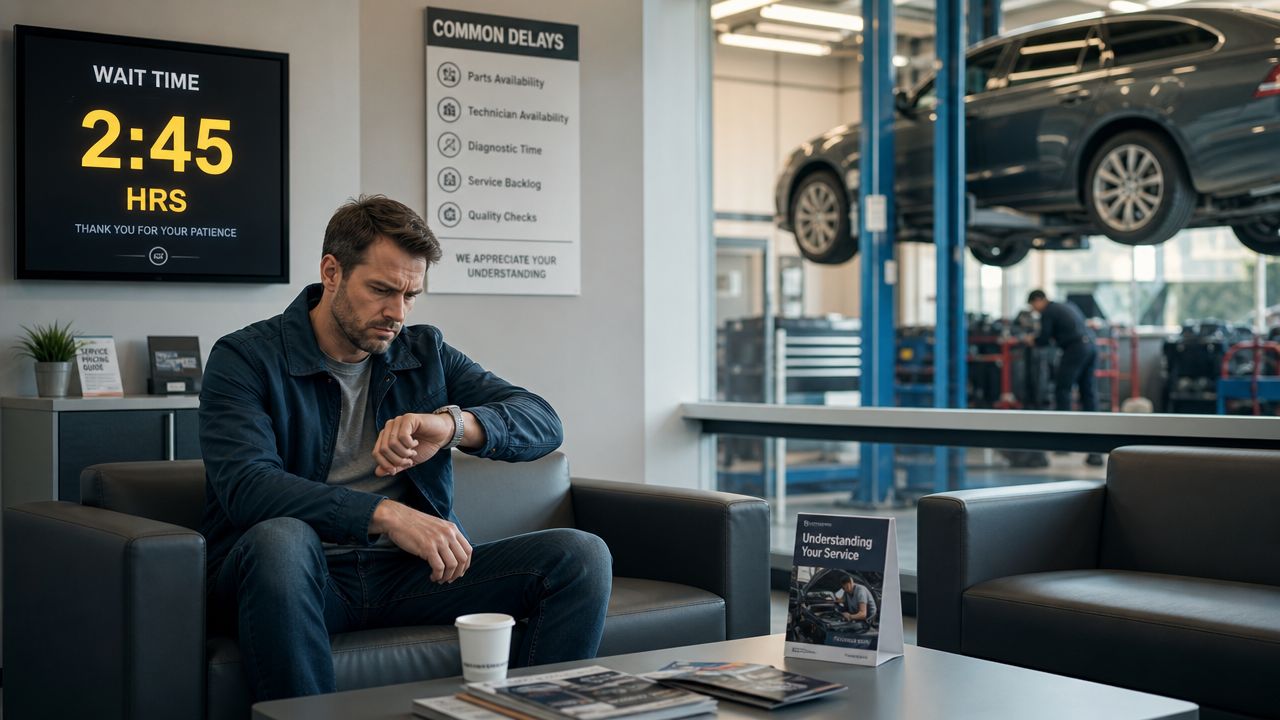
You pick a station that looks close and convenient. Then you pull in and see a line of cars, one distracted staff member, and no clear intake process. Your car may only need a short test, but now you're stuck waiting behind everyone else.
This is the biggest reason people get the wrong idea about smog check how long. They blame the test, when the underlying issue is station flow.
The check engine light issue
That glowing light on the dash is a time killer. If it's on, don't expect a smooth in-and-out visit. You need to deal with the underlying issue first.
A lot of drivers hope the station will “just test it anyway.” That's not a plan. That's a wasted trip.
Show up with a check engine light on, and you're not saving time. You're volunteering for a second visit.
The not-ready computer problem
This one catches people all the time after a battery disconnect or recent repair. The car may feel fine, but the onboard system hasn't finished its internal readiness checks yet.
When that happens, the technician can't just guess or push it through. You may need additional driving before the car is ready for inspection. That means another trip, more waiting, and more schedule juggling.
The hidden-failure scenario
Some cars don't show obvious symptoms, but they still fail the emissions process because something in the system isn't working correctly. Maybe the engine runs a little rough. Maybe a component was modified. Maybe the gas cap or another emissions-related part isn't doing its job.
The result is the same. The test stops being a quick compliance errand and turns into diagnosis, repair, and retest.
Here's the pattern I see most often:
- Rush decision: Driver picks the nearest station without checking how they handle traffic.
- Dash warning ignored: Vehicle arrives with a known issue.
- Recent repair overlooked: Battery was disconnected, but no one checked monitor readiness.
- Deadline pressure: Driver waits until registration is almost due, so any delay feels worse.
The fix is straightforward. Prepare the car, choose the station carefully, and leave yourself time to recover if something pops up.
Tips for Your Fastest Smog Check Ever
You can lose more time in the parking lot and on a return visit than you ever will during the actual inspection. If your goal is to get this done once and get on with your day, focus on total time. That means choosing the right station, showing up with the car ready, and avoiding easy mistakes that force a retest.
Use a short checklist before you leave
Keep it simple. A few smart checks save the most time:
- Bring your registration or DMV notice: Intake goes faster when the technician has what they need right away.
- Drive the car first: A warmed-up vehicle is usually easier to process than one that has been sitting cold.
- Look at the dash before you go: Warning lights are a stop sign, not a maybe.
- Make sure the car is ready: If the battery was disconnected or repairs were done recently, confirm the monitors have completed.
- Call before heading over: A quick phone call can save a long wait.
Adjust your plan based on the vehicle you drive
Late-model cars are usually straightforward. The primary time saver is picking a shop that handles OBD-II testing efficiently and keeps cars moving instead of stacking up delays at check-in.
Older vehicles need more margin. If it has a rough idle, an exhaust issue, or recent repair history, do not squeeze the test into a tight schedule. Give yourself room to fix a problem without turning one errand into two or three trips.
Diesel and hybrid owners should be just as selective. Go to a station that regularly tests those vehicle types and knows the process cold. Familiarity saves time.
Best time-saving rule: The station you choose has a bigger effect on total time than the test itself.
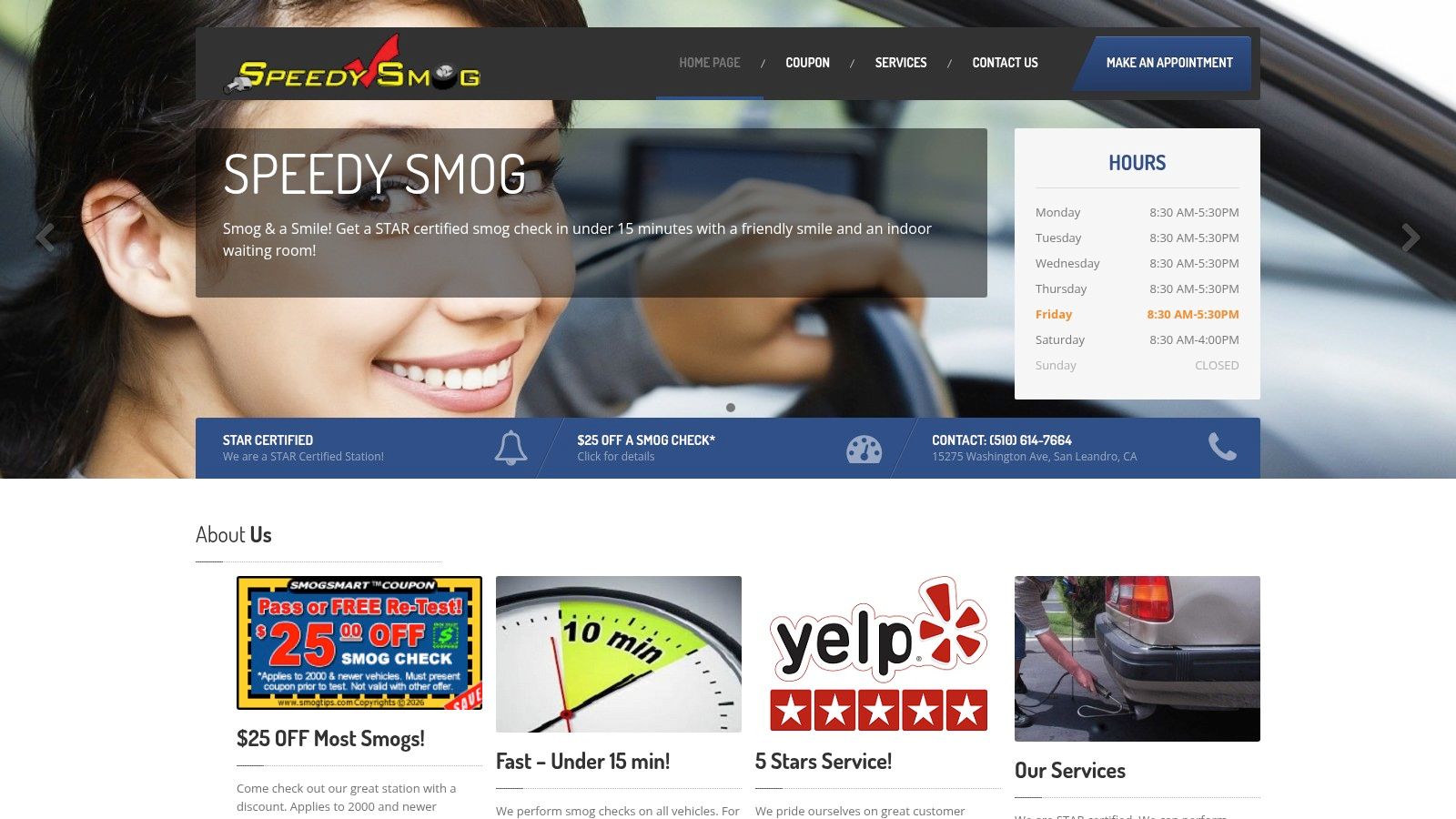
For East Bay drivers, Speedy Smog in San Leandro is a practical choice because it is STAR-certified and set up for focused smog testing across newer cars, older vehicles, diesels, and hybrids. That matters. A shop built around this work is usually faster than a general repair location trying to fit smog checks between other jobs.
A quick look at the process helps set expectations:
Choose the shop that saves the whole afternoon
Plenty of drivers pick the closest station and hope for the best. That is how a short test turns into a drawn-out errand. You want a place with an organized check-in flow, technicians who do this all day, and a process that does not waste your time.
Here's the approach I recommend:
- Pick a dedicated STAR-certified smog station
- Show up with a warmed-up, test-ready vehicle
- Book enough time before your DMV deadline to handle surprises
Do those three things, and you give yourself the best chance of one visit, one pass, and no repeat trip.
Your Fast Pass to DMV Compliance in San Leandro
The short answer to smog check how long is easy. For many modern cars, the test itself is brief. The actual time depends on whether you show up prepared and whether the station runs an efficient process.
That's why smart drivers don't obsess over the machine. They focus on the full experience. No warning lights, no readiness problems, no last-minute panic, and no wasting time at a slow shop.
If you're in San Leandro or nearby, make the decision that saves the most time overall. Use a STAR-certified station, bring your paperwork, arrive with a warmed-up and ready vehicle, and leave enough room before your registration deadline in case anything needs attention.
For local drivers, that means you don't need to keep wondering how long this will take. You need a smooth visit, accurate inspection, and DMV-accepted result without the usual hassle. Speed, organization, and a straightforward process beat guesswork every time.
Need a fast, low-hassle smog check in San Leandro? Visit Speedy Smog at 15275 Washington Ave. They're open Monday through Saturday, and they focus on efficient STAR-certified testing so you can get certified and move on with your day.